Driving licence · Theory practice

Practice test 1

70 questions · Pick an answer to see whether you are right. Your answers are saved in this browser.

0of 70 correct
Not started

0 of 70 answered

0Correct
0Incorrect
70Unanswered
14Mistakes allowed

The real test has 70 questions in 50 minutes. You need 56 correct (80%) to pass.

Question 1

Is it possible to speed up the metabolism of alcohol in the body?

Explanation

“Can you speed up the metabolism? No! Forget all notions about speeding up your metabolism.”

Driving Licence Book, 19th Edition, page 210

“There is no miracle cure to speed up your metabolism, time is the decisive factor here.”

Swedish Transport Administration
Question 2

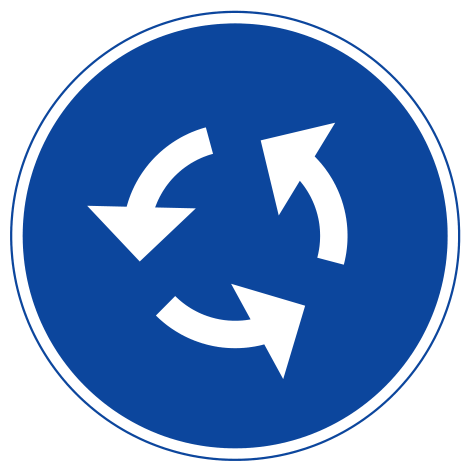
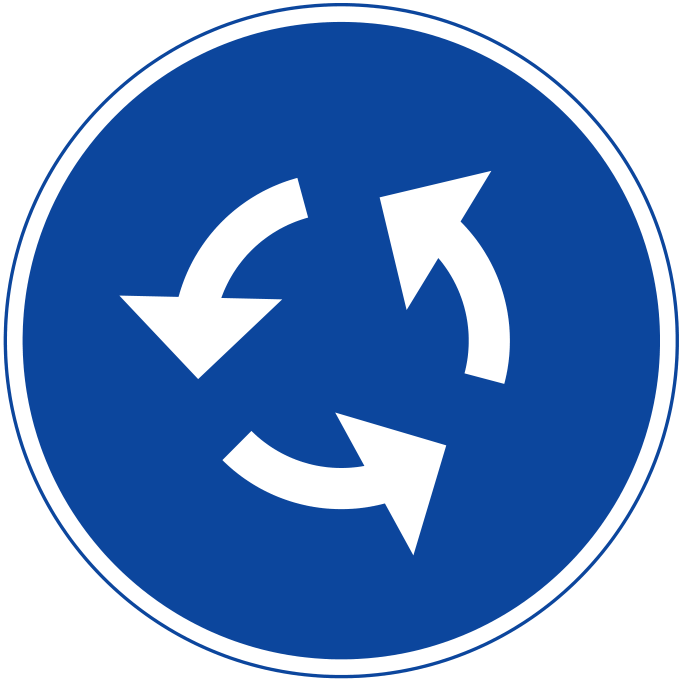
What does this road sign mean?

Picture for question 2

Explanation

Roundabout (D3)
RoundaboutD3
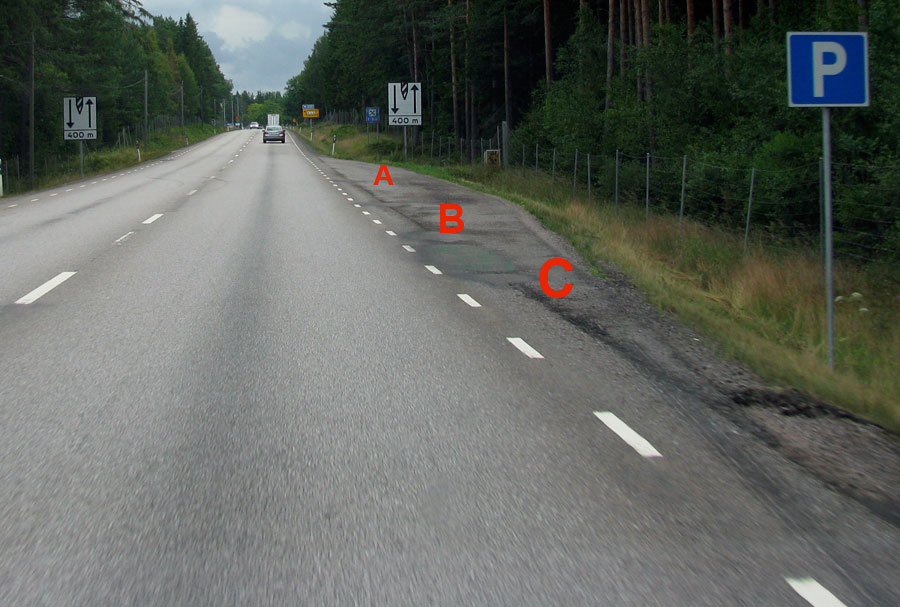
Question 3

What is probability learning?

Explanation

“Learning from experience – ‘what normally happens’ – is referred to as probability learning.”

Du och jag i trafiken [You and me in traffic], 28th Edition, page 38
Question 4

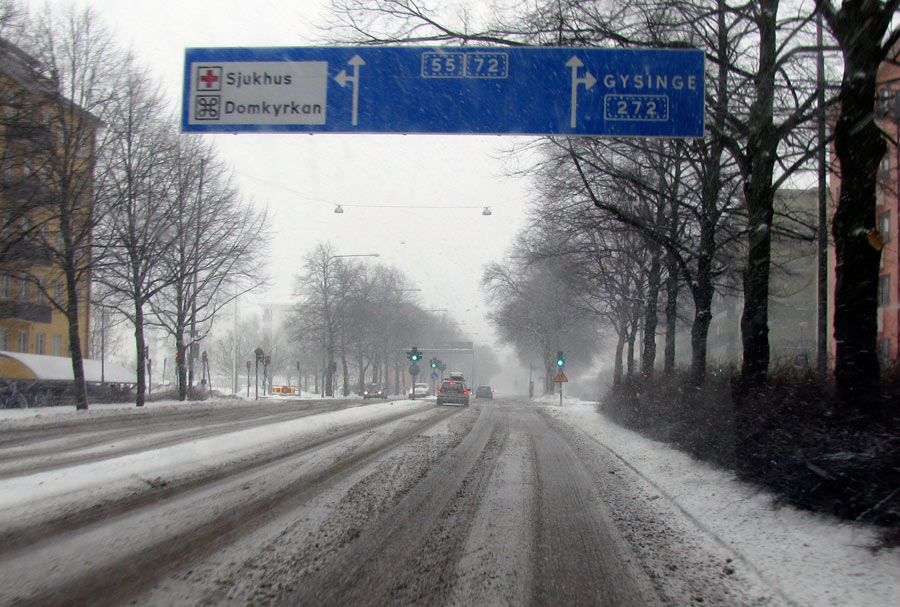
You are heading to road 55. What is true?

Picture for question 4

Explanation

Road 55 and road 72 are in the middle, which means that you get there by continuing straight ahead. Both the right and the left lane continue straight, which means that you will arrive at 55 and 72 no matter which lane you choose.

You can assume that the speed limit is not above 70 km/h, as this appears to be in a built-up area. The question and the alternatives are also not designed for you to consider whether you may choose a lane or if you have to stay on the right.

Question 5

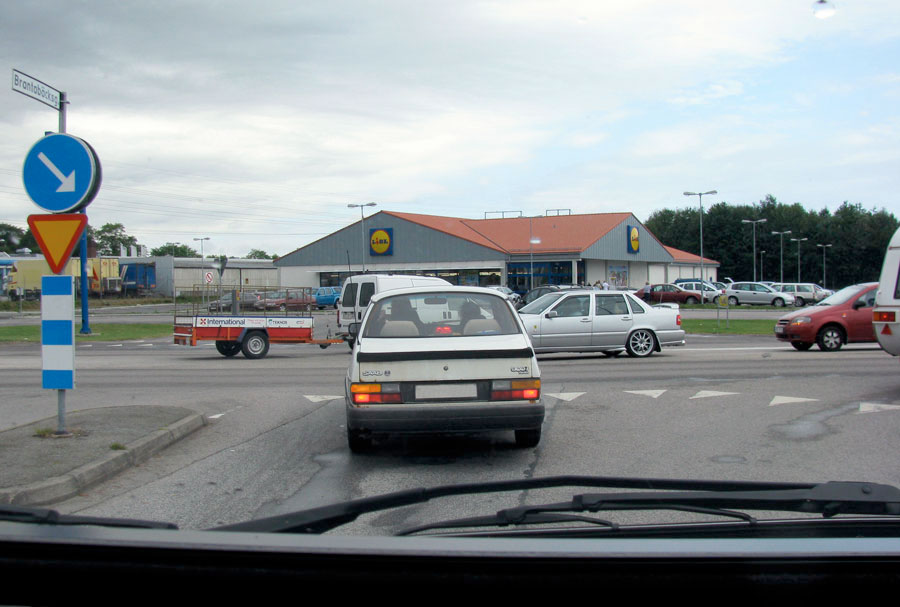
Which option is true for the situation in the picture?

Picture for question 5

Explanation

Clearway (E3)
ClearwayE3
Question 6

You are driving the car from which the picture is taken. The car in front of you is standing still at the bus stop. How should you react?

Picture for question 6

Explanation

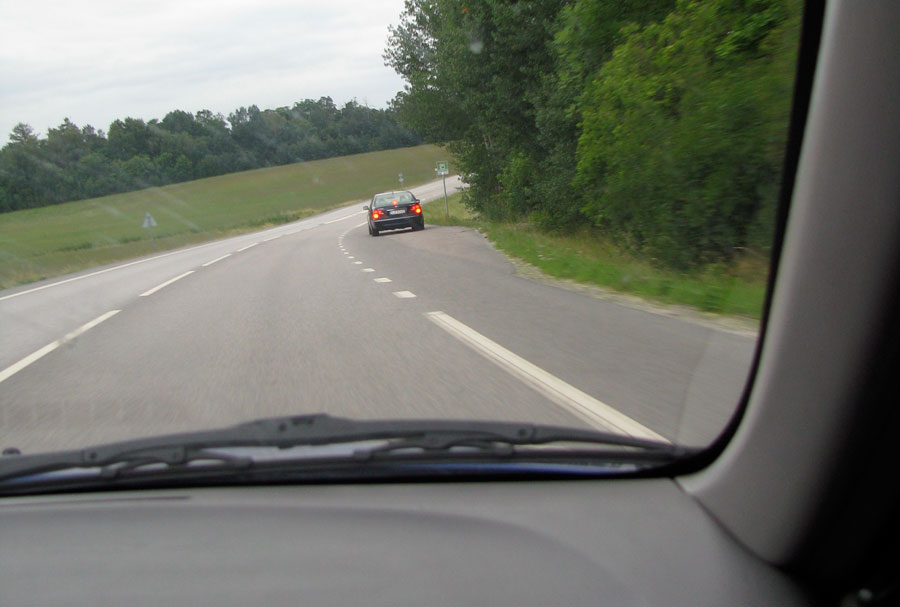
The break lights are on, which indicates that the driver has not turned off the motor and is not intending to stay there. You should be prepared for the car to move soon, which makes it unwise to ignore it. However, it would be excessive to stop and wait; it could also be dangerous to brake and stop on the country road.

The best thing would be a combination of the first two alternatives, i.e. reducing your speed and passing at a good distance (however, you should stay in your lane, as there is a curve).

Question 7

You are approaching a junction where you have an obligation to give way. Should you do anything to inform those on the intersecting road of your obligation to give way?

Explanation

“A driver who is obliged to give way shall clearly show their intention to yield by slowing down or stopping in good time”.

Swedish Road Traffic Ordinance

Just because the car’s brakes make it possible for you to drive at high speed towards the junction and then brake hard, it does not mean you should. Imagine what this would look like to the traffic on the intersecting road: they may think that you do not intend to stop, brake suddenly and cause a multiple collision.

Question 8

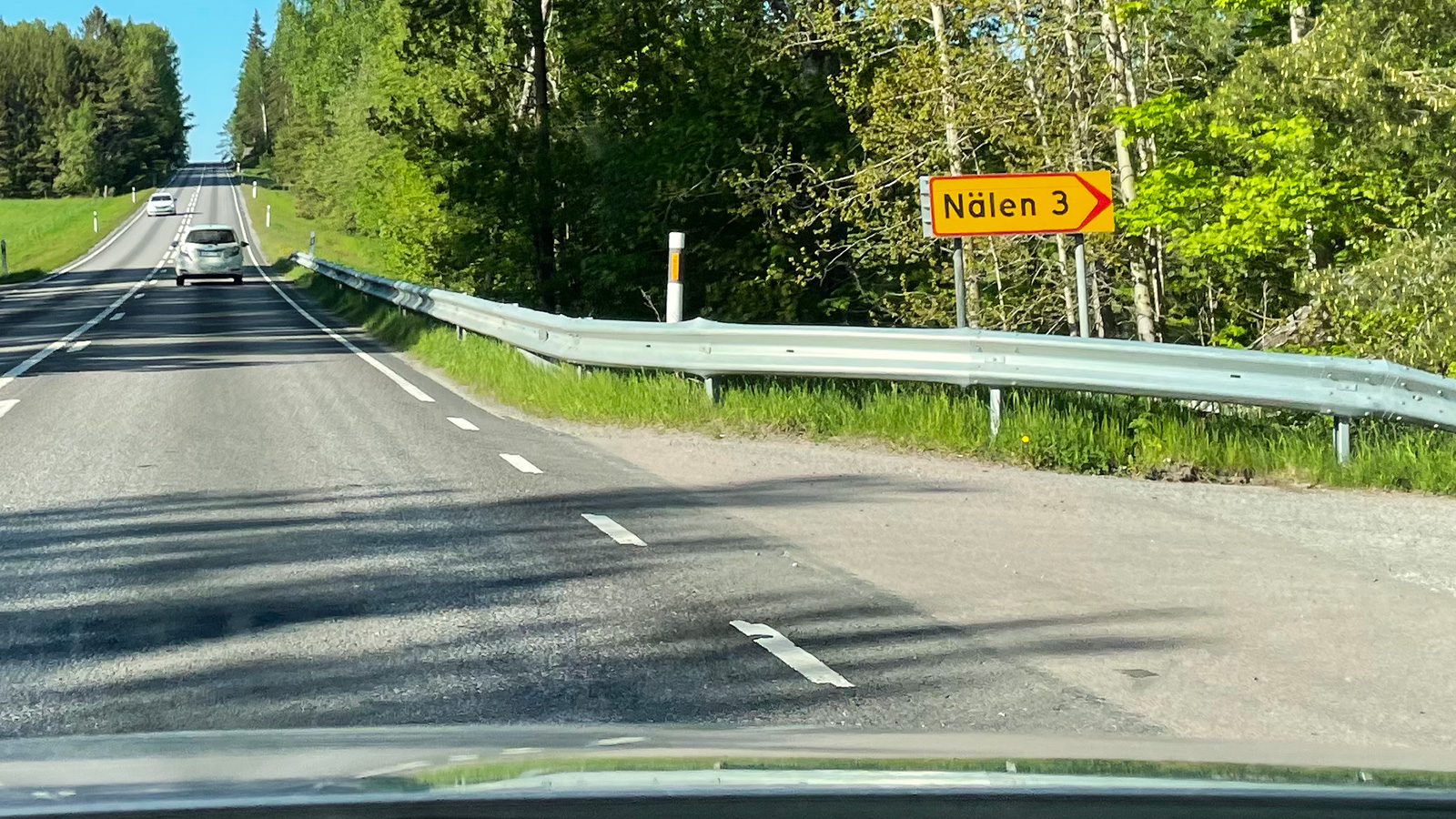
You are driving the car from which the picture is taken. Are you allowed to pass on the right side of the white car that is turning off directly left into the gravel road?

Picture for question 8

Explanation

“Overtaking shall [...] be done on the right when the driver of car in front is turning left or is clearly preparing for such a turn.”

Swedish Road Traffic Ordinance

This situation is very common. The traffic would be significantly slower in urban areas if it was not permitted to overtake.

Question 9

What is the maximum distance that you as a private car driver may tow another private car on a motorway?

Explanation

You “may tow the vehicle, but you must drive on the hard shoulder the entire time, and only to the nearest exit ramp.” (Du och jag i trafiken [You and me in traffic], 28th Edition, page 261)

This is viewed as being a good compromise. A stationary car on the motorway increases the risk of accidents and disrupts traffic. Getting hold of a tow truck can take a long time, which is why it is good

if the car can be towed by another car. However, this type of towing goes very slowly, meaning that the cars must leave the motorway as soon as possible.

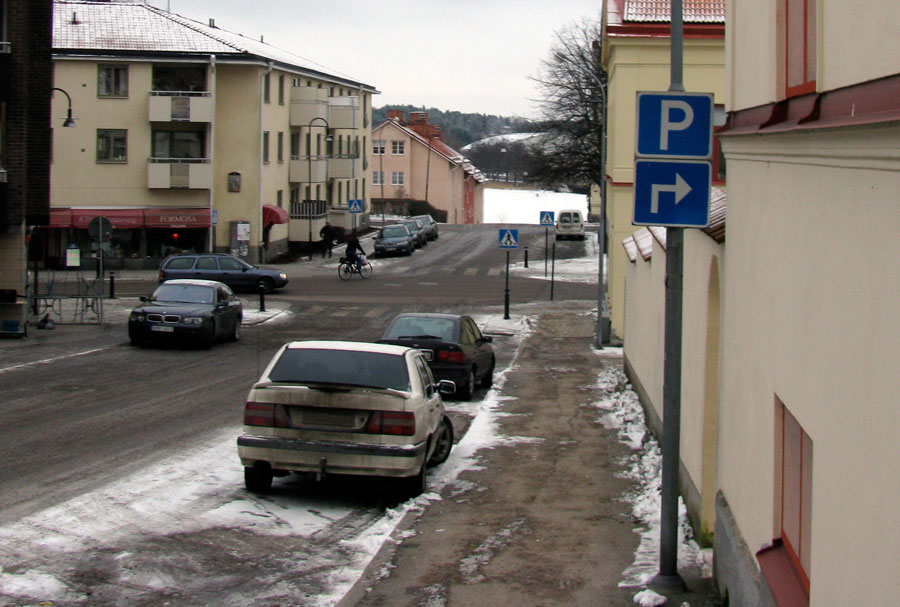
Question 10

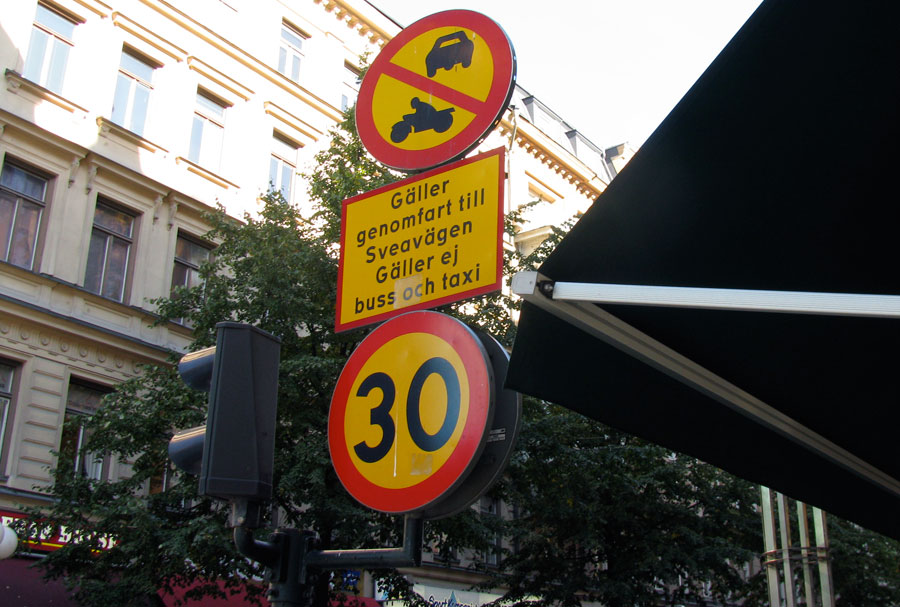
You are collecting a friend who lives a bit in on the street where this sign is erected. Are you allowed to drive in with the car?

Picture for question 10

Explanation

Genomfart
through traffic

The additional panel indicates that the prohibition on motor vehicle traffic only applies to “through traffic to Sveavägen”.

There is no clear and general definition of what “through traffic” actually is. Picking up a person is in all likelihood not classed as through traffic. It is not even certain that you will continue through to Sveavägen; maybe you will turn around and drive back the same way.

Question 11

You are driving the car from which the picture is taken and intend to turn right. Are you allowed to pass the white car?

Picture for question 11

Explanation

This situation is very common. The traffic would be significantly slower in urban areas if it was not permitted to overtake.

“Overtaking shall [...] be done on the right when the driver of car in front is turning left or is clearly preparing for such a turn. […] Overtaking may not be done just before or at a junction, except when [...] overtaking on the right hand side”

Swedish Road Traffic Ordinance
Question 12

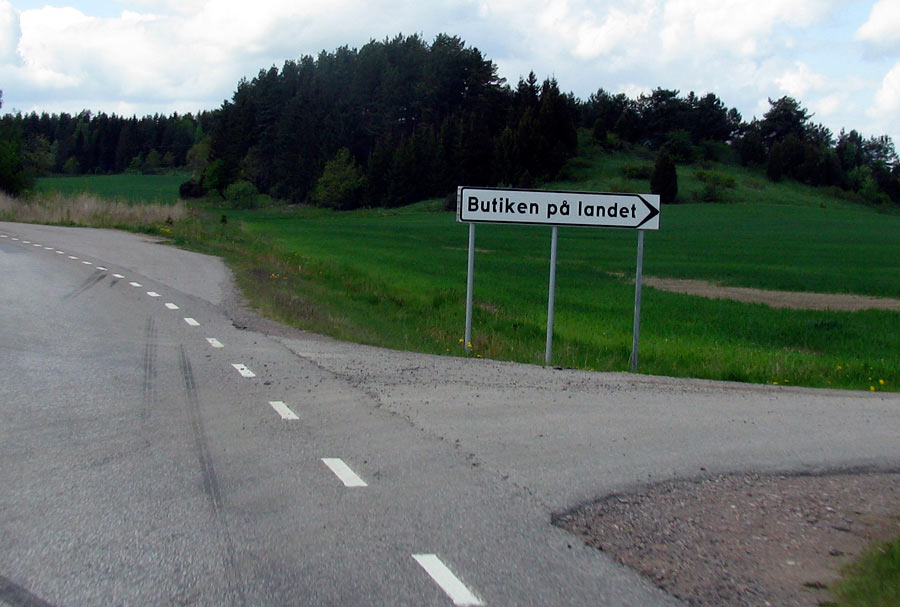
Which alternative applies to this sign?

Picture for question 12

Explanation

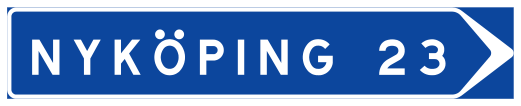
Butiken på landet
The Countryside Warehouse
Directional signF5

”The sign is posted in connection to a junction.”

“For local institutions such as tourist office, police office, railway station, etc., there are black and white directional signs. These have lower-case letters.”

STR’s Vägmärken & vägmarkeringar [Road Signs & Markings], 6th Edition, page 13
Question 13

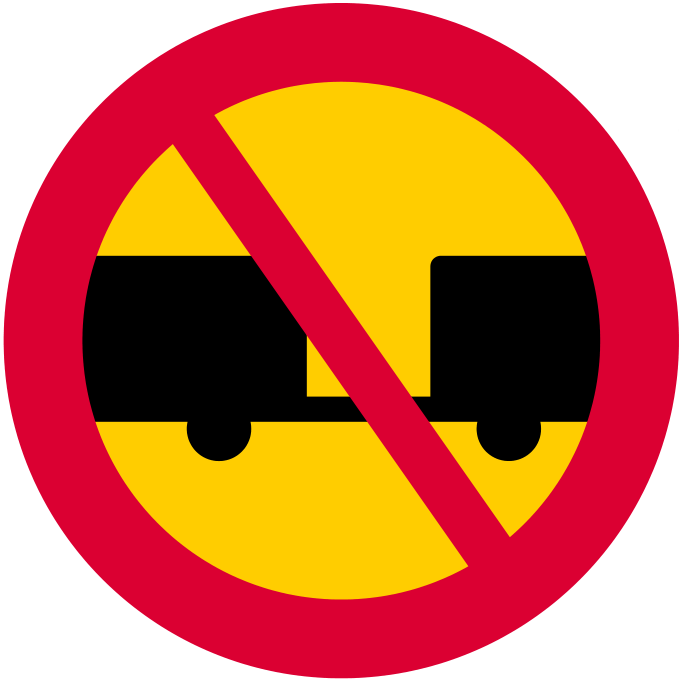
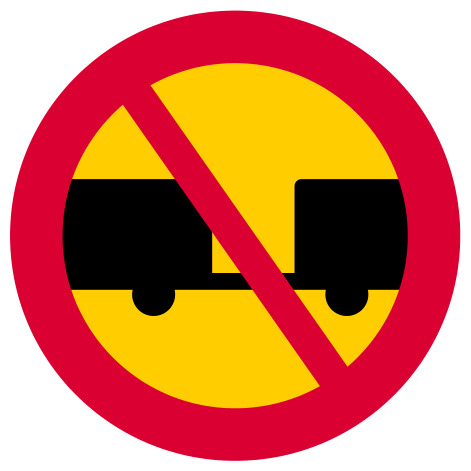
Are you permitted to drive a car towing a caravan where this sign is posted?

Picture for question 13

Explanation

No motor vehicles with a connected trailer (C6)
No motor vehicles with a connected trailerC6

”The sign indicates a prohibition against motor vehicles with a connected trailer of a type other than semi-trailer or centre axle trailer. If the prohibition also applies to motor vehicles with a connected semi-trailer or centre axle trailer, this will be indicated on an additional panel. If the prohibition only refers to vehicle combinations with a trailer whose total weight exceeds a certain tonnage, this will be indicated on additional panel T5, total weight.”

“This prohibitory sign does not apply to trailers with a rigid towbar, such as caravans.”

Du och jag i trafiken [You and me in traffic], 28th Edition, page 304

“Centre axle trailer is the designation that applies to caravans.”

Swedish Association of Local Authorities and Regions
Question 14

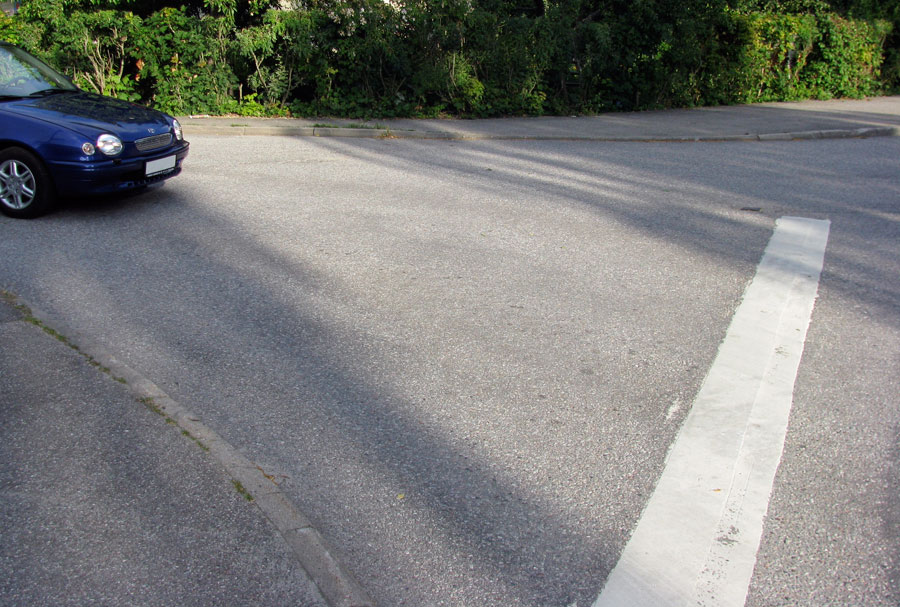
You are driving the blue car. Where should you stop in relation to the stop line?

Picture for question 14

Explanation

Stop lineM13

”The marking indicates where a vehicle should be stopped according to a road sign or traffic signal.”

The position of the stop line is carefully considered with regard to good visibility and safety (minimal risk of being hit). You shall stop exactly at the line.

Question 15

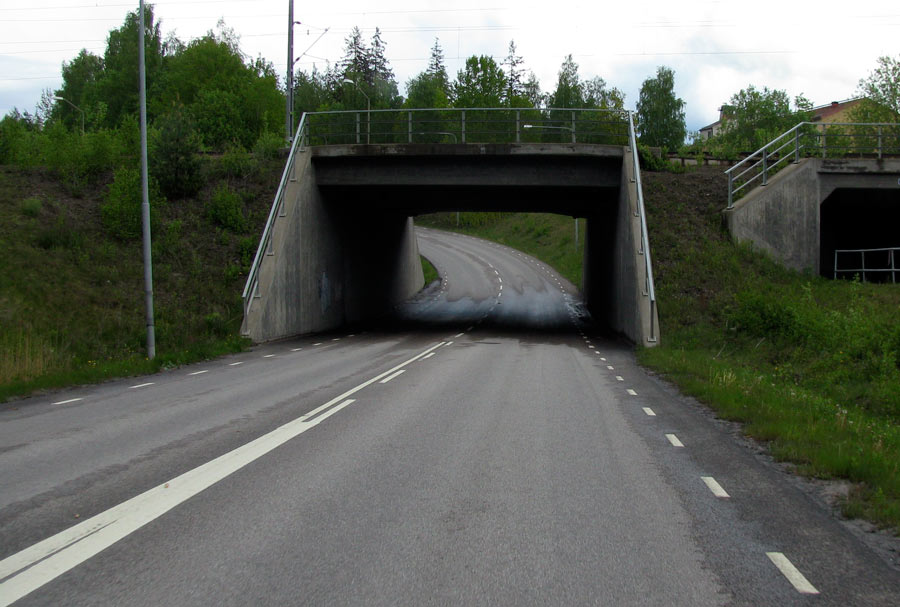
Which alternative describes the greatest dangers in the situation depicted in the photo?

Picture for question 15

Explanation

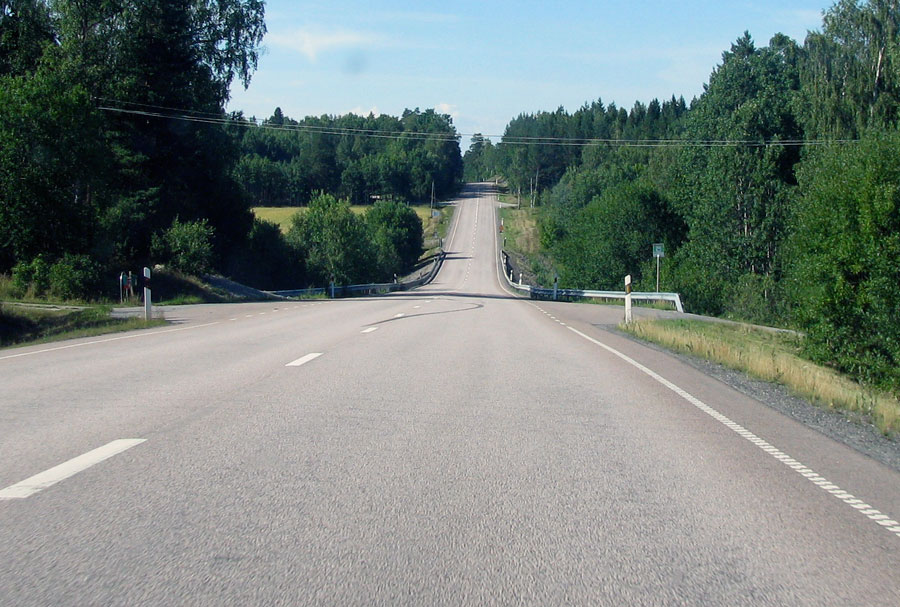
Since there is no sign warning you of the height, you can assume that the bridge is more than 4.5 metres high. The height should therefore not be an issue.

The slopes do not seem very steep or unusual, and the same is true for the width of the road.

However, it is difficult to judge the road conditions underneath the bridge. There may be water on the road, perhaps a puddle underneath the bridge that could cause aquaplaning? After the bridge, the visibility is very limited. There could be a maniac coming the other way at high speed performing a dangerous overtake.

Question 16

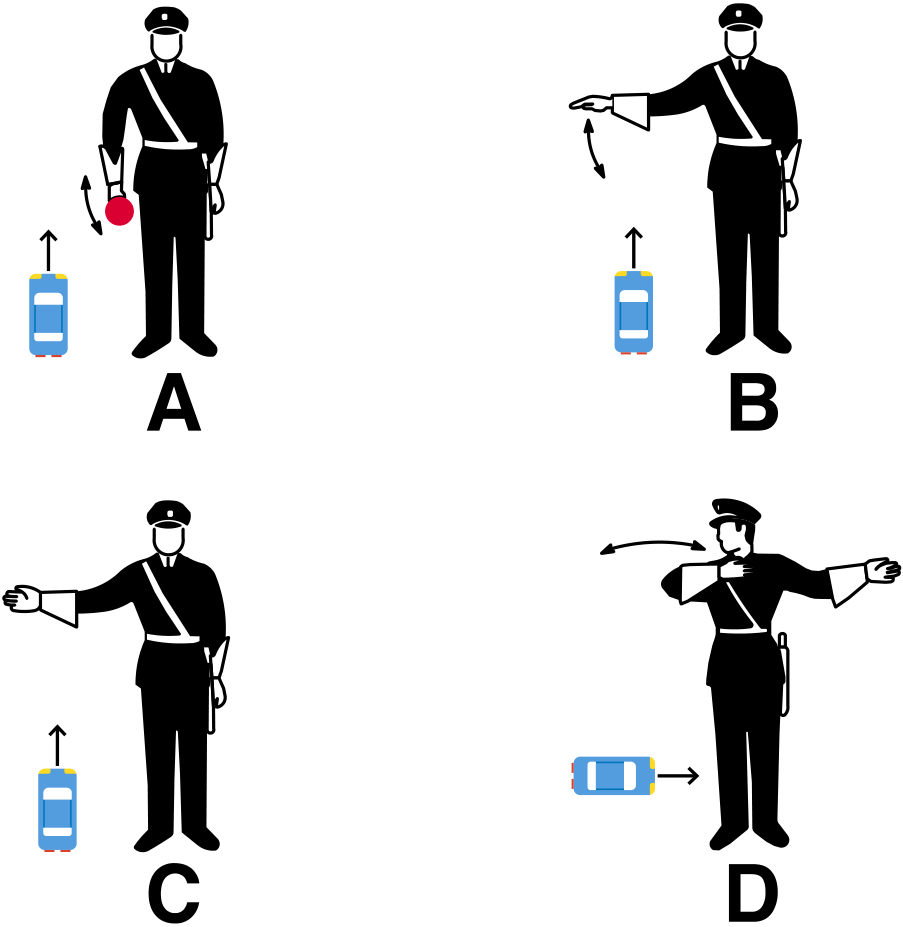
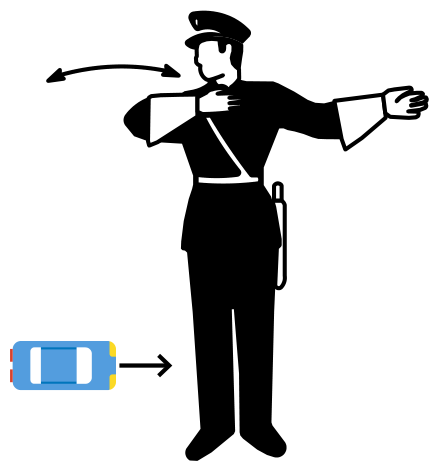
Which signal tells you to drive forward?

Picture for question 16

Explanation

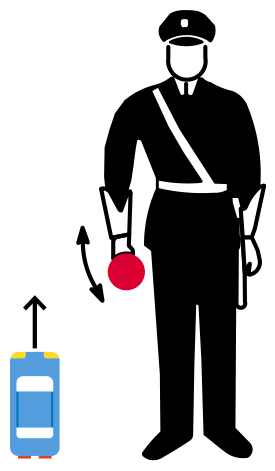
A: Stop (P3)
AStopP3

”The signal indicates a stop for the road user the light is facing. The sign is used when it is dark and in case of limited visibility. The light is positioned where it can most easily be detected by road users.”

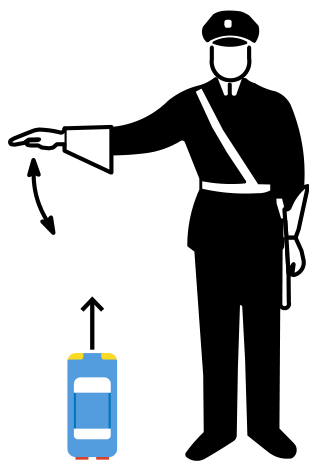
B: Reduce speed (P5)
BReduce speedP5

”The signal indicates that the road user whom the officer is facing must reduce their speed. When it is dark and visibility is poor, the signal may be highlighted with a white or amber light or a reflective device that reflects white or amber light.”

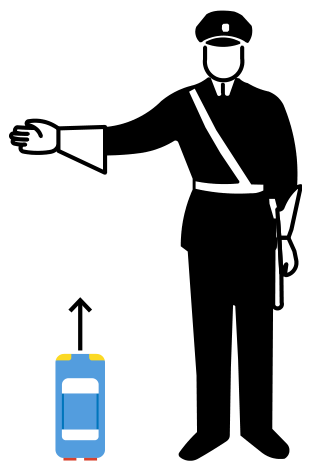
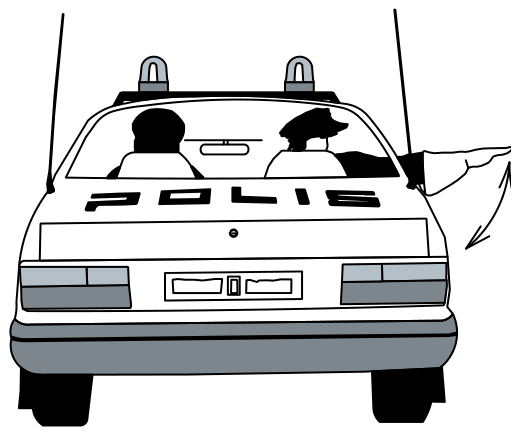
C: Stop (P1)
CStopP1

”The signal means stop for the road user coming head on or from behind. The signal is used in a junction and applies as long as the officer is facing in the same direction. For road users approaching from the side, the signal means that the road is free and that it is permitted to drive. The signal may be given in combination with the signal P2, stop. The signal may be given using a stop paddle.”

D: Drive forward (P4)
DDrive forwardP4

”The signal indicates that road users in the direction the signal is given may continue onwards. The signal is given with a waving motion in the direction of travel.”

Question 17

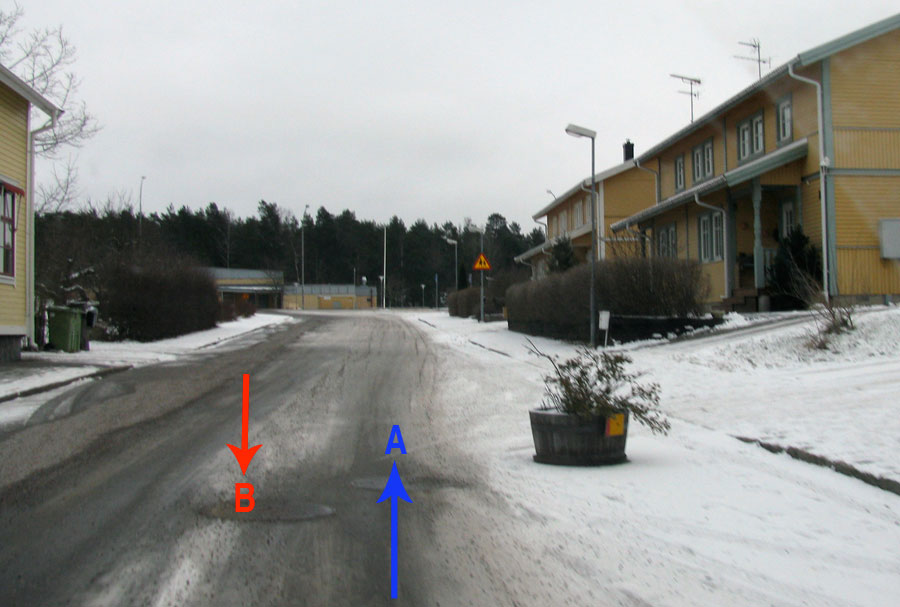
Which drivers must stop and give way if it is too narrow to pass at the same time?

Picture for question 17

Explanation

“If there is an obstruction when approaching an oncoming car, the driver who has the obstruction on their side shall stop, if this is necessary for the oncoming car to be able to pass.”

Swedish Road Traffic Ordinance
Question 18

Can stopping be prohibited despite a prohibitory sign not being erected?

Explanation

“A vehicle may not stop [...] in a roundabout”.

Swedish Road Traffic Ordinance

“Stopping a vehicle means bringing it to a standstill in a way which:

  • is not done to avoid danger
  • is not the result of traffic conditions, or
  • does not constitute parking.” (Swedish Transport Agency)

Are you not allowed to stop in a roundabout? You certainly have to do so if a queue forms!
– Standing still because the traffic situation requires it (e.g. due to a queue forming) is not counted as “stopping” according to the rules and is therefore allowed.

Why are signs not always used? It would makes things easier to understand.
– It would be impractical. For example, you may not stop in a curve where visibility is obstructed. What is considered obstructed visibility can vary. In winter there may be snow embankments that entirely obstruct visibility, whereas in the summer the visibility is good. Should the Swedish Transport Administration invest tax money into setting up new signs on the curve several times a year?

Question 19

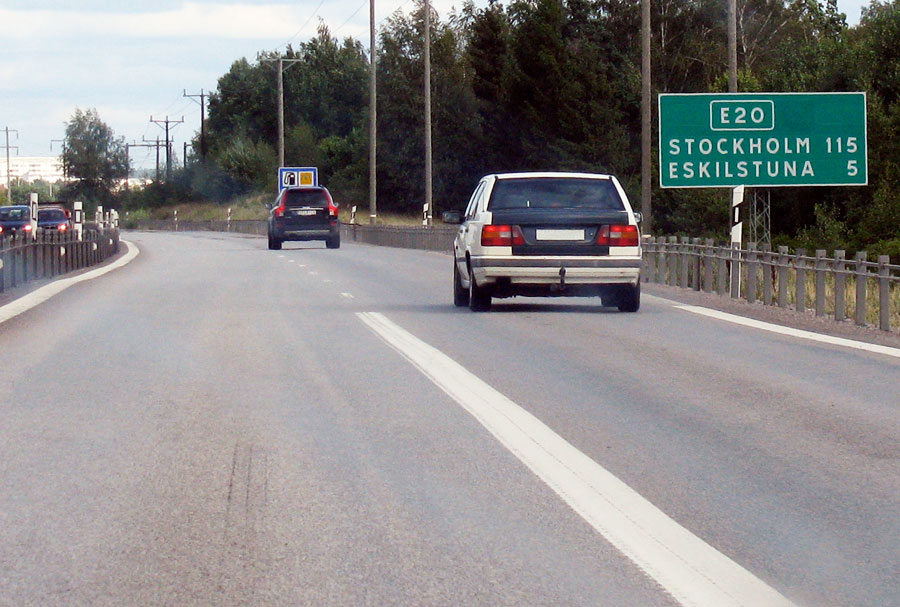
Does the sign on the right indicate something regarding the maximum permitted speed?

Picture for question 19

Explanation

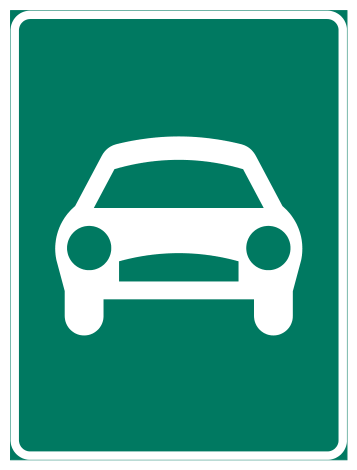
“Motorway [...] A vehicle may not be driven at speeds higher than 110 kilometres an hour [...] The Swedish Transport Administration may issue regulations indicating that the maximum permitted speed on a motorway is 120 kilometres per hour.”

Swedish Road Traffic Ordinance

The maximum permitted speed may thus vary. It is therefore impossible to say with certainty what the speed limit is at the location in the picture.

Question 20

Can probability learning be positive thing?

Explanation

Probability learning means that you use prior experience of a situation to assess the probability of something happening.

  • Good probability learning: You are used to trains passing frequently at a railway crossing and you are therefore extra cautious.
  • Bad probability learning: You are used to trains passing very rarely at a railway crossing and therefore do not look before you cross.
Question 21

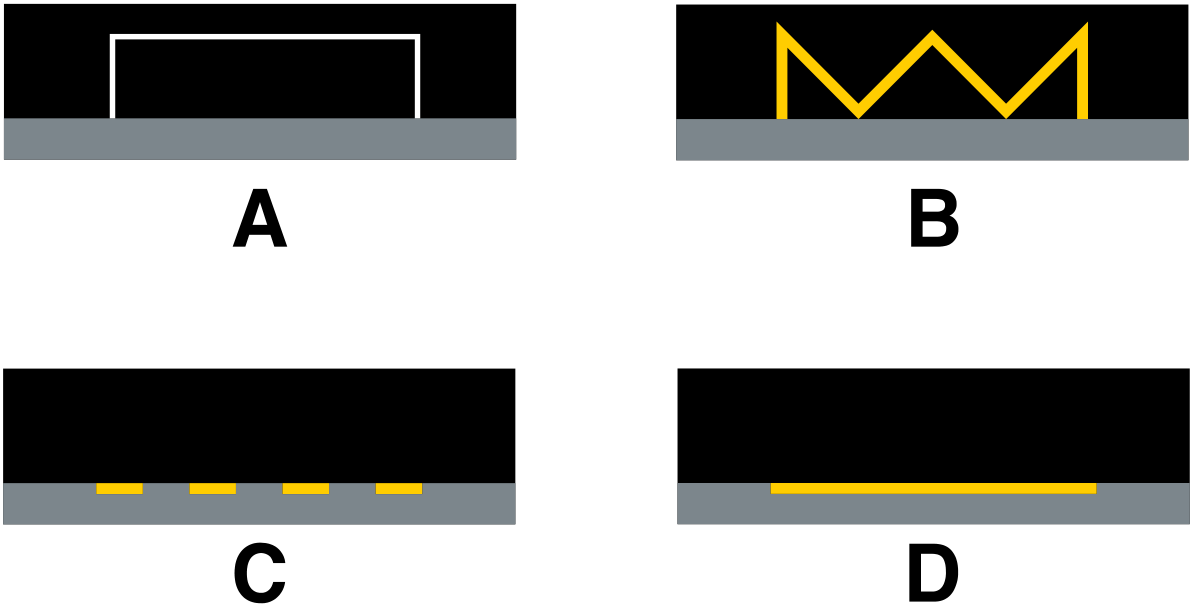
Which road marking only indicates a prohibition on parking?

Picture for question 21

Explanation

B (M23) is a reinforcement of line M21 or M22. The significance of B is determined by M21 or M22.

A: Parking space (M24)
AParking spaceM24

”The marking indicates the boundary of a vehicle parking space. The marking can have a broken line.”

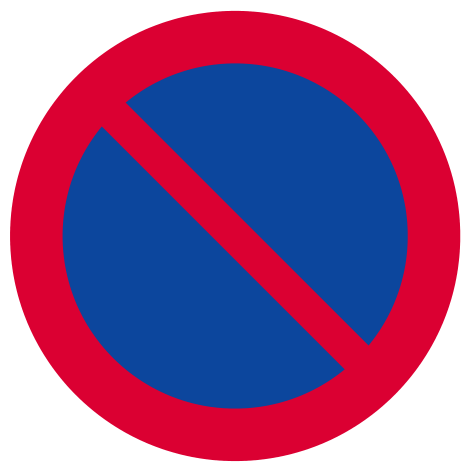
B: No stopping and parking or no parking (M23)
BNo stopping and parking or no parkingM23

”This marking is used as a reinforcement of the road markings M21, no stopping and parking, and M22, no parking. No other colour may be used.”

C: No parking (M22)
CNo parkingM22

”This marking indicates a prohibition on parking a vehicle and is placed along the side of the carriageway. The marking is also used to indicate an extension of a bus stop. The marking has a distance ratio of 1:1 between the dashes and spaces. No other colour may be used.”

D: No stopping and parking (M21)
DNo stopping and parkingM21

”This marking indicates a prohibition on stopping and parking a vehicle and is placed along the side of the carriageway. No other colour may be used.”

Question 22

The grey car intends to drive out onto a road from the parking facility. Which of the following is true?

Picture for question 22

Explanation

“On walkways, paths intended for pedestrians and in terrain, drivers are obliged to give way to pedestrians. Drivers are also obliged to give way to pedestrians when a vehicle drives onto a carriageway or hard shoulder from a property exit by the road.”

Swedish Road Traffic Ordinance
Question 23

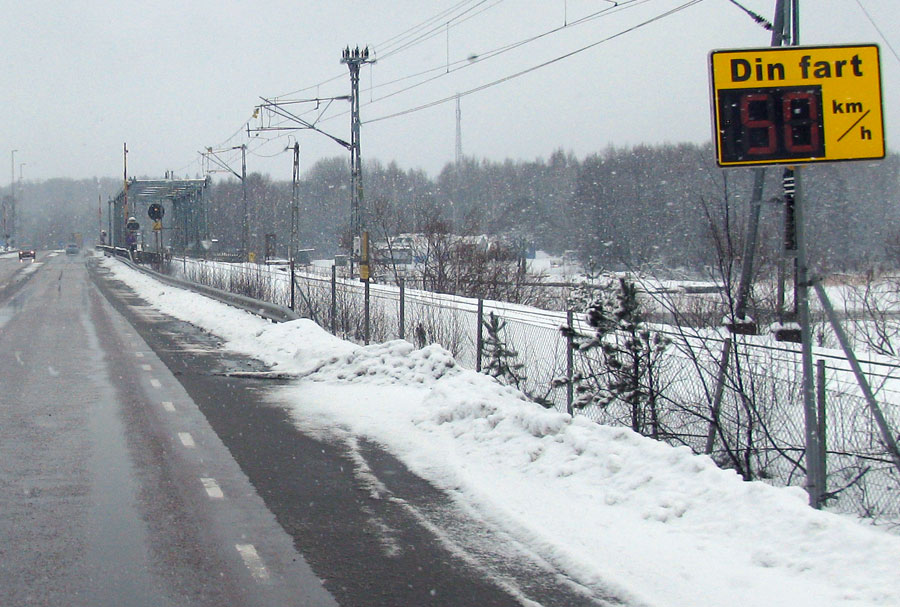
Which statement is true regarding the sign on the right?

Picture for question 23

Explanation

Din fart
your speed

This is not an official road sign, but a board that measures and shows you how fast you are going.

Question 24

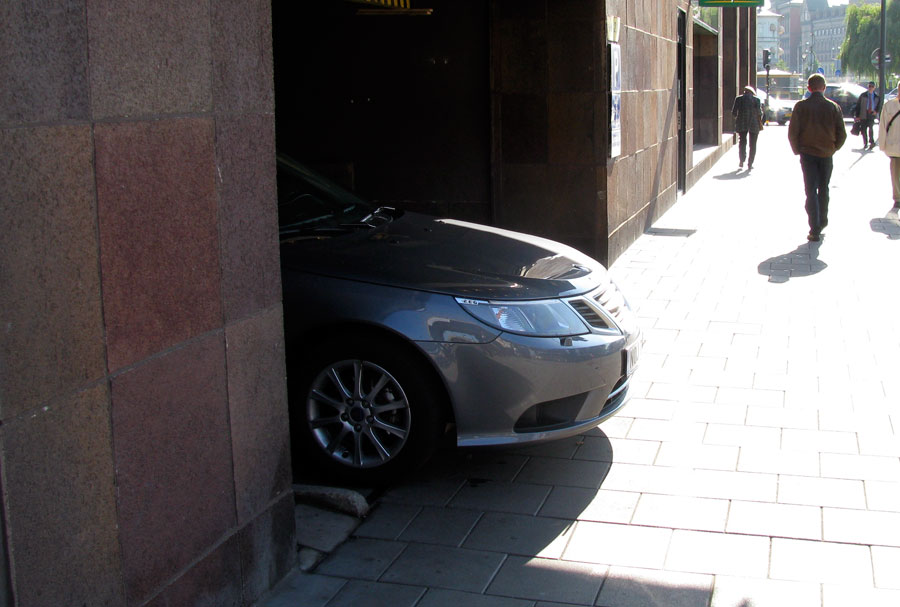
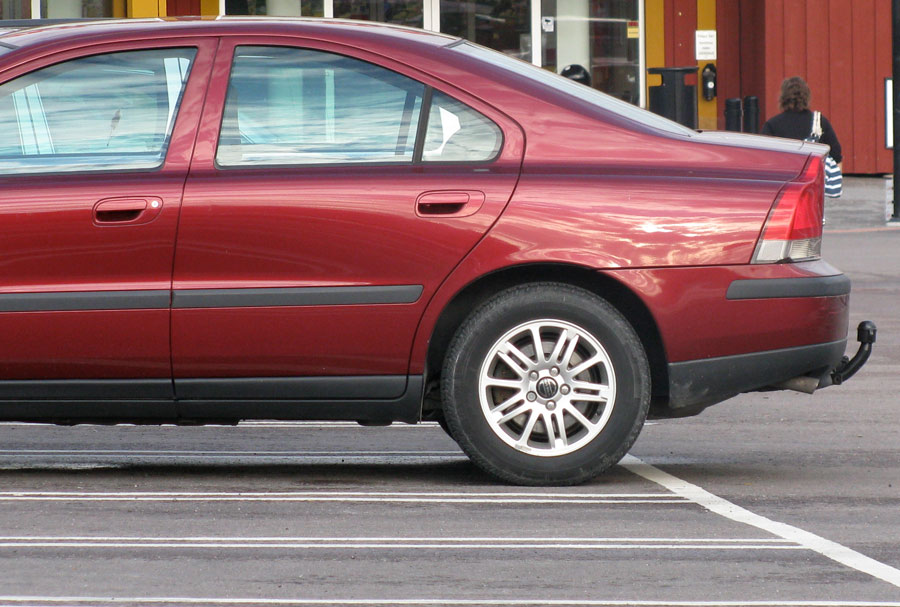
Is it permitted to park like the car in the picture?

Picture for question 24

Explanation

“A vehicle may not be parked so that [...] the vehicle has a wheel outside a parking space or other marking that indicates where you may park.”

Swedish Road Traffic Ordinance

In other words, it is the wheels that count, not the body of the car.

Question 25

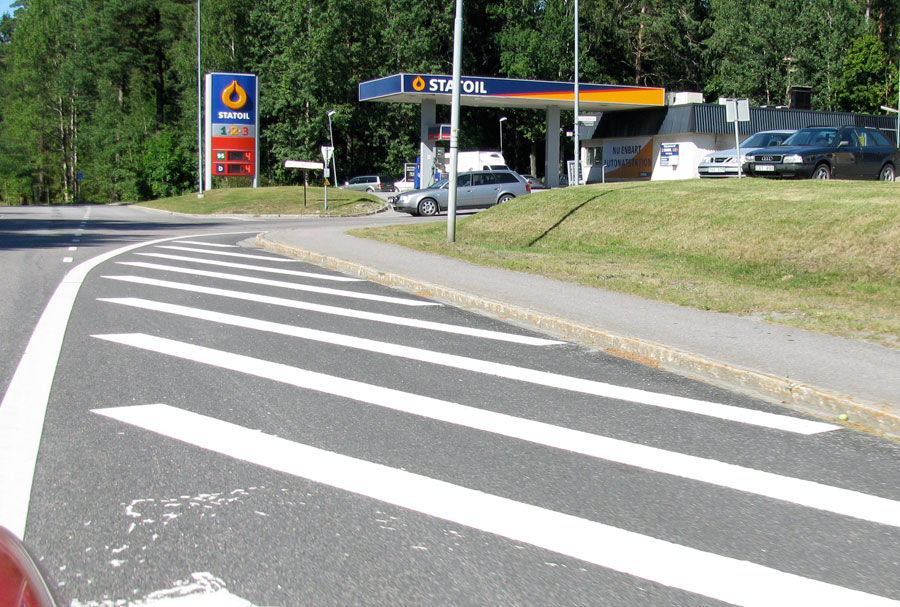
Which statement is true in regard to the lined area to the right of the photo?

Picture for question 25

Explanation

Obstruction marking (M9)
Obstruction markingM9

”The marking indicates an area where vehicles may not drive according to Chapter 3, Section 11 of the Road Traffic Ordinance. The marking consists of angled or oblique lines depending on the conditions at the location. Part or all of the area can be painted white.”

Chapter 3, Section 11: “A vehicle may not drive on an obstruction marking or across a solid line with any wheel.
However, departures from this rule are acceptable under particular caution if
1. this is required in order for the vehicle to pass an obstruction on the road;
2. the junction is otherwise too narrow for the vehicle;
3. a solid line needs to be crossed to enter or exit a property or equivalent area; or
4. if in the direction the vehicle is travelling there is a broken line immediately to the right of the solid line.”
(Swedish Road Traffic Ordinance)

There are no indications that one of these exceptions are applicable.

Question 26

What is the smallest permitted tread depth on winter tyres in winter conditions?

Explanation

“In winter road conditions during the period 1 December–31 March, the tread depth must be at least 3 mm.”

Swedish Transport Agency
Question 27

What does LGF stand for in Swedish?

Explanation

“LGF = Långsamtgående fordon (slow-moving vehicle)”

Transportstyrelsen
Question 28

What is the most dangerous aspect of fog?

Explanation

Good visibility is extremely important, as around 90% of all information required to drive safely is provided by visual input.

Question 29

What does this road sign mean?

Picture for question 29

Explanation

Positioning of vehicle (T21)
Positioning of vehicleT21

”The panel indicates how a vehicle is to be positioned in a parking space. The panel is specific to the conditions at the location.”

Question 30

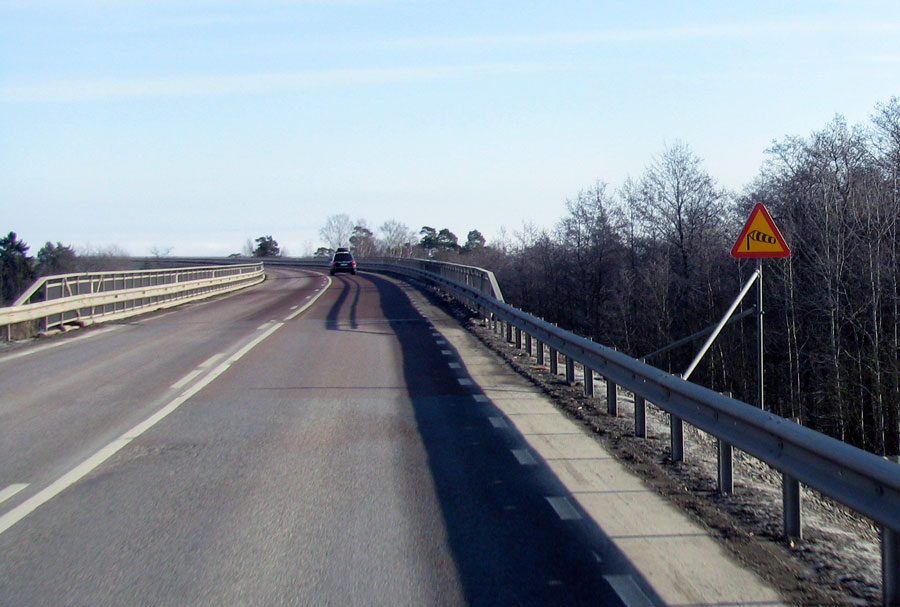
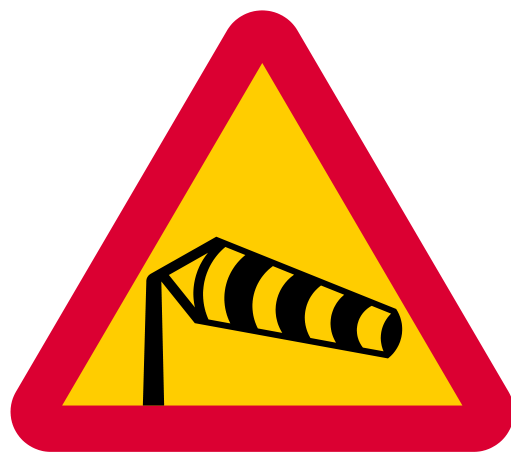
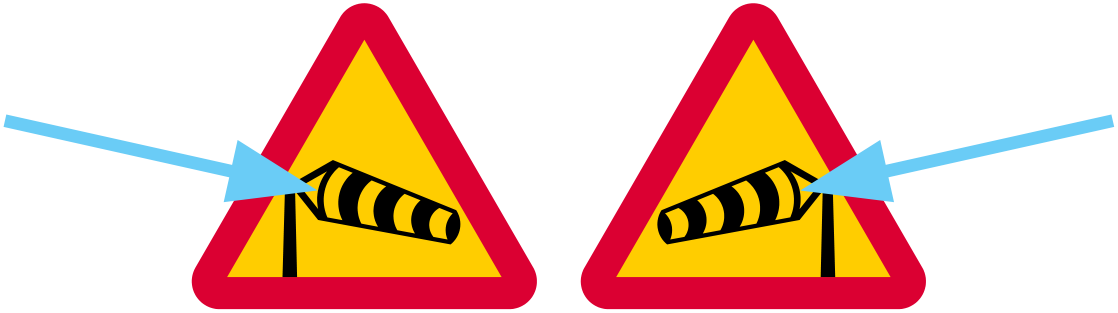
From which direction does the crosswinds normally come from according to the sign?

Picture for question 30

Explanation

Beware of dangerous crosswinds (A24)
Beware of dangerous crosswindsA24

”The sign indicates a stretch of road where there are often heavy crosswinds. The symbol is adapted to the conditions of the location.”

Illustration for question 30
Question 31

A moose has started crossing the road. You realise that you have to swerve to avoid an accident. Which is the best option?

Explanation

“Moose and deer will rarely turn back once they have started crossing the road – if you do not have time to brake, you should always try to go behind the animal.”

Du och jag i trafiken [You and me in traffic], 28th edition, page 75
Question 32

Are cyclists and moped riders allowed to pass on the right side of cars?

Explanation

“Cyclists and moped riders may overtake vehicles other than bicycles and mopeds on the right side.”

Swedish Road Traffic Ordinance
Question 33

You are approaching a four-way crossing in which the right-hand rule applies. A cyclist is approaching from the right, cycling on the road. Do you have to yield to the cyclist if you are crossing their path?

Explanation

The right-hand rule: “When the paths of two vehicles intersect, the one driver must give way to the vehicle approaching from the right”. (Swedish Road Traffic Ordinance)

Is a bicycle considered a vehicle? – The answer is yes: “Bicycle […] A vehicle intended to be propelled by pedal or crank device”. (Act on road traffic definitions)

Question 34

What is microsleep?

Explanation

Nationalencyklopedin on microsleep: “Sleep that occurs for a brief moment without being noticed, particularly when exhausted: it is believed that the train driver failed to see the stop signal due to ~.”

Question 35

You are driving on a two-way road. Where would you see this verge post?

Picture for question 35

Explanation

“Along a two-way road, verge posts for each direction shall display rectangular reflectors on the right side of the road and round reflectors on the left side.”

Swedish Transport Administration
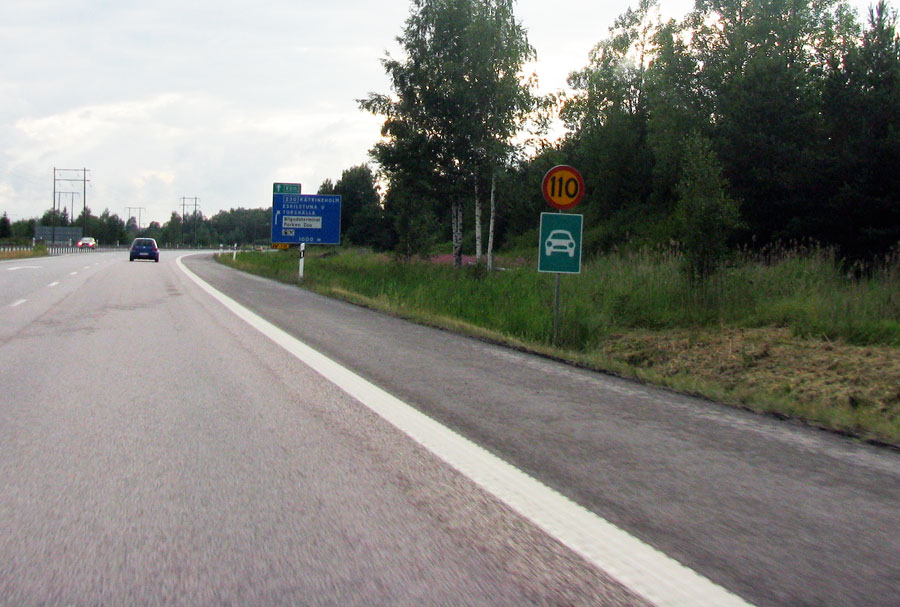
On the left side of a two-way road, there is a post with round reflectors.

Question 36

Are you allowed to drive straight on in the situation in the picture?

Picture for question 36

Explanation

The plastic posts are not erected in such a way that could be interpreted as prohibiting a vehicle from driving straight on. The sign on the right means an area where parking is prohibited. The condition of the road does not prohibit driving straight on either.

Question 37

How many lives would be spared each year if everyone kept to the speed limits?

Explanation

“If everyone kept to the speed limits, 100–150 lives would be spared each year.”

Swedish Transport Administration
Question 38

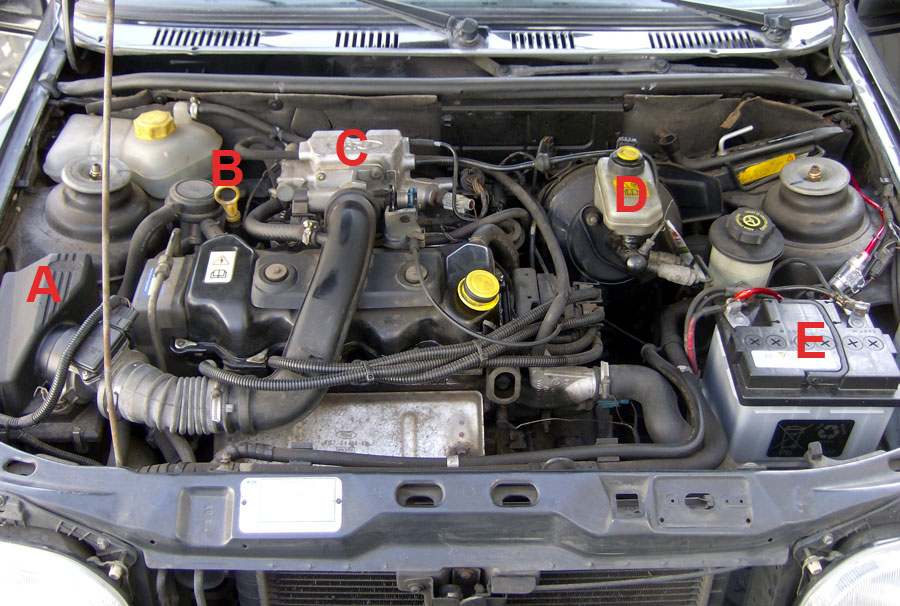
Which letter shows where you check the engine oil level?

Picture for question 38

Explanation

See the Driving Licence Book, 19th Edition, page 144 or Vägvisaren B, 14th edition, page 55.

Question 39

Which statement is true regarding accidents caused by tiredness late at night?

Explanation

“It has been consistently found that men have more accidents related to tiredness than women, but primarily that younger drivers have more accidents due to tiredness late at night than older ones.”

Karolinska Institutet
Question 40

What does the additional panel in the picture mean?

Picture for question 40

Explanation

Direction (T12)
DirectionT12

”The panel indicates the direction to what is stated on the sign. The panel is specific to the conditions at the location.”

Question 41

Are you permitted to drive a class I moped (EU moped) if you have a category B licence?

Explanation

“Category B also gives the licence holder the right to drive
- Moped class I (EU moped), a tractor, heavy equipment class I and class II as well as three and four- wheeled heavy motorcycles
- Terrain scooter (if the licence was issued before 1 January 2000)”

Swedish Transport Agency
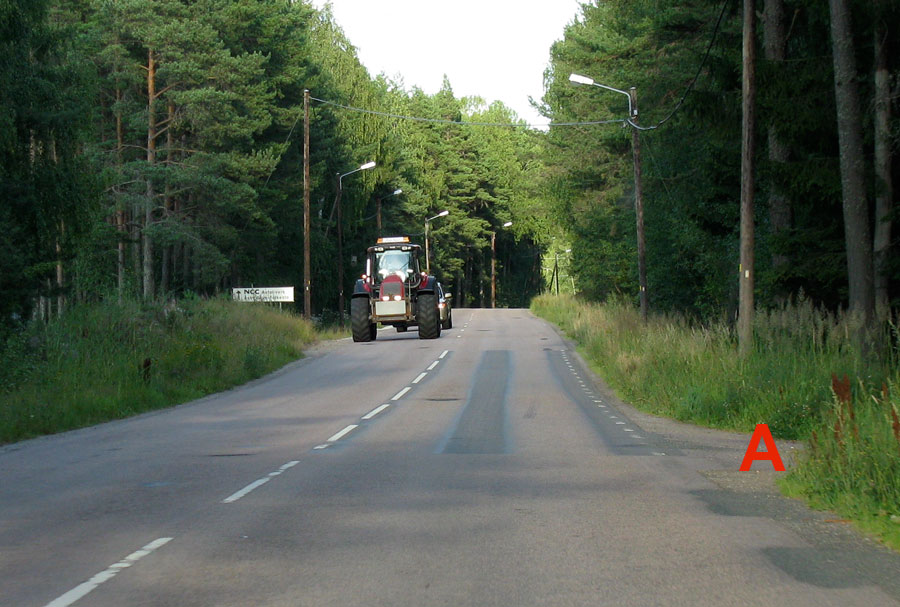
Question 42

You are driving the car behind the tractor. Should you take into account the possibility of the tractor turning off at A when you plan to overtake?

Picture for question 42

Explanation

The risk is important to acknowledge; the Driving Licence Book (19th Edition, page 89) specifically addresses this type of situation: “[...] when overtaking a tractor, you must be aware that it may turn in essentially anywhere. A tractor does not require a road to turn off at.”

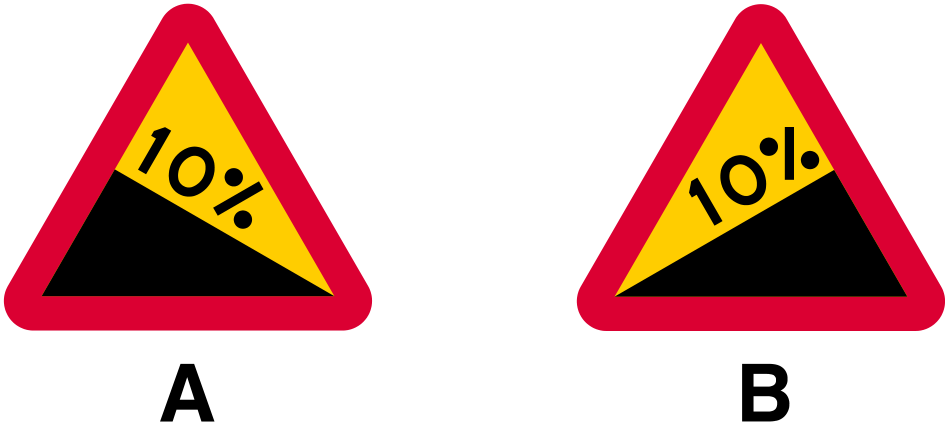
Question 43

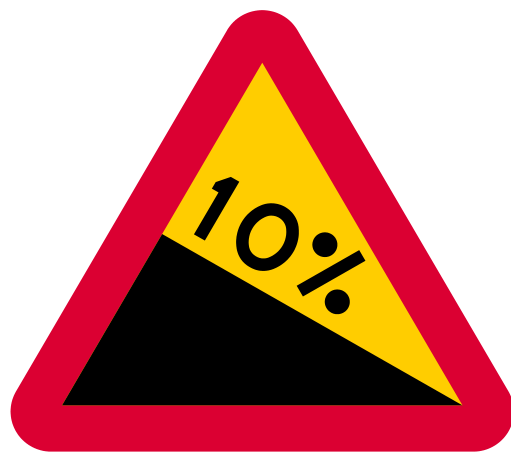
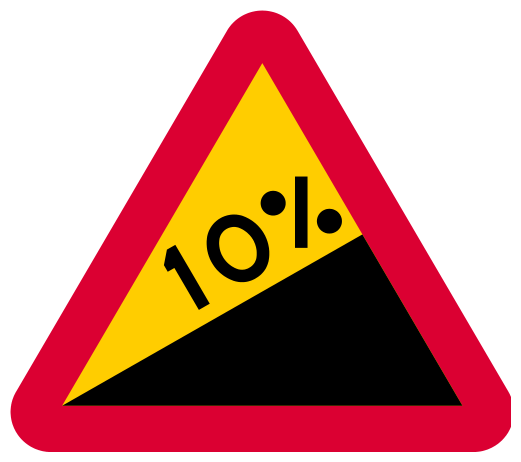
Which of these signs warns you of a steep downwards slope?

Picture for question 43

Explanation

Mnemonic rule: “read” the sign from left to right, i.e. starting from the left side, then you will see that the slope is going downwards.

A: Steep hill downwards (A3)
ASteep hill downwardsA3

”The sign indicates a steep hill downwards. The numbers indicate the gradient in per cent and is specific to the conditions of the location.”

B: Steep incline (A4)
BSteep inclineA4

”The sign indicates a steep incline. The numbers indicate the gradient in per cent and is specific to the conditions of the location.”

Question 44

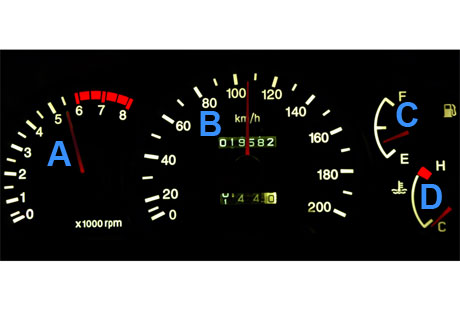
Which gauge shows revolutions per minute in the engine?

Picture for question 44

Explanation

The abbreviation rpm under A stands for revolutions per minute.

Question 45

Which of the following is applicable to wide tyres and fuel consumption?

Explanation

“As a rule, a wider tyre will consume more fuel than a narrow one.”

Swedish Consumer Agency

This is due to the increased air resistance and increased friction.

Question 46

How is this road sign used?

Picture for question 46

Explanation

Marking for obstacle (X2)
Marking for obstacleX2

”This device indicates that accessibility on the road is restricted due to an obstacle. The device can also indicate that a road is entirely or partially closed for traffic. If the device is used during roadworks or similar work, it is red and yellow.”

Question 47

Which statement is true about deep learning?

Explanation

“In order not to forget your theoretical knowledge after a short while, it is important that you strive to achieve deep learning.”

Driving Licence Book, 19th Edition, page 11
Question 48

What should you think about if you are planning to turn right?

Picture for question 48

Explanation

“The directional sign Private road entails a risk of unpleasant surprises. [...] in the form of railway crossings without warning signs or a junction with a major priority road where no warning sign is erected.”

Driving Licence Book, 19th Edition, page 99

If there was nothing special to consider when you see a Private road sign, a regular directional sign could be placed there, right?

Directional sign (F5)
Directional signF5

It is therefore advisable to not only think of the text, but also what type of sign it is.

Question 49

Is hard packed (polished) snow good or bad from a grip perspective?

Explanation

Packed or polished snow is formed when snow is compressed under hard pressure. It is often found at junctions where may cars (and trucks) are standing still to then accelerate.

Packed snow has approximately the same properties as ice, i.e. poor grip. Compare it to walking in deep snow. It is more difficult but the risk of slipping and loosing grip is small.

Question 50

Are you allowed to hinder someone performing a dangerous overtake?

Explanation

“The driver may not accelerate or otherwise hinder the overtaking.”

Swedish Road Traffic Ordinance

In most cases, it would create an even more dangerous situation if you tried to hinder the person.

Question 51

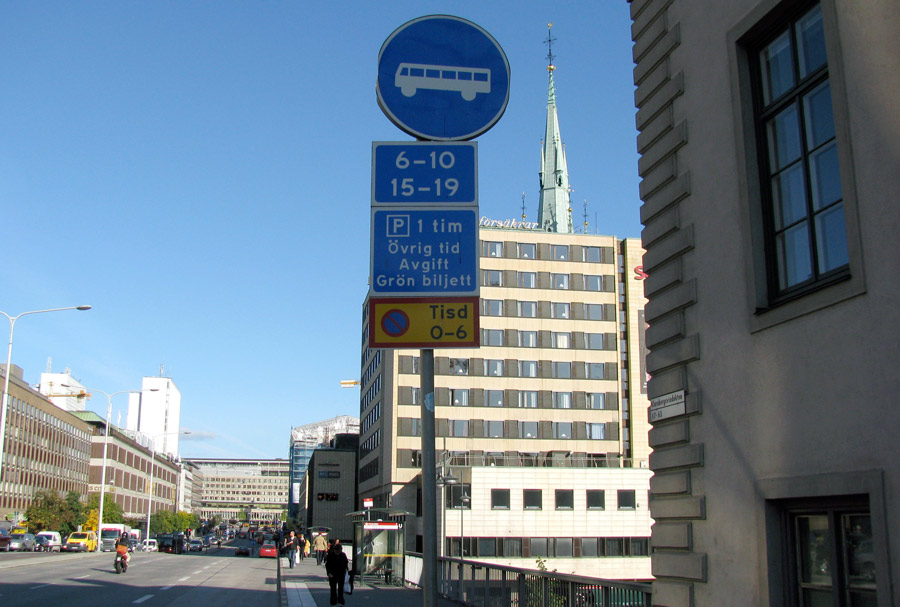
It is 05:00 on a Tuesday morning. Are you allowed to park your car here?

Picture for question 51

Explanation

1 tim
1 hour
Övrig tid
Other times
Avgift
Fee
Grön biljett
Green ticket
Tisd
Tuesday

You must take all signs into consideration. According to the three blue signs, you are allowed to park here, but the last sign prohibits you from doing so.

Vehicle parking is prohibited (C35)
Vehicle parking is prohibitedC35

”The sign indicates it is prohibited to park a vehicle. The directions apply on the side of the road where the sign is posted.”

Question 52

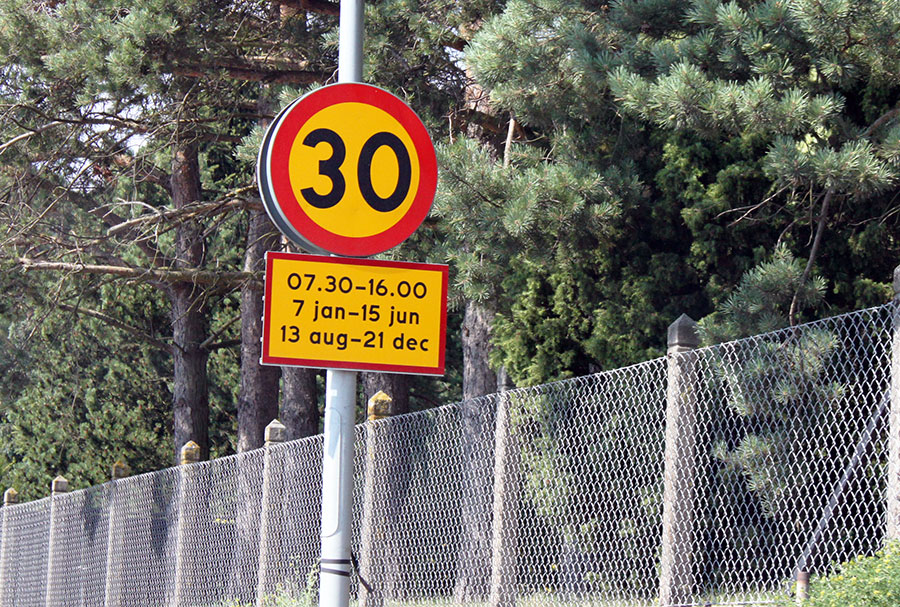
You pass these road signs and have no watch at hand. However, you know that the day is Friday 25 July. Which of the following applies?

Picture for question 52

Explanation

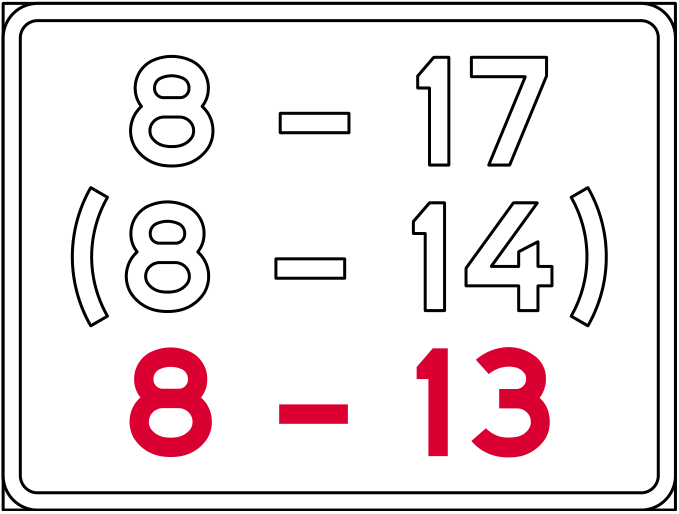
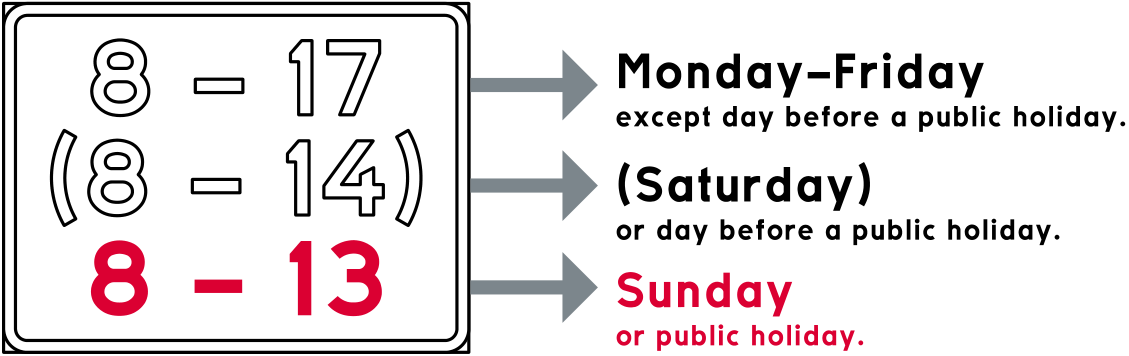
Time indicationT6

”The panel indicates when the directions on the road sign applies. If times are used in combination with other conditions, the panel also indicates when these conditions apply. Black or white figures without brackets indicate weekdays, except weekdays before Sundays or public holidays. Black or white figures within brackets indicate weekdays before Sundays or public holidays. Red figures indicate Sundays or public holidays. If the time limit extends past midnight, it applies after midnight the following day. If a certain day or certain weekday is indicated, the regulation applies to this day regardless of whether the day is a weekday, Sunday or public holiday.”

Question 53

The air pressure in your tyres is 50% above the recommended value. What is true?

Explanation

“[…] you should not have more than 10–15 per cent above the recommended pressure. […] If you increase the pressure an extreme amount, you reach a point there the tyre starts to bulge out, and the surface touching the road is reduced. The traction is reduced and the wear increases heavily. If the air pressure is too high, there is also an impact on your comfort – the car starts to feel bumpy and rough.”

Swedish Transport Administration
Question 54

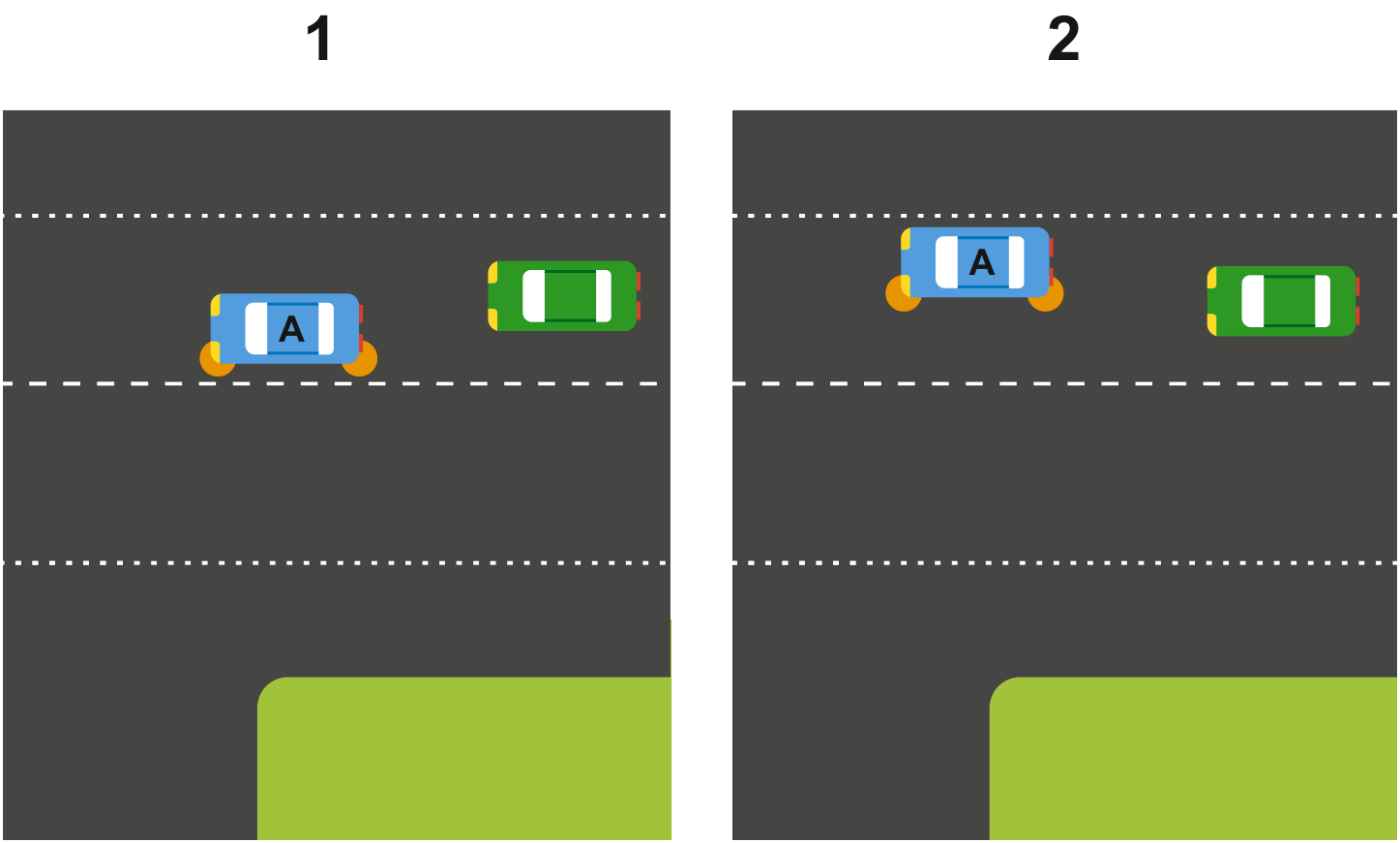
Car A intends to turn left. How should the driver place the vehicle before turning?

Picture for question 54

Explanation

“Overtaking shall [...] be done on the right when the driver of the car in front is turning left or is clearly preparing for such a turn.”

Swedish Road Traffic Ordinance

If A is standing as in image 1, the car behind it can pass on the right side without any risk of collision.

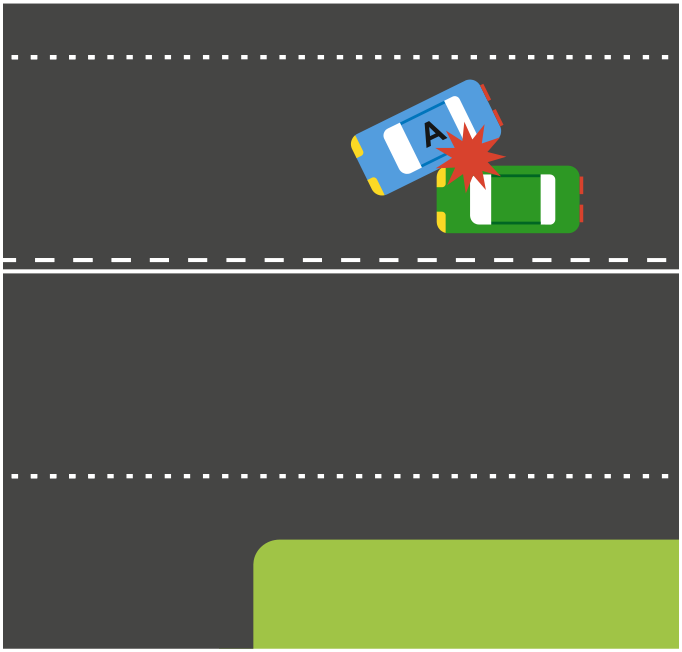
If car A is instead placed as in 2, the car behind it may decide to overtake as A is turning, which results in a collision:

Illustration for question 54
Question 55

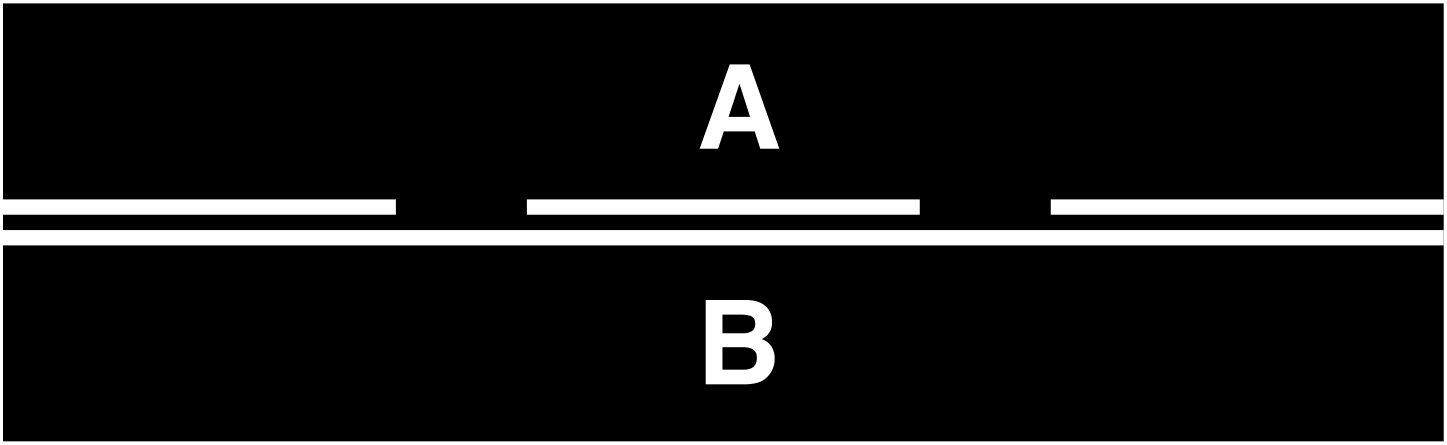
You are driving in lane B. Can you change into A if no special circumstances prevail?

Picture for question 55

Explanation

Warning line and solid line (M11)
Warning line and solid lineM11

”This marking is used where it is not permitted for a vehicle on the side of the solid line to change lanes. The marking can also be used to indicate an oncoming solid line on the side where there is a warning line.”

Since the line is solid on your side, you may not normally cross it.

Question 56

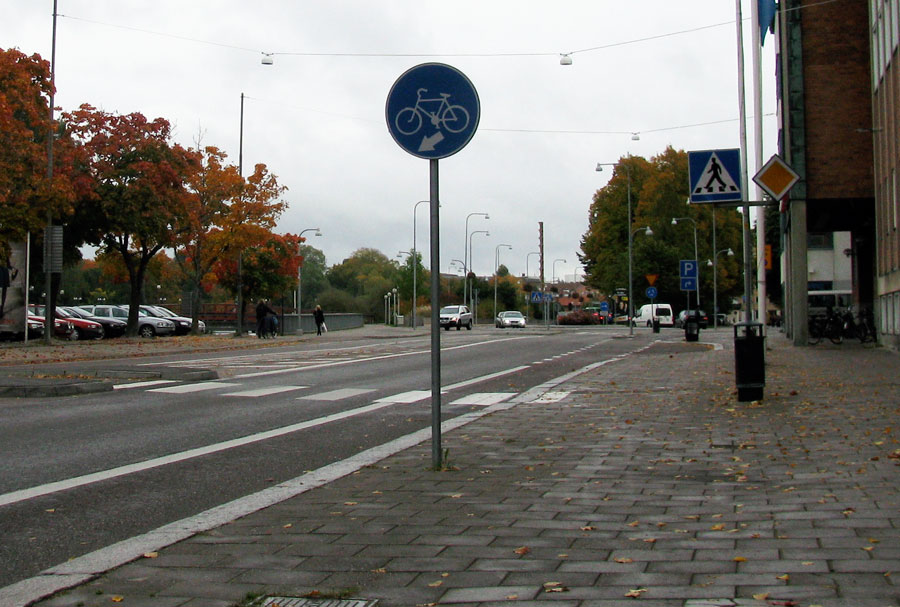
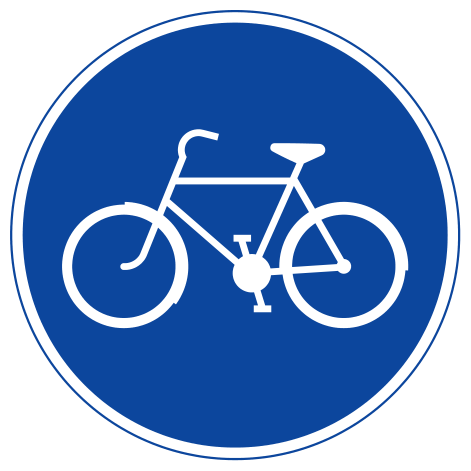
What does the bicycle sign in the picture mean?

Picture for question 56

Explanation

Bicycle path (D4)
Bicycle pathD4

”If class II mopeds may not be driven on the path, this is indicated on an additional panel.”

Question 57

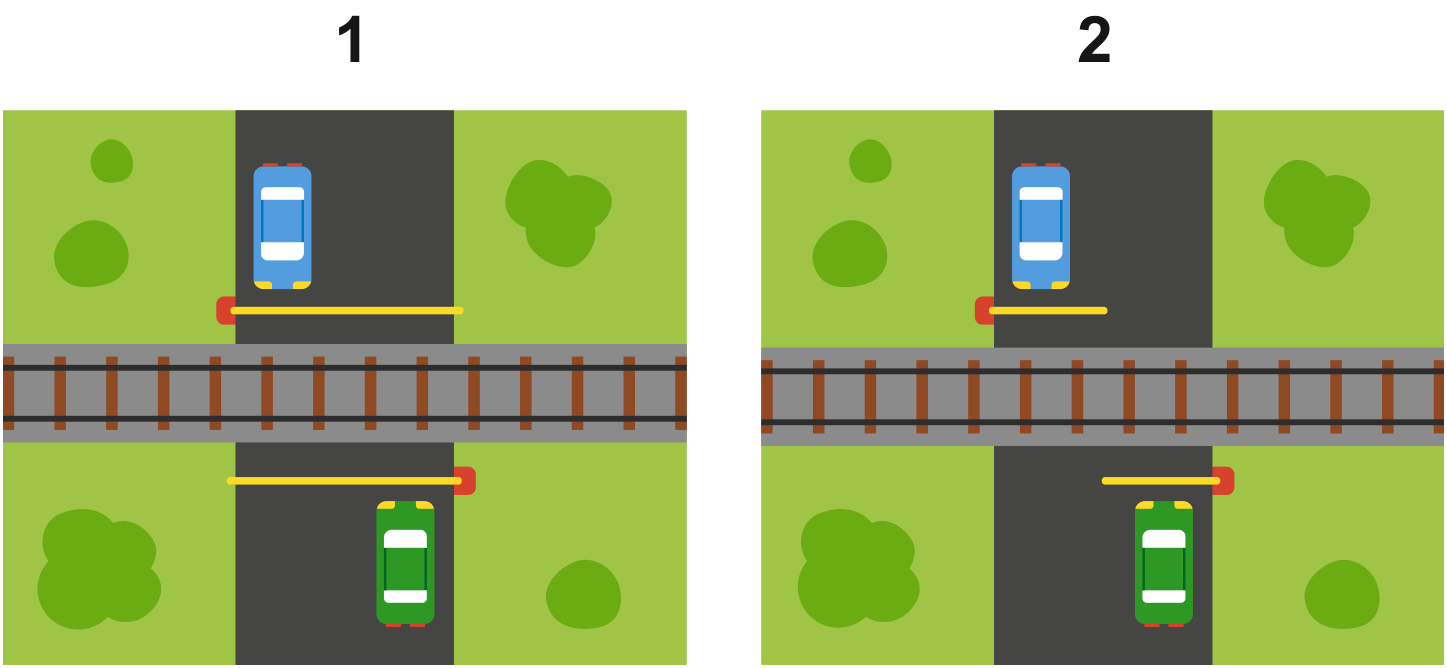
What does half-barriers mean in the context of a level crossing?

Picture for question 57

Explanation

A half-barrier is a gate at a railway crossing that only bars the right side of the road.

Question 58

What is a temporary spare tyre?

Explanation

“Several car manufacturers have begun to replace the regular spare tyre with a so-called temporary spare. These tyres are narrower and lighter”.

Vägvisaren B, 14th edition, page 73
  • A regular spare tyre is exactly the same type of tyre that the car normally has. You are allowed to drive with this just as with a regular tyre. However, it is often best to repair the old wheel and put it back, as a brand new tyre on one side can worsen the car’s handling.
  • A temporary spare is a narrower tyre version that is only suitable for bringing the car into a shop. The car’s instruction manual contains instructions regarding maximum speed, maximum distance and lifting pressure for the temporary spare.
Question 59

How should you act to minimise carbon dioxide emissions?

Explanation

“Do not have the engine idling. The car uses more fuel than expected when idling. When the engine idles, the car also emits significant quantities of hazardous substances. [...] Only start the engine when you are about to drive away; the temperature then increases quickly in the engine and car.”

Swedish Transport Administration
Question 60

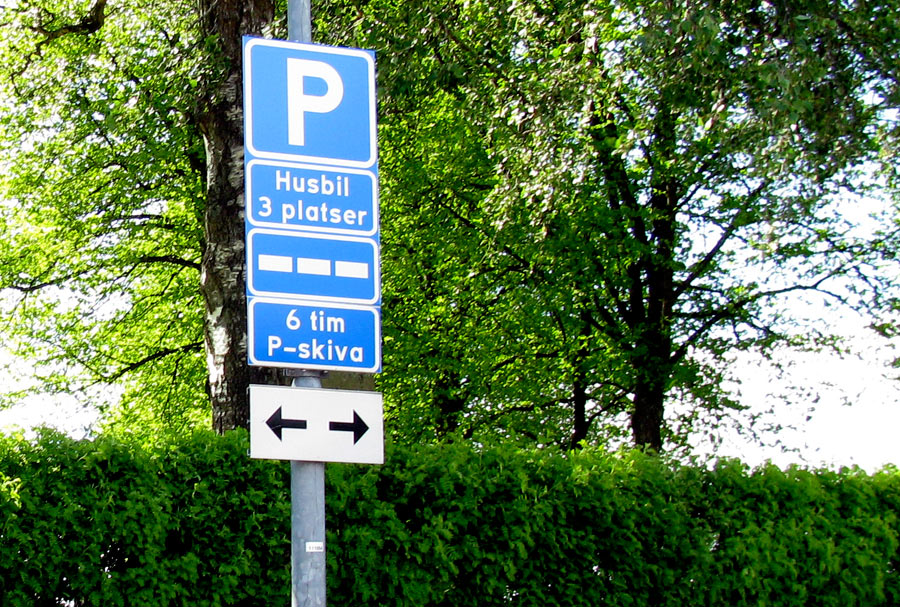
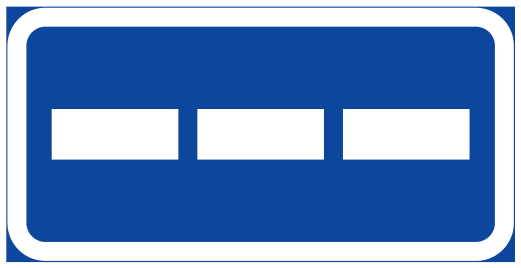
What does the sign in the middle with the three lines on indicate?

Picture for question 60

Explanation

Husbil, 3 platser
Mobile home, 3 spaces
P-skiva
Parking disc
Positioning of vehicle (T21)
Positioning of vehicleT21

”The panel indicates how a vehicle is to be positioned in a parking space. The panel is specific to the conditions at the location.”

Question 61

Do all car batteries need to be filled up with distilled water sometimes?

Explanation

“Newer car batteries are maintenance-free and cannot be filled up with distilled water.”

Driving Licence Book, 19th Edition, page 139
Question 62

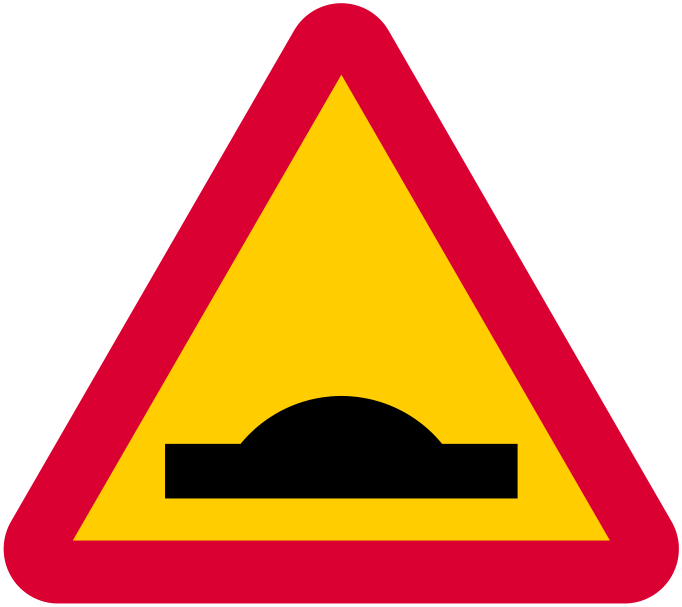
What does this road sign mean?

Picture for question 62

Explanation

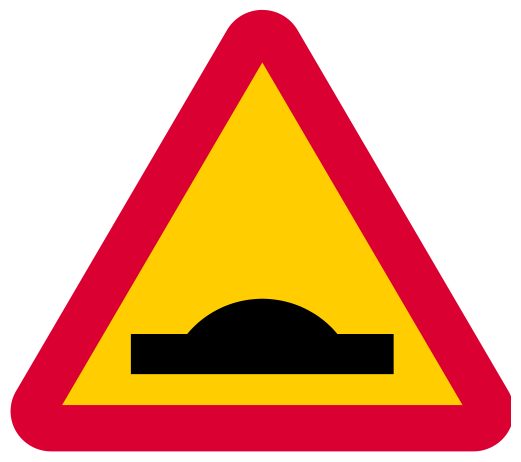
Speed bump warning
Speed bump warning

”The signs indicate a raised hump or gutter installed as a speed-reducing measure.”

Question 63

What is the term for the weight when the car has a driver but no load?

Explanation

Unladen weight: “The overall weight of the vehicle in normal, fully operational condition with the heaviest body belonging to the vehicle, tools and spare wheel belonging to the vehicle, fuel, lubricating oil and water, along with the driver.” (Road Traffic Definitions Act)

Question 64

Where should you position your car if you want to stop in the parking space?

Picture for question 64

Explanation

“Stop as far forward as possible so that it is easy for others to take the space behind you.”

Driving Licence Book, 19th Edition, page 104

It is safer and more practical for everyone if you stop as far forward as possible.

Question 65

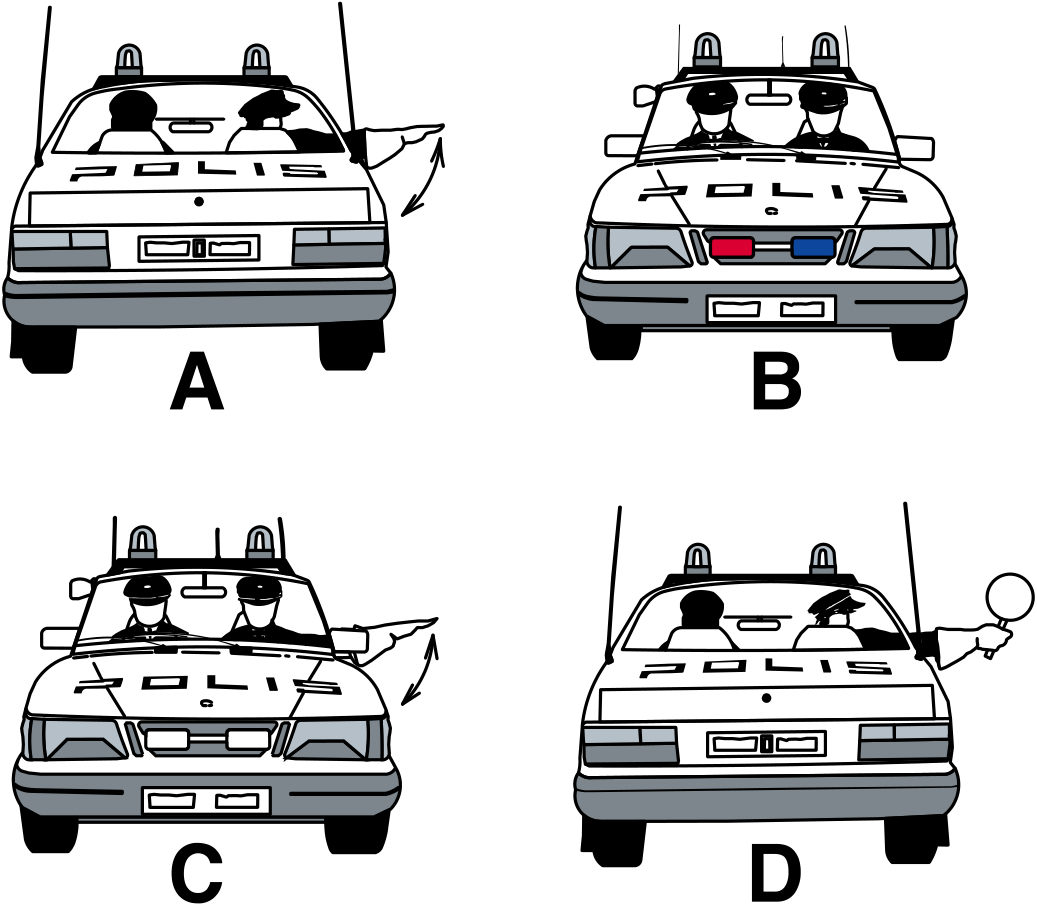
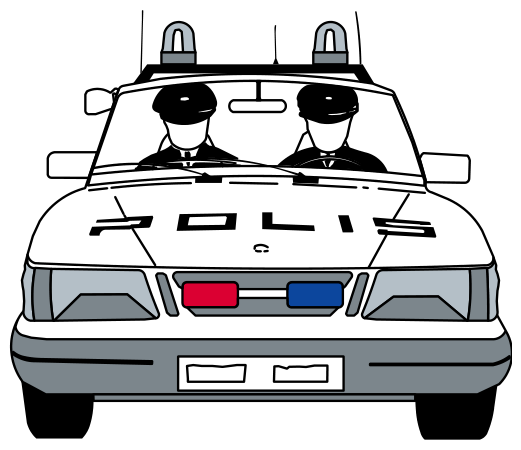
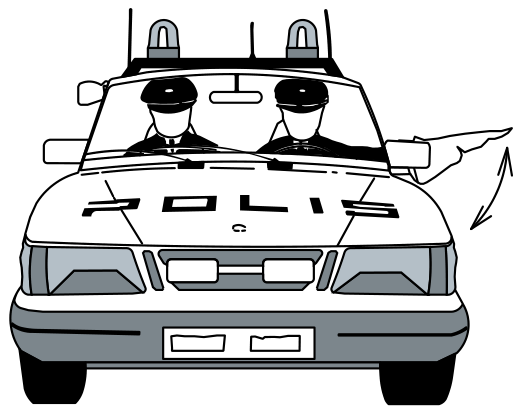
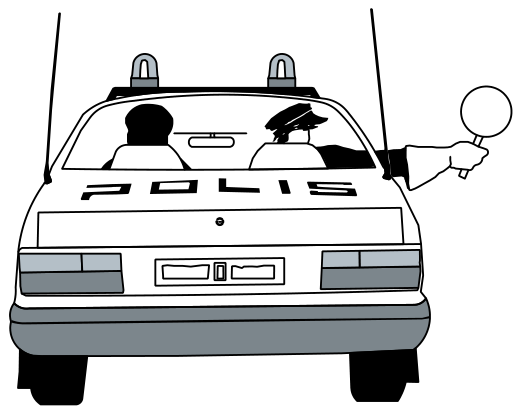
Which sign means you must follow the police vehicle and stop behind it when it stops?

Picture for question 65

Explanation

A: Reduce speed (P8)
AReduce speedP8

”The signal indicates that the road user whom the officer is facing must reduce their speed. When it is dark and visibility is poor, the signal may be highlighted with a white or amber light or a reflective device that reflects white or amber light.”

B: Pull over to the side of the road and stop in front of the police vehicle (P11)
BPull over to the side of the road and stop in front of the police vehicleP11

”The signal indicates that the driver of the vehicle in front of the police vehicle is to pull over to the side of the road and stop. The signal is given with alternately flashing blue and red lights.”

C: Reduce speed (P9)
CReduce speedP9

”The signal indicates that road users coming towards the officer must reduce their speed. When it is dark and visibility is poor, the signal may be highlighted with a white or amber light or a reflective device that reflects white or amber light.”

D: Follow and stop behind the police vehicle (P10)
DFollow and stop behind the police vehicleP10

”The signal indicates that the driver of the vehicle behind the police vehicle is to pull over to the side of the road and stop. The signal may be given using a stop paddle.”

Question 66

What do the figures in the middle of the additional panel mean?

Picture for question 66

Explanation

Time indication (T6)
Time indicationT6

”The panel indicates when the directions on the road sign applies. If times are used in combination with other conditions, the panel also indicates when these conditions apply. Black or white figures without brackets refer to weekdays except for weekdays before Sundays and public holidays. Black or white figures within brackets refer to weekdays before Sundays and public holidays. Red figures refer to Sundays and public holidays. If the time indication extends past midnight, the time period applies after midnight the following day. If a certain date or day of the week is indicated, the regulation applies to this day regardless of whether the day is a weekday, Sunday or public holidays.”

Question 67

What should you do to conserve fuel in this situation?

Picture for question 67

Explanation

“When going downhill, you can let up on the accelerator if the slope is steep enough. [...] If there is an uphill slope after the dip, you can utilise the higher speed from going downhill by staying in a high gear while going up it. This will conserve fuel. Do not accelerate going uphill; instead, maintain an even pressure on the accelerator to save as much as possible.”

Swedish Transport Administration
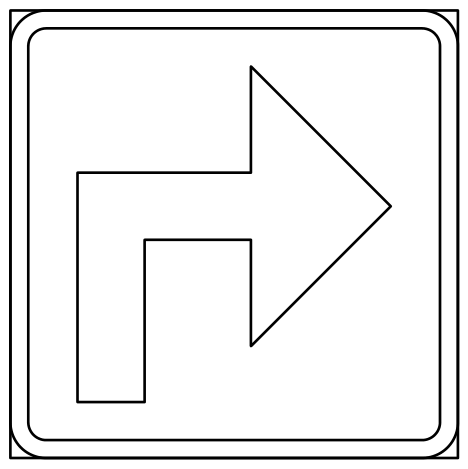
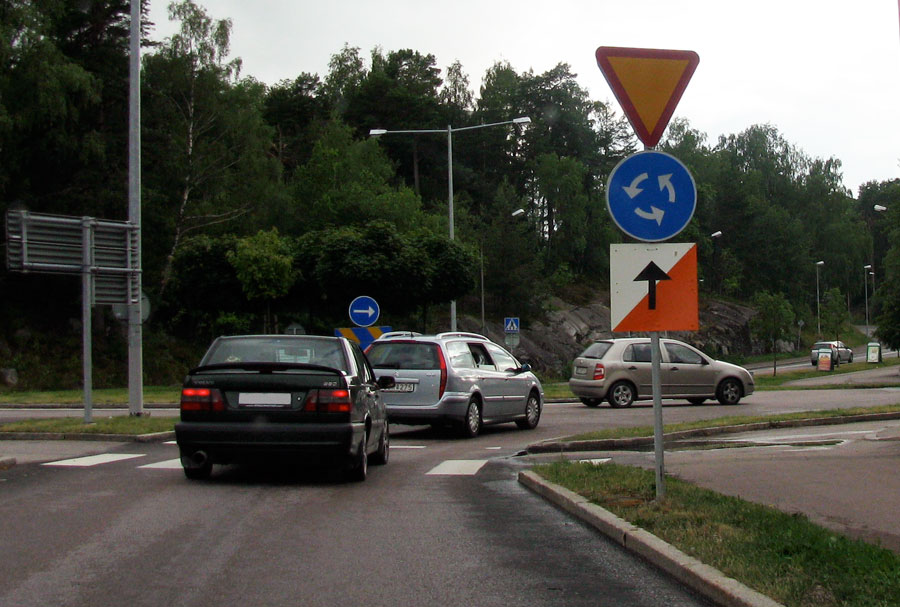
Question 68

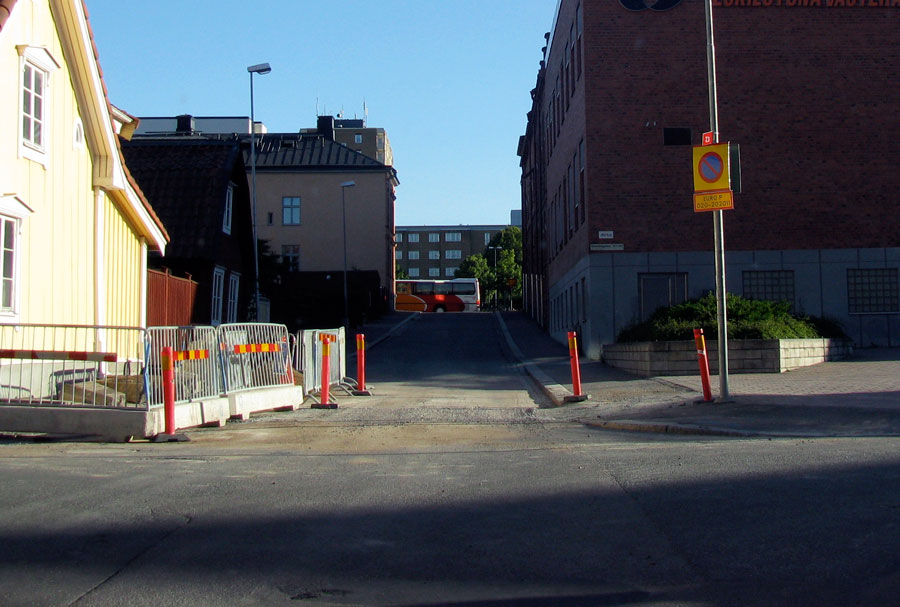
What is true regarding the square sign with the black arrow?

Picture for question 68

Explanation
The sign is probably erected by the organisers of some event.

A diversion is, for example, indicated with this official sign:

Direction during diversion (F24)

Direction during diversionF24
”The sign indicates the direction of travel during the temporary diversion of traffic. No other colour may be used.”
Question 69

What does this road sign mean?

Picture for question 69

Explanation

Restricted gross weight of vehicle (C20)
Restricted gross weight of vehicleC20

”Maximum permitted gross weight is indicated on the sign.”

Question 70

When is a lorry classified as heavy?

Explanation

Heavy lorry: “A lorry with a total weight exceeding 3.5 tonnes.” (Act on road traffic definitions)

No questions to show here.