Driving licence · Theory practice

Practice test 2

70 questions · Pick an answer to see whether you are right. Your answers are saved in this browser.

0of 70 correct
Not started

0 of 70 answered

0Correct
0Incorrect
70Unanswered
14Mistakes allowed

The real test has 70 questions in 50 minutes. You need 56 correct (80%) to pass.

Question 1

Which sign indicates a pedestrian crossing?
Picture for the question

Explanation

Give way line
AGive way lineM14

This marking indicates the line that a vehicle should not pass when the driver is observing the obligation to give way.
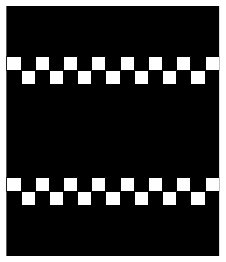
Speed bump
BSpeed bumpM17

This marking indicates a speed bump, gutter or similar obstacle.
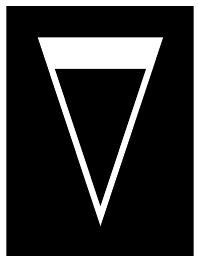
Preparatory information regarding the obligation to give way or to stop
CPreparatory information regarding the obligation to give way or to stopM18

This marking indicates that there is an obligation to give way or to stop further down the road.
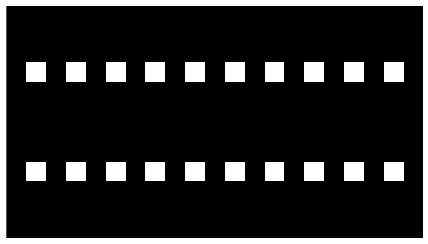
Bicycle passage or bicycle crossing
DBicycle passage or bicycle crossingM16
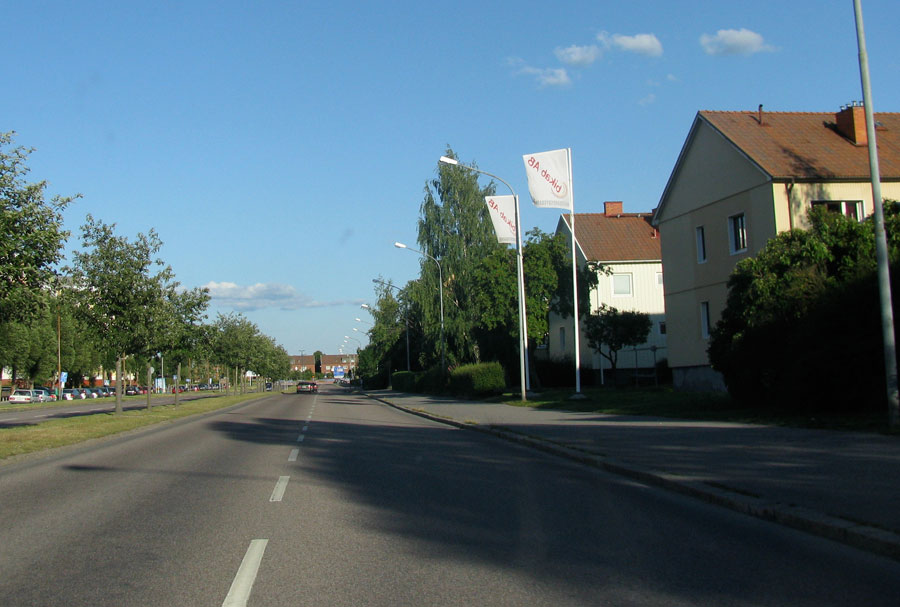
Question 2

The two lanes in the picture are going in the same direction. Is it permitted to overtake in the right lane?

Picture for the question

Explanation

[...] you can overtake on the right in the following situation [...] On a road where the speed limit is 70 km/h or lower and there are at least two designated lanes for travel in the same direction.
Du och jag i trafiken [You and me in traffic], 28th Edition, pages 223-224

The rule that allows you to overtake on the right is in place to reduce the number of lane changes. To overtake (or “pass”) on the right at relatively low speed has been assessed as less risky than changing lanes every time you want to overtake in city traffic.

Question 3

What is the basic speed limit outside of a densely populated area?

Explanation

The basic speed limit on Swedish roads is 70 km/h outside of densely populated areas
Swedish Transport Administration
Question 4

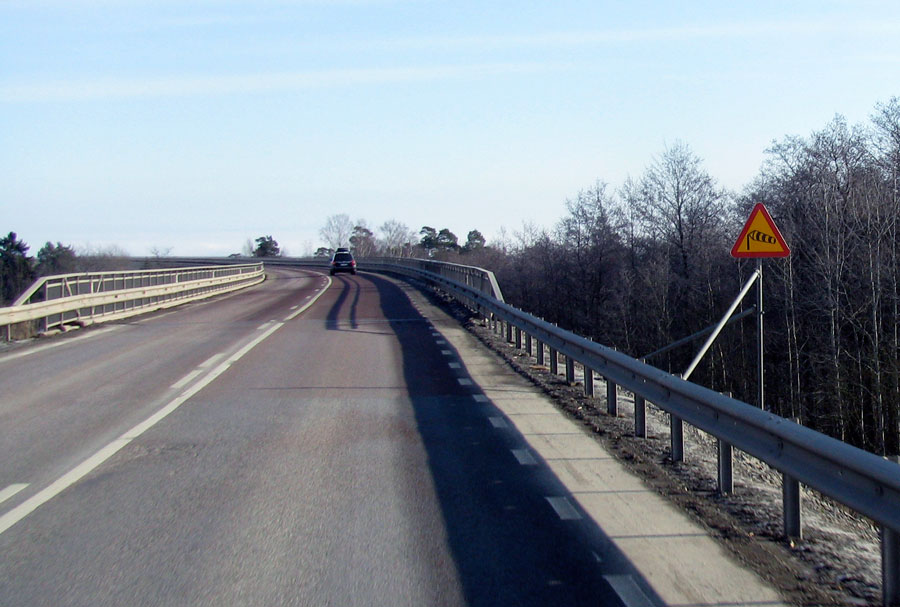
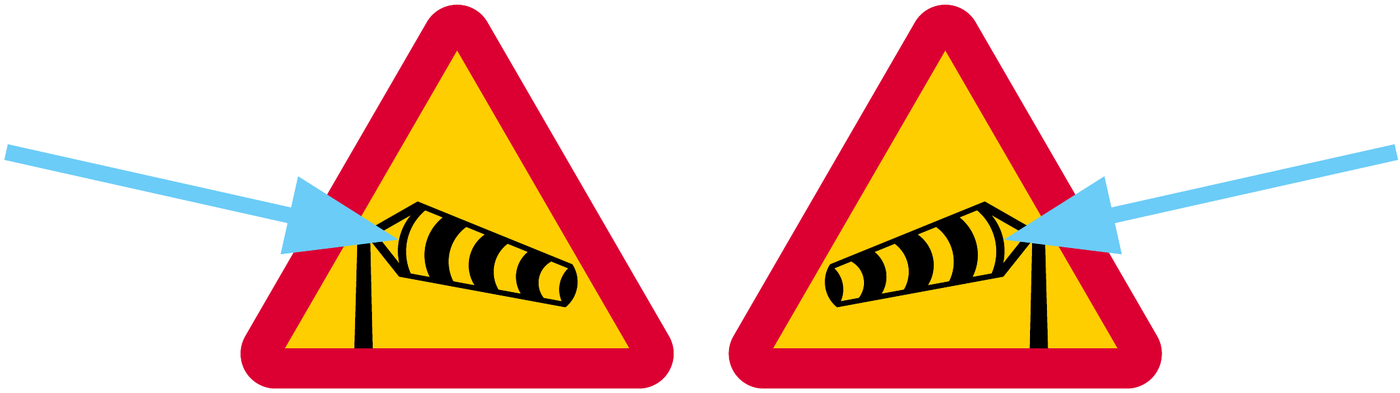
From which direction does the crosswinds normally come from according to the sign?

Picture for the question

Explanation

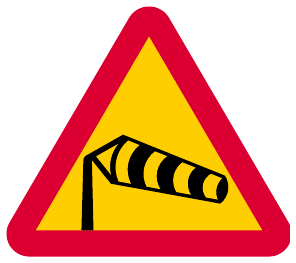
Beware of dangerous crosswinds
Beware of dangerous crosswindsA24

The sign indicates a stretch of road where there are often heavy crosswinds. The symbol is adapted to the conditions of the location.

Illustration
Question 5

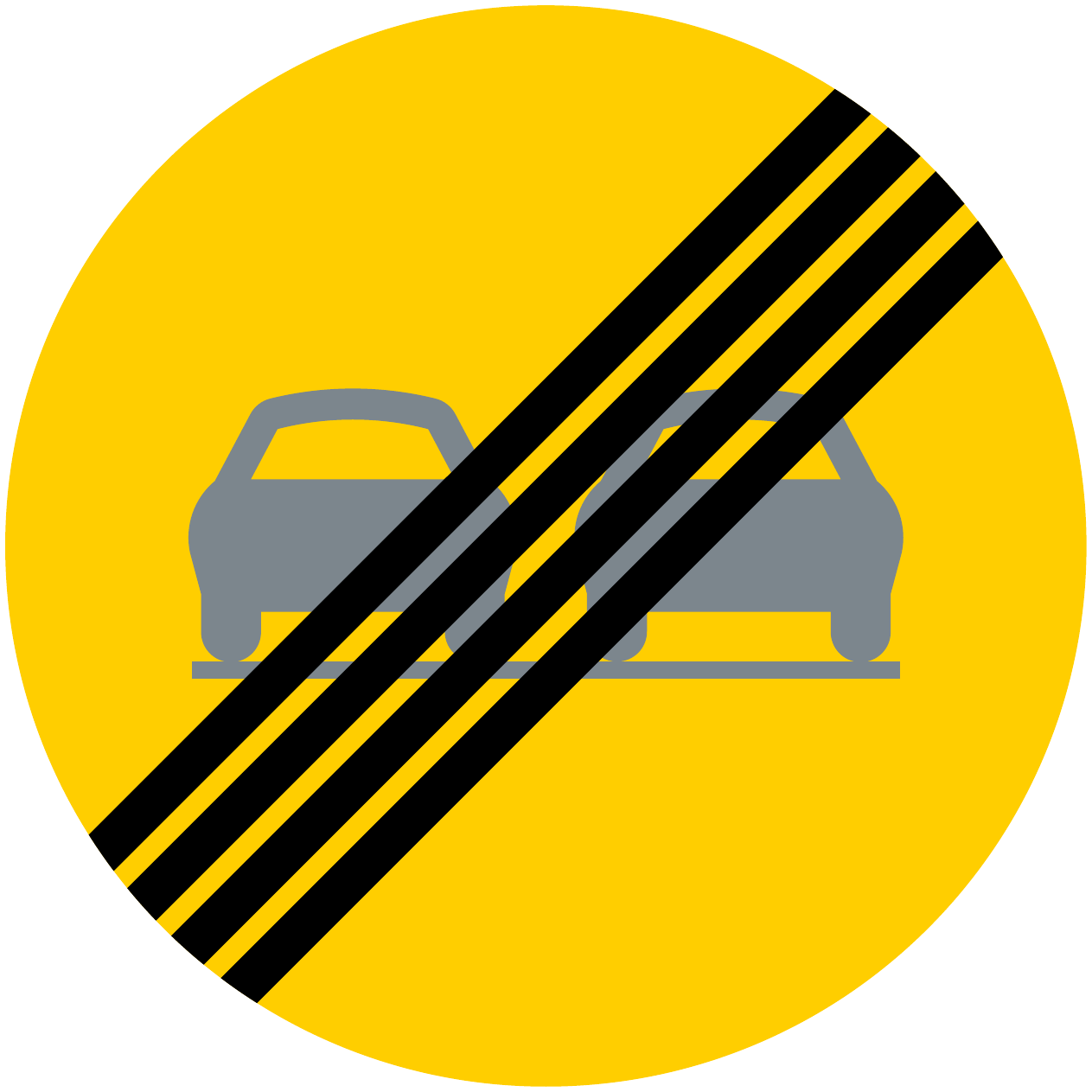
What does this road sign mean?

Picture for the question

Explanation

End of overtaking restriction
End of overtaking restrictionC28
Question 6

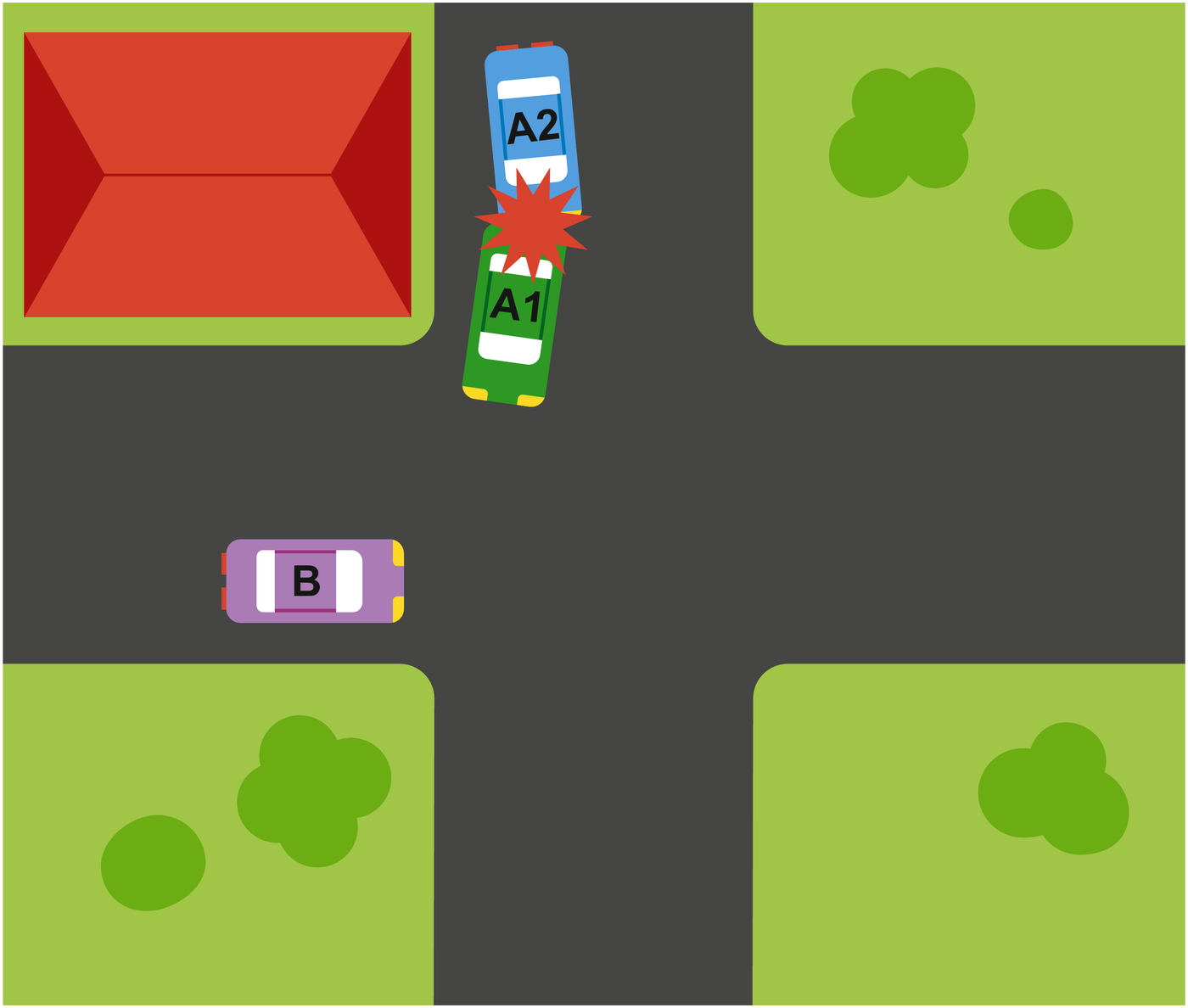
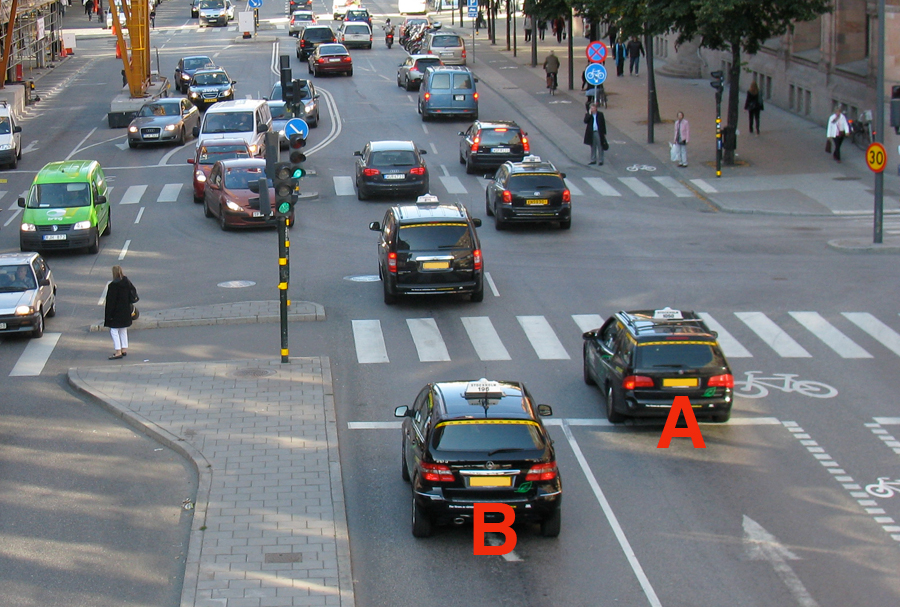
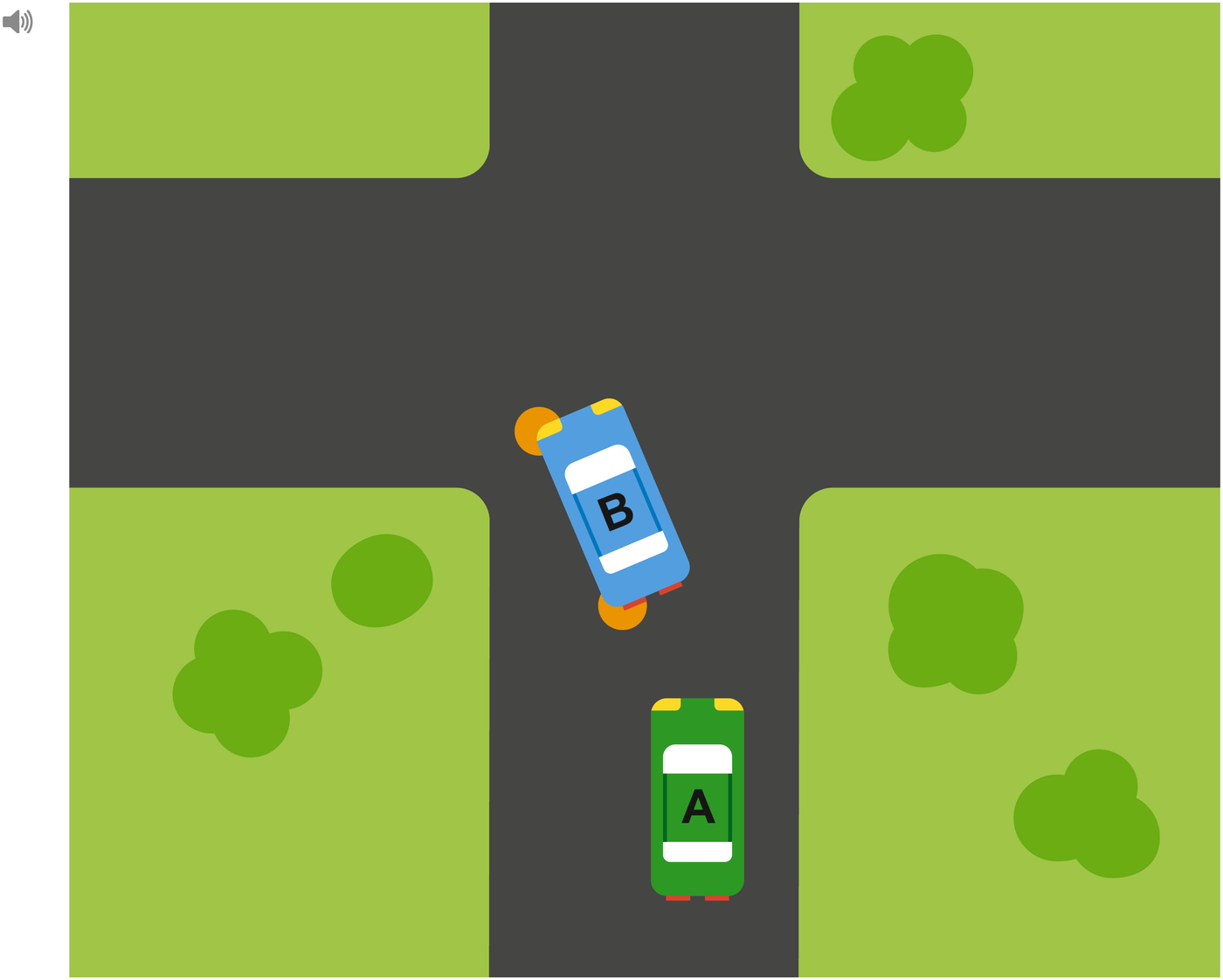
You are driving car B and rolling slowly out in the junction. A1 comes at high speed and is forced to break quickly, which results in A2 driving into A1 from behind. Which statement is true?

Picture for the question

Explanation

A road user who, regardless of blame, has been involved in a traffic accident shall remain on the scene.
Swedish Road Traffic Ordinance

“Been involved in” = you have in some way been involved in or contributed to the accident happening. In this case, it is you who caused A1 to brake, which means that you “are involved in” the accident.

Note that you probably have not done anything wrong! The reasons why you must remain at the scene of the accident:

  • To help the injured.
  • To provide a witness statement.
Question 7

What is true regarding a type-approved towbar retrofitted to a type-approved private car?

Explanation

The Swedish Transport Agency is easing the regulations for registration inspection of towbars. […] The new rules stipulate that a type-approved private car or light truck, that has a type-approved coupling device retrofitted, no longer needs to undergo a registration inspection.
Swedish Transport Agency

Previously it was the case that a registration inspection was required.

Question 8

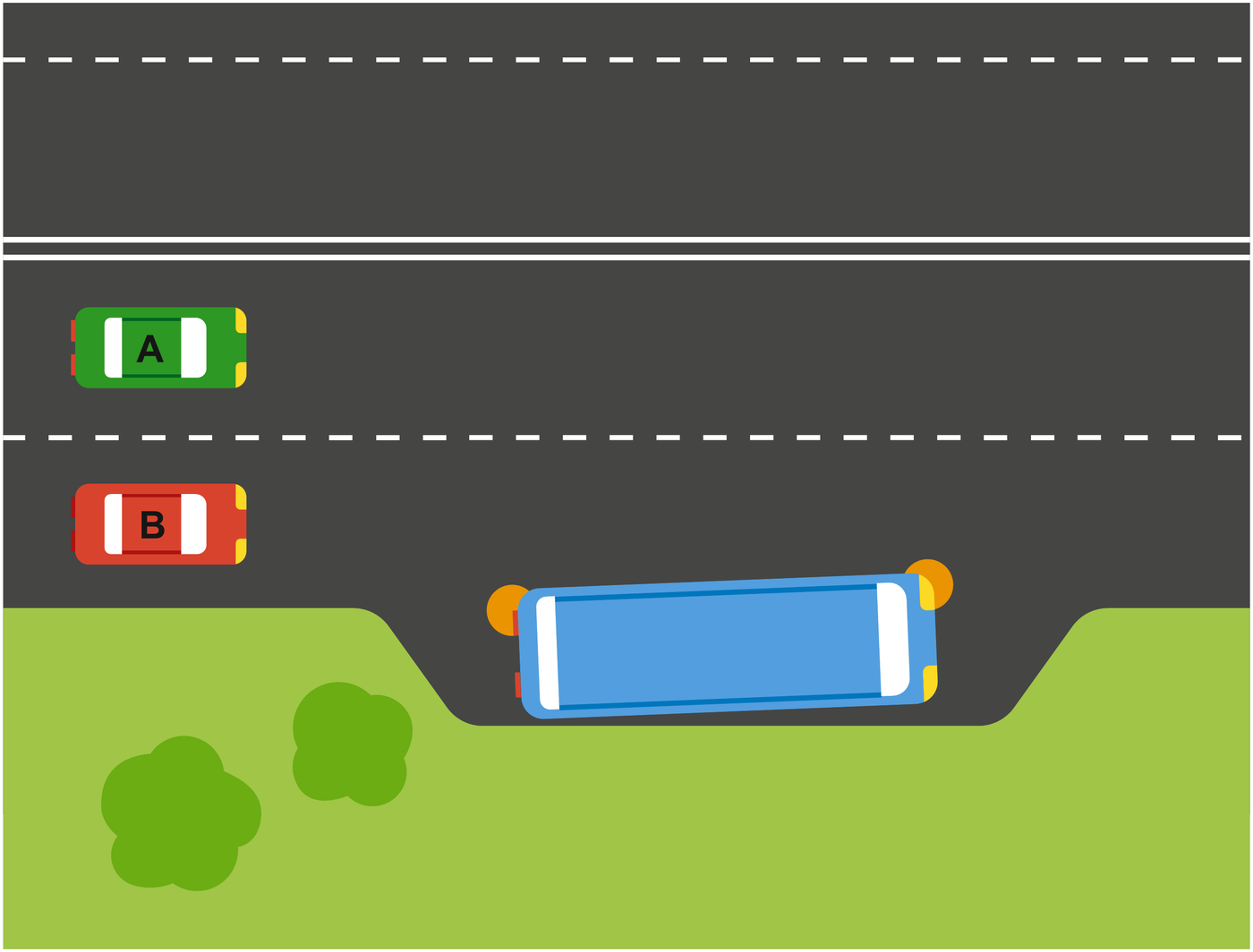
The speed limit is 30 km/h and the bus is indicating to exit. What rule applies?

Picture for the question

Explanation

If there is more than one lane in your direction, the obligation to give way only applies to the lane furthest on the right.
Du och jag i trafiken [You and me in traffic], 28th Edition, page 147

There is no reason for the bus driver to have the right to move straight into the left lane, thereby requiring traffic in both lanes to come to a halt.

Question 9

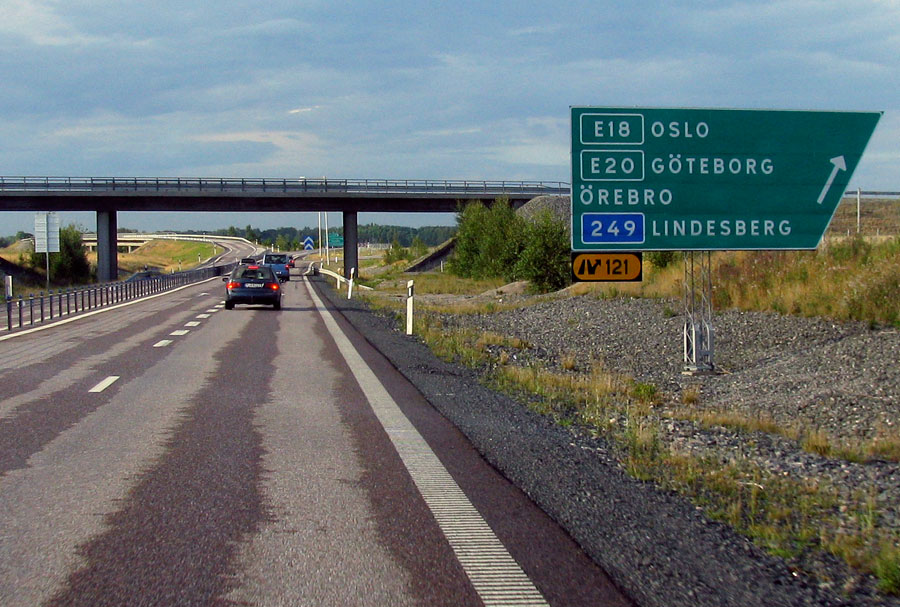
You want to drive straight on in the left lane instead of turning right. What does the sign say about the place or places to which the road continuing straight on leads?

Picture for the question

Explanation

The sign is a direction and exit sign. This means that everything on the sign applies to the exit road and not to the road straight on.

Direction and exit sign
Direction and exit signF7

The sign is erected where the exit road starts.

Question 10

What is a single vehicle accident?

Explanation

Nationalencyklopedin: “A single vehicle accident is a classification in the official statistics denoting a road traffic accident where only one moving motor vehicle has been involved.”

Question 11

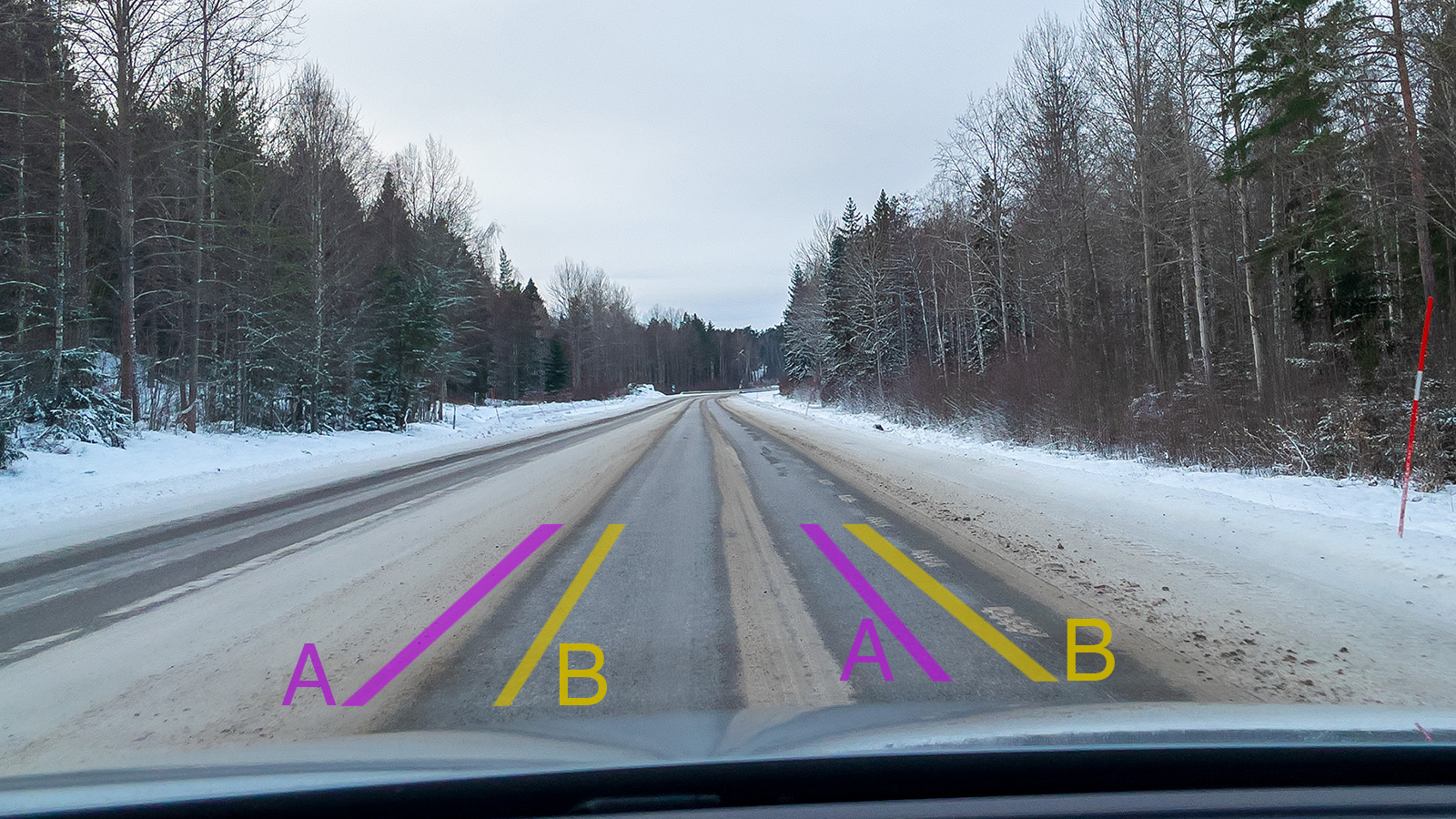
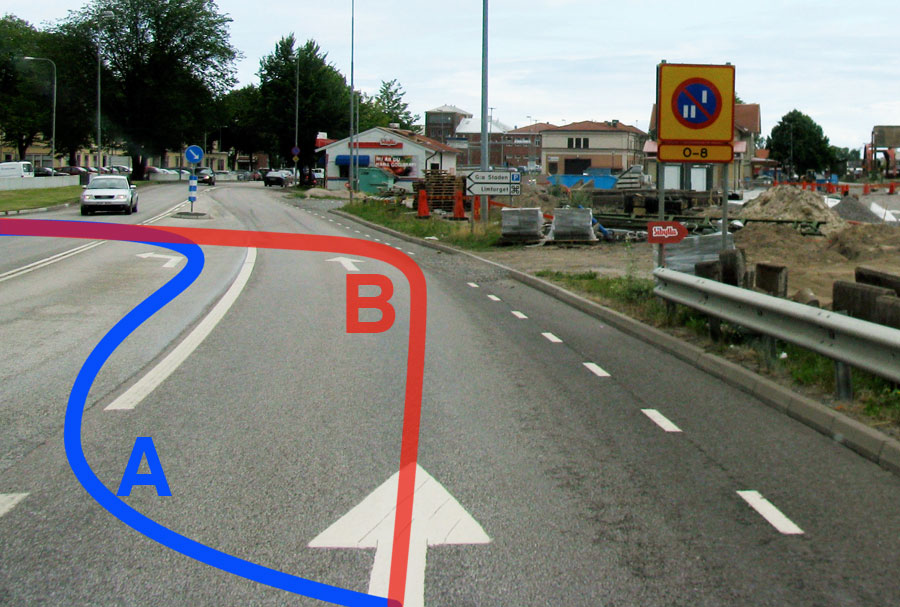
In which track should you position the wheels?

Picture for the question

Explanation

Review of the options

  • B, since it is prohibited to drive too close to the centre of the road.Wrong, there is no direct prohibition regarding this, especially not when there is good reason.
  • A, since the surface provides a better grip if you need to brake.Wrong, it is probably very slippery!
  • B, since A may be very slippery.This is the best option. Looks to be a much better grip that A.
  • A, since it will be easier for you to avoid animals appearing at the ditch edge.There seems to be good visibility at the sides. To prioritise this above skidding is not reasonable.
Question 12

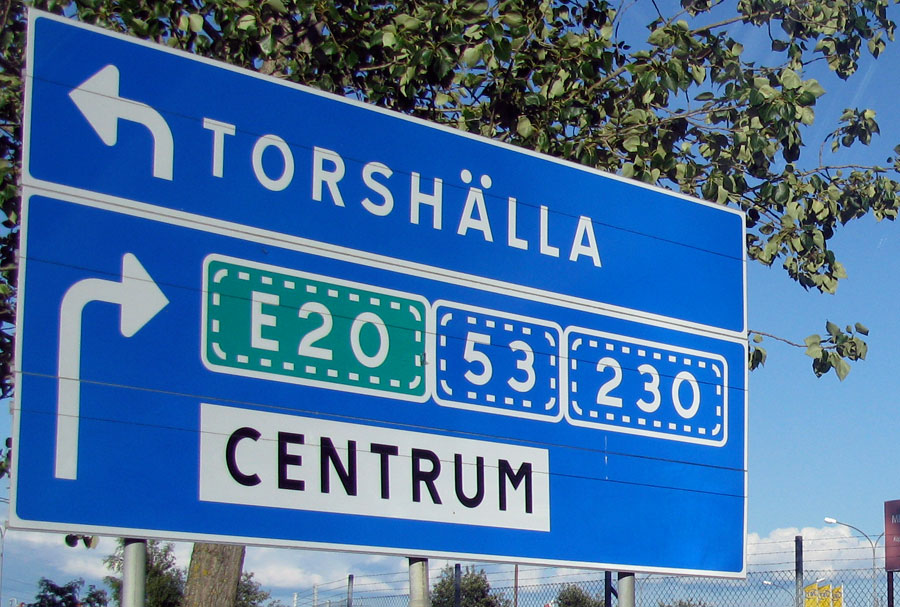
How should you interpret the sign in the picture?

Picture for the question

Explanation

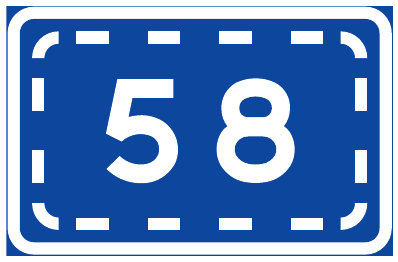
Road number
Road numberF14

A road number is only given for roads in the number group 1–499. A sign with a dashed border indicates that the road is leading to the route with the number on the sign.

Review of the options

  • If you turn right you will come directly onto E20.Wrong, since the border is dashed, you do not come directly out on this road.
  • If you turn right you will first come onto E20, then road 53 and lastly road 230.Wrong, this is not necessarily true. It is probably possible to get to road 230 without having first driven on E20 and road 53.
  • If you turn right, you have the possibility of connecting to E20, road 53 and road 230.Correct.
  • To come to E20, road 53 or road 230, you first need to go to the centre of town.Wrong, it says nothing about this. It is more likely that there is an exit road to E20 before you reach the centre.
Question 13

Do you have to turn off your full beams when meeting an oncoming train?

Explanation

Full beam headlights may not be used [...] when meeting an oncoming track-bound transport [...] if there is a possible risk of dazzling the driver.
Swedish Road Traffic Ordinance

The train driver must be able to see the tracks. There may be a moose further down the track, for example. The driver of the train must then have good visibility in order to activate the emergency brake.

Question 14

You are driving a car at 70 km/h. What is true about the noise that arises?

Explanation

At low speeds, the sound of the engine and exhaust system dominate, while the noise of tyres and road take over at higher speeds. For private cars, the limit lies at approximately 30–50 km/h and for heavy vehicles at 50–70 km/h.
Swedish Transport Administration
Question 15

You have 390 kg of cargo inside the car and the maximum load is 400 kg. What is true?

Explanation

The maximum load applies to everything. There is no difference between things inside or outside the car. There is also no difference between luggage and passengers.

Question 16
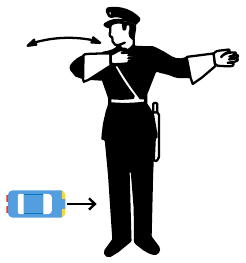
Which statement is generally true when it comes to tunnels and underpasses?

Explanation

A vehicle may not stop or park [...] in an underpass or a tunnel.
Swedish Road Traffic Ordinance
Question 17

Where are the warning signs posted in a built-up area?

Explanation

Warning signs […] 50 km/h […] Distance to the danger […] 5–75 metres
Vägmärken & vägmarkeringar [Road Signs & Markings], 6th Edition, page 4
Question 18

What type of acceleration is the most environmentally friendly with a warmed-up car of a newer model?

Explanation

You should “accelerate decisively and quickly shift to the higher gears.” (Driving Licence Book, 19th Edition, page 219)

The car uses a lot of fuel in the acceleration phase and it is therefore appropriate to keep it as short as possible. There are limits however. A very quick and explosive acceleration makes the catalytic converter less effective, which is not good for the environment.

Question 19

What should you do if the traffic lights in a junction are flashing amber?

Picture for the question

Explanation

Flashing amber
Flashing amberSIG5

Special caution must be observed when passing.

When the traffic lights are out of order, look for road signs or police officers directing the traffic. If there are none, apply the right-hand rule.

Question 20

What does this road sign mean?

Picture for the question

Explanation

Illustration
Special rules for stopping and parkingC45
Question 21

Could a minor violation lead to the revocation of a driving licence?

Explanation

A driving licence shall be revoked [...] if the licence holder through repeated violations has shown a seriously lacking willingness or ability to adhere to the regulations in place for the driver of a motor vehicle in the interest of traffic flow or traffic safety [...] if the violation cannot be considered minor.
Driving Licence Act
Question 22

Car A has just passed car B. Was this allowed?

Picture for the question

Explanation

Normally it is prohibited to overtake on the right side as A is doing. However, there are exceptions:

In the following cases, it is not considered overtaking when a vehicle in one lane passes a vehicle in another lane:
1. if the carriageway has two or several lanes in the same direction and there is heavy queue formation in all lanes,
2. if the carriageway is divided into lanes for different destinations that are marked with lane assignment signs, or
3. or if the vehicles were in separate lanes in conjunction with a junction.
Swedish Road Traffic Ordinance

Car A definitely fulfils point 3 (and possibly also point 1), which means that it was permitted to pass B.

It would not be reasonable for A to have to check to the left to see how fast B is accelerating, or perhaps even be forced to stop and wait if B has engine failure. There is simply no increased risk with letting A pass B.

Is “Yes, since the lanes are marked with lane assignment signs for different destinations” not also correct?
– No, “lane assignment signs” are signs not lines:

Lane assignment sign
Lane assignment signF8

The sign indicates the lane or lanes suitable when travelling to the destination. The sign is placed above the lane or lanes to which it relates. A lane assignment sign can also be used as preparatory information regarding an exit road. In such cases, the distance to the exit road is indicated under the symbol for the exit road.

Question 23

Where should a reflector of this type be placed?

Picture for the question

Explanation

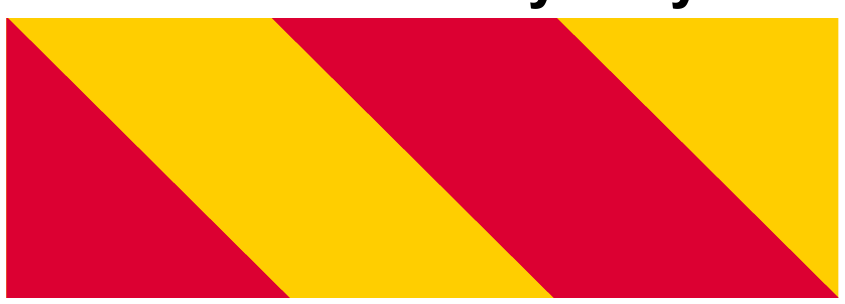
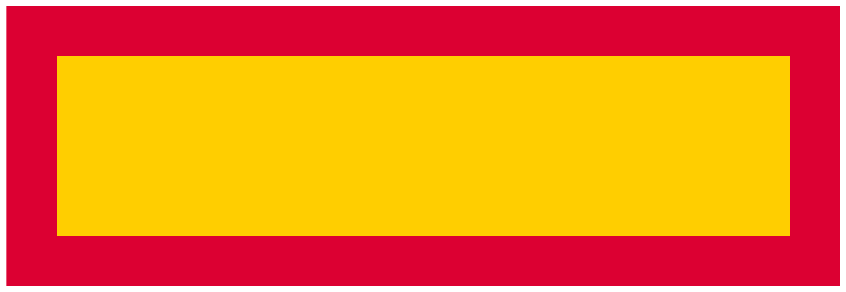
Reflector on a heavy lorry:

Illustration

Reflector on a trailer with a total weight exceeding 3.5 tonnes:

Illustration
Question 24

Car B is turning left in this junction where the right-hand rule applies. Is A permitted to overtake in order to continue straight ahead?

Picture for the question

Explanation

Overtaking is normally prohibited in this type of junction (right-hand rule junction). However, there are exceptions:

Overtaking shall [...] be done on the right when the driver of car in front is turning left or is clearly preparing for such a turn. […] Overtaking may not be done just before or at a junction, except when [...] overtaking on the right hand side.
Swedish Road Traffic Ordinance

Why is this permitted?
– The driver overtaking is in the “appropriate” lane, i.e. the right one. This means that you do not have to drive out towards the centre of the junction. You must also consider what is efficient and practical. If a long queue forms by cars waiting for the road to be clear of oncoming traffic before turning left, you may pass on the right (which will feel natural in this type of situation).

Question 25

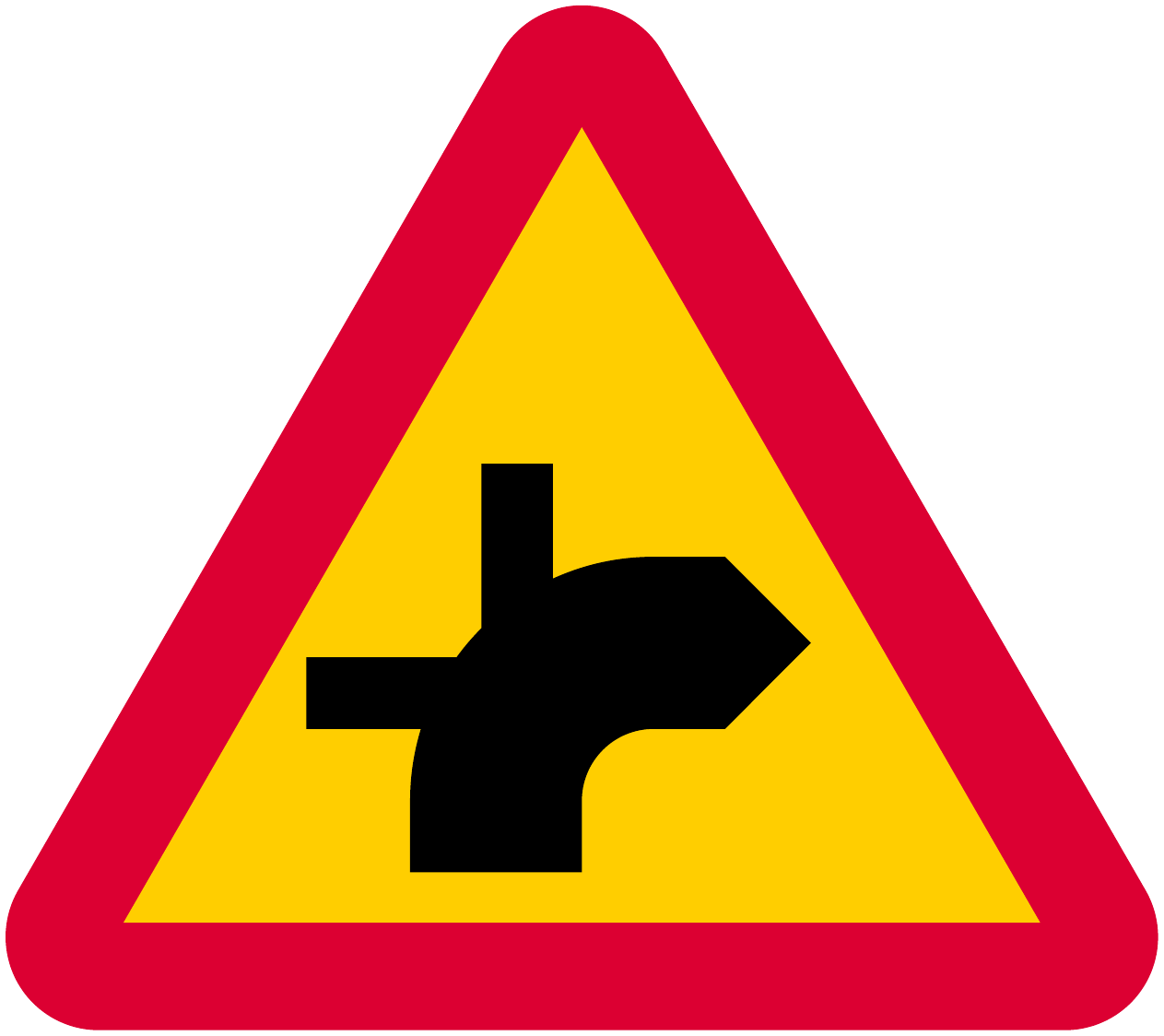
You want to turn right at a junction and see this sign. Which alternative applies to the use of blinkers?

Picture for the question

Explanation

When a driver intends to pull away from a curb or turn around, turn off, change lanes or move the car sideways in any way not considered insignificant, the driver shall use their indicator to show their intention.
Swedish Road Traffic Ordinance

The fact that the adjoining road has an obligation to give way does not mean you are allowed to skip using your blinkers.

Question 26
At what age can a walking child be expected to conduct themselves fairly safely in an environment with traffic?

Explanation

A walking child cannot navigate safely through traffic until they are around 9–12 years old.
Du och jag i trafiken [You and me in traffic], 28th Edition, page 215
Question 27

Which statement is true regarding single-vehicle accidents involving private cars on roads with a speed limit of 50 km/h?

Explanation

Single-vehicle accidents involving private cars on roads with a speed limit of 50 km/h, distributed by day and hour. […] Nearly 40 per cent of these accidents occurred in the evening/night between Friday/Saturday and Saturday/Sunday (18:00–05:59).
Swedish Transport Administration
Question 28

Is it possible for a person with a Norwegian licence to supervise private driving lessons in Sweden?

Explanation

In order to be approved as a supervisor, you have to “have a valid driving licence issued in Sweden or another EEA member state”. (Swedish Transport Agency)

EEA = European Economic Area, which consists of all countries in the EU along with Iceland, Liechtenstein and Norway.

Question 29

What type of drive system generally has the best properties for poor road conditions?

Explanation

Most car manufacturers are abandoning the rear-wheel drive for the front-wheel drive. The most important reason for this is the inferior roadholding in poor road conditions.
Driving Licence Book, 19th Edition, page 127

If a car with rear-wheel drive looses grip, the result can be a severe rear-wheel slide, which means that the back of the car is thrown out in an uncontrollable manner.

If a car with front-wheel drive looses grip, the consequence will often be a deterioration in the steering, but the car stays on course (it is not turned around uncontrollably as in a rear-wheel slide).

Gliding stably (front-wheel drive) is preferable to being forcefully turned around (back-wheel drive).

Question 30

Which alternative is generally preferred?

Explanation

It is safer and better for the environment to have a slightly higher pressure in your tyres.

If you fill the tyre 10–15 per cent more than the recommended tyre pressure, it reduces rolling resistance without jeopardizing traffic safety. [...] If, on the other hand, you only have 70 per cent tyre pressure, the tyres are worn twice as quickly. Too low a tyre pressure also deteriorates traffic safety.
Swedish Transport Administration
Question 31

Which is the most important sense for a driver?

Explanation

The eye provides you with 90 per cent of the information you need.
Driving Licence Book, 19th Edition, page 193

In addition, your vision is the only sense for which there are specific requirements.

Question 32

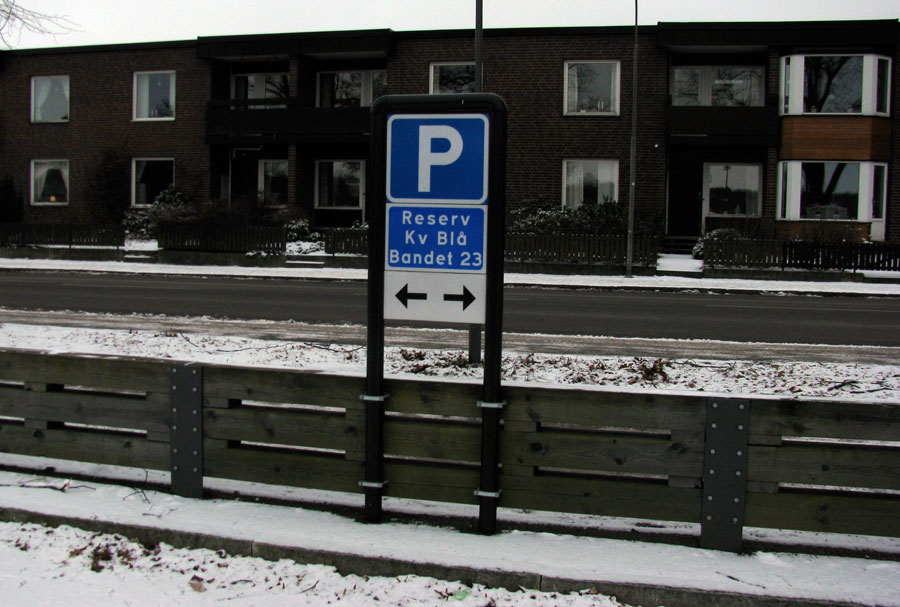
You are in an unfamiliar city and see this sign. Are you allowed to park here?

Picture for the question

Explanation

An additional panel must always be considered. In this case, the sign combination is to be read as follows: The parking area is reserved for [residents of] the neighbourhood “Blå Bandet 23”. This applies to both sides.

The question states that you are in an unfamiliar city. This is to be interpreted as you not living in the neighbourhood in question.

Question 33

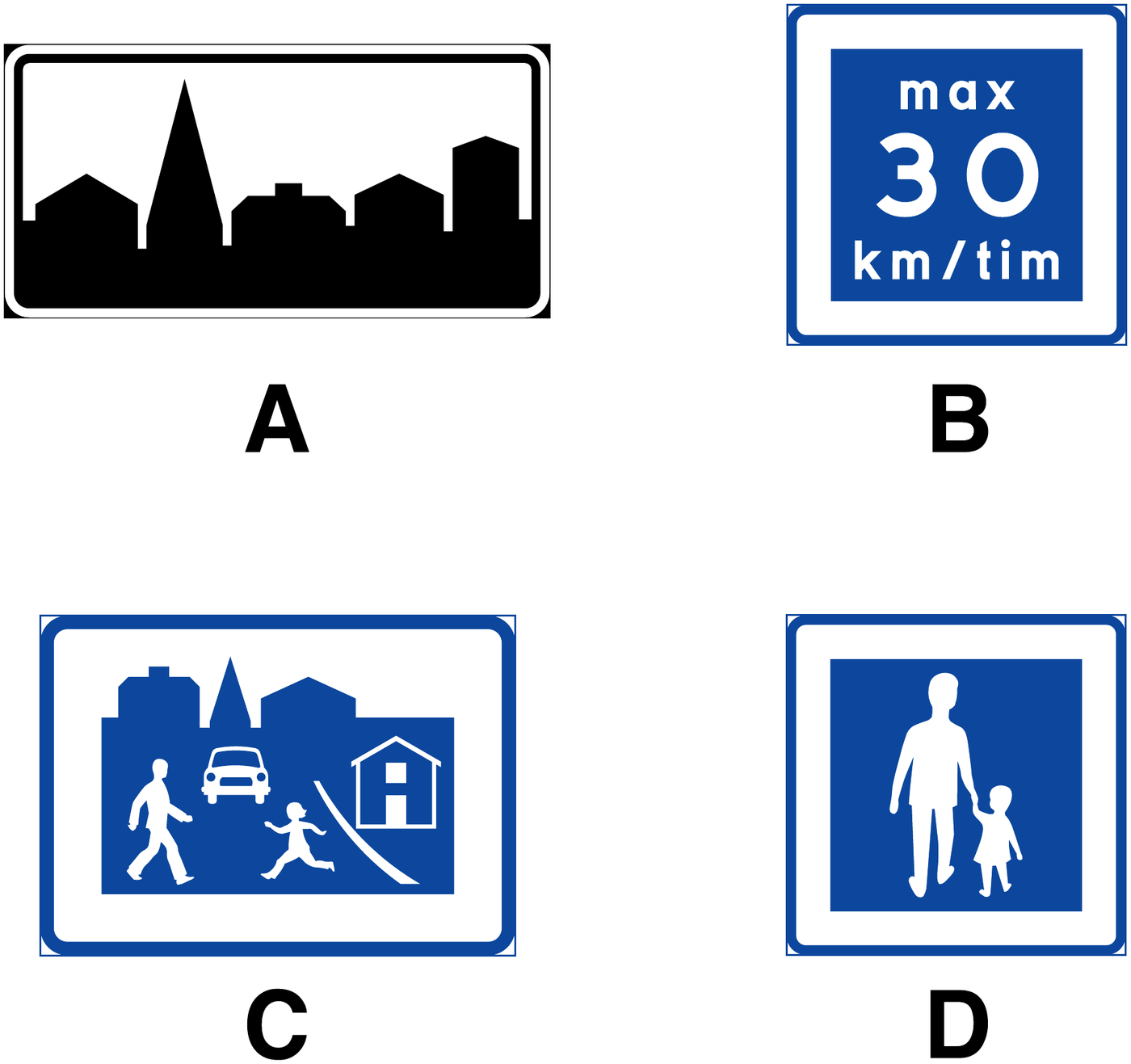
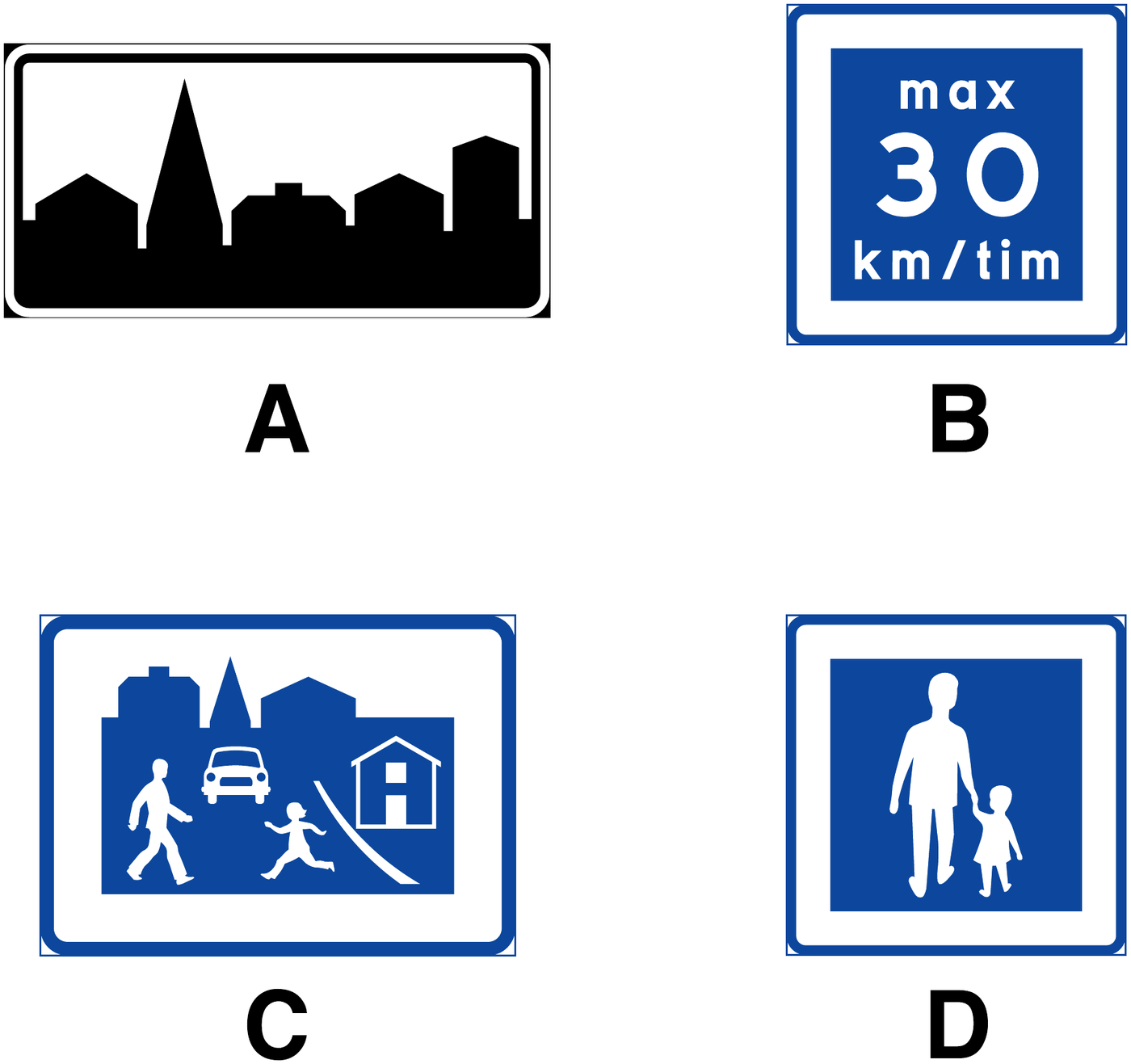
Which sign indicates a built-up area?

Picture for the question

Explanation

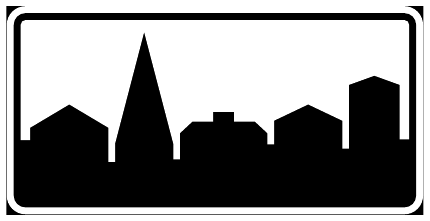
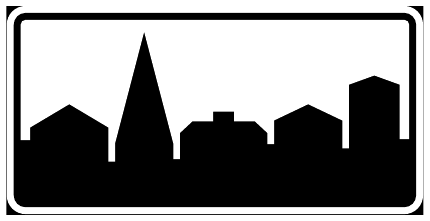
Built-up area
ABuilt-up areaE5

The place name may be included in the sign.

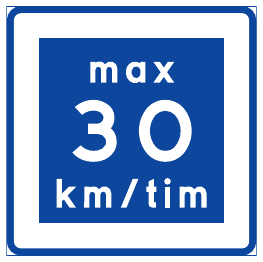
Recommended lower speed
BRecommended lower speedE11

The sign indicates a stretch of road or an area where specific measures have been taken or where conditions are such that it is advisable to drive at a lower speed than the maximum permitted speed. The recommended lower speed is indicated on the sign.

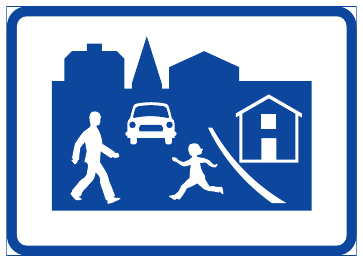
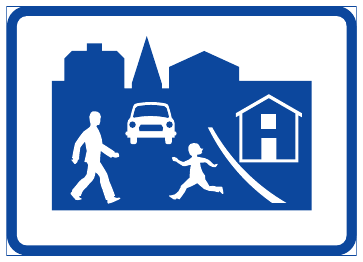
Home zone
CHome zoneE9

The sign indicates that the provisions of Chapter 8, Section 1 of the Road Traffic Ordinance apply.

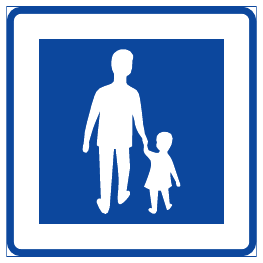
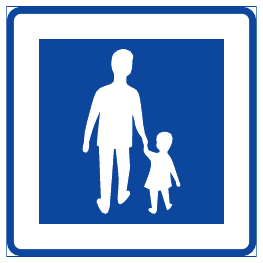
Pedestrian street
DPedestrian streetE7

The sign indicates that the provisions of Chapter 8, Section 1 of the Road Traffic Ordinance (1998:1276) apply. Any prohibition on driving vehicles that are permitted on a pedestrian street according to Chapter 8, Section 1, second paragraph of the Road Traffic Ordinance is indicated using an additional panel.

Question 34

What is true regarding the length of a motor vehicle and trailer combination?

Explanation

A motor vehicle, other than a bus, with or without a coupled vehicle may not be driven on roads other than private roads if the vehicle or vehicle/trailer combination, including load, is longer than 24.0 metres. The length of a vehicle and trailer combination, including load, may however have a maximum length of 25.25 metres if the following conditions are fulfilled. […] 1. […] 11.
Swedish Road Traffic Ordinance
Question 35

Which of these signs indicates a home zone?

Picture for the question

Explanation

Built-up area
ABuilt-up areaE5

The place name may be included in the sign.

Recommended lower speed
BRecommended lower speedE11

The sign indicates a stretch of road or an area where specific measures have been taken or where conditions are such that it is advisable to drive at a lower speed than the maximum permitted speed. The recommended lower speed is indicated on the sign.

Home zone
CHome zoneE9

The sign indicates that the provisions of Chapter 8, Section 1 of the Road Traffic Ordinance apply.

Pedestrian street
DPedestrian streetE7

The sign indicates that the provisions of Chapter 8, Section 1 of the Road Traffic Ordinance (1998:1276) apply. Any prohibition on driving vehicles that are permitted on a pedestrian street according to Chapter 8, Section 1, second paragraph of the Road Traffic Ordinance is indicated using an additional panel.

Question 36

You are approaching the crossing and want to turn right. What should you do when turning to avoid wheelspin?

Picture for the question

Explanation

First, it is important to note these words in the correct alternative:

“Keep driving in as high a gear as possible, keep the throttle low and avoid stopping.” (It does not say “Drive in a high gear, keep the throttle low and do not stop.”)

Is it not possible to drive in a higher gear than 1st? – Then drive in 1st. Is it not possible to avoid stopping? – Then stop.

However, you should attempt to stay in 2nd or maybe 3rd and adjust your speed so that you do not have to stop, as the most effective method to avoid wheelspin is to drive smoothly without stopping or accelerating.

Question 37

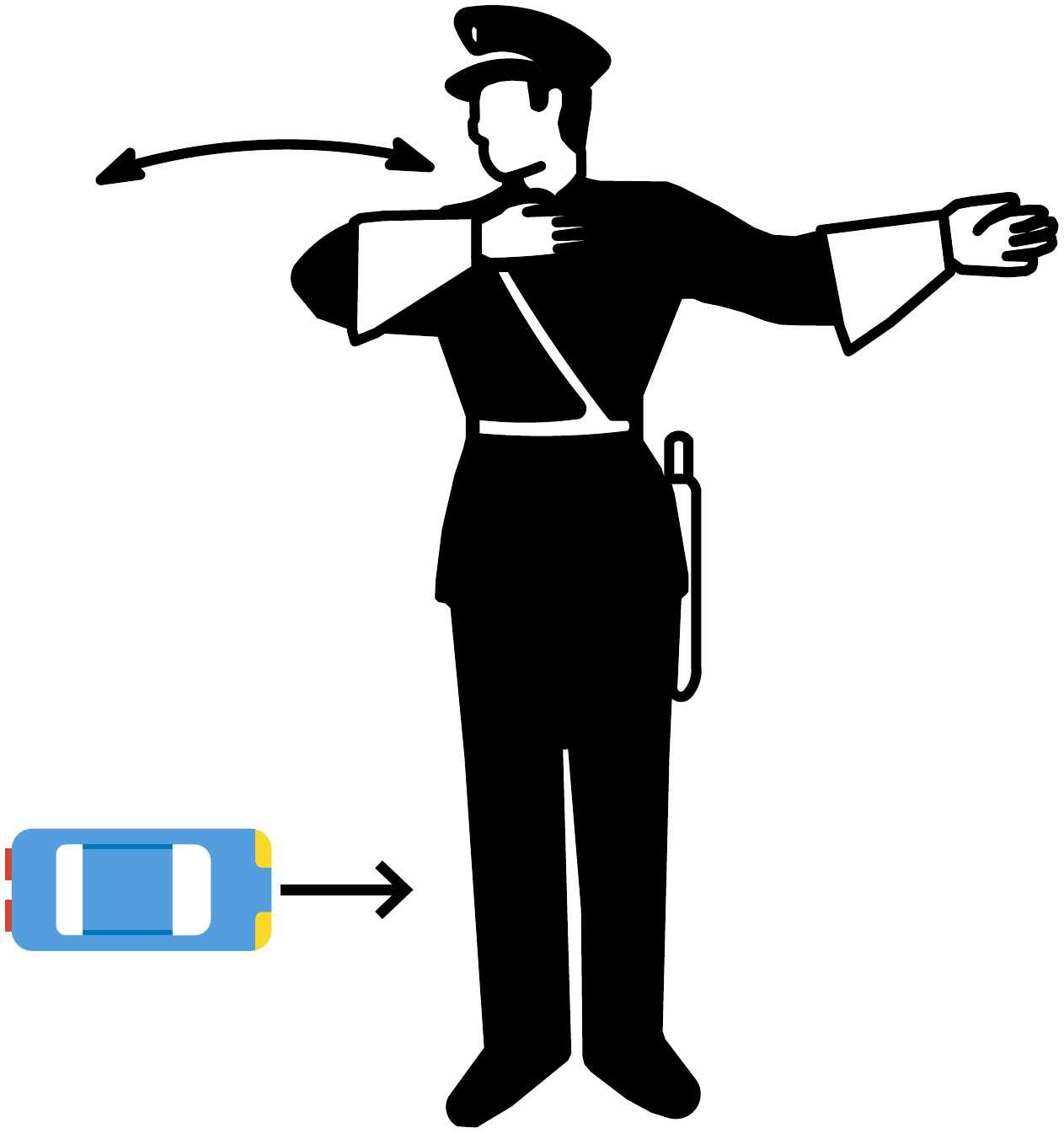
What does the signal given with a waving motion mean?

Picture for the question

Explanation

Drive forward
Drive forwardP4

The signal indicates that road users in the direction the signal is given may continue onwards. The signal is given with a waving motion in the direction of travel.

Question 38

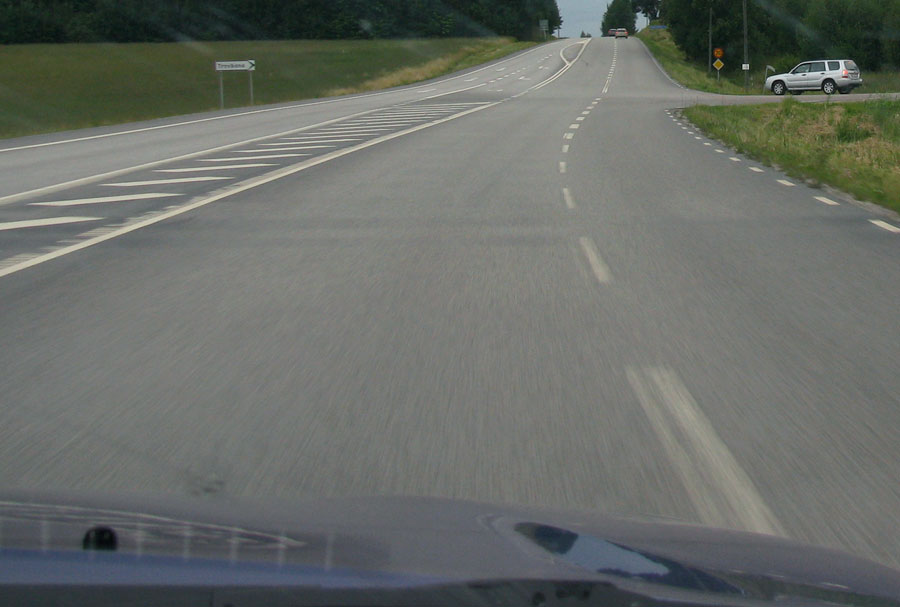
You are driving the car from which the picture is taken. Which of the following is true?

Picture for the question

Explanation

If there is an obstruction when approaching an oncoming car, the driver who has the obstruction on their side shall stop, if this is necessary for the oncoming car to be able to pass.
Swedish Road Traffic Ordinance

The oncoming car shows good judgement by leaving enough space for you to drive. This means that you do not have to stop according to the rule above. You stopping is namely not “necessary for the oncoming car to be able to pass”. Stopping would be overly cautious and obstruct any traffic behind without cause.

It is also possible to argue that the oncoming car is on the hard shoulder and therefore has to give way to all vehicles on the carriageway. “A driver is [...] obliged to give way to vehicles on a carriageway when the driver is entering from a hard shoulder”. (Swedish Road Traffic Ordinance)

Question 39

Which two exhaust substances contribute to the formation of tropospheric ozone?

Explanation

Along with nitric oxides, the hydrocarbon emissions contribute to the formation of tropospheric ozone.
Driving Licence Book, 19th Edition, page 228
Question 40

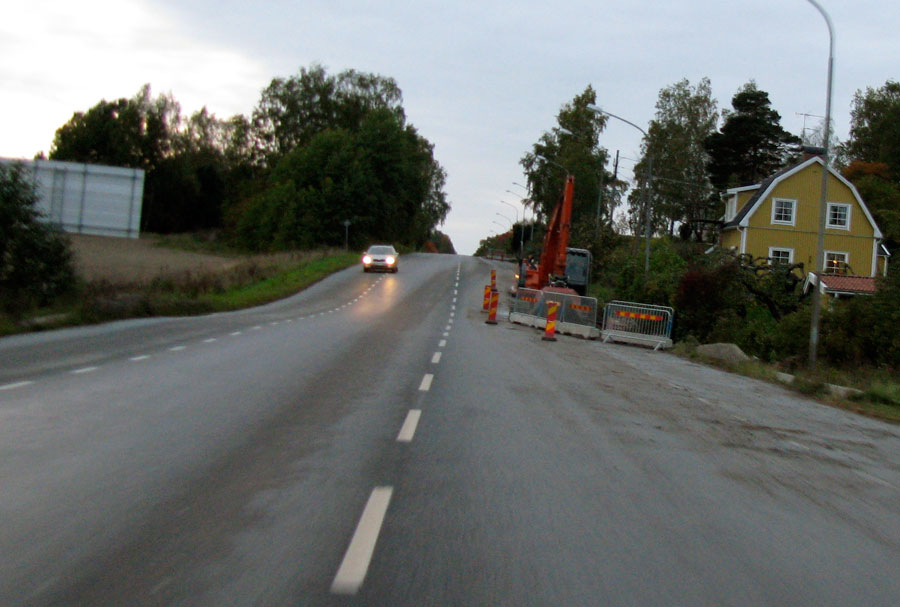
You are driving the car from which the picture is taken and intend to go straight. The right lane has just emerged. How should you react?

Picture for the question

Explanation

The curriculum for a category B licence indicates that you must display “good judgement when interacting with other road users.” (Swedish Transport Administration) Remaining in the left lane is best and most effective for everyone in the situation; you avoid carrying out a manoeuvre and the silver car can drive out without obstruction. Changing to the right lane and slowing down creates confusion since you are driving on a priority road and should not actually yield to the car on the right.

Question 41

About how much carbon dioxide does an average car in Sweden emit each year?

Explanation

A normal car driver releases around three tonnes of carbon dioxide per year.
Sveriges Radio
Question 42

You are driving at 90 km/h. How many metres does the car travel in 4 seconds?

Explanation

Colour codes for the figures (easier to keep track of them)

Current speed 90 km/h

Time 4 seconds

Metres per second (to be calculated) X m/s

Method 1

Convert km/h to m/s:

  • 90 / 3.6 = 25 m/s

How many metres do you travel?

  • 25 * 4 = 100 metres

3.6 is a fixed figure for converting km/h to m/s. It is difficult to divide by 3.6 in your head. A tip is to first divide by 3 and then by 4. You then take a number that is between the answers you get (the margins between the answer options are so large that closer accuracy is not required).

Method 2

Strike the zero in km/h:

  • 90 = 9

Convert km/h to m/s:

  • 9 * 3 = 27 m/s

How many metres do you travel?

  • 27 * 4 = 108 metres (closest to the answer 100)

Multiplied by 3 is a fixed figure for making approximate conversions from km/h to m/s.

Question 43

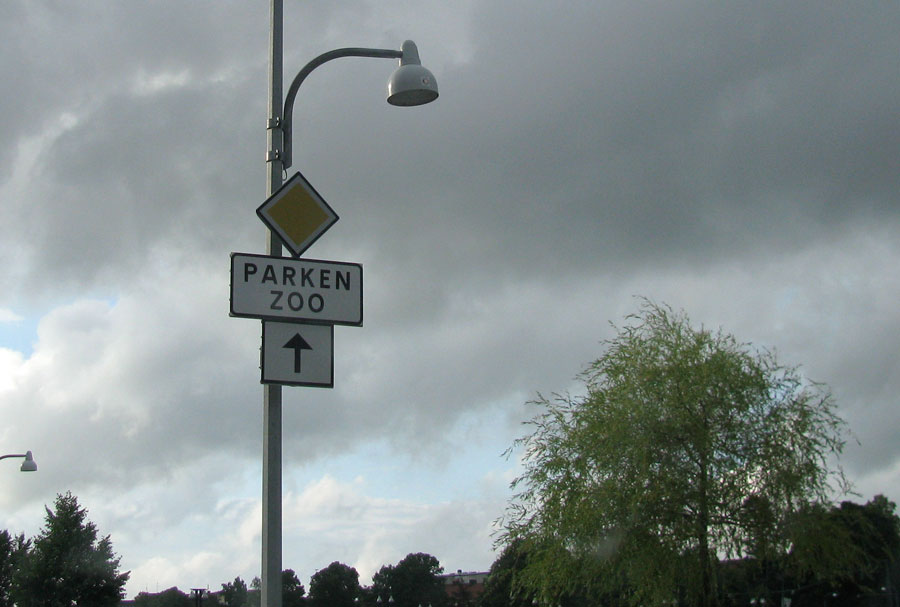
Do the signs indicate that the entire route to Parken Zoo is a priority road?

Picture for the question

Explanation

The arrow’s meaning:

DirectionT12

The panel indicates the direction to what is stated on the sign. The panel is specific to the conditions at the location.

The arrow therefore indicates that you should drive straight on to get to Parken Zoo. However, it says nothing about the type of road. The priority road sign is never erected in this way, i.e. the Swedish Transport Administration does not guarantee a priority road that lasts through several junctions by using one single start sign. After each junction, a new priority sign is placed, or you as a motorist must make an assessment; see the meaning of the priority road sign:

Priority road
Priority roadB4

The sign is erected at the start of the priority road and is repeated after each junction with a road other than such as referred to in Chapter 3, Section 21, second paragraph of the Road Traffic Ordinance, if it is not otherwise clear that the priority road continues after the crossing.

Question 44

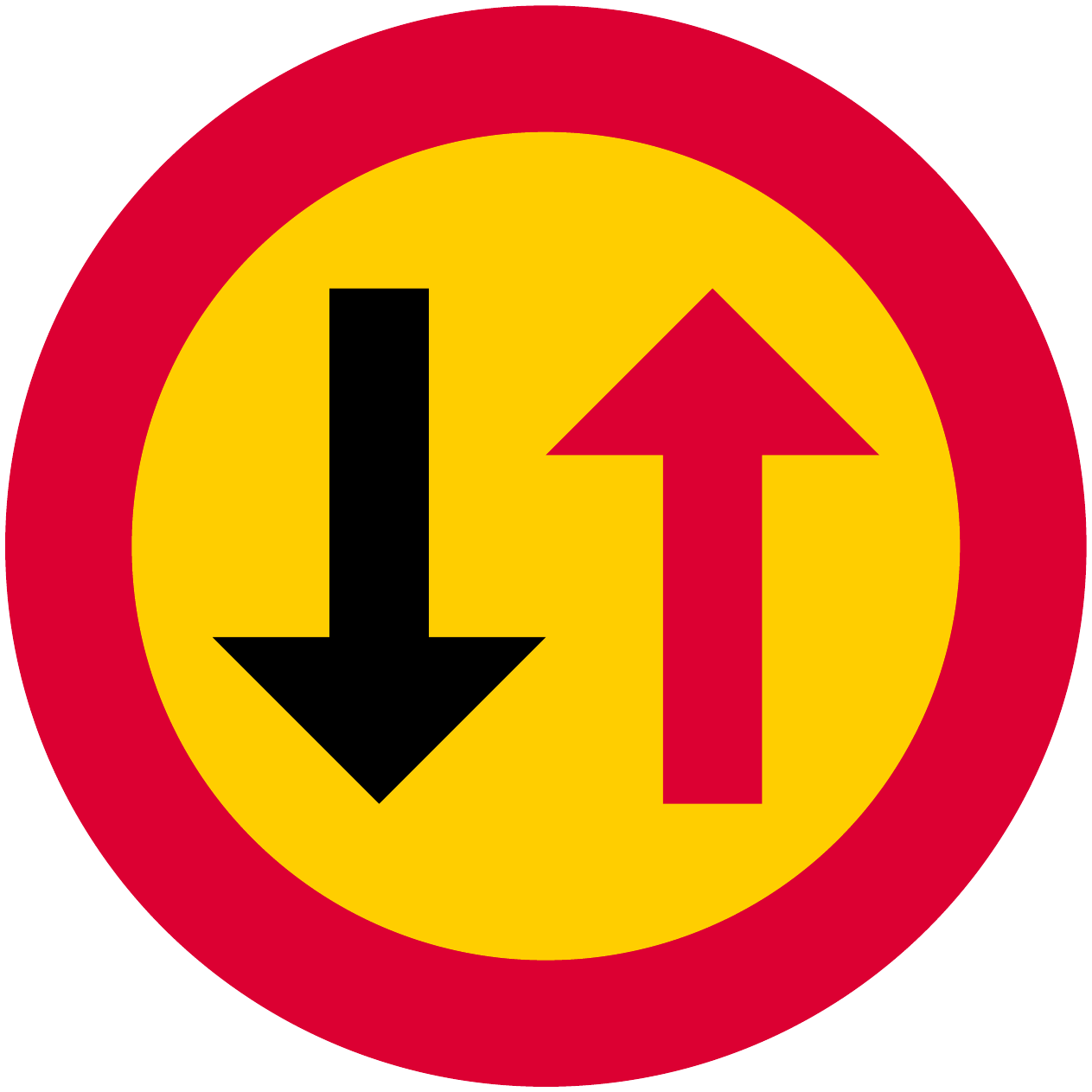
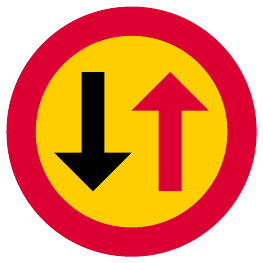
What does this road sign mean?

Picture for the question

Explanation

Priority for oncoming vehicles
Question 45

What type of turn is a cyclist allowed to make?

Picture for the question

Explanation

Cyclists and drivers of mopeds class II may [...] prior to a junction, keep to the right of the road even when they intend to turn left.
Swedish Road Traffic Ordinance

This is because it may be difficult and dangerous to choose A when there is heavy traffic. B may be better since it means that the cyclist can stop at the curb and consider the other traffic.

Why do I need to know this?
– So that you do not get surprised (and cause a dangerous situation) if a cyclist turns as indicated by B.

Question 46

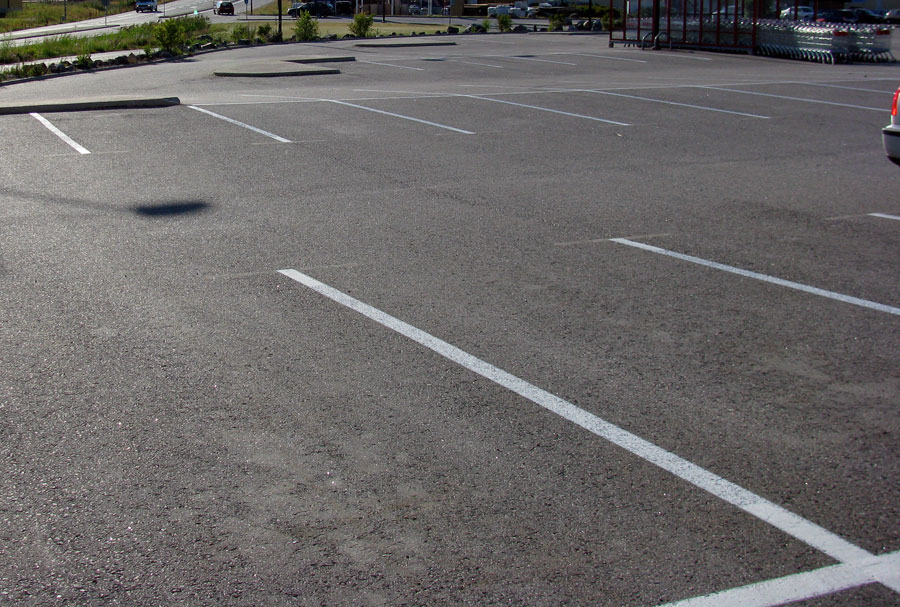
Which right of way rule generally applies within a parking area?

Picture for the question

Explanation

The right-hand rule also applies when the paths of two vehicles meet [...] in a parking area
Driving Licence Book, 19th Edition, page 41
Question 47

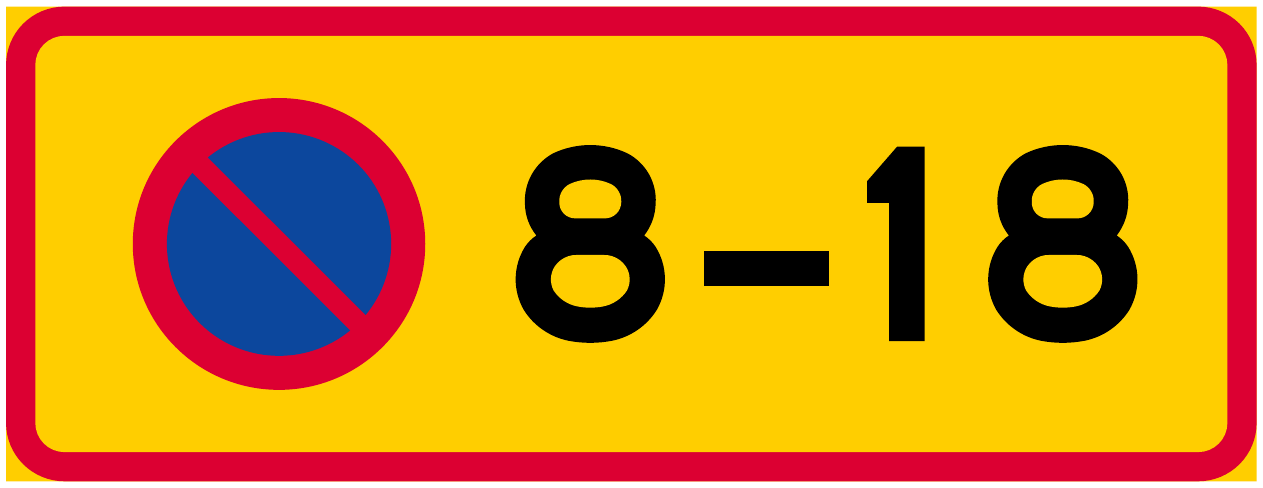
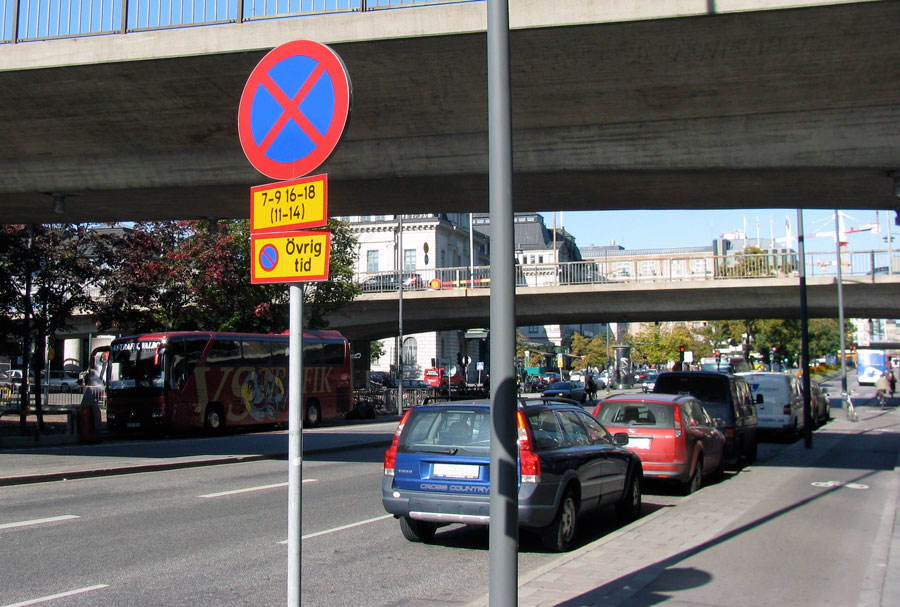
It is a weekday and the following day is not a Sunday or public holiday. What time of day is it prohibited to stop at this location?

Picture for the question

Explanation

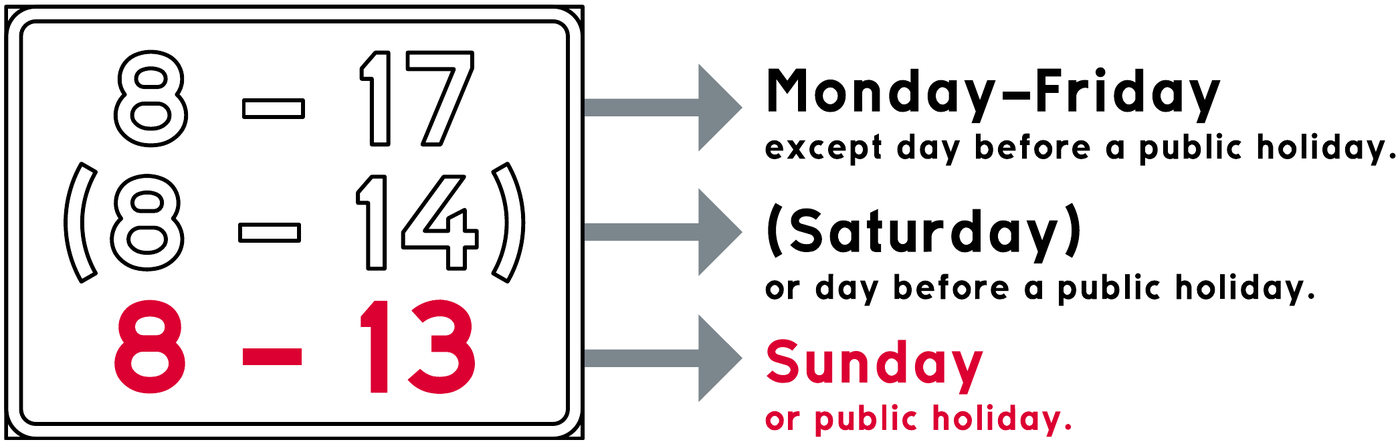
On the additional panel there are two indications for weekdays, except for days before Sundays and public holidays, and both are valid. Therefore, stopping and parking is prohibited between 7–9 and between 16–18. This is likely due to traffic being extra dense during these times, as many people are going to and from work.

Illustration
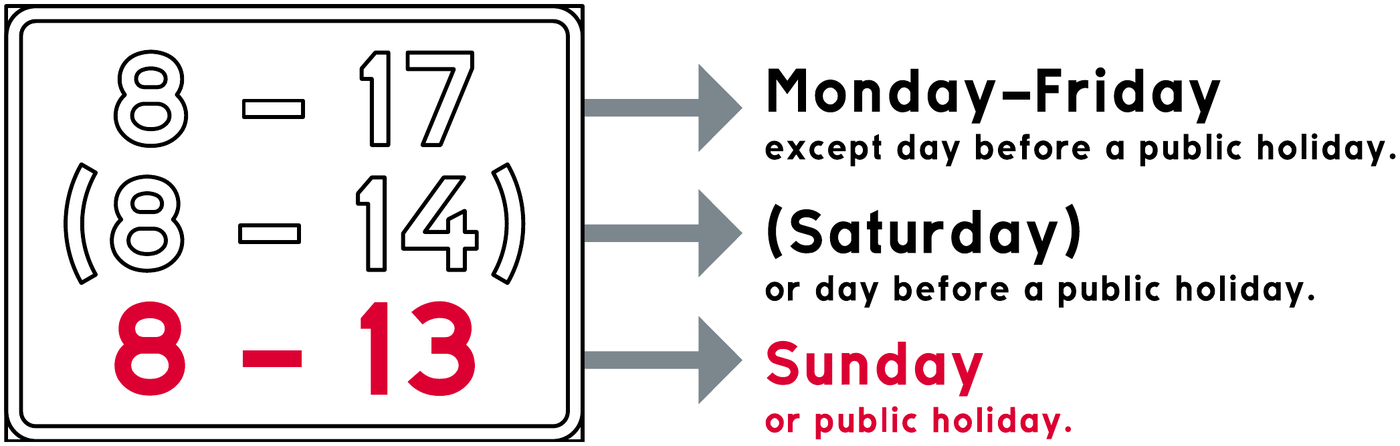
Time indicationT6

The panel indicates when the directions on the road sign applies. If times are used in combination with other conditions, the panel also indicates when these conditions apply. Black or white figures without brackets refer to weekdays except for weekdays before Sundays and public holidays. Black or white figures within brackets refer to weekdays before Sundays and public holidays. Red figures refer to Sundays and public holidays. If the time indication extends past midnight, the time period applies after midnight the following day. If a certain date or day of the week is indicated, the regulation applies to this day regardless of whether the day is a weekday, Sunday or public holidays.

Question 48

When does the blue and white 50 sign cease to apply?

Picture for the question

Explanation

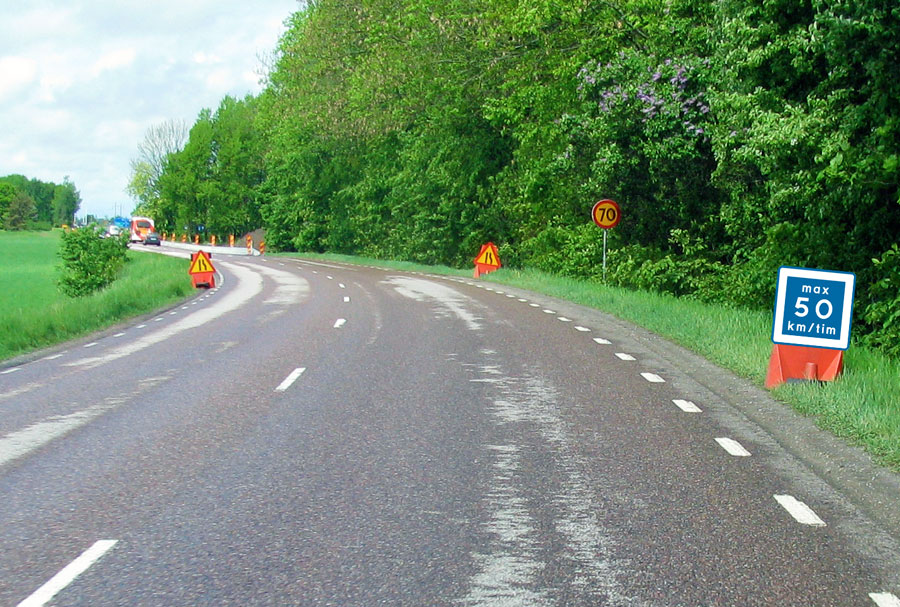
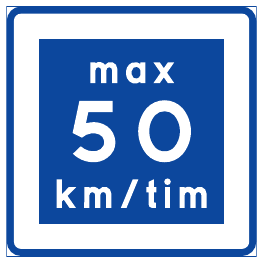
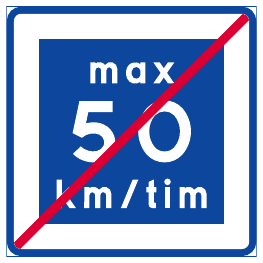
Generally, you should go by the last posted road sign, i.e. by the 50 sign for a few metres and then by the 70 sign. However, this is a special case. The blue and white sign Recommended lower speed applies until a posted end sign or until it is “otherwise clear that the stretch has ended.” (Swedish Transport Agency)

Recommended lower speed
Recommended lower speedE11

The sign indicates a stretch of road or an area where specific measures have been taken or where conditions are such that it is advisable to drive at a lower speed than the maximum permitted speed. The recommended lower speed is indicated on the sign.

Illustration

Recommended lower speed ends (E12) (end sign) ”The sign does not need to be posted if it is otherwise clear that the stretch comes to an end.”

In the situation depicted, it is obvious that the 50 sign applies even after the 70 sign, as it is evident that there are roadworks ahead and that the stretch does not come to an end at the 70 sign.

But would not the alternative “Only when you pass an end sign informing you that the recommended lower speed ends.” also be correct?
– No, since it says “only”. An end sign does not have to be posted, which means that the sign can cease to apply in one of several ways and not “only” at an end sign.

Question 49

What is the mortality rate for pedestrians who get hit by a car driving at 30 km/h?

Explanation

Nine out of ten people will survive being hit by a car at 30 km/h. However, when that speed is increased to 50 km/h, the risk of a fatal accident increases eightfold
Swedish Transport Administration

The important thing is that you are aware that the speed greatly impacts on the chances of a pedestrian surviving being hit by a car. Specifically, you should know that 30 km/h = great chance of survival and 50 km/h = small chance of survival. This is so that you will understand why the speed limit on some stretches of road is 30 km/h.

The difference between the different alternatives is normally great enough that you do not need to learn any exact figures or formulas.

Question 50

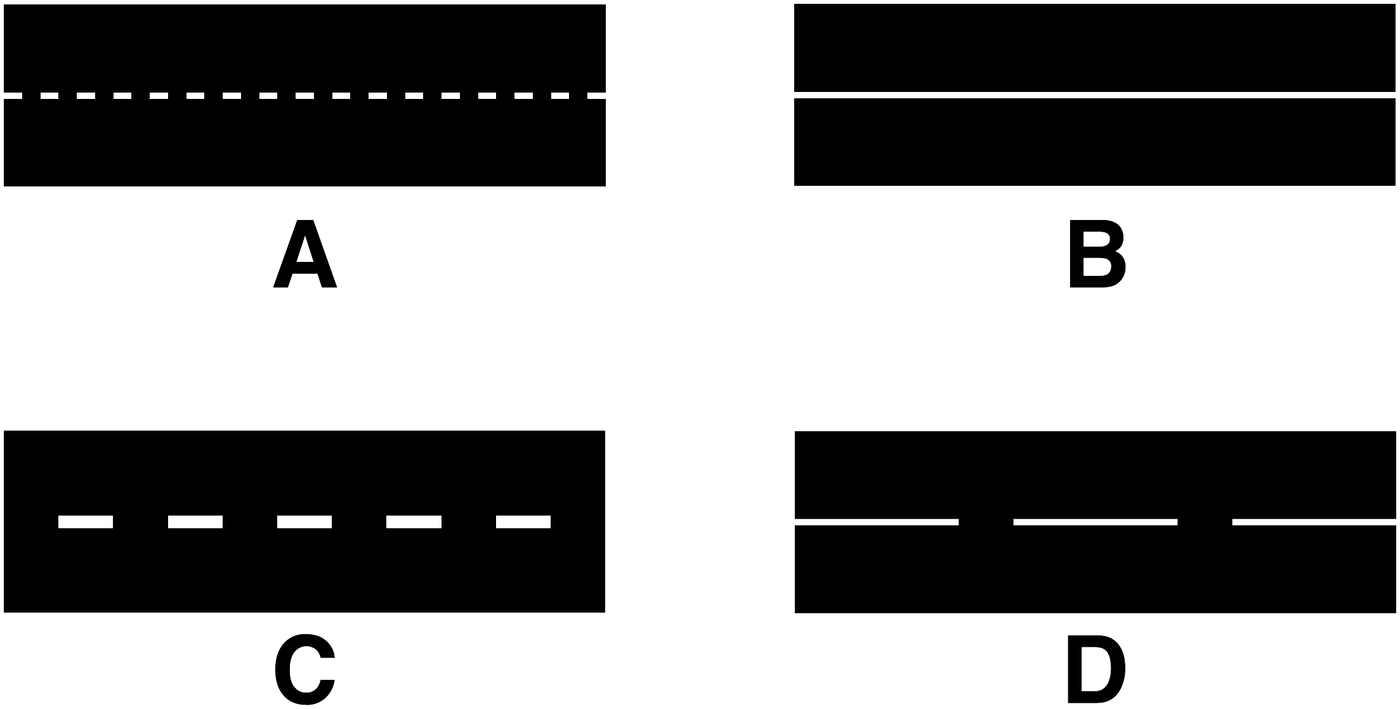
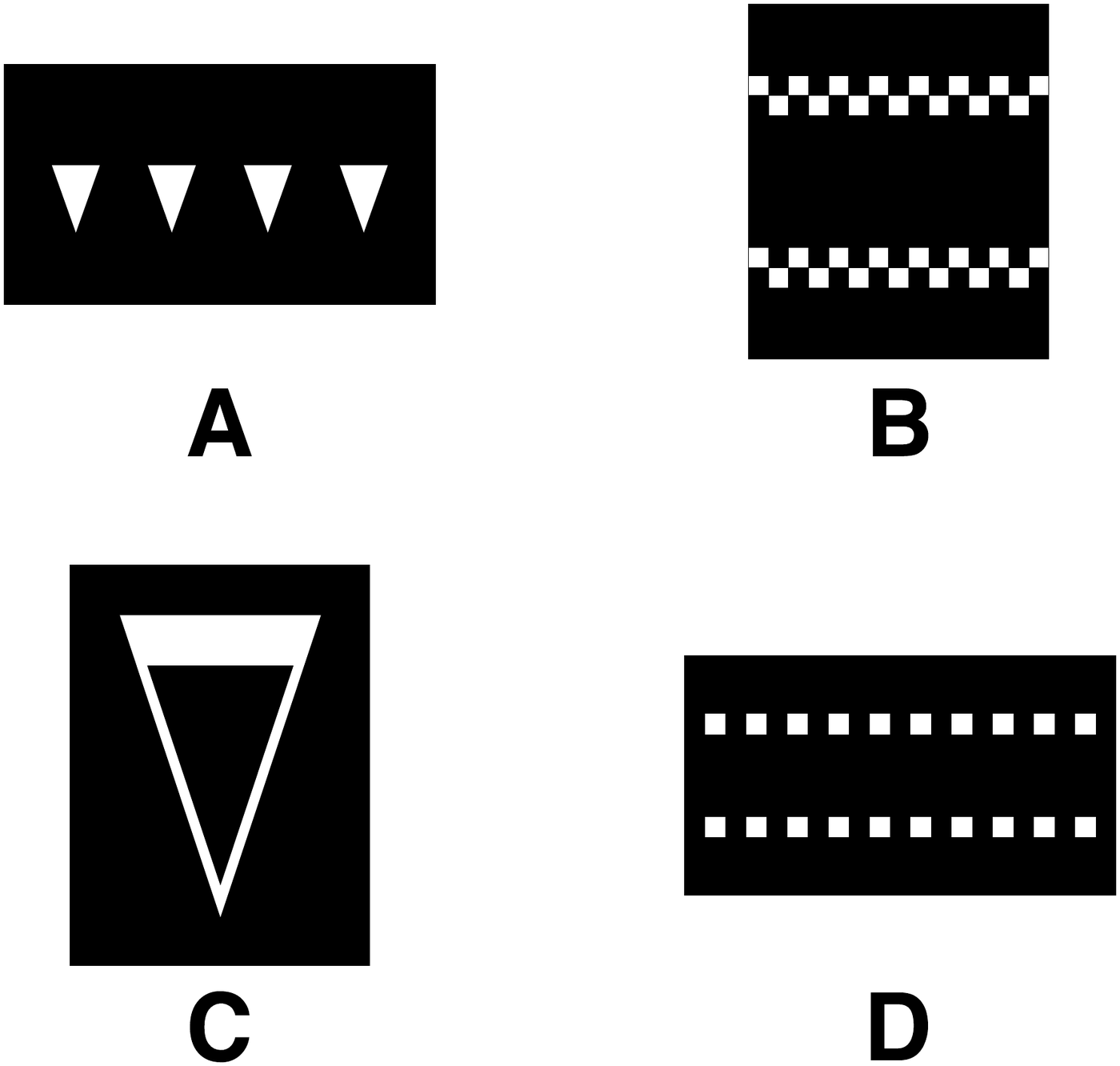
Which road marking is a warning line?

Picture for the question

Explanation

Guide line
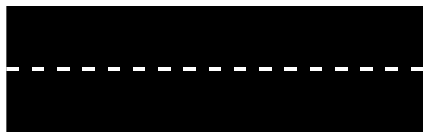
AGuide lineM4

The marking indicates the appropriate route for traffic in complicated junctions. The marking is also used in other cases where there is a need for guidance. The marking has a distance ratio of 1:1 between the dashes and spaces.

Solid line
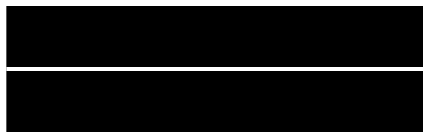
BSolid lineM8

A solid line indicates that the provisions of Chapter 3, Section 11 or Section 12, paragraph 3 of the Road Traffic Ordinance (1998:1276), or provisions stipulated pursuant to that ordinance apply. A solid centre line can appear in both single and double form. In case of a double solid line, the distance between the lines may vary.

Line for vehicles operating a regular service, etc.
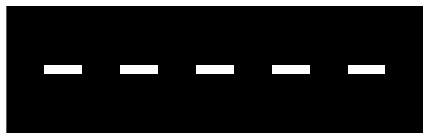
CLine for vehicles operating a regular service, etc.M6

The marking indicates the boundary between a lane for vehicles operating a regular service, etc. and another lane. The marking has a distance ratio of 1:1 between the dashes and spaces.

Warning line
DWarning lineM3

A warning line is used to indicate that it is inappropriate to cross over it due to the traffic conditions. The marking indicates the boundary between lanes intended for travel in opposite directions. The marking has a distance ratio of 3:1 between the dashes and spaces.

Question 51

Where is stopping and parking prohibited?

Explanation

A vehicle may not stop or park [...] on or within a distance of ten metres before a pedestrian crossing
Swedish Road Traffic Ordinance

The reason why the prohibition does not apply after is because visibility is not obstructed in the same way in that case. The pedestrians appear before the parked car, making them visible to you.

Question 52

You are driving on to a motorway. What rule applies?

Explanation

Acceleration lane […] you do not have priority […] the traffic on the motorway does not have priority […] mutual consideration must be shown […] If the motorway does not have an acceleration lane, there is an obligation to give way to traffic on the motorway.
Driving Licence Book, 19th Edition, page 106–107

The purpose of the acceleration lane is to allow you to reach a high speed. It would be illogical and unsafe if you (once you have reached a high speed) had to brake hard to give way to cars on the motorway.

The best approach in terms of both safety and convenience is for those driving on the motorway to adapt their speed/change lanes to let you in, or if you adapt your speed to fit into a gap in traffic.

Remember that the acceleration lane is always constructed for everyone to have good visibility. In a regular junction, visibility may be poor, which makes mutual adaptation unsuitable.

Question 53

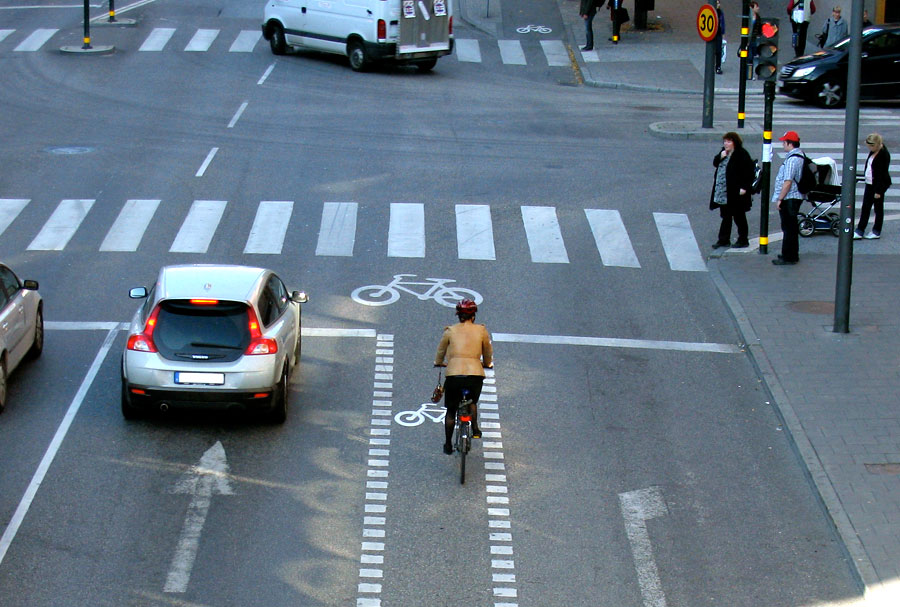
The cyclist in the middle of the photo is turning right. Does she have to stop before the pedestrian crossing?

Picture for the question

Explanation

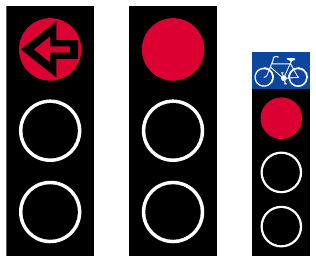
Red
RedSIG1

Stop. A vehicle may not pass the stop line or, in the absence of such, the signal. A signal with an arrow outline only applies to the direction or directions indicated by the arrow.

The red light also apply to the cyclist, since she is on the regular road. The stop line is broken in front of the bicycle lane so that cyclists can get in front of the cars and prepare their continued journey safely (instead of standing wobbling in between the cars).

Why should I know this to drive a car?
– It is good to be aware of how other road users may act. If you, for example, are sitting in your car on one of the crossing roads, you do not need to remember to give way to the cyclists, as they are obligated to stop at the red light.

Question 54

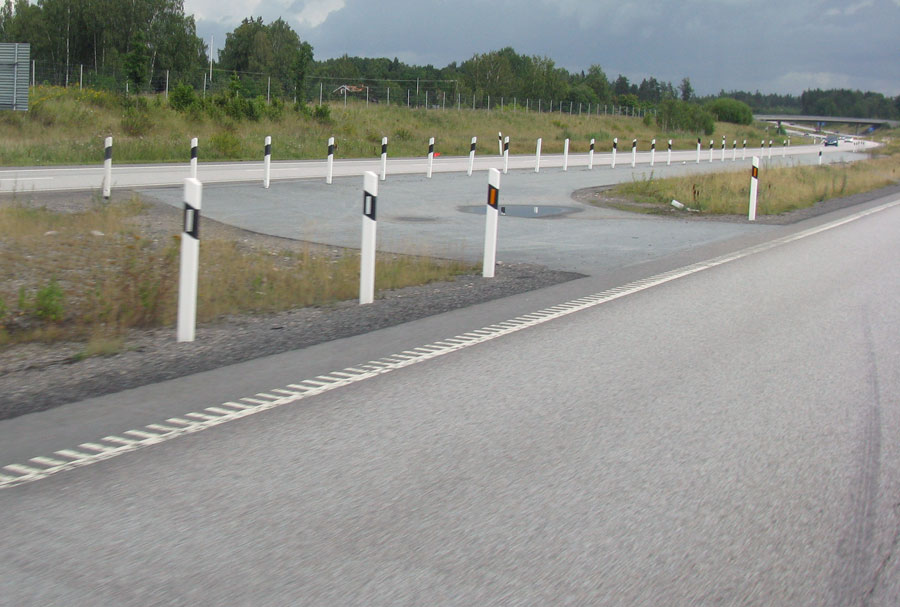
Is it permitted for regular road users to turn around on the motorway by using the link road in the picture?

Picture for the question

Explanation

A vehicle may not drive on the median strip or on a traversing link road between the carriageways.
Swedish Road Traffic Ordinance

Motorways are built to be safe. It would be very unsafe if regular road users were able to use these links that have a much lower safety level than exit ramps and acceleration lanes.

Question 55

What type of driver mentality is the best?

Explanation

Drivers should generally respect the rules, but traffic is very complex and every situation is unique in some way. For this reason, the regulations cannot cover every possible aspect, and in these situations, experience and consideration come into play.

Question 56

Which of the following is true if you have accidentally hit and killed a pet?

Explanation

If you have injured or killed a domestic animal, you must notify the owner.
Du och jag i trafiken [You and me in traffic], 28th Edition, page 82
If there has been damage to property and there is no-one around to receive information, the road user shall promptly notify the person who suffered the damage or the police. In the latter case, the police is to inform the person who suffered the damage, if their identity is known or easily traced.
Swedish Road Traffic Ordinance
Question 57

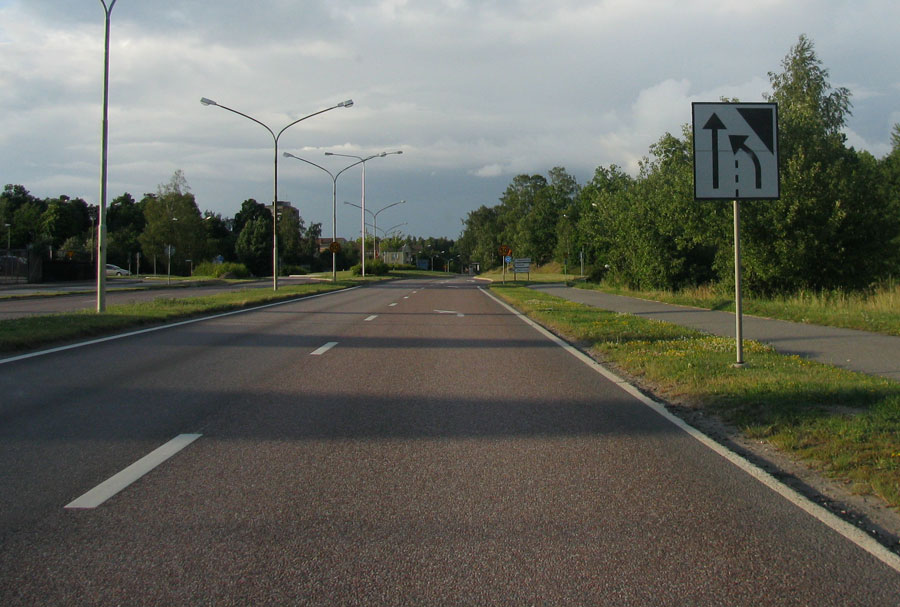
You are in the right lane. When should you change to the left?

Picture for the question

Explanation

Getting stuck in the right lane is bad for many reasons:

  • You have to brake or stop, which is not environmentally friendly.
  • Other cars may be unsure/confused when you are standing still and waiting to change lanes = creating uncertainty.
  • It is annoying for you to wait.

You may also change lanes before the sign. There is nothing in the picture to suggest otherwise.

Question 58

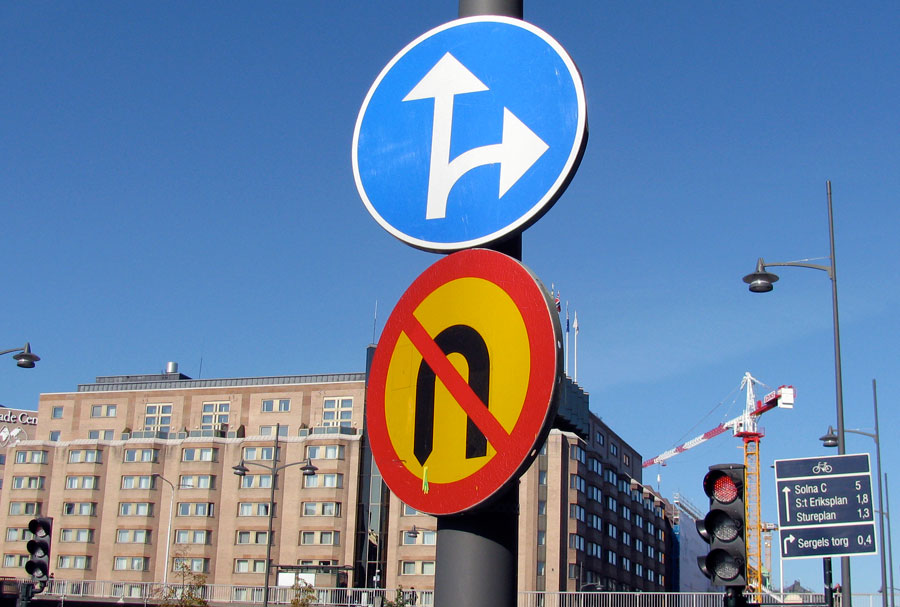
Look at these road signs. Which of the following is true?

Picture for the question

Explanation

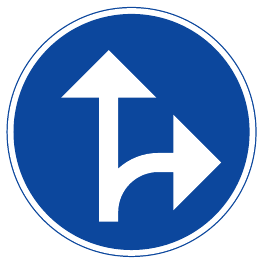
Direction to be followed
Direction to be followedD1

The signs indicate that the vehicle may only be driven in the direction of the arrow or, in the case of two arrows, in either arrow’s direction. The symbol is adapted to the conditions of the location.

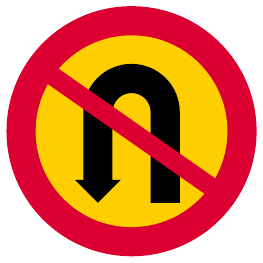
No U-turn
No U-turnC26

This prohibition applies to the junction or similar location before or in which the sign is erected. The sign may relate to several junctions. In that case the distance is indicated on an additional panel. The symbol is adapted to the conditions of the location.

Question 59

Which alternative applies to the use of full beam headlights?

Explanation

As the driver of the parked car is not currently driving, it does not matter if they are dazzled (and it is also easy for them to take their eyes from the road). It is more important that you, who are driving, can see. For this reason, you do not have to dim your full beam headlights for a parked car.

Question 60

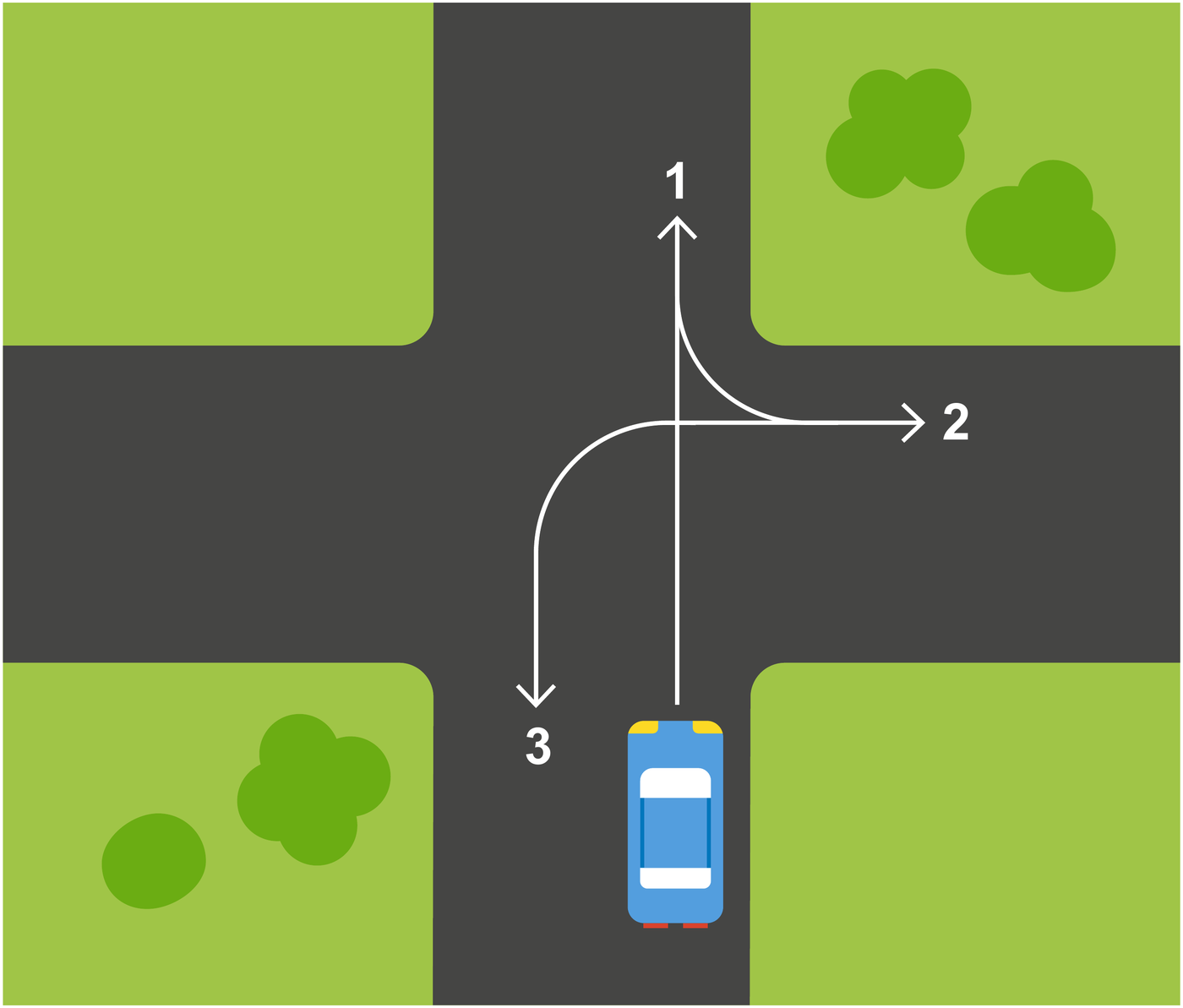
The driver must turn at the junction and plans to do so according to the arrows, as U-turning is prohibited. Which of the following is true?

Picture for the question

Explanation

There is minimal reversing, which is a good thing. Reversing around a corner is not bad compared to reversing across the junction.

The way the driver goes to 1 and then from 2 to 3 is nothing unusual (this is how you would normally drive). The unusual part is in the reversal from 1 to 2.

Question 61

How should a load that protrudes more than one metre behind the vehicle be marked in the dark?

Explanation

In the dark [...] the load protruding from the front shall be marked with a white light pointing forward and white reflectors, and the load protruding from the back shall be marked with a red light pointing backwards and red reflectors.
Swedish Road Traffic Ordinance
Question 62

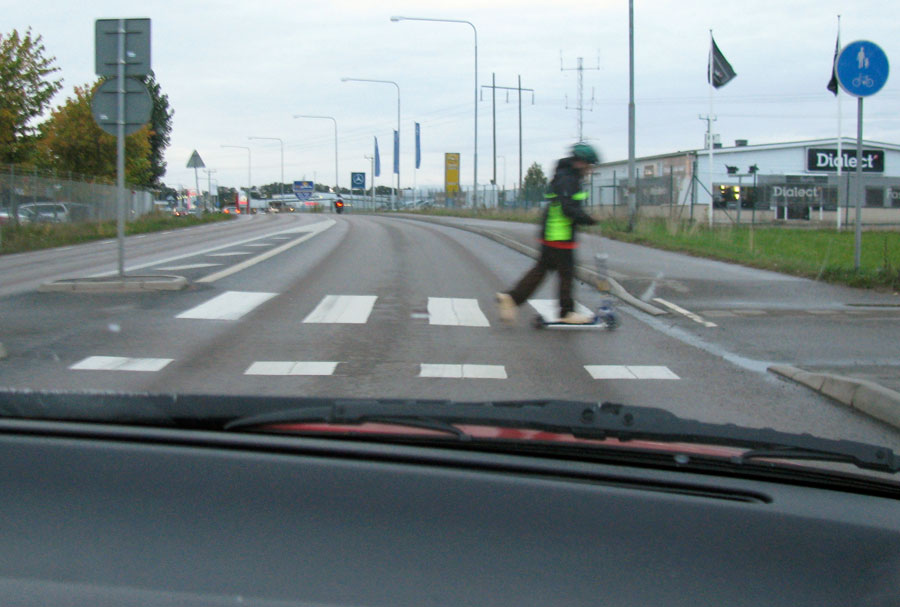
You are driving the car from which the picture is taken. What is true regarding your obligations to the person crossing the road?

Picture for the question

Explanation

The provisions referring to pedestrians also apply to those who
1. ski, roller ski, ice skate, roller skate or similar;
2. lead, push or pull a kick-sled, toy vehicle or similar.
Swedish Road Traffic Ordinance

This must be classified as a “toy vehicle or similar”, which means that the person is considered a pedestrian.

At an unguarded pedestrian crossing, a driver is obligated to give way to pedestrians who have stepped out on the pedestrian crossing or who are about to do so.
Swedish Road Traffic Ordinance
Question 63

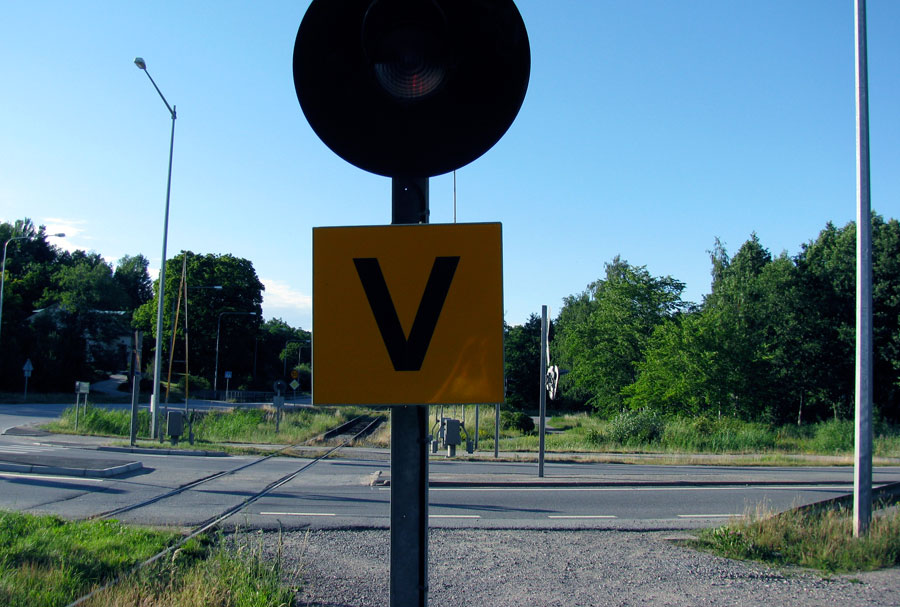
You are driving a car on the gravel road and see this sign. How should you interpret it?

Picture for the question

Explanation

The sign only applies to train drivers (see the railway on the left). There is no road sign like the one in the picture.

Question 64

Why is it good to turn off your full beams for a moment before coming to the crest of a hill when driving in the dark?

Explanation

It is good to dim the headlights for a moment before a hill crest or bend. This will allow you to see oncoming traffic sooner and you have the chance to spot any obstacles as they become silhouetted against the oncoming lights.
Driving Licence Book, 19th Edition, page 155
Question 65

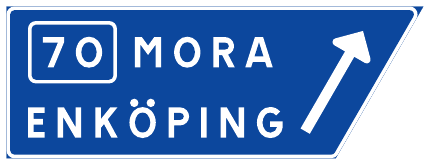
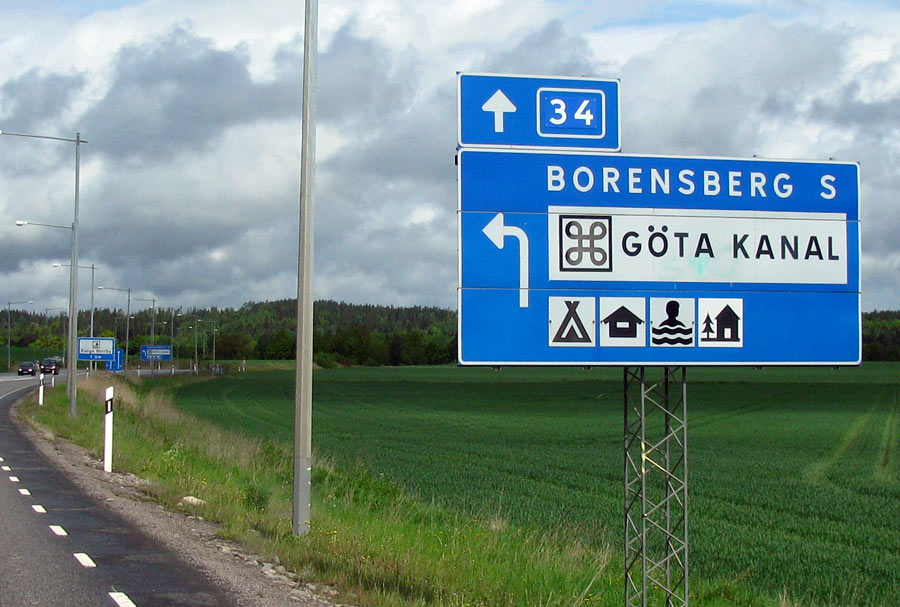
You are heading to Borensberg S. Should you turn left or continue straight in the junction ahead?

Picture for the question

Explanation

The arrow to the left refers to everything insider the white box on the sign. The arrow pointing straight ahead only refers to route 34.

Question 66

Is it always forbidden to overtake at the crest of a hill?

Explanation

In places where visibility is limited at the crest of a hill or in a curve, overtaking may only take place if the road has at least two lanes in your direction in which there may be no oncoming traffic, or in other cases where the overtaking can be completed without using a lane intended for oncoming vehicles. However, two-wheeled vehicles without a sidecar may be overtaken.
Swedish Road Traffic Ordinance

This means, for example, that you are allowed to overtake as long as you do not turn into the oncoming lane. In other words, it is not always forbidden to overtake as per the question's wording.

How can this be permitted?
– The number one priority is safety, but practical considerations must also be made. Compare with speed limits: it would be safest if the speed limit on all roads was 10 km/h, but it would not be practical.

Question 67

What does this road sign mean?

Picture for the question

Explanation

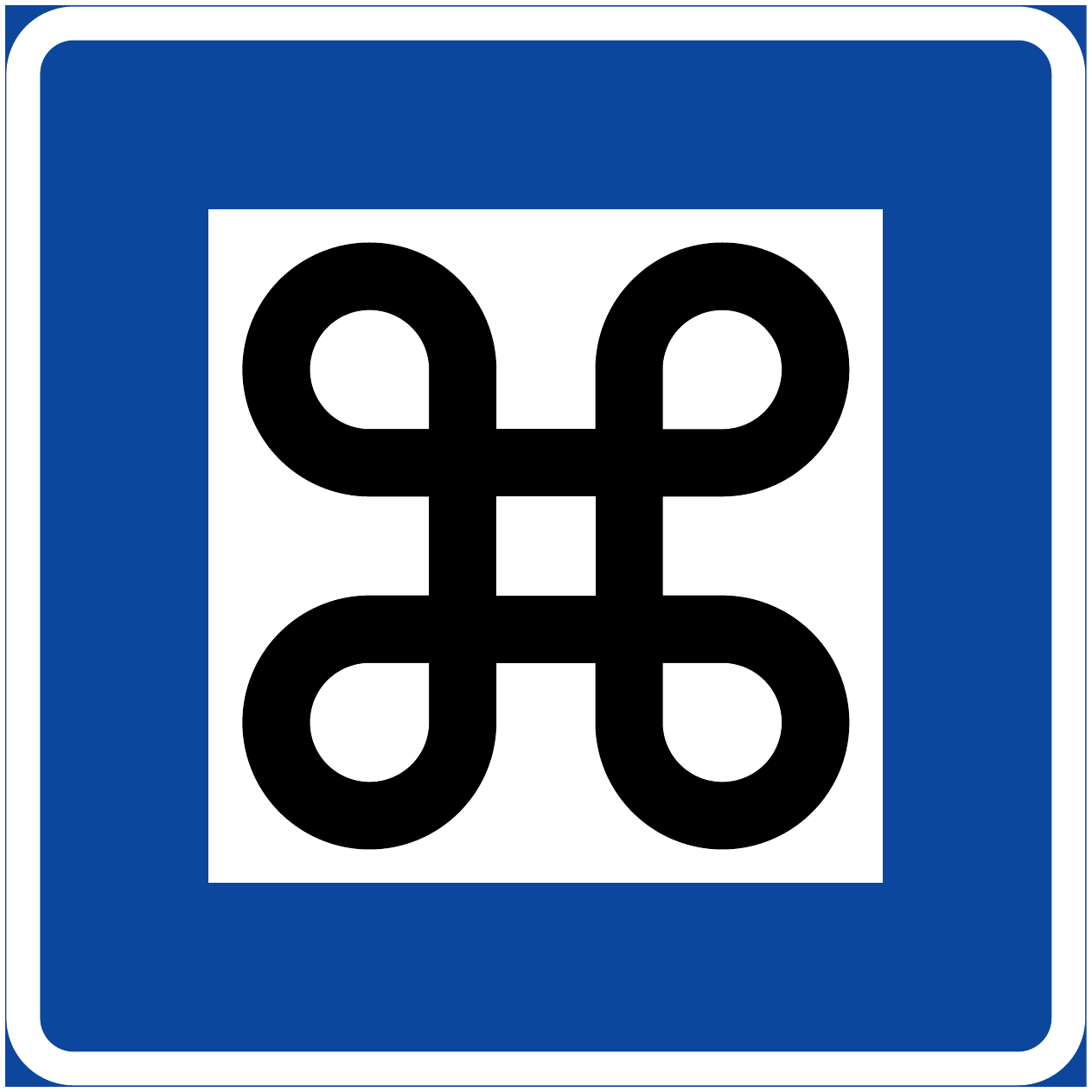
National heritage
National heritageH22

The sign indicates heritage of national interest. The nature of the national heritage is indicated adjacent to the sign.

Question 68

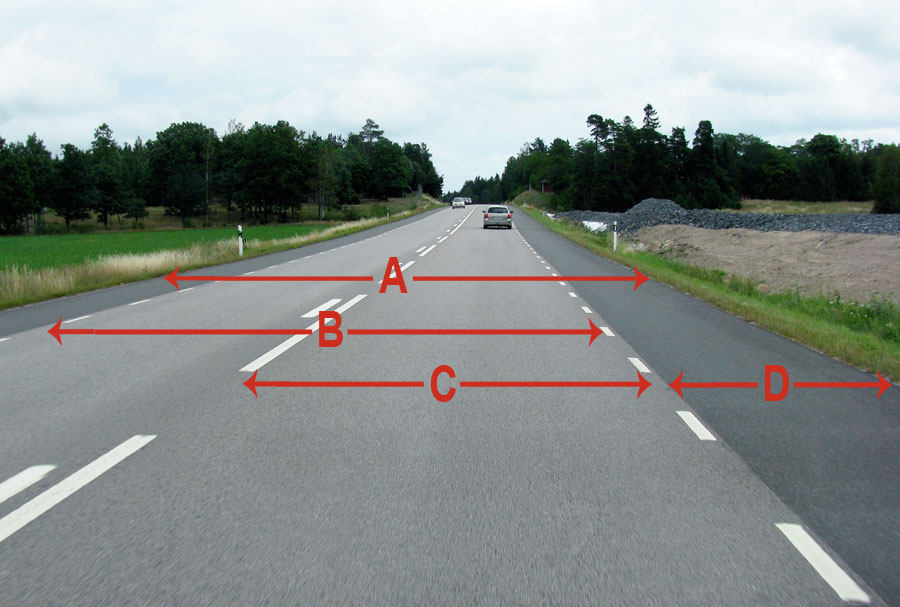
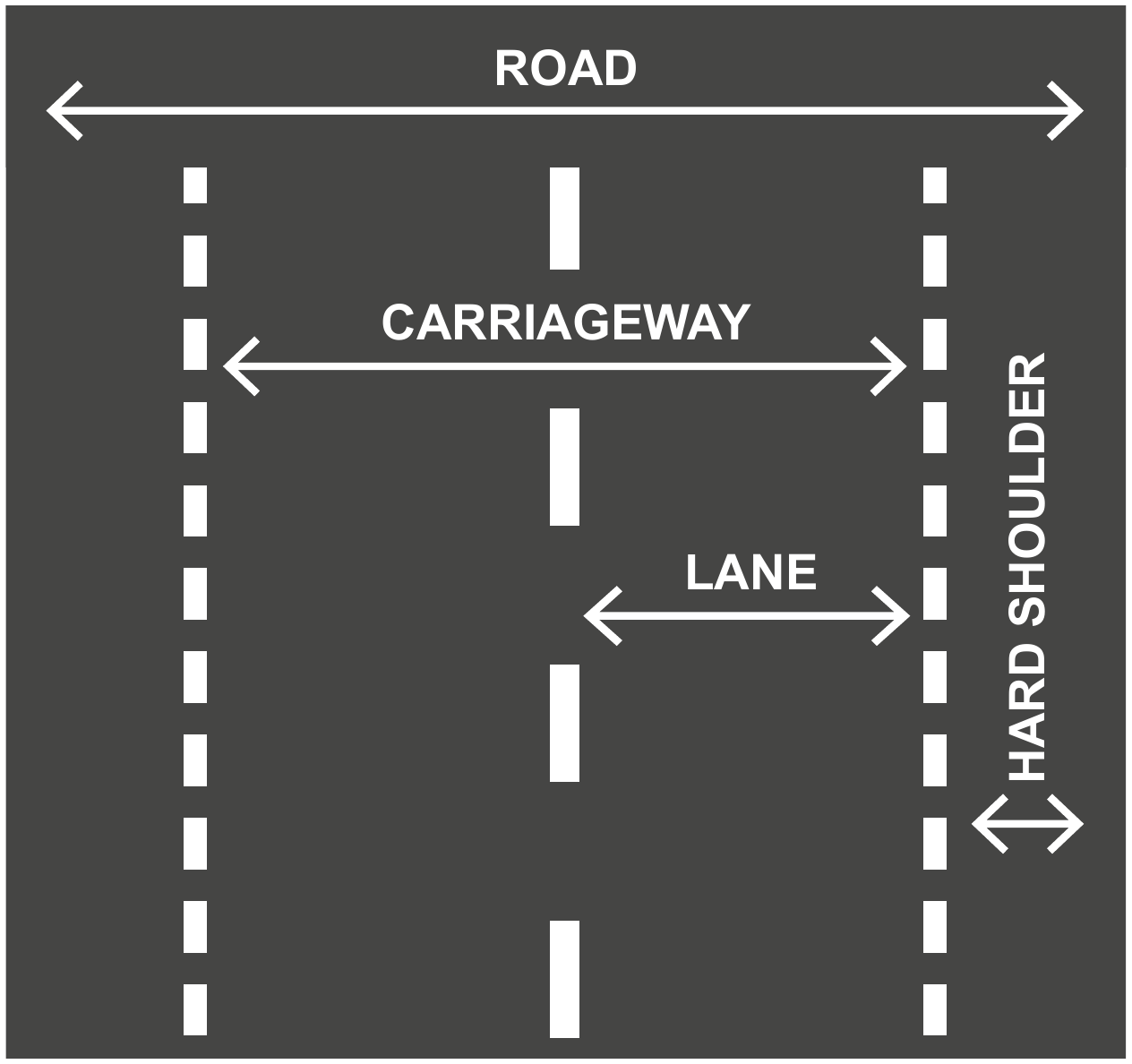
Study the picture. Which letter represents the carriageway?

Picture for the question

Explanation

Illustration
Question 69

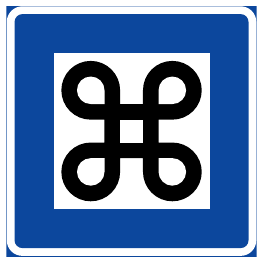
What does this road sign mean?

Picture for the question

Explanation

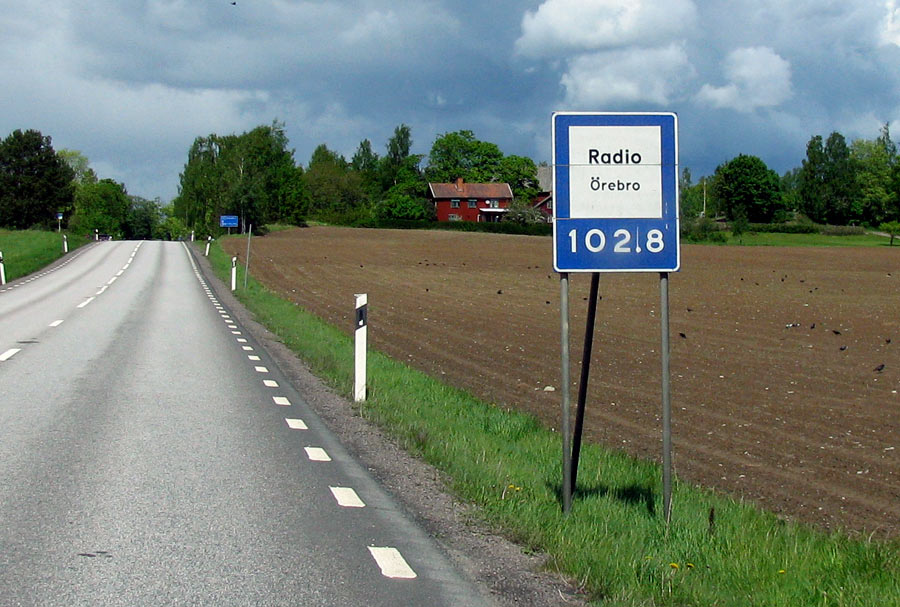
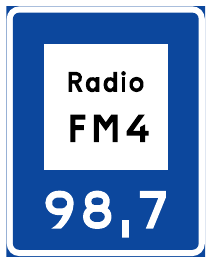
Radio station for traffic information
Radio station for traffic informationG3

The sign indicates that traffic updates are given in regular broadcasts intended to cover a greater area.

Question 70

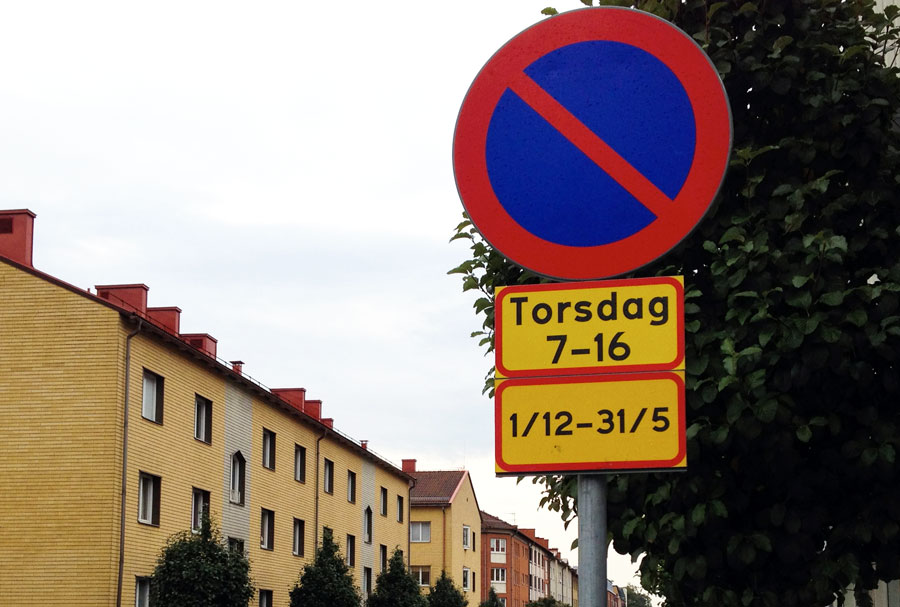
It is Tuesday 30 August at 15:30. Are you prohibited from parking in this location according to the road signs?

Picture for the question

Explanation

”Torsdag” = Thursday

The first additional panel can be eliminated immediately, as the day in the question is Tuesday and the panel refers to a prohibition on Thursdays.

The second additional panel applies 1/12–31/5, i.e. 1 December–31 May. The date in the question is 30 August, i.e. not within that period of time. In other words, the second additional panel is not valid either = there is no parking prohibition.

No questions to show here.