Driving licence · Theory practice

Practice test 4

70 questions · Pick an answer to see whether you are right. Your answers are saved in this browser.

0of 70 correct
Not started

0 of 70 answered

0Correct
0Incorrect
70Unanswered
14Mistakes allowed

The real test has 70 questions in 50 minutes. You need 56 correct (80%) to pass.

Question 1

It is night and you are driving on a road that is satisfactorily lit by street lamps. Which of the following is true?

Explanation

Full beam headlights may not be used [...] on stretches of road that are satisfactorily lit.
Swedish Road Traffic Ordinance
Question 2

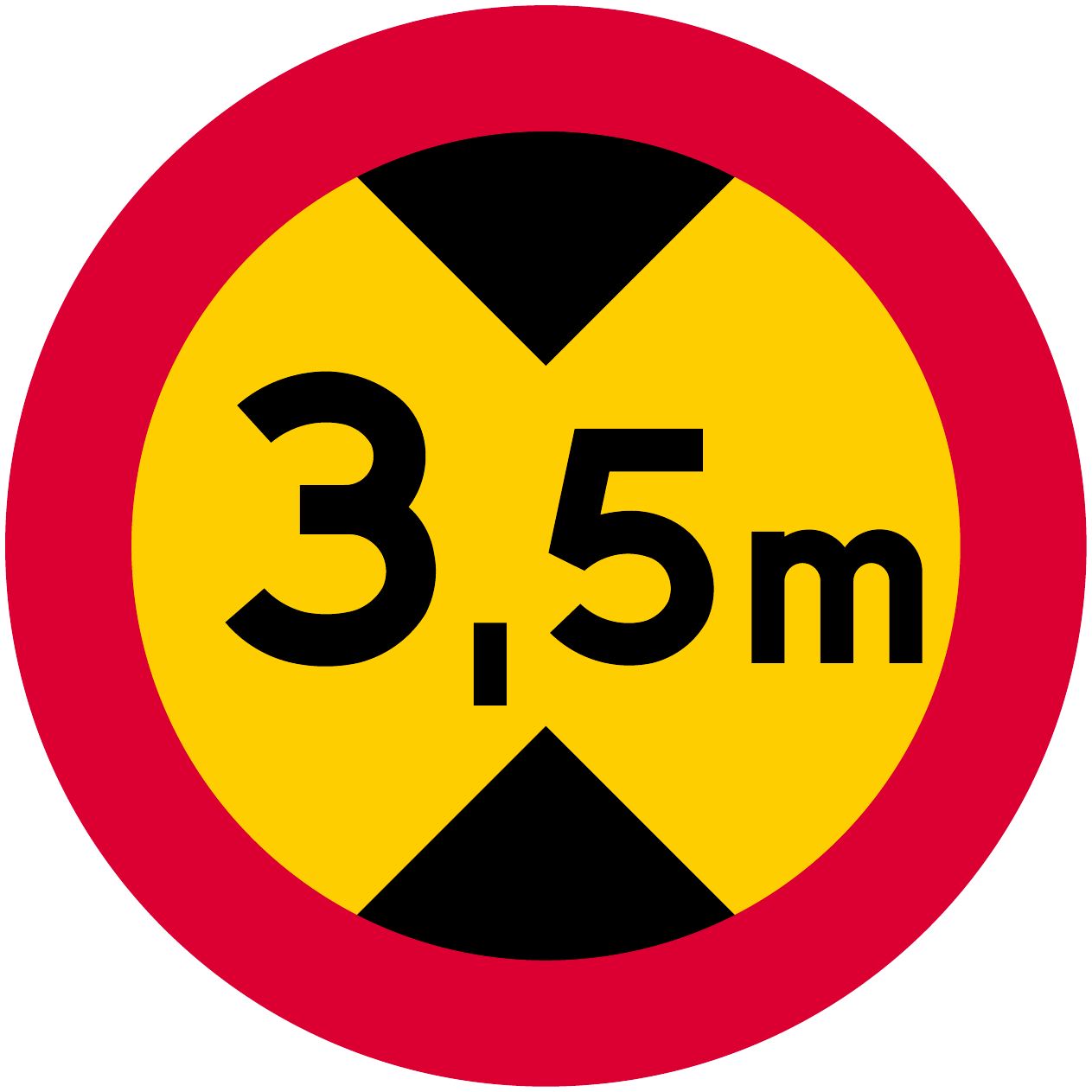
What does this road sign mean?

Picture for the question

Explanation

Restricted vehicle height
Restricted vehicle heightC17

The sign indicates that traffic with vehicles over a certain height is prohibited if the free height is lower than 4.5 metres. The greatest permitted vehicle height is indicated on the sign.

Question 3

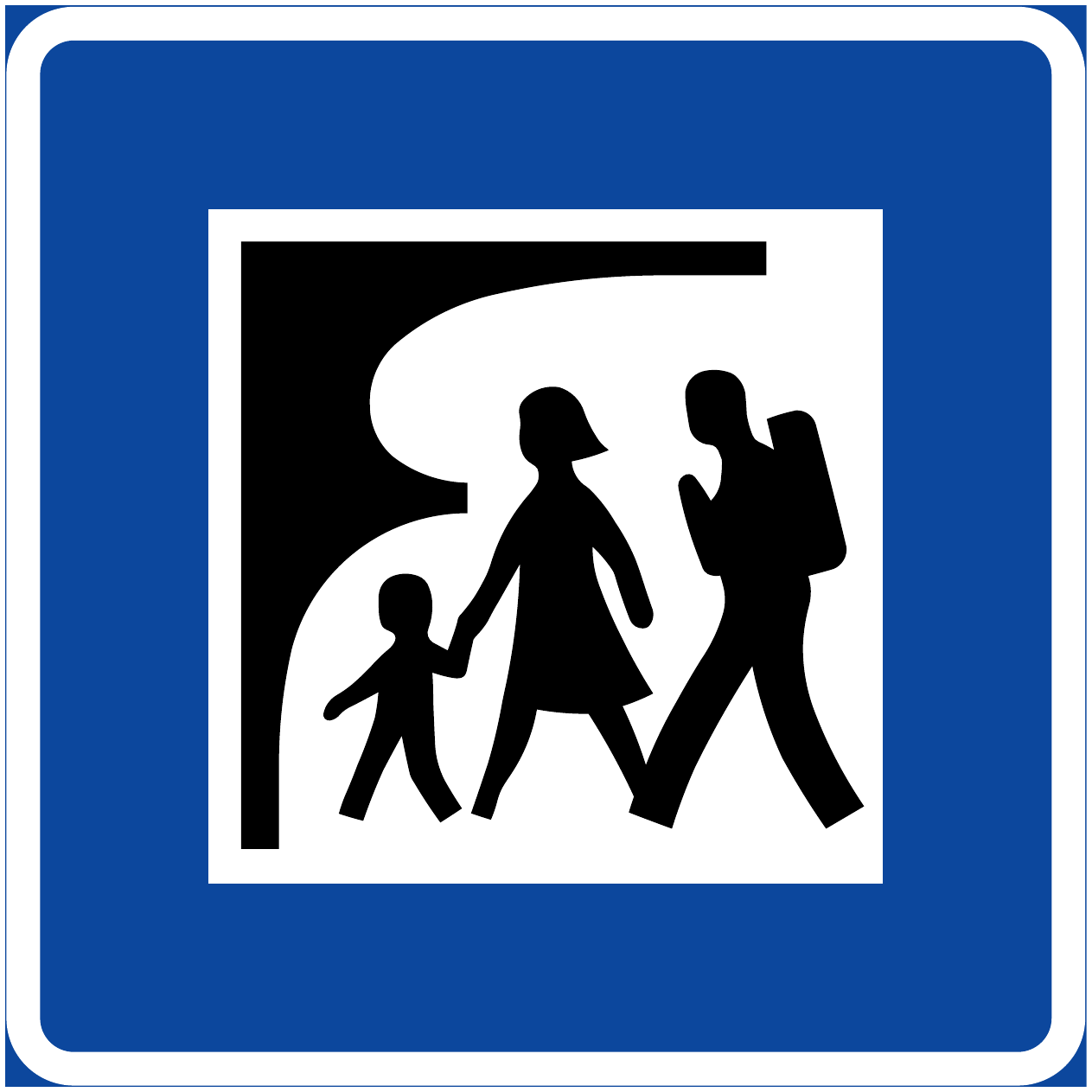
What does this road sign mean?

Picture for the question

Explanation

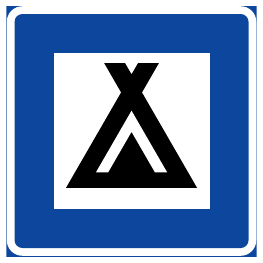
Recreational area
Recreational areaH16
Question 4

About how many of those killed in traffic accidents were not wearing a seat belt at the time of the accident?

Explanation

Of those killed in traffic accidents, an average 40 per cent were not wearing a seat belt.
Swedish Transport Administration
Question 5

Which alternative is not included in the car’s unladen weight?

Explanation

Unladen weight of a car [...] The overall weight of the vehicle in normal, fully operational condition with the heaviest body belonging to the vehicle, tools and spare wheel belonging to the vehicle, fuel, lubricating oil and water, along with the driver.
Act on road traffic definitions
Question 6

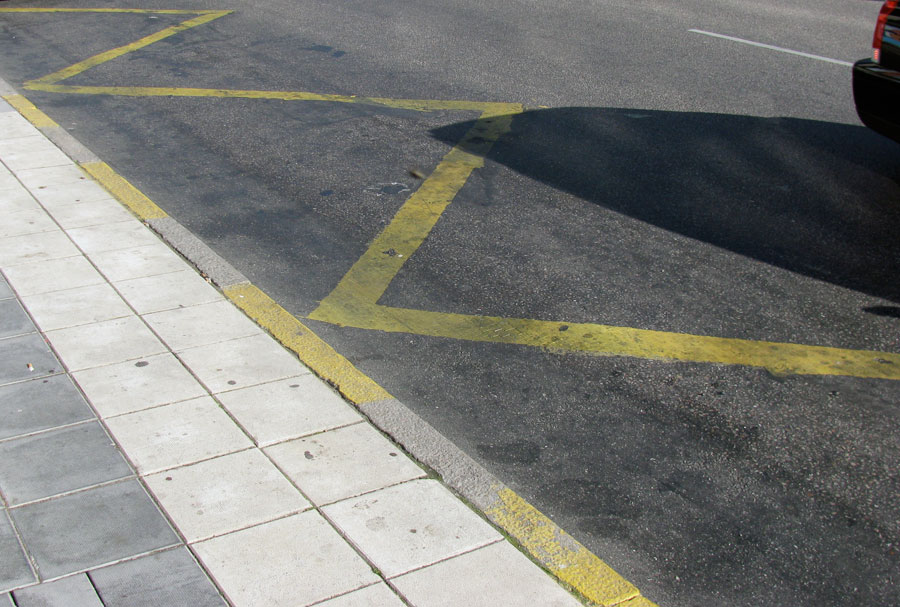
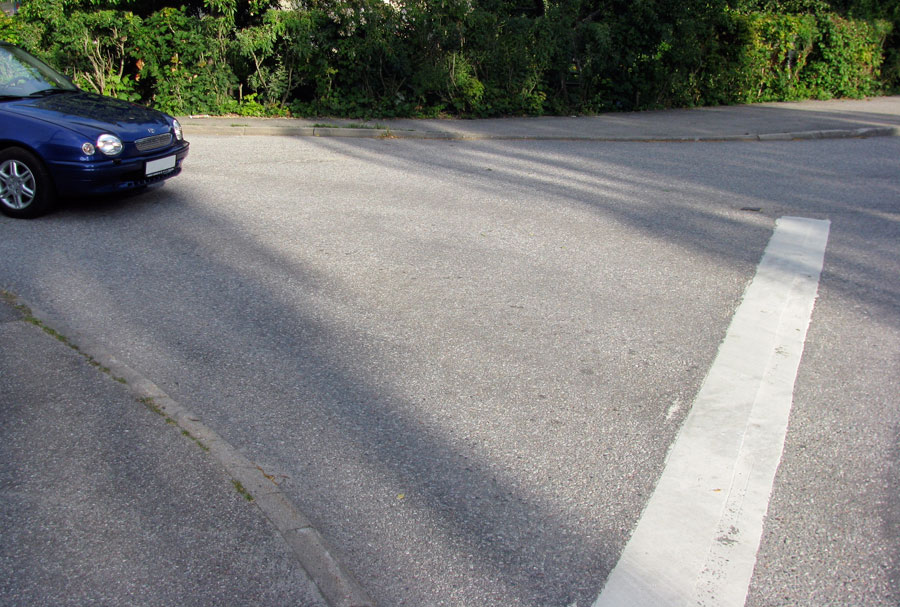
What do the lines mean?

Picture for the question

Explanation

The zigzag lines on the street (M23) is just a reinforcement of line M22.

No stopping and parking

or – Very important word!

no parkingM23

This marking is used as a reinforcement of the road markings M21, no stopping and parking, and M22, no parking. No other colour may be used.

Another way to describe M23:

No stopping or parking (when combined with M21) OR simply no parking (when combined with M22).

No parking
No parkingM22

This marking indicates a prohibition on parking a vehicle and is placed along the side of the carriageway. The marking is also used to indicate an extension of a bus stop. The marking has a distance ratio of 1:1 between the dashes and spaces. No other colour may be used.

No stopping and parking
No stopping and parkingM21

This marking indicates a prohibition on stopping and parking a vehicle and is placed along the side of the carriageway. No other colour may be used.

The image in the question depicts a broken line marking on the kerb (i.e. M22), which means it should be interpreted as “you are forbidden to park in this area, and the parking prohibition is reinforced by the triangular zigzag lines on the street”.

But isn’t this a bus stop? You are only allowed to stop in order to pick up/drop off passengers, provided that it does not obstruct any buses.
– Yes, this is likely a bus stop; however, the question only relates to what the markings mean, not what rules apply in the situation in general.

Question 7

You are driving on to a motorway. What rule applies?

Explanation

Acceleration lane […] you do not have priority […] the traffic on the motorway does not have priority […] mutual consideration must be shown […] If the motorway does not have an acceleration lane, there is an obligation to give way to traffic on the motorway.
Driving Licence Book, 19th Edition, page 106–107

The purpose of the acceleration lane is to allow you to reach a high speed. It would be illogical and unsafe if you (once you have reached a high speed) had to brake hard to give way to cars on the motorway.

The best approach in terms of both safety and convenience is for those driving on the motorway to adapt their speed/change lanes to let you in, or if you adapt your speed to fit into a gap in traffic.

Remember that the acceleration lane is always constructed for everyone to have good visibility. In a regular junction, visibility may be poor, which makes mutual adaptation unsuitable.

Question 8

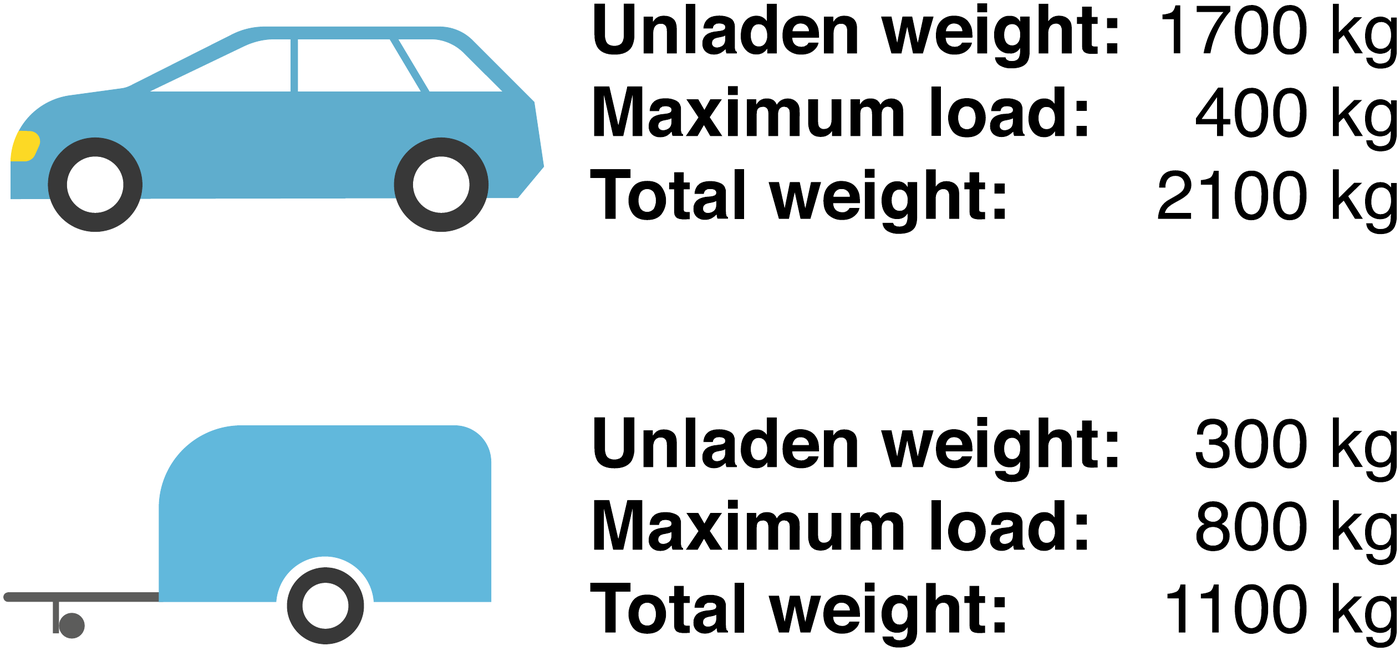
Is the trailer considered a light trailer if it is connected to the car?

Picture for the question

Explanation

With a regular category B licence, you are only allowed to tow a light trailer. The following counts as a light trailer:

  • Trailer with a maximum total weight of 750 kg.
  • or
  • Trailer where the maximum total weight for car + trailer is 3.5 tonnes.

Does the combined total weight exceed 3.5 tonnes? 2100 kg + 1100 kg = 3200 kg = Under 3.5 tonnes

Question 9

What are HA oils?

Explanation

Many older tyres contain HA oils, which are among the most common carcinogen products used in society.
Driving Licence Book, 19th Edition, page 221
Question 10

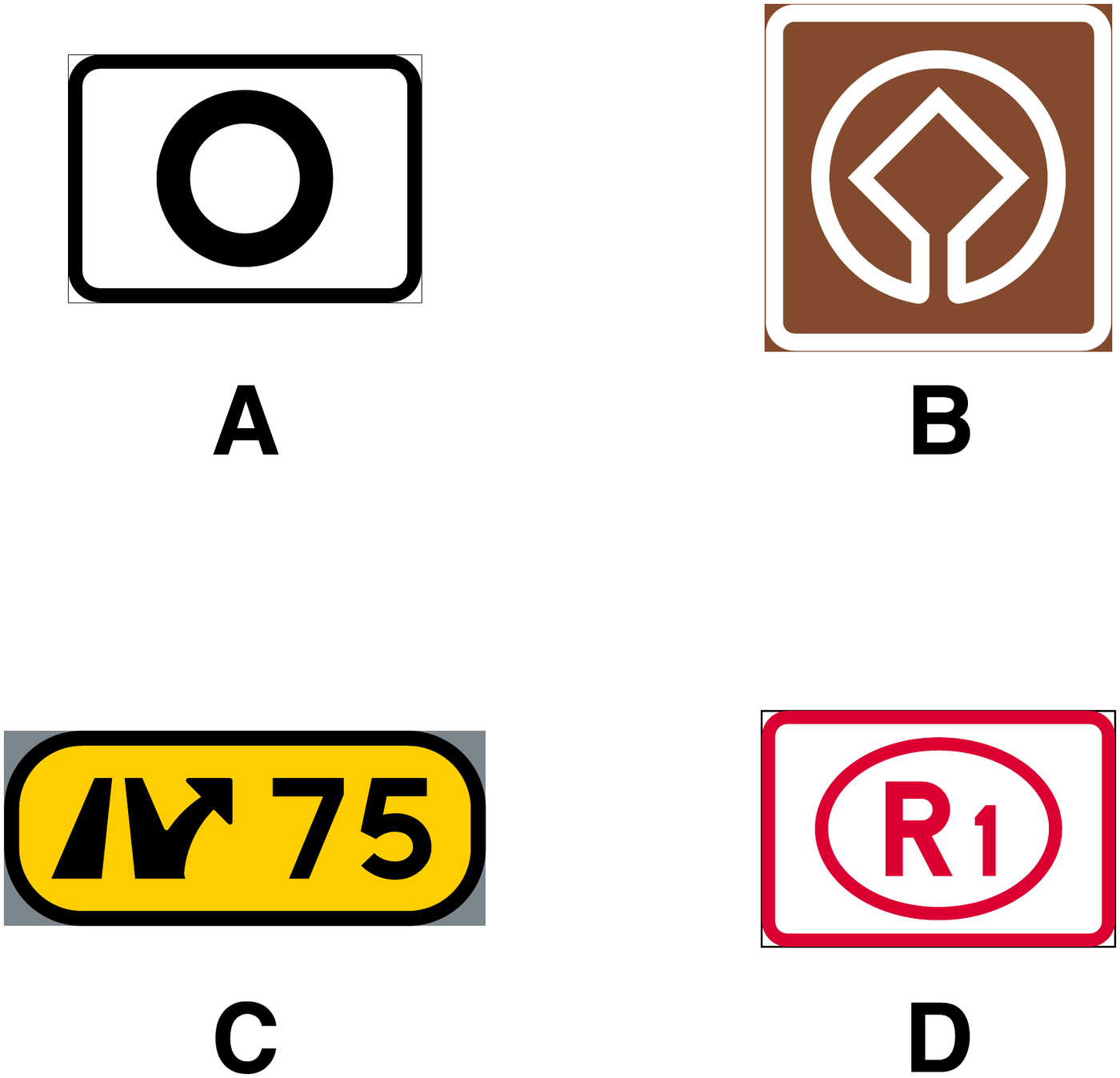
Which sign indicates the interchange number?

Picture for the question

Explanation

Interchange number is the same as exit road number.

Local loop
ALocal loopF30

The sign indicates a ring road or equivalent. The sign may be supplemented with a designation or similar. No other colour may be used.

World heritage
BWorld heritageI4

The sign indicates world heritage as decided by UNESCO. The sign may be incorporated in a location sign for direction.

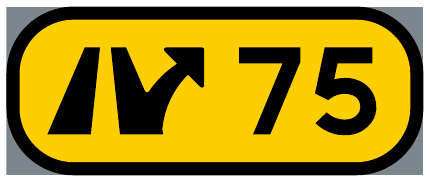
Interchange number
CInterchange numberF27

The sign indicates the number of the interchange. The sign may be supplemented with the exit road's designation. No other colour may be used.

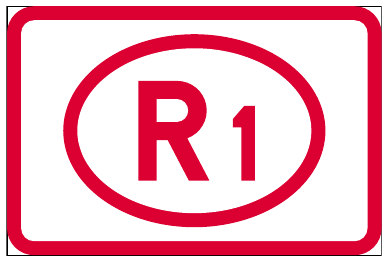
Emergency site
DEmergency siteF33

The sign indicates an emergency site during roadworks or similar. No other colour may be used.

Question 11

Which alternative gives examples of substances that the Euro norm has established limits for?

Explanation

The limit values […] Nitric oxide (NOx) […] Particles
European Commission
The Euro norm is a measurement for the car’s emissions of several substances that are harmful to the environment and to human health. However, the greenhouse gas carbon dioxide is not included in the criteria.
Swedish Consumer Agency
Question 12

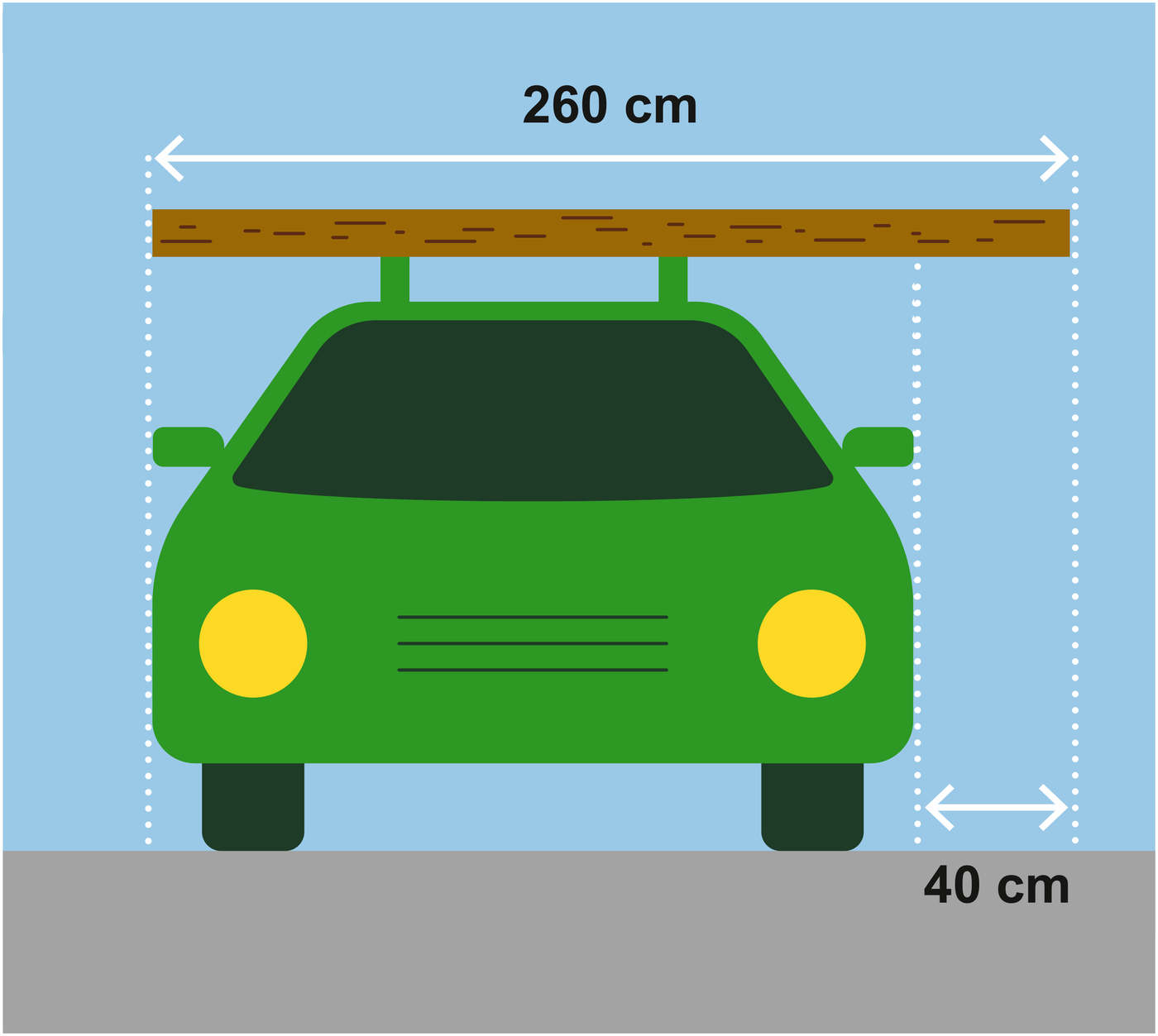
Is it permissible to drive the car on a public road?

Picture for the question

Explanation

If a motor vehicle or a vehicle coupled to this has a load where either side protrudes more than 20 centimetres outside the vehicle, or if the vehicle’s width, including load, exceeds 260 centimetres, [...] the vehicle or a vehicle coupled to this may only be driven on a private road.
Swedish Road Traffic Ordinance

Review of the options

  • No, since the width is 260 cm.Wrong, the width may be exactly 260 cm, but not more.
  • No, since the load protrudes 40 cm on one side.Correct according to the quote from the Road Traffic Ordinance.
  • Yes, since the width does not exceed 260 cm.Wrong, since the option indicates that it is permitted to drive the car with this load.
  • Yes, since the load does not protrude at all on the other side.Wrong, since the option indicates that it is permitted to drive the car with this load.
Question 13

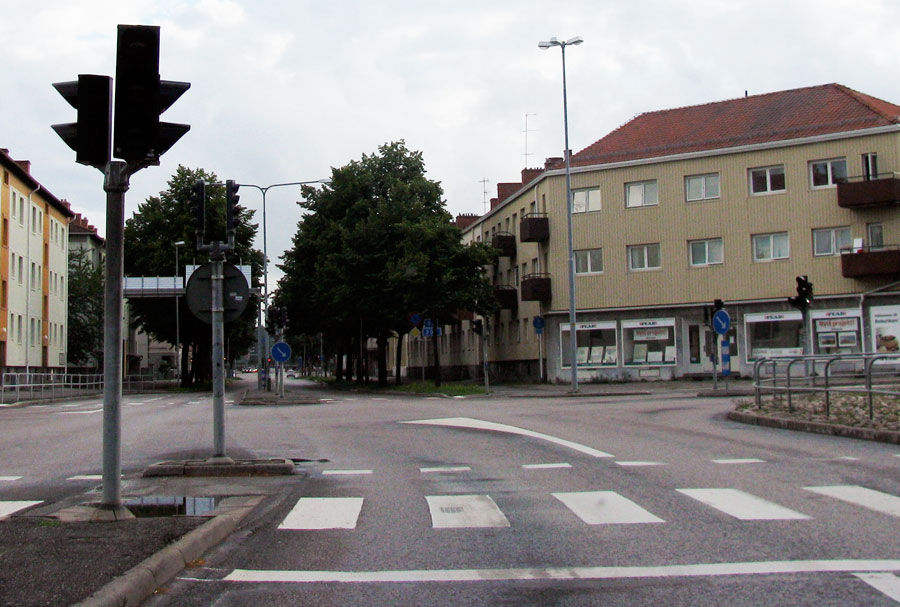
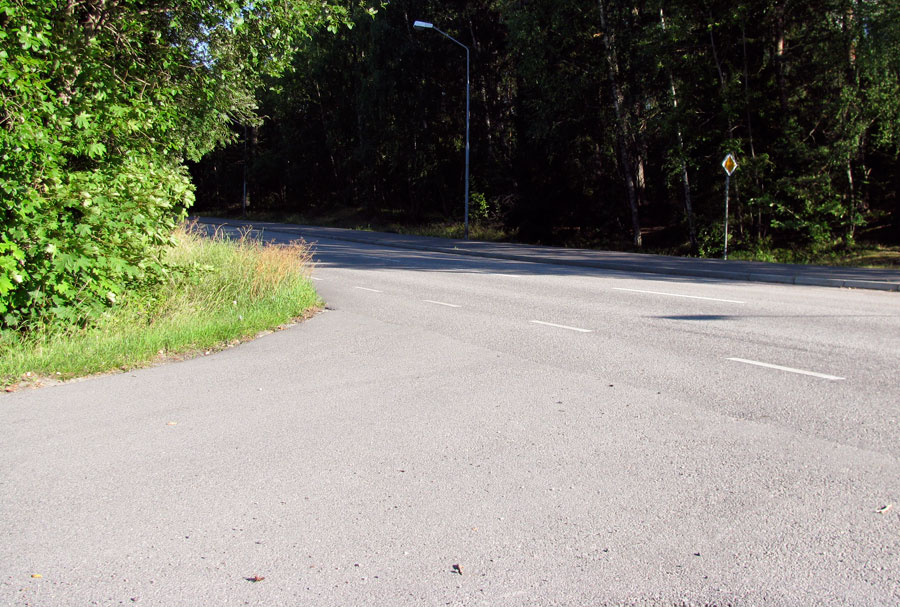
You are driving the car from which the picture is taken. Are you allowed to drive straight on from the lane in which you are positioned?

Picture for the question

Explanation

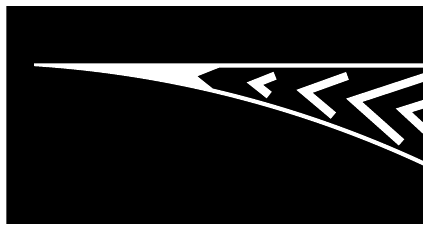
The road marking curve (middle of the picture) indicates that the lane is for those turning left. If you tried to drive straight on, you would likely cross the road marking, which is not permitted:

Obstruction marking
Obstruction markingM9

The marking indicates an area where vehicles may not drive according to Chapter 3, Section 11 of the Road Traffic Ordinance. The marking consists of angled or oblique lines depending on the conditions at the location. Part or all of the area can be painted white.

You are probably positioned on a road marking showing a left arrow, but you have perhaps forgotten in this case and then it is good to be able to interpret the clues and make reasonable assessments.

Question 14

What does this road sign mean?

Picture for the question

Explanation

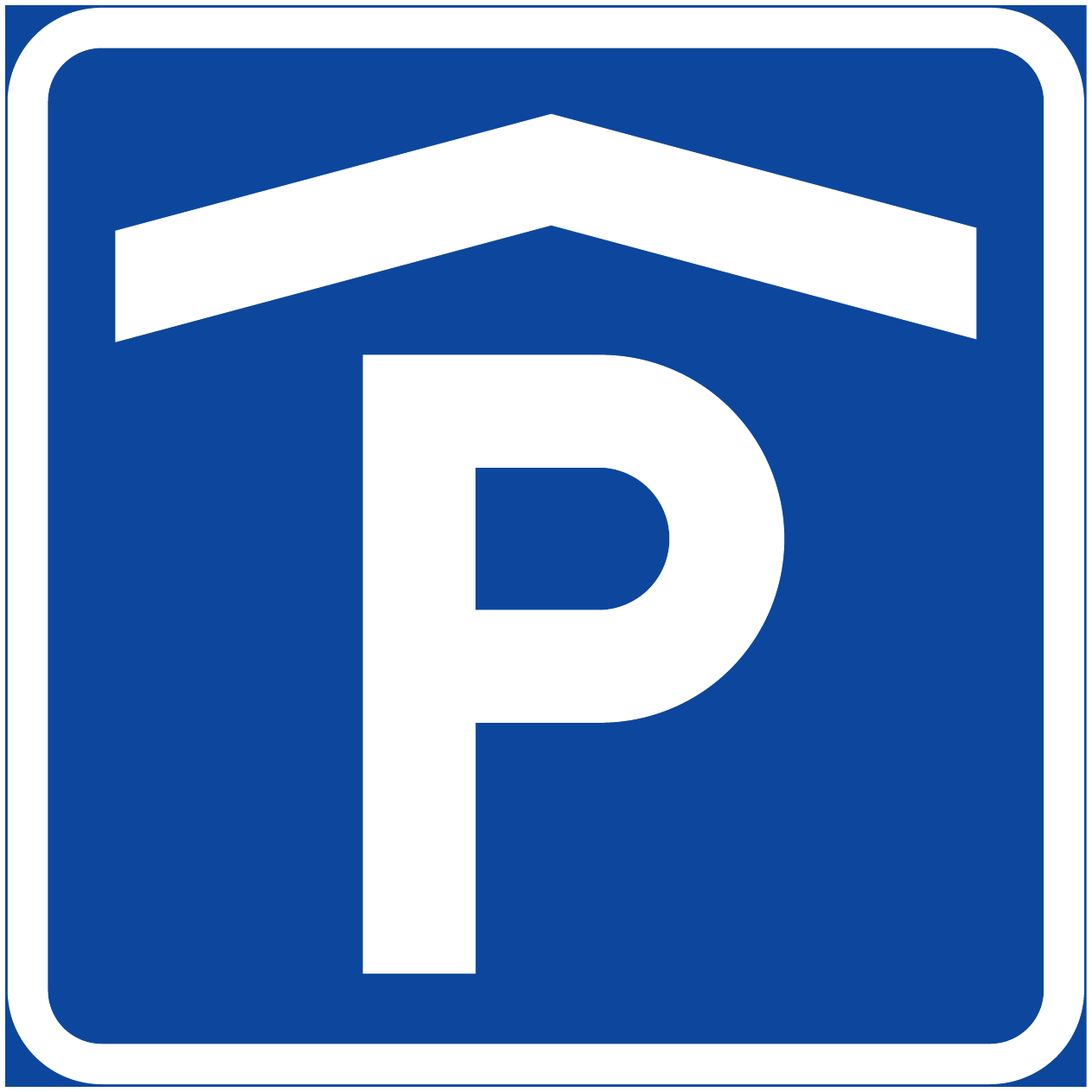
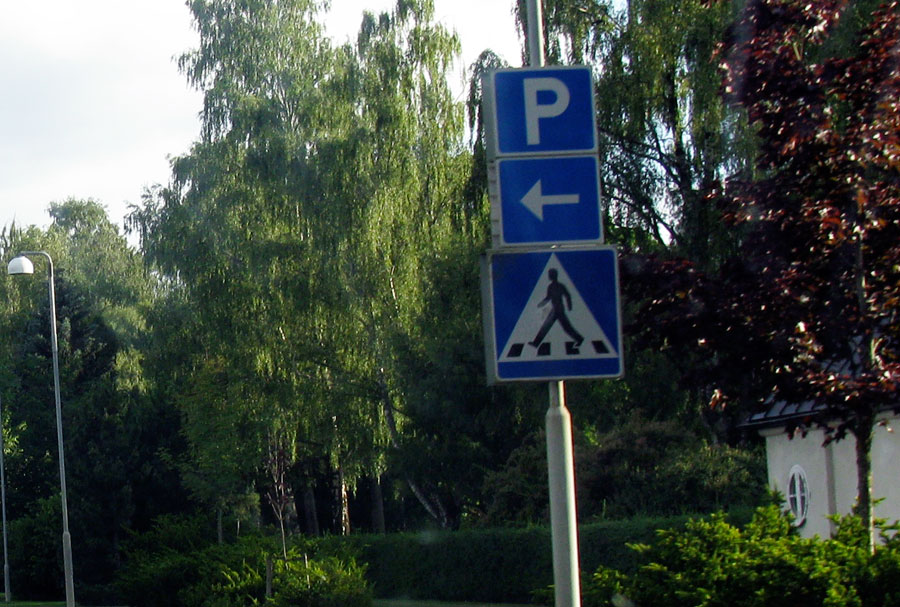
Parking facility
Parking facilityF28

Information indicating that the parking location is full or has spaces available can be provided adjacent to the sign. The name of the parking facility may be included in the sign. The sign may be incorporated in a location sign for direction. No other colour may be used.

Question 15

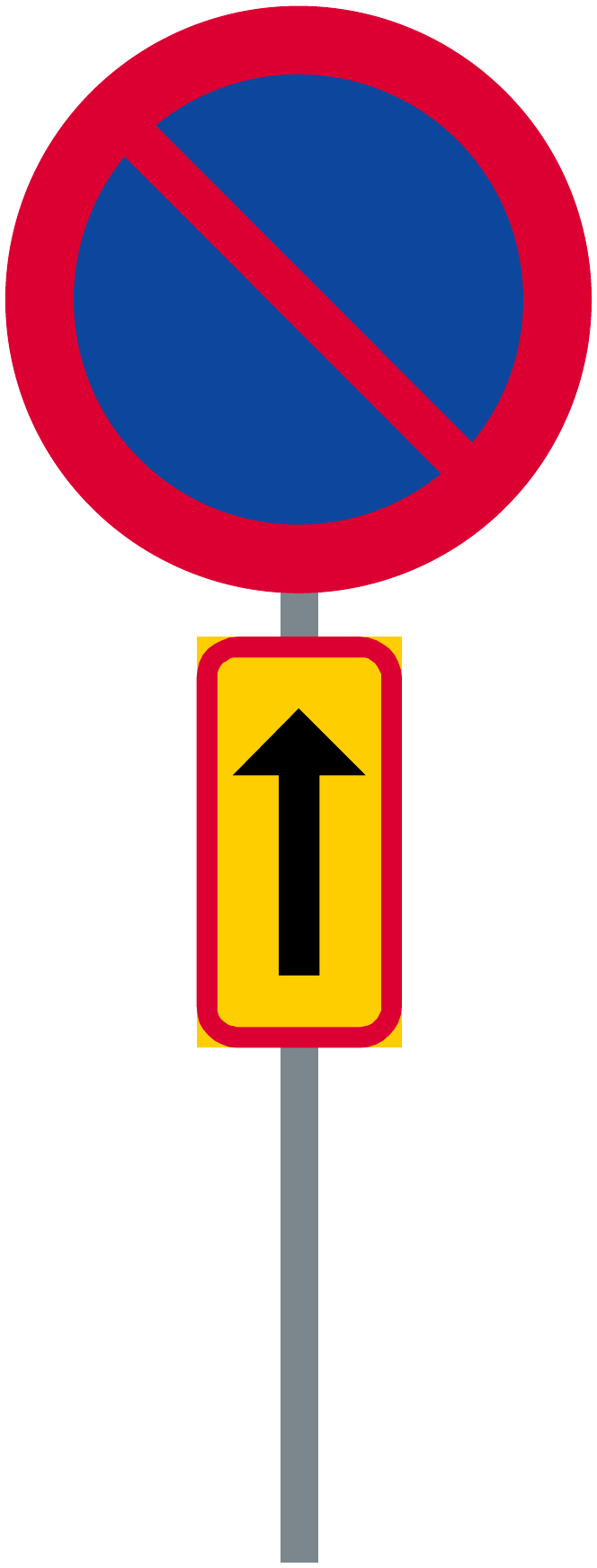
Is it possible for an additional extension panel to depict a single arrow pointing upwards?

Picture for the question

Explanation

ExtensionT11

The panel with arrows pointing in two directions, placed horizontally or vertically, means that the indication applies to both sides of the sign. The panel with the arrow pointing down means that the indication ends there. The panel with a right or left-pointing arrow means that the indication applies in the direction to which it points. If the panel is used under an E19 sign, parking, the black symbol is on a white background with no border. The panels can also be used independently to demarcate parking spaces in an area, if there is a sign at the entrance to the area stating that parking is permitted.

The following types of arrow are described in the segment quoted above:

  • Two-way arrows.
  • Downward arrow.
  • Rightward or leftward arrow.

There is no such thing as an “upward arrow”.

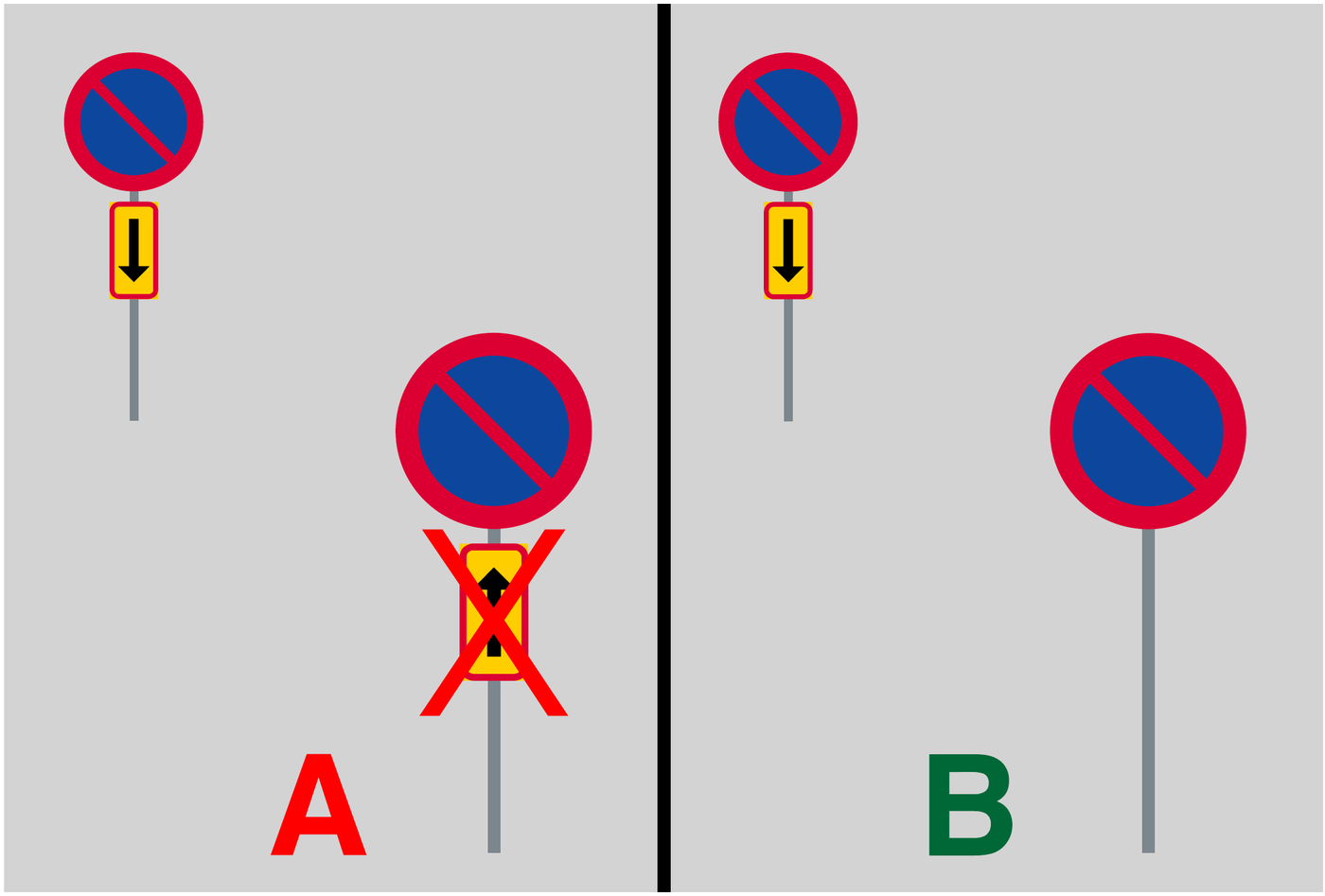
A single upwards-facing arrow (A) would indicate that the sign is applicable “from this point on”. This is already the basic significance of a road sign, which means that no additional panel is necessary (the arrow is implied, as in B).

Illustration
Question 16

What does superficial learning mean?

Explanation

Superficial learning, i.e. that you only study up for the test, means that you are not seeking to understand.
Driving Licence Book, 19th Edition, page 11

Superficial learning is not good in traffic, where a good understanding is often required in order to make safe decisions.

Question 17

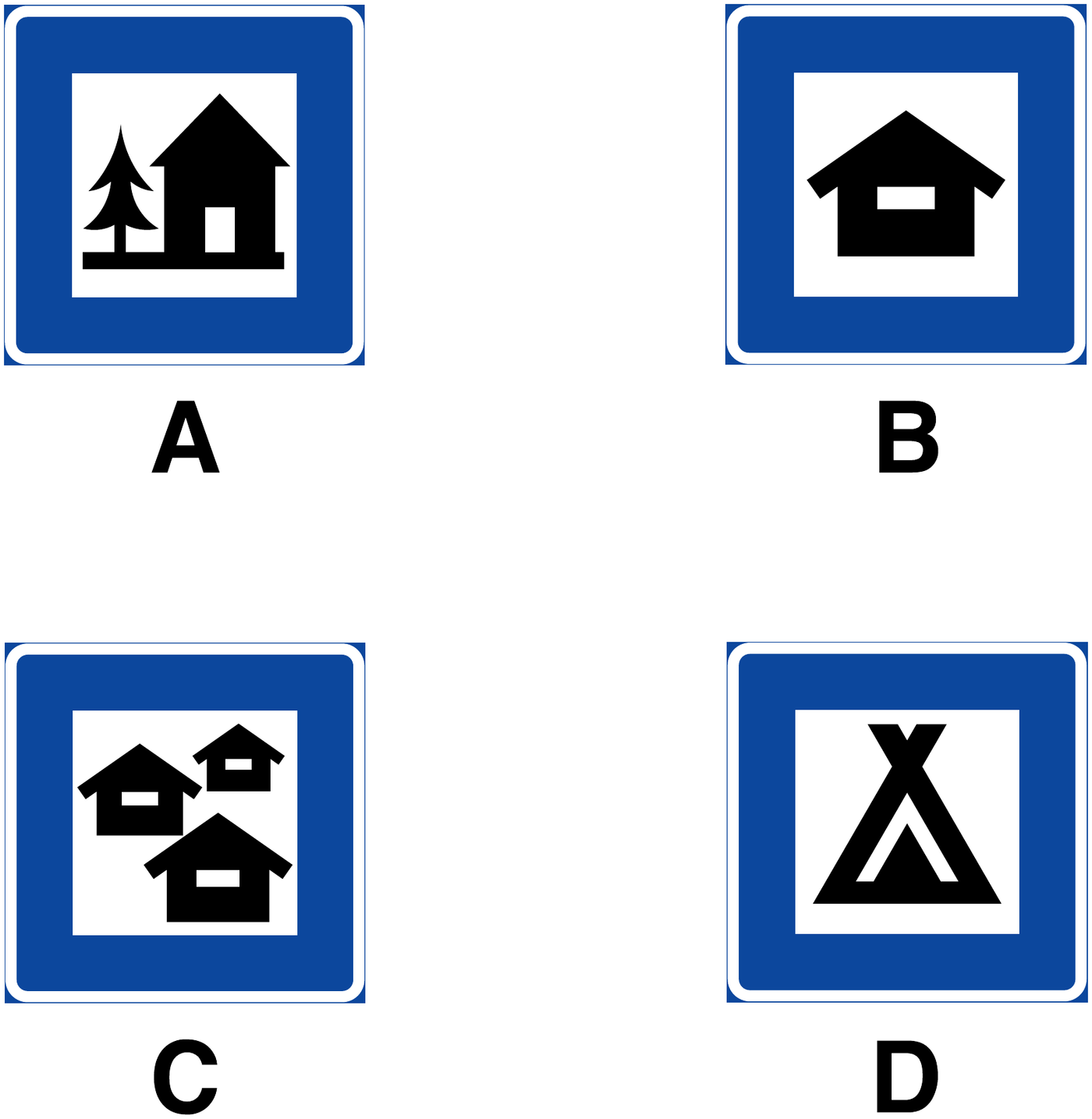
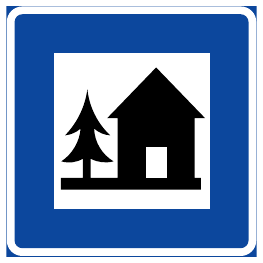
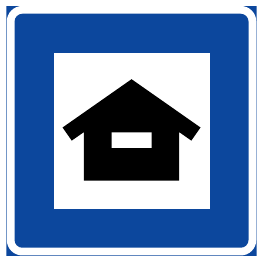
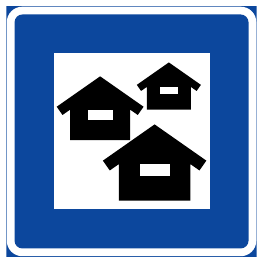
Which sign indicates that there is a camping site nearby?

Picture for the question

Explanation

Hostel
AHostelH8
Cottage
BCottageH10

The sign indicates a facility with a small number of cottages.

Holiday village
CHoliday villageH9

The sign indicates a facility with a large number of cottages.

Camp site
DCamp siteH11

The sign indicates a facility that provides spaces for tents, caravans and campers.

Question 18

What is aquaplaning?

Explanation

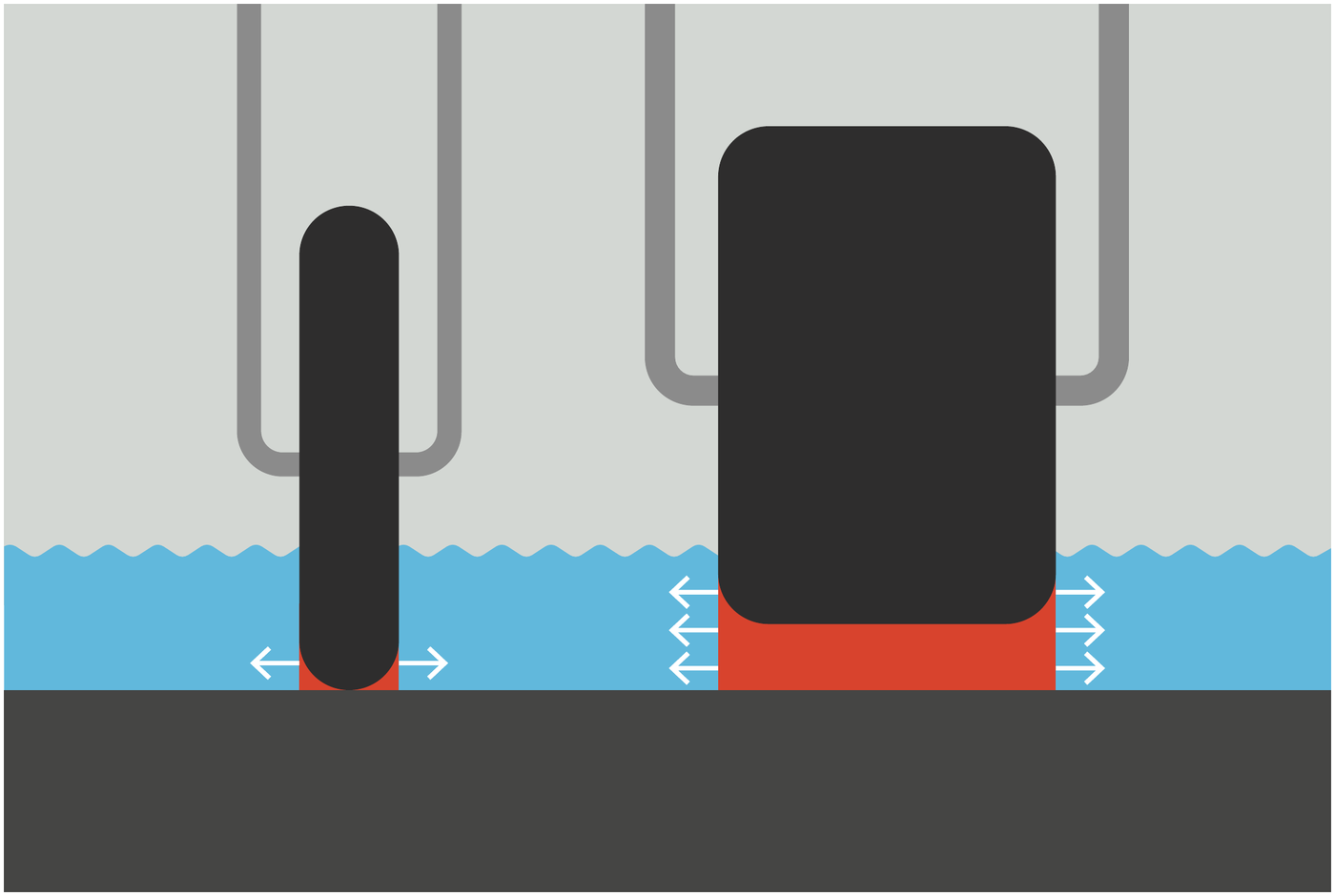
Illustration

Red = the amount of water that has to be dispersed for the tyres to have contact with the road.

Wider tyres mean that more water needs to be pushed aside, which leads to a greater risk of aquaplaning. The narrow tyre cuts through the water like a knife. The wide tyre instead becomes an uncontrollable boat.

Question 19

What is the maximum number of passenger seats allowed in a private car?

Explanation

“A private car [...] A car equipped with no more than eight seats in addition to the driver’s seat.” (Act on road traffic definitions) Nationalencyklopedin: “passenger […] a person travelling with a means of transportation that they are not driving”.

This means 8 passenger seats + 1 driver = a maximum total of 9 seats.

Question 20

Which alternative applies to texting while driving?

Explanation

“[Texting behind the wheel] is the most dangerous thing you can do in the car. You have to be highly intoxicated to pose the same risk as when texting, says Claes Tingvall, Road Safety Director at the Swedish Road Administration.” (DN)

Question 21

When is the risk greatest that the dipped headlights will be dazzling?

Explanation

High ball pressure = the rear of the car is pressed down, which leads to the front being elevated. An elevated front means that the beams from the lights do not hit the road but rather point at eye level with the oncoming driver.

This can be avoided in some cars by adjusting the position of the lights.

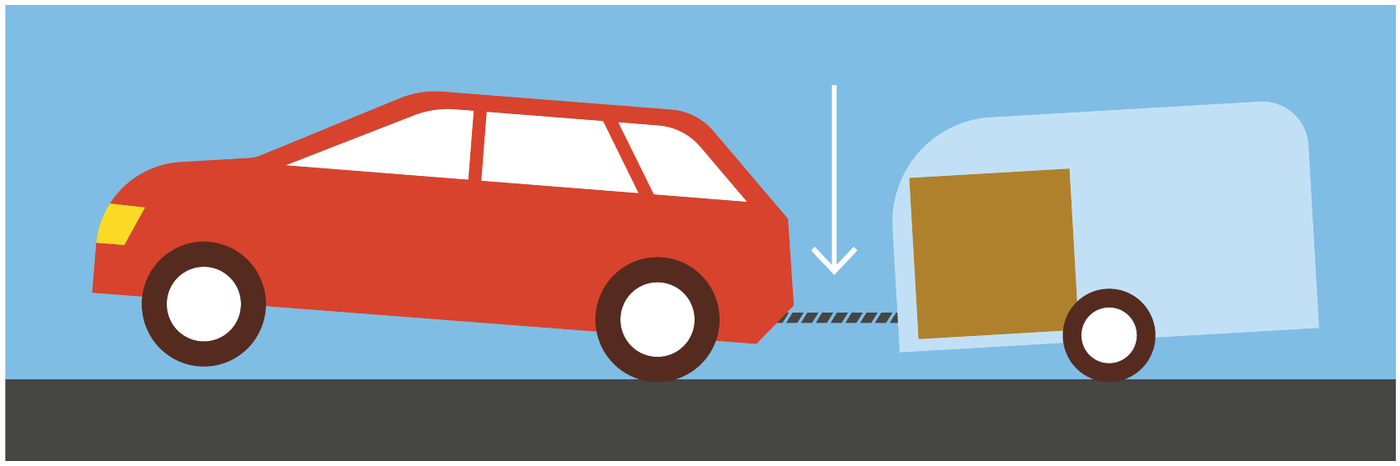
Illustration

The load is placed far back in the trailer (the red box) and is therefore tipping the trailer backwards so that the coupling device is pushed upwards. The rear of the car is lifted by the coupling device.

Question 22

When should a 10-year-old car undergo a roadworthiness test?

Explanation

On 20 May 2018, the old system with the last digit in the registration number was discontinued.

New inspection rules as of 20 May 2018:

  • A new car must be inspected for the first time no later than 3 years (36 months) after the month when it was first used.
  • The second inspection no later than 2 years (24 months) after the month when the first inspection was made.
  • Then no later than 14 months after the month when the most recent inspection was made.

To simplify, a car older than 5 years must be inspected every year. It is recommended to schedule an inspection the same month every year and treat the 2 extra months as a margin of safety.

Please note that the last day for inspection is always the last day of the month. This is because you start counting the month after the most recent inspection.

Question 23

Which statement is true regarding brake fluid?

Explanation

[…] change the brake fluid around every two years. This needs to be done because the brake fluid attracts water, which lowers its boiling point.
Driving Licence Book, 19th Edition, page 129
Question 24

How much, at least, should the cargo fastenings be able to withstand?

Explanation

If, for example, you have a TV on the trailer weighing 30 kg, the straps (the cargo fastenings) must be able to withstand a pressure of at least 24 kg (30 * 0.8) to the front and 15 kg to the back (30 * 0.5). If this is not the case, the straps could snap when you brake hard.

Question 25

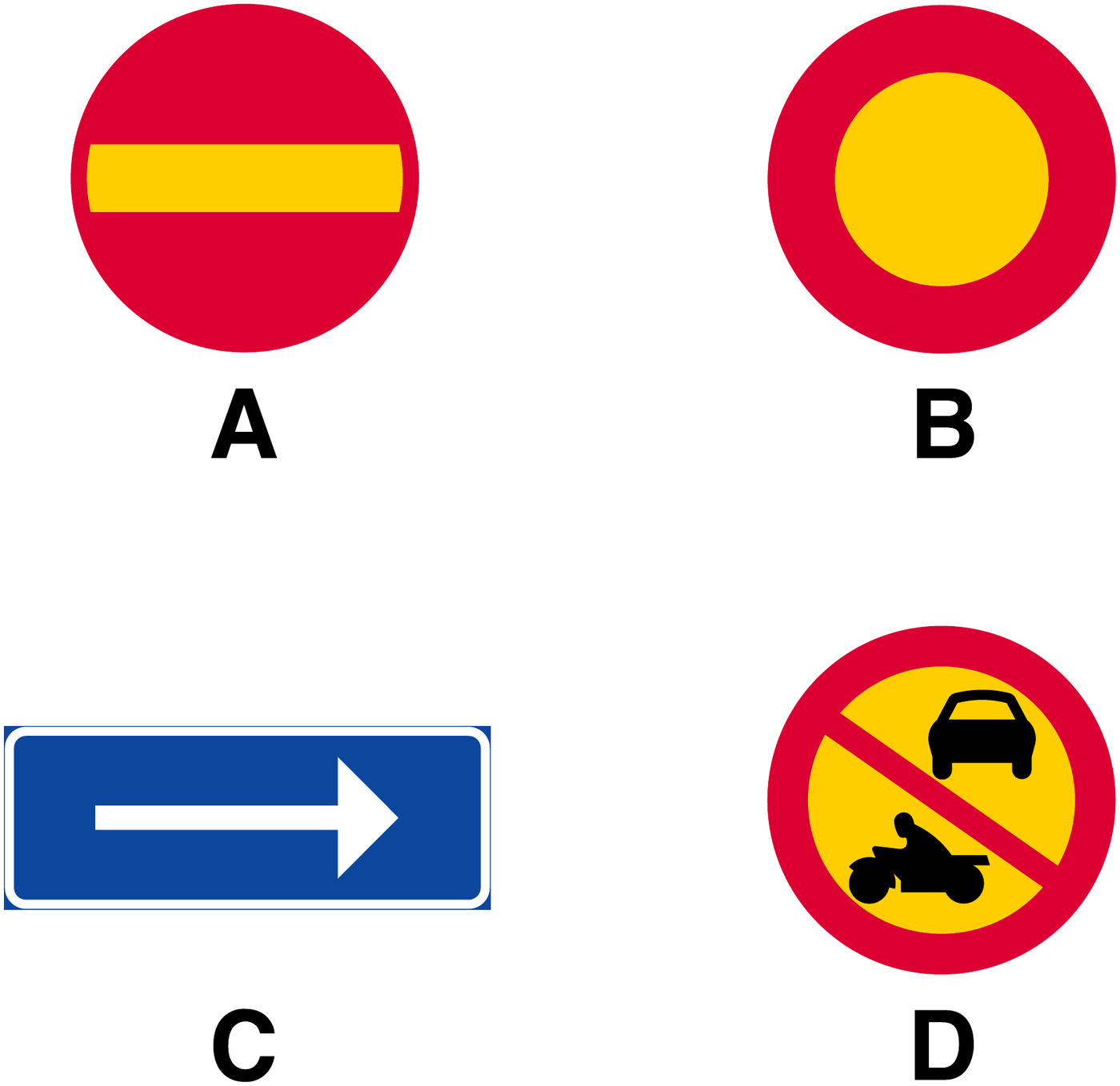
Which sign indicates no entry?

Picture for the question

Explanation

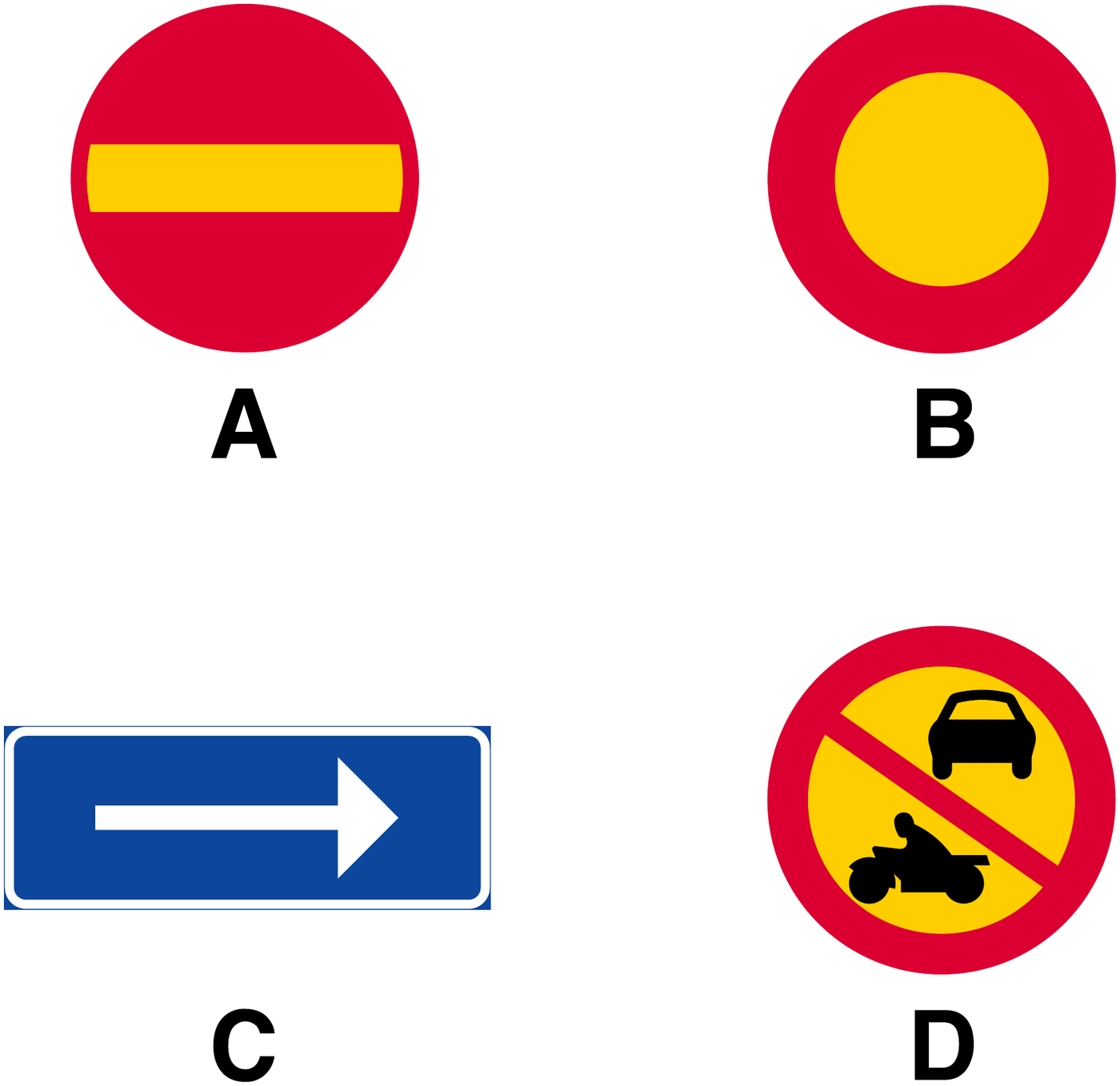
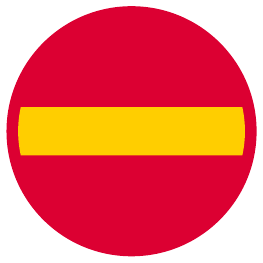
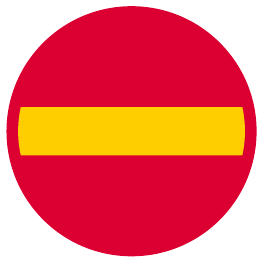
No entry
ANo entryC1
No vehicles
BNo vehiclesC2

The sign refers to traffic with vehicles in both directions.

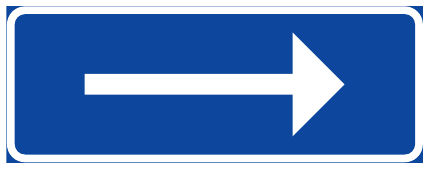
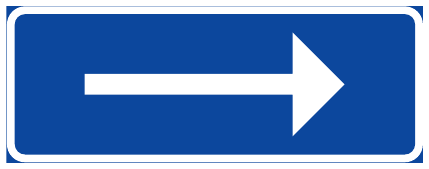
One-way traffic
COne-way trafficE16

The sign indicates that vehicle traffic on the road is one-way in the direction of the arrow. An arrow pointing up indicates that the traffic is one-way in a forward direction.

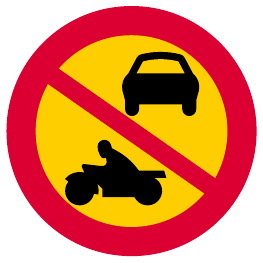
No motor vehicles other than class II mopeds
DNo motor vehicles other than class II mopedsC3

If the prohibition also applies to class II mopeds, this is indicated on an additional panel.

Question 26

What should you pay particular attention to when you see these road signs?

Picture for the question

Explanation

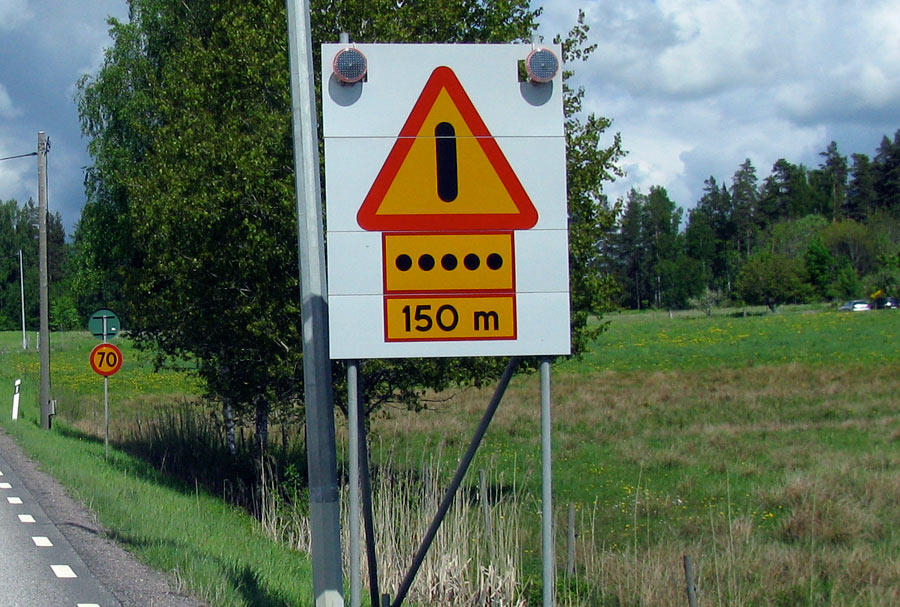
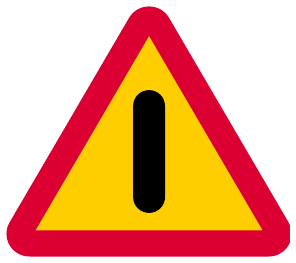
Other dangers
Other dangersA40

The sign indicates dangers other than such that can be indicated with some other warning sign. The nature of the danger is specified on an additional panel.

Visual impairment
Visual impairmentT9

The panel indicates that people with visual impairments often use the crossing. This panel always has a yellow background.

Question 27

What does the abbreviation MS, which can be found on winter tyres, stand for?

Explanation

[…] winter tyres […] marked with MS (Mud and Snow).
Driving Licence Book, 19th Edition, page 175

There are variations of this marking, such as: M+S, M-S, M.S., M&S.

Question 28

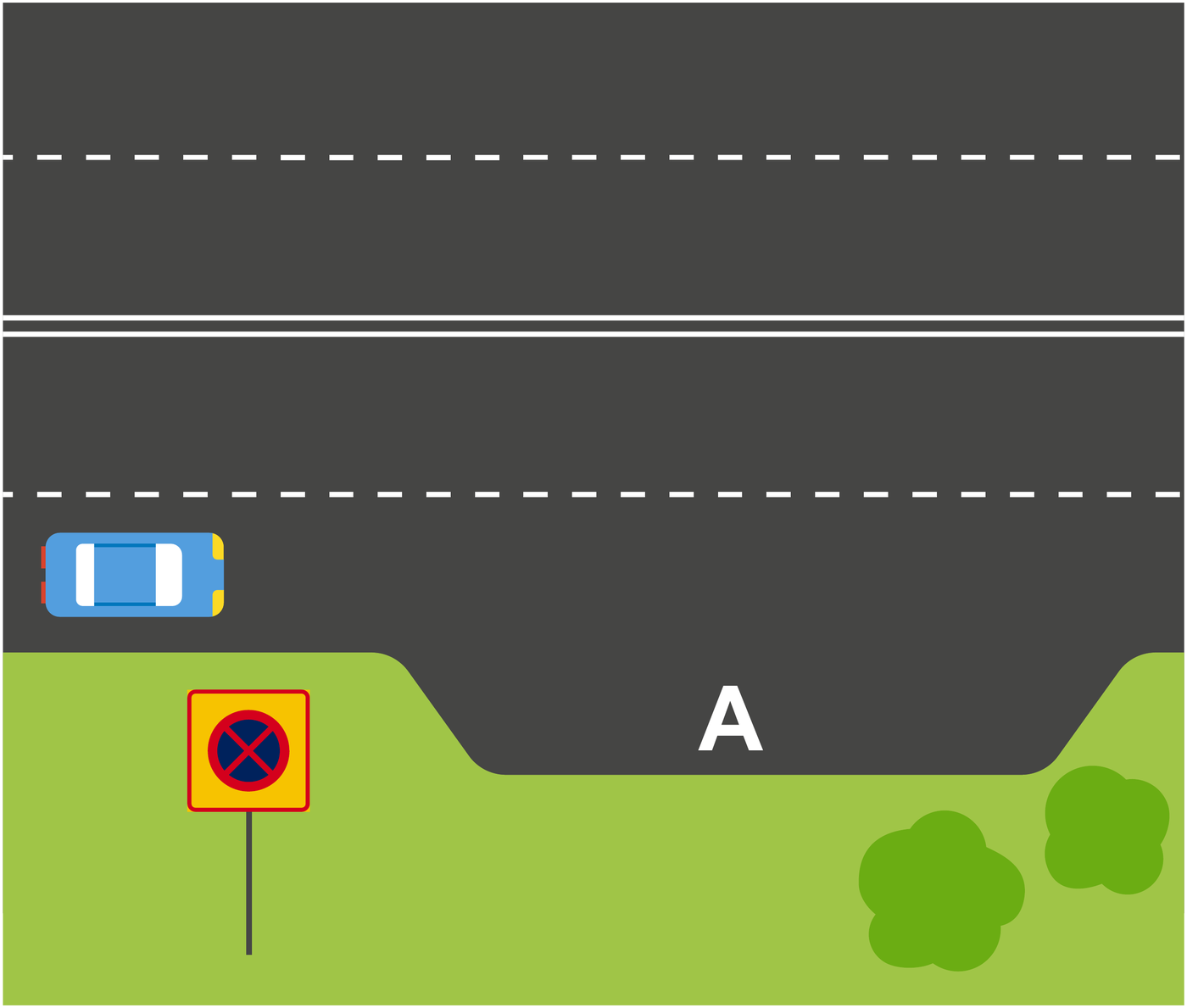
What rule applies at A?

Picture for the question

Explanation

Zone sign
Zone signE20

The sign indicates the start of an area with the prohibitions [...] indicated by the inserted sign. [...] Within the area, there may be deviations from the instructions on the sign. These deviations are indicated through other road signs and additional panels.

No stopping or parking
No stopping or parkingC39

There must always be a road sign for you to stop or park at A. The fact that you “have enough room” is not enough.

Question 29

How do you minimize the risk for wheelspin after stopping in a slippery intersection during winter?

Explanation

Review of the options

  • By applying the throttle uneven during the first meters (forceful–careful–forceful).Bad, this increases the risk of wheelspin, since every forceful throttle application is like starting for the first time.
  • By reversing about one metre just before entering the intersection.It can be good in some specific cases, but it is bad as a general advice. Most likely, the grip will not be any better and the visibility gets worse.
  • By applying the throttle in a forceful and even way.Forceful equals greater risk for wheelspin This option is therefore incorrect.
  • By applying the throttle in a careful and even way.Correct.
Question 30

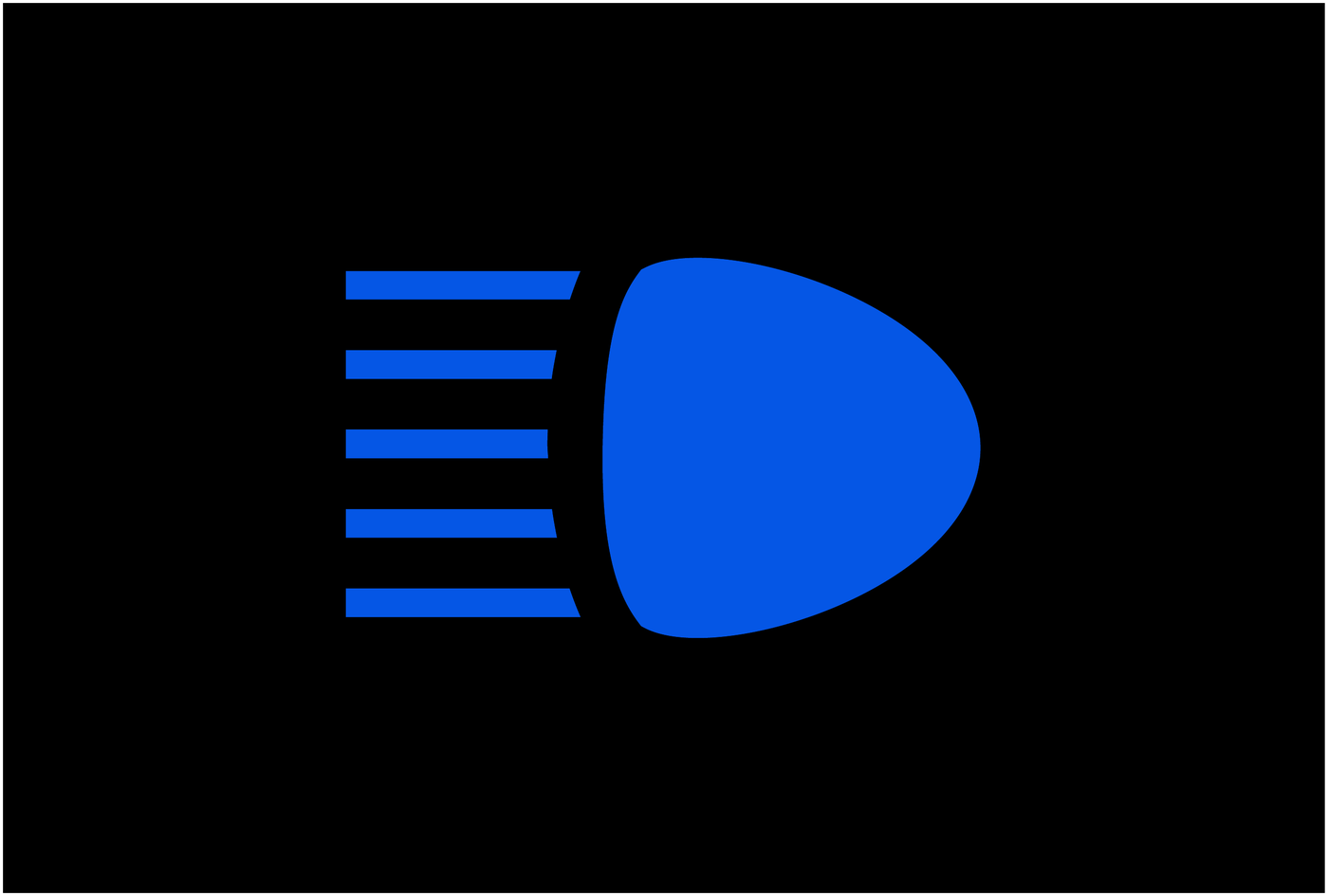
What does it mean if this lamp lights up on the dashboard?

Picture for the question

Explanation

Full beam headlights [...] show that full beam headlamps are on.
Driving Licence Book, 19th Edition, page 146
Question 31

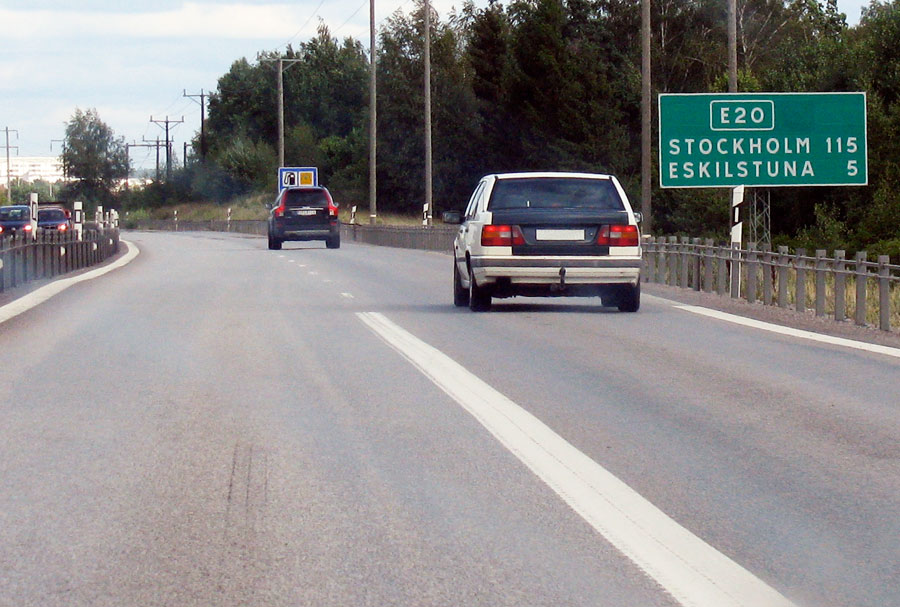
Does the sign on the right indicate something regarding the maximum permitted speed?

Picture for the question

Explanation

Motorway [...] A vehicle may not be driven at speeds higher than 110 kilometres an hour [...] The Swedish Transport Administration may issue regulations indicating that the maximum permitted speed on a motorway is 120 kilometres per hour.
Swedish Road Traffic Ordinance

The maximum permitted speed may thus vary. It is therefore impossible to say with certainty what the speed limit is at the location in the picture.

Question 32

What is the limit for aggravated drunk driving?

Explanation

Aggravated drunk driving: “The driver has a blood alcohol concentration of at least 1.0 per mille.” (Road Traffic Offences Act)

Question 33

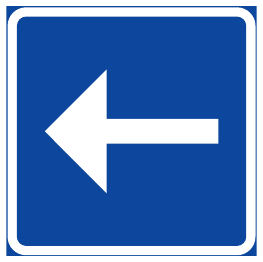
What does the left arrow in the middle indicate?

Picture for the question

Explanation

Direction
DirectionT12

The panel indicates the direction to what is stated on the sign. The panel is specific to the conditions at the location.

Additional panels are always placed under the sign to which they apply.

Question 34

Is it true that road signs normally takes priority over traffic signals?

Explanation

The opposite is true:

  1. Police signals
  2. Traffic signals
  3. Road signs
  4. Rules (the right-hand rule such as)
Question 35

Which statement is true when it comes to following the flow of traffic?

Explanation

It is true that the tempo is in many cases too high-paced. However, that does not mean that it is never good. If, for example, it is very slippery and all the drivers choose to drive at 35 km/h on a 50-road, then that is a good tempo, is it not?

Question 36

Is it good to keep the heater connected for longer than recommended?

Explanation

Do not keep the engine heater connected for longer than recommended. It will just lead to unnecessary energy consumption.
Swedish Transport Administration
Question 37

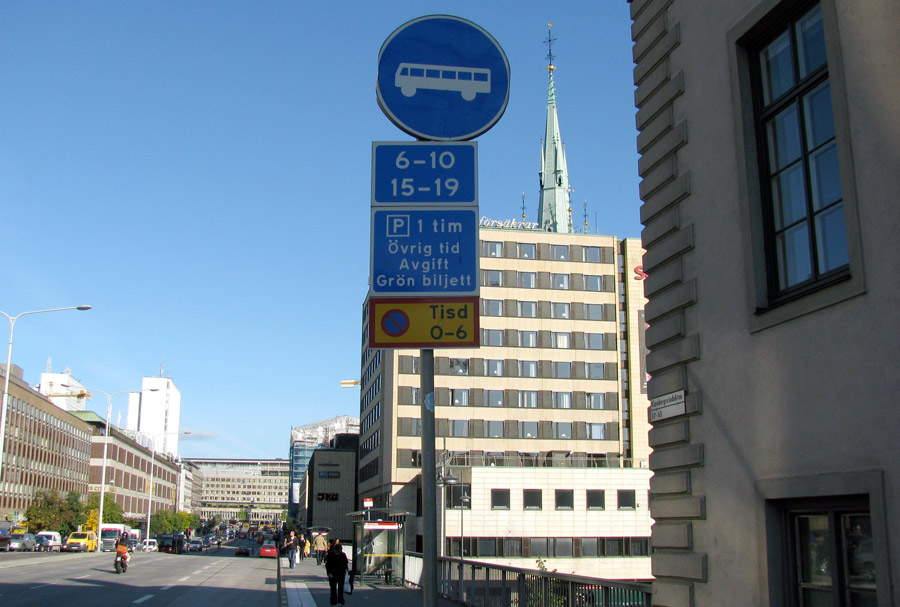
Which alternative is true?

Picture for the question

Explanation

”1 tim” = 1 hour

”Övrig tid” = Other times

”Avgift” = Fee

”Grön biljett” = Green ticket

”Tisd” = Tuesday

There is no mention of Saturdays, which means that the public transport lane is not in use then. The figures “15–19” refer to weekdays, as they are not within parentheses.

Sundays are included in “Övrig tid” [other times], which means that the fee must be paid.

As the two first alternatives are wrong, this must be the right answer. It would be a highly reasonable assumption that it is related to working hours.

Question 38

Is it true that noise is only a problem for people who live close to major country roads?

Explanation

Noise is also generated in the cities. Cars constantly buzzing past at 50 km/h also cause noise.

Question 39

How much spirits (40%) corresponds to 50 cl of beer with 3.5 percentage alcohol by volume?

Explanation

The amount of [...] pure spirits (40 %) that a strong beer or a glass of wine corresponds to [...] can be calculated with a formula (percentage by volume * the volume in cl * 0.025).
MHF

3.5 * 50 * 0.025 = 4.38 cl

(0.025 is the same as dividing by 40)

Question 40

Which statement is true regarding tiredness in traffic?

Explanation

The law is strict in this respect and equates an accident caused by tiredness with an accident in which the driver has been under the influence.
Driving Licence Book, 19th Edition, page 203
Question 41

You are driving the blue car. Where should you stop in relation to the stop line?

Picture for the question

Explanation

Stop lineM13

The marking indicates where a vehicle should be stopped according to a road sign or traffic signal.

The position of the stop line is carefully considered with regard to good visibility and safety (minimal risk of being hit). You shall stop exactly at the line.

Question 42

Which is the worst place to wash your car from an environmental perspective?

Explanation

“Manholes divert rain water straight into the nearest watercourse, lake or sea. Pollution from car washing in the street will thus not be filtered out in a treatment plant.” (Driving Licence Book, 19th Edition, page 223) In that case, it is slightly better to wash it on a gravel surface since the pollutants are then deposited on the ground in a thinner layer. On a gravel surface, there are also no plants to be damaged.

Question 43

About how far behind the car should you put the warning triangle in case of an emergency stop on a country road?

Explanation

Place the warning triangle 50–100 metres behind the car.
Driving Licence Book, 19th Edition, page 104
Place warning triangles in both directions around 150 metres from the site of the accident.
There has been a traffic accident. What do I do? Published by the Royal Swedish Automobile Club
Turn on the hazard warning lights and put out a warning triangle (do not place it too close to the vehicle, but at least 100 metres away from it).
Things to consider in the event of an accident. Published by Motormännen
Question 44

Which are the two substances primarily produced by a functioning catalytic converter?

Explanation

The catalytic converter turns 80–90 per cent of the harmful substances in the emissions into mainly carbon dioxide and water.
Driving Licence Book, 19th Edition, page 225
Question 45

Which fuel contributes the least to the greenhouse effect?

Explanation

Biofuels [...] have the benefit of not contributing to the greenhouse effect.
Driving Licence Book, 19th Edition, page 227

Natural gas is not as good as it sounds. It is, just like petrol and diesel, a fossil fuel.

Question 46

Are you permitted to bring passengers along for a private driving lesson (in addition to the supervisor)?

Explanation

There is nothing in the law that limits the number of passengers during a driving lesson. The normal regulations apply. (Driving Licence Ordinance)

Question 47

Is it permitted to slowly pass a car that is stationary directly before an unguarded pedestrian crossing?

Explanation

Vehicles or trams may not overtake directly before or on an unguarded pedestrian crossing [...] In the following cases it is not considered overtaking when a vehicle in one lane passes a vehicle in another lane
1. if the carriageway has two or more lanes for travel in the same direction and there is a heavy traffic queue in all lanes.
2. if the carriageway is divided into lanes for different destinations that are marked with a lane assignment sign, or
3. if the vehicles have been placed in separate lanes in connection with a junction.
Swedish Road Traffic Ordinance
Note that the second exception states that the lanes must lead to different destinations, as opposed to the same destination, as one of the options suggests.

Question 48

What does this road sign mean?

Picture for the question

Explanation

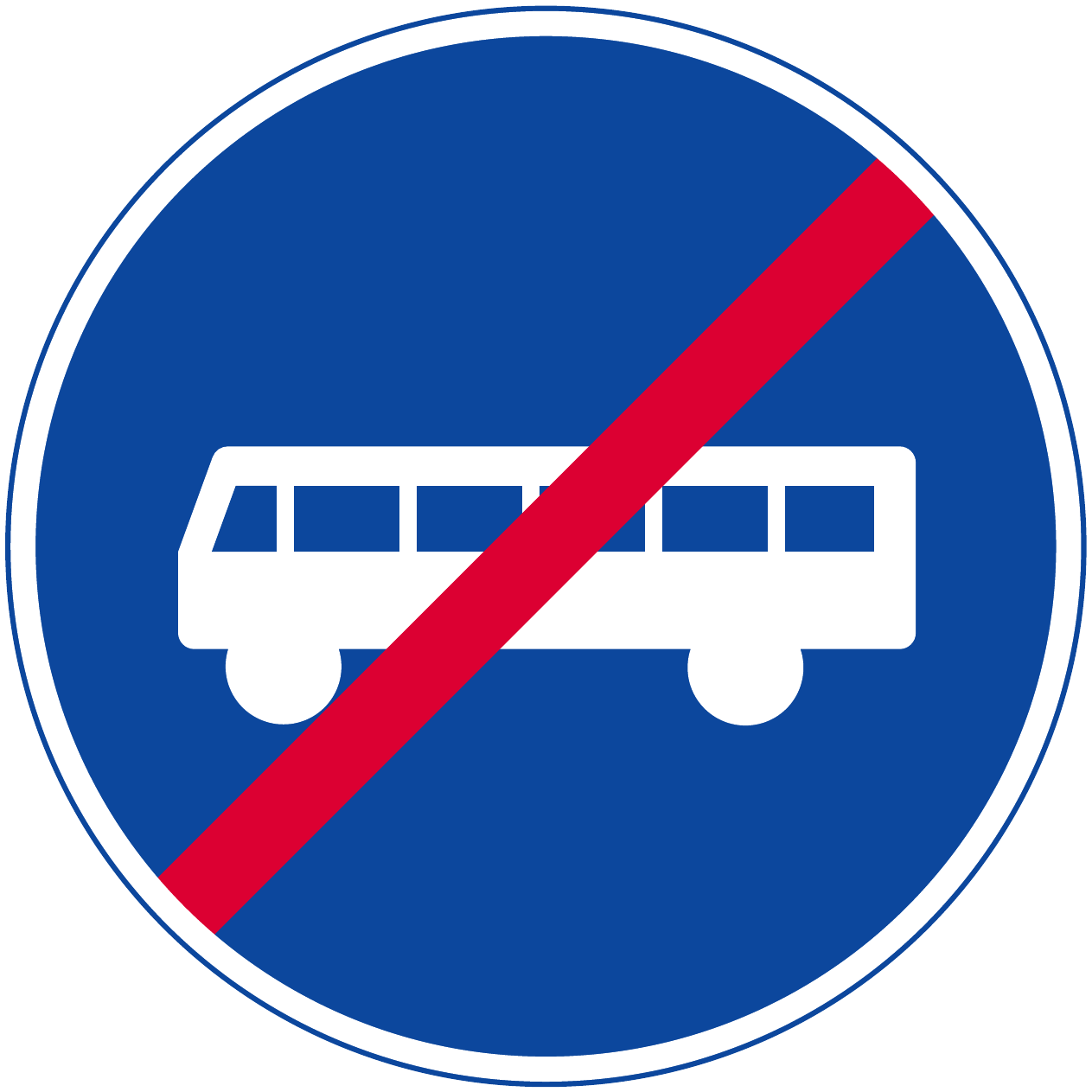
End of reserved carriageway, lane, road or thoroughfare
End of reserved carriageway, lane, road or thoroughfareD11

The sign indicates that the reserved carriageway, lane, road or thoroughfare indicated using one of the signs D4-D10 has ended. The sign does not have to be erected if it is otherwise clear that the reservation has ended. Other symbols for road user groups or types of vehicles may be included in the sign. The symbol included in the sign is the same as the one used on the sign designating the carriageway, lane, road or thoroughfare.

Question 49

What does indicator mean?

Explanation

Nationalencyklopedin: “Indicator, name of the lights on the front, back and sides of a motor vehicle which when turned on show an orange blinking light on the right or left side of the vehicle, hence the everyday term ‘blinker’.”

Question 50

Is it permitted to have dipped headlights and daytime lights on at the same time?

Explanation

Using dipped headlights at the same time as daytime lights is prohibited.
Driving Licence Book, 19th Edition, page 158
The reason for this prohibition is that drivers of oncoming vehicles get dazzled, which gives them a shorter range of visibility.
Teknikens Värld
Question 51

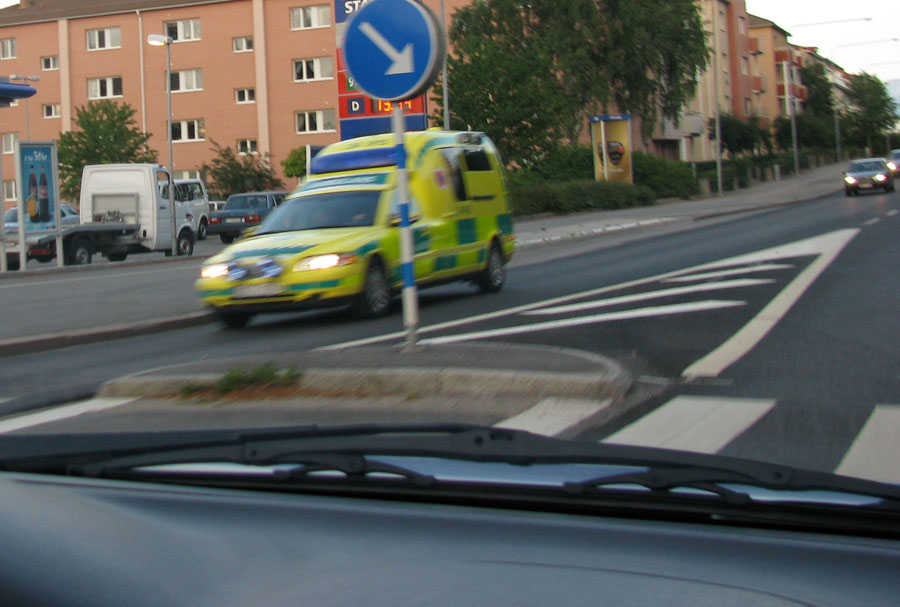
You are driving the car from which the picture is taken. How should you act with the ambulance in mind?

Picture for the question

Explanation

Your actions do not affect the ambulance in any way. It is driving in the opposite direction and there is a wide traffic island between you.

Question 52

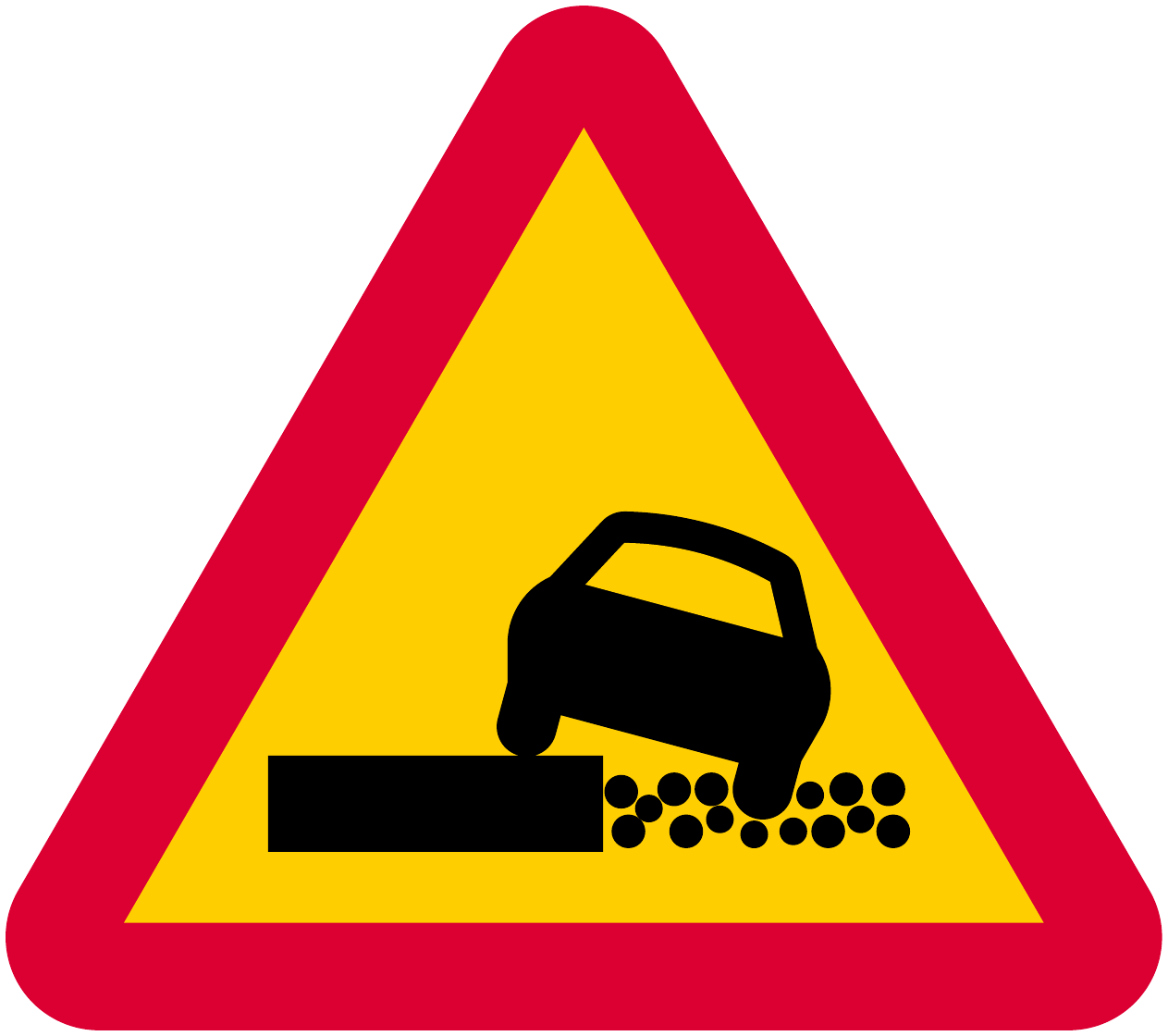
How should you act if the wheels on the right side of the car end up in the gravel on the side of a high asphalt edge?

Picture for the question

Explanation

Do not brake suddenly! Instead let up on the accelerator and continue along the edge, while smoothly reducing your speed. […] Once you are going slower, you carefully steer the car back onto the road, moving the steering wheel steadily.
Du och jag i trafiken [You and me in traffic], 28th Edition, page 245
Question 53

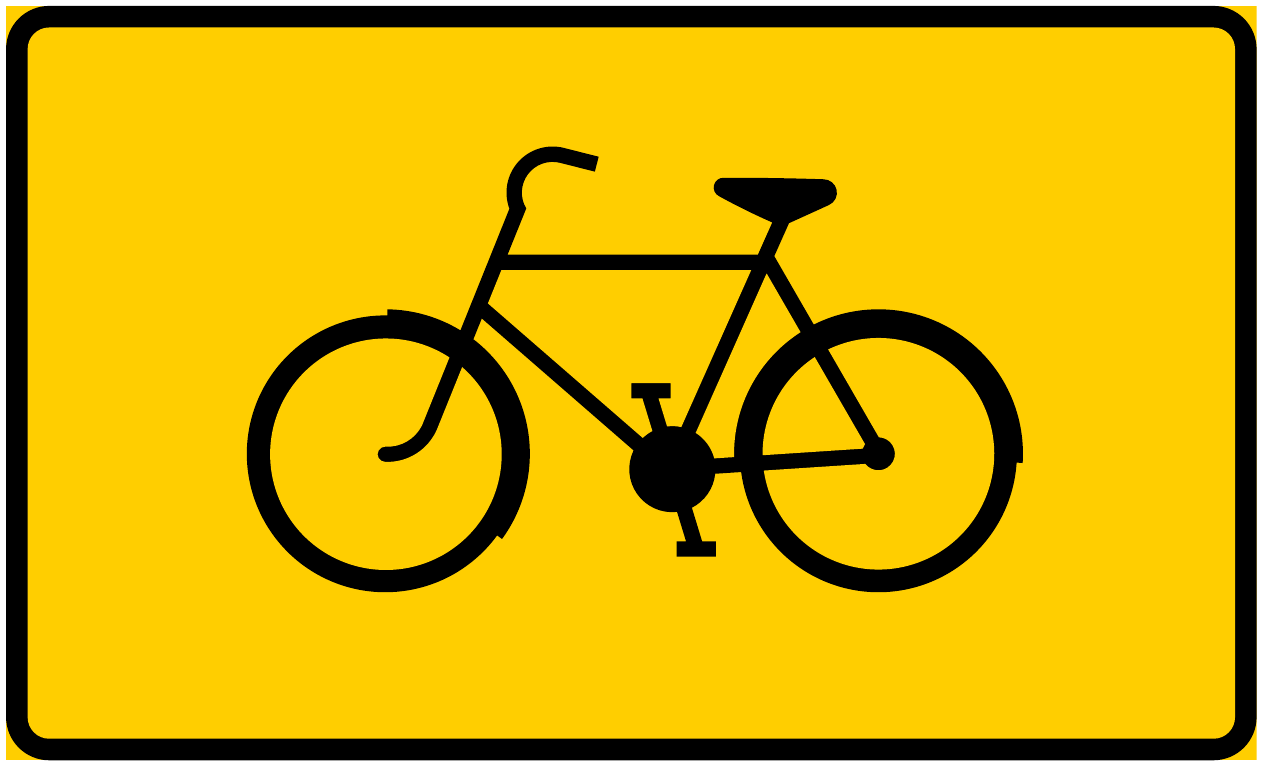
What does this road sign mean?

Picture for the question

Explanation

Bicycle route
Bicycle routeF38

The sign indicates a route devoted to bicycles. The colour of the sign may vary.

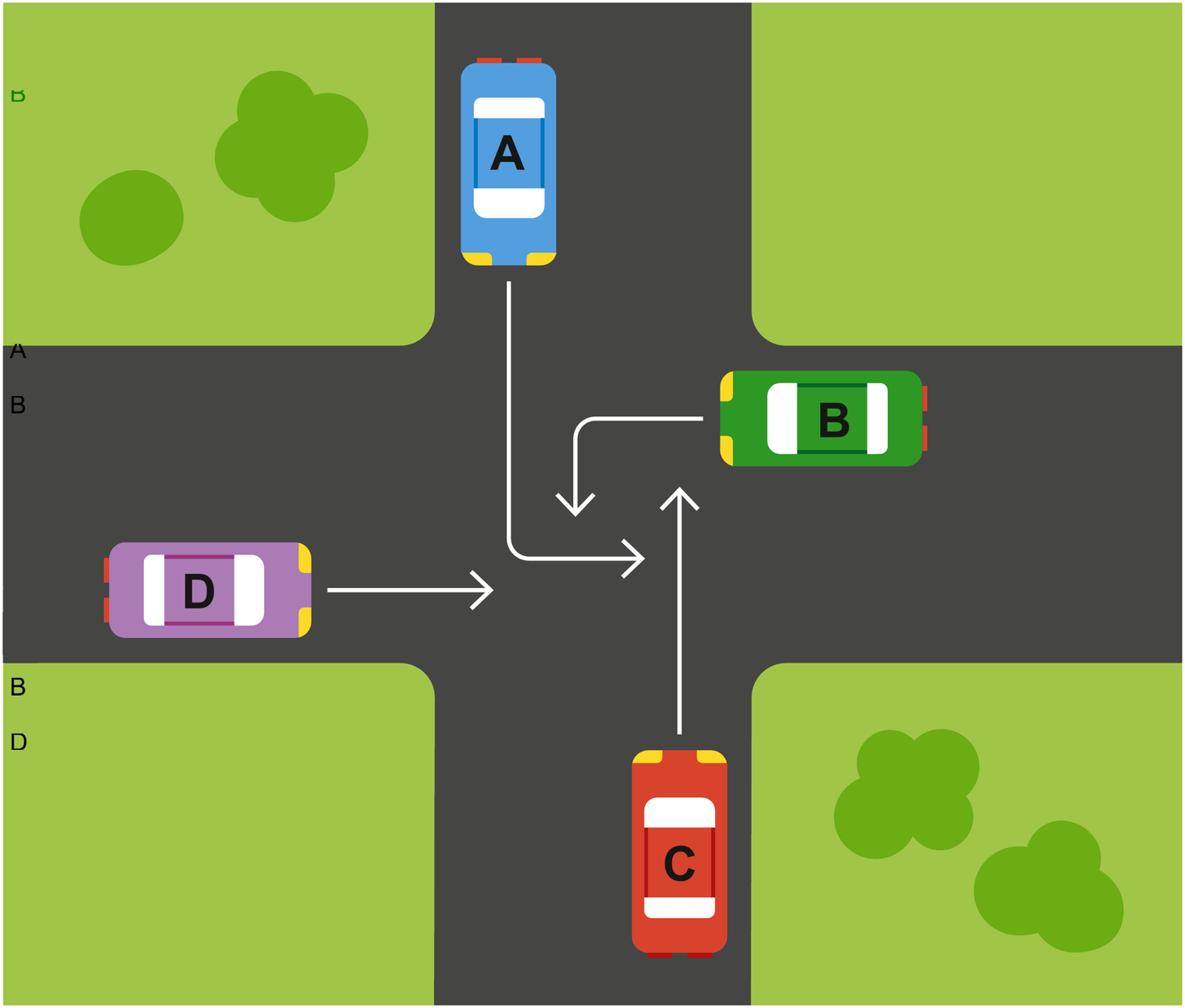
Question 54

The vehicles are driving in the direction of the arrows and you are driving vehicle C. Vehicle B seems to be taking the initiative to go first. How should you act?

Picture for the question

Explanation

  • pass
  • and
  • then
  • drive
  • on.
  • and
  • pass
  • and
  • then
  • drive
  • on.
  • and
  • pass
  • and
  • then
  • drive
  • on.

You have to give way to B according to the right-hand rule. A on the other hand is obligated to give way to you, as they are crossing your lane.

The most appropriate, easy and logical approach is to let car B pass and then drive on without giving way to A and D. You have time to drive on while A and D are still blocked by B. Stopping to wait in such a case is unnecessary and creates confusion.

There is a similar question where it is best to temporarily deviate from the rules. However, how can you know when it is appropriate and when it is inappropriate to deviate from the rules?

Rule of thumb: Does the traffic situation as a whole obviously benefit a lot from us temporarily deviating from the rules? – If the answer is yes, then disregard the rules and do what comes naturally, provided that all those involved appear to be in agreement. After all, you are to show “good judgement when interacting with other road users.” However, if it is not apparent that it is most convenient to temporarily deviate from the rules, or if the common benefit of doing so is small, you should stick to the rules. Doing otherwise could cause confusion, which is not a good thing in traffic.

Question 55

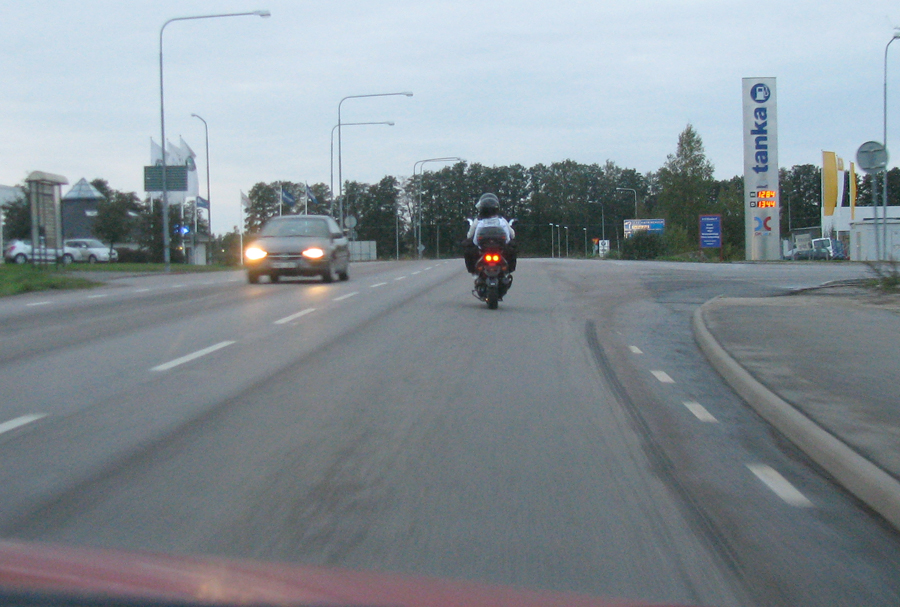
You are in a hurry and driving the car from which the picture is taken. Is the moped driver obligated to facilitate you if you start overtaking on the left?

Picture for the question

Explanation

When a driver travelling on a road becomes aware that someone is intending to overtake them on the left, the driver shall keep as far to the right as possible pursuant to the stipulations of Section 7. The driver may not accelerate or otherwise hinder the overtaking.
Swedish Road Traffic Ordinance
“Keeping as far to the right as possible” must be considered as the moped driver facilitating you.

The traffic safety must always be the highest priority. Even if you are in the wrong, it is safer for everyone if the moped driver “yields” rather than “insists on their right” to show that you are in the wrong.

Question 56

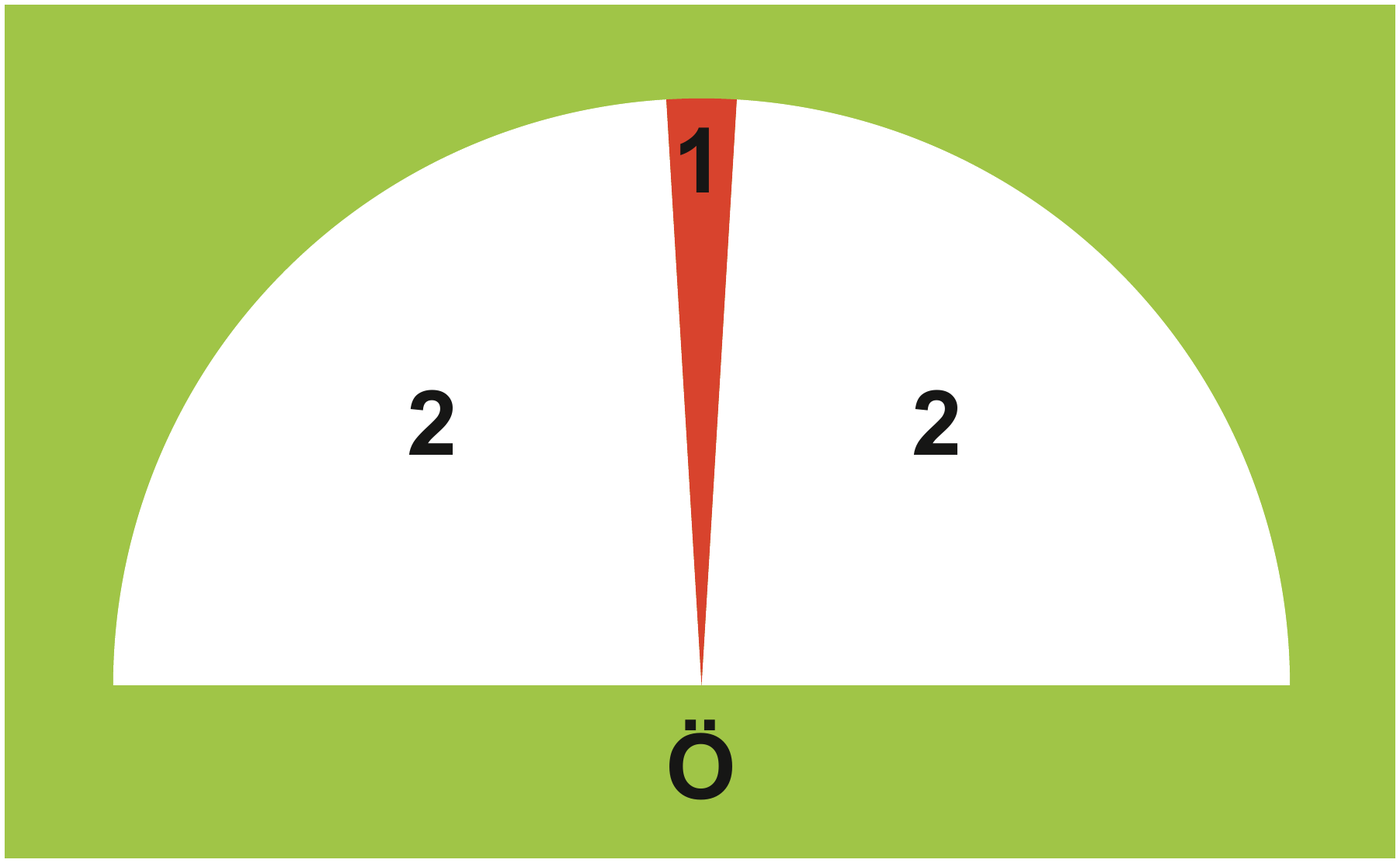
What is the approximate span of the human field of vision?

Explanation

Illustration
  • Semicircle: Visual field
  • Ö: Location of eye
  • 1: Central vision
  • 2: Peripheral vision
Question 57

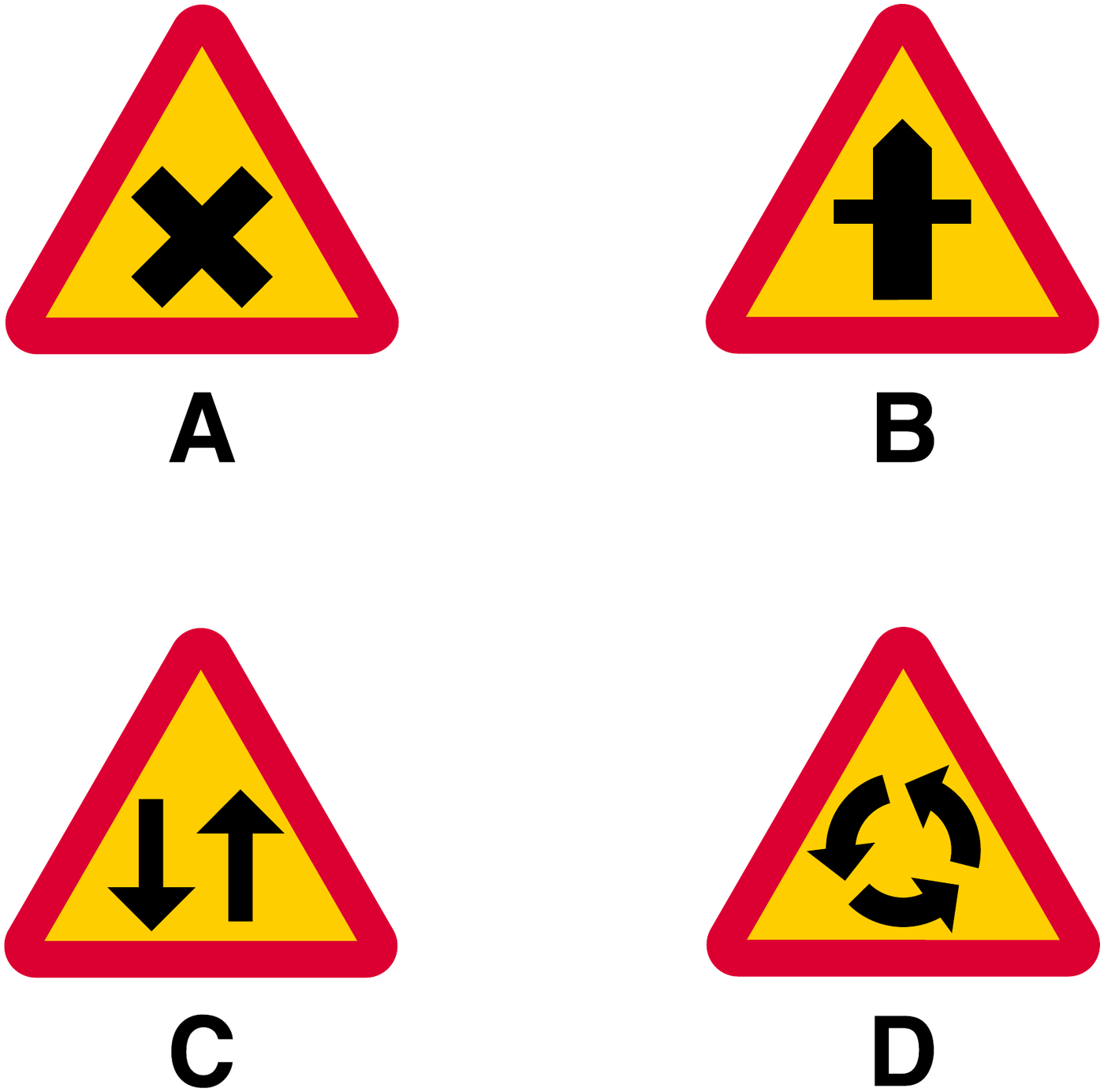
Which of these signs warns you of a level crossing?

Picture for the question

Explanation

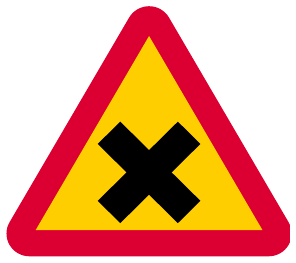
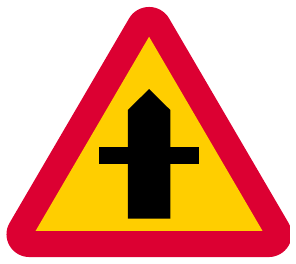
Junction
AJunctionA28

The sign indicates a junction where the provisions of Chapter 3, Section 18 of the Road Traffic Ordinance (1998:1276) apply.

Warning for a junction where road users on a connecting road are obliged to give way or stop
BWarning for a junction where road users on a connecting road are obliged to give way or stopA29

The sign indicates a junction where drivers of vehicles on connecting roads are obliged to give way or stop. The symbol is adapted to the conditions of the location.

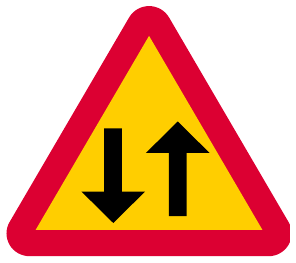
Beware of two-way traffic ahead
CBeware of two-way traffic aheadA25

This sign indicates that a one-way road is turning into a road with traffic in both directions.

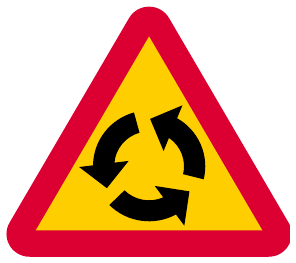
Roundabout ahead
DRoundabout aheadA30

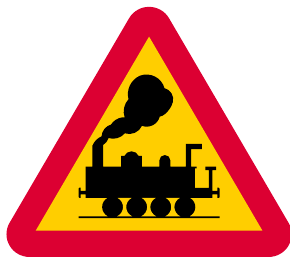
Level crossing = railway/tramway crossing. There is no warning sign called Level crossing, but the following signs are found at a level crossing:

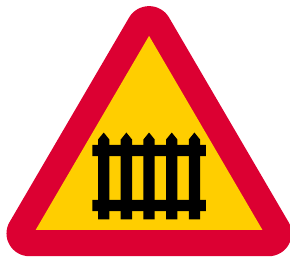
Level crossing with gates
Level crossing with gatesA35

The sign indicates a junction with a railway or tramway line with gates.

Level crossing without gates
Level crossing without gatesA36

The sign indicates a junction with a railway or tramway line without gates.

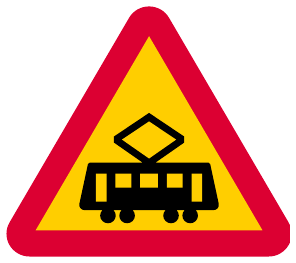
Junction with tramway line
Junction with tramway lineA37

The sign indicates a junction with a tramway line without gates.

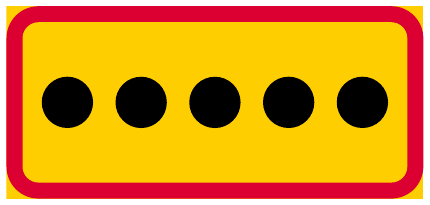
Distance to level crossing
Distance to level crossingA38

The signs indicate the distance to a level crossing in a three-bar system. The sign with the three bars is, except for in densely populated areas, erected under one of the following signs; A35, Level crossing with gates, A36, Level crossing without gates, or A37, Junction with tramway line. The sign with two bars indicates that it is two-thirds the distance to the level crossing and the sign with one bar indicates the last third of the distance.

Train crossing
Train crossingA39

The sign indicates a crossing railway or tramway with one or more tracks. The sign is posted immediately prior to a level crossing. It does not have to posted on a private road with limited traffic, where it can be omitted without threatening traffic safety. The sign can also be posted at unlevel railway or tramway crossings. The post holding the sign can be fitted with a red/yellow post marking device.

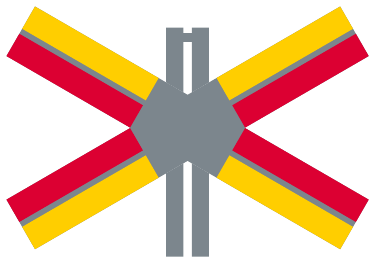
Level crossing plate
Level crossing plateY4

This device is used to make a level crossing more visible.

Question 58

The picture is taken from the driver’s side window of the car you are driving. What should you do if you want to turn right on the intersecting road?

Picture for the question

Explanation

The road you want to turn out onto is a priority road (see the sign to the right of the picture). This means that the last option is wrong.

You cannot make a good assessment of the traffic situation from where you are positioned. You therefore need to drive a bit further forward.

Question 59

Which age group has the best reaction times in traffic?

Explanation

Younger drivers react significantly slower than experienced drivers. The age group with the best reaction time is experienced drivers between the ages of 45–54. […] The explanation is likely that the experienced driver is often more prepared to act.
Driving Licence Book, 19th Edition, page 199

Remember that this applies in traffic, where you are not prepared at each given moment to react quickly. A person with a 2-second reaction time in traffic may have a reaction time of 0.7 seconds in a test where you have to push a button at the sound of a signal.

Question 60

You are lending your car to a person who is going to pull a heavy trailer. What is the easiest way for you to check if the person is qualified to pull the heavy trailer?

Explanation

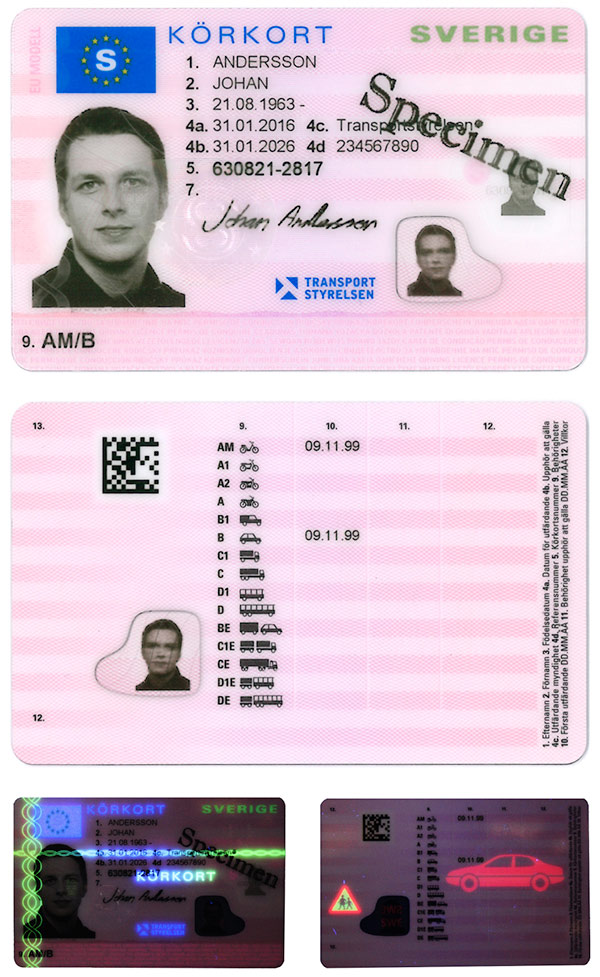
The driving licence states which qualifications the person has:

Illustration

Source: Swedish Transport Agency.

Question 61

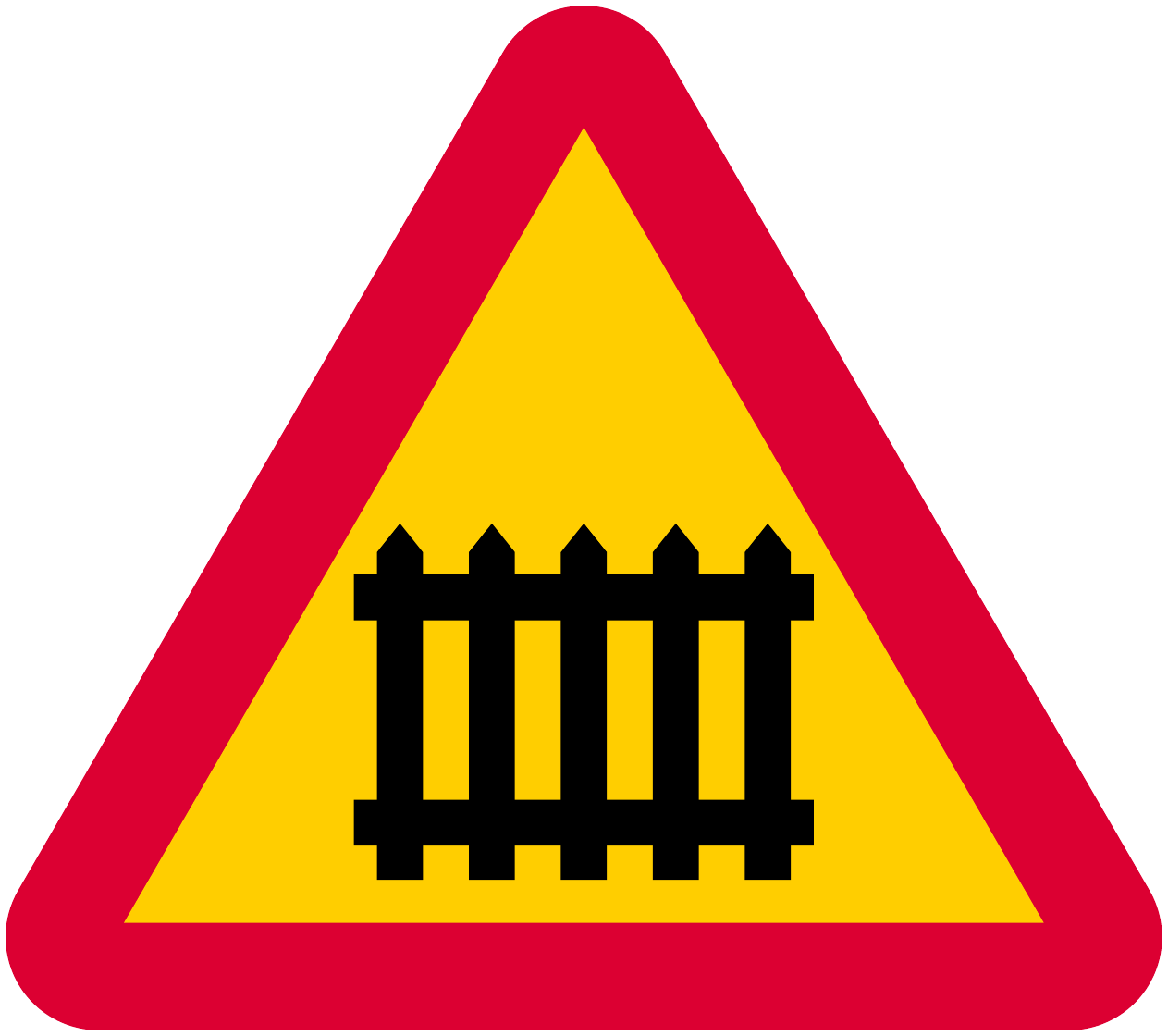
What does this road sign mean?

Picture for the question

Explanation

Level crossing with gates

The sign indicates a junction with a railway or tramway line with gates.

Question 62

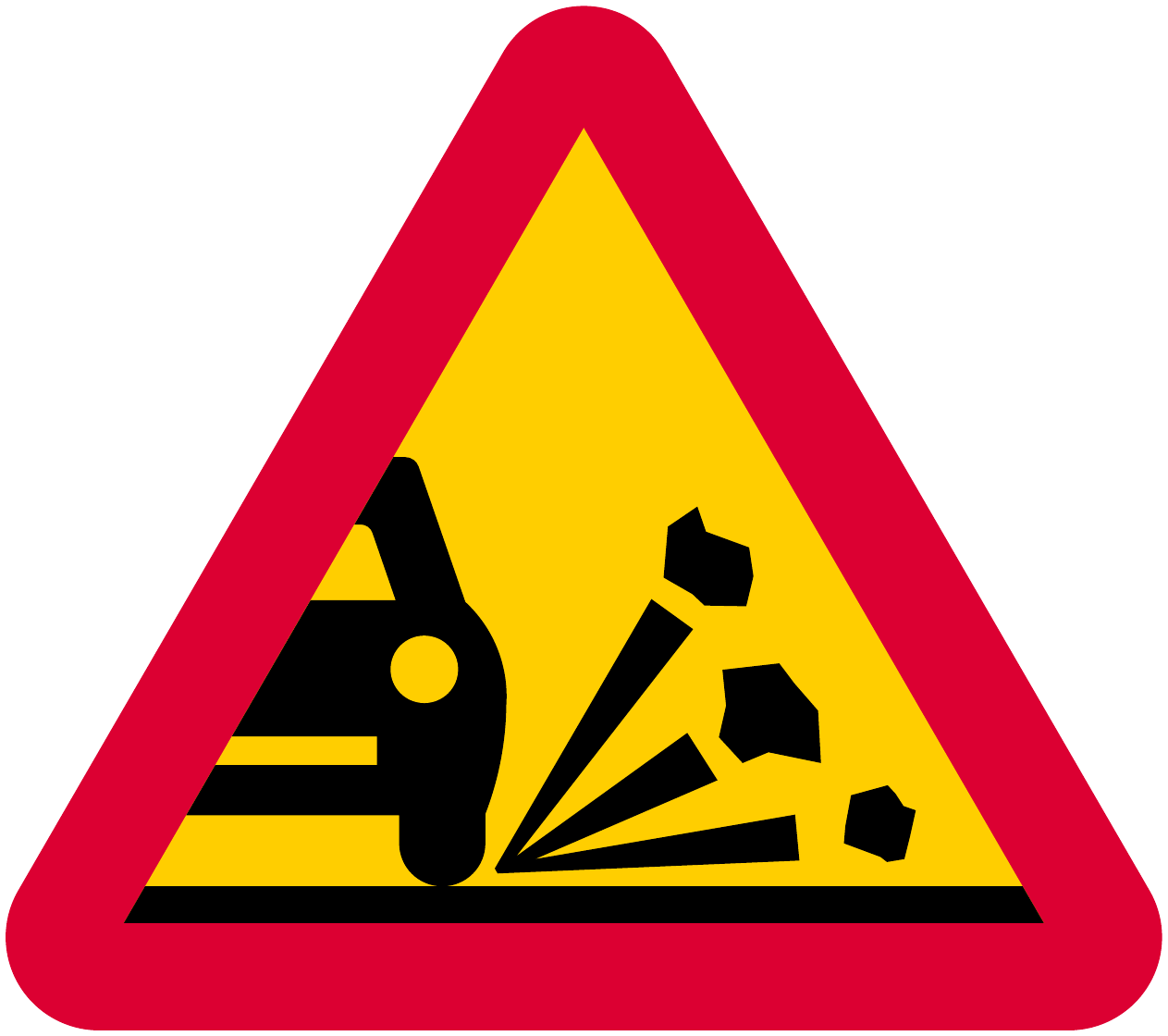
What does this road sign mean?

Picture for the question

Explanation

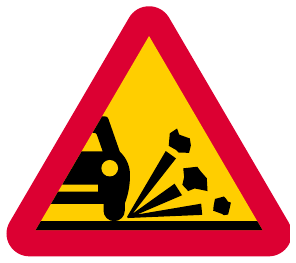
Loose chippings
Loose chippings

The sign indicates a risk of loose chippings. The sign is not used on gravel roads or similar roads where loose chippings are common.

Question 63

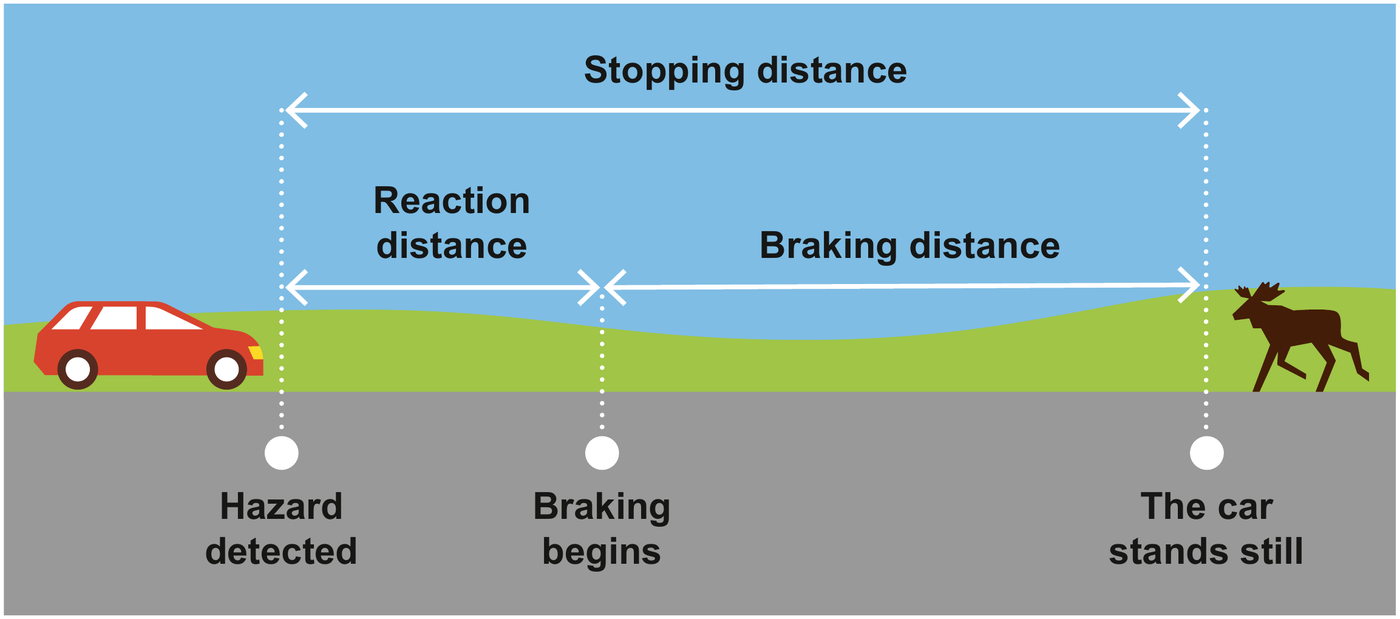
How do you calculate your stopping distance?

Explanation

Illustration
Question 64

You have stopped to let a train pass at a guarded railway crossing with gates. When are you allowed to drive on?

Explanation

The gates are always raised first. When they are completely raised, the red stop lights will normally continue flashing for a while. Only when the red lights are no longer flashing are you allowed to drive on.

Question 65

Are you allowed turn left in a junction where this road sign is erected?

Picture for the question

Explanation

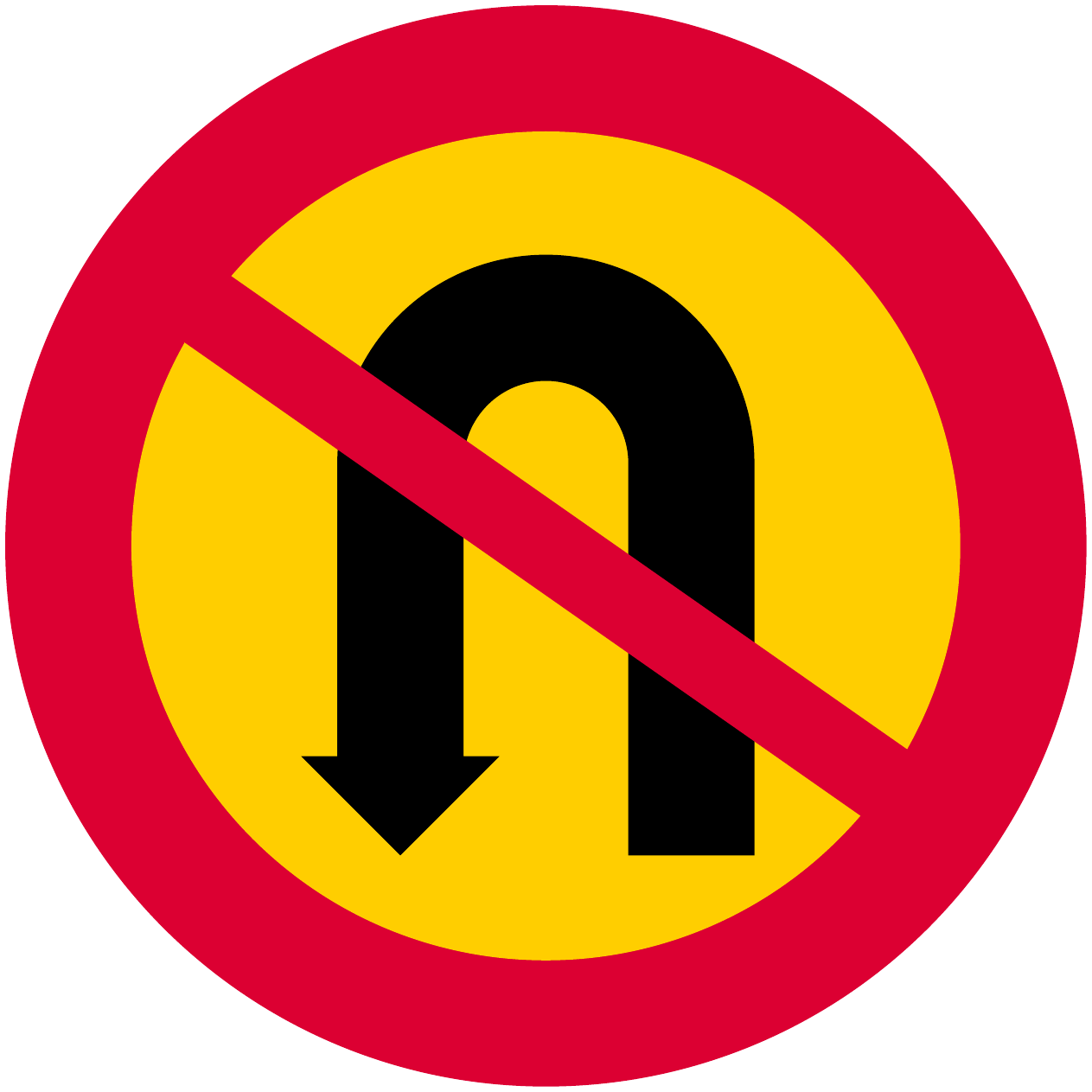
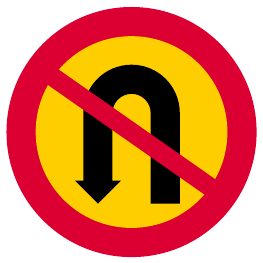
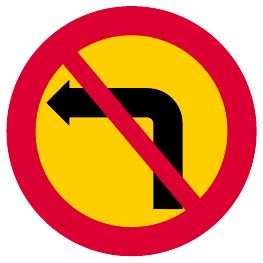
No U-turn
No U-turnC26

This prohibition applies to the junction or similar location before or in which the sign is erected. The sign may relate to several junctions. In that case the distance is indicated on an additional panel. The symbol is specific to the conditions at the location.

If a left turn in the junction had been prohibited, this sign would be erected:

No left turn in the junction
No left turn in the junctionC25

This prohibition applies to the junction or similar location before or in which the sign is erected. The sign may relate to several junctions. In that case the distance is indicated on an additional panel. The symbol is specific to the conditions at the location.

Question 66

You are driving on a two-way road. Where would you see this verge post?

Picture for the question

Explanation

Along a two-way road, verge posts for each direction shall display rectangular reflectors on the right side of the road and round reflectors on the left side.
Swedish Transport Administration

On the right side, there is a post with rectangular reflectors.

Question 67

Are you permitted to drive a short distance behind another car with your full beam headlights on?

Explanation

Full beam headlights may not be used [...] at a short distance behind another vehicle.
Swedish Road Traffic Ordinance
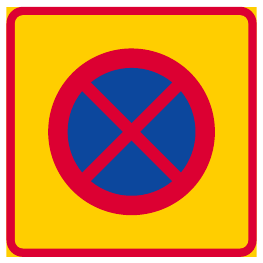
What constitutes a “short” distance?
– What constitutes a “short distance” is determined on a case-to-case basis. Use common sense and your best judgement.

Question 68

What increases the risk of speed blindness?

Explanation

Review of the options

  • Noisy carsNo, this can reduce speed blindness as a lot of noise is often associated with high speed.
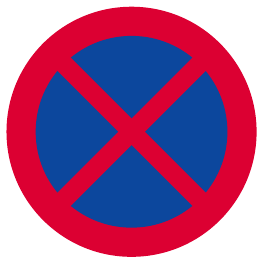
  • Winding roadsNo, winding roads reduce the risk because you need to constantly adjust your speed.
  • Straight roadsYes, if you are driving on a straight road your high speed soon becomes the default mode, meaning that you think you are going slow.
Question 69

A friend is having car trouble on the motorway and is asking if you can help them tow the car. You are also driving a regular private car. Which statement is true?

Explanation

Towing is permitted up until the next exit, as it is not safe to drive that slowly on the motorway for a longer distance.

You may tow the vehicle, but you must drive on the hard shoulder the entire time, and only to the nearest exit ramp.
Du och jag i trafiken [You and me in traffic], 28th Edition, page 261
Question 70

Which sign indicates no vehicles?

Picture for the question

Explanation

No entry
ANo entryC1
No vehicles
BNo vehiclesC2

The sign refers to traffic with vehicles in both directions.

One-way traffic
COne-way trafficE16

The sign indicates that vehicle traffic on the road is one-way in the direction of the arrow. An arrow pointing up indicates that the traffic is one-way in a forward direction.

No motor vehicles other than class II mopeds
DNo motor vehicles other than class II mopedsC3

If the prohibition also applies to class II mopeds, this is indicated on an additional panel.

No questions to show here.