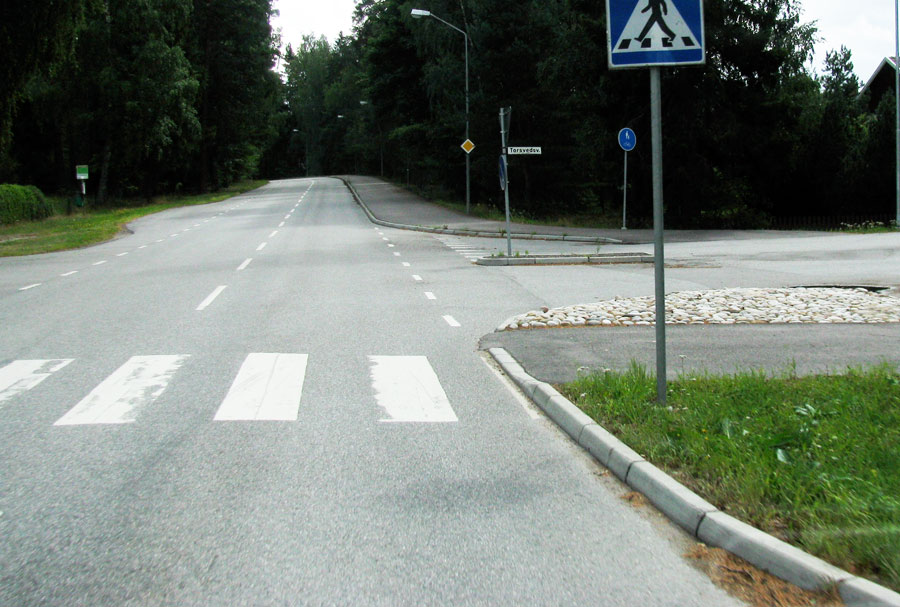
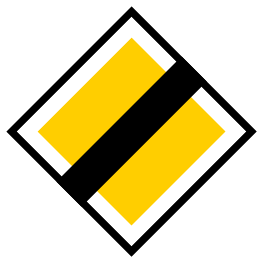
Is it normal for a priority road sign to be located after a junction?
Explanation
The sign is erected at the start of the priority road and is repeated after each junctionTraffic Sign Ordinance
The real test has 70 questions in 50 minutes. You need 56 correct (80%) to pass.
The sign is erected at the start of the priority road and is repeated after each junctionTraffic Sign Ordinance
Moped drivers tending to have less experience is always of some significance, but in this case the difference in speed is much more important.
Mnemonic rule:
A driver is only allowed to turn around or reverse if if it can be done without causing a danger or hindrance to other road users.Swedish Road Traffic Ordinance
Reversing on priority roads is not generally prohibited.
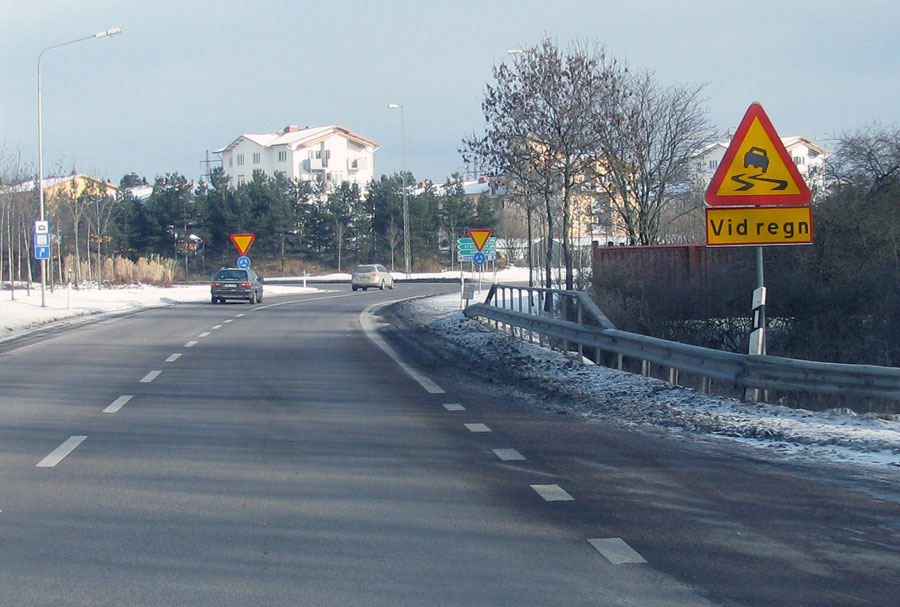
”Vid regn” = During rain
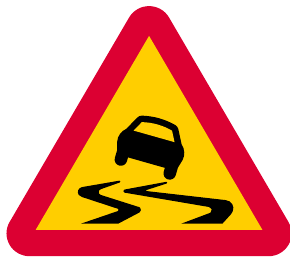
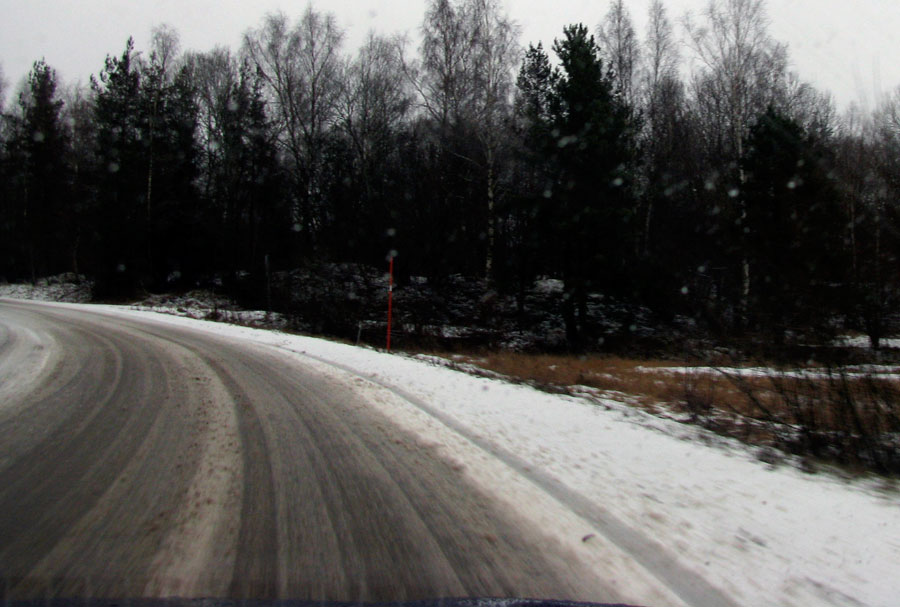
The sign indicates that the road may be slippery. The sign is only used if there are specific reasons to warn of a slippery surface due to snow or ice.
The road sign is not important in this question, which is only asking about general conditions. The road in the photo – just like any other road – may be slippery, for example in winter.
When you see the road sign and the additional panel, you should not think, “the sign guarantees that the road always provides perfect traction unless it is raining.”
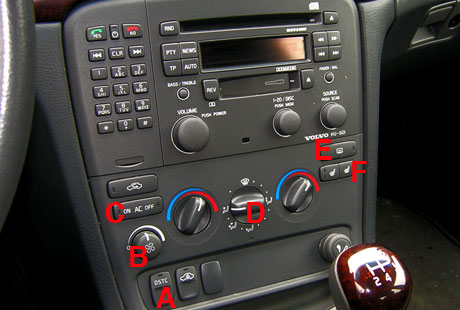
Turn D to the symbol at the top (“12 o’clock”): “Air to the windows. […] When you want to get rid of ice and steam.” (Car instruction manual)
E is the heating of the rear window, i.e. not the increased air flow that the question is asking for.
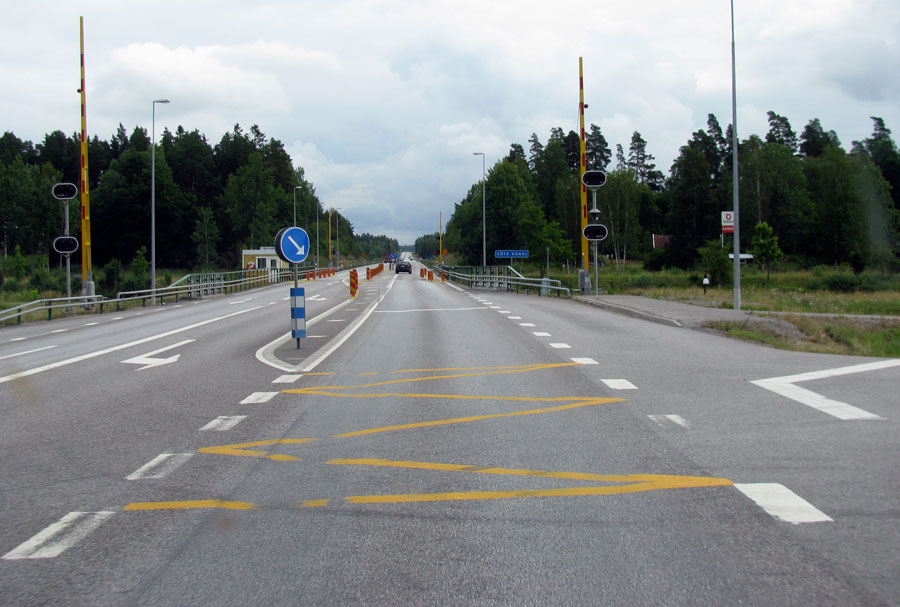
Review of the options
On 20 May 2018, the old system with the last digit in the registration number was discontinued.
New inspection rules as of 20 May 2018:
To simplify, a car older than 5 years must be inspected every year. It is recommended to schedule an inspection the same month every year and treat the 2 extra months as a margin of safety.
Please note that the last day for inspection is always the last day of the month. This is because you start counting the month after the most recent inspection.
When driving on a road, a vehicle [...] may not display any lights other than white or yellow in the front [...] However, this does not apply to lights of another colour that have been prescribed for the vehicle.Swedish Road Traffic Ordinance
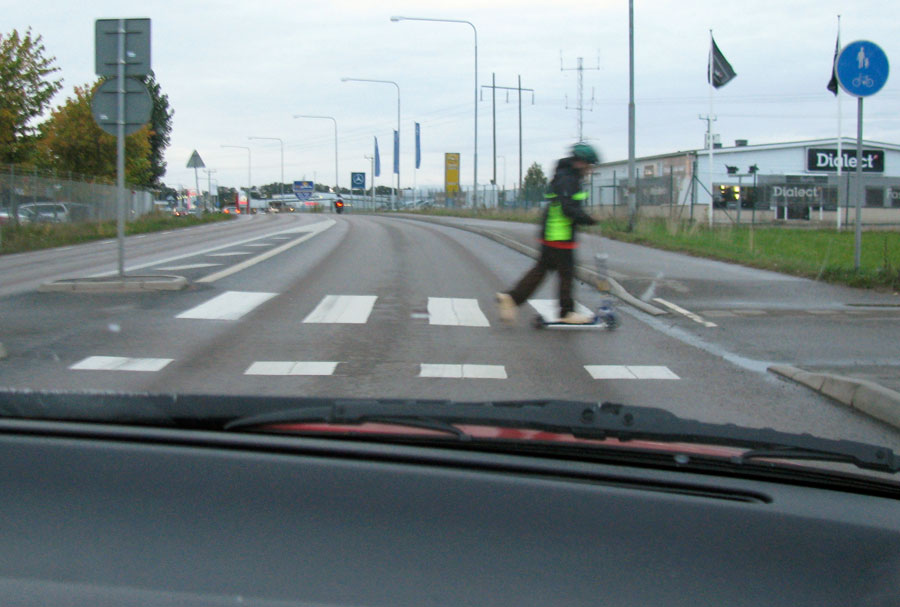
The provisions referring to pedestrians also apply to those whoSwedish Road Traffic Ordinance
1. ski, roller ski, ice skate, roller skate or similar;
2. lead, push or pull a kick-sled, toy vehicle or similar.
This must be classified as a “toy vehicle or similar”, which means that the person is considered a pedestrian.
At an unguarded pedestrian crossing, a driver is obligated to give way to pedestrians who have stepped out on the pedestrian crossing or who are about to do so.Swedish Road Traffic Ordinance
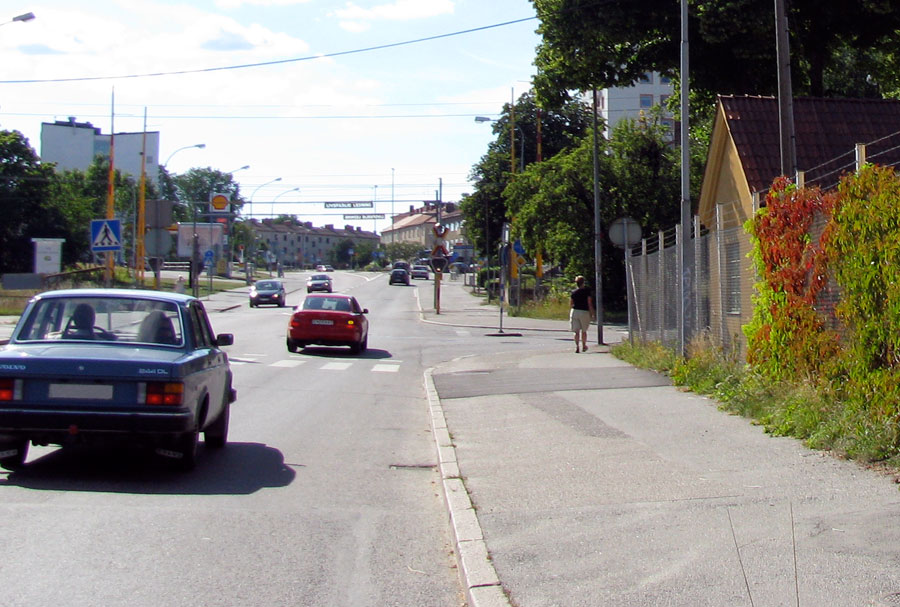
When turning right, a vehicle shall be positioned as close to the carriageway’s right edge as possible, within reason.Swedish Road Traffic Ordinance
The idea that positioning your car in the middle of the lane would allow a “good safety margin” for the pedestrian sounds strange. Would it be less safe to position your car more to the right?
Nationalencyklopedin: “infrasound, low-frequency noise (frequency under approx. 20 Hz) that is not perceived by the human ear. […] Infrasound is deemed to lead to reduced performance and lower activity.”
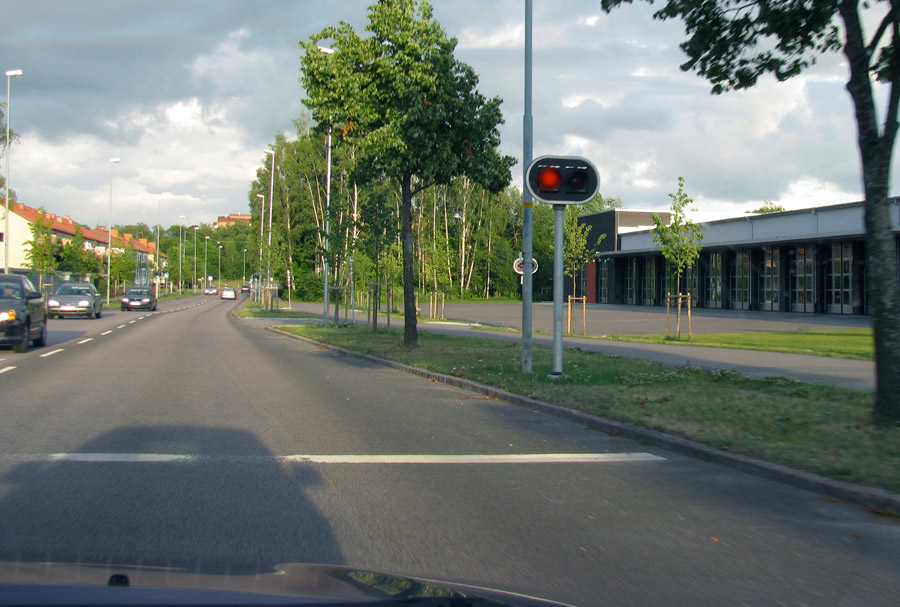
The lights signal that the fire engines are about to turn out. They are flashing (right, left, right, left...), which means that only one light is lit at a time. This means that you must stop at the line and are allowed to start moving again when the lights go out (there is no green light on this type of signal).

Stop. A vehicle may not pass the stop line or, in the absence of such, the signal.
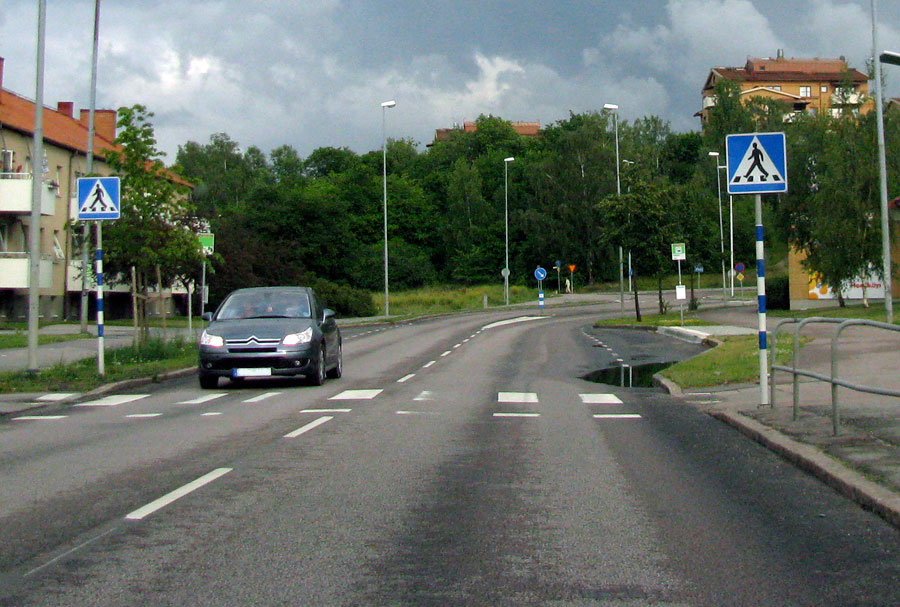
Review of the options
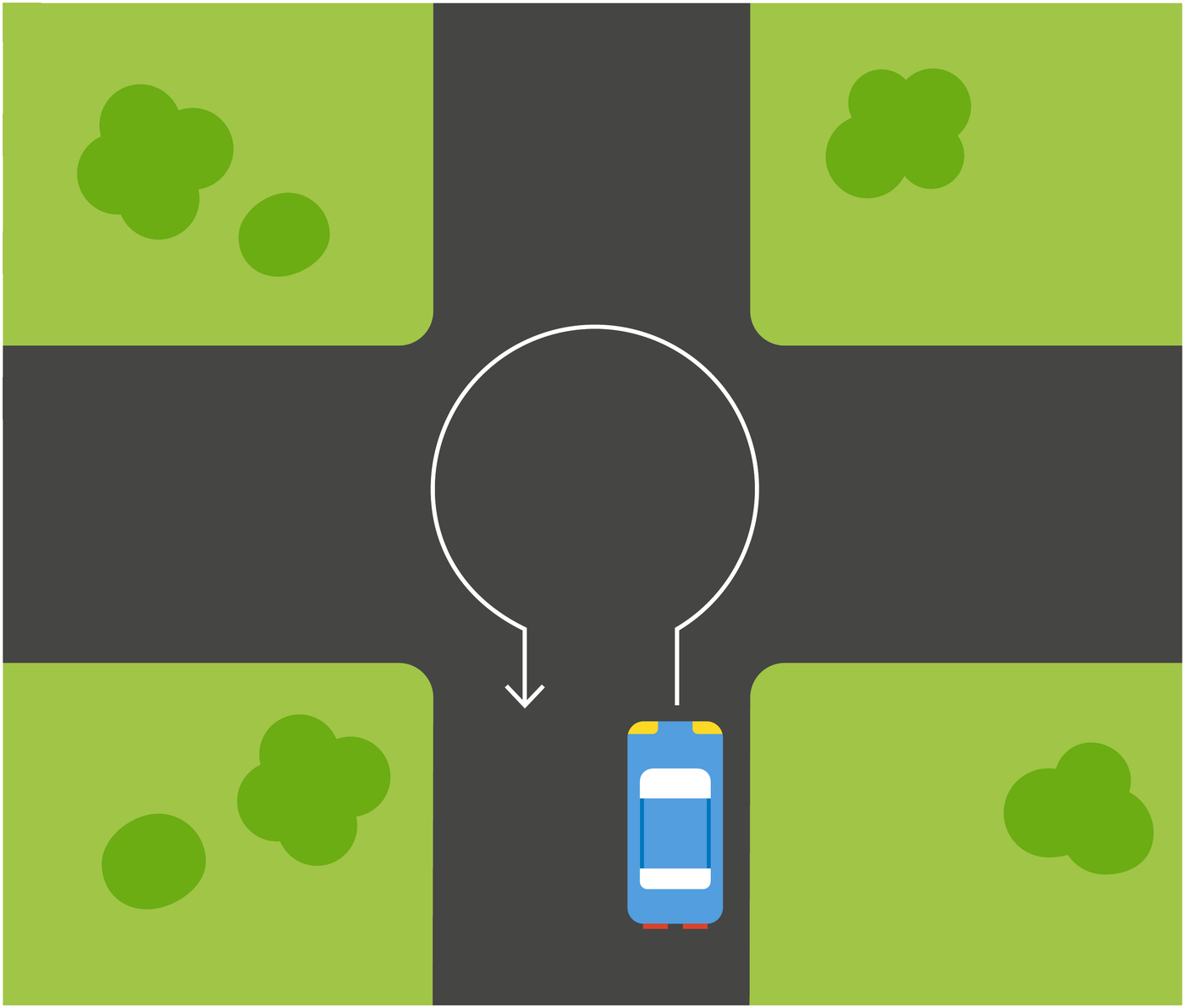
This is a U-turn. The fact that it is done in the shape of an “O” is unimportant, as the principle is the same.
Do not sit too close to the steering wheel/airbag. On the driver’s side, a distance of at least 25 cm is recommended.NTF
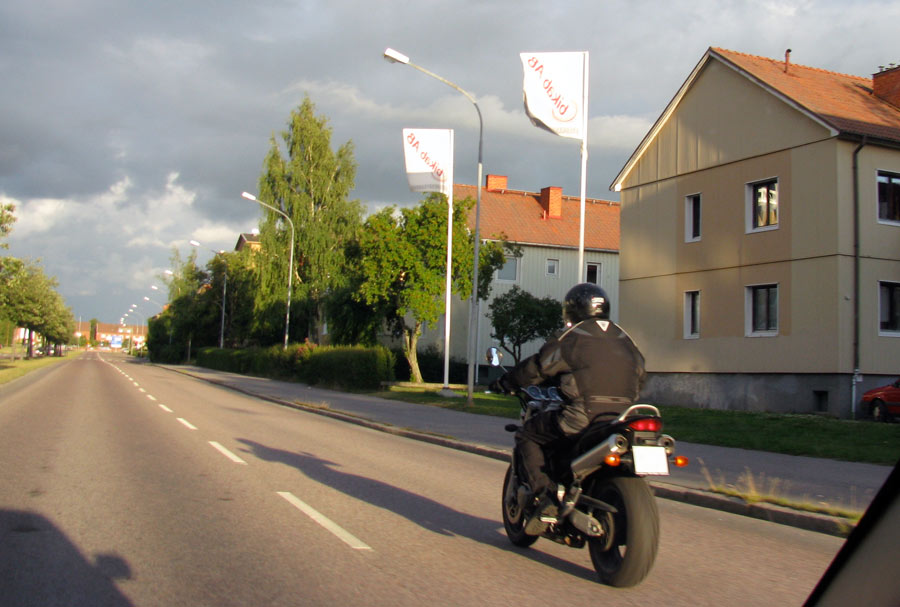
[...] you can overtake on the right in the following situation [...] On a road where the speed limit is 70 km/h or lower and there are at least two designated lanes for travel in the same direction.Du och jag i trafiken [You and me in traffic], 28th Edition, pages 223-224
Traffic signals always take priority over stop signs:
As the traffic signal ranks higher than a road sign, you do not have to stop at the sign when the traffic signal is working. The stop sign has been posted to regulate traffic when the traffic signal is broken.
A person who has moved or altered a road sign, road marking, traffic signal or other traffic device shall immediately restore the device to an adequate condition. If this is impossible, they shall promptly inform the police or the person who installed and maintains the device of its condition and take any necessary measures, as required by the traffic situation.Swedish Road Traffic Ordinance
It is important that the sign is restored as soon as possible. If it is a yield sign in a junction, the consequences could otherwise be dire!
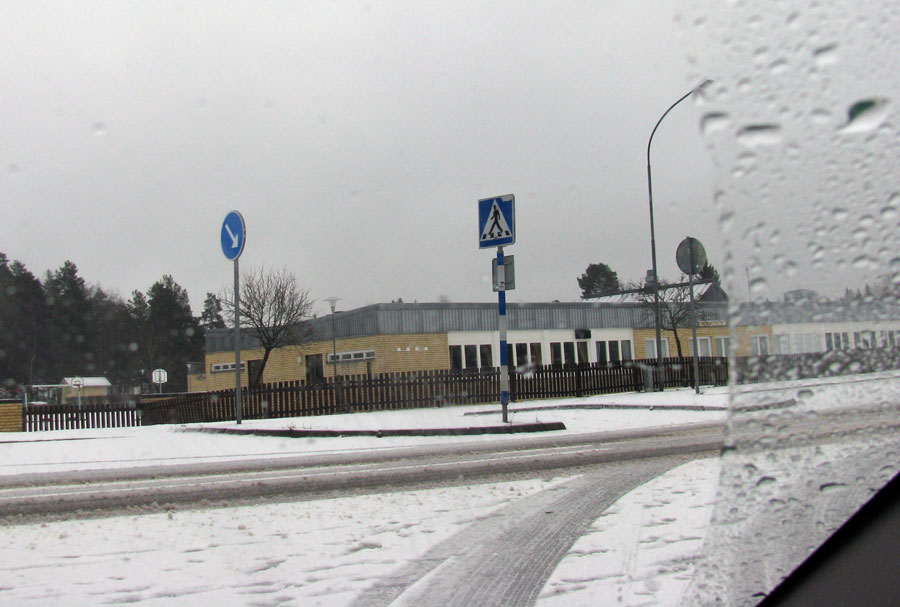
Since it is plus degrees and slashing under the car, slush is the most likely weather condition.
In the event of sudden icy conditions, it does not splash under the car since the surface freezes to ice.
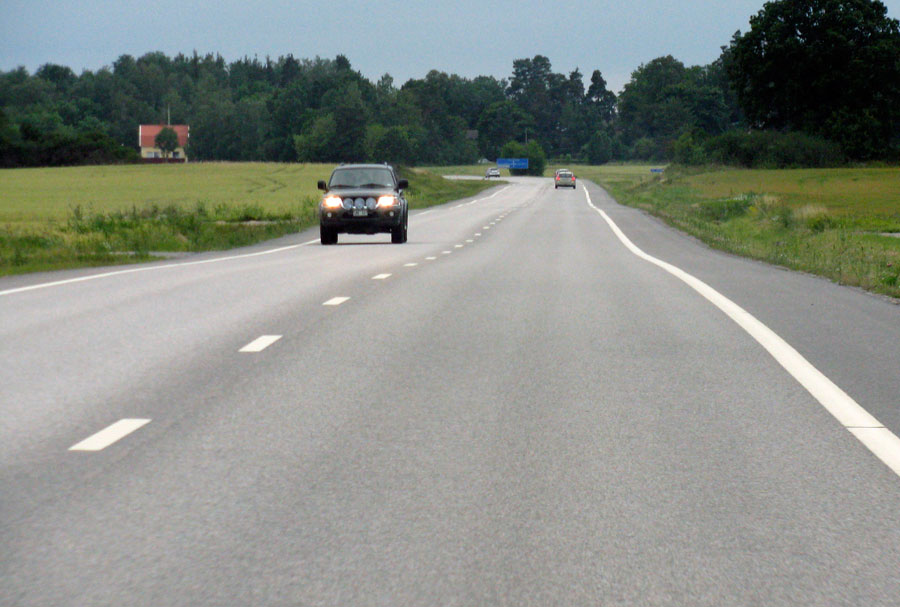
Since it is daylight and the surrounding area is relatively open, it is good to drive close to the right edge. The cars behind can then more easily and safely overtake, while at the same time the margins for the oncoming vehicles are increased.
Convert km/h to m/s: 110 / 3.6 = 31 m/s
3.6 is a fixed figure for converting km/h to m/s. If you struggle to divide by 3.6 right away, you can divide by 3 first, then by 4 and finally chose a value in between (the answer alternatives often provide a good margin). Example:
110 / 3 = 37 110 / 4 = 28
(37 + 28) / 2 = 33 m/s (i.e. very close to 30 m/s).
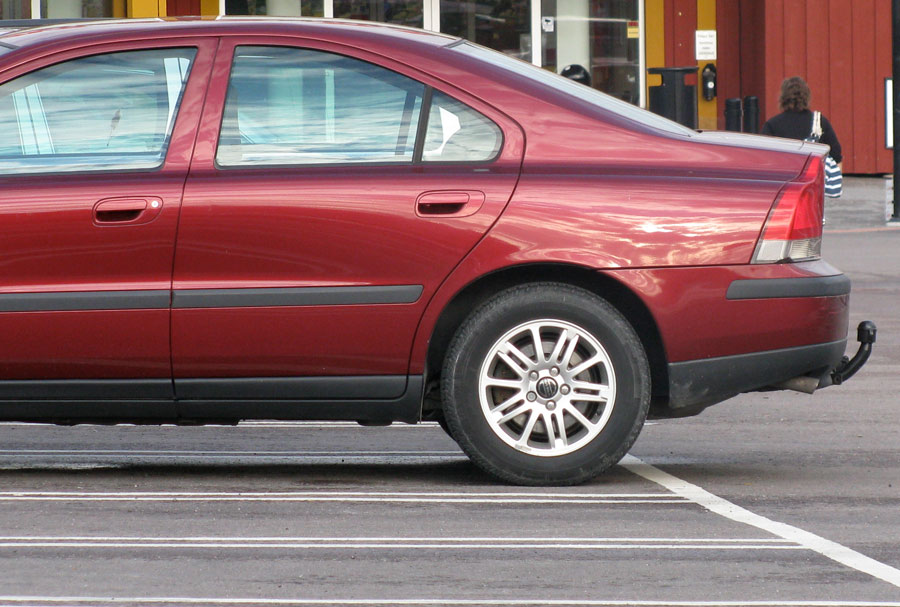
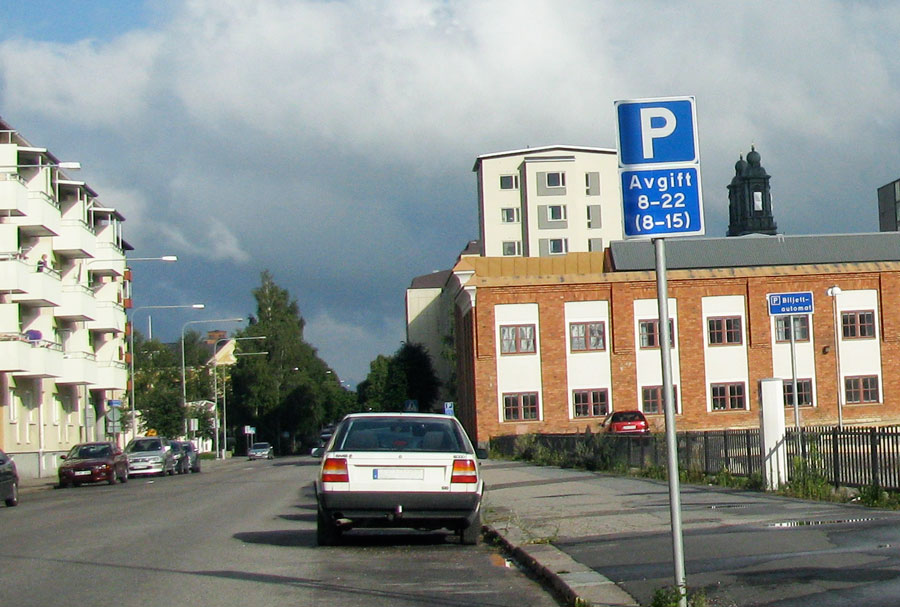
A vehicle may not be parked so that [...] the vehicle has a wheel outside a parking space or other marking that indicates where you may park.Swedish Road Traffic Ordinance
In other words, it is the wheels that count, not the body of the car.
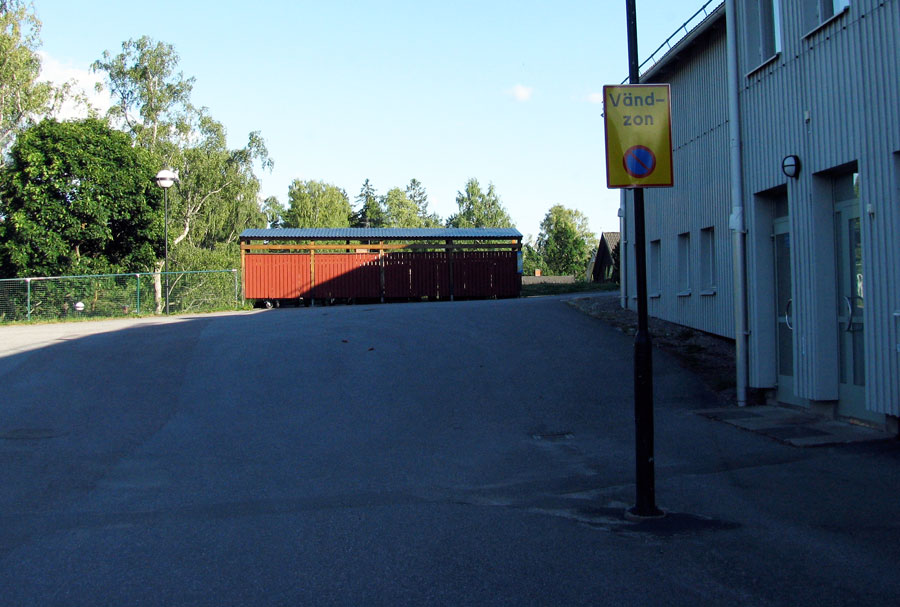
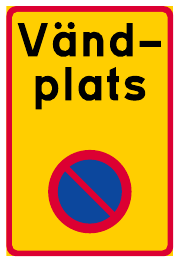
The sign indicates an area intended for turning a vehicle and that parking is prohibited here.
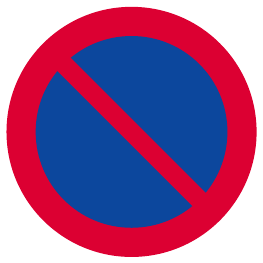
Special traffic regulations may [...] be issued through local traffic provisions [...] The special traffic regulations may relate to [...] Prohibited stopping or parking of vehicles or permission to stop or park vehicles, entailing a deviation from the regulations.Swedish Road Traffic Ordinance
An additional panel has the same colour background, border and writing as the road sign it is used under, unless otherwise specified in Section 30. However, an additional panel underneath a sign prohibiting parking or a sign prohibiting parking and stopping will have a yellow background with black writing.Traffic Sign Ordinance
Review of the options
Is this relevant?
– Yes, reality is imperfect and you have to be able to draw conclusions even if you are given incomplete information. There are indications that similar questions may appear on the Swedish Transport Agency’s test.
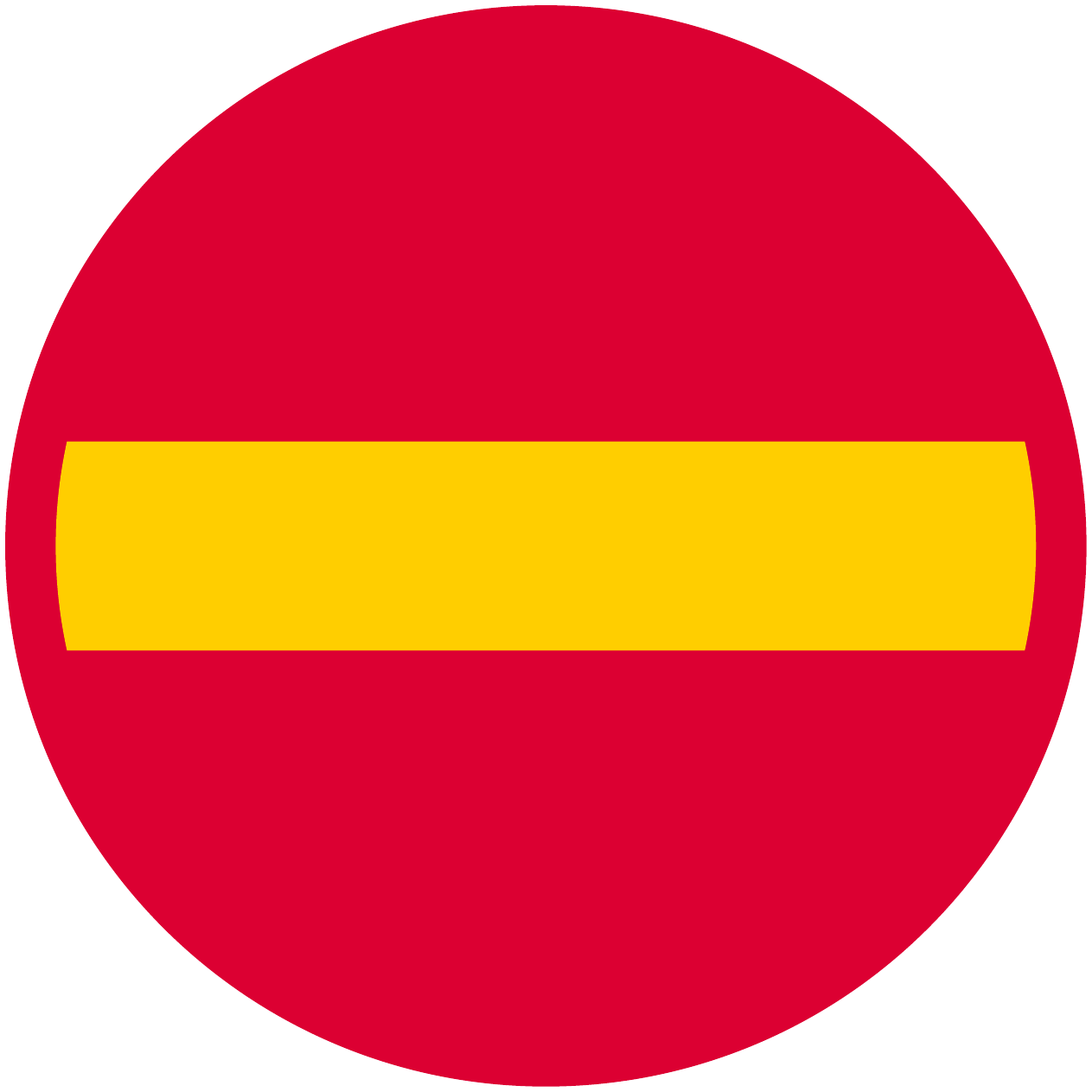
It is common that this sign is called “one-way” in popular speech. But under the law this sign is simply called:
It is only the blue sign with an arrow that means one-way:

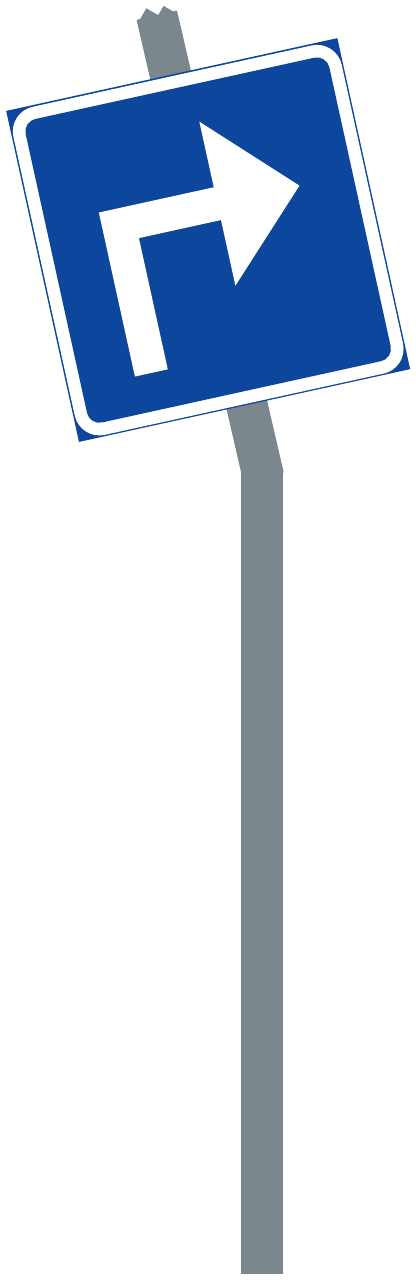
The sign indicates that vehicle traffic on the road is one-way in the direction of the arrow. An arrow pointing up indicates that the traffic is one-way in a forward direction.
The emissions can be reduced, for example with the help of purification techniques such as particle filtersSwedish Transport Administration
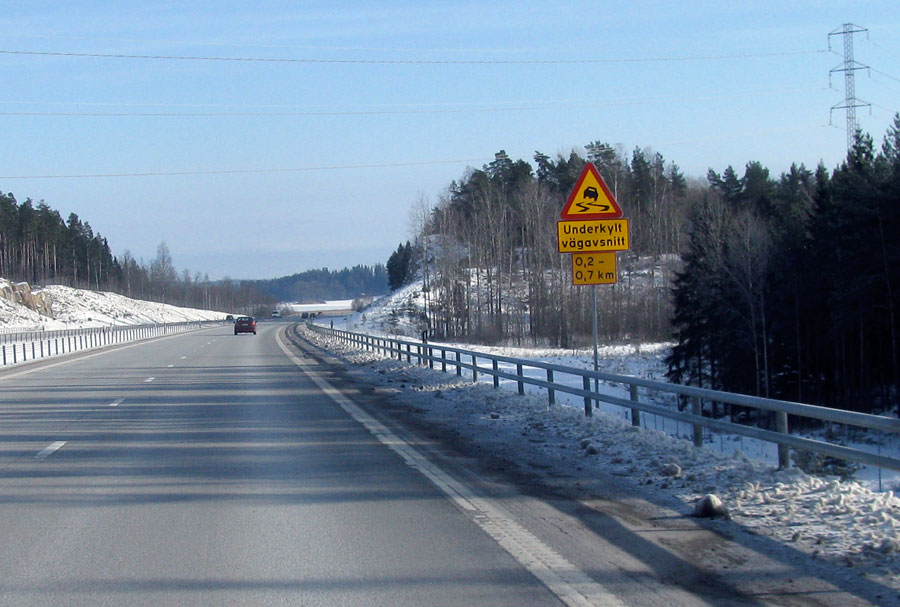
”Underkylt vägavsnitt” = Section of the road where supercooling (undercooling) may occur.
A high gear means a high number on the gear lever. For example: 1st is a low gear and 5th is a high gear.
In the situation depicted, the most important thing is to not lose grip. Furthermore, you do not need additional torque, as your speed is likely high already and the car is practically moving on its own.
When driving on a road, the rear fog lights may only be used in fog, heavy rain or comparable visibility conditions, and only in such a way that the driver of the following vehicle is not dazzled.Swedish Road Traffic Ordinance
So the answer is not only in fog, but also in “heavy rain or comparable visibility conditions.”
Aggravated drunk driving: “The driver has a blood alcohol concentration of at least 1.0 per mille.” (Road Traffic Offences Act)
The risk of coma or death only becomes significant around 3.5–5.0 per mille.
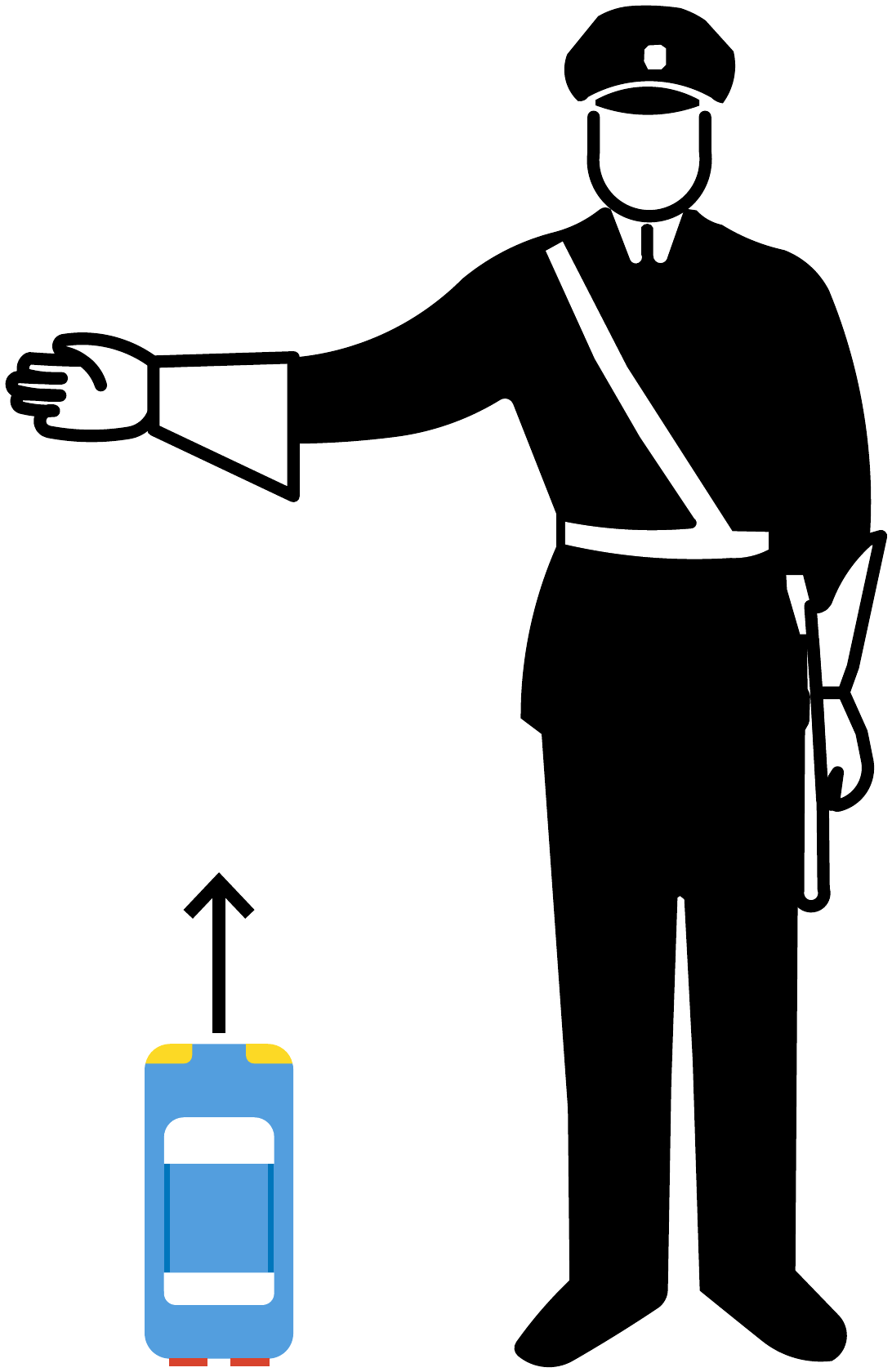
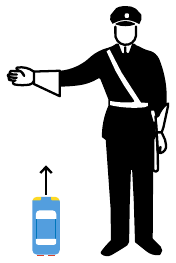
The signal means stop for the road user coming head on or from behind. The signal is used in a junction and applies as long as the officer is facing in the same direction. For road users approaching from the side, the signal means that the road is free and that it is permitted to drive. The signal may be given in combination with the signal P2, stop. The signal may be given using a stop paddle.
The word “or” in the above quote is used because the Swedish Transport Agency is describing the sign’s significance from a single road user’s perspective. A road user cannot be coming head on and from behind at the same time, hence the “or”. However, the question is asking about “traffic”, which is to be interpreted as multiple road users.
Studies have shown that people with certain characteristics are more perceptible to peer pressure than others. These characteristics include: […] Low self-confidence.Teoriboken, 13th Edition, page 110
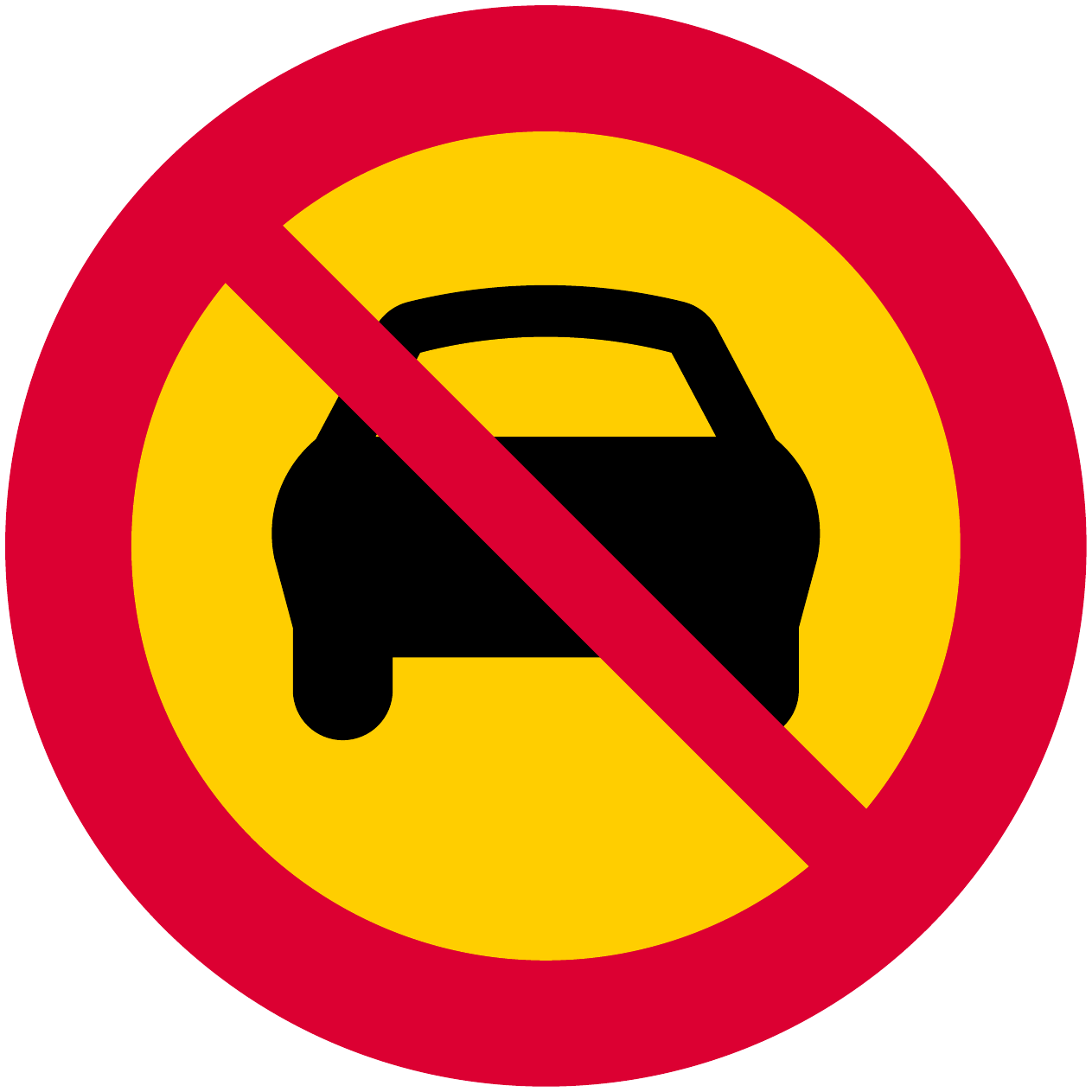
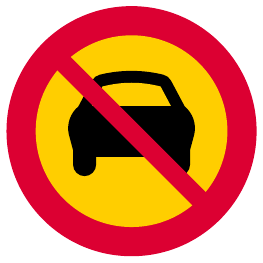
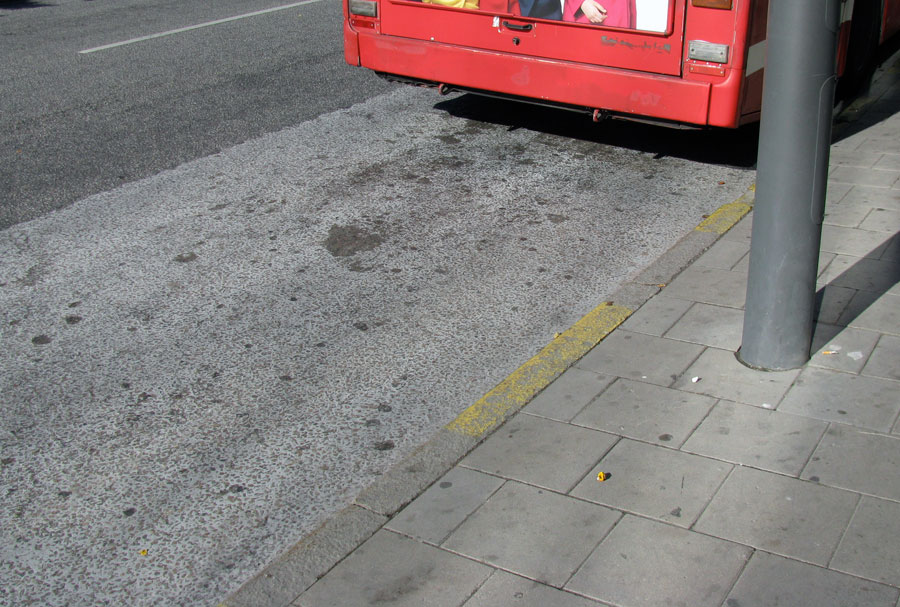
At a marked stop for trams, vehicles operating a regular service or school buses, other vehicles may not stop or park for anything other than setting down or picking up passengers, and this must be possible without obstructing tram, public transport or school bus traffic.Swedish Road Traffic Ordinance
Stopping and setting a passenger down usually only takes a few seconds and you can quickly move the car since you never leave it. Stopping, for example, to load and unload items usually involves you leaving the car there for several minutes and thereby obstructing buses, which is not permitted. (Note that it does not matter how fast the unloading takes, it is still prohibited.)
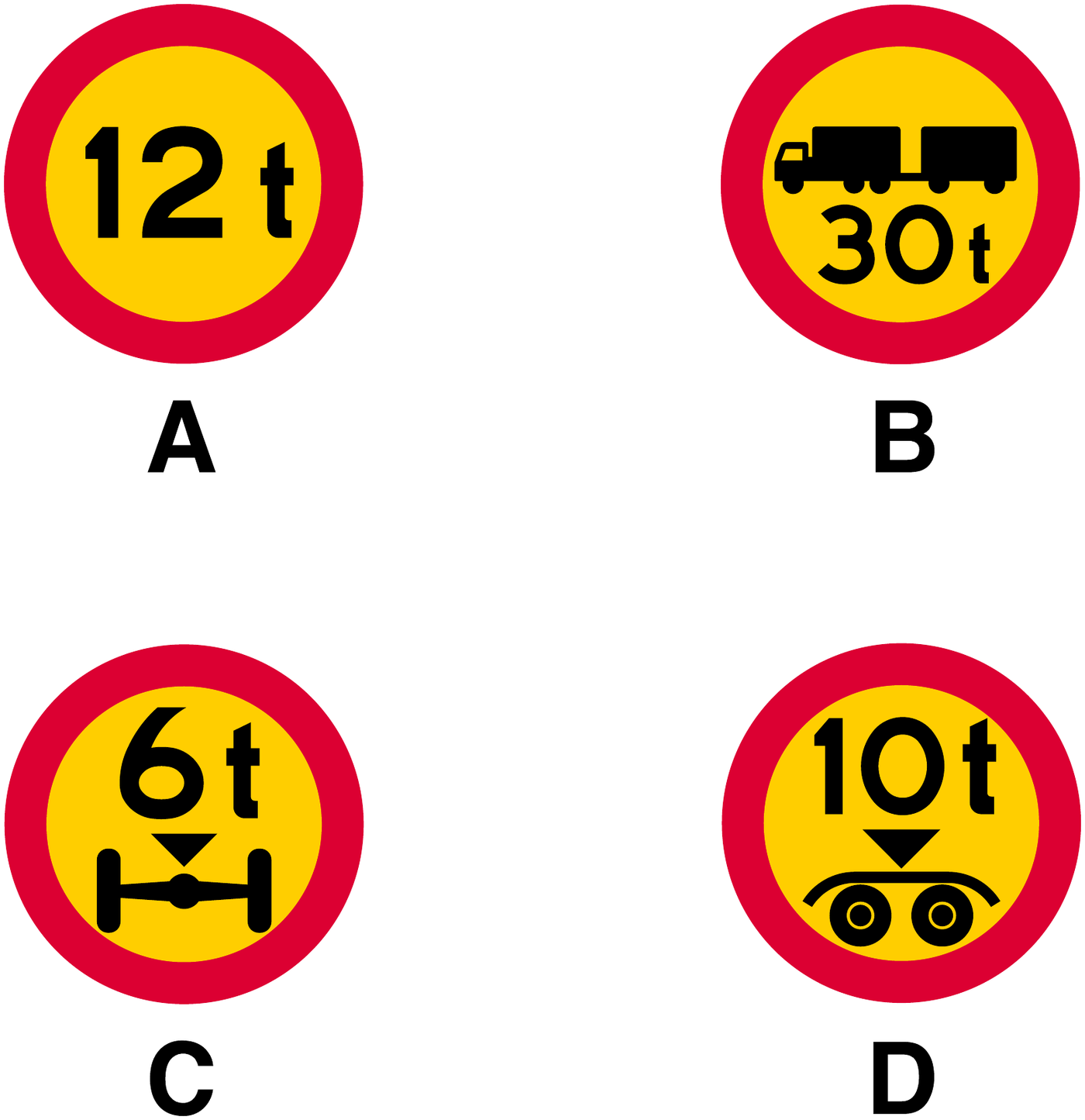
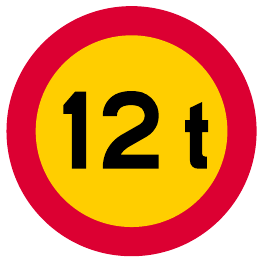
Maximum permitted gross weight is indicated on the sign.
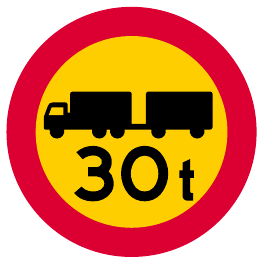
Maximum permitted gross weight is indicated on the sign.
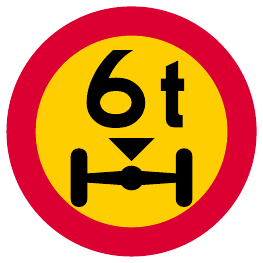
Maximum permitted weight on an axle is indicated on the sign.
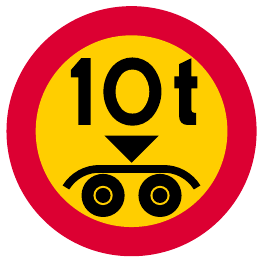
Maximum permitted weight on a tandem axle is indicated on the sign.
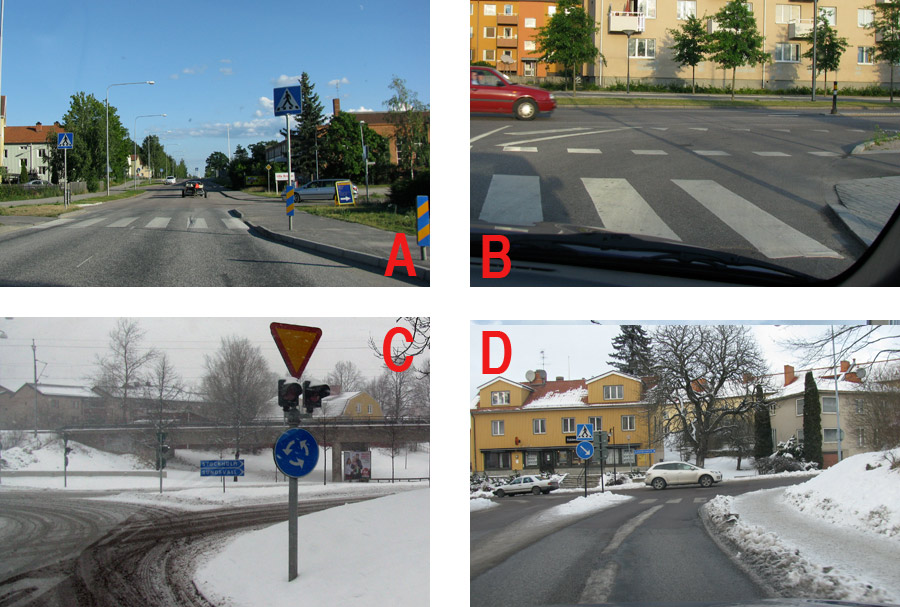
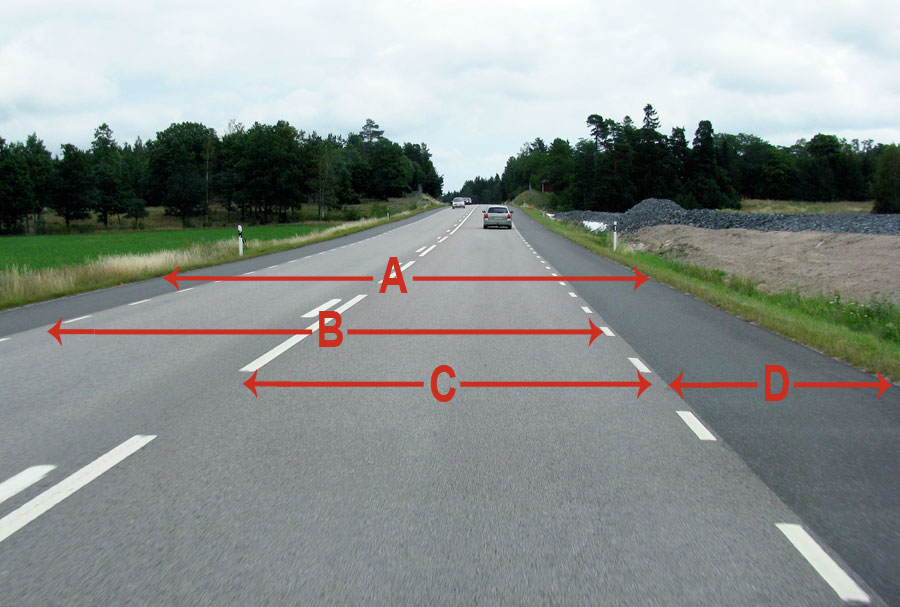
Clarification of A :
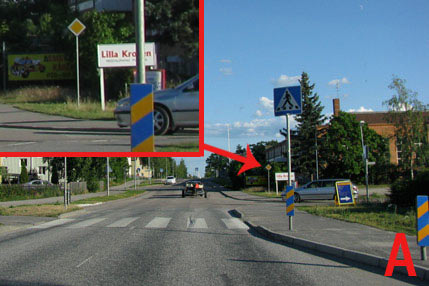
The priority road sign is difficult to see, but if you enlarge the original image it becomes more clear.
Clarification of B:
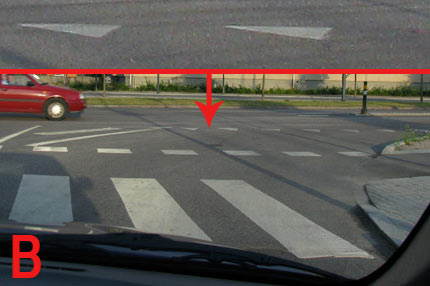
The triangular road markings are only used where there is an obligation to give way.
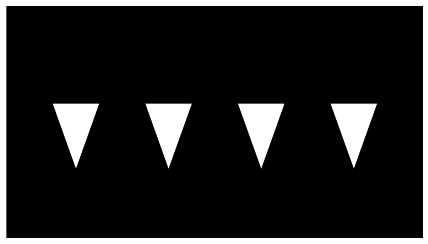
This marking indicates the line that a vehicle should not pass when the driver is observing the obligation to give way.
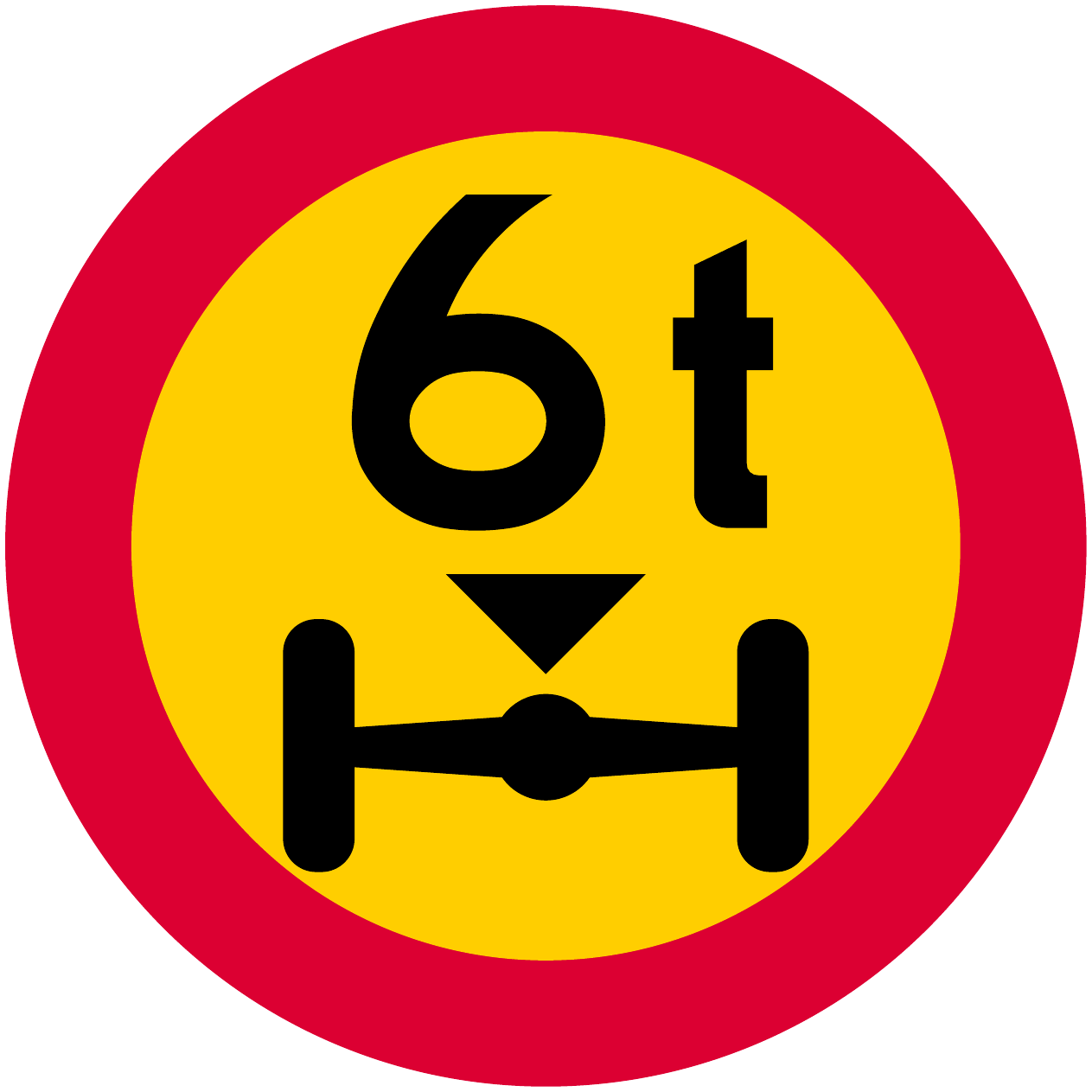
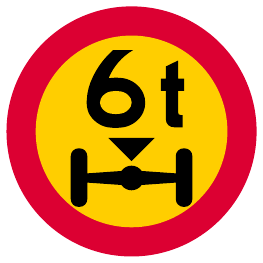
Maximum permitted weight on an axle is indicated on the sign.
The sign indicates maximum weight on one axle, not maximum total weight.
Weight on an axle is the pressure exerted on the part of the vehicle where the wheels are sitting. A regular car normally has two axles; one front and one back. If, for example, the car weighs 1 tonne and the weight is evenly distributed, this means the weight exerted on each axle is 500 kg (500 kg front + 500 kg back = 1 tonne in total).
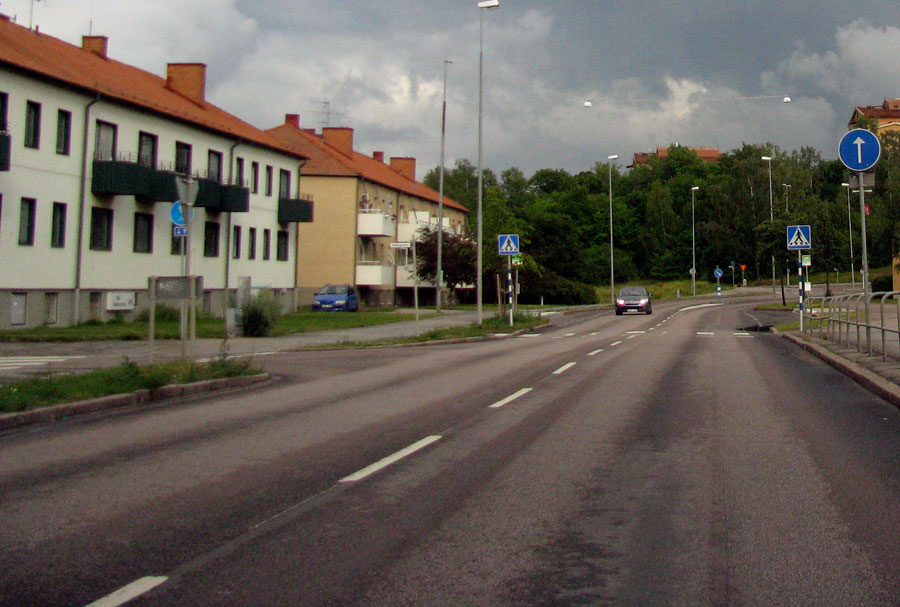
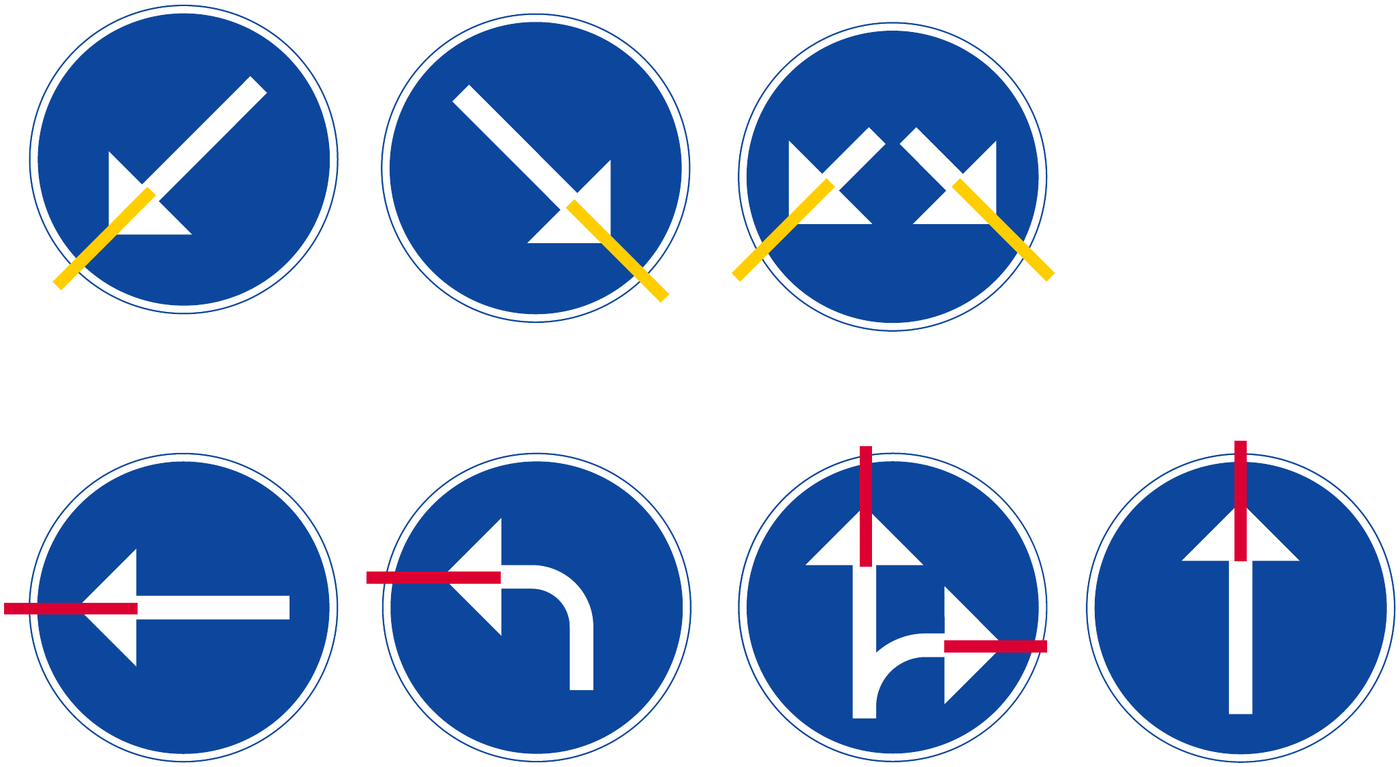
Meaning of the mandatory sign (the round blue sign at the top right of the picture):
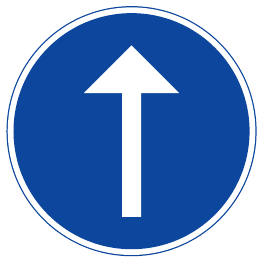
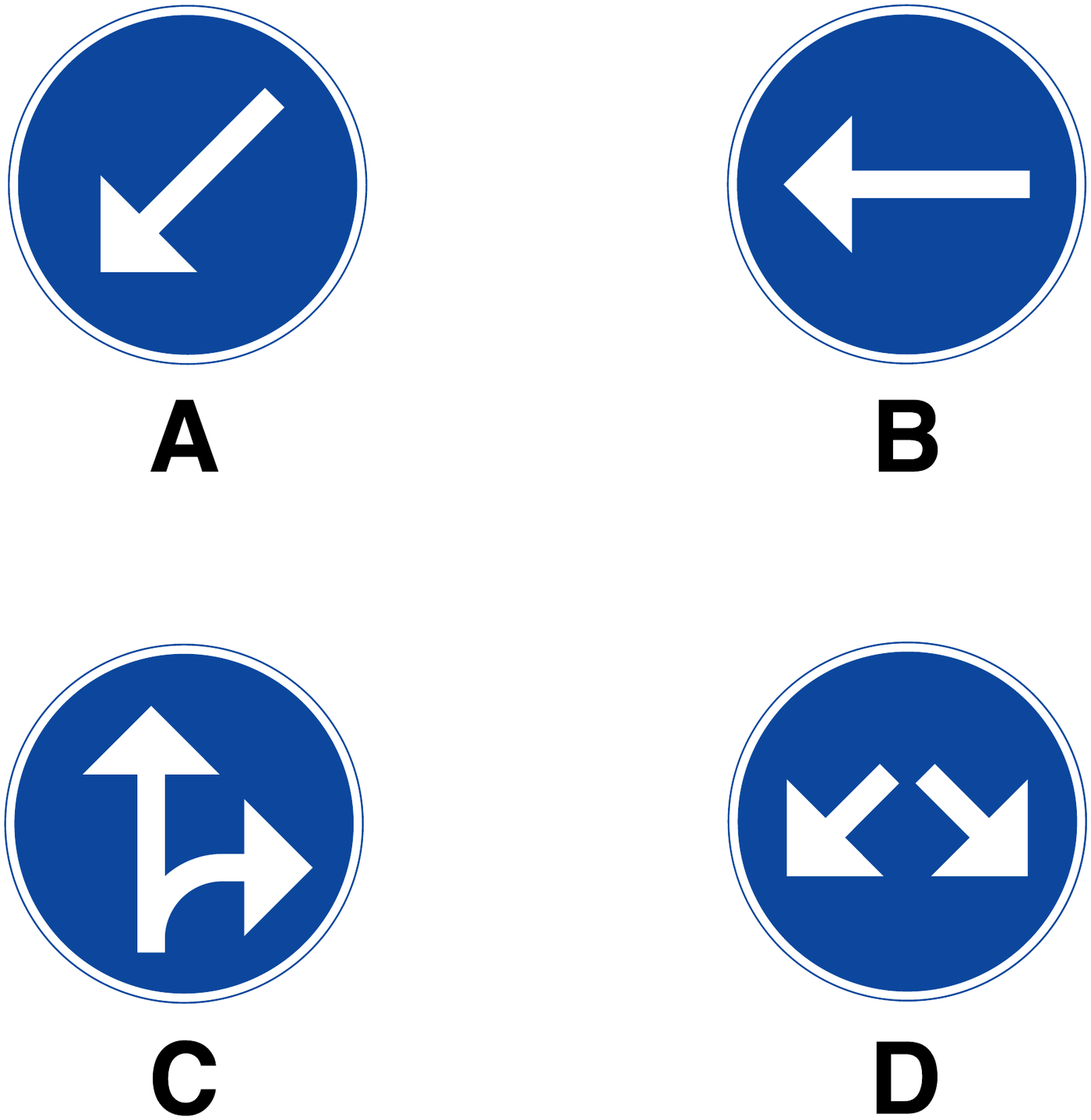
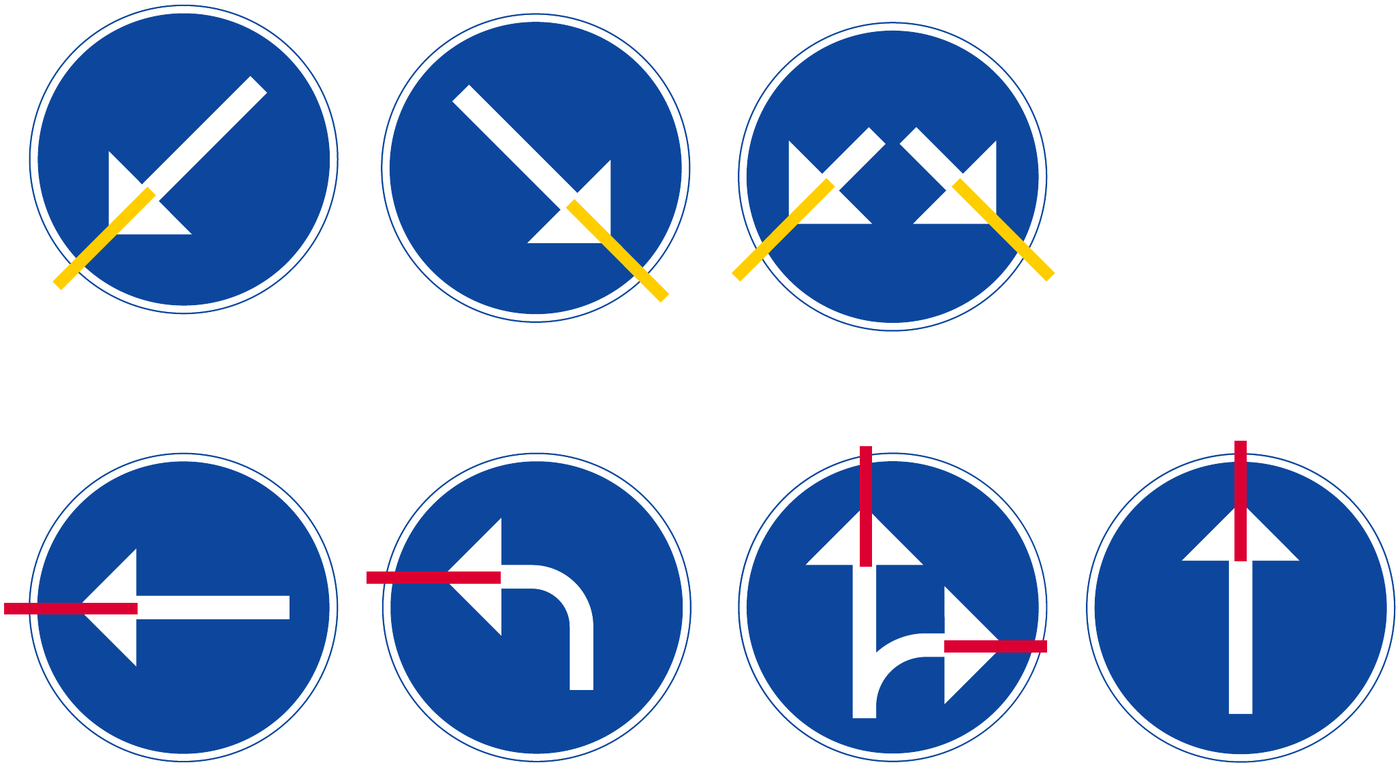
The signs indicate that the vehicle may only be driven in the direction of the arrow or, in the case of two arrows, in either arrow’s direction. The symbol is adapted to the conditions of the location.
The arrow indicates straight on = you may only drive straight on and not turn left.
The reason for this may be that it is a heavily trafficked road that would experience diminished accessibility if cars were standing still and waiting to turn left.
What is there a mandatory sign and not a prohibitory sign?
– “Unlike prohibitory signs, mandatory signs provide information to the road users regarding how they should behave, for example, to turn in a certain direction or that pedestrians are to use the path reserved for them. There is therefore a more positive implication with mandatory signs compared to prohibitory signs, and where an option is presented, it is thus generally better to use mandatory signs than prohibitory signs.” (Swedish Transport Administration)
Connect the batteries correctly, otherwise you “risk damaging the electrical systems and in the worst case cause a battery explosion. When the receiving battery is charging, it produces a highly explosive hydrogen gas”. (Teoriboken, 13th Edition, page 21)
A car battery has relatively weak current, which makes the risk of death more or less non-existent.
Carbon dioxide is the most important of the greenhouse gases affecting the world climate through a growing greenhouse effect.Swedish Transport Administration
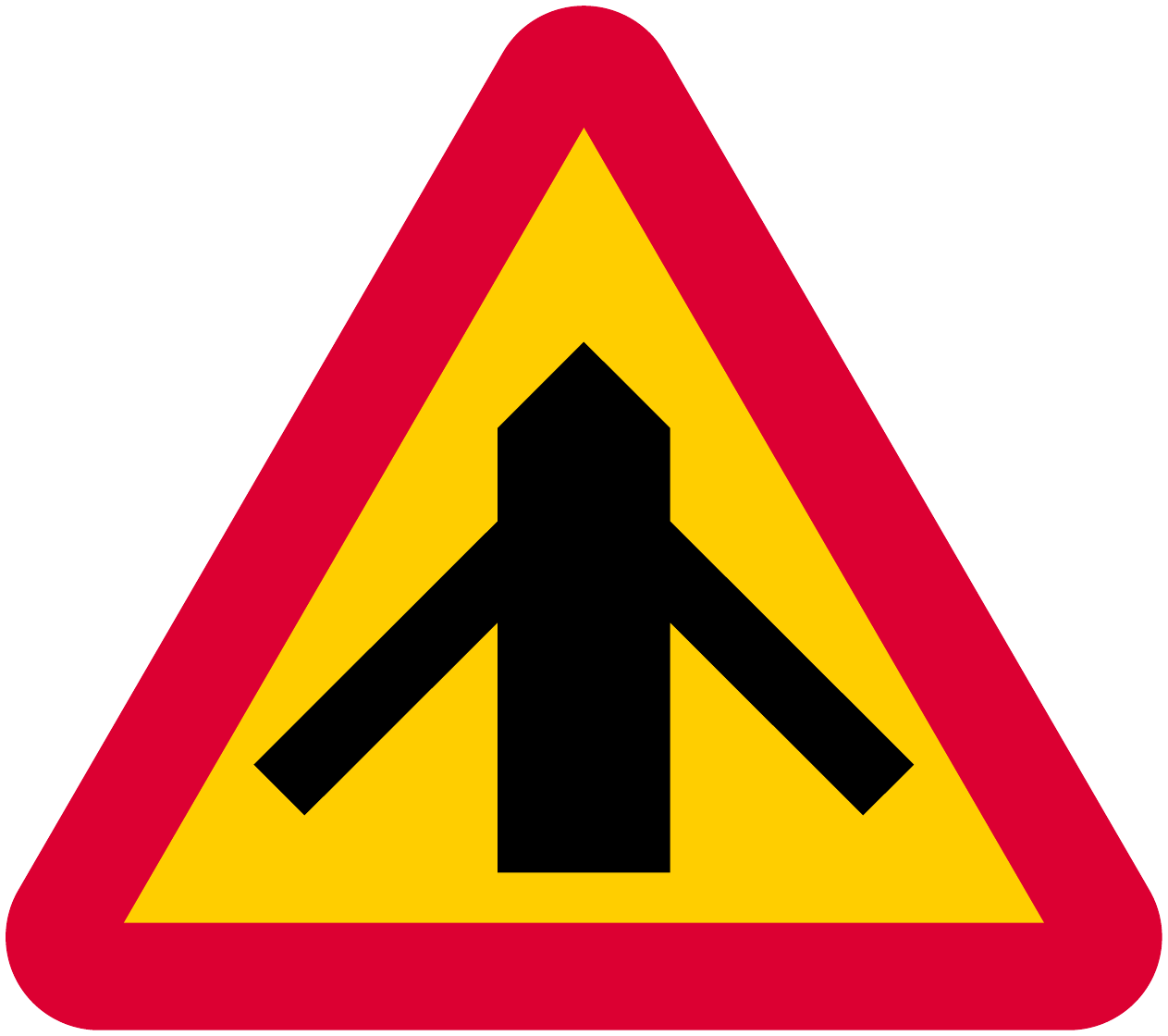
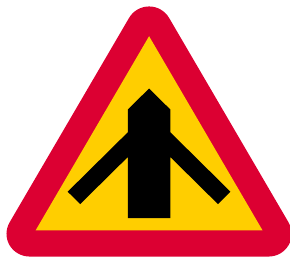
The sign indicates a junction where drivers of vehicles on connecting roads are obliged to give way or stop. The symbol is specific to the conditions at the location.
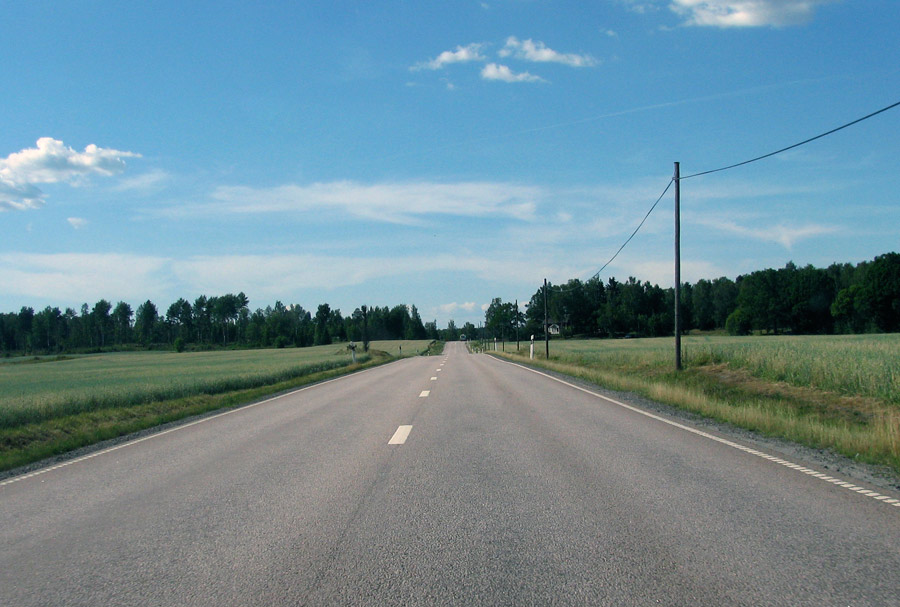
The basic speed limit on Swedish roads is 70 km/h outside of densely populated areas […]Swedish Transport Administration
From the image, it is clear that you are outside of a built-up area.
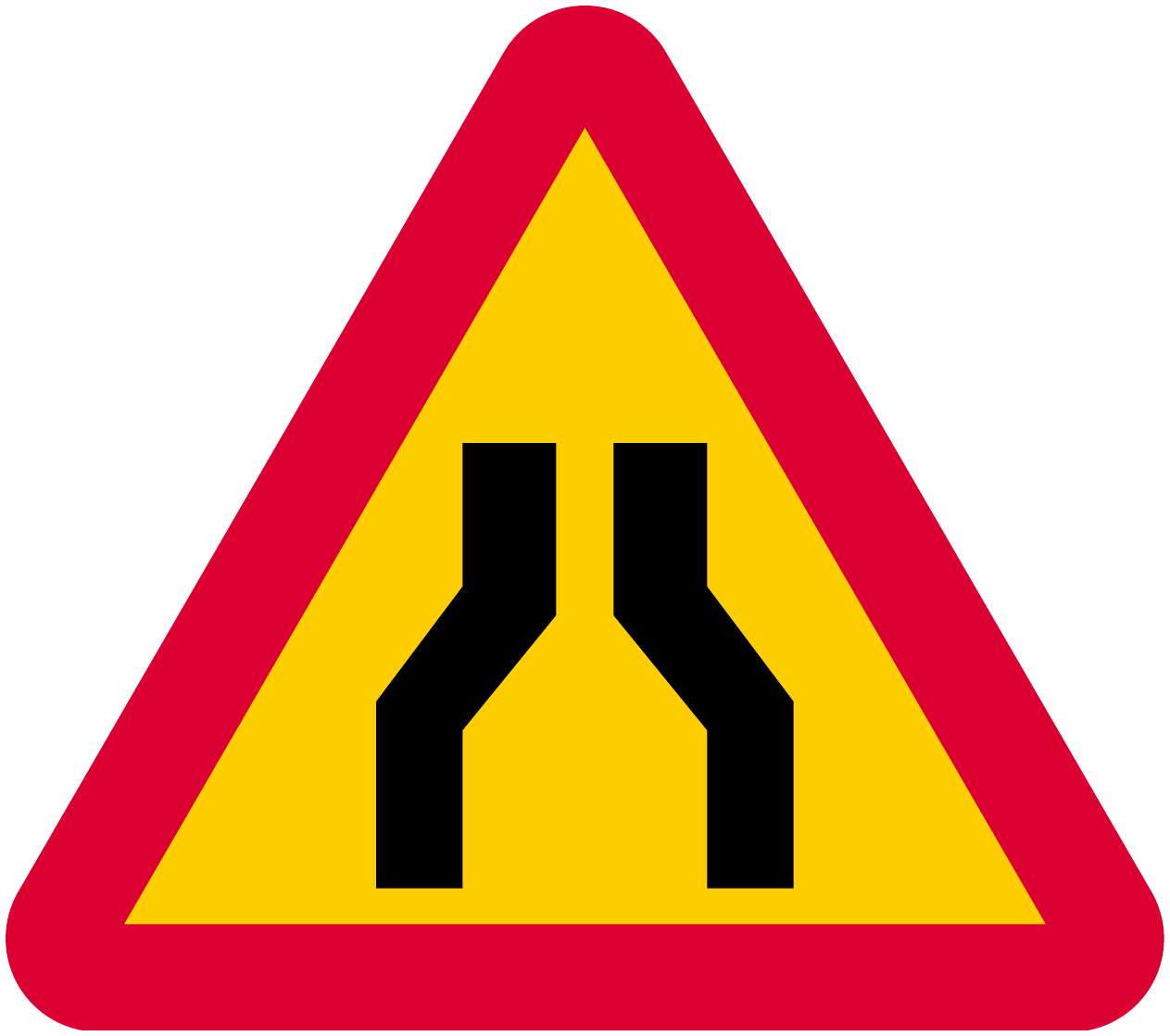
The sign indicates that the road or carriageway narrows. The symbol is specific to the conditions at the location.
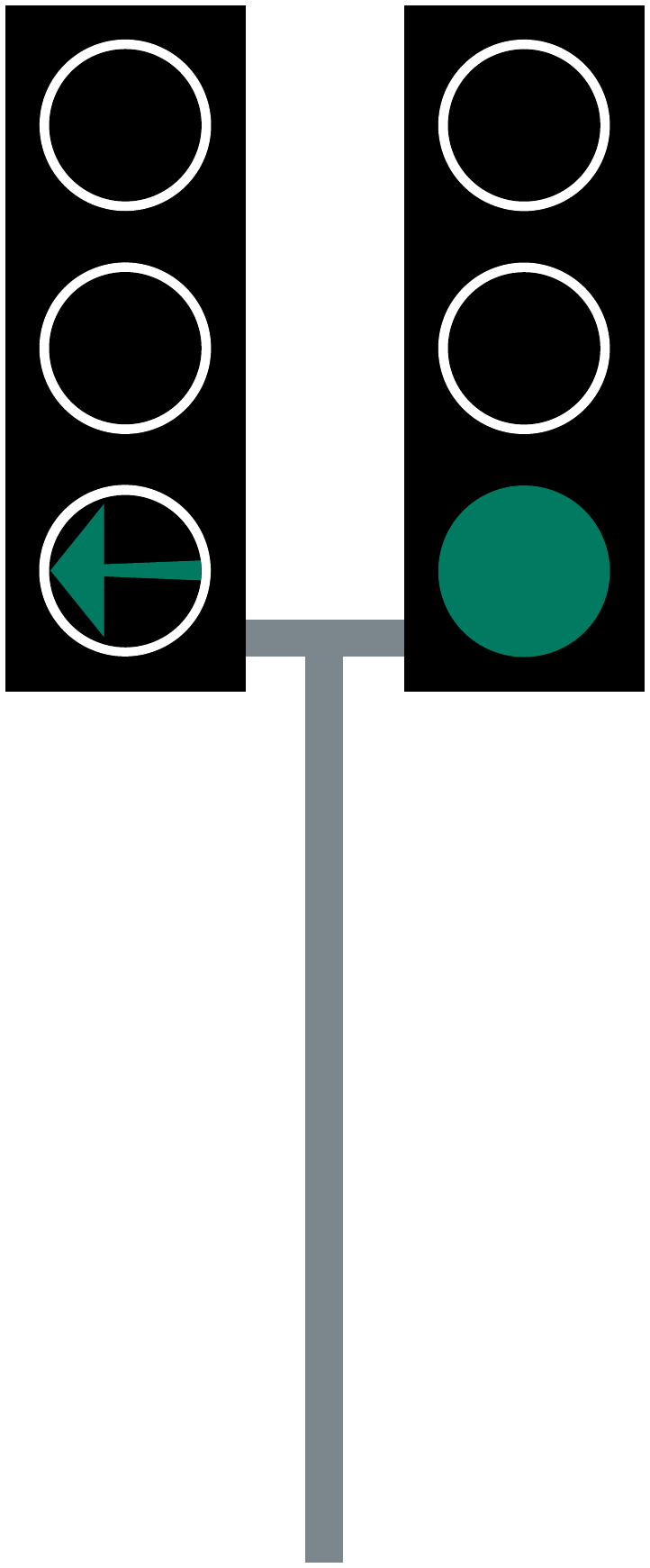
When you get a green light in the form of an arrow, all other road users intersecting your path have a red light.STR’s Vägmärken & vägmarkeringar [Road Signs & Markings], 6th Edition, page 26
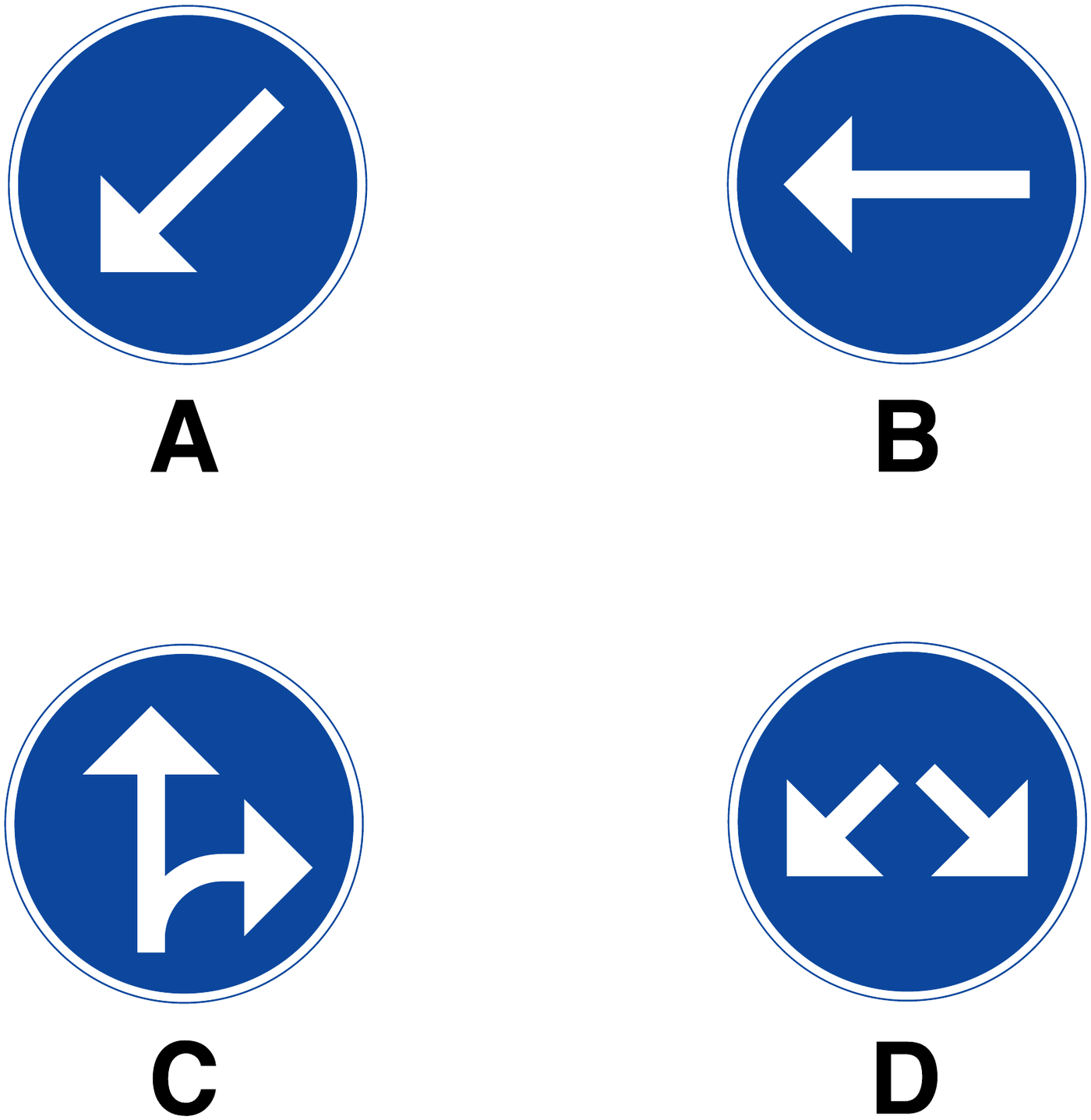
Mnemonic rule:
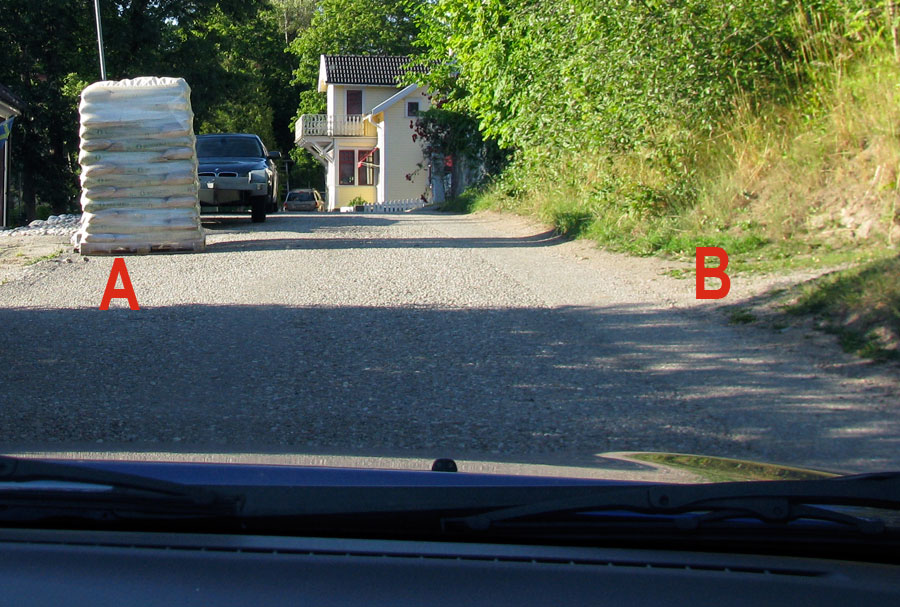
If there is an obstruction when approaching an oncoming car, the driver who has the obstruction on their side shall stop, if this is necessary for the oncoming car to be able to pass.Swedish Road Traffic Ordinance
Being overly nice does not benefit anyone here; it just causes confusion since the black car has already stopped to let you past according to the rules.
All children under 135 centimetres tall shall be put in a special protection device in the car, i.e. a baby car seat, a child safety seat, a booster seat or booster cushion.Swedish Transport Agency
Note that there is a nearly identical question but with the airbag.
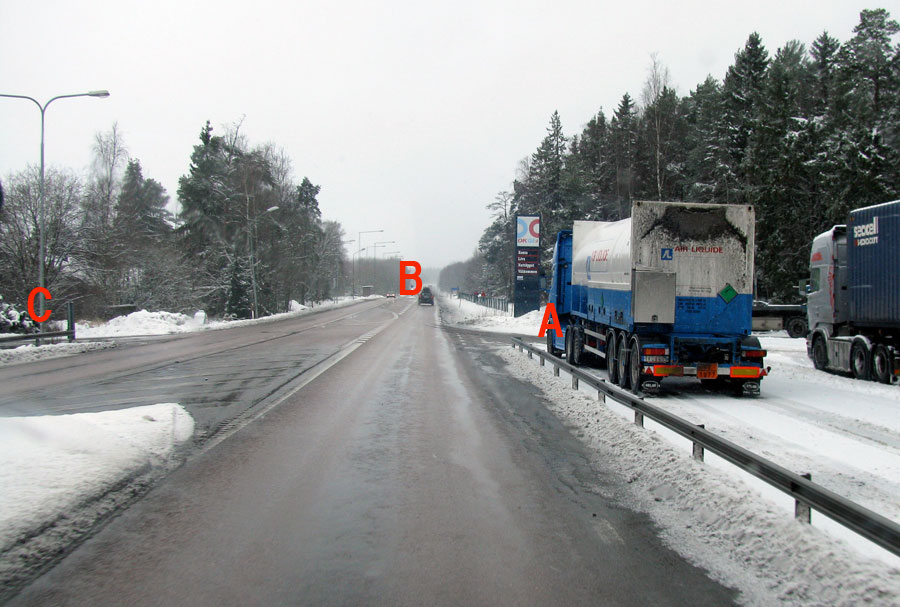
Review of the options
Driving Licence Book (19th Edition, page 84): “If you increase your average speed by 10 km/h, the time gain per 10 km will be:
– approximately 1 minute at speeds under 90 km/h
– approximately ½ minute at speeds over 90 km/h”
In all likelihood, you will not need to know the following mathematical calculations for the real test. It is enough to know that the time gain is minimal.
Method 1
Colour codes for the figures (easier to keep track of them)
Original speed 100 km/h
New speed 110 km/h
Minutes per hour (since the speed is km/h, kilometres per hour) 60 minutes
Number of kilometres 10 km
We first calculate how many minutes it takes to travel 1 km at both speeds:
It is therefore takes slightly less time with the higher speed. The difference is:
However, the question is how much time you gain per 10 km, not per km. Therefore, recalculate the time gain per 10 km:
Now it is really done. It is however easier to understand if the answer is recalculated to seconds:
Method 2
Colour codes for the figures (easier to keep track of them)
Original speed 100 km/h
New speed 110 km/h
Distance 10 km = 10,000 metres
Fixed conversion rate km/h to m/s 3.6 times
Formula for calculation of time:
For the formula to work requires us to use metres instead of 10 km and metres per second (m/s) instead of kilometres an hour (km/h). The speeds are therefore recalculated to m/s:
Only now can we use the formula Distance / speed = time:
We can then work out the time difference between both speeds:
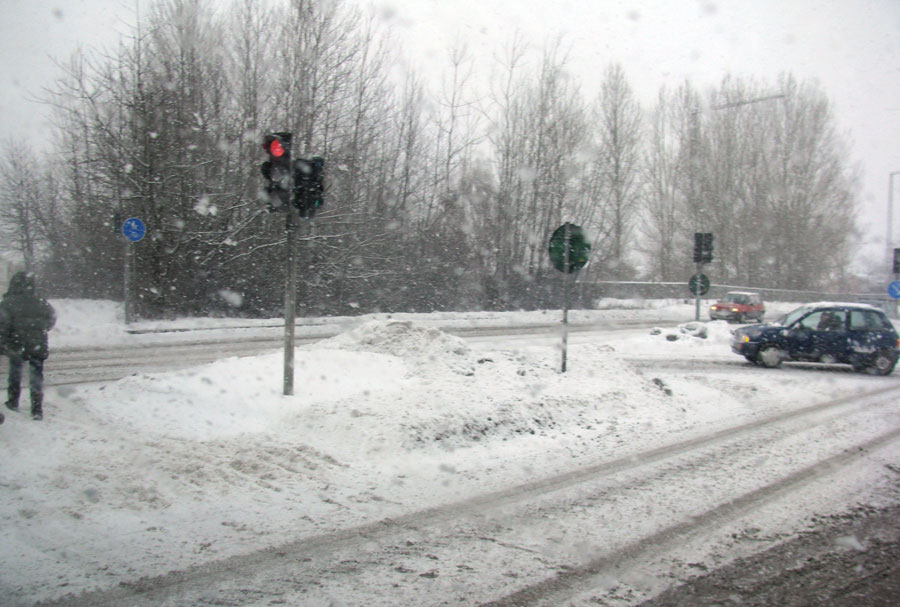
“A driver who after turning in a junction is passing a guarded pedestrian crossing shall drive at a low speed and is obliged to give way to pedestrians who have correctly stepped out on the pedestrian crossing or who are about to do so.” (Swedish Road Traffic Ordinance) “Correctly stepped out on” = when the light was green.
An ‘LGF’ sign […] means that the vehicle is constructed for a maximum speed of 30, 40 or 45 km/hDriving Licence Book, 19th Edition, page 89
LGF = Långsamtgående fordon (SMV = slow-moving vehicle)
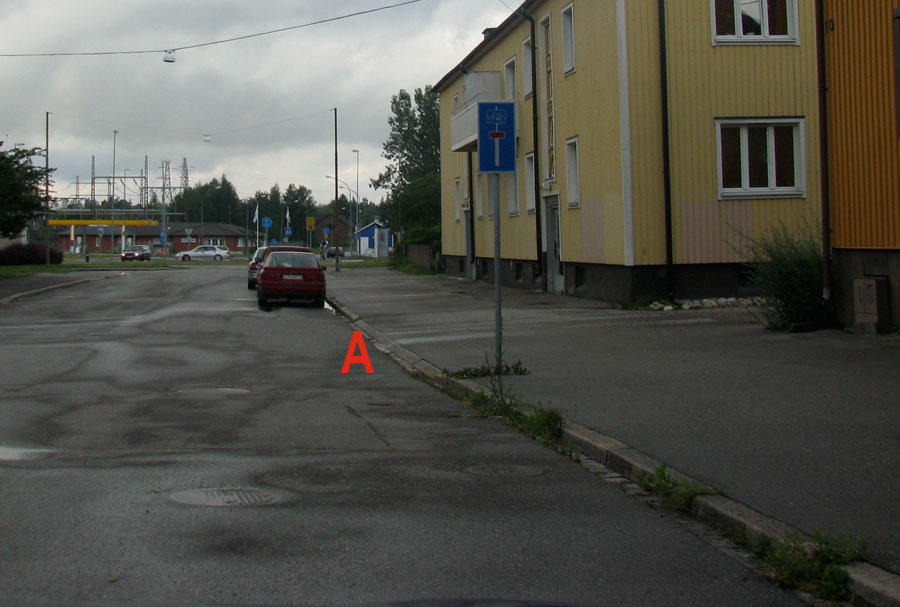
The clearest sign that it is an exit is that the kerbstone is angled to make it easier for vehicles to drive up.
A vehicle may not be parked [...] on a road in front of the exit to a property or so that vehicle traffic to or from the property is significantly obstructed.Swedish Road Traffic Ordinance
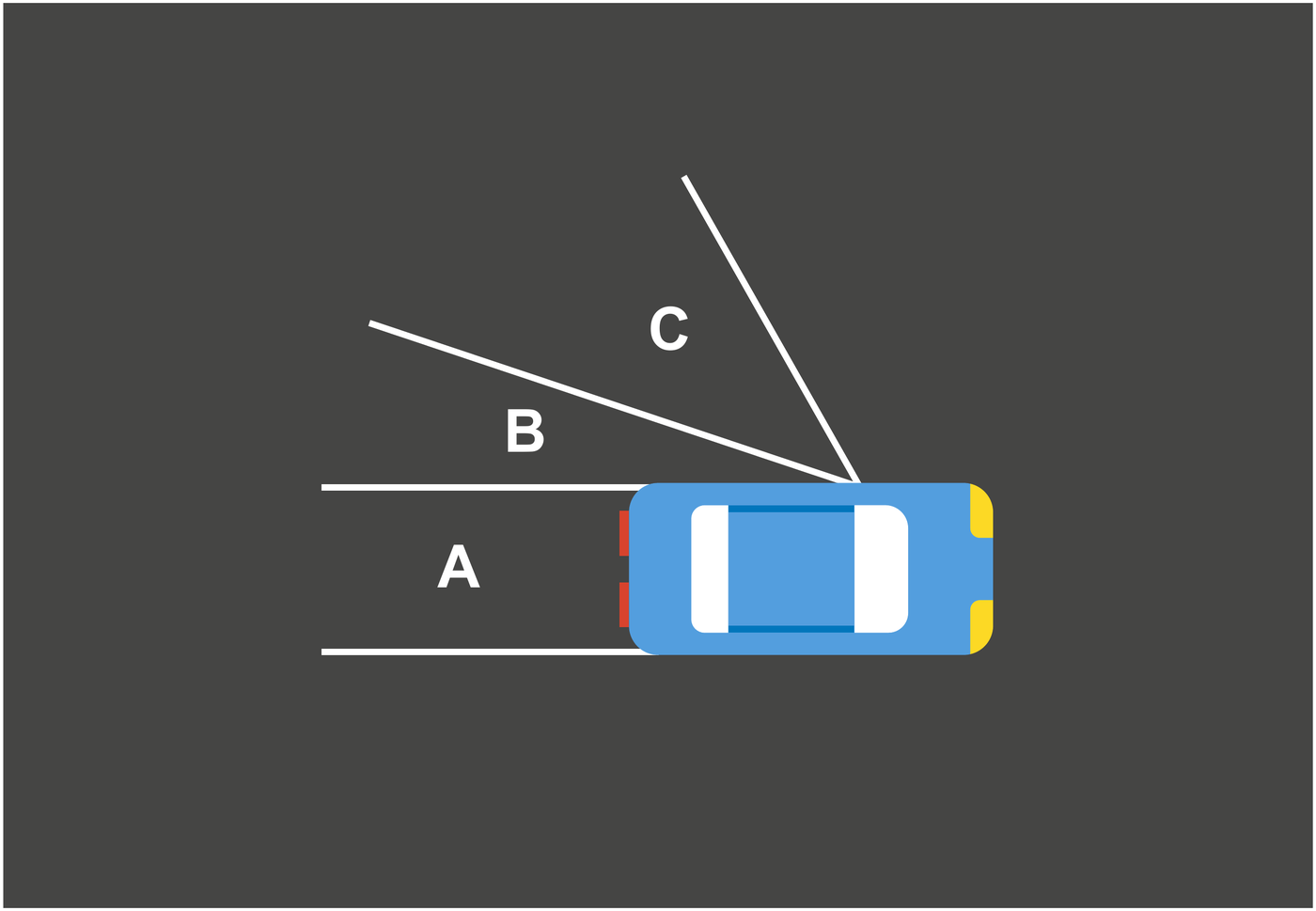
A is covered by the rear-view mirror while B is covered by the side mirror.
[…] requirement for winter tyres […] during the period 1 December–31 March, in case of winter road conditionsSwedish Transport Agency
Tunnel vision means that the visual field becomes narrower. Nationalencyklopedin: “Binocular vision, tunnel vision, medical term, concentric constriction of the eye’s visual field with the remaining sight being centred in the field of vision.”
Simplified picture of tunnel vision:
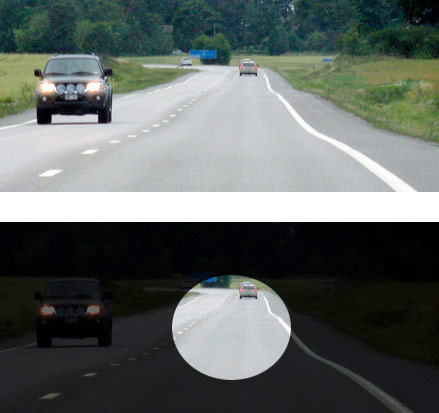
Going through a tunnel could be called “tunnel vision”, but the medical meaning is significantly more common and established, i.e. the one you should use.
Tunnel vision can “arise when fatigue, alcohol or stress affect your vision.” (Driving Licence Book, 19th Edition, page 83).
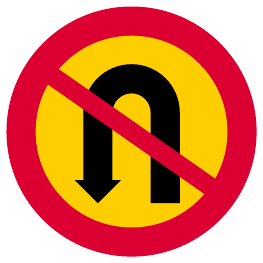
U-turns on priority roads are not generally prohibited. Very many roads are priority roads, which would mean that U-turns would be often prohibited. If they are prohibited, this is indicated with a prohibitory sign:
Stopping is prohibited in tunnels. A bridge can be very wide and visibility may be as good as on a normal road. For this reason, there is no general prohibition against stopping on a bridge.
The service brake is the primary brake of the vehicle (i.e. the one that is activated by pressing on the brake pedal of a car). The fact that this brake is not working is a very serious fault and it would be extremely dangerous to drive without the service brake. If this is discovered during a roadworthiness test, it leads to an immediate driving ban.


The signs indicate that the vehicle may only drive past the sign where the arrow is pointing or, in the case of two arrows, where the arrows are indicating. The symbol is specific to the conditions at the location.
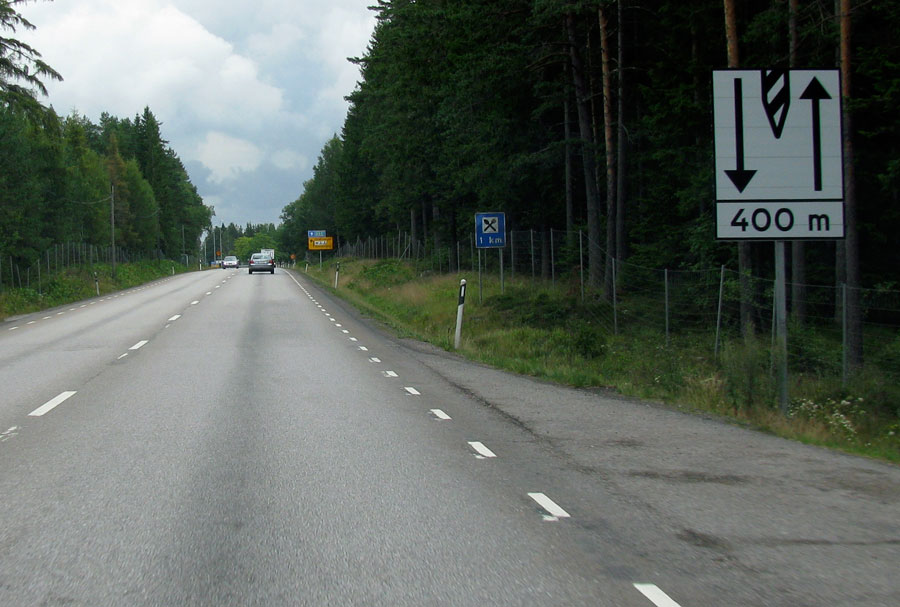
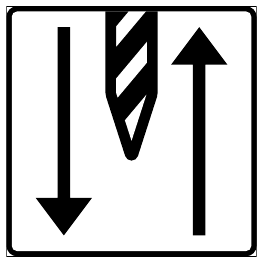
The sign indicates the direction of traffic flow in lanes. The sign is specific to the conditions at the location. Symbols for vehicle type, road number or physical boundary between opposite lanes may be incorporated in the sign.
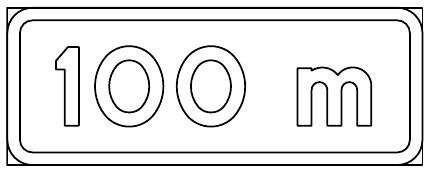
The panel indicates the distance to that which the sign relates to.
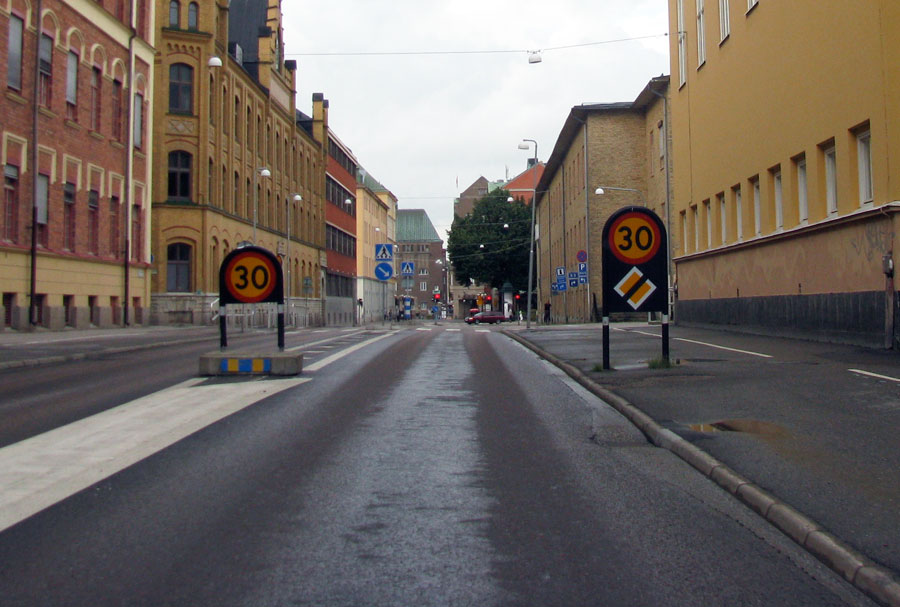
The important sign is:
This means that the right-hand rule is to be applied in junctions without traffic signals and other instructions.
It is easier to scrape the windows with the car running. However, it is less environmentally friendly, as the car will be idling (and in most municipalities, it is illegal to idle for more than a few minutes).
There are indications that the environment takes priority over your convenience and time in the actual test.
If you need to scrape the windows, do it before you start the car. The car will only really warm up once you start driving.Swedish Transport Administration
If for example Volvo builds a car that they say can/may be driven at a maximum speed of 200 km/h, that is the maximum speed capacity. If you tune up the engine to do 230 km/h, the maximum speed capacity is still 200 km/h, as the other parts of the car are not made to handle higher speeds than that.
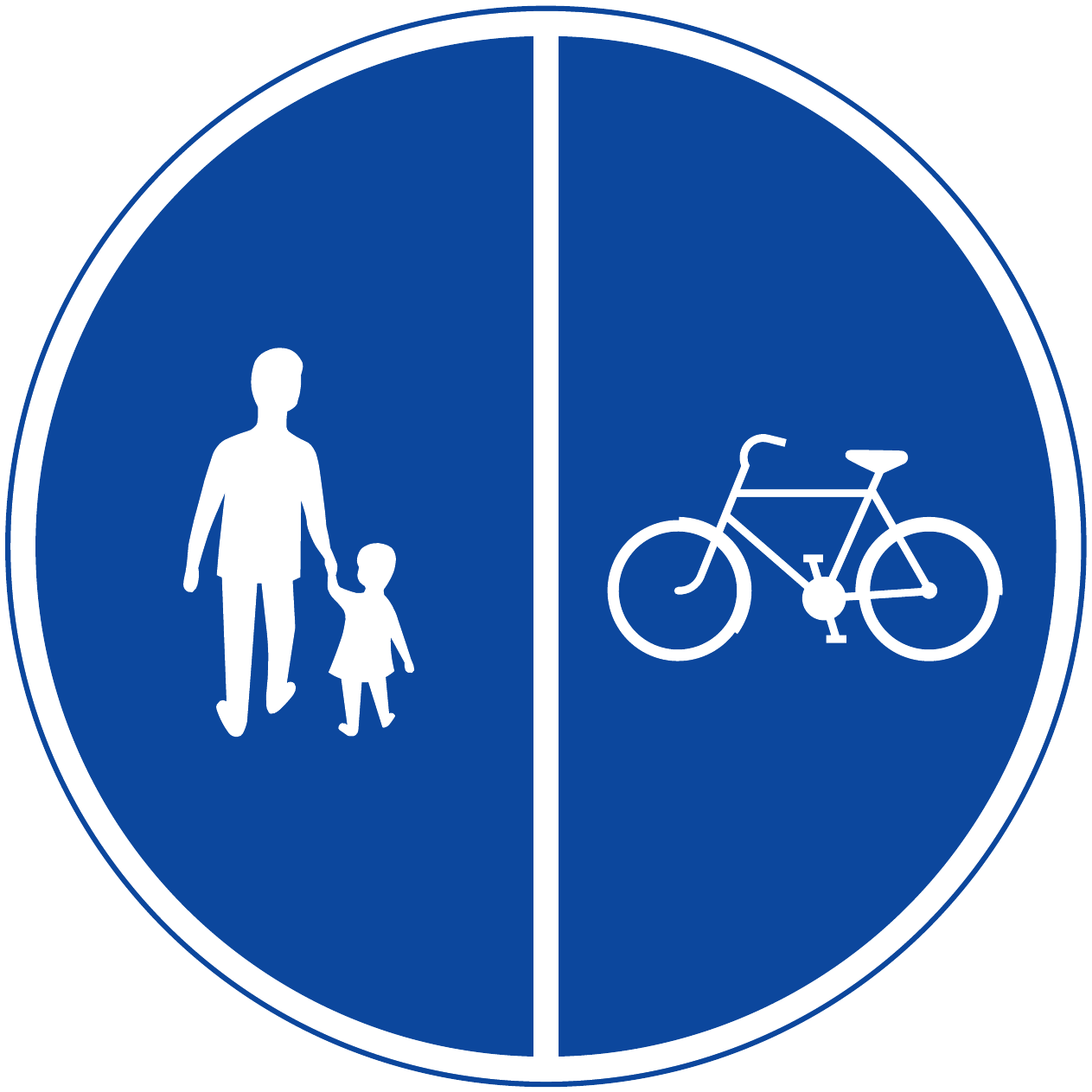
The sign indicates tracks separated by road marking, median strip or similar into one lane for pedestrians and another for cyclists and moped drivers. The placement of the symbols on the sign shows which part of the track is intended for which type of traffic. If class II mopeds may not be driven on the track, this is indicated on an additional panel.
On bicycle paths, cyclists and drivers of class II mopeds must be given right of way by other vehicle drivers.Swedish Road Traffic Ordinance
If you meet any pedestrians on the road, you should keep your full beams on. It is important that you can see where they are and how many of them there are. The risk of dazzling them is small, as they have the option of averting their eyes.Driving Licence Book, 19th Edition, page 161
Note that you are permitted to dim your full beams, but to reiterate, it is not recommended.
A left turn off a country road is a classic “hazardous situation”. Many things can go wrong.
One of the most complicated traffic situations is turning left off a country road. Many, often serious traffic accidents occur as a result of incorrect assessments, or because cooperation between the car drivers is inadequate.Driving Licence Book, 19th Edition, page 95
The hazardous left turnDu och jag i trafiken [You and me in traffic], 28th Edition, page 255
Review of the options
No questions to show here.