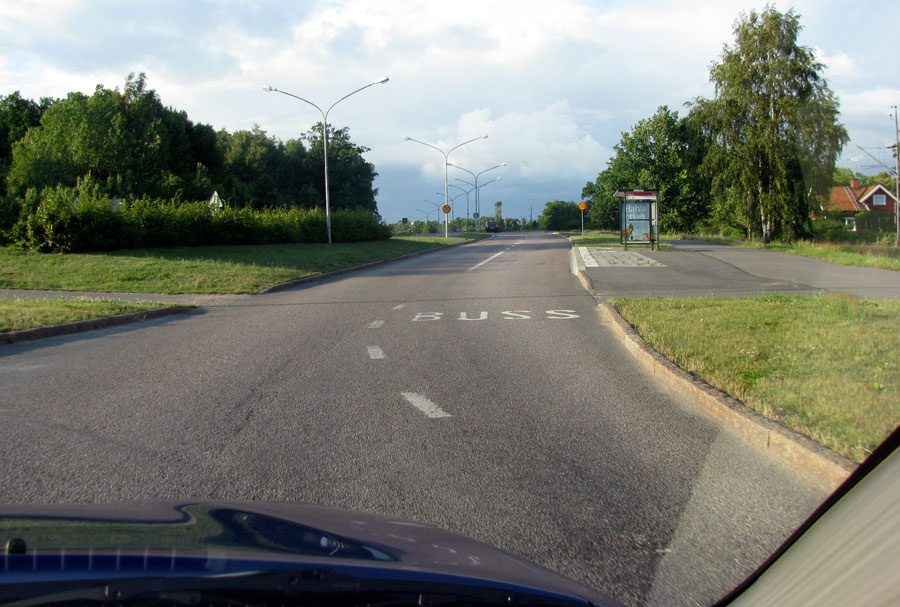
Both lanes in the picture are for traffic in your direction. Which lane should you as a private car driver choose?
Explanation
BusM28
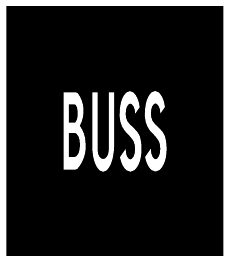
The road marking indicates that the lane is intended for vehicles operating a regular service etc.
The real test has 70 questions in 50 minutes. You need 56 correct (80%) to pass.
The road marking indicates that the lane is intended for vehicles operating a regular service etc.
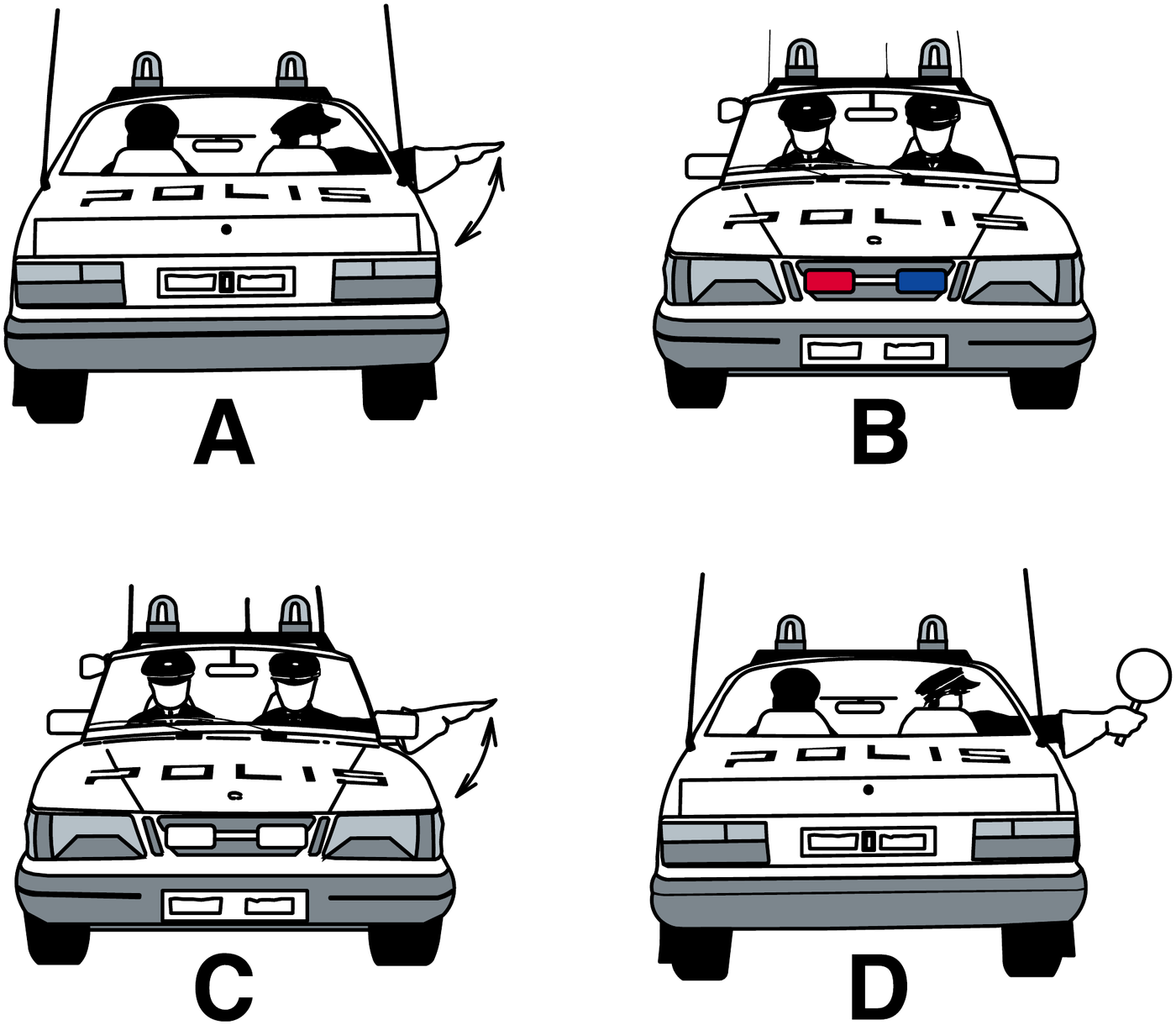
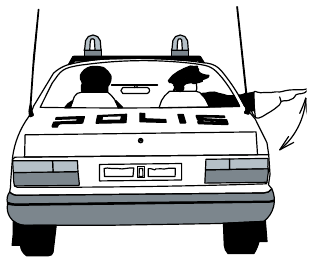
The signal indicates that the road user whom the officer is facing must reduce their speed. When it is dark and visibility is poor, the signal may be highlighted with a white or amber light or a reflective device that reflects white or amber light.
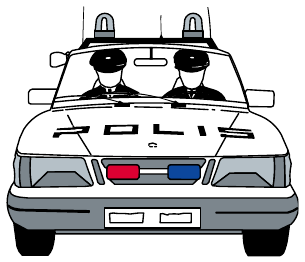
The signal indicates that the driver of the vehicle in front of the police vehicle is to pull over to the side of the road and stop. The signal is given with alternately flashing blue and red lights.
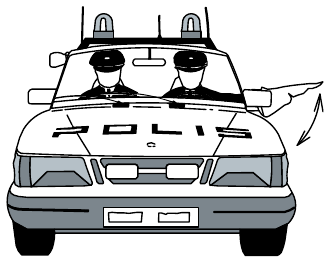
The signal indicates that road users coming towards the officer must reduce their speed. When it is dark and visibility is poor, the signal may be highlighted with a white or amber light or a reflective device that reflects white or amber light.
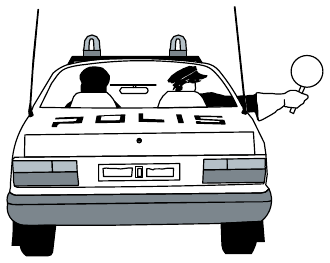
The signal indicates that the driver of the vehicle behind the police vehicle is to pull over to the side of the road and stop. The signal may be given using a stop paddle.
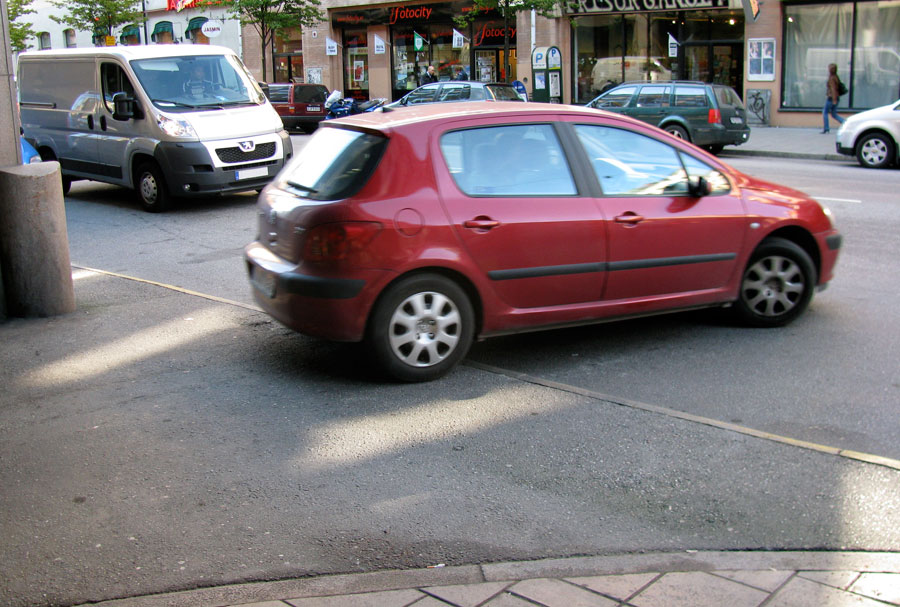
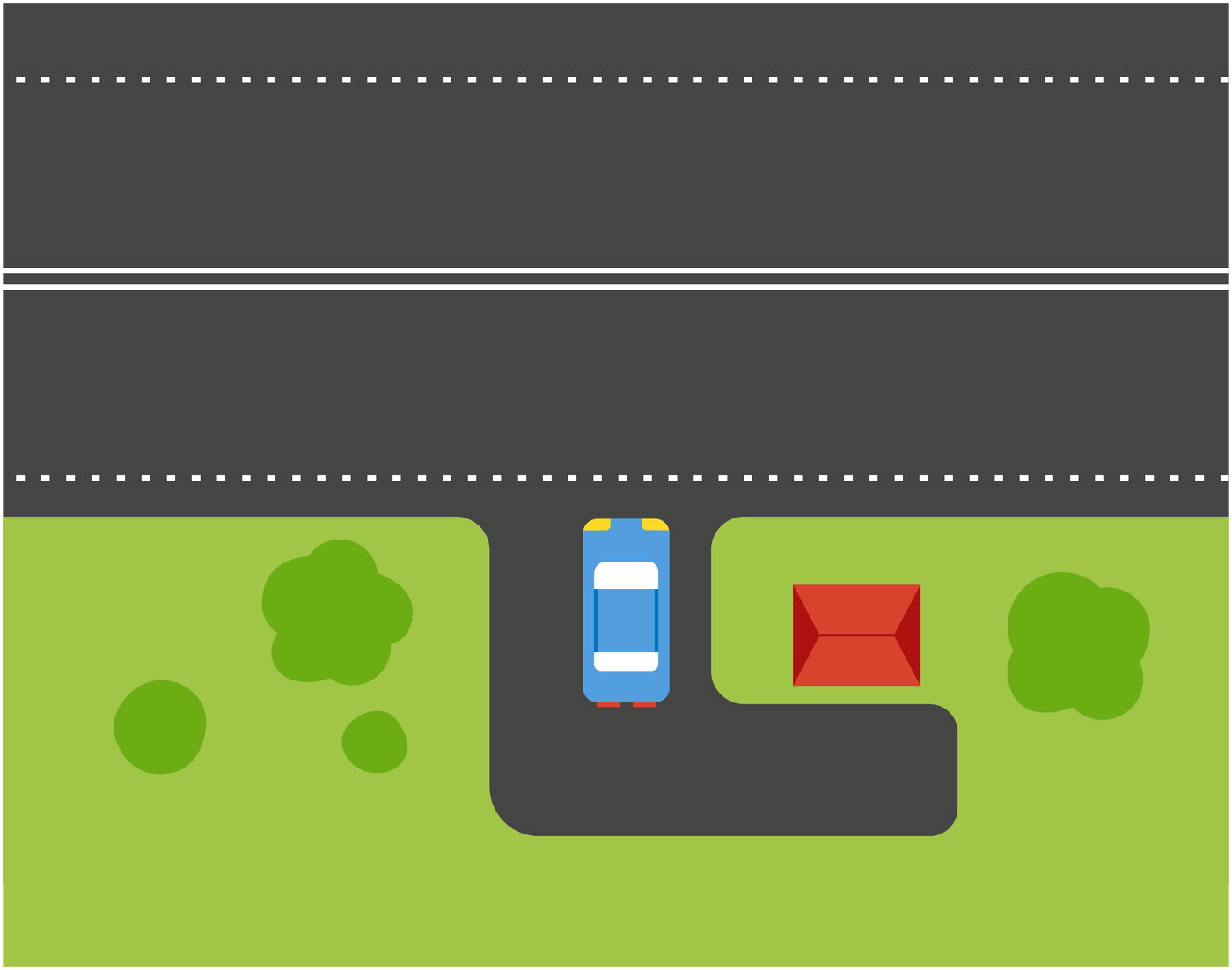
The exit rule: “A driver is also obliged to give way to every vehicle whose path intersects theirs when the driver is entering a road [...] from a parking space, a property, a petrol station or from a similar area adjacent to the road.” (Swedish Road Traffic Ordinance)
There is no miracle cure to speed up your metabolism, time is the decisive factor here. Your performance can be significantly impaired the next day, even if your blood alcohol is zero. That effect can last for quite a while and it is therefore wise to refrain from driving the day after drinking.Swedish Transport Administration
The most common type of accident caused by tiredness is a single vehicle accidentSwedish Transport Agency
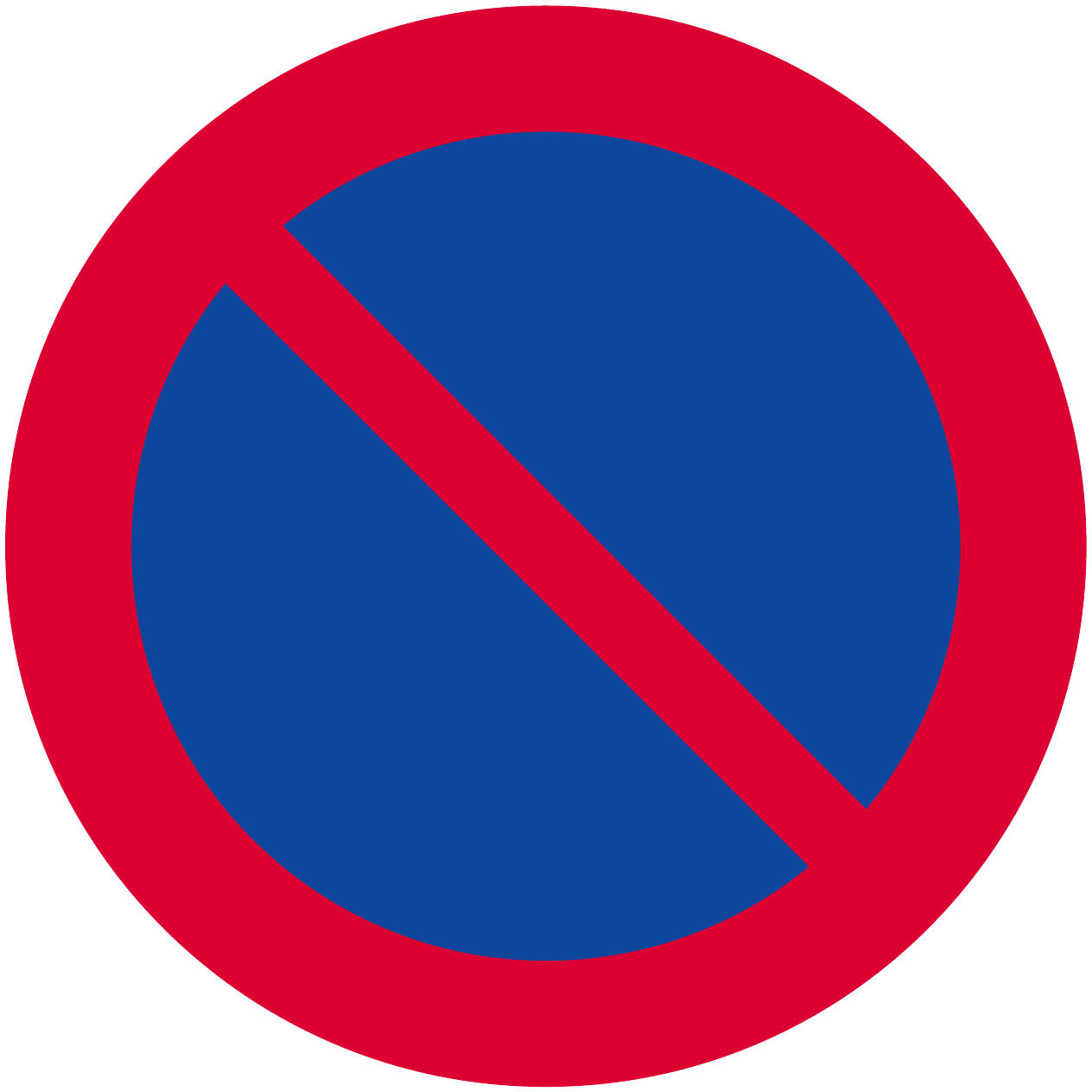
The maximum speed with a caravan: “80”. (Swedish Transport Agency)
The fact that the speed is limited to a maximum 80 km/h is due to it not being considered safe to drive any faster. As soon as the vehicle is towing something, it handles differently (mostly in a negative way), for example it has a longer braking distance, a greater risk of instability in case of rough winds etc.
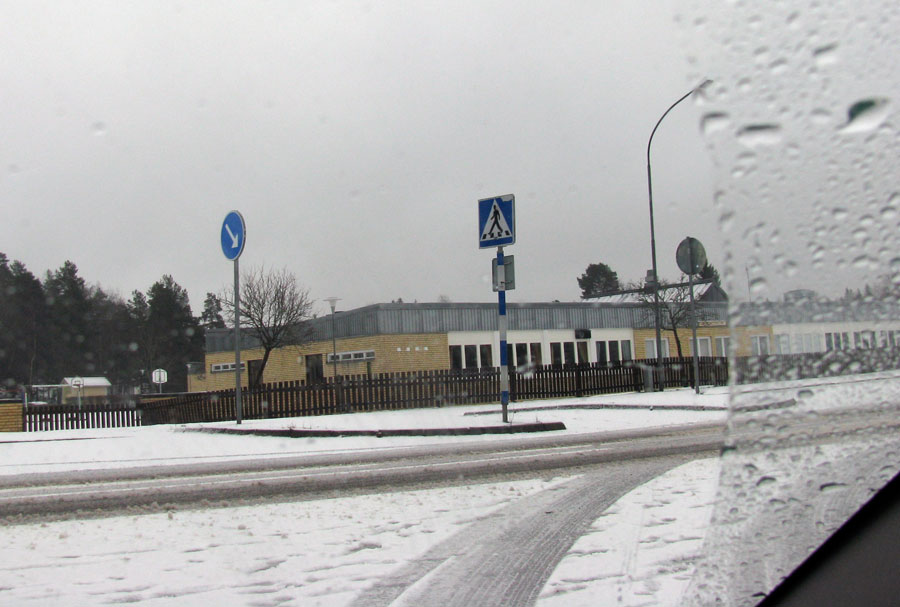
Since it is plus degrees and slashing under the car, slush is the most likely weather condition.
In the event of sudden icy conditions, it does not splash under the car since the surface freezes to ice.
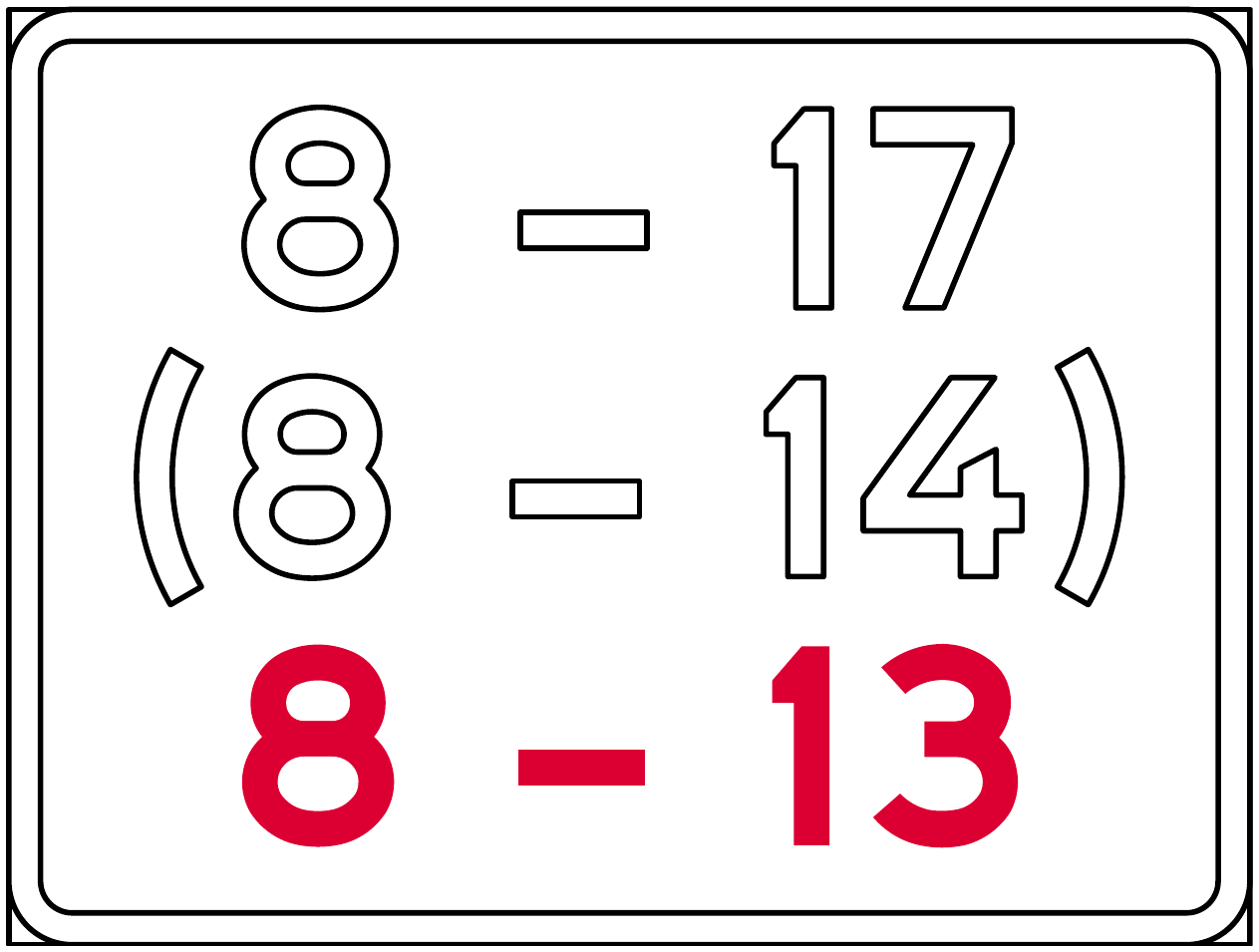
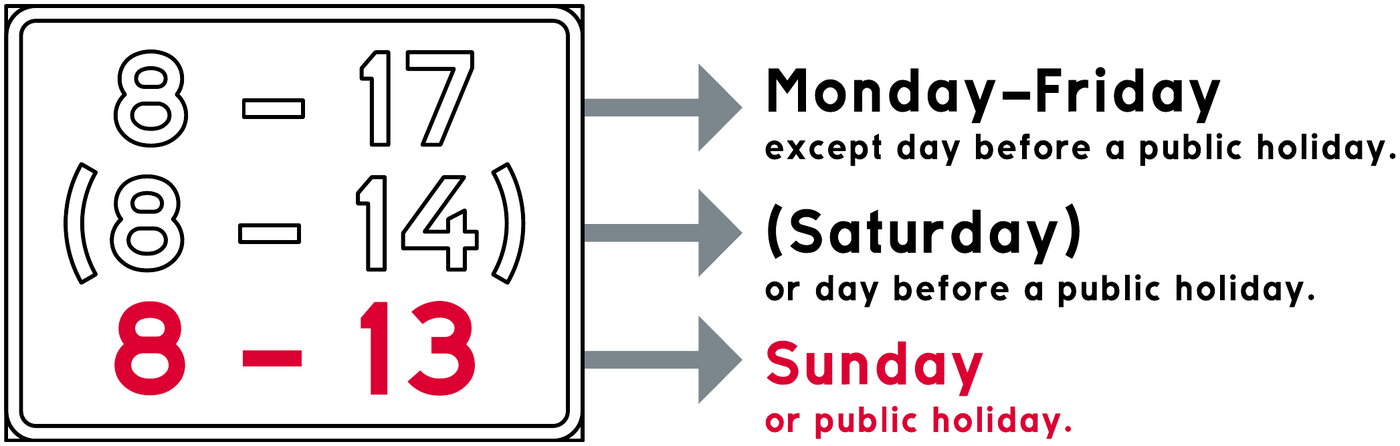
The panel indicates when the directions on the road sign applies. If times are used in combination with other conditions, the panel also indicates when these conditions apply. Black or white figures without brackets refer to weekdays except for weekdays before Sundays and public holidays. Black or white figures within brackets refer to weekdays before Sundays and public holidays. Red figures refer to Sundays and public holidays. If the time indication extends past midnight, the time period applies after midnight the following day. If a certain date or day of the week is indicated, the regulation applies to this day regardless of whether the day is a weekday, Sunday or public holidays.
Nationalencyklopedin: “Optical illusion, incorrect visual perception.”
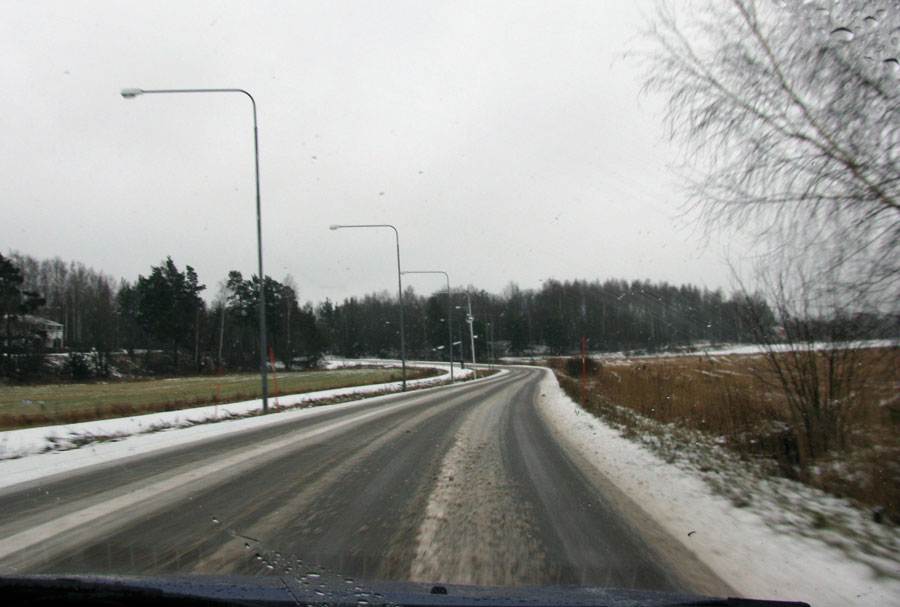
The slush may be dangerous and there is a risk of slushplaning – the same thing as aquaplaning, but with slush instead of water.
If the accident has only resulted in property damage and the involved party flees, the penalty is day-fines. It may now also be a matter of revoking their licence.Driving Licence Book, 19th Edition, page 255
Revoking a driving licence “is a traffic safety measure and not a penalty” (MHF). Also note how the Driving Licence Book avoids describing a revoked driving licence as a penalty.
Simplified comparisons:
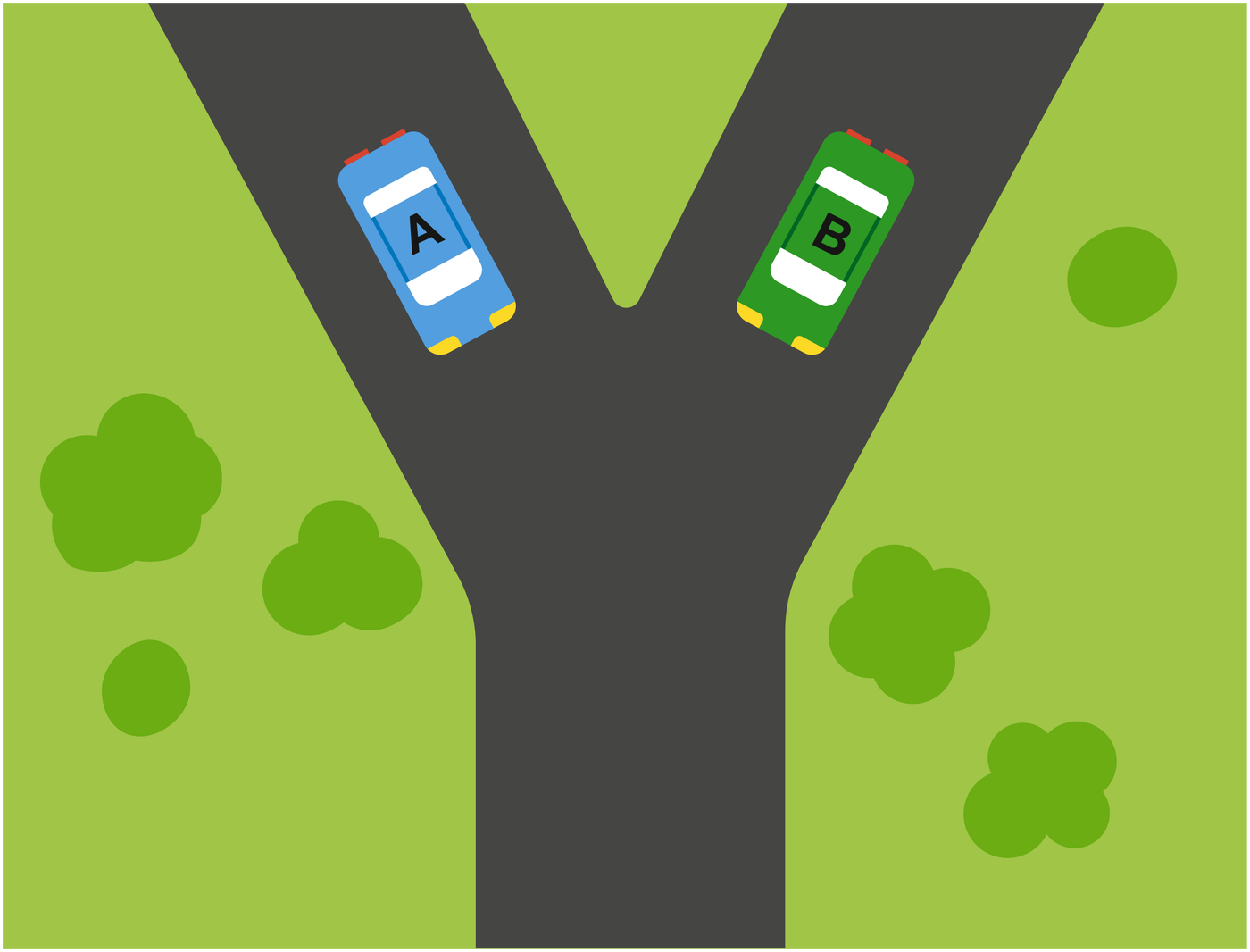
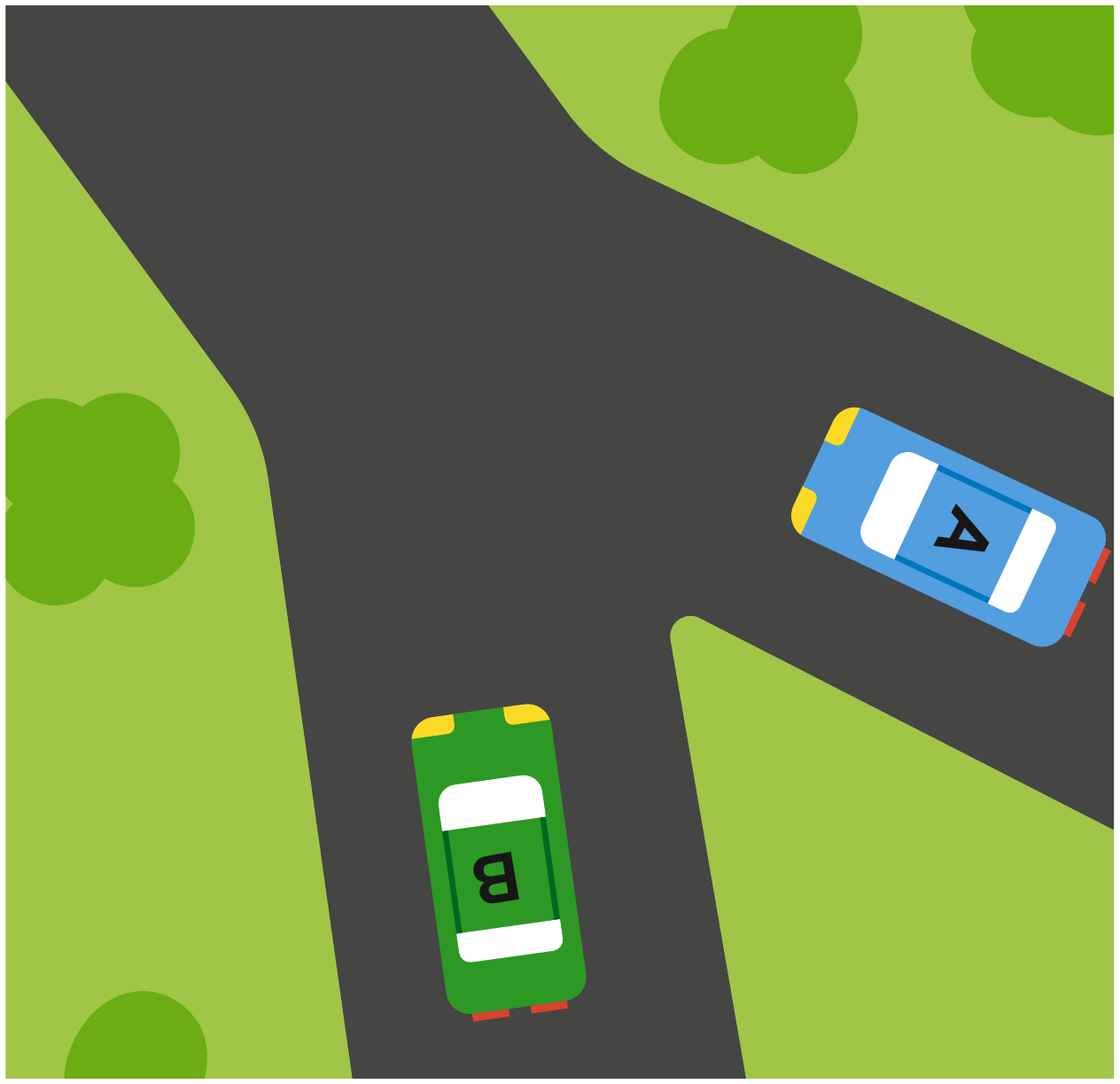
The roads do not have to be at a 90° angle for the right-hand rule to be applicable.
Below is a rotated version of the image, which hopefully makes it easier to see who is coming from the right.
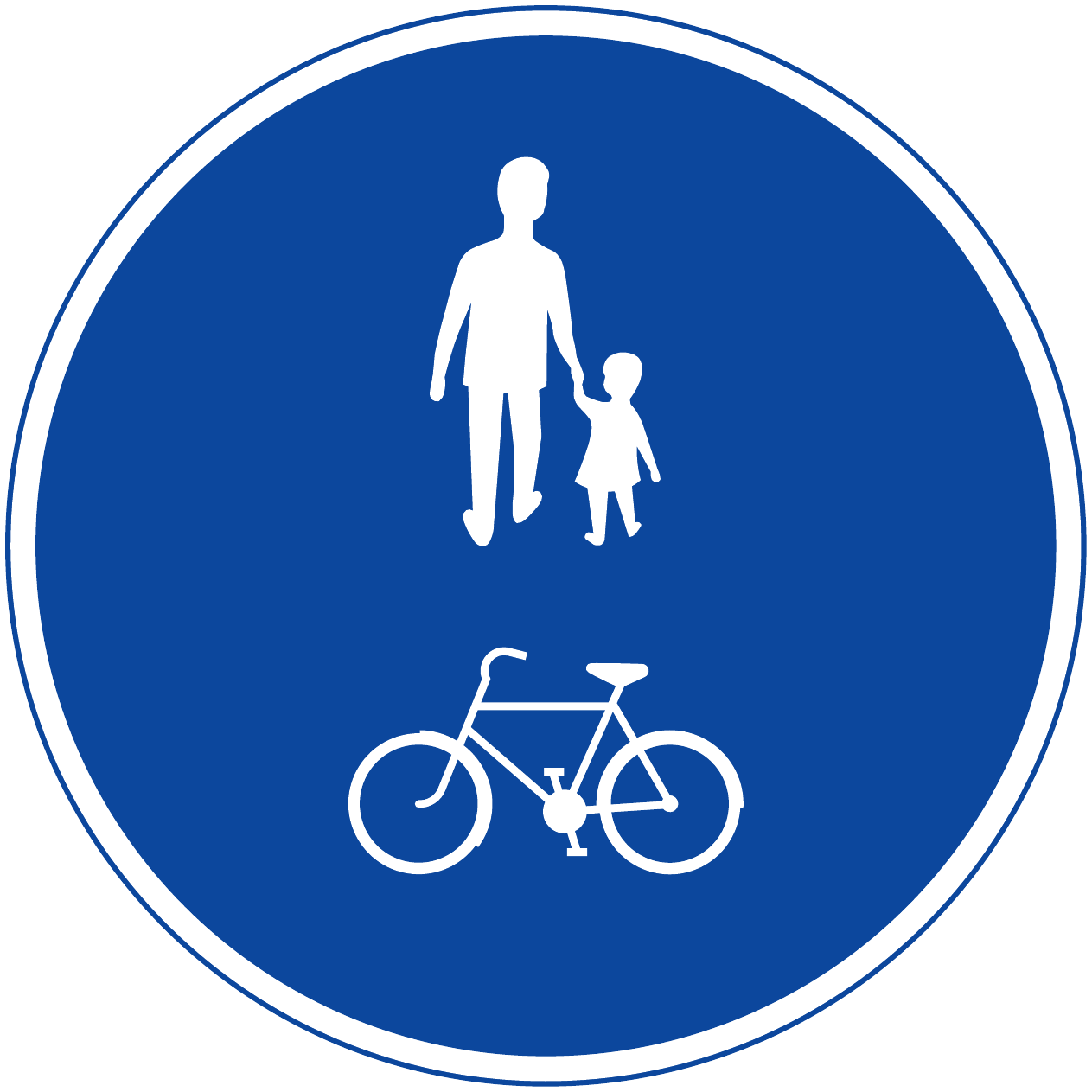
The sign indicates a common track for pedestrians, cyclists and moped drivers. If class II mopeds may not be driven on the track, this is indicated on an additional panel.
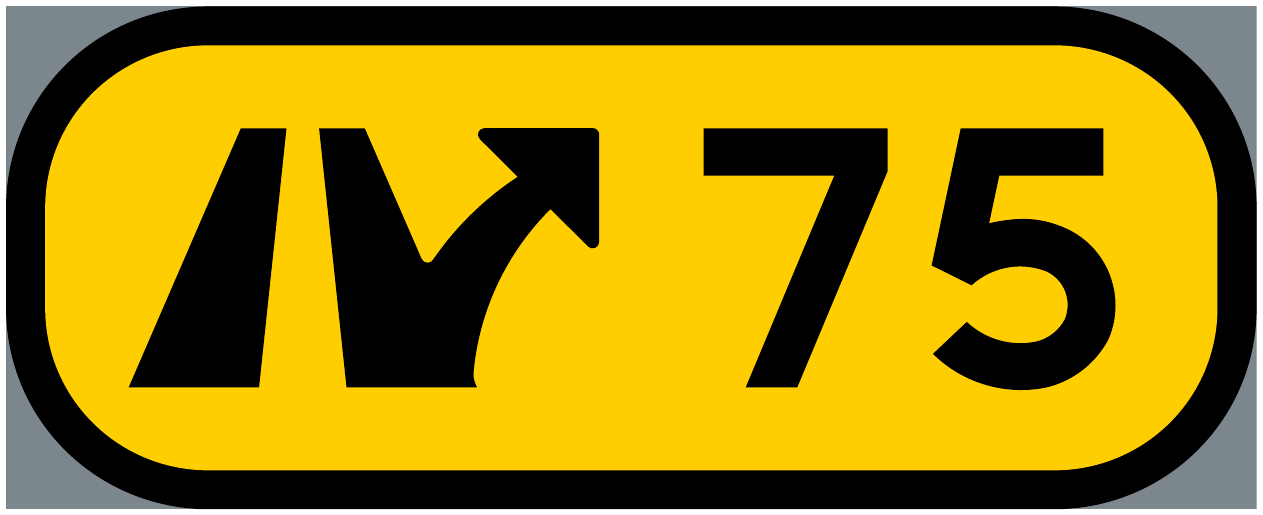
The sign indicates the number of the interchange. The sign may be supplemented with the exit road's designation. No other colour may be used.
Interchange number is the same as exit road number.
Example of practical use: You need to call 112 because of an accident. You know you are driving on E20, but not much more. However, if you see the interchange number, the emergency vehicles get a more exact position and can thus arrive on the scene quicker.
According to the curriculum for a category B licence, you must display “good judgement when interacting with other road users.” (Swedish Transport Administration)
Even though you are in the right, it is hardly a sign of good judgement to try to force the oncoming vehicle to reverse. It is easiest and safest for everyone if you stop and wait.
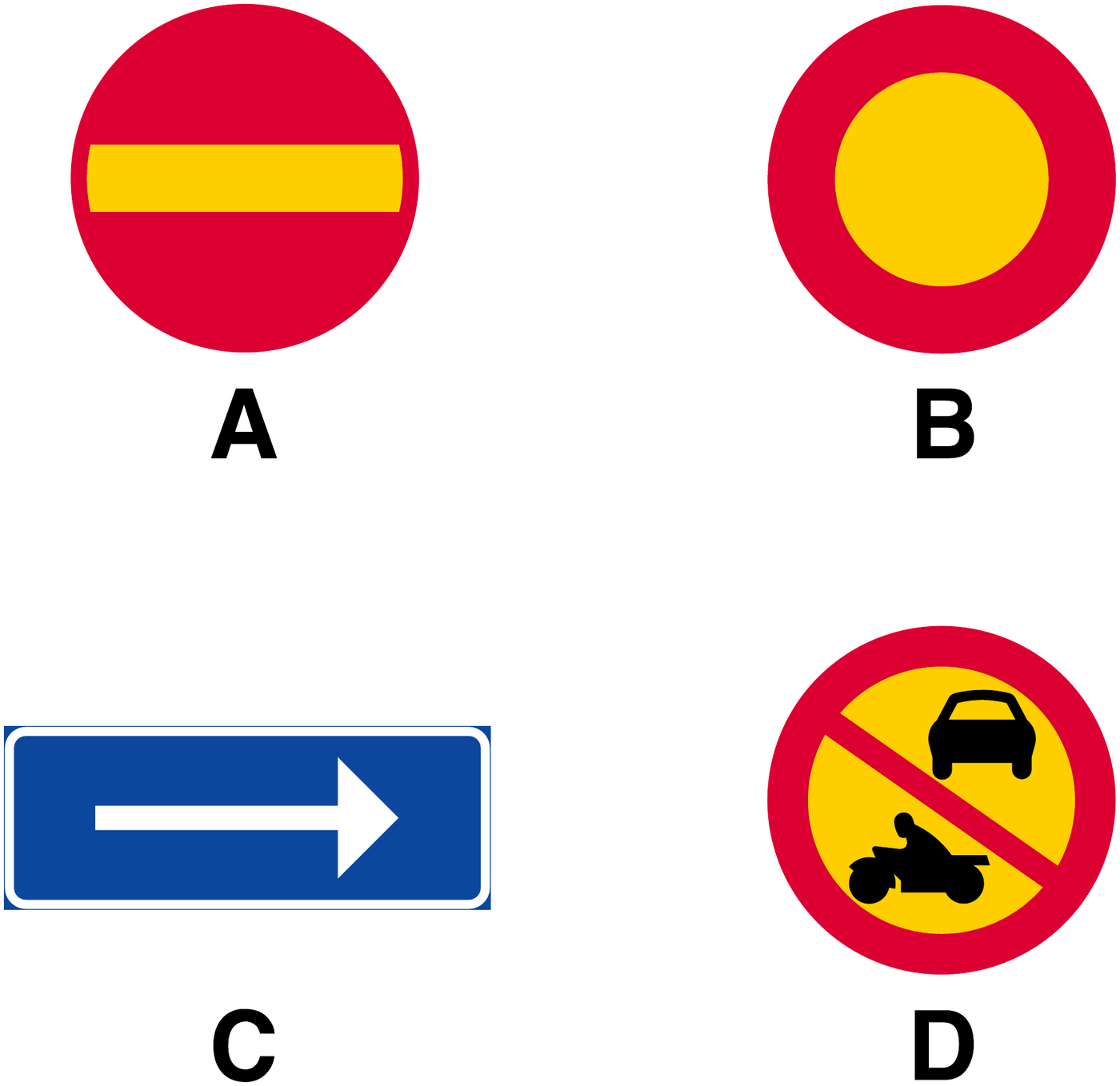
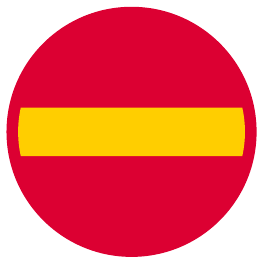

The sign refers to traffic with vehicles in both directions.
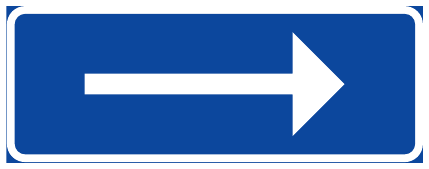
The sign indicates that vehicle traffic on the road is one-way in the direction of the arrow. An arrow pointing up indicates that the traffic is one-way in a forward direction.
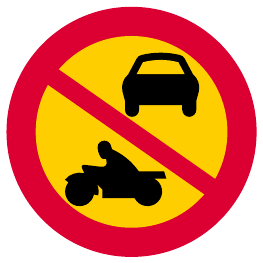
If the prohibition also applies to class II mopeds, this is indicated on an additional panel.
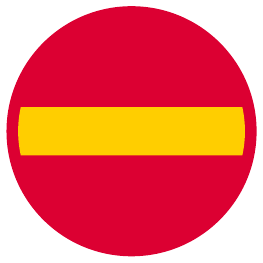

The sign refers to traffic with vehicles in both directions.
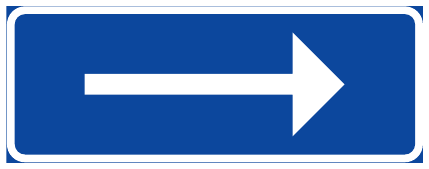
The sign indicates that vehicle traffic on the road is one-way in the direction of the arrow. An arrow pointing up indicates that the traffic is one-way in a forward direction.
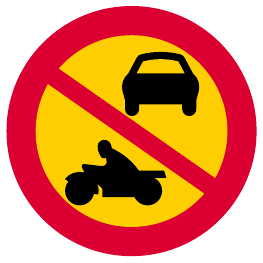
If the prohibition also applies to class II mopeds, this is indicated on an additional panel.
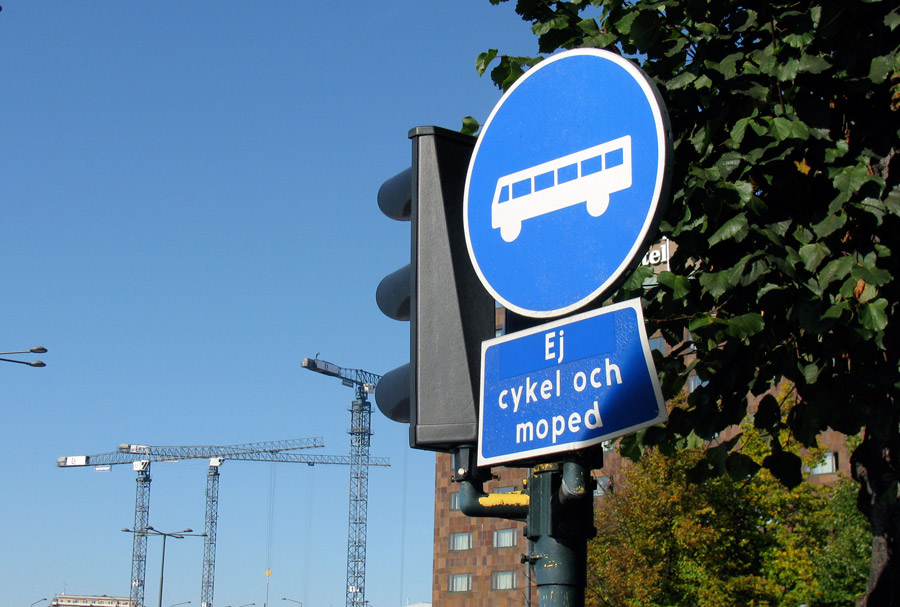
”Ej cykel och moped” = No bicycle and moped
The public transport lane is for vehicles operating a regular service; however, “cyclists and moped drivers may use the lane.” (Du och jag i trafiken [You and me in traffic], 28th Edition, page 118)
In other words, the combination of signs is to be interpreted like this: Cyclists and moped drivers are normally allowed in the public transport lane, but in this particular case, the additional panel prohibits bicycles and mopeds. In other words, there is a supplementation to the regular significance.
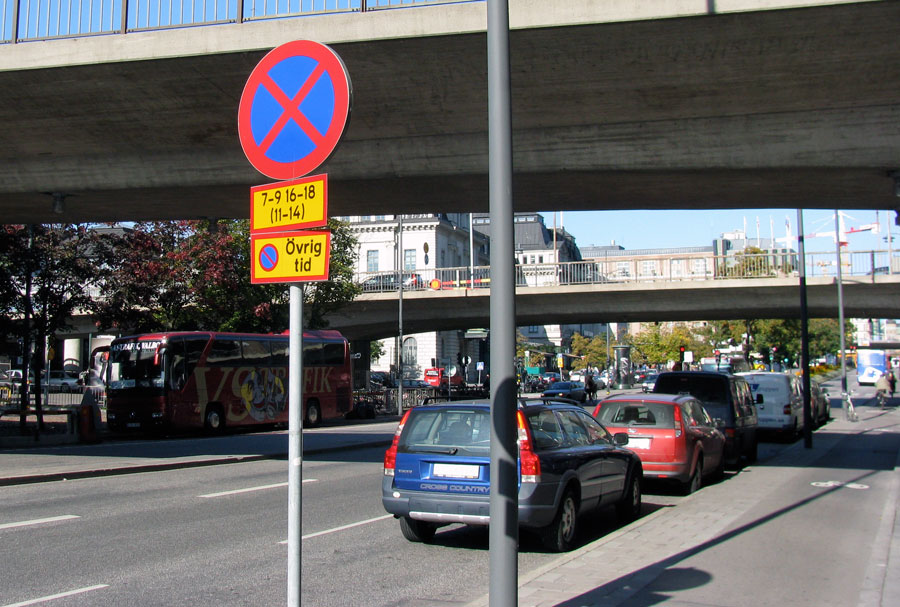
The stopping prohibition only applies until 14 on Saturdays.
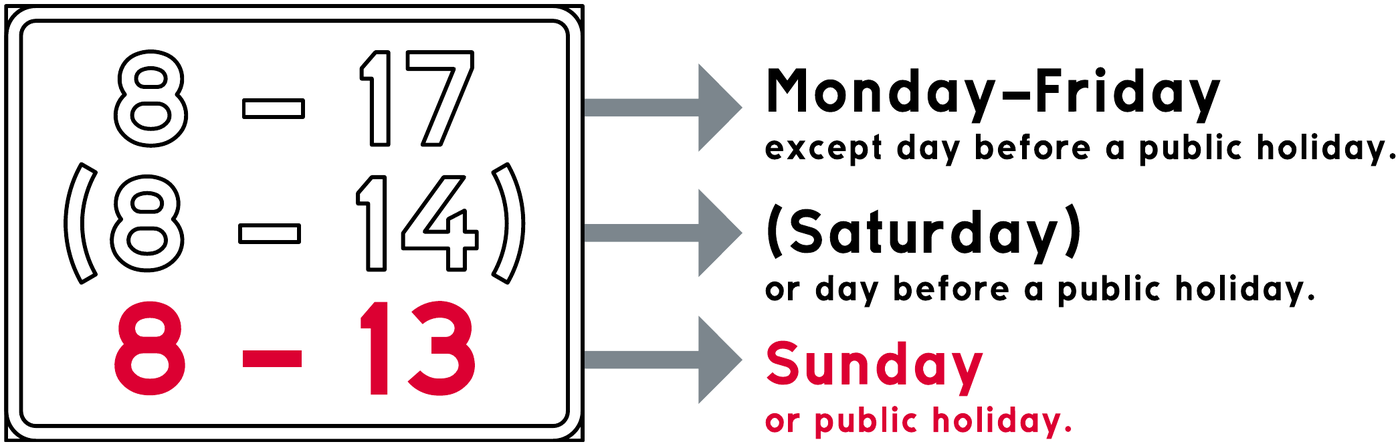
The panel indicates when the directions on the road sign applies. If times are used in combination with other conditions, the panel also indicates when these conditions apply. Black or white figures without brackets refer to weekdays except for weekdays before Sundays and public holidays. Black or white figures within brackets refer to weekdays before Sundays and public holidays. Red figures refer to Sundays and public holidays. If the time indication extends past midnight, the time period applies after midnight the following day. If a certain date or day of the week is indicated, the regulation applies to this day regardless of whether the day is a weekday, Sunday or public holidays.
Example:
Every time you have to stop at a red light and accelerate to the appropriate speed, your fuel consumption increases. Maintaining a constant speed on the country road does not use as much fuel, as the speed you have built helps you to keep moving.
But I am not given any information about the different roads.
– That is exactly the point of the question. You have to be able to realise that there may be times when a longer route is more environmentally friendly. The example above is just one way to think.
Notification of change of ownership must be received by us within ten days of the transferSwedish Transport Agency
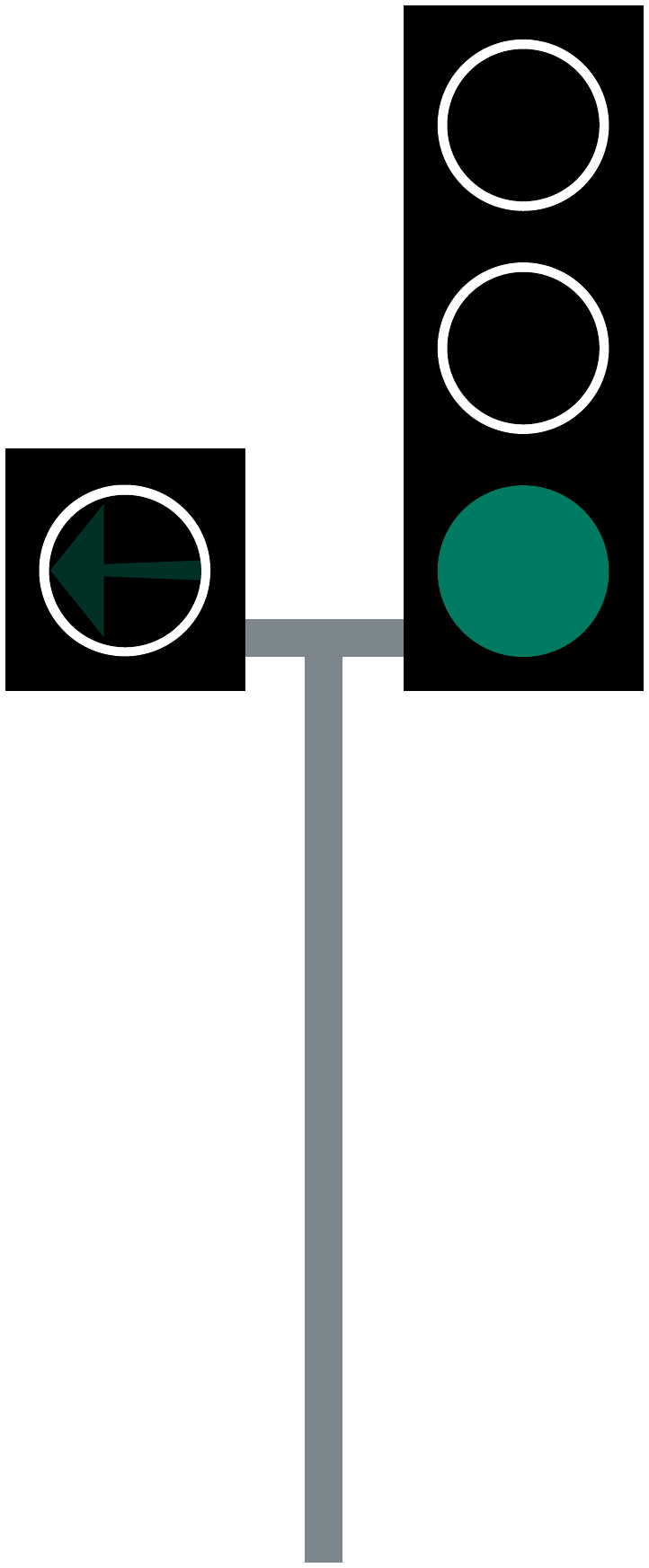
Since the arrow is unlit, you should ignore it. In other words, you are looking at a regular green traffic signal.
The fact that the arrow is unlit can be seen from the green colour, which differs significantly from the lit light on the right. A lit arrow would have exactly the same colour as the light on the right:
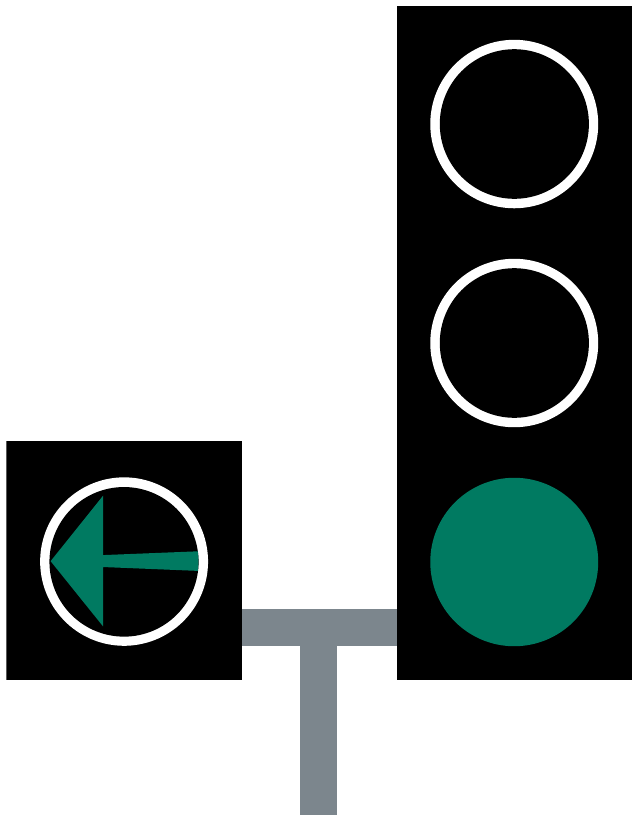
So what is the function of the green arrow?
– If only the green arrow is lit, it means that only vehicles turning to the left are allowed to go. As it is (green circle), you are permitted to drive in all directions, including to the left.


The sign refers to traffic with vehicles in both directions.
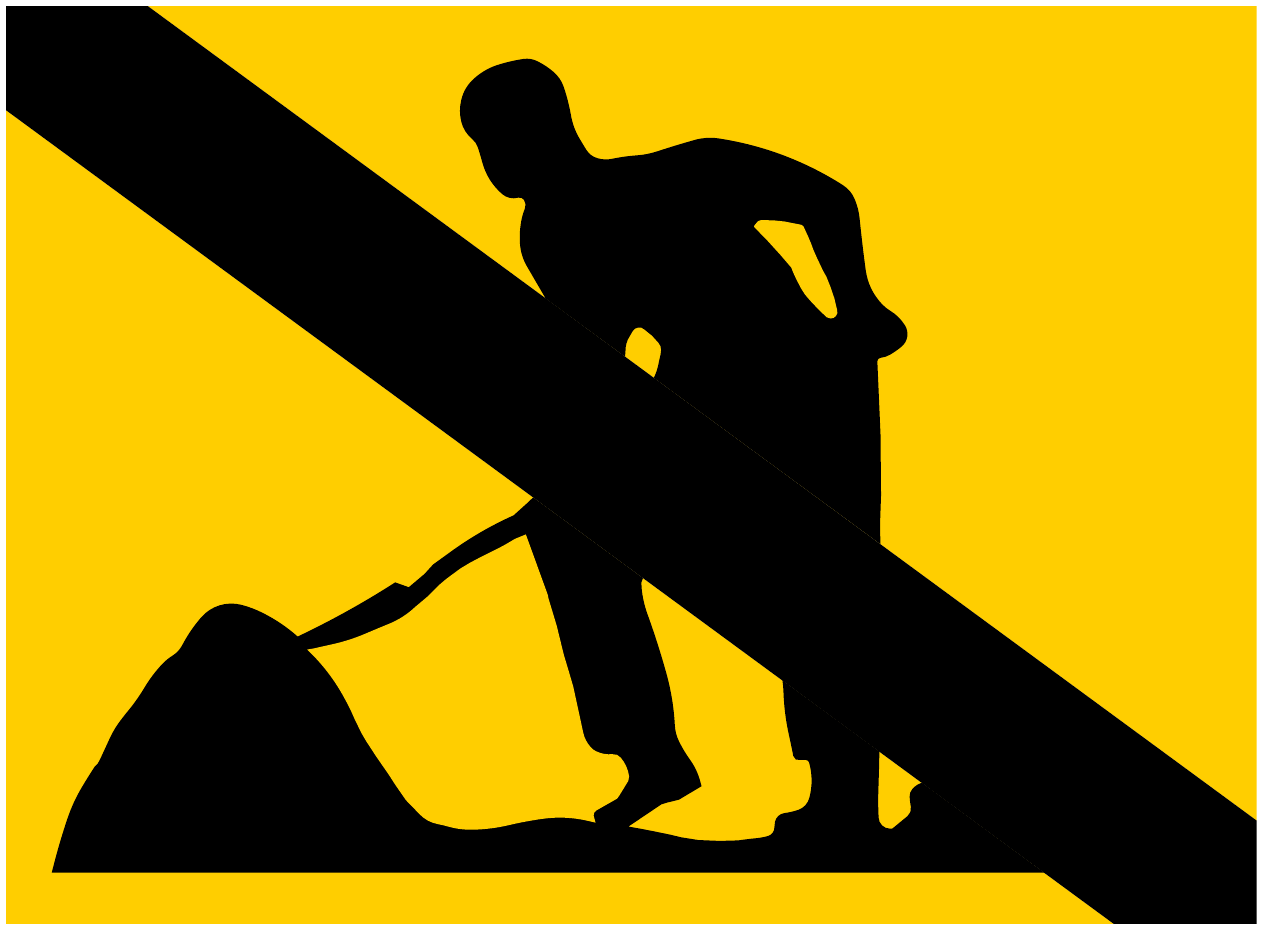
The sign indicates the end of a road section with roadworks that has been marked with an A20 roadworks sign. The sign is not erected if it is otherwise clear where the section ends.
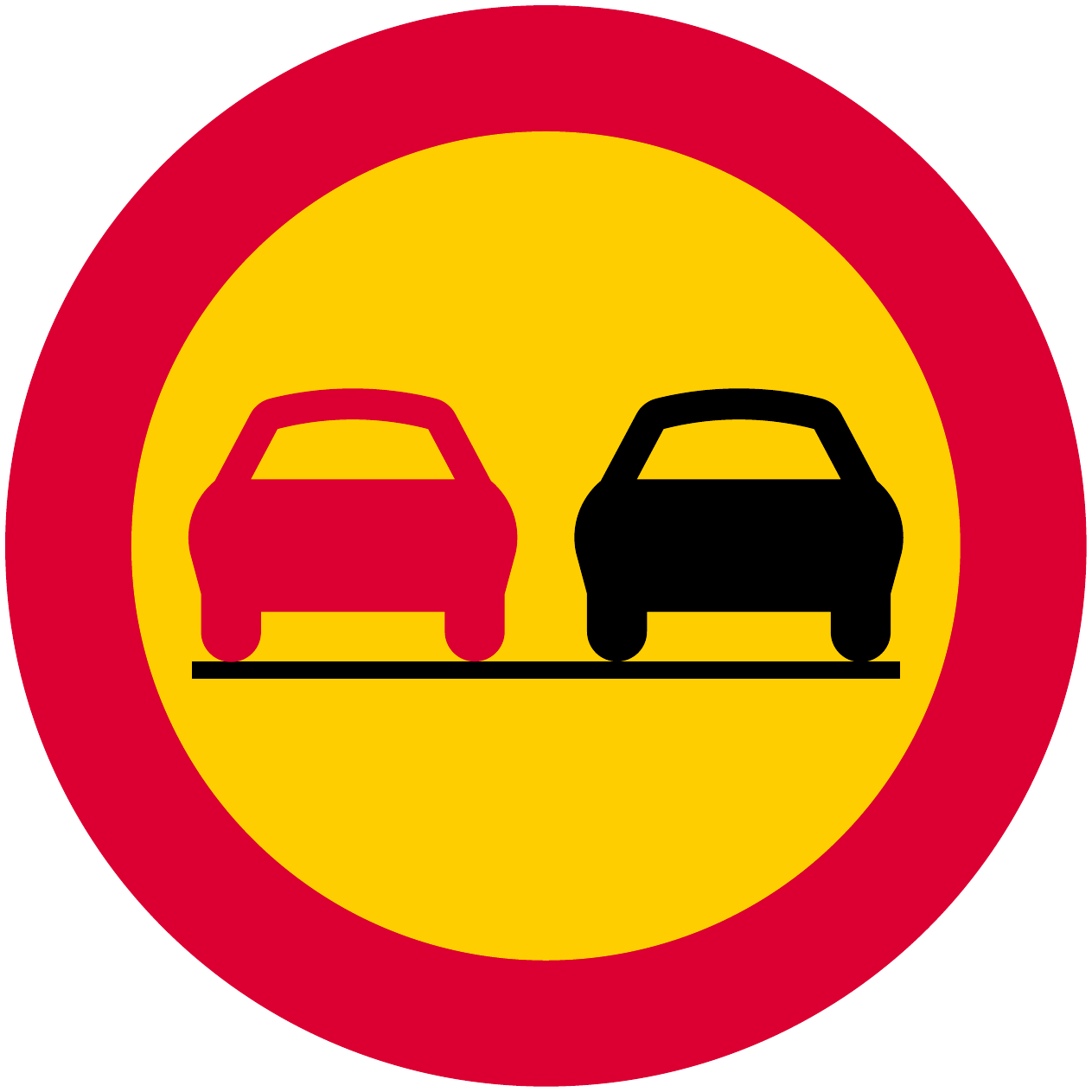
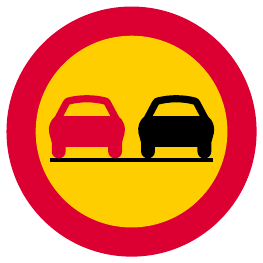
The sign indicates a prohibition on overtaking motor vehicles other than two-wheeled mopeds and two-wheeled motorcycles without a sidecar. The prohibition applies on the road where the sign is erected and up to the place where sign C28, End of overtaking restriction, is erected.
The braking distance [...] increases quadratically with increasing speed.Driving Licence Book, 19th Edition, page 120
32 = 3*3 = 9
A driving licence shall be revoked [...] if the licence holder […] has gone through a red light […] if the violation cannot not be considered minorDriving Licence Act
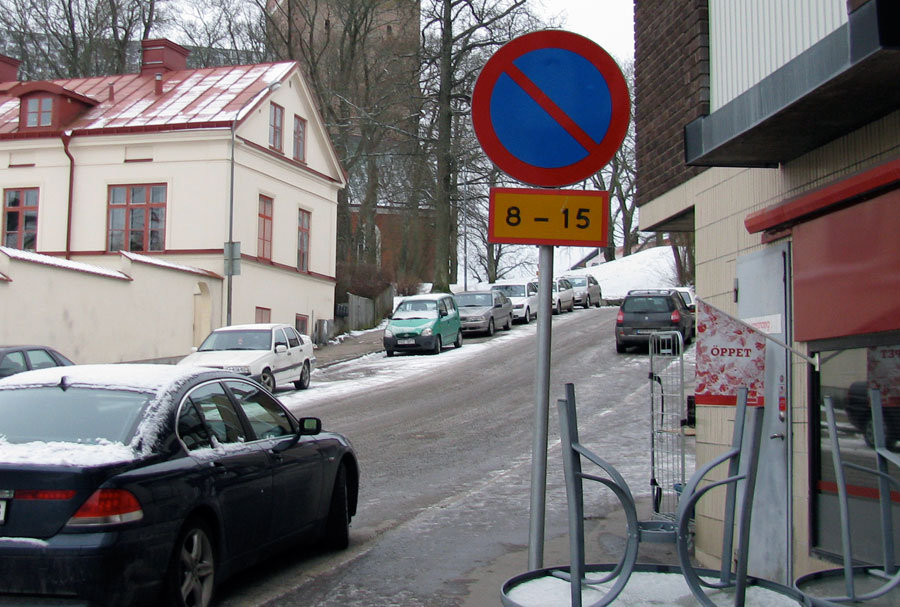
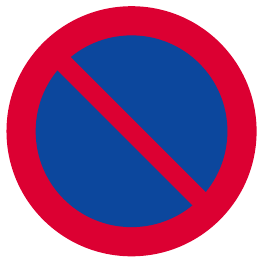
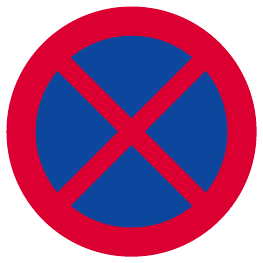
The question asks if you are permitted to stop. Parking is never mentioned in the question. Do not mix up these signs:
Full beam headlights may not be used [...] on stretches of road that are satisfactorily lit.Swedish Road Traffic Ordinance
Normally, a load that protrudes out in front of the vehicle must be marked. However, there is an exception:
A load that protrudes less than one metre out in front of the vehicle does not need to be marked if the protruding part is clearly visible to other road users.Swedish Road Traffic Ordinance
Therefore, the options that says “always” are incorrect.
The white cane, the international symbol of the visually impaired, is one of the oldest and most important aids for the visually impaired.Synskadades Riksförbund
A solid line may be crossed “to enter or exit a property or equivalent area.” (Swedish Road Traffic Ordinance)
Mnemonic rule:
It is good to dim the headlights for a moment before a hill crest or bend. This will allow you to see oncoming traffic sooner and you have the chance to spot any obstacles as they become silhouetted against the oncoming lights.Driving Licence Book, 19th Edition, page 155
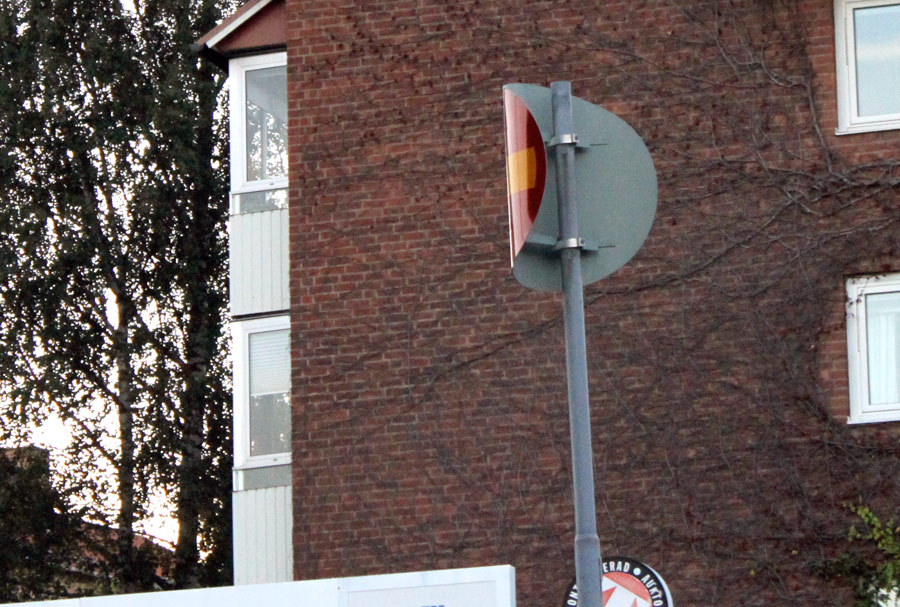

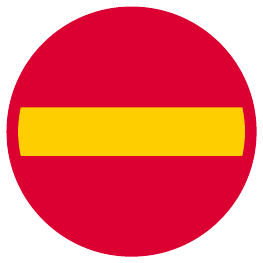
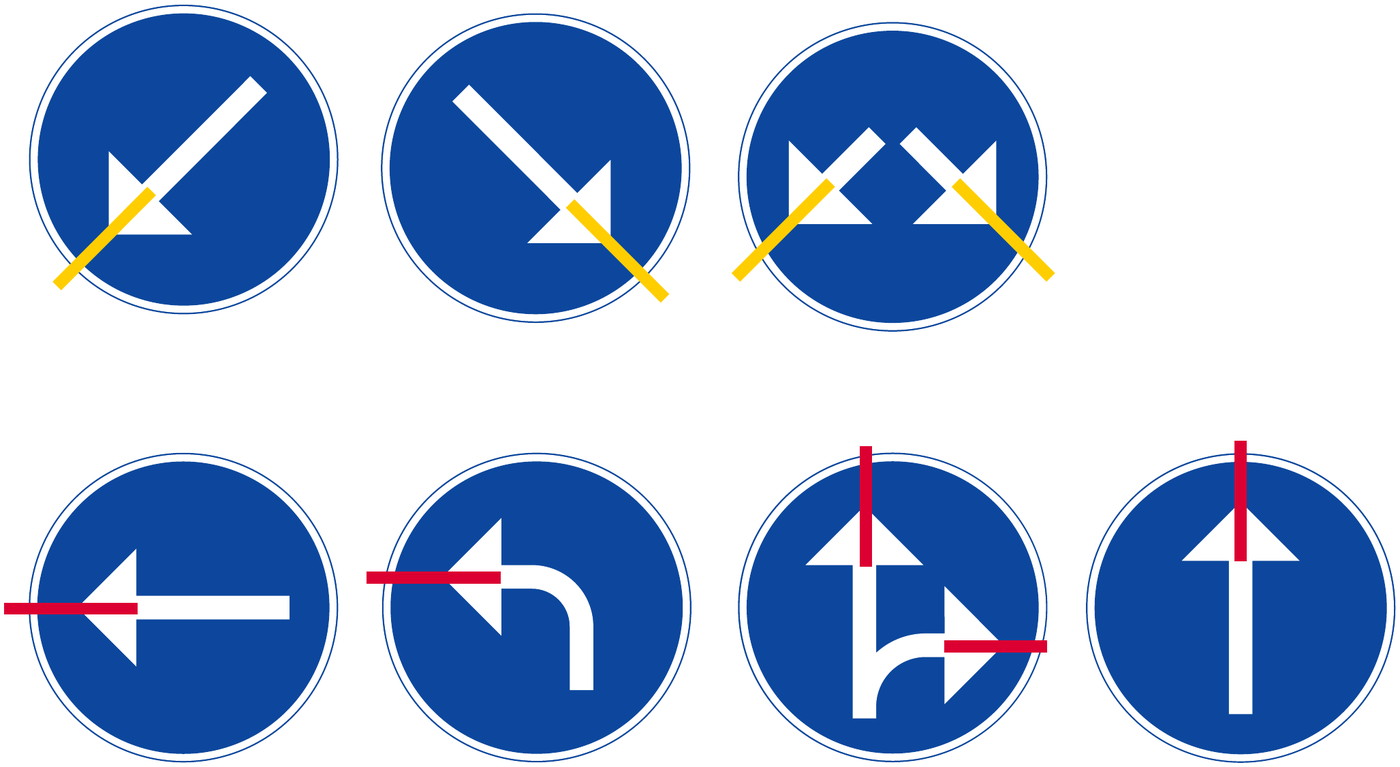
This can also be seen from the curvature of the sign. Only the “No entry” sign can be curved in this way.
There are indications that questions on the back of signs may appear on the real test.
What does a remark that does not entail a follow-up test mean? The problem must be rectified as soon as possible. The vehicle must not be used more than is necessary in order to rectify the problem. If a previously noted problem remains at the next inspection, it will result in a remark with a requirement for a follow-up test.Bilprovningen
Things that do not need to be rectified will not lead to a remark.

“The reflectors shall be white, with the exception of bus stops, parking spaces and junctions/intersections, where the reflectors shall be yellow.” (Swedish Transport Administration) When not around a junction, posts with white round reflectors are placed on the left side and posts with white rectangular reflectors are placed on the right side of the road.
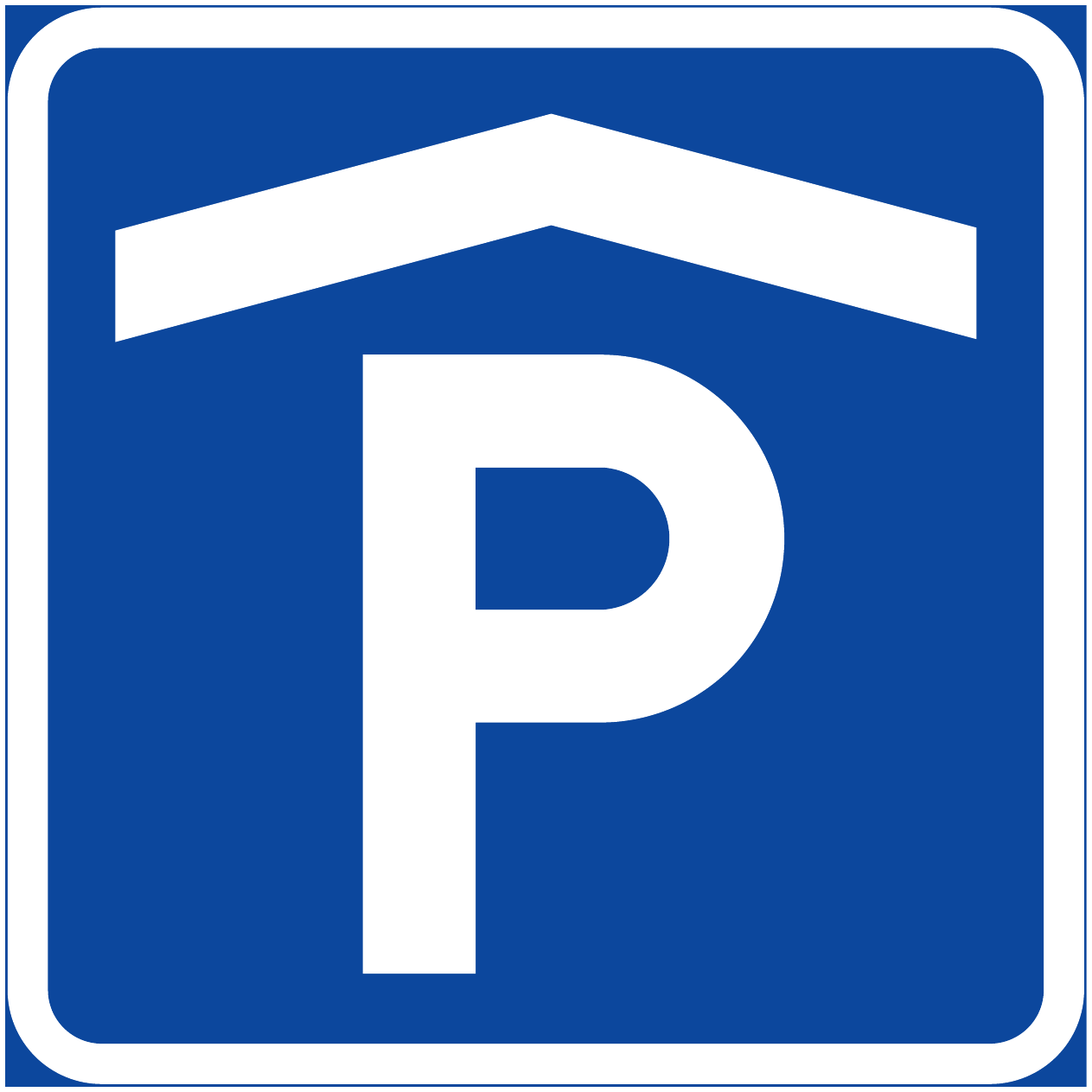
Information indicating that the parking location is full or has spaces available can be provided adjacent to the sign. The name of the parking facility may be included in the sign. The sign may be incorporated in a location sign for direction. No other colour may be used.
Kinetic energy increases quadratically with increasing speedDu och jag i trafiken [You and me in traffic], 28th Edition, page 159
How many times faster is the speed? 90 / 30 = 3, i.e. the speed is 3 times faster.
How many times greater is the kinetic energy? 32 = 3*3 = 9, i.e. the kinetic energy is 9 times greater.
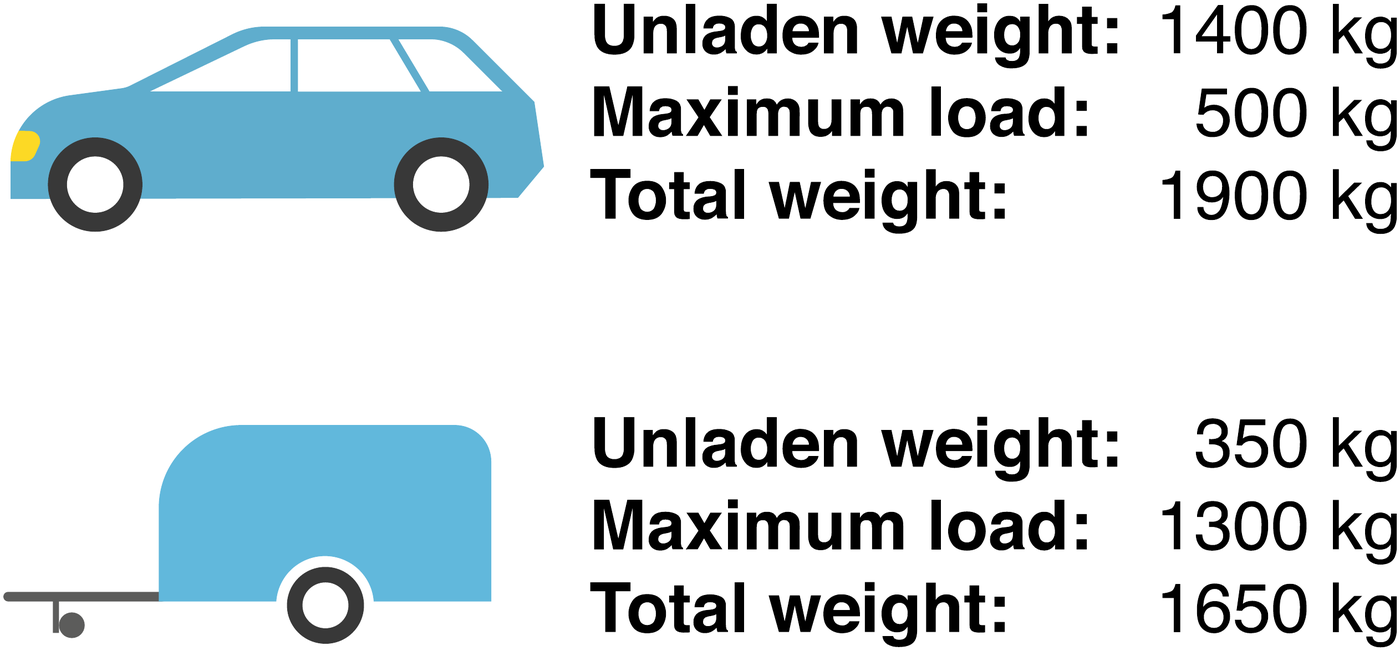
With a regular category B licence, you are only allowed to tow a light trailer. The following counts as a light trailer:
Does the combined total weight exceed 3.5 tonnes? 1900 kg + 1650 kg = 3550 kg = Over 3.5 tonnes
Everyone’s vision deteriorates in the dark. First of all, you do not see as well and, secondly, it takes much longer to adapt from light to dark than it takes to adapt from dark to light.
After being dazzled, it takes a minute or two to adapt before your night vision works fairly well again.Driving Licence Book, 19th Edition, page 151
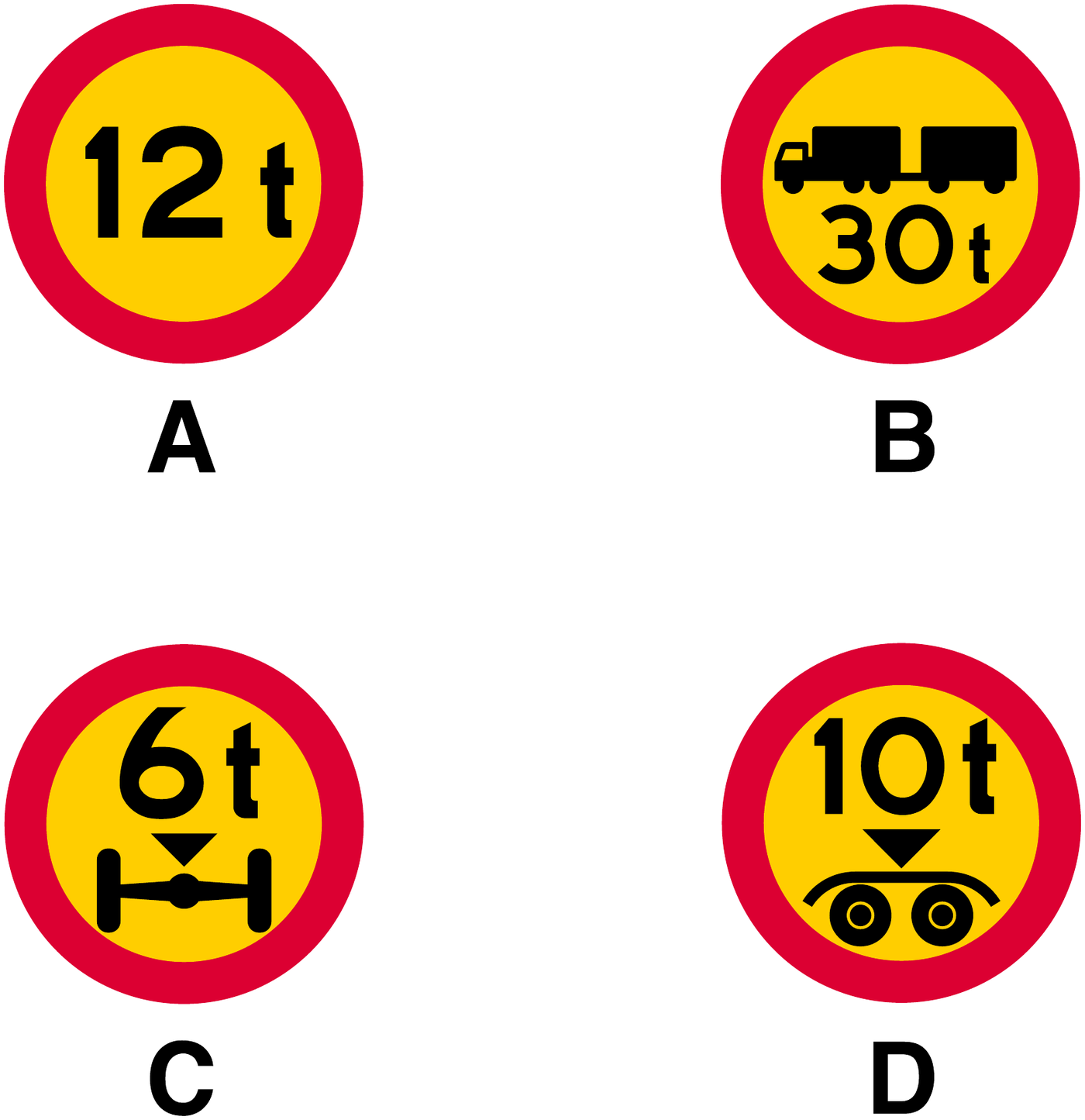
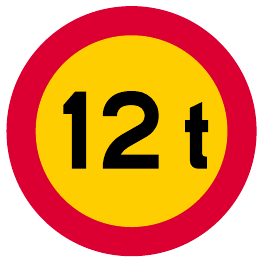
Maximum permitted gross weight is indicated on the sign.
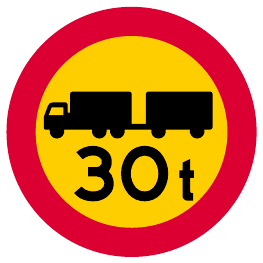
Maximum permitted gross weight is indicated on the sign.
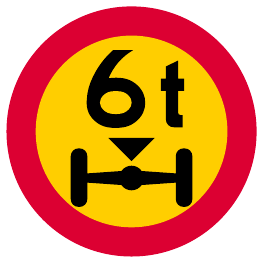
Maximum permitted weight on an axle is indicated on the sign.
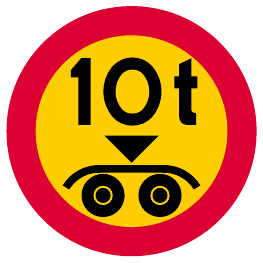
Maximum permitted weight on a tandem axle is indicated on the sign.
But B is the sign that refers to vehicle combinations?
– Yes, but in this case, you have to really pay attention to the formulation of the question, which is very tricky! The figure stated in B is the maximum weight of the whole vehicle combination. However, the question is asking about the maximum weight of a single vehicle, which is what is provided in A.
For example, A allows for 3 vehicles that each weigh 12 tonnes to be driven on the road: 12-tonne truck + 12-tonne trailer + 12-tonne trailer = a total 36 tonnes. (Note that each trailer is considered an individual vehicle.)
B would not allow these 3 vehicles on the road, as the total weight of the entire vehicle combination exceeds the sign limit of 30 tonnes.
But this is only applicable to trucks, right?
– No, it is the same principle for all vehicles. It is thus possible for the signs to indicate lower weights. In other words, the signs are what matters, not the specific weights indicated here (these are the examples used by the Swedish Transport Agency on the official road sign images).
Euro NCAP is a European organisation testing the safety of new cars. It consists of both government agencies and interest groups and receives support from the EU. The Swedish Transport Administration is a member of Euro NCAP.Swedish Transport Administration
Why is identifying clues important?
– Safety is important, and if you are familiar with different concepts in this field, you can make safer car choices. Safer cars and and increased awareness of safety issues are in everyone’s interest.
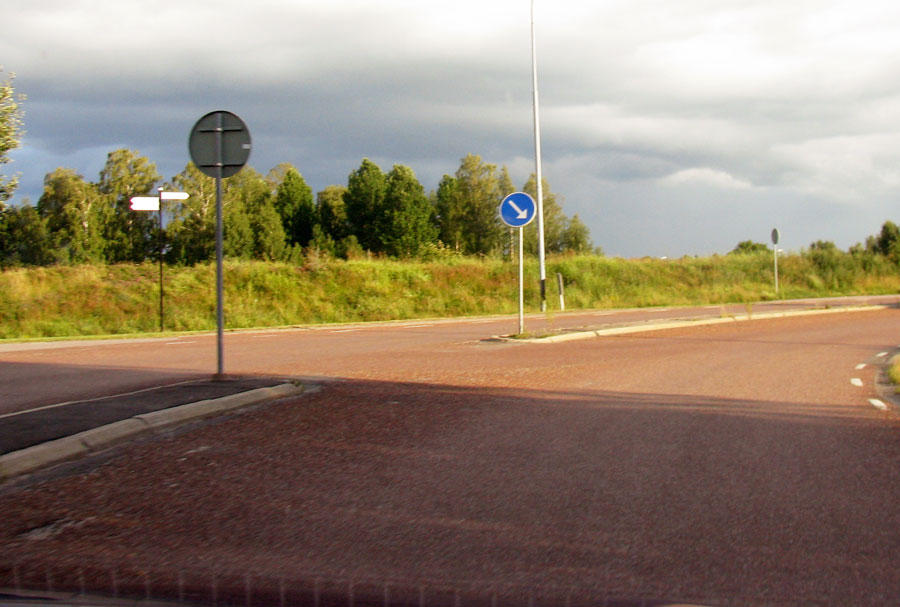
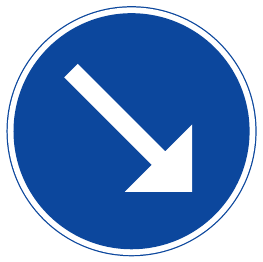
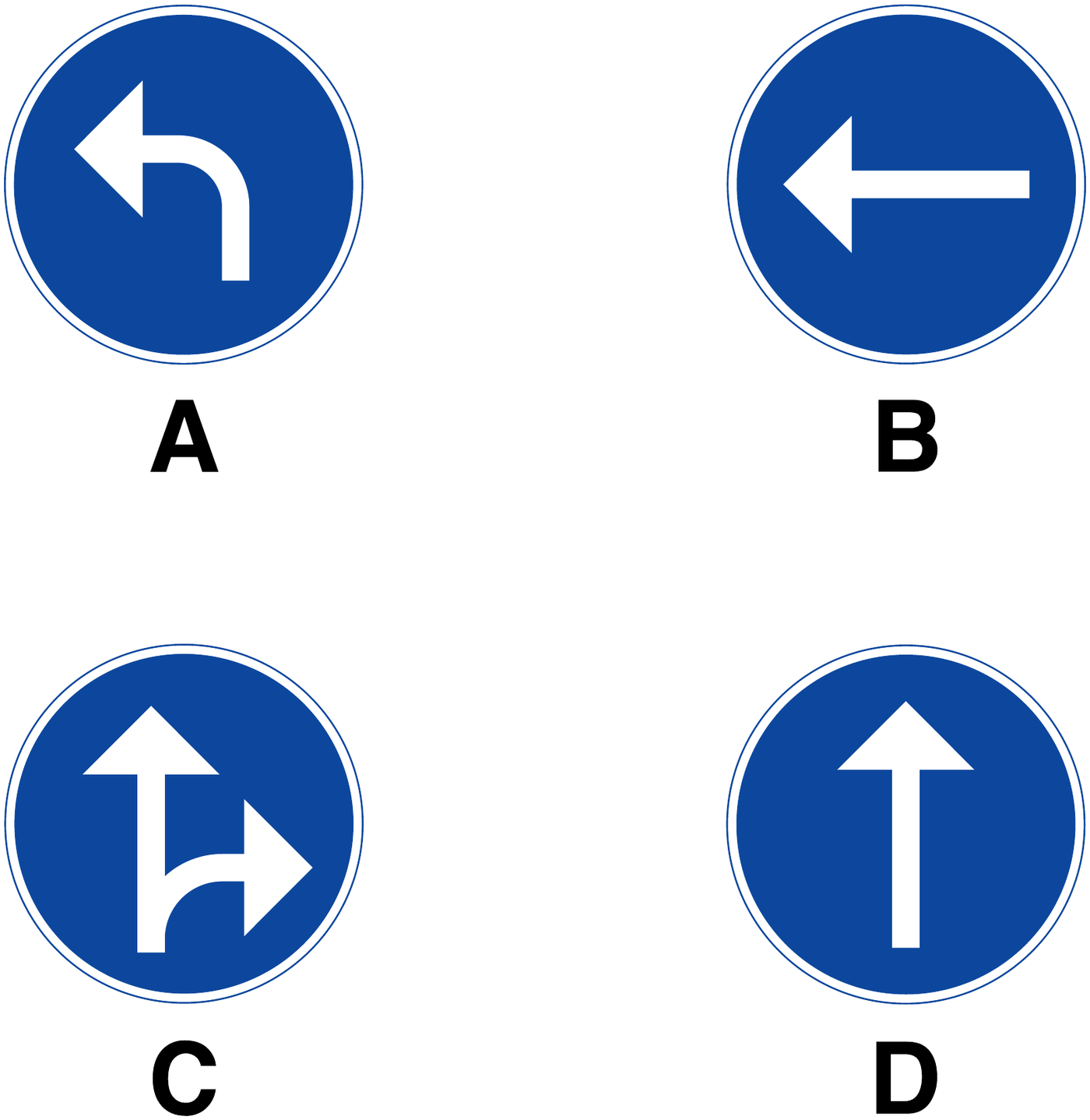
The signs indicate that the vehicle may only drive past the sign where the arrow is pointing or, in the case of two arrows, where the arrows are indicating. The symbol is adapted to the conditions of the location.
The sign indicates that you must drive to the right of the island if you intend to drive straight on. However, it says nothing about what applies when turning left.
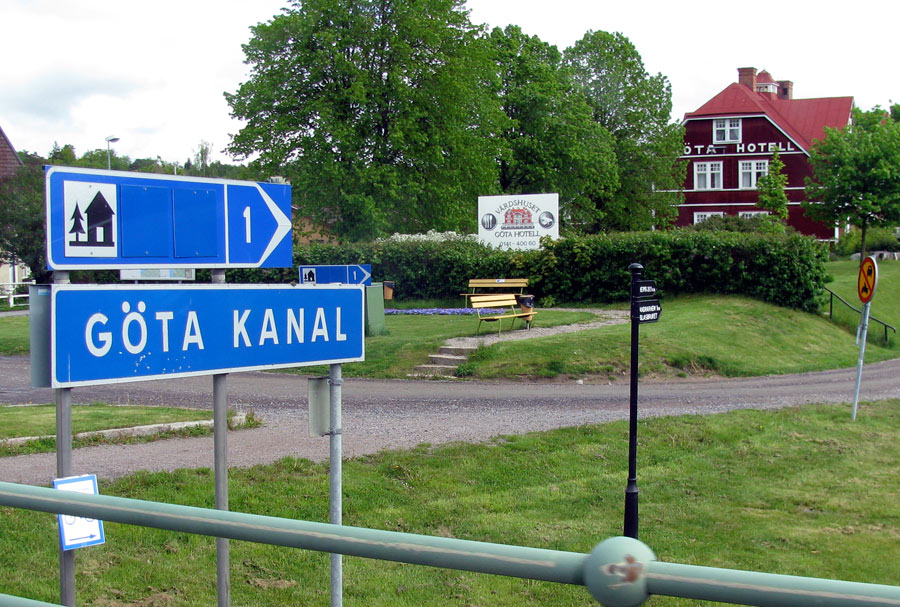
1,000 m = 1 km
Emergency vehicles: “You must clear a path when they are driving with their sirens or rotating blue lights on.” (Driving Licence Book, 19th Edition, page 47)
There are many situations where emergency vehicles (police, ambulance and fire engine) are out in traffic without being on an emergency call, for example, on their way back from a call out or when they are refuelling. In such situations, there is no reason to clear a path.
“By constantly rationalising, you loose the opportunity to learn from your mistakes.” (Driving Licence Book, 19th Edition, page 187) If you blame the accident on someone else, there is no reason to improve, is there? Since you have done nothing wrong and the other person is fully to blame…
Carbon dioxide is the most important of the greenhouse gases affecting the world climate through a growing greenhouse effect.Swedish Transport Administration
A crawler lane is an extra lane found on certain long or steep upward slopes and which are to be used for overtaking.Du och jag i trafiken [You and me in traffic], 28th Edition, page 252
Visual impairment: “82% of 60-year-olds.” (Du och jag i trafiken [You and me in traffic], 28th Edition, page 52)
Why should I know this?
– Safety is the highest priority in traffic. You must therefore be aware of statistics and probabilities such as these. Hopefully, it will make you check your vision when you are older, which makes traffic safer.
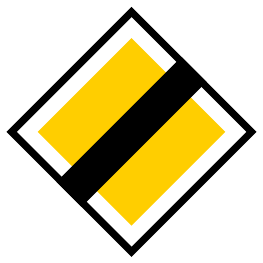
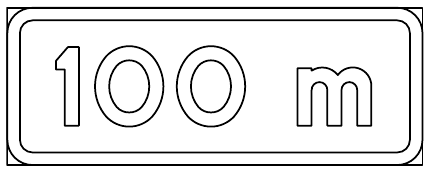
The panel indicates the distance to that which the sign relates to.
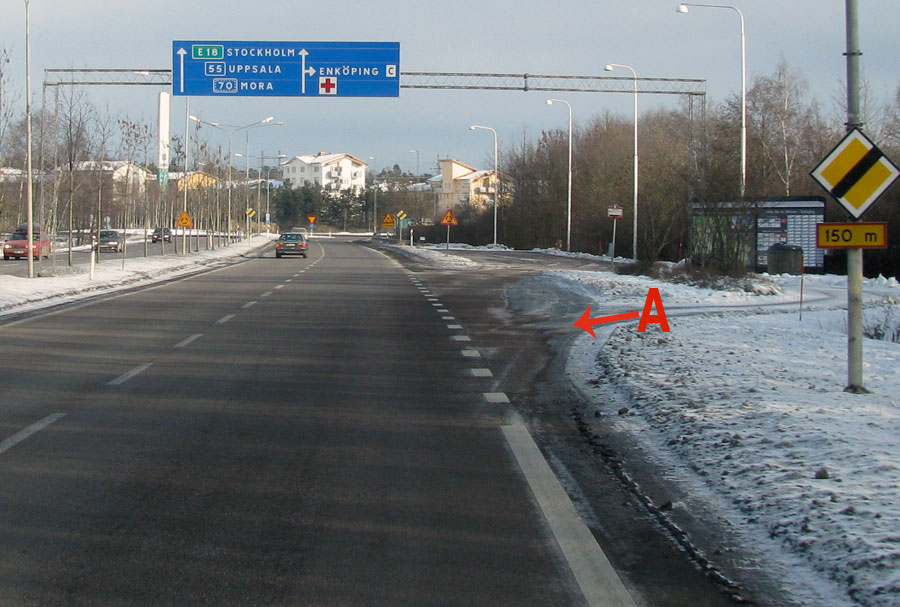
You are still driving on a priority road when you pass A. The priority road will only end in 150 metres.
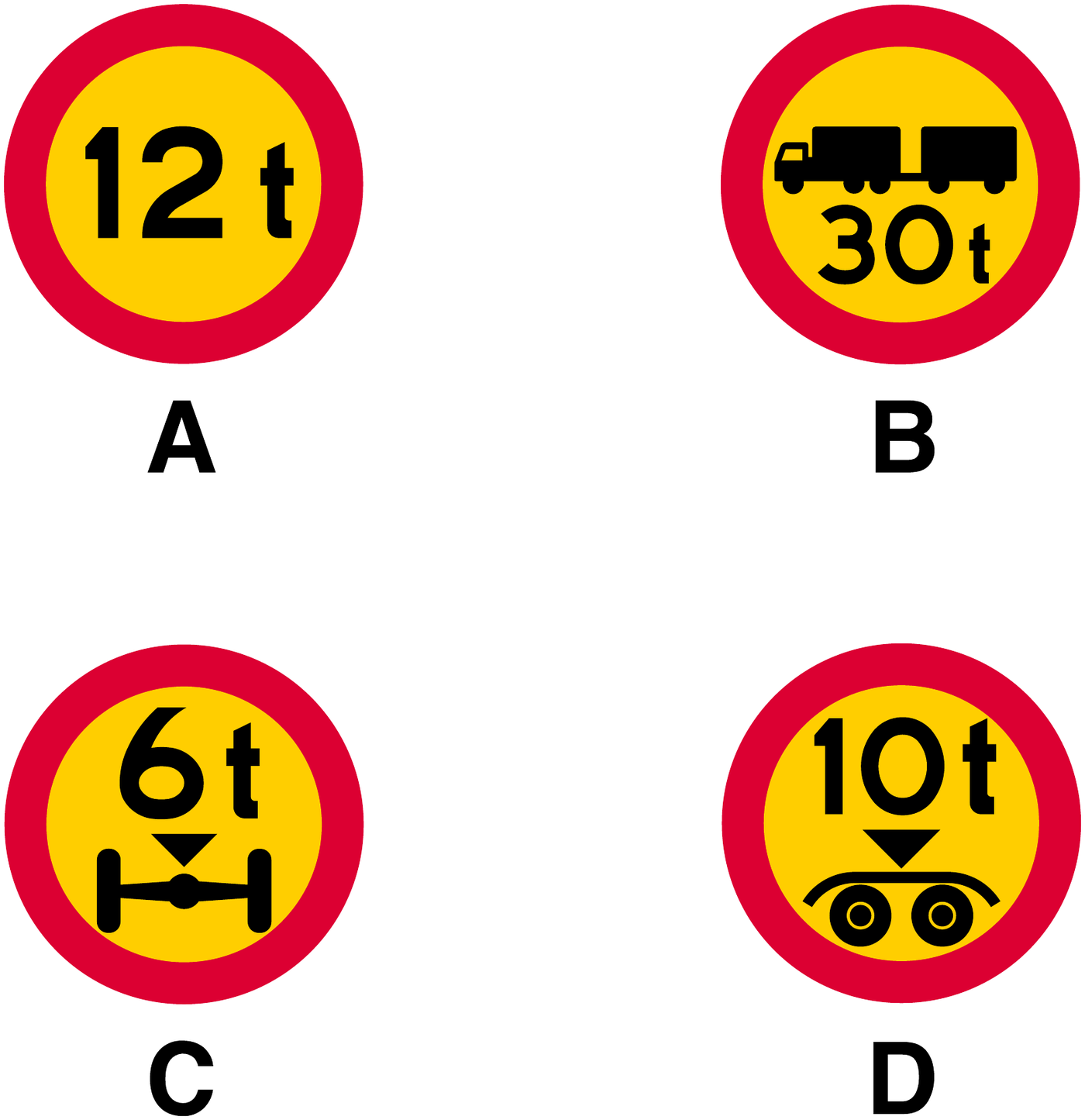
As the holder of a regular category B licence or category AM licence, you are allowed to drive tractors and class I and II heavy equipment. These can be very heavy. Saying that these signs apply “only to trucks” is therefore incorrect.
Also note that the numbers on the signs are not what is relevant in this question. The signs are the standard signs used by the Swedish Transport Agency and are only meant as illustrations to identify the right prohibitory sign (meaning that sign A could just as well say “2 t”). If you are driving a 1.5-tonne car and see sign C20 marked with the figure 12 t, you could say that you have to obey the sign, but that it does not refer to you.
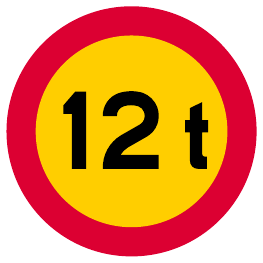
Maximum permitted gross weight is indicated on the sign.
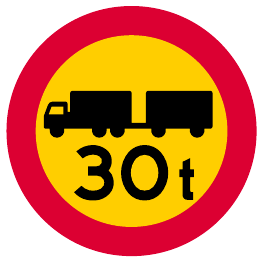
Maximum permitted gross weight is indicated on the sign.
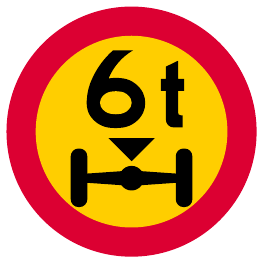
Maximum permitted weight on an axle is indicated on the sign.
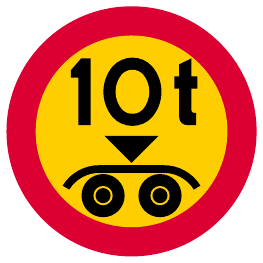
Maximum permitted weight on a tandem axle is indicated on the sign.
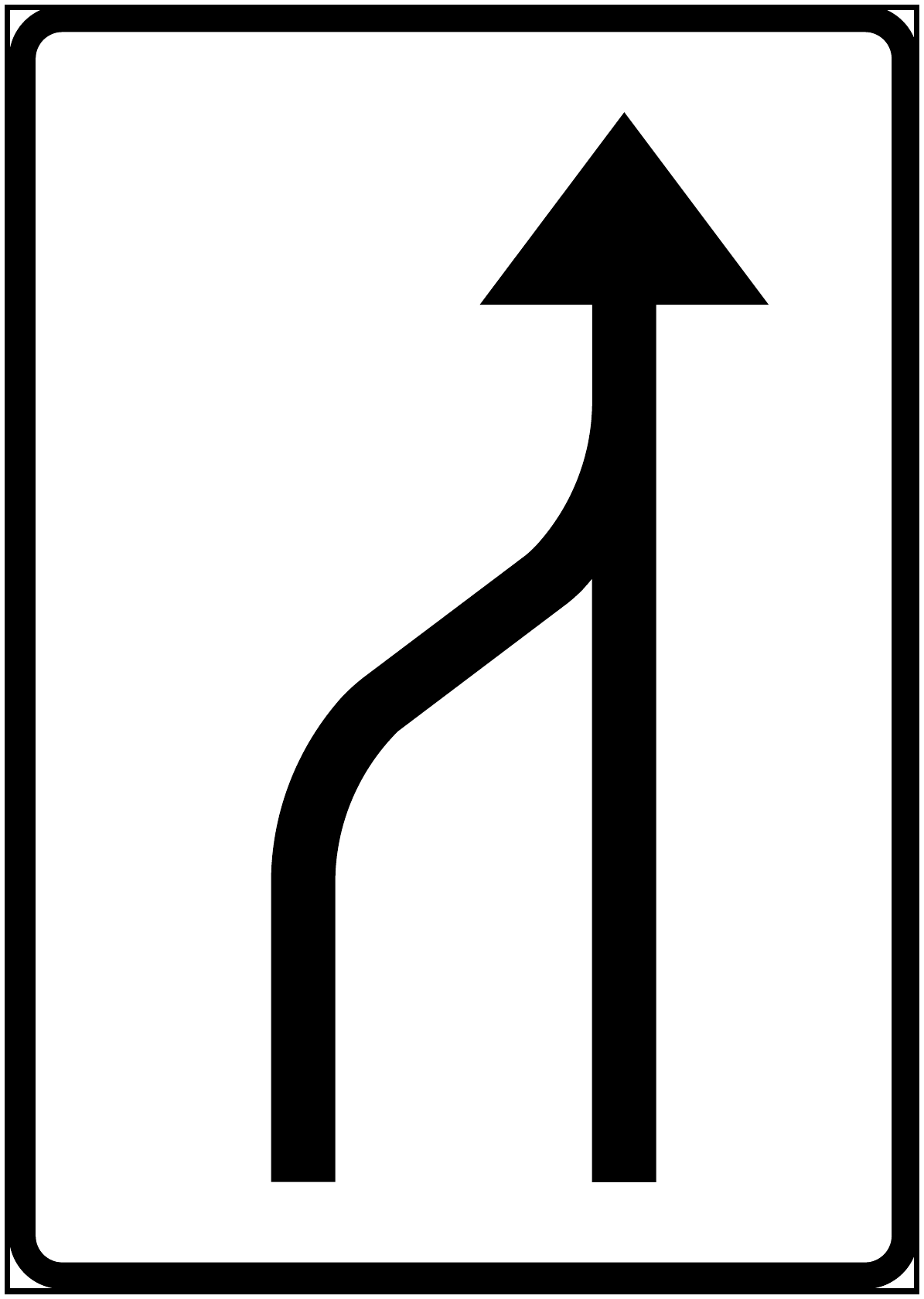
If two lanes merge into one, the drivers shall adapt to the new conditions through mutual consideration.Swedish Road Traffic Ordinance
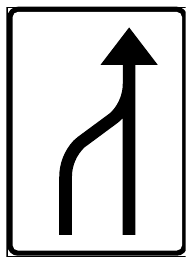
This sign indicates a reduction in the number of lanes. The sign is specific to the conditions at the location. The sign is also used as a preparatory notice that a lane is ending. The distance is then stated on an additional panel. In case of a temporary re-routing of traffic, the sign may have an orange base. Otherwise, no deviating colour may be used.
The cogwheel principle is a good example of adaptation and consideration, is it not?
– Yes, but there are two things that make it the wrong answer:
1. It says that the cogwheel principle is to be applied = mandatory by law. This is wrong, other forms of
2. The correct alternative is better, as it covers all forms of adaptation (including the cogwheel principle).
The regular inspection that all cars must undergo is called a roadworthiness test.
The catalytic converter “filters out 80–95 per cent.” (Driving Licence Book, 19th Edition, page 224)
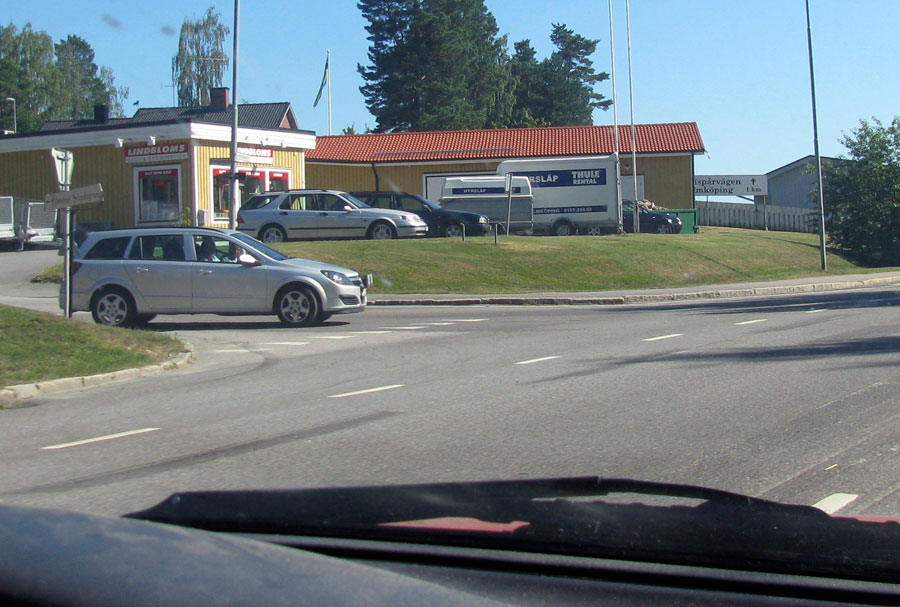
There are two clues that allow you to feel certain that you have priority over the silver car.
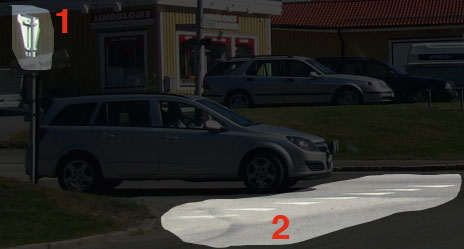
1 is in all likelihood a give way sign (no other sign has that shape):
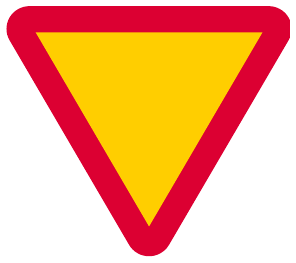
This sign indicates that the driver has an obligation to give way to vehicles on the intersecting road or route.
2 is in all likelihood a give way line:
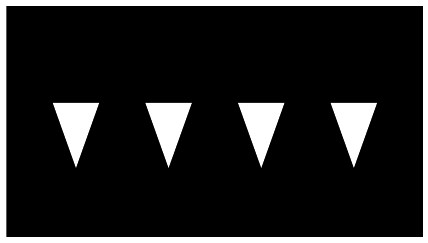
This marking indicates the line that a vehicle should not pass when the driver is observing the obligation to give way.
Why have a question where you have to speculate?
– Because you are guaranteed to end up in situations where you are not 100 per cent on top of things. In those situations, it is important to be able to draw reasonable conclusions.
Stopping a vehicle means bringing it to a standstill in a way which:
The standstill described in the question takes place to avoid danger, which means that it does not count as a stop in the legal sense. It would be strange to get a fine for braking in a prohibited place in order to avoid an accident.
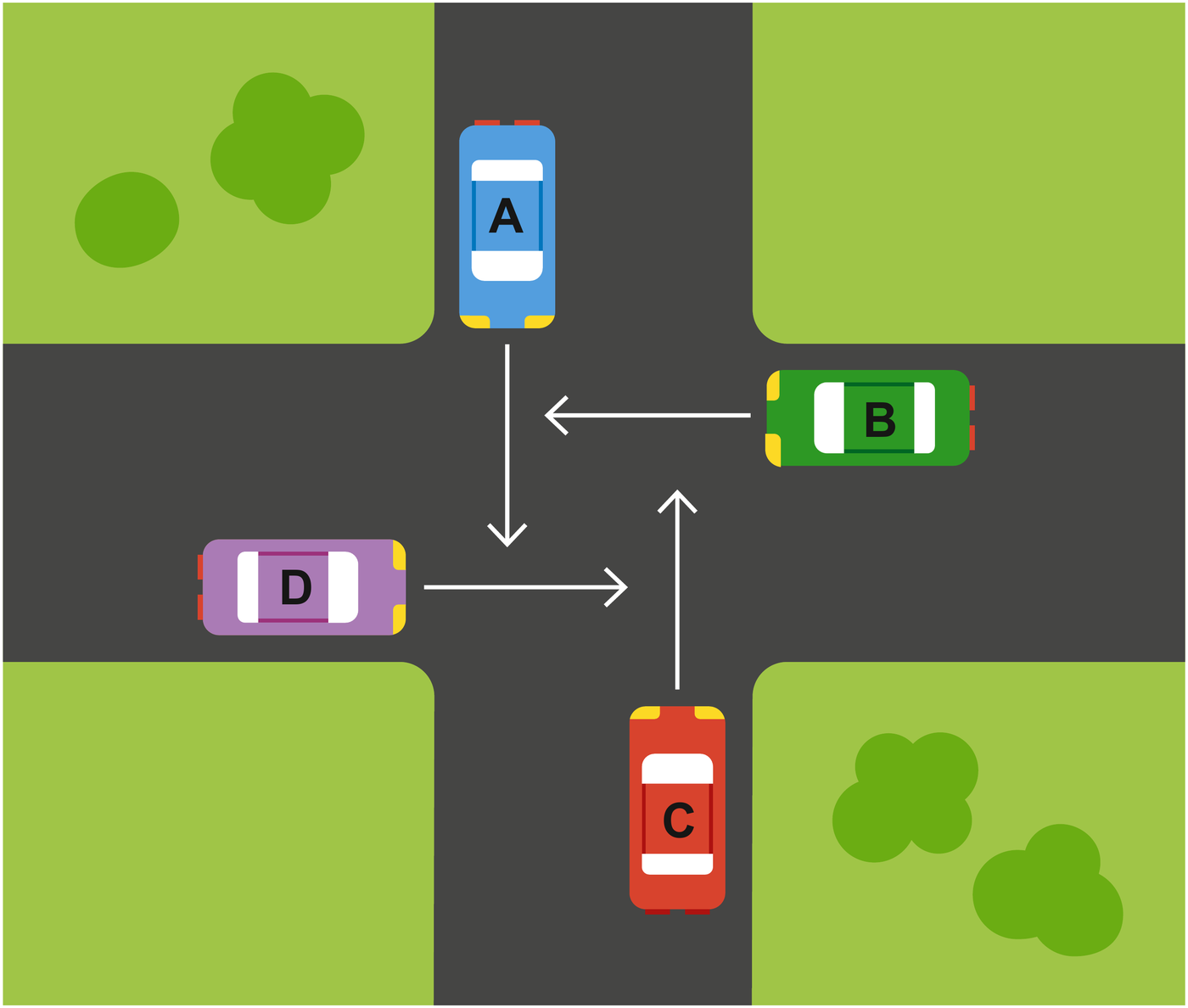
You can assume that the right-hand rule is applicable. If the right-hand rule is strictly enforced then no-one can go, as everyone has to give way to someone else.
The solution is then mutual consideration. It is not a matter of the drivers getting out to talk, but more that one car takes the initiative to drive out slowly while the others wait. Eye contact is important!
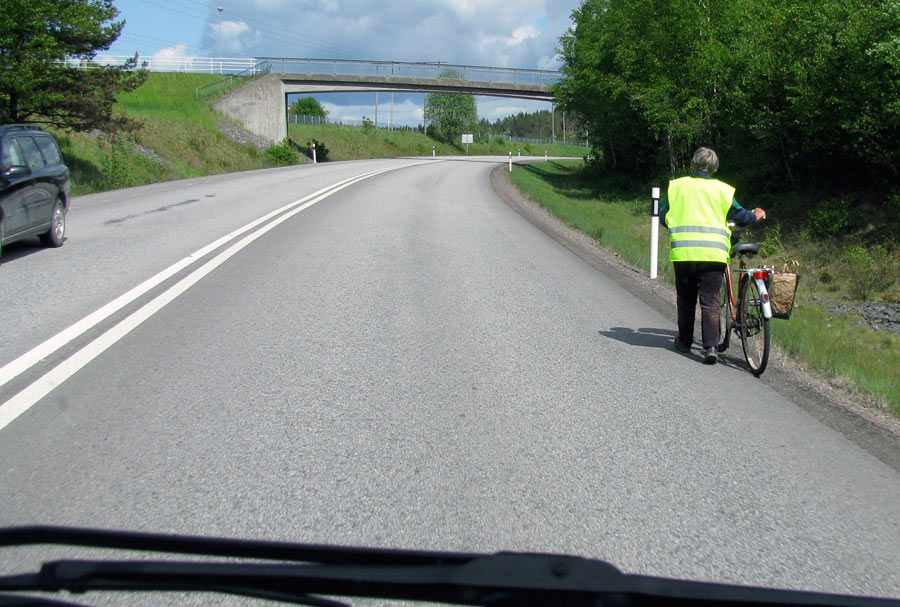
If you dismount your bicycle and walk with it, you are considered a pedestrian and subject to the rules applying to pedestrians.Swedish Transport Agency
A class I moped is a vehicle with two, three or four wheels that is constructed for a speed not exceeding 45 km/hour.Swedish Transport Agency
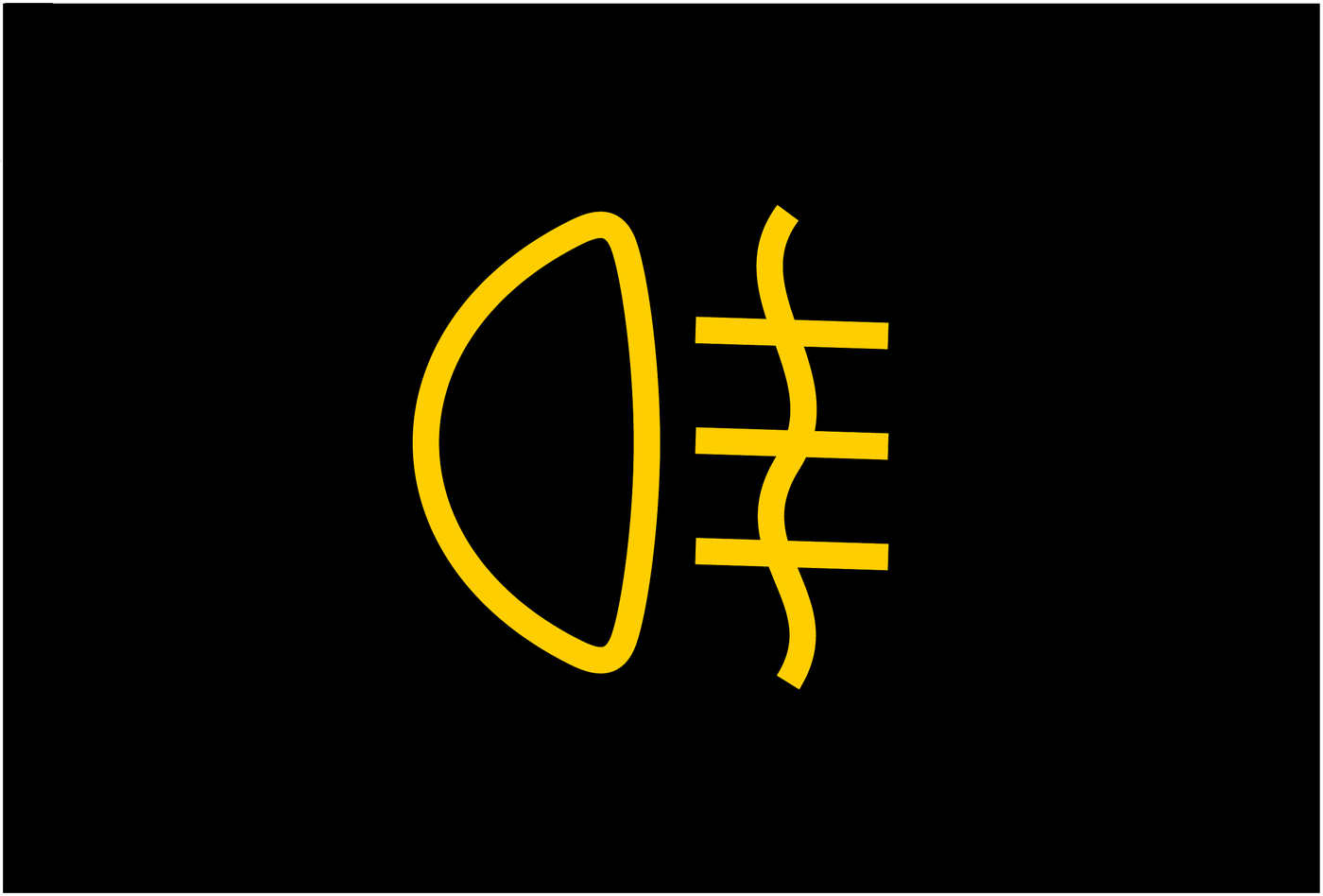
Rear fog lightsDriving Licence Book, 19th Edition, page 146
Note that there is a similar question that is about the front fog lights.
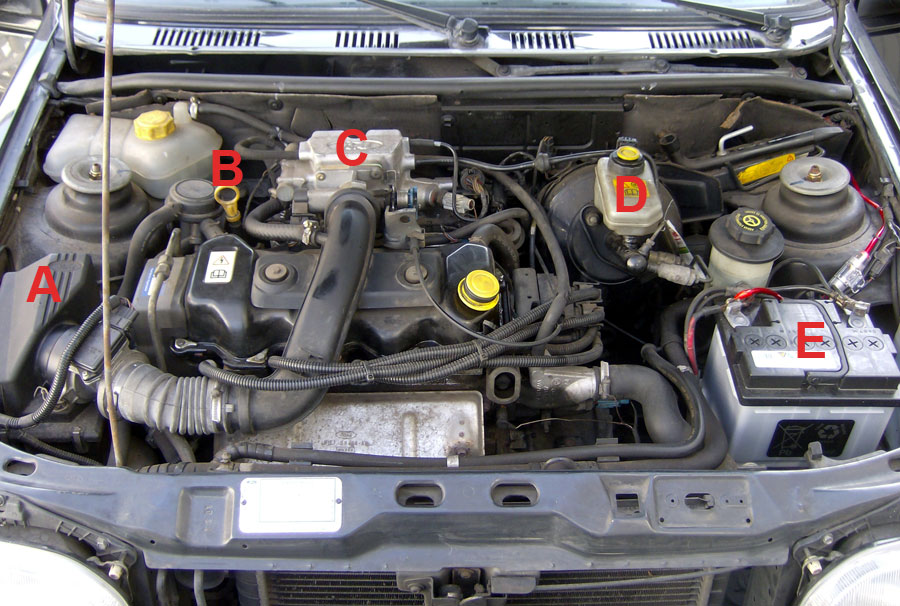
See the Driving Licence Book, 19th Edition, page 144 or Vägvisaren B, 14th edition, page 55.
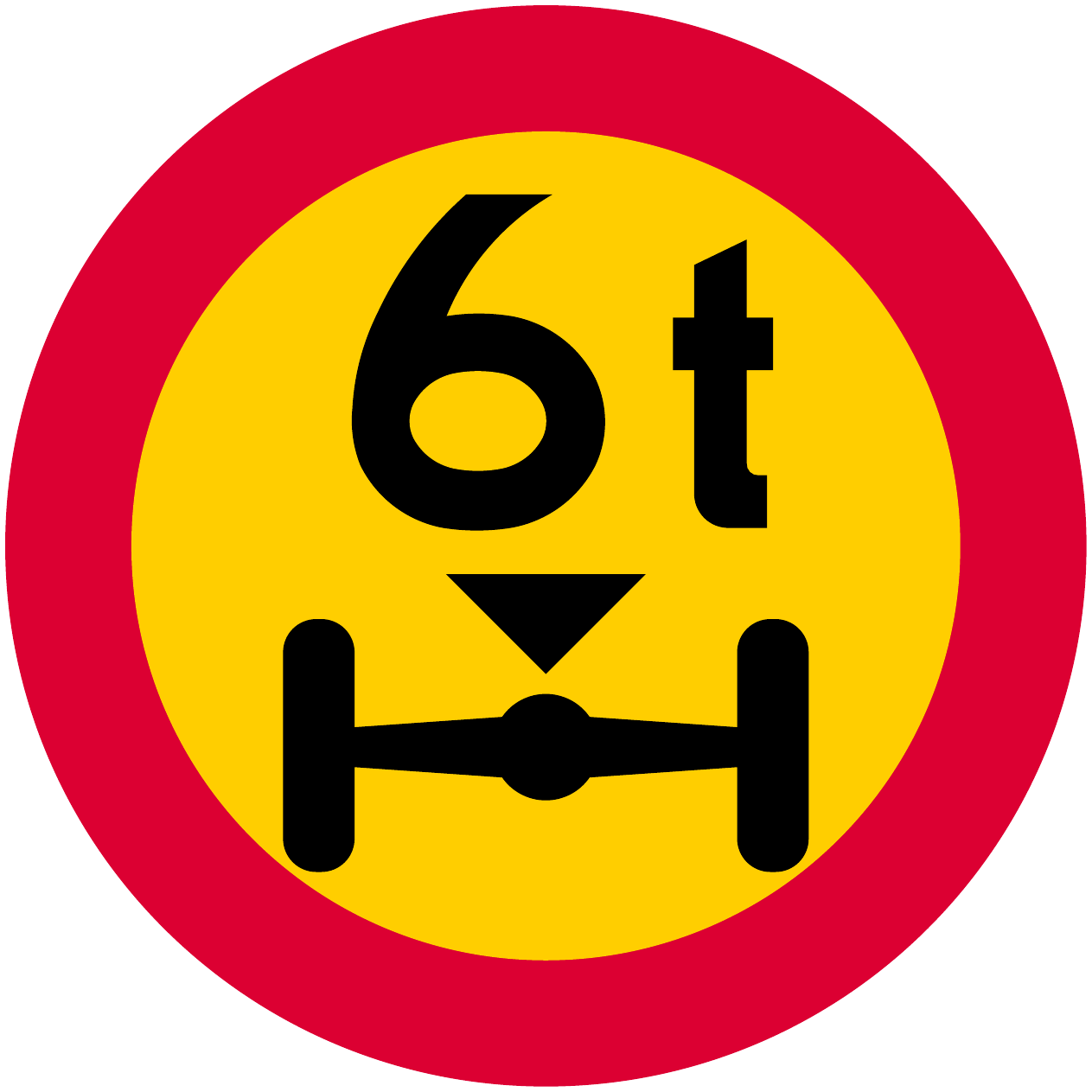
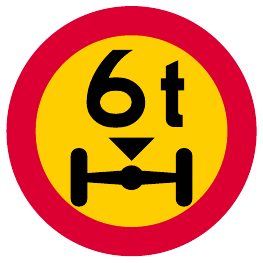
Maximum permitted weight on an axle is indicated on the sign.
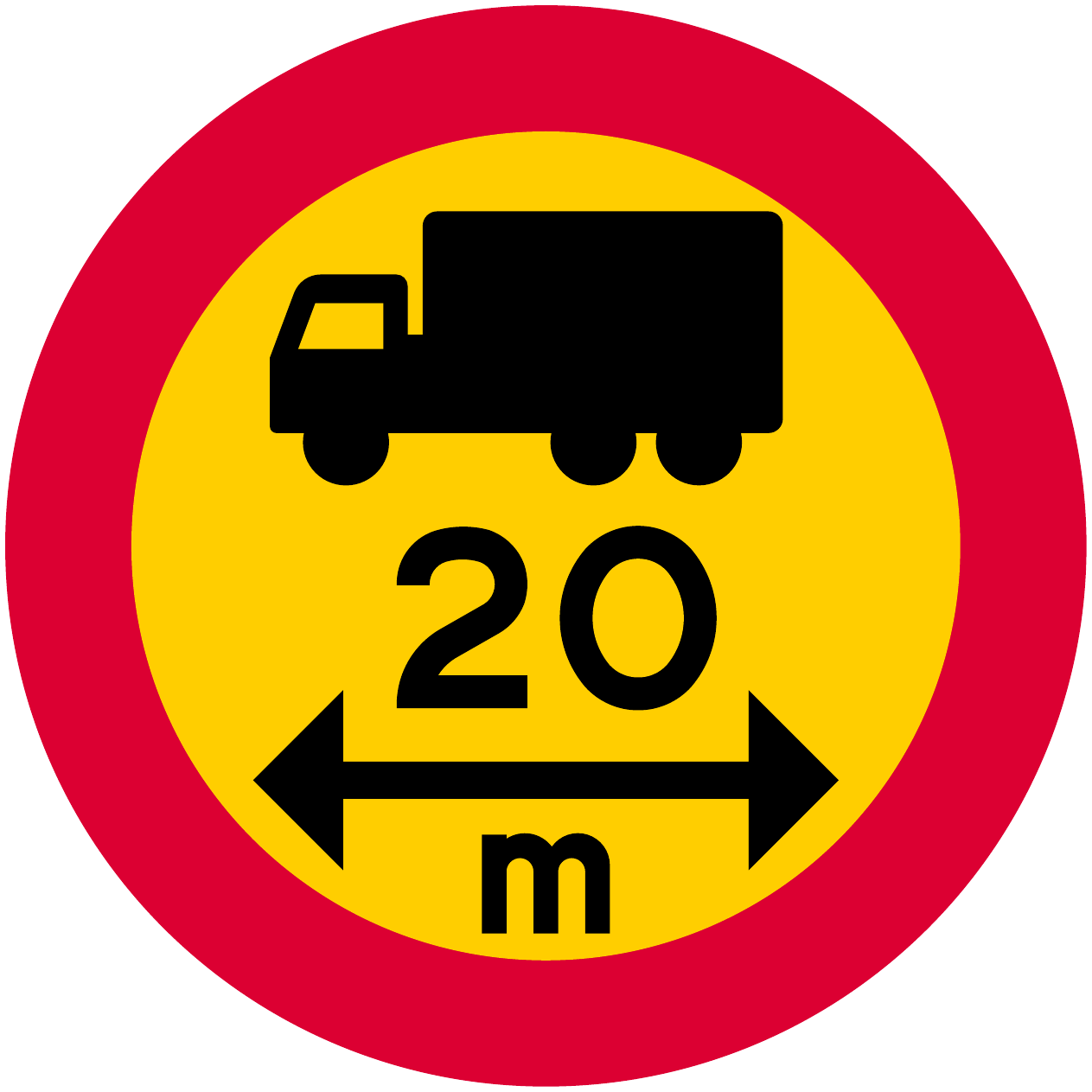
The sign indicates that traffic with vehicles or a vehicle/trailer combination over a certain length is prohibited. The greatest permitted length is indicated on the sign.
Vehicle/trailer combination: ”A motor vehicle with one or several connected vehicles.” (Road Traffic Definitions Act)
Particles in the air is a problem in many built-up areas in Sweden. These particles arise when the studded tyres wear on the asphalt and tear particles from the paving.Swedish Transport Administration
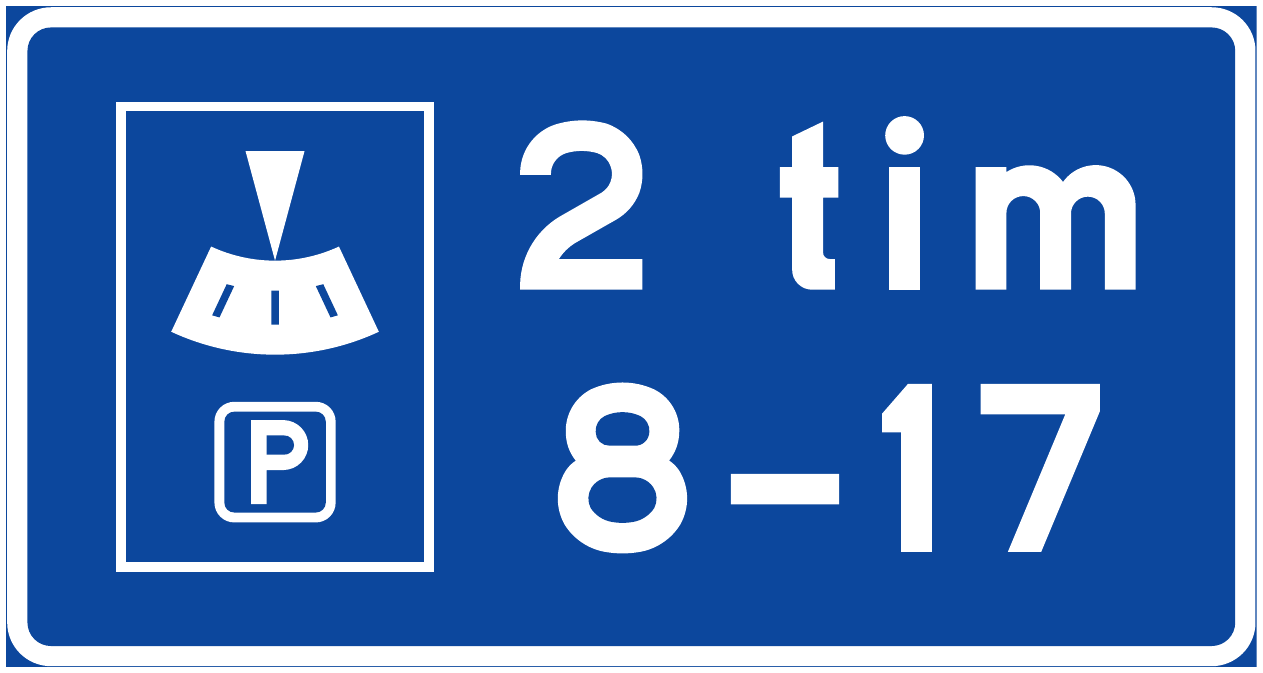
Arrival time = when you arrive at the parking area and begin parking, not when you come back to get the car.
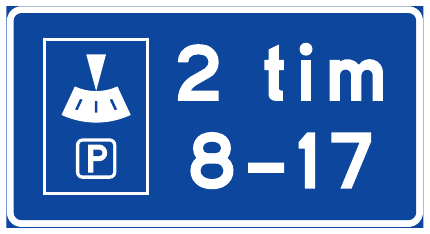
The panel indicates that the time when parking begins shall be stated using a parking disc or some other device. For the times, the more detailed provisions relating to panel T6, Time indication, apply.
If a parking disc or equivalent is used, the time shall be set to the nearest half hour after the time the parking begins. If the vehicle is parked before a time restriction begins, the time when the time restriction begins is to be set if the vehicle will remain there after this time. The disc is to be placed inside the front window of the car or, if this is not possible, on the vehicle with the time indication clearly visible and legible from the outside. A parking disc or similar does not need to be used if the vehicle is only parked during the period not encompassed by the time restriction.Swedish Road Traffic Ordinance
Learning by imitation is when we “adopt other people’s behaviours.” (Driving Licence Book, 19th Edition, page 185)
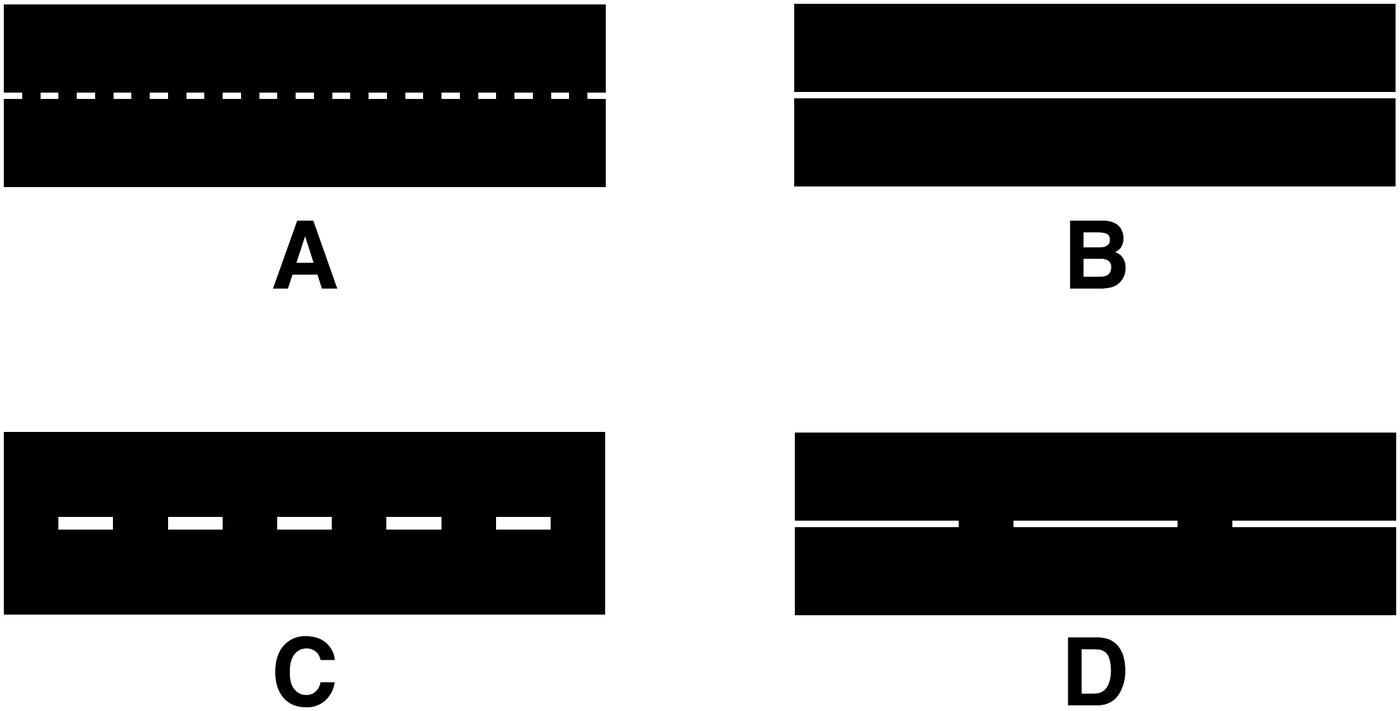
In popular speech, the solid line (B) is often described as a “prohibition on overtaking”. In actuality, the law does not say anything about overtaking being prohibited; solid lines are used when it is “not permitted to enter the opposite running lane” (Traffic Sign Ordinance).
However, in practice, this usually means that it is not possible to overtake, as overtaking most often requires you to cross the centre line. But it is not a prohibition on overtaking!
This could possibly be considered a catch question, but there are situations in which this knowledge is essential.
Example: You are driving behind a tractor on a country road with a solid line. The tractor drives out on the hard shoulder and you think “I can easily and safely drive past without even crossing the centre line, but I cannot overtake since the line is solid.” You therefore stay behind the tractor and cause a long queue (and maybe obstruct an ambulance). The right choice is to overtake the tractor without crossing the solid line. (If it is not possible to overtake the tractor without crossing the centre line, you have to stay behind it.)
No questions to show here.