Driving licence · Theory practice

Practice test 9

70 questions · Pick an answer to see whether you are right. Your answers are saved in this browser.

0of 70 correct
Not started

0 of 70 answered

0Correct
0Incorrect
70Unanswered
14Mistakes allowed

The real test has 70 questions in 50 minutes. You need 56 correct (80%) to pass.

Question 1

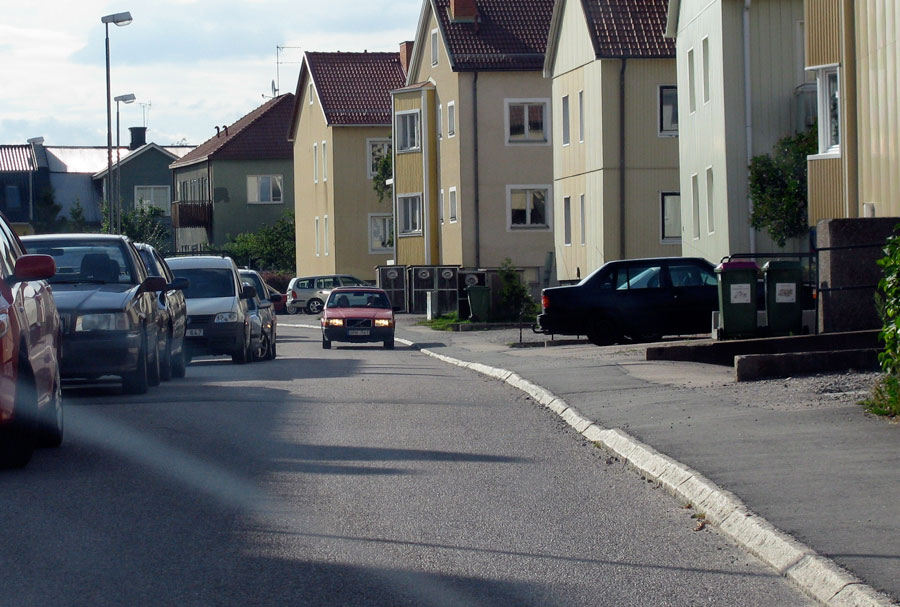
Is it permitted to temporarily drive out on the hard shoulder in the situation in the picture?
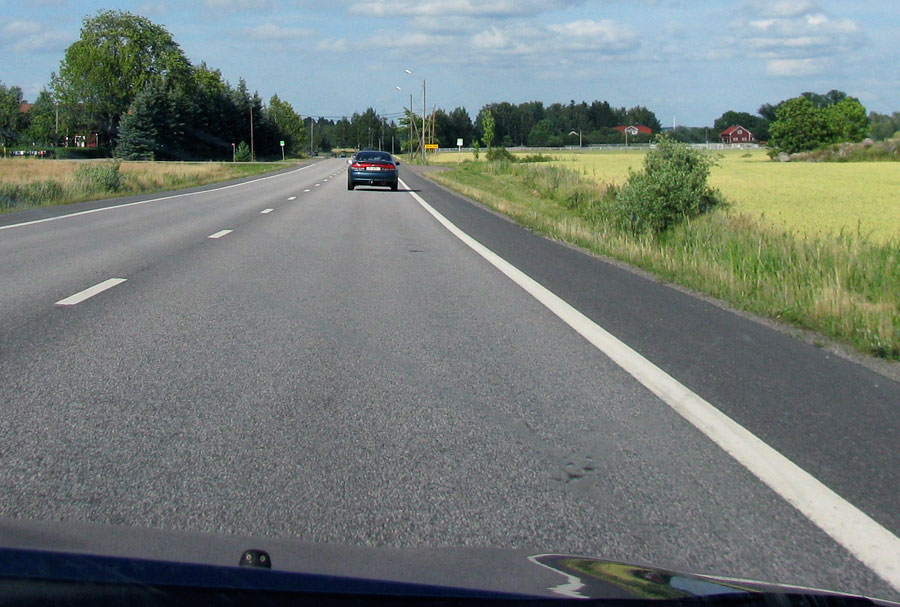
Picture for the question

Explanation

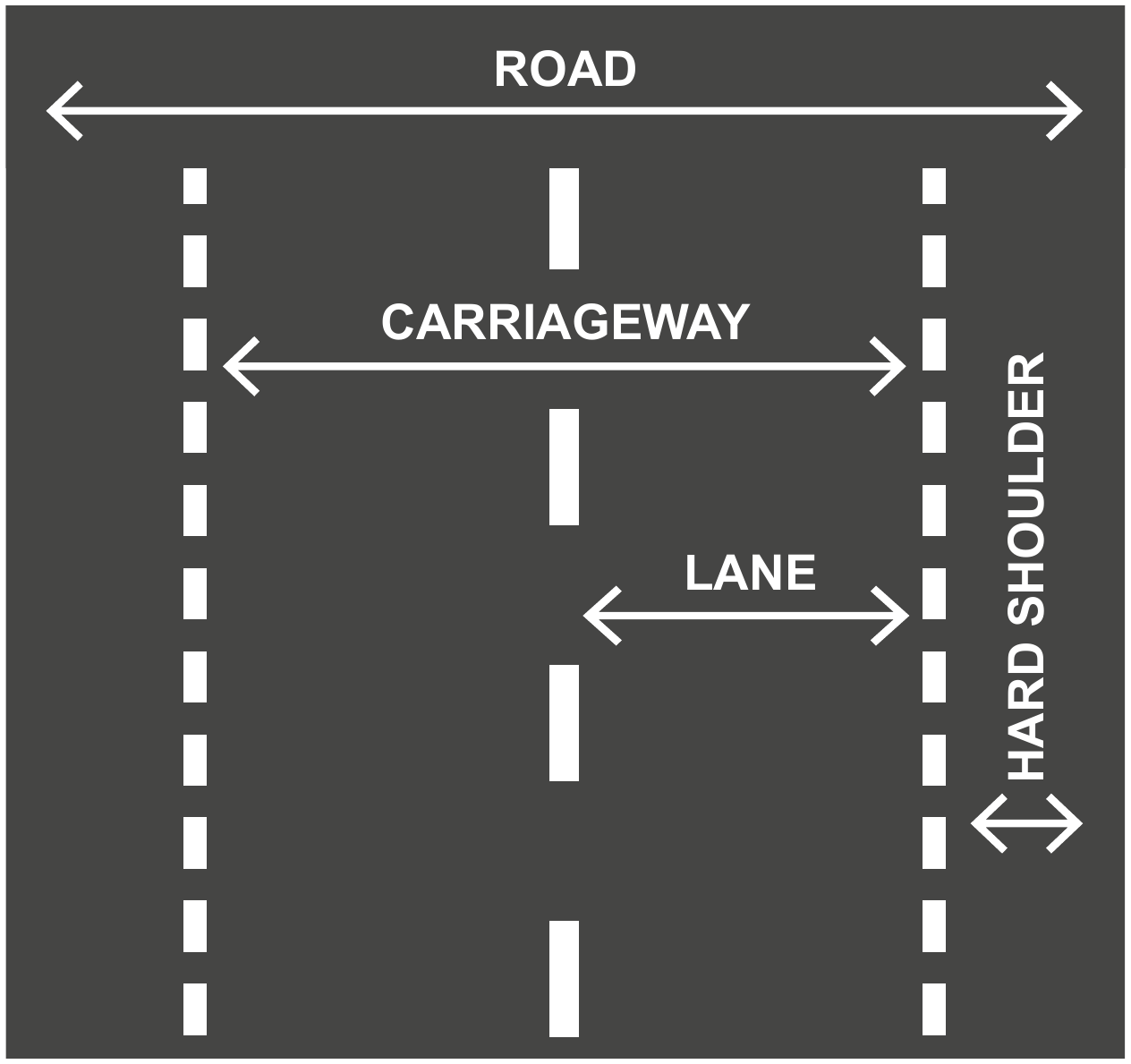
On a road, the hard shoulder shall be used
1. when travelling by bicycle or class II moped when there is no bicycle path,
2. when travelling by class I moped,
3. when travelling in a vehicle designed for a maximum speed of 40 km/h or which may not be driven faster than 40 km/h, or
4. by those driving a vehicle pulled by an animal, riding a horse, or leading or driving cattle.

If needed in order to facilitate accessibility for other traffic, the hard shoulder may be used temporarily, including transit with other vehicles. If the carriageway has been demarcated with a solid edge, the hard shoulder may only be used in the situations indicated in the first paragraph [the four points above].” (Swedish Road Traffic Ordinance)

There is nothing to suggest that the hard shoulder is a bicycle path, and this option also seems formally incorrect. Either it is a hard shoulder, or it is a bicycle path – not both at the same time.
Question 2

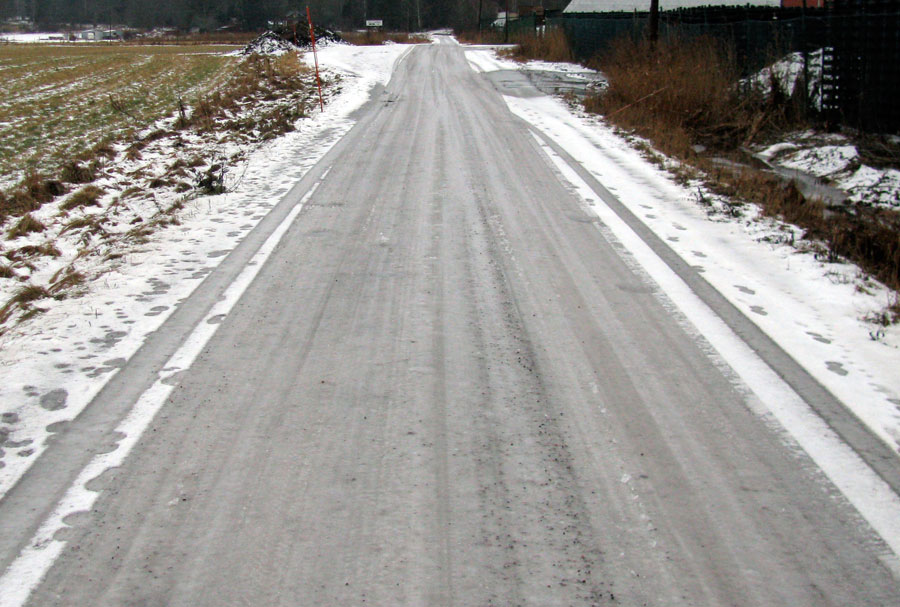
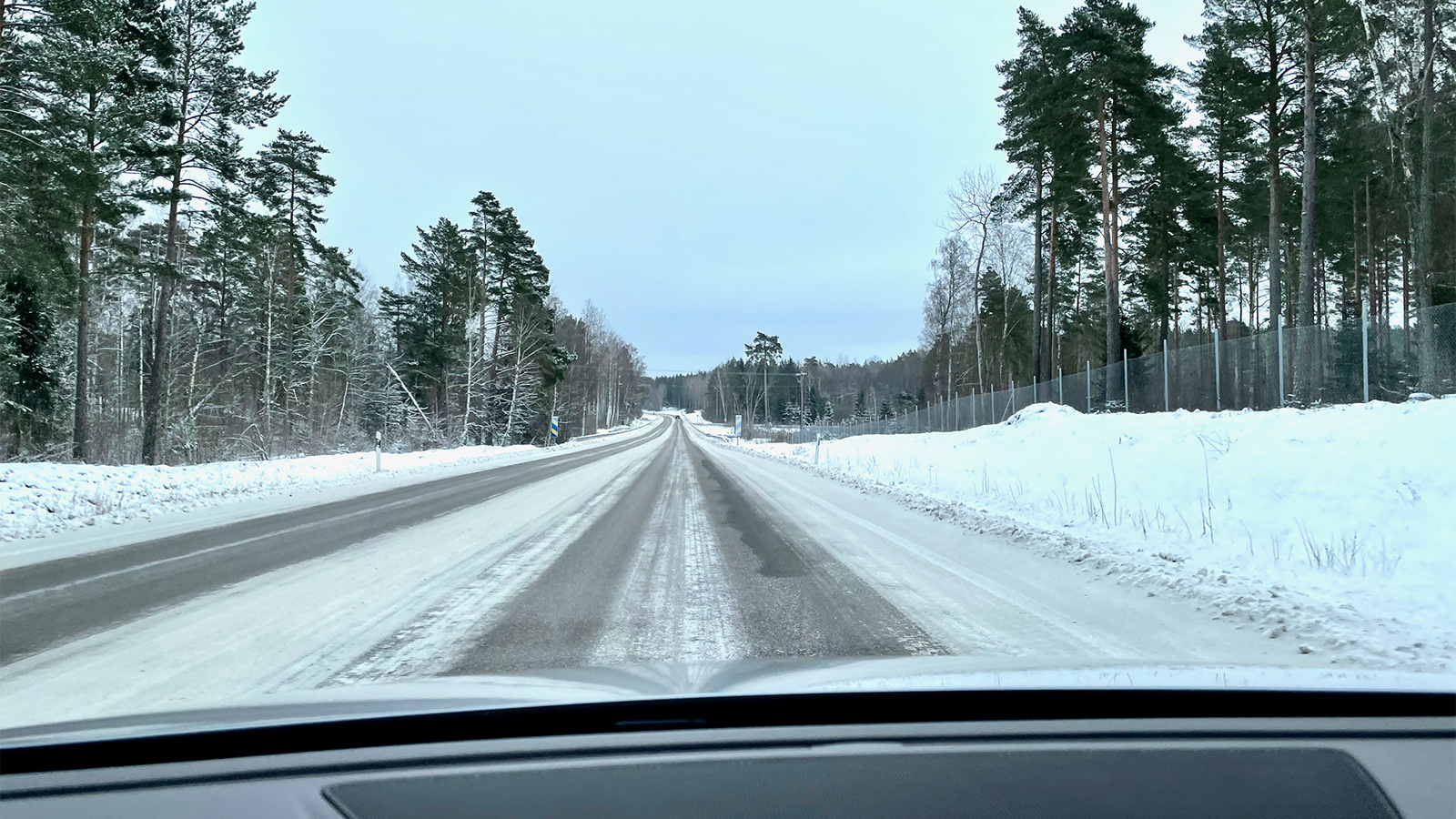
You are driving on a road at 40 km/h and do not hear any slush spray under the car. What is this a sign of?

Picture for the question

Explanation

Review of the options

  • That the road surface is ice.Sounds reasonable since ice is hard and does not spray up.
  • That the road surface is slush.According to Nationalencyklopedin, slush is “wet sludge consisting particularly of melted snow”. It would spray up under the car if you are driving 40 km/h.
  • That you risk slushplaning due to the road conditions.To experience slushplaning, large quantities of slush are needed and quite a high speed, which are not found on this road.
Question 3

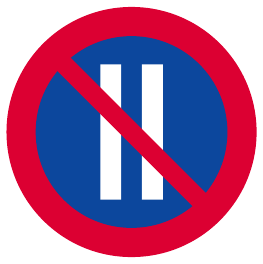
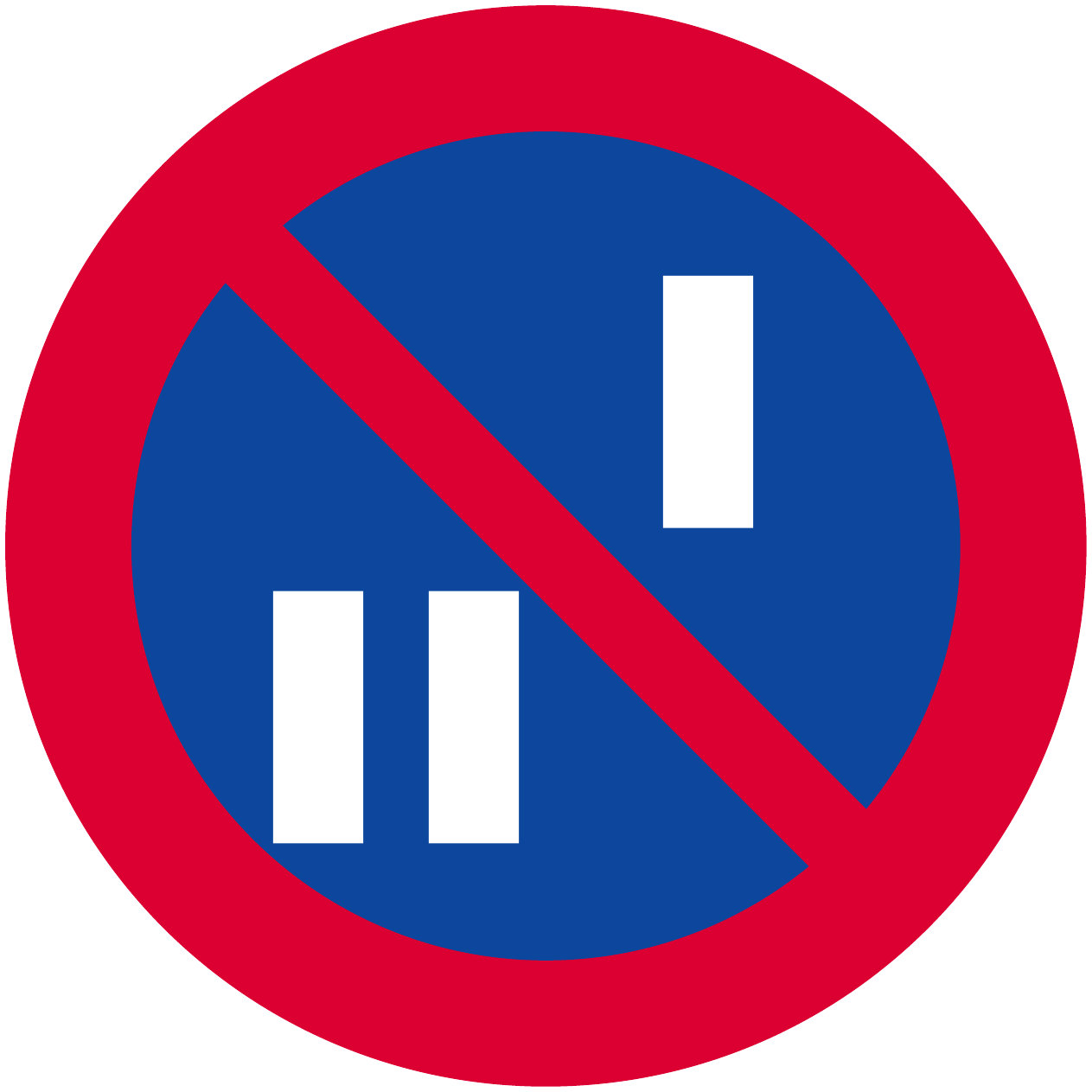
What does this road sign mean?

Picture for the question

Explanation

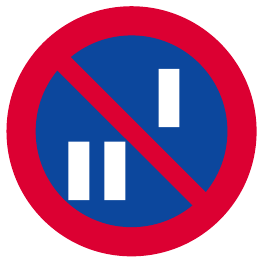
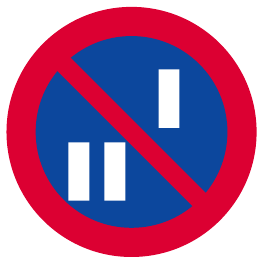
Date parking
Date parkingC38

The sign indicates that it is prohibited to park vehicles on days with even-numbered dates on the side of the road that has even-numbered addresses and on days with odd-numbered dates on the side of the road that has odd-numbered addresses. The more detailed provisions relating to sign C35, Vehicle parking is prohibited, also apply to this sign.

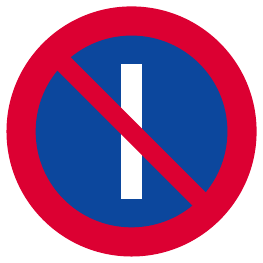
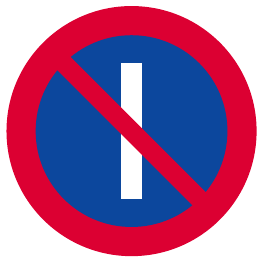
Vehicle parking is prohibited on odd-numbered dates
Vehicle parking is prohibited on odd-numbered datesC36
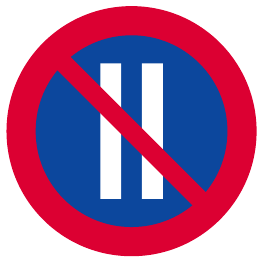
Vehicle parking is prohibited on even-numbered dates
Vehicle parking is prohibited on even-numbered datesC37

Are all the options not a little right?
– Yes, if you do a thought experiment, for example “Vehicle parking is prohibited on even-numbered dates” is correct in certain situations, but it is also wrong in other situations. “Date parking” is exactly right and should therefore be chosen as the correct answer.

Question 4

Should you apply the parking brake in winter when the weather is humid?

Explanation

In humid weather, only use a low gear for parking. There is a risk of the parking brake freezing!
Driving Licence Book, 19th Edition, page 129
Question 5

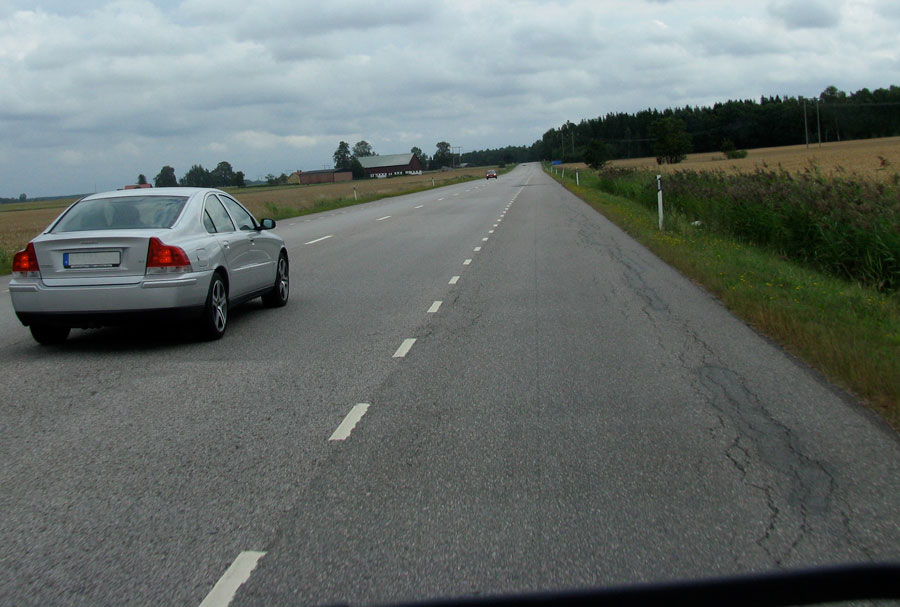
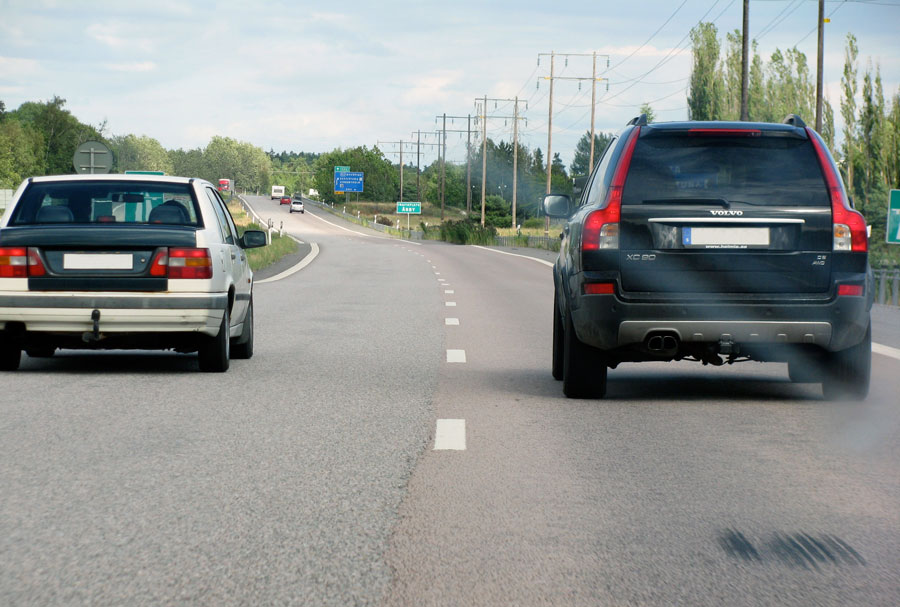
The picture is taken from your car. You became stressed by the silver car and chose to move out onto the hard shoulder to make it easier for the silver car to overtake you. Was this allowed?

Picture for the question

Explanation

Visibility is good and the road is wide. The risks with temporarily driving out on the hard shoulder are very small. The fact that there is oncoming traffic does not stop you from driving out on the hard shoulder; you are not responsible for what other cars do.

Furthermore, it is generally permitted to overtake where there is oncoming traffic if you do not drive into the lane of the oncoming traffic (which is something the silver car appears not to need to do, thanks to you).

Question 6

Which type of fuel contributes the most to the excess of carbon dioxide in the atmosphere?

Explanation

Prior to the industrialisation, the level of carbon dioxide in the atmosphere was around 280 ppmv (parts per million volume). Since then, the levels have been constantly rising. […] The global carbon dioxide emissions are caused primarily by the combustion of fossil fuels.
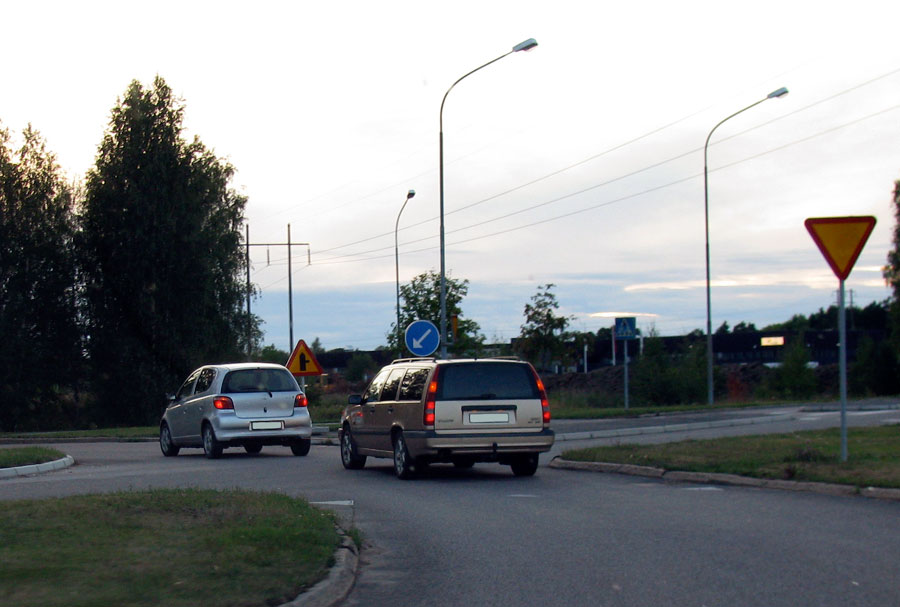
Chalmers & University of Gothenburg
Question 7

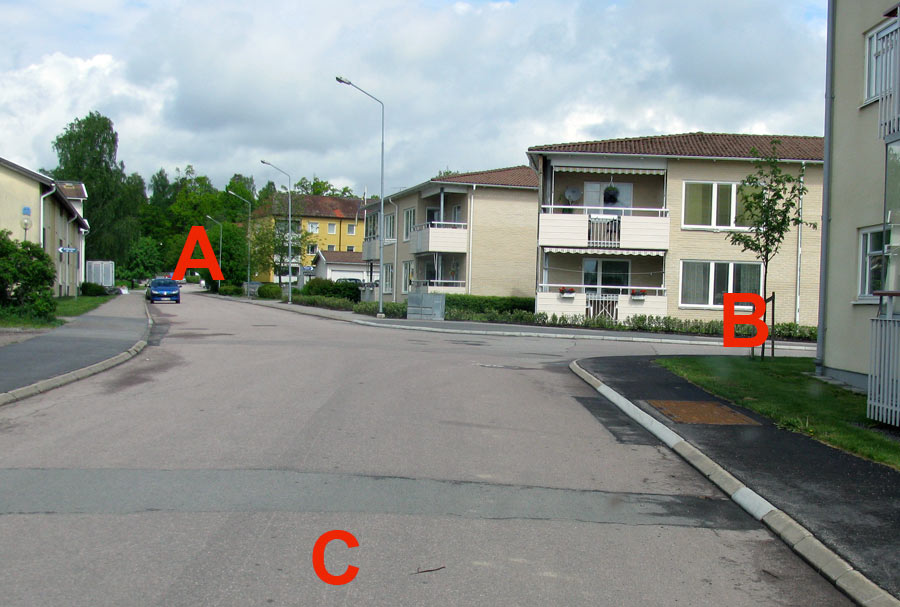
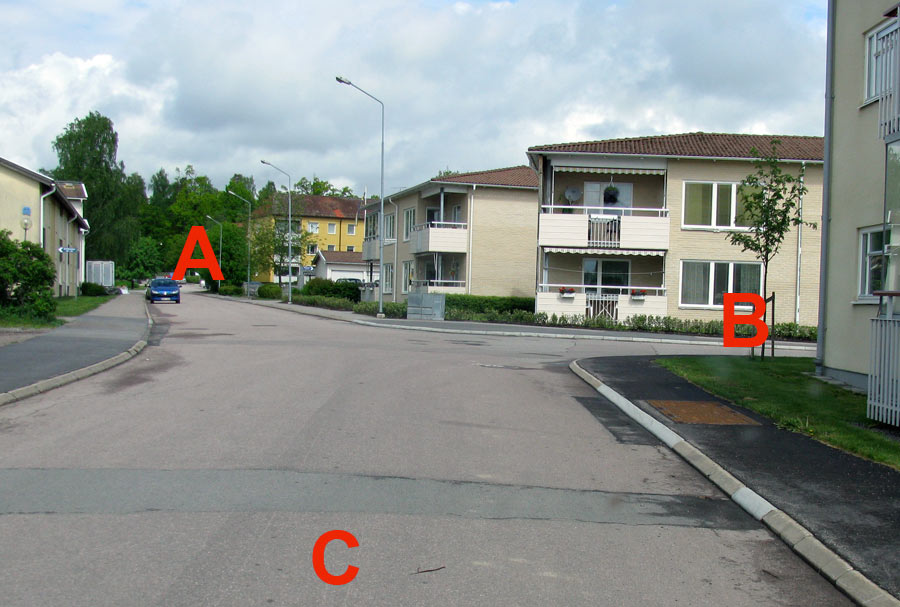
What rule applies at this junction?

Picture for the question

Explanation

As no signs or other devices have been posted, the right-hand rule applies. The car coming from B has road A on their right and must therefore give way to cars from this road.

Note that B also has priority towards C. However, no such alternative is provided in the question.

Another thing that is important to note is that the junction is in the shape of a Y from C’s perspective.

Question 8

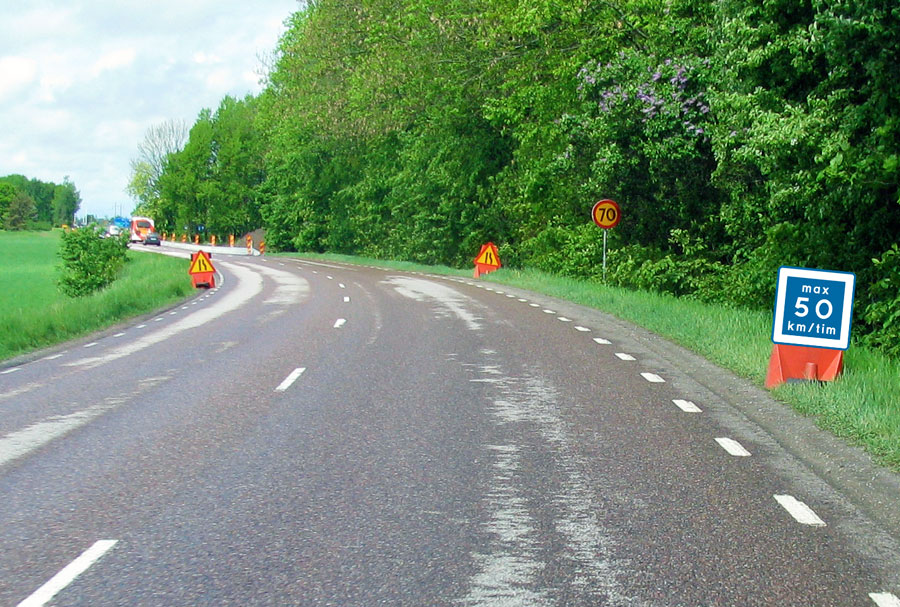
Are you permitted to drive faster than 50 km/h after the white and blue sign if you deem it appropriate?

Picture for the question

Explanation

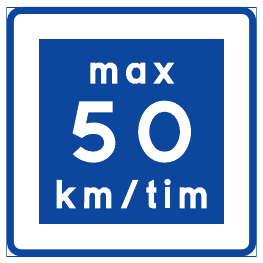
The sign indicates:

Recommended lower speed
Recommended lower speedE11

The sign indicates a stretch of road or an area where specific measures have been taken or where conditions are such that it is advisable to drive at a lower speed than the maximum permitted speed. The recommended lower speed is indicated on the sign.

Note the words “advisable” and “recommended”. These words signify that this action is not compulsory. If it would have been compulsory to stay under 50 km/h, what then is the difference between this sign and a regular round speed sign (C31)? Nothing in that case, which would mean that E11 is completely unnecessary.

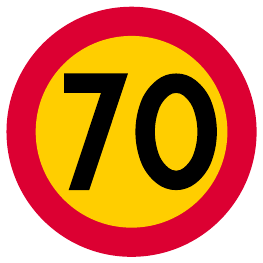
Speed limit
Speed limitC31

The sign indicates that it is prohibited to drive a vehicle faster than the speed indicated on the sign.

Therefore:

  • E11 (square blue/white) = it is not advisable to drive faster, but you may do so.
  • C31 (round yellow/red/black) = it is illegal to drive faster.
Question 9

The picture is taken from the car you are driving. Who should stop and give way according to the regulations?

Picture for the question

Explanation

If there is an obstruction when approaching an oncoming car, the driver who has the obstruction on their side shall stop, if this is necessary for the oncoming car to be able to pass.
Swedish Road Traffic Ordinance
Question 10

Which option best describes Vision Zero?

Explanation

Vision Zero is a picture of a future where people are not killed or permanently injured in road traffic. […] There is no such thing as a perfect person. Vision Zero accepts that accidents occur, but not that they result in serious personal injury.
Swedish Transport Administration
Question 11

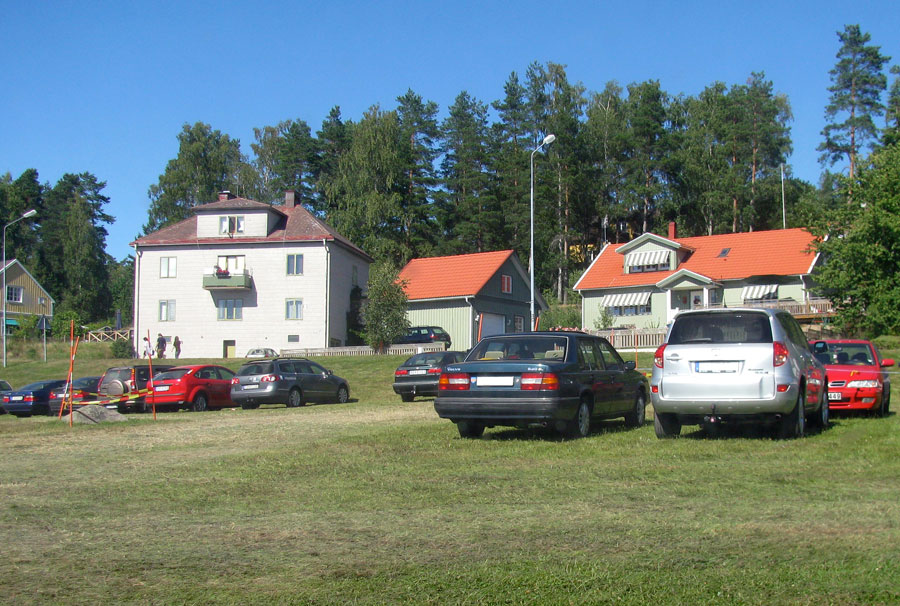
You intend to park in this temporary parking area. Which priority rule applies when you approach other cars moving within the same area?

Picture for the question

Explanation

The right-hand rule applies when there are no other applicable right of way rules. The right-hand rule states that: “When the paths of two vehicles intersect, the one driver must give way to the vehicle approaching from the right”. (Swedish Road Traffic Ordinance)

Question 12

Are certain age groups more at risk of being involved in a traffic accident?

Explanation

Driving Licence Book (19th Edition, page 201):

  • 18–19 years old: Run a 5–6 times greater risk of being involved in a traffic accident.
  • 65–74 years old: Have experience and adapt their driving to their limitations (for example by avoiding driving at night or in heavy traffic).
  • 75 years old and older: Run a 5–6 times greater risk of being involved in a traffic accident.
Question 13

Is it permitted to combine dipped headlights with parking lights?

Explanation

It is common practice to drive with dipped headlights with parking lights on.
Driving Licence Book, 19th Edition, page 158

You are only prohibited from combining the dipped headlights with fog lights or daytime lights, as these can be dazzling.

Question 14

Is it appropriate to wash your car where the dirt and detergent runs off into a regular manhole?

Explanation

Car cleaning products may not be poured out into manholes. Manholes divert rain water straight into the nearest watercourse, lake or sea. Pollution from car washing in the street will thus not be filtered out in a treatment plant.
Driving Licence Book, 19th Edition, page 223
Question 15

Is it true that accidents in conjunction with junctions cause more deaths than head-on collisions?

Explanation

Accident type Number of deaths (2019)

Head-on 47

Junction 16

Question 16

What is it called when a police officer conducts an inspection-like check of your vehicle out in traffic?

Explanation

A flying inspection is done to check that a vehicle encountered in traffic [...] has not deteriorated to an impermissible degree
Vehicles Act
Question 17

Which alternative applies to the car’s full beam headlights in snow?

Explanation

The full beam headlights are so bright that most often you will only see a “white wall” in front of you (you dazzle yourself). Driving with the daytime lights on will usually give you better visibility.

Question 18

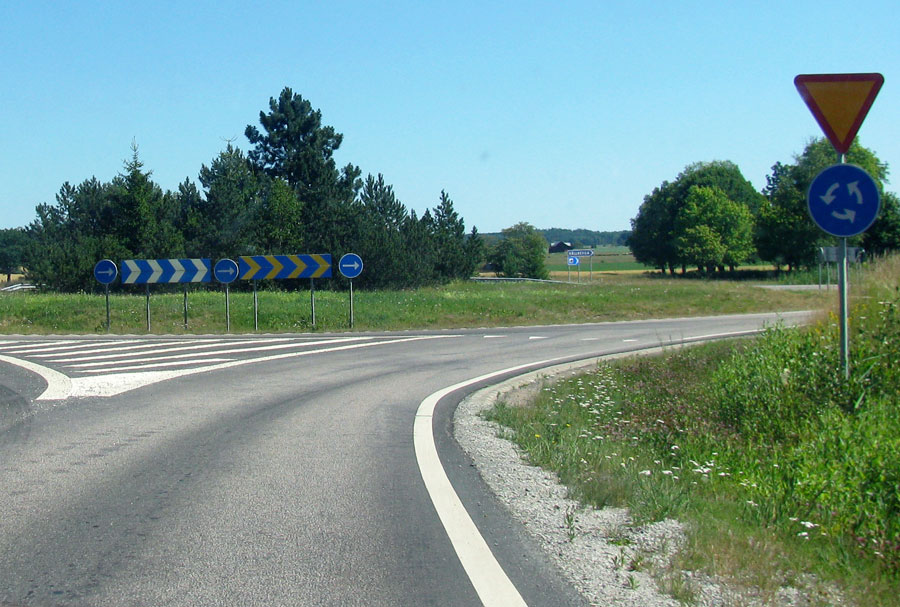
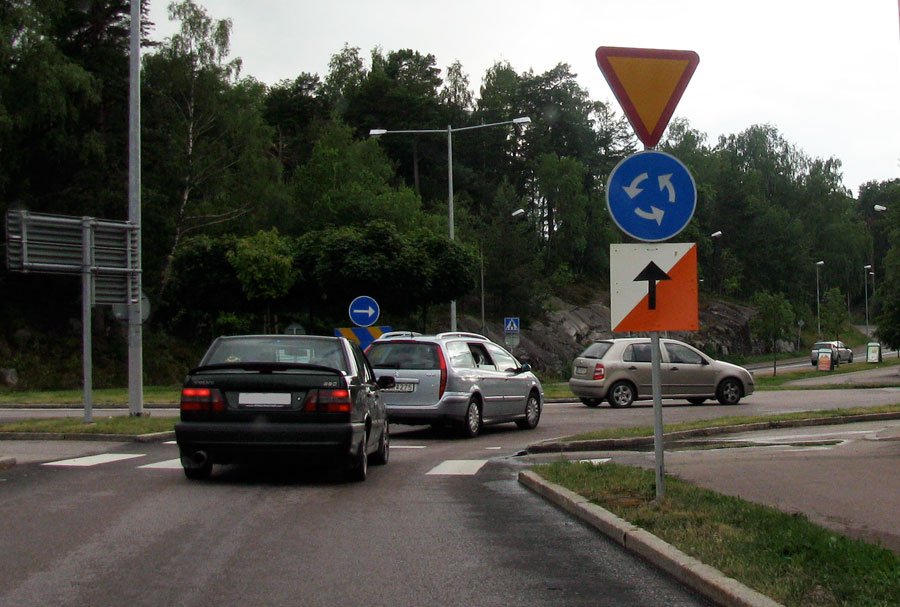
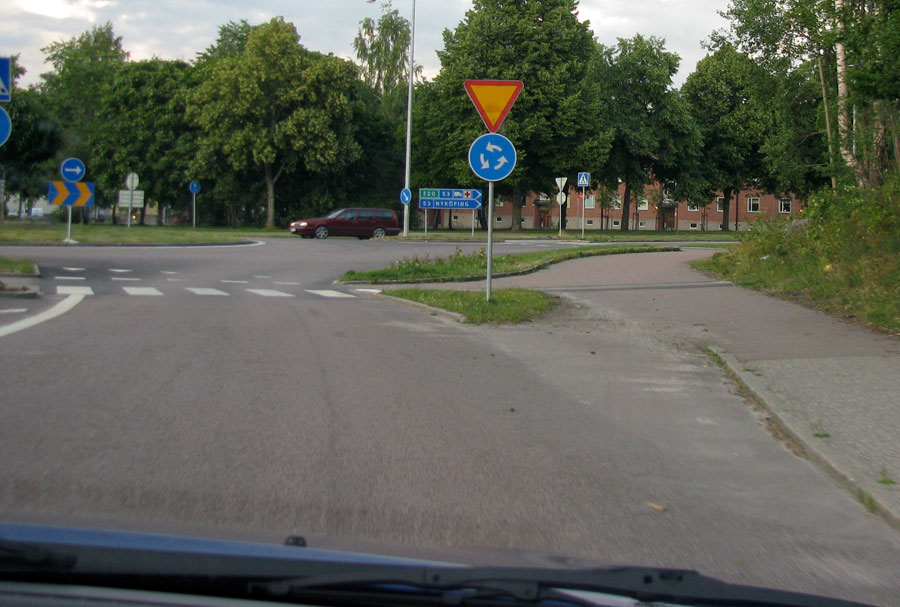
What is indicated by the three mandatory signs to the left of the picture?

Picture for the question

Explanation

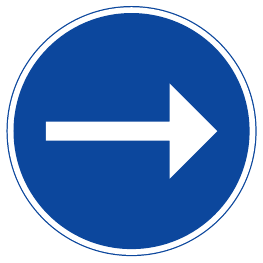
The mandatory signs referred to mean:

Direction to be followed
Direction to be followedD1

The signs indicate that the vehicle may only be driven in the direction of the arrow or, in the case of two arrows, in either arrow’s direction. The symbol is adapted to the conditions of the location.

The rectangular signs with several arrows are arrow markers (X1) and not mandatory signs, which were the subject of the question.

Roundabouts are never designed so that you must turn off at a certain exit road, you can always drive around if you want.

Question 19

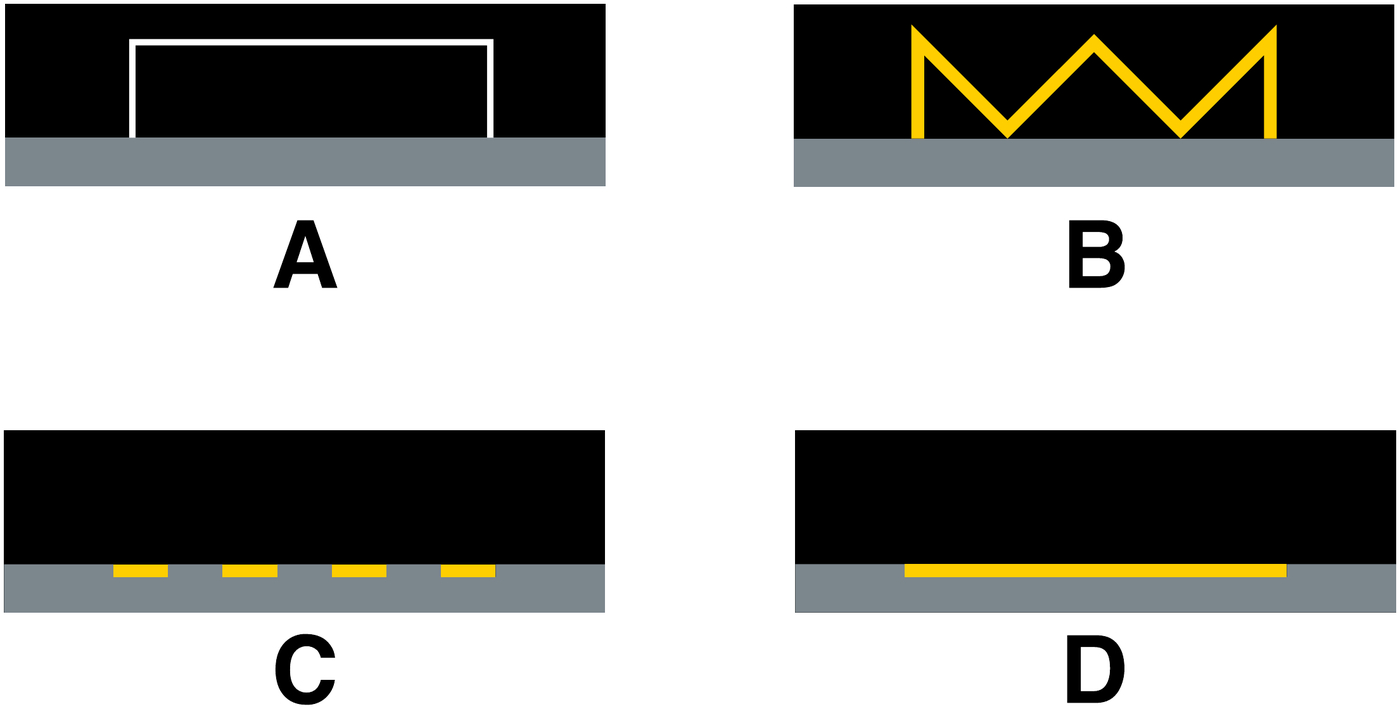
Which road marking only indicates a prohibition on parking?

Picture for the question

Explanation

B (M23) is a reinforcement of line M21 or M22. The significance of B is determined by M21 or M22.

Parking space
AParking spaceM24

The marking indicates the boundary of a vehicle parking space. The marking can have a broken line.

No stopping and parking or no parking
BNo stopping and parking or no parkingM23

This marking is used as a reinforcement of the road markings M21, no stopping and parking, and M22, no parking. No other colour may be used.

No parking
CNo parkingM22

This marking indicates a prohibition on parking a vehicle and is placed along the side of the carriageway. The marking is also used to indicate an extension of a bus stop. The marking has a distance ratio of 1:1 between the dashes and spaces. No other colour may be used.

No stopping and parking
DNo stopping and parkingM21

This marking indicates a prohibition on stopping and parking a vehicle and is placed along the side of the carriageway. No other colour may be used.

Question 20

What is true regarding the emissions of sulphur dioxide?

Explanation

The sulphur emissions from road traffic have gone down a great deal in the last 15 years and is now only 1 per cent of what they were in 1990. Road traffic sulphur dioxide emissions is therefore a problem we can consider solved, as today’s fuels contain very small amounts of sulphur.
Swedish Transport Administration
Question 21

Which alternative is true when it comes to the number of passengers allowed in a private car?

Explanation

No more passengers are allowed in a car than the number it is registered for.
Swedish Transport Agency

The registration certificate takes into consideration the number of seats with belts, maximum load, etc. If you install an additional seat yourself, the car must pass a roadworthiness test before anyone can travel in that seat.

The word “type-approved” is only used to make the alternative sound right. Type-approved is not used in this context. In addition, there is no requirement for three-point belts. Two-point belts (lap belt) are also permissible.

Question 22

When, as a rule, does a person perform best?

Explanation

When we are exposed to moderate stress, it improves our performance.
Driving Licence Book, 19th Edition, page 189

A relaxed person is sluggish and slow. A very stressed person is at risk of panicking. Everything is best in moderation; if you look at athletes, they usually look fairly tense and focused when it is time for them to perform. The brain knows that the situation is serious, which leads to stress (high expectations to perform) but also to a better focus.

Question 23

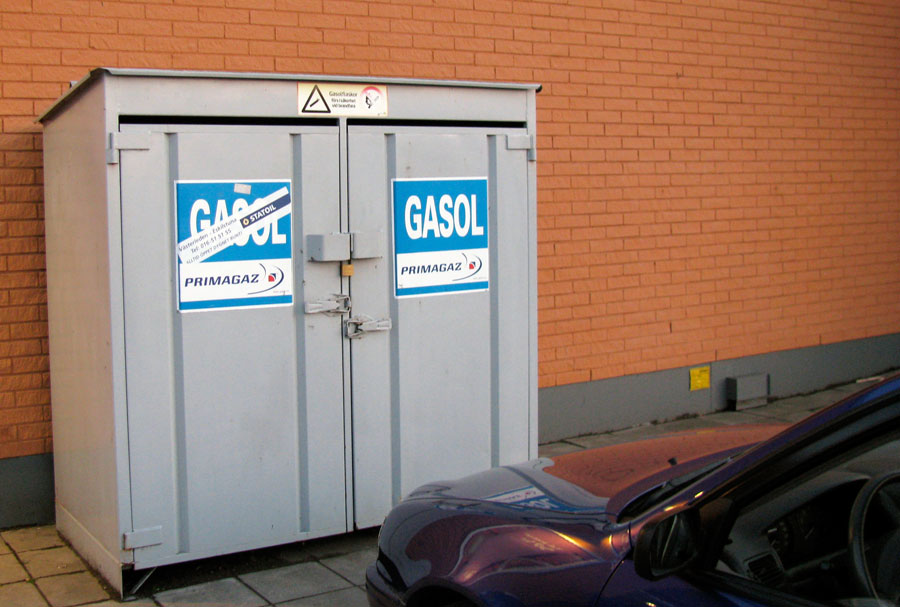
Why is the blue car parked badly?

Picture for the question

Explanation

If it catches fire, the gas cylinders may explode. It appears that efforts to open the cabinet will be hindered by the blue car.

The other options are fairly ridiculous compared with the risk of explosion.

Question 24

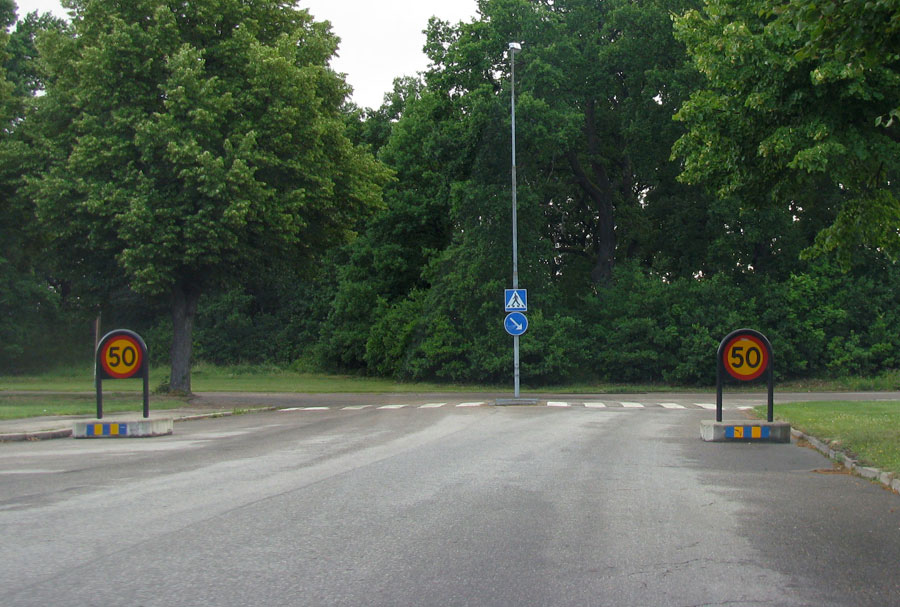
What do the road signs in the picture mean?

Picture for the question

Explanation

You should interpret this as a completely normal speed sign. That it is erected in a special way has no significance.

Question 25

Where do most traffic accidents take place?

Explanation

Where do the accidents occur? Most accidents take place in built-up areas in dense traffic where many road user groups have to share the space.
Du och jag i trafiken [You and me in traffic], 28th Edition, page 71

There is also a question regarding where the most serious accidents take place.

Question 26

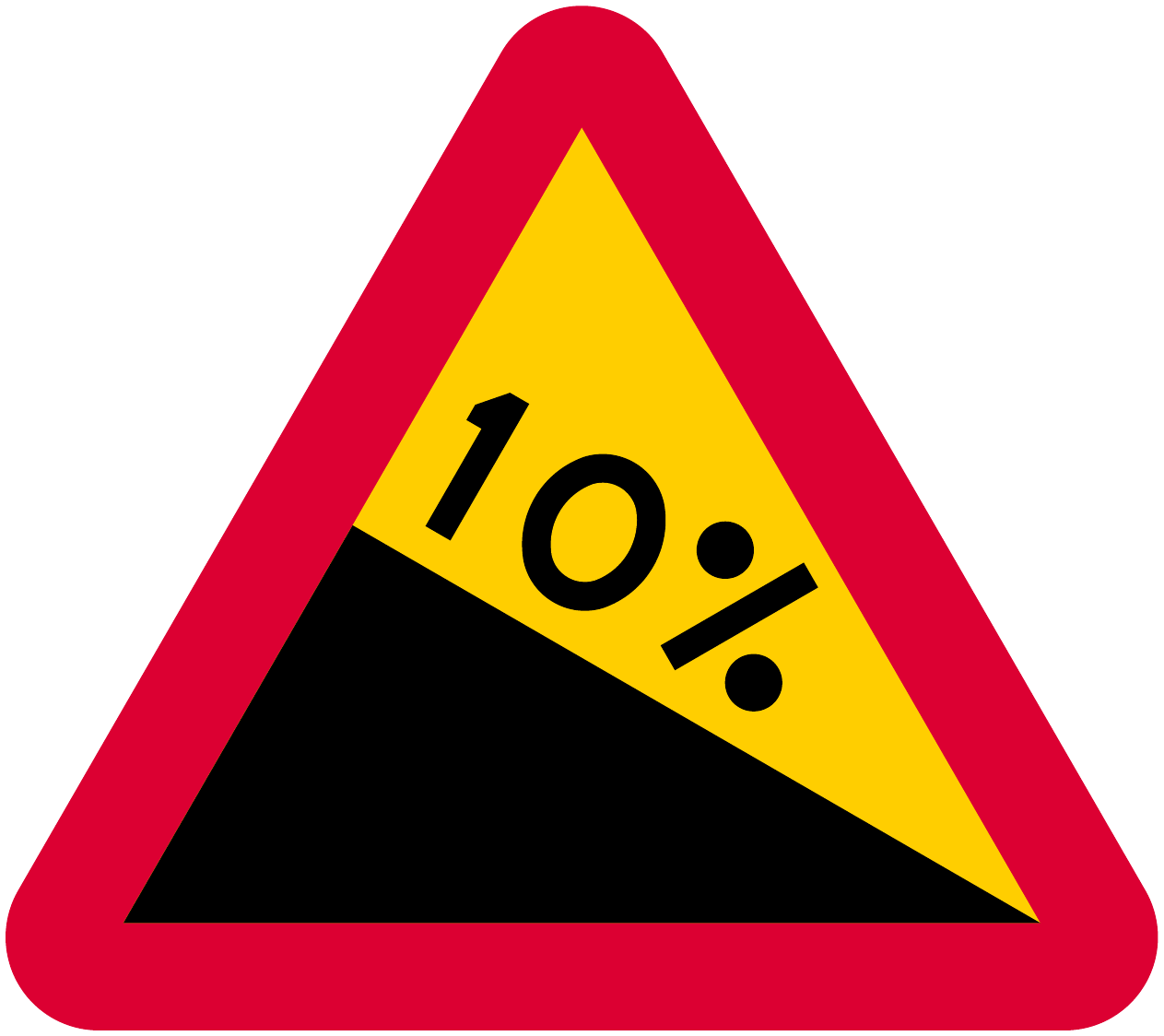
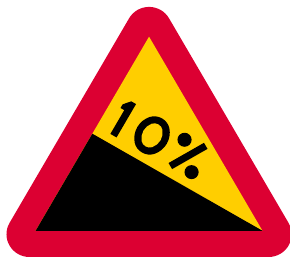
What does the sign warn of?

Picture for the question

Explanation

Steep hill downwards

The sign indicates a steep hill downwards. The numbers indicate the gradient in per cent and is specific to the conditions of the location.

Question 27

Is there any situation where you may station your car two metres before a pedestrian crossing?

Explanation

If you are giving way to someone crossing, you may of course remain stationary close to the pedestrian crossing. This is perhaps one of the most common traffic situations. Another example is if you need to remain stationary before a pedestrian crossing to avoid danger.

The prohibition in this regard refers to parking, not being stationary.

Is this not an unnecessary catch question?
– No, it is important to be aware of this in order to be a good and safe driver. For example, if the traffic situation requires you to remain stationary in your car before a pedestrian crossing, as a safe driver, you can calmly stay where you are to analyse the situation. A driver who is not aware of this rule may panic and think “I have to move my car because I’m not allowed to stand here!” Such a driver may make an unexpected manoeuvre to get away from the crossing and thereby make the situation worse.

Question 28

Should you leave the keys in the ignition if you have to abandon your car due to a fire in a tunnel?

Explanation

In the event of a tunnel accident: “Do not lock the car. Leave the keys in it.” (Swedish Transport Administration)

If, for example, firefighters want to move your car, it is significantly easier for them if the car keys are still in it. If you have taken them with you, they then have to tow the car away, which can take a long time and involve great danger.

Question 29

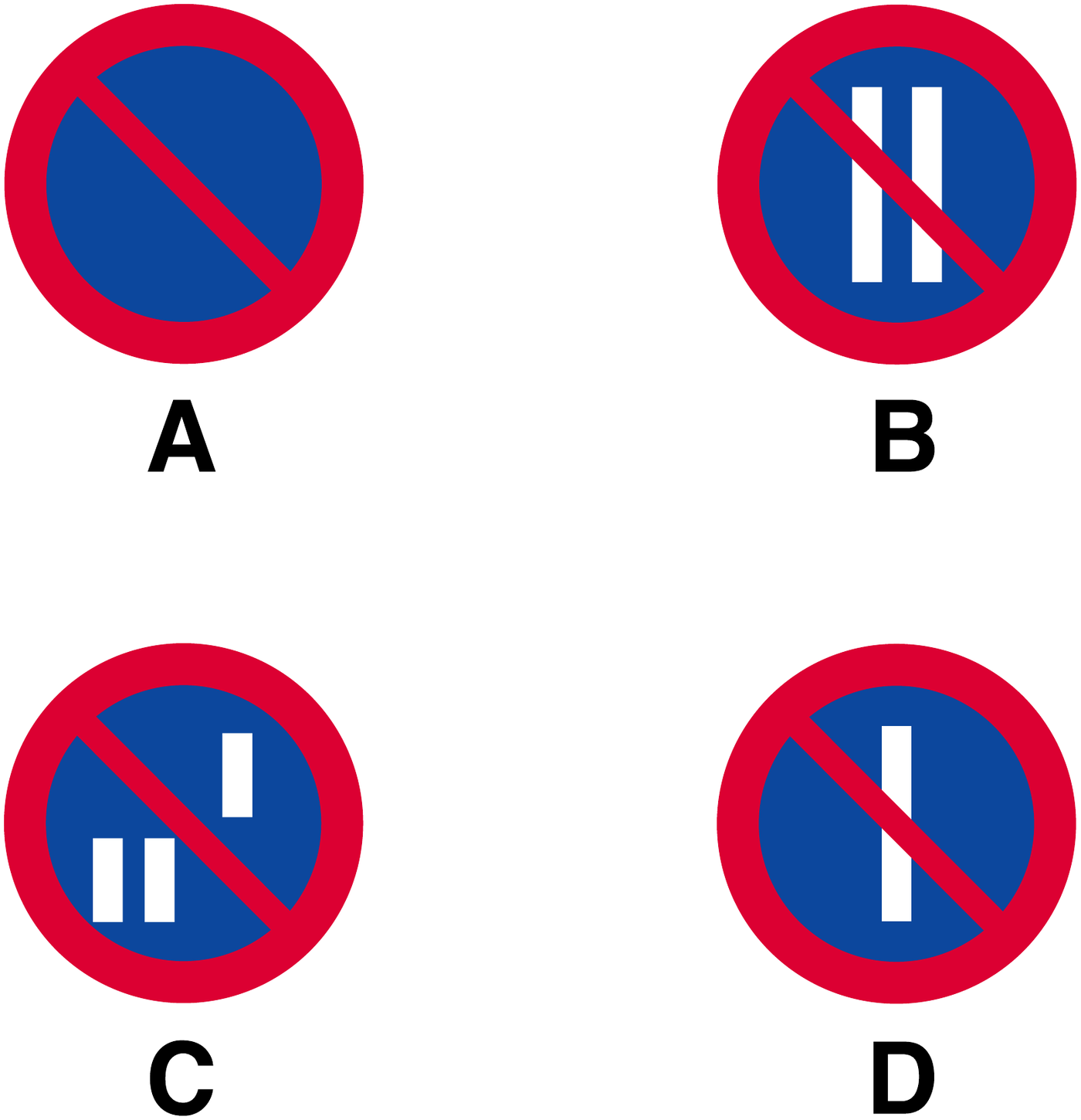
Which sign indicates date parking?

Picture for the question

Explanation

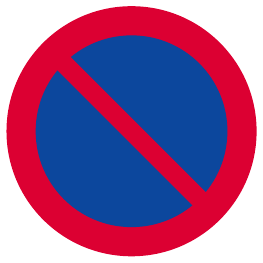
Vehicle parking is prohibited
AVehicle parking is prohibitedC35

The sign indicates it is prohibited to park a vehicle. The directions apply on the side of the road where the sign is posted.

Vehicle parking is prohibited on even-numbered dates
BVehicle parking is prohibited on even-numbered datesC37

The more detailed provisions relating to sign C35, Vehicle parking is prohibited, also apply to this sign.

Date parking
CDate parkingC38

The sign indicates that it is prohibited to park vehicles on days with even-numbered dates on the side of the road that has even-numbered addresses and on days with odd-numbered dates on the side of the road that has odd-numbered addresses. The more detailed provisions relating to sign C35, Vehicle parking is prohibited, also apply to this sign.

Vehicle parking is prohibited on odd-numbered dates
DVehicle parking is prohibited on odd-numbered datesC36

The more detailed provisions relating to sign C35, Vehicle parking is prohibited, also apply to this sign.

Question 30

Are you permitted to drive a three-wheeled motorcycle with an engine output of less than 15 kW if you only have a category B licence?

Explanation

Category B also gives the licence holder the right to drive: “Three-wheeled motorcycle” at the age of 18 and a three-wheeled motorcycle over 15 kW at the age of 21. (Swedish Transport Agency)

Question 31

Should you use your indicator when pulling out from the curb onto the road (for example, from a parking spot)?

Explanation

When a driver intends to pull out from a curb [...] the driver shall use their indicator to show their intention.
Swedish Road Traffic Ordinance
Question 32

You are driving on a country road where the maximum permitted speed is 70 km/h. Which vehicle can you expect to maintain a significantly lower speed on this road?

Explanation

A slow-moving vehicle (Swedish: Långsamtgående fordon, LGF) may drive at a maximum speed of 45 km/h, which is significantly lower than the maximum speed of 70 km/h applicable on this road. If you see a vehicle with a LGF-plate in front of you, you must be prepared to slow down.

Question 33

Are you allowed to drive a light lorry if you have a category B licence?

Explanation

Vehicles that you are allowed to drive […] B […] Private car […] light lorry
Swedish Transport Agency
Question 34

Which alternative is something that can have an impact on genetic material, cause cancer and also contribute to the formation of tropospheric ozone?

Explanation

Hydrocarbons (HC) in car exhausts causes cancer and can have a genetic impact. Along with nitric oxides, the hydrocarbon emissions contribute to the formation of tropospheric ozone.
Driving Licence Book, 19th Edition, page 228

Sometimes, you have to give the answer that is the “most correct”. The increased risk of cancer caused by nitric oxide is so small that the STR Driving Licence Book does not even mention it. On the other hand, the Driving Licence Book does say that hydrocarbons “cause cancer”, which makes that alternative the most correct.

Question 35

What placement should you choose when driving over the top of a hill?

Explanation

On the other side of the hill, there may be dangers all around.

If you place the car far to the left, you increase the risk of colliding with oncoming traffic.

If you drive far to the right, you increase the risk of hitting a pedestrian or a cyclist on the side of the road. The same is true if you go on the hard shoulder (which is the worst alternative by far in this question).

The best compromise is to stick to the middle of your lane.

Illustration
Question 36

What type of damage is not covered by third-party insurance?

Explanation

Third-party insurance [...] Note that you are not compensated for [...] damage to your own vehicle
Swedish Transport Agency
Question 37

What is true regarding the square sign with the black arrow?

Picture for the question

Explanation

The sign is probably erected by the organisers of some event.

A diversion is, for example, indicated with this official sign:

Direction during diversion
Direction during diversionF24

The sign indicates the direction of travel during the temporary diversion of traffic. No other colour may be used.

Question 38

What is a crawler lane?

Explanation

A crawler lane is an extra lane found on certain long or steep upward slopes and which are to be used for overtaking.
Du och jag i trafiken [You and me in traffic], 28th Edition, page 252
Question 39

Is it true that drivers between the ages of 45–65 years have less of a risk of being in an accident than drivers older than 75?

Explanation

Review of the options

  • No, since drivers over the age of 75 years tend to drive more calmly.This statement is true (75+ drive more calmly), but it does not matter, they are still involved in more accidents than the 45–65-year-olds. The option is therefore incorrect.
  • Yes, since they have experience and their senses are still relatively sharp.Correct.
  • No, since drivers over the age of 75 years have more traffic experience.This statement is true (75+ often have the longest experience), but it does not matter, they are still involved in more accidents than the 45–65-year-olds. The option is therefore incorrect.
  • Yes, since drivers over the age of 75 years often overestimate their abilities.Wrong, they have a good self-knowledge and rarely overestimate their own abilities.

The main reason why people over the age of 75 run a higher risk of being in an accident is that the senses and ability to make quick decisions deteriorate in older people (Driving Licence Book, 19th Edition, page 201).

Question 40

Which alternative applies to the use of the hard shoulder?

Explanation

Towing shall take place on the hard shoulder or, if no such shoulder exists, on the right side of the road.
Driving Licence Book, 19th Edition, page 249
On a road, the hard shoulder shall be used [...] when driving a vehicle designed for a maximum speed of 40 kilometres per hour or which is not permitted to drive faster than 40 kilometres per hour, [...] If needed in order to facilitate accessibility for other traffic, the hard shoulder may be used temporarily, including transit with other vehicles.” (Swedish Road Traffic Ordinance) “When driving on the road, bicycles and class II two-wheeled mopeds shall keep to the bicycle path, if available.
Swedish Road Traffic Ordinance
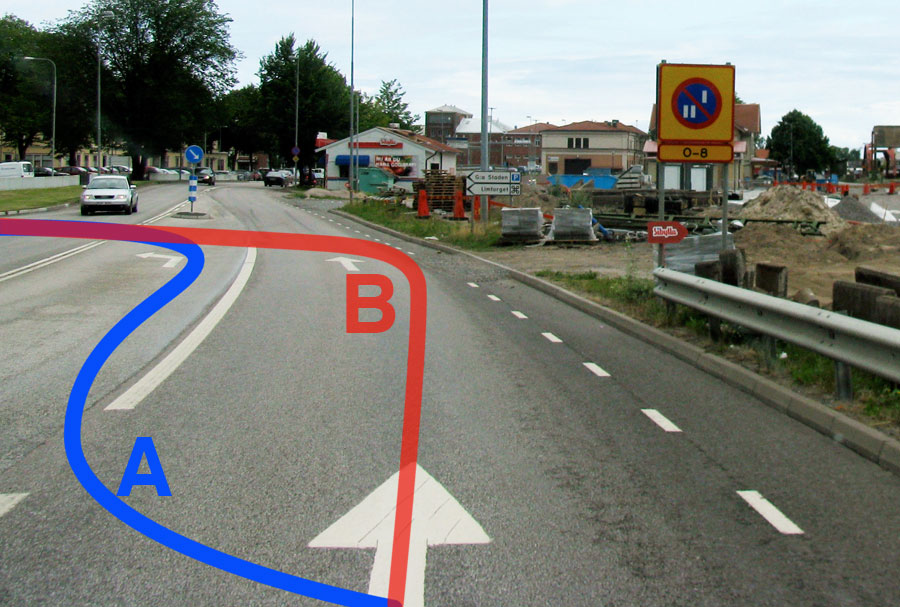
Question 41

What type of turn is a cyclist allowed to make?

Picture for the question

Explanation

Cyclists and drivers of mopeds class II may [...] prior to a junction, keep to the right of the road even when they intend to turn left.
Swedish Road Traffic Ordinance

This is because it may be difficult and dangerous to choose A when there is heavy traffic. B may be better since it means that the cyclist can stop at the curb and consider the other traffic.

Why do I need to know this?
– So that you do not get surprised (and cause a dangerous situation) if a cyclist turns as indicated by B.

Question 42

Do you always need to stop before driving out on the intersecting road in the situation in the picture?

Picture for the question

Explanation

A driver who is obliged to give way shall clearly show their intention to yield by slowing down or stopping in good time. The driver may continue driving only if there is no risk or obstruction involved, with regard to other road users’ position, the distance to them and their speed.
Swedish Road Traffic Ordinance

You therefore do not need to stop if there are no other road users on the intersecting road that you would disrupt by driving out.

Question 43

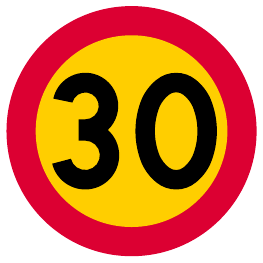
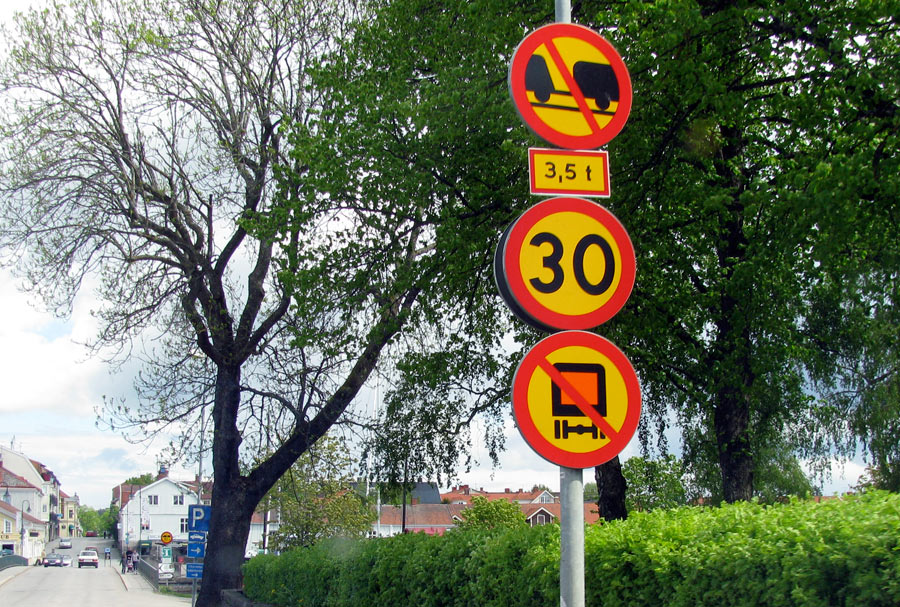
Which vehicles are subject to the 30 sign?

Picture for the question

Explanation

Speed limit
Speed limitC31

The sign indicates that it is prohibited to drive a vehicle faster than the speed indicated on the sign.

Only an additional panel can tell you that a speed limit only applies to a certain type of vehicle. The only additional panel in the image is the one marked “3.5 t” and this has nothing to do with the 30 sign since it has been posted above the 30 sign.
Question 44

You are driving on a two-way road. Where would you see this verge post?

Picture for the question

Explanation

Along a two-way road, verge posts for each direction shall display rectangular reflectors on the right side of the road and round reflectors on the left side.
Swedish Transport Administration

On the left side of a two-way road, there is a post with round reflectors.

Question 45

You have braked hard to avoid an accident. As a result of braking, your vehicle has come to a full standstill on the road. According to the rules, is this considered stopping?

Explanation

Stopping a vehicle means bringing it to a standstill in a way which:
  • is not done to avoid danger
  • is not the result of traffic conditions, or
  • does not constitute parking.” (Swedish Transport Agency)

The standstill described in the question takes place to avoid danger, which means that it does not count as a stop in the legal sense. It would be strange to get a fine for braking in a prohibited place in order to avoid an accident.

Question 46

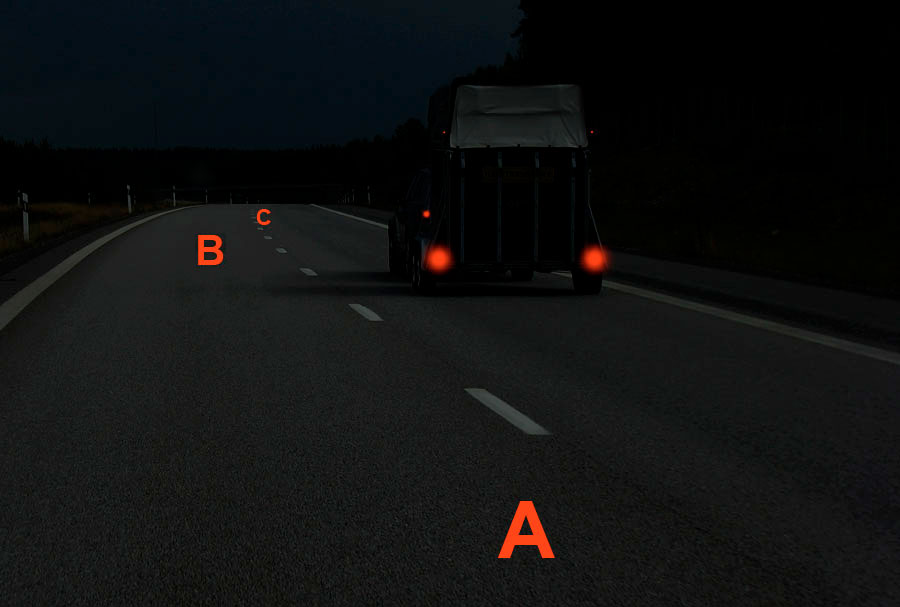
You are driving the car from which the picture is taken and are about to pass the horse trailer. When should you turn on your full beams?

Picture for the question

Explanation

You should turn on your full beams as soon as you do not risk dazzling the other driver. In B, you are alongside the other vehicle and there is no risk of dazzling since the full beams are directed forward and not to the sides.

Question 47

Which road is considered the main road when there are no signs or signals?

Picture for the question

Explanation

There is no such thing as a “main road”. Since there are no signs or similar devices, you should adhere to the right-hand rule, which “[...] applies in the absence of road signs and road markings stating otherwise.” (Du och jag i trafiken [You and me in traffic], 28th Edition, page 139)

It is common to try to analyse situations like the one depicted, in order to arrive at what is logical and “should be the case”. This is not good. The right-hand rule does not take into consideration the size of the roads, their angles or how trafficked they are, etc. If there are no signs or signals = use the right-hand rule!

Question 48

You are driving the car from which the picture is taken and another car is just about to overtake you. Should you drive out on the hard shoulder to facilitate the overtaking manoeuvre?

Picture for the question

Explanation

The correct answer indicates the reasons precisely: it is not necessary as the road is wide and it also may be slippery out on the hard shoulder.

Question 49

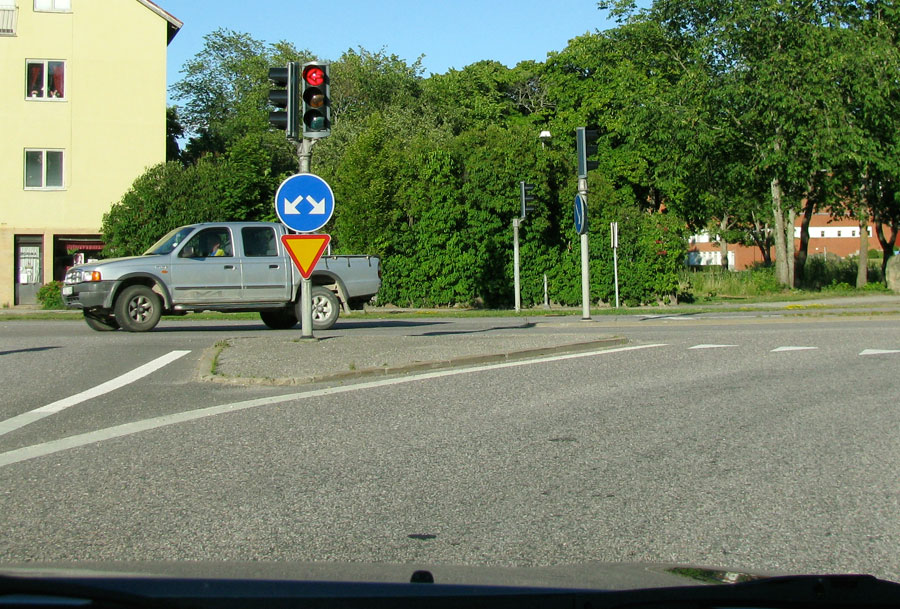
You are driving the car from which the picture is taken. After the grey car, the intersecting road is free of traffic. Are you allowed to turn right directly without stopping?

Picture for the question

Explanation

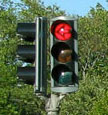
Enlarge the first picture by clicking on it. Then it is fairly clear that there is an arrow on the red light:

Illustration
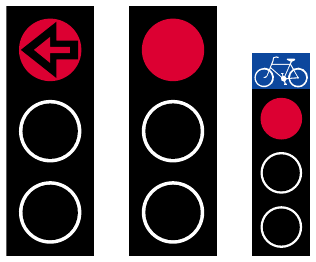
Red
RedSIG1

Stop. A vehicle may not pass the stop line or, in the absence of such, the signal. A signal with an arrow outline only applies to the direction or directions indicated by the arrow.

You are turning right, which means that you do not have to obey the red signal since it only applies to those turning left.

The picture is unclear!
– Yes, that is intentional. Reports from the real test indicate that small details in pictures that are hard to see can determine a whole question.

Question 50

Could it be prohibited to drive a vehicle when you are tired?

Explanation

A vehicle may not be driven by a person who, due to illness, fatigue, intoxication by alcohol, other stimulants or sedatives, or for other reasons is incapable of driving the vehicle in a safe manner.
Swedish Road Traffic Ordinance

You are permitted to be tired as long as you are able to drive the vehicle safely. For this reason, the question is whether it “could” be prohibited, not whether it is always prohibited (which is not the case).

Question 51

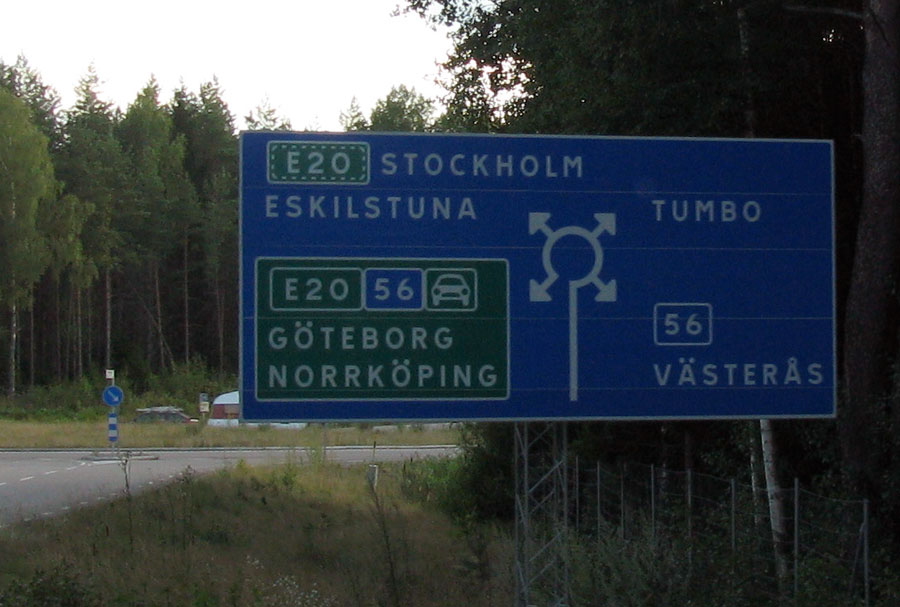
What is true regarding the connection to E20?

Picture for the question

Explanation

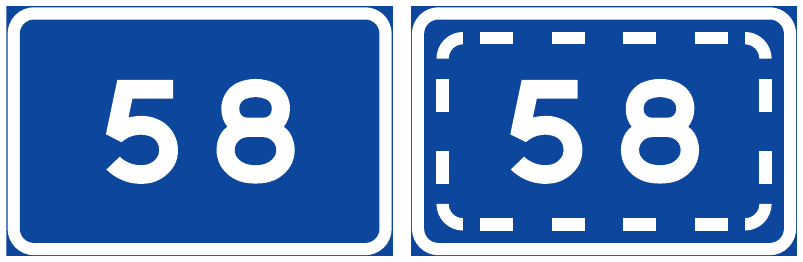
Illustration
Road numberF14

A road number is only given for roads in the number group 1–499. A sign with a dashed border indicates that the road is leading to the route with the number on the sign.

The road upward does not lead directly out onto E20, but rather to a road that in turn leads to E20.

Question 52

What does the term winter road conditions mean?

Explanation

Winter road conditions are considered to exist when there is snow, ice, slush or frost on some part of the road.
Swedish Transport Agency
Question 53

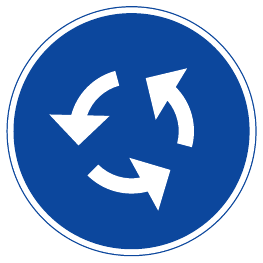
The picture is taken from the car you are driving. What are you approaching?

Picture for the question

Explanation

Roundabout
RoundaboutD3

Traffic in a roundabout always goes counter-clockwise. There are therefore no “reverse” roundabouts.

Question 54

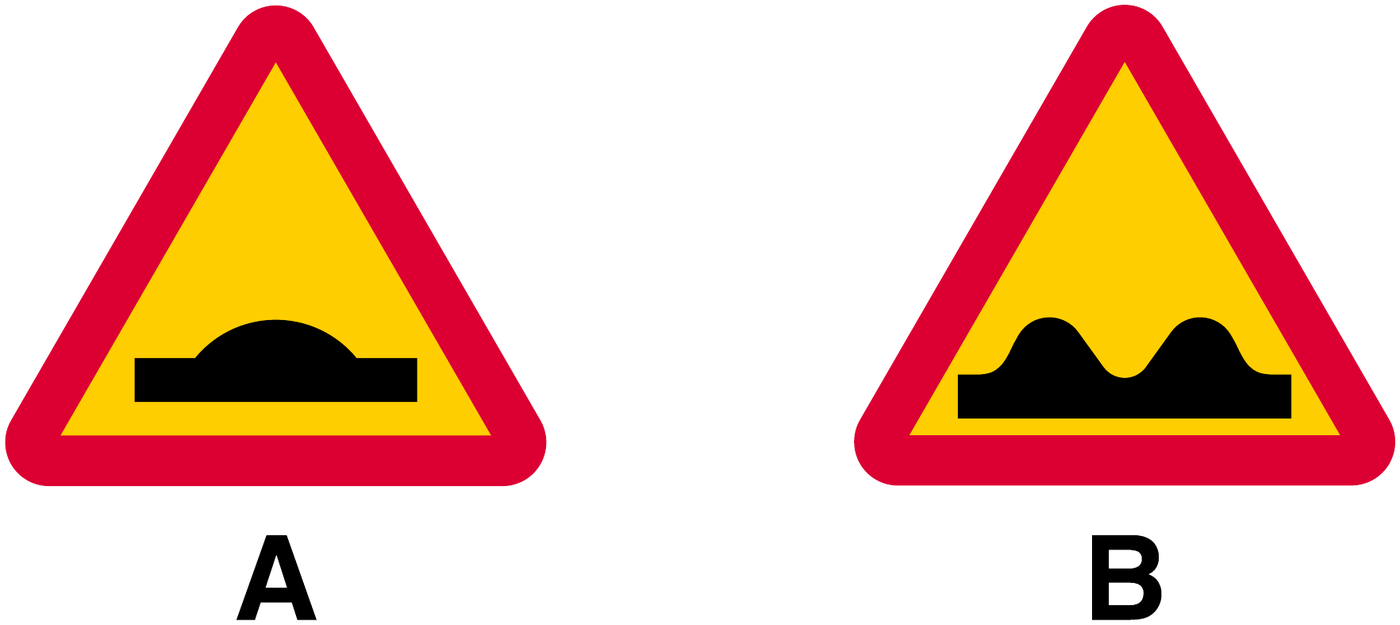
Which of these signs warns you of an uneven road?

Picture for the question

Explanation

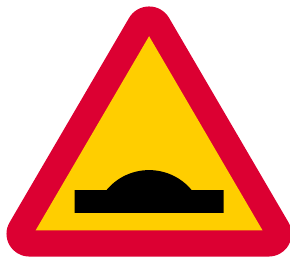
Speed bump warning
ASpeed bump warningA9

The signs indicate a raised hump or gutter installed as a speed-reducing measure.

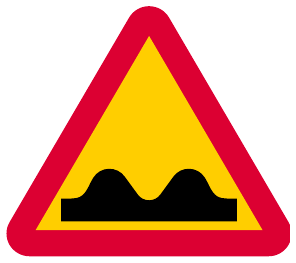
Uneven road ahead
BUneven road aheadA8

The sign indicates bumps or damage to the road which make it appropriate to travel at a lower speed than what would otherwise be the case.

Question 55

Which alternative applies to vehicle tax?

Explanation

Review of the options

  • The vehicle tax is included in the road traffic insurance.Wrong, the road traffic insurance only provides coverage for accidents.
  • The rate of vehicle tax varies between different vehicles.Correct, “the size of the tax is based on a number of factors. The following factors can influence the size of the tax: vehicle category, taxable weight, fuel, carbon dioxide emissions” (Swedish Transport Agency)
  • Vehicle tax must be paid for all vehicles.Wrong, “the following vehicles are not liable for vehicle tax: […] mopeds, class II tractors (agricultural tractors)” (Swedish Transport Agency)
  • Vehicle tax must be paid even if a vehicle has been laid up.Wrong, “laid-up vehicles are not liable for vehicle tax.” (Swedish Transport Agency)
Question 56

What does it mean to adapt your speed to the situation in a safe manner?

Explanation

Review of the options

  • Driving around 5 km/h slower than what is indicated by the road signs.If it is a perfect summer day and you are driving on a wide and safe road, then why should you drive slower? That is not adapting your speed to the situation.
  • Always following the flow of traffic.The flow of traffic is part of adapting to the situation, but if following the flow means driving too fast, it is not safe.
  • Assessing for yourself what the appropriate speed is, without surpassing the road speed limit.You are the one currently in your situation and therefore the person best suited to determine what the appropriate speed is. If you have a driving licence, you have proven that you can make this type of assessment after all!
  • Relying on reports on the condition of the road from the Swedish Transport Administration and from the Swedish Meteorological and Hydrological Institute when choosing your speedThis is part of adapting your speed to the situation, but the previous alternative is much better. It is impossible for government agencies and others to keep absolute track of every single metre of road.
Question 57

The picture is taken from the car you are driving and you intend to take the next right. Is it permitted to use the hard shoulder to slow down on while also allowing vehicles behind to drive past?

Picture for the question

Explanation

If needed in order to facilitate accessibility for other traffic, the hard shoulder may be used temporarily, including transit with other vehicles.
Swedish Road Traffic Ordinance

Using the hard shoulder makes it easier for the oncoming cars as well as for the cars behind you that are driving straight on. In the situation in the picture, it is clear that there is no great risk with driving out on the hard shoulder. However, it should be avoided if visibility is poor.

Question 58

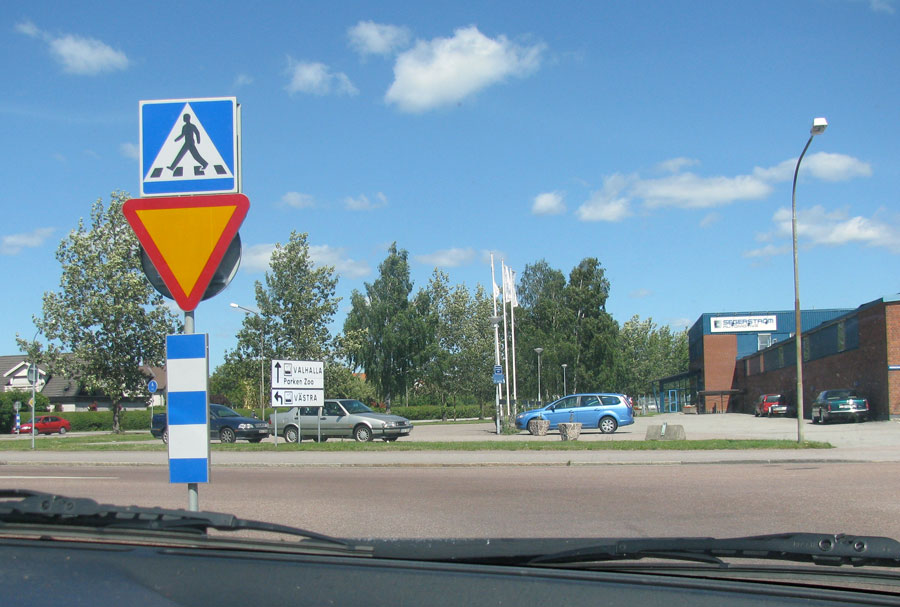
You are driving the car from which the picture is taken. What rule applies in the two upcoming junctions?

Picture for the question

Explanation

The first junction:

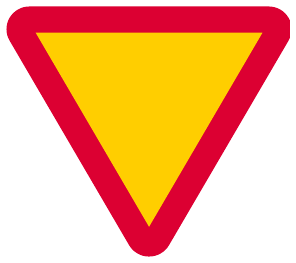
Give way
Give wayB1

The sign indicates that a driver is obliged to give way to a vehicle on the intersecting road or route and that the regulations of Chapter 3, Section 5 of the Swedish Road Traffic Ordinance (1998:1276) apply.

The second junction:

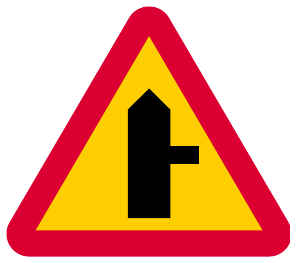
Warning for a junction where road users on a connecting road are obliged to give way or stop
Warning for a junction where road users on a connecting road are obliged to give way or stopA29

The sign indicates a junction where drivers of vehicles on connecting roads are obliged to give way or stop. The symbol is adapted to the conditions of the location.

Question 59

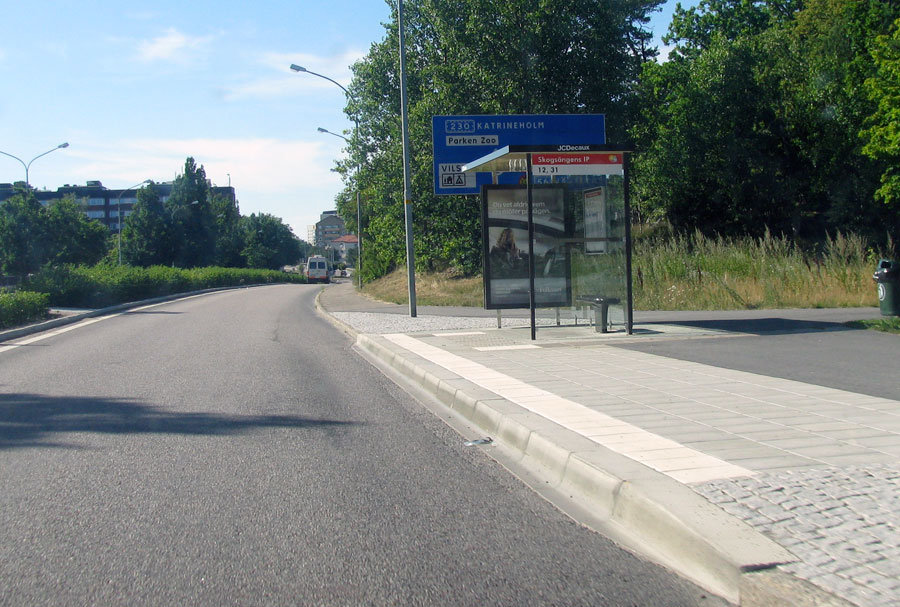
What applies at this bus stop?

Picture for the question

Explanation

At a bus stop, “other vehicles may not stop or park for anything other than setting down or picking up passengers, and this must be possible without obstructing tram, public transport or school bus traffic.” (Swedish Road Traffic Ordinance)

Question 60

The black car is about to overtake the white car. Is this permitted on this motorway?

Picture for the question

Explanation

Overtaking must be done on the left side, aside from in the situations referred to in Section 7, fourth paragraph. “Overtaking shall, however, be done on the right when the driver of the car in front is turning left or is clearly preparing for such a turn.
Swedish Road Traffic Ordinance

Section 7, fourth paragraph: “On a road where the maximum permitted speed is 70 km/h or lower and the carriageway has at least two lanes for traffic in the same direction as indicated by road markings, the driver may use the lane that is most suitable in regard to reaching their destination.”

There are also three other exceptions to the prohibition against overtaking on the right:

In the following cases, it is not considered overtaking when a vehicle in one lane passes a vehicle in another lane:
1. if the carriageway has two or several lanes in the same direction and there is heavy queue formation in all lanes,
2. if the carriageway is divided into lanes for different destinations that are marked with lane assignment signs, or
3. or if the vehicles were in separate lanes in conjunction with a junction.

Nothing in the picture suggests that any of the exceptions are fulfilled. It is therefore not permitted for the black car to overtake.

Question 61

You are driving at 70 km/h. What is the minimum distance you should keep to the vehicle in front?

Explanation

[…] rule of thumb to maintain an appropriate distance […] same distance in metres as your speed in km/h
Driving Licence Book, 19th Edition, page 81
Question 62

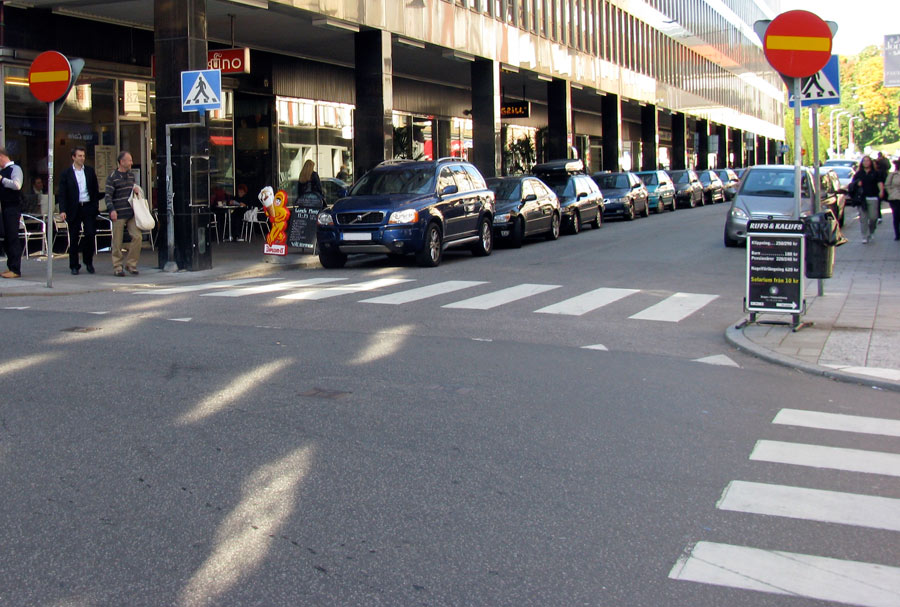
The dark blue car to the far left in the photo has parked. Is this permitted?

Picture for the question

Explanation

A vehicle may not stop or park [...] on or within a distance of ten metres before a pedestrian crossing bicycle path or a bicycle crossing.
Swedish Road Traffic Ordinance

The fact that it is a one-way street is unimportant, as the pedestrians are still dangerously concealed behind the parked car.

Question 63

When are non-studded winter tyres forbidden, other than in existing or expected winter road conditions?

Explanation

This question is asking about a prohibition of non-studded winter tyres. The only prohibition that exists is that of studded tyres.

Winter tyres are marked “MS” (Mud and Snow) and come in two varieties:

  • Studded tyres = good grip on snow and icy surfaces, but causes a lot of wear on the roads.
  • Friction tyres (non-studded) = good grip on snow, slightly less on ice, less wear on the roads.
Even if there is no prohibition on driving on non-studded winter tyres in summer, the Swedish Transport Agency recommends a change to summer tyres.
Swedish Transport Agency
Question 64

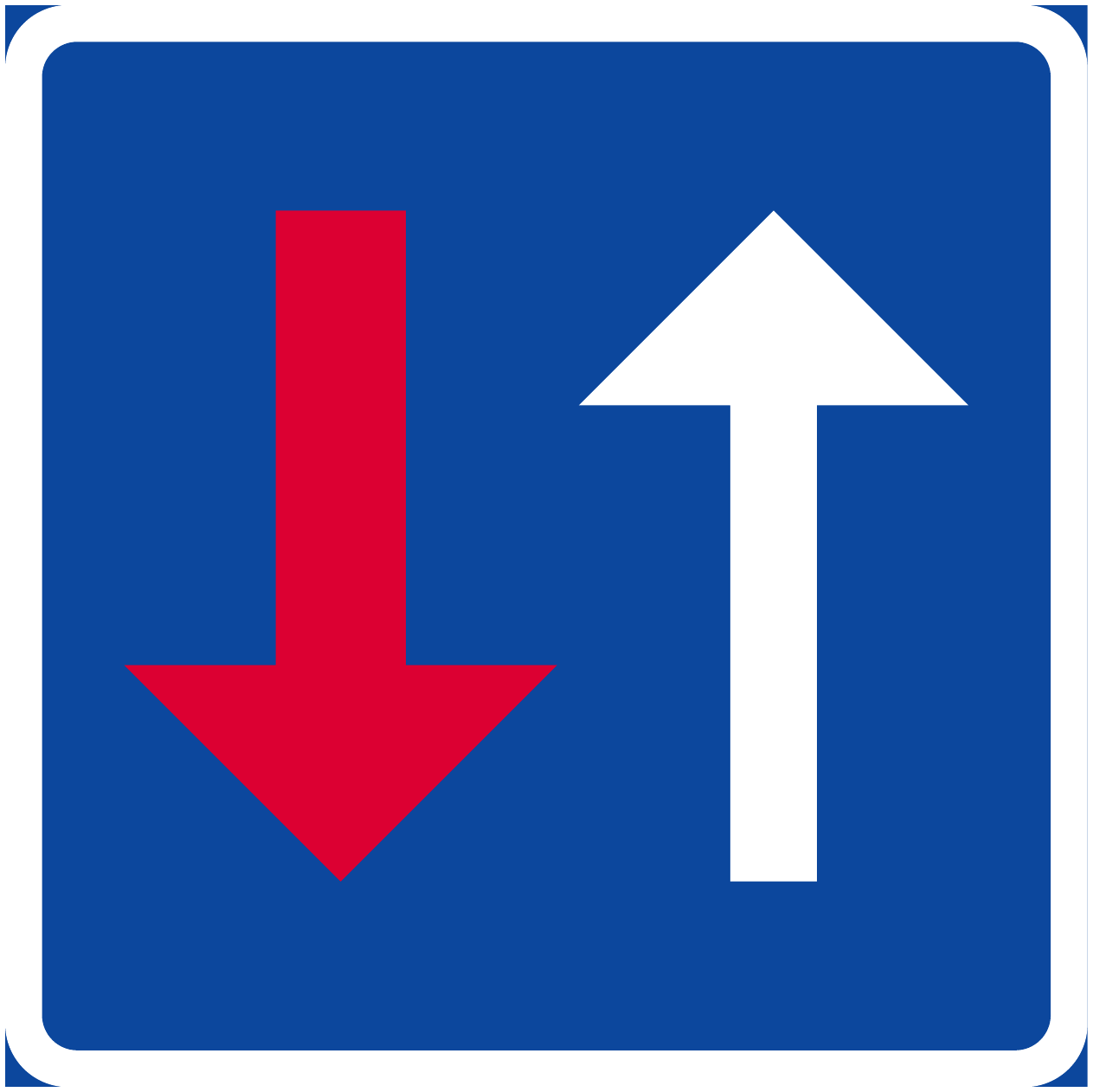
What does this road sign mean?

Picture for the question

Explanation

Priority over oncoming vehicles
Question 65

What counts as a light trailer?

Explanation

Light trailer:

  • Trailer with a maximum total weight of 750 kg.
  • or
  • Trailer where the maximum total weight for car + trailer is 3.5 tonnes.
Question 66

Which amount of carbon dioxide emissions could be avoided annually in Sweden if everyone kept to the speed limits?

Explanation

Reducing speeds on the roads is an effective means to reduce carbon dioxide emissions. If everyone always kept to the speed limits, the emissions would be reduced by 700,000 tonnes of carbon dioxide/year. This corresponds to the emissions of nearly 5,000 lorries or more than 200,000 private cars.
Swedish Transport Administration
Question 67

What is PM10?

Explanation

Inhalable particles, PM10, are microscopic particles. PM10 stands for ‘particulate matter 10’ and indicates the mass of particles with a diameter of less than 10 micrometres (millionth of a meter). These particles can be inhaled and the smallest ones can get down into the lungs.
Swedish Transport Administration
Question 68

Is it true that overtaking is always permitted after passing this sign?

Picture for the question

Explanation

An example of a rule that prohibits overtaking:

In places where visibility is limited at the crest of a hill or in a curve, overtaking may only take place if the road has at least two lanes in your direction in which there may be no oncoming traffic, or in other cases where the overtaking can be completed without using a lane intended for oncoming vehicles.
Swedish Road Traffic Ordinance
Question 69

What is true about cold starts?

Explanation

Cold start = when the car has been standing out in the cold without a heater.

Each time you start your car cold, it increases both fuel consumption and emissions.
Swedish Transport Administration
Question 70

What is this road sign called?

Picture for the question

Explanation

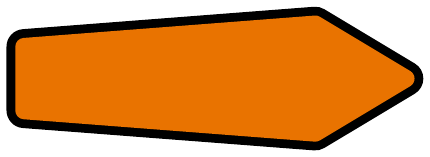
Exit plate
Exit plateX4

The device indicates the dividing point between a main carriageway and an exit road where there is a deceleration lane.

No questions to show here.