Swedish driving licence · Theory practice

Theory test 11

29 August 2021 · 00:18 · 70 questions

0%correct
Not started

0 of 70 correct

Pick an answer to check it. 56 of 70 correct (80%) is needed to pass.

0Answered
0Correct
0Incorrect
56Needed to pass

The real test has 70 questions in 50 minutes, about 43 seconds per question.

0 / 70
Question 1

Which alternative applies to conversations with the driver?

Explanation

“Is it just as dangerous talking to a passenger?

Yes, a conversation with a passenger is just as demanding as a telephone call.

However, there may be an interaction between you and your passenger when talking to one another. This interaction is based on your passenger also being focused on the traffic. In a difficult traffic situation, your passenger will probably not ask you any questions, and will not find it strange if you do not answer at once.”

Swedish Transport Administration

There are many factors playing into this. The fact that you are both in the same place physically may reduce the risk of an accident if the passenger avoids talking in difficult traffic situations, which indicates that conversations with a passenger are less risky. On the other hand, this situation may be treacherous if you, as the driver, relax completely because you think that a conversation with your passenger has no impact on your driving ability at all. In that case, a telephone conversation can be less risky, as you are aware of the risks and therefore adapt your driving.

On buses, there is usually a sign telling you that conversation with the driver is forbidden while driving.

Whether you use a handsfree or not is of little importance: “a driver using a handsfree will be more or less as unfocused as a driver holding a mobile phone in their hand. Their reaction time will be much longer and their driving as uneven as when talking on a hand-held device.” (Swedish Transport Administration)

Question 2

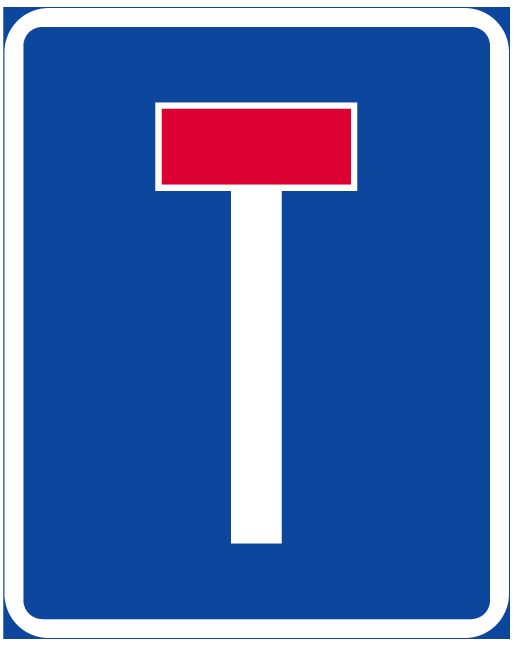
What does this road sign mean?

Picture for question 2

Explanation

No through road (E17)
No through roadE17

“The sign indicates that through traffic is not possible. The symbol is adapted to the conditions at the location and may be included in a location sign. If through traffic with a bicycle or class II moped is possible, this is indicated with the symbol S8, bicycle and class II moped, being incorporated in the sign.”

Question 3

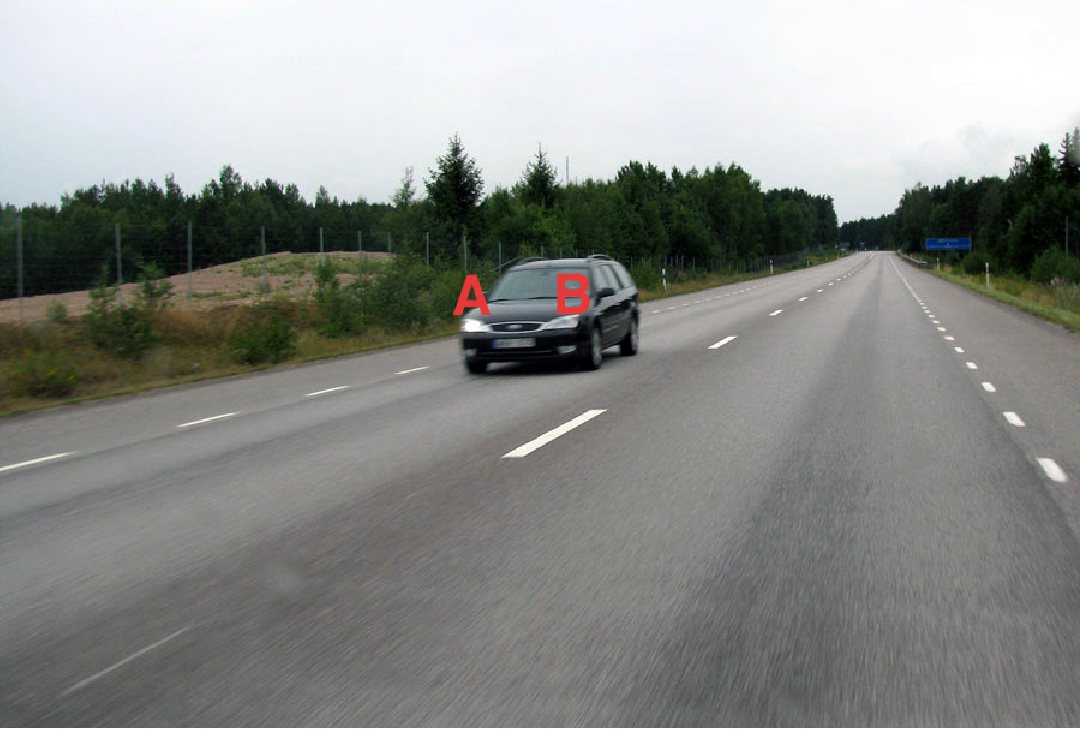
The car in the image is coming towards you. The headlights of the oncoming car are broken on side B. Which alternative is true in the dark?

Picture for question 3

Explanation

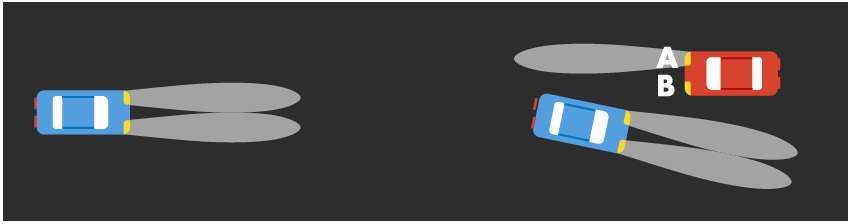
If only headlights B are broken, you may think that you have a wider margin than what is actually the case and therefore drive too close to the middle of the road:

Illustration for question 3
Question 4

What does speed adjustment involve?

Explanation

“That you always follow the pace of the traffic” is wrong since it means that you are driving illegally if the pace is 95 km/h on a 90 road.

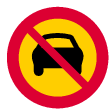
Question 5

You are coming up to a traffic situation where several contradictory directions apply. Which directions should you comply with?

Explanation

Sometimes you receive several messages simultaneously in traffic. You then must choose which to adhere to. This is the order you should follow:

  1. Police signals
  2. Traffic signals
  3. Road signs
  4. Rules (the right-hand rule such as)

A traffic director is considered as a police officer:

“A road user shall adhere to the traffic directions of a police officer. […] This also applies to directions given by […] a traffic director”

Swedish Road Traffic Ordinance
Question 6

What is it called when the braking force is transferred through a liquid?

Explanation

“Hydraulic – the brake fluid transfers the force”

Driving Licence Book, 19th Edition, page 129
Question 7

Which amount of carbon dioxide emissions could be avoided annually in Sweden if everyone kept to the speed limits?

Explanation

“Reducing speeds on the roads is an effective means to reduce carbon dioxide emissions. If everyone always kept to the speed limits, the emissions would be reduced by 700,000 tonnes of carbon dioxide/year. This corresponds to the emissions of nearly 5,000 lorries or more than 200,000 private cars.”

Swedish Transport Administration
Question 8

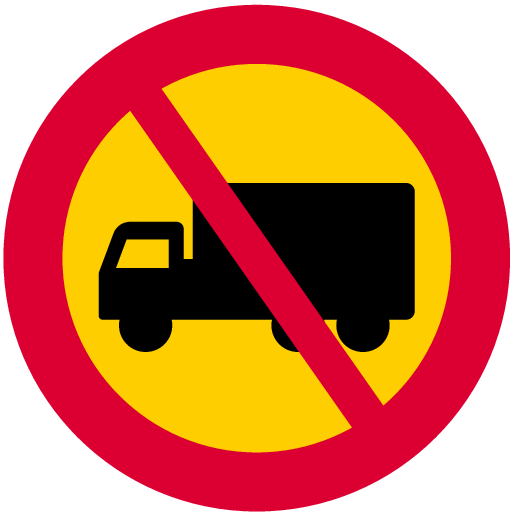
What does this road sign mean?

Picture for question 8

Explanation

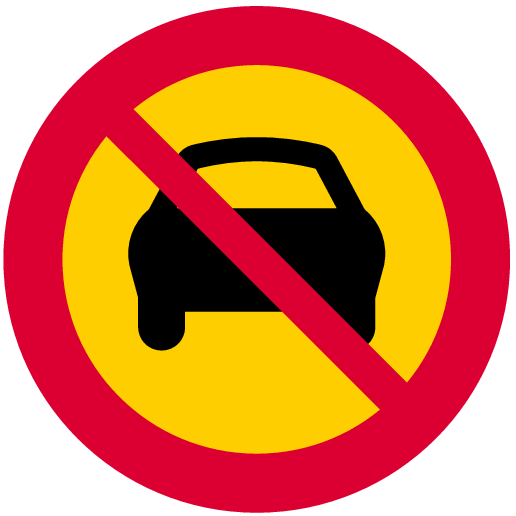
No heavy trucks
No heavy trucks

“If the prohibition also applies to light trucks, this is indicated on an additional panel.”

In many cases, light trucks do not weigh more than a heavy car with a trailer. It is therefore only in exceptional cases that the sign also refers to light trucks.

Question 9

Where on the car is a crumple zone?

Picture for question 9

Explanation

Crumple zones are found at the very back and very front on the car. These are designed to collapse inward and soften the impact of collisions.

Compare it to dropping an egg wrapped in cotton on the floor. The egg will probably not break since the layer of cotton deforms (crumples) and cushions the fall.

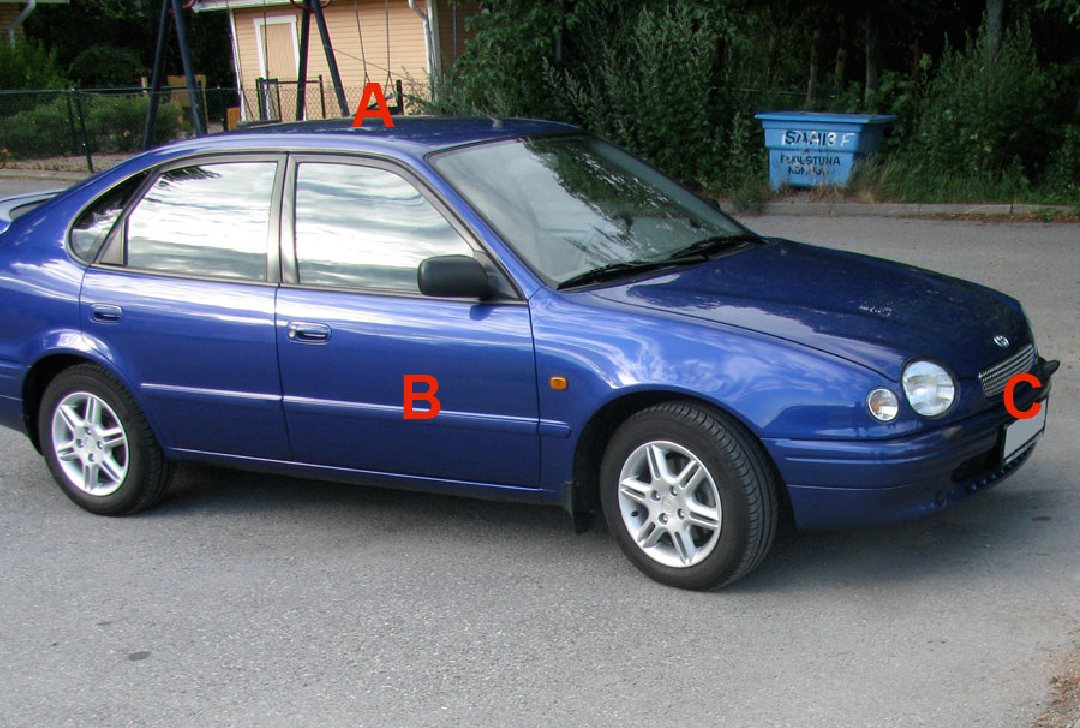
In other parts of the car there is no space for crumple zones (at A and B it is only a few centimetres to the passengers).

Question 10

The red car in the centre of the picture is turning directly into the right. What do you think about the positioning?

Picture for question 10

Explanation

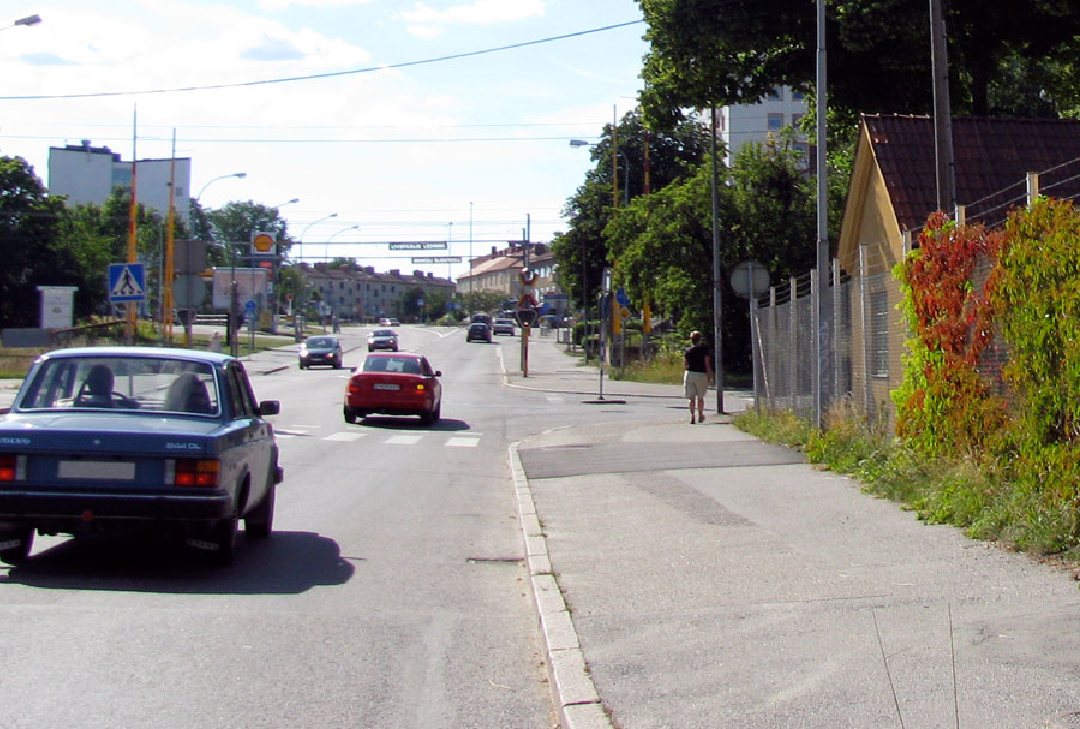
“When turning right, a vehicle shall be positioned as close to the carriageway’s right edge as possible, within reason.”

Swedish Road Traffic Ordinance

The idea that positioning your car in the middle of the lane would allow a “good safety margin” for the pedestrian sounds strange. Would it be less safe to position your car more to the right?

Question 11

What is likely the problem if the brake pedal feels springy when you apply the brake?

Explanation

If there is a leak, the pedal will go down slowly (the brake fluid is pushed out). If the brakes are worn, it will take longer than normal but the pedal will still feel rigid. Air in the brake system makes the pedal feel springy, since the air moves around the system unpredictably.

Question 12

Is it possible for a person with a Norwegian licence to supervise private driving lessons in Sweden?

Explanation

In order to be approved as a supervisor, you have to “have a valid driving licence issued in Sweden or another EEA member state”. (Swedish Transport Agency)

EEA = European Economic Area, which consists of all countries in the EU along with Iceland, Liechtenstein and Norway.

Question 13

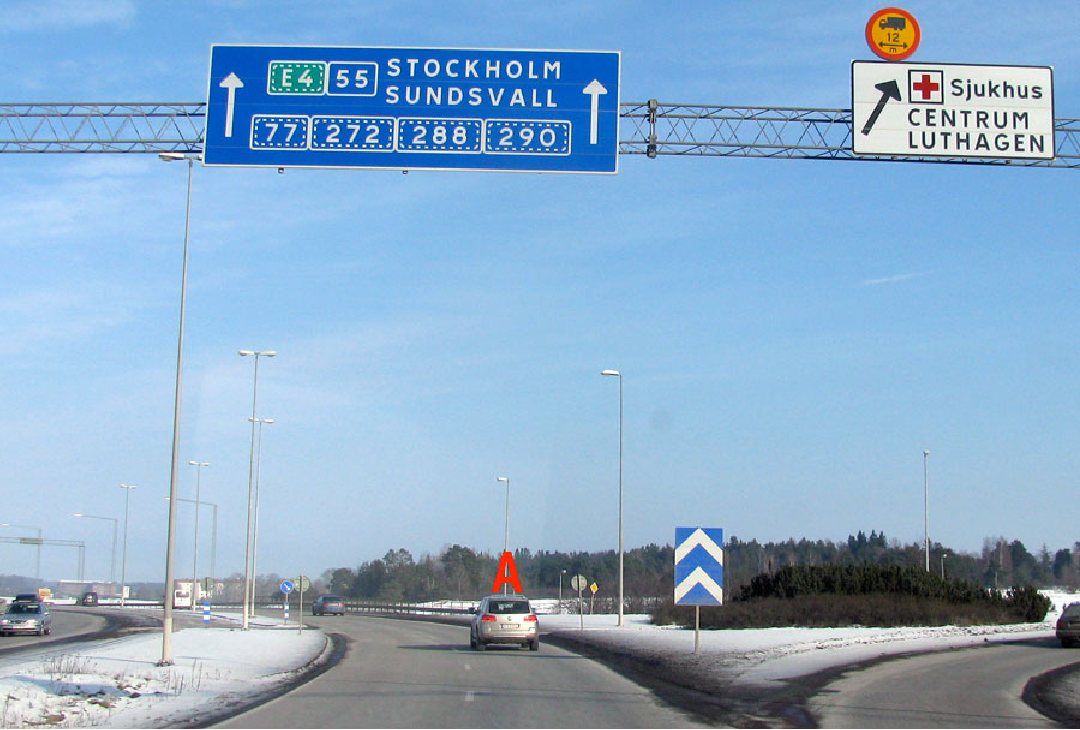
What is the number of the road car A is driving on?

Picture for question 13

Explanation

Road number (F14)
Road numberF14

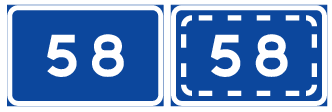
“A road number is only given for roads in the number group 1–499. A sign with a dashed border indicates that the road is leading to the route with the number on the sign.”

This means that you are driving on road 55 and can arrive at the other ones if you continue. You are in other words not driving on road 77 or 272 yet.

Question 14

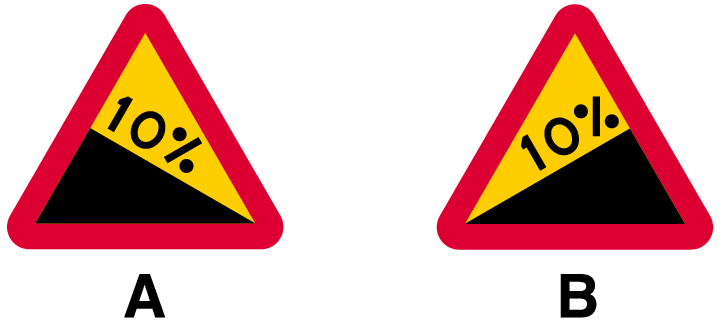
Which of these signs warns you of a steep incline?

Picture for question 14

Explanation

Mnemonic rule: “read” the sign from left to right, i.e. starting from the left side, then you will see that the slope is going upwards.

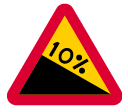
A: Steep hill downwards (A3)
ASteep hill downwardsA3

“The sign indicates a steep hill downwards. The numbers indicate the gradient in per cent and is specific to the conditions of the location.”

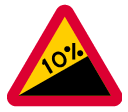
B: Steep incline (A4)
BSteep inclineA4

“The sign indicates a steep incline. The numbers indicate the gradient in per cent and is specific to the conditions of the location.”

Question 15

Are there any risks involved in trying to start another car with jumper cables?

Explanation

Connect the batteries correctly, otherwise you “risk damaging the electrical systems and in the worst case cause a battery explosion. When the receiving battery is charging, it produces a highly explosive hydrogen gas”. (Teoriboken, 13th Edition, page 21)

A car battery has relatively weak current, which makes the risk of death more or less non-existent.

Question 16

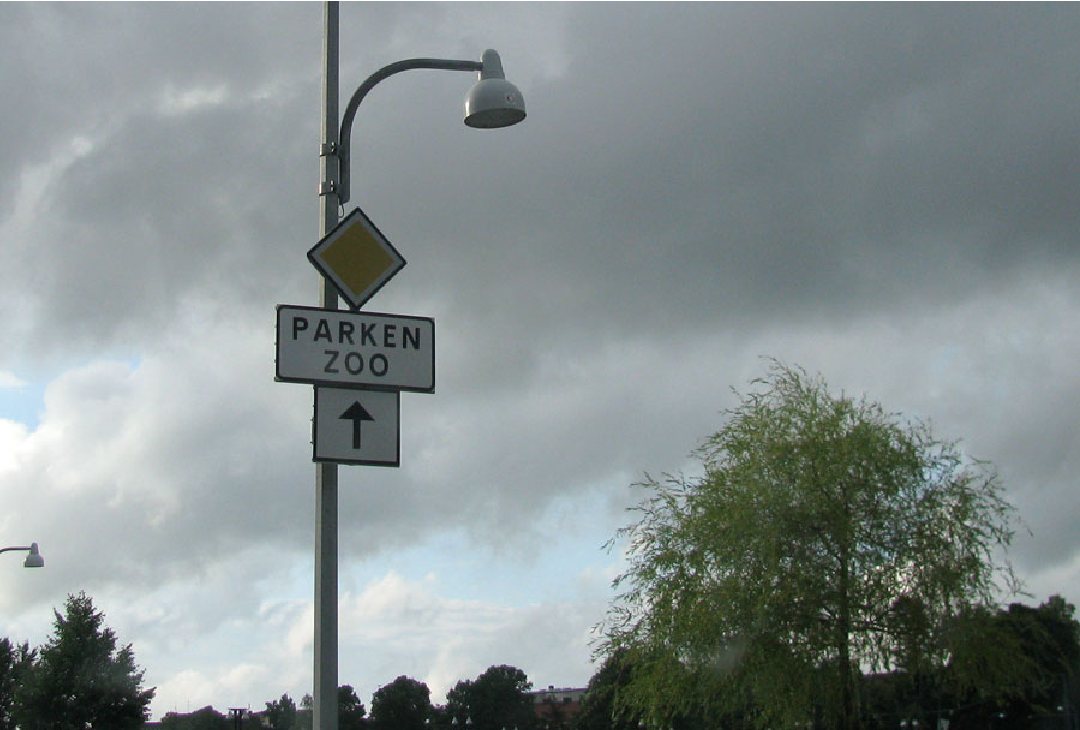
Do the signs indicate that the entire route to Parken Zoo is a priority road?

Picture for question 16

Explanation

The arrow’s meaning:

DirectionT12

“The panel indicates the direction to what is stated on the sign. The panel is specific to the conditions at the location.”

The arrow therefore indicates that you should drive straight on to get to Parken Zoo. However, it says nothing about the type of road. The priority road sign is never erected in this way, i.e. the Swedish Transport Administration does not guarantee a priority road that lasts through several junctions by using one single start sign. After each junction, a new priority sign is placed, or you as a motorist must make an assessment; see the meaning of the priority road sign:

Priority road (B4)
Priority roadB4

“The sign is erected at the start of the priority road and is repeated after each junction with a road other than such as referred to in Chapter 3, Section 21, second paragraph of the Road Traffic Ordinance, if it is not otherwise clear that the priority road continues after the crossing.”

Question 17

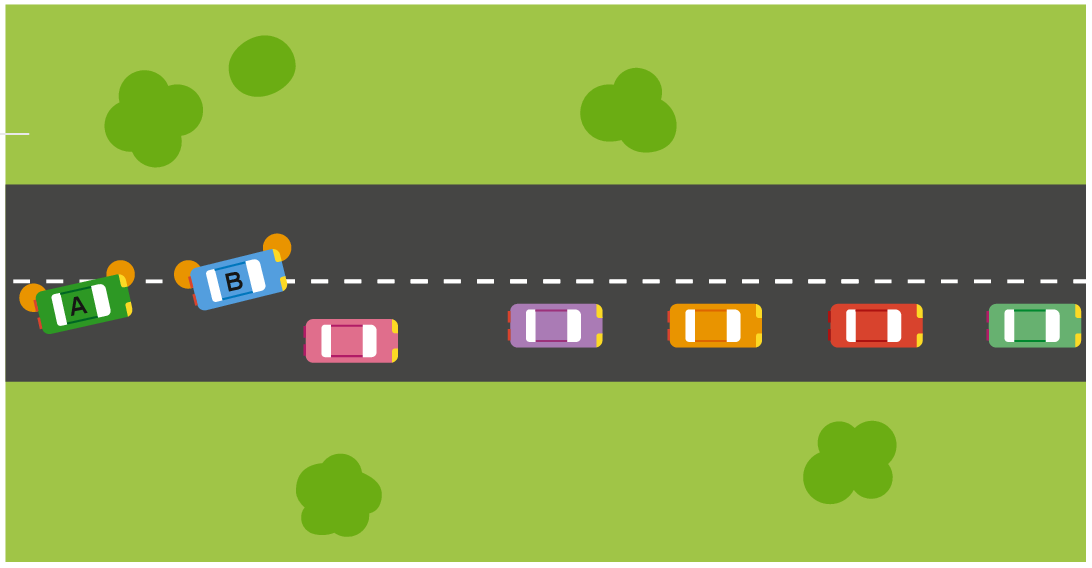
Car A tags along with car B during an overtaking. What is true about A’s actions?

Picture for question 17

Explanation

“If a vehicle in front of you starts overtaking, you should never ‘tag along’ and follow them while overtaking.”

Du och jag i trafiken [You and me in traffic], 28th Edition, page 250

If B is forced to move into a gap due to oncoming traffic, there is a great risk of A “getting stuck” in the wrong lane, as B has taken the only space available. In addition, it is unwise to trust the assessment of the driver in front, as they surely have not considered whether another car will manage the overtake as well.

Question 18

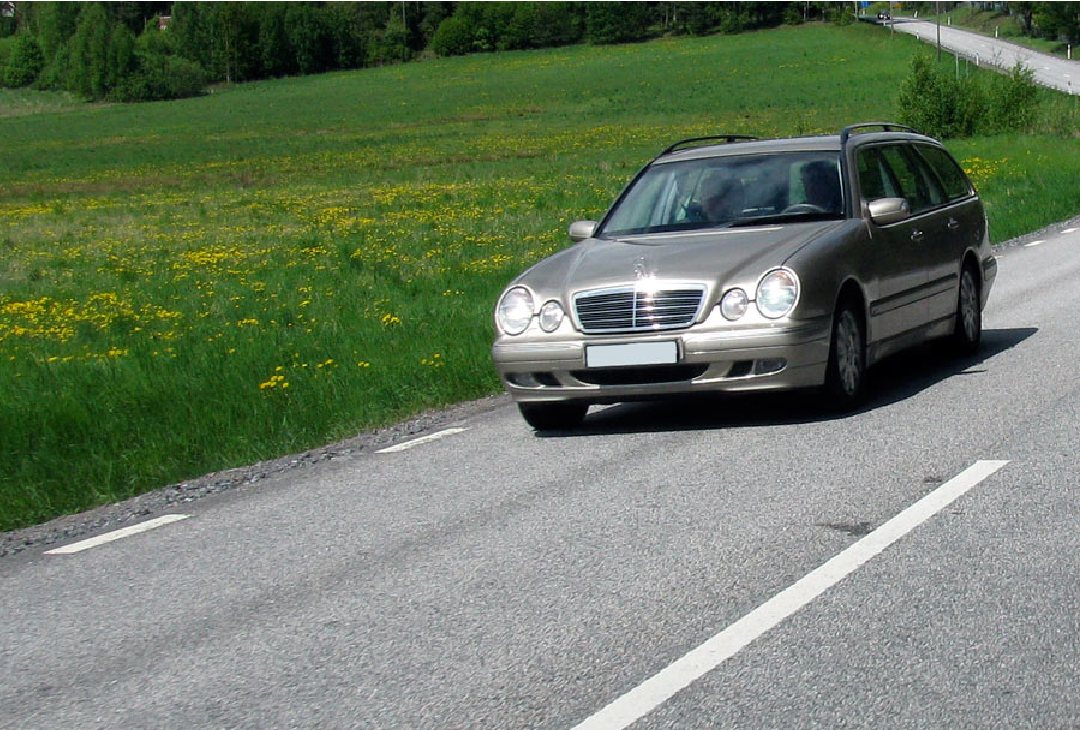
What do you think of this car’s placement on the road?

Picture for question 18

Explanation

In daylight, the best placement of the car is near the right edge of the road, as this gives a greater margin to oncoming cars (Driving Licence Book, 19th Edition, page 79).

Question 19

What should an older driver do when they notice little shortcomings in their own driving?

Explanation

Review of the options:

  • Compensate for these shortcomings by avoiding certain roads.
    – Sounds reasonable. If the person is unable to manage the quick reactions required in a certain environment, perhaps a detour on a calmer road would be better.
  • Only drive at night, when there is a smaller risk of being in an accident.
    – This is a bad option, as older people will generally have significantly poorer night vision, while the risk of accidents caused by tiredness increases.
  • Only drive in urban environments and avoid country roads and motorways.
    – Probably a bad option, as older drivers most often experience problems in hectic city environments.
Question 20

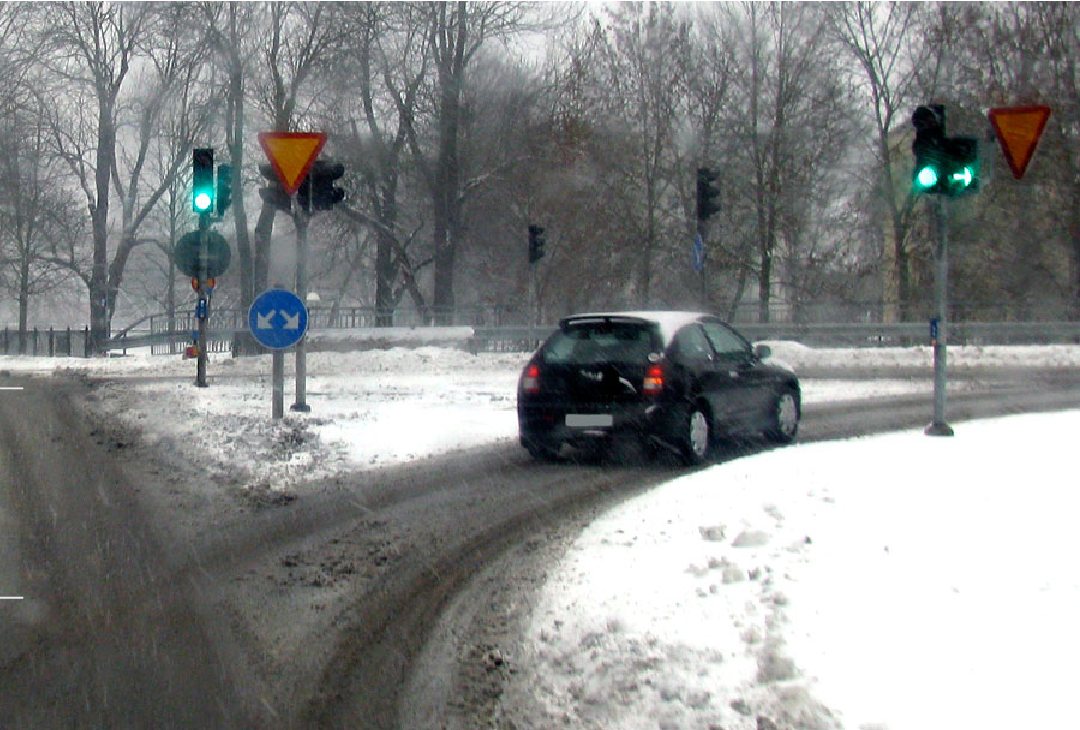
Should the driver of the car in the photo expect intersecting traffic to have a green light at the same time as them?

Picture for question 20

Explanation

“When you get a green light in the form of an arrow, all other road users intersecting your path have a red light.”

STR’s Vägmärken & vägmarkeringar [Road Signs & Markings], 6th Edition, page 26
Question 21

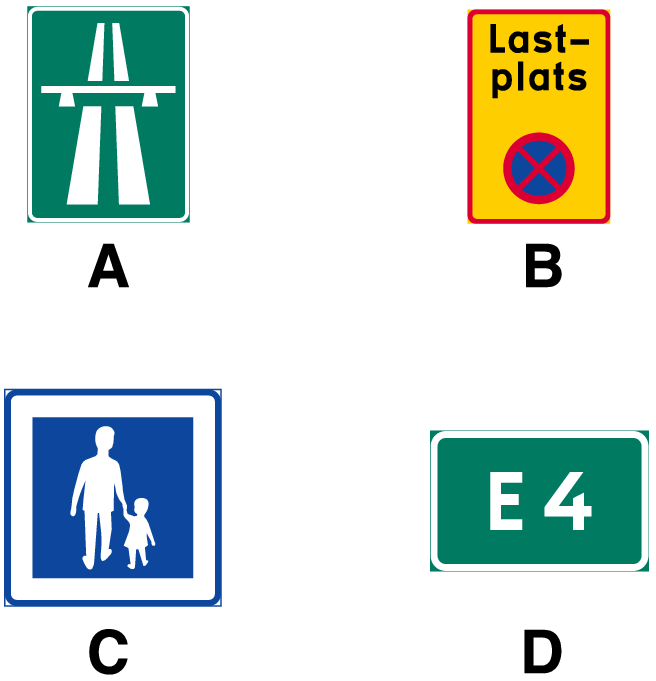
Which road sign(s) has/have no corresponding end sign?

Picture for question 21

Explanation

A: End of motorway (E2)
AEnd of motorwayE2

“If the sign is used as preparatory information indicating that a motorway is ending, the distance is given on an additional panel. The sign is not used when a motorway turns into a clearway.”

B: End of purposeful location (C41)
BEnd of purposeful locationC41

“The sign does not need to be posted if it is otherwise clear that the purposeful location comes to an end. Other purposes may be indicated on the sign. The Swedish Transport Agency has the authority to issue provisions regarding which purposes may be indicated.”

C: End of pedestrian street (E8)
CEnd of pedestrian streetE8

“The sign does not need to be posted if it is otherwise clear that the pedestrian street comes to an end.”

It is not as important to know where a road number ends, as this does not impact on what you are allowed to do (such as stopping and parking).

Question 22

What does the right-hand rule entail?

Explanation

“Right-hand rule [...] You are obliged to give way to traffic from the right”

Driving Licence Book, 19th Edition, page 40
Question 23

Which statement is true regarding the distance between these cars, if they are moving at approximately 70 km/h?

Picture for question 23

Explanation

Drivers not maintaining sufficient distance on a country road is very common. You can use the rule of thumb below to keep an appropriate distance.

  • The three-second rule
    Start counting when the car in front of you is at a fixed point (such as a road sign) and stop counting when you reach that point yourself. If it took less than 3 seconds, the distance between you is too short.
  • Km/h to m
    Change km/h of your speed to metres and it will usually give you an appropriate distance to the car in front. For example 70 m at a speed of 70 km/h.
Question 24

How do you alert emergency services in the event of a traffic accident with casualties?

Explanation

“Call the emergency number 112. SOS Alarm will give you qualified help telling you what to do.”

Driving Licence Book, 19th Edition, page 257
Question 25

You hire a car in January and there are winter road conditions. The tyres are marked with M+S. The front tyre tread depth is 2 mm and the back tyre tread depth is 5 mm. Which option is true?

Explanation

“In winter road conditions during the period 1 December–31 March, the tread depth must be at least 3 mm on the tyres of private cars”

Swedish Transport Agency

The fact that the tread depth varies does not really matter. It would have been permitted if, for example, the front tyres had been 4 mm and the back tyres had been 8 mm.

“M+S” (Mud + Snow) simply means winter tyres.
Question 26

A person is driving a car with an alcohol blood level of 0.2 per mille. How many times higher is the risk of a fatal accident, as compared with if the same driver had been sober?

Explanation

“The curve shows the risk of a driver with a certain blood alcohol level being killed in a traffic accident in relation to the risk of a sober driver being killed. […] 0.2–0.4 per mille, the estimated relative risk is approximately 12 times higher”

VTI
Question 27

Is it true that fuel consumption is reduced by around 10% if you lower your speed from 110 km/h to 100 km/h?

Explanation

“If you lower your speed from 110 to 100 km/h, you reduce your fuel consumption by 10 per cent.”

Swedish Transport Administration

Why is this relevant?

– This has to do with the environmental objectives in the driving licence training. The lawmakers have an interest in you being aware of tips and tricks to lower fuel consumption.

Question 28

You are driving the car from which the picture is taken and want to turn right. How should you act?

Picture for question 28

Explanation

Direction to be followed (D1)
Direction to be followedD1

“The signs indicate that the vehicle may only be driven in the direction of the arrow or, in the case of two arrows, in either arrow’s direction. The symbol is adapted to the conditions of the location.”

Therefore, you may not turn right directly in the junction, which rules out the first two options.

Question 29

Is a regular category B driving licence sufficient to be allowed to use a private car to pull a trailer with a total weight of 500 kg?

Explanation

Light trailer:

  • Trailer with a maximum total weight of 750 kg. or
  • Trailer where the maximum total weight for car + trailer is 3.5 tonnes.

The two points above should be literally viewed as two different points. If the first point is fulfilled (maximum weight 750 kg), you do not even need to look at the second point.

Can be driven with a B driving licence: “A private car with a maximum total weight of 3.5 tonnes, a light truck and a trailer coupled to such a vehicle.” (Swedish Transport Agency)

“According to current regulations, you are always allowed pull a trailer weighing at most 750 kg with a category B licence, while a heavier trailer may only be pulled if the total weight of the car + trailer does not exceed 3,500 kg”

Swedish Transport Agency

The above quote should be interpreted as following being allowed: a private car weighing 3.5 kg + light trailer weighing 500 kg = total of 4,000 kg. The 3.5-tonne rule only applies if the trailer’s total weight exceeds 750 kg.

Question 30

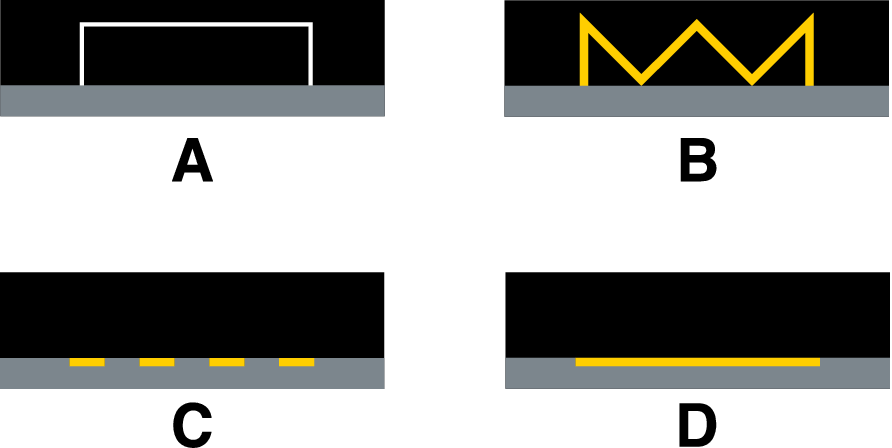
Which road marking is used as a reinforcement of other road markings?

Picture for question 30

Explanation

B (M23) is a reinforcement of line M21 or M22. The significance of B is determined by M21 or M22.

A: Parking space (M24)
AParking spaceM24

“The marking indicates the boundary of a vehicle parking space. The marking can have a broken line.”

B: No stopping and parking or no parking (M23)
BNo stopping and parking or no parkingM23

“This marking is used as a reinforcement of the road markings M21, no stopping and parking, and M22, no parking. No other colour may be used.”

C: No parking (M22)
CNo parkingM22

“This marking indicates a prohibition on parking a vehicle and is placed along the side of the carriageway. The marking is also used to indicate an extension of a bus stop. The marking has a distance ratio of 1:1 between the dashes and spaces. No other colour may be used.”

D: No stopping and parking (M21)
DNo stopping and parkingM21

“This marking indicates a prohibition on stopping and parking a vehicle and is placed along the side of the carriageway. No other colour may be used.”

Question 31

What constitutes the basis for the traffic safety work in Sweden?

Explanation

“Vision Zero constitutes the basis for the traffic safety work in Sweden. It was established through a parliamentary decision.”

Swedish Transport Administration
Question 32

What can be the result of the brain receiving insufficient information to make a correct interpretation of a traffic situation?

Explanation

Optical illusions “happen when the brain receives insufficient information. This means that it cannot make a correct assessment.” (Driving Licence Book, 19th Edition, page 197)

Question 33

Which option is true?

Explanation

Review of the options:

  • The same rules apply to bicycle crossings and bicycle passages.
    – Wrong, at a bicycle crossing, you have an express obligation to give way, but at a bicycle passage, you only have to “adapt your speed to avoid danger to cyclists”.
  • If you are crossing a bicycle path, you must give way to drivers of class II mopeds.
    – Correct, “On bicycle paths, cyclists and drivers of class II mopeds must be given right of way by other vehicle drivers.” (Swedish Road Traffic Ordinance)
  • Cyclists are not permitted to cross the road on a pedestrian crossing.
    – Wrong, “A cyclist is not forbidden from crossing a road on a pedestrian crossing”. (Swedish Transport Agency)
Question 34

What does the exit rule entail?

Explanation

The exit rule: “You are always obliged to give way when driving out onto a road or street from [...] a parking area, petrol station or similar location”. (Driving Licence Book, 19th Edition, page 45)

Question 35

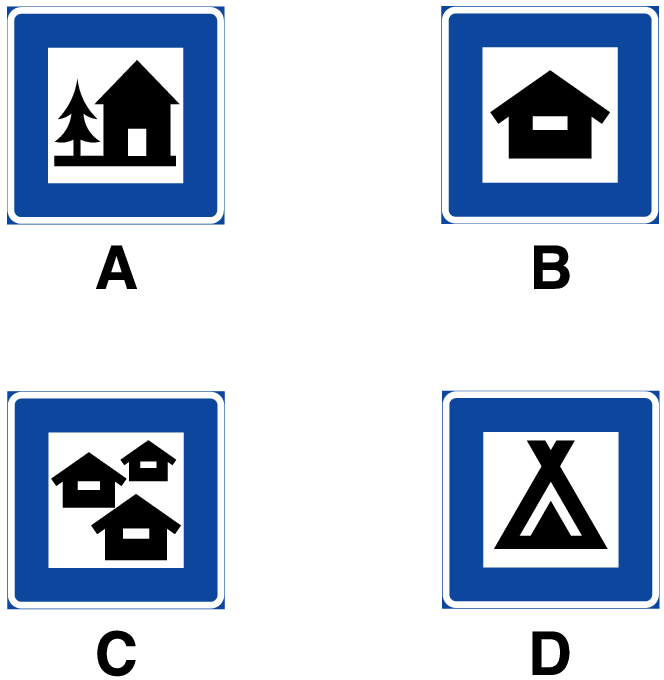
Which sign indicates that there is a hotel nearby?

Picture for question 35

Explanation

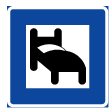
A: Hostel (H8)
AHostelH8
B: Cottage (H10)
BCottageH10

“The sign indicates a facility with a small number of cottages.”

C: Holiday village (H9)
CHoliday villageH9

“The sign indicates a facility with a large number of cottages.”

D: Camp site (H11)
DCamp siteH11

“The sign indicates a facility that provides spaces for tents, caravans and campers.”

This is the sign indicating a hotel (which is not depicted above):

Hotel (H7)
HotelH7
Question 36

What does a coolant consist of?

Explanation

“The coolant consists of glycol and water.”

Driving Licence Book, 19th Edition, page 140

The glycol protects from rust and prevents the coolant from freezing in winter.

Question 37

How is this road sign used?

Picture for question 37

Explanation

Level crossing plateY4

“This device is used to make a level crossing more visible.”

“Level crossing [...] A crossing on the same level between a road and a railway or tramway line running on a separate embankment”

Road Traffic Definitions Act
Question 38

Is it possible for drunk driving, which cannot be considered aggravated, to lead to a prison sentence?

Explanation

Drunk driving: “The punishment is a fine or imprisonment for no more than six months.” (Driving Licence Book, 19th Edition, page 209)

Question 39

Your car has broken down on a 30-road in a built-up area. What applies in the case of good visibility?

Explanation

“The driver of a vehicle that is to be equipped with a warning triangle shall put out the triangle when the vehicle, as a result of an accident, engine failure or similar situation, has become stationary on the carriageway or hard shoulder where the maximum permitted speed is higher than 50 kilometres an hour and where the vehicle is not allowed to stop or park”

Swedish Road Traffic Ordinance

As you are standing on a 30-road, you do not have to put out a warning triangle. Other road users are driving so slowly that they will likely see your car in good time either way.

Question 40

What does this road sign mean?

Picture for question 40

Explanation

No motor vehicles with more than two wheels
Question 41

You arrive at a junction with a flashing amber traffic signal. Which of the following applies?

Explanation

Flashing amber (SIG5)
Flashing amberSIG5

“Special caution must be observed when passing.”

It is not possible to say that a certain priority rule always applies at a flashing amber light. Sometimes you are driving on a priority road, sometimes the right-hand rule applies and sometimes you are obligated to stop.

Question 42

The time is 13.00 on Saturday 15 March. On which side of the road may you park within the area?

Picture for question 42

Explanation

Date parking (C38)
Date parkingC38

“The sign indicates that it is prohibited to park vehicles on days with even-numbered dates on the side of the road that has even-numbered addresses and on days with odd-numbered dates on the side of the road that has odd-numbered addresses.”

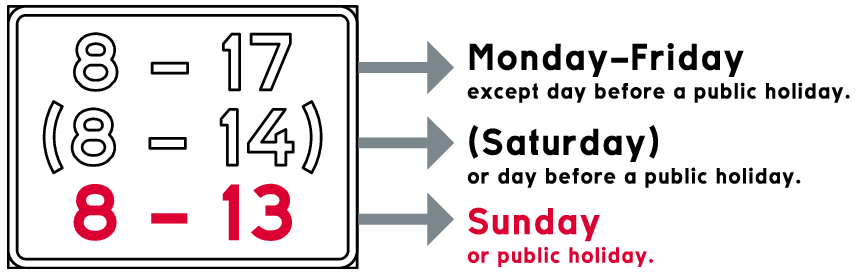
Under the sign there is an additional panel:

Illustration for question 42

As it is Saturday, the prohibition does not apply.

Question 43

What is double parking?

Explanation

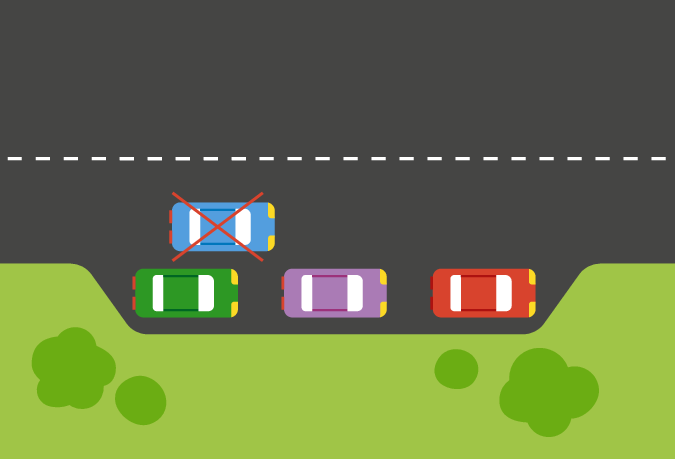
No parking: “On the road next to another vehicle that has stopped along the road (i.e. double parking.)” (Du och jag i trafiken [You and me in traffic], 28th Edition, page 236)

Illustration for question 43

The crossed-out car is double-parked.

The term “double parking” is not used in the legislative texts, but then again, neither is the term “right-hand rule”. However, it is relevant to be aware of these terms.

The “right-hand rule” may be generally known, but “double parking” has actually been used in the title and text of a parliamentary motion.

Question 44

What is understeering?

Picture for question 44

Explanation

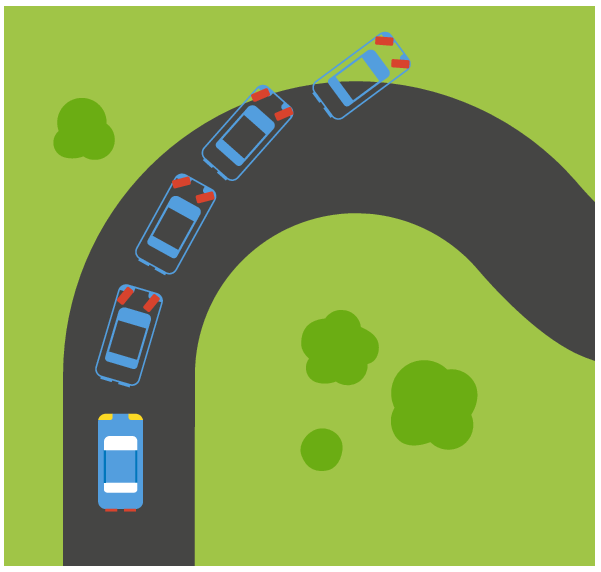
The driver first turns the wheel normally for the car to turn through a curve.

The driver then notices that the car is not reacting sufficiently, so they turn the wheel more sharply.

However, there is not enough friction between the tyres and the road. Without friction, the car will remain on the same course. But now there is some friction, which means that the car both continues straight ahead and at the same time turns sharply to the right.

Note that the driver keeps the wheels pointing in the direction of the road, which is good. Without the turn of the wheels, the car would have continued straight ahead and thereby driven off the road much sooner.

Question 45

Which statement is true regarding the claim form?

Explanation

The form is mainly of interest to the insurance companies. The same information stated in the form can be noted down on a regular piece of paper. The form is just a template that makes it easier.

Question 46

What is true about this combination of signs?

Picture for question 46

Explanation

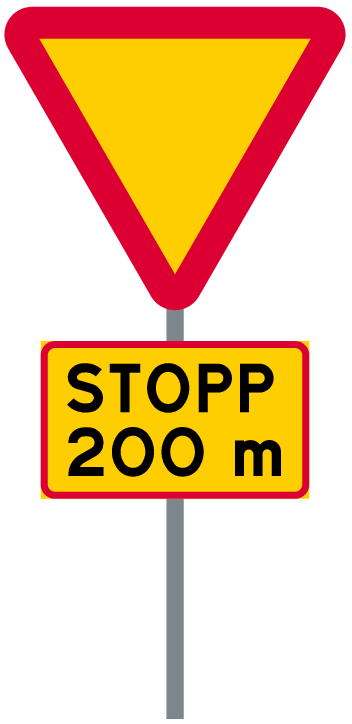
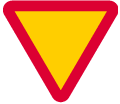
Give way (B1)
Give wayB1

“The sign indicates that a driver is obliged to give way to a vehicle on the intersecting road or route and that the regulations of Chapter 3, Section 5 of the Swedish Road Traffic Ordinance (1998:1276) apply. The sign can be erected together with the additional panel T2 – distance to – as preparatory information regarding the obligation to give way, or together with the additional panel T3 – stop and give way at specified distance – as preparatory information regarding the obligation to stop. If all approach roads in a junction are obliged to give way, this is indicated with the additional panel T13, all-way-stop-controlled junction.”

The give way sign thus has several meanings:

  • Give way sign = “obligation to give way to vehicles on the intersecting road”.
  • Give way sign + Additional panel T3 = “preparatory information regarding the obligation to stop” (same as in the question).

Is it not true that I have an obligation to give way at the sign and am also obliged to stop 200 metres further on?

– No, you are not to do anything at the actual sign; it only tells you that you have an obligation to stop further on.

An example of how these signs work in a real situation:

The signs are posted at an ordinary stretch of road with no intersecting traffic, meaning that the obligation to give way is not applicable. The obligation to stop refers to the junction further down the road on the right.

Question 47

Which engine emits the most harmful nitric oxides?

Explanation

“Compared to a petrol driven car, a diesel car causes slightly higher emissions, primarily of nitric oxides”

Swedish Consumer Agency
Question 48

Which option is true?

Explanation

Review of the options:

  • All internal combustion engines contribute equally to the greenhouse effect.
    – Wrong, a large fuel-guzzling engine is worse than a small one.
  • Ethanol is a greenhouse gas.
    – Wrong, ethanol is a type of fuel, not a gas.
  • The permitted time of engine idling is often limited.
    – Correct, examples of regulations regarding idling: Skellefteå
  • The unladen weight of a car has no impact on its fuel consumption.
    – Wrong, a heavy car requires more power. More power = more fuel.
Question 49

An eight-year-old child has learned to always cross the road at a pedestrian crossing. Is there any situation that could be treacherous?

Explanation

“Where should you be particularly careful? […] At pedestrian crossings! […] Many children believe that cars cannot hit them there.”

Du och jag i trafiken [You and me in traffic], 28th Edition, page 216
Question 50

Is it prohibited to overtake two-wheeled vehicles in conjunction with railway crossings?

Explanation

Normally overtaking is prohibited. “Two-wheeled vehicles without a sidecar may however be overtaken.” (Swedish Road Traffic Ordinance)

If the road is wide and visibility is good, it would not be safe or efficient if you were forced to break abruptly and drive at a snail’s pace behind the cyclist (and thus pass the hazardous railway crossing at a very low speed).

However, if the road is narrow and visibility is obstructed, you may not overtake according to other rules. But this question asks if it is generally prohibited, which it is not.

Question 51

It is winter and you are about to drive out onto a bridge crossing a watercourse. Should you expect a risk of the road being slippery if the temperature is 0°C?

Explanation

In cold weather and heavy winds, the bridge will get slippery sooner, as the road is exposed to the cold from all directions (even from below).

Compare with a hair dryer: It is easier to get your hair dry if you work the dryer from all angles, rather than just holding it still over your head. The same principles apply to bridges, except with cold instead.

“On bridges and viaducts, there is a greater risk of slippery road conditions [...] At a bridge over a watercourse, the surrounding air is humid, which increases the risk of slippery road conditions.”

Driving Licence Book, 19th Edition, page 167

The traction “is the lowest at a temperature around 0°C. Be particularly attentive when driving on bridges and viaducts.” (Du och jag i trafiken [You and me in traffic], 28th Edition, page 286)

Question 52

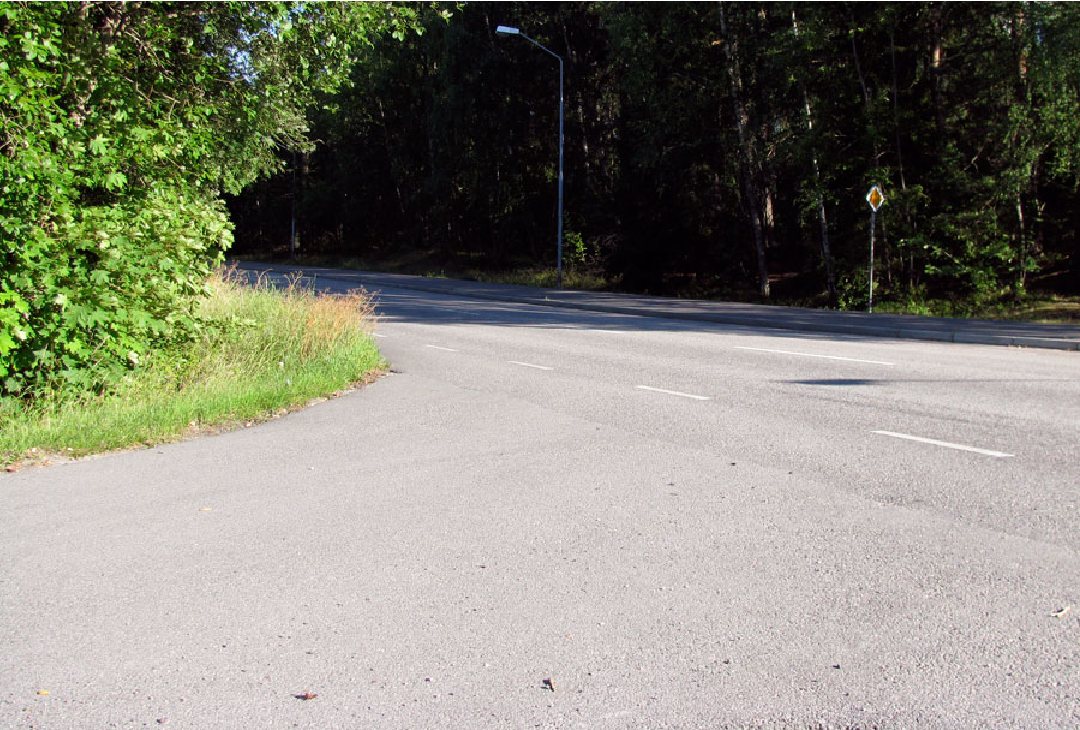
The picture is taken from the driver’s side window of the car you are driving. What should you do if you want to turn right on the intersecting road?

Picture for question 52

Explanation

The road you want to turn out onto is a priority road (see the sign to the right of the picture). This means that the last option is wrong.

You cannot make a good assessment of the traffic situation from where you are positioned. You therefore need to drive a bit further forward.

Question 53

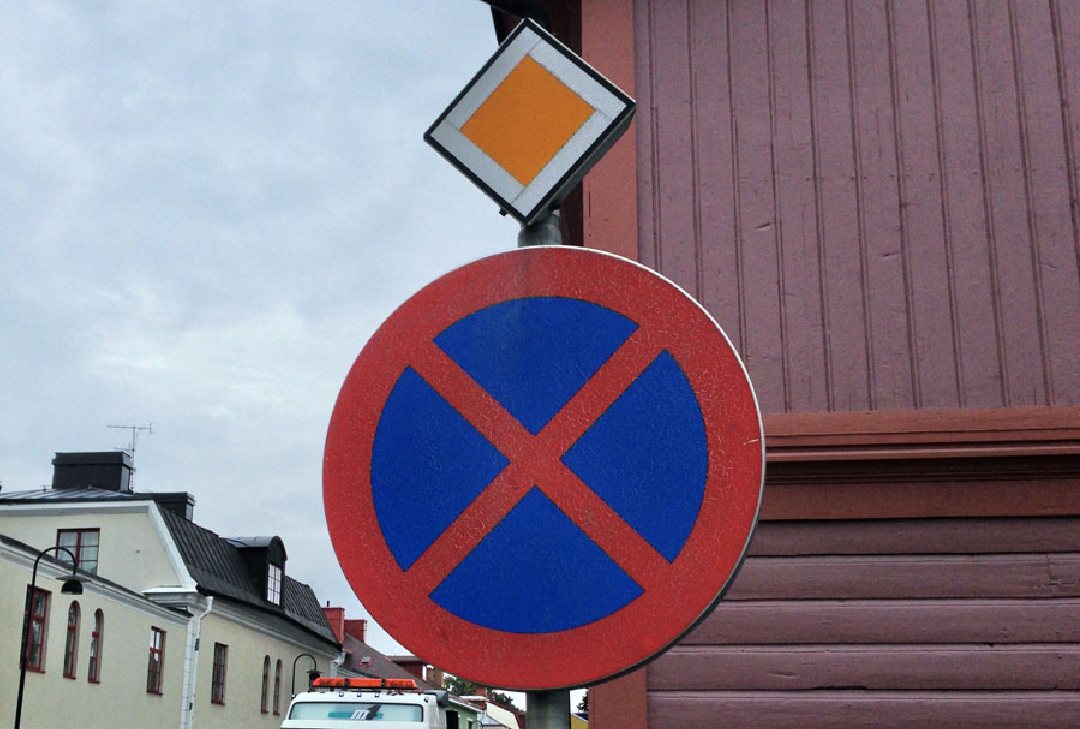
What applies to this combination of road signs?

Picture for question 53

Explanation

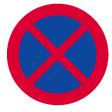
No stopping or parking (C39)
No stopping or parkingC39

It is true that according to the rules, you are normally allowed to stop but forbidden from parking on a priority road. However, the prohibitory sign takes priority over the rule.

Question 54

You are driving out from a property and must cross a dual track for pedestrians, cyclists and moped drivers. Who must you give way to?

Explanation

“On foot paths, [...] drivers must give way to pedestrians. […] On bicycle paths, cyclists and drivers of class II mopeds must be given right of way by other vehicle drivers.”

Swedish Road Traffic Ordinance
Question 55

Does a police officer have the right to stop you to check that your vehicle is safe to drive?

Explanation

“Every police officer who has reason to assume that a vehicle encountered in traffic is not in the prescribed condition may conduct an inspection of the characteristics and equipment of the vehicle that are obviously required from a traffic safety point of view.”

Vehicles Act
Question 56

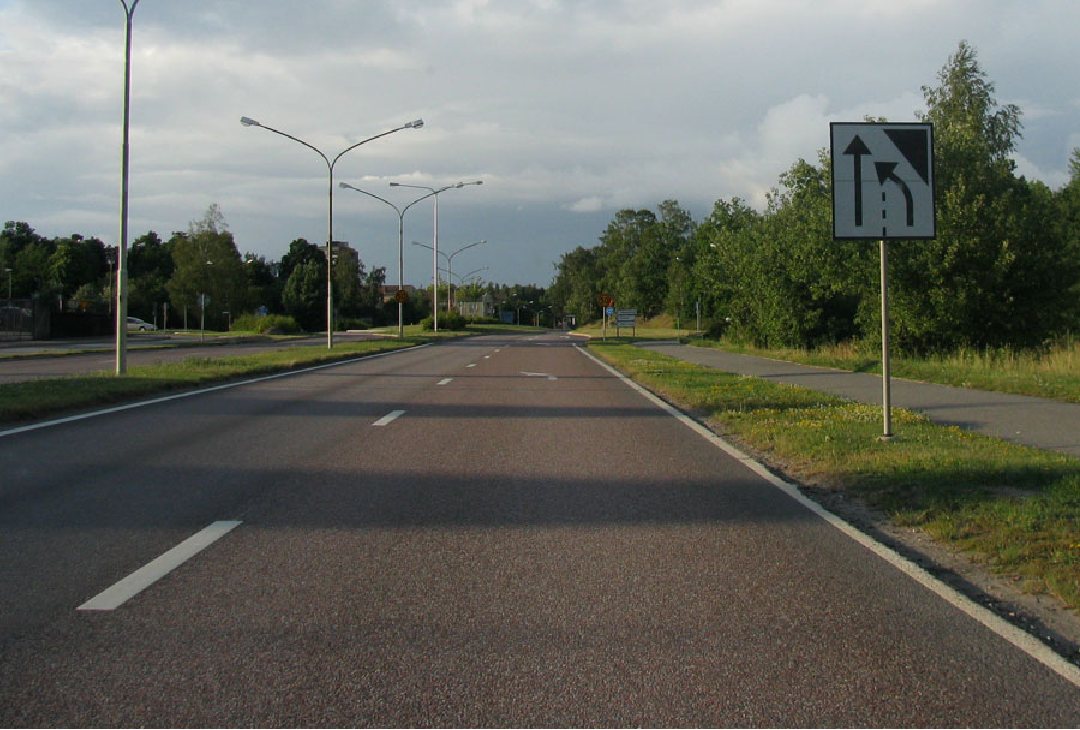
You are in the right lane. When should you change to the left?

Picture for question 56

Explanation

Getting stuck in the right lane is bad for many reasons:

  • You have to brake or stop, which is not environmentally friendly.
  • Other cars may be unsure/confused when you are standing still and waiting to change lanes = creating uncertainty.
  • It is annoying for you to wait.

You may also change lanes before the sign. There is nothing in the picture to suggest otherwise.

Question 57

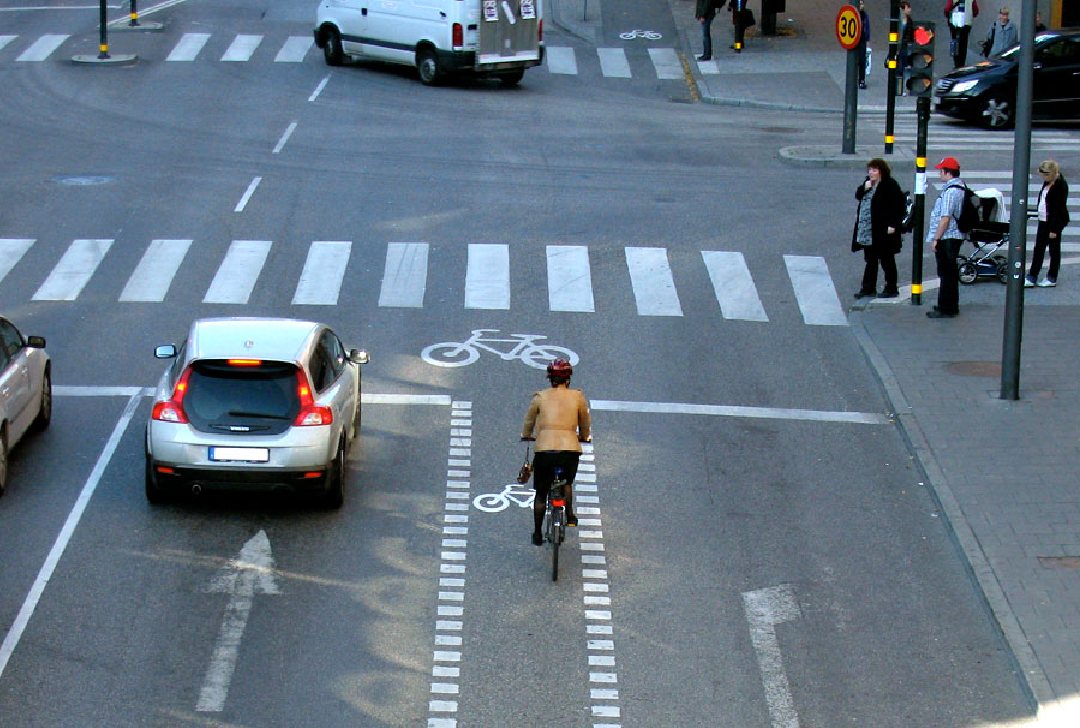
The cyclist in the middle of the photo is turning right. Does she have to stop before the pedestrian crossing?

Picture for question 57

Explanation

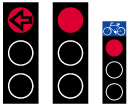
Red (SIG1)
RedSIG1

“Stop. A vehicle may not pass the stop line or, in the absence of such, the signal. A signal with an arrow outline only applies to the direction or directions indicated by the arrow.”

The red light also apply to the cyclist, since she is on the regular road. The stop line is broken in front of the bicycle lane so that cyclists can get in front of the cars and prepare their continued journey safely (instead of standing wobbling in between the cars).

Why should I know this to drive a car?

– It is good to be aware of how other road users may act. If you, for example, are sitting in your car on one of the crossing roads, you do not need to remember to give way to the cyclists, as they are obligated to stop at the red light.

Question 58

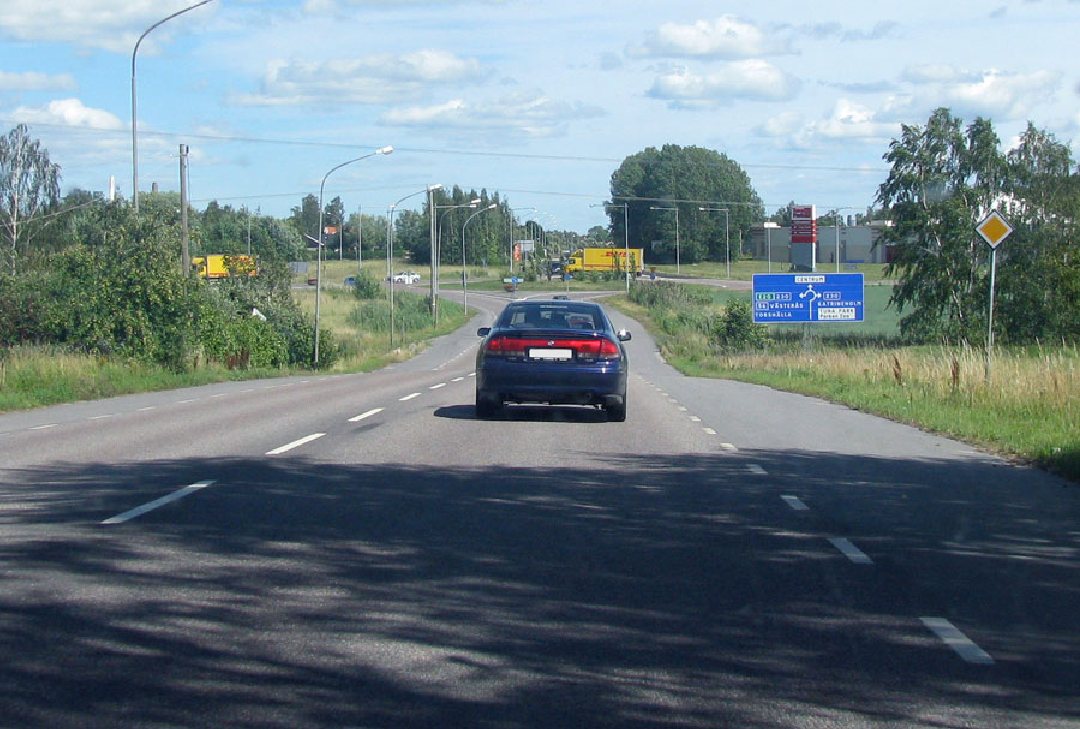
Do the priority road’s right of way rules also apply in the oncoming roundabout?

Picture for question 58

Explanation

In a roundabout, the following always applies:

“A driver entering a roundabout is obliged to give way to every vehicle currently in the roundabout.”

Swedish Road Traffic Ordinance

If the priority road’s right of way rules apply, the car in the picture may drive straight through the roundabout and all cars already there must stop and give way. This is in direct opposition to the roundabout’s basic principle, i.e. that you must give way to vehicles already in the roundabout.

Question 59

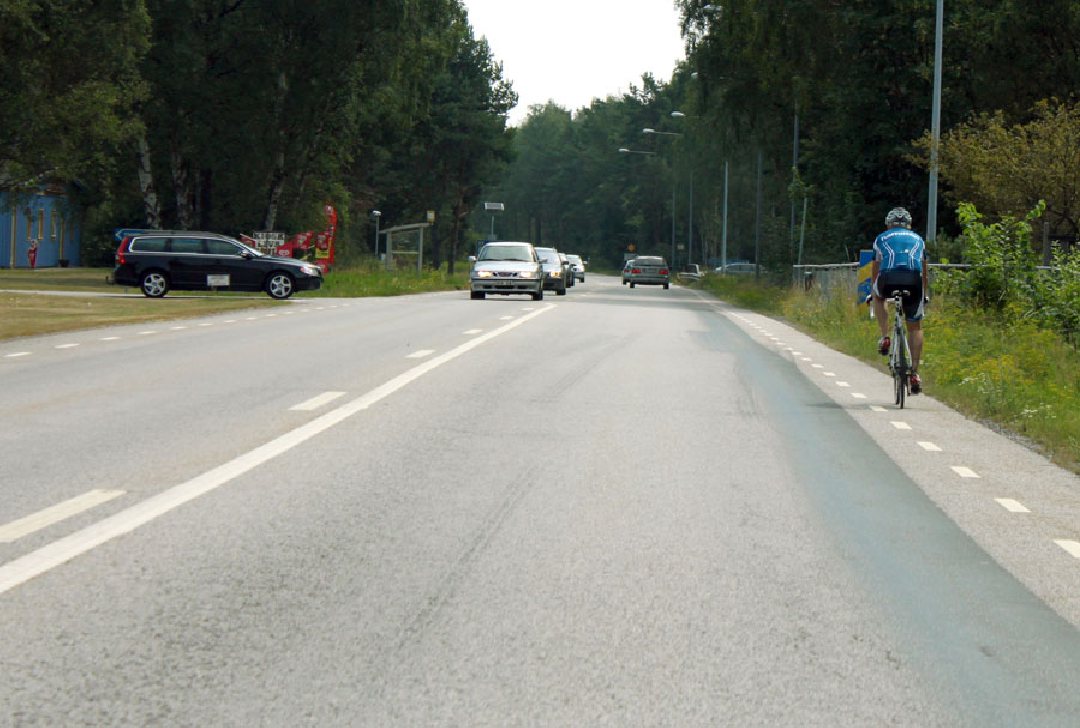
You are driving the car from which the picture is taken. Which statement is true regarding the cyclist?

Picture for question 59

Explanation

Cyclists may be overtaken at a junction: “You may not overtake right before or in a junction [...] However, two-wheeled vehicles without a sidecar may be overtaken.” (Swedish Road Traffic Ordinance).

The oncoming traffic is no hindrance, as long as you stay in your lane. The solid line only means that you may not cross into the oncoming lane, which you do not have to in this case.

Question 60

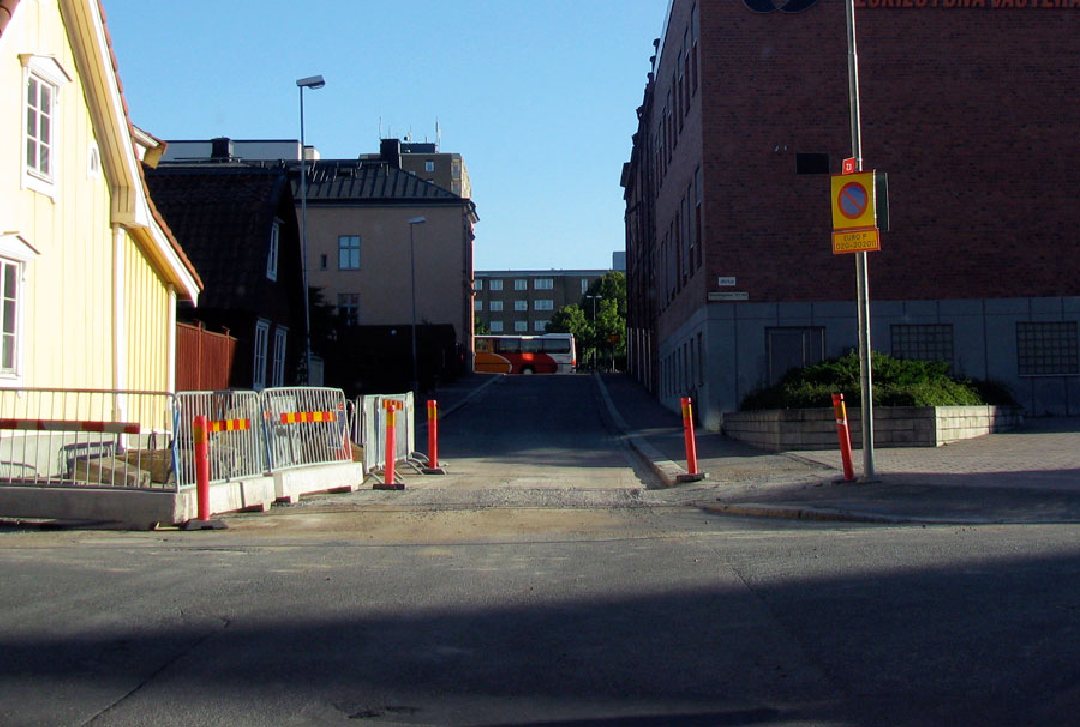
Are you allowed to drive straight on in the situation in the picture?

Picture for question 60

Explanation

The plastic posts are not erected in such a way that could be interpreted as prohibiting a vehicle from driving straight on. The sign on the right means an area where parking is prohibited. The condition of the road does not prohibit driving straight on either.

Question 61

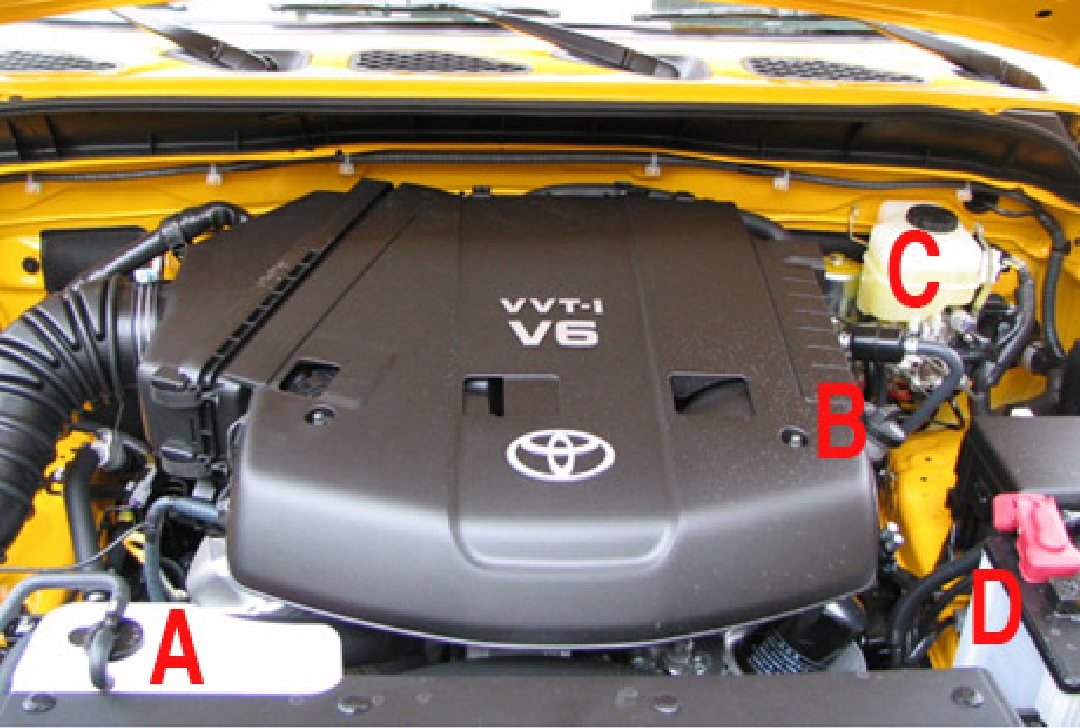
Where is the brake fluid container?

Picture for question 61

Explanation

The brake fluid is almost always yellow and found in a visible plastic container. For this reason, you can be fairly certain that C is the correct answer.

Question 62

Can peer pressure be a positive thing?

Explanation

If you are speeding, and someone in the back seat tells you to slow down because you have plenty of time, that would be positive peer pressure.

Question 63

You have purchased a 2-year-old car. When does the car have to go through a registration inspection?

Explanation

The regular inspection that all cars must undergo is called a roadworthiness test.

Question 64

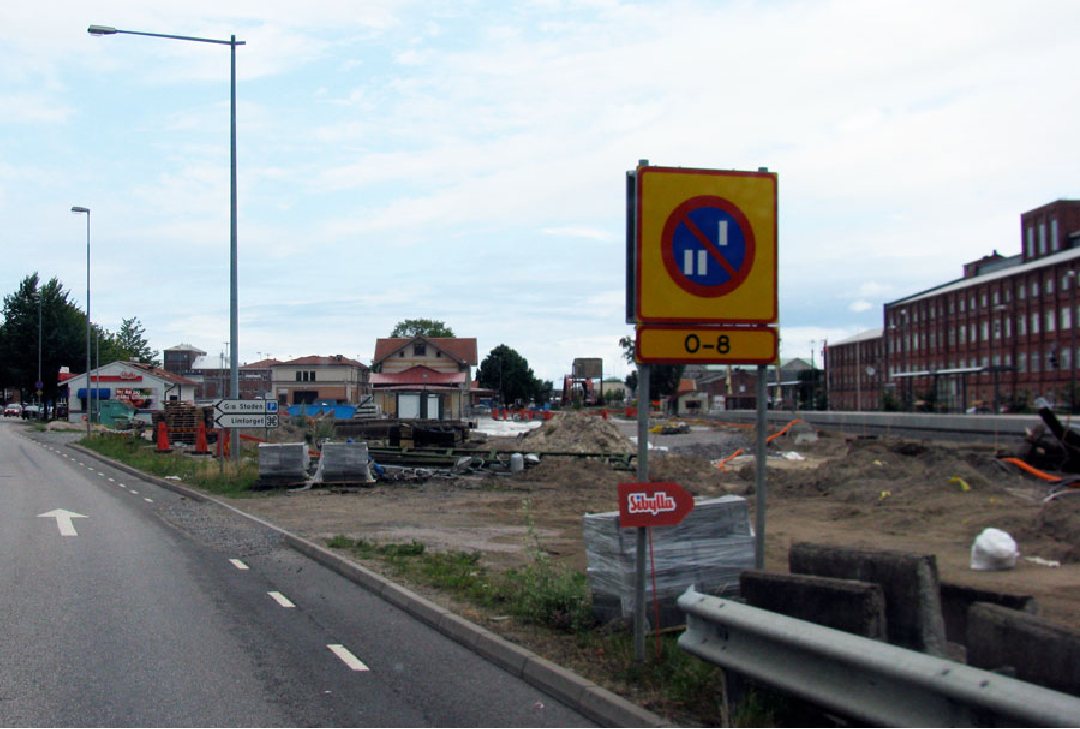
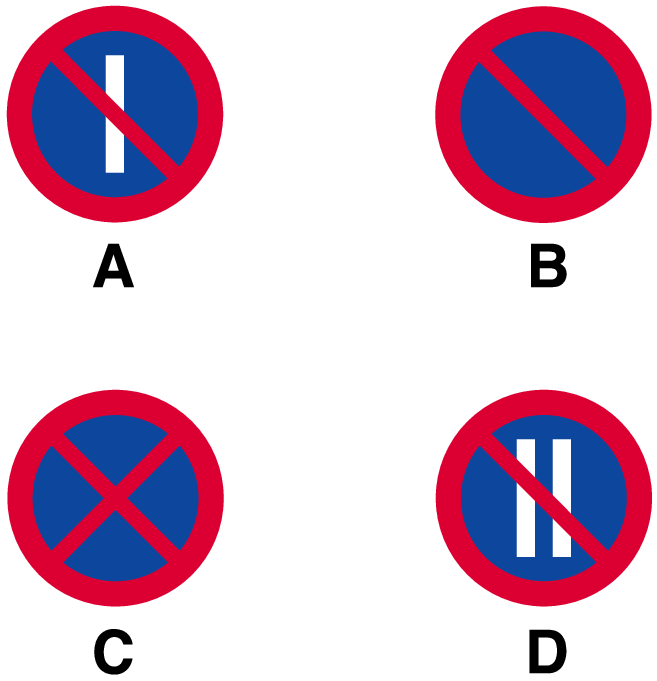
Today is 19 September. Where are you allowed to park?

Picture for question 64

Explanation

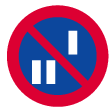
The 19th is not an even date, which means the parking prohibition is not in effect.

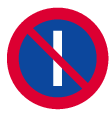
A: Vehicle parking is prohibited on odd-numbered dates (C36)
AVehicle parking is prohibited on odd-numbered datesC36
B: Vehicle parking is prohibited (C35)
BVehicle parking is prohibitedC35
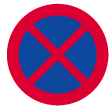
C: No stopping or parking (C39)
CNo stopping or parkingC39
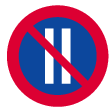
D: Vehicle parking is prohibited on even-numbered dates (C37)
DVehicle parking is prohibited on even-numbered datesC37
Question 65

Who is responsible for a 15 year old passenger using their seat belt?

Explanation

“The driver [...] shall take appropriate measures to ensure that passengers under fifteen years old use a seat belt”

Swedish Road Traffic Ordinance

The person in question is not under 15 = the driver is not responsible.

Question 66

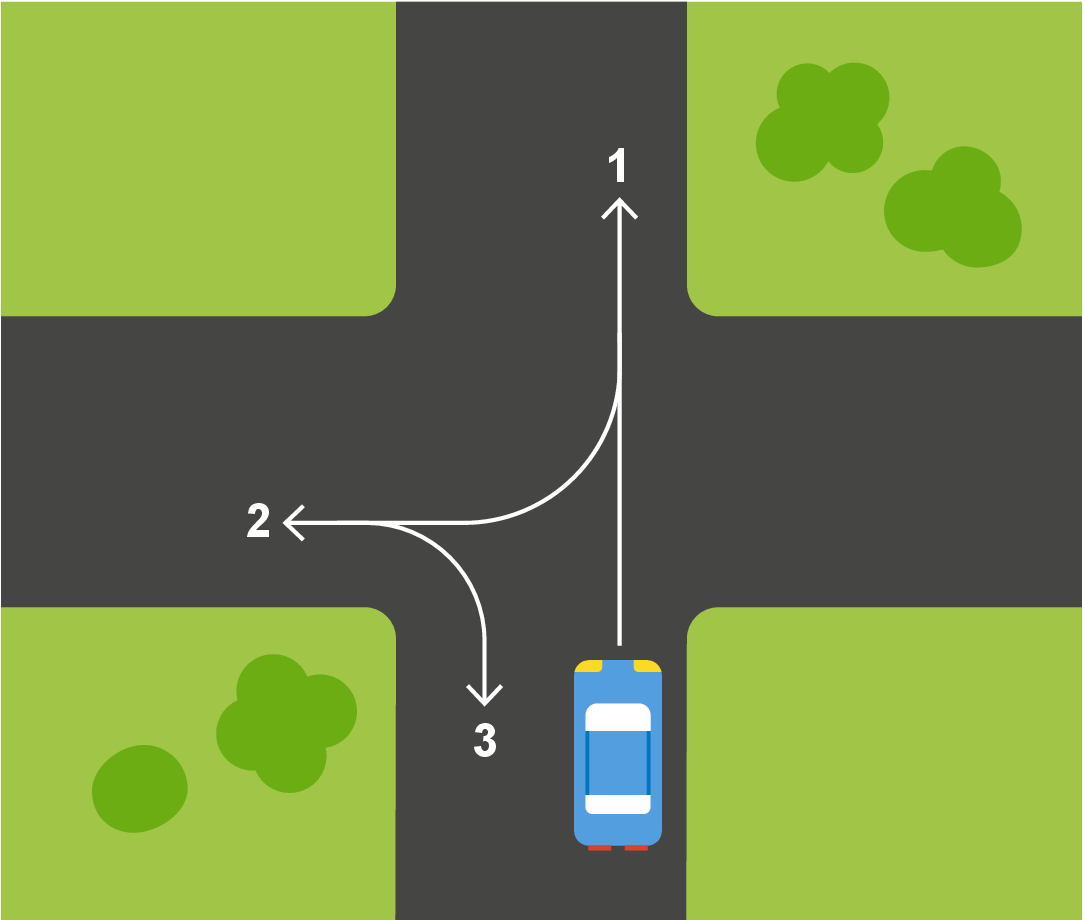
The driver is planning a turn as shown by the arrows. Which of the following is true?

Picture for question 66

Explanation

In doing this turn, the driver has to reverse across the whole junction, crossing almost all the lanes. This is inappropriate, as the driver will probably focus mostly on reversing (meaning that they may not spot intersecting traffic).

The driver shall aim to cross as few lanes as possible while reversing.

Question 67

Which statement is true about this prohibition sign?

Picture for question 67

Explanation

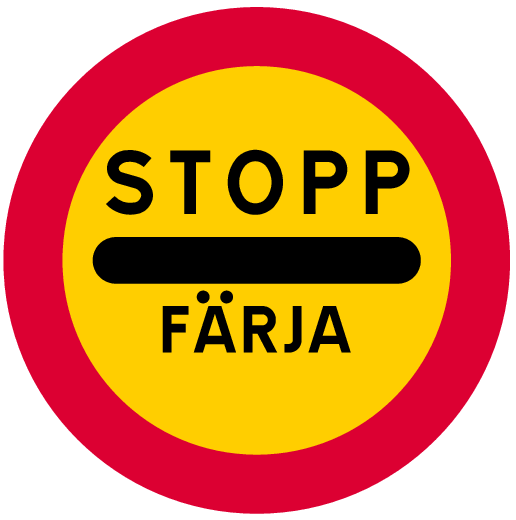
”Stopp – färja” = Stop – ferry

Stop for stated purpose (C34)
Stop for stated purposeC34

“This sign indicates the obligation to stop for the reason provided underneath the horizontal line. If the sign has been placed before a traffic light, it indicates that a vehicle passing the sign shall stop for a red light. The vehicle shall stop at the stop line or, in the absence of such a line, by the sign.”

Question 68

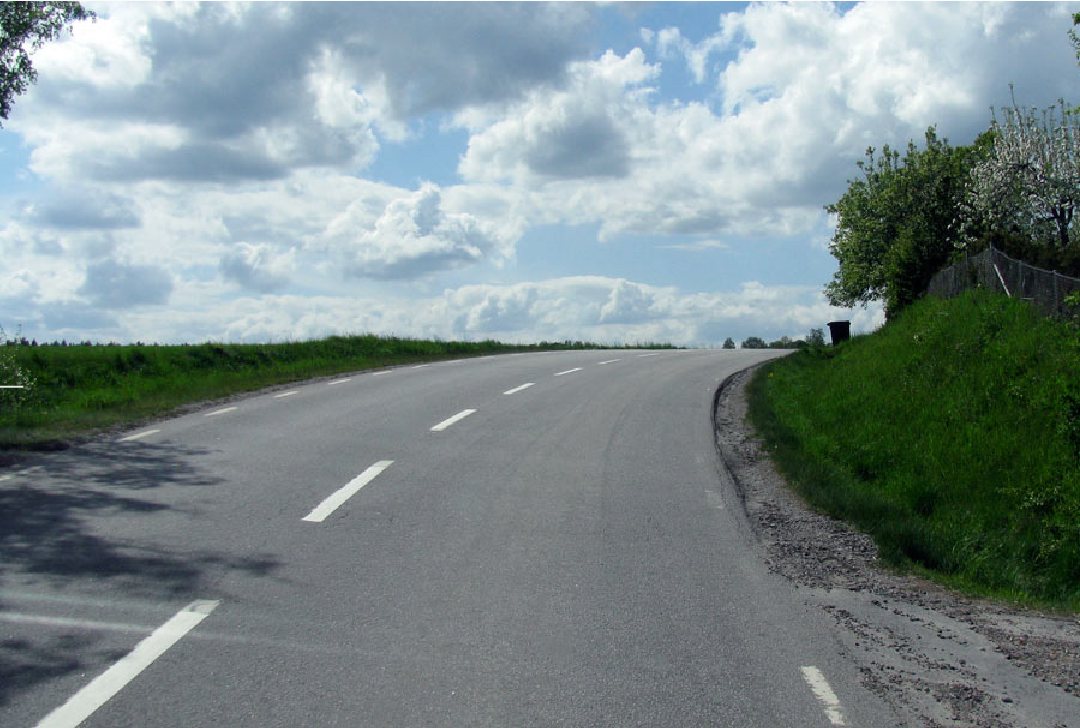
You are driving the car from which the picture is taken. Half way into the curve, you spot a couple of small animals on the side of the road. How should you act?

Picture for question 68

Explanation

Review of the options:

  • Maintain your speed and ignore the animals, as small animals pose no danger.
    – Bad option, animals are to be respected.
  • Maintain your speed and honk your horn to scare the animals off.
    – Bad option, the animals are at the side of the road. If you use your horn, they may get scared and run out in front of your car. In addition: If you do sound the horn, you should absolutely lower your speed to be prepared if they run out into the road.
  • Safely lower your speed, with particular attention to any vehicles behind you.
    – Good option, you take the animals into consideration while also realising that braking suddenly can lead to vehicles behind you crashing into you (personal injuries). True, vehicles behind you are supposed to keep their distance, but being “in the right” will not be much comfort when an accident happens.
  • Stop right away (brake suddenly).
    – Bad option, this is a traffic hazard, especially after a curve with obstructed visibility. You must show respect for animals, but human safety is a higher priority.
Question 69

Are you allowed turn right?

Picture for question 69

Explanation

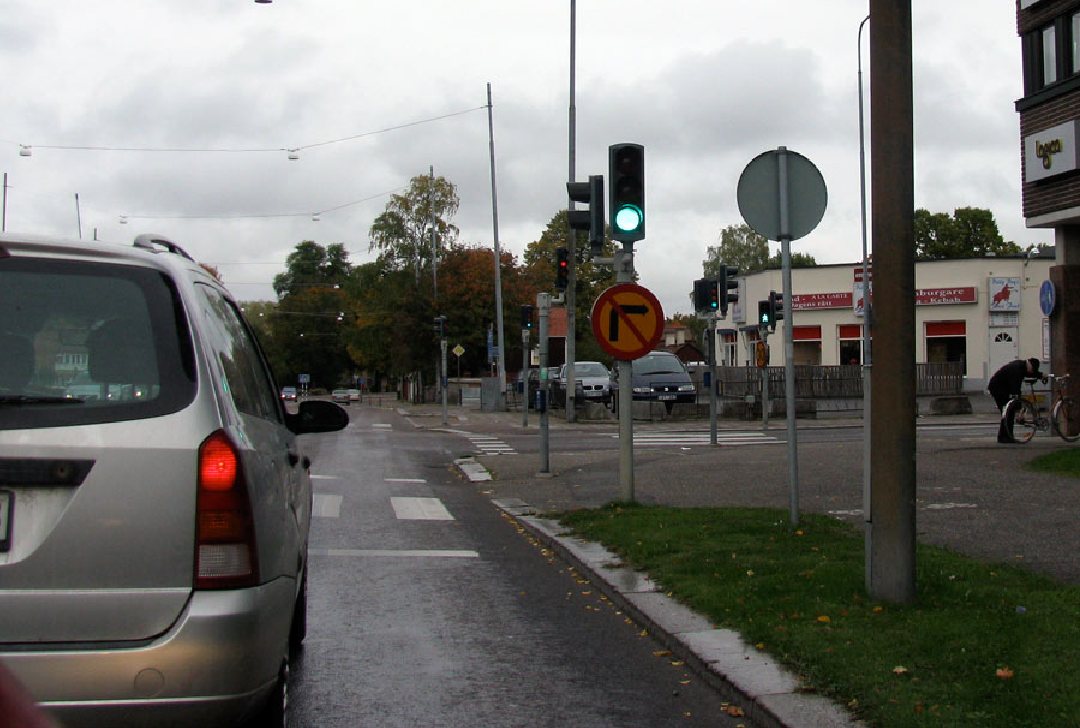
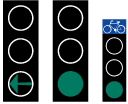
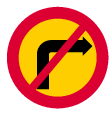
In this case, you do not have to apply the priority order of road signs and signals, as they do not “contradict” one another. The traffic signal allows you to drive, but does not tell you anything about how. The road sign underneath it on the other hand expressly states that you may not turn right.

Green (SIG3)
GreenSIG3

“Vehicles may continue on straight. A green arrow indicates that the signal applies to the direction in which the arrow points. Vehicles may be driven in the arrow’s direction even if another signal is showing at the same time.”

No right turn in the junction (C25)
No right turn in the junctionC25

“This prohibition applies to the junction or similar location before or in which the sign is erected. The sign may relate to several junctions. In that case the distance is indicated on an additional panel. The symbol is adapted to the conditions of the location.”

Question 70

Which proportion of 60-year-olds have some form of visual impairment?

Explanation

Visual impairment: “82% of 60-year-olds.” (Du och jag i trafiken [You and me in traffic], 28th Edition, page 52)

Why should I know this?

– Safety is the highest priority in traffic. You must therefore be aware of statistics and probabilities such as these. Hopefully, it will make you check your vision when you are older, which makes traffic safer.