What does this road sign mean?
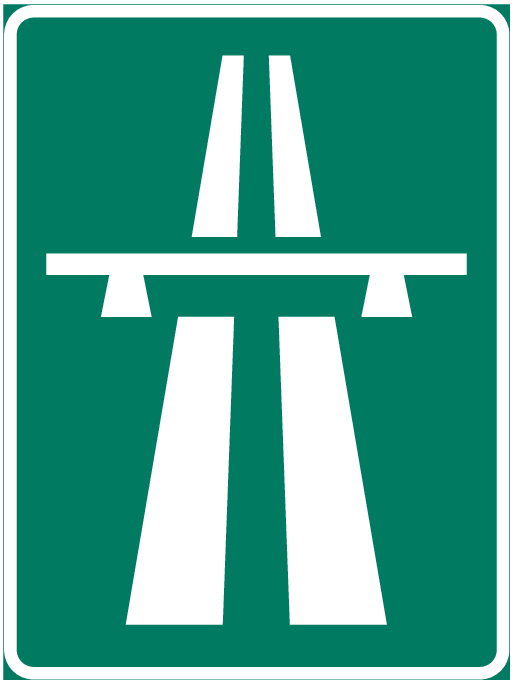
Explanation
MotorwayE1
“If the sign is used as preparatory information indicating that a motorway is starting, the distance is given on an additional panel. The sign may also be included in a location sign.”
Pick an answer to check it. 56 of 70 correct (80%) is needed to pass.
The real test has 70 questions in 50 minutes, about 43 seconds per question.
“If the sign is used as preparatory information indicating that a motorway is starting, the distance is given on an additional panel. The sign may also be included in a location sign.”
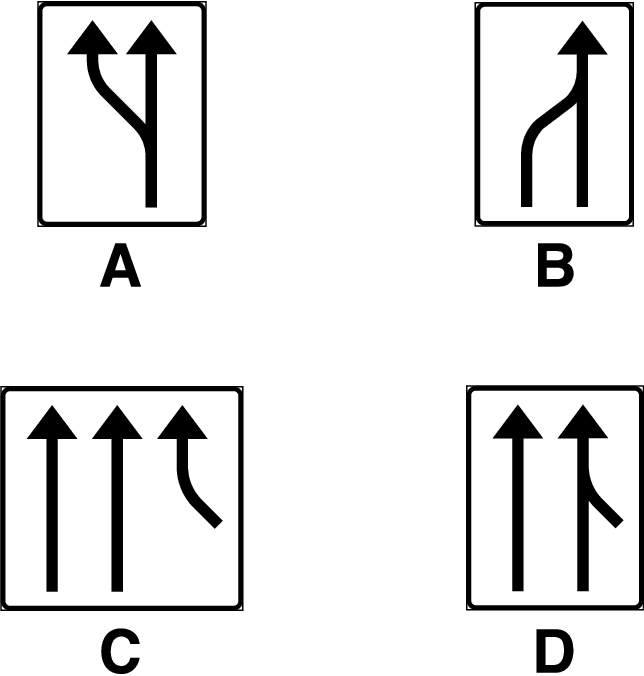
“This sign indicates an increase in the number of lanes. The sign is specific to the conditions at the location. Symbols for types of vehicles or road numbers may be included in the sign. The sign is also used as a preparatory notice that the number of lanes will increase. The distance is then stated on an additional panel. In case of a temporary re-routing of traffic, the sign may have an orange base. Otherwise, no deviating colour may be used.”
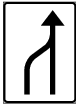
“This sign indicates a reduction in the number of lanes. The sign is specific to the conditions at the location. The sign is also used as a preparatory notice that a lane is ending. The distance is then stated on an additional panel. In case of a temporary re-routing of traffic, the sign may have an orange base. Otherwise, no deviating colour may be used.”
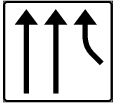
“The sign is specific to the conditions at the location. In case of a temporary re-routing of traffic, the sign may have an orange base. Otherwise, no deviating colour may be used.”
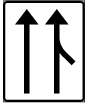
“The sign is specific to the conditions at the location. In case of a temporary re-routing of traffic, the sign may have an orange base. Otherwise, no deviating colour may be used.”
“A wildlife passage is a path underneath the road that can be used by all types of animal.”
Swedish Transport Administration
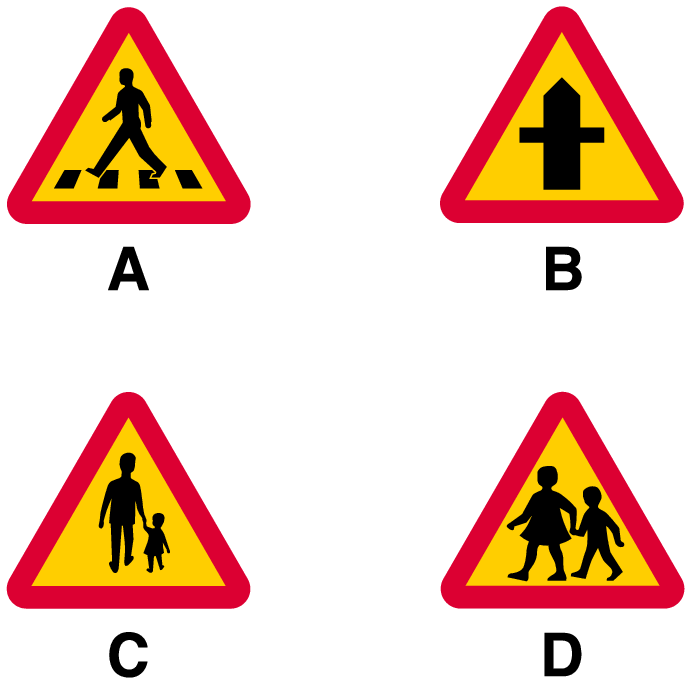
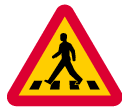
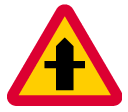
“The sign indicates a junction where drivers of vehicles on connecting roads are obliged to give way or stop. The symbol is adapted to the conditions of the location.”
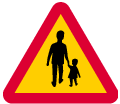
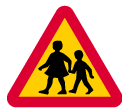
“This sign indicates a stretch of road where children often cross or where there are often children on or near the road.”
C warns you of pedestrians, but not of children specifically.
This question is asking about a prohibition of non-studded winter tyres. The only prohibition that exists is that of studded tyres.
Winter tyres are marked “MS” (Mud and Snow) and come in two varieties:
“Even if there is no prohibition on driving on non-studded winter tyres in summer, the Swedish Transport Agency recommends a change to summer tyres.”
Swedish Transport Agency
“Traffic signals” should be read as all signals found in the road sign category Traffic signals.
Examples of other types of traffic signals with red lights only:

“Stop. A vehicle may not pass the stop line or, in the absence of such, the signal.”
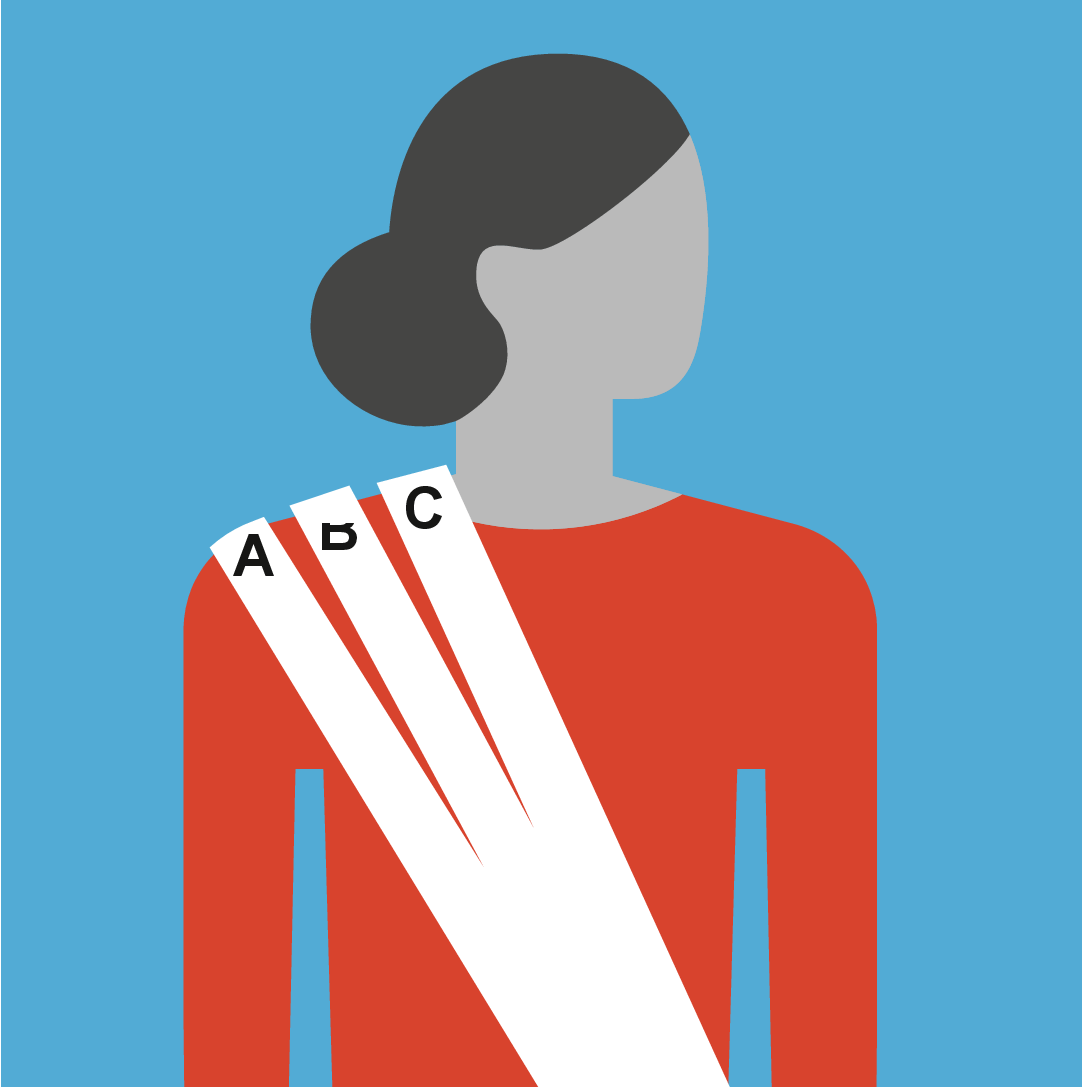
“The diagonal strap is to go across the chest, as close to the neck as possible.”
NTF
When the belt is placed close to the neck, it creates the best protection and reduces the risk of injury.
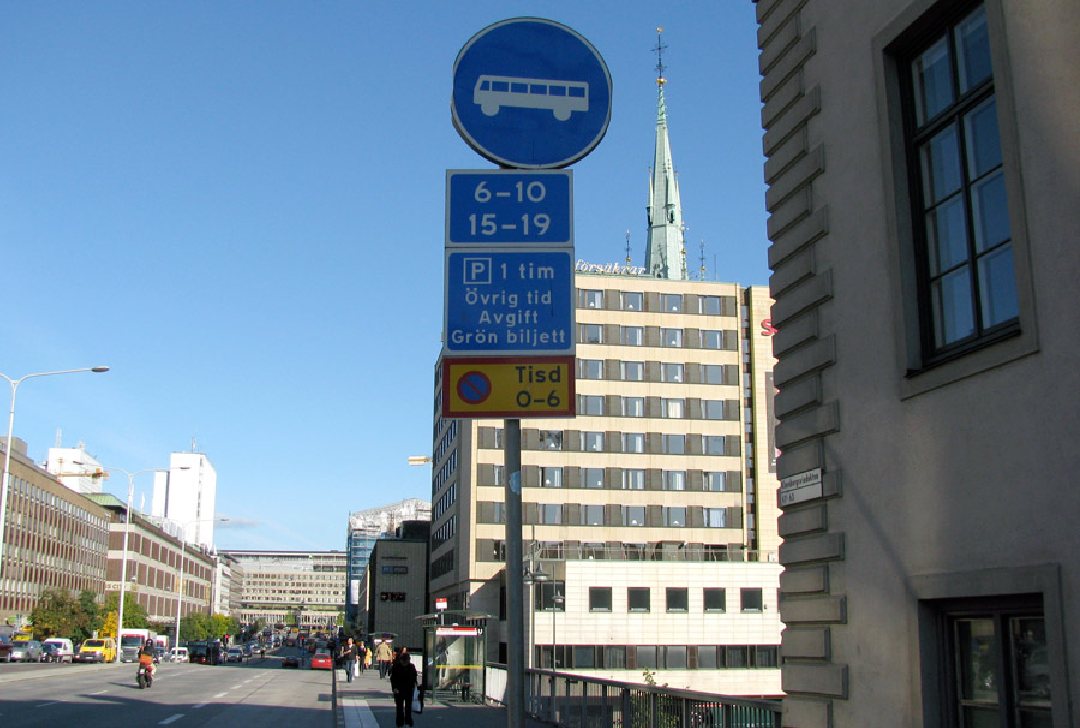
”1 tim” = 1 hour
”Övrig tid” = Other times
”Avgift” = Fee
”Grön biljett” = Green ticket
”Tisd” = Tuesday
According to the additional panel, the public transport lane comes into use at 15:00. In other words, it does not stop you from parking.
The parking prohibition on Tuesdays starts at midnight and is then in force until 06:00 on Tuesday morning. In other words, there is no parking prohibition now in the afternoon.
The sign indicating the times along with the additional panel with the P symbol is to be interpreted like this: Parking is permitted (a fee is payable, the ticket you buy is green) for a maximum of one hour, provided that the time is not 06:00–10:00 or 15:00–19:00.
In other words, parking is permitted for one hour according to the sign. However, as the time is 14:30, you can only park for 30 minutes, because at 15:00 the public transport lane comes into use.
2017 19,334
2018 18,501
2019 17,719
Note that there is a similar question that asks for the number of seriously injured.
“The most prominent observation when it comes to the cause of tiredness-related accidents is probably the highly distinctive rhythm [...] The maximum accident level consistently lies between the hours of 02:00 and 05:00 in the morning”
Karolinska Institutet
“Many cars have an anti-lock braking system, i.e. ABS […] on gravel, snow and ice, the braking distance can be slightly longer.”
Driving Licence Book, 19th Edition, page 131
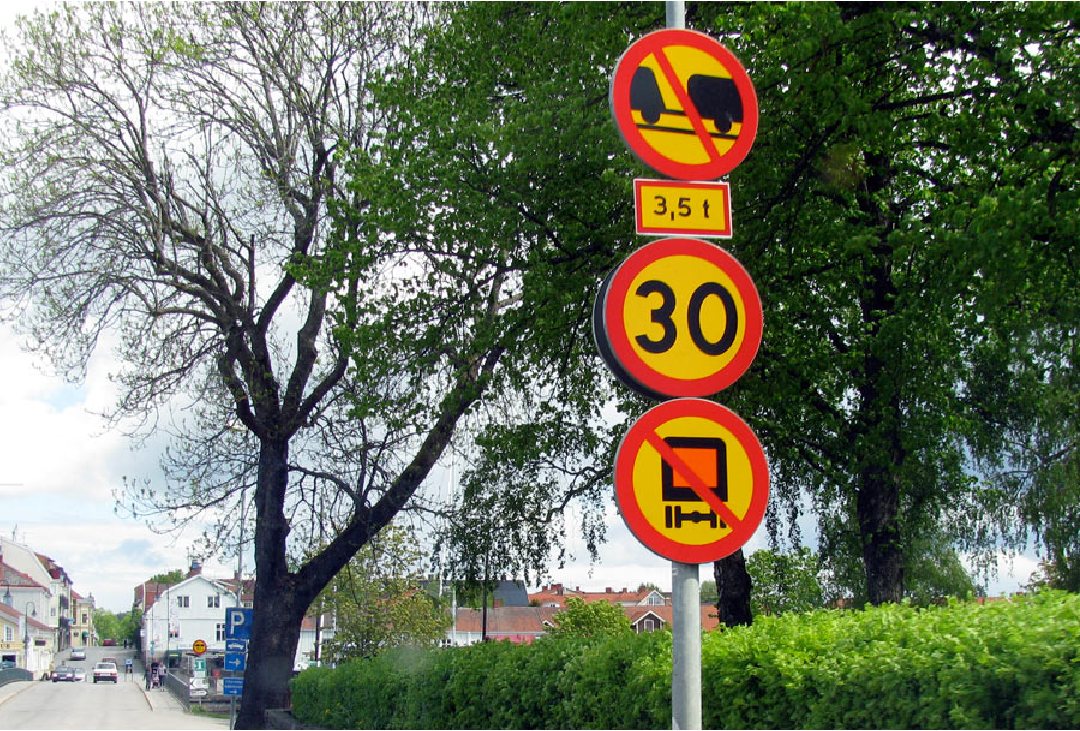
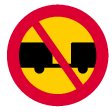
“The sign indicates a prohibition against motor vehicles with a connected trailer of a type other than semi-trailer or centre axle trailer. If the prohibition also applies to motor vehicles with a connected semi-trailer or centre axle trailer, this will be indicated on an additional panel. If the prohibition only refers to vehicle combinations with a trailer whose total weight exceeds a certain tonnage, this will be indicated on additional panel T5, total weight.”
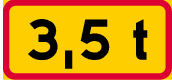
“The panel indicates that the directions of the sign apply to vehicles with a total weight exceeding that stated on the panel.”
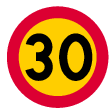
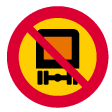
“The sign indicates a prohibition against traffic with vehicles carrying loads that are subject to the labelling requirement of an orange sign according to provisions stipulated pursuant to Act on the Transport of Dangerous Goods (2006:263).”
Parts of both the wrong answers are correct, but the whole answer has to be right and not just part of it.
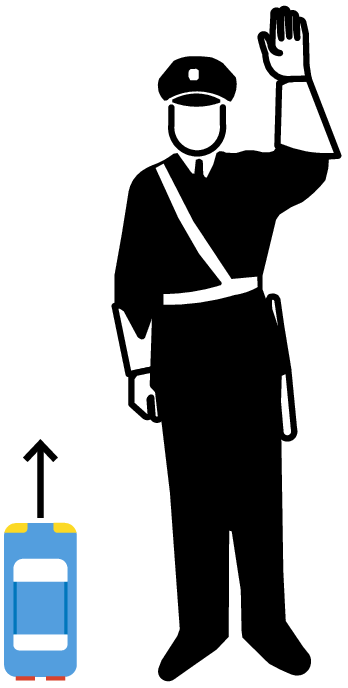
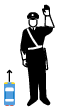
“The signal means stop for the road user the palm is facing. The signal may be given using a stop paddle.”
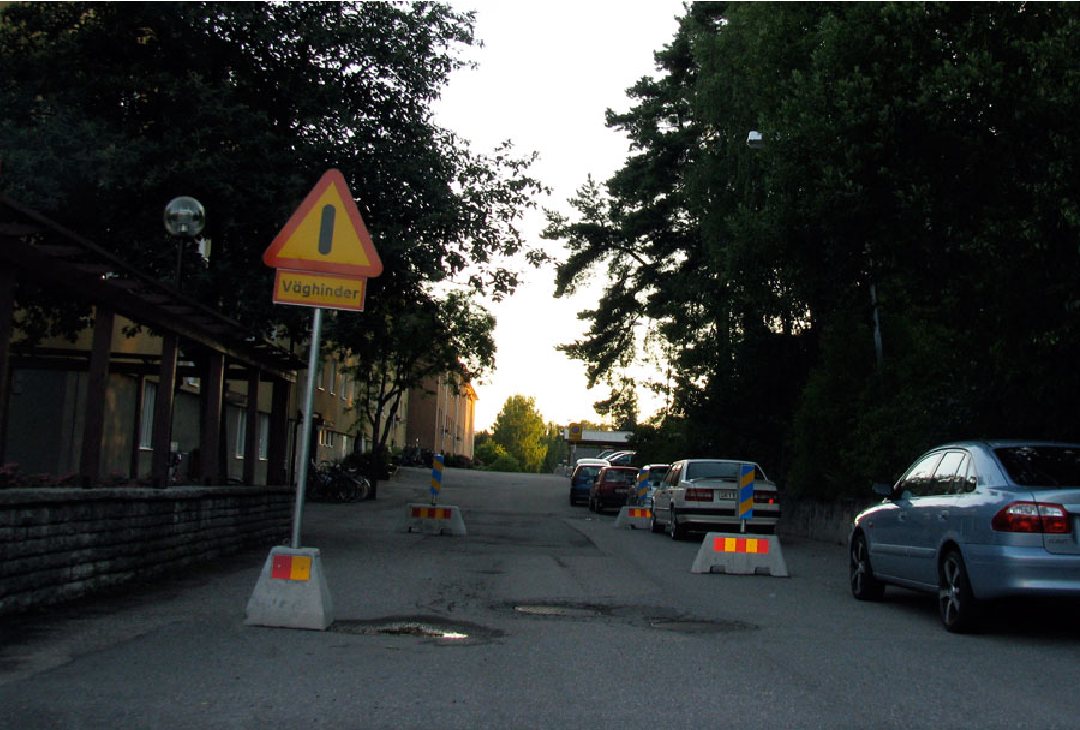
”Väghinder” = obstruction along the road.
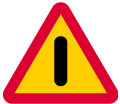
“The sign indicates dangers other than such that can be indicated with some other warning sign. The nature of the danger is specified on an additional panel.”
The sign therefore simply warns, it never prohibits you from doing something.
“You may not overtake right before or on a level crossing [...] However, two-wheeled vehicles without a sidecar may be overtaken.”
Swedish Road Traffic Ordinance
If the road is wide and visibility is good, it would not be safe or efficient if you were forced to break abruptly and drive at a snail’s pace behind the cyclist (and thus pass the hazardous railway crossing at a very low speed).
However, if the road is narrow and visibility is obstructed, you may not overtake according to other rules. But this question asks if it is generally allowed, which it is.
Jackknife effect: “The car brakes more effectively than the trailer.” (Driving Licence Book, 19th Edition, page 173)
The car brakes effectively, but the trailer brakes poorly. This means that the trailer has to go somewhere (speed and force remains, as the trailer has not come to a full stop). This is called the jackknife effect, as the trailer will slide either to the right or the left and thereby fold in towards the car like the blade of a jackknife. The forces are so great that the car is also affected and will be pulled along – a very dangerous traffic hazard!
“Out of the total carbon dioxide emissions in Sweden, approximately 30 per cent are caused by the road transport sector.”
Swedish Transport Administration
“[…] rear-end collisions, i.e. accidents where one car crashes into the rear of the car in front of it.”
Swedish Transport Administration
Nationalencyklopedin: “engine idling [...] driving (of an engine) without any power transmission {SYN. freewheel 2}: engine idling; the engine is ticking over [idling]”.
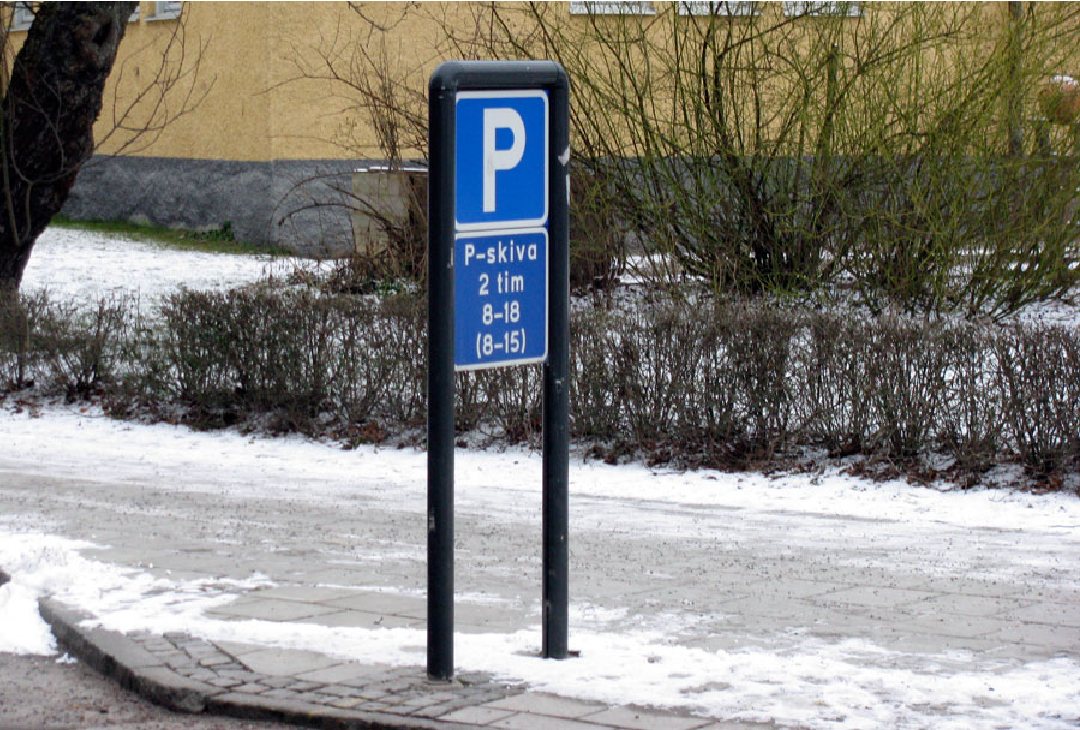
”P-skiva” = parking disc.
Review of the options:
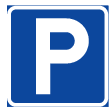
“The sign indicates that parking is allowed in a parking area [...] parking is permitted, during weekdays except for weekdays before Sundays and public holidays, for a maximum of 24 hours at a time, unless other information is provided on an additional panel.”
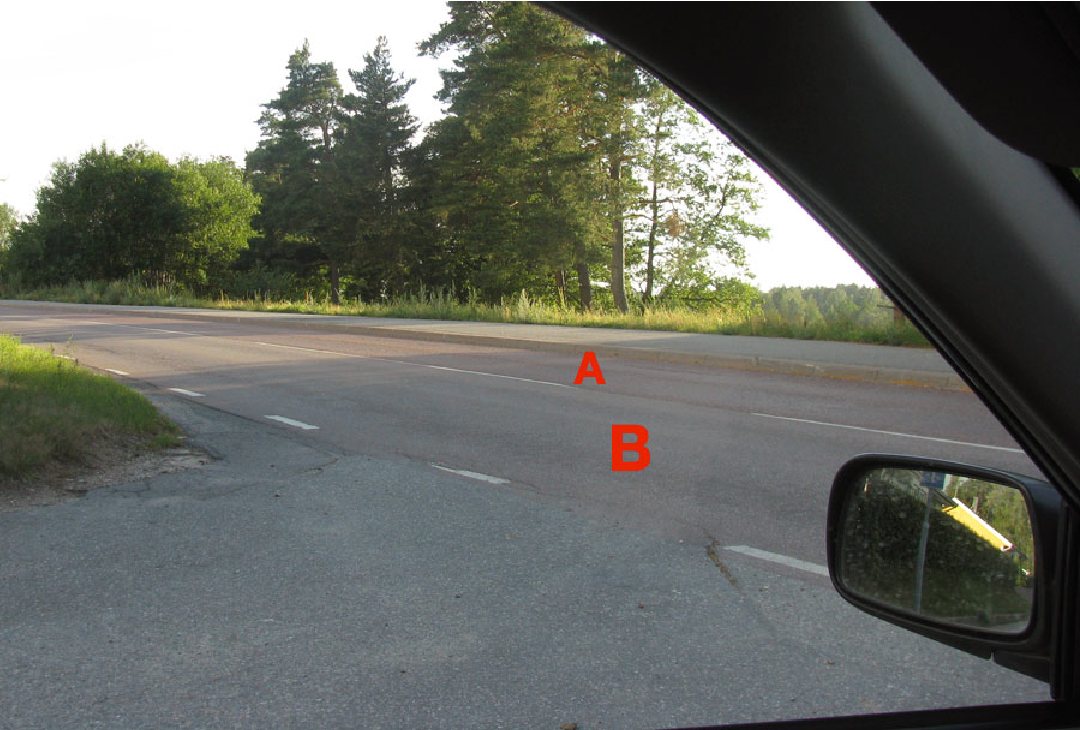
It is indicated in the question that the road you are entering is a priority road. “A driver entering a priority road from another road [...] is obliged to give way to vehicles on the road they are entering.” (Swedish Road Traffic Ordinance)
The obligation to give way applies to the entire road:
“Obligation to give way [...] obliged to yield to all vehicles on the intersecting road, regardless of the direction from which they are coming.”
Du och jag i trafiken [You and me in traffic], 28th Edition, page 143
A car in lane A may be about to overtake and is therefore crossing into lane B with two wheels. It would then be quite inappropriate for the rules to allow you to drive out onto the road.
“The curve shows the risk of a driver with a certain blood alcohol level being killed in a traffic accident in relation to the risk of a sober driver being killed. […] 0.2–0.4 per mille, the estimated relative risk is approximately 12 times higher”
VTI
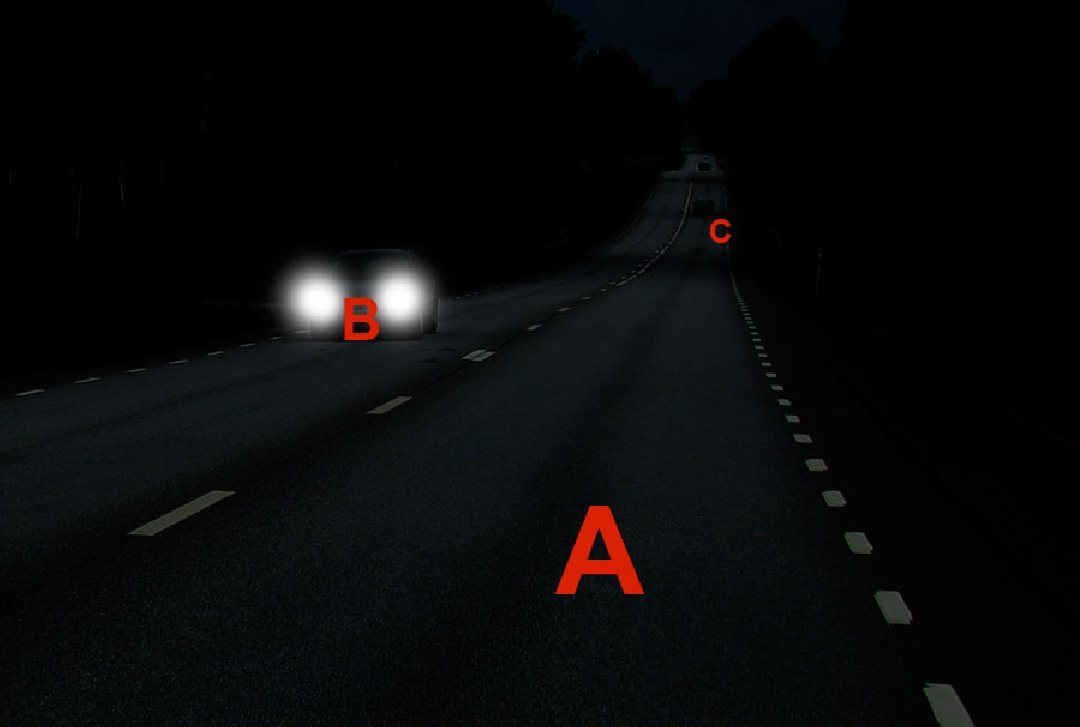
When driving in the dark, you should look “far ahead along the side of the road.” (Driving Licence Book, 19th Edition, page 155)
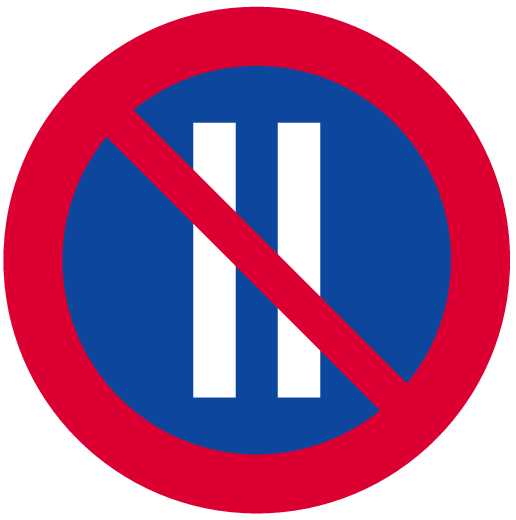
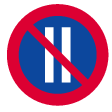
“The more detailed provisions relating to sign C35, Vehicle parking is prohibited, also apply to this sign.”
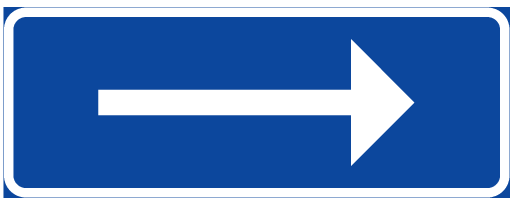

“The sign indicates that vehicle traffic on the road is one-way in the direction of the arrow. An arrow pointing up indicates that the traffic is one-way in a forward direction.”
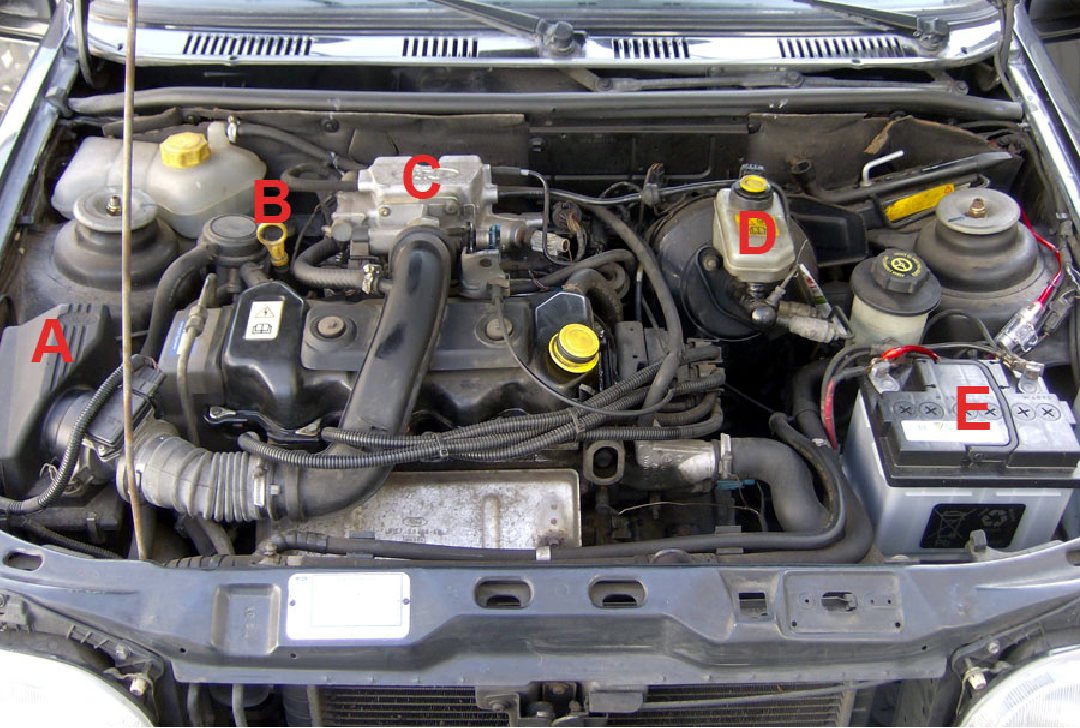
See the Driving Licence Book, 19th Edition, page 144 or Vägvisaren B, 14th edition, page 55.
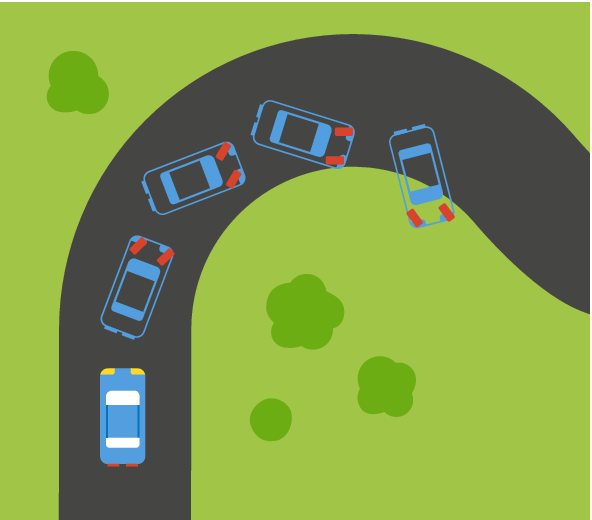
The driver first turns the wheel normally for the car to turn through a curve.
The driver then notices that the rear wheels are losing their grip and gliding to the left, which the driver tries to compensate for by turning the wheel to the left instead of the right (so that the front wheels of the car also go to the left, in the hope of straightening up the car to regain control).
However, the grip is too poor and the rear-wheel slide continues.
Note that the red wheels always point in the direction of the road, which is desirable. If the driver had kept turning the wheel to the right in the beginning, the car would have spun much faster and harder.
“Is it not possible for the tyre to explode? No. To do this, you would have to pump in more than 13–15 kg (bar) – more than five times the normal tyre pressure of a private car. It is not possible to get this much air in, as a normal compressor cannot provide this type of pressure. At approximately 6–7 kg (bar) the rim may rupture – but even this pressure is difficult to reach with regular pumping devices.”
Swedish Transport Administration
As the question relates to a petrol station, and you are not given any specific information about the pump, you should assume that it is a regular model (i.e. not powerful enough to make the tyre explode).
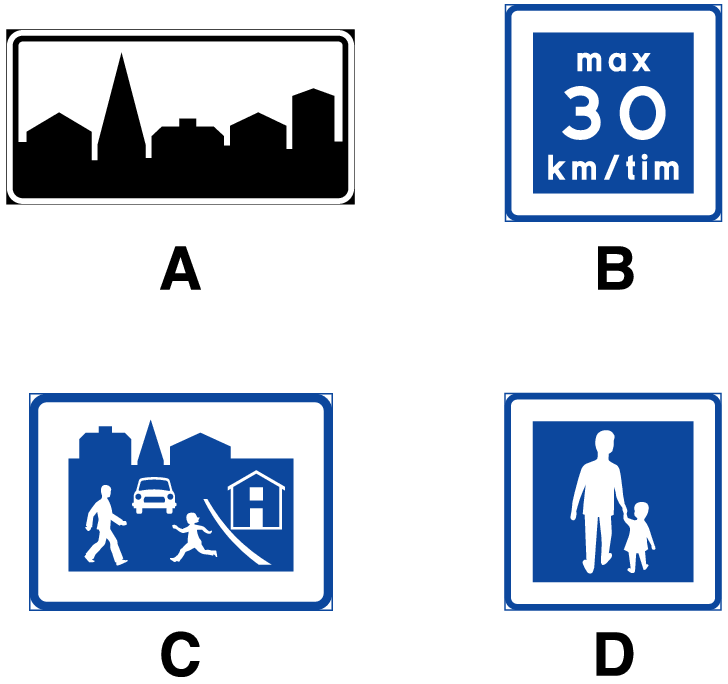
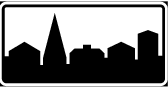
“The place name may be included in the sign.”
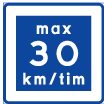
“The sign indicates a stretch of road or an area where specific measures have been taken or where conditions are such that it is advisable to drive at a lower speed than the maximum permitted speed. The recommended lower speed is indicated on the sign.”
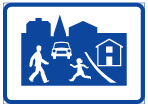
“The sign indicates that the provisions of Chapter 8, Section 1 of the Road Traffic Ordinance apply.”
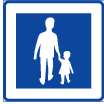
“The sign indicates that the provisions of Chapter 8, Section 1 of the Road Traffic Ordinance (1998:1276) apply. Any prohibition on driving vehicles that are permitted on a pedestrian street according to Chapter 8, Section 1, second paragraph of the Road Traffic Ordinance is indicated using an additional panel.”
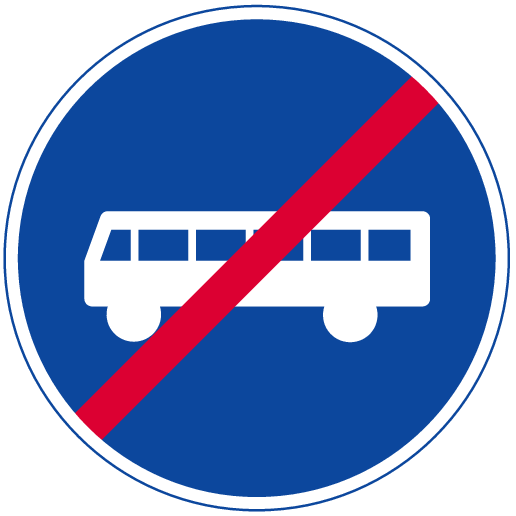
“The sign indicates that the reserved carriageway, lane, road or thoroughfare indicated using one of the signs D4- D10 has ended. The sign does not have to be erected if it is otherwise clear that the reservation has ended. Other symbols for road user groups or types of vehicles may be included in the sign. The symbol included in the sign is the same as the one used on the sign designating the carriageway, lane, road or thoroughfare.”
“Remember that a towbar on your car increases the risk of neck injuries in case of a rear-end collision.”
Health care guide
As the towbar is fixed and does not deform, the impact will be heavier, which leads to a more violent movement of the neck.
“The amount of [...] pure spirits (40 %) that a strong beer or a glass of wine corresponds to [...] can be calculated with a formula (percentage by volume * the volume in cl * 0.025).”
MHF
Light beer: (3.5 * 50 * 0.025) * 2 = 8.75 cl spirits Strong beer: (7.0 * 50 * 0.025) * 1 = 8.75 cl spirits
So the answer is yes. Note however that this does not mean you will experience the exact same intoxication from drinking two light beers as with one strong beer.
(0.025 is the same as dividing by 40)
“If a motor vehicle or a vehicle coupled to this has a load where either side protrudes more than 20 centimetres outside the vehicle, or if the vehicle’s width, including load, exceeds 260 centimetres, [...] the vehicle or a vehicle coupled to this may only be driven on a private road.”
Swedish Road Traffic Ordinance
The measurement is under 260 cm and the load may protrude up to 15 cm from the side (175- 160=15). The load is therefore within the parameters.
Enter
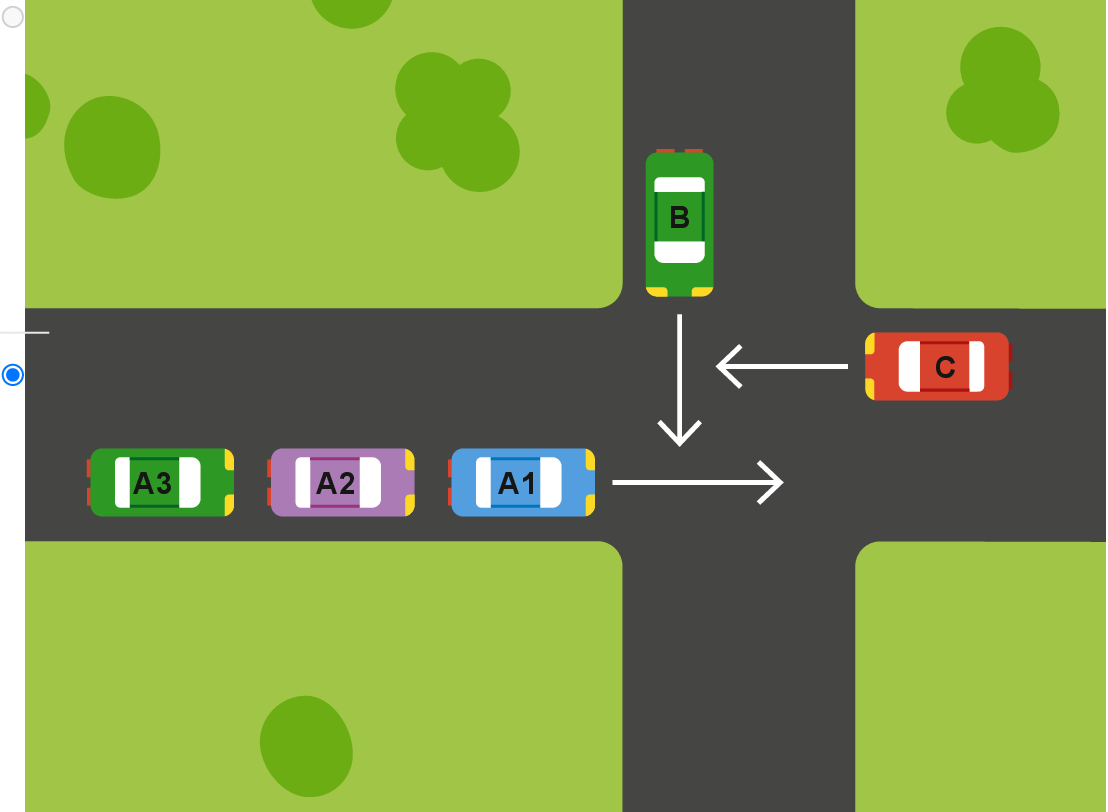
As there are no road signs or traffic signals, the right-hand rule applies. According to the right-hand rule you should only give way to A, as they are coming from your right. However, a strict insistence on the rules alone is not ideal. According to the curriculum for a category B licence, you must display “good judgement when interacting with other road users.” (Swedish Transport Agency)
The rules give you the “right” to drive after A. However, insisting on this rule is not to show “good judgement when interacting with other road users”, since you are unnecessarily blocking C. While you are waiting for all from A to pass, there is plenty of time for C to go. In addition, it is not safe from a traffic perspective to stand in the middle of the crossing and wait. “When a driver is approaching or entering a junction, they shall adapt their driving so as to not cause an unnecessary hindrance to traffic on the intersecting road should the vehicle be forced to stop at the intersection.” (Swedish Road Traffic Ordinance)
“How should you act” should be read as “which attitude is most appropriate to adopt when entering the situation”. It is best for you go in with the intention to let all A as well as C pass. If this does not work out (i.e. if C stops and waits, clearly indicating that they do not intend to move), it is best to go ahead of C. But you should primarily act according to and hope for the easiest alternative, which is for you to let all A and C pass before you drive on.
This is comparable to the cogwheel principle, which is not regulated by law. Even so, the National Society for Road Safety, FMK and the Swedish Transport Administration recommend using it. (“In the case of entry ramps near built-up areas, the cogwheel principle can be used when there are traffic queues forming.”)
Also note that you are not the one “breaking” the rules, you are simply being generous by waiting.
There is a similar question where it is best to go by the rules. However, how can you know when it is appropriate and when it is inappropriate to deviate from the rules?
Rule of thumb: Does the traffic situation as a whole obviously benefit a lot from us temporarily deviating from the rules? – If the answer is yes, then disregard the rules and do what comes naturally, provided that all those involved appear to be in agreement. After all, you are to show “good judgement when interacting with other road users.” However, if it is not apparent that it is most convenient to temporarily deviate from the rules, or if the common benefit of doing so is small, you should stick to the rules. Doing otherwise could cause confusion, which is not a good thing in traffic.
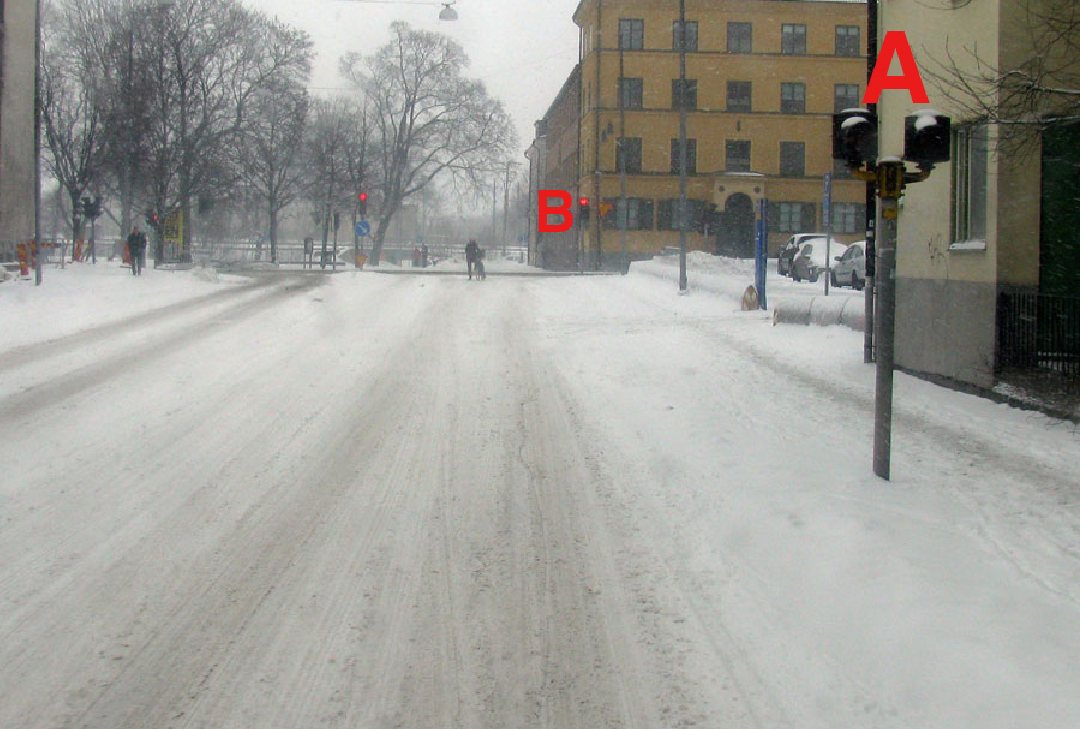

“Stop. A vehicle may not pass the stop line or, in the absence of such, the signal.”
As there is no visible stop line, you are to stop just before the signal.
“A driver who is obliged to stop or is stopping at a traffic signal shall stop at the stop line. In the absence of a stop line, the driver shall stop right before the signal.”
Swedish Road Traffic Ordinance
“When turning left, a vehicle shall be positioned as close to the centre of the carriageway as possible or, on a carriageway with one-way traffic, as close to the carriageway's left edge as possible.”
Swedish Road Traffic Ordinance
Positioning the vehicle as close to the carriageway’s left edge as possible is the most natural and practical way to position the vehicle. However, this does not work on regular roads since there are oncoming vehicles.
Connect the heater “for one hour if the outside temperature is up to 0°”. (Swedish Transport Administration)
This group is commonly referred to as the “unfortunate ones”: “15 per cent are responsible for half of all accidents.” (Driving Licence Book, 19th Edition, page 186)
Having a lot of stress and impulsiveness is not good and may increase the risk of an accident. The best is a moderate stress level and planning/considering your actions.
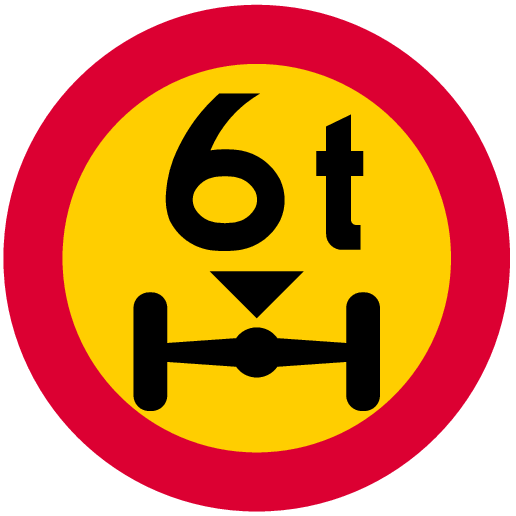
“Maximum permitted weight on an axle is indicated on the sign.”
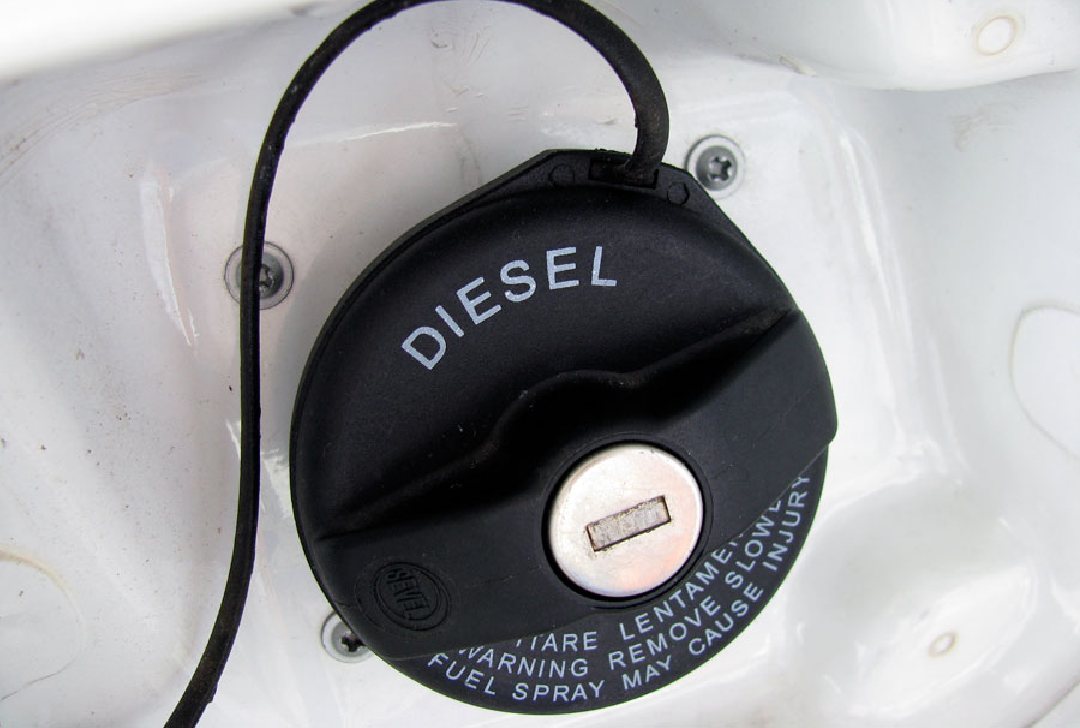
“D” stands for diesel and the standard colour for diesel pumps is black.
“The check light for the ABS is meant to light up for a few seconds when the engine is started.”
Driving Licence Book, 19th Edition, page 131
This is to let you know that the light is working.
A “warning triangle is to be put out [...] when the maximum permitted speed is higher than 50 kilometres an hour and where the vehicle may not be stopped or parked [...] A warning triangle is also to be put out when the vehicle for some other reason is parked on a carriageway and the weather conditions or other circumstances make it difficult for other drivers to see the vehicle in time.” (Swedish Road Traffic Ordinance)
However, the Driving Licence Book (19th Edition, page 104) chooses to describe it in the following way: “On roads with a speed limit of 60 km/h or higher [...] Put out a warning triangle”. Higher than 50 km/h in practice means that the rule first begins to apply at 60 km/h, as this is the next step on the speed scale.
Review of the options:
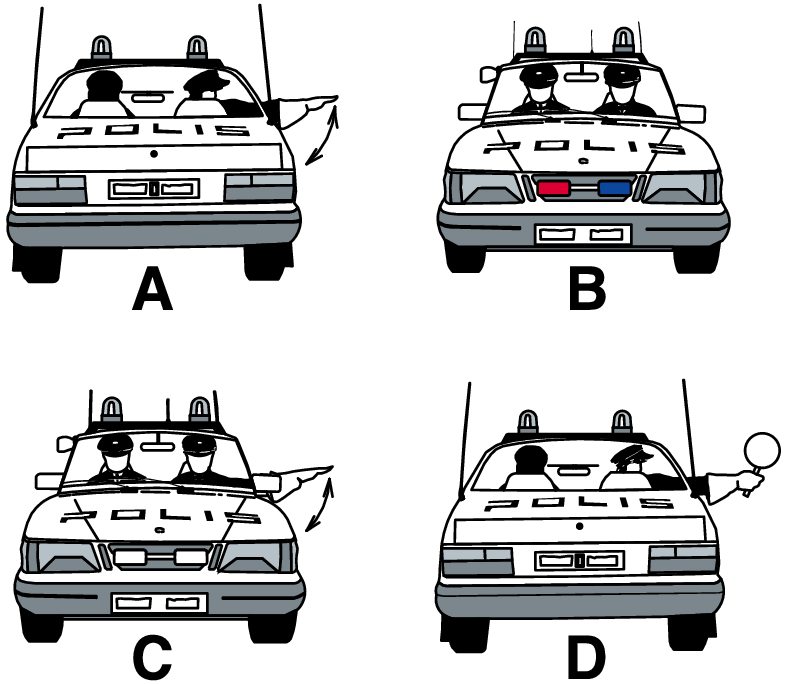
“The signal indicates that the road user whom the officer is facing must reduce their speed. When it is dark and visibility is poor, the signal may be highlighted with a white or amber light or a reflective device that reflects white or amber light.”
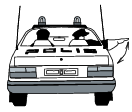
“The signal indicates that the driver of the vehicle in front of the police vehicle is to pull over to the side of the road and stop. The signal is given with alternately flashing blue and red lights.”
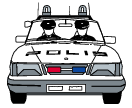
“The signal indicates that road users coming towards the officer must reduce their speed. When it is dark and visibility is poor, the signal may be highlighted with a white or amber light or a reflective device that reflects white or amber light.”
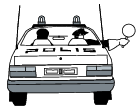
“The signal indicates that the driver of the vehicle behind the police vehicle is to pull over to the side of the road and stop. The signal may be given using a stop paddle.”
“A driver entering a priority road from another road [...] is obliged to give way to vehicles on the road they are entering.”
Swedish Road Traffic Ordinance
“Meeting a lorry or a bus at a hill crest [...] The lorry driver is positioned higher up. Dim your full beam headlights when you spot the position lights on the roof.”
Driving Licence Book, 19th Edition, page 154
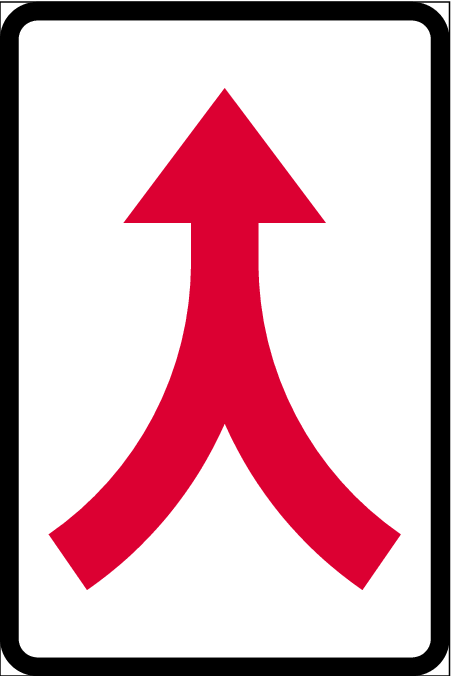
“The sign indicates that two lanes or carriageways are merging to form one and that the drivers are to adapt to the new conditions at the location, according to the provisions of Chapter 3, Section 44 of the Road Traffic Ordinance.”



“Reaction times vary, but is usually around 0.5–1 seconds, if you are somewhat focused.”
Du och jag i trafiken [You and me in traffic], 28th Edition, page 165
“It normally takes 1–2 seconds to react when a child runs into the road, for example.”
Swedish Transport Administration
Remember that this applies in traffic, where you are not prepared at each given moment to react quickly. A person with a 2-second reaction time in traffic may have a reaction time of 0.7 seconds in a test where you have to push a button at the sound of a signal.
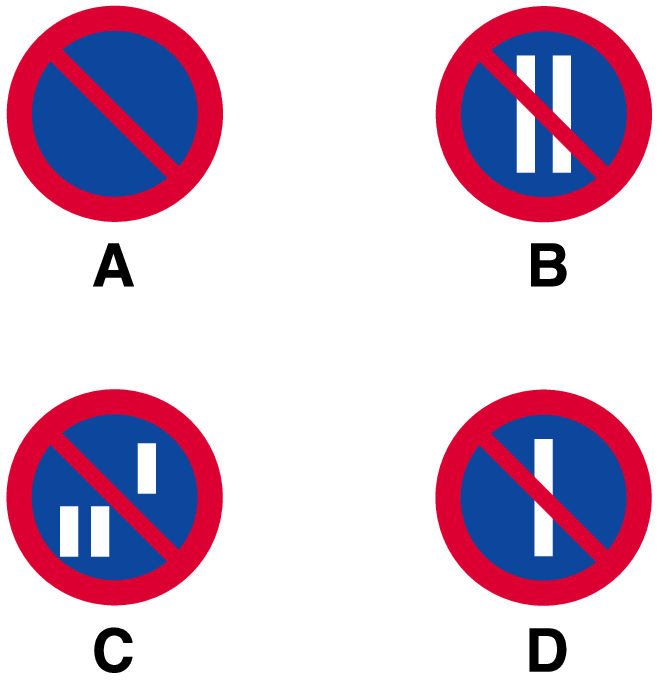
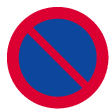
“The sign indicates it is prohibited to park a vehicle. The directions apply on the side of the road where the sign is posted.”
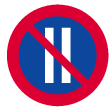
“The more detailed provisions relating to sign C35, Vehicle parking is prohibited, also apply to this sign.”
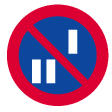
“The sign indicates that it is prohibited to park vehicles on days with even-numbered dates on the side of the road that has even-numbered addresses and on days with odd-numbered dates on the side of the road that has odd-numbered addresses. The more detailed provisions relating to sign C35, Vehicle parking is prohibited, also apply to this sign.”
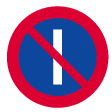
“The more detailed provisions relating to sign C35, Vehicle parking is prohibited, also apply to this sign.”
Parking is prohibited 30 metres before and after, but not stopping. There is often a prohibition to overtake, but two-wheeled vehicles may be overtaken. In most cases, there is only an obligation to stop where there are no gates or signals, not otherwise.
Of course it is always possible to say that something “may” happen. However, in this case it is particularly important for you to be aware of the risk of the signal system being out of order.
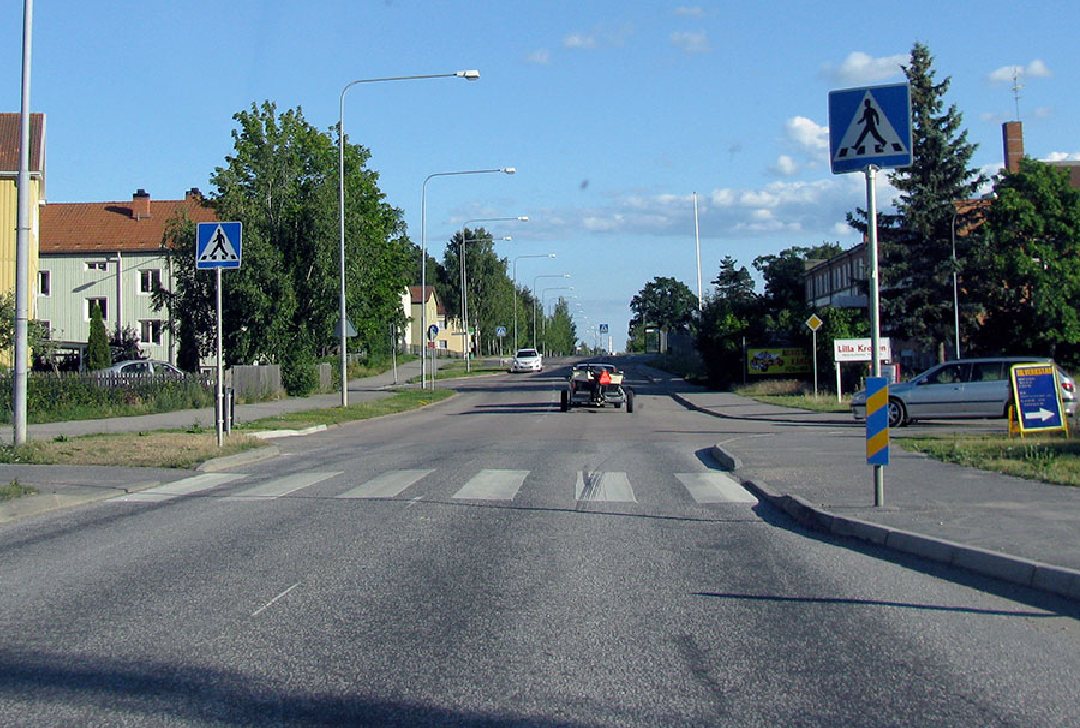
Normally, a road sign only begins to apply when you have passed it, but the priority road sign is a special case. It is located at the start of the priority road and is also repeated after junctions.

“The sign is erected at the start of the priority road and is repeated after each junction with a road other than such as referred to in Chapter 3, Section 21, second paragraph of the Road Traffic Ordinance, if it is not otherwise clear that the priority road continues after the crossing.”
The Swedish Transport Agency states that a priority road sign is not located directly after a junction if the road is also not a priority road before the junction. This, combined with the fact that it is normal that priority road signs are located after junctions, means that you can assume that you are already driving on the priority road.
There are many things in the way you drive that impact on your fuel consumption; it will for example increase if you drive erratically with a lot of braking.
“Velocitization occurs when you have slowed down from a high speed. It then appears to you that the car is moving significantly slower than it actually does.”
Du och jag i trafiken [You and me in traffic], 28th Edition, page 178
“The driver [...] shall take appropriate measures to ensure that passengers under fifteen years old use a seat belt”
Swedish Road Traffic Ordinance
The person in question is not under 15 = the driver is not responsible.
Nationalencyklopedin: “alcolock, a technical device connected to the ignition system of a car that means the vehicle cannot be started or driven by a person who is under the influence of alcohol.”
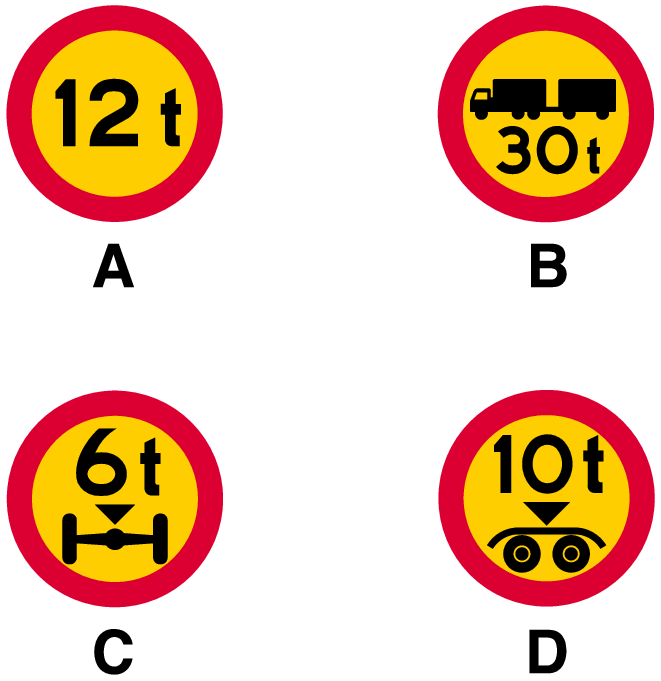
As the holder of a regular category B licence or category AM licence, you are allowed to drive tractors and class I and II heavy equipment. These can be very heavy. Saying that these signs apply “only to trucks” is therefore incorrect.
Also note that the numbers on the signs are not what is relevant in this question. The signs are the standard signs used by the Swedish Transport Agency and are only meant as illustrations to identify the right prohibitory sign (meaning that sign A could just as well say “2 t”). If you are driving a 1.5- tonne car and see sign C20 marked with the figure 12 t, you could say that you have to obey the sign, but that it does not refer to you.
“Maximum permitted gross weight is indicated on the sign.”
“Maximum permitted gross weight is indicated on the sign.”
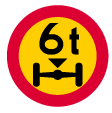
“Maximum permitted weight on an axle is indicated on the sign.”
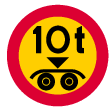
“Maximum permitted weight on a tandem axle is indicated on the sign.”
The risk of someone running out in front of the bus means you should make sure you have more space than normal to the sides.
The last alternative would have been correct if it had said “50 km/h or lower” instead of “higher than 50 km/h.”
“Full beam headlights may not be used [...] on stretches of road that are satisfactorily lit.”
Swedish Road Traffic Ordinance
Review of the options:
Colour codes for the figures (easier to keep track of them)
Current speed 50 km/h
Time 1 second Metres per second (to be calculated) X m/s
Method
Convert km/h to m/s:
How many metres do you travel?
3.6 is a fixed figure for converting km/h to m/s. It is difficult to divide by 3.6 in your head. A tip is to first divide by 3 and then by 4. You then take a number that is between the answers you get (the margins between the answer options are so large that closer accuracy is not required).
Method 2
Strike the zero in km/h:
Convert km/h to m/s:
How many metres do you travel?
Multiplied by 3 is a fixed figure for making approximate conversions from km/h to m/s.
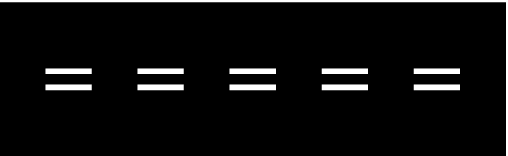
“The marking indicates a lane that may be used for alternating direction of traffic flow. The marking has a distance ratio of 1:1 between the dashes and spaces.”
The direction of traffic flow in a reversible lane can be changed as needed. In the afternoon, many road users are coming home from work and it is then practical to have an extra lane out of town to reduce the risk of queues forming. The direction of traffic is controlled by traffic signals.
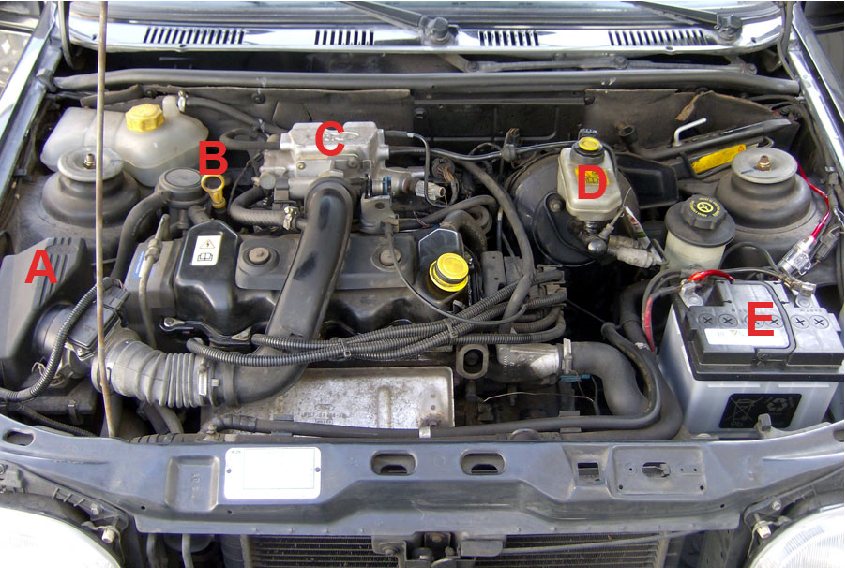
“Motor oil […] Check the level with the dipstick.”
Driving Licence Book, 19th Edition, page 144
B is the dipstick:
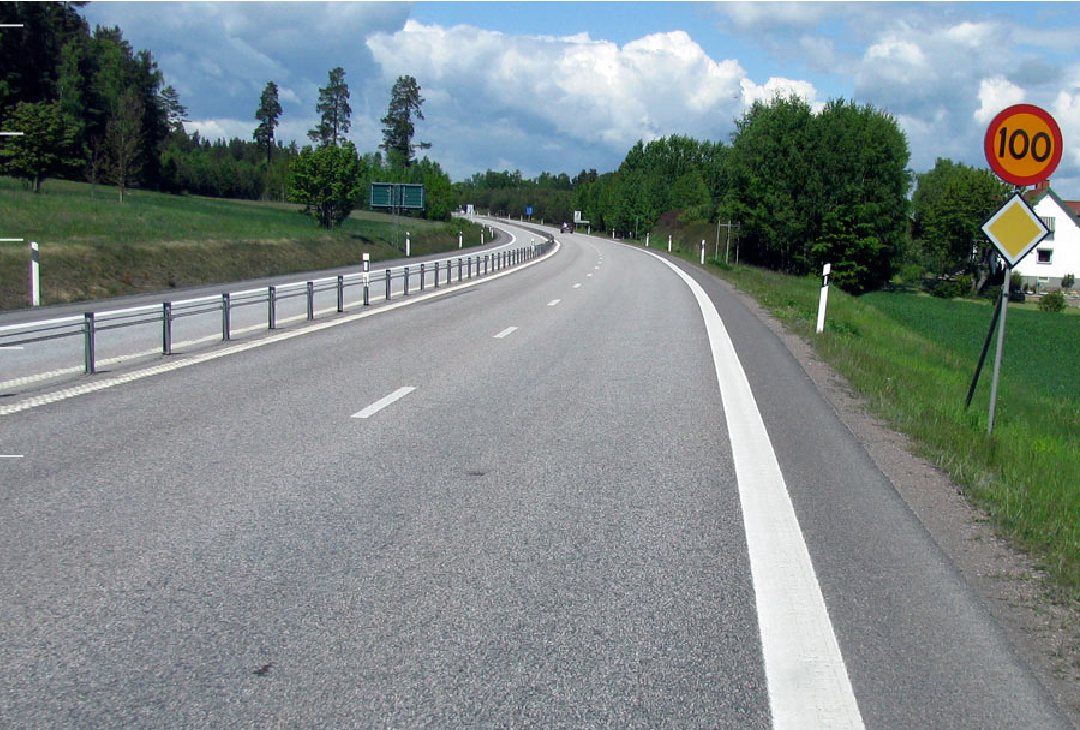
The concept of 2+1 roads is well established and is used, for example, by the Swedish Transport Administration, the National Society for Road Safety and in the Driving Licence Book.
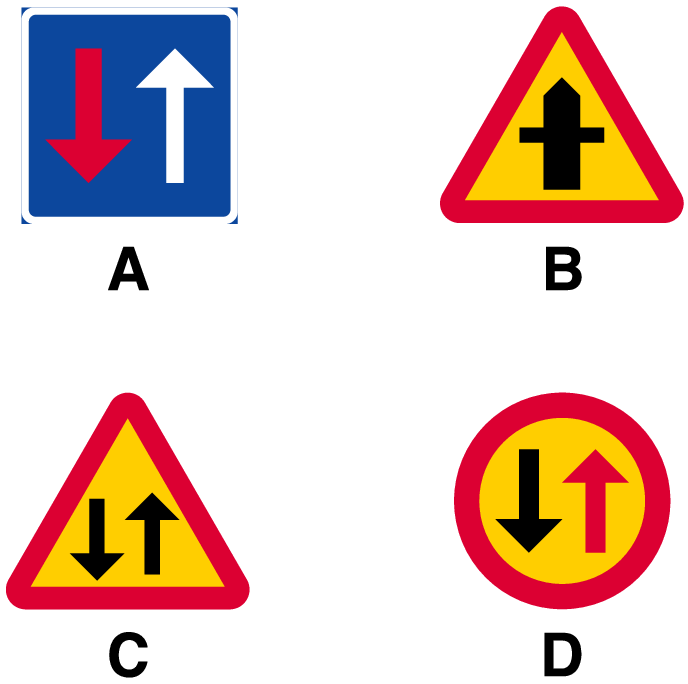
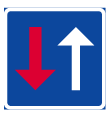
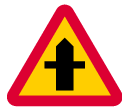
“The sign indicates a junction where drivers of vehicles on connecting roads are obliged to give way or stop. The symbol is adapted to the conditions of the location.”
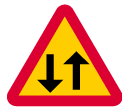
“This sign indicates that a one-way road is turning into a road with traffic in both directions.”

“The carbon dioxide emissions are directly proportionate to fuel consumption.”
Driving Licence Book, 19th Edition, page 228
“The white cane, the international symbol of the visually impaired, is one of the oldest and most important aids for the visually impaired.”
Synskadades Riksförbund

“Along a two-way road, verge posts for each direction shall display rectangular reflectors on the right side of the road and round reflectors on the left side.” (Swedish Transport Administration) On the right side, there is a post with rectangular reflectors.
Category B gives you the right to drive:
“Private car with a total weight of no more than 3.5 tonnes, a light lorry with a light trailer, off-road vehicles and class I heavy equipment (= heavy equipment constructed for a maximum speed higher than 30 km/h). Category B also entitles you to drive
- Moped class I (EU moped), tractor, heavy equipment class I and class II as well as three- and four-wheeled motorcycles - All-terrain vehicle and snowmobile (if the licence was issued prior to 1 January 2000)”
Swedish Transport Agency
This means that snowmobiles and light motorcycles are immediately excluded.
A private car is a “car equipped by no more than eight seats in addition to the driver’s seat.” (Act on road traffic definitions)
This also eliminates the people carrier. That leaves only the lorry.
The following can be read about “Lorries”: “Lorries are divided into light and heavy lorries.” Light lorries are only describes as “A lorry with a total weight not exceeding 3.5 tonnes.” (Act on road traffic definitions). This means that the lorry referred to in this answer would be considered a light lorry, meaning that you are allowed to drive it.
– This would make the question too easy. This way, you have to think harder.
– The word “people carrier” is a common expression without a strict definition. The term is not defined in any legislation.
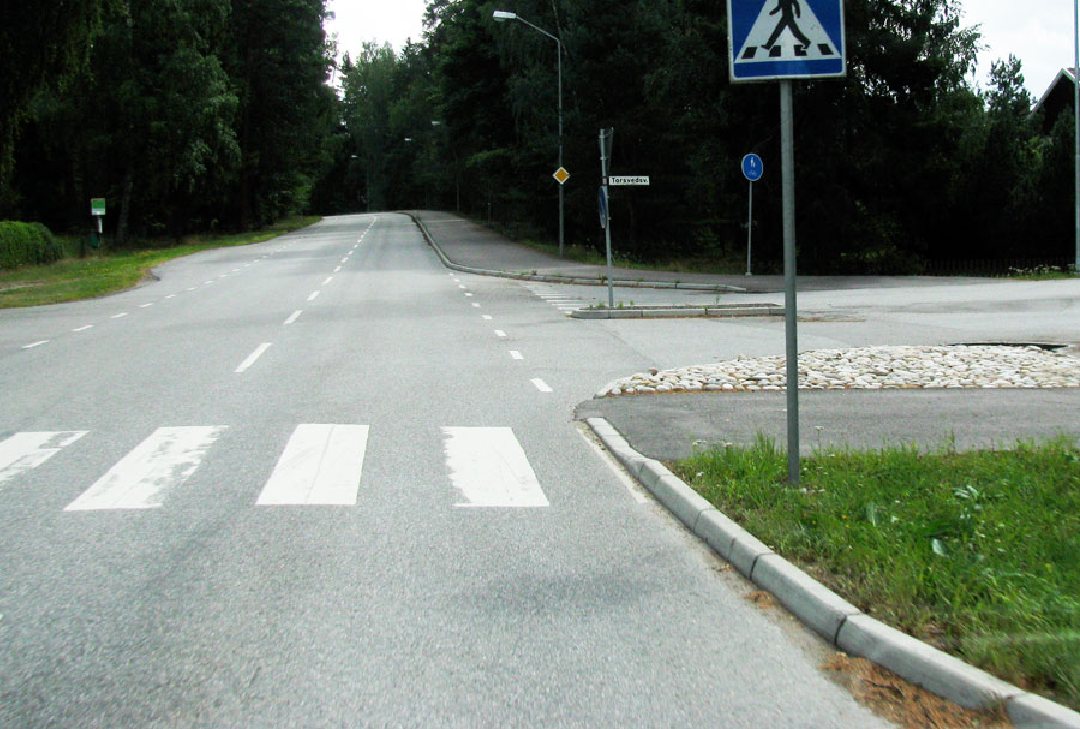
Review of the options:
R is for reverse.
No questions match this filter.