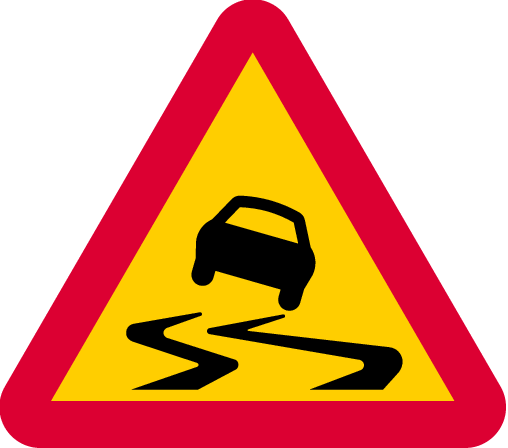
What does this road sign mean?
Explanation
Slippery road
“The sign indicates that the road may be slippery. The sign is only used if there are specific reasons to warn of a slippery surface due to snow or ice.”
Pick an answer to check it. 56 of 70 correct (80%) is needed to pass.
The real test has 70 questions in 50 minutes, about 43 seconds per question.
“The sign indicates that the road may be slippery. The sign is only used if there are specific reasons to warn of a slippery surface due to snow or ice.”
The law only states that you have to have a certain visual acuity for a licence to be issued.
A junction between a private road and a public road is considered under law to be a regular junction, i.e.:
However, remember to be extra careful since private roads are sometimes not viewed as “roads” by all road users. It is better to yield one time too many that one too few!
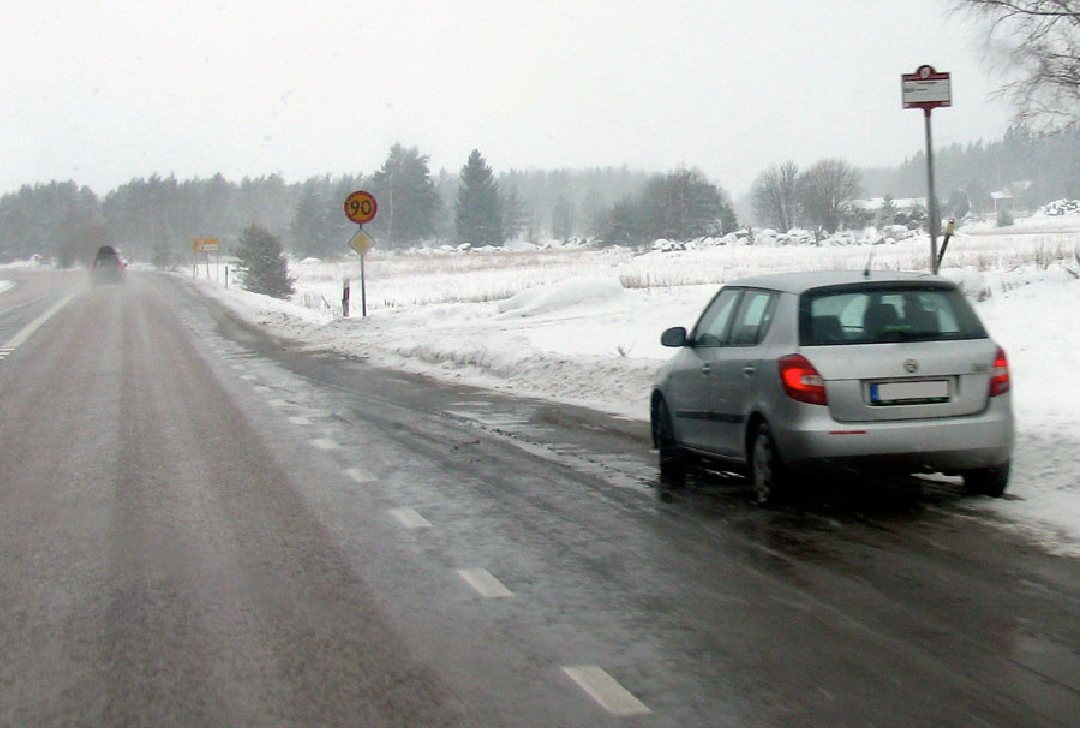
“At a marked stop for trams, vehicles operating a regular service or school buses, other vehicles may not stop or park for anything other than setting down or picking up passengers, and this must be possible without obstructing tram, public transport or school bus traffic.”
Swedish Road Traffic Ordinance
2017 19,334
2018 18,501 2019 17,719
Note that there is a similar question that asks for the number of seriously injured.
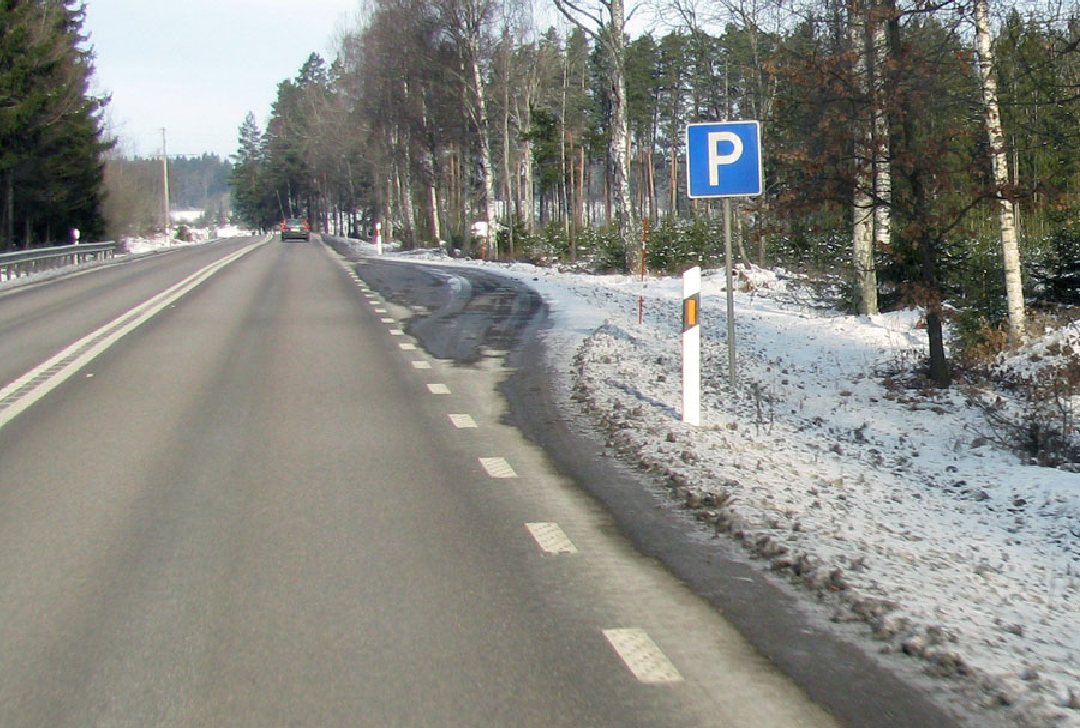
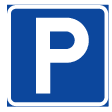
“The parking sign, E19, indicates that you can park for free for 24 consecutive hours, unless otherwise stated. 24 hours applies Monday to Friday. On Saturdays, days preceding a holiday, Sundays and holidays, you may park here with no time limit”
STR’s Vägmärken & vägmarkeringar [Road Signs & Markings], 6th Edition, page 20
At the start of the weekend, the time count starts over, so the time when you park the car here is not relevant. On the Monday, the count starts at 24 new hours.
– Yes, but the question does not ask about the longest period of time. All of the following statements are therefore correct:


“The panel indicates that people with hearing impairments often use the crossing. This panel always has a yellow background.”
“In the event of road maintenance and similar work, and if particular caution is observed, [...] encountering or overtaking vehicles used in such work may involve a deviation from the regulations [...] Section 31, first paragraph [overtaking shall be done on the left]”
Swedish Road Traffic Ordinance
Road work vehicles often work across the entire road, making it impractical to follow the regular overtaking rules.
Connect the heater “for twenty minutes if the outside temperature is up to +10°”. (Swedish Transport Administration)
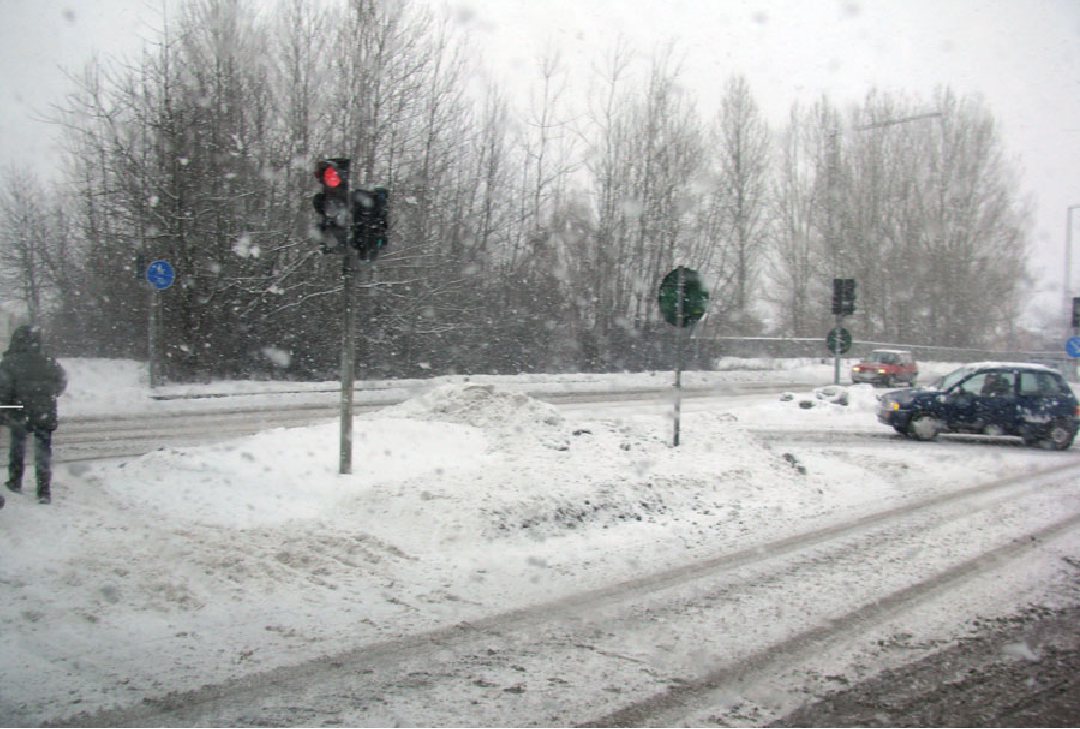
“A driver who after turning in a junction is passing a guarded pedestrian crossing shall drive at a low speed and is obliged to give way to pedestrians who have correctly stepped out on the pedestrian crossing or who are about to do so.”
Swedish Road Traffic Ordinance
“Correctly stepped out on” = when the light was green.
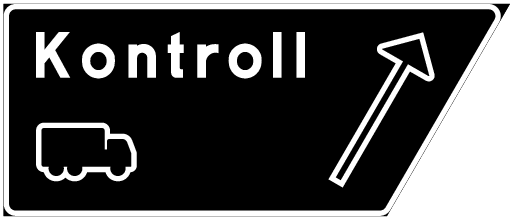
“When these symbols and this text are displayed, vehicle drivers are to turn into the checkpoint for control. If symbols for a certain type or types of vehicle are shown, the obligation to go into the checkpoint only applies to these vehicles. The directions are specific to the conditions at the location.”
The sign is showing the symbol for lorries and you are driving a car, which means the sign does not apply to you.
“In winter road conditions during the period 1 December–31 March, the tread depth must be at least 3 mm on the tyres of private cars”
Swedish Transport Agency
The fact that the tread depth varies does not really matter. It would have been permitted if, for example, the front tyres had been 4 mm and the back tyres had been 8 mm.
“M+S” (Mud + Snow) simply means winter tyres.
“Vehicles that you are allowed to drive […] B […] Private car […] light lorry”
Swedish Transport Agency
“Velocitization occurs when you have slowed down from a high speed. It then appears to you that the car is moving significantly slower than it actually does.”
Du och jag i trafiken [You and me in traffic], 28th Edition, page 178
“Store your tyres in a cool, dry and dark place.”
Swedish Transport Agency
The reason for this is that heat, moisture and sunlight are not good for the rubber of the tyre. Surely, you have seen outdoor furniture in plastic that has been standing out in the sun for years? The plastic is usually in a fairly poor condition. The same principle applies to tyres.
Traffic insurance premiums are managed by insurance companies. The authorities handle taxes and similar charges.
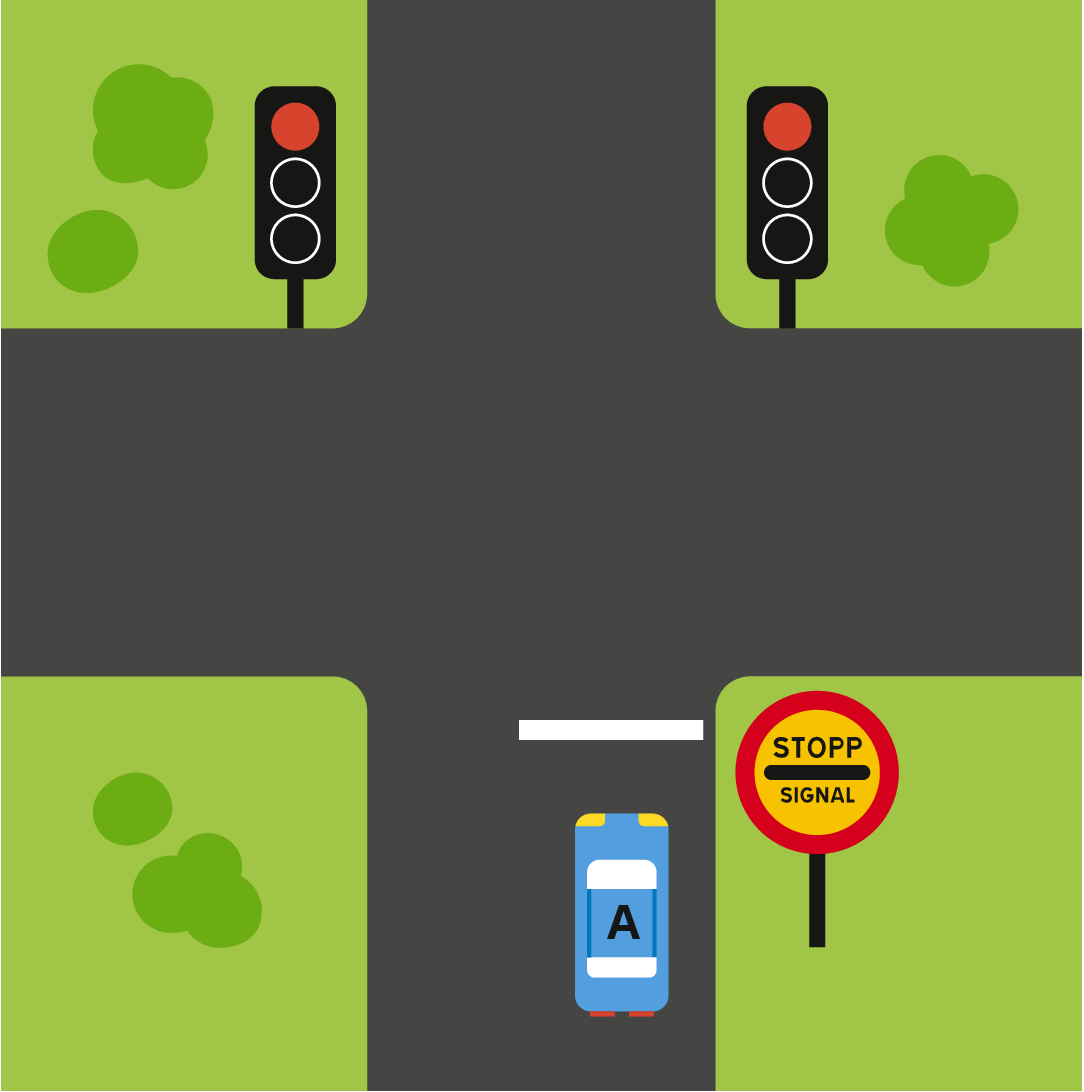
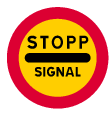
“This sign indicates the obligation to stop for the reason provided underneath the horizontal line. If the sign has been placed before a traffic light, it indicates that a vehicle passing the sign shall stop for a red light. The vehicle shall stop at the stop line or, in the absence of such a line, by the sign.”
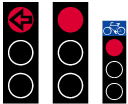
“A vehicle may not pass the stop line or, in the absence of such, the signal.”

“The marking indicates where a vehicle should be stopped according to a road sign or traffic signal.”
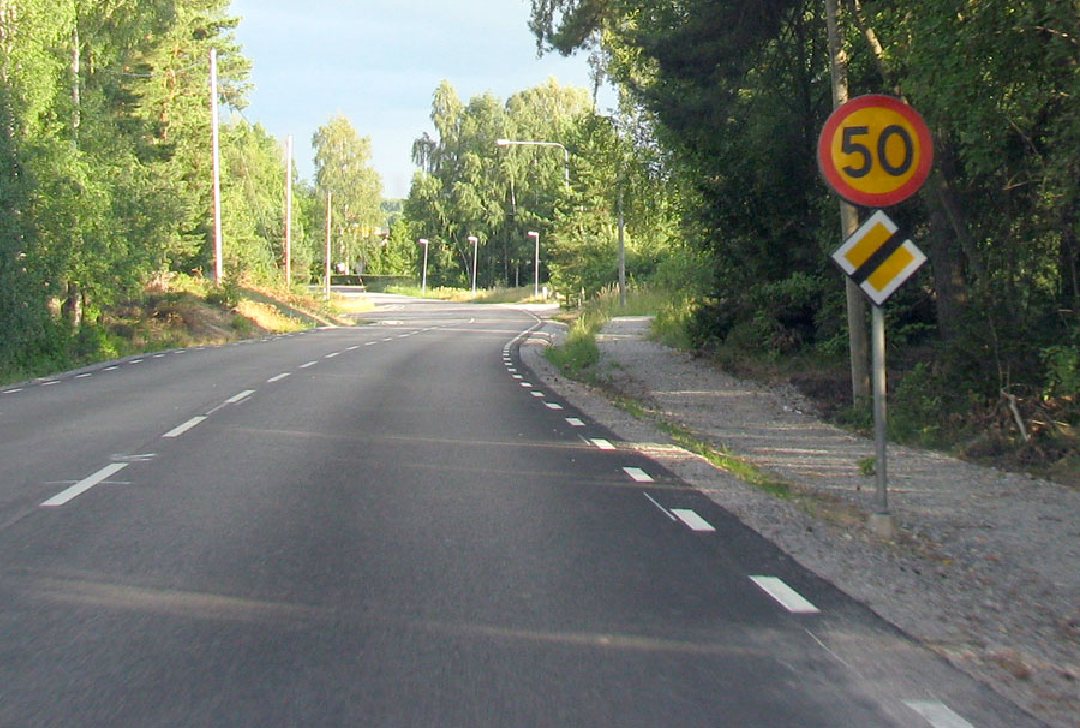
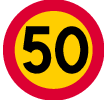
“The sign indicates that it is prohibited to drive a vehicle faster than the speed indicated on the sign.”

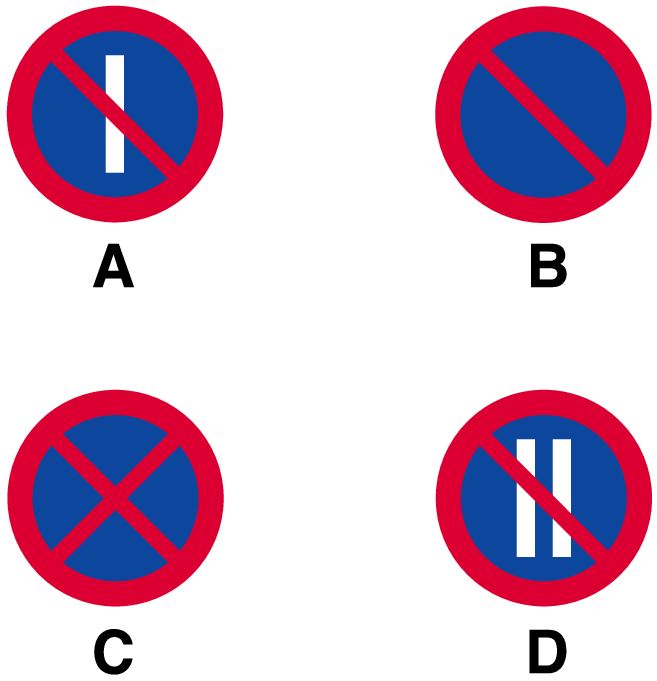
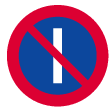
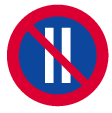
20 June is an even date.

“A motor vehicle, or a vehicle connected to it, with wheels of iron or another hard material [may be driven at a maximum] 10 [km/h].”
Swedish Transport Agency
A prideful person does not want to lose their “reputation” or “honour”. If the person is overtaken, they might consider it an insult. The result is a risky counter move, such as a dangerous overtaking to teach the passing driver a lesson and to reclaim their honour.
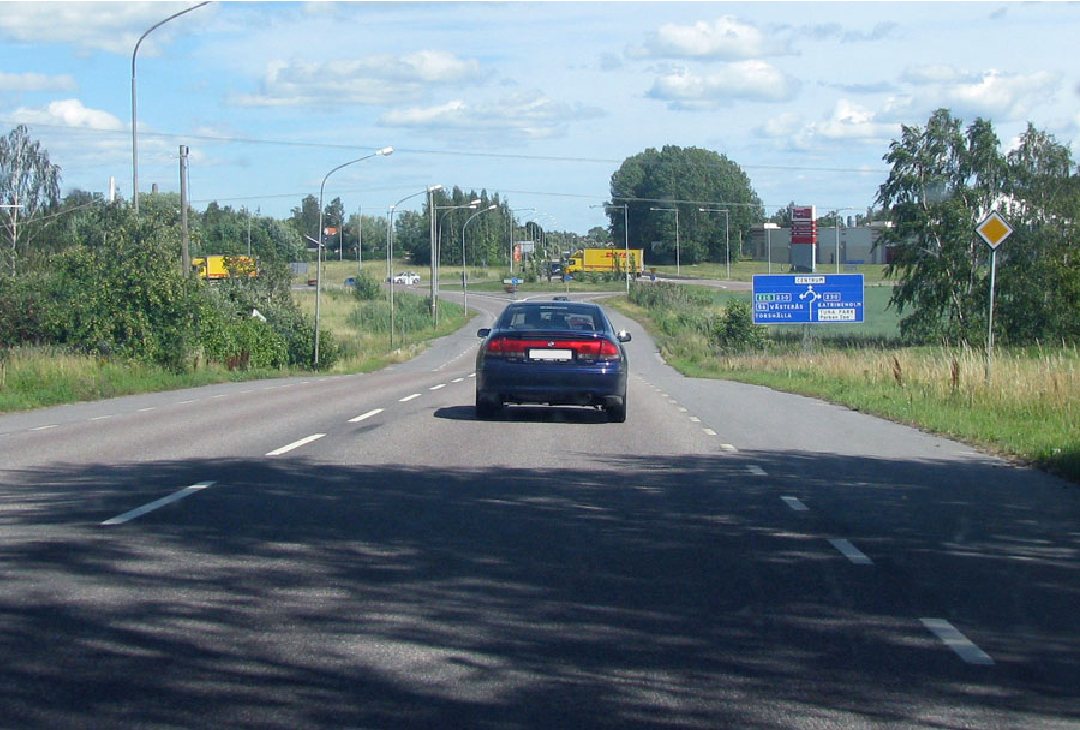
In a roundabout, the following always applies:
“A driver entering a roundabout is obliged to give way to every vehicle currently in the roundabout.”
Swedish Road Traffic Ordinance
If the priority road’s right of way rules apply, the car in the picture may drive straight through the roundabout and all cars already there must stop and give way. This is in direct opposition to the roundabout’s basic principle, i.e. that you must give way to vehicles already in the roundabout.
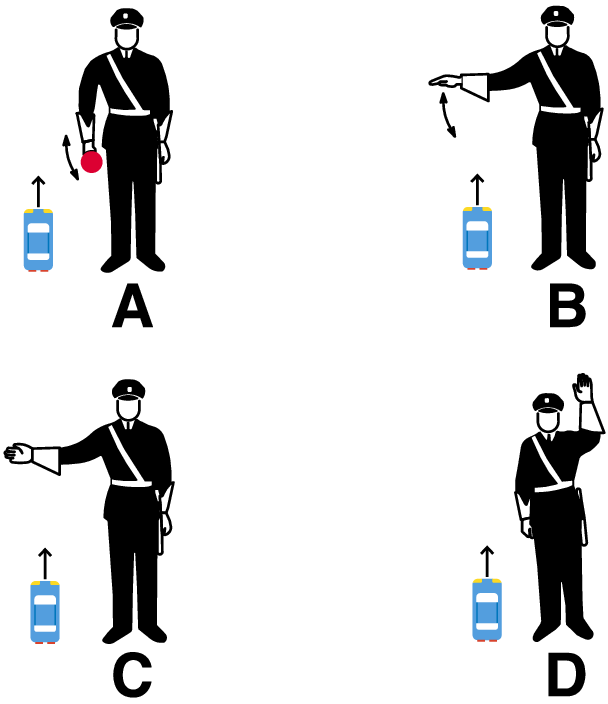
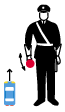
“The signal indicates a stop for the road user the light is facing. The sign is used when it is dark and in case of limited visibility. The light is positioned where it can most easily be detected by road users.”
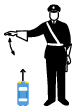
“The signal indicates that the road user whom the officer is facing must reduce their speed. When it is dark and visibility is poor, the signal may be highlighted with a white or amber light or a reflective device that reflects white or amber light.”
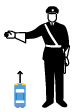
“The signal means stop for the road user coming head on or from behind. The signal is used in a junction and applies as long as the officer is facing in the same direction. For road users approaching from the side, the signal means that the road is free and that it is permitted to drive. The signal may be given in combination with the signal P2, stop. The signal may be given using a stop paddle.”
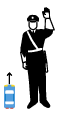
“The signal means stop for the road user the palm is facing. The signal may be given using a stop paddle.”
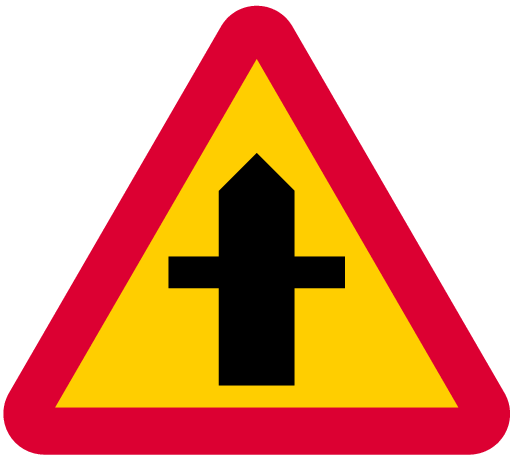
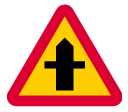
“The sign indicates a junction where drivers of vehicles on connecting roads are obliged to give way or stop. The symbol is adapted to the conditions of the location.”
“Overtaking is not allowed just before or in a junction, except when 1. the overtaking is done on the right; 2. the traffic in the junction is regulated by a police officer or through traffic signals; or 3. It is clear from the road signs or other circumstances that drivers on the intersecting road have an obligation to give way or stop.”
Swedish Road Traffic Ordinance
The third point means that you are allowed to overtake. It may be unsuitable, but allowed.
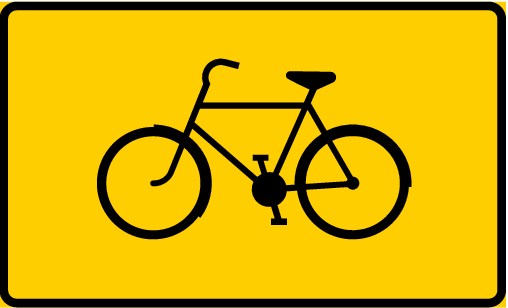
“The sign indicates a route devoted to bicycles. The colour of the sign may vary.”
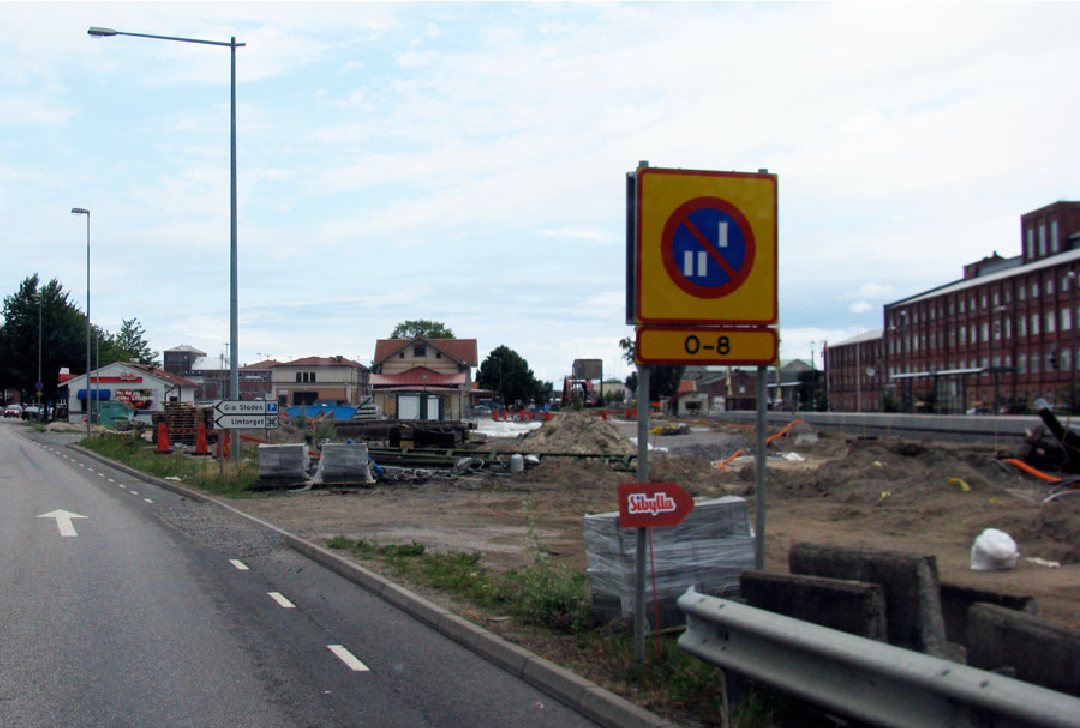
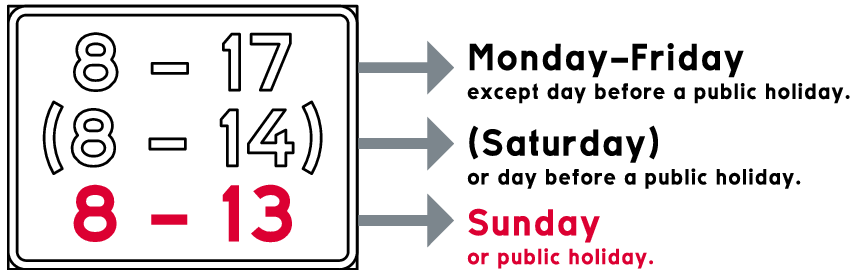
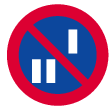
“The sign indicates that it is prohibited to park vehicles on days with even-numbered dates on the side of the road that has even-numbered addresses and on days with odd-numbered dates on the side of the road that has odd-numbered addresses.”
Address numbers (house numbers) are considered by the authorities to be a suitable fixed point to go by. No address numbers are visible in this picture, but this has no impact on the question.
“A driver who after turning in a junction is passing a guarded pedestrian crossing shall drive at a low speed and is obliged to give way to pedestrians who have correctly stepped out on the pedestrian crossing or who are about to do so.”
Swedish Road Traffic Ordinance
Police waves you through = guarded pedestrian crossing.
“Driving economically, you can reduce your fuel consumption by 4–10 per cent (or more!). An average motorist can save 500–1,500 kr or more each year.”
Swedish Transport Administration


“The sign refers to traffic with vehicles in both directions.”
“When a driver travelling on a road becomes aware that someone is intending to overtake them on the left, they shall keep as far to the right as possible.”
Swedish Road Traffic Ordinance
Reducing your speed is something you should only do in exceptional cases. If you reduce your speed at every overtaking, you will disrupt the flow of traffic and also increase your emissions, as you have to accelerate to the right speed again each time.
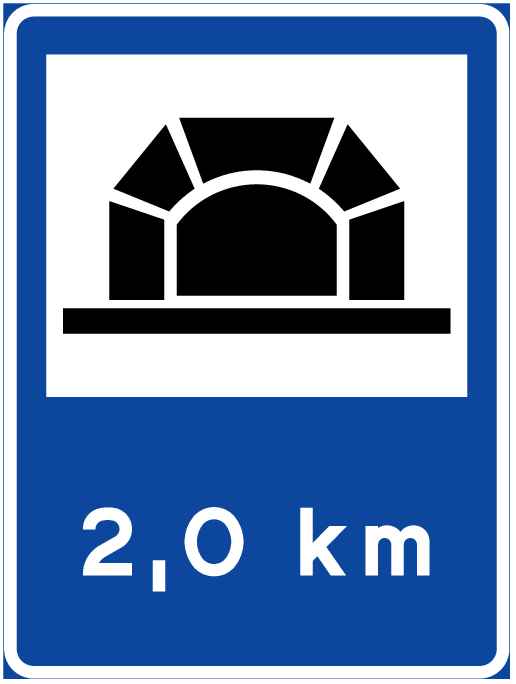
“The sign indicates a tunnel. The tunnel’s length is indicated and the tunnel’s name may be given on the sign. The sign repeats after every kilometre and the remaining length of tunnel is stated on the sign.”
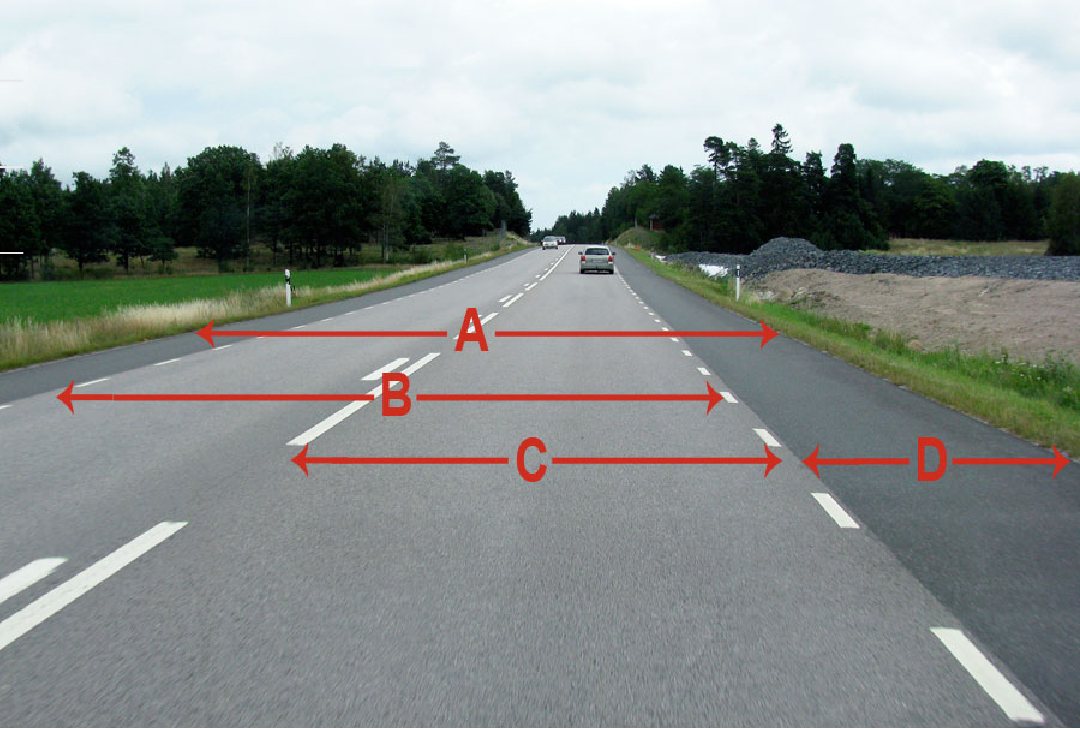
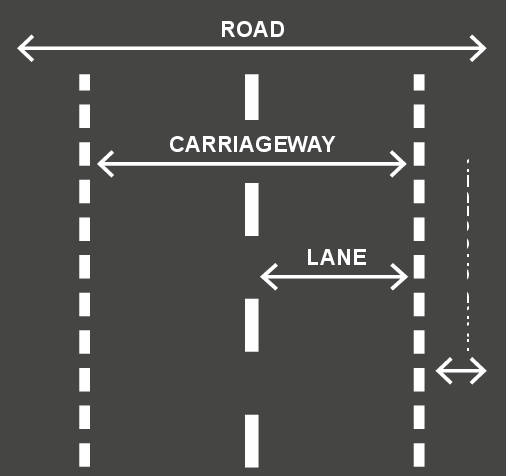
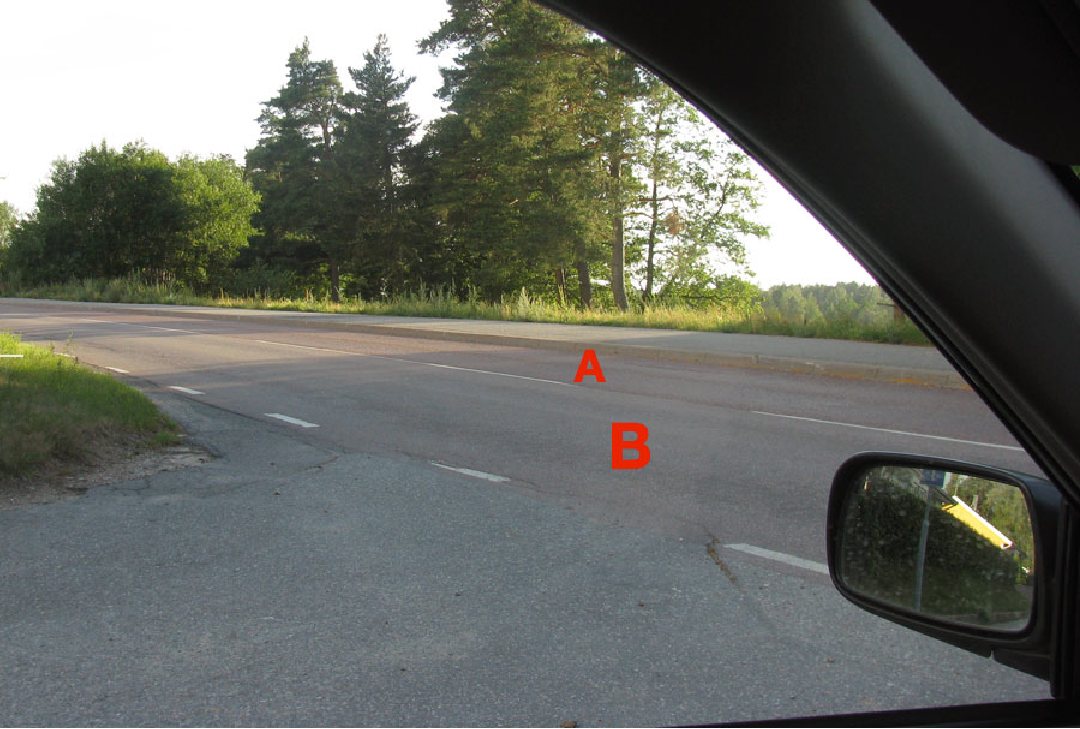
It is indicated in the question that the road you are entering is a priority road. “A driver entering a priority road from another road [...] is obliged to give way to vehicles on the road they are entering.” (Swedish Road Traffic Ordinance)
The obligation to give way applies to the entire road:
“Obligation to give way [...] obliged to yield to all vehicles on the intersecting road, regardless of the direction from which they are coming.”
Du och jag i trafiken [You and me in traffic], 28th Edition, page 143
A car in lane A may be about to overtake and is therefore crossing into lane B with two wheels. It would then be quite inappropriate for the rules to allow you to drive out onto the road.
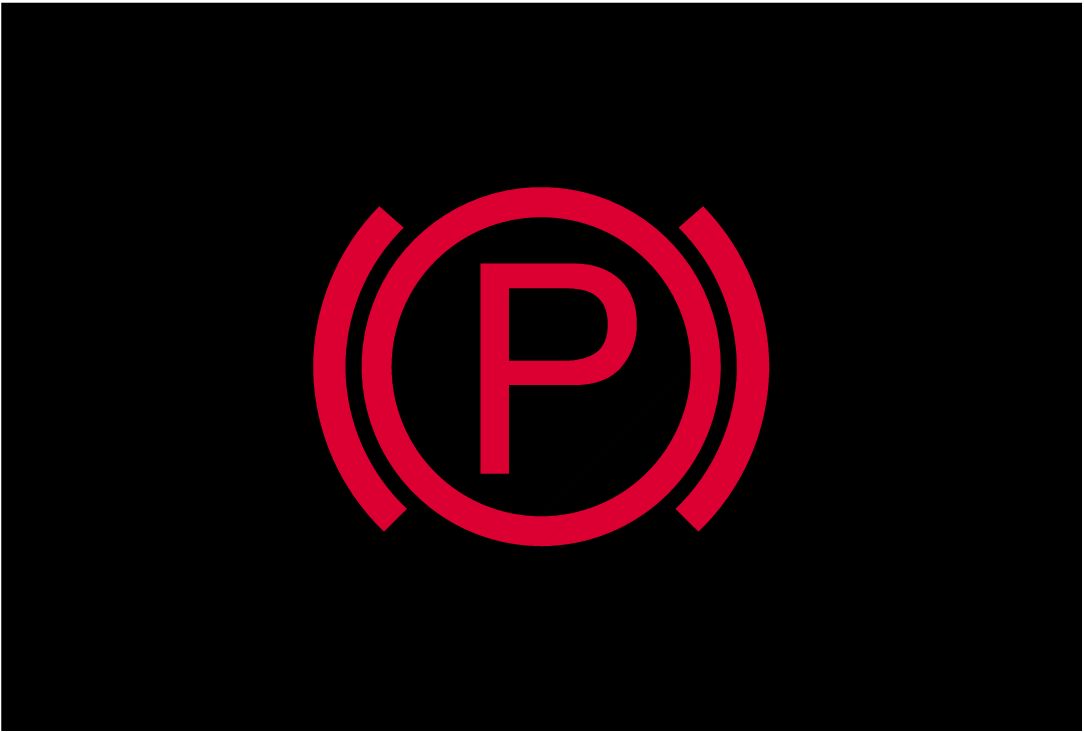
This is a specific symbol that tells you the parking brake is on. However, some models do not have this symbol and instead combine the parking brake warning with the brake warning light (an exclamation point instead of a P).
“Category B also gives the licence holder the right to drive - Moped class I (EU moped), a tractor, heavy equipment class I and class II as well as three and four-wheeled heavy motorcycles - Terrain scooter (if the licence was issued before 1 January 2000)”
Swedish Transport Agency
“Is it not possible for the tyre to explode? No. To do this, you would have to pump in more than 13–15 kg (bar) – more than five times the normal tyre pressure of a private car. It is not possible to get this much air in, as a normal compressor cannot provide this type of pressure. At approximately 6–7 kg (bar) the rim may rupture – but even this pressure is difficult to reach with regular pumping devices.”
Swedish Transport Administration
As the question relates to a petrol station, and you are not given any specific information about the pump, you should assume that it is a regular model (i.e. not powerful enough to make the tyre explode).
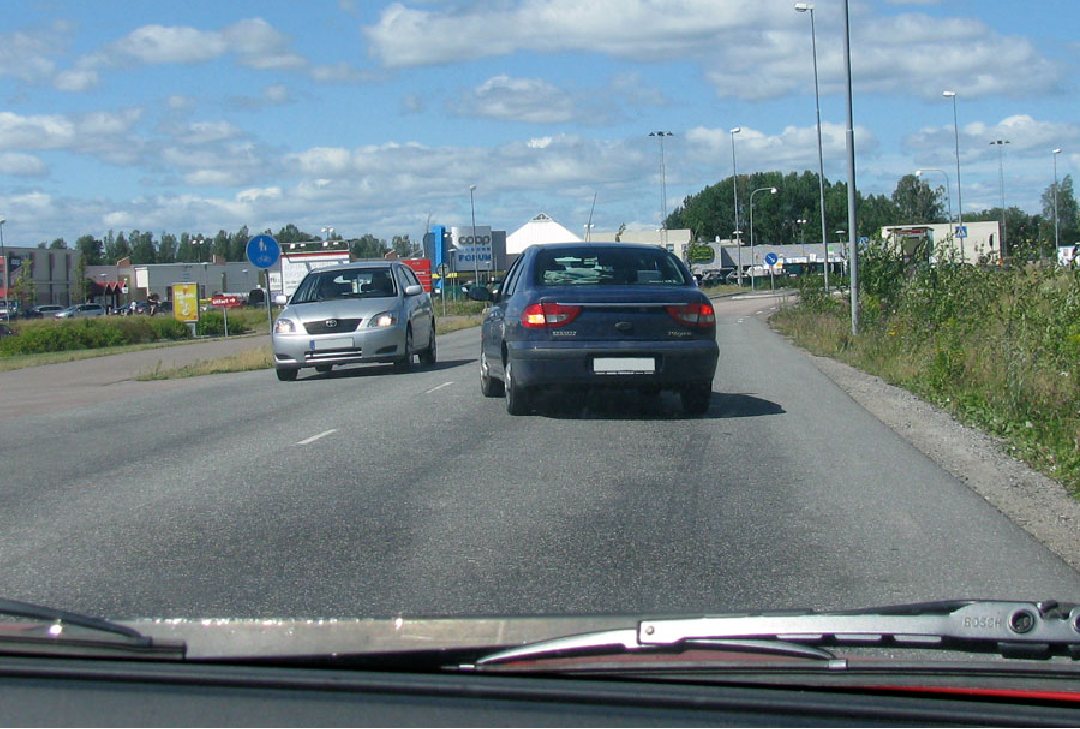
During a left turn “you must not turn the wheels to the left. You then risk your car being propelled into oncoming traffic if you are hit from behind.” (Driving Licence Book, 19th Edition, page 95) In the situation in the picture, the wheels are not turned but the entire car is. This has the same result when being hit from behind.
The benefit of being positioned “ready” is probably very minor; it is definitely not significant enough to weigh up against the safety risk!
“If the accident has only resulted in property damage and the involved party flees, the penalty is day-fines. It may now also be a matter of revoking their licence.”
Driving Licence Book, 19th Edition, page 255
Revoking a driving licence “is a traffic safety measure and not a penalty” (MHF). Also note how the Driving Licence Book avoids describing a revoked driving licence as a penalty.
Simplified comparisons:
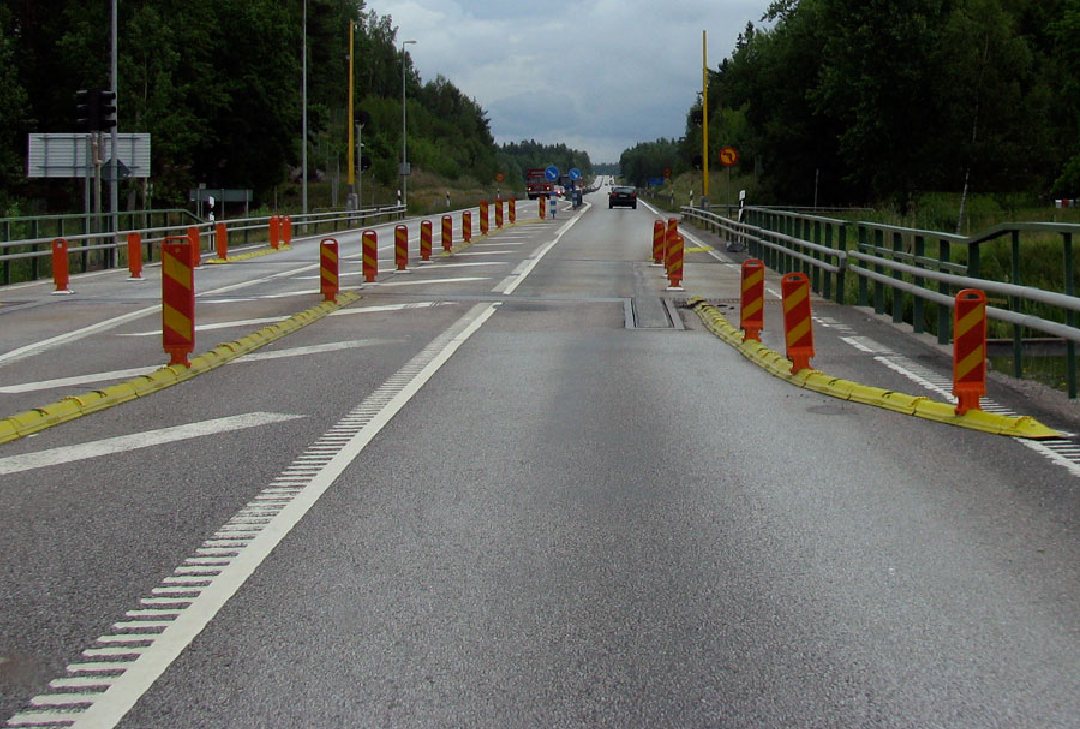
“When diverting traffic in connection to roadworks, it is common to use yellow road markings. These markings take priority over other markings.”
STR’s Vägmärken & vägmarkeringar [Road Signs & Markings], 6th Edition, page 30
The first alternative is true in the sense of a general statement, but not as the answer to this question. “Obstacle” refers to a crashed car or dropped cargo, not diversions that have been planned and carried out by road workers (which appears to be the case here).
“Why does your driving deteriorate when talking on a mobile phone? When you are talking on the phone, you must divide your attention between your driving and the conversation. That means you will not be as focused on driving and the traffic situation around you.”
Swedish Transport Administration
“It is not safe to be on your mobile even if you are using a handsfree device. It is more or less just as dangerous as holding the mobile in your hand.”
Swedish Transport Administration
The fact that you cannot hear the traffic is a much smaller risk compared to the loss of focus.
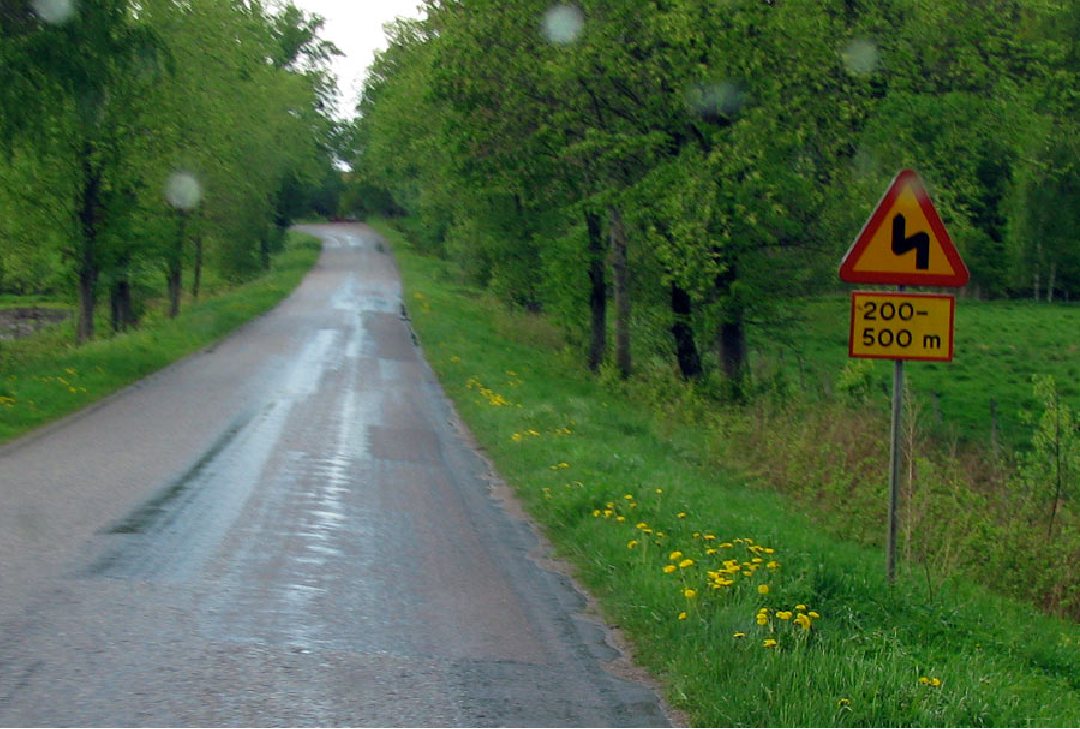
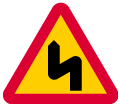
”The sign indicates dangerous curves ahead and gives the direction of the first one.” The first three alternatives are incorrect, as they suggest that the signs indicate that the road may be slippery. This is wrong, the warning is for multiple dangerous curves.
200–500 metres must be considered to correspond to the “the road ahead”.
“Is it just as dangerous talking to a passenger?
Yes, a conversation with a passenger is just as demanding as a telephone call.
However, there may be an interaction between you and your passenger when talking to one another. This interaction is based on your passenger also being focused on the traffic. In a difficult traffic situation, your passenger will probably not ask you any questions, and will not find it strange if you do not answer at once.”
Swedish Transport Administration
There are many factors playing into this. The fact that you are both in the same place physically may reduce the risk of an accident if the passenger avoids talking in difficult traffic situations, which indicates that conversations with a passenger are less risky. On the other hand, this situation may be treacherous if you, as the driver, relax completely because you think that a conversation with your passenger has no impact on your driving ability at all. In that case, a telephone conversation can be less risky, as you are aware of the risks and therefore adapt your driving.
On buses, there is usually a sign telling you that conversation with the driver is forbidden while driving.
Whether you use a handsfree or not is of little importance: “a driver using a handsfree will be more or less as unfocused as a driver holding a mobile phone in their hand. Their reaction time will be much longer and their driving as uneven as when talking on a hand-held device.” (Swedish Transport Administration)
“It is primarily the child’s height, not age, that determines the type of protection to be used.”
Driving Licence Book, 19th Edition, page 119
The law only takes height into consideration:
“Children under the height of 135 centimetres shall be in a child safety seat”
Swedish Road Traffic Ordinance
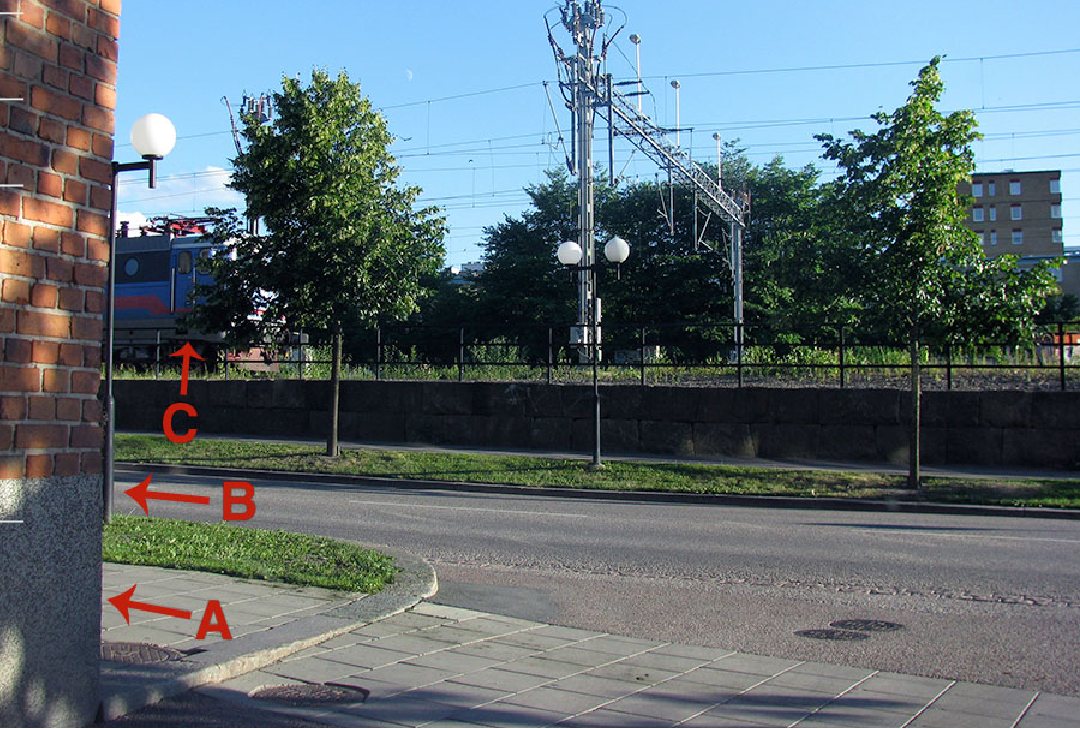
Review of the options:
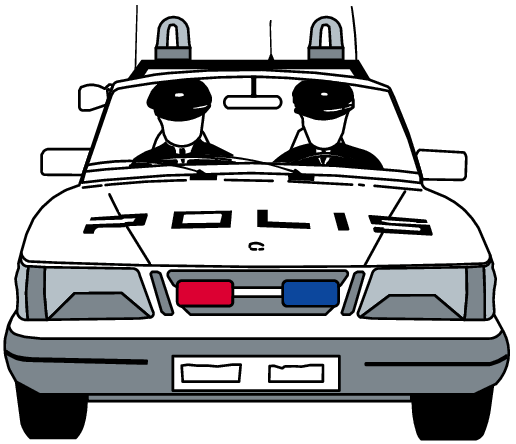
“The signal indicates that the driver of the vehicle in front of the police vehicle is to pull over to the side of the road and stop. The signal is given with alternately flashing blue and red lights.”
A pedestrian “has an 80 per cent risk of being killed when hit by a car driving at 50 km/h, while the risk of being killed is only 10 per cent if the speed is 30 km/h.” (Swedish Traffic Administration)
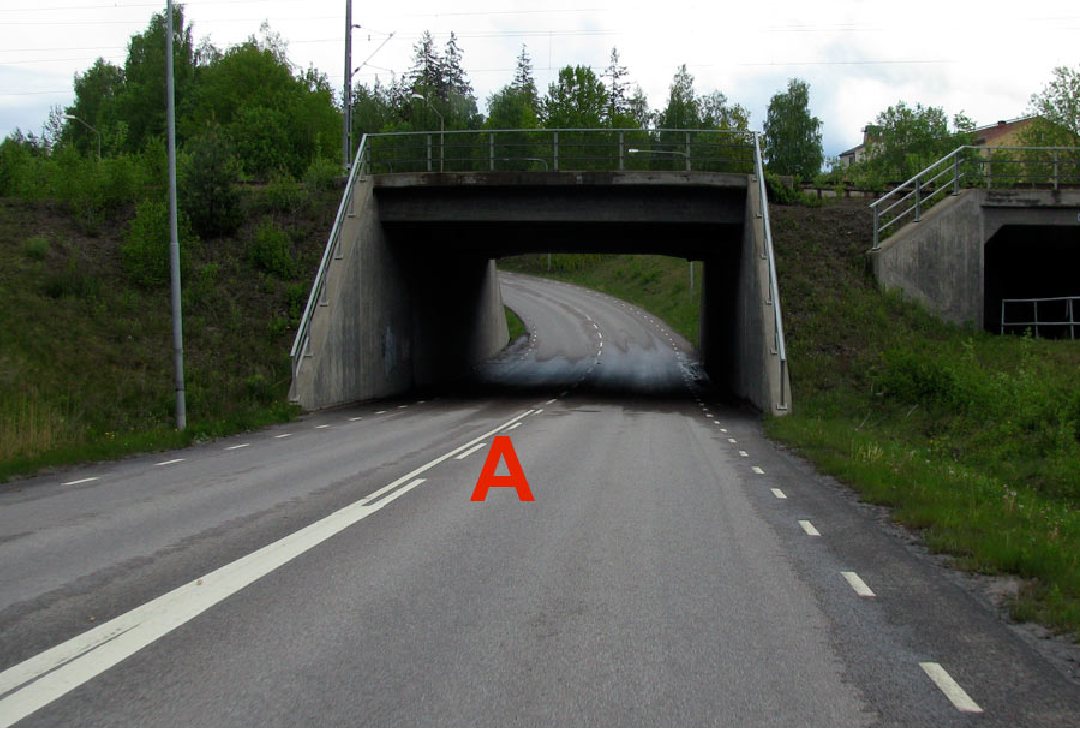
“In places where visibility is limited at the crest of a hill or in a curve, overtaking may only take place if the road has at least two lanes in your direction in which there may be no oncoming traffic, or in other cases where the overtaking can be completed without using a lane intended for oncoming vehicles.”
Swedish Road Traffic Ordinance
A broken line does not automatically mean that overtaking is permitted. Far from all places with limited visibility have solid lines. It would take an excessive effort to go around all the roads in the country to assess whether the visibility is limited, considering the time of year, new trees that could limit the visibility further, etc. For that reason, good judgement precedes the line in this case.
If the vehicle had not gone into the oncoming lane, the answer “Yes, but it is not recommended, as their line of sight is blocked” would be correct. But as it is, the vehicle must cross over into the oncoming lane, which is not permitted according to the quote from the Road Traffic Ordinance.
“Where do the accidents occur? The most serious accidents occur outside of built-up areas, where the speed limits are higher.”
Du och jag i trafiken [You and me in traffic], 28th Edition, page 71
There is also a question regarding where the most accidents take place.
Retreaded tyres are “used tyres that have been fitted with new treads.” (Driving Licence Book, 19th Edition, page 221)
“Consider that the tread depth should be at least 3 mm to provide good friction on a wet road.”
Swedish Transport Agency
The tread depth of a new tyre is around 8–9 mm. 2.7 mm is therefore rather shallow. In normal road conditions, a tyre with a 2.7 mm tread depth will not differ significantly from a new one, but in wet conditions, the risk of aquaplaning increases as the water is not pushed aside as well by the pattern of the tyre.
– That is true, but this question is not asking about the smallest tread depth possible, but the recommended one. The grip deterioration happens gradually; it is not that a tyre with a tread depth of 1.61 mm is really good and one with 1.59 mm is really bad. They probably provide the same amount of grip, but the line has to be drawn somewhere.
Therefore:
“Make it a habit to put the car into a low gear and apply the parking brake when you park your car.”
Driving Licence Book, 19th Edition, page 129


“The marking indicates it is prohibited to park a vehicle and it is placed at the edge of the carriageway. The marking also indicates the extent of a bus stop. The marking has the distance ratio 1:1 between dashes and spaces. No other colour may be used.”
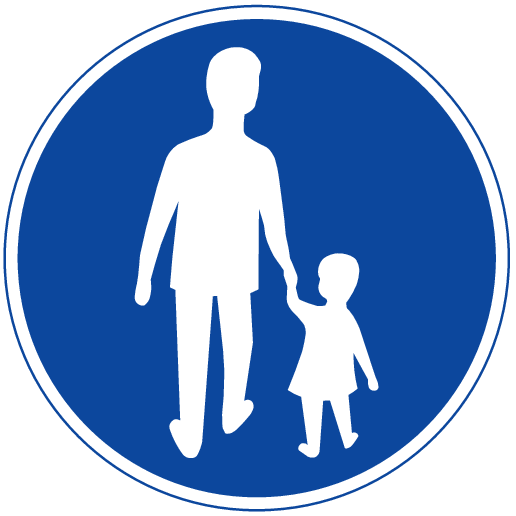
“This sign indicates a path intended for pedestrians only.”
Note that D5 does not signify the same thing as E7. Pedestrian street:
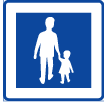
“The sign indicates that the provisions of Chapter 8, Section 1 of the Road Traffic Ordinance (1998:1276) apply. Any prohibition on driving vehicles that are permitted on a pedestrian street according to Chapter 8, Section 1, second paragraph of the Road Traffic Ordinance is indicated using an additional panel.”
Where E7 is posted, you are normally allowed to enter in order to unload cargo.
The only legal requirement is the roadworthiness test.
However, you are recommended to follow the manufacturer’s service instructions.
“A driver who is obliged to stop or shall stop due to a traffic signal is to stop at the stop line.”
Swedish Road Traffic Ordinance
You must always stop when you are obliged to stop. Violating the obligation to stop is often deemed to be as serious as running a red light. Your driving licence can be revoked directly on the scene if you are “easy-going” and continue rolling forward instead of stopping!
The Euro norm is in force “in respect of the registration and sale of new types of vehicle.” (European Commission)
This was preceded by Environmental Class 2005 (also referred to as Euro 4).
“Class 3 fuel efficiency” is a made up term and is not used in any real context.
“A three-point seat belt reduces the risk of being severely injured in a collision by approximately 50 per cent.”
NTF
The three-point seat belt is by far the most common type of seat belt. The name refers to the belt’s three attachment points.
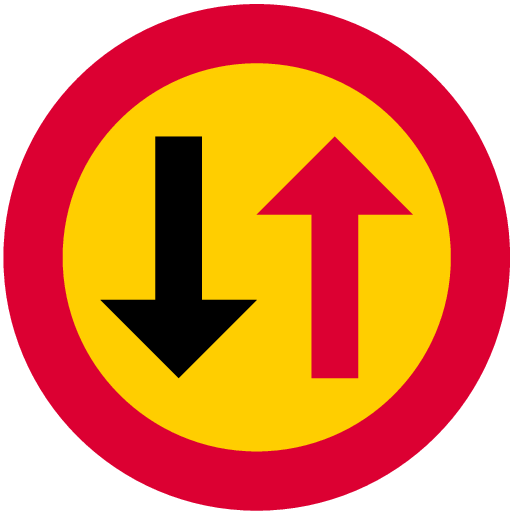

You are therefore obliged to give way to oncoming traffic = you may not obstruct or disrupt oncoming traffic.
“There is a high proportion of fossil fuels. More than 90 per cent of the fuel that is currently used for road transports is of fossil origin.”
Swedish Transport Administration
It would entail too great of a cost and inconvenience for all involved if you had to book a new test for a very small fault.
“If your vehicle fails the roadworthiness test without a requirement for a follow-up test, you do not have to go back to Bilprovningen for another test (new inspection). The faults must be rectified promptly and the vehicle must not be used more than is necessary in order to do so.”
Bilprovningen
“There is a lot of research to indicate how training that for example places a lot of emphasis on technical driving skills entails a risk of the driver overestimating their own skills – a false sense of confidence that can cause them to take risks, for example in slippery conditions that turn out not to be manageable.”
Swedish Transport Administration
Imagine a driver in a car behind a lorry. It appears to be very slippery and no-one else is overtaking the lorry, but this driver thinks “it’s fine, of course I can pass, I know how to handle the car in slippery conditions.” If there is extremely slippery ice in the overtaking lane, no training in the world will make a difference. In some cases, the laws of physics will make it impossible to steer out of a skid or stop within a certain distance.
This does not mean that the training is bad. Note that the question asks whether there are “any possible downsides”, which indicates that training is normally a positive thing.
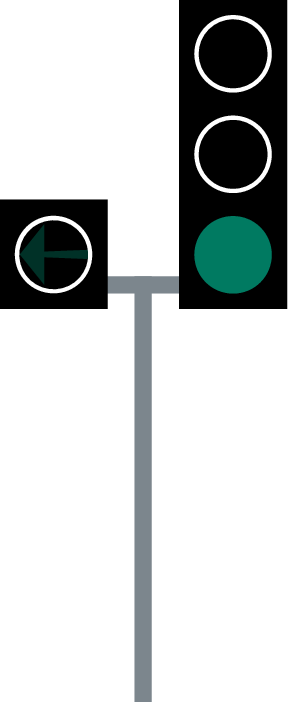
Since the arrow is unlit, you should ignore it. In other words, you are looking at a regular green traffic signal.
The fact that the arrow is unlit can be seen from the green colour, which differs significantly from the lit light on the right. A lit arrow would have exactly the same colour as the light on the right:
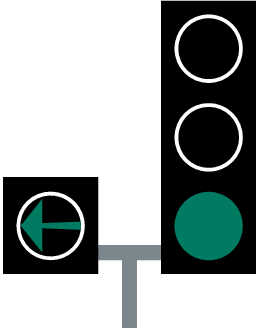
– If only the green arrow is lit, it means that only vehicles turning to the left are allowed to go. As it is (green circle), you are permitted to drive in all directions, including to the left.
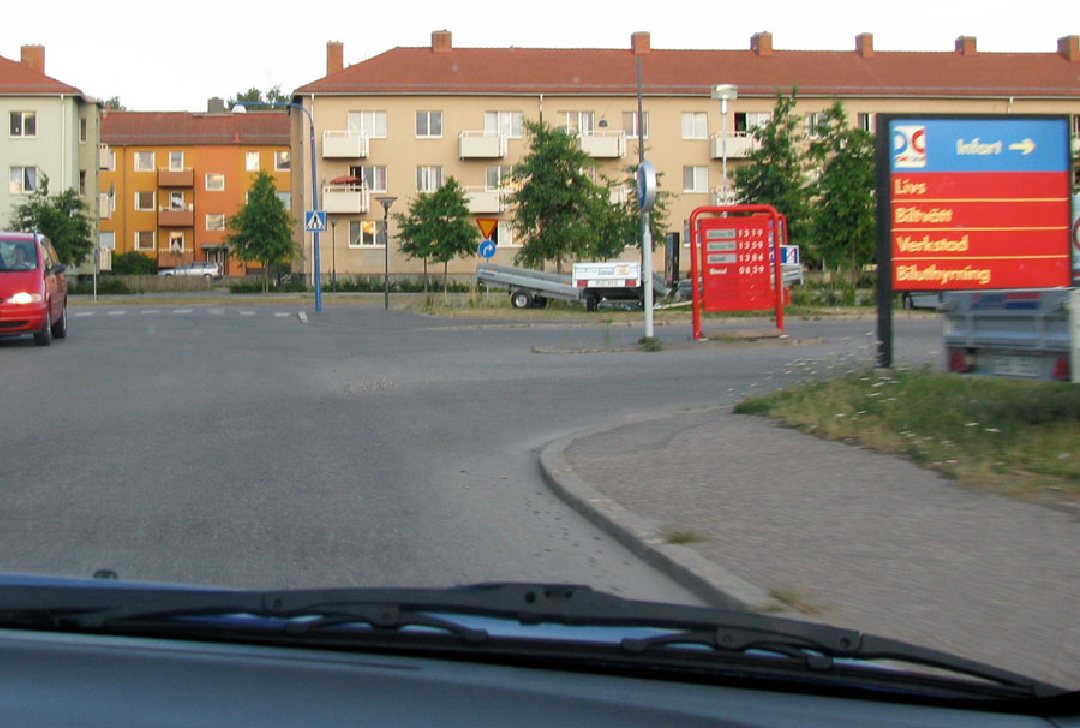
Review of the options:

“The signs indicate that the vehicle may only be driven in the direction of the arrow or, in the case of two arrows, in either arrow’s direction. The symbol is adapted to the conditions of the location.”
Human beings have always risked falling from great heights. We have only risked car collisions in the last 100 years or so.
“[…] our brains still react as if we were living in the stone age. Our genes have not had a chance to adapt to the development. For this reason, we immediately realise the danger of falling from a height, but not that of a collision at 90 km/h.”
Swedish Transport Administration
– Realising that we humans are bad at making assessments about certain risks. This hopefully humbles you and makes you take it easy in traffic, which can save lives.
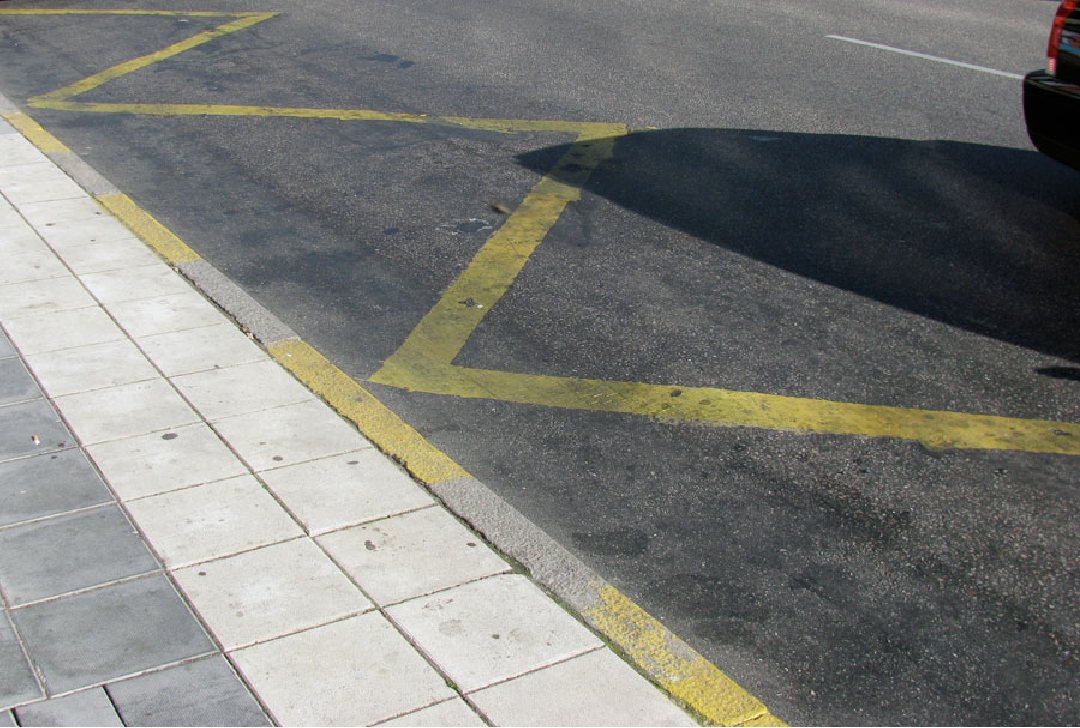
The zigzag lines on the street (M23) is just a reinforcement of line M22.

No stopping and parking or – Very important word! no parking (M23)
“This marking is used as a reinforcement of the road markings M21, no stopping and parking, and M22, no parking. No other colour may be used.”
Another way to describe M23:

“This marking indicates a prohibition on parking a vehicle and is placed along the side of the carriageway. The marking is also used to indicate an extension of a bus stop. The marking has a distance ratio of 1:1 between the dashes and spaces. No other colour may be used.”

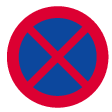
“This marking indicates a prohibition on stopping and parking a vehicle and is placed along the side of the carriageway. No other colour may be used.”
The image in the question depicts a broken line marking on the kerb (i.e. M22), which means it should be interpreted as “you are forbidden to park in this area, and the parking prohibition is reinforced by the triangular zigzag lines on the street”.
– Yes, this is likely a bus stop; however, the question only relates to what the markings mean, not what rules apply in the situation in general.
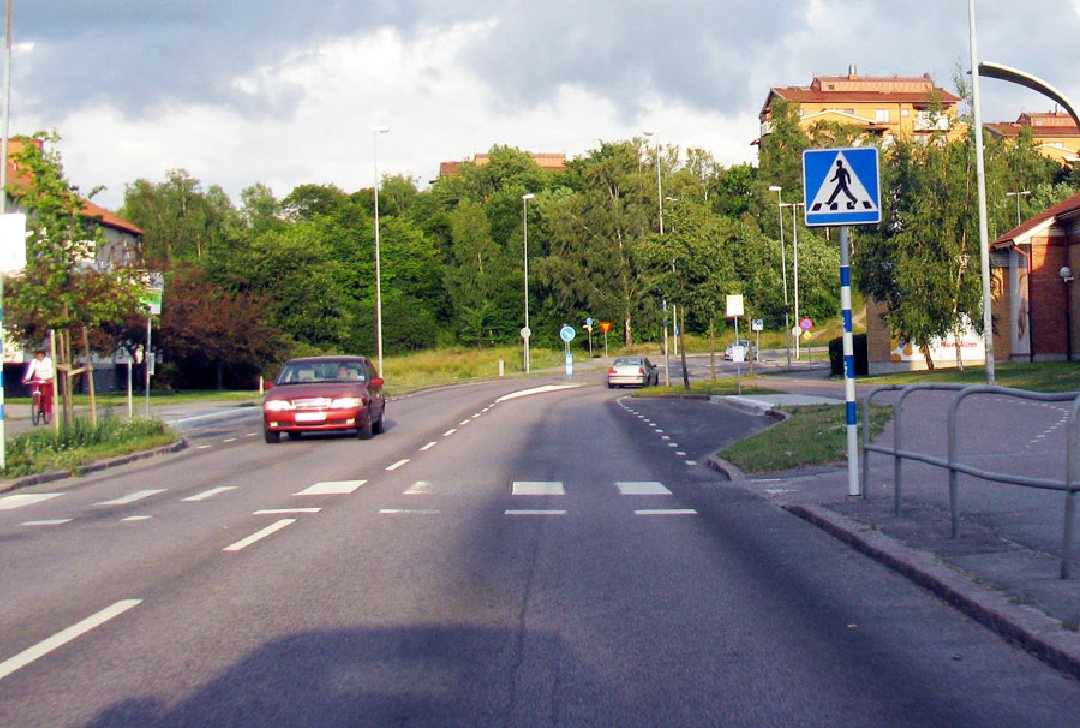
The fact that the pedestrian crossing is combined with a bicycle passage does not matter; you must always stop for pedestrians.
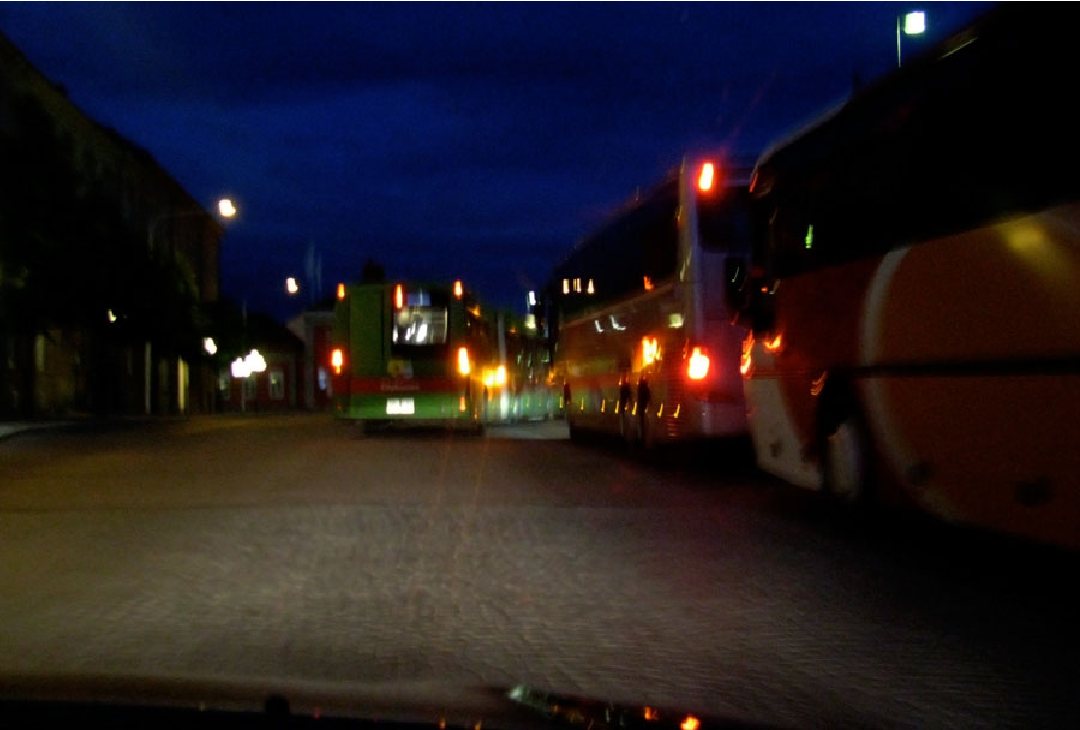
This is a classic example of a dangerous situation. When you see a picture with stationary buses you can be almost assured that the greatest risk is someone running out in front of the bus.
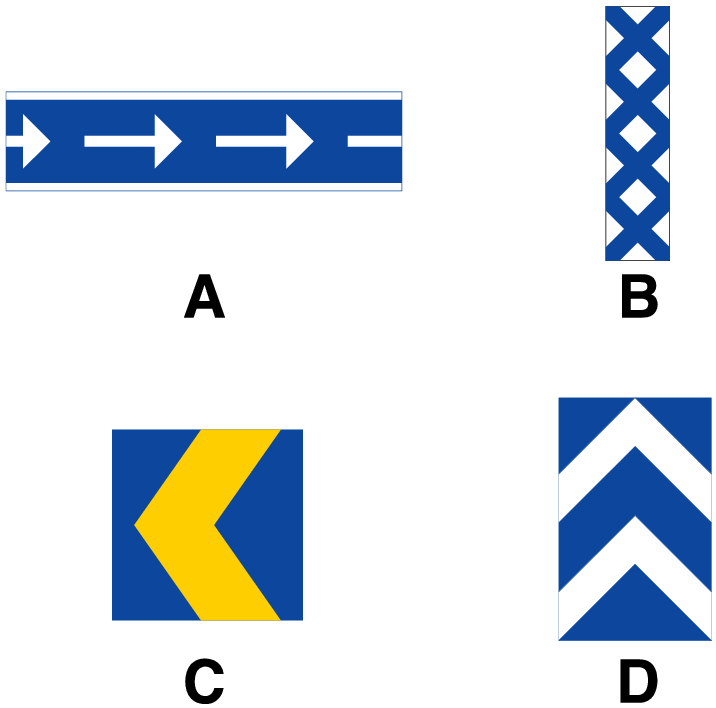

“This device marks the centre of a roundabout around which vehicles are to be driven.”
“This device is used to make a level crossing more visible.”

“The device indicates that motorists must make a sharp turn in the arrows direction because of, for example, a bend. If the device is used during roadworks or similar work, the background is red.”

“The device indicates the dividing point between a main carriageway and an exit road where there is a deceleration lane.”
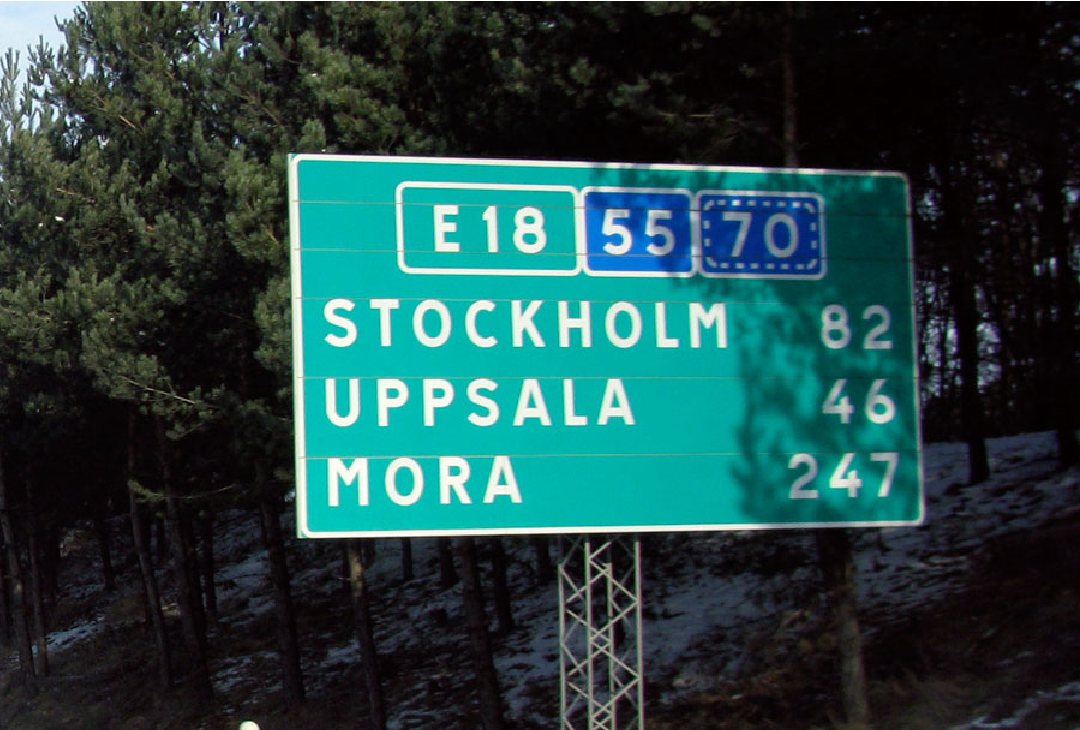
The signs always give the distance in kilometres (km).
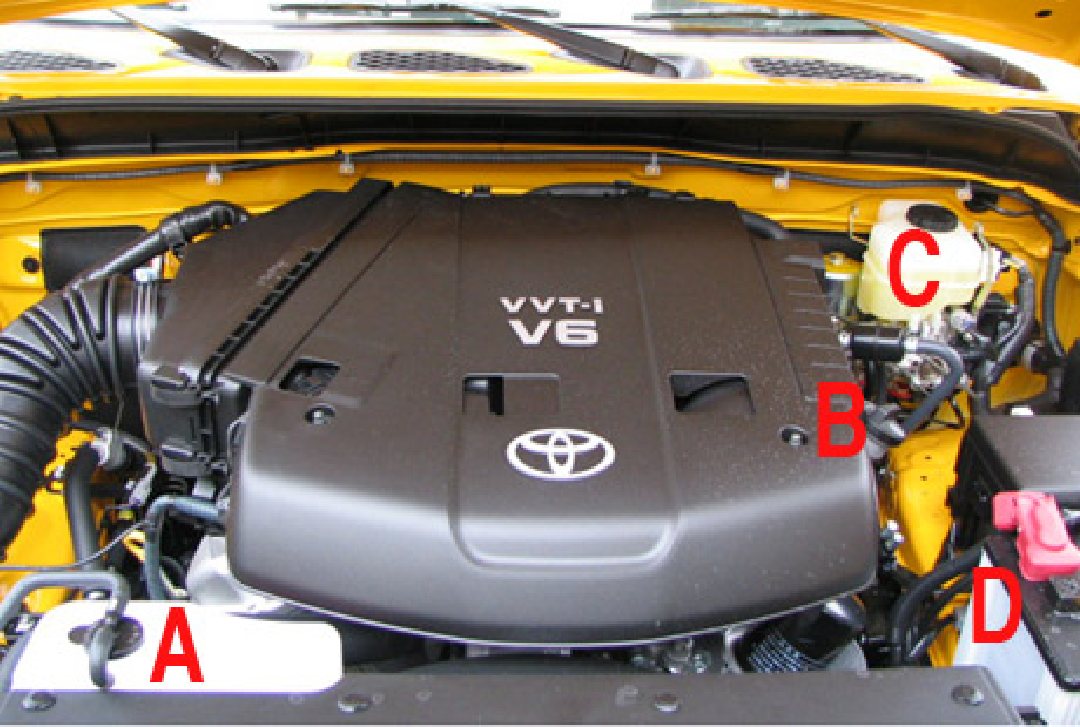
The brake fluid is almost always yellow and found in a visible plastic container. For this reason, you can be fairly certain that C is the correct answer.
No questions match this filter.