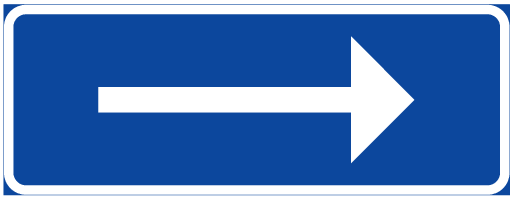
What does this road sign mean?
Explanation

One-way trafficE16
“The sign indicates that vehicle traffic on the road is one-way in the direction of the arrow. An arrow pointing up indicates that the traffic is one-way in a forward direction.”
Pick an answer to check it. 56 of 70 correct (80%) is needed to pass.
The real test has 70 questions in 50 minutes, about 43 seconds per question.
“The sign indicates that vehicle traffic on the road is one-way in the direction of the arrow. An arrow pointing up indicates that the traffic is one-way in a forward direction.”
“Many accidents take place near the home, when you relax because of the familiar surroundings”
Mikael Höög, press officer at Motormännen
“The distance to your destination – being close to the destination relaxes you, which leads to tiredness.”
VTI
“Where do the accidents occur? The most serious accidents occur outside of built-up areas, where the speed limits are higher.”
Du och jag i trafiken [You and me in traffic], 28th Edition, page 71
There is also a question regarding where the most accidents take place.
“Environmental class 1 has been the predominant diesel fuel on the Swedish market since 1995: all diesel sold in regular petrol stations is environmental class 1.”
Swedish Transport Agency
Normally overtaking is prohibited. “Two-wheeled vehicles without a sidecar may however be overtaken.” (Swedish Road Traffic Ordinance)
If the road is wide and visibility is good, it would not be safe or efficient if you were forced to break abruptly and drive at a snail’s pace behind the cyclist (and thus pass the hazardous railway crossing at a very low speed).
However, if the road is narrow and visibility is obstructed, you may not overtake according to other rules. But this question asks if it is generally prohibited, which it is not.
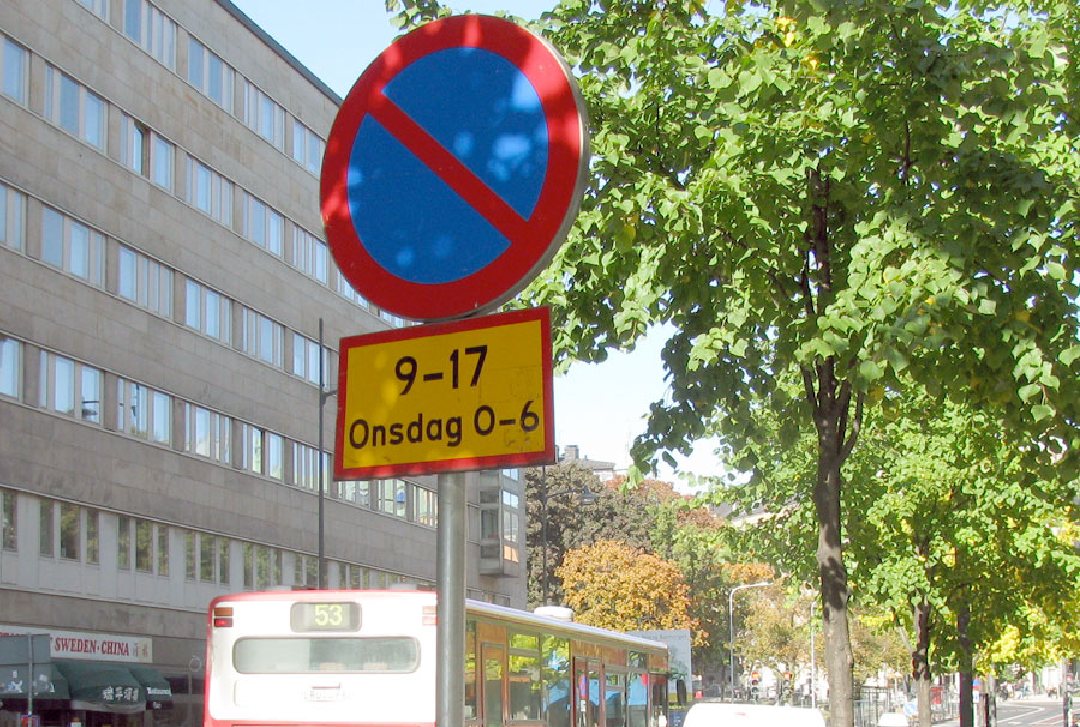

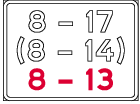
“The panel indicates when the directions on the road sign applies. If times are used in combination with other conditions, the panel also indicates when these conditions apply.”
On Wednesdays, parking is prohibited 9 a.m. to 5 p.m. and from 12 a.m. to 6 a.m., as the panel has an indication of “when the directions on the road sign applies.”
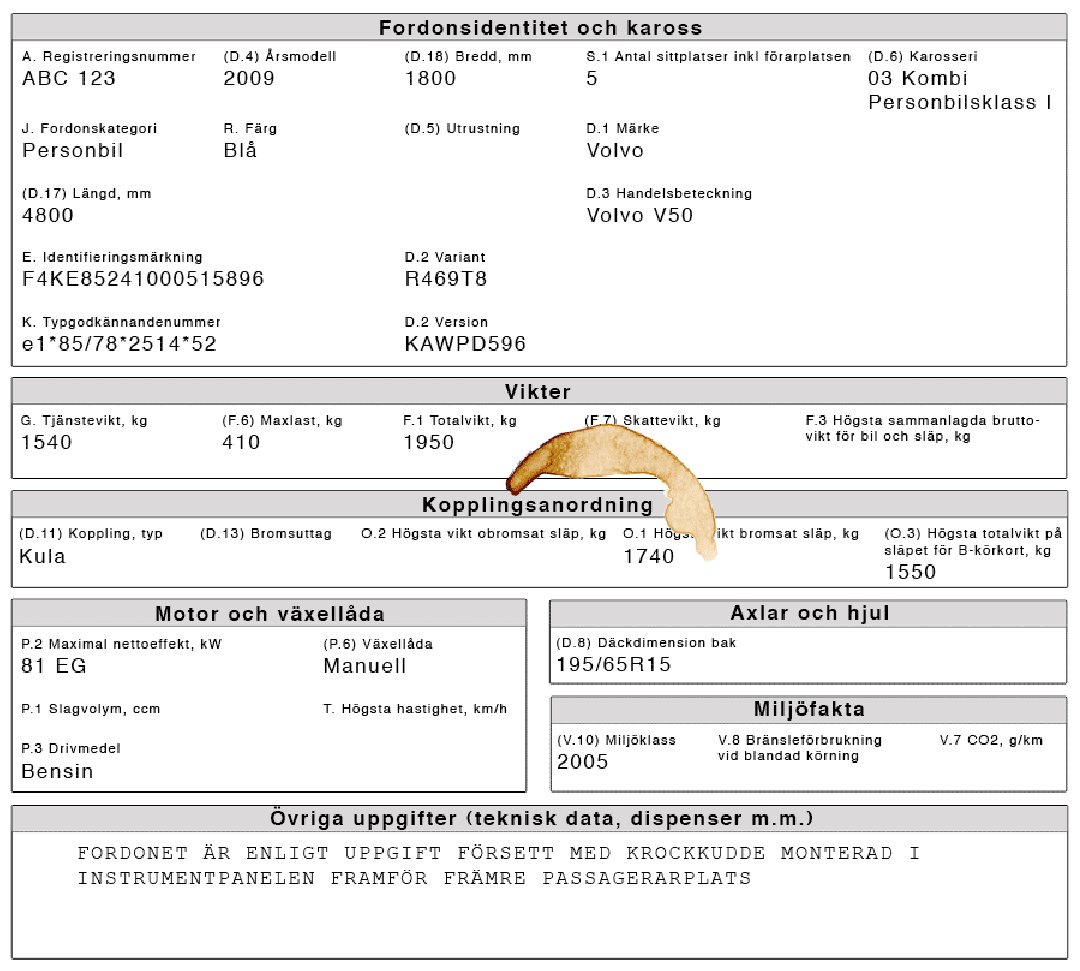
”Skattevikt” = Taxable weight
”Tjänstevikt” = Unladen weight
“For private cars, the taxable weight is the same as the vehicle’s unladen weight.”
Swedish Transport Agency
“The car will be very heavy to steer if the power steering breaks”
Driving Licence Book, 19th Edition, page 136
The steering column is in most cases directly connected to the rack, which is in turn connected to the wheels.
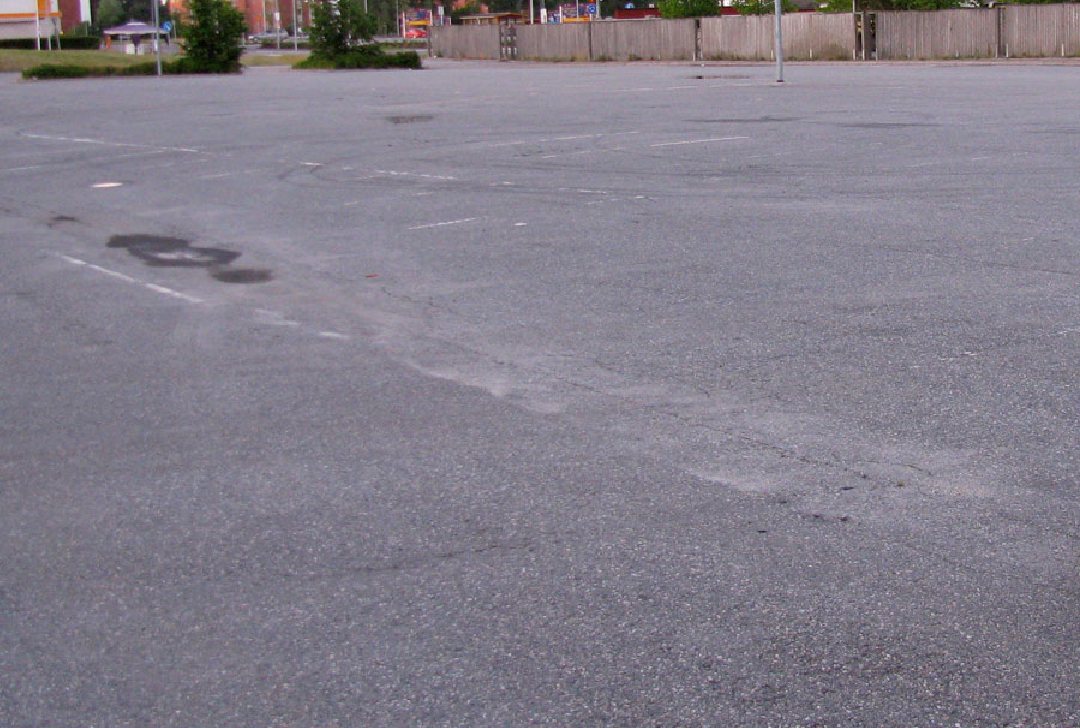
“The right-hand rule also applies when the paths of two vehicles meet [...] in a parking area”
Driving Licence Book, 19th Edition, page 41
1960 1,036
1980 848
1990 772
2000 591
2019 223
Also note that there are significantly more cars in traffic today than there were in the 1960s.
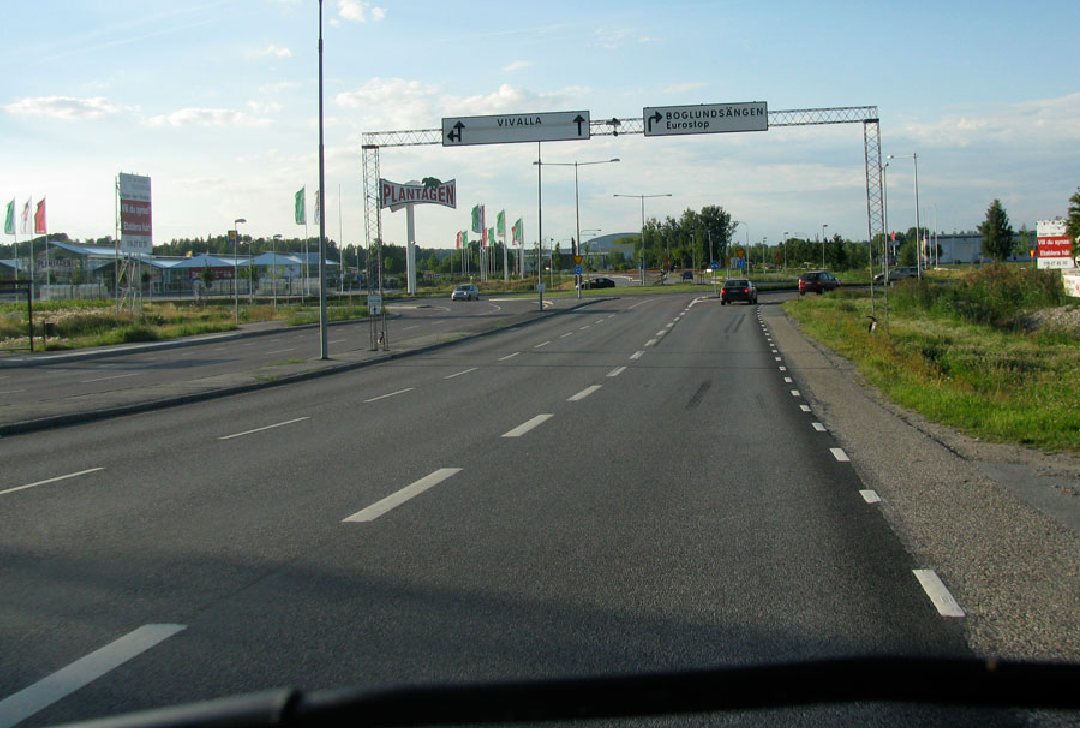
There is no exact answer for what the best way to change lanes is. The marked option is however recommended according to many.
“There are guarded and unguarded pedestrian crossings. At guarded crossings, traffic is regulated by traffic signals or by a police officer.”
Swedish Transport Agency
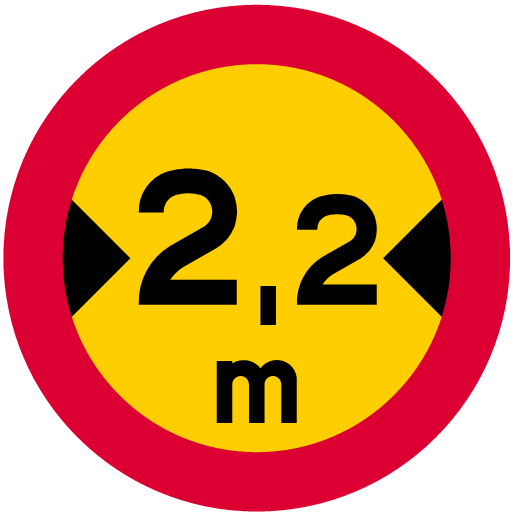
“The sign indicates that traffic with vehicles over a certain width is prohibited. The greatest permitted width is indicated on the sign.”
“Vision Zero constitutes the basis for the traffic safety work in Sweden. It was established through a parliamentary decision.”
Swedish Transport Administration
“If [...] the vehicle’s width, including load, exceeds 260 centimetres, [...] the vehicle or a vehicle coupled to this may only be driven on a private road.”
Swedish Road Traffic Ordinance
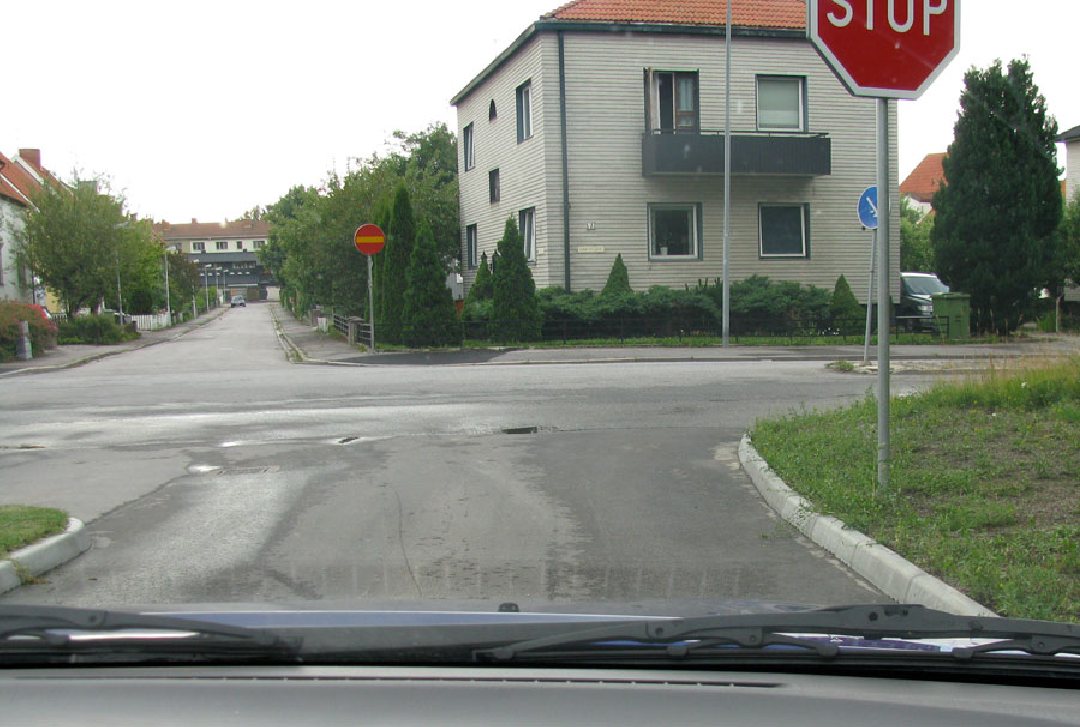
Sometimes you receive several messages simultaneously in traffic. You then must choose which to adhere to. This is the order you should follow:
Police signals thus take priority over the stop sign and prohibition sign.
“Consider that the tread depth should be at least 3 mm to provide good friction on a wet road.”
Swedish Transport Agency
The tread depth of a new tyre is around 8–9 mm. 2.7 mm is therefore rather shallow. In normal road conditions, a tyre with a 2.7 mm tread depth will not differ significantly from a new one, but in wet conditions, the risk of aquaplaning increases as the water is not pushed aside as well by the pattern of the tyre.
– That is true, but this question is not asking about the smallest tread depth possible, but the recommended one. The grip deterioration happens gradually; it is not that a tyre with a tread depth of 1.61 mm is really good and one with 1.59 mm is really bad. They probably provide the same amount of grip, but the line has to be drawn somewhere.
Therefore:
Maximum speed for light lorries: “The speed limit applicable to the road.” (Swedish Transport Agency)
New cars use the fuel more efficiently. In 1975, a new car would consume 0.11 litres/km. A new car in 2010 only used 0.065 litres/km (Swedish Transport Administration).
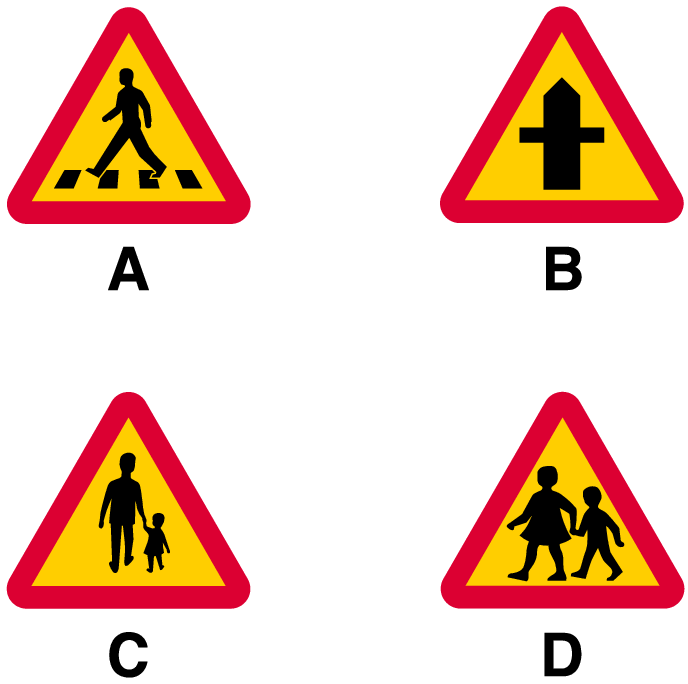
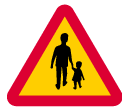
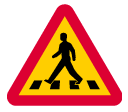
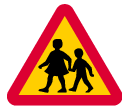
– A is Pedestrian crossing ahead and D is Children. Indirectly, they can be said to warn you of pedestrians, but you should choose the best/”most correct” answer, which is C, as its literal meaning is Pedestrian warning.
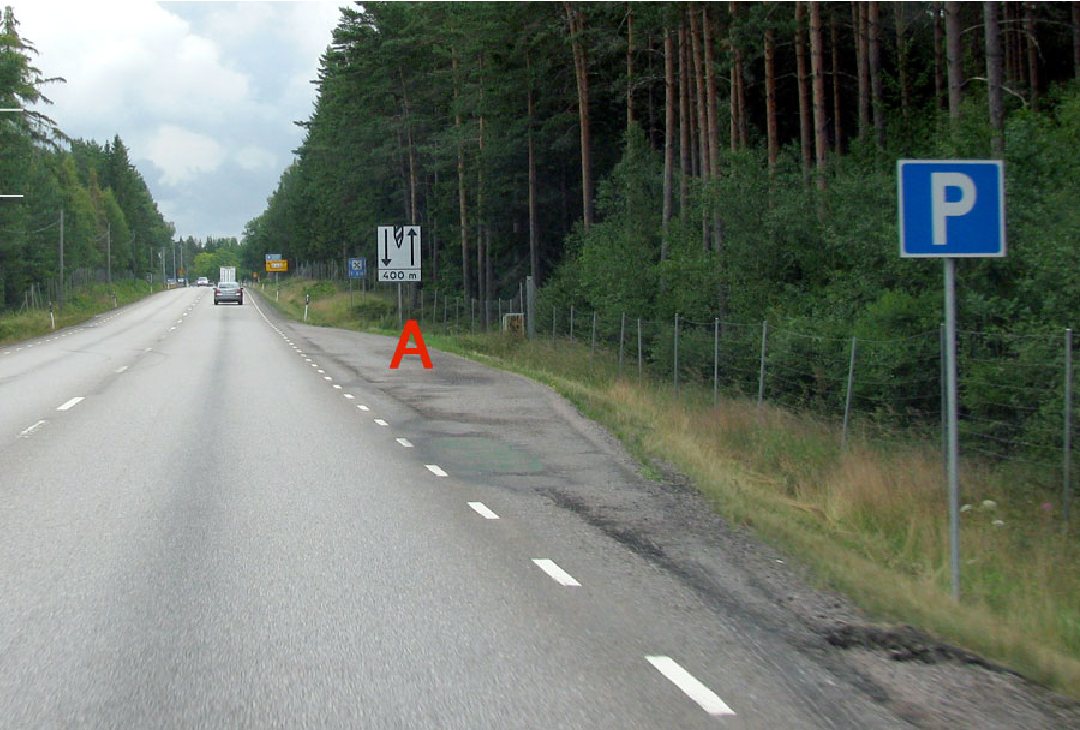
“The driver of a vehicle that is to be equipped with a warning triangle shall put out the triangle when the vehicle, as a result of an accident, engine failure or similar situation, has become stationary on the carriageway or hard shoulder where the maximum permitted speed is higher than 50 kilometres an hour and where the vehicle is not allowed to stop or park”
Swedish Road Traffic Ordinance
Since the car is allowed to stop and park at A, the requirement for a warning triangle does not apply.
The reaction time depends solely on the human driver and has nothing to do with the properties of the car.
“To indicate to you that the bus is going to stop, the bus driver turns on the flashing lights on the sign 100 metres before the bus stop.”
Driving Licence Book, 19th Edition, page 37
“Right of recourse is an entitlement to reclaim a disbursed amount or part thereof from the tortfeasor in certain situations.”
Trygg-Hansa
For example, if you have driven very recklessly and caused an accident.
Oil and dirt from tyres has gathered on the road undisturbed by water. When the rain comes, the oil and dirt begins to wash away and may become slippery before it is gone. “It gets especially slippery on paving stone just as the rain starts to fall.” (Driving Licence Book, 19th Edition, page 168).
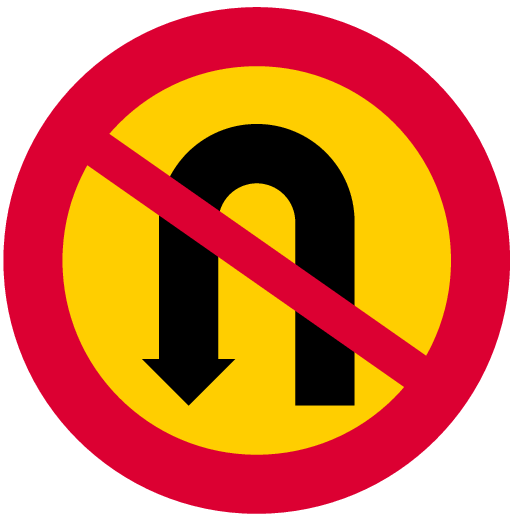
“This prohibition applies to the junction or similar location before or in which the sign is erected. The sign may relate to several junctions. In that case the distance is indicated on an additional panel. The symbol is specific to the conditions at the location.”
“The vehicle may not be fitted with both studded and non-studded tyres.”
Swedish Transport Agency
The reason being that the car would act strangely or unpredictably if the grip varied greatly between different tyres.
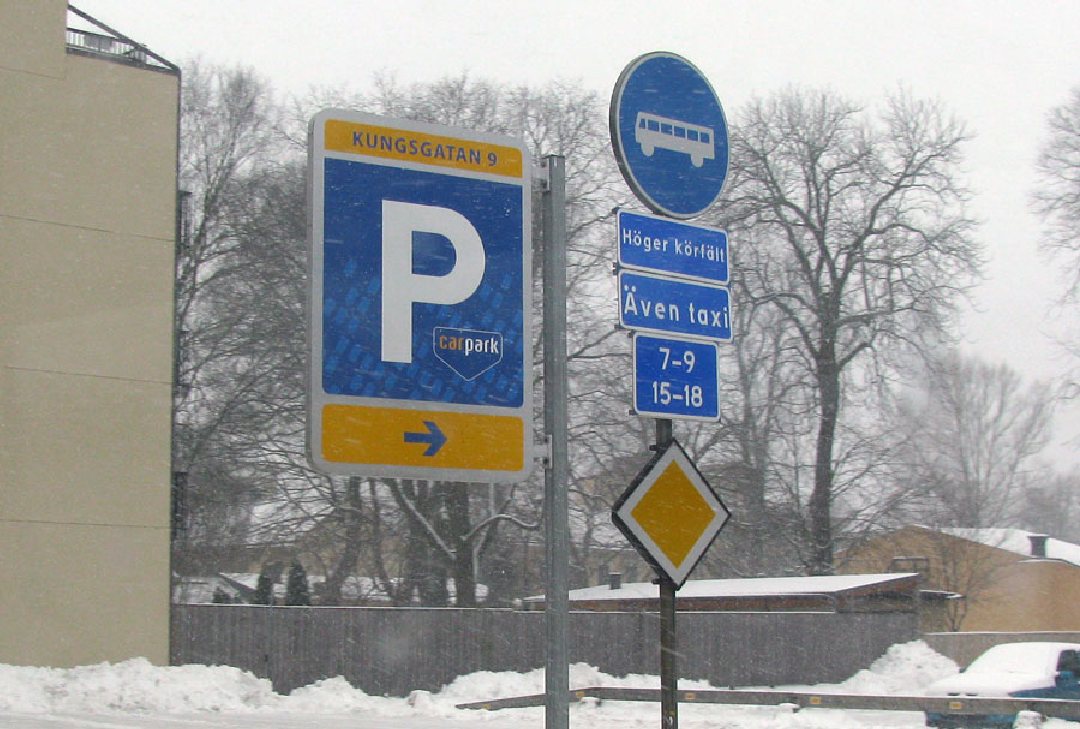

“The sign also indicates that vehicles specified in Chapter 8, Section 2 of the Road Traffic Ordinance (1998:1276) are permitted to use the lane or carriageway, unless otherwise stated on an additional panel. If other vehicles are permitted to use the lane or carriageway, this is indicated through an additional panel.”
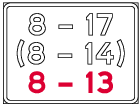
“The panel indicates when the directions on the road sign apply.”
“An additional panel underneath two or more road signs posted one on top of the other applies to all of these signs.”
Traffic Sign Ordinance

“This device indicates a change in conditions entailing a need to adapt your speed. It is used to mark the edge of the carriageway or lane, or to separate traffic directions on complex passages. The device is placed so that the panels lean downwards on the side where traffic must travel. If the device is used for roadworks or similar work, it is red and yellow. In that case, the panels can also be horizontal.”
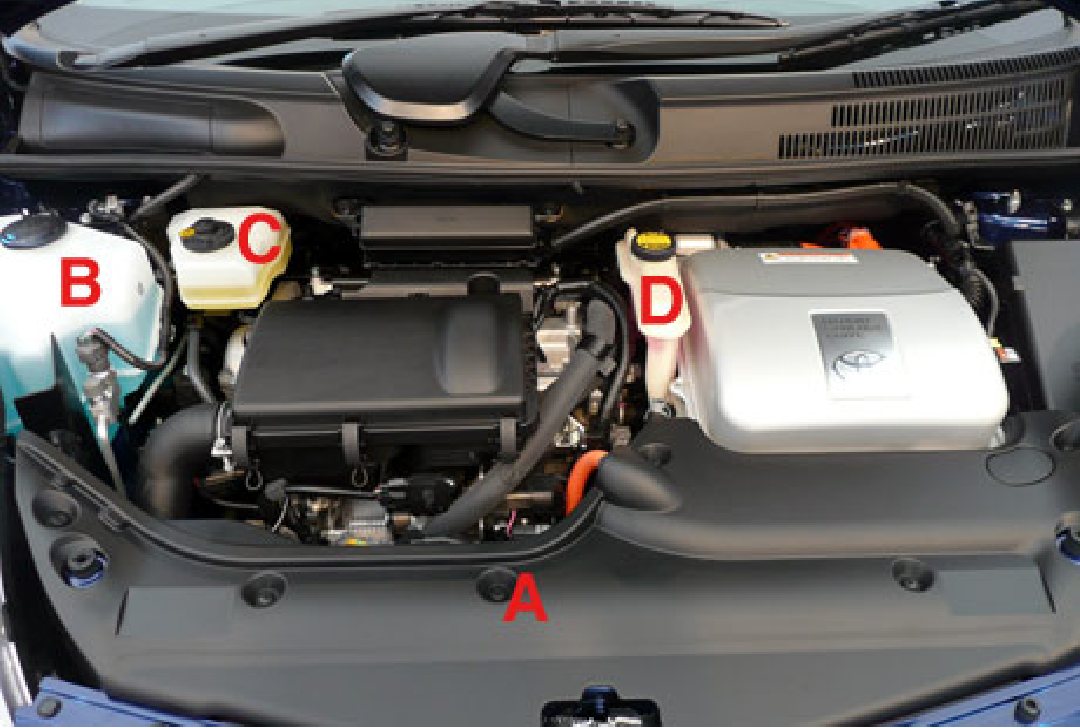
The windshield washer fluid is almost always blue and found in the largest container. For this reason, you can be fairly certain that B is the correct answer.
Parking is prohibited 30 metres before and after, but not stopping. There is often a prohibition to overtake, but two-wheeled vehicles may be overtaken. In most cases, there is only an obligation to stop where there are no gates or signals, not otherwise.
Of course it is always possible to say that something “may” happen. However, in this case it is particularly important for you to be aware of the risk of the signal system being out of order.
Review of the options:
“Look behind you. If a vehicle is too close behind you in a que, you should increase the distance to the vehicle in front of you. Then you get a higher margin of safety.”
Trafikens grunder, page 171
Review of the options:
Nationalencyklopedin: ”car sharing.”
Whether you use a handsfree or not is of little importance: “It is not safe to be on your mobile even if you are using a handsfree device. It is more or less just as dangerous as holding the mobile in your hand.” (Swedish Transport Administration)
The reason being that the conversation itself is the disturbance. The fact that your hands are free helps with the mechanical side of driving, but it may also increase the risk because it gives you a false sense of security, which may make you spend more time talking on the phone.
“Turn off your engine when waiting at stop lights, railway crossings and similar”
Folksam
The question implies that you will be waiting for a while (a long freight train that is also approaching slowly).
“Mopeds class I [EU mopeds] may [...] not be driven on a motorway.”
Swedish Road Traffic Ordinance
“A three-point seat belt reduces the risk of being severely injured in a collision by approximately 50 per cent.”
NTF
The three-point seat belt is by far the most common type of seat belt. The name refers to the belt’s three attachment points.
“Always drive as straight as possible through a curve.”
Du och jag i trafiken [You and me in traffic], 28th Edition, page 182
This method reduces the risk of skidding (this risk increases when you turn the wheel sharply). However, remember not to pass into the oncoming lane if your visibility is limited!
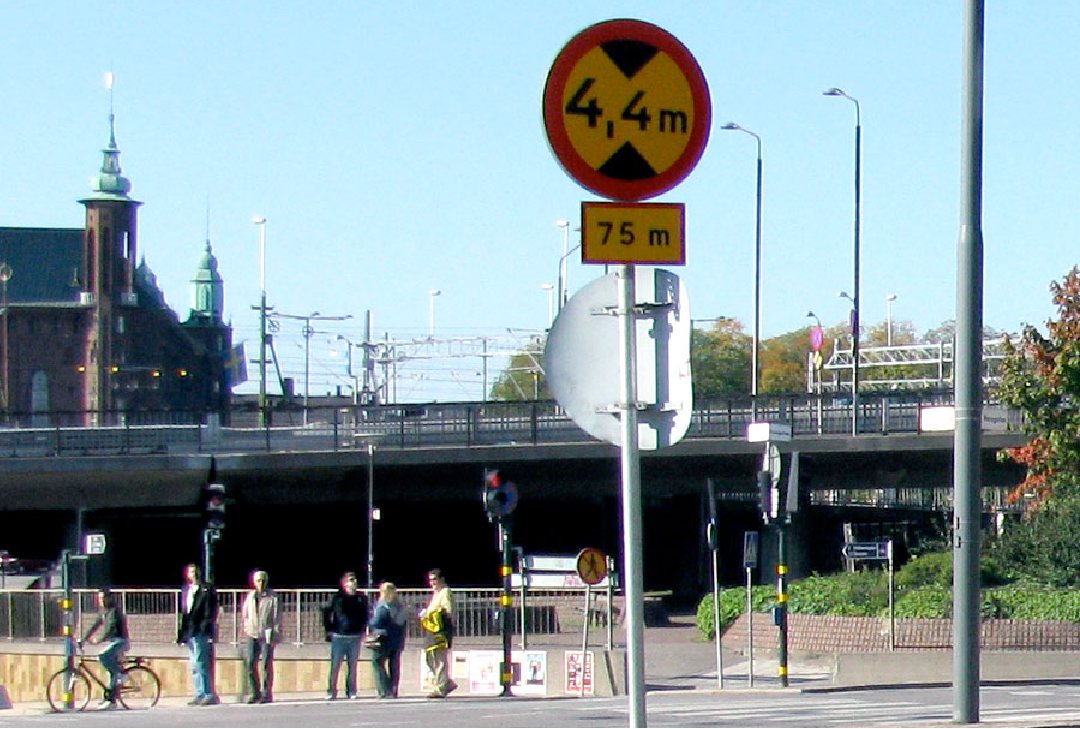
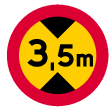
“The sign indicates that traffic with vehicles over a certain height is prohibited if the free height is lower than 4.5 metres. The greatest permitted vehicle height is indicated on the sign.”

“The panel indicates the distance to what the sign relates to.”
– No, not necessarily, it is forbidden to drive anything over 4.4 metres. In other words, it is forbidden to drive a vehicle over 5, 7, 10 (…) metres.
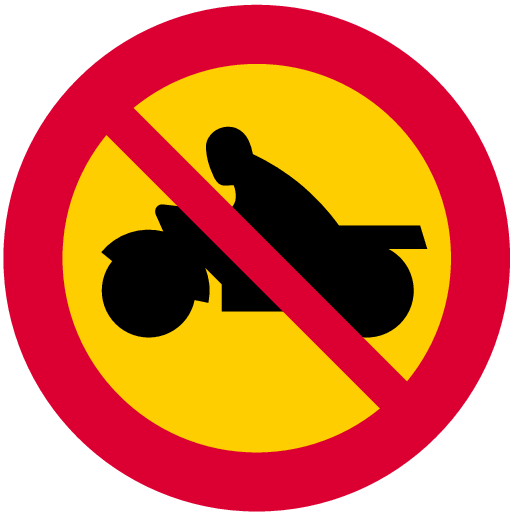
A class I moped is an EU moped. A class II moped is classed more as a bicycle: “The traffic regulations for class II mopeds are the same as for bicycles. You shall therefore driver your class II moped on the cycle path.” (Swedish Transport Agency). As a result of this, class II mopeds are not subject to the prohibitory sign C5.
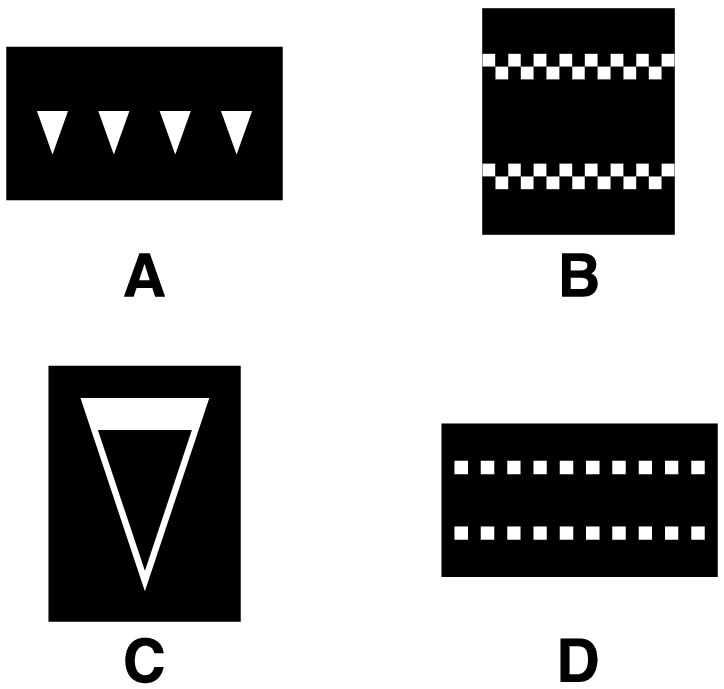

“This marking indicates the line that a vehicle should not pass when the driver is observing the obligation to give way.”
“This marking indicates a speed bump, gutter or similar obstacle.”

“This marking indicates that there is an obligation to give way or to stop further down the road.”
Total weight: “The sum of the vehicle’s unladen weight and the calculated weight of the largest number of passengers, not including the driver, and the greatest quantity of goods that the vehicle is equipped for.” (Road Traffic Definitions Act)
Reaction formation: ”These people are unobtrusive and reserved in everyday life, but in other contexts […] they display another type of behavior with high risk taking.” (Driving Licence Book, 19th Edition, page 187)
“The speed affects how much we are able to perceive of what is to either side of the car. The faster we drive, the less we have time to see. In other words, we concentrate on a more narrow area.”
Du och jag i trafiken [You and me in traffic], 28th Edition, page 173
“Checking the brakes […] Push down on the brake pedal with as much force as possible.”
Driving Licence Book, 19th Edition, page 131
– They can, but it is better if they break while you are testing them standing still than when you need to brake suddenly to avoid an accident! A sound brake system should be able to handle any pressure a human being can create.
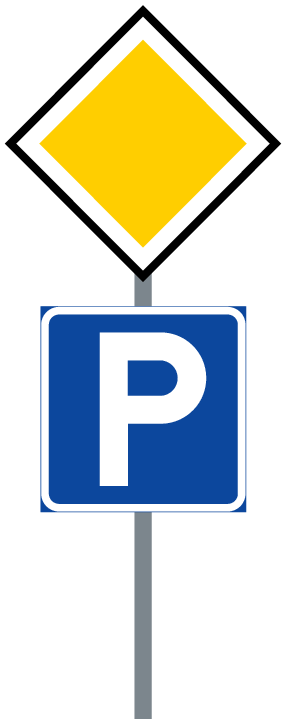
There is generally a parking prohibition on priority roads. If there is a parking sign, however, it overrides this rule since signs take priority over rules (think of a junction; if a stop sign has been posted, it takes priority over the right-hand rule).
On 20 May 2018, the old system with the last digit in the registration number was discontinued.
New inspection rules as of 20 May 2018:
To simplify, a car older than 5 years must be inspected every year. It is recommended to schedule an inspection the same month every year and treat the 2 extra months as a margin of safety.
Please note that the last day for inspection is always the last day of the month. This is because you start counting the month after the most recent inspection.
“It is a common misconception that a vehicle is automatically laid up if it is given a driving ban after missing a roadworthiness test, for example. That is not the case! A vehicle is never automatically laid up – you have to report it for deregistration with us yourself.”
Swedish Transport Agency
Nationalencyklopedin: “friction […], resistance that one surface or object encounters when moving over another.”
Review of the options:
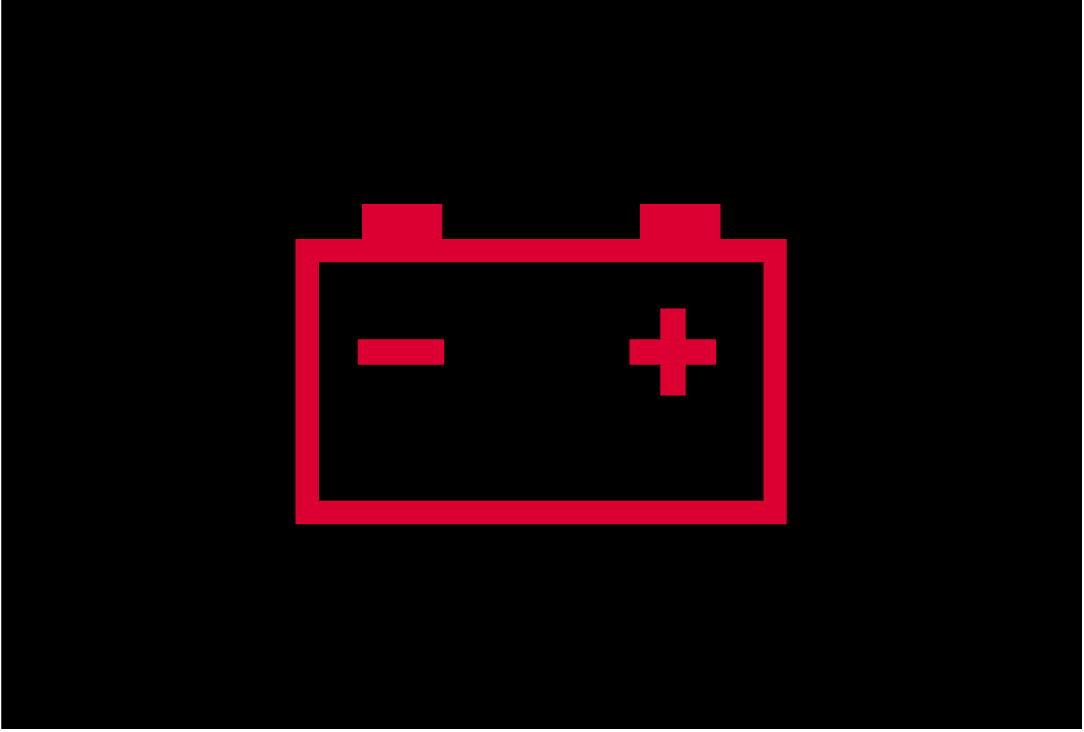
“The battery is not charging properly.”
Driving Licence Book, 19th Edition, page 146
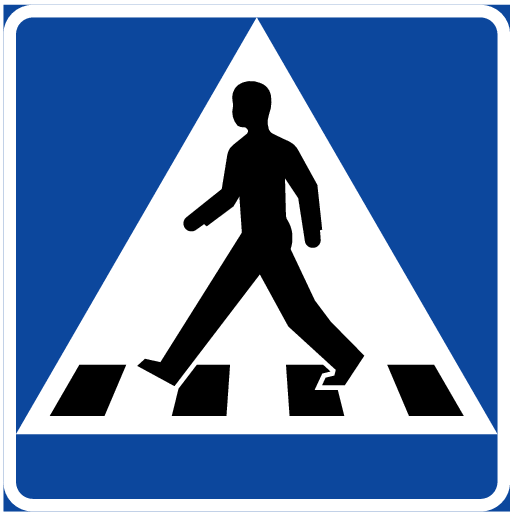
Cyclists will often cross the road at a pedestrian crossing, which is what the question refers to. The function of the priority rules is irrelevant in this question.
If, for example, you have a TV on the trailer weighing 30 kg, the straps (the cargo fastenings) must be able to withstand a pressure of at least 24 kg (30 * 0.8) to the front and 15 kg to the back (30 * 0.5). If this is not the case, the straps could snap when you brake hard.
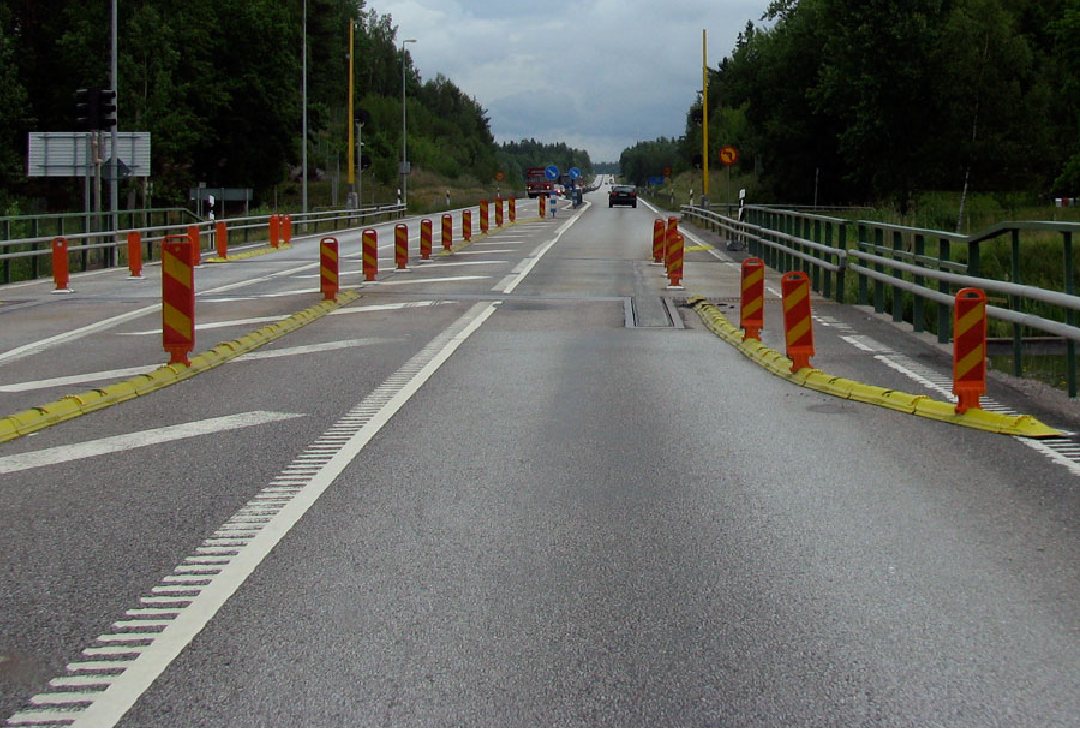
“When diverting traffic in connection to roadworks, it is common to use yellow road markings. These markings take priority over other markings.”
STR’s Vägmärken & vägmarkeringar [Road Signs & Markings], 6th Edition, page 30
The first alternative is true in the sense of a general statement, but not as the answer to this question. “Obstacle” refers to a crashed car or dropped cargo, not diversions that have been planned and carried out by road workers (which appears to be the case here).
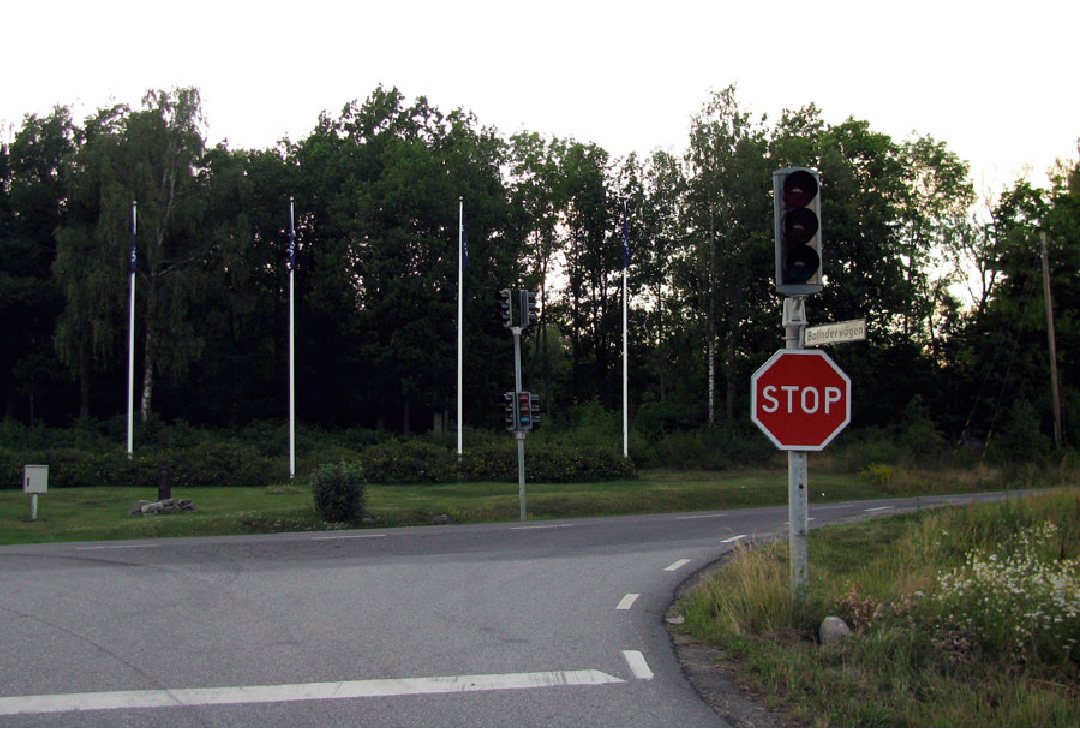
The problem is that the traffic signal appears to be not working (otherwise there would be some colour showing). It is then the road sign that applies. Stopping and waiting for the signal to start working may take several days!
The last option sounds good, but you are indirectly saying that you can drive out without stopping first, which is wrong.
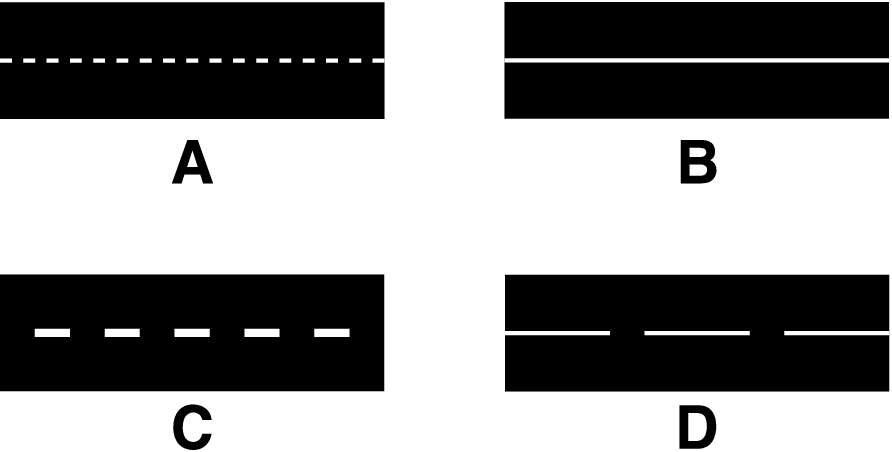
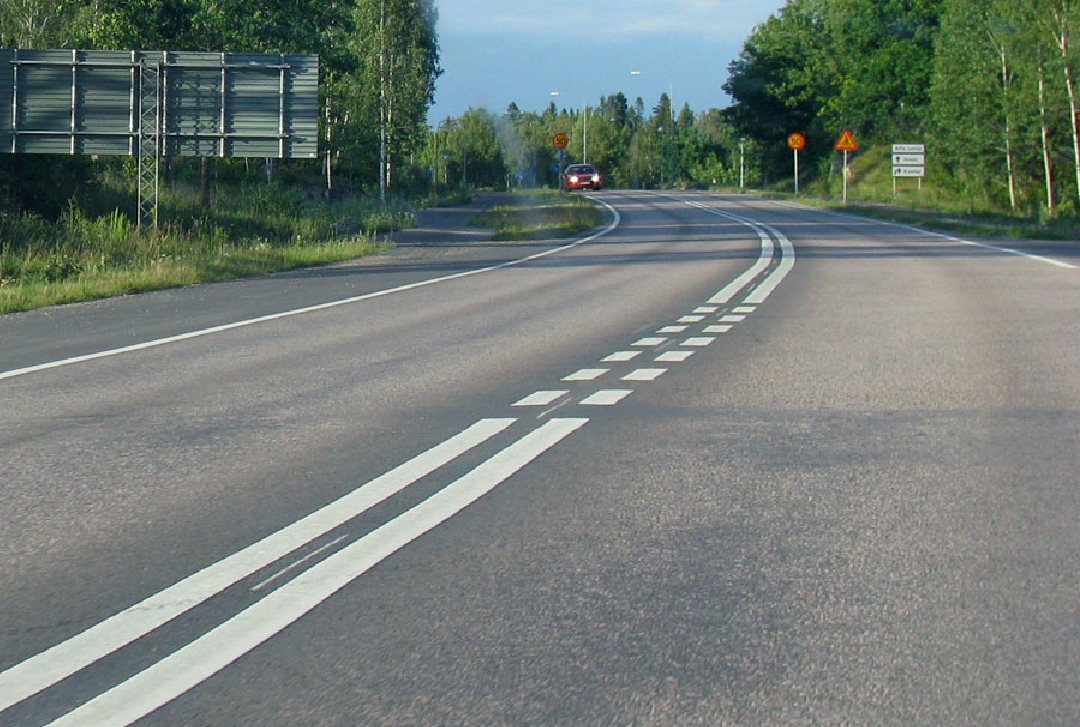
“The marking indicates the appropriate route for traffic in complicated junctions. The marking is also used in other cases where there is a need for guidance. The marking has a distance ratio of 1:1 between the dashes and spaces.”

“A solid line indicates that the provisions of Chapter 3, Section 11 or Section 12, paragraph 3 of the Road Traffic Ordinance (1998:1276), or provisions stipulated pursuant to that ordinance apply. A solid centre line can appear in both single and double form. In case of a double solid line, the distance between the lines may vary.”

“The marking indicates the boundary between a lane for vehicles operating a regular service, etc. and another lane. The marking has a distance ratio of 1:1 between the dashes and spaces.”

“A warning line is used to indicate that it is inappropriate to cross over it due to the traffic conditions. The marking indicates the boundary between lanes intended for travel in opposite directions. The marking has a distance ratio of 3:1 between the dashes and spaces.”
A pedestrian crossing shall be crossed “without undue delay”. (Swedish Road Traffic Ordinance)
Examples of how this should be interpreted:
“Underneath the red lights, there may be another circular light which emanates a flashing white light in order to make the crossing more visible.”
Traffic Sign Ordinance
“Drivers who are clearing a passage shall stop if necessary.”
Swedish Road Traffic Ordinance
This means that if it is not necessary to stop, you do not have to.
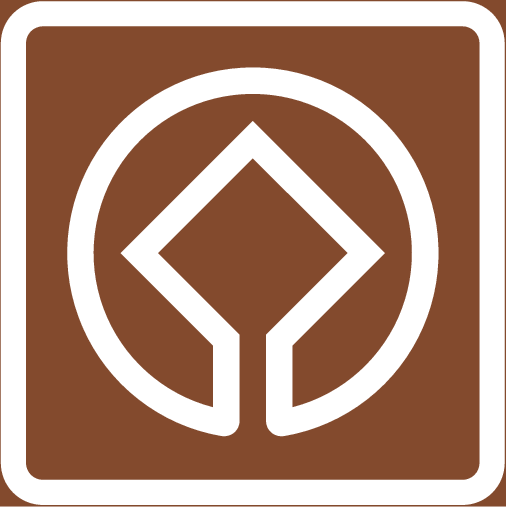

“The sign indicates world heritage as decided by UNESCO. The sign may be incorporated in a location sign for direction.”
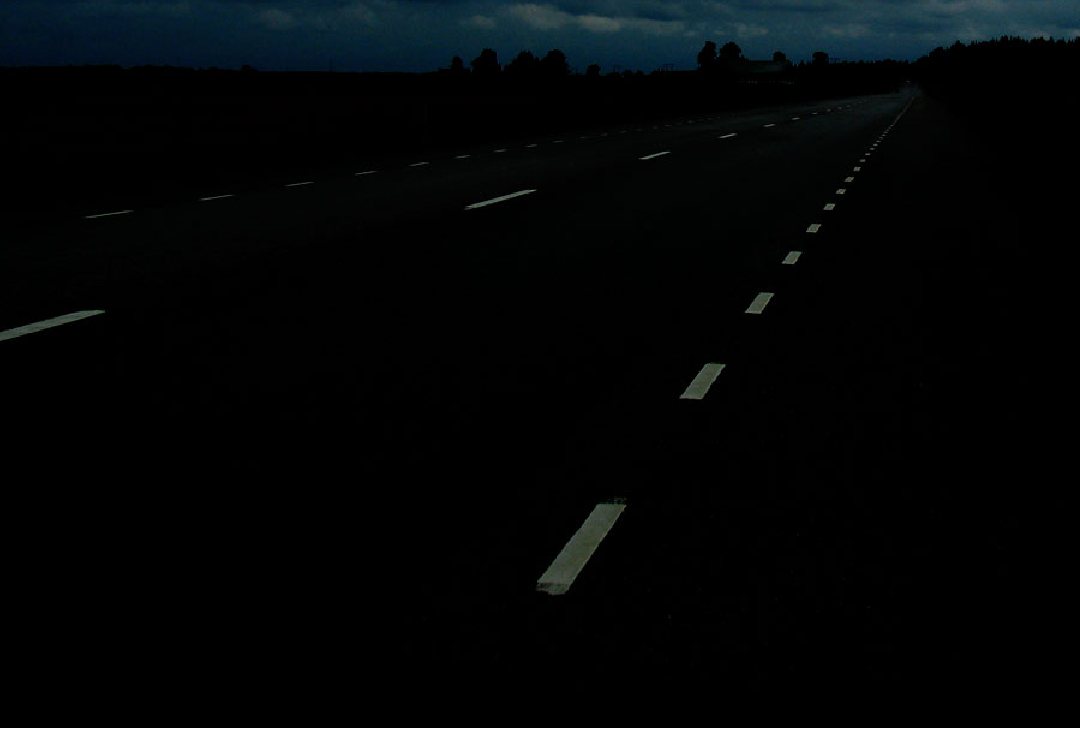
“In the dark it is difficult to identify obstructions along the roadside, therefore you should position your car at a safe distance from the side of the road.”
Driving Licence Book, 19th Edition, page 79
“If an animal of the species bear, wolf, wolverine, lynx, moose, deer, row deer, otter, wild boar, mouflon or eagle has been involved in a collision with a motor vehicle, the driver of that vehicle is obligated to promptly mark the site of the accident and notify the local police.”
Swedish Game Ordinance
“We also conduct an environmental check [...] When we check petrol cars, we measure the levels of carbon monoxide and hydrocarbons at idle speed, as well as the carbon monoxide level and lambda value during elevated idle speed.”
Bilprovningen
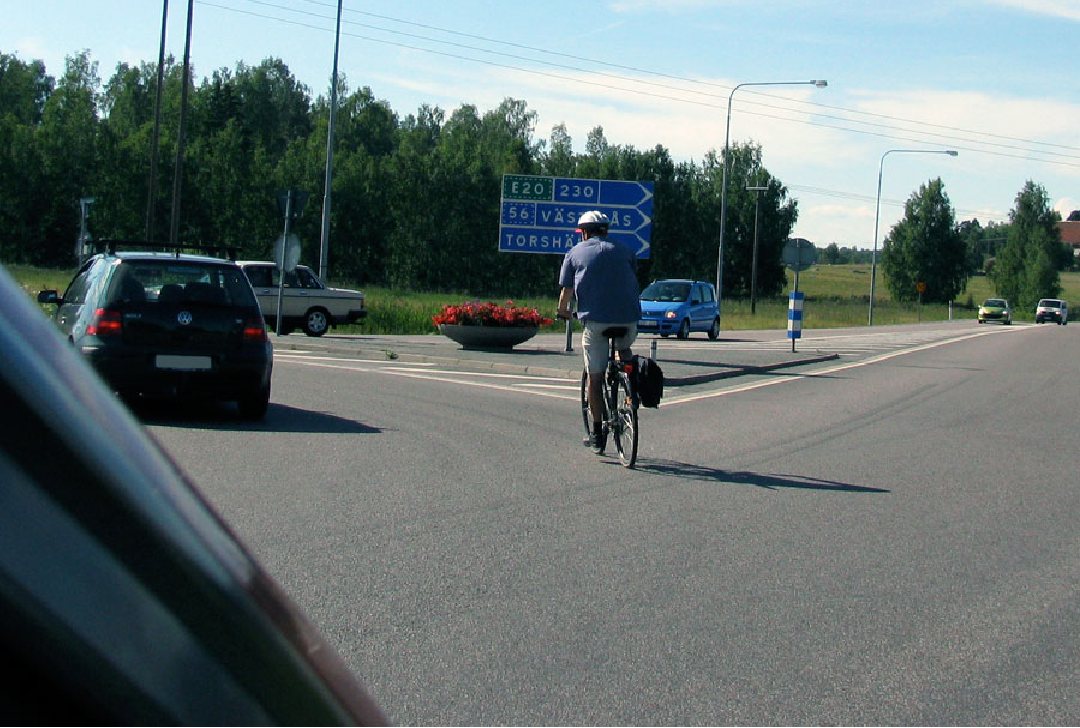
There are no clear rules stating exactly what you can and cannot do in this situation. However, there are strong indications that it was appropriate to pass the cyclist:
– There is no clear answer to this. “The term ‘junction’ is not defined [...] but classifying a roundabout as a junction is not ruled out.” (Supreme Court). When there are no clear rules, it is appropriate to refer to rules for similar situations. Overtaking in a junction and overtaking in a roundabout can be viewed as similar situations.


“The sign indicates a road or stretch of road that is of interest to tourists. The sign may be incorporated in a location sign for direction.”

“The sign indicates heritage of national interest. The nature of the national heritage is indicated adjacent to the sign.”
“A vehicle may not be driven by a person who, due to illness, fatigue, intoxication by alcohol, other stimulants or sedatives, or for other reasons is incapable of driving the vehicle in a safe manner.” (Swedish Road Traffic Ordinance). The broken arm can be considered one of the “other reasons”
The doctor can give a recommendation but you alone are responsible for making the final judgement.
“When travelling by road, the driver of a two-wheeled motorcycle may not allow the motorcycle to be towed or propelled by another vehicle”
Swedish Road Traffic Ordinance
It would not be safe since a two-wheeled vehicle is unsteady and sensitive to jolts, bumps and speed variations.
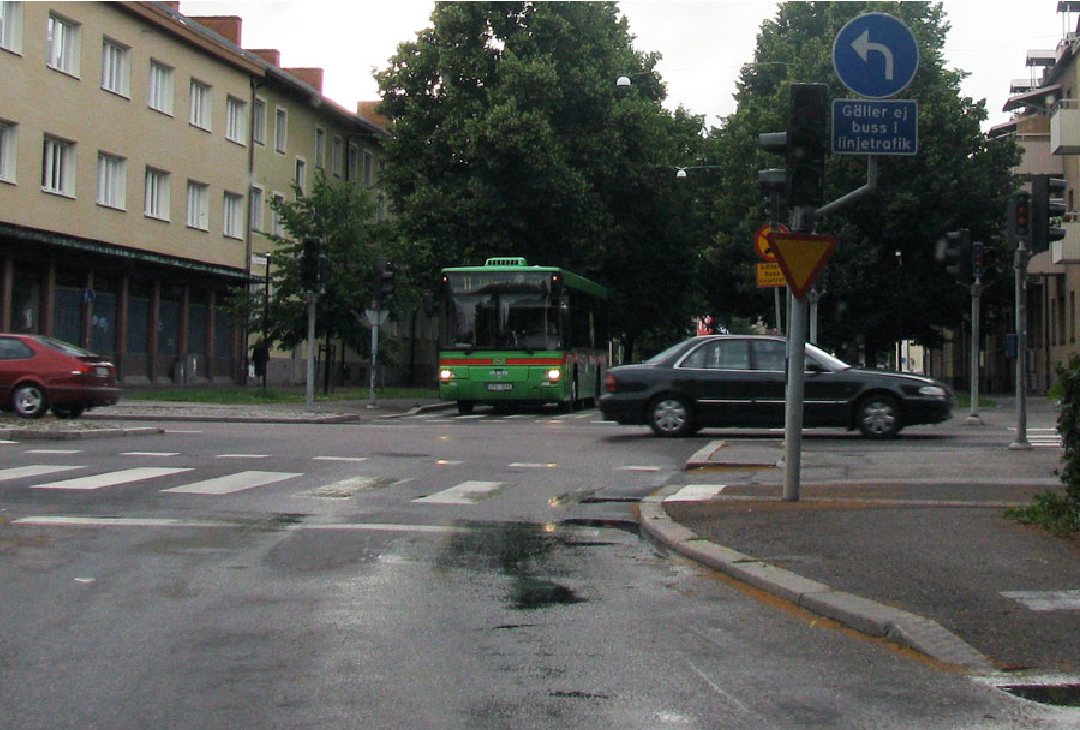

“The signs indicate that the vehicle may only be driven in the direction of the arrow or, in the case of two arrows, in either arrow’s direction. The symbol is adapted to the conditions of the location.”
Therefore, you may not turn right directly in the junction, which rules out the first two options.


With a regular category B licence, you are only allowed to tow a light trailer. The following counts as a light trailer:
or
2000 kg + 1400 kg = 3400 kg = Under 3.5 tonnes
“An ‘LGF’ sign […] means that the vehicle is constructed for a maximum speed of 30, 40 or 45 km/h”
Driving Licence Book, 19th Edition, page 89
LGF = Långsamtgående fordon (SMV = slow-moving vehicle)
No questions match this filter.