Swedish driving licence · Theory practice

Theory test 15

29 August 2021 · 10:58 · 70 questions

0%correct
Not started

0 of 70 correct

Pick an answer to check it. 56 of 70 correct (80%) is needed to pass.

0Answered
0Correct
0Incorrect
56Needed to pass

The real test has 70 questions in 50 minutes, about 43 seconds per question.

0 / 70
Question 1

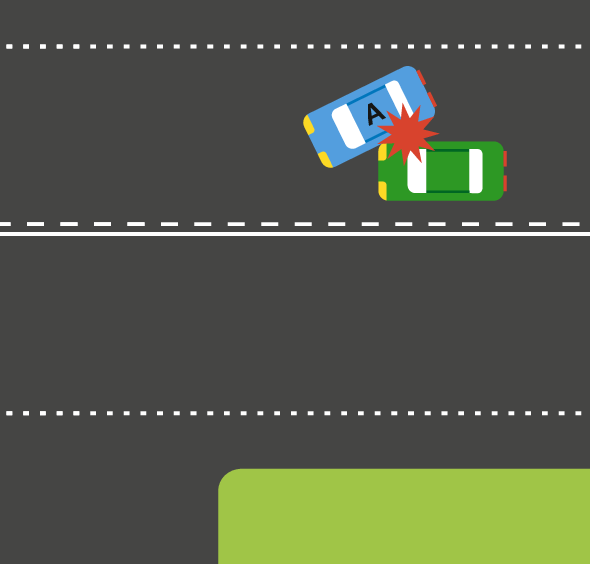
You are driving car A, heading straight ahead. Car B is turning right in the junction, where there are no signs. What rule applies?
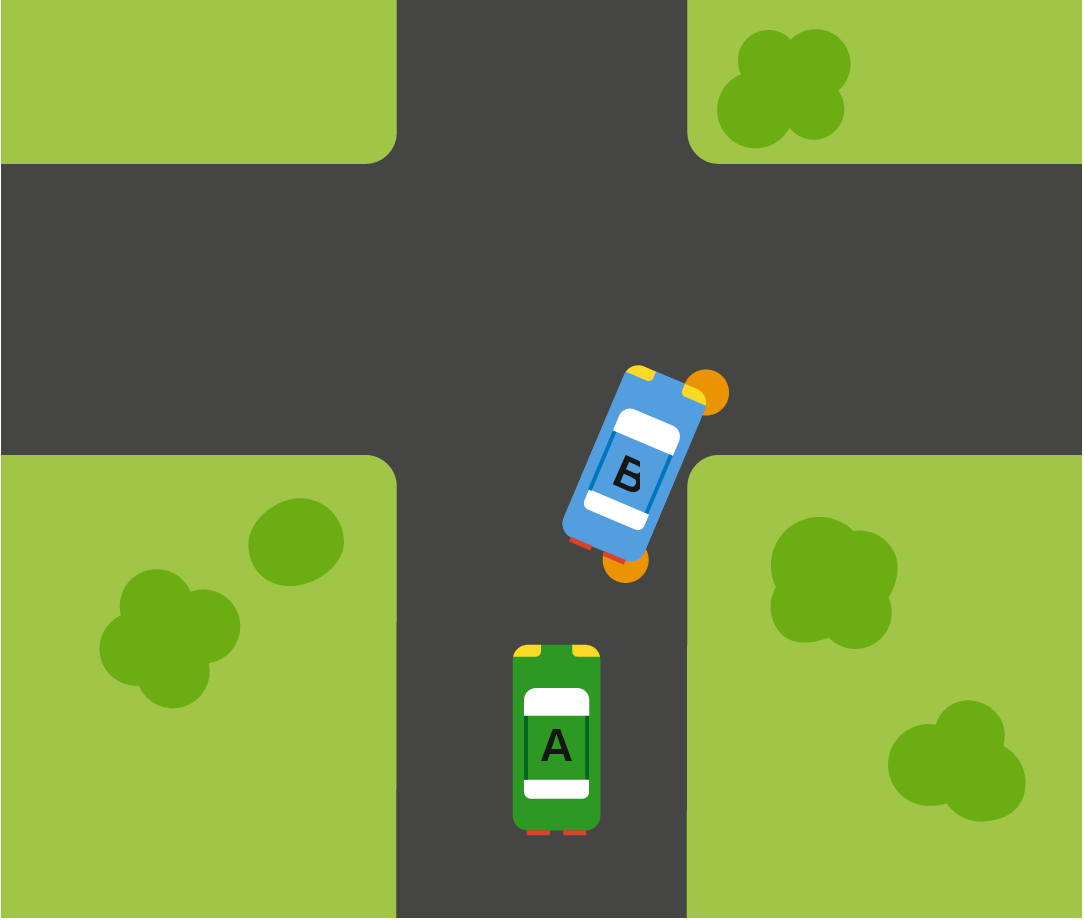
Picture for question 1

Explanation

“Overtaking is not allowed just before or in a junction, except when 1. the overtaking is done on the right; 2. the traffic in the junction is regulated by a police officer or through traffic signals; or 3. It is clear from the road signs or other circumstances that drivers on the intersecting road have an obligation to give way or stop.”

Swedish Road Traffic Ordinance

Non of the exceptions apply in this situation = not permitted.

Car A would have to drive out into the centre of the junction, which is not safe.
Question 2

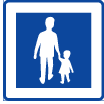
Which statement is true regarding pedestrian streets?

Explanation

“The following rules apply on a pedestrian street. 1. Vehicles may not be driven faster than walking speed. 2. Vehicles may not be parked in any place other than specially designated parking spots. 3. Vehicle drivers must give way to pedestrians.”

Swedish Road Traffic Ordinance

However, note that this refers to streets where E7 has been posted:

Pedestrian street (E7)
Pedestrian streetE7

In other words, this does not refer to regular pavements.

Question 3

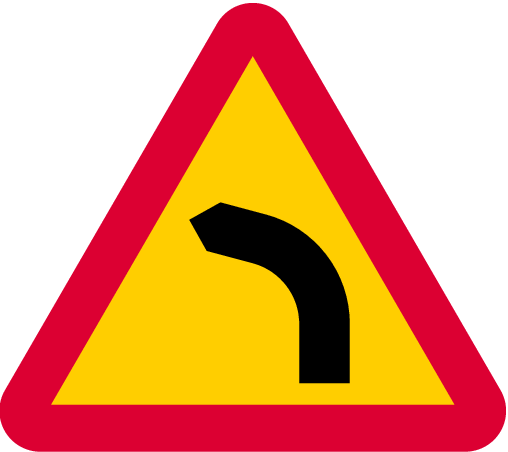
What does this road sign mean?

Picture for question 3

Explanation

Dangerous curve
Dangerous curve

“The sign indicates a dangerous curve and its direction.”

Question 4

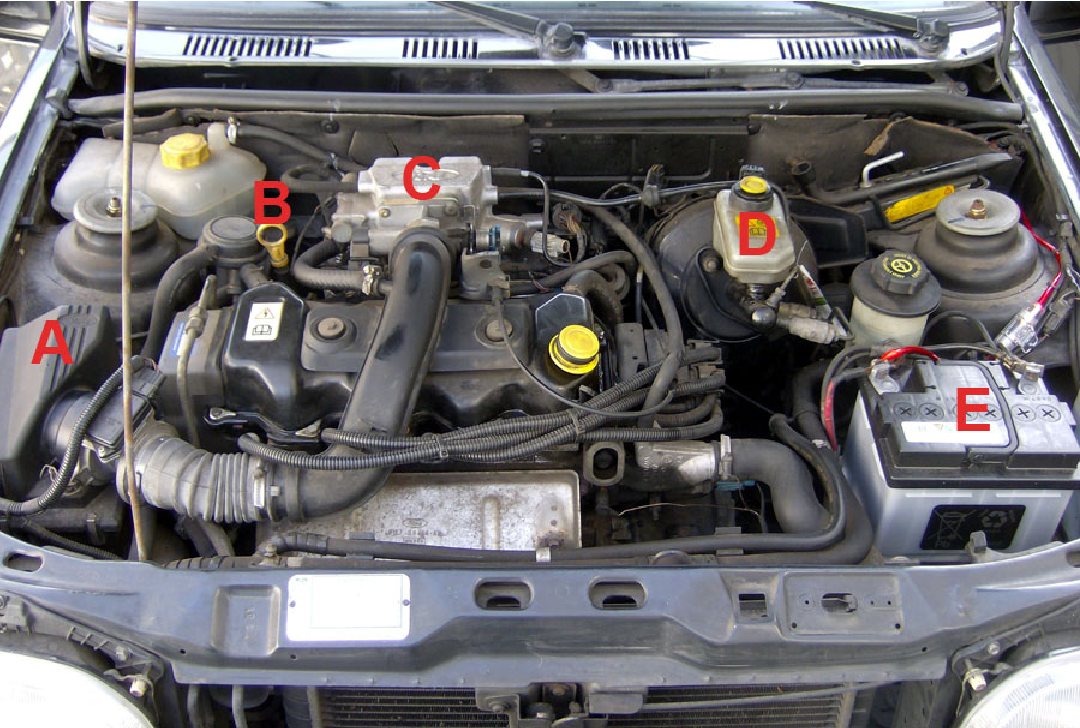
Which letter shows where you check the engine oil level?

Picture for question 4

Explanation

See the Driving Licence Book, 19th Edition, page 144 or Vägvisaren B, 14th edition, page 55.

Question 5

Which alternative applies at a railway crossing where there are regular traffic lights (red, amber and green) but no gates?

Explanation

“Overtaking is not allowed just before or on a level crossing, except when 1. the crossing is gated, or 2. the traffic in the crossing is regulated through such traffic signals as are used in regular junctions.”

Swedish Road Traffic Ordinance

It is thus enough for the crossing to have either gates or traffic lights for the overtaking prohibition to be made invalid. The question specifies that the crossing has traffic lights, which means that there is no prohibition to overtake. Note however that it has to be the right type of traffic lights, see more below.
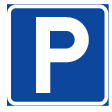
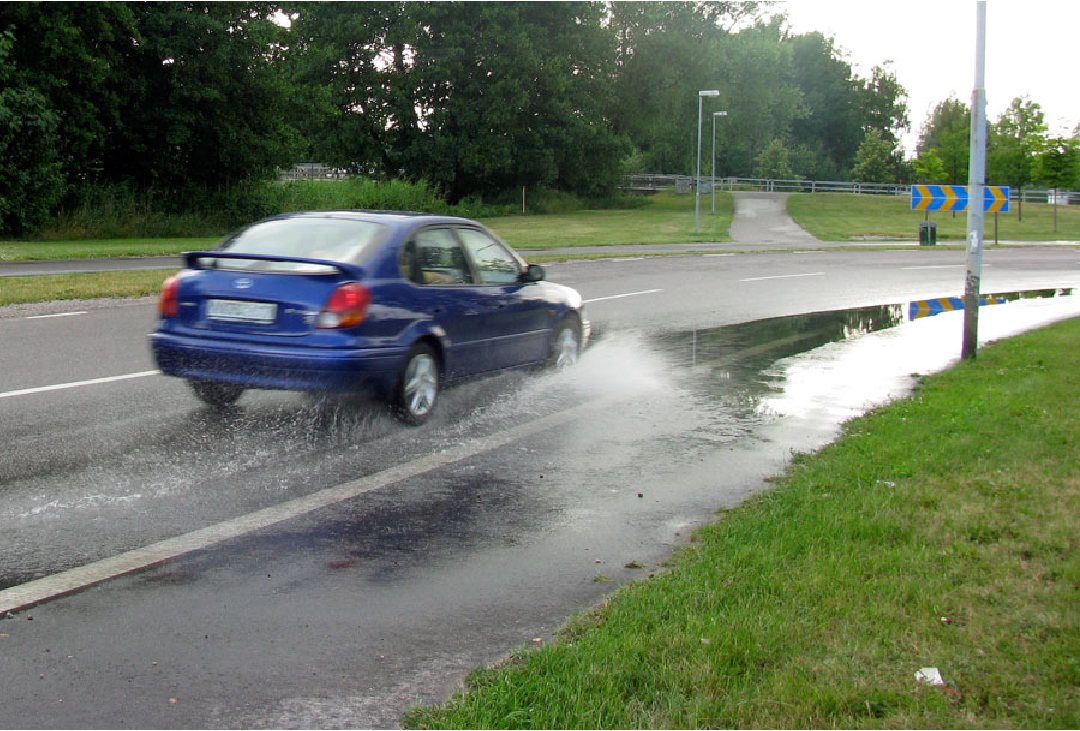
Illustration for question 5

This type of signal device is enough to cancel out the overtaking prohibition, as it is a red, amber and green traffic signal.

Illustration for question 5

This type of signal device is not enough to cancel out the overtaking prohibition, as it is the regular signal that is posted at nearly every railway crossing.

Gates Signal (red, amber, green) Allowed to overtake

Yes Yes All vehicles

Yes No All vehicles

No Yes All vehicles (same as in the question)

No No

Question 6

A moose has started crossing the road. You realise that you have to swerve to avoid an accident. Which is the best option?

Explanation

“Moose and deer will rarely turn back once they have started crossing the road – if you do not have time to brake, you should always try to go behind the animal.”

Du och jag i trafiken [You and me in traffic], 28th edition, page 75
Question 7

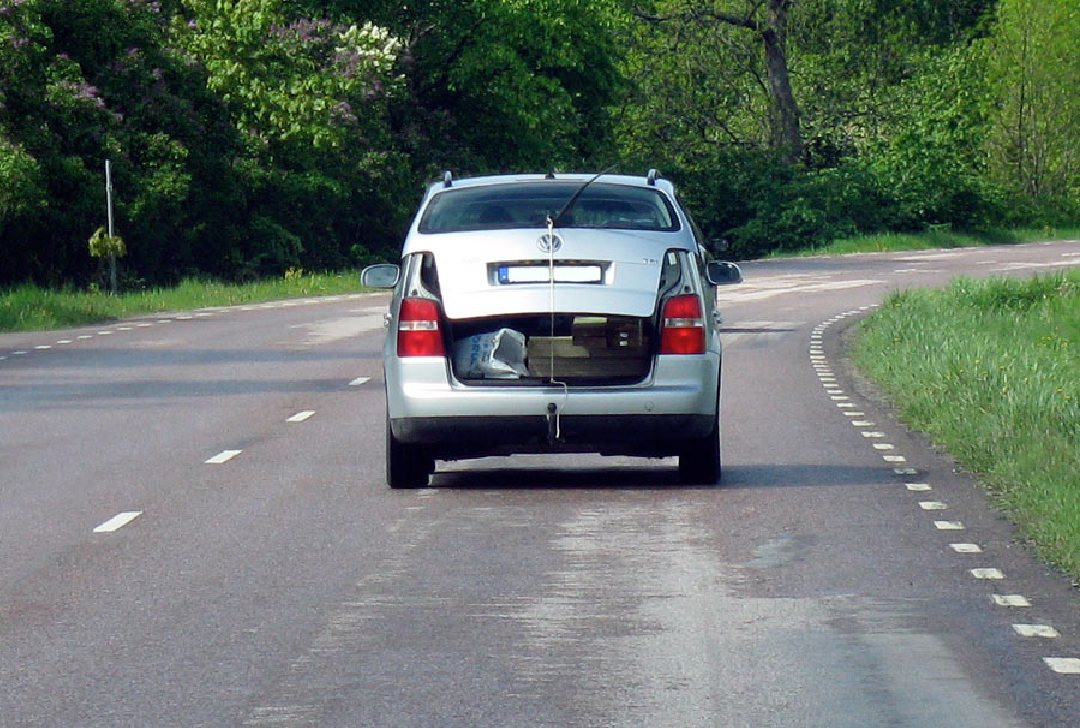
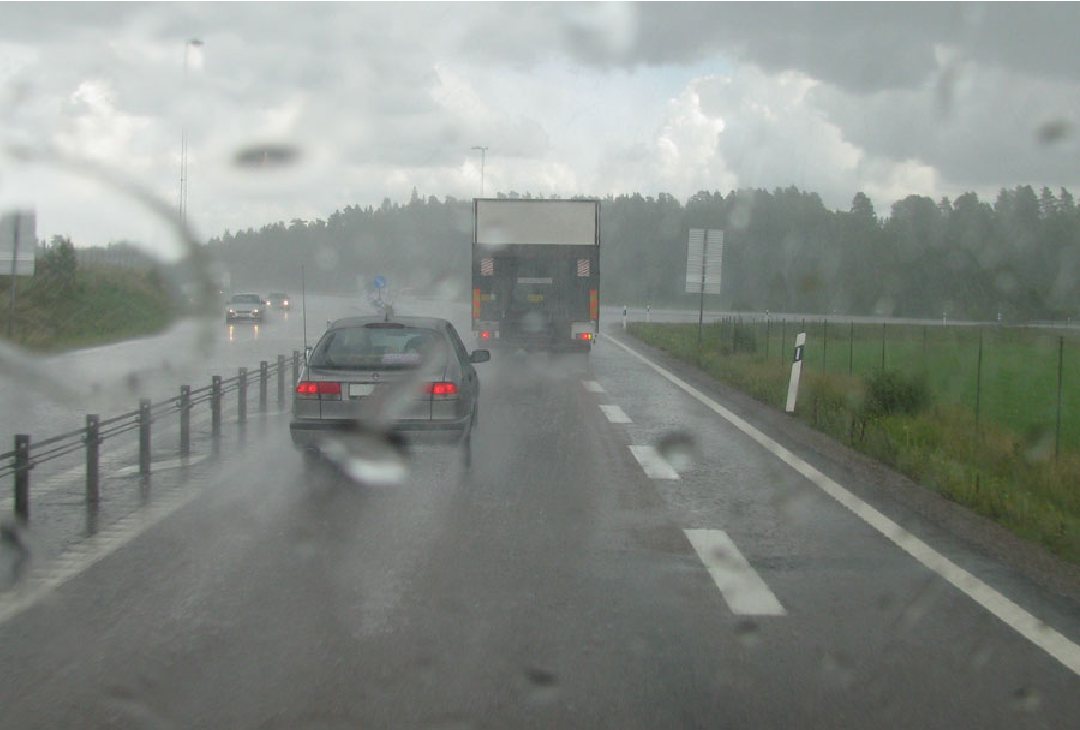
How should you act if you are behind this car?

Picture for question 7

Explanation

It appears as if the cargo in the boot is loose, which means there is a risk of things falling out onto the road. For your own safety, you should therefore take some action.

The overtaking alternative states that you should get closer before passing, which is not a good idea since it decreases your chances of swerving if something falls out of the car in front.

It is safer to increase your distance rather than overtake. If you maintain a good distance, you can see and react to objects falling out of the car, while avoiding a hurried and risky overtaking.

Question 8

Which statement is true?

Explanation

If you are not even allowed stop at a location, you are definitely not allowed to park there. If, for example, it is prohibited to stop outside an ambulance exit, you certainly may not park outside the ambulance exit.

Question 9

It is dark outside, and you have your full beams on. When should you be able to see a person wearing dark clothing with no reflectors?

Explanation

Visibility with “dark clothing [...] full beams 150 metres.” (Driving Licence Book, 20th Edition, page 152).

Question 10

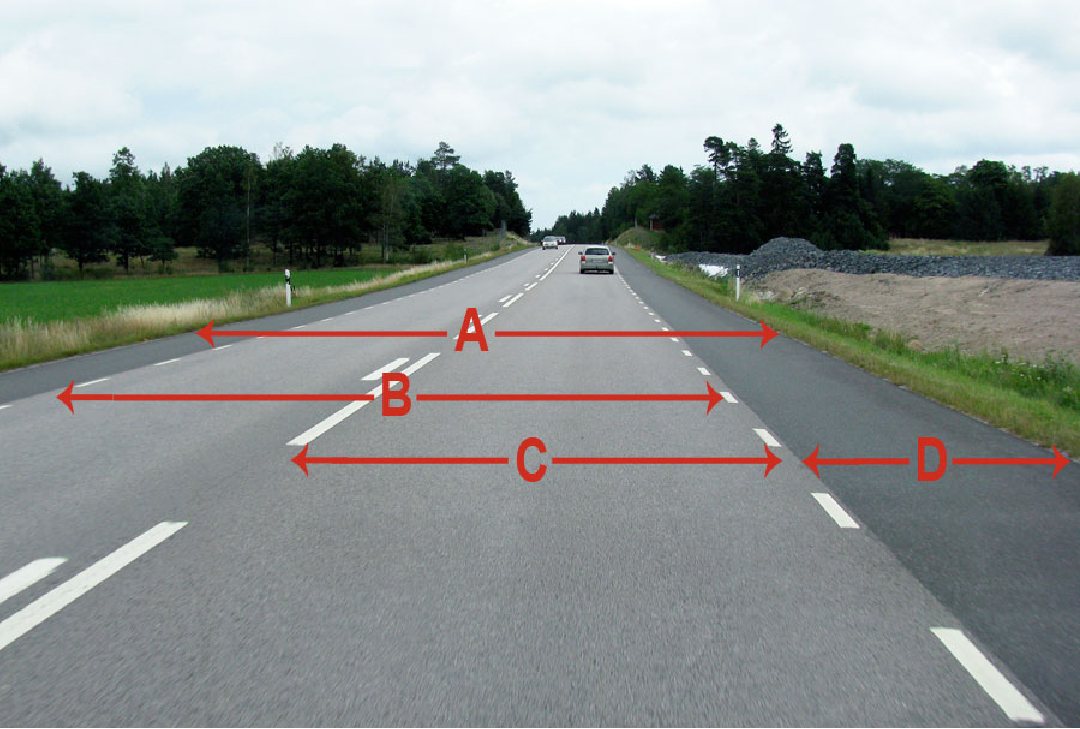
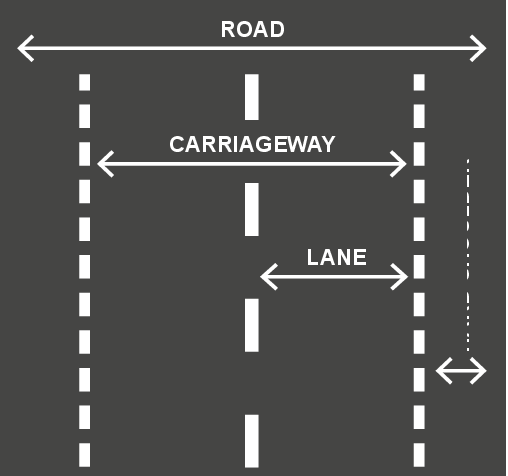
Study the picture. Which letter represents the hard shoulder?

Picture for question 10

Explanation

Illustration for question 10
Question 11

A young man is driving a car. Which passenger combination entails the greatest risk of having an accident?

Explanation

“International studies show that young drivers have a much higher risk of being in an accident when they are driving with young, and especially young male, passengers in the car.”

Driving Licence Book, 19th Edition, page 191
Question 12

You are turning onto a priority road from a road with a stop sign, but no stop line. Where do you have to stop before driving on to the priority road?

Explanation

“A driver who is obliged to stop or is stopping at a traffic signal shall stop at the stop line. In the absence of a stop line, the driver shall stop right before the signal or before driving onto the intersecting road, route or track area.”

Swedish Road Traffic Ordinance

The stop sign may be posted several metres from the junction, which means that you cannot see anything if you stop there.

Question 13

What is true about older diesel cars without particle filters?

Explanation

Due to their large particle emission, “older diesel cars without particle filters are less suitable for densely populated areas.” (Driving Licence Book, 19th Edition, page 227)

Question 14

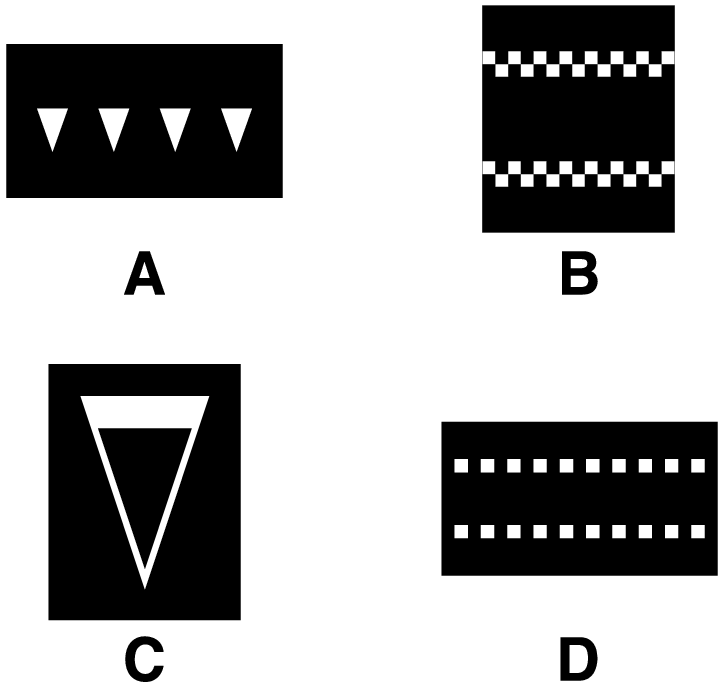
Which sign indicates a speed bump?

Picture for question 14

Explanation

A: Give way line (M14)
AGive way lineM14

“This marking indicates the line that a vehicle should not pass when the driver is observing the obligation to give way.”

B: Speed bump (M17)
BSpeed bumpM17

“This marking indicates a speed bump, gutter or similar obstacle.”

C: Preparatory information regarding the obligation to give way or to stop (M18)
CPreparatory information regarding the obligation to give way or to stopM18

“This marking indicates that there is an obligation to give way or to stop further down the road.”

D: Bicycle passage or bicycle crossing (M16)
DBicycle passage or bicycle crossingM16
Question 15

Is it prohibited to overtake two-wheeled vehicles in conjunction with railway crossings?

Explanation

Normally overtaking is prohibited. “Two-wheeled vehicles without a sidecar may however be overtaken.” (Swedish Road Traffic Ordinance)

If the road is wide and visibility is good, it would not be safe or efficient if you were forced to break abruptly and drive at a snail’s pace behind the cyclist (and thus pass the hazardous railway crossing at a very low speed).

However, if the road is narrow and visibility is obstructed, you may not overtake according to other rules. But this question asks if it is generally prohibited, which it is not.

Question 16

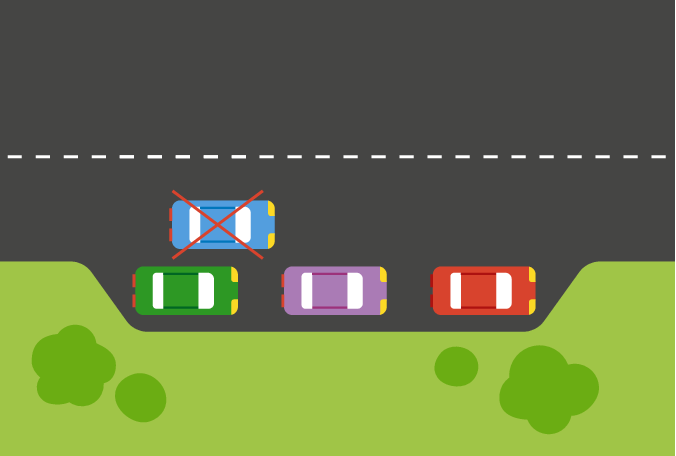
What is double parking?

Explanation

No parking: “On the road next to another vehicle that has stopped along the road (i.e. double parking.)” (Du och jag i trafiken [You and me in traffic], 28th Edition, page 236)

Illustration for question 16

The crossed-out car is double-parked.

The term “double parking” is not used in the legislative texts, but then again, neither is the term “right-hand rule”. However, it is relevant to be aware of these terms.

The “right-hand rule” may be generally known, but “double parking” has actually been used in the title and text of a parliamentary motion.

Question 17

Do you have to pay third-party insurance and vehicle tax when a vehicle has been put out of service?

Explanation

“If you do not intend to use a vehicle, you can put it out of service. You then avoid paying vehicle tax and third-party insurance.”

Swedish Transport Agency
Question 18

You are driving through a tunnel and have to stop because of a bus with a flat tyre further ahead. Which statement is true?

Explanation

In a tunnel: “In case of a queue forming [...] Stay in the car and turn off the engine.” (Driving Licence Book, 19th Edition, page 254)

You should only leave the car in case of fire or similar, i.e. not in case of a regular traffic jam.

Question 19

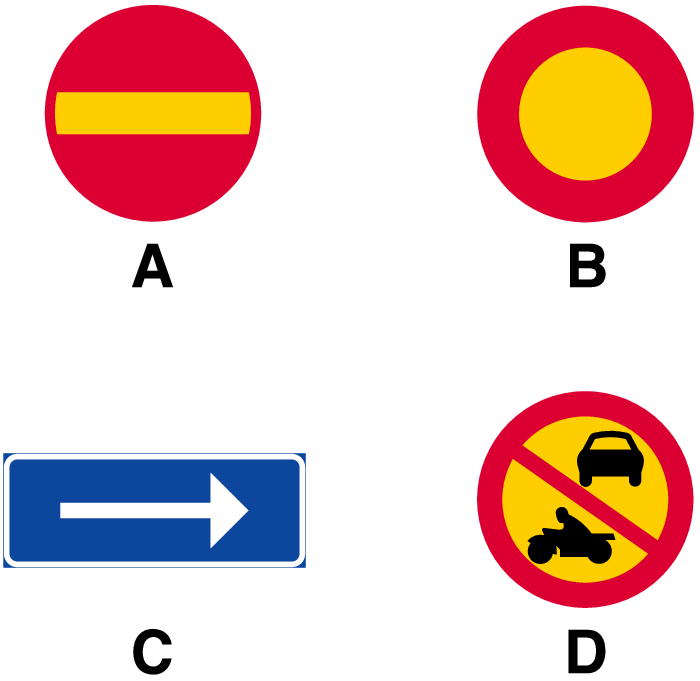
Which sign indicates one-way traffic?

Picture for question 19

Explanation

Sign A is commonly referred to as “one-way”, but it actually only indicates no entry:

No entry (C1)
No entryC1

Sometimes, you may be prohibited from entering a road for reasons other than it being a one-way road.

One-way traffic (E16)
One-way trafficE16

“The sign indicates that vehicle traffic on the road is one-way in the direction of the arrow. An arrow pointing up indicates that the traffic is one-way in a forward direction.”

Question 20

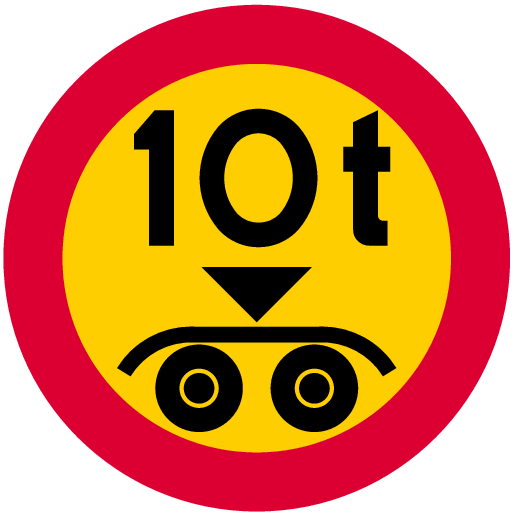
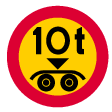
What does this road sign mean?

Picture for question 20

Explanation

Restricted weight on tandem axle (C24)
Restricted weight on tandem axleC24

“Maximum permitted weight on a tandem axle is indicated on the sign.”

Question 21

You want to make a turn with a vehicle that has no indicator. How do you signal your intention?

Explanation

“If the vehicle has no indicator, the driver shall instead signal their intention by extending their arm.”

Swedish Road Traffic Ordinance

The ordinance does not specify driving a car, only driving “a vehicle that has no indicator.” “Category B also gives the licence holder the right to drive - a Moped class I (EU moped), a tractor, heavy equipment class I and class II as well as two and three-wheeled heavy motorcycles - Terrain scooter (if the licence was issued before 1 January 2000)” (Swedish Transport Agency & Swedish Transport Administration)

It can thus be another type of vehicle.

As the question does not specify the type of vehicle you are driving, it is unnecessary to speculate on tricky situations, for example signalling the intention to turn right when driving a car without indicators.

A clear placement is always good, but in this case, the alternative with the extended arm is still the correct one, as this is what the law specifies.

Question 22

Which option is true?

Explanation

  • Infrasound is an environmental problem.
    – True, sound is considered an environmental problem (compare with the term working environment).
  • Hydrocarbons acidify the ground and contribute to eutrophication.
    – False, nitric oxides contribute to eutrophication, see the Driving Licence Book (19th edition, page 228).
  • Tropospheric ozone is another term for nitric oxide.
    – False, see the Driving Licence Book (19th edition, page 228).
  • Carbon monoxide is harmless to humans but very harmful to nature.
    – False, carbon monoxide reduces the capacity for oxygen uptake in humans, see the Driving Licence Book (19th edition, page 228).
Question 23

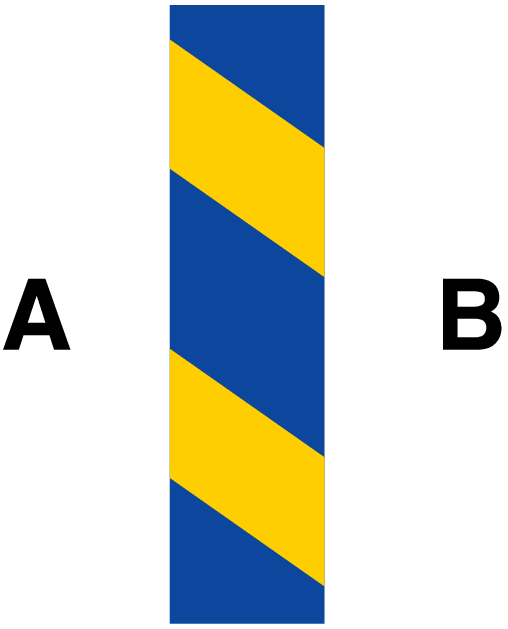
On which side do you pass this sign?

Picture for question 23

Explanation

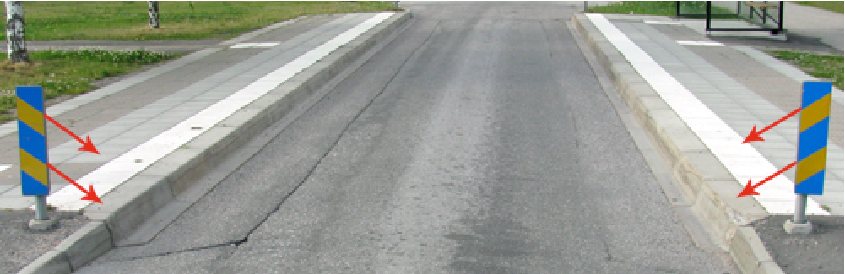
Marking for obstacle on the side, speed bumps, etc.X3

“[...] The device is placed so that the panels lean downwards on the side where traffic must travel.”

Illustration for question 23

Example of use: It is often self-evident where you should go, but in the dark it can be good to be aware of the panels’ direction.

Question 24

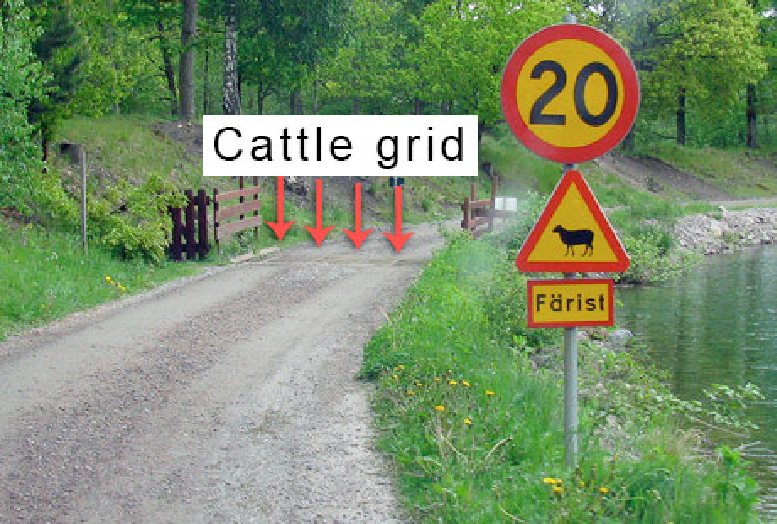
What is a cattle grid?

Picture for question 24

Explanation

Nationalencyklopedin: “cattle grid, a metal grid covering a road in order to prevent cattle from crossing.”

If the animals attempt to cross, their legs get stuck between the bars.

A cattle grid means you do not have to put up a gate, which makes it easier for cars to pass through.

“Färist” = Cattle grid

Question 25

Which alternative is a characteristic of a mature driver?

Explanation

A mature driver listens to their passengers but makes their own decisions about what to do.

Listening to the passengers and adapting to their will can be both good and bad. It is good if the passengers are asking the driver to slow down because they have seen animals on the side of the road. It is bad if the passengers say that they are moving too slowly, pressuring the driver to make a dangerous overtaking.

Question 26

Is it true that drivers between the ages of 18 and 19 years have the same risk of being in an accident as drivers older than 75?

Explanation

“Drivers aged 75 years and older have a five to six times greater risk of being in an accident, and the same is true for 18–19-year-olds.”

Driving Licence Book, 19th Edition, page 201

The older drivers’ senses are not as keen, while the younger ones are inexperienced and tend to overestimate their abilities.

Question 27

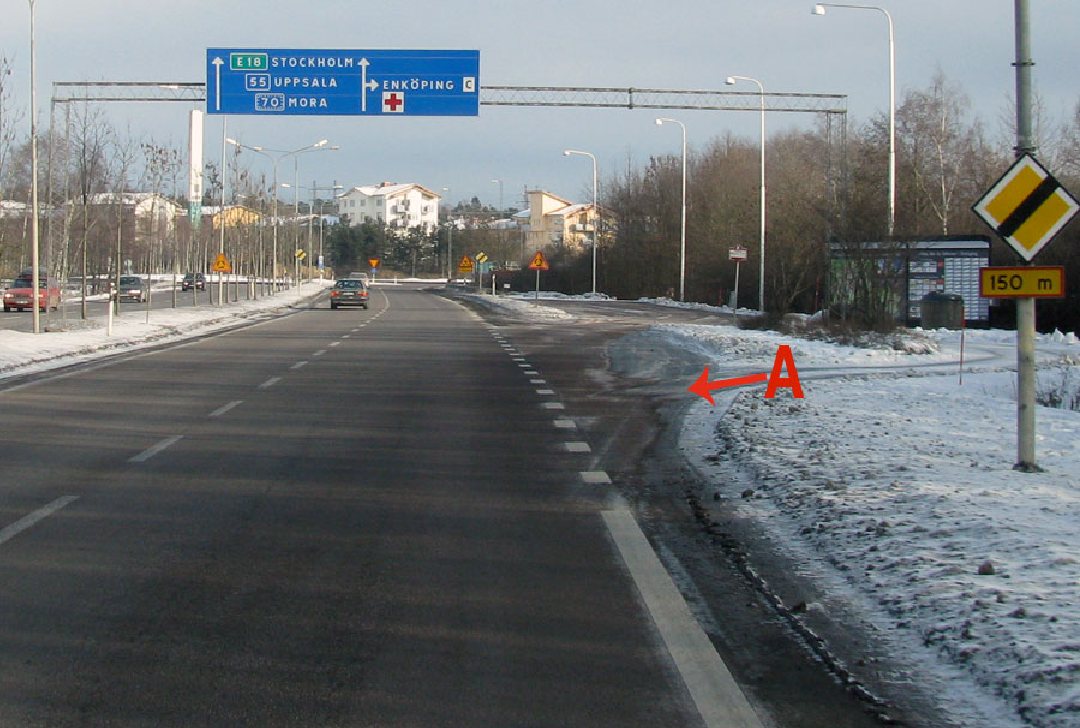
You are driving the car from which the picture is taken. Are you obligated to give way to traffic coming from A?

Picture for question 27

Explanation

End of priority road (B5)
End of priority roadB5
Distance (T2)
DistanceT2

“The panel indicates the distance to that which the sign relates to.”

You are still driving on a priority road when you pass A. The priority road will only end in 150 metres.

Question 28

What is the percentage of single-vehicle accidents that take place when it is dark?

Explanation

“40 per cent of all single-vehicle accidents take place in darkness or at dawn.”

Driving Licence Book, 19th Edition, page 205
Question 29

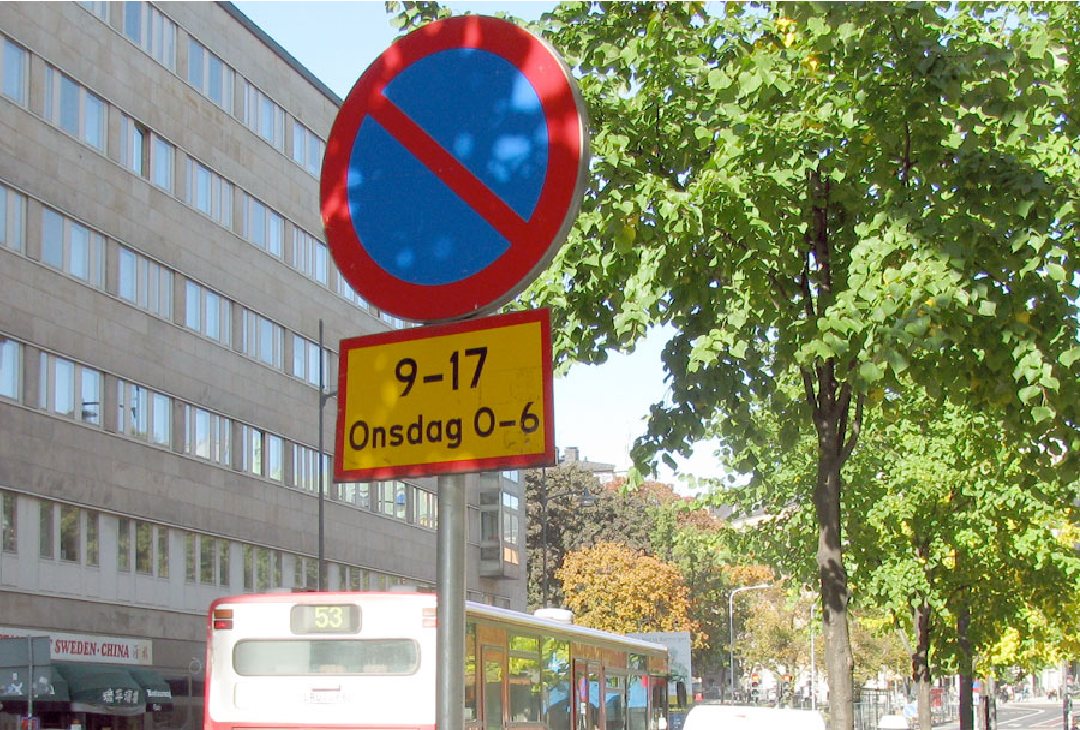
Are you allowed to park here on an ordinary Wednesday at 11 a.m.?

Picture for question 29

Explanation

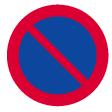
Vehicle parking is prohibited (C35)
Vehicle parking is prohibitedC35
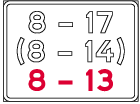
Time indication (T6)
Time indicationT6

“The panel indicates when the directions on the road sign applies. If times are used in combination with other conditions, the panel also indicates when these conditions apply.”

On Wednesdays, parking is prohibited 9 a.m. to 5 p.m. and from 12 a.m. to 6 a.m., as the panel has an indication of “when the directions on the road sign applies.”

Question 30

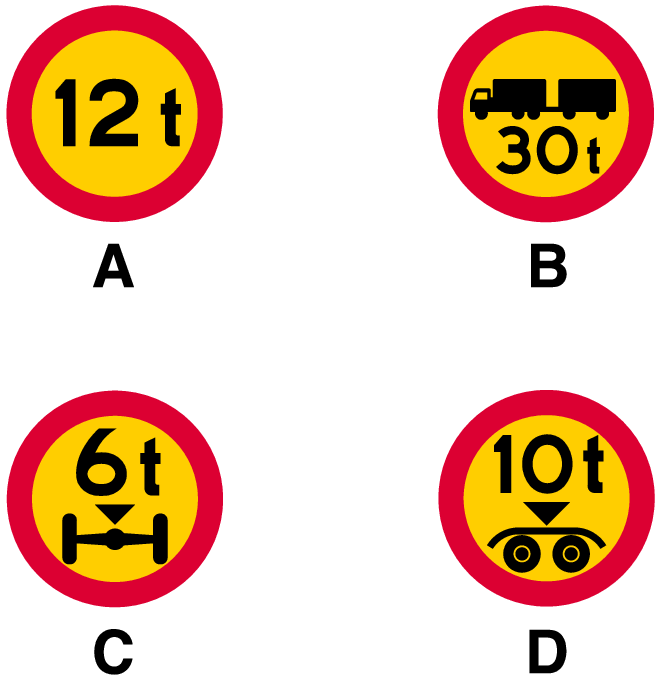
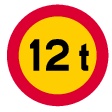
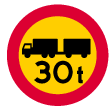
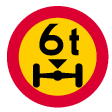
Which sign indicates the maximum permitted load on a tandem axle?

Picture for question 30

Explanation

A: Restricted gross weight of vehicle (C20)
ARestricted gross weight of vehicleC20

“Maximum permitted gross weight is indicated on the sign.”

B: Restricted gross weight of vehicle and vehicle combination (C21)
BRestricted gross weight of vehicle and vehicle combinationC21

“Maximum permitted gross weight is indicated on the sign.”

C: Restricted weight on one axle (C23)
CRestricted weight on one axleC23

“Maximum permitted weight on an axle is indicated on the sign.”

D: Restricted weight on tandem axle (C24)
DRestricted weight on tandem axleC24

“Maximum permitted weight on a tandem axle is indicated on the sign.”

Question 31

What does this road sign mean?

Picture for question 31

Explanation

Visual impairment (T9)
Visual impairmentT9

“The panel indicates that people with visual impairments often use the crossing. This panel always has a yellow background.”

Question 32

Which option describes reaction formation?

Explanation

Reaction formation: ”These people are unobtrusive and reserved in everyday life, but in other contexts […] they display another type of behavior with high risk taking.” (Driving Licence Book, 19th Edition, page 187)

Question 33

Which alternative applies to tiredness?

Explanation

Review of the options:

  • Microsleeping while driving increases traffic safety.
    – Wrong, microsleeping is when you fall asleep behind the wheel; it is very dangerous in other words!
  • The risk of tiredness increases on long stretches of straight country roads.
    – Correct, since monotony/dull repetition increases tiredness. Driving on a winding and varied country road is like attending a party with lots of people, while a straight country road is like lying on the couch watching a boring film – there is a great risk of falling asleep.
  • Most accidents caused by tiredness occur in the afternoon.
    – Wrong, most of them occur at night/early morning.
  • Sleep apnoea in older people increases traffic safety.
    – Wrong, sleep apnoea is an illness that disrupts your sleep at night and constitutes a traffic hazard.
  • The tiredness increases when you move your muscles.
    – Wrong, increased movement = reduced tiredness.
Question 34

It is Friday at 17:00 and you want to park your car in this spot. Which of the following is true?

Picture for question 34

Explanation

Parking (E19)
ParkingE19

“The parking sign, E19, indicates that you can park for free for 24 consecutive hours, unless otherwise stated. 24 hours applies Monday to Friday. On Saturdays, days preceding a holiday, Sundays and holidays, you may park here with no time limit”

STR’s Vägmärken & vägmarkeringar [Road Signs & Markings], 6th Edition, page 20

At the start of the weekend, the time count starts over, so the time when you park the car here is not relevant. On the Monday, the count starts at 24 new hours.

But will it not be at the longest until Tuesday if the count starts over?

– Yes, but the question does not ask about the longest period of time. All of the following statements are therefore correct:

  • The car can be parked there until Saturday.
  • The car can be parked there until Sunday.
  • The car can be parked there until Monday.
  • The car can be parked there until Tuesday.
Question 35

What should the driver in the picture do as soon as possible after the water pool?

Picture for question 35

Explanation

“Always test the brakes after driving through water pools. […] In doing so, the brakes are heated and the moisture dries.”

Driving Licence Book, 19th Edition, page 131

Aquaplaning is nothing that tyres can get afterwards (like a puncture), which rules out this option. Stopping and letting the car “dry” is unreasonable and impractical.

The engine’s essential components are watertight and protected. The brakes are not as protected, however, particularly if they are disc brakes. Water between the brake shoe and brake disc causes deteriorated friction, which leads to diminished braking effect.

Question 36

Is it good or bad to wax your car from an environmental perspective?

Explanation

“Waxing your car is good for the environment. The dirt does not stick as easy to a waxed car and the car therefore does not need to be washed as often.”

Du och jag i trafiken [You and me in traffic], 28th Edition, page 21
Question 37

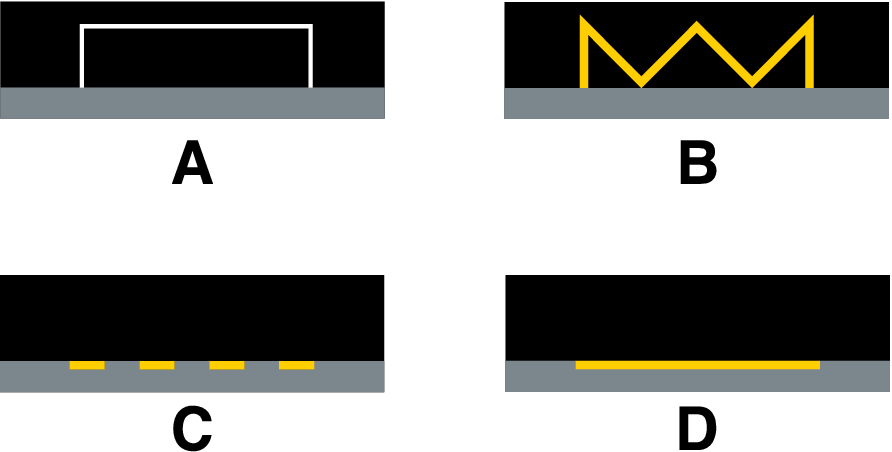
Which marking indicates the boundary of a vehicle parking space?

Picture for question 37

Explanation

A: Parking space (M24)
AParking spaceM24

“The marking indicates the boundary of a vehicle parking space. The marking can have a broken line.”

B: No stopping and parking or no parking (M23)
BNo stopping and parking or no parkingM23

“This marking is used as a reinforcement of the road markings M21, no stopping and parking, and M22, no parking. No other colour may be used.”

C: No parking (M22)
CNo parkingM22

“This marking indicates a prohibition on parking a vehicle and is placed along the side of the carriageway. The marking is also used to indicate an extension of a bus stop. The marking has a distance ratio of 1:1 between the dashes and spaces. No other colour may be used.”

D: No stopping and parking (M21)
DNo stopping and parkingM21

“This marking indicates a prohibition on stopping and parking a vehicle and is placed along the side of the carriageway. No other colour may be used.”

Question 38

What does the white road sign with the arrow indicate?

Picture for question 38

Explanation

Lane separation on this sectionF18

“The sign indicates the direction of traffic flow in lanes. The sign is specific to the conditions at the location.”

Question 39

When does the zone sign in the picture cease to apply?

Picture for question 39

Explanation

Zone sign (E20)
Zone signE20

“The sign is erected at the entrances to the area and applies up to the point where the sign E21, end of zone, is erected or it is otherwise clearly indicated that the instructions on the sign no longer apply. Within the area, there may be deviations from the instructions on the sign. These deviations are indicated through other road signs and additional panels. The instructions on the sign also apply after such deviation without the sign being repeated.”

Question 40

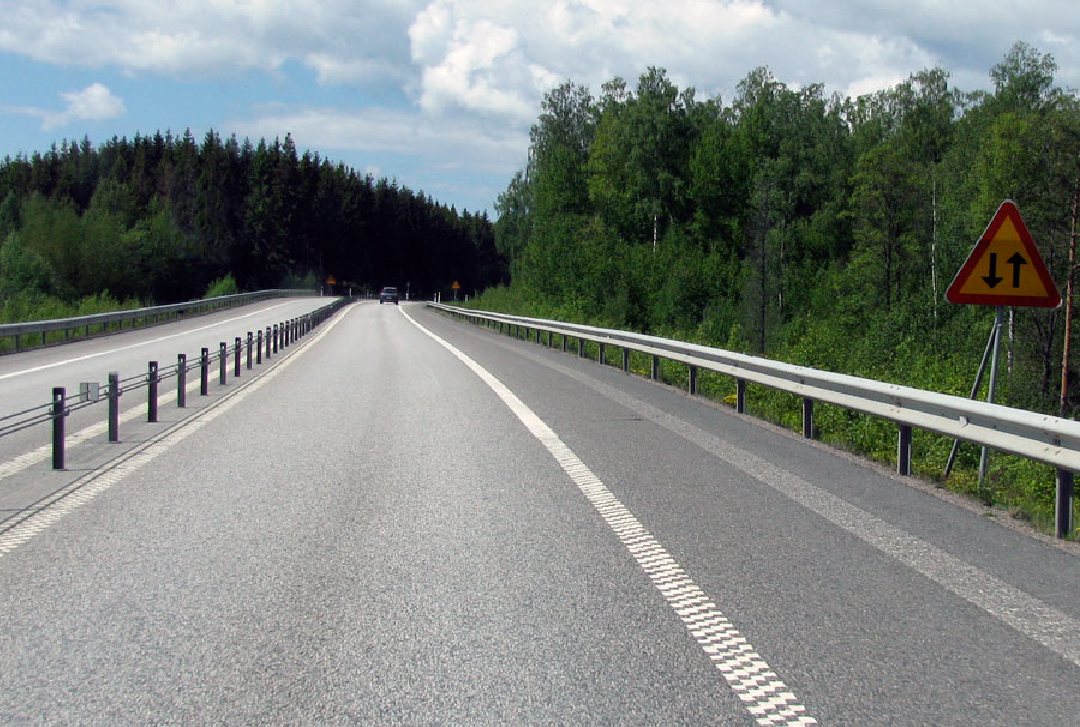
What is about to happen?

Picture for question 40

Explanation

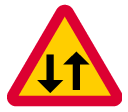
Beware of two-way traffic ahead (A25)
Beware of two-way traffic aheadA25

“This sign indicates that a one-way road is turning into a road with traffic in both directions.”

But the sign does not mean “End of central barrier”, does it?

– The question is not asking the exact meaning of the sign, but what the consequence of the sign will be.

Question 41

Are there any instances where you would be considered the cause of an accident where you have been hit from the rear?

Explanation

Scenario: You are turning left on a country road. You do not indicate left and do not slow down before making the turn. Another vehicle decides to overtake you and when that vehicle is right next to you, you brake hard and turn to the left, which results in a collision.

This makes you the most at fault in causing the accident. You did not use your blinkers and were not attentive to the situation before making the turn. The other driver did not do anything really wrong.

Illustration for question 41

The turning car, A, is hit, but it was A that caused the collision by suddenly switching directions. The overtaking car stays on course.

Question 42

How much of a narcotic that has not been prescribed by a doctor are you permitted to have in your blood when driving?

Explanation

There is “zero tolerance of driving under the influence of narcotics.” (Driving Licence Book, 19th Edition, page 215)

There are exceptions, but they do not apply here, as the question specifies that the substance has not been prescribed by a doctor.

Question 43

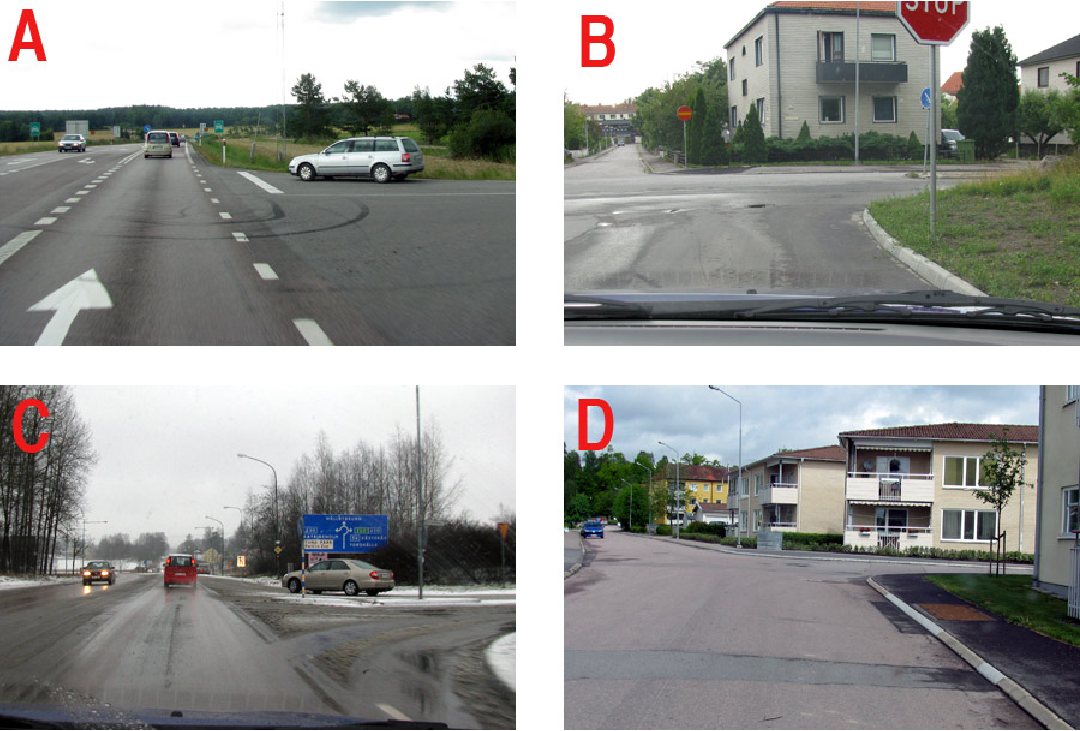
You are driving the vehicle from which the pictures are taken. In which situation or situations are you obligated to give way to traffic coming from the right?

Picture for question 43

Explanation

  • B: Correct, your obligation to stop applies to all traffic on the intersecting road, regardless of which lane they are in.
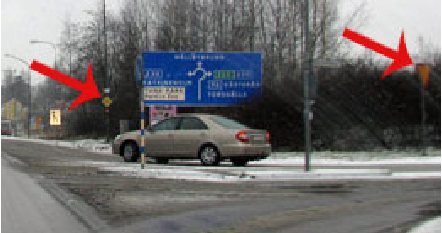
  • C: Wrong, there are two things indicating that the car on the right has an obligation to give way. Firstly, there is a priority road sign on your road and, secondly, there is a give way sign on the road where the adjoining car is driving.
Illustration for question 43
  • D: Correct, the right-hand rule applies, as there are no other signs or markings indicating otherwise.
Question 44

How far may the load protrude from the side if you want to drive on a public road?

Explanation

“If a motor vehicle or a vehicle coupled to this has a load where either side protrudes more than 20 centimetres outside the vehicle, [...] the vehicle or a vehicle coupled to this may only be driven on a private road.”

Swedish Road Traffic Ordinance
Question 45

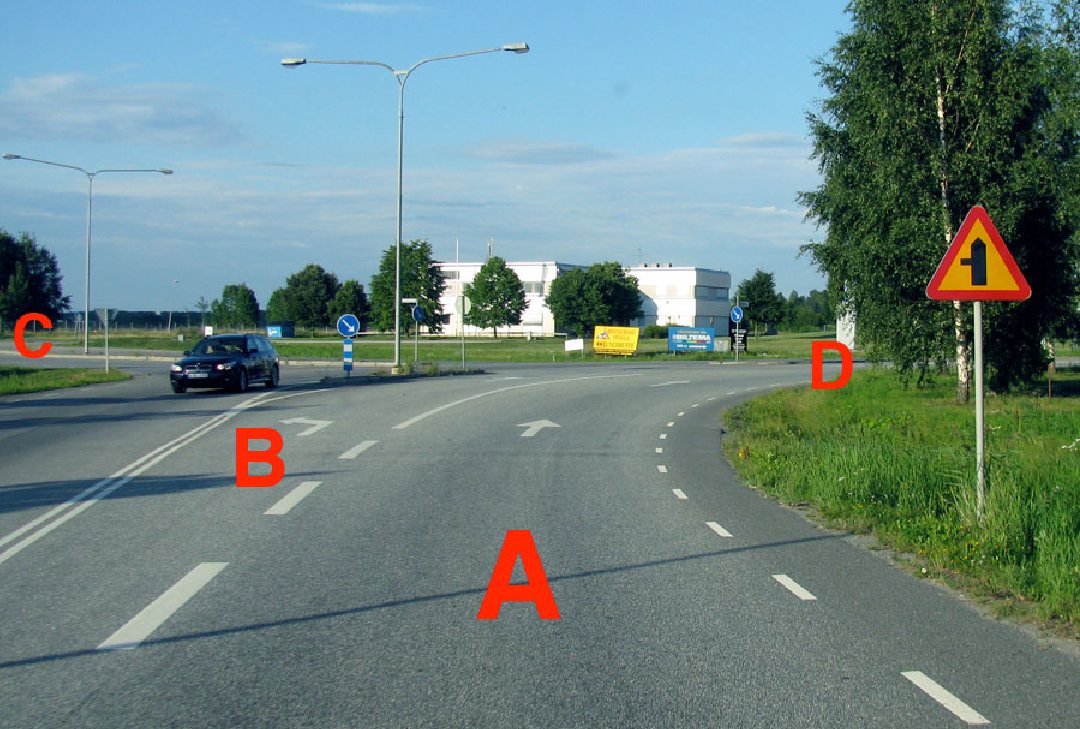
What is true when it comes to vehicles coming from C going towards D?

Picture for question 45

Explanation

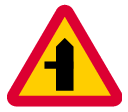
Warning for a junction where road users on a connecting road are obliged to give way or stop (A29)
Warning for a junction where road users on a connecting road are obliged to give way or stopA29

“The sign indicates a junction where drivers of vehicles on connecting roads are obliged to give way or stop. The symbol is adapted to the conditions of the location.”

A and B are different lanes, but it is still the same road.

Question 46

What is a rear-end collision?

Explanation

“[…] rear-end collisions, i.e. accidents where one car crashes into the rear of the car in front of it.”

Swedish Transport Administration
Question 47

You are driving in a built-up area. The driver of the car in front is clearly preparing to turn left. Are you allowed to overtake the car in front on the right side?

Explanation

This situation is very common. The traffic would be significantly slower in urban areas if it was not permitted to overtake.

“Overtaking shall [...] be done on the right when the driver of the car in front is turning left or is clearly preparing for such a turn.”

Swedish Road Traffic Ordinance
Question 48

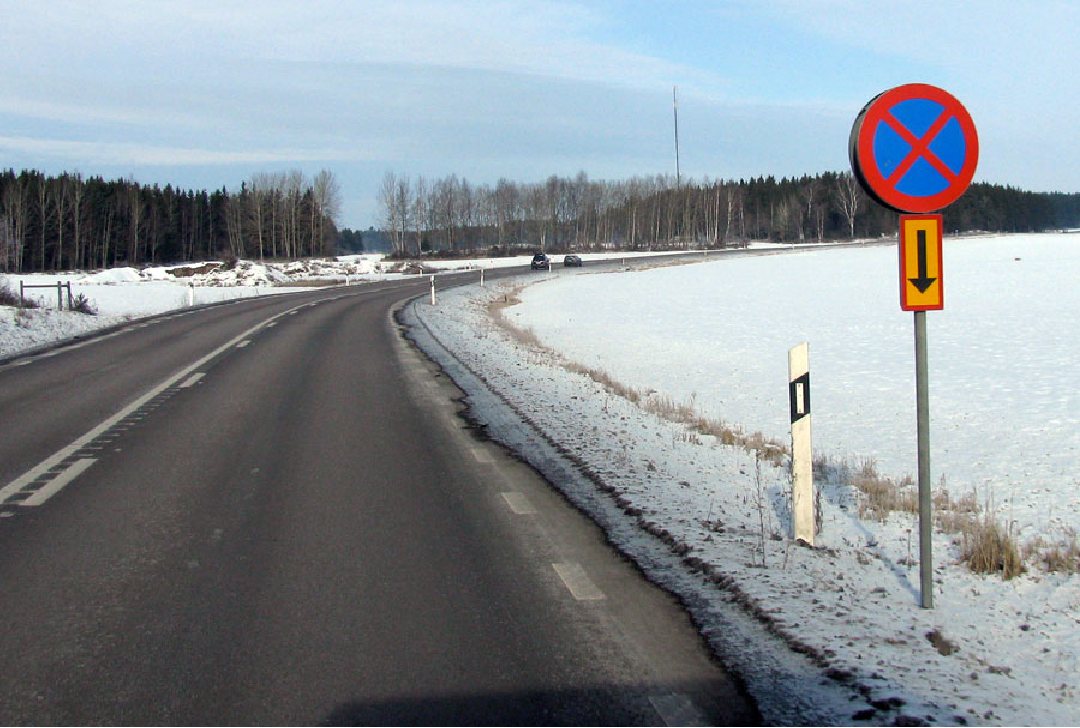
You are driving on a priority road. Is it permitted to park directly after this sign?

Picture for question 48

Explanation

The sign indicates that the prohibition against stopping or parking ends. However, you must still take into consideration: “A vehicle may not be parked [...] on a priority road”. (Swedish Road Traffic Ordinance)

After the sign, you are allowed to stop but you may not park, as you are on a priority road.

How do I know that it is a priority road?

– It is stated in the question.

Question 49

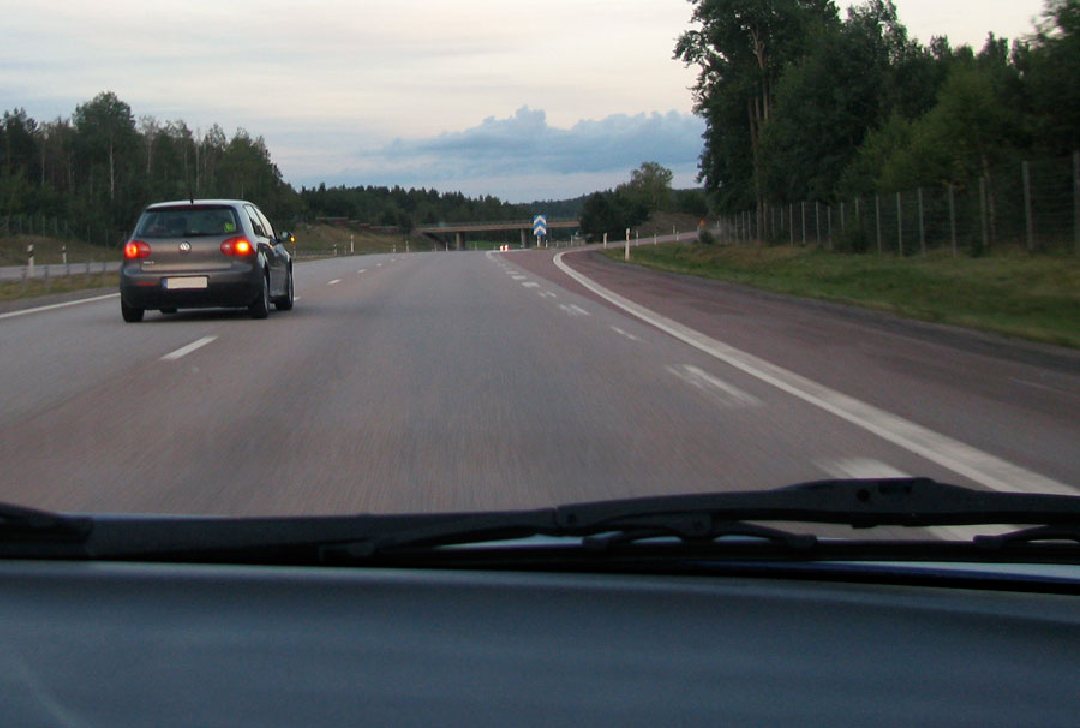
The car in the left lane is planning to turn off the motorway using the exit ramp to the right. Is the driver allowed to carry out this manoeuvre?

Picture for question 49

Explanation

There are no regulations stating that you have to be in the lane furthest right, even if this is practical. The driver firstly makes a regular lane change and then turns off the motorway.

Question 50

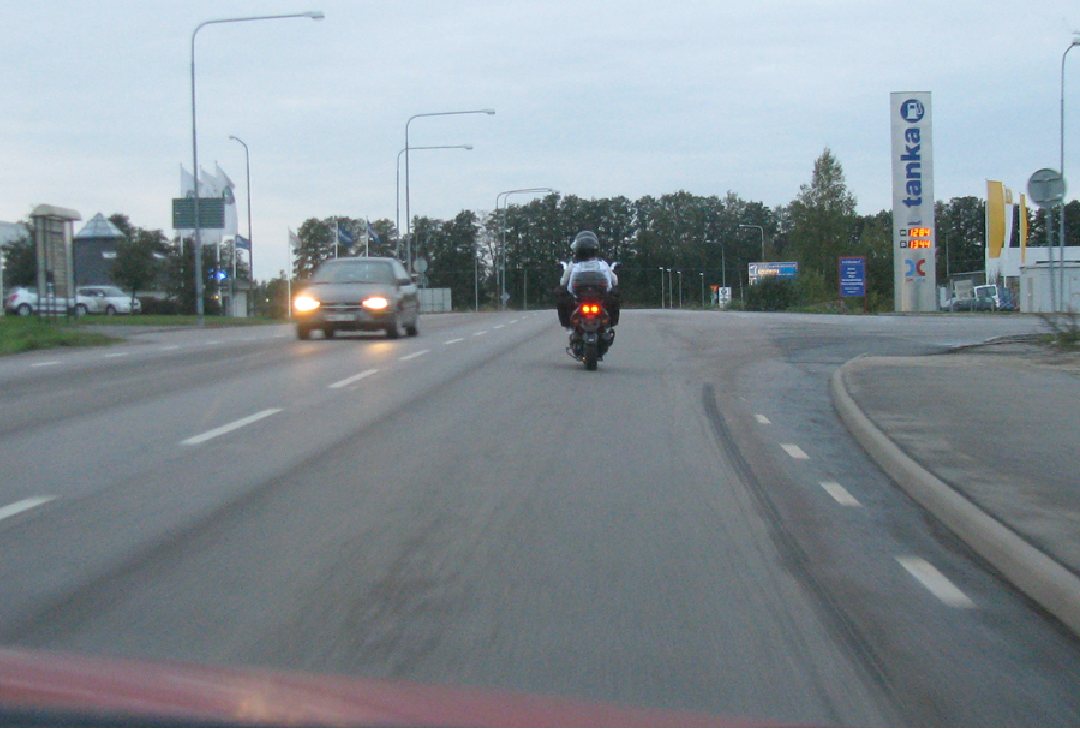
You are in a hurry and driving the car from which the picture is taken. Is the moped driver obligated to facilitate you if you start overtaking on the left?

Picture for question 50

Explanation

“When a driver travelling on a road becomes aware that someone is intending to overtake them on the left, the driver shall keep as far to the right as possible pursuant to the stipulations of Section 7. The driver may not accelerate or otherwise hinder the overtaking.”

Swedish Road Traffic Ordinance

“Keeping as far to the right as possible” must be considered as the moped driver facilitating you.

The traffic safety must always be the highest priority. Even if you are in the wrong, it is safer for everyone if the moped driver “yields” rather than “insists on their right” to show that you are in the wrong.

Question 51

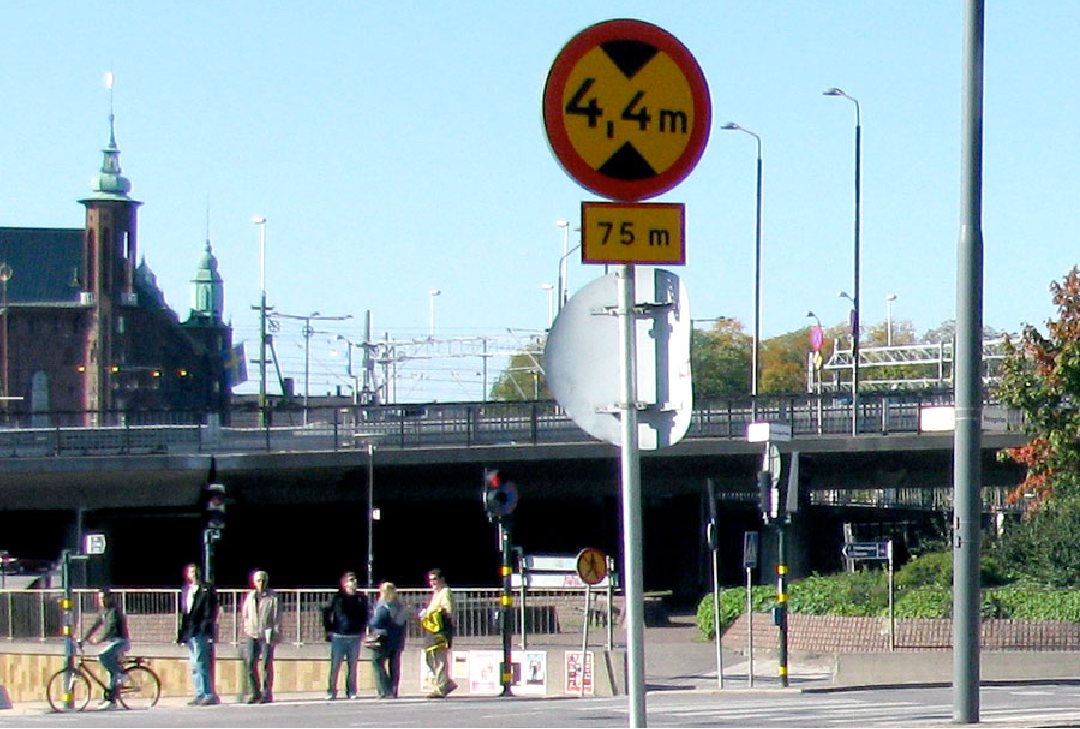
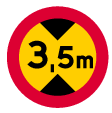
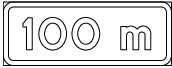
Look at these road signs. Which option is true?

Picture for question 51

Explanation

Restricted vehicle height (C17)
Restricted vehicle heightC17

“The sign indicates that traffic with vehicles over a certain height is prohibited if the free height is lower than 4.5 metres. The greatest permitted vehicle height is indicated on the sign.”

Distance (T2)
DistanceT2

“The panel indicates the distance to what the sign relates to.”

Should the correct answer not include 4.4 metres?

– No, not necessarily, it is forbidden to drive anything over 4.4 metres. In other words, it is forbidden to drive a vehicle over 5, 7, 10 (…) metres.

Question 52

Are the basic check lights the same on the dashboards of all cars?

Explanation

“The most common check lights can be found in all cars and have a similar appearance.”

Driving Licence Book, 19th Edition, page 147
Question 53

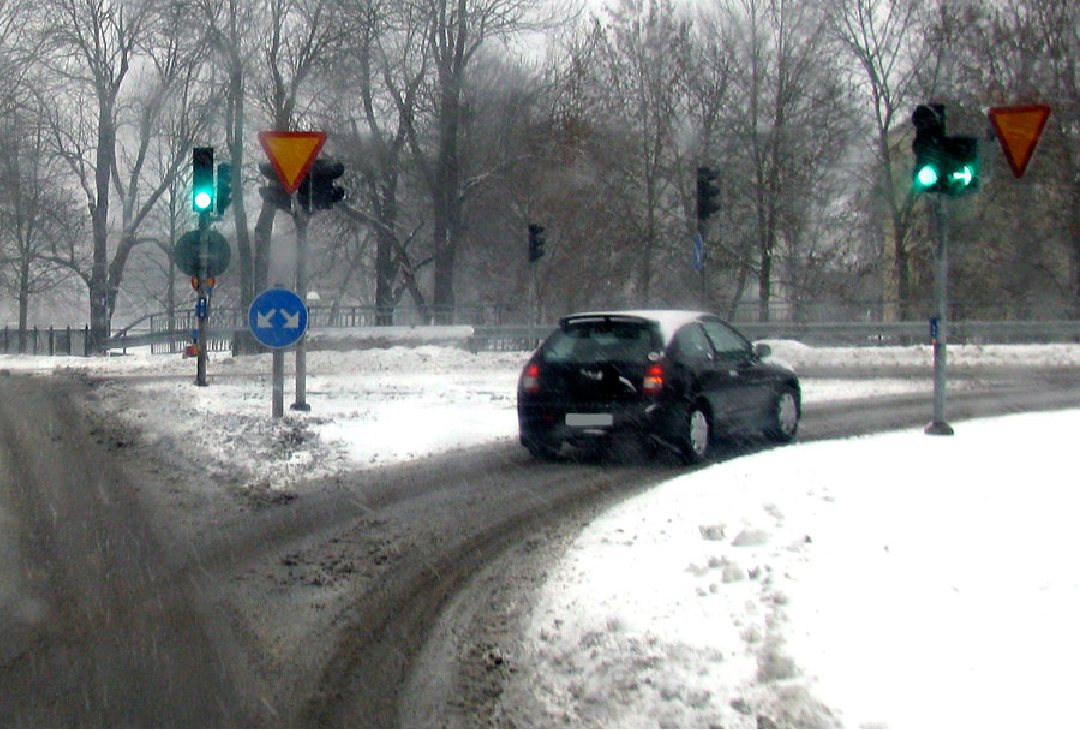
Should the driver of the car in the photo expect intersecting traffic to have a green light at the same time as them?

Picture for question 53

Explanation

“When you get a green light in the form of an arrow, all other road users intersecting your path have a red light.”

STR’s Vägmärken & vägmarkeringar [Road Signs & Markings], 6th Edition, page 26
Question 54

What should be your top priority when approaching an unguarded railway crossing?

Explanation

Good visibility must always be the first priority at a railway crossing. Everything else will work itself out if you have good visibility. It makes no great difference, for example, if the car is not as responsive in a higher gear, since you have no reason to stress if you have good visibility.

Question 55

You are turning left. What rule applies?

Picture for question 55

Explanation

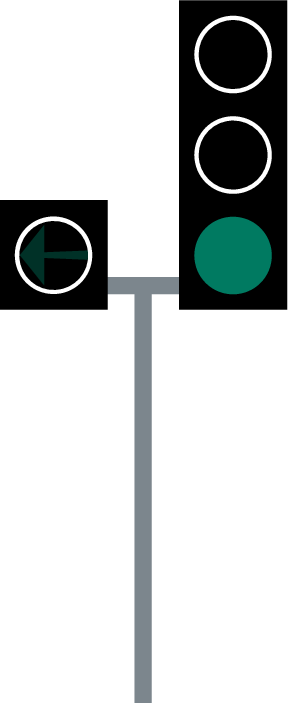
Since the arrow is unlit, you should ignore it. In other words, you are looking at a regular green traffic signal.

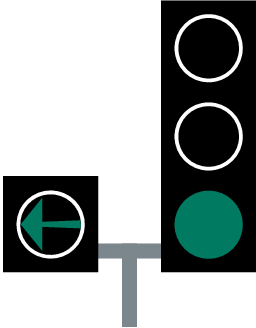
The fact that the arrow is unlit can be seen from the green colour, which differs significantly from the lit light on the right. A lit arrow would have exactly the same colour as the light on the right:

So what is the function of the green arrow?

– If only the green arrow is lit, it means that only vehicles turning to the left are allowed to go. As it is (green circle), you are permitted to drive in all directions, including to the left.

Question 56

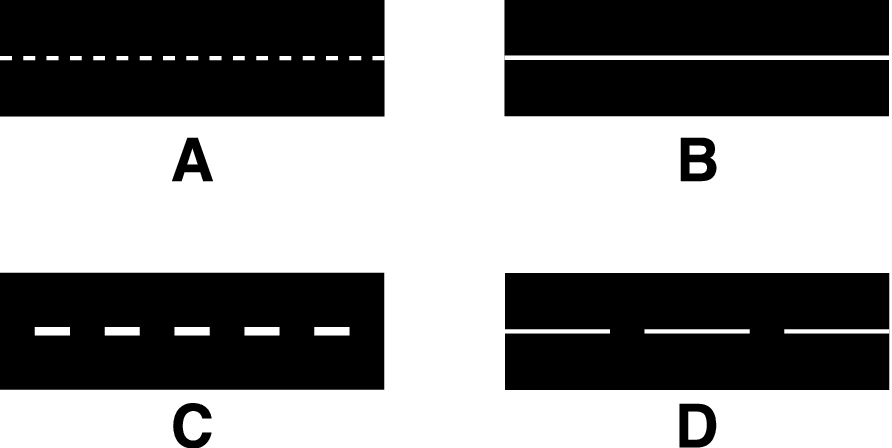
Which of these road markings is a guide line?

Picture for question 56

Explanation

A: Guide line (M4)
AGuide lineM4

“The marking indicates the appropriate route for traffic in complicated junctions. The marking is also used in other cases where there is a need for guidance. The marking has a distance ratio of 1:1 between the dashes and spaces.”

B: Solid line (M8)
BSolid lineM8

“A solid line indicates that the provisions of Chapter 3, Section 11 or Section 12, paragraph 3 of the Road Traffic Ordinance (1998:1276), or provisions stipulated pursuant to that ordinance apply. A solid centre line can appear in both single and double form. In case of a double solid line, the distance between the lines may vary.”

C: Line for vehicles operating a regular service, etc. (M6)
CLine for vehicles operating a regular service, etc.M6

“The marking indicates the boundary between a lane for vehicles operating a regular service, etc. and another lane. The marking has a distance ratio of 1:1 between the dashes and spaces.”

D: Warning line (M3)
DWarning lineM3

“A warning line is used to indicate that it is inappropriate to cross over it due to the traffic conditions. The marking indicates the boundary between lanes intended for travel in opposite directions. The marking has a distance ratio of 3:1 between the dashes and spaces.”

Question 57

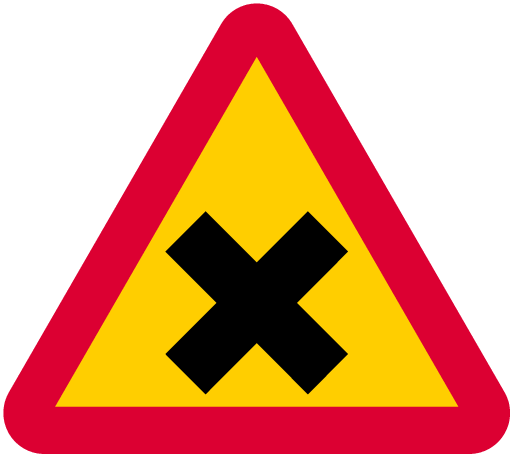
What does this road sign mean?

Picture for question 57

Explanation

Junction
Junction

“The sign indicates a junction where the provisions of Chapter 3, Section 18 of the Road Traffic Ordinance (1998:1276) apply.”

Question 58

Which alternative is something that is dangerous close to the earth’s surface but good higher in the atmosphere?

Explanation

“The ozone found high up in the atmosphere protects us from harmful UV radiation. But down on earth, ozone is dangerous. A combination of nitric oxide and hydrocarbons contribute to the formation of ozone.”

Swedish Transport Administration
Question 59

Which measure is most realistic to focus on according to Vision Zero?

Explanation

“At the same time as measures are to taken to prevent accidents, the road transport system must be designed with consideration to the insight that people make mistakes and that traffic accidents can therefore not be completely avoided. There is no such thing as a perfect person. Vision Zero accepts that accidents occur, but not that they result in serious personal injury.”

Swedish Transport Administration

A mistake is something that by definition is not intentional. Even a traffic instructor with twenty years of experience can make a mistake. Comparative case: There is a global food shortage. An easy solution would be to teach people not to eat food. However, this is impossible since it is in people’s nature to eat. The solution is instead to develop better methods for producing food.

Question 60

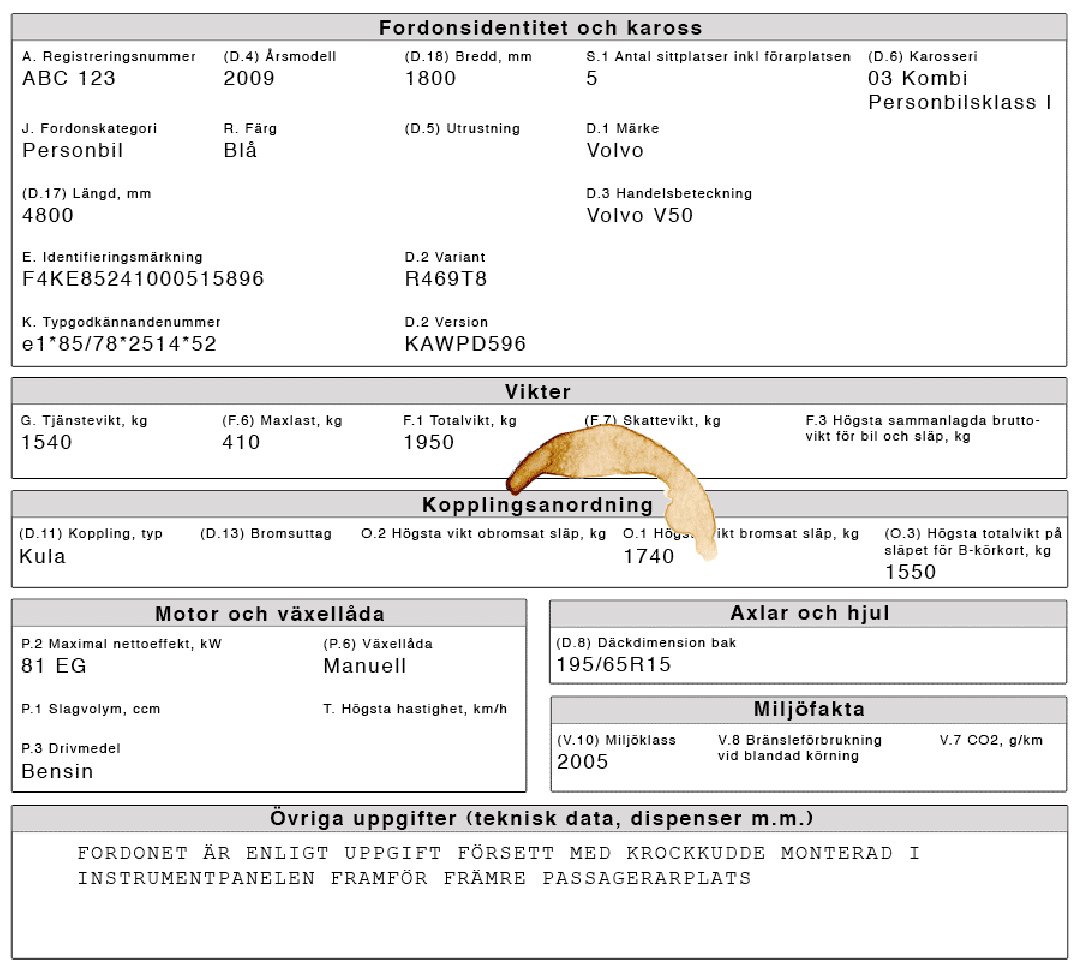
The taxable weight is not visible. Is there an assumption that you can make anyway?

Picture for question 60

Explanation

”Skattevikt” = Taxable weight

”Tjänstevikt” = Unladen weight

“For private cars, the taxable weight is the same as the vehicle’s unladen weight.”

Swedish Transport Agency
Question 61

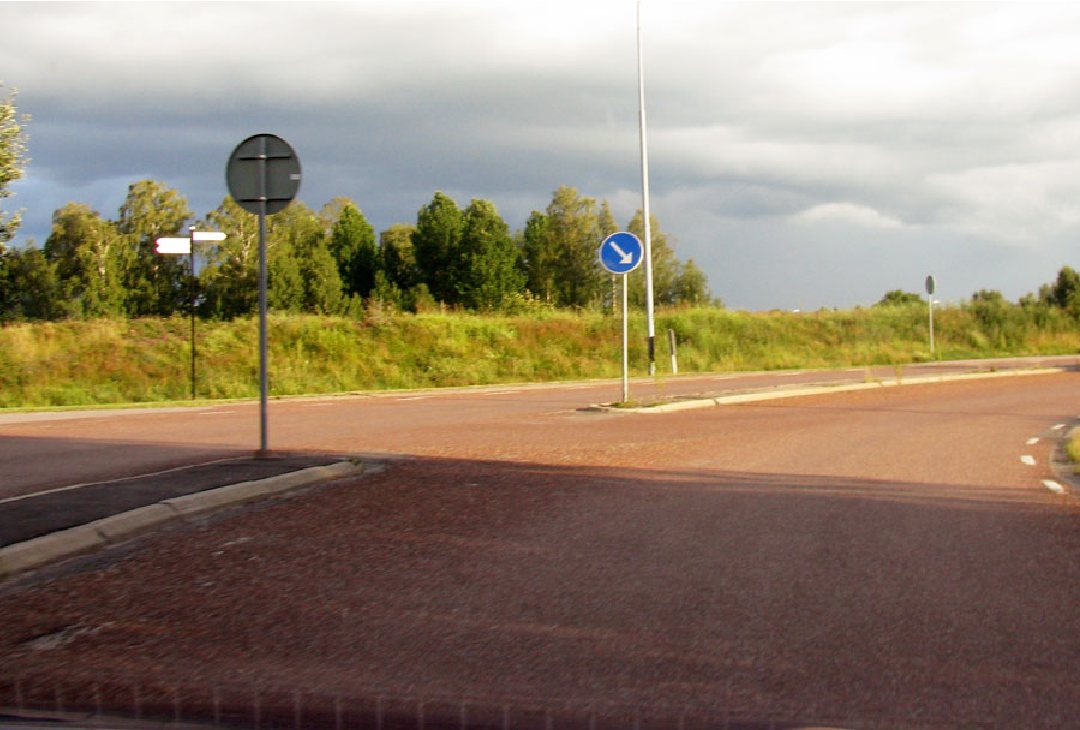
Is it permitted to turn left in the situation in the picture?

Picture for question 61

Explanation

Keep right (D2)
Keep rightD2

“The signs indicate that the vehicle may only drive past the sign where the arrow is pointing or, in the case of two arrows, where the arrows are indicating. The symbol is adapted to the conditions of the location.”

The sign indicates that you must drive to the right of the island if you intend to drive straight on. However, it says nothing about what applies when turning left.

Question 62

You are at the scene of an accident and see a person suffering from shock (circulatory failure). Should you give that person water to drink?

Explanation

“Never give them food or drink. There is a great risk that the fluids end up in their airways if the person vomits or passes out.”

Health care guide

“Shock” does not refer to a scared person, but rather:

“Shock” is a life-threatening condition where the blood pressure drops significantly and the circulation of blood and oxygen in the body decreases sharply. [...] Shock is also referred to as circulatory failure, medical shock or injury shock.” (Health care guide)

Question 63

You intend to park in this temporary parking area. Which priority rule applies when you approach other cars moving within the same area?

Picture for question 63

Explanation

The right-hand rule applies when there are no other applicable right of way rules. The right-hand rule states that: “When the paths of two vehicles intersect, the one driver must give way to the vehicle approaching from the right”. (Swedish Road Traffic Ordinance)

Question 64

Your car has broken down on a 30-road in a built-up area. What applies in the case of good visibility?

Explanation

“The driver of a vehicle that is to be equipped with a warning triangle shall put out the triangle when the vehicle, as a result of an accident, engine failure or similar situation, has become stationary on the carriageway or hard shoulder where the maximum permitted speed is higher than 50 kilometres an hour and where the vehicle is not allowed to stop or park”

Swedish Road Traffic Ordinance

As you are standing on a 30-road, you do not have to put out a warning triangle. Other road users are driving so slowly that they will likely see your car in good time either way.

Question 65

Should you seek eye contact with a person who is about to cross at a pedestrian crossing?

Explanation

“Through eye contact you can show your intentions and understand what others are planning to do. Misunderstandings between you and other road users will decrease.”

Driving Licence Book, 19th Edition, page 30

Do not confuse eye contact with waving someone over. Waving over a pedestrian can create a false sense of security.

Question 66

What do these road signs mean?

Picture for question 66

Explanation

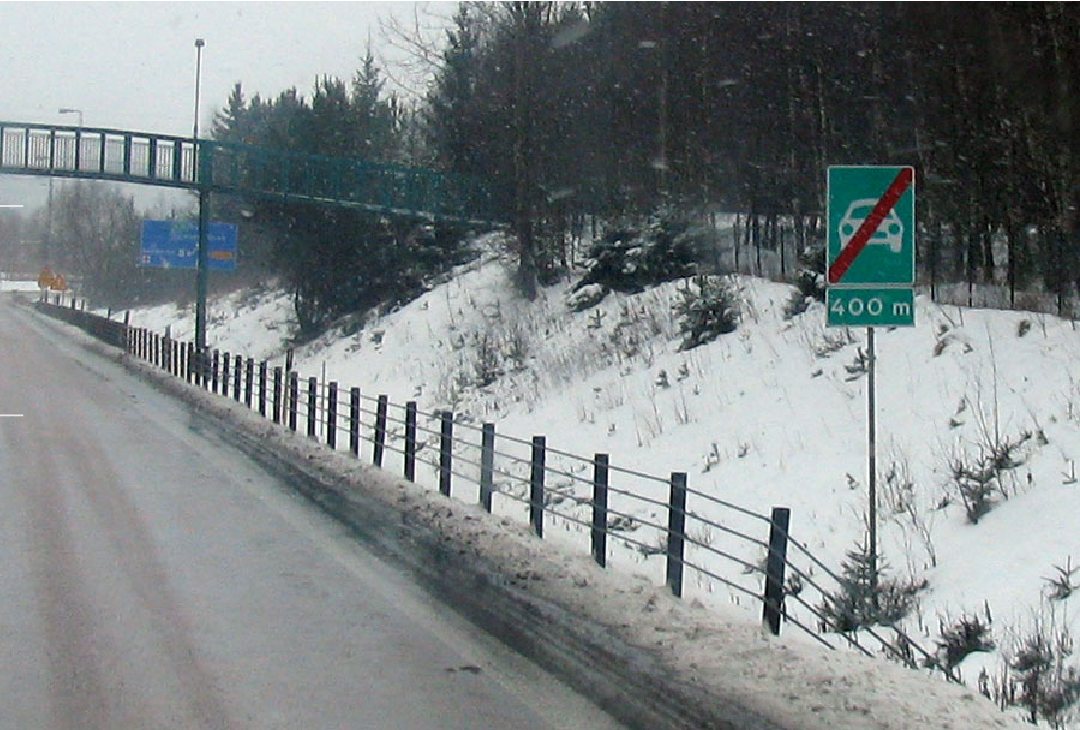
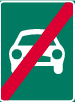
End of clearway (E4)
End of clearwayE4

“If the sign is used as preparatory information indicating that a clearway is ending, the distance is given on an additional panel. The sign is not used when a clearway turns into a motorway.”

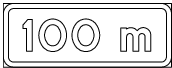
Distance (T2)
DistanceT2

“The panel indicates the distance to what the sign relates to.”

Question 67

Which statement is true?

Picture for question 67

Explanation

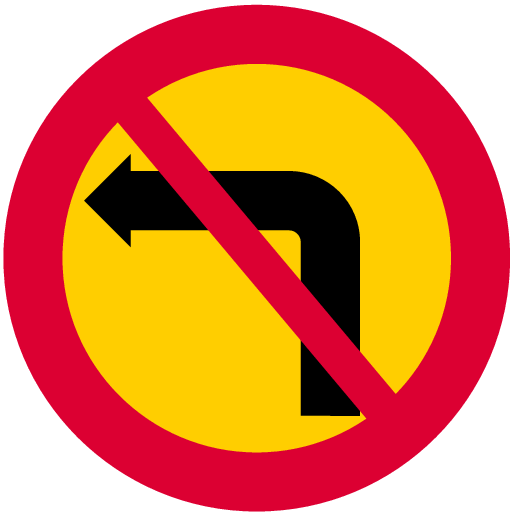
“A prohibition of left turns has been deemed not to also entail an automatic prohibition on making a U-turn. […] According to the Court of Appeal […] a left turn and a U-turn must in principle be considered as two separate manoeuvres, which is highlighted by the fact that they are prohibited by different prohibitory signs.”

Svea Court of Appeal
No left turn in the junction (C25)
No left turn in the junctionC25

“This prohibition applies to the junction or similar location before or in which the sign is erected. The sign may relate to several junctions. In that case the distance is indicated on an additional panel. The symbol is adapted to the conditions of the location.”

No U-turn (C26)
No U-turnC26

“This prohibition applies to the junction or similar location before or in which the sign is erected. The sign may relate to several junctions. In that case the distance is indicated on an additional panel. The symbol is specific to the conditions at the location.”

Question 68

How should the driver act in the private car behind the truck?

Picture for question 68

Explanation

The truck is about to turn right (as seen by the indicator and the fact that the truck is half-way in on the exit road). The car behind is too close, but not so close that it warrants braking since:

  • The truck is just a moment from being completely on the exit road.
  • The likelihood of the truck doing some unexpected and dangerous manoeuvre is not high.
  • Braking increases the risk of someone crashing into the private car from behind.
  • Braking can disrupt the rhythm of traffic, which is unnecessary if there is no good reason to do so.

It is best to be ready to act if something would happen.

“Being ready to act may, for example, mean that you ease off the accelerator, move your foot to the brake pedal and are ready to brake. In this way you can reduce your reaction time and can more easily manoeuvre to avert a hazard.”

Du och jag i trafiken [You and me in traffic], 28th Edition, page 169

It is unclear that the truck’s right indicator is on!

– Good, that is intentional. There are indications that the Swedish Transport Agency uses unclear pictures on the test. The entire question can rest on a detail that is barely visible at first sight.

Question 69

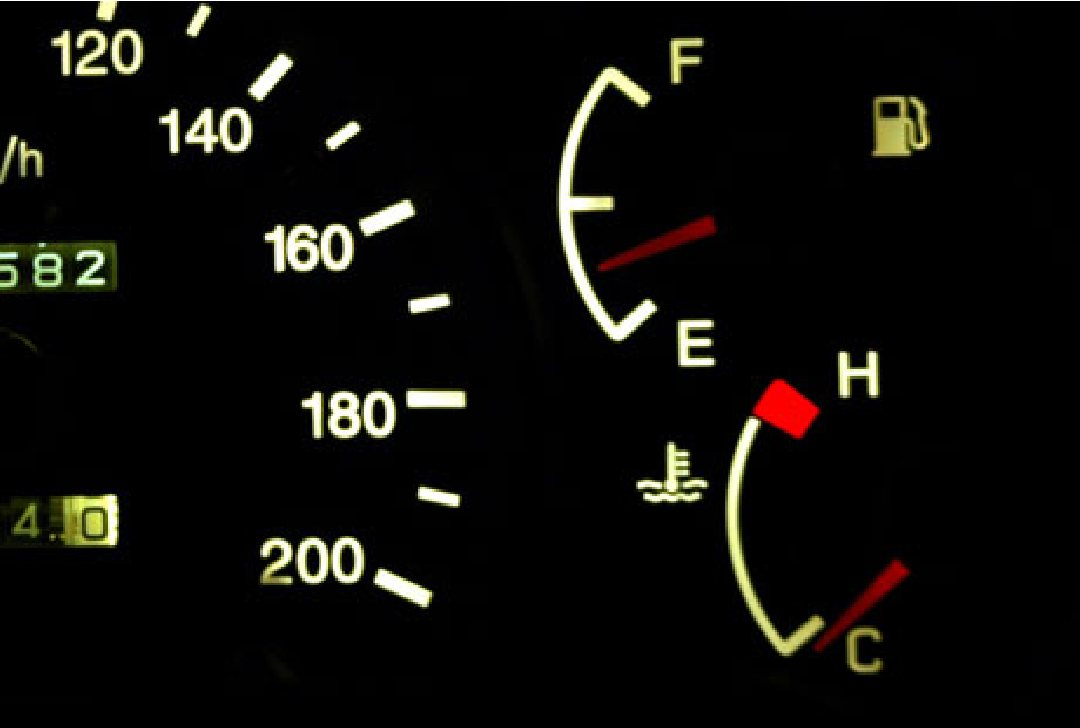
It is winter and you have just started your car. Should you be concerned about the temperature of the engine?

Picture for question 69

Explanation

When you have just started the car, the temperature is always low, so there is no cause for concern.

Question 70

What can you do to avoid feeling tired?

Explanation

The first two options will increase the tiredness. About tiredness: “not too hot in the car [...] regular breaks, outside of the car [...] avoid ‘heavy’ food.” (Driving Licence Book, 19th Edition, page 202)