Swedish driving licence · Theory practice

Theory test 17

29 August 2021 · 15:02 · 70 questions

0%correct
Not started

0 of 70 correct

Pick an answer to check it. 56 of 70 correct (80%) is needed to pass.

0Answered
0Correct
0Incorrect
56Needed to pass

The real test has 70 questions in 50 minutes, about 43 seconds per question.

0 / 70
Question 1

You are driving on a small road and approaching a junction where the intersecting road is a priority road. Where should you be looking?

Explanation

Left, right, left is usually recommended. The reason why left comes first and why you should look there twice is that this is the traffic closest to you.
Question 2

How far may the load protrude from the side if you want to drive on a public road?

Explanation

“If a motor vehicle or a vehicle coupled to this has a load where either side protrudes more than 20 centimetres outside the vehicle, [...] the vehicle or a vehicle coupled to this may only be driven on a private road.”

Swedish Road Traffic Ordinance
Question 3

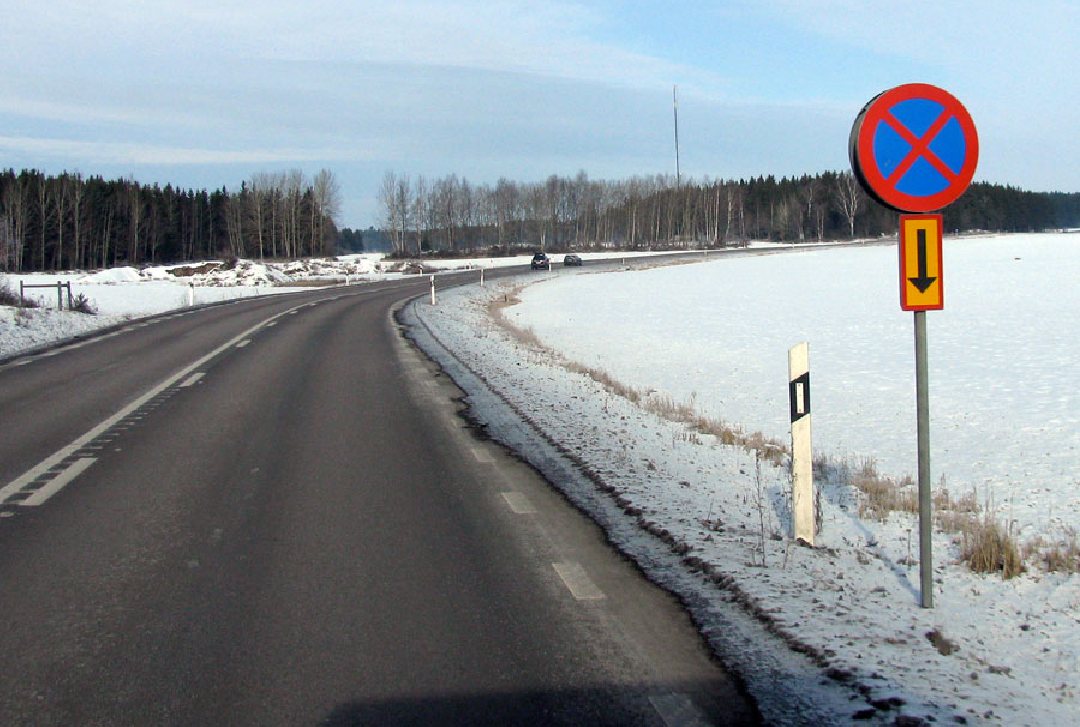
You are driving on a priority road. Is it permitted to park directly after this sign?

Picture for question 3

Explanation

The sign indicates that the prohibition against stopping or parking ends. However, you must still take into consideration: “A vehicle may not be parked [...] on a priority road”. (Swedish Road Traffic Ordinance)

After the sign, you are allowed to stop but you may not park, as you are on a priority road.

How do I know that it is a priority road?

– It is stated in the question.

Question 4

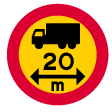
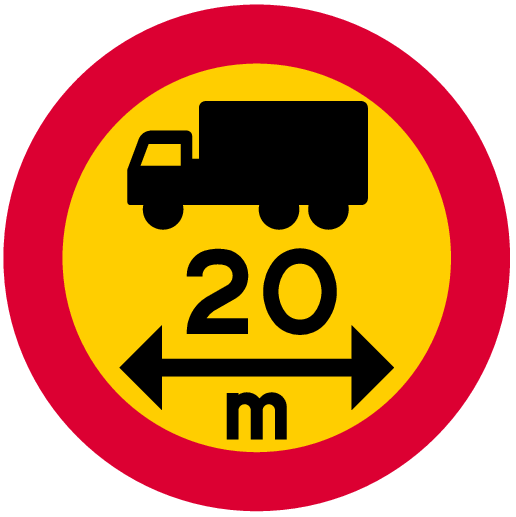
What does this road sign mean?

Picture for question 4

Explanation

Restricted vehicle length (C18)
Restricted vehicle lengthC18

“The sign indicates that traffic with vehicles or a vehicle/trailer combination over a certain length is prohibited. The greatest permitted length is indicated on the sign.”

Vehicle/trailer combination: ”A motor vehicle with one or several connected vehicles.” (Road Traffic Definitions Act)

Question 5

What is considered a normal walking speed for a person with no functional disability?

Explanation

“5 km/h corresponds to a normal walking speed for a person with no functional disability.”

Swedish Transport Administration

This is relevant to know for home zones etc. where a vehicle may be driven no faster than at walking speed.

Question 6

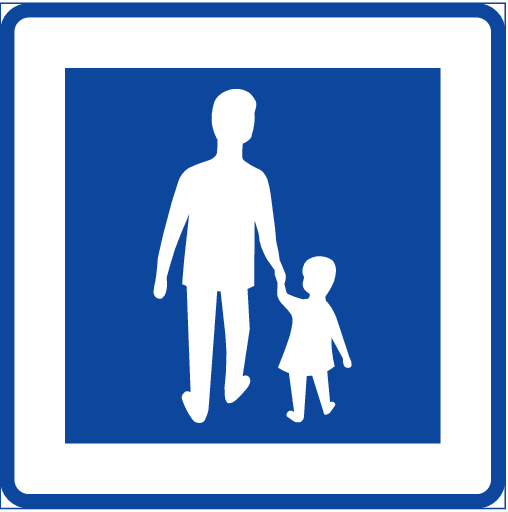
What does this road sign mean?

Picture for question 6

Explanation

Pedestrian street (E7)
Pedestrian streetE7

“The sign indicates that the provisions of Chapter 8, Section 1 of the Road Traffic Ordinance (1998:1276) apply. Any prohibition on driving vehicles that are permitted on a pedestrian street according to Chapter 8, Section 1, second paragraph of the Road Traffic Ordinance is indicated using an additional panel.”

Question 7

What is the smallest permitted tread depth on summer tyres in summer conditions?

Explanation

“Tyres shall have a tread depth of at least 1.6 mm in the main pattern”

Swedish Transport Agency
Question 8

What is true when it comes to whiplash injuries?

Explanation

“Airbags increase the protection against whiplash injuries.”

Swedish Transport Administration

The reason for this is that the airbag catches the head and cushions the abrupt movement that causes whiplash injuries.

Question 9

Which type of trailer are you allowed pull if you only have a driving licence with category B authorisation?

Explanation

“Category B authorisation is sufficient to drive a private car or light truck with a light trailer. Other cases require an extended B or BE category authorisation.”

Swedish Transport Agency

Light trailers are available in both braked and unbraked models.

Question 10

You are turning onto a priority road from a road with a stop sign, but no stop line. Where do you have to stop before driving on to the priority road?

Explanation

“A driver who is obliged to stop or is stopping at a traffic signal shall stop at the stop line. In the absence of a stop line, the driver shall stop right before the signal or before driving onto the intersecting road, route or track area.”

Swedish Road Traffic Ordinance

The stop sign may be posted several metres from the junction, which means that you cannot see anything if you stop there.

Question 11

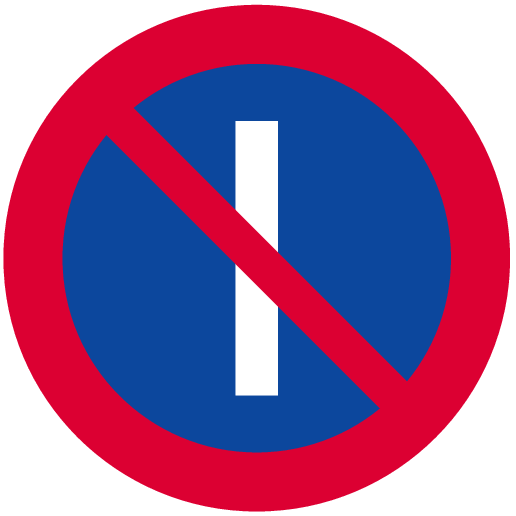
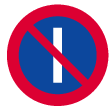
What does this road sign mean?

Picture for question 11

Explanation

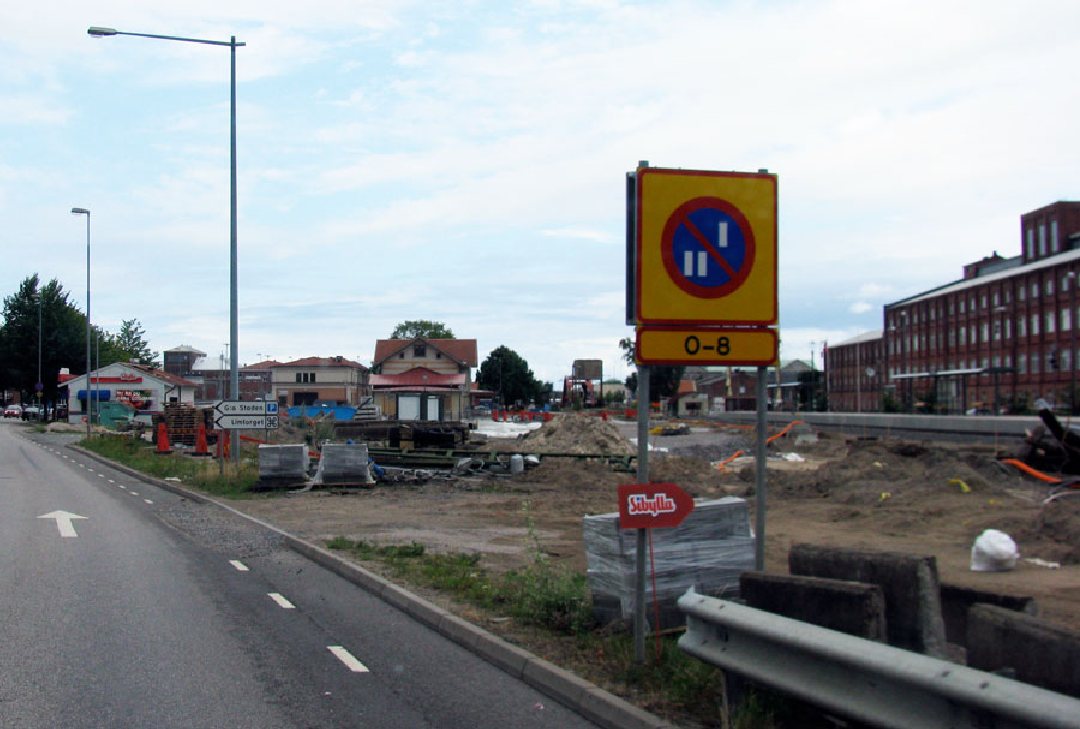
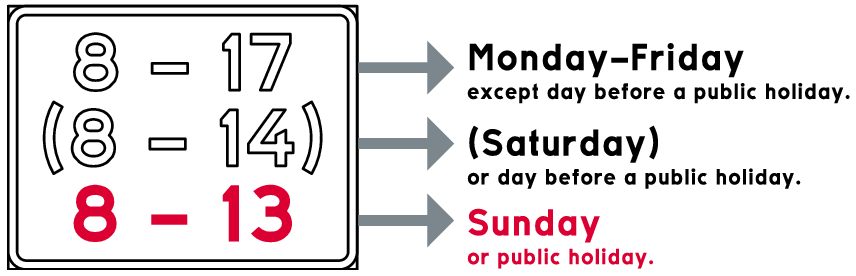
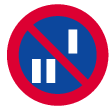
Vehicle parking is prohibited on odd-numbered dates (C36)
Vehicle parking is prohibited on odd-numbered datesC36

“The more detailed provisions relating to sign C35, Vehicle parking is prohibited, also apply to this sign.”

Question 12

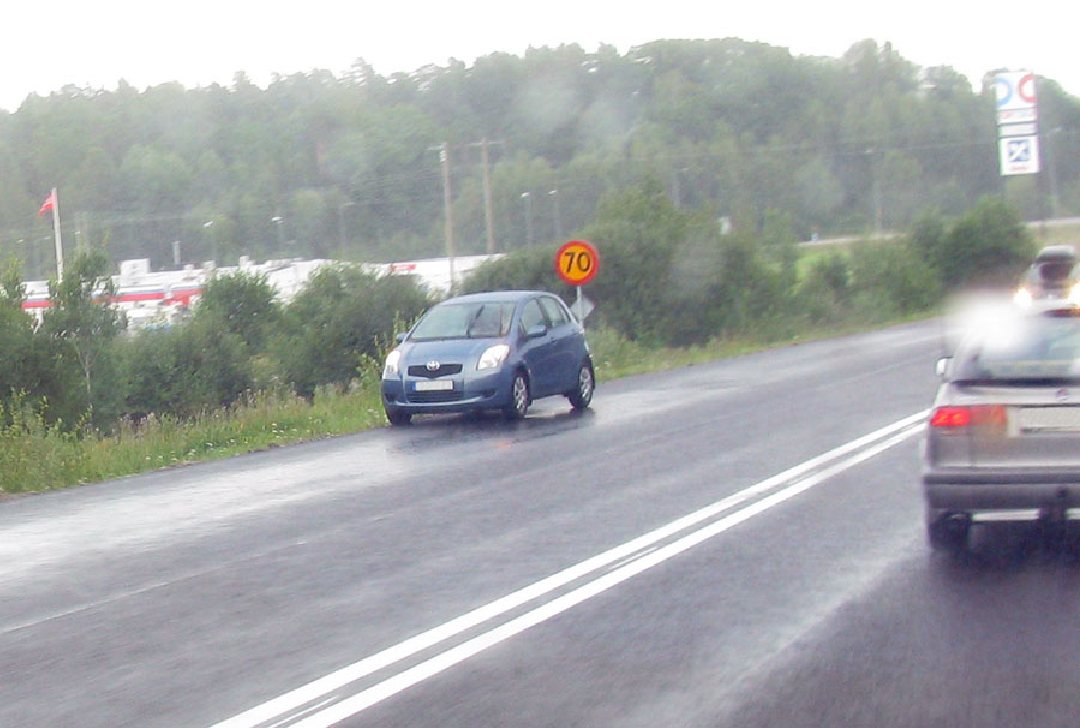
The driver of the car in the centre of the picture has pulled over to the side of the road to answer their phone. Why is it prohibited here?

Picture for question 12

Explanation

Review of the options:

  • The weather means that this may present a traffic hazard
    – It is certainly raining, but visibility still seems to be good and it is not dark. The weather is therefore not a big enough problem for stopping to be classed as a traffic hazard.
  • The centre line is solid, which prevents the traffic behind from overtaking
    – It looks like there is a margin of at least two car widths to overtake on, so there is no problem with the margins. The fact that the line is solid does not automatically entail that overtaking is prohibited.
  • The road is a priority road
    – It can be observed that the road is a priority road by looking at the back of the sign under the 70 sign. The sign below the 70 sign could signal the end of the priority road, but by applying the exclusion method to the other options, you can assume that it is not an end sign (no option would be correct if it was an end sign).

Answering a mobile phone counts as parking, not stopping. See the Driving Licence Book (19th Edition, page 104): “The parking prohibition on the priority road means that you may not even stop and answer your phone”.

As parking is prohibited on priority roads (assume that it is a priority road, see the above point), it is prohibited to answer a mobile phone at this location.

Question 13

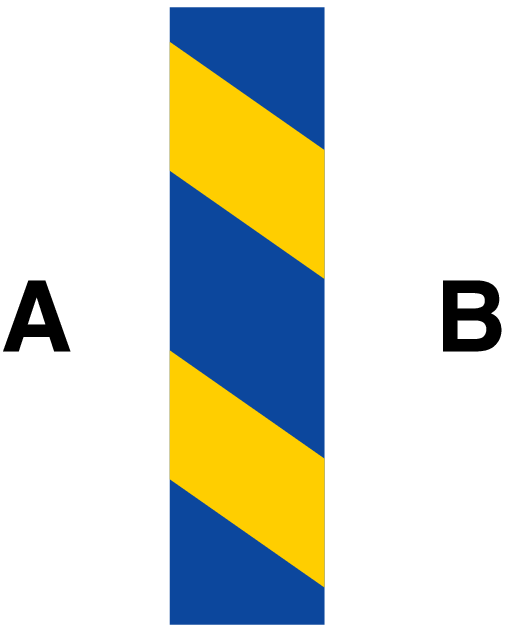
On which side do you pass this sign?

Picture for question 13

Explanation

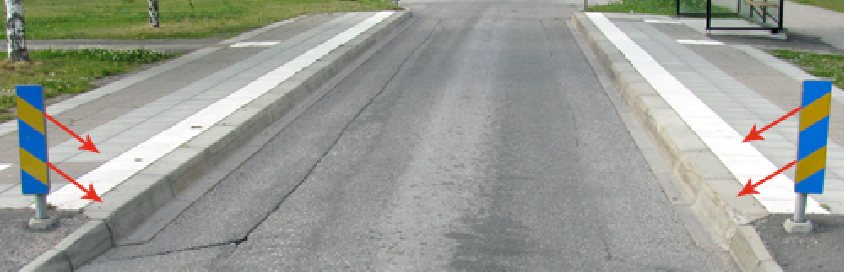
Marking for obstacle on the side, speed bumps, etc.X3

“[...] The device is placed so that the panels lean downwards on the side where traffic must travel.”

Illustration for question 13

Example of use: It is often self-evident where you should go, but in the dark it can be good to be aware of the panels’ direction.

Question 14

What is the significance of the white part of the red circles?

Picture for question 14

Explanation

Red flashing light (SIG16)
Red flashing lightSIG16

“Stop. A vehicle may not pass the stop line or, in the absence of such, the signal.”

This is the way the Swedish Transport Agency has chosen to illustrate a flashing light, as it is impossible to make a light flash in a still image (the same images are used in paper brochures, for example).

Question 15

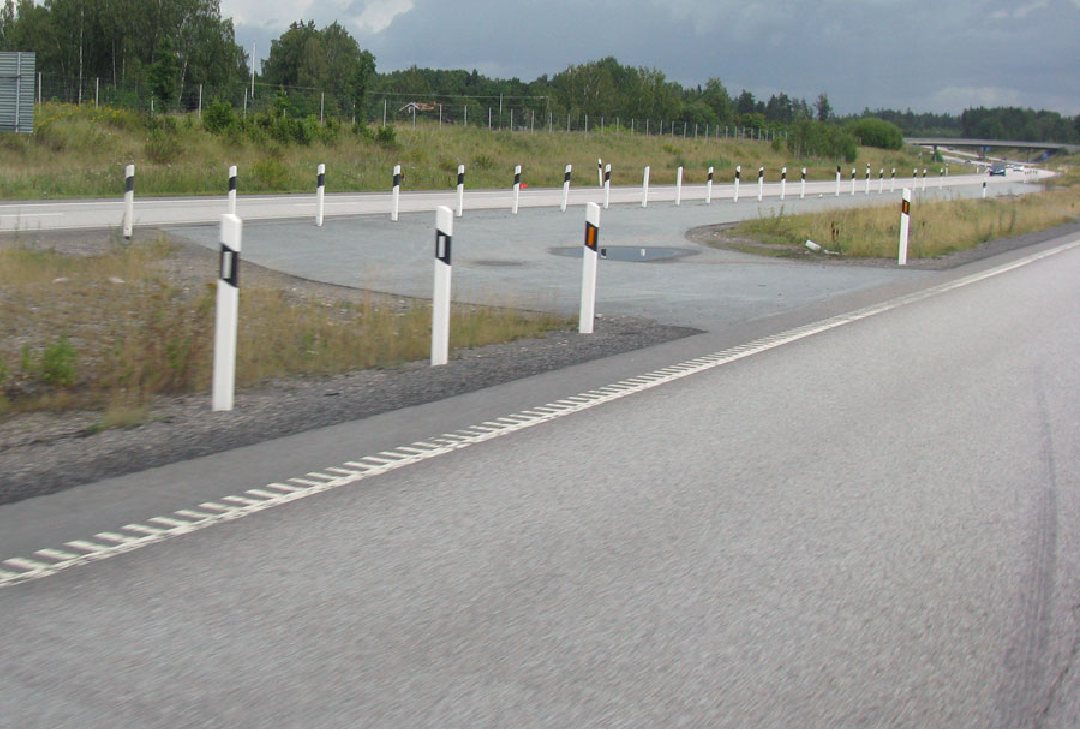
Is it permitted for regular road users to turn around on the motorway by using the link road in the picture?

Picture for question 15

Explanation

“A vehicle may not drive on the median strip or on a traversing link road between the carriageways.”

Swedish Road Traffic Ordinance

Motorways are built to be safe. It would be very unsafe if regular road users were able to use these links that have a much lower safety level than exit ramps and acceleration lanes.

Question 16

How fast are you allowed to drive in a light lorry?

Explanation

Maximum speed for light lorries: “The speed limit applicable to the road.” (Swedish Transport Agency)

Question 17

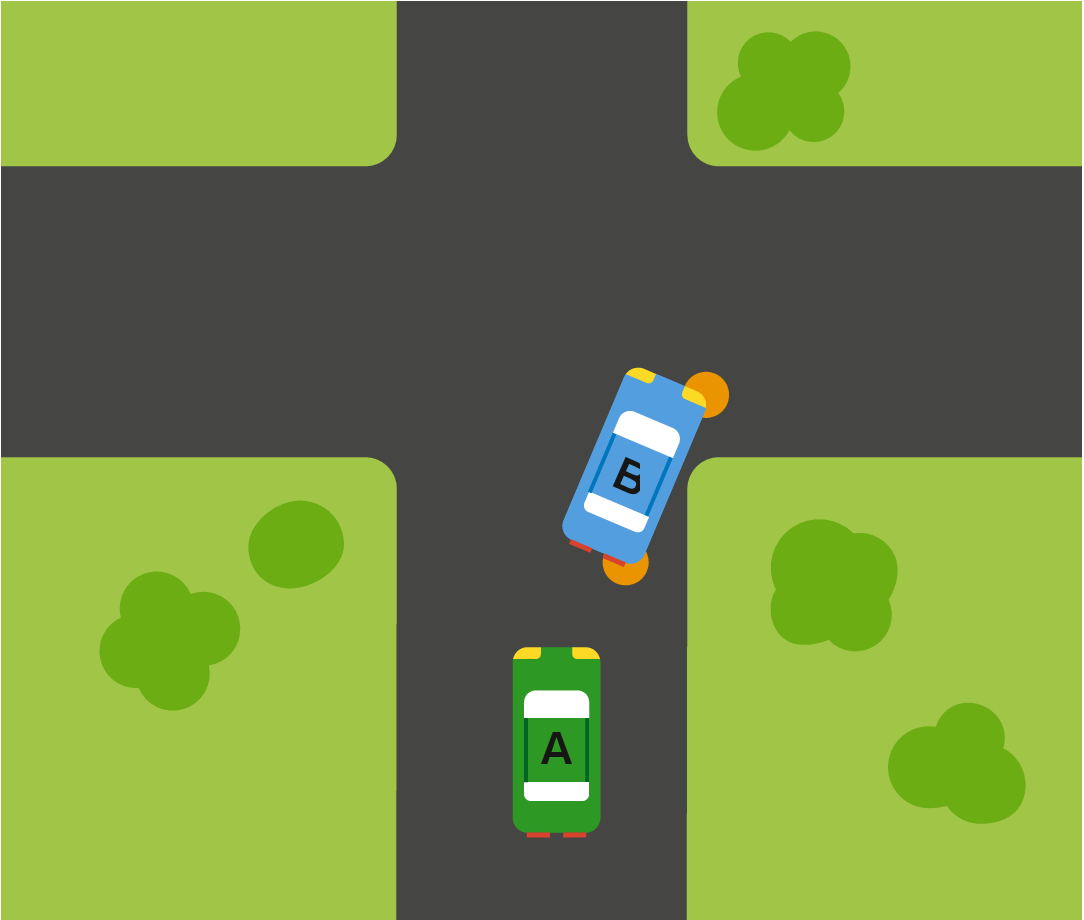
You are driving car A, heading straight ahead. Car B is turning right in the junction, where there are no signs. What rule applies?

Picture for question 17

Explanation

“Overtaking is not allowed just before or in a junction, except when 1. the overtaking is done on the right; 2. the traffic in the junction is regulated by a police officer or through traffic signals; or 3. It is clear from the road signs or other circumstances that drivers on the intersecting road have an obligation to give way or stop.”

Swedish Road Traffic Ordinance

Non of the exceptions apply in this situation = not permitted.

Car A would have to drive out into the centre of the junction, which is not safe.

Question 18

Which age group has the best reaction times in traffic?

Explanation

“Younger drivers react significantly slower than experienced drivers. The age group with the best reaction time is experienced drivers between the ages of 45–54. […] The explanation is likely that the experienced driver is often more prepared to act.”

Driving Licence Book, 19th Edition, page 199

Remember that this applies in traffic, where you are not prepared at each given moment to react quickly. A person with a 2-second reaction time in traffic may have a reaction time of 0.7 seconds in a test where you have to push a button at the sound of a signal.

Question 19

What is declutching?

Explanation

“declutching […] (temporarily) break the connection between the driving shaft and the driven shaft of the engine: with ~d engine”

Nationalencyklopedin
Question 20

You are driving the car from which the picture is taken and see the overtaking being performed. How should you act?

Picture for question 20

Explanation

Review of the options:

  • Drive normally and ignore the overtaking.
    – Not good, since the situation may be dangerous. A potentially dangerous situation must never be ignored.
  • Drive in the middle of your lane and beep or flash your full beam headlights.
    – This is an aggressive option, which is never good in traffic. It also does not seem that the car that is overtaking is performing a dangerous manoeuvre since the car is not crossing over into your lane. “To avoid traffic accidents, a road user shall observe the care and caution required with respect to the circumstances.” (Swedish Road Traffic Ordinance) = you have to “give in” even if you are in the “right”.
  • Keep to the right of your lane and be prepared to act.
    – Good, this creates a good safety margin while preparing you for action if something should go wrong.
  • Reduce your speed and drive out on the hard shoulder.
    – This is an overreaction. As stated, the car that is overtaking is staying in the correct lane, while at the same time the road is wide enough for it to be enough that you keep to the right of your lane instead of driving out onto the hard shoulder. Reducing your speed may do more damage than good since the risk of being hit from behind increases.
Question 21

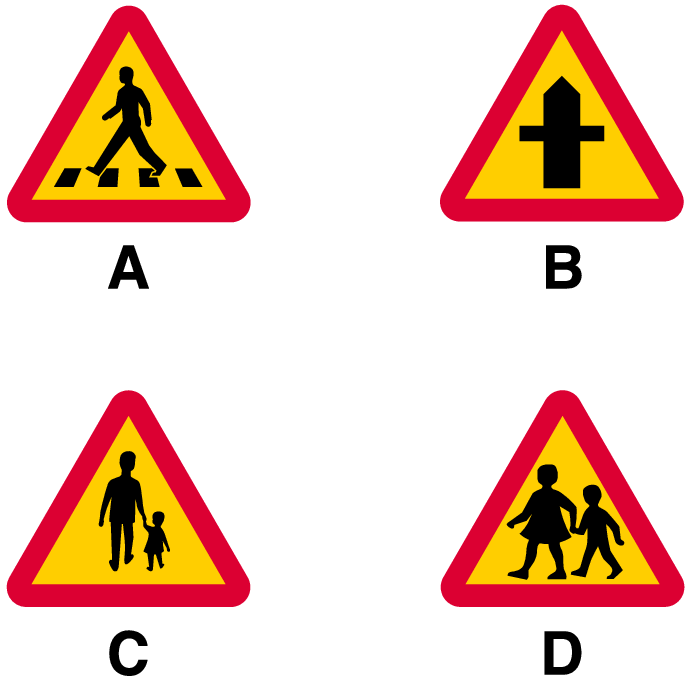
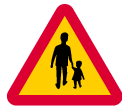
Which of these signs warns you of pedestrians?

Picture for question 21

Explanation

C: Pedestrian warning (A14)
CPedestrian warningA14

Do not A and D also warn me of pedestrians?

– A is Pedestrian crossing ahead and D is Children. Indirectly, they can be said to warn you of pedestrians, but you should choose the best/”most correct” answer, which is C, as its literal meaning is Pedestrian warning.

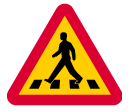
A: Pedestrian crossing ahead (A13)
APedestrian crossing aheadA13
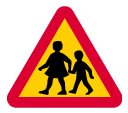
D: Children (A15)
DChildrenA15
Question 22

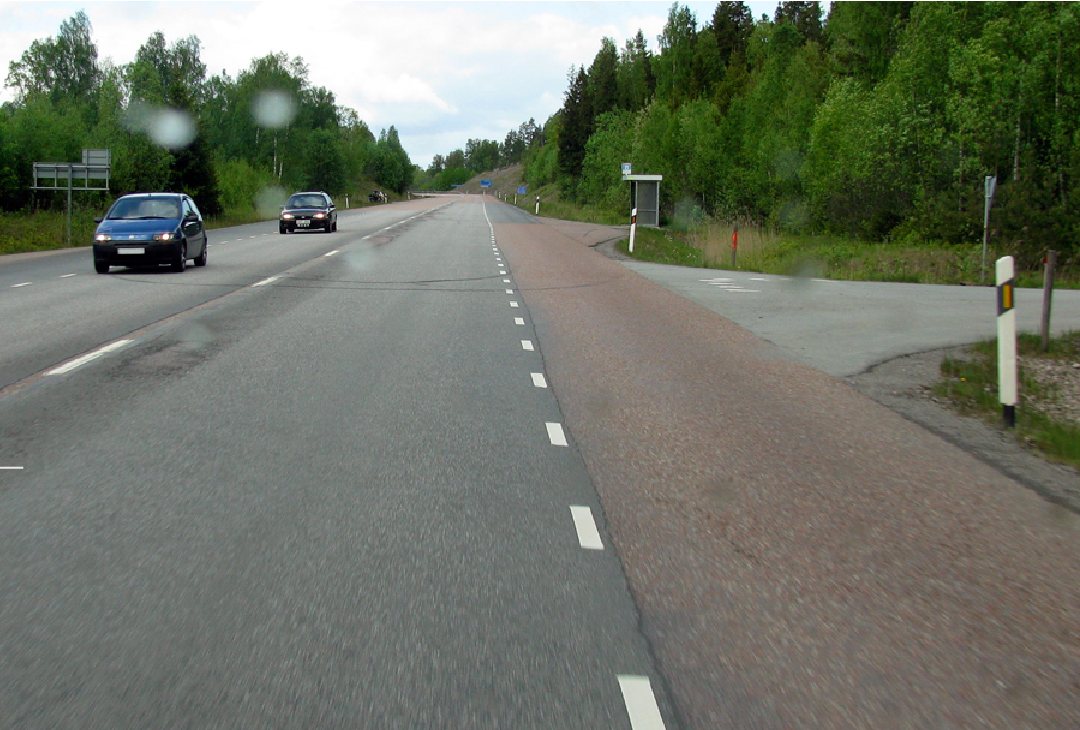
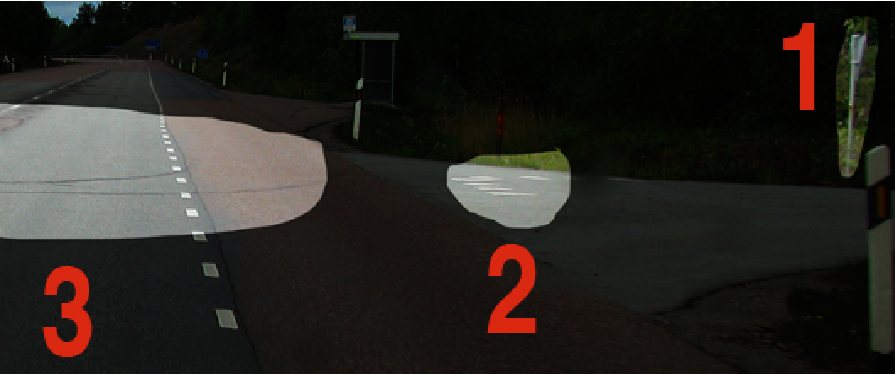
You are driving the car from which the picture is taken and are unsure whether you are driving on a priority road. How should you reason, given the road to the right?

Picture for question 22

Explanation

There are 3 things indicating that vehicles coming from the right are obliged to give way to you:

Illustration for question 22
  1. It looks like a give way sign.
  2. It looks like a give way line.
  3. The road you are driving on is wide and the likelihood of it being a priority road is very high.

These factors together suggest you can be fairly sure that vehicles coming from the right are obliged to give way to you.
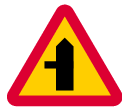
Almost nobody can keep an eye on all signs and instructions the entire time. It is therefore important to be able to draw reasonable conclusions about what rules apply using clues.
Question 23

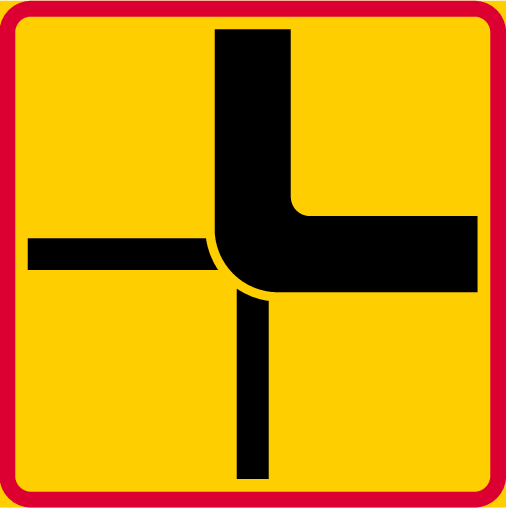
Does this road sign tell you anything about the appearance of the junction?

Picture for question 23

Explanation

Direction of priority road (T15)
Direction of priority roadT15

“The sign indicates a junction where drivers on a road shown as a narrow line must give way to vehicles on a road shown as a bold line. The symbol is adapted to the conditions of the location.”

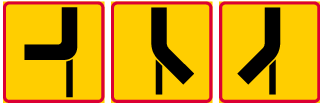
“The symbol is adapted to the conditions of the location” means that in this particular case, the sign indicates a regular four-way junction. In other cases, the sign might look like this:

Illustration for question 23
Question 24

How much alcohol (40%) corresponds to 33 cl of beer with 7.2 percentage alcohol by volume?

Explanation

“The amount of [...] pure spirits (40 %) that a strong beer or a glass of wine corresponds to [...] can be calculated with a formula (percentage by volume * the volume in cl * 0.025).”

MHF

7.2 * 33 * 0.025 = 5.94 cl (round up to 6 cl)

(0.025 is the same as dividing by 40)

Question 25

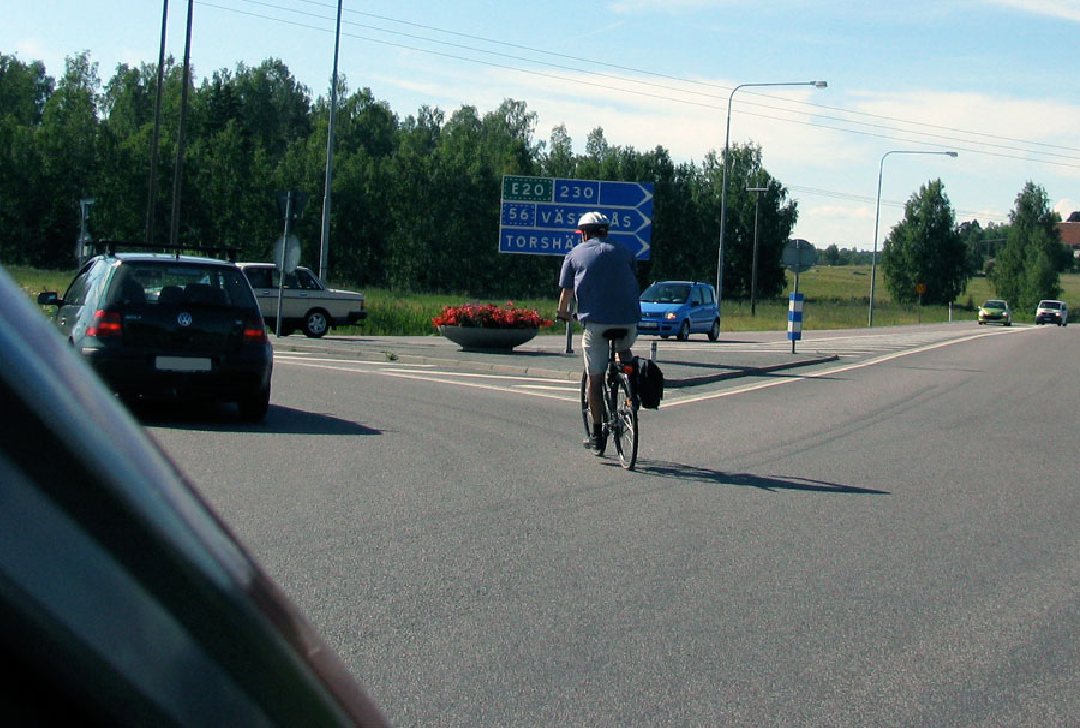
The black car to the left of the picture has just carefully passed the cyclist in the roundabout. What do you think about the manoeuvre?

Picture for question 25

Explanation

There are no clear rules stating exactly what you can and cannot do in this situation. However, there are strong indications that it was appropriate to pass the cyclist:

  • Cyclists may always be overtaken in junctions. “Two-wheeled vehicles without a sidecar may [...] be overtaken.” (Swedish Road Traffic Ordinance).
  • It looks like there are wide enough margins to pass safely.
  • The alternative would be to drive at a snail’s pace behind the bicycle, which would disrupt the rhythm of the traffic. The motorists would become stressed and the cyclist would become stressed in a negative way = increased risk of accidents.

But is a roundabout really a “junction”?

– There is no clear answer to this. “The term ‘junction’ is not defined [...] but classifying a roundabout as a junction is not ruled out.” (Supreme Court). When there are no clear rules, it is appropriate to refer to rules for similar situations. Overtaking in a junction and overtaking in a roundabout can be viewed as similar situations.

Question 26

What are you to do if a bus is at a bus stop and indicates to pull out?

Explanation

“Where the maximum permitted speed is 50 kilometres an hour or lower, a driver that is approaching a bus shall, when the bus driver indicates the intention to depart from a bus stop, slow down and allow the bus to leave the bus stop. If necessary, the driver shall stop.”

Swedish Road Traffic Ordinance
Question 27

Which alternative applies at a railway crossing where there are regular traffic lights (red, amber and green) but no gates?

Explanation

“Overtaking is not allowed just before or on a level crossing, except when 1. the crossing is gated, or 2. the traffic in the crossing is regulated through such traffic signals as are used in regular junctions.”

Swedish Road Traffic Ordinance

It is thus enough for the crossing to have either gates or traffic lights for the overtaking prohibition to be made invalid. The question specifies that the crossing has traffic lights, which means that there is no prohibition to overtake. Note however that it has to be the right type of traffic lights, see more below.

Illustration for question 27

This type of signal device is enough to cancel out the overtaking prohibition, as it is a red, amber and green traffic signal.

Illustration for question 27

This type of signal device is not enough to cancel out the overtaking prohibition, as it is the regular signal that is posted at nearly every railway crossing.

Gates Signal (red, amber, green) Allowed to overtake

Yes Yes All vehicles

Yes No All vehicles

No Yes All vehicles (same as in the question)

No No

Question 28

What type of accident results in most fatalities?

Explanation

Accident type Number of deaths (2019)

Head-on 47

Overtaking 3

Catching up (from behind) 10

Turning off 9

Junction 16

Single vehicle – highest death rate 59

Bicycle and moped 11

Pedestrians 25

Roe deer and deer 1

Moose 6

Reindeer 0

Rail/tracks 4

Other issues 32

TOTAL 223

Question 29

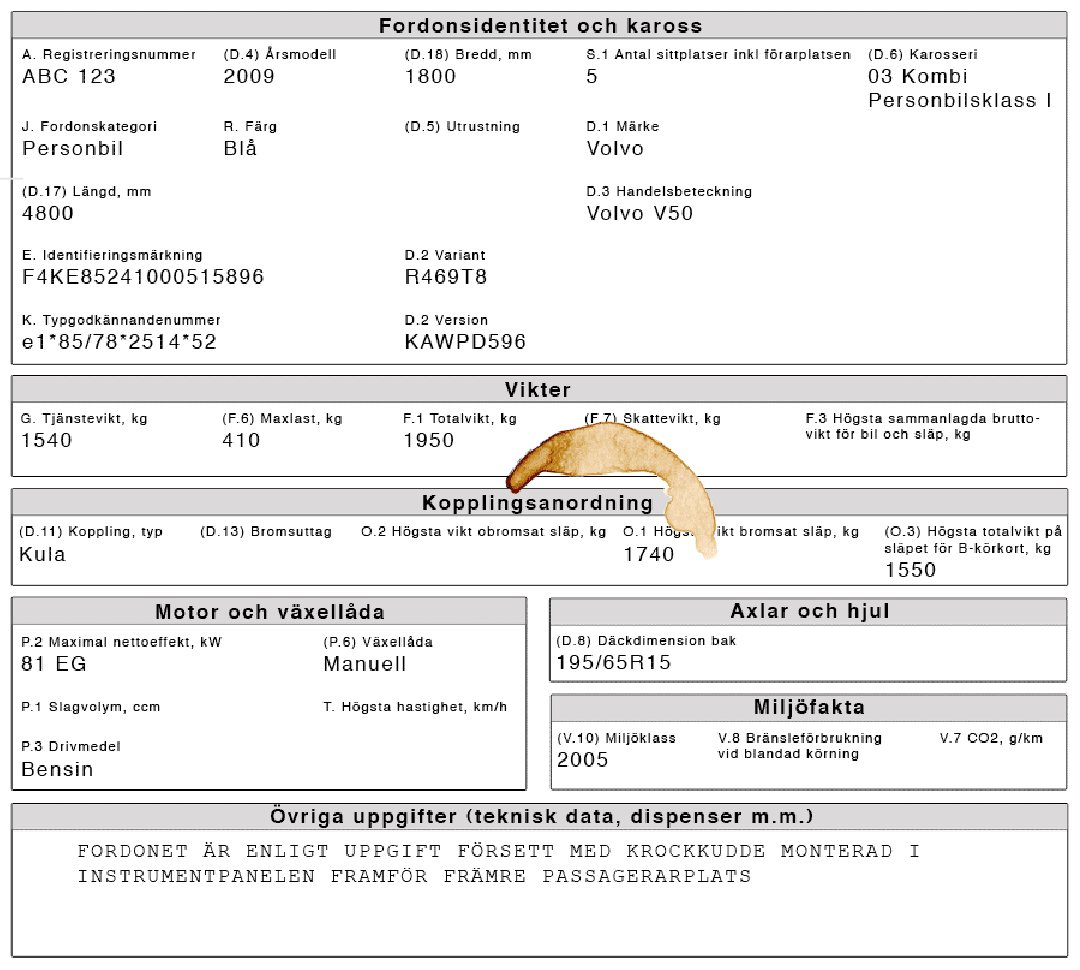
The taxable weight is not visible. Is there an assumption that you can make anyway?

Picture for question 29

Explanation

”Skattevikt” = Taxable weight

”Tjänstevikt” = Unladen weight

“For private cars, the taxable weight is the same as the vehicle’s unladen weight.”

Swedish Transport Agency
Question 30

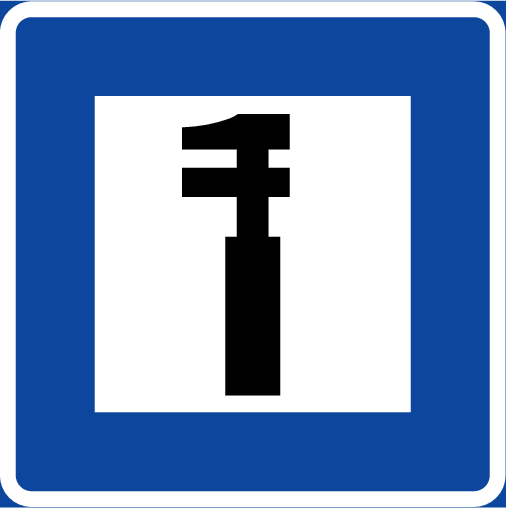
What does this road sign mean?

Picture for question 30

Explanation

Vehicle workshop (H2)
Vehicle workshopH2
Question 31

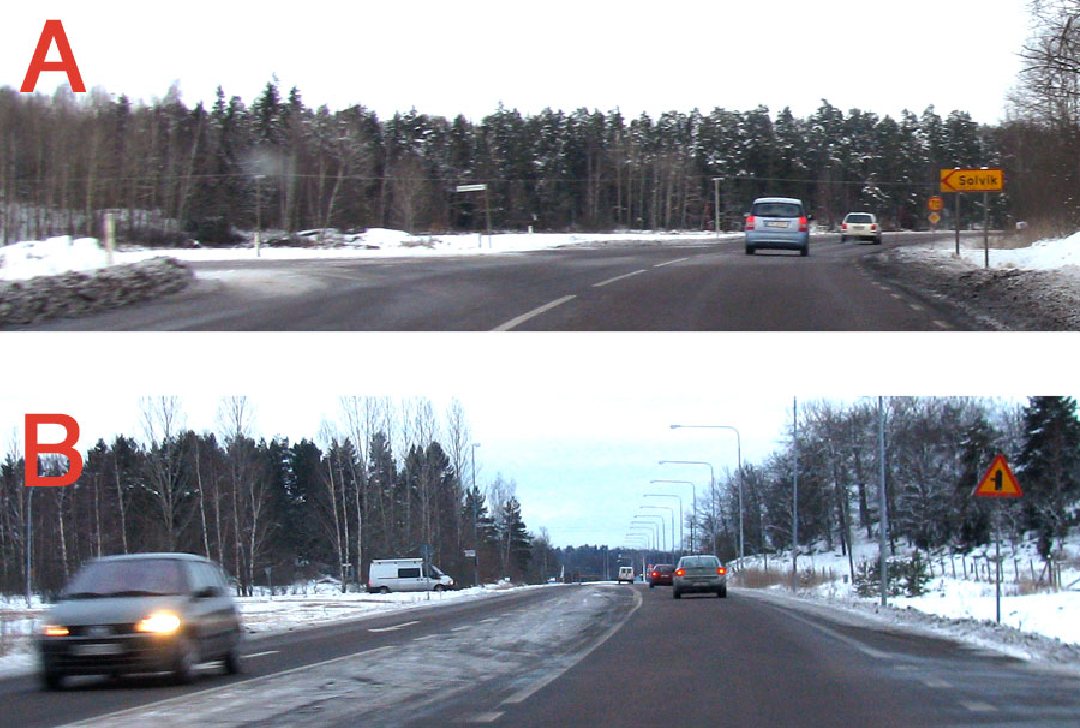
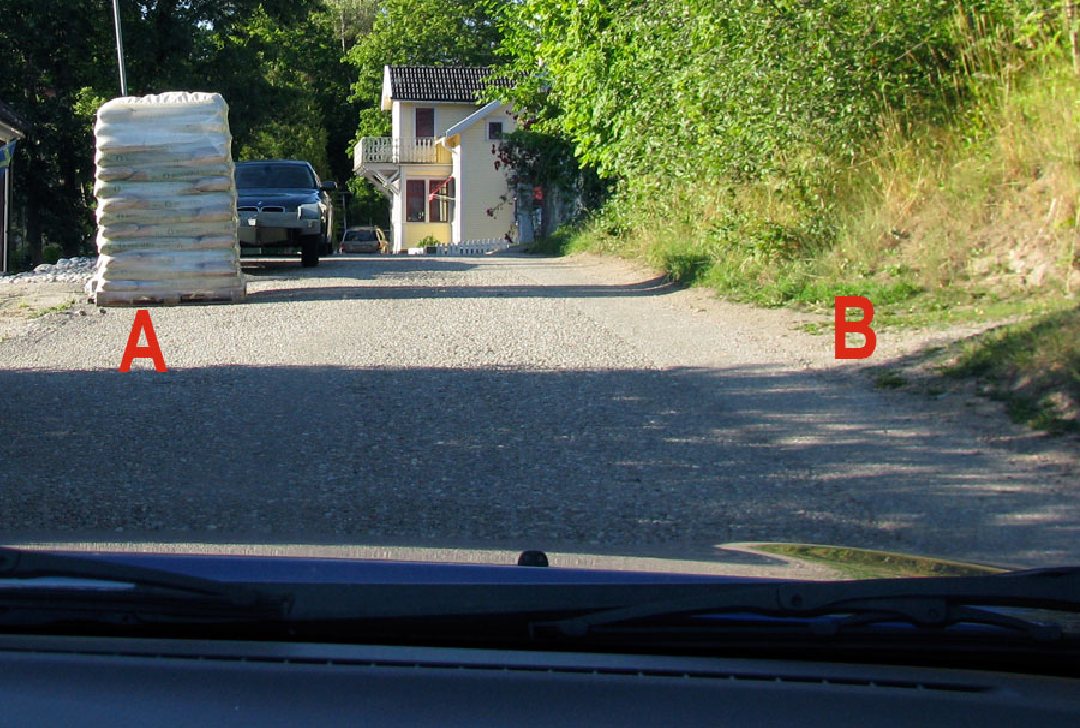
You are driving the vehicle from which the pictures are taken. Which of the following is true?

Picture for question 31

Explanation

The sign to the right of image B:

Warning for a junction where road users on a connecting road are obliged to give way or stop (A29)
Warning for a junction where road users on a connecting road are obliged to give way or stopA29

“The sign indicates a junction where drivers of vehicles on connecting roads are obliged to give way or stop. The symbol is adapted to the conditions of the location.”

Vehicles coming from the left in A have to give way, but not according to the right-hand rule, as it is a priority road. (Enlarge the image and you will see the priority road sign on the right. In the image, it is intentionally blurry and difficult to spot.)

Question 32

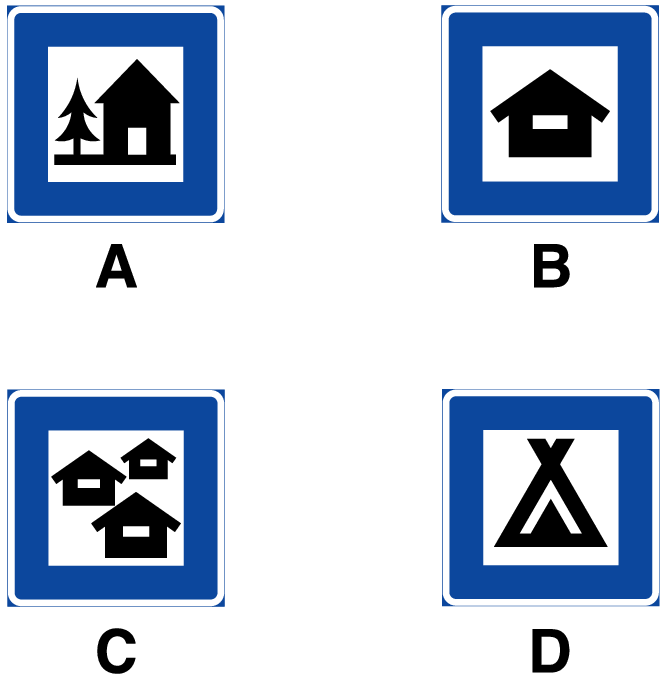
Which sign indicates that there is a hostel nearby?

Picture for question 32

Explanation

A: Hostel (H8)
AHostelH8
B: Cottage (H10)
BCottageH10

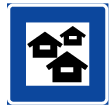
“The sign indicates a facility with a small number of cottages.”

C: Holiday village (H9)
CHoliday villageH9

“The sign indicates a facility with a large number of cottages.”

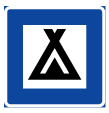
D: Camp site (H11)
DCamp siteH11

“The sign indicates a facility that provides spaces for tents, caravans and campers.”

Question 33

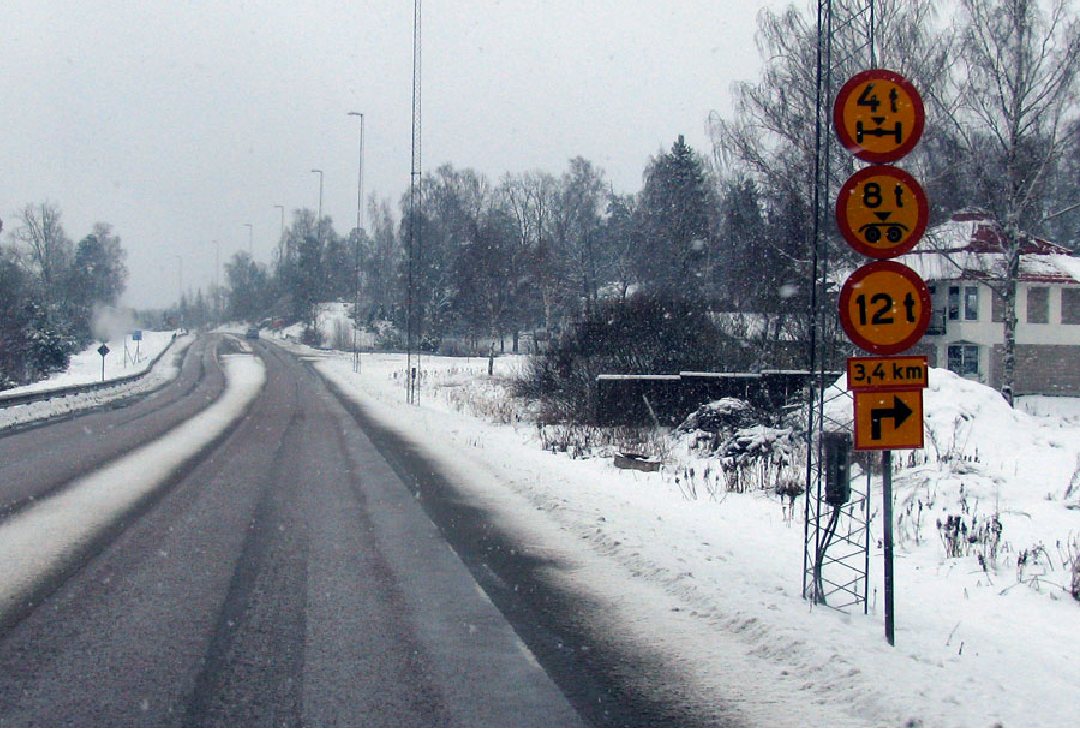
Which is the maximum permitted axle load on the road coming up on the right?

Picture for question 33

Explanation

In this question, it is important to distinguish between the different weight concepts:

Top: Restricted weight per axleC23
Middle: Restricted weight on tandem axleC24
Bottom: Restricted gross weight of vehicleC20
Question 34

How much of the fuel used for road transports in Sweden comes from fossil sources?

Explanation

“There is a high proportion of fossil fuels. More than 90 per cent of the fuel that is currently used for road transports is of fossil origin.”

Swedish Transport Administration
Question 35

You are driving the car from which the picture is taken and intend to go straight. How should you act with a view to the black car that has driven in behind the obstruction?

Picture for question 35

Explanation

“If there is an obstruction when approaching an oncoming car, the driver who has the obstruction on their side shall stop, if this is necessary for the oncoming car to be able to pass.”

Swedish Road Traffic Ordinance

Being overly nice does not benefit anyone here; it just causes confusion since the black car has already stopped to let you past according to the rules.

Question 36

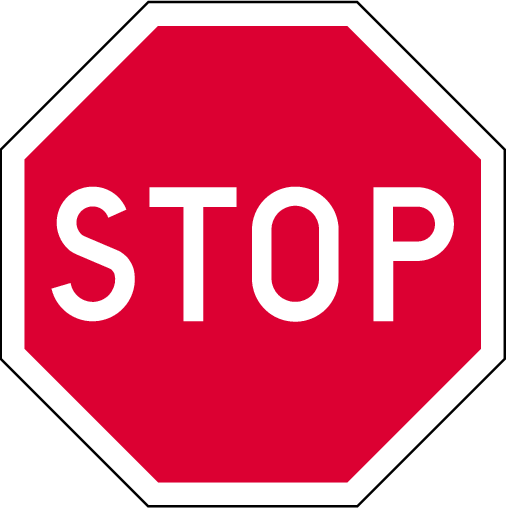
You want to turn at a junction. There are no traffic signals but this sign is erected. What rule applies?

Picture for question 36

Explanation

Obligation to stop
Obligation to stop

“The sign indicates that drivers are obliged to stop before entering the intersecting road, thoroughfare or track area and that the provisions of Chapter 3, Section 18 of the Road Traffic Ordinance (1998:1276) apply. If all approaching roads in a junction have an obligation to stop, this is indicated with additional panel T14, all-way stop.”

Question 37

What is the function of the glycol in the coolant?

Explanation

“Glycol prevents freezing damage.”

Driving Licence Book, 19th Edition, page 140
Question 38

When does the airbag trigger?

Explanation

“You do not need to worry about the airbag triggering during small accidents as it requires a speed of 20–30 km/h for it to be activated.”

Driving Licence Book, 19th Edition, page 117

Is it not better for it to be triggered every time?

– No, actually not. The airbag is not completely harmless since it inflates with such extreme force. If you crash at 10 km/h, the airbag can do more harm than good. However, at higher speeds, it does more good than harm.

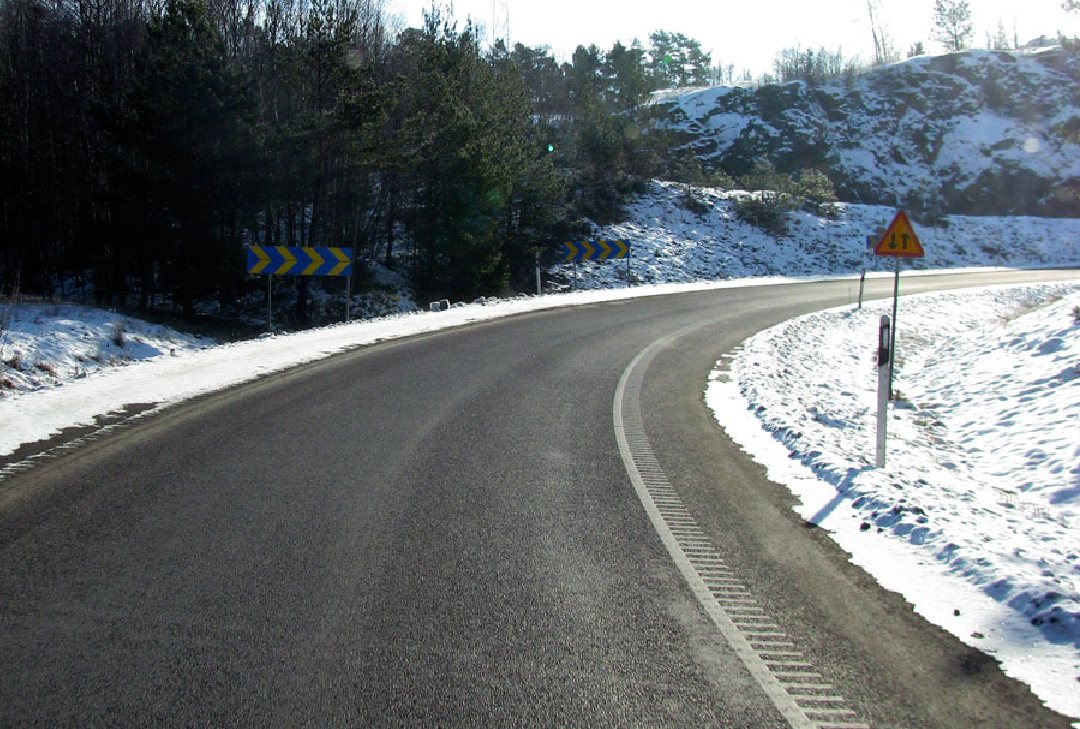
Question 39

What does the warning sign on the right indicate to be beware of?

Picture for question 39

Explanation

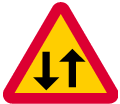
Beware of two-way traffic ahead (A25)
Beware of two-way traffic aheadA25

“This sign indicates that a one-way road is turning into a road with traffic in both directions.”

Question 40

At what point is it safe for a child to sit like an adult in a seat with an airbag?

Explanation

“Only when the child is 140 cm tall is it safe for them to sit in a passenger seat with a connected airbag.”

Swedish Transport Agency

When they are 135 cm tall, the child may be seated as an adult in a seat with no airbag. As the question specifies that the seat has an airbag, the answer of at least 140 cm is the correct one.

Note that there is a nearly identical question but without the airbag.

Question 41

Which option is an example of overlearning?

Explanation

Overlearning: “Your purely technical driving must become automatic. When you do not need to think about the technical aspect of the driving, wherein it has become automatic, you can use your thinking ability when something happens that requires quick reactions.” (Driving Licence Book, 19th Edition, page 11)

Question 42

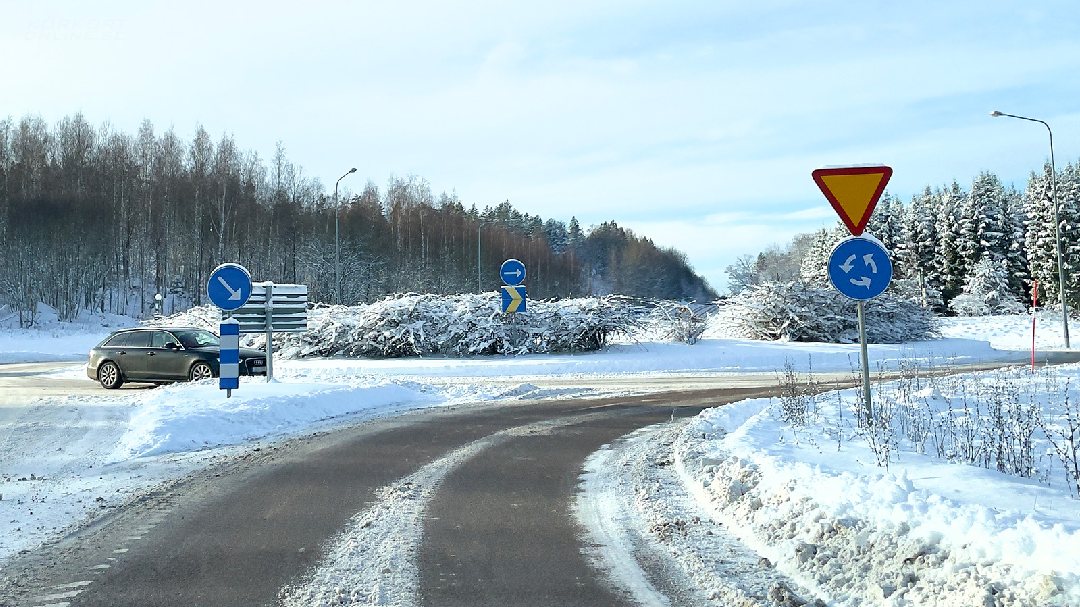
You are driving the car from which the picture is taken. Are there any special rules that apply in the roundabout?

Picture for question 42

Explanation

There are never roundabouts that force you to exit via a specific exit road and the flow of traffic is always in the same direction (counterclockwise).

The mandatory sign straight ahead in the picture only indicates that the flow of traffic in the roundabout is counterclockwise, as is always the case.

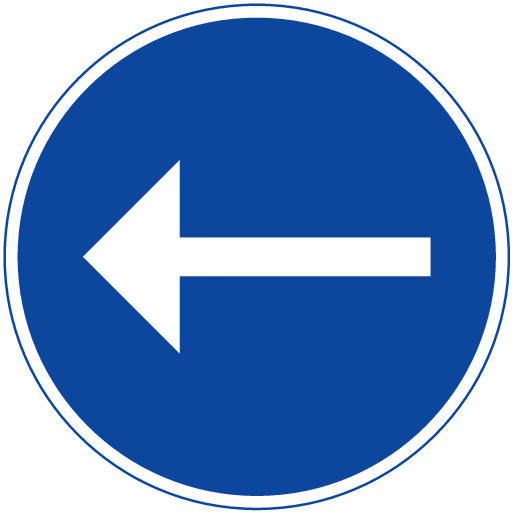
Direction to be followed (D1)
Direction to be followedD1

“The signs indicate that the vehicle may only be driven in the direction of the arrow or, in the case of two arrows, in either arrow’s direction. The symbol is adapted to the conditions of the location.”

Question 43

You are driving on a priority road and miss an exit to the right onto a smaller gravel road. Which of the following applies?

Explanation

“A driver is only allowed to turn around or reverse if if it can be done without causing a danger or hindrance to other road users.”

Swedish Road Traffic Ordinance

Reversing on priority roads is not generally prohibited.

Question 44

Is it generally permitted to unload your car at a place where only parking is prohibited?

Explanation

“Parking is the stationing of a vehicle with or without a driver. The stationing is done for a reason [...] other than setting down or picking up passengers or to load or unload items.”

Swedish Transport Agency

What you are doing is subsequently not counted as parking and is therefore not subject to the parking prohibition.

Question 45

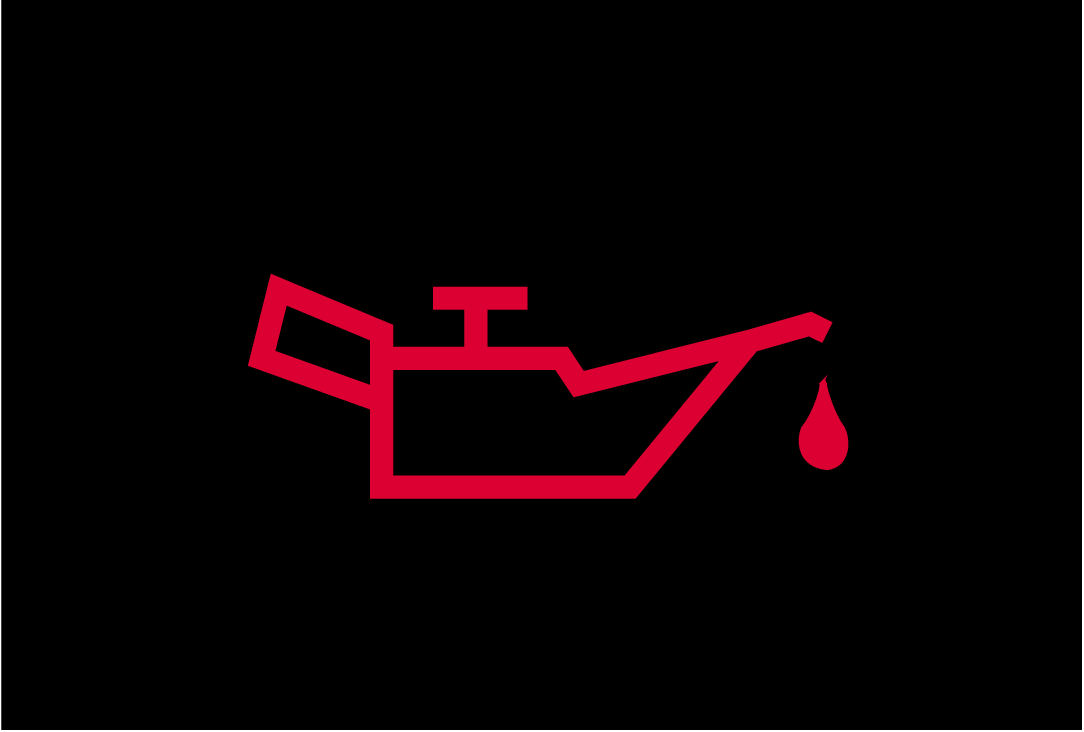
What does it mean if this lamp lights up on the dashboard?

Picture for question 45

Explanation

“Oil pressure […] there may be too little oil in the engine”

Driving Licence Book, 19th Edition, page 146–147
Question 46

What does this road sign mean?

Picture for question 46

Explanation

Direction to be followed (D1)
Direction to be followedD1

“The signs indicate that the vehicle may only drive in the direction that the arrow is pointing or, in the case of two arrows, in the direction of either arrow. The symbol is specific to the conditions at the location.”

Question 47

You are travelling at 30 km/h. How long will the braking distance be, if it is 41 metres at 60 km/h?

Explanation

“The braking distance [...] increases quadratically with increasing speed.”

Driving Licence Book, 19th Edition, page 120

Colour codes for the figures (easier to keep track of them)

Current speed 30 km/h

Comparative speed 60 km/h Comparative braking distance 41 metres

Reduction in speed (to be calculated) X times

Reduction in braking distance (to be calculated) X times

The answer is arrived at in several steps. The first question to ask yourself is whether the speed is increasing or decreasing. It is decreasing (from 60 to 30). But what we need to know is by how much it decreases:

  • 60 / 30 = decreases by 2 times

The next step is to find out how much shorter the braking distance will be:

  • 22 = 4 times shorter (22 is the same as 2 * 2)

To the power of 2 as the braking distance increases quadratically with the speed. The term “quadratically” corresponds to the meaning of “to the power of 2”.

We now know that the braking distance is 4 times shorter. In order to arrive at the distance in metres (as the question is asking for), the following calculation is used:

  • 41 / 4 = approximately 10 metres.

Note that the road is probably very slippery, as 10 metres at 30 km/h is a fairly long braking distance.

Question 48

How do you minimize the risk for wheelspin after stopping in a slippery intersection during winter?

Explanation

Review of the options:

  • By applying the throttle uneven during the first meters (forceful–careful–forceful).
    – Bad, this increases the risk of wheelspin, since every forceful throttle application is like starting for the first time.
  • By reversing about one metre just before entering the intersection.
    – It can be good in some specific cases, but it is bad as a general advice. Most likely, the grip will not be any better and the visibility gets worse.
  • By applying the throttle in a forceful and even way.
    – Forceful equals greater risk for wheelspin This option is therefore incorrect.
  • By applying the throttle in a careful and even way.
    – Correct.
Question 49

What is the maximum total width of a vehicle driving on a public road?

Explanation

“If [...] the vehicle’s width, including load, exceeds 260 centimetres, [...] the vehicle or a vehicle coupled to this may only be driven on a private road.”

Swedish Road Traffic Ordinance
Question 50

What does this road sign mean?

Picture for question 50

Explanation

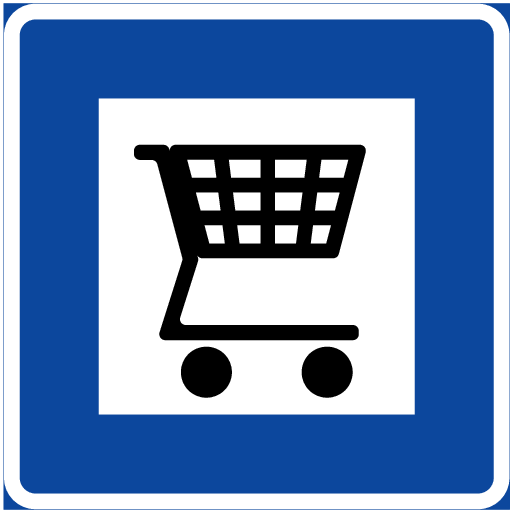
Commercial area (G10)
Commercial areaG10

“The sign indicates an area for commerce.”

Question 51

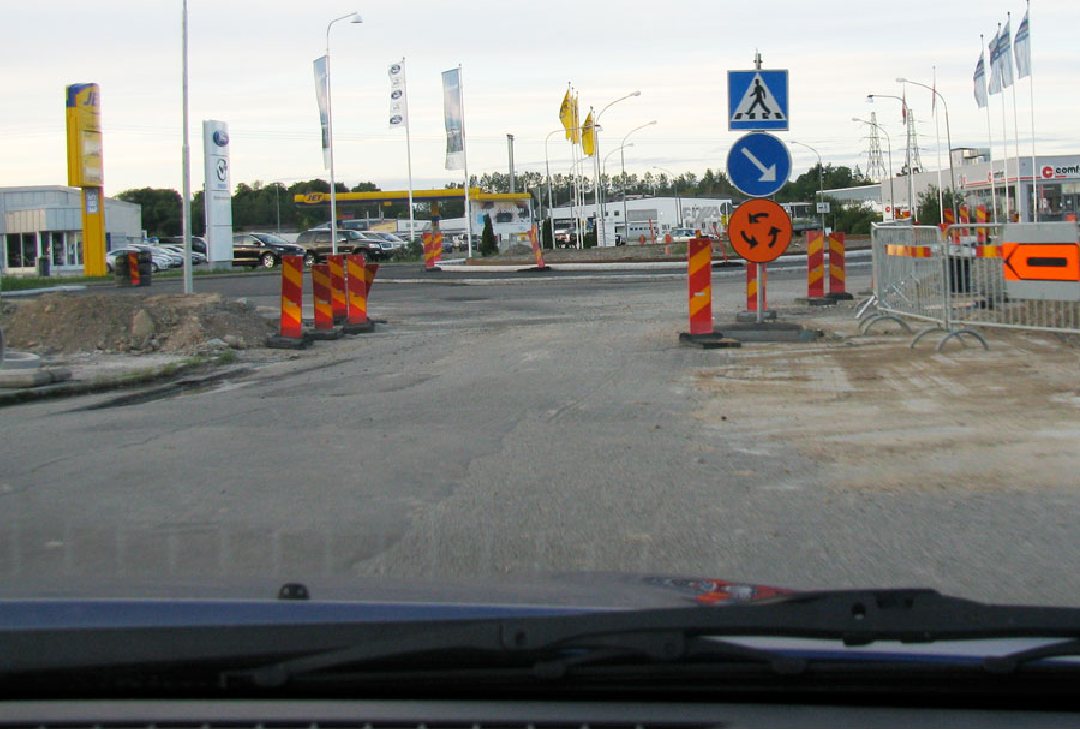
You intend to continue on straight. How should you act in the situation in the picture?

Picture for question 51

Explanation

During roadworks, temporary orange signs are erected. “Follow the orange road signs [...] They take priority over regular instructions.” (Driving Licence Book, 19th Edition, page 83)

Question 52

Can your licence be revoked if you violate the obligation to stop?

Explanation

“A driving licence shall be revoked [...] if the licence holder […] has failed to fulfil their obligation to stop […] if the violation cannot not be considered minor”

Driving Licence Act
Question 53

What should you do if the ABS warning light comes on for a moment right when you start the car?

Explanation

“The check light for the ABS is meant to light up for a few seconds when the engine is started.”

Driving Licence Book, 19th Edition, page 131

This is to let you know that the light is working.

Question 54

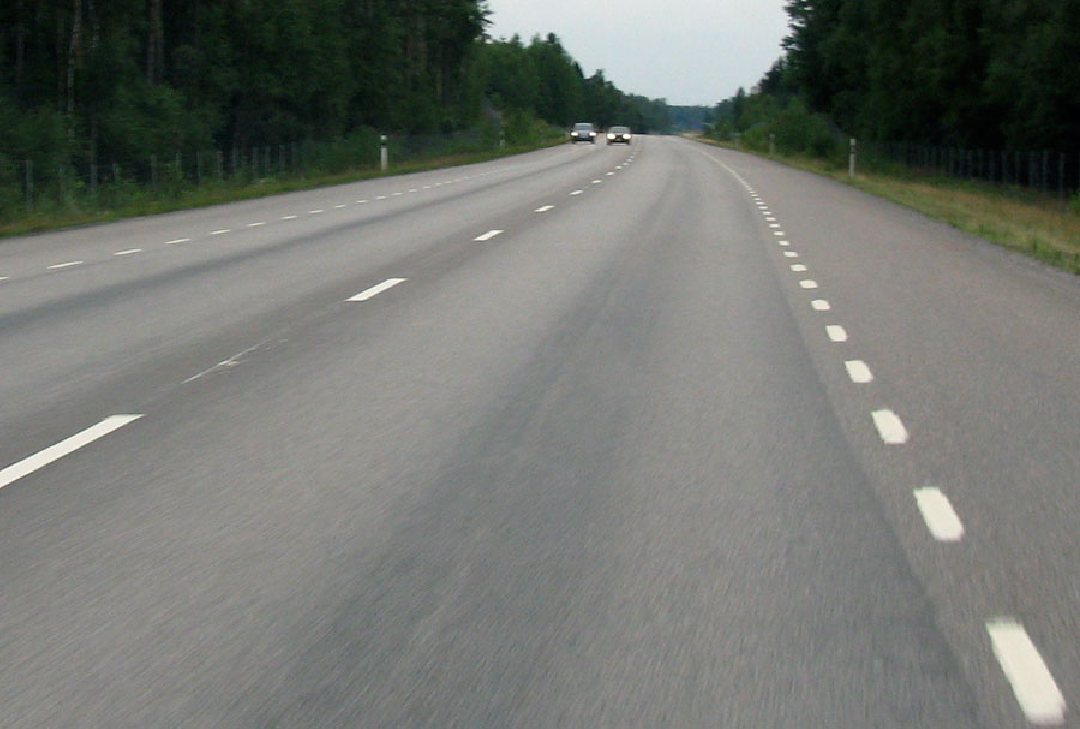
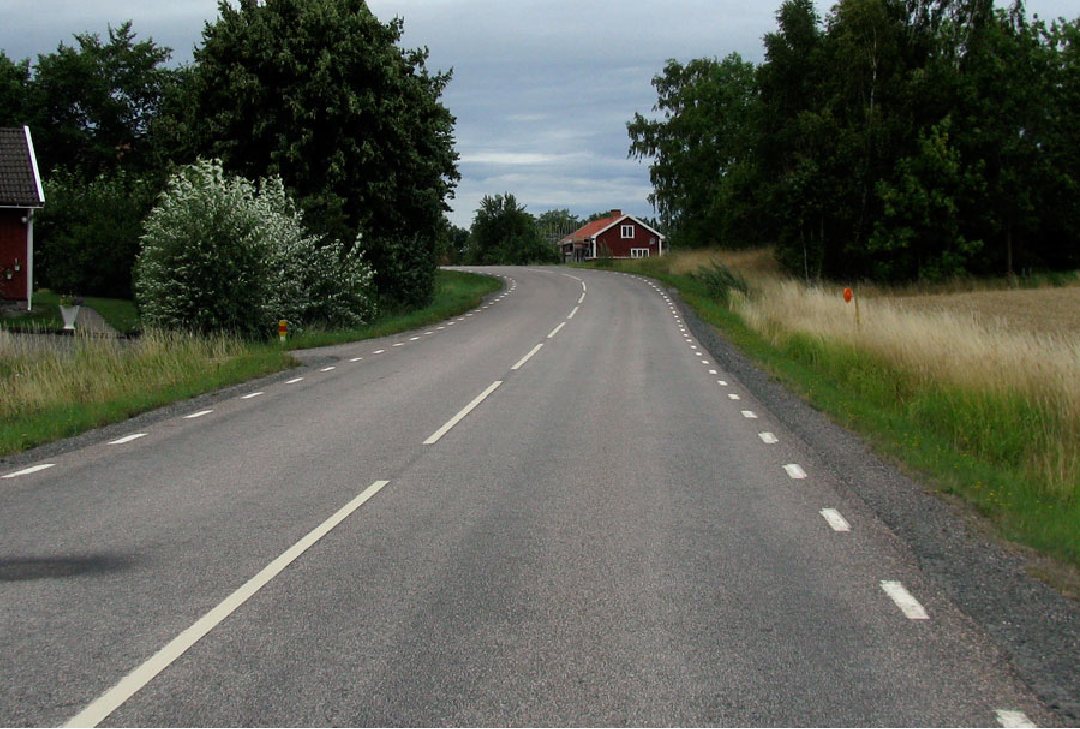
What do the long lines in the centre of the road mean?

Picture for question 54

Explanation

Review of the options:

  • That it is inadvisable to drive over into the opposite direction of travel
    – Yes, “A warning line is used to indicate that it is inappropriate to cross the line given the traffic conditions.”
  • That overtaking is prohibited
    – Wrong, the lines do not indicate that overtaking is prohibited. However, overtaking may be prohibited since visibility is poor, but this is not due to the lines.
  • That only vehicles driving to and from properties or similar may cross them
    – Wrong, everyone may cross the lines.
Question 55

What is power steering?

Explanation

“Power steering makes it easier to steer”

Driving Licence Book, 19th Edition, page 137
Question 56

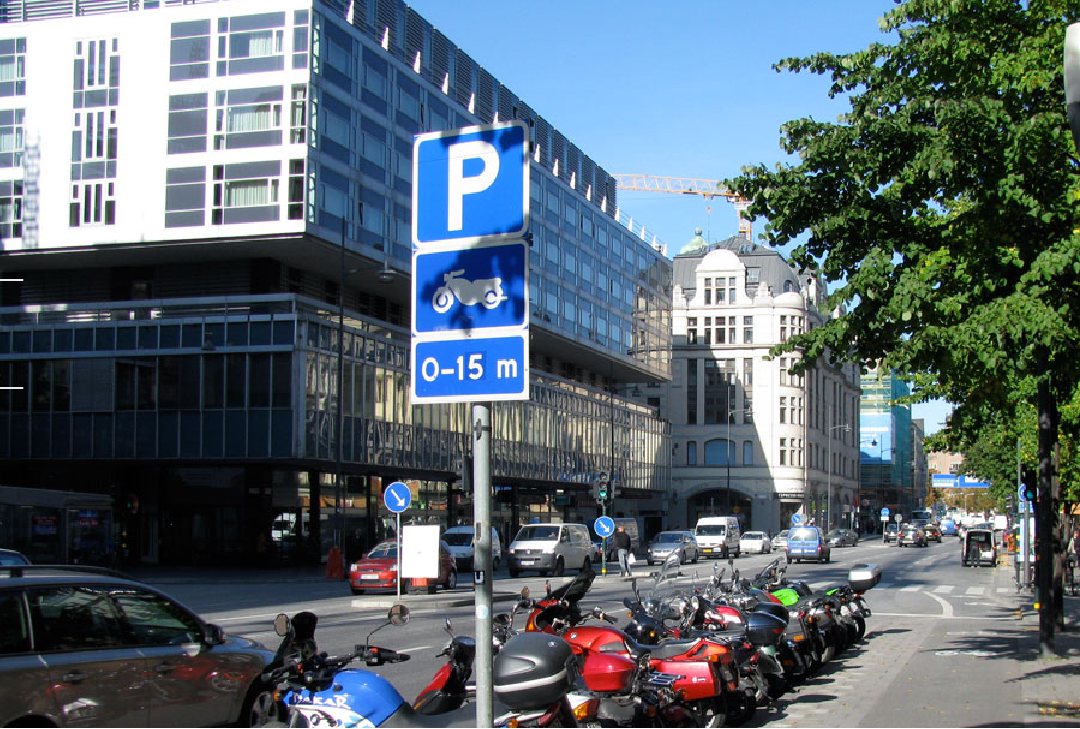
Is it permitted to park a car at this location?

Picture for question 56

Explanation

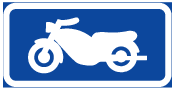
Symbol panel (T8)
Symbol panelT8

“The panel indicates the sign under which the panel is placed applies to the type of vehicle or the road user group specified on the panel.”

“0–15” does not refer to time, but rather the number of metres to which the parking sign relates.

Question 57

You are driving into a residential area and you see this sign. Which option is true?

Picture for question 57

Explanation

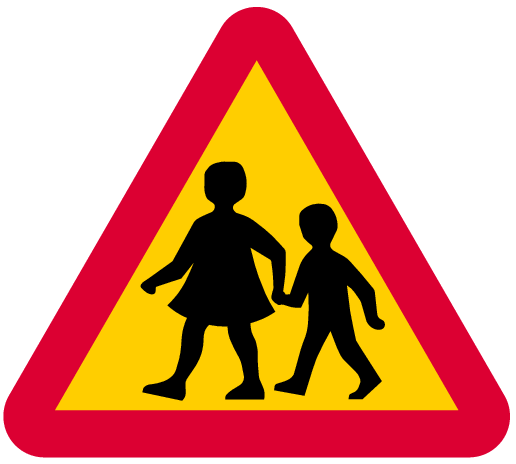
Children (A15)
ChildrenA15

“This sign indicates a stretch of road where children often cross or where there are often children on or near the road.”

But the sign only warns of children; not pets and other things?

– Yes, but the question is not about the meaning of the sign. The most important aspect of the question is rather the residential area. Only thinking that there may be children around, as is suggested in the first alternative, is not the marker of a mature perspective. This would be like driving at 110 km/h on a motorway in extreme weather and glassy ice just because you have the “right” to do so according to the sign.

Question 58

What do the signs on the right indicate?

Picture for question 58

Explanation

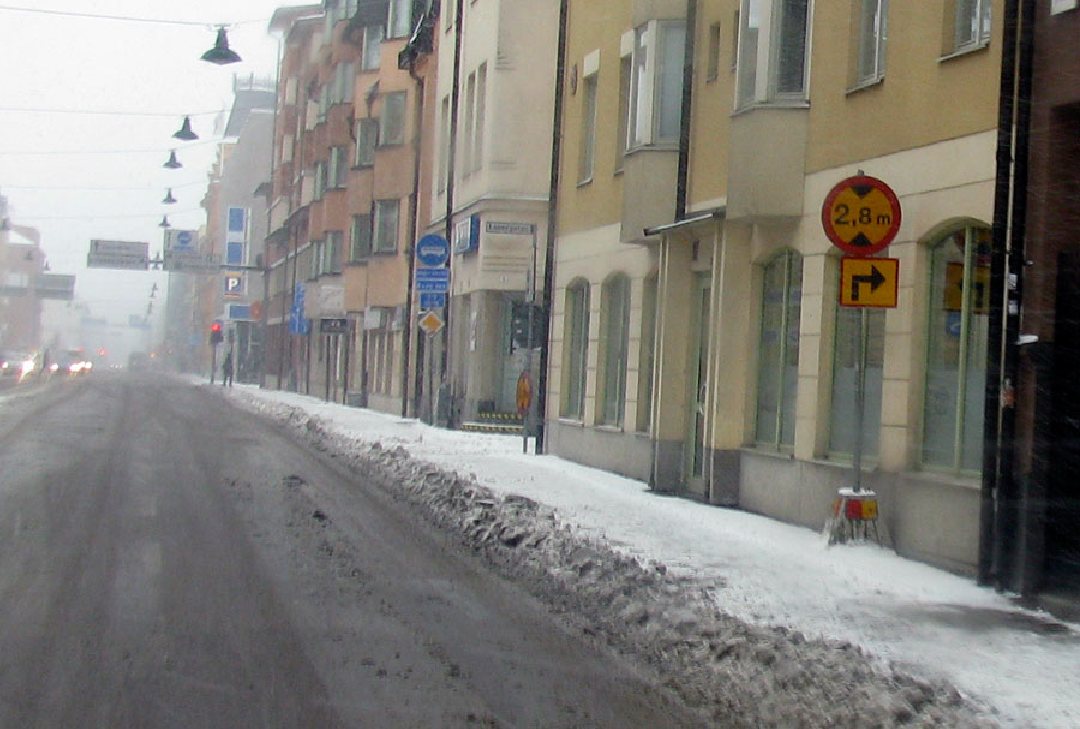
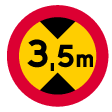
Restricted vehicle height (C17)
Restricted vehicle heightC17

“The sign indicates that traffic with vehicles over a certain height is prohibited if the free height is lower than 4.5 metres. The greatest permitted vehicle height is indicated on the sign.”

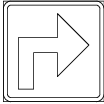
Direction (T12)
DirectionT12

“The panel indicates the direction to what is stated on the sign. The panel is specific to the conditions at the location.”

Question 59

What is the most difficult thing to estimate during an overtaking?

Explanation

It is very difficult to judge how fast a car coming straight towards your own car is driving. The reason being that there are no clear reference points between which you can “measure” their speed. If you are looking at a car from the side, it is much easier to judge its speed.

“If you are heading towards another car, you have to remember how difficult it is to judge where you will meet.”

Driving Licence Book, 19th Edition, page 87

Note that the other alternatives are fairly bad, i.e. these are things that are relatively easy to judge.

Question 60

How much better, in terms of traffic safety, is it to use a handsfree rather than holding your mobile in one hand?

Explanation

Whether you use a handsfree or not is of little importance: “It is not safe to be on your mobile even if you are using a handsfree device. It is more or less just as dangerous as holding the mobile in your hand.” (Swedish Transport Administration)

The reason being that the conversation itself is the disturbance. The fact that your hands are free helps with the mechanical side of driving, but it may also increase the risk because it gives you a false sense of security, which may make you spend more time talking on the phone.

Question 61

How should the road sign in the picture be interpreted?

Picture for question 61

Explanation

Illustration for question 61
Date parking (C38)
Date parkingC38

“The sign indicates that it is prohibited to park vehicles on days with even-numbered dates on the side of the road that has even-numbered addresses and on days with odd-numbered dates on the side of the road that has odd-numbered addresses.”

Address numbers (house numbers) are considered by the authorities to be a suitable fixed point to go by. No address numbers are visible in this picture, but this has no impact on the question.

Question 62

Are you permitted to drive a class I moped (EU moped) if you have a category B licence?

Explanation

“Category B also gives the licence holder the right to drive - Moped class I (EU moped), a tractor, heavy equipment class I and class II as well as three and four-wheeled heavy motorcycles - Terrain scooter (if the licence was issued before 1 January 2000)”

Swedish Transport Agency
Question 63

What does this road sign mean?

Picture for question 63

Explanation

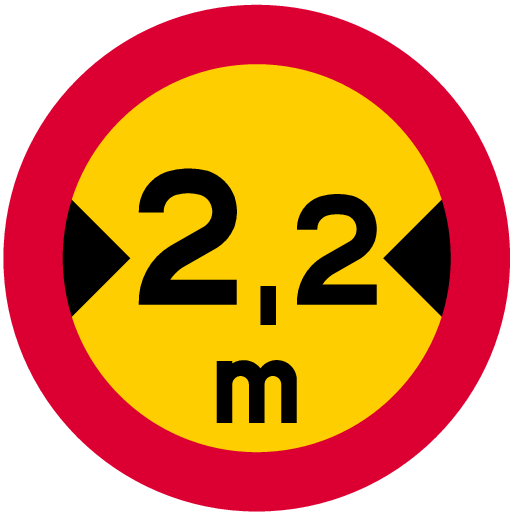
Restricted vehicle width (C16)
Restricted vehicle widthC16

“The sign indicates that traffic with vehicles over a certain width is prohibited. The greatest permitted width is indicated on the sign.”

Question 64

What is the mortality rate for pedestrians who get hit by a car driving at 50 km/h?

Explanation

“Nine out of ten people will survive being hit by a car at 30 km/h. However, when that speed is increased to 50 km/h, the risk of a fatal accident increases eightfold”

Swedish Transport Administration

The important thing is that you are aware that the speed greatly impacts on the chances of a pedestrian surviving being hit by a car. Specifically, you should know that 30 km/h = great chance of survival and 50 km/h = small chance of survival. This is so that you will understand why the speed limit on some stretches of road is 30 km/h.

The difference between the different alternatives is normally great enough that you do not need to learn any exact figures or formulas.

Question 65

You are driving the car from which the picture is taken and you have just entered the road after having pulled out from a property. The priority road sign in the picture is the first you see. Which option is true?

Picture for question 65

Explanation

Normally, a road sign only begins to apply when you have passed it, but the priority road sign is a special case. It is located at the start of the priority road and is also repeated after junctions.

Priority road (B4)
Priority roadB4

“The sign is erected at the start of the priority road and is repeated after each junction with a road other than such as referred to in Chapter 3, Section 21, second paragraph of the Road Traffic Ordinance, if it is not otherwise clear that the priority road continues after the crossing.”

The Swedish Transport Agency states that a priority road sign is not located directly after a junction if the road is also not a priority road before the junction. This, combined with the fact that it is normal that priority road signs are located after junctions, means that you can assume that you are already driving on the priority road.

Question 66

What is a dual-circuit brake system?

Explanation

“[…] a secondary line that allows the brake to still work on some of the wheels. This is referred to as a dual-circuit brake system.”

Driving Licence Book, 19th Edition, page 129
Question 67

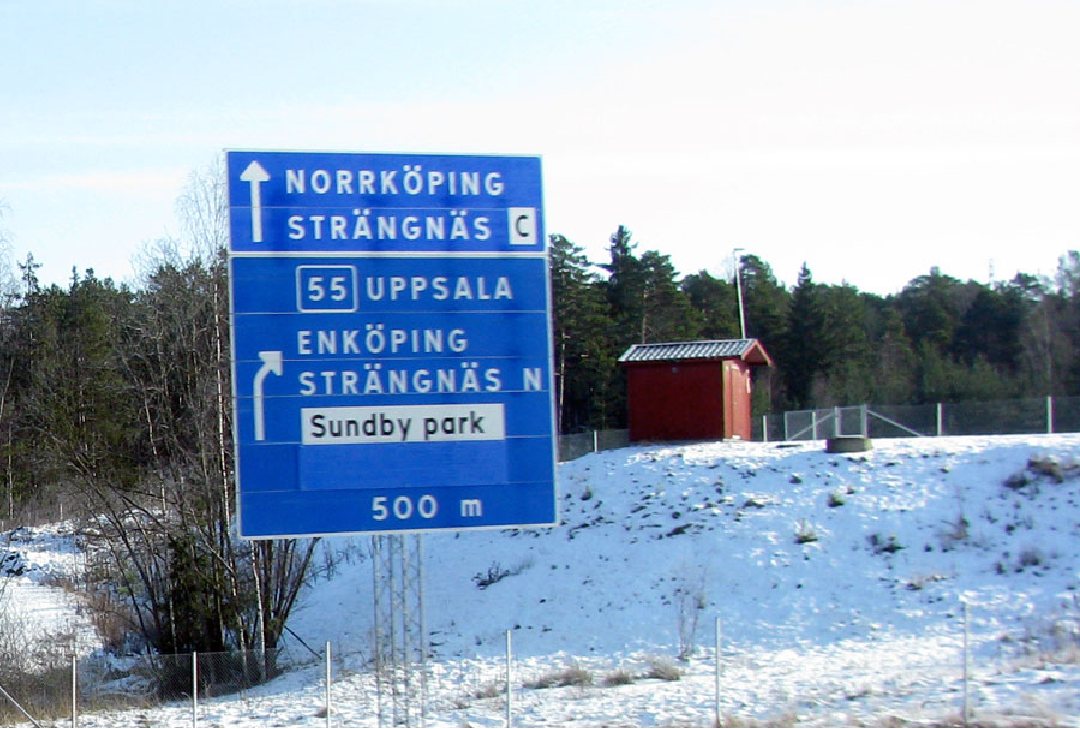
What does the letter C after Strängnäs indicate?

Picture for question 67

Explanation

In this context, C is for centre.

Question 68

What is the maximum permitted length of a vehicle or vehicle/trailer combination that does not have an anti-lock braking system?

Explanation

“A motor vehicle, other than a bus, with or without a coupled vehicle may not be driven on roads other than private roads if the vehicle or vehicle/trailer combination, including load, is longer than 24.0 metres. The length of a vehicle and trailer combination, including load, may however have a maximum length of 25.25 metres if the following conditions are fulfilled. 1. Each vehicle involved is equipped with the anti-lock braking system and coupling device prescribed by the Swedish Transport Agency.”

Swedish Road Traffic Ordinance

As the condition of having an anti-lock braking system is not fulfilled, the maximum permitted length is 24.0 metres.

Question 69

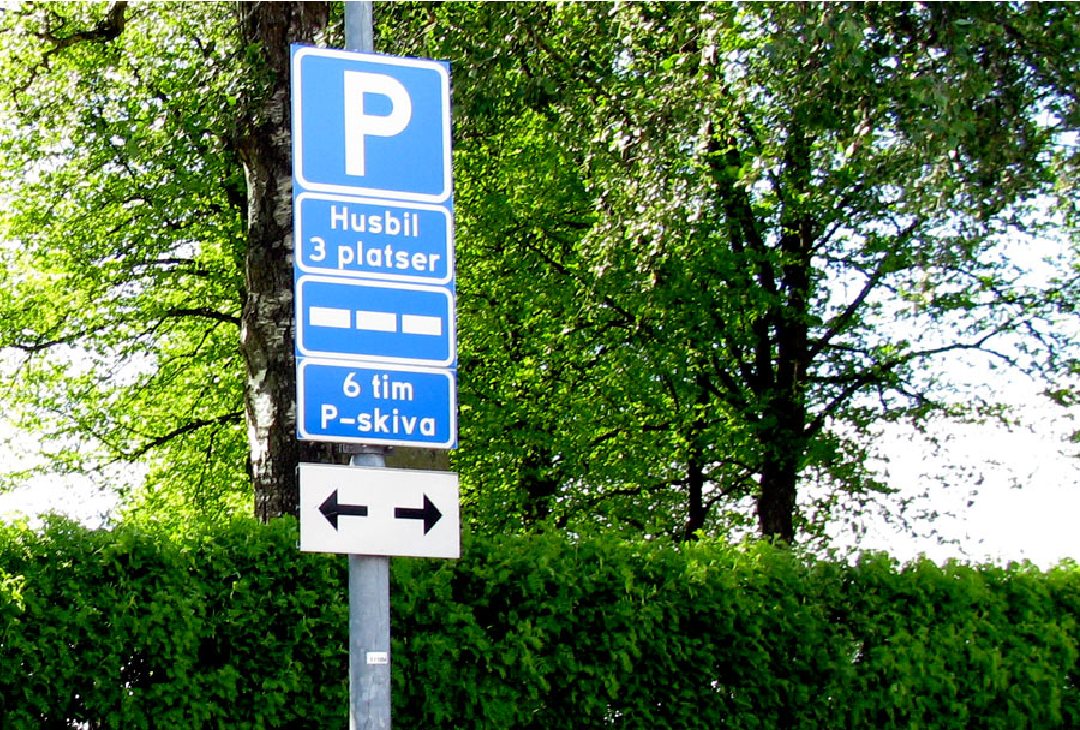
Does the time limit on the parking disc sign apply to campers?

Picture for question 69

Explanation

”Husbil, 3 platser” = Mobile home, 3 spaces

”P-skiva” = Parking disc

The entire sign combination applies to mobile homes (campers). In other words, there are 3 parking spaces for mobile homes, they are allowed to use them for a maximum 6 hours and they must have a parking disc.

Question 70

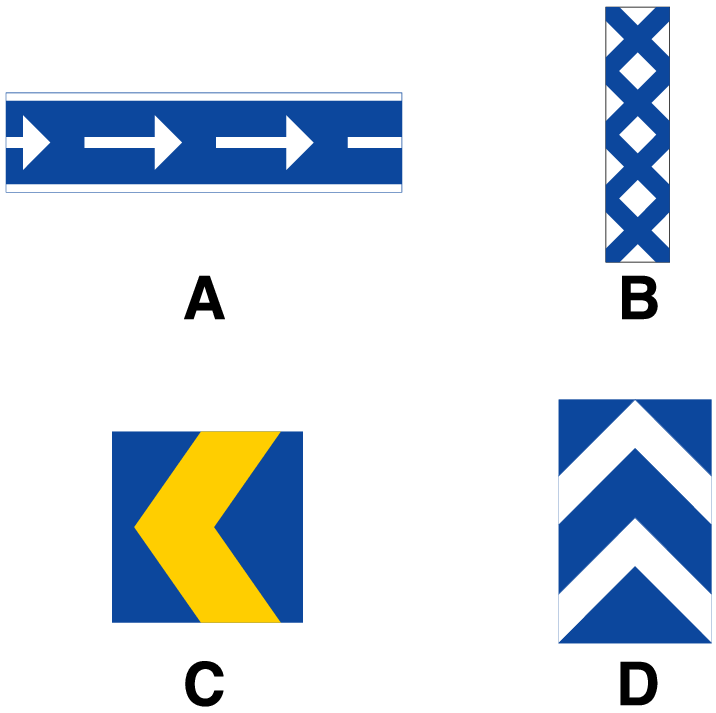
Which sign is used to make a level crossing more visible?

Picture for question 70

Explanation

A: Roundabout traffic (X9)
ARoundabout trafficX9

“This device marks the centre of a roundabout around which vehicles are to be driven.”

BLevel crossing plateY4

“This device is used to make a level crossing more visible.”

C: Arrow marker (X1)
CArrow markerX1

“The device indicates that motorists must make a sharp turn in the arrows direction because of, for example, a bend. If the device is used during roadworks or similar work, the background is red.”

D: Exit plate (X4)
DExit plateX4

“The device indicates the dividing point between a main carriageway and an exit road where there is a deceleration lane.”