What does the yellow road marking mean?

Explanation

No stopping or parkingM21
“The marking indicates it is prohibited to stop or park a vehicle and it is placed at the edge of the carriageway. No other colour may be used.”
Pick an answer to check it. 56 of 70 correct (80%) is needed to pass.
The real test has 70 questions in 50 minutes, about 43 seconds per question.
“The marking indicates it is prohibited to stop or park a vehicle and it is placed at the edge of the carriageway. No other colour may be used.”
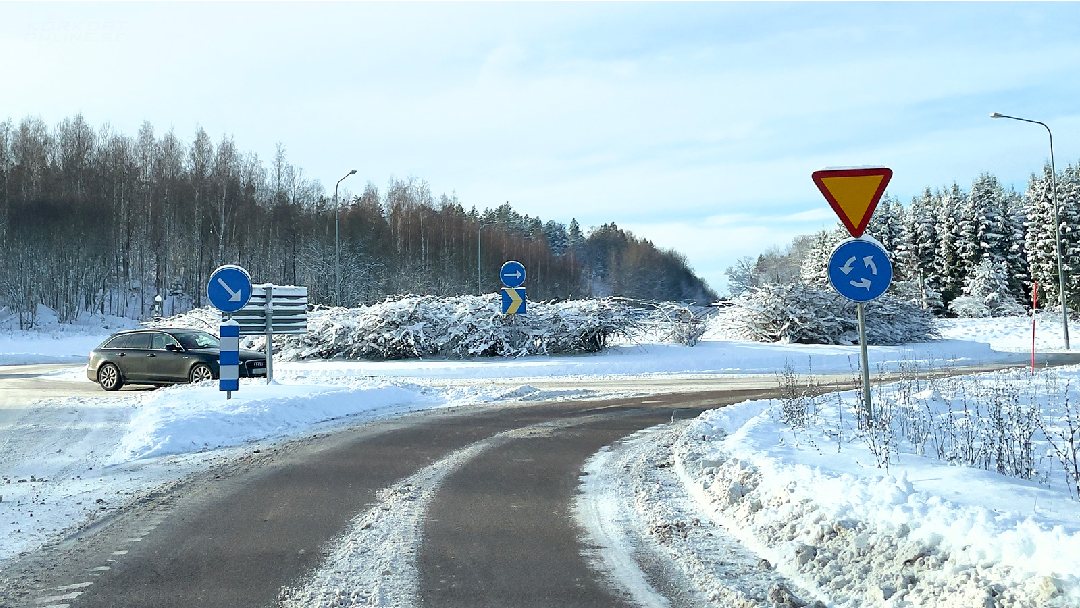
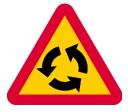
There are never roundabouts that force you to exit via a specific exit road and the flow of traffic is always in the same direction (counterclockwise).
The mandatory sign straight ahead in the picture only indicates that the flow of traffic in the roundabout is counterclockwise, as is always the case.

“The signs indicate that the vehicle may only be driven in the direction of the arrow or, in the case of two arrows, in either arrow’s direction. The symbol is adapted to the conditions of the location.”
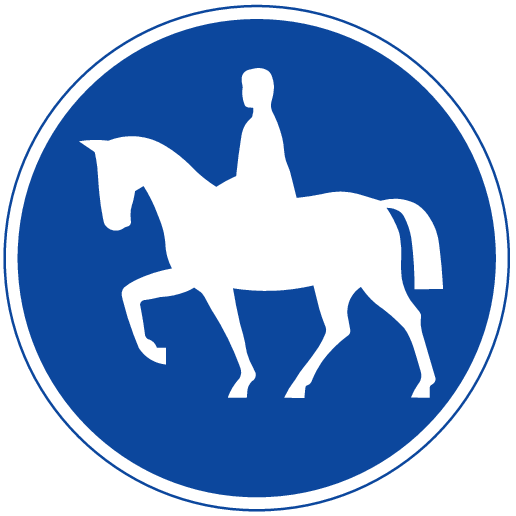

“This sign also indicates that pedestrian traffic is permitted.”
Review of the options:
– No, this question puts the spotlight on something important, namely that you cannot simply look at the symbol on the road sign, you must also be aware of the accompanying text.
“A road user may not interrupt or in any way obstruct [...] a group of children under the supervision of a leader, a funeral procession or any other procession.”
Swedish Road Traffic Ordinance
It is of course not appropriate for children to be left alone on the other side of the road just so that motorists can get through. Or to disrupt military vehicles that may be on a mission of national security.
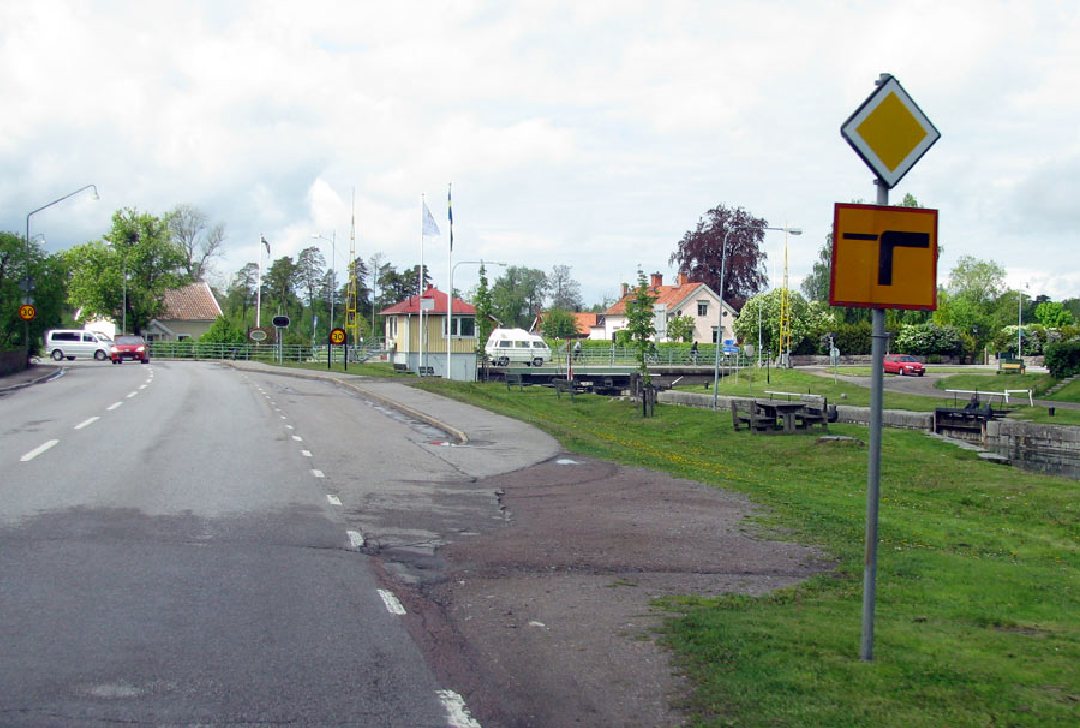
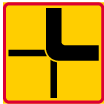
“The sign indicates a junction where drivers on a road shown as a narrow line must give way to vehicles on a road shown as a bold line. The symbol is adapted to the conditions of the location.”
“Underneath the red lights, there may be another circular light which emanates a flashing white light in order to make the crossing more visible.”
Traffic Sign Ordinance
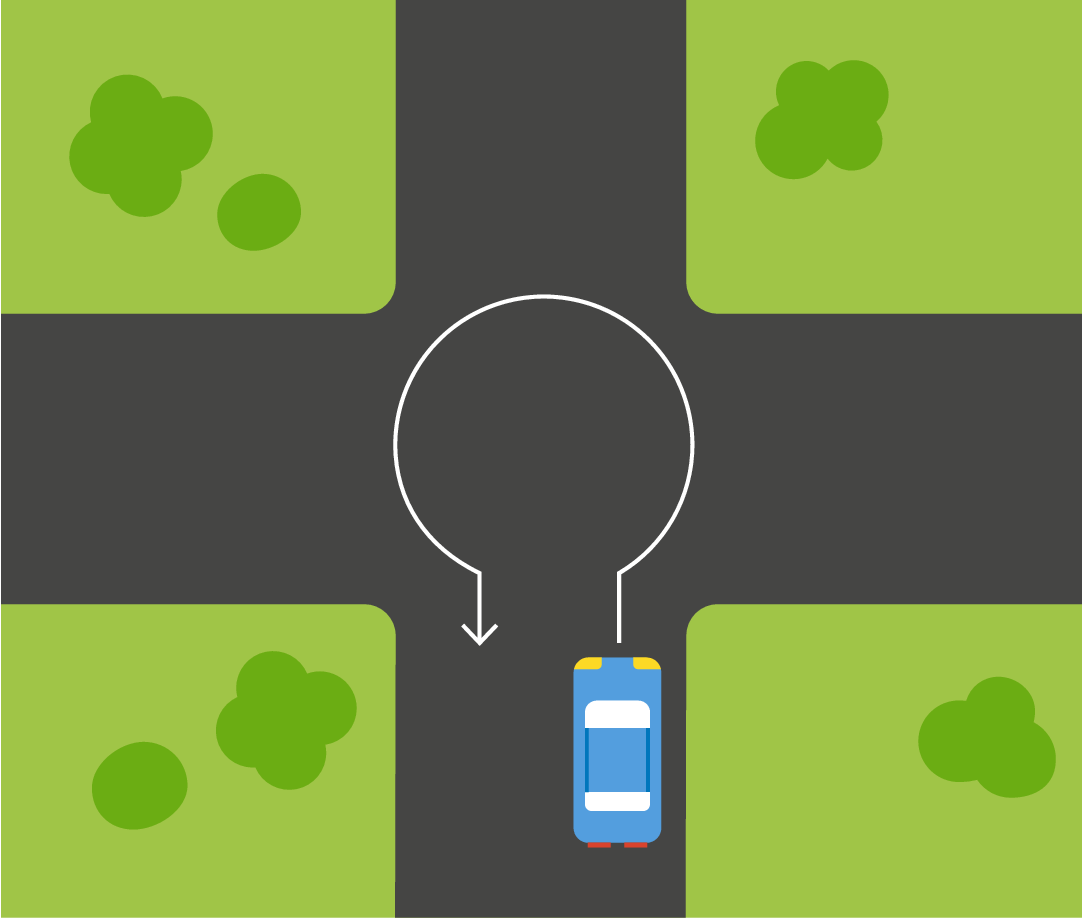
This is a U-turn. The fact that it is done in the shape of an “O” is unimportant, as the principle is the same.
“Always drive as straight as possible through a curve.”
Du och jag i trafiken [You and me in traffic], 28th Edition, page 182
This method reduces the risk of skidding (this risk increases when you turn the wheel sharply). However, remember not to pass into the oncoming lane if your visibility is limited!
“Parking is the stationing of a vehicle with or without a driver. The stationing is done for a reason [...] other than setting down or picking up passengers or to load or unload items.”
Swedish Transport Agency
What you are doing is subsequently not counted as parking and is therefore not subject to the parking prohibition.
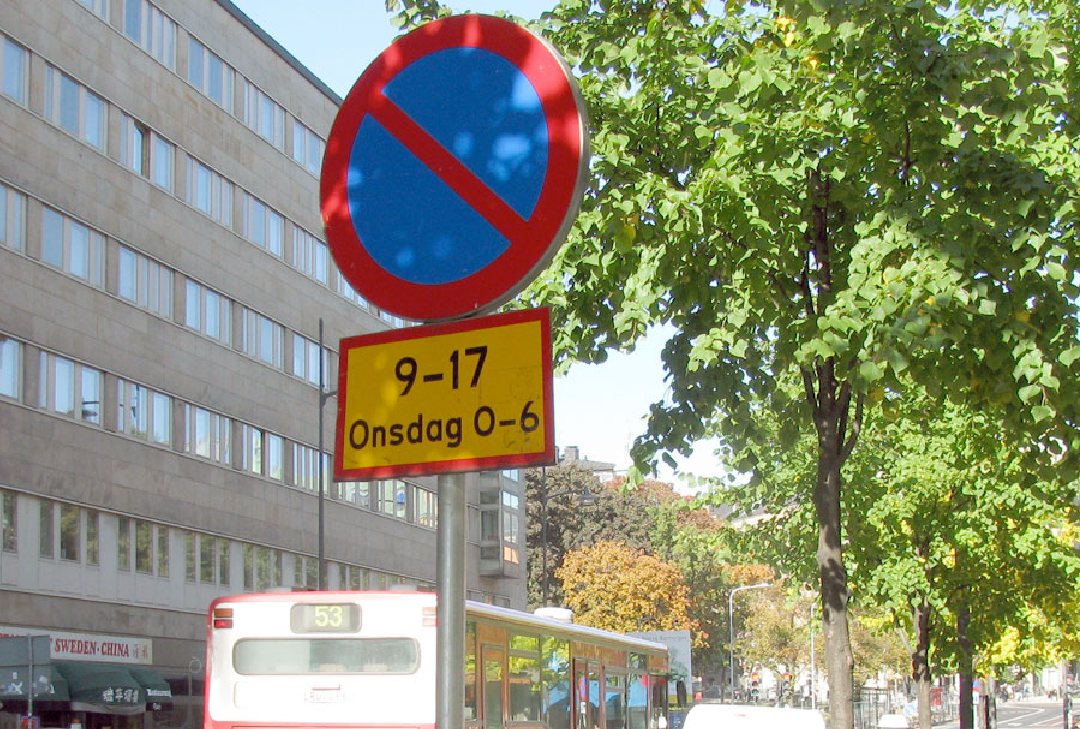
”Onsdag” = Wednesday
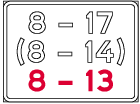
“If a certain day or certain weekday is indicated, the regulation applies to this day regardless of whether the day is a weekday, Sunday or public holiday.”
– Normally yes, but there is one exception; see the quotation above. Therefore, if it says “Wednesday 00:00–06:00”, this applies to all Wednesdays, including national holidays.
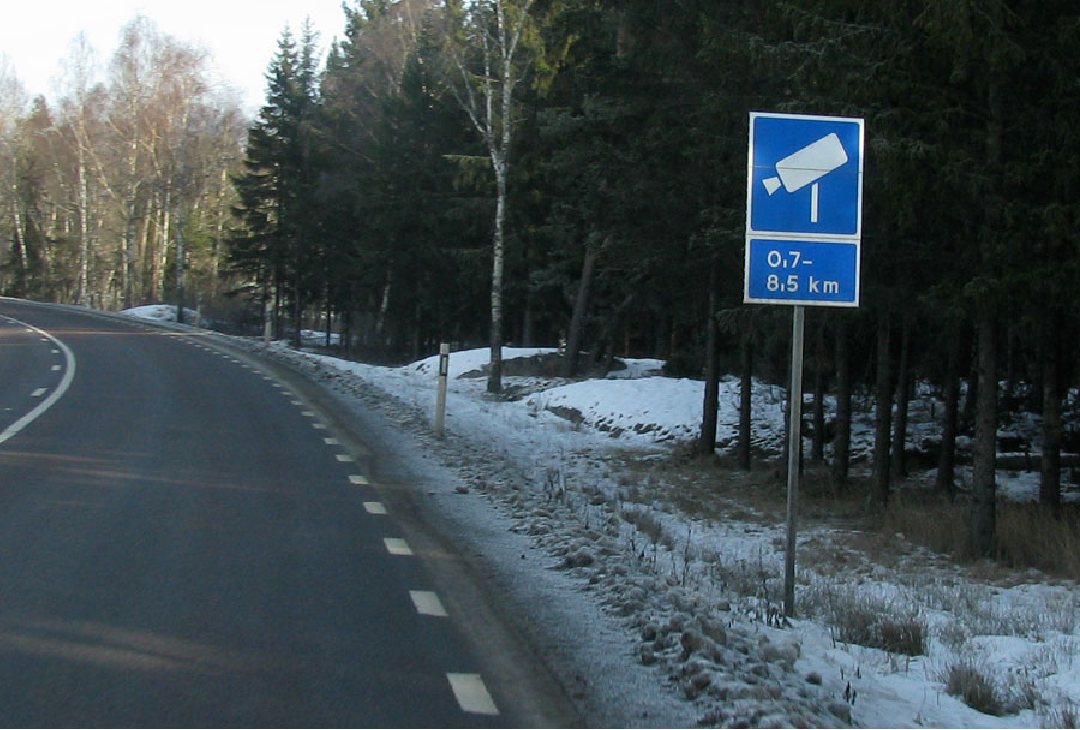
The additional panel indicates that the sign above it becomes applicable in 0.7 km, i.e. in 700 metres. This means that the sign is applicable in 1,600 metres.
Note that there is a similar question using different numbers.
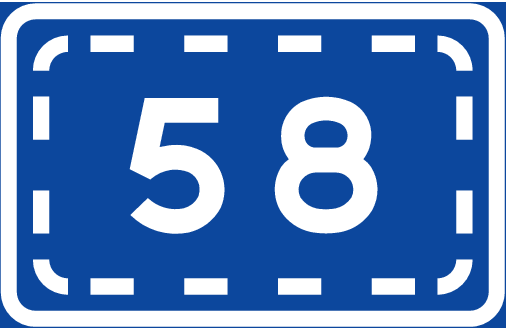
“A road number is only given for roads in the number group 1–499. A sign with a dashed border indicates that the road is leading to the route with the number on the sign.”
The question specifies that you are going uphill. Is there any alternative where the slope means that you should pay particular attention to a certain aspect?
Review of the options:
Biofuels are made from living organisms, such as trees. As these trees grow, they take up and filter carbon dioxide. However, when they are later used as biofuel, the trees release carbon dioxide.
In simple terms, the purification and the emissions are equal in size and therefore cancel each other out. The sum of added carbon dioxide is therefore zero, i.e. neutral. But in reality, it is difficult to completely neutralise the biofuels, as they also need to be processed (you cannot simply put a tree in the fuel tank of a car. The trees need to be felled, transported and made into fuel and all of this requires energy).
It is always better to consider what obligations apply, rather than which rights exist. Otherwise you easily end up in a situation where you take risks in order to “insist on your right”, which is not good to do in traffic!
“[There are] no rights in traffic, only joint obligations.”
From written correspondence with a Swedish Transport Agency official
On 20 May 2018, the old system with the last digit in the registration number was discontinued.
New inspection rules as of 20 May 2018:
To simplify, a car older than 5 years must be inspected every year. It is recommended to schedule an inspection the same month every year and treat the 2 extra months as a margin of safety.
Please note that the last day for inspection is always the last day of the month. This is because you start counting the month after the most recent inspection.
“Where do the accidents occur? Most accidents take place in built-up areas in dense traffic where many road user groups have to share the space.”
Du och jag i trafiken [You and me in traffic], 28th Edition, page 71
There is also a question regarding where the most serious accidents take place.
It is forbidden to drive if “your blood contains any substance classed as a narcotic. This does not apply if the medication has been prescribed by a doctor.” (Driving Licence Book, 19th Edition, page 213)
Note however that you may not drive if you are a danger in traffic, meaning that:
“Particles in the air is a problem in many built-up areas in Sweden. These particles arise when the studded tyres wear on the asphalt and tear particles from the paving.”
Swedish Transport Administration
There is no hearing requirement. Did you have to take a hearing test in connection to the application for a learner’s permit?
The only requirement made is on your vision.
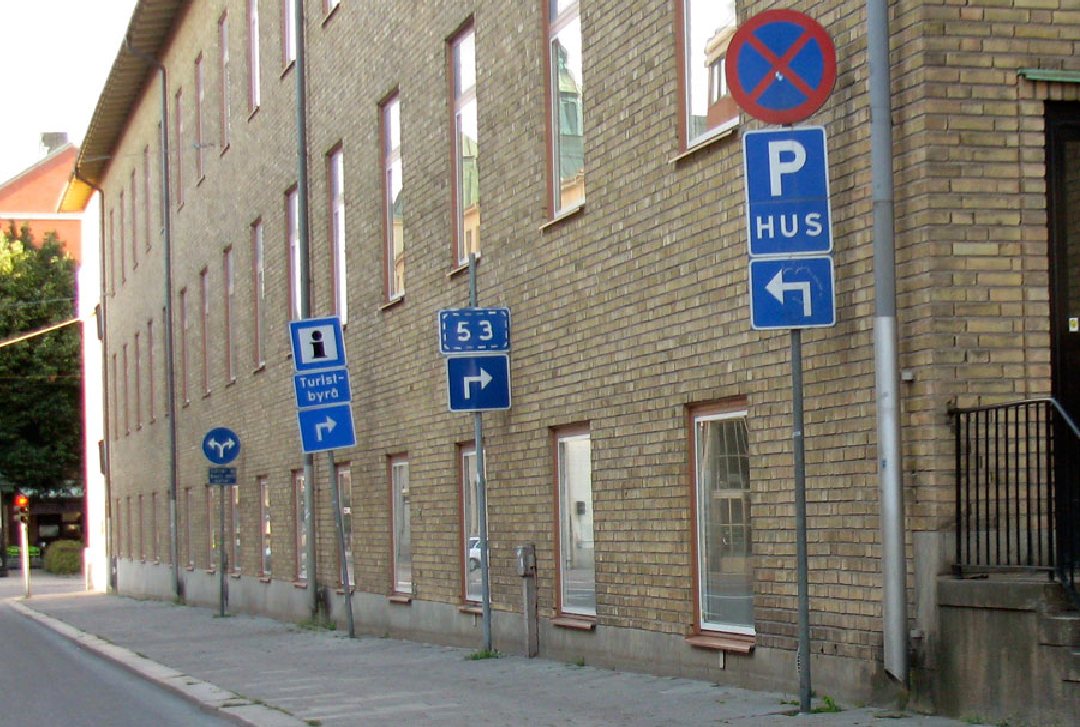
The first alternative is wrong, as the additional panel with the arrow to the left only applies to the parking structure [P HUS] and not the prohibition sign, since “an additional panel underneath a parking prohibition sign or a prohibition to stop or park has [...] black characters on a yellow base.” (Traffic Sign Ordinance)
The third and fourth options are also wrong, as it is not true that you get directly onto route 53: “A sign with a dashed border indicates that the road is leading to the route with the number on the sign.” (Traffic Sign Ordinance)
– There is nothing wrong with saying that you are not allowed to park by this sign. It is only wrong if you say that it is only forbidden to park but permitted to stop. The correct alternative does not say that.
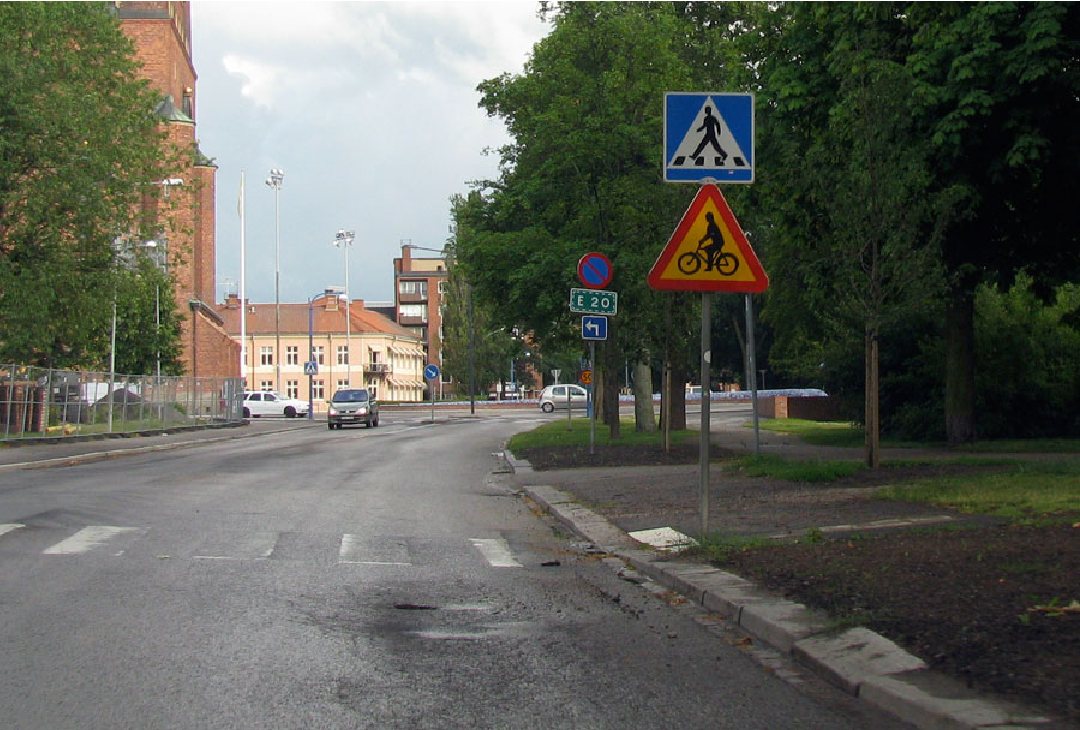
There is a pedestrian crossing in the picture. As a motorist, you are not obliged to give way to cyclists on the pedestrian crossing. It is the cyclist who must give way to the cars:
“A cyclist who crosses a road at a pedestrian crossing must always give way to both pedestrians and vehicles on the road.”
Swedish Transport Agency
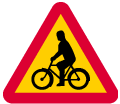
“The sign indicates a section of road where cyclists and moped drivers often cross or drive in on the road.”
The warning sign warns that “cyclists and moped drivers often cross or drive in on the road.” However, it says nothing about the obligation to give way.
There is no other clear information stating that you must stop for cyclists, even though it good to be aware that cyclists may cross the road.
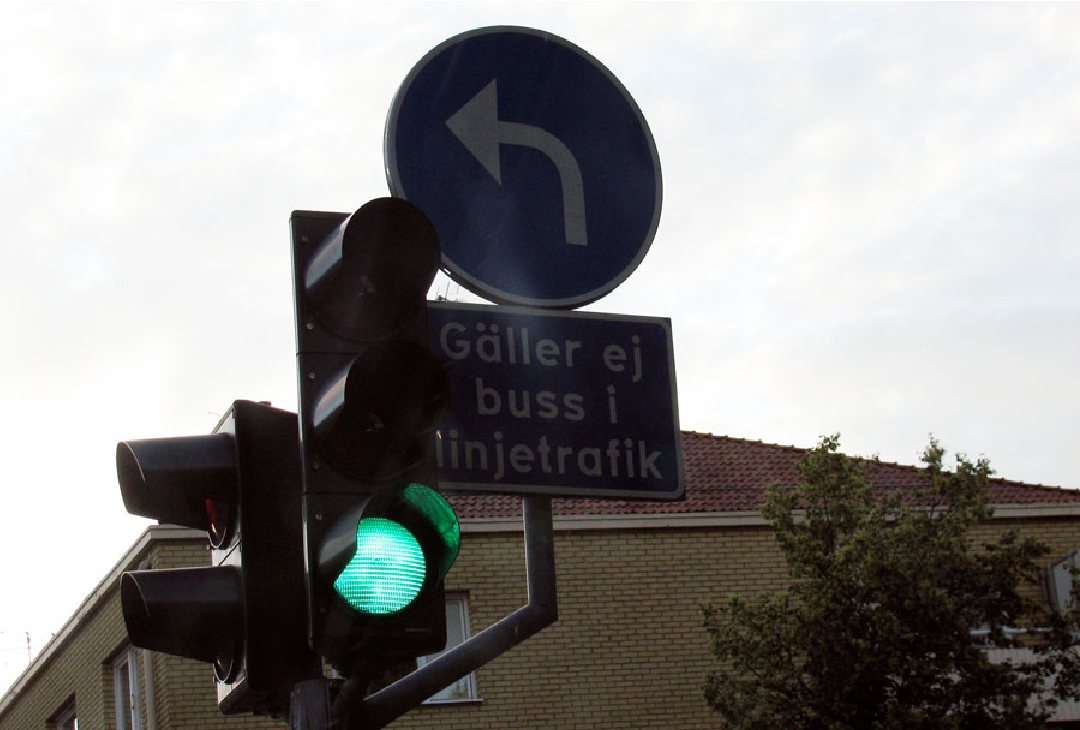

“The signs indicate that the vehicle may only be driven in the direction of the arrow or, in the case of two arrows, in either arrow’s direction. The symbol is adapted to the conditions of the location.” The signs are to be interpreted as: “A bus in regular service is free to choose route. All other must however turn left.”
(Note: The situation in the picture consists of a junction where the road straight on leads to a quieter street with residential buildings and a bus stop. The smaller street is a shortcut, so in order to prevent everyone from taking this route, it has been decided that all vehicles apart from buses must take the detour to the left on the major road. This information is not relevant for being able to answer the question, but it may help you understand the reason for the sign.)
“Since 2004, the registration certificate has had two components”
Swedish Transport Agency
“Hydrocarbons (HC) in car exhausts causes cancer and can have a genetic impact. Along with nitric oxides, the hydrocarbon emissions contribute to the formation of tropospheric ozone.”
Driving Licence Book, 19th Edition, page 228
Sometimes, you have to give the answer that is the “most correct”. The increased risk of cancer caused by nitric oxide is so small that the STR Driving Licence Book does not even mention it. On the other hand, the Driving Licence Book does say that hydrocarbons “cause cancer”, which makes that alternative the most correct.
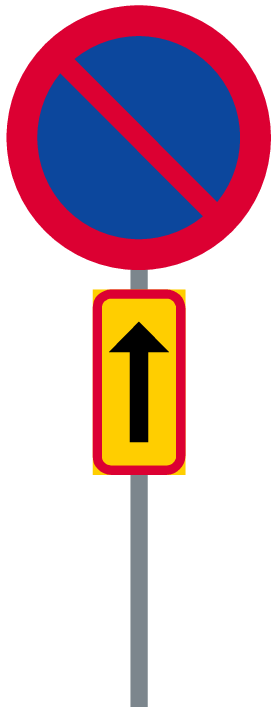
“The panel with arrows pointing in two directions, placed horizontally or vertically, means that the indication applies to both sides of the sign. The panel with the arrow pointing down means that the indication ends there. The panel with a right or left-pointing arrow means that the indication applies in the direction to which it points. If the panel is used under an E19 sign, parking, the black symbol is on a white background with no border. The panels can also be used independently to demarcate parking spaces in an area, if there is a sign at the entrance to the area stating that parking is permitted.”
The following types of arrow are described in the segment quoted above:
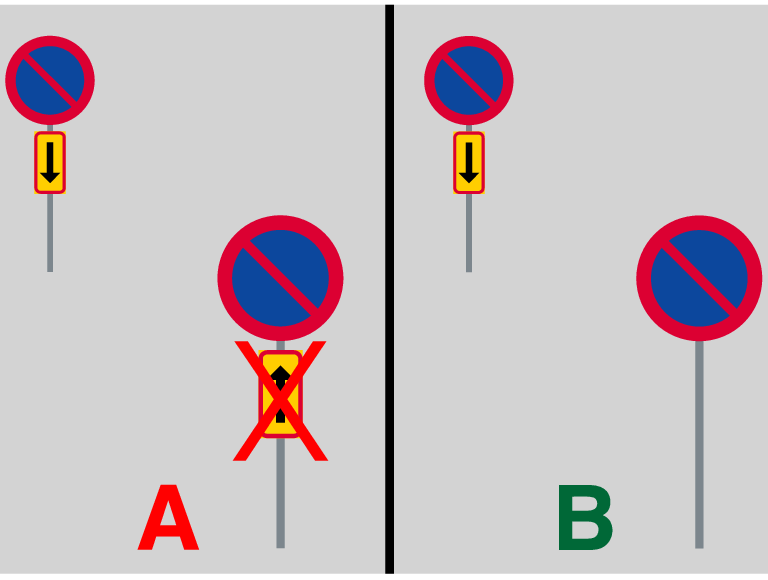
There is no such thing as an “upward arrow”.
A single upwards-facing arrow (A) would indicate that the sign is applicable “from this point on”. This is already the basic significance of a road sign, which means that no additional panel is necessary (the arrow is implied, as in B).
The catalytic converter “does not work at all in cold starts”. (Driving Licence Book, 19th Edition, page 224)
The reason for this is that the catalytic converter has a high operating temperature.
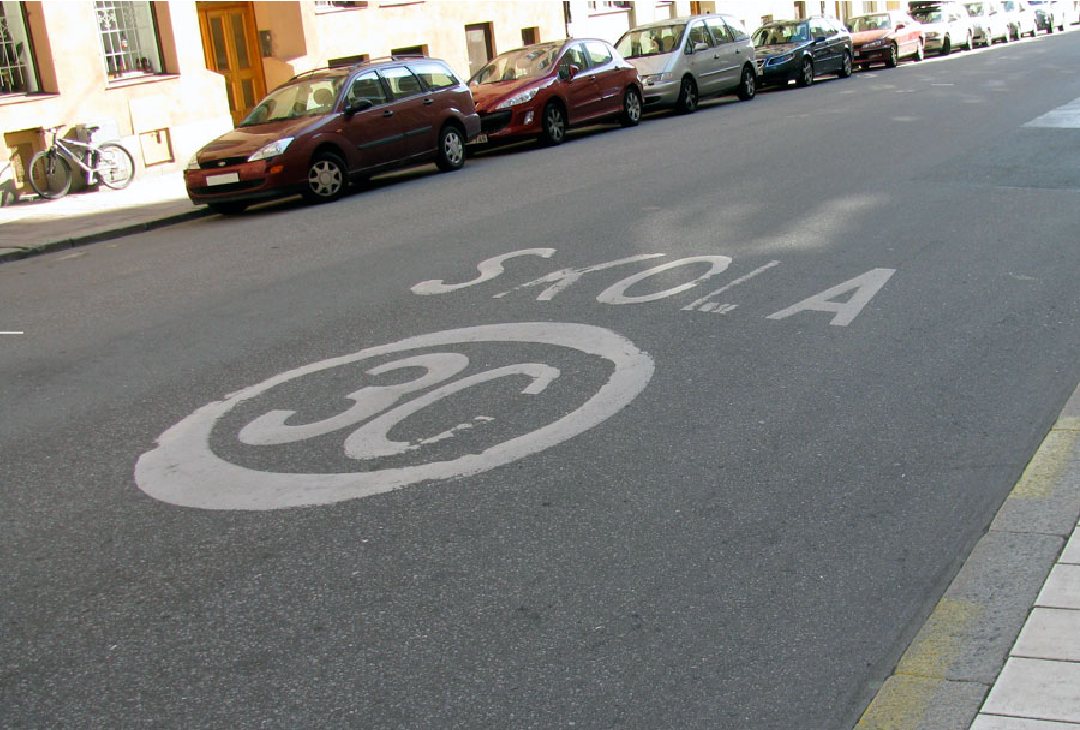
”Skola” = school.

“The marking provides information, warning or instruction of importance to the road user.”
“The marking indicates the maximum permitted speed.”
The road markings themselves do not indicate that they only apply during certain times. If you only see the road markings, assume that they apply all days and times.
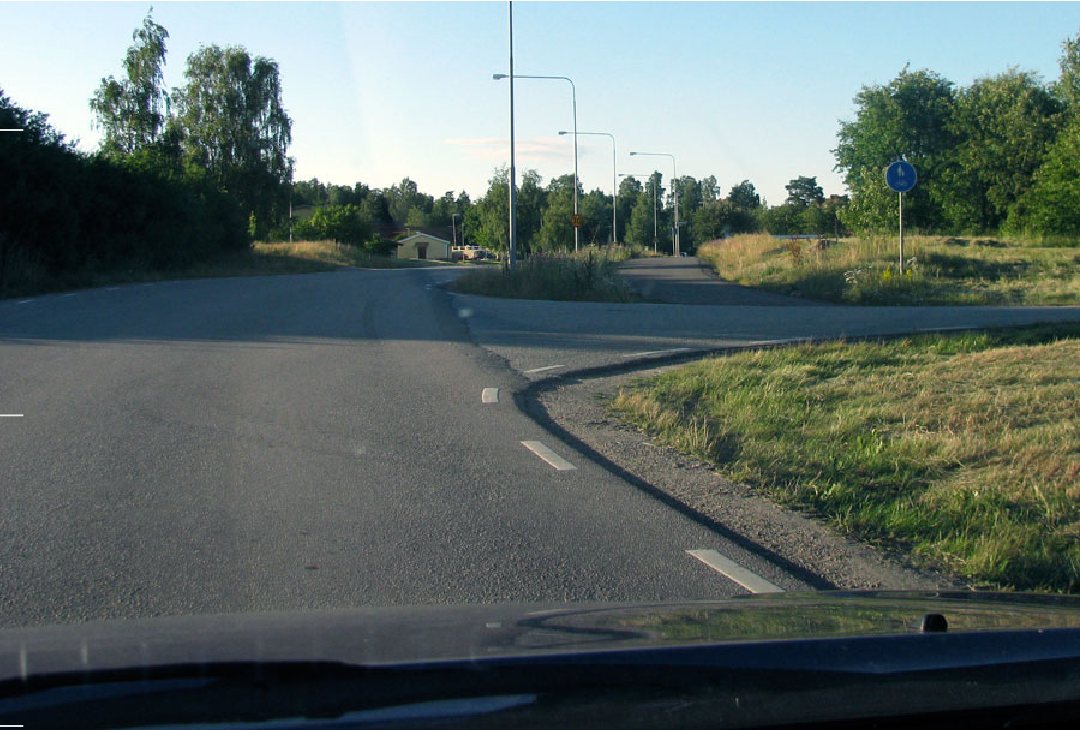
The right-hand rule: “When the paths of two vehicles intersect, the one driver must give way to the vehicle approaching from the right”. (Swedish Road Traffic Ordinance)
– No, it is speed sign. The picture is (purposely) a little unclear to make the question harder, but if you enlarge the image you should see fairly clearly that it is a speed sign. If it was a priority road sign, it would also probably be closer to the junction.
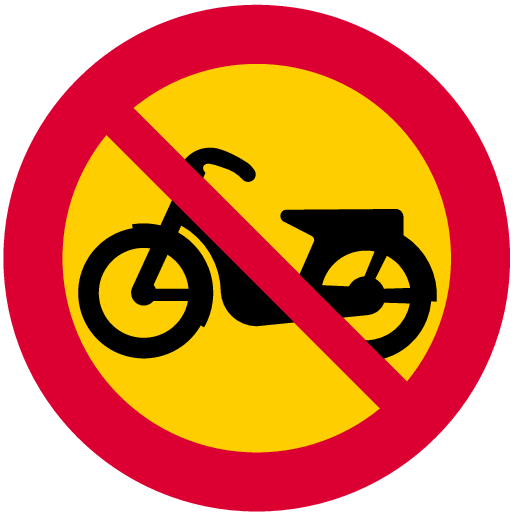
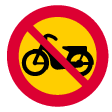
“If the prohibition also applies to class I mopeds, this is indicated on an additional panel.”
Although they are equal in size, class II mopeds are classed more as a bicycle and class I mopeds are classed more as a motorcycle. Therefore the prohibition does not automatically apply to both the classes.
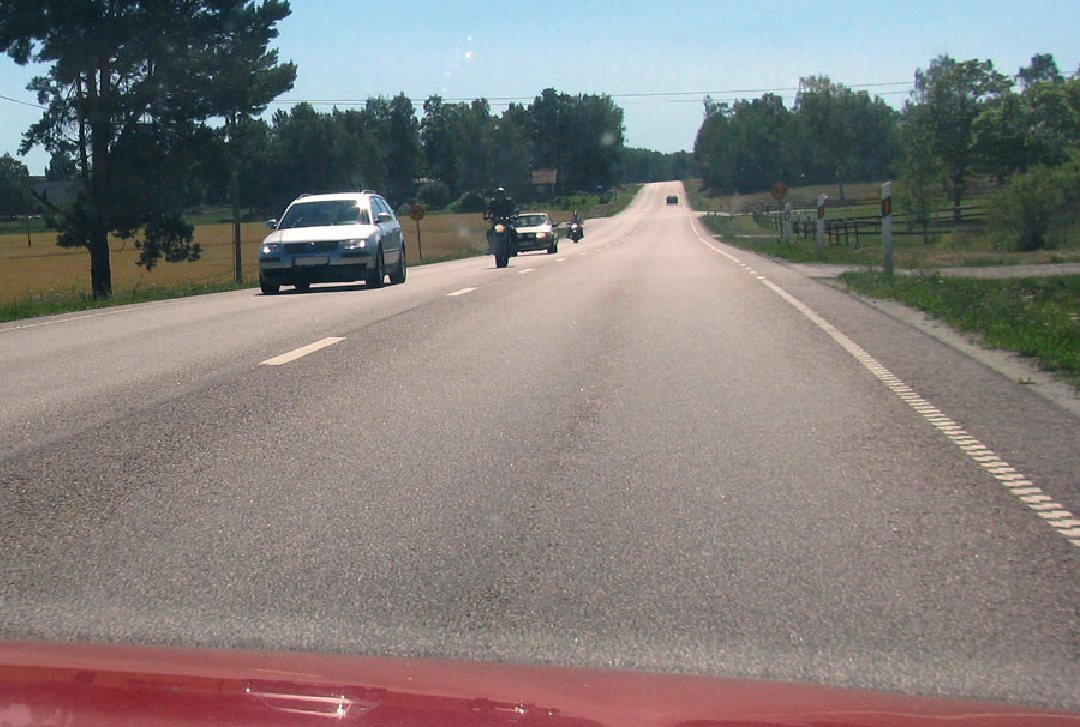
The motorcycle drivers are by far the biggest risk. The likelihood is very great that they will overtake the cars and therefore require you to keep far right. Many things can happen, for example:
Sure, the distance between the oncoming cars is too short, but this does not entail any direct risk for you.
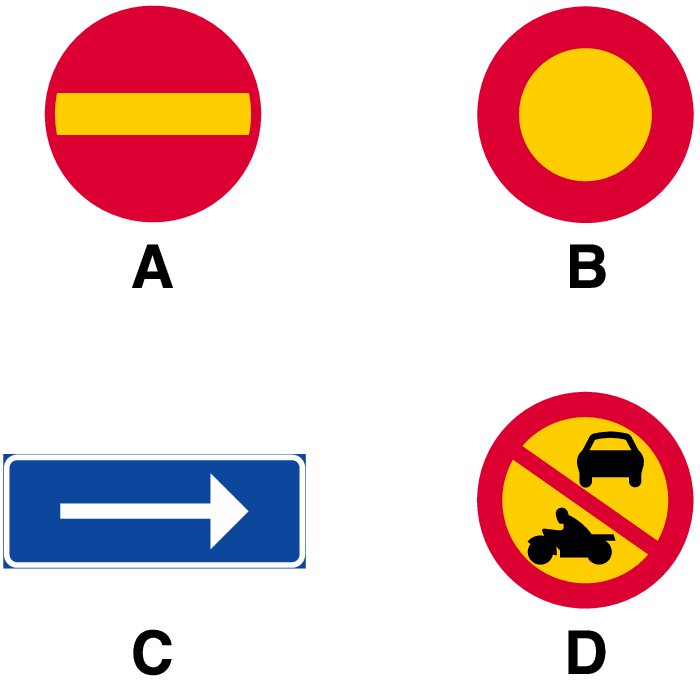


“The sign refers to traffic with vehicles in both directions.”

“The sign indicates that vehicle traffic on the road is one-way in the direction of the arrow. An arrow pointing up indicates that the traffic is one-way in a forward direction.”
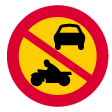
“If the prohibition also applies to class II mopeds, this is indicated on an additional panel.”
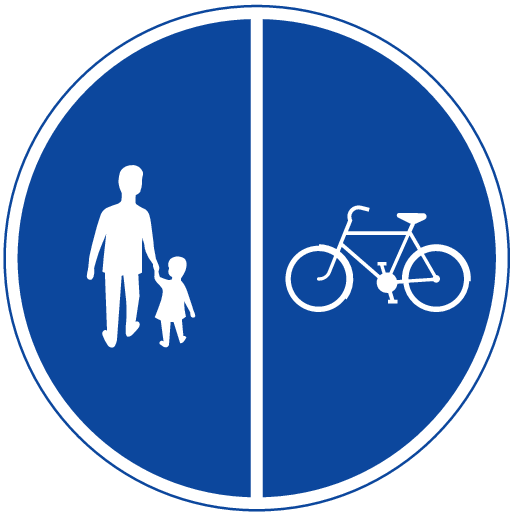
“The sign indicates tracks separated by road marking, median strip or similar into one lane for pedestrians and another for cyclists and moped drivers. The placement of the symbols on the sign shows which part of the track is intended for which type of traffic. If class II mopeds may not be driven on the track, this is indicated on an additional panel.”
“On bicycle paths, cyclists and drivers of class II mopeds must be given right of way by other vehicle drivers.”
Swedish Road Traffic Ordinance
“A car driver with poor self-knowledge will often overestimate their abilities.”
Driving Licence Book, 19th Edition, page 183
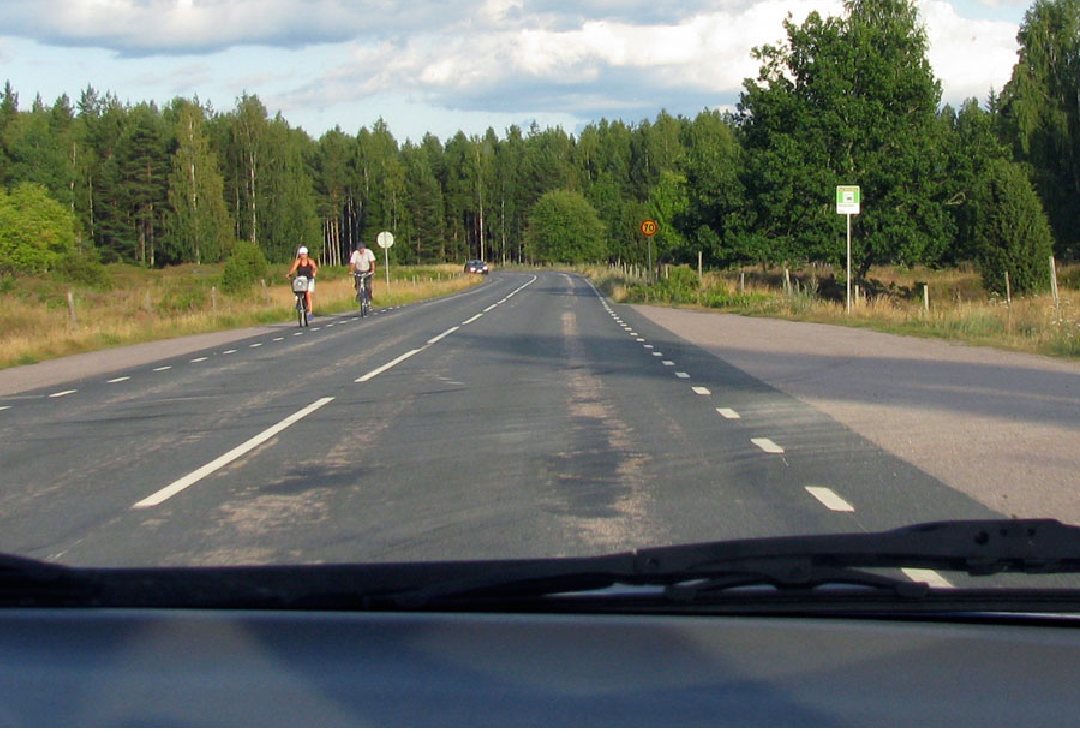
The reasons why you should not drive extremely close to the right edge:
If there is no reason to do something, it is safest and best to continue as normal.
“Vehicles or trams may not overtake directly before or on an unguarded pedestrian crossing [...] In the following cases it is not considered overtaking when a vehicle in one lane passes a vehicle in another lane 1. if the carriageway has two or more lanes for travel in the same direction and there is a heavy traffic queue in all lanes. 2. if the carriageway is divided into lanes for different destinations that are marked with a lane assignment sign, or 3. if the vehicles have been placed in separate lanes in connection with a junction.”
Swedish Road Traffic Ordinance
Note that the second exception states that the lanes must lead to different destinations, as opposed to the same destination, as one of the options suggests.
Driving Licence Book (19th Edition, page 84): “If you increase your average speed by 10 km/h, the time gain per 10 km will be: – approximately 1 minute at speeds under 90 km/h – approximately ½ minute at speeds over 90 km/h”
In all likelihood, you will not need to know the following mathematical calculations for the real test. It is enough to know that the time gain is minimal.
Method 1
Colour codes for the figures (easier to keep track of them)
Original speed 100 km/h
New speed 110 km/h
Minutes per hour (since the speed is km/h, kilometres per hour) 60 minutes
Number of kilometres 10 km We first calculate how many minutes it takes to travel 1 km at both speeds:
It is therefore takes slightly less time with the higher speed. The difference is:
However, the question is how much time you gain per 10 km, not per km. Therefore, recalculate the time gain per 10 km:
Now it is really done. It is however easier to understand if the answer is recalculated to seconds:
Method 2
Colour codes for the figures (easier to keep track of them)
Original speed 100 km/h
New speed 110 km/h
Distance 10 km = 10,000 metres
Fixed conversion rate km/h to m/s 3.6 times
Formula for calculation of time:
For the formula to work requires us to use metres instead of 10 km and metres per second (m/s) instead of kilometres an hour (km/h). The speeds are therefore recalculated to m/s:
Only now can we use the formula Distance / speed = time:
We can then work out the time difference between both speeds:
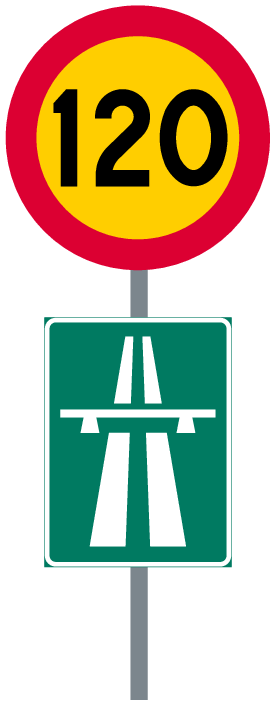
A heavy lorry is permitted to drive at a maximum speed of 90 km/h on motorways and clearways and a maximum 80 km/h on all other roads.
Since the sign does indicate that this is a motorway, the applicable speed is 90 km/h.
Reasons for limiting the speed of heavy lorries:
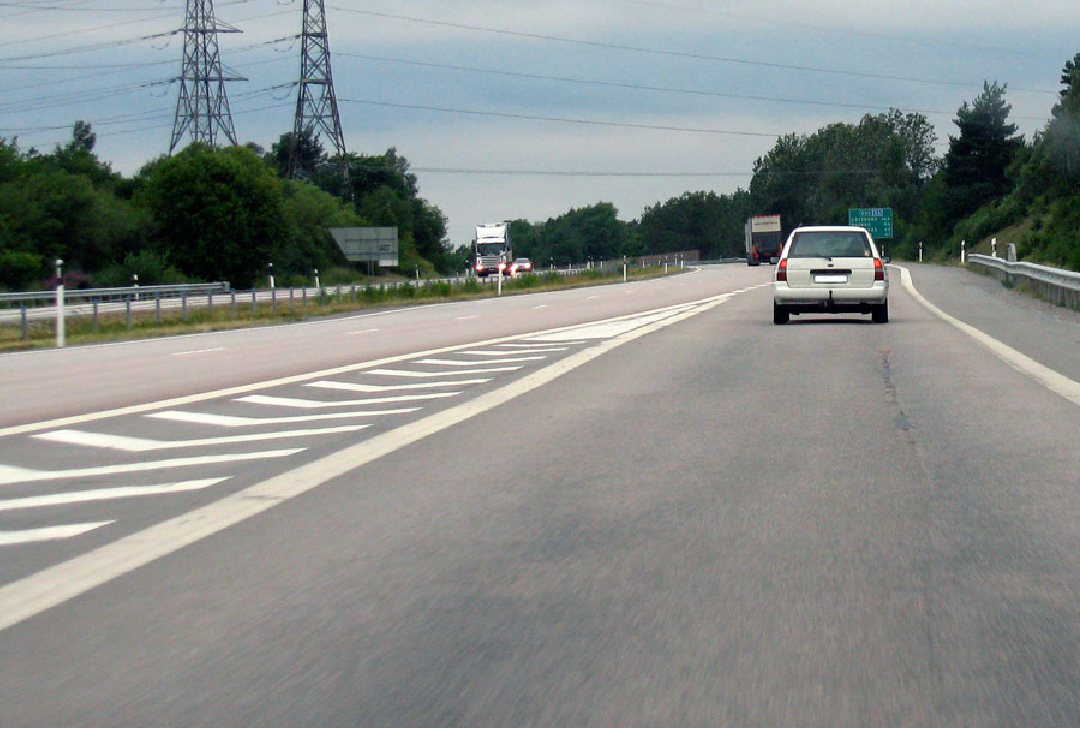
Acceleration lane: “you do not have right of way [...] motorway traffic does not have right of way [...] mutual consideration applies.” (Driving Licence Book, 19th Edition, page 106)
This is because the acceleration lane to the motorway is intended to be counted as part of the motorway. If you were obliged to give way, you would need to slow down to a greater extent and maybe even stop before turning onto the motorway’s carriageway, which is not good for these reasons:
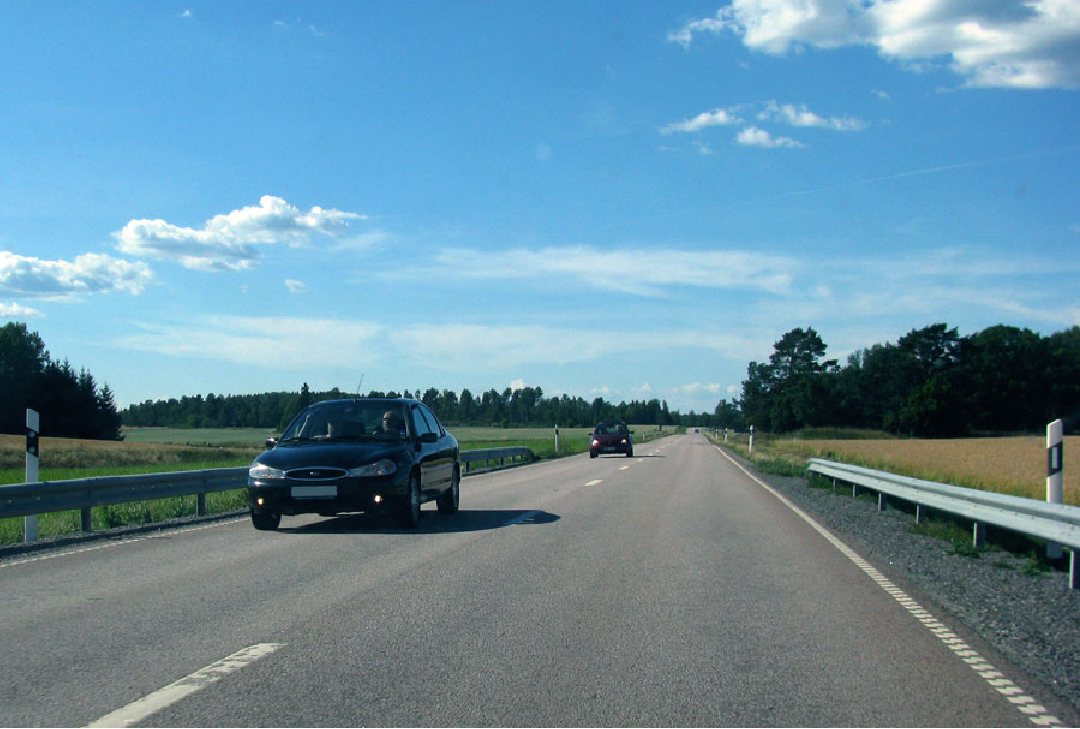
Two post sections, as in, the cars are each at a post and there is one post between them, is often a good distance on a highway. Therefore:
POST + 50 metres + POST + 50 metres + POST
On the left of the picture, it may be difficult to see if there is another post between the cars. On the right however, it is easy to see that this is not the case. The car furthest back should therefore reduce its speed so that the distance is doubled.
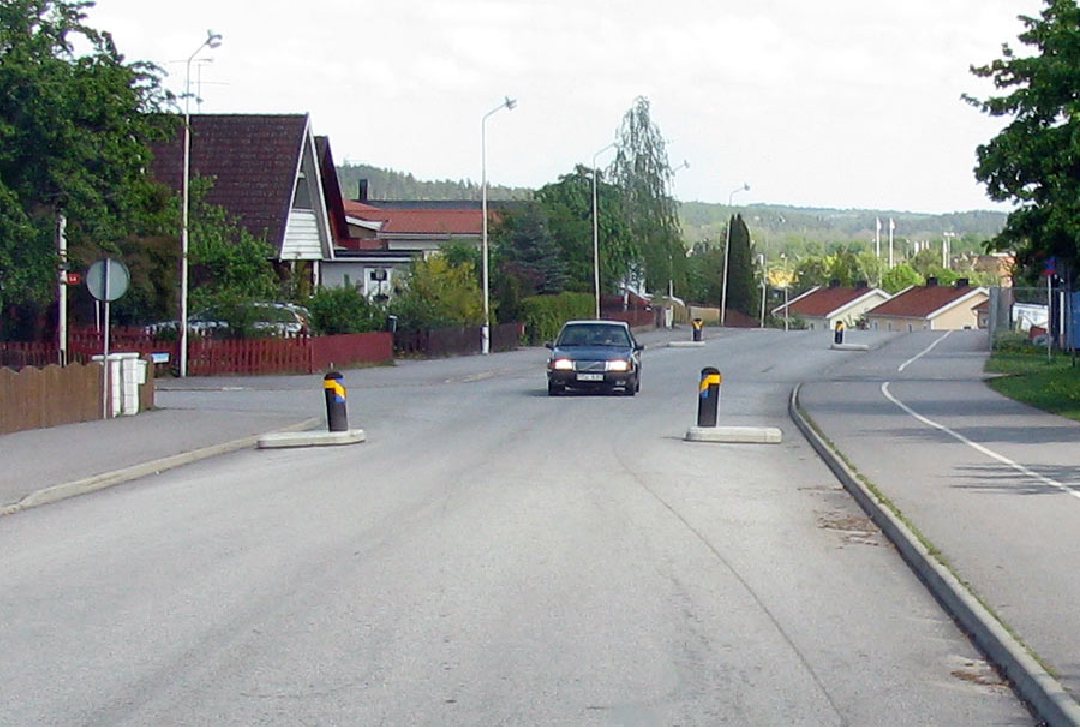
There are no specific rules for this situation. The most relevant rule would be:
“If there is an obstruction when approaching an oncoming car, the driver who has the obstruction on their side shall stop, if this is necessary for the oncoming car to be able to pass.”
Swedish Road Traffic Ordinance
You do not both have to stop at the obstacle, you are well within your right (and recommended) to keep moving slowly as the other car is passing.
Another situation where only mutual consideration and adaptation will work: when the right hand rule applies in a four-way crossing and four cars are waiting to drive.
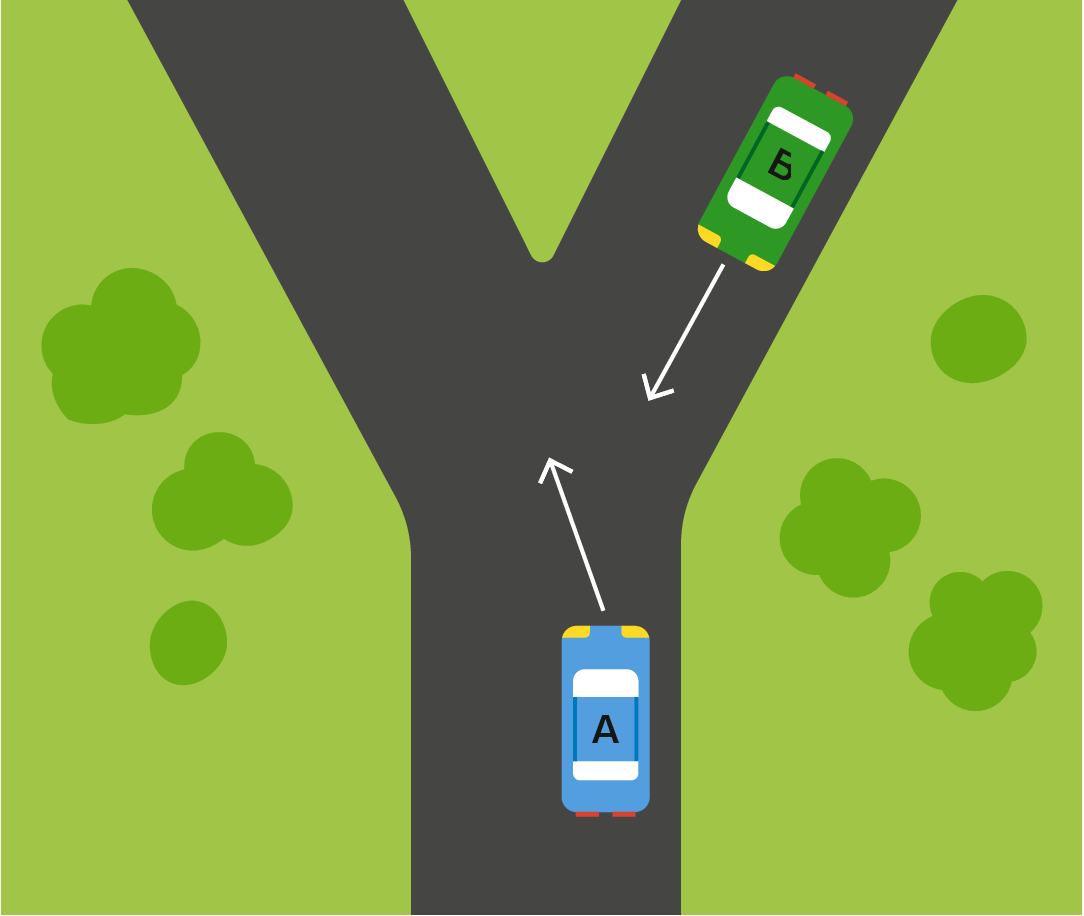
When two cars cross paths, one of them must be coming from the other’s right, which makes the right-hand rule applicable.
Imagine that you are in A. Is B coming from your right? If the answer is yes = the right hand rule applies. The angle of the roads, i.e. whether the car is coming “slightly” or “straight on” from the right, does not matter.
“Only when the child is 140 cm tall is it safe for them to sit in a passenger seat with a connected airbag.”
Swedish Transport Agency
When they are 135 cm tall, the child may be seated as an adult in a seat with no airbag. As the question specifies that the seat has an airbag, the answer of at least 140 cm is the correct one.
Note that there is a nearly identical question but without the airbag.
“Every year, around 70 people die in alcohol-related traffic accidents.”
Swedish Transport Administration
Human beings have always risked falling from great heights. We have only risked car collisions in the last 100 years or so.
“[…] our brains still react as if we were living in the stone age. Our genes have not had a chance to adapt to the development. For this reason, we immediately realise the danger of falling from a height, but not that of a collision at 90 km/h.”
Swedish Transport Administration
– Realising that we humans are bad at making assessments about certain risks. This hopefully humbles you and makes you take it easy in traffic, which can save lives.
There is an established order for how to prioritise casualties:
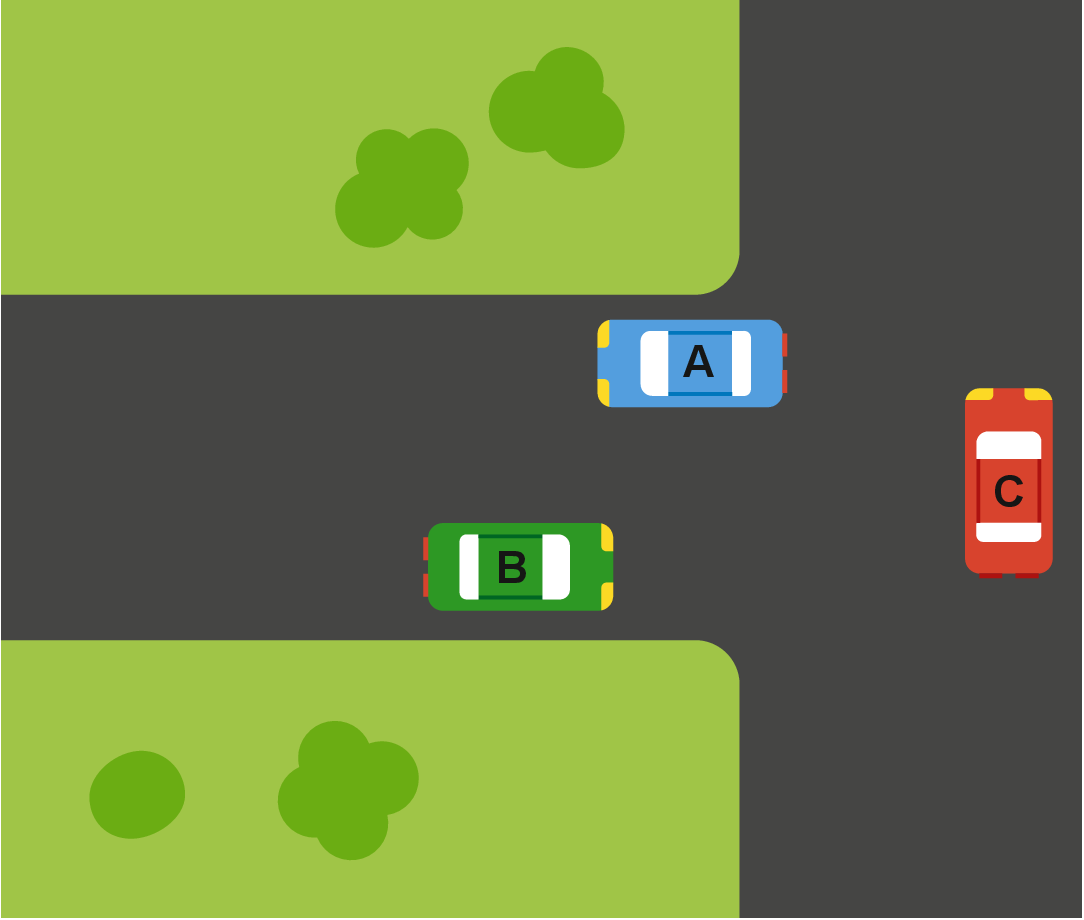
“A vehicle may not stop or park [...] in a junction or within a distance of ten metres from the nearest outer edge of an intersecting road.”
Swedish Road Traffic Ordinance
C is likely in violation of both the conditions of this rule (i.e., is both standing in the junction and less than 10 metres from the intersecting road.)
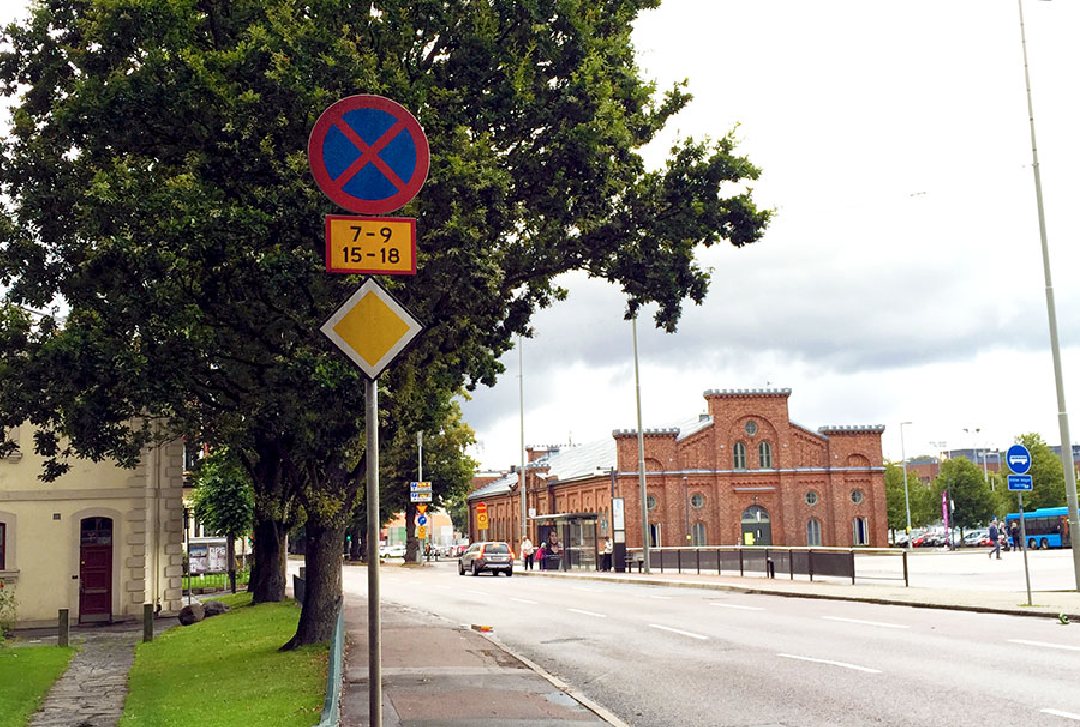
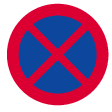
“The sign indicates it is prohibited to stop or park a vehicle. The more detailed provisions relating to sign C35, Vehicle parking is prohibited, paragraphs two to four, also apply to this sign.”
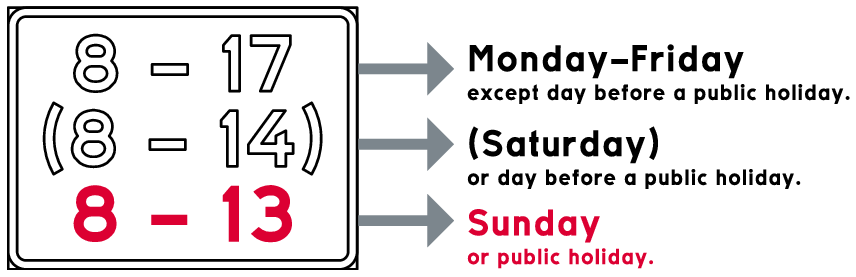

”A vehicle may not be parked [...] on a priority road”
Road Traffic Ordinance
Review of the options:
“A driver entering a priority road from another road [...] is obliged to give way to vehicles on the road they are entering.”
Swedish Road Traffic Ordinance
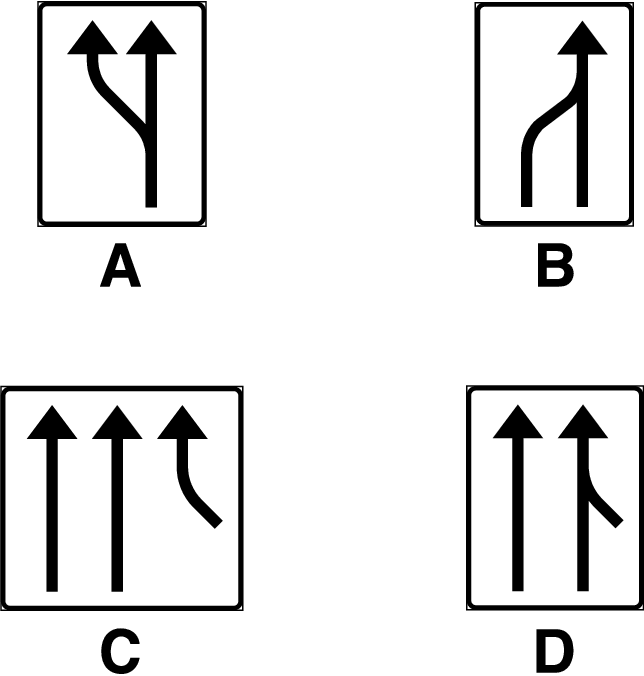
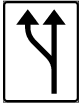
“This sign indicates an increase in the number of lanes. The sign is specific to the conditions at the location. Symbols for types of vehicles or road numbers may be included in the sign. The sign is also used as a preparatory notice that the number of lanes will increase. The distance is then stated on an additional panel. In case of a temporary re-routing of traffic, the sign may have an orange base. Otherwise, no deviating colour may be used.”
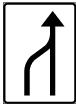
“This sign indicates a reduction in the number of lanes. The sign is specific to the conditions at the location. The sign is also used as a preparatory notice that a lane is ending. The distance is then stated on an additional panel. In case of a temporary re-routing of traffic, the sign may have an orange base. Otherwise, no deviating colour may be used.”
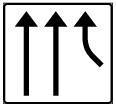
“The sign is specific to the conditions at the location. In case of a temporary re-routing of traffic, the sign may have an orange base. Otherwise, no deviating colour may be used.”
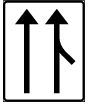
“The sign is specific to the conditions at the location. In case of a temporary re-routing of traffic, the sign may have an orange base. Otherwise, no deviating colour may be used.”
– No, they only indicate that the number of lanes is increasing/decreasing. It is still the same road, as per the definitions:
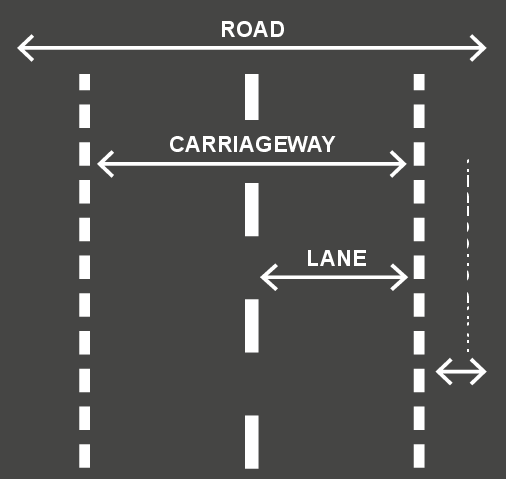
Disc brakes and drum brakes are the brakes predominately used for private cars. Drum brakes on the rear wheels and disc brakes on the front wheels are a common combination. It is hard to even find any information about “spring brakes”, which means it is not a common type of brake, which was the subject of the question.
“Mopeds class I [EU mopeds] may [...] not be driven on a motorway.”
Swedish Road Traffic Ordinance
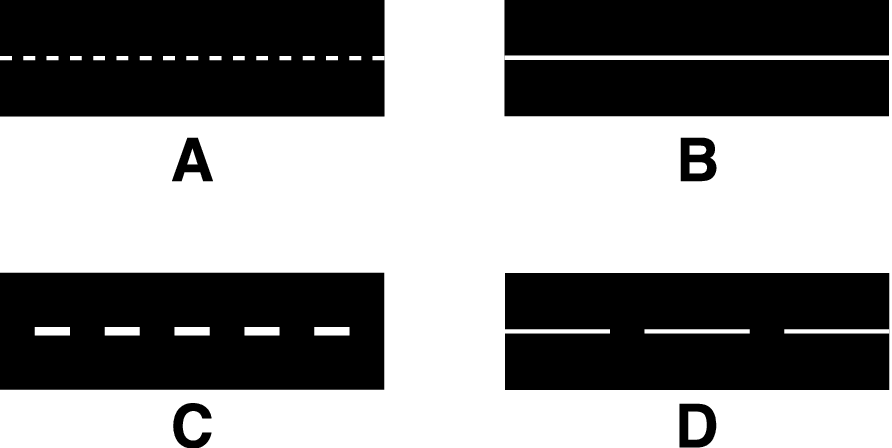
In popular speech, the solid line (B) is often described as a “prohibition on overtaking”. In actuality, the law does not say anything about overtaking being prohibited; solid lines are used when it is “not permitted to enter the opposite running lane” (Traffic Sign Ordinance).
However, in practice, this usually means that it is not possible to overtake, as overtaking most often requires you to cross the centre line. But it is not a prohibition on overtaking!
This could possibly be considered a catch question, but there are situations in which this knowledge is essential.
Example: You are driving behind a tractor on a country road with a solid line. The tractor drives out on the hard shoulder and you think “I can easily and safely drive past without even crossing the centre line, but I cannot overtake since the line is solid.” You therefore stay behind the tractor and cause a long queue (and maybe obstruct an ambulance). The right choice is to overtake the tractor without crossing the solid line. (If it is not possible to overtake the tractor without crossing the centre line, you have to stay behind it.)
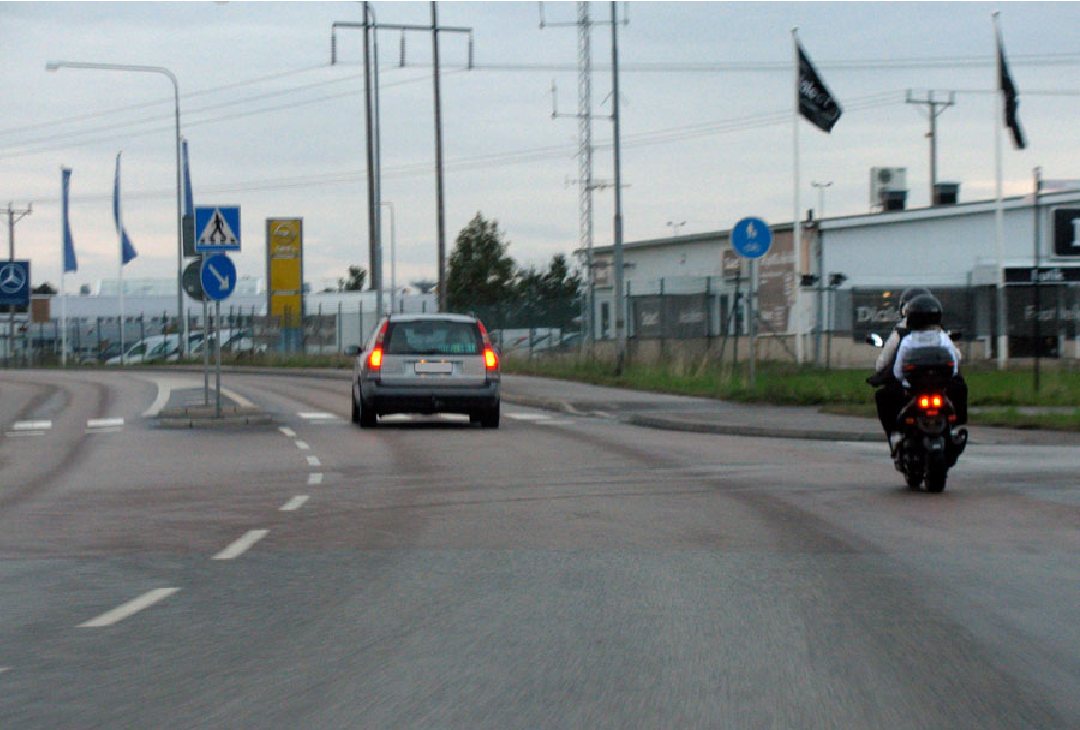
“No vehicles or trams may be overtaken right before or on an unguarded pedestrian crossing, an unguarded bicycle path or a bicycle crossing.”
Swedish Road Traffic Ordinance
There are exceptions, for example, in the event of heavy queuing and if there are several lanes in your direction. However, none of the exceptions apply here.
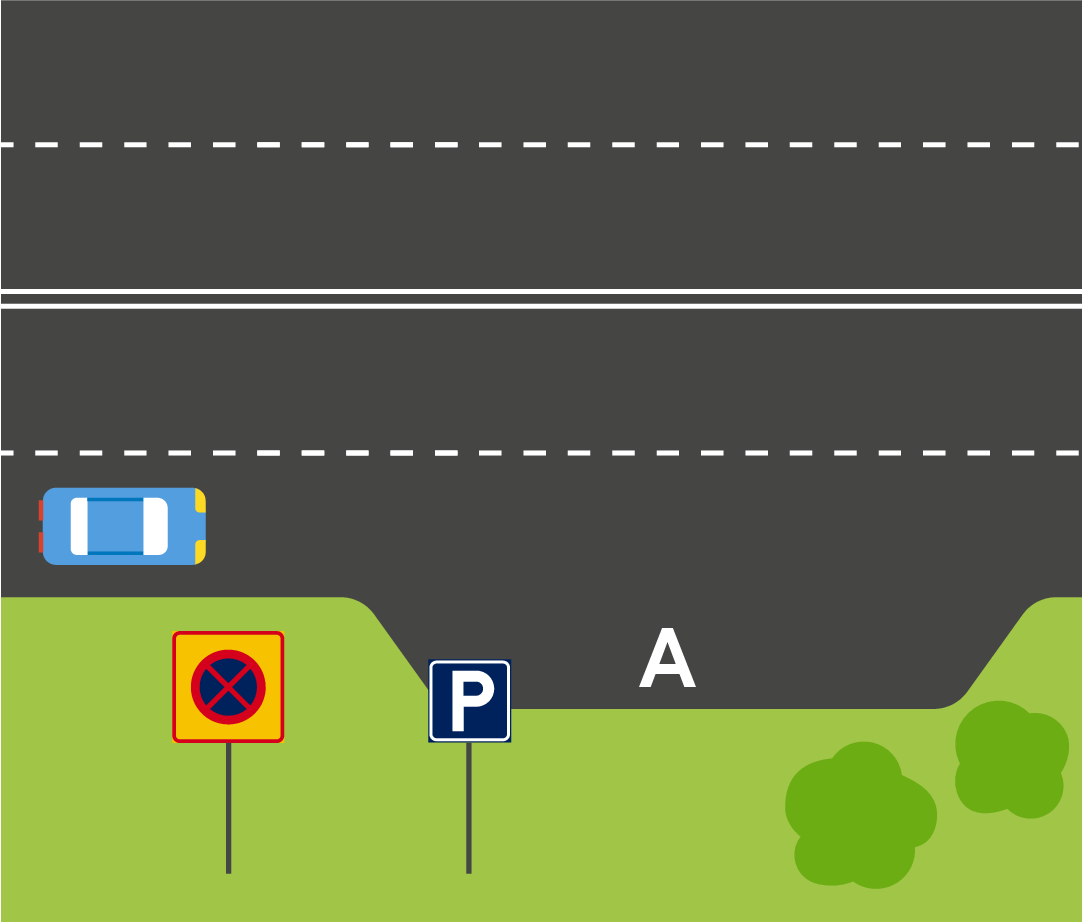
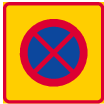
“Within the area, there may be deviations from the instructions on the sign. These deviations are indicated through other road signs and additional panels.”
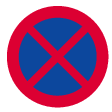
In other words, the zone sign is applicable in the absence of other directions. The parking sign in the image constitutes “other direction” and thus outweighs the zone sign (imagine how unreasonable it would be if there was a prohibition against stopping and parking on the parking lot of a shopping centre just because a zone sign some hundred metres away said so).
Where you are permitted to park, you are always permitted to stop, so there is no problem in that regard.
As the driver of the parked car is not currently driving, it does not matter if they are dazzled (and it is also easy for them to take their eyes from the road). It is more important that you, who are driving, can see. For this reason, you do not have to dim your full beam headlights for a parked car.
Review of the options:
“Airbags increase the protection against whiplash injuries.”
Swedish Transport Administration
The reason for this is that the airbag catches the head and cushions the abrupt movement that causes whiplash injuries.
Convert m/s to km/h: 14 * 3.6 = 50 km/h
3.6 is a fixed figure for converting m/s to km/h. If you struggle to multiply by 3.6 right away, you can multiply the number by 3 first, then by 4 and finally chose a value in between (the answer alternatives often give you a great margin).
“You do not need to worry about the airbag triggering during small accidents as it requires a speed of 20–30 km/h for it to be activated.”
Driving Licence Book, 19th Edition, page 117
– No, actually not. The airbag is not completely harmless since it inflates with such extreme force. If you crash at 10 km/h, the airbag can do more harm than good. However, at higher speeds, it does more good than harm.
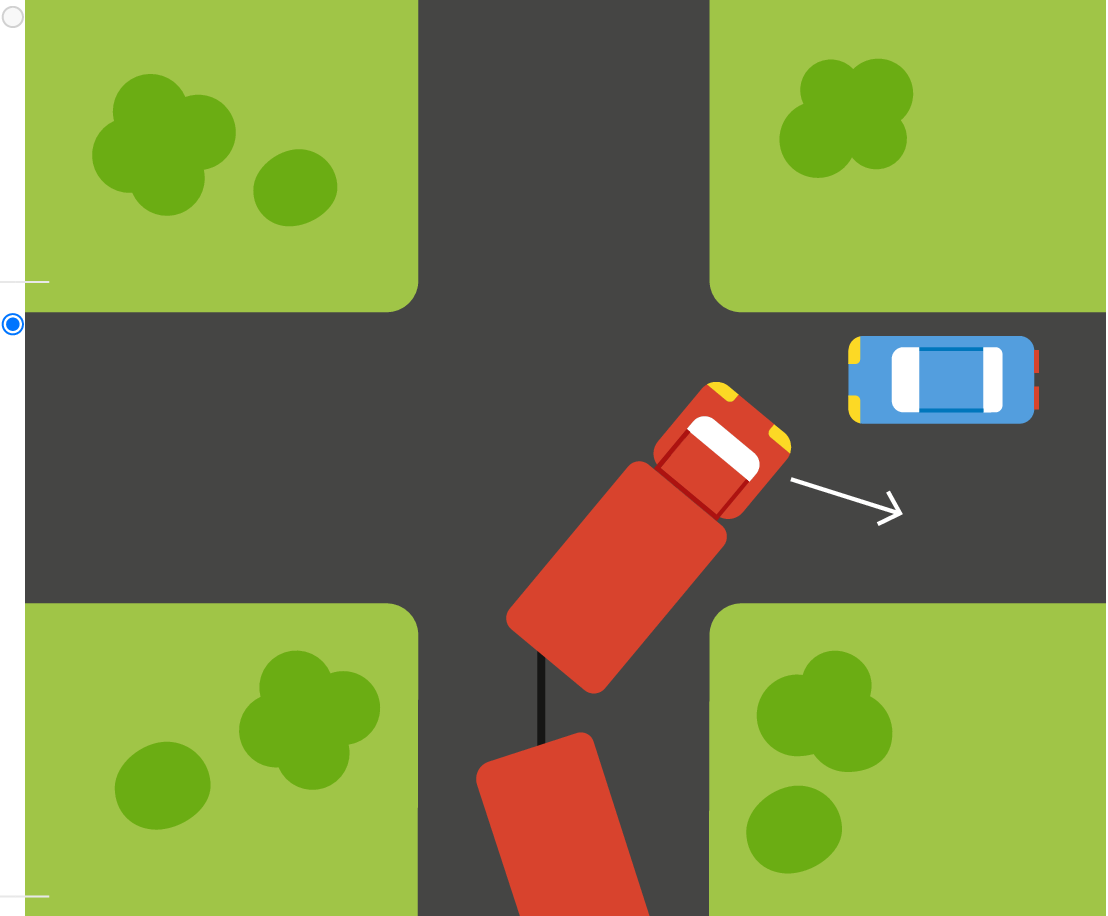
Even though the lorry technically must yield in accordance with the right-hand rule, it is more appropriate and safer if you reverse a few metres to let the lorry pass. Strictly insisting on the rules is not desirable: you must display “good judgement when interacting with other road users.” (Swedish Transport Administration)
You could perhaps squeeze past the lorry, but as you must assume that the lorry is moving (“is turning”), you risk being hit by the lorry.
“In humid weather, only use a low gear for parking. There is a risk of the parking brake freezing!”
Driving Licence Book, 19th Edition, page 129
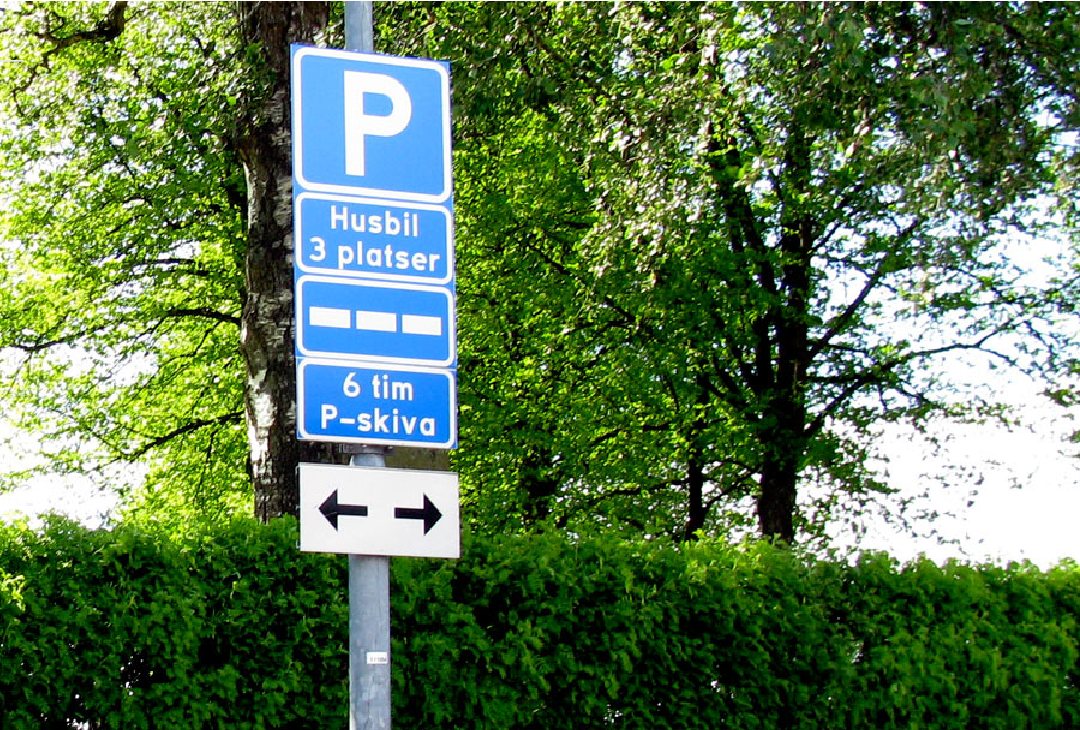
”Husbil, 3 platser” = Mobile home, 3 spaces
”P-skiva” = Parking disc
The entire sign combination applies to mobile homes (campers). In other words, there are 3 parking spaces for mobile homes, they are allowed to use them for a maximum 6 hours and they must have a parking disc.
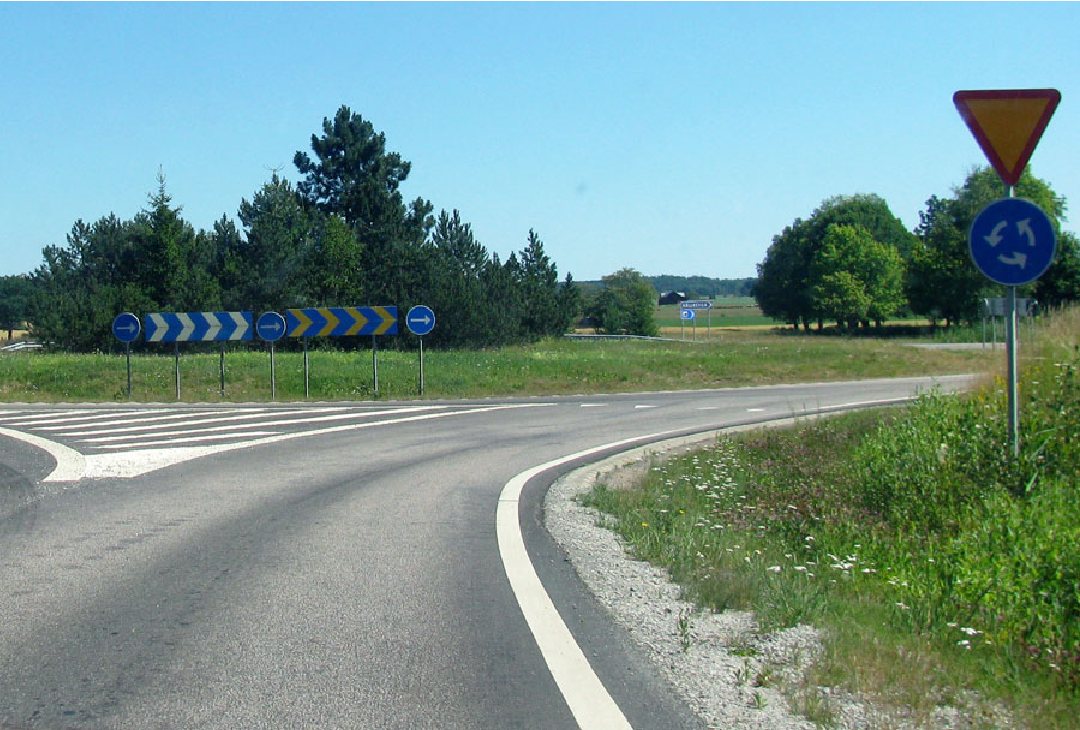
The mandatory signs referred to mean:

“The signs indicate that the vehicle may only be driven in the direction of the arrow or, in the case of two arrows, in either arrow’s direction. The symbol is adapted to the conditions of the location.”
The rectangular signs with several arrows are arrow markers (X1) and not mandatory signs, which were the subject of the question.
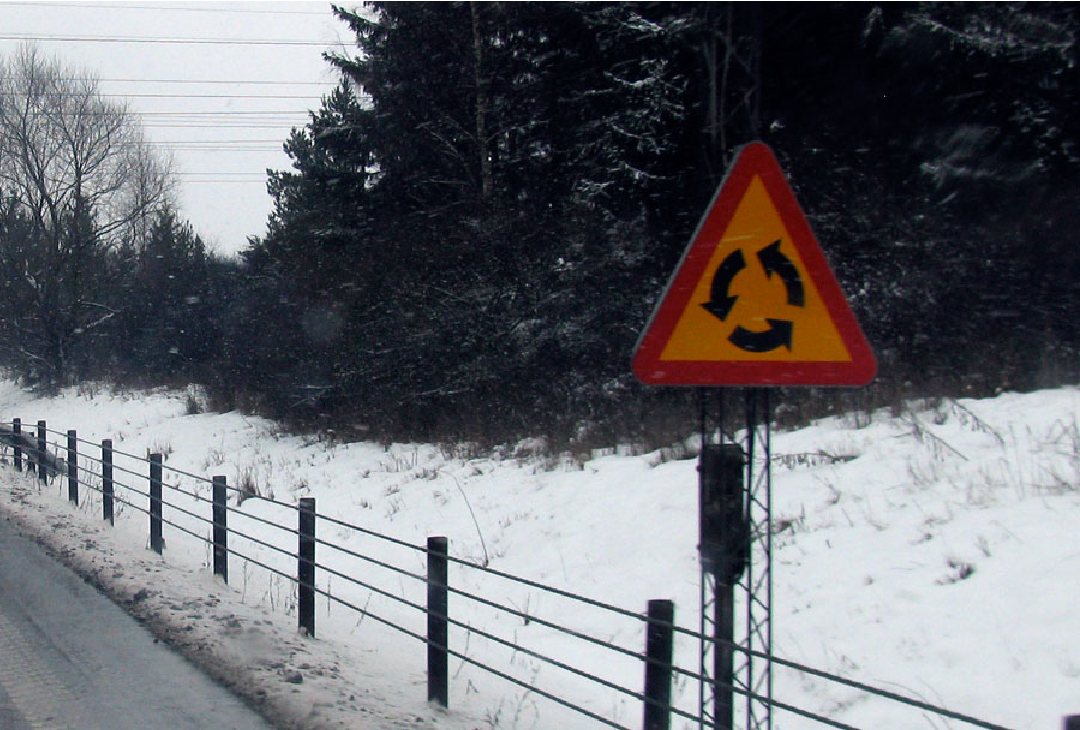
Roundabouts are never designed so that you must turn off at a certain exit road, you can always drive around if you want.
It is much safer to turn this way than to make a U-turn or reversing.
“You may not overtake right before or on a level crossing [...] However, two-wheeled vehicles without a sidecar may be overtaken.”
Swedish Road Traffic Ordinance
If the road is wide and visibility is good, it would not be safe or efficient if you were forced to break abruptly and drive at a snail’s pace behind the cyclist (and thus pass the hazardous railway crossing at a very low speed).
However, if the road is narrow and visibility is obstructed, you may not overtake according to other rules. But this question asks if it is generally allowed, which it is.
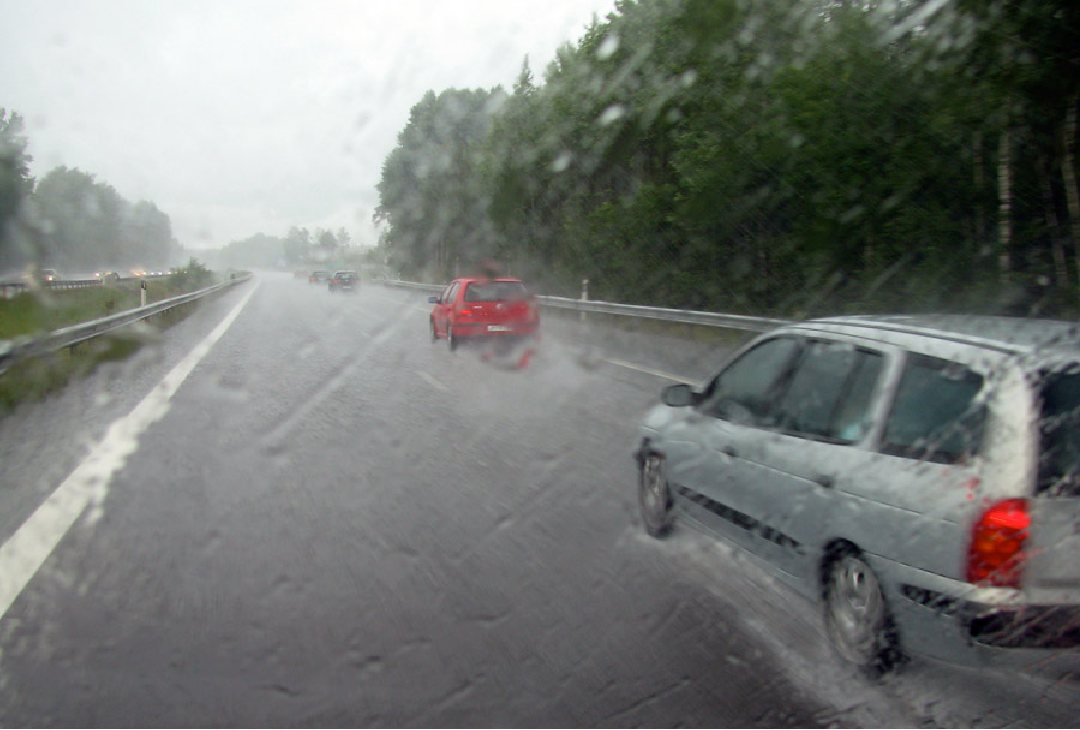
“On the motorway, you shall stay in the right lane other than when overtaking [...] After overtaking, you shall return to the right lane as soon as possible. However, you are allowed to overtake several cars in a row.”
Du och jag i trafiken [You and me in traffic], 28th Edition, page 261
Turning in between the red car and the grey car is not a good idea, as the space is much to small.
“The braking distance [...] increases quadratically with increasing speed.”
Driving Licence Book, 19th Edition, page 120
Colour codes for the figures (easier to keep track of them)
Current speed 30 km/h
Comparative speed 60 km/h
Comparative braking distance 41 metres
Reduction in speed (to be calculated) X times
Reduction in braking distance (to be calculated) X times The answer is arrived at in several steps. The first question to ask yourself is whether the speed is increasing or decreasing. It is decreasing (from 60 to 30). But what we need to know is by how much it decreases:
The next step is to find out how much shorter the braking distance will be:
To the power of 2 as the braking distance increases quadratically with the speed. The term “quadratically” corresponds to the meaning of “to the power of 2”.
We now know that the braking distance is 4 times shorter. In order to arrive at the distance in metres (as the question is asking for), the following calculation is used:
Note that the road is probably very slippery, as 10 metres at 30 km/h is a fairly long braking distance.
No questions match this filter.