What does this road sign mean?
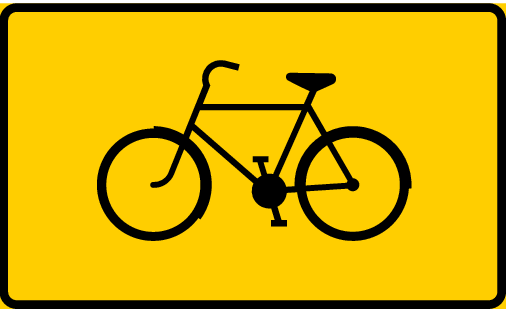
Explanation
Bicycle routeF38
“The sign indicates a route devoted to bicycles. The colour of the sign may vary.”
Pick an answer to check it. 24 of 29 correct (80%) is needed to pass.
The real test has 70 questions in 50 minutes, about 43 seconds per question.
“The sign indicates a route devoted to bicycles. The colour of the sign may vary.”
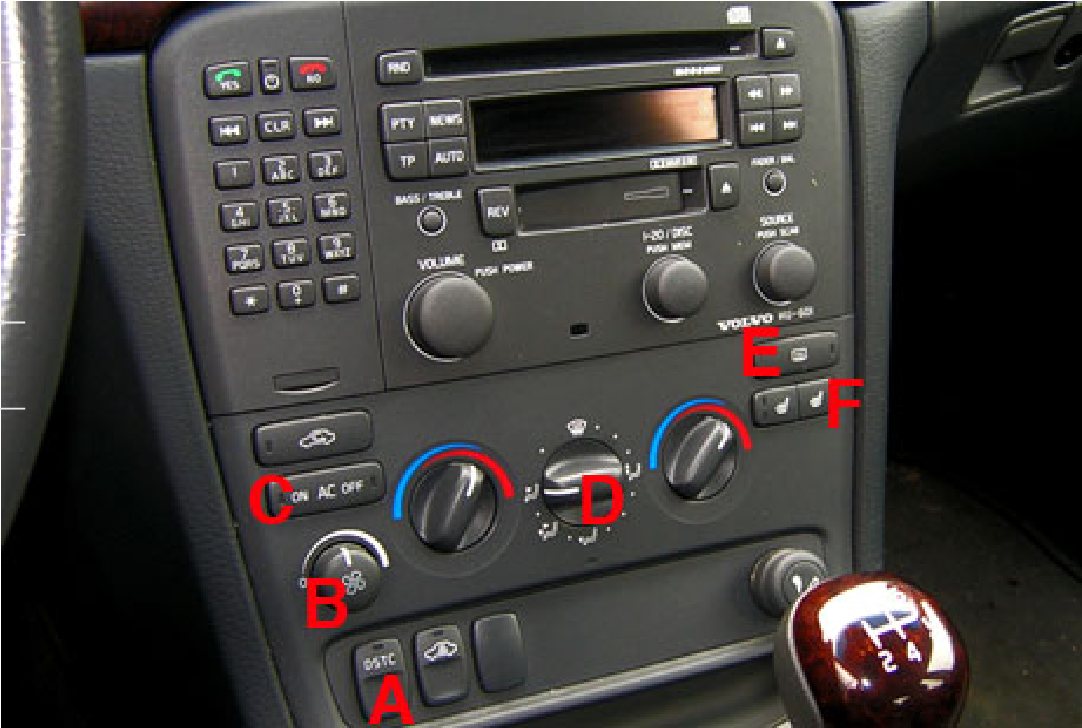
Different manufacturers have different names for their anti-skid systems. These are examples of a few common ones that you should know:
– Yes, the anti-skid system is not an unnecessary luxury, but rather an important system that saves lives! For example, the Driving Licence Book dedicates an entire section to this (19th Edition, page 127). There is reason to believe that the anti-skid system will soon be as common a feature as the catalytic converter.
– This is true. However, you should be familiar with the most common acronyms, which are listed above. In addition, you can use deduce the answer from the photo. You should know all the other buttons and switches so that you are able to conclude that A is the anti-skid system.
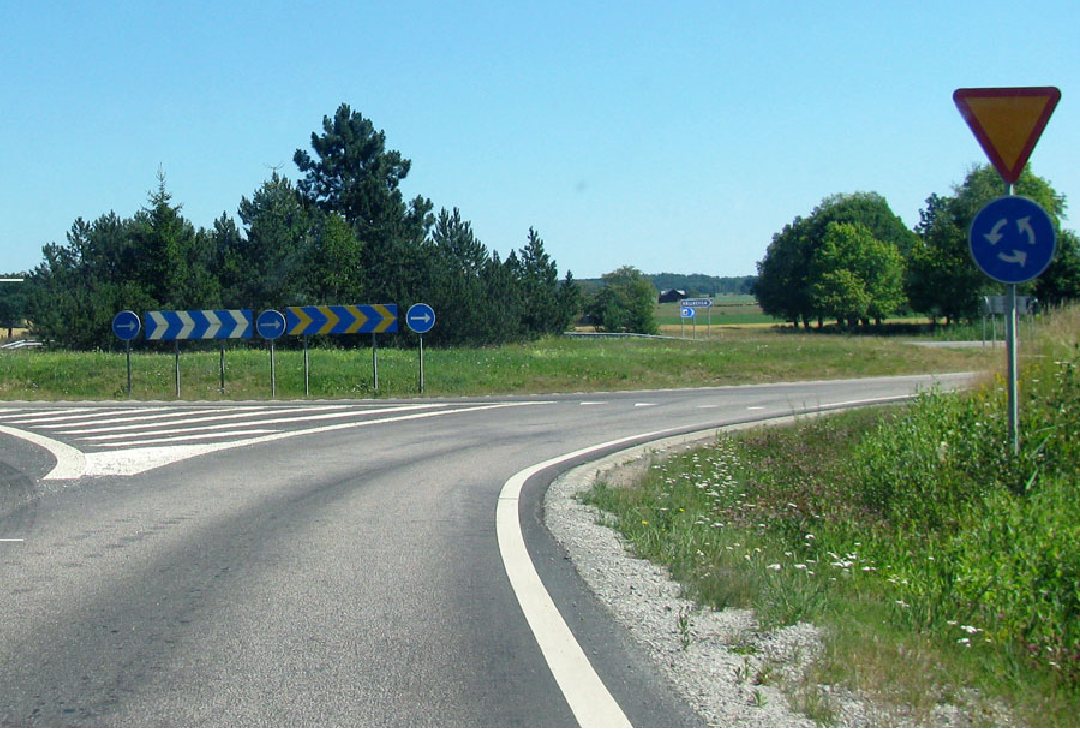
The mandatory signs referred to mean:

“The signs indicate that the vehicle may only be driven in the direction of the arrow or, in the case of two arrows, in either arrow’s direction. The symbol is adapted to the conditions of the location.”
The rectangular signs with several arrows are arrow markers (X1) and not mandatory signs, which were the subject of the question.
Roundabouts are never designed so that you must turn off at a certain exit road, you can always drive around if you want.
It is forbidden to drive if “your blood contains any substance classed as a narcotic. This does not apply if the medication has been prescribed by a doctor.” (Driving Licence Book, 19th Edition, page 213)
Note however that you may not drive if you are a danger in traffic, meaning that:
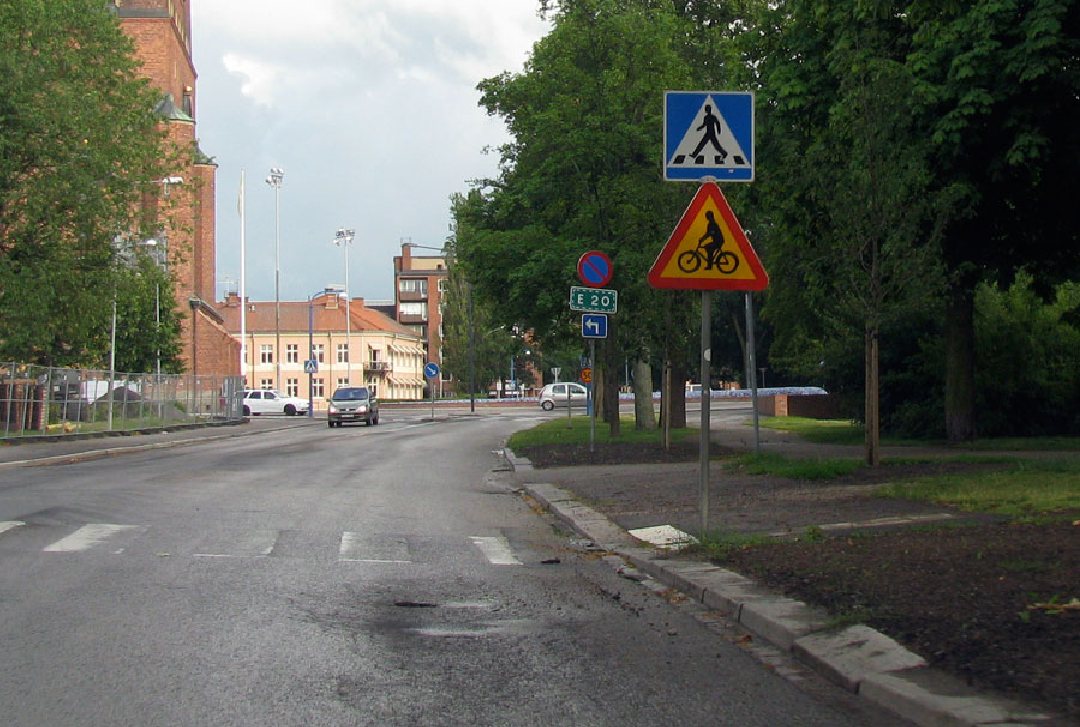
There is a pedestrian crossing in the picture. As a motorist, you are not obliged to give way to cyclists on the pedestrian crossing. It is the cyclist who must give way to the cars:
“A cyclist who crosses a road at a pedestrian crossing must always give way to both pedestrians and vehicles on the road.”
Swedish Transport Agency
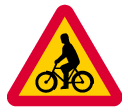
“The sign indicates a section of road where cyclists and moped drivers often cross or drive in on the road.”
The warning sign warns that “cyclists and moped drivers often cross or drive in on the road.” However, it says nothing about the obligation to give way.
There is no other clear information stating that you must stop for cyclists, even though it good to be aware that cyclists may cross the road.
Maximum speed for light lorries: “The speed limit applicable to the road.” (Swedish Transport Agency)
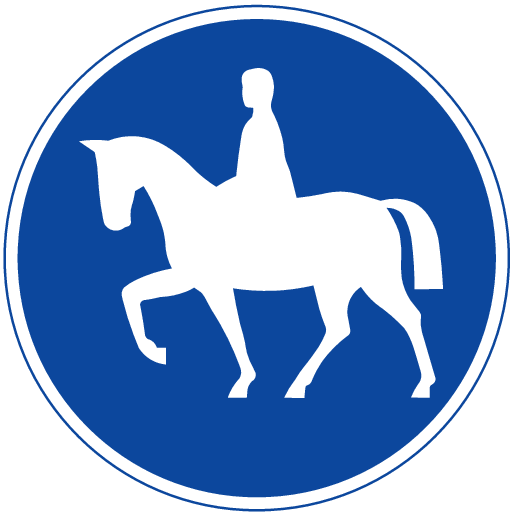
“This sign also indicates that pedestrian traffic is permitted.”
Review of the options:
– No, this question puts the spotlight on something important, namely that you cannot simply look at the symbol on the road sign, you must also be aware of the accompanying text.
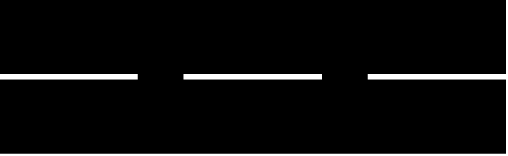

“A warning line is used to indicate that it is inappropriate to cross over it due to the traffic conditions. The marking indicates the boundary between lanes intended for travel in opposite directions. The marking has the distance ratio 3:1 between dashes and spaces.”
“A private car [...] A car equipped with no more than eight seats in addition to the driver’s seat.”
Act on road traffic definitions
8 passengers + 1 driver = 9 people travelling.
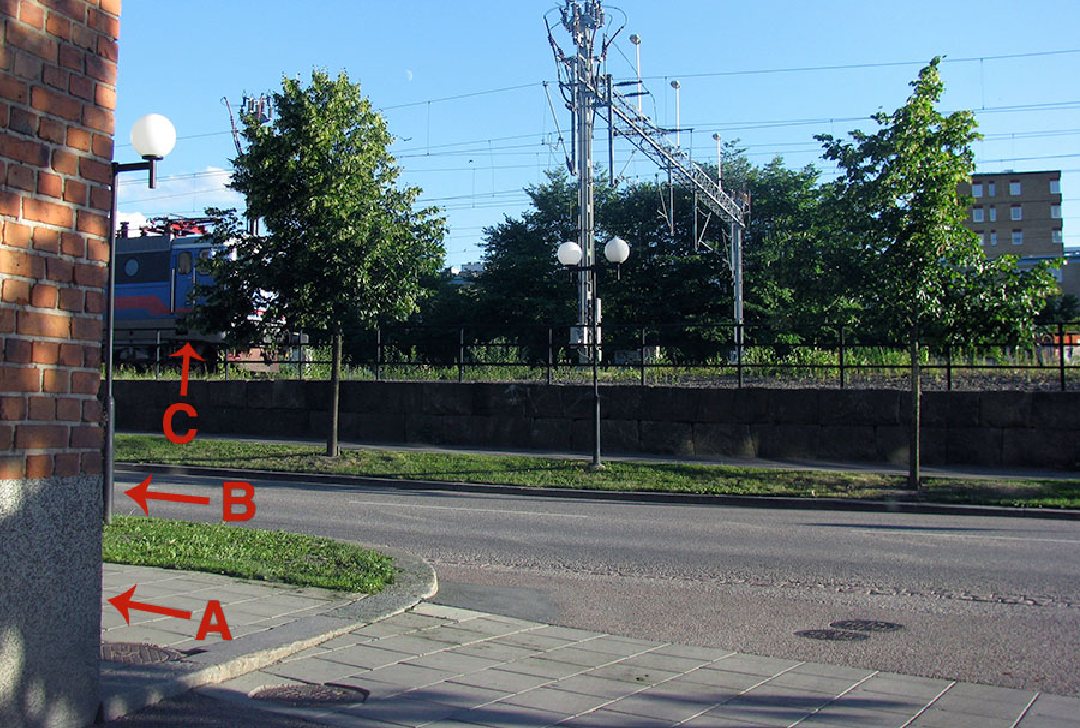
Review of the options:
Disc brakes and drum brakes are the brakes predominately used for private cars. Drum brakes on the rear wheels and disc brakes on the front wheels are a common combination. It is hard to even find any information about “spring brakes”, which means it is not a common type of brake, which was the subject of the question.
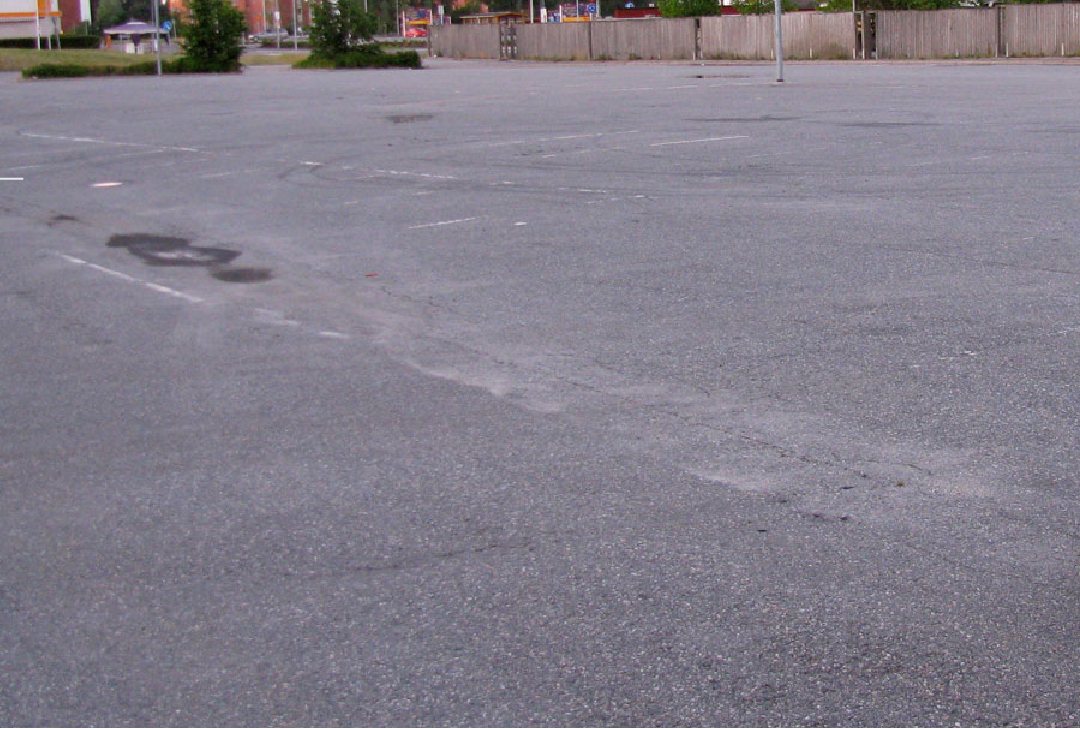
If there are no other right of way rules, road signs or lines, you should use the right-hand rule.
“The right-hand rule also applies when the paths of two vehicles intersect in an open area or similar location, for example, in a parking area or inside a petrol station.”
Driving Licence Book, 19th Edition, page 41
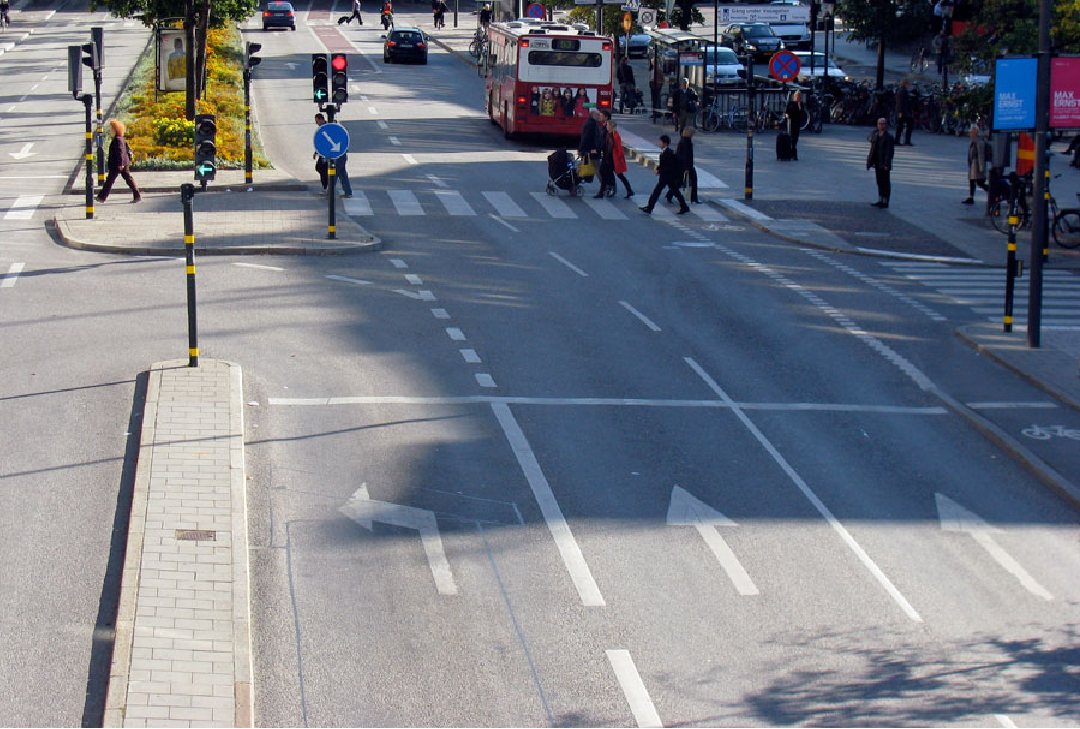
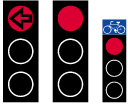
“Stop. A vehicle may not pass the stop line or, in the absence of such, the signal. A signal with an arrow outline only applies to the direction or directions indicated by the arrow.”
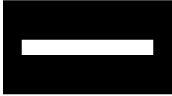
“The marking indicates where a vehicle should be stopped according to a road sign or traffic signal.”
How the situation should be interpreted: Everyone must stop at the stop line until it turns green, except for the vehicles in the left lane, who may turn directly.
“Experienced drivers [...] have a broader and longer field of observation.”
Driving Licence Book, 19th Edition, page 196
Age and experience often go together, but not always. There are 50-year-olds with less traffic experience than a 25-year-old professional driver.
“Cargo fastenings must be able to withstand […] half the cargo weight in the back and to the sides”
Driving Licence Book, 19th Edition, page 248
If, for example, you have a TV on the trailer weighing 30 kg, the straps (= the cargo fastenings) must be able to withstand a pressure of at least 15 kg to each side (15 kg = 50% of 30 kg). If this is not the case, the straps could snap when you drive through a sharp bend.
Note the wording “at least” in the question. It is not wrong for the fastenings to be able to withstand 100% or 200%, but it is incorrect to say that they have to.
“A breathalyser can tell you your blood alcohol level, but many of the most common devices on the market give an incorrect result. This has been shown in laboratory tests of eight common consumer models.”
Testfakta
Nearly half the breathalysers tested by MHF failed: http://www.mhf.se/sv-SE/sakrare-i-trafiken/bast-pa-alkolas-alkomatare/alkomatare/
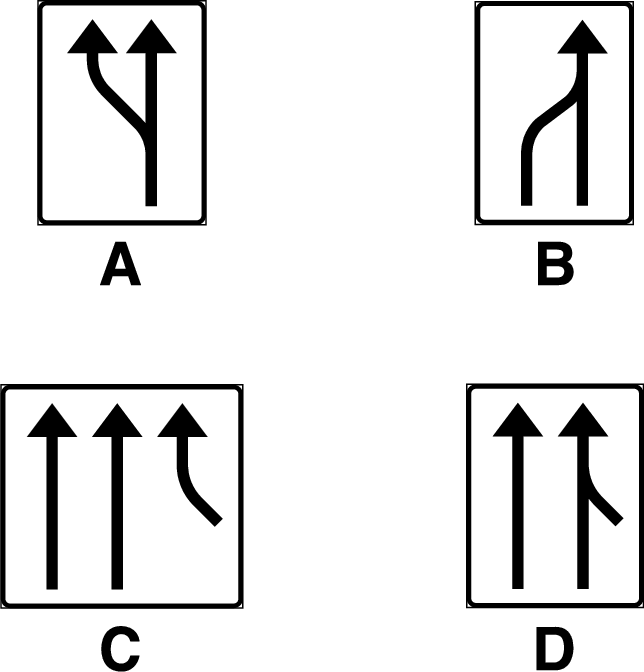
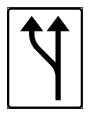
“This sign indicates an increase in the number of lanes. The sign is specific to the conditions at the location. Symbols for types of vehicles or road numbers may be included in the sign. The sign is also used as a preparatory notice that the number of lanes will increase. The distance is then stated on an additional panel. In case of a temporary re-routing of traffic, the sign may have an orange base. Otherwise, no deviating colour may be used.”
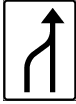
“This sign indicates a reduction in the number of lanes. The sign is specific to the conditions at the location. The sign is also used as a preparatory notice that a lane is ending. The distance is then stated on an additional panel. In case of a temporary re-routing of traffic, the sign may have an orange base. Otherwise, no deviating colour may be used.”
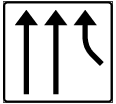
“The sign is specific to the conditions at the location. In case of a temporary re-routing of traffic, the sign may have an orange base. Otherwise, no deviating colour may be used.”
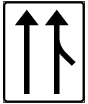
“The sign is specific to the conditions at the location. In case of a temporary re-routing of traffic, the sign may have an orange base. Otherwise, no deviating colour may be used.”
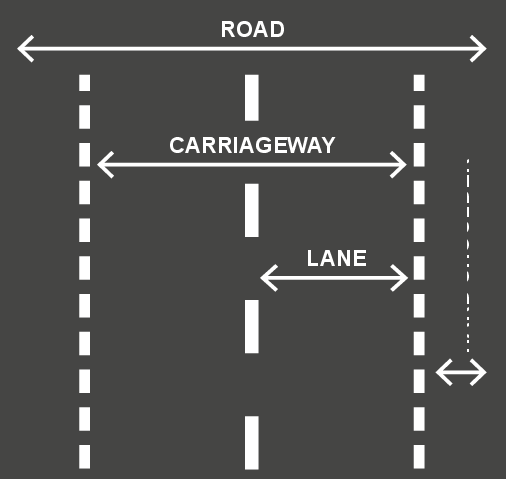
– No, they only indicate that the number of lanes is increasing/decreasing. It is still the same road, as per the definitions:
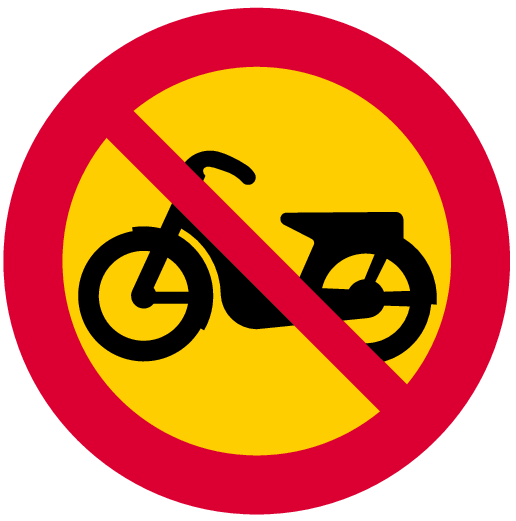
“If the prohibition also applies to class I mopeds, this is indicated on an additional panel.”
Although they are equal in size, class II mopeds are classed more as a bicycle and class I mopeds are classed more as a motorcycle. Therefore the prohibition does not automatically apply to both the classes.
“When requested by another party involved in the accident or whose property has been damaged in the accident, the road user shall give their name and address and provide details on the incident.”
Swedish Road Traffic Ordinance
In traffic, it is not possible to be anonymous. You have to take responsibility for what happens.
Information for the insurance company is a practical reason for other involved parties needing your name and address.
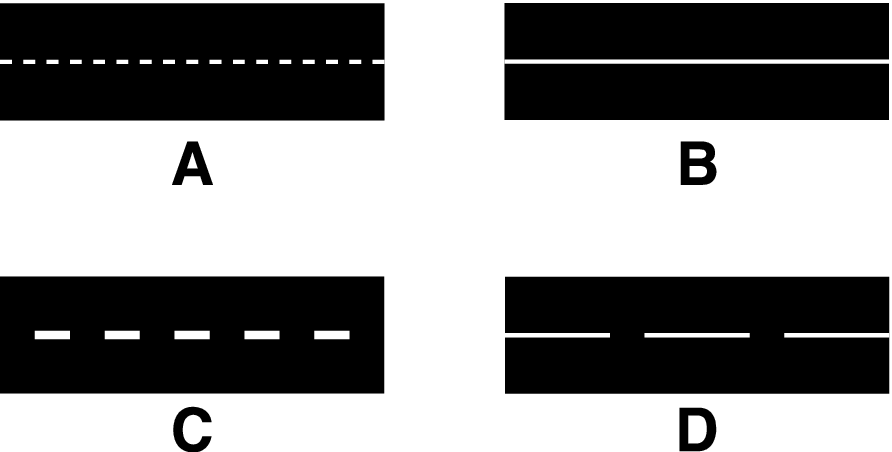
“The marking indicates the appropriate route for traffic in complicated junctions. The marking is also used in other cases where there is a need for guidance. The marking has a distance ratio of 1:1 between the dashes and spaces.”

“A solid line indicates that the provisions of Chapter 3, Section 11 or Section 12, paragraph 3 of the Road Traffic Ordinance (1998:1276), or provisions stipulated pursuant to that ordinance apply. A solid centre line can appear in both single and double form. In case of a double solid line, the distance between the lines may vary.”

“The marking indicates the boundary between a lane for vehicles operating a regular service, etc. and another lane. The marking has a distance ratio of 1:1 between the dashes and spaces.”

“A warning line is used to indicate that it is inappropriate to cross over it due to the traffic conditions. The marking indicates the boundary between lanes intended for travel in opposite directions. The marking has a distance ratio of 3:1 between the dashes and spaces.”
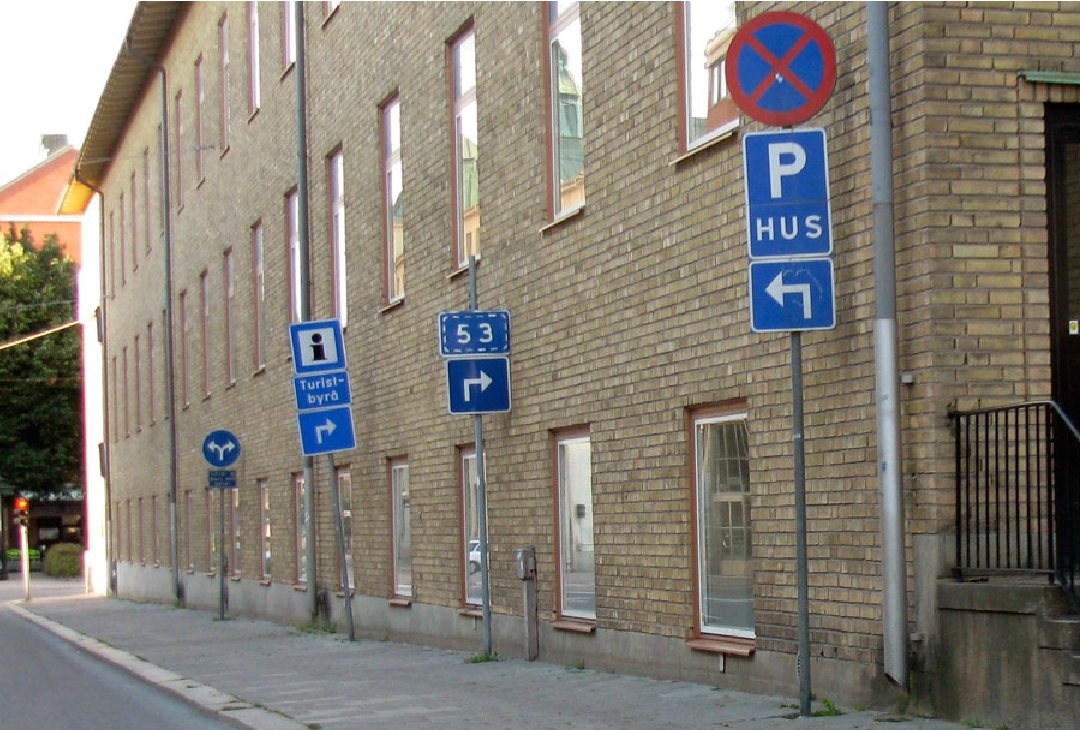
The first alternative is wrong, as the additional panel with the arrow to the left only applies to the parking structure [P HUS] and not the prohibition sign, since “an additional panel underneath a parking prohibition sign or a prohibition to stop or park has [...] black characters on a yellow base.” (Traffic Sign Ordinance)
The third and fourth options are also wrong, as it is not true that you get directly onto route 53: “A sign with a dashed border indicates that the road is leading to the route with the number on the sign.” (Traffic Sign Ordinance)
– There is nothing wrong with saying that you are not allowed to park by this sign. It is only wrong if you say that it is only forbidden to park but permitted to stop. The correct alternative does not say that.
Carbon monoxide poisoning, remember that the “carbon monoxide is very treacherous as it has no scent or colour.” (Driving Licence Book, 19th Edition, page 143)
“Overtaking is not allowed just before or on a level crossing, except when 1. the crossing is gated, or 2. the traffic in the crossing is regulated through such traffic signals as are used in regular junctions.”
Swedish Road Traffic Ordinance
It is thus enough for the crossing to have either gates or traffic lights for the overtaking prohibition to be made invalid. The question specifies that the crossing has traffic lights, which means that there is no prohibition to overtake. Note however that it has to be the right type of traffic lights, see more below.

This type of signal device is enough to cancel out the overtaking prohibition, as it is a red, amber and green traffic signal.

This type of signal device is not enough to cancel out the overtaking prohibition, as it is the regular signal that is posted at nearly every railway crossing.
Yes Yes All vehicles
Yes No All vehicles
No Yes All vehicles (same as in the question)
No No
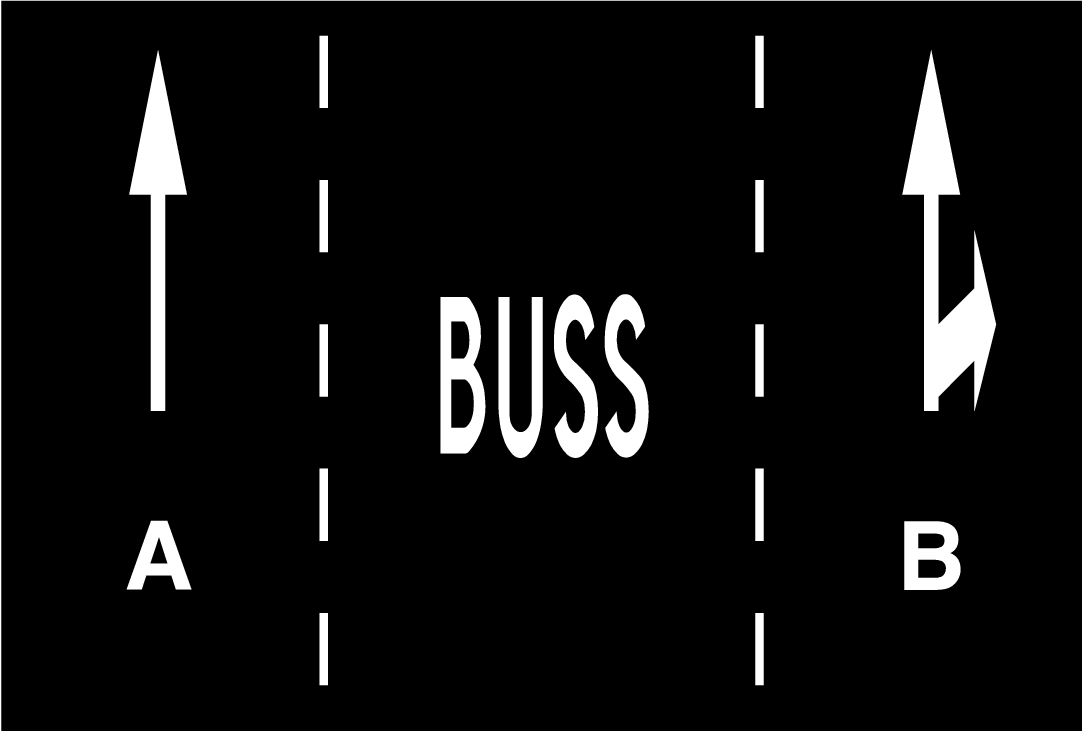
”Buss” = Bus
“If a lane has been dedicated to a certain type or certain types of vehicles, other vehicles may only enter that lane in order to cross it.”
Swedish Road Traffic Ordinance
Drunk driving: “The punishment is a fine or imprisonment for no more than six months.” (Driving Licence Book, 19th Edition, page 209)
“The fuses prevent short circuiting”
Driving Licence Book, 19th Edition, page 139
“Vehicles or trams may not overtake directly before or on an unguarded pedestrian crossing [...] In the following cases it is not considered overtaking when a vehicle in one lane passes a vehicle in another lane 1. if the carriageway has two or more lanes for travel in the same direction and there is a heavy traffic queue in all lanes. 2. if the carriageway is divided into lanes for different destinations that are marked with a lane assignment sign, or 3. if the vehicles have been placed in separate lanes in connection with a junction.”
Swedish Road Traffic Ordinance
Note that the second exception states that the lanes must lead to different destinations, as opposed to the same destination, as one of the options suggests.
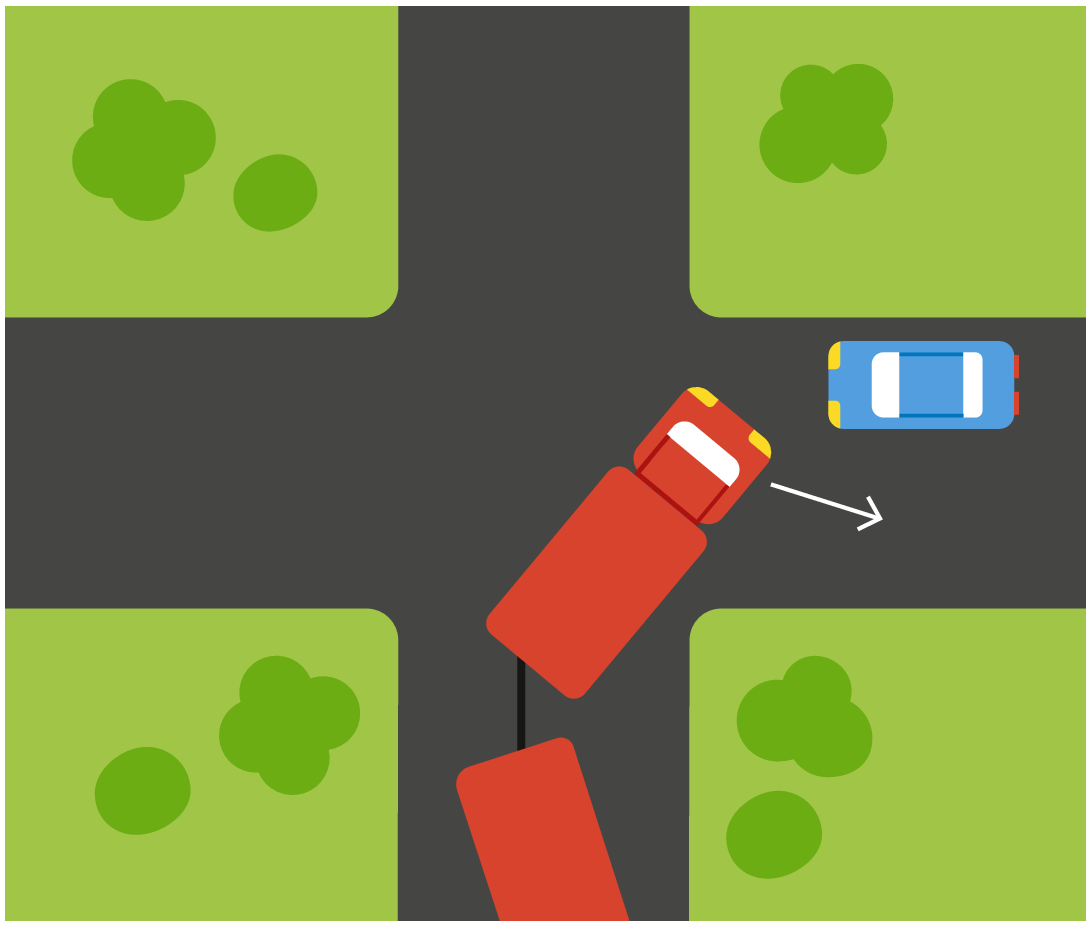
Even though the lorry technically must yield in accordance with the right-hand rule, it is more appropriate and safer if you reverse a few metres to let the lorry pass. Strictly insisting on the rules is not desirable: you must display “good judgement when interacting with other road users.” (Swedish Transport Administration)
You could perhaps squeeze past the lorry, but as you must assume that the lorry is moving (“is turning”), you risk being hit by the lorry.
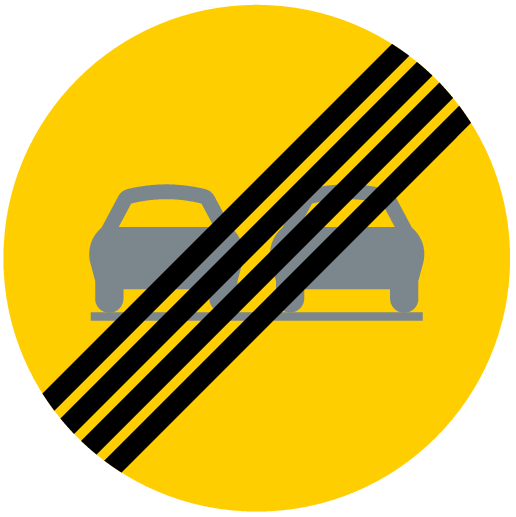
An example of a rule that prohibits overtaking:
“In places where visibility is limited at the crest of a hill or in a curve, overtaking may only take place if the road has at least two lanes in your direction in which there may be no oncoming traffic, or in other cases where the overtaking can be completed without using a lane intended for oncoming vehicles.”
Swedish Road Traffic Ordinance
No questions match this filter.