Swedish driving licence · Category B
Driving Theory Book
Traffic rules, people, vehicles, environment, road signs and court cases, with a knowledge check at the end of each chapter.
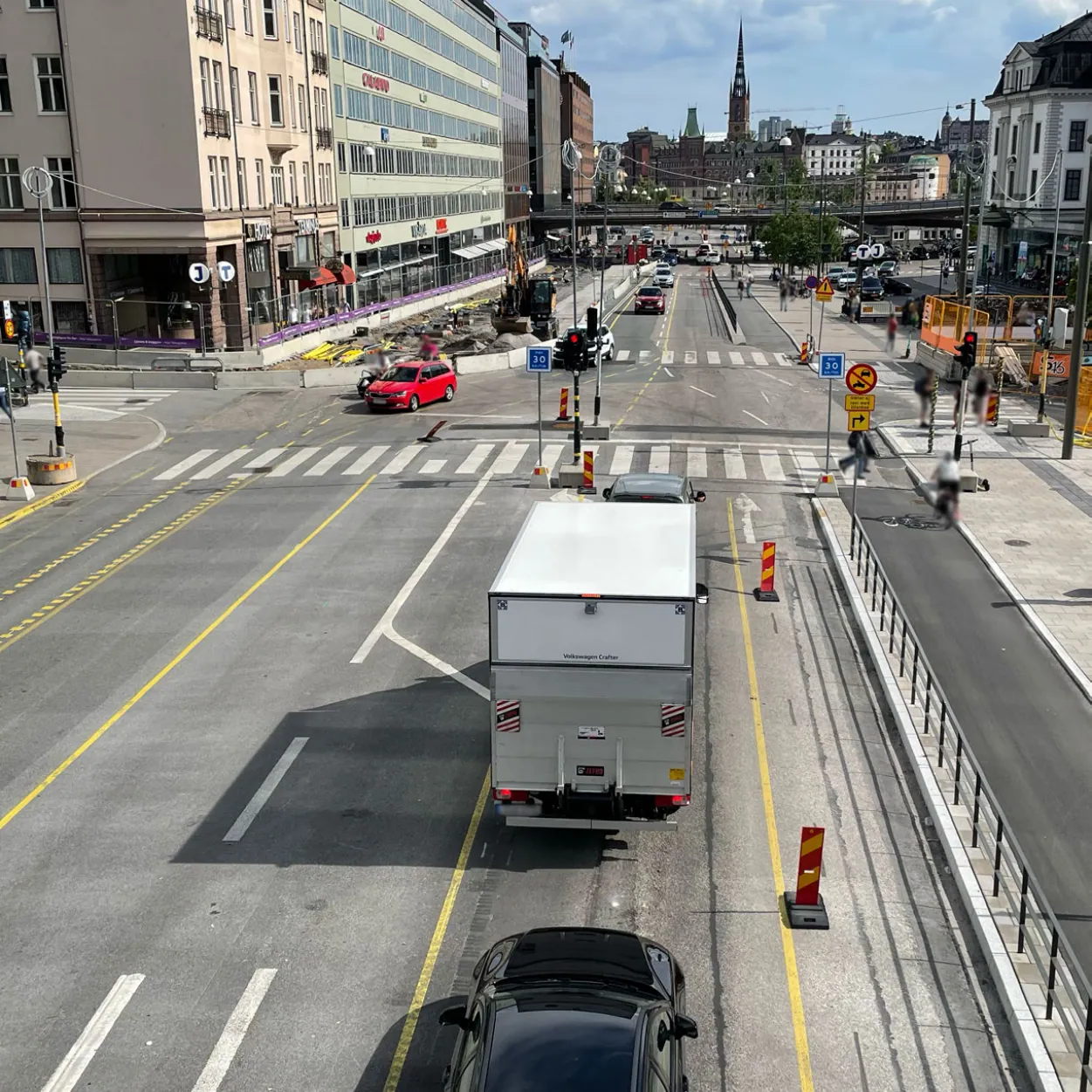
Introduction
Fundamental traffic rules
- Show consideration and care.
- Be considerate of those using the road and those who live near it.
- Be especially considerate of children, school traffic wardens, people with disabilities and the elderly.
- Do not cause any unnecessary disturbance or obstruction.
- No-one has any rights, only joint obligations.
Road, carriageway, lane & hard shoulder
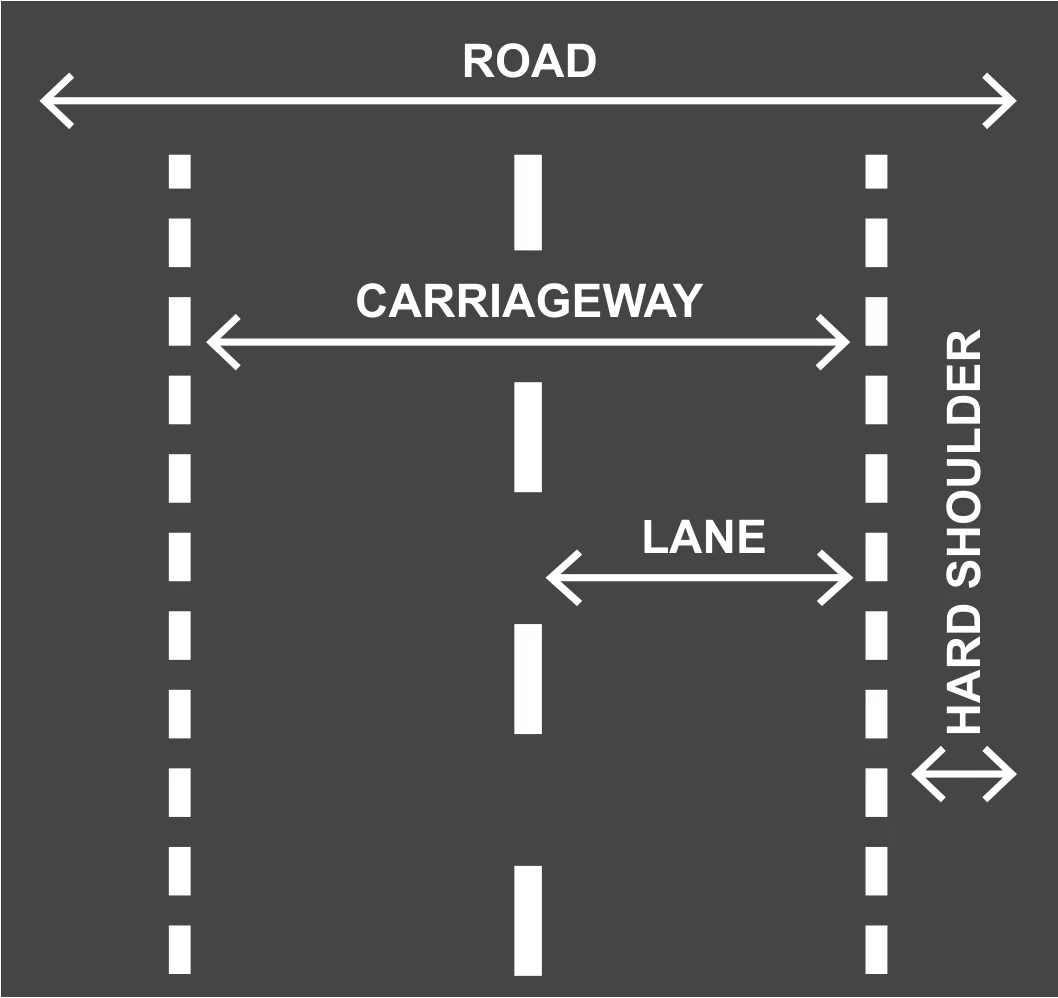
- The road is everything (carriageway, lane and hard shoulder) put together.
- The carriageway is both lanes combined.
- The lane is where the cars are driving. The road will normally have two lanes going in opposite directions.
- The hard shoulder is the area outside the carriageway.
- This is a safety zone that shall primarily be used by pedestrians, cyclists, moped drivers and slow-moving vehicles.
- You may drive briefly on the hard shoulder in order, for example, to facilitate an overtaking. However, be very careful if you have limited visibility.
- Vehicles on the hard shoulder have an obligation to give way to vehicles on the carriageway.
Basic safety
- Clearly show your intentions.
- Make eye contact with the people who, for example, are using a pedestrian crossing or other drivers crossing your path.
- Always keep a safe distance. There is always the possibility of someone suddenly opening a car door or of a cyclist swerving.
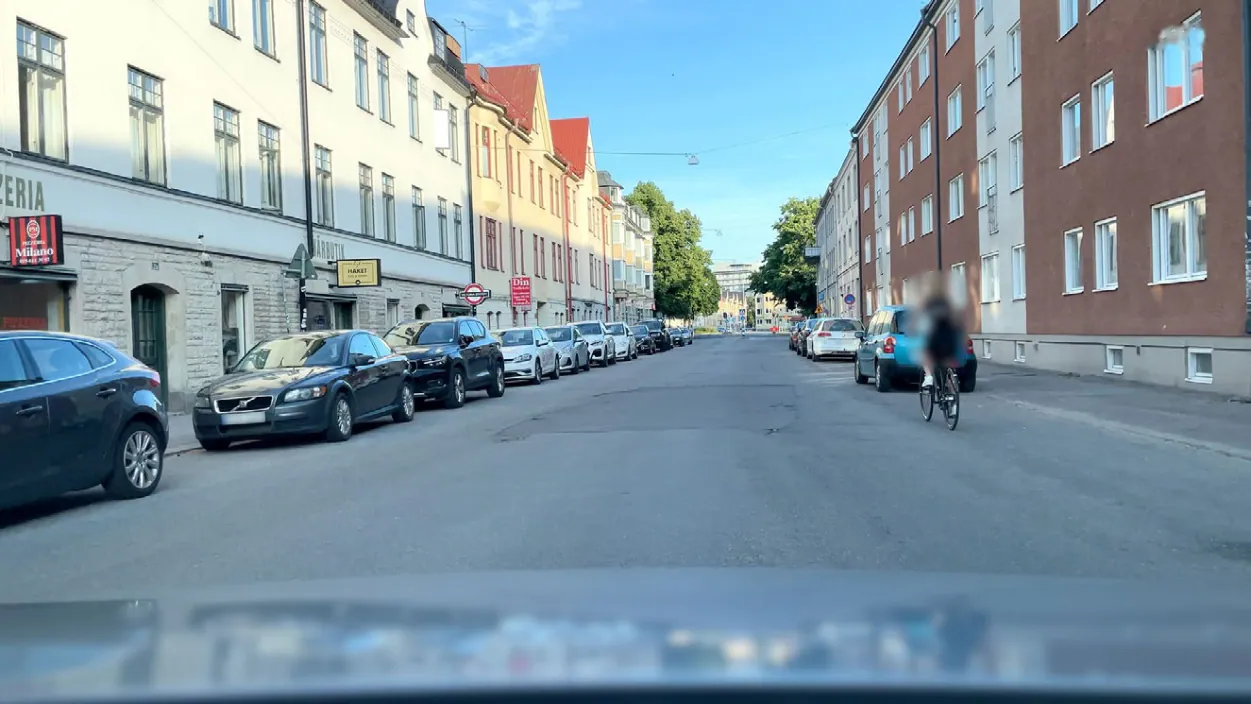
Defensive driving
Driving defensively makes for safer traffic. Examples of how to drive defensively:
- Do not take any unnecessary risks.
- Be sure to maintain wide safety margins.
- Stay vigilant.
- Do not stress, make sure you have plenty of time.
- Be prepared for unexpected things to happen.
- Analyse the situation before doing anything else.
- Think ahead and imagine what could happen.
- Drive smoothly and brake in good time.
Precedence
Sometimes you receive several messages simultaneously. You must then decide which to observe first. This is the order you should follow:
- Police signals (including a traffic director and similar).
- Traffic signals.
- Road signs.
- Rules (the priority-to-the-right rule, etc.).
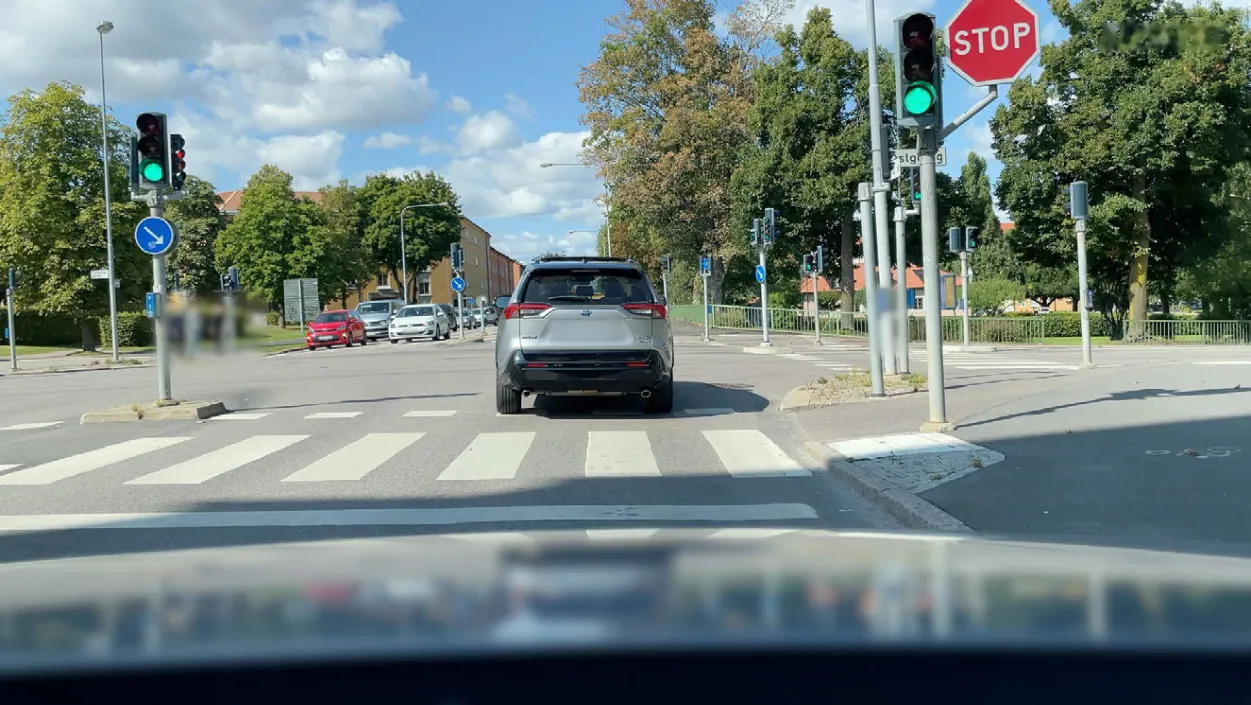
Speed
- Adapt your speed, which means you must:
- Be in control of the vehicle.
- Be able to stop in the event of foreseeable obstacles.
- Take other traffic into consideration.
- Take the vehicle’s condition and load into consideration.
- Take the weather and road conditions into consideration.
- You may not brake suddenly or drive excessively slowly for no reason.
- The speed signs always take priority. However, there are a few basic speed limits, which may be of help if there are no signs:
- Built-up area: 50 km/h.
- Outside of built-up area: 70 km/h.
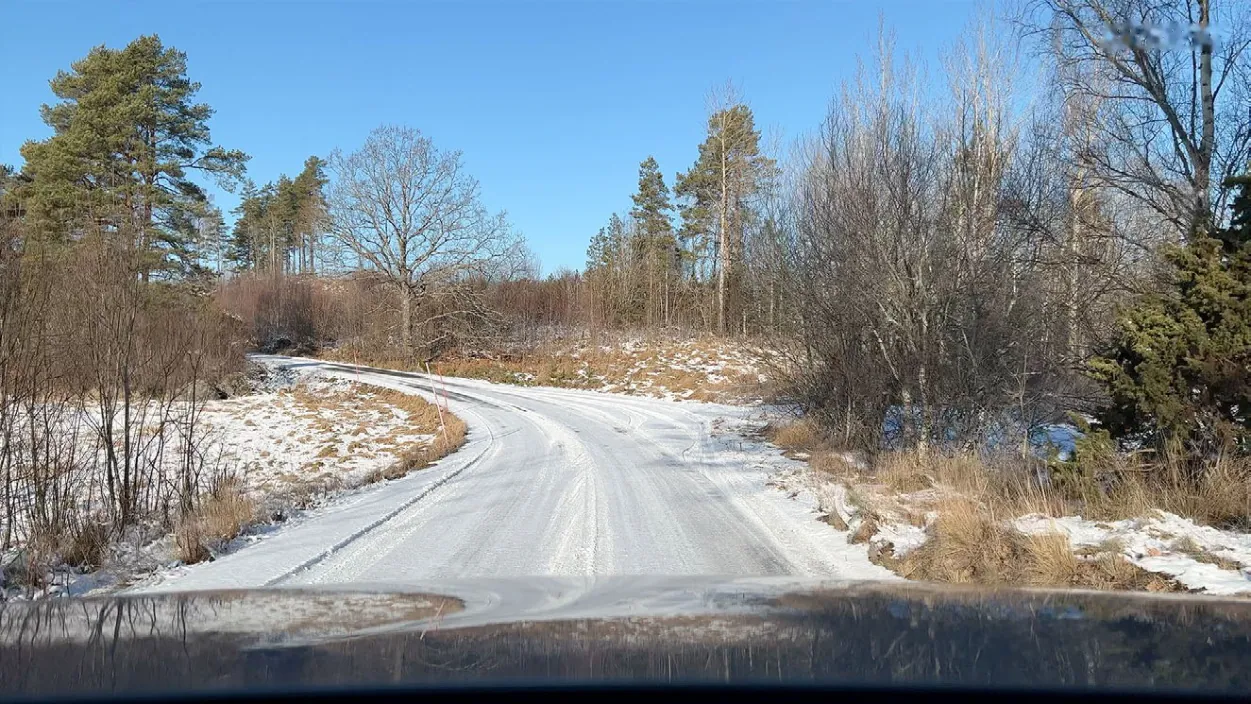
Ambiguous traffic rules
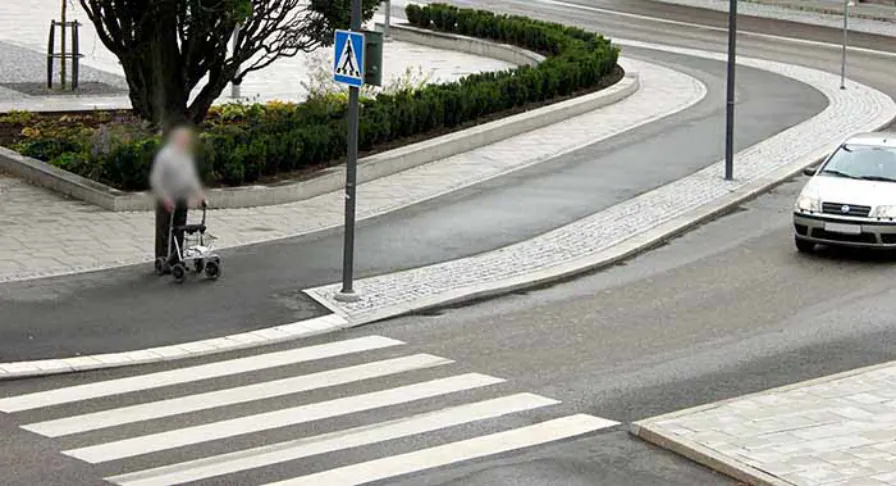
Some rules are very clear, for example that you are not permitted to stop or park within 10 metres of a pedestrian crossing. It is simply a matter of judging the distance.
However, there are more ambiguous rules, such as you having an obligation to give way to pedestrians who “are about to step on to the pedestrian crossing”. What does “about to” mean? There is no exact answer; instead, the following process is used to discern whether or not you have adhered to the rule:
- You are reported for not giving way to a pedestrian.
- A court looks at the rules and relates them to your specific case.
- The court then decides whether you have violated those rules.
When it comes to ambiguous rules, you must therefore make a reasonable assessment and hope that your conclusion is shared by the judicial system.
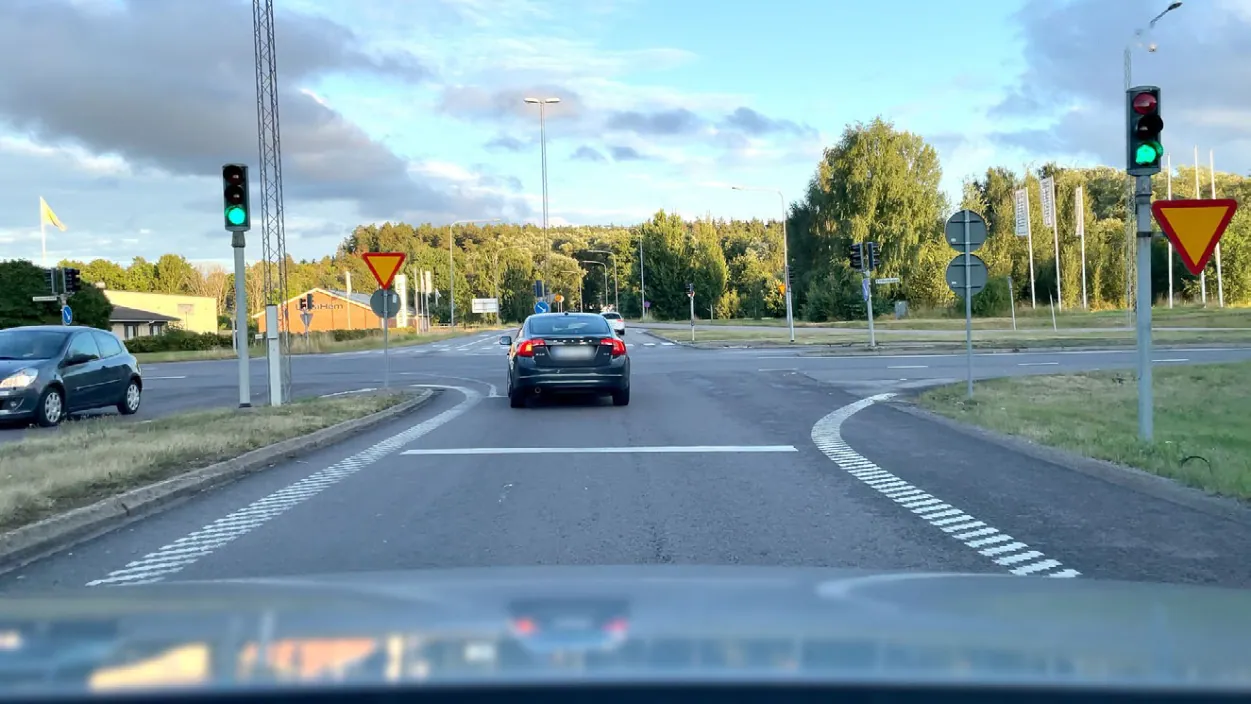
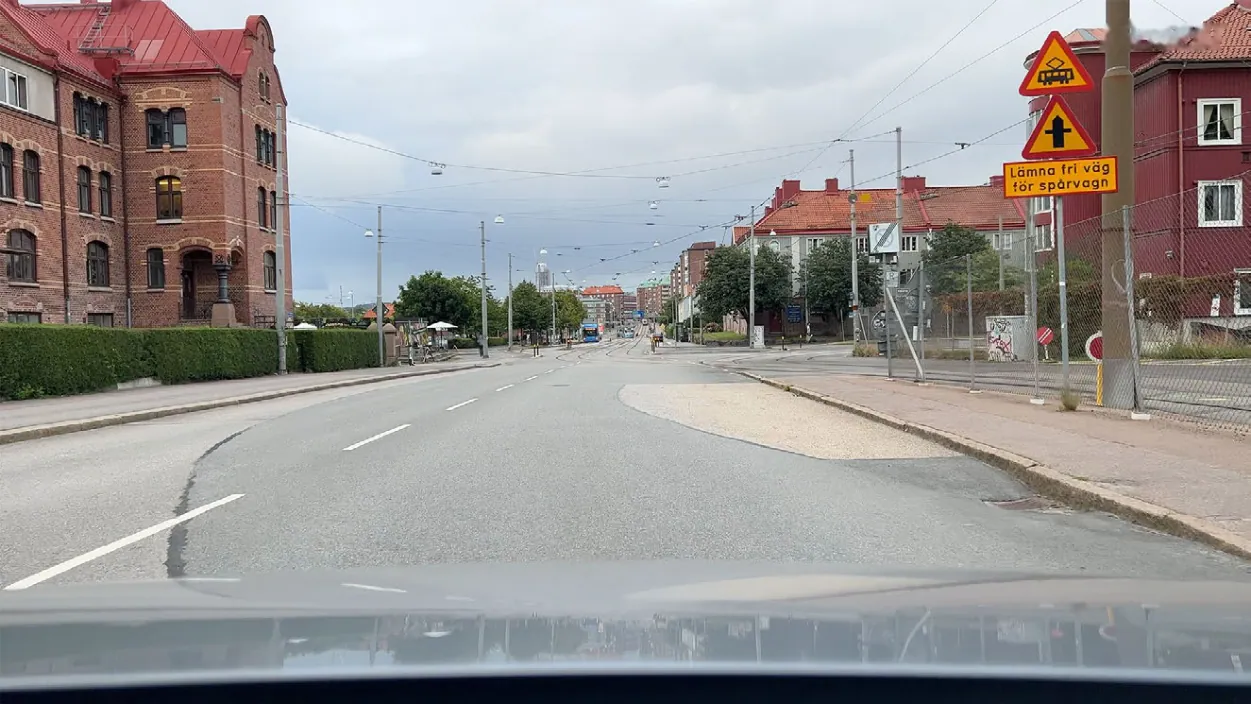
You intend to turn right at the junction. Are you obliged to give way to vehicles approaching from the left?
Correct answer: B) No
Explanation
Traffic signals always take priority over road signs. The road sign indicating the obligation to give way only applies if the traffic signals are not functioning.
“An instruction by means of a non-flashing light at a traffic signal applies ahead of an instruction concerning an obligation to stop or an obligation to give way that is provided by means of a road sign.” (Road Traffic Ordinance)

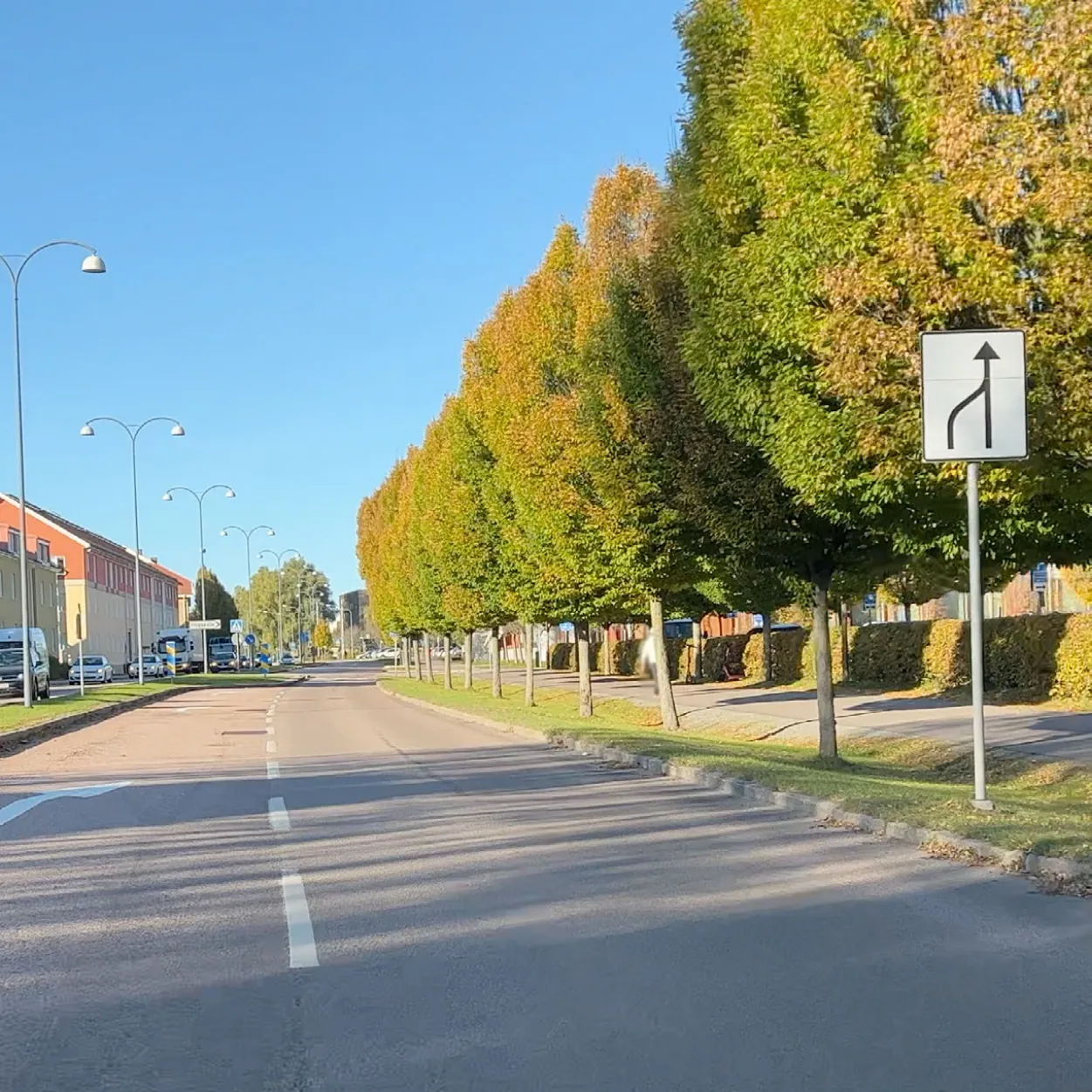
Lanes
Different types of lanes
Lanes can take two different forms:
- Marked: The lanes are separated by lines. This is the most common type.
- Unmarked: If there is enough room to drive a four-wheeled vehicle, this is also considered to be a lane.
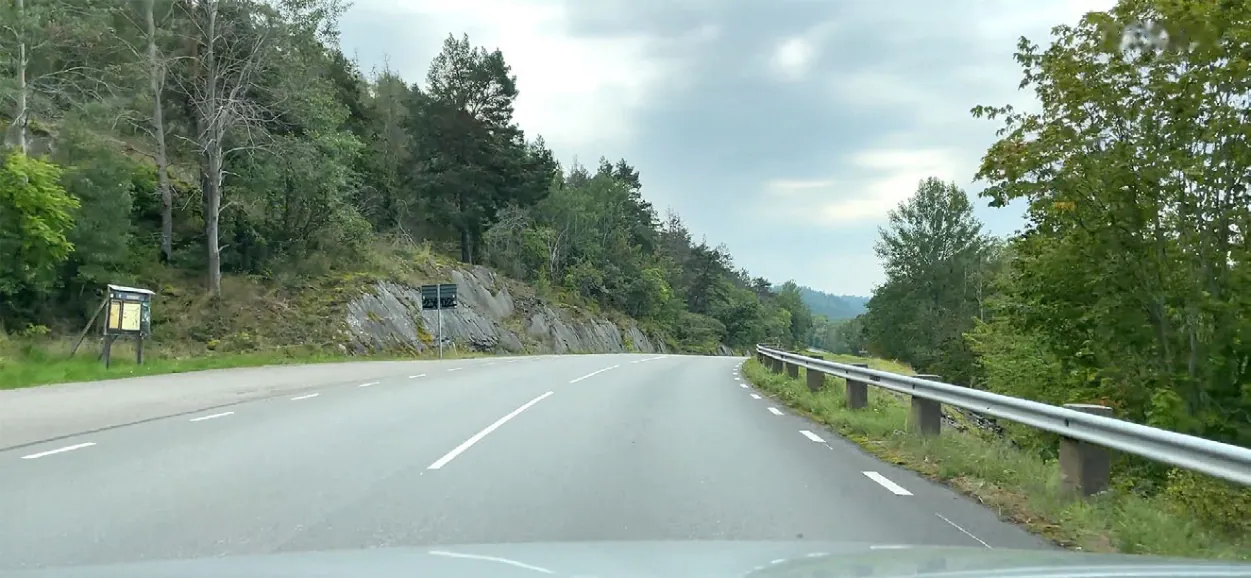
Positioning of the car inside the lane
The basic rule is that you should be in the middle of your lane. However, there are situations in which another position is more appropriate.
When approaching a wide oncoming vehicle, you can move to the right of your lane. However, pay close attention to pedestrians and obstacles along the right side of the road.
If you have good visibility ahead, but poor visibility to the sides (e.g. dense forest), you can move to the left of your lane. However, avoid this placement if there is oncoming traffic, or may suddenly be oncoming traffic (e.g. bends).
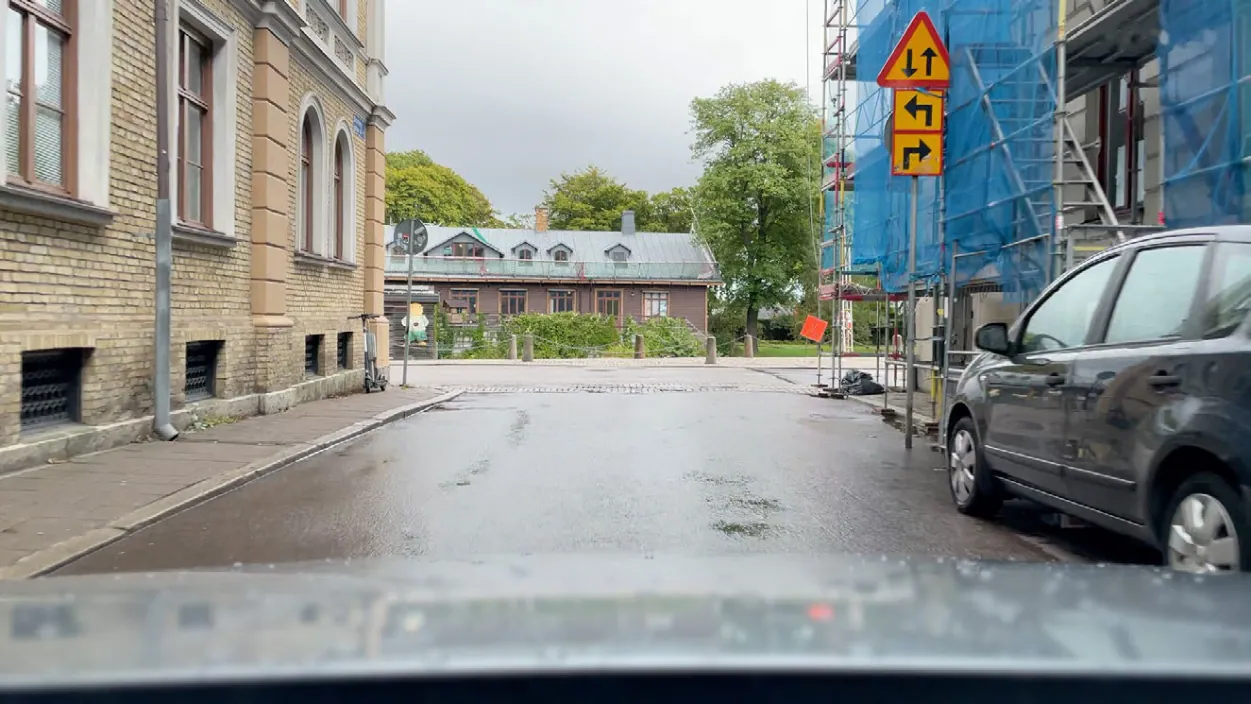
When turning
- Left turn: As close to the left edge of your lane as possible. You must not hinder oncoming traffic.
- Right turn: As close to the right edge of the carriageway as possible.
When turning on a one-way road
On one-way roads you do not have to take oncoming traffic into consideration. The correct placement is therefore the following:
- Left turn: As close to the left edge of the lane as possible.
- Right turn: As close to the right edge of the lane as possible.
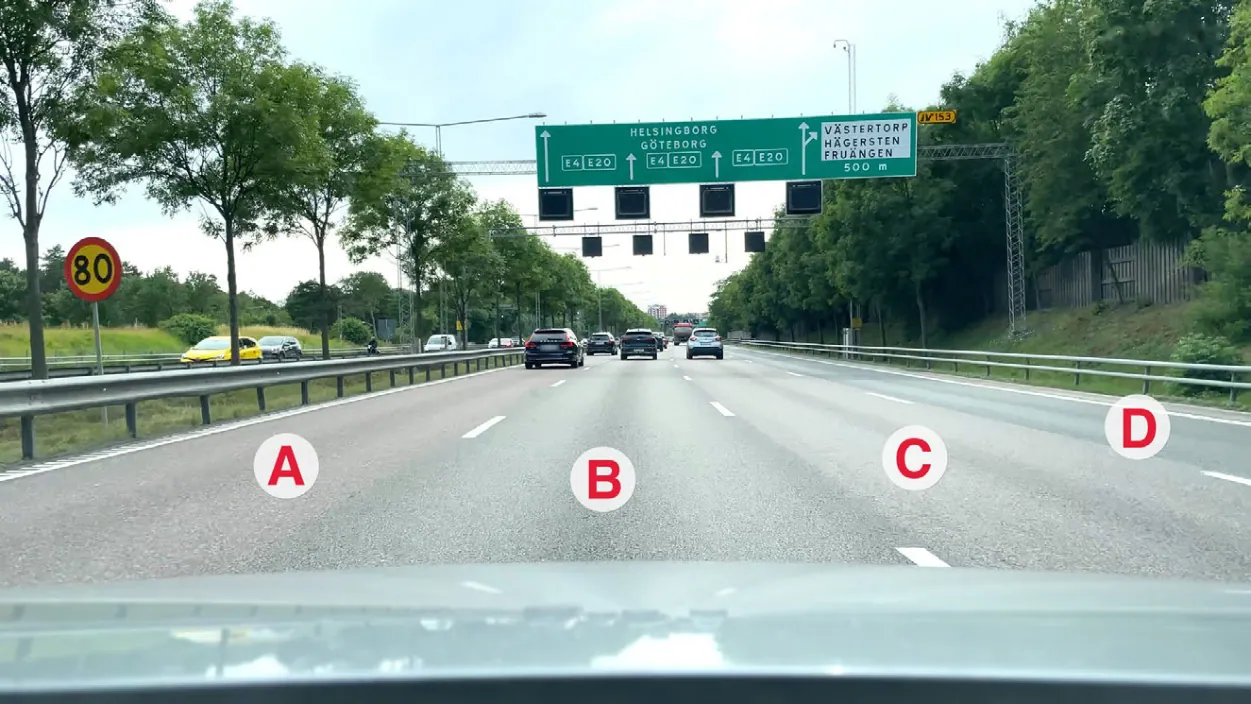
Which lane to choose
The basic rule is that you must choose the lane that is furthest to the right. However, if any of the following conditions are met, you may choose the lane that is most suitable for your continued journey:
- There are at least two marked lanes for traffic travelling in your direction, and the speed limit is 70 km/h or lower.
- The lanes lead to different destinations according to lane assignment signs (road sign F8).
Changing lanes
How to change lanes, step by step
- Check the traffic situation in front of you.
- If the distance to the vehicle in front of you is good, check:
- Rear-view mirror.
- Side mirror.
- Blind spot (turn your head).
- If everything looks good, turn on your indicator.
- Wait a few seconds. Keep your eyes moving and gauge the reactions of other road users.
- Check your blind spot one last time.
- Calmly turn into the new lane. A small speed increase is appropriate when changing lanes if there are vehicles close behind you in the new lane.
Prohibition on changing lanes
In dense traffic on roads with multiple lanes in your direction, there will sometimes be gaps in the other lanes. It may then be tempting to change lanes in order to move further ahead. However, you are not allowed to slalom between cars.
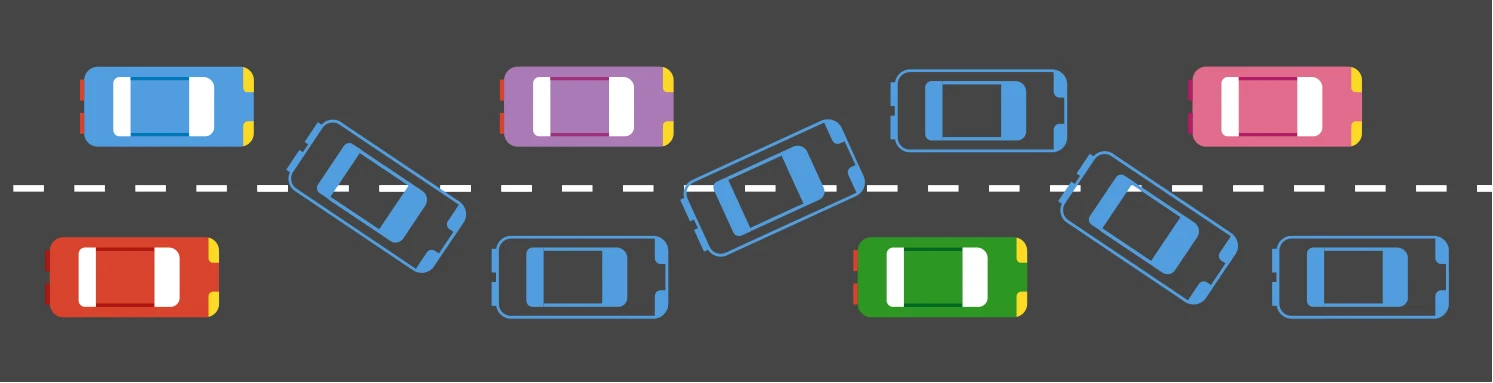
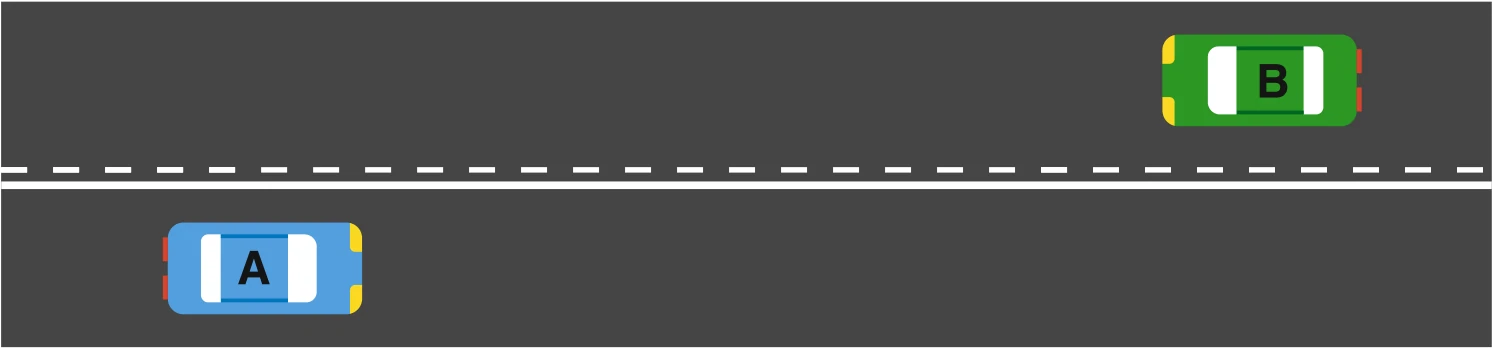
You are not permitted to pass over into another lane if the line on your side is solid.
Special lanes
Public transport lane (bus lane)
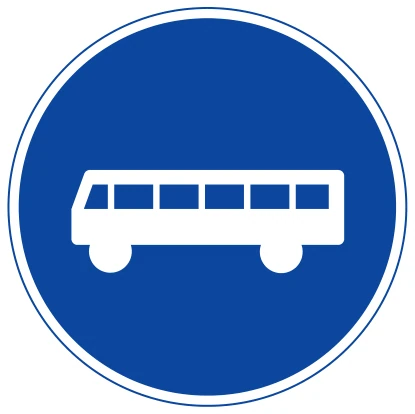
The purpose of public transport lanes is to ensure that buses do not get stuck in queues, which would delay them. Bicycles and class II mopeds (not EU mopeds class I) may also use a public transport lane located to the right in the direction of travel.
If any other vehicles are permitted to use the public transport lane, this is specified on an additional panel.
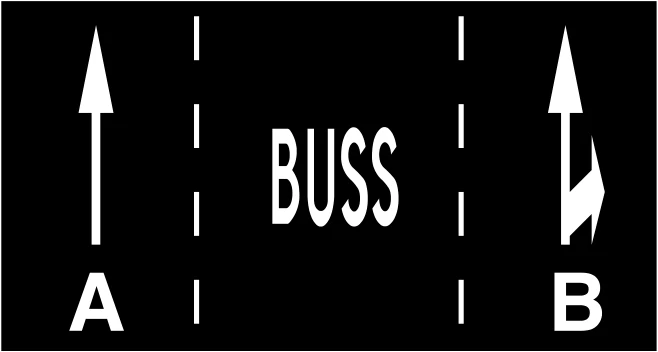
You may cross a public transport lane, for example if you are going from A to B:
Reversible lane
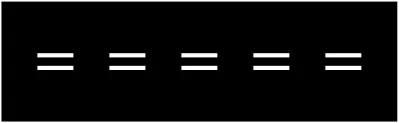
The direction of traffic flow in a reversible lane can be changed as needed. In the afternoon, many road users will be travelling home from work, and it is then practical to have an extra lane for traffic leaving the town centre. Reversible lanes are very rare.
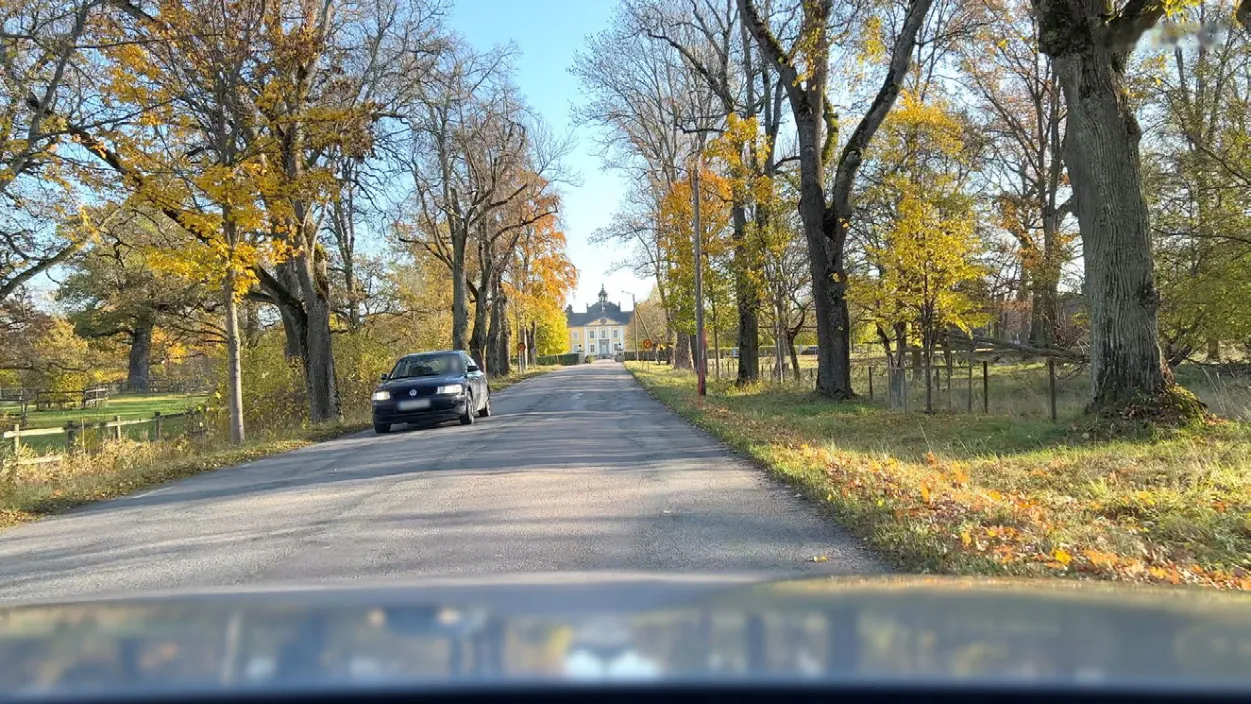
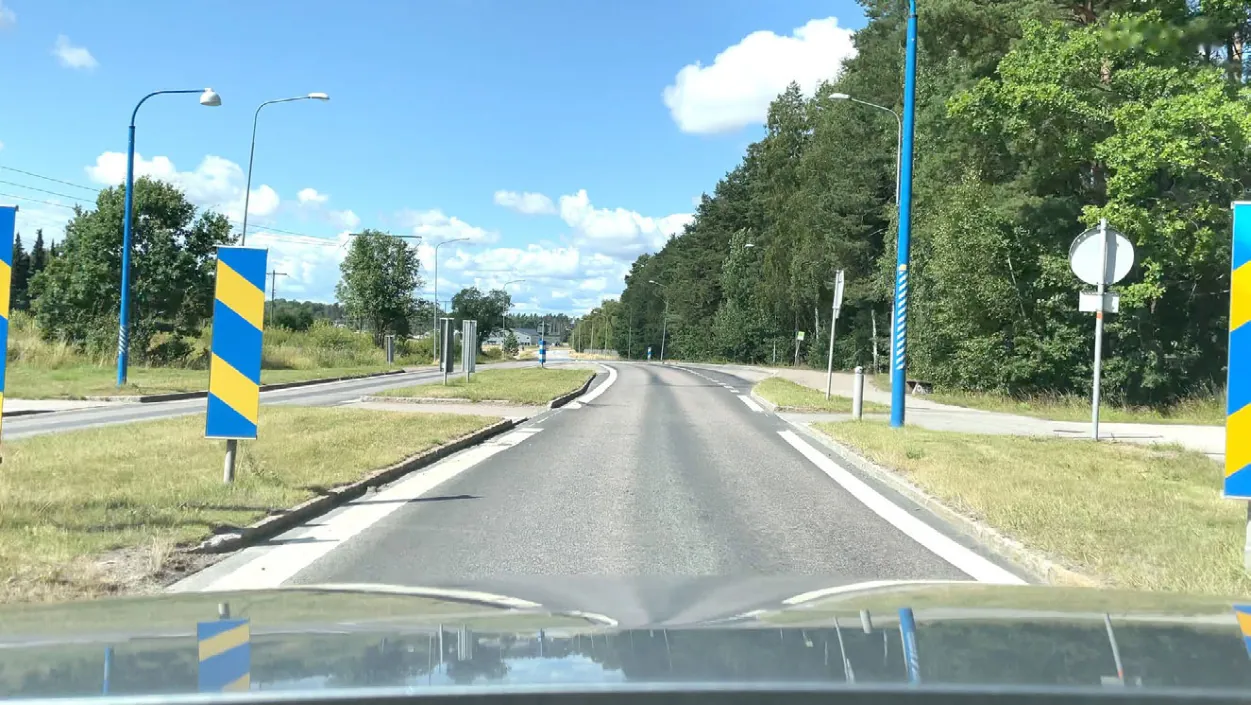
How many lanes does this road have?
Correct answer: C) 2 lanes.
Explanation
Lane: “A longitudinal field on a carriageway shown by road markings or, if there are no road markings, that is wide enough for traffic in one file of four-wheeled vehicles”. (Ordinance on Road Traffic Definitions)
Because there are no road markings, you must use your own judgement. In this example, it is clear that there is sufficient room for 2 cars to be driven alongside each other. The road could perhaps be wide enough for 4 cars, but they would not be able to be driven in a normal or safe manner.
You can interpret “wide enough for traffic in one file of four-wheeled vehicles” as meaning that there must be reasonable safety margins between the vehicles, and not that the vehicles are packed closely together with just 10 cm between them.
Priority rules
priority-to-the-right rule, priority roads, etc.
No rights, only obligations
The basis of all priority rules is that no-one has any rights in traffic, only joint obligations. Different perspectives on the same situation:
- “I have priority, as I am driving on a priority road.”
The attitude that you have the right to something in traffic can be dangerous. - “The other cars are supposed to give way to me, as I am driving on a priority road.”
Appropriate and safe attitude.
Obligation to give way
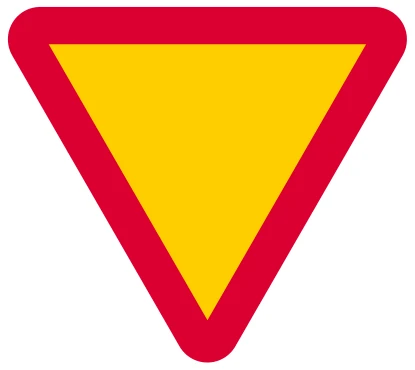
- Let intersecting vehicle traffic pass.
- You must clearly show that you intend to let the other road users go first. For example: brake in good time rather than creating uncertainty by braking hard just before the junction.
- Stop if necessary, but this is not a requirement as in the obligation to stop.
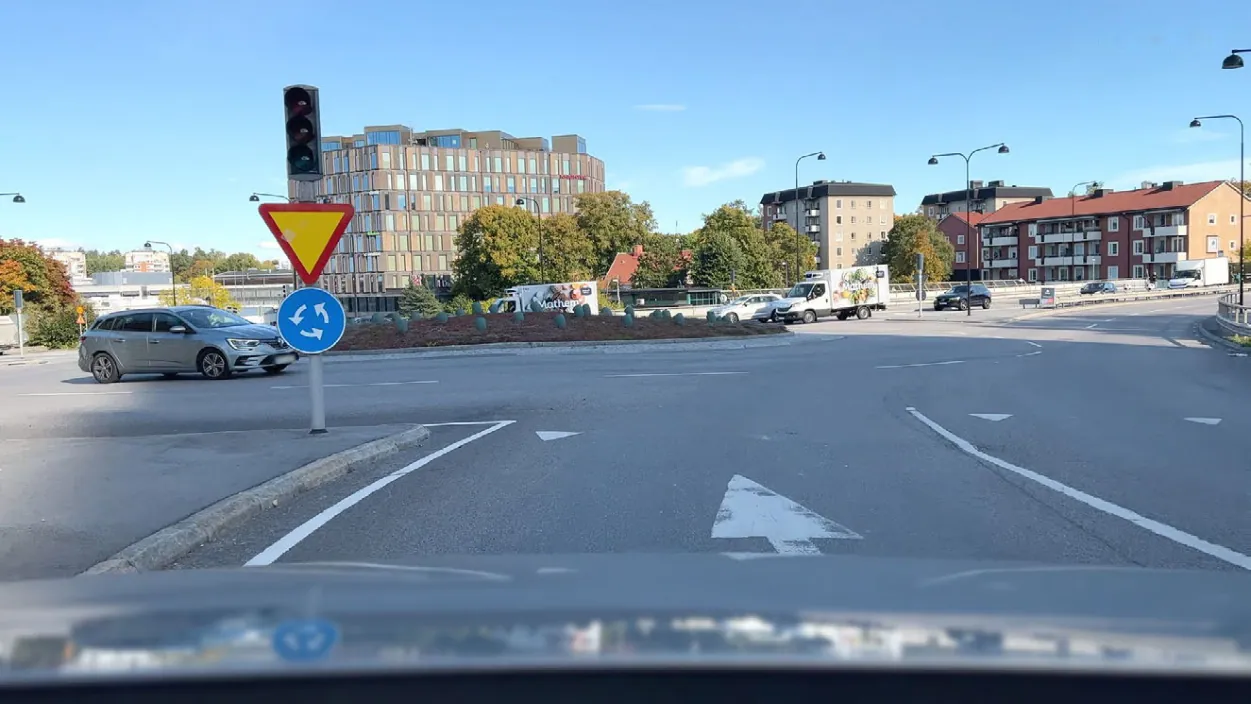
Clarification of the obligation to give way
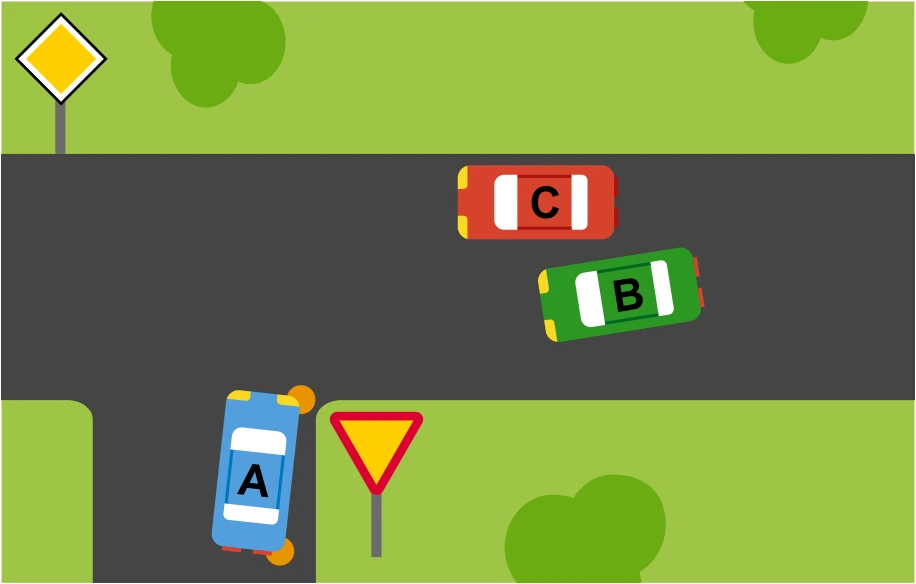
Your obligation to give way applies to all traffic on the entire road that you are joining.
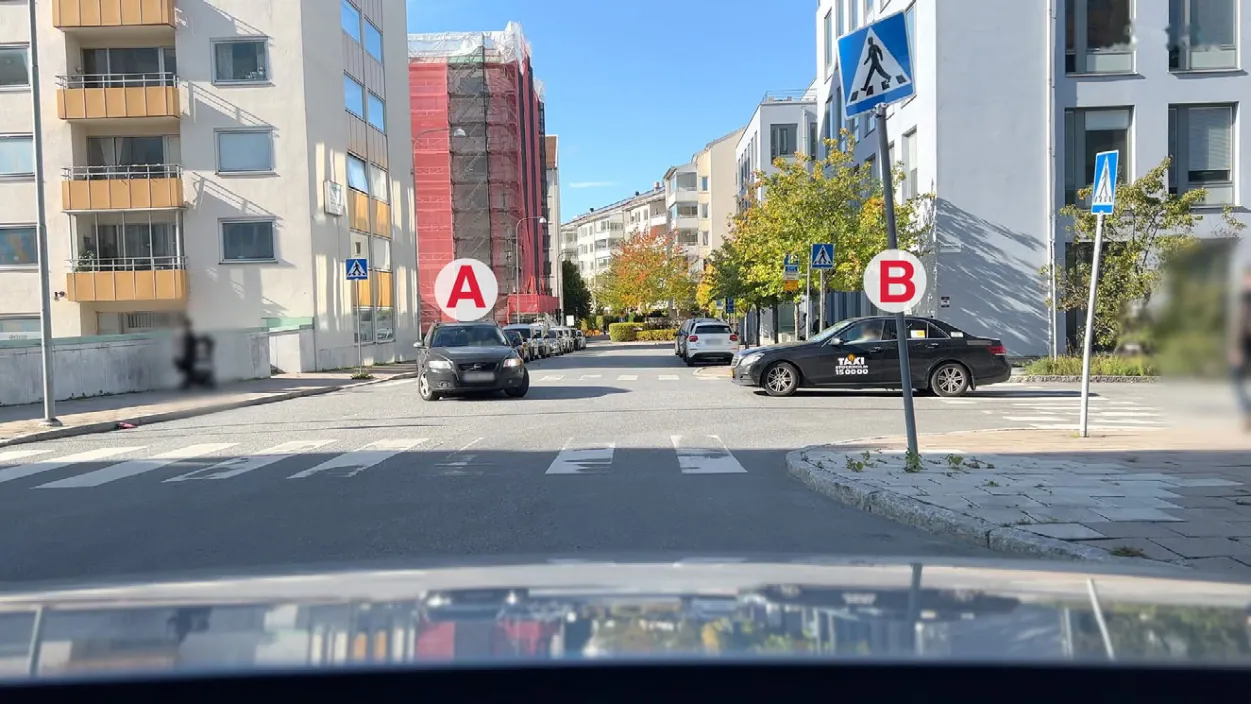
In the example, B is overtaking C in direct proximity to the junction. A has an obligation to give way to B, even though B is on the wrong side of the road.
Obligation to stop
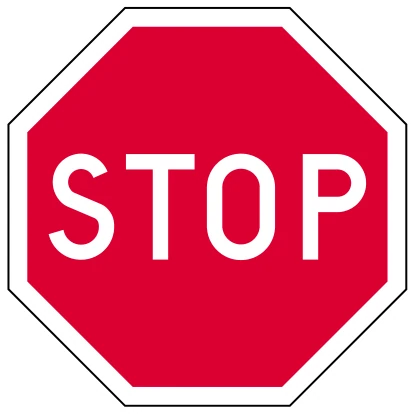

- Same as the obligation to give way, only you have to stop regardless of whether you think it is necessary.
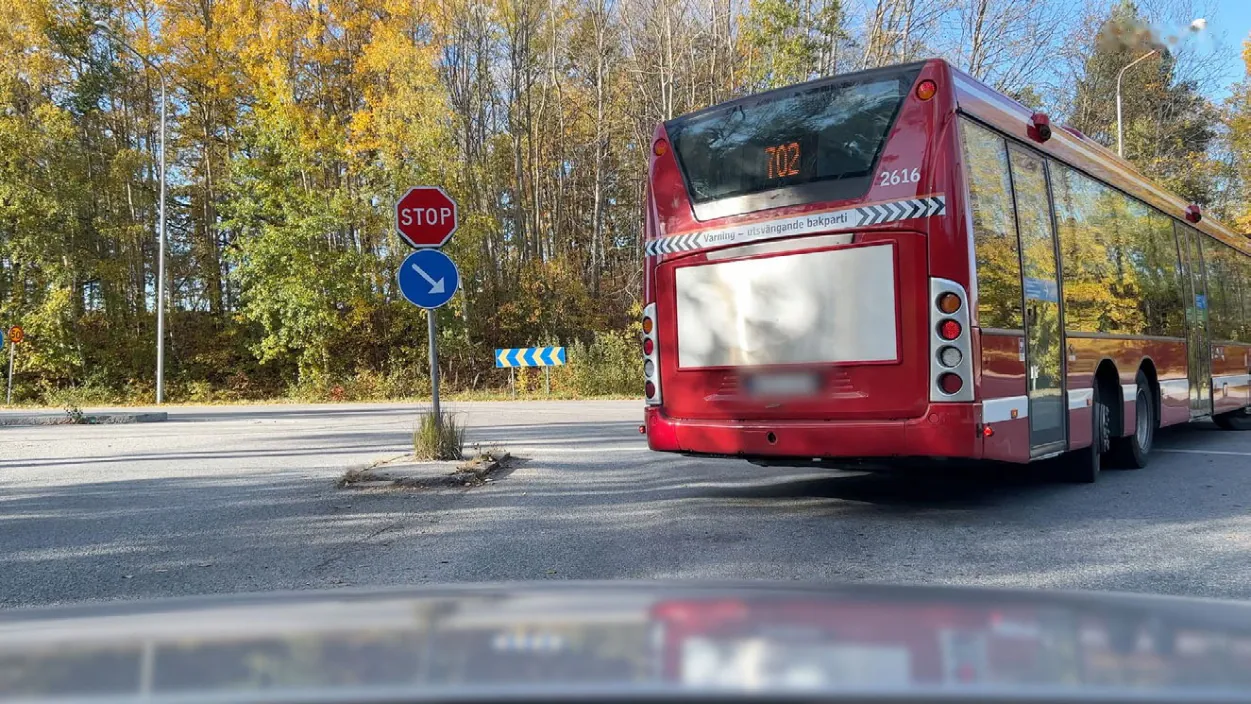
- You are not permitted to move slowly forwards, you have to come to a complete stop (a few seconds is often enough). Not respecting the obligation to stop is a serious violation. You can lose your licence if you continue creeping forwards instead of stopping.
- Stop just before the stop line. If there is no stop line, stop just before entering the intersecting road. Sometimes this means passing the stop sign before stopping, as the sign may be several metres before the junction.
- If there is a queue, each car must still come to a stop at the stop line. Immediately following the car in front of you is not permitted.
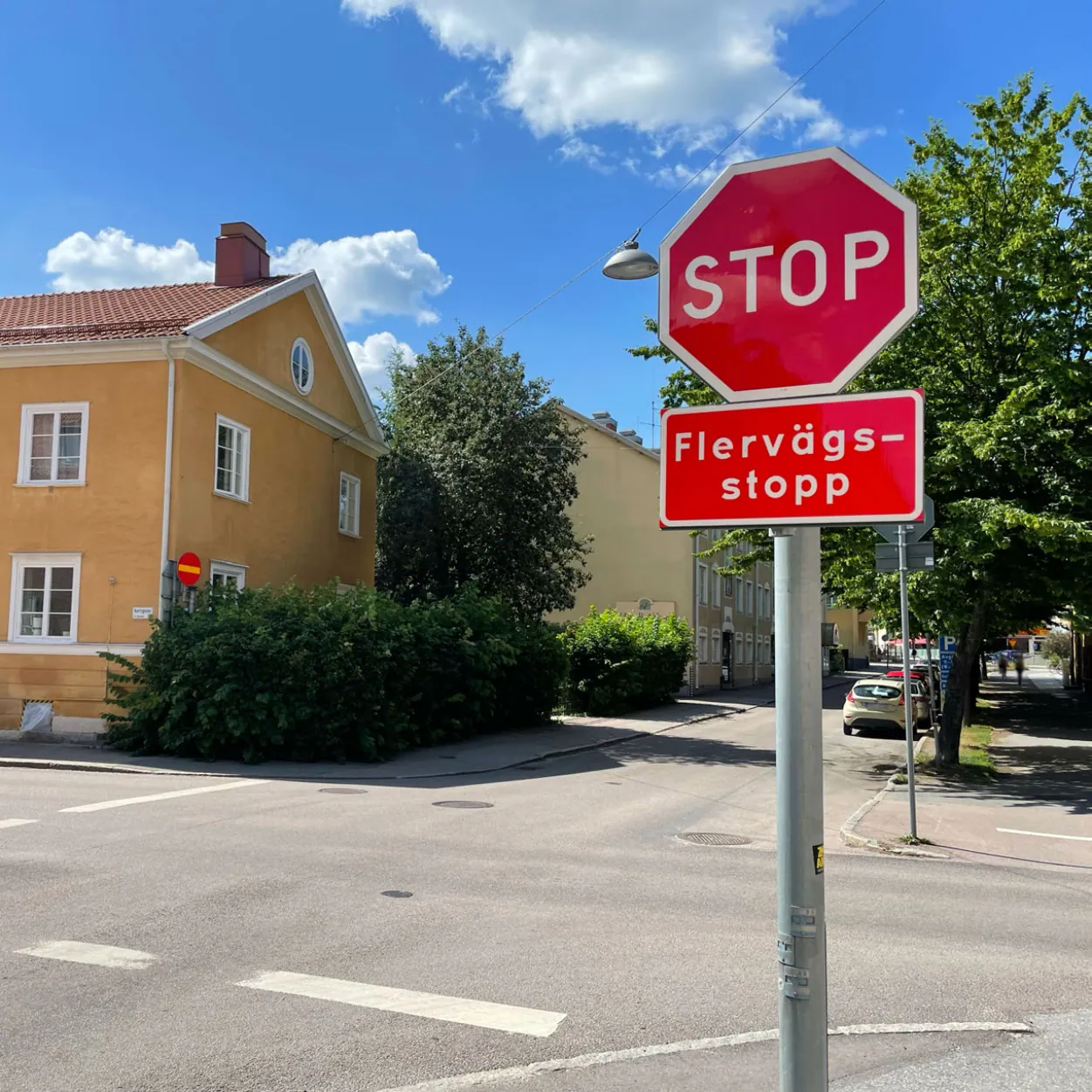
- All-way stop means that all the adjoining roads have an obligation to stop. The easiest solution is for whoever stopped first to also start driving again first. All-way stops are rare.
Priority roads

- All those entering the priority road must give way to vehicles already on it.
- Indicated by a Priority road sign at the start.
- This sign is normally displayed after every junction, unless it is evident that the priority road continues after the junction.
- Ends when a Priority road ends (B5) sign is displayed.
Clarification about the Priority road sign
The Priority road sign is displayed after every junction, not before.
Why after the junction and not before?
– This is so that the vehicles joining the road will also see the sign and realise they are on a priority road.
If the sign is displayed after the junction, how will I know that the road is a priority road before the junction?
– Normally, there will also be several indications that you are on a priority road before the junction:
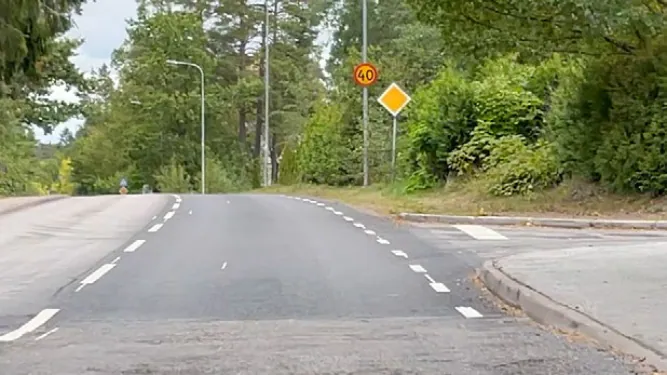
- If you are driving on the priority road, you will surely have seen Priority road signs earlier on (compare to how you remember the speed limit).
- If you are turning onto a priority road, there will often be a sign or a road marking telling you that you have an obligation to stop or give way.
In addition, the Swedish Transport Agency specifies that a Priority road sign is not displayed directly after a junction if the road was not a priority road before the junction as well.
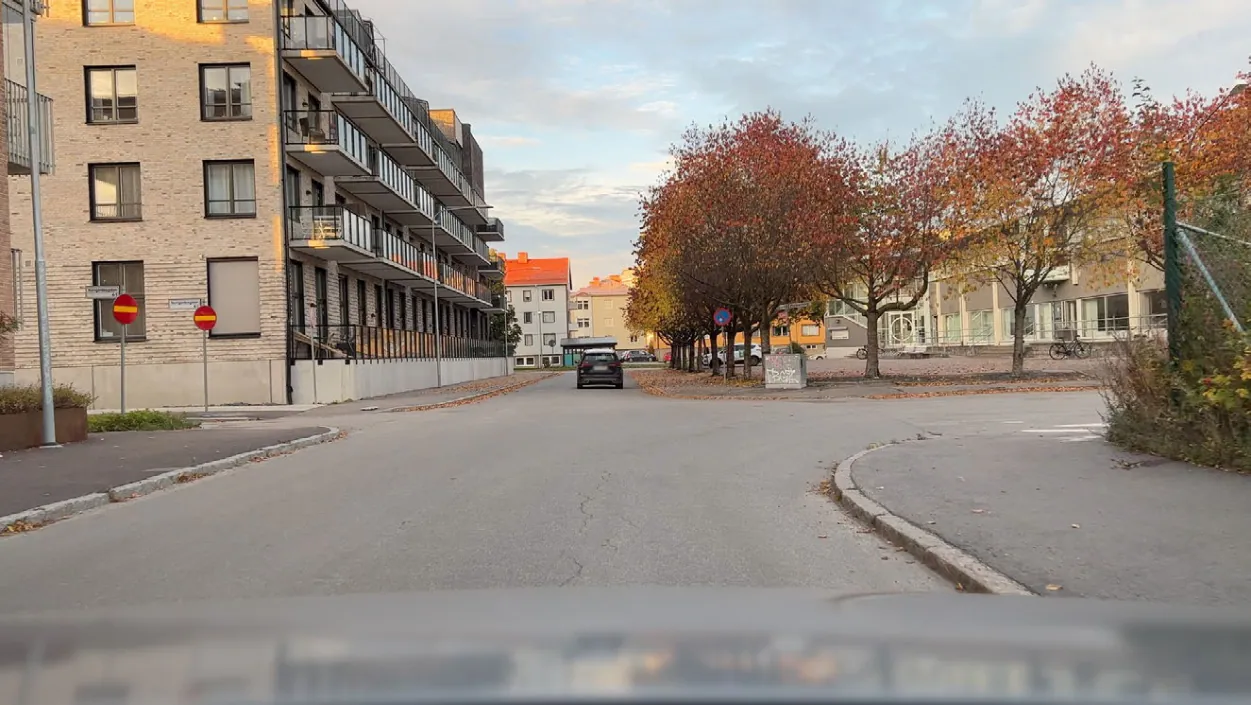
The priority-to-the-right rule
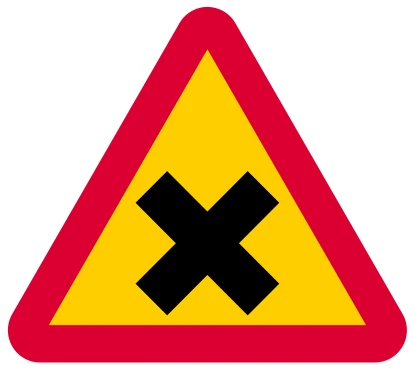
- Give way to vehicles from the right.
- Applies in the absence of other priority rules.
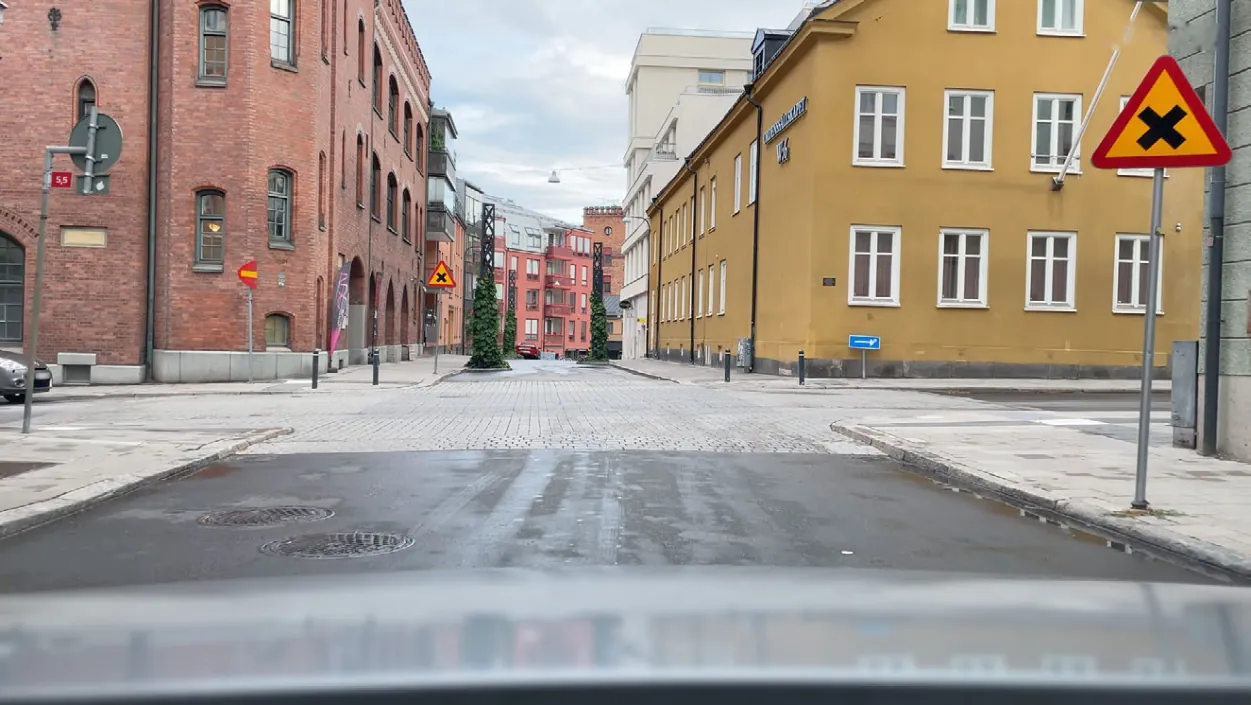
- The Junction sign is sometimes displayed to clarify that the priority-to-the-right rule is to be applied.
- The priority-to-the-right rule does not only apply at junctions, but at any time when vehicles cross paths.
Clarification about the Junction sign
The Junction sign does not have to be displayed for the priority-to-the-right rule to apply.
The sign is a clarification at particularly difficult junctions, and will not usually be displayed where the priority-to-the-right rule is applicable.
But how come the sign is not always displayed?
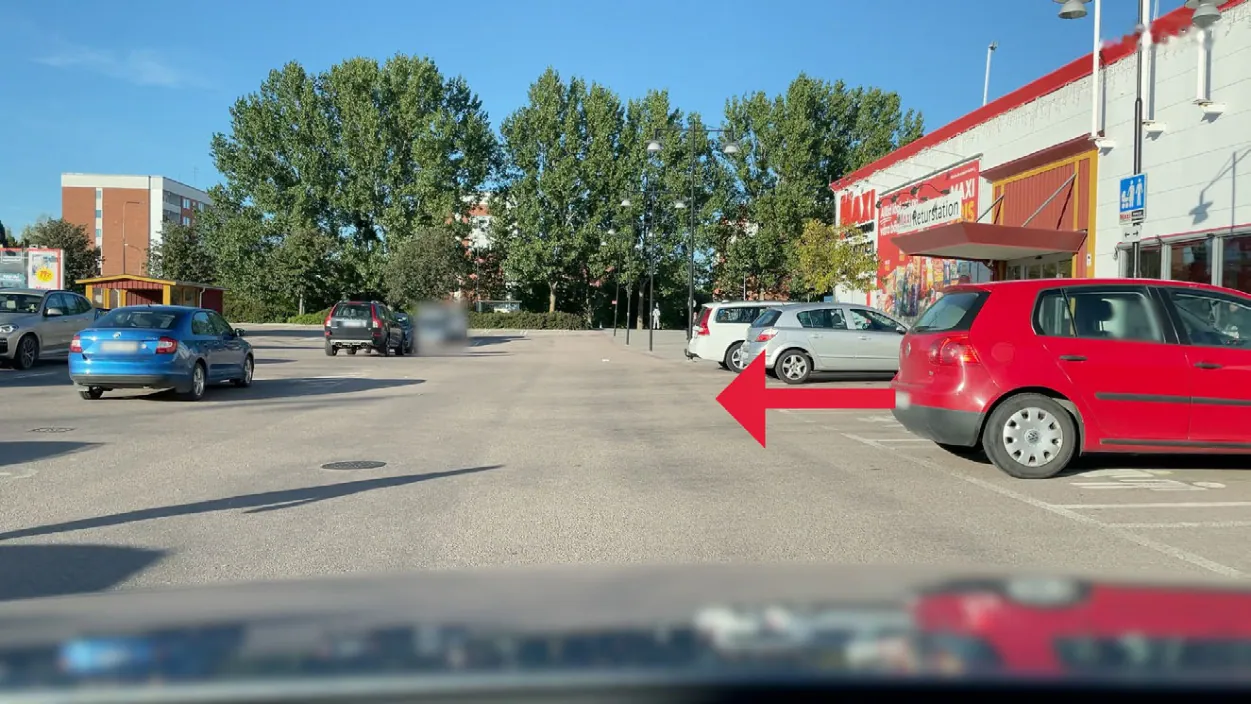
– The priority-to-the-right rule is applicable in so many places that this sign would fill up the whole traffic environment. The priority-to-the-right rule applies in parking areas, for example, and it would be unreasonable to display signs at every little intersection of the parking area.
The priority-to-the-right rule does not apply
- On priority roads.
- Where there are functioning traffic signals.
- At roundabouts.
- Where the Give way or Obligation to stop signs are displayed.
- When a driver leaves an acceleration lane.
- When reversing.
- At exits (see The exit rule further ahead).
Examples of the priority-to-the-right rule
Priority-to-the-right rule, example 1
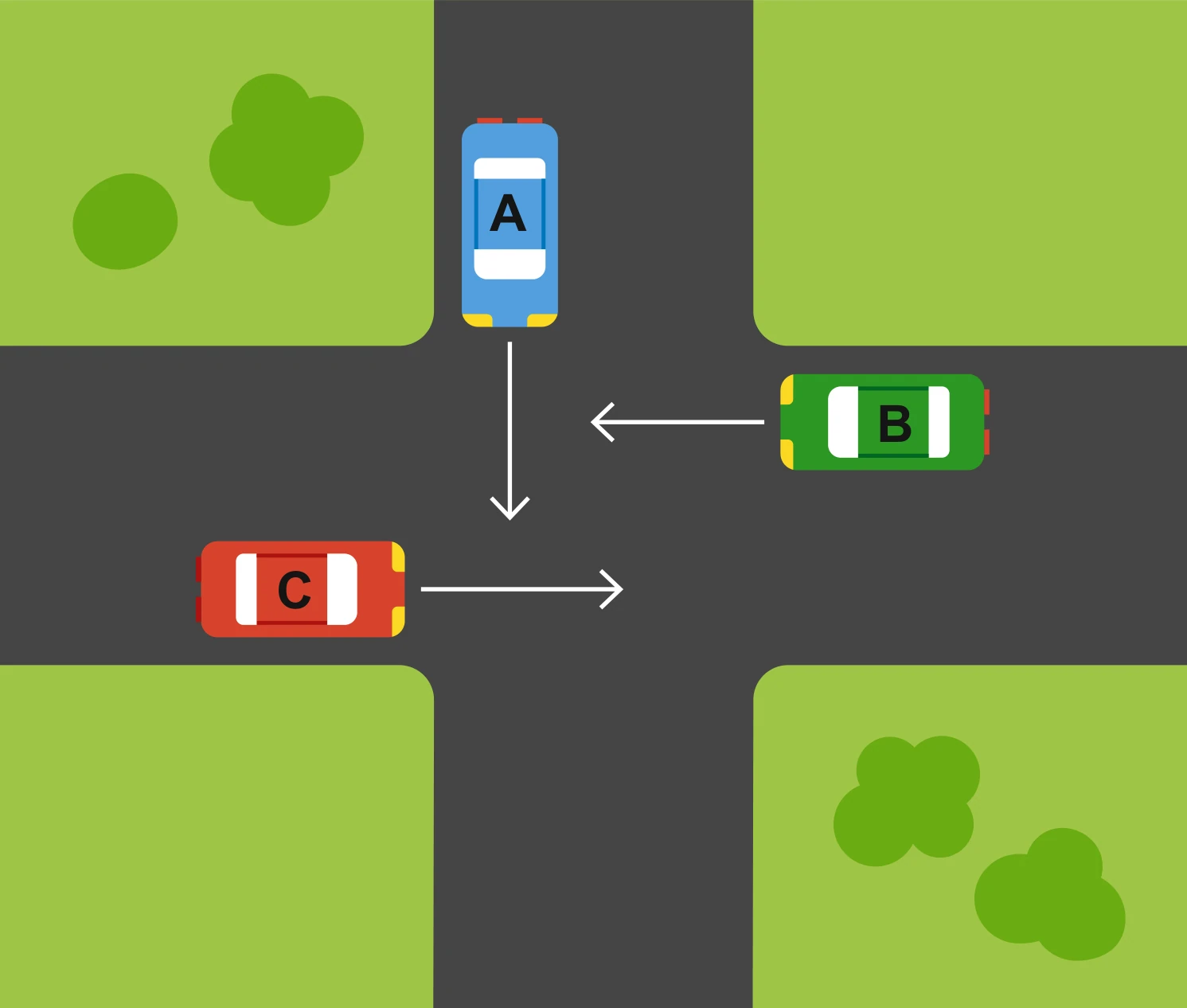
B must give way to A, and A must in turn give way to C. This means that according to the priority-to-the-right rule C is to drive first, then A and finally B.
However, in this case, it may be appropriate for B and C to drive at the same time and for A to go last, as A must also take the obstruction rule into account (A may not go into the junction and obstruct B).
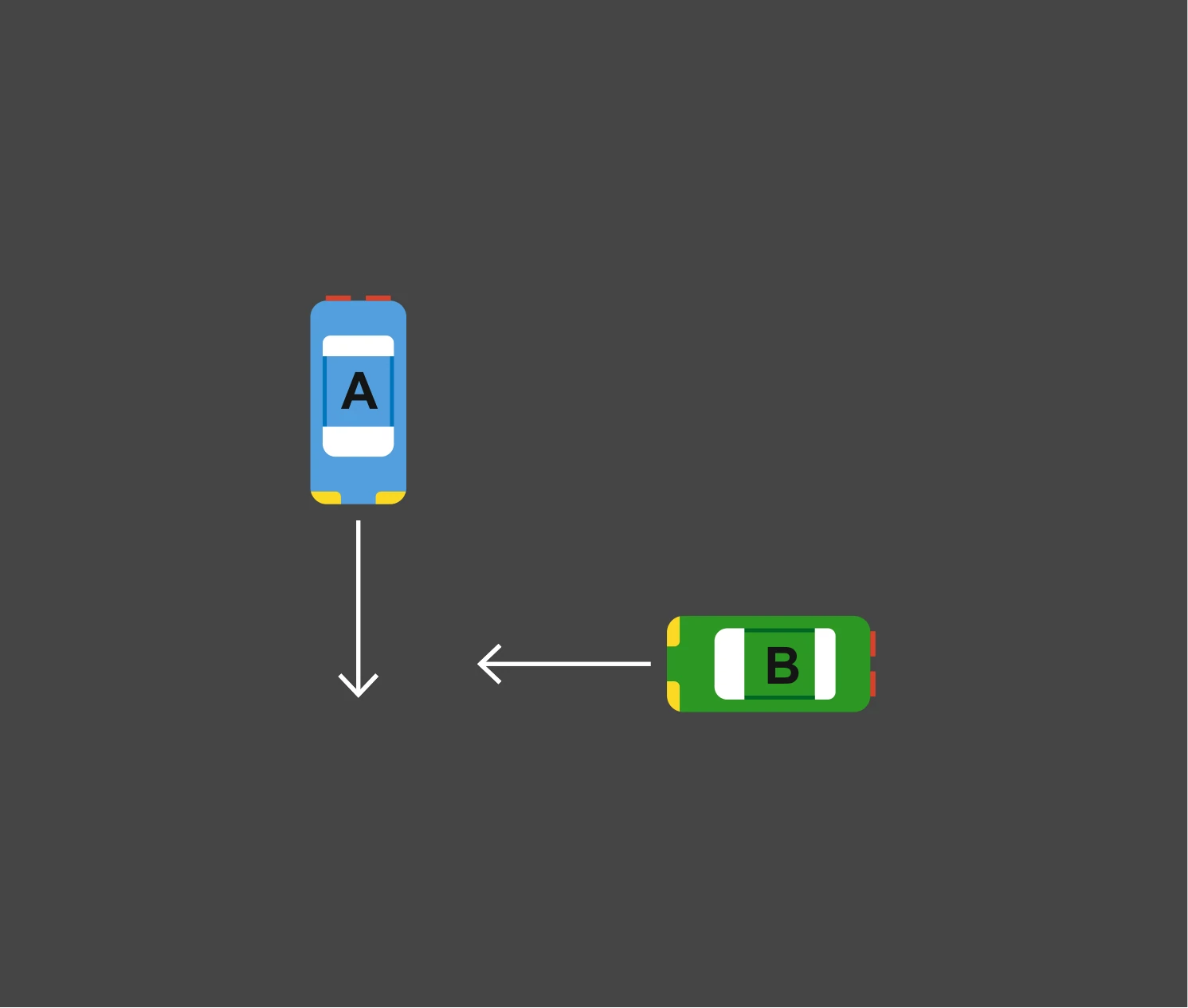
Priority-to-the-right rule, example 2
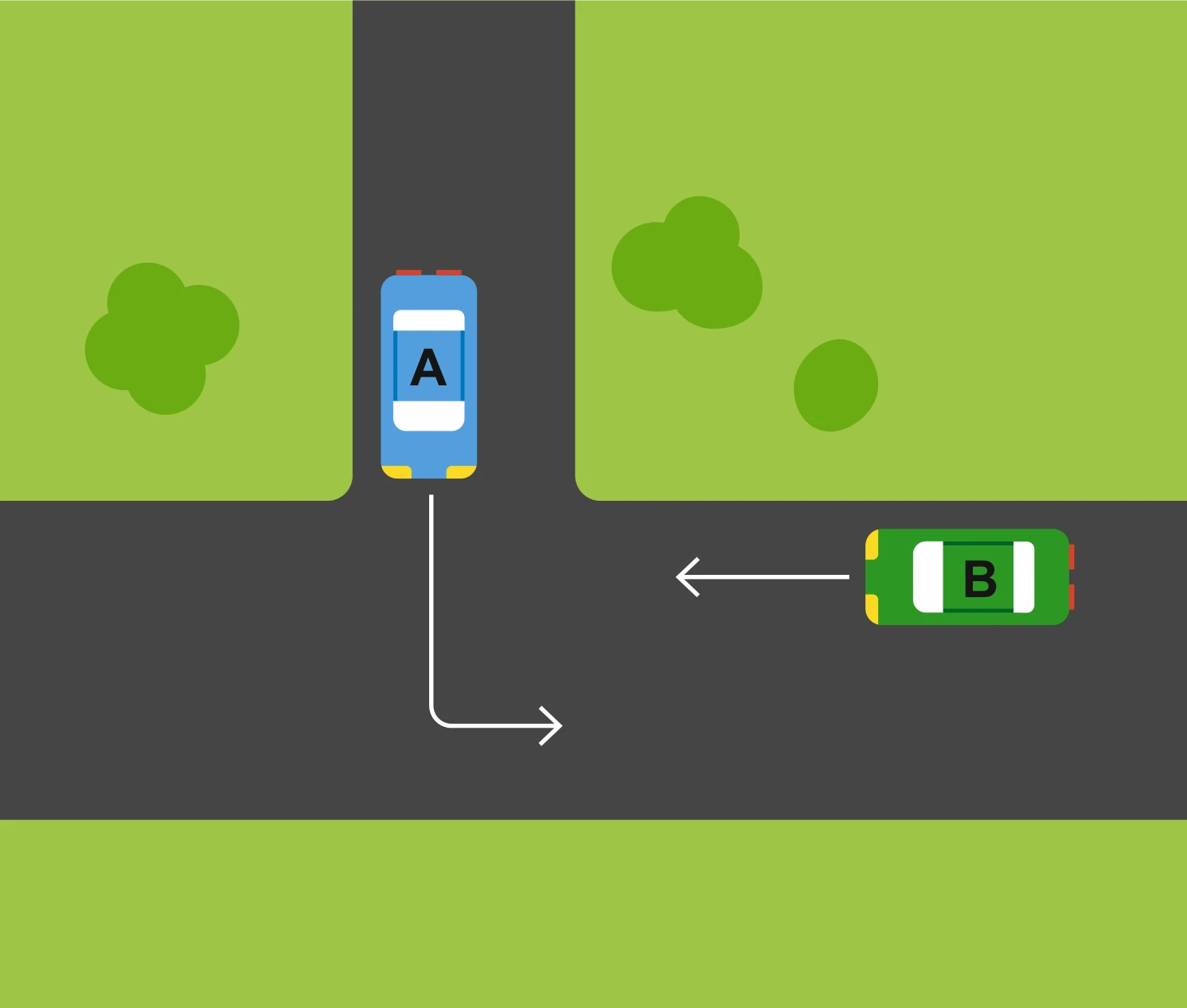
A is approaching from the right from B’s perspective, which means that B must give way to A. The fact that A is turning onto B’s road or that B’s road is bigger is of no importance.
Priority-to-the-right rule, example 3
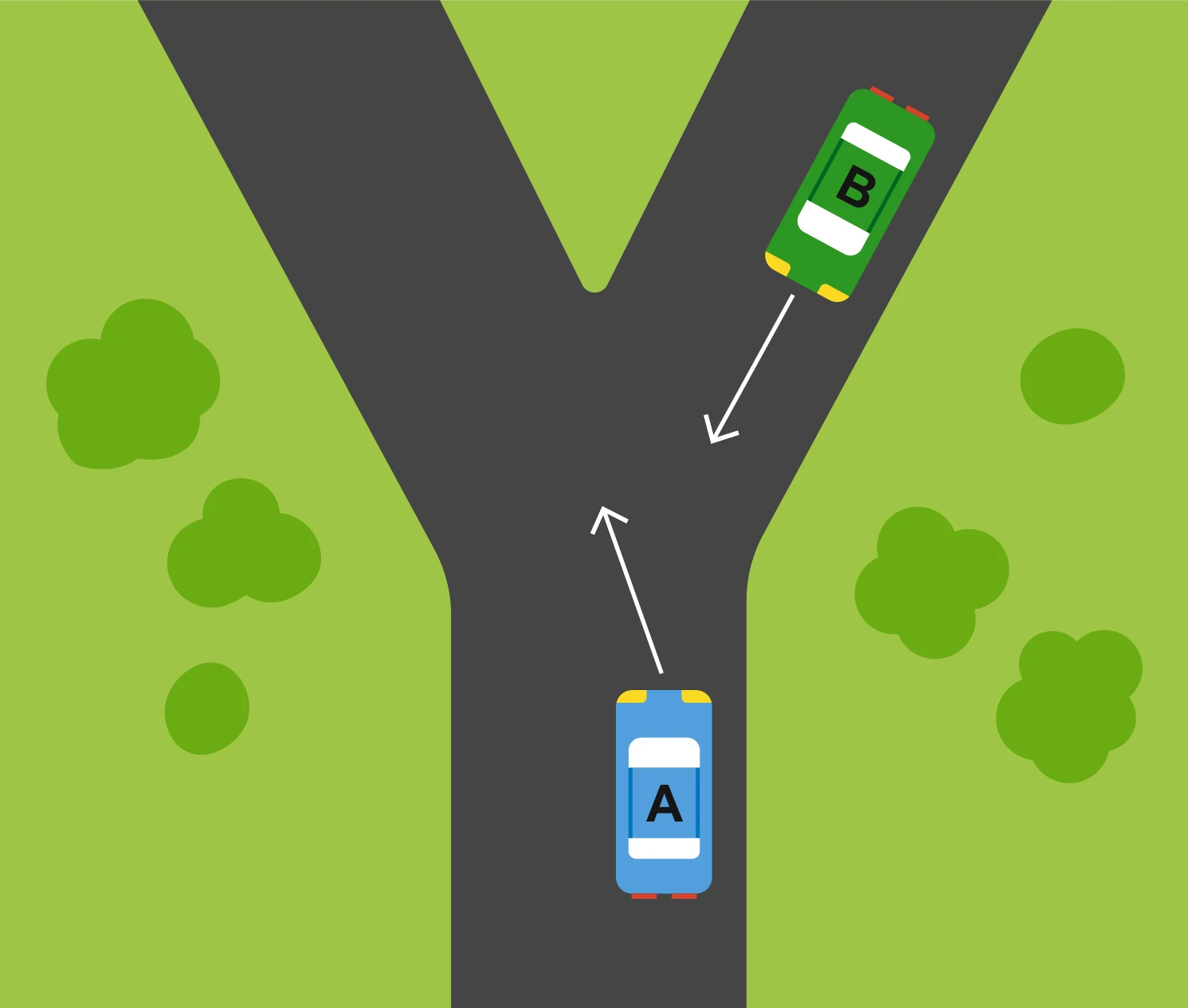
The roads do not have to intersect at a 90° angle. The priority-to-the-right rule is applicable here as well. A must give way to B.
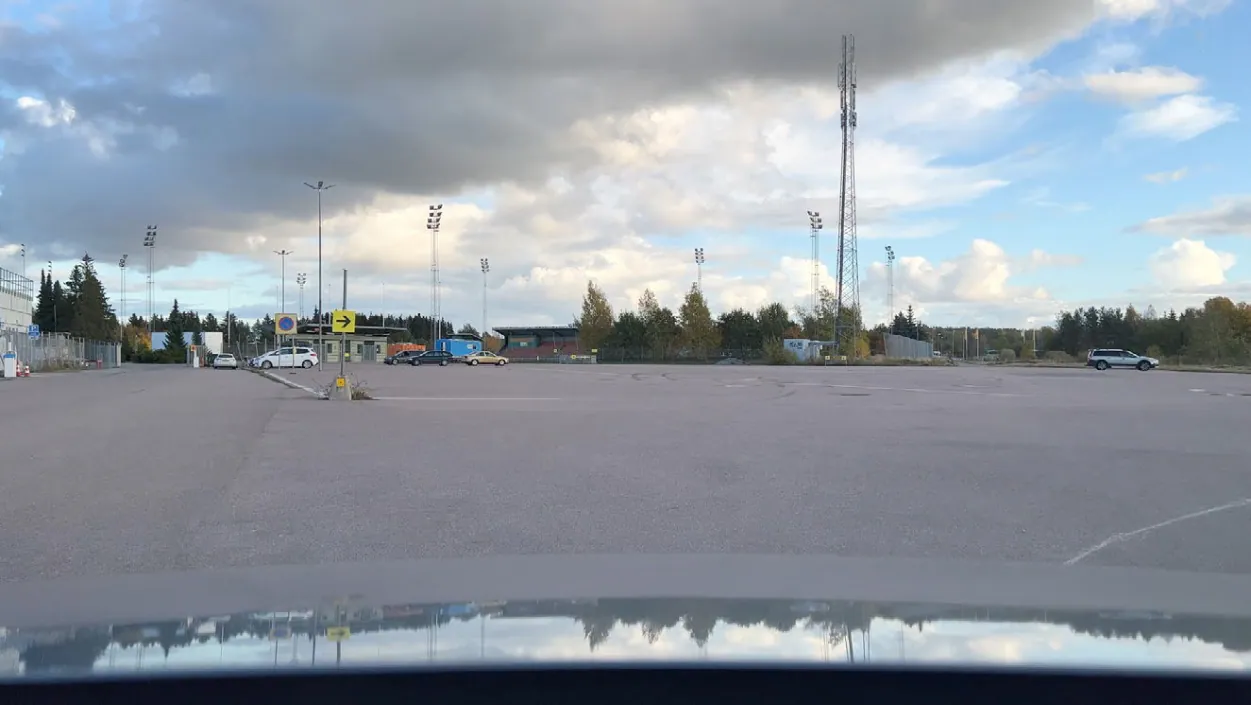
Priority-to-the-right rule, example 4
The priority-to-the-right rule is also applicable in open areas. B must give way to A.
The turning rule
- Do not obstruct oncoming road users when turning at a junction.
- Do not obstruct road users on the carriageway you are joining.
Example of the turning rule
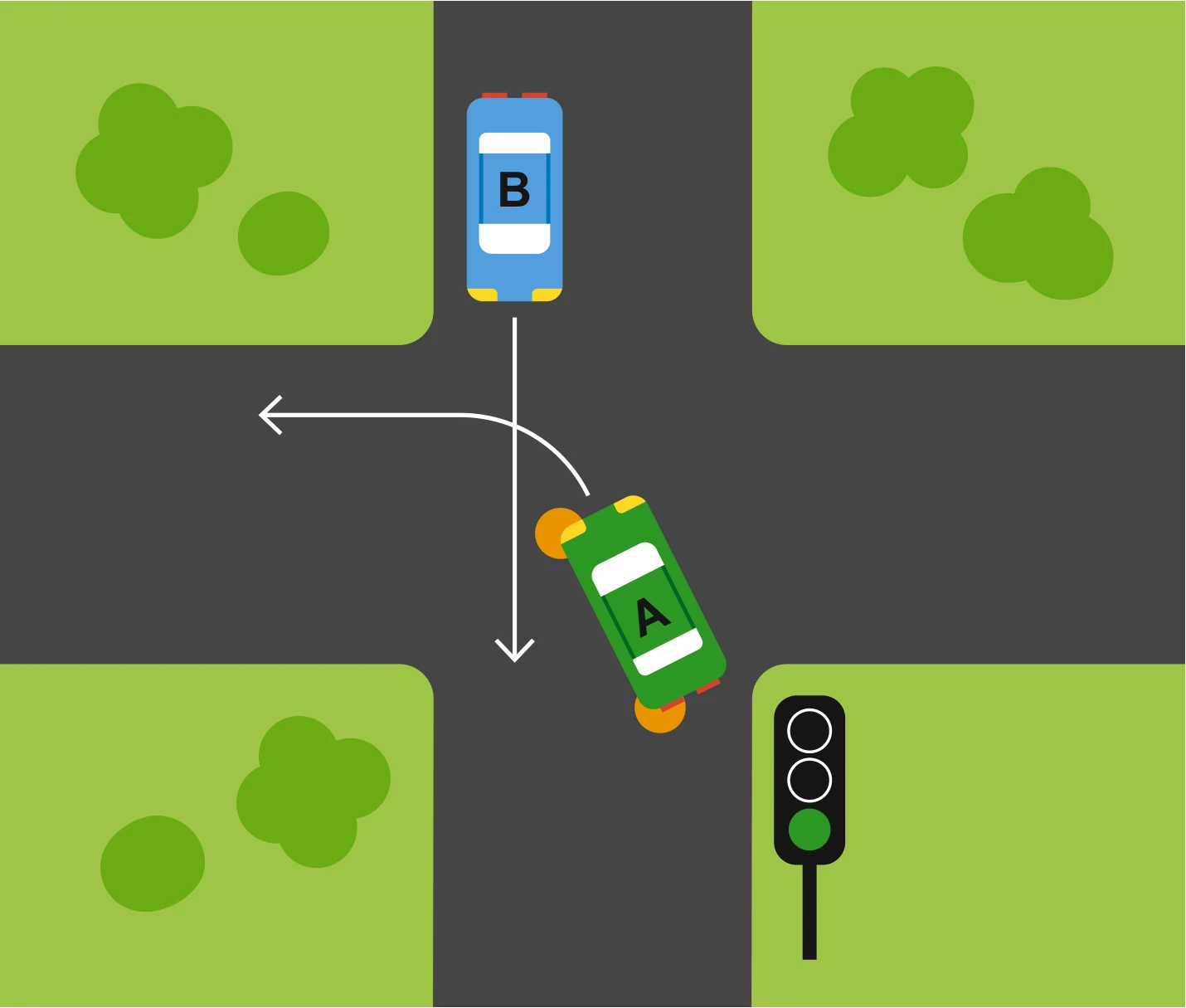
As A’s intended direction of travel crosses B’s path, A must give way to B. This rule applies even if A has a green light (B can have a green light at the same time).
The turning rule also states that you may not obstruct pedestrians or cyclists who are crossing the carriageway you are turning into. This applies even if there is no pedestrian crossing, footpath, bicycle passage, bicycle crossing or bicycle path. When pedestrians and cyclists cross the carriageway, they are road users on the carriageway you are joining.
This obligation is milder than, for example, your duty to give way to pedestrians at pedestrian crossings. You do not have to stop and wait for pedestrians who are approaching the junction and are about to cross, as you must do at pedestrian crossings. However, be careful and keep in mind that pedestrians and cyclists are unprotected road users.
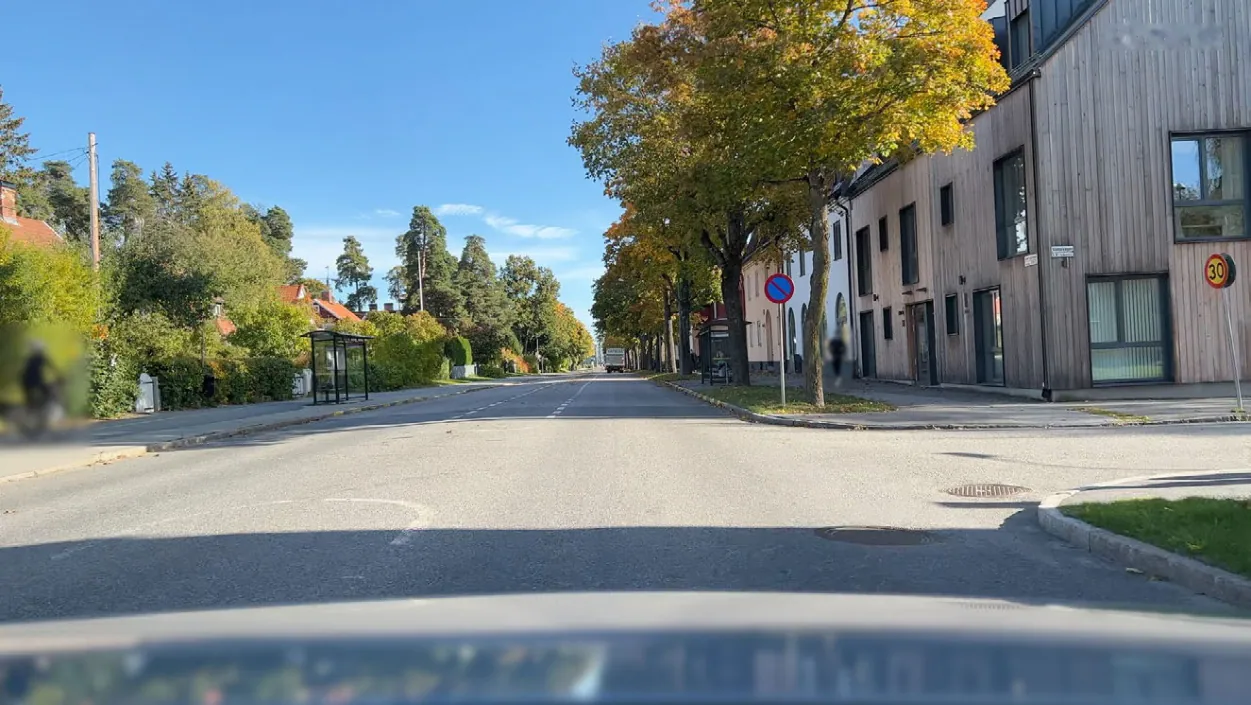
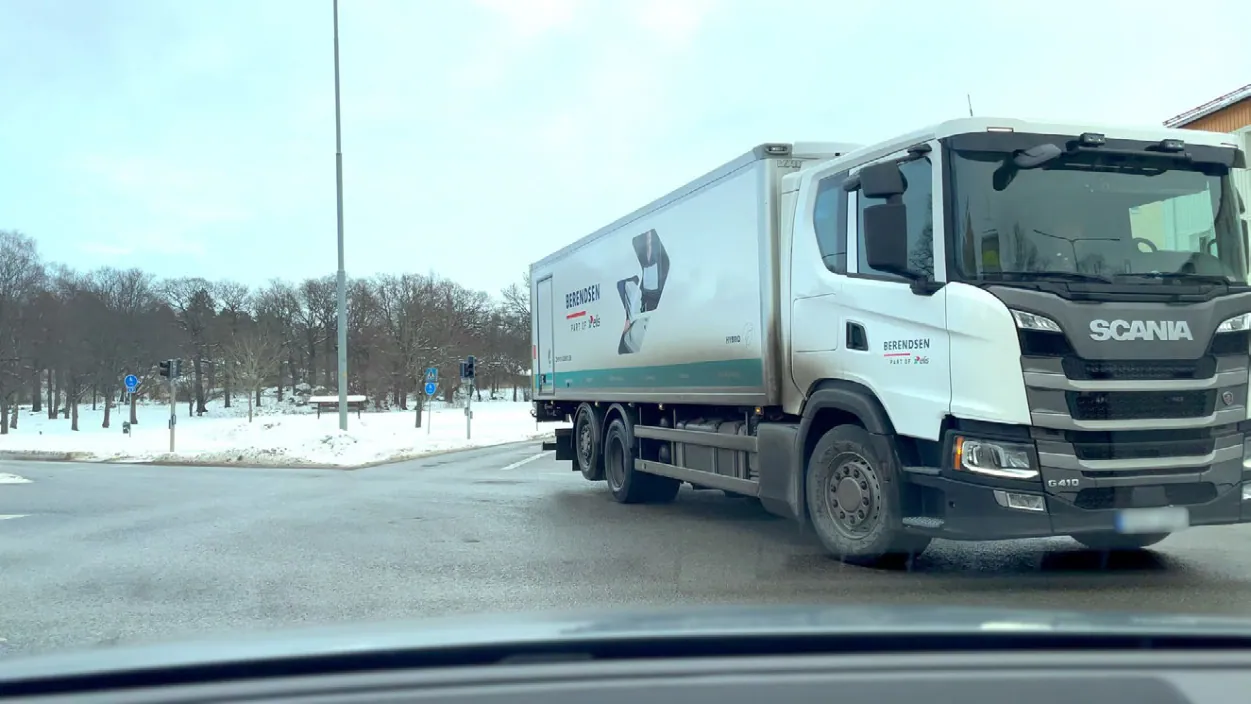
The exit rule
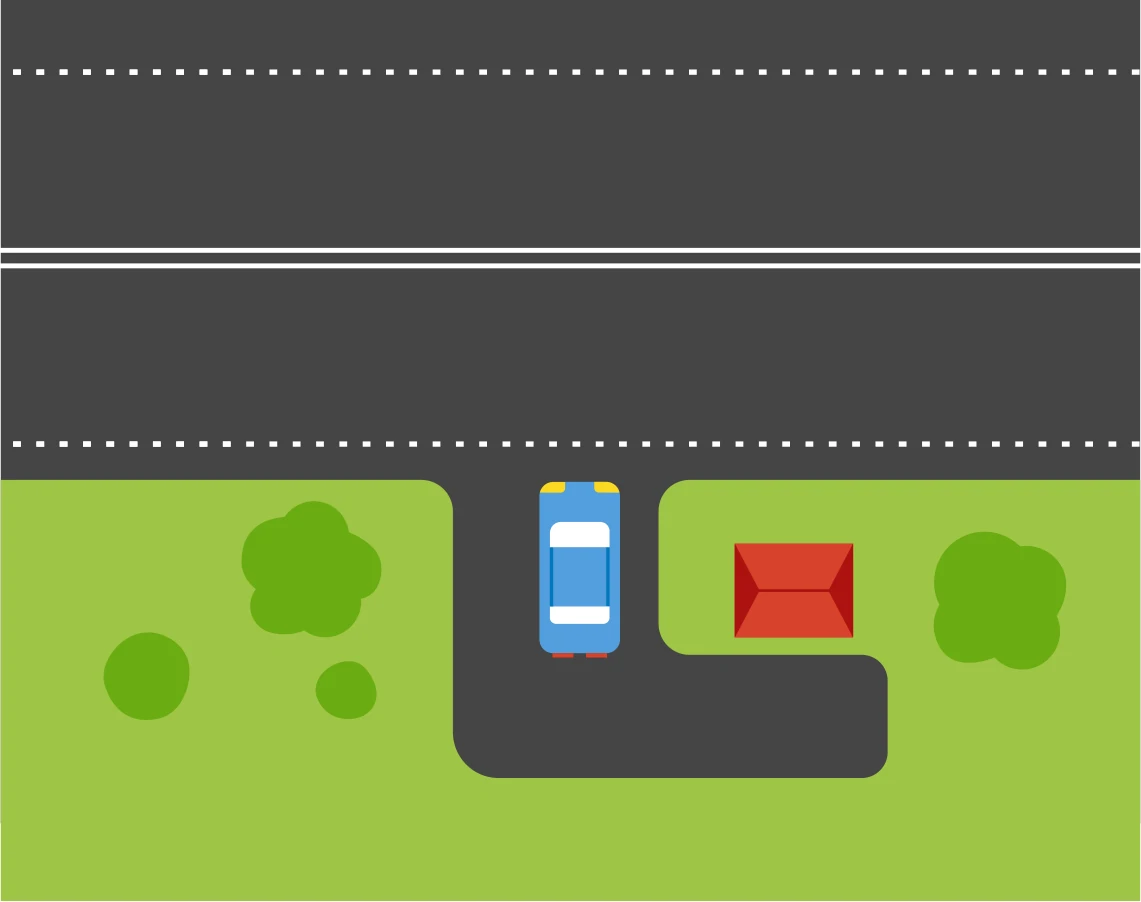
The exit rule means that you have an obligation to give way when exiting:
- A car park (both from the parking space and the parking area itself).
- A property (e.g. house), a petrol station or any other similar area in connection to the road.
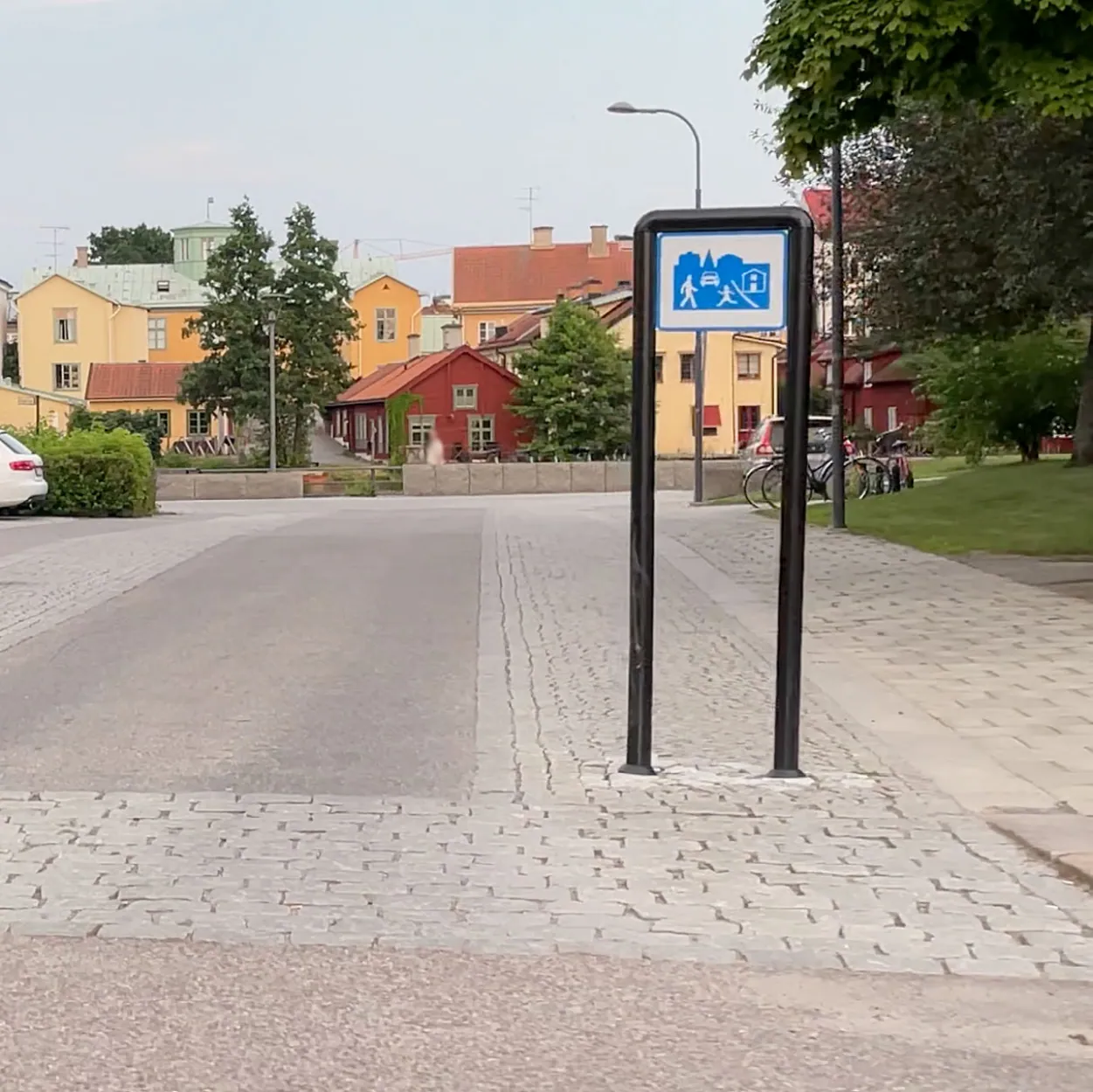
- A pedestrian street, home zone, bicycle street, hard shoulder or off-road area.
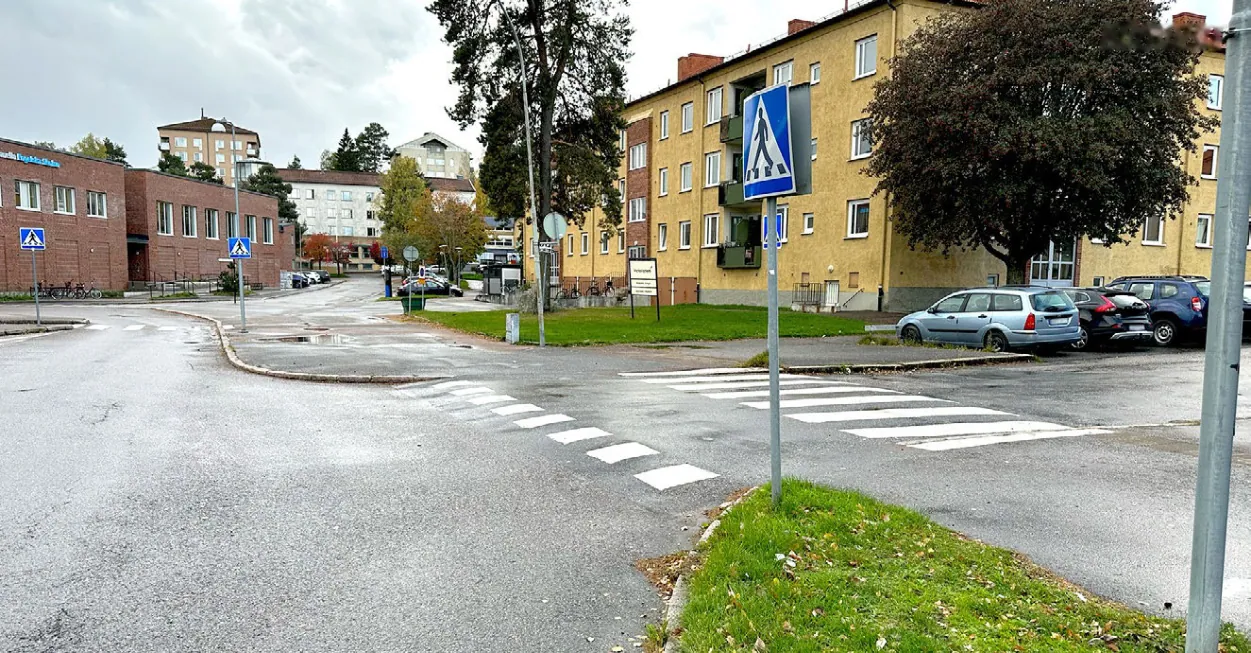
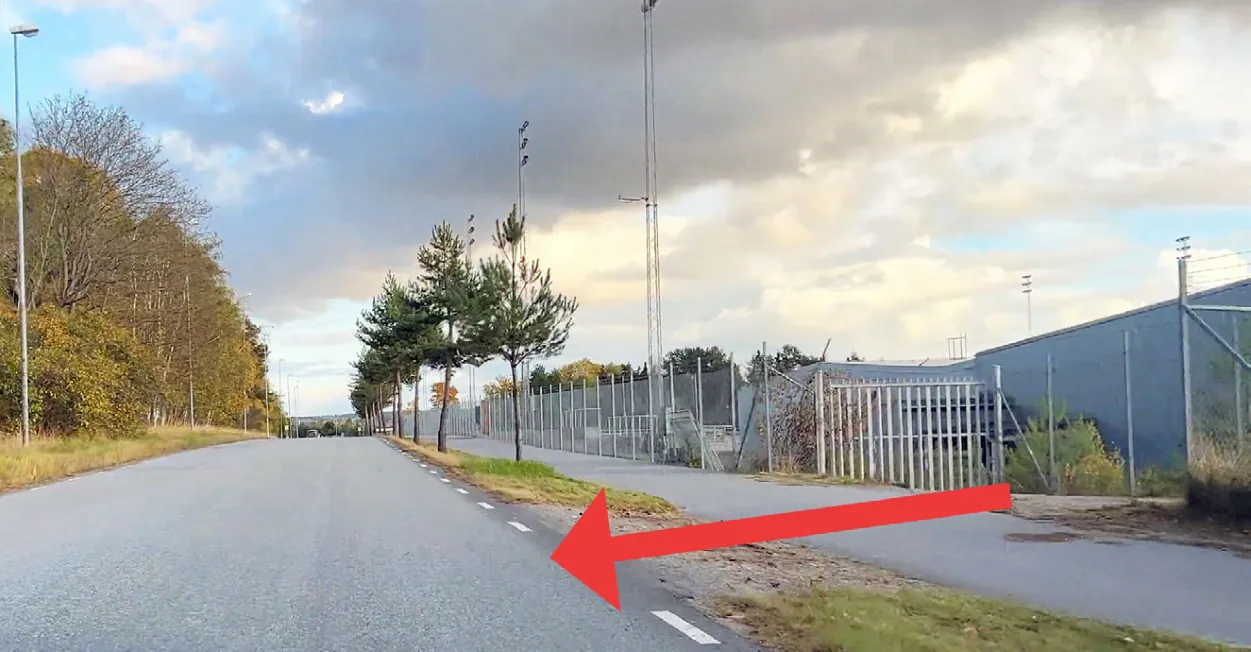
- A footpath or bicycle path that you have crossed.
Clarification about crossing a footpath or bicycle path
The exit rule does not apply if there is a pedestrian crossing, a bicycle passage or a bicycle crossing at the junction. The exit rule only applies at uninterrupted footpaths or bicycle paths. A pedestrian crossing, a bicycle passage or a bicycle crossing always interrupts the footpath or bicycle path.
Crossing a footpath or bicycle path in connection to a regular road junction is unusual. In most cases, the footpath or bicycle path ends before the junction and starts again after the junction. This means that the exit rule does not apply.
See examples on the next page.
Example 1: The exit rule applies here
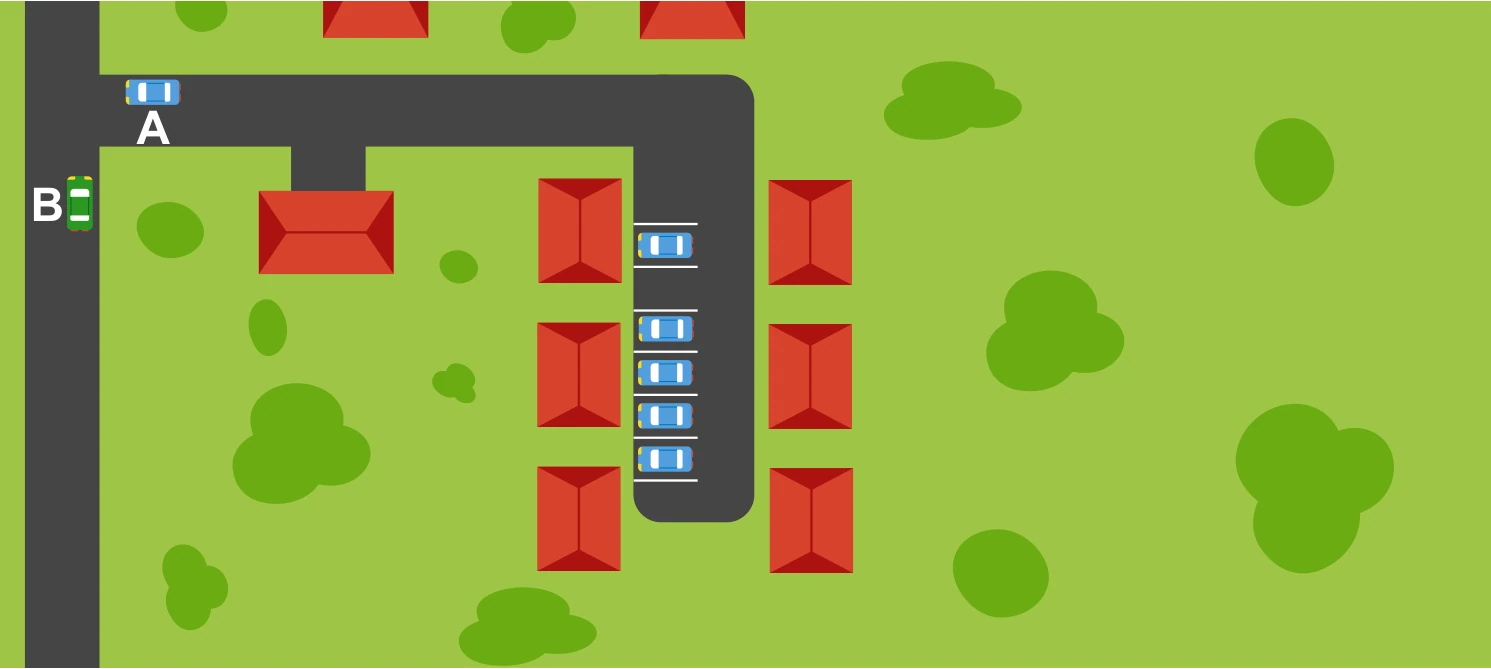
A is coming from a delimited area, the sole purpose of which is exit from/entry to a few homes with parking spaces. B is driving on a regular road for normal traffic. A has an obligation to give way to B, in accordance with the exit rule.
Example 2: The exit rule does not apply here
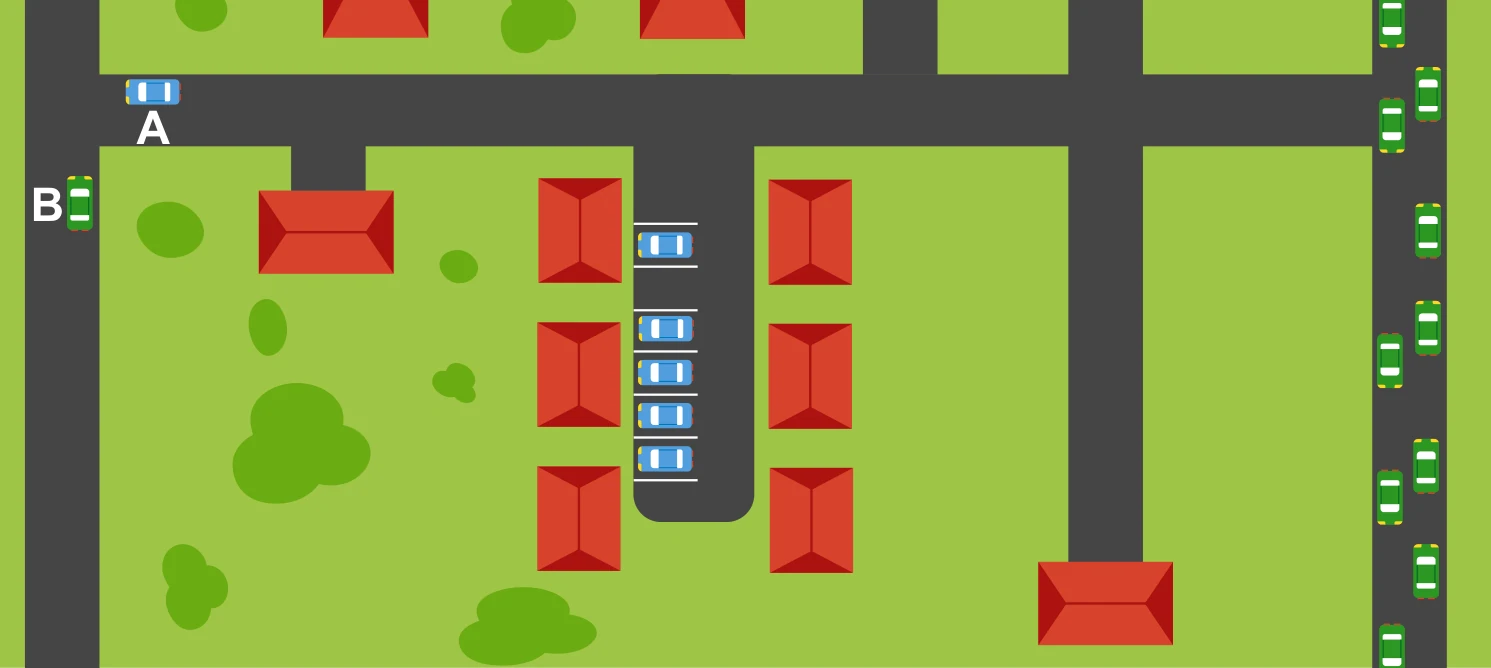
A is coming from an area with several side-roads, and there is also a connecting road to another road for normal traffic. B has an obligation to give way to A, in accordance with the priority-to-the-right rule.
Example 3: Two exits meet = priority-to-the-right rule
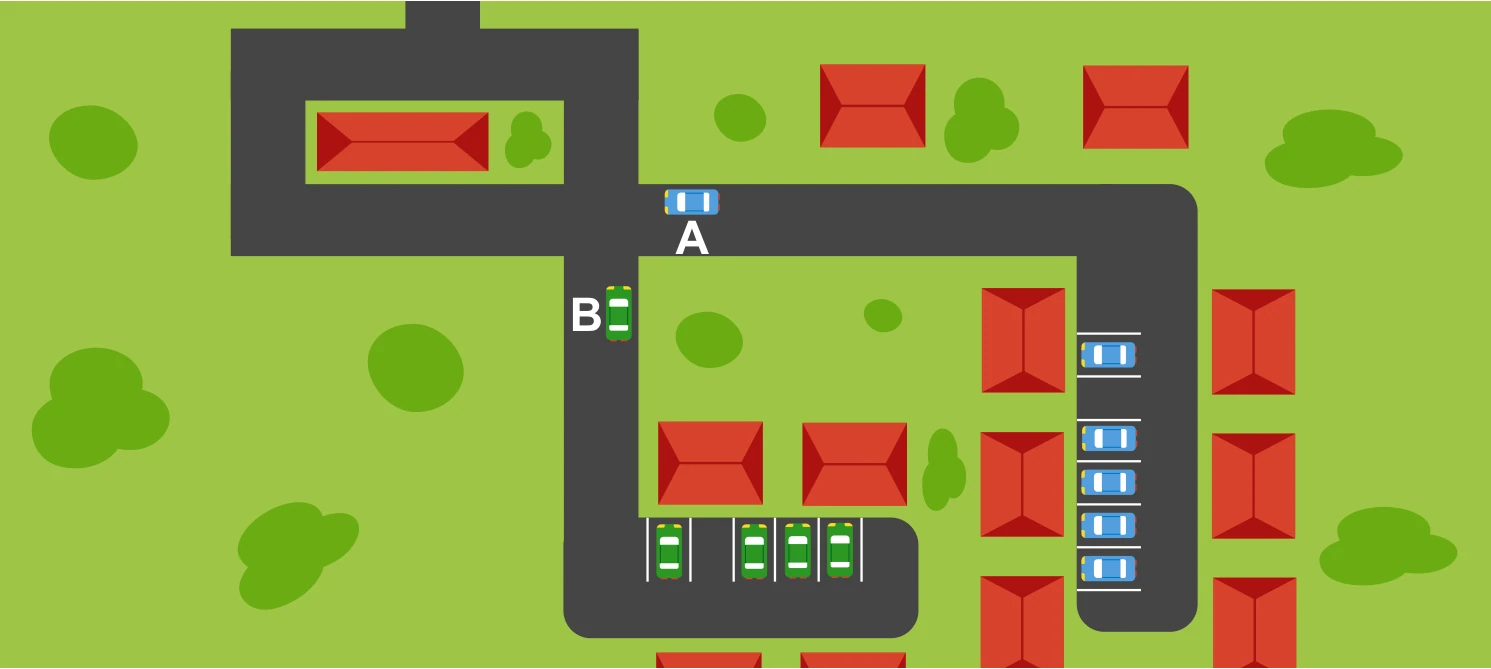
A and B are coming from areas with similar characteristics. In such an instance, the priority-to-the-right rule applies. B has an obligation to give way to A.
Clarification of the exit rule
From B’s perspective in examples 1–2, it is very difficult to determine what the area looks like. In such situations, it is best to exercise caution – it is better to give way unnecessarily than to fail to give way. Ultimately, it is a court of law that determines whether something is to be classed as an exit or not.
In real life situations, however, there are usually road signs to denote priority road and/or obligations to give way in such situations.
The obstruction rule
- Try to never stop at a junction, on a pedestrian crossing or similar.
The bus rule
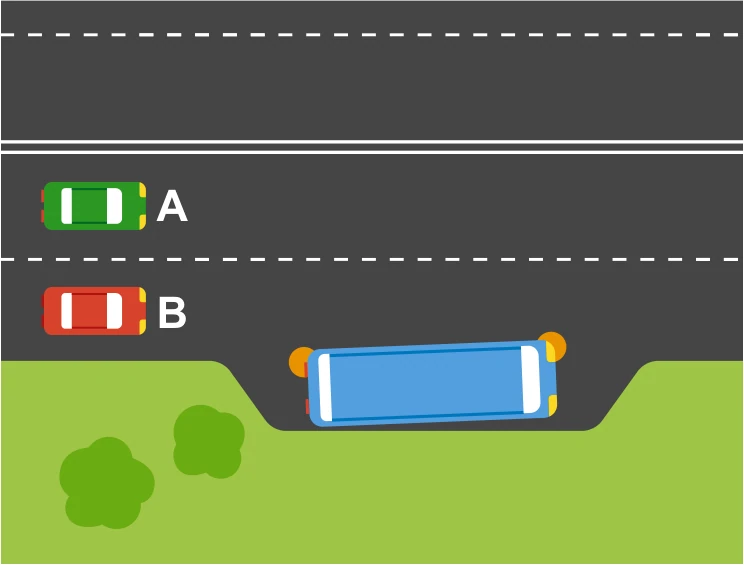
- 50 km/h or slower: You must give way to the bus if it indicates to exit (only applicable to the lane furthest to the right).
- Over 50 km/h: The bus must give way to you.
Give way to and do not obstruct
- Emergency vehicles (ambulances, police cars and fire engines) with sirens and/or flashing blue lights turned on.
- Trains and trams.
- Military convoys.
- Processions of different kinds (such as children with teachers and funeral processions).
Traffic signals
Red
 Red signal means stop. A vehicle may not pass the stop line or, in the absence of such, the signal. |  The change to a green signal is imminent. Otherwise, the signal has the same meaning as red. |
Amber (yellow)
 Amber signal means stop. Exception: Sometimes you are unable to stop in a safe manner when the signal changes from green to amber. In these cases, you are allowed to pass the amber signal. However, it must be clear that you are unable to stop. Drives have lost their licence for running an amber light even though they could have stopped without danger. |  Flashing amber means that the traffic signal is out of order and that special caution must be observed when passing. Follow road signs (e.g. priority road) or rules (e.g. priority-to-the-right rule). |
Green
 Green signal means that you can continue driving. Intersecting traffic have a red light, but oncoming traffic might have a green light. If you turn, you must let oncoming traffic pass. If you turn, there may be pedestrians/cyclists with a green light who cross the road you want to join. You must let them pass. |  Green arrow means that you may drive in the direction of the arrow. Other traffic (cars/pedestrians/cyclists) that intersects or merges with your path have a red light. Be careful, as other road users might not follow the rules and drive/walk/cycle even though they have a red light. |
Regular signal + arrow
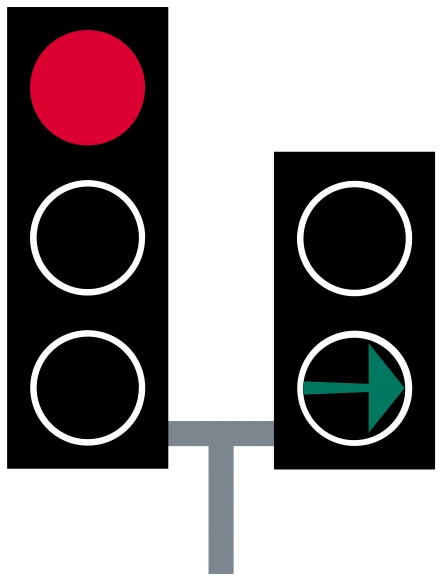 | 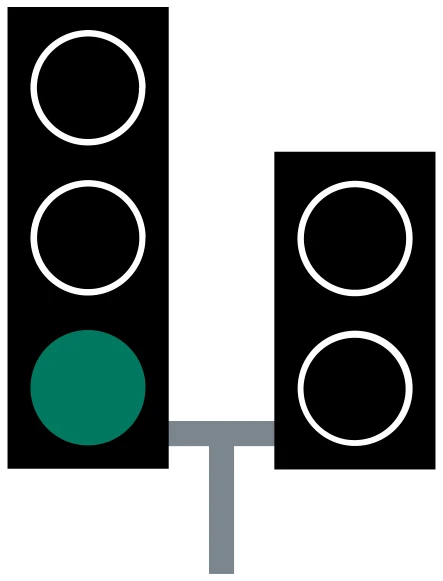 | 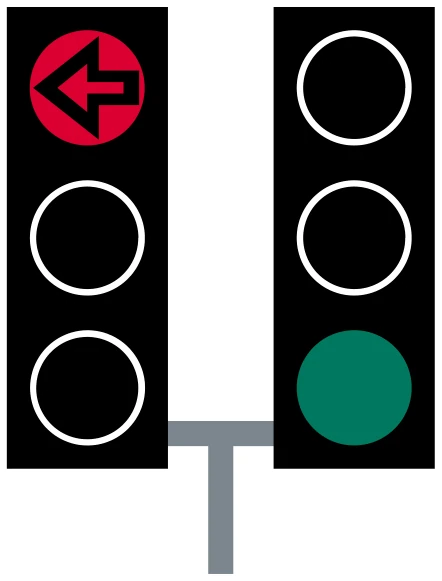 |
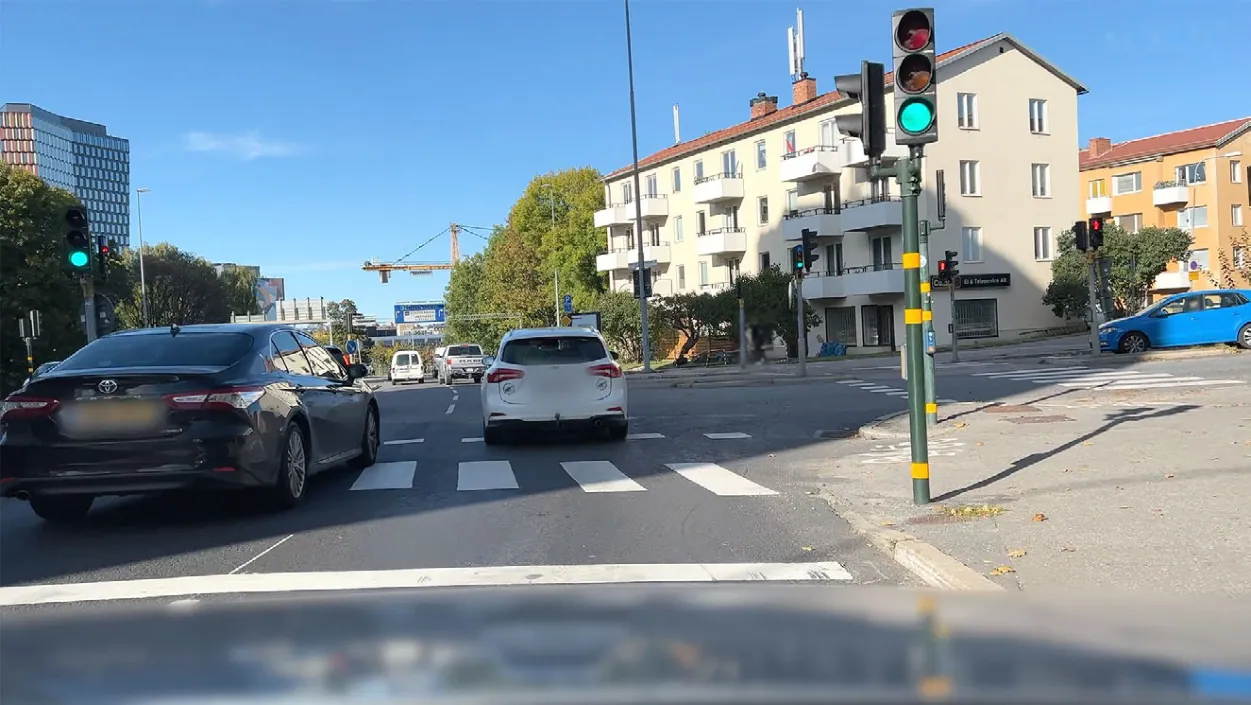
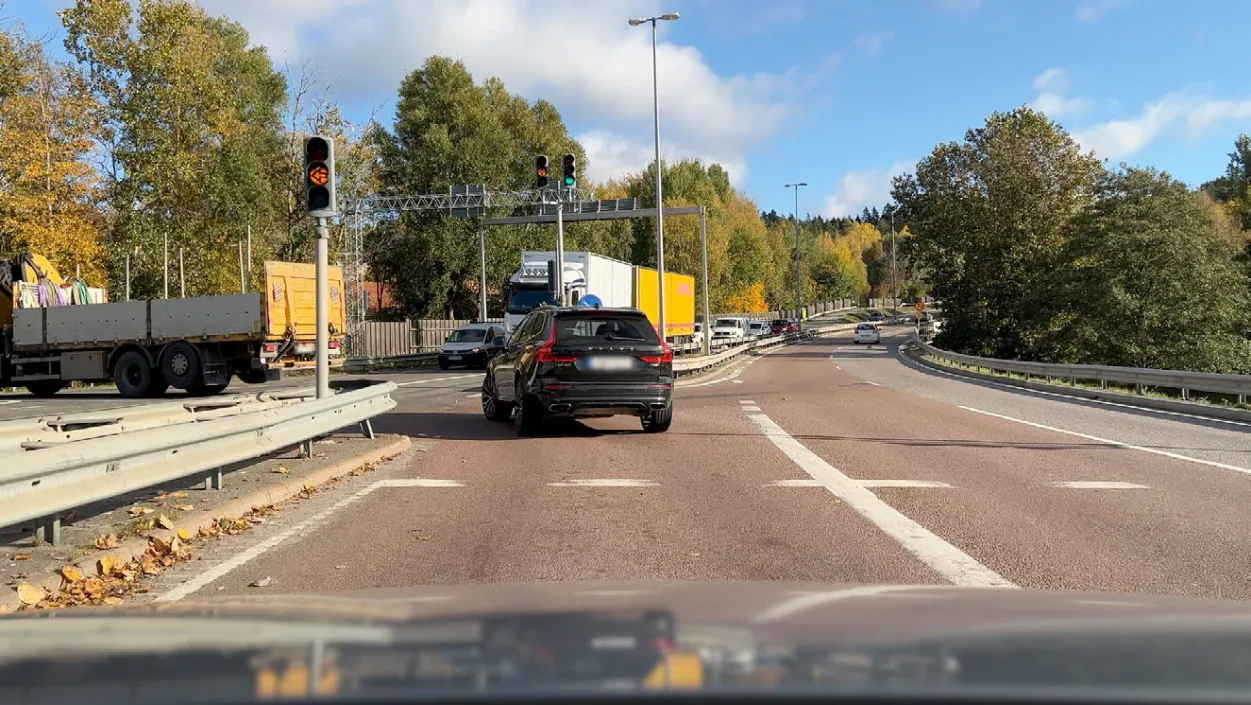
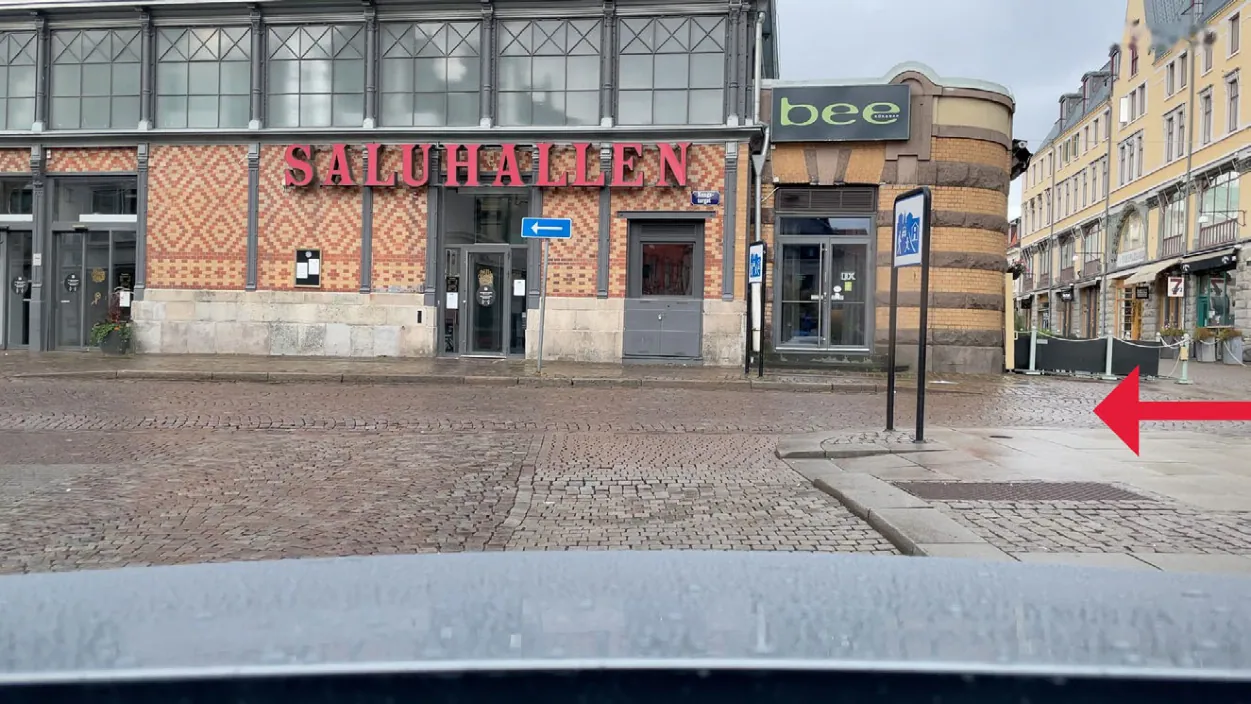
Do you have an obligation to give way to vehicles coming from the right?
Correct answer: B) No
Explanation
Vehicles coming from the right are exiting a ‘home zone’. This means that they have an obligation to give way to you. The priority-to-the-right rule does not therefore apply.
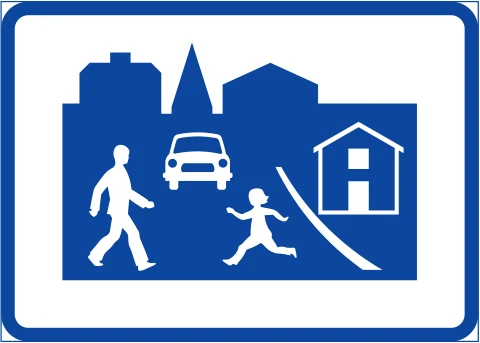
“A driver also has an obligation to give way to any vehicle when its path crosses their own path when the driver joins a road [...] from [...] a home zone.” (Road Traffic Ordinance)
Crossings
pedestrian crossings, bicycle passages, etc.
Pedestrian crossings
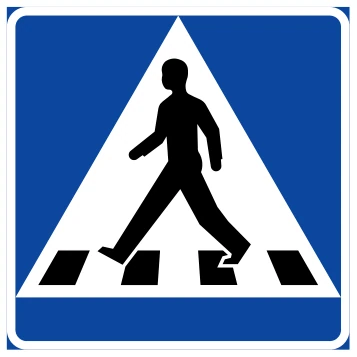
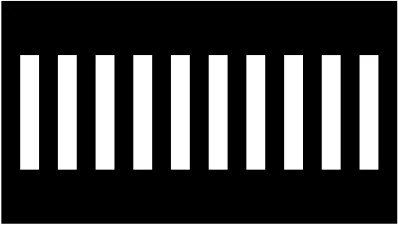
A pedestrian crossing is always indicated by the sign and/or road marking for pedestrian crossing. In addition to those walking, pedestrians also include:
- Persons in wheelchairs (including electric wheelchairs).
- Persons on roller skates, roller skis, kicksleds, toy vehicles and similar.
- Persons who walk with a bicycle/moped (i.e. not cycling/driving).
The easiest way to avoid misunderstandings and accidents is to seek eye contact with the pedestrians. However, you should not wave the pedestrian over, as this creates a false sense of security, especially if there are multiple lanes in the same direction. If you wave them over, the pedestrian will perhaps relax and assume that the whole road is clear, although a car could be approaching fast from another lane with no intention of stopping.
Controlled pedestrian crossings
- Have functioning traffic signals (or a police officer).
- Both drivers and pedestrians shall respect the traffic signals. Sometimes pedestrians do not make it across before their light turns red. If they entered the pedestrian crossing when they had a green light, you must let them pass before you can drive.
Uncontrolled pedestrian crossings
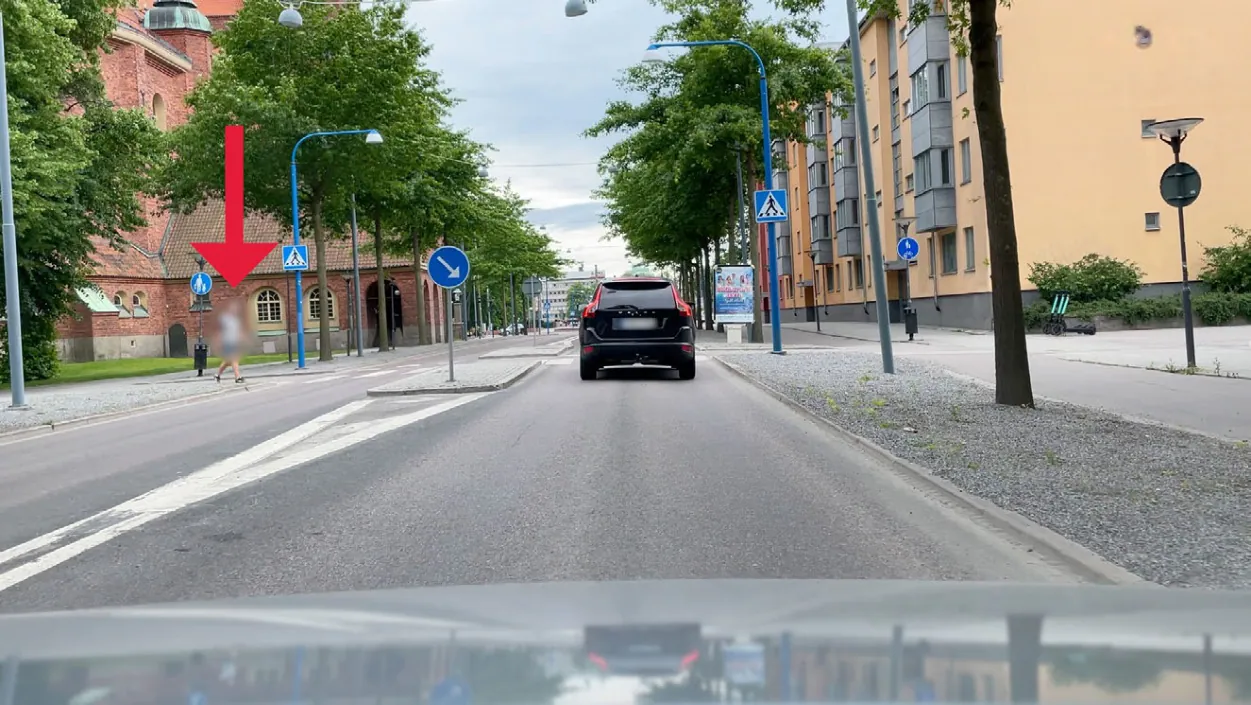
- Drivers have an obligation to give way to pedestrians who have stepped out onto the pedestrian crossing or who are about to do so. Drivers who have an obligation to give way must clearly show their intent to do so by, in good time, reducing their speed or stopping.
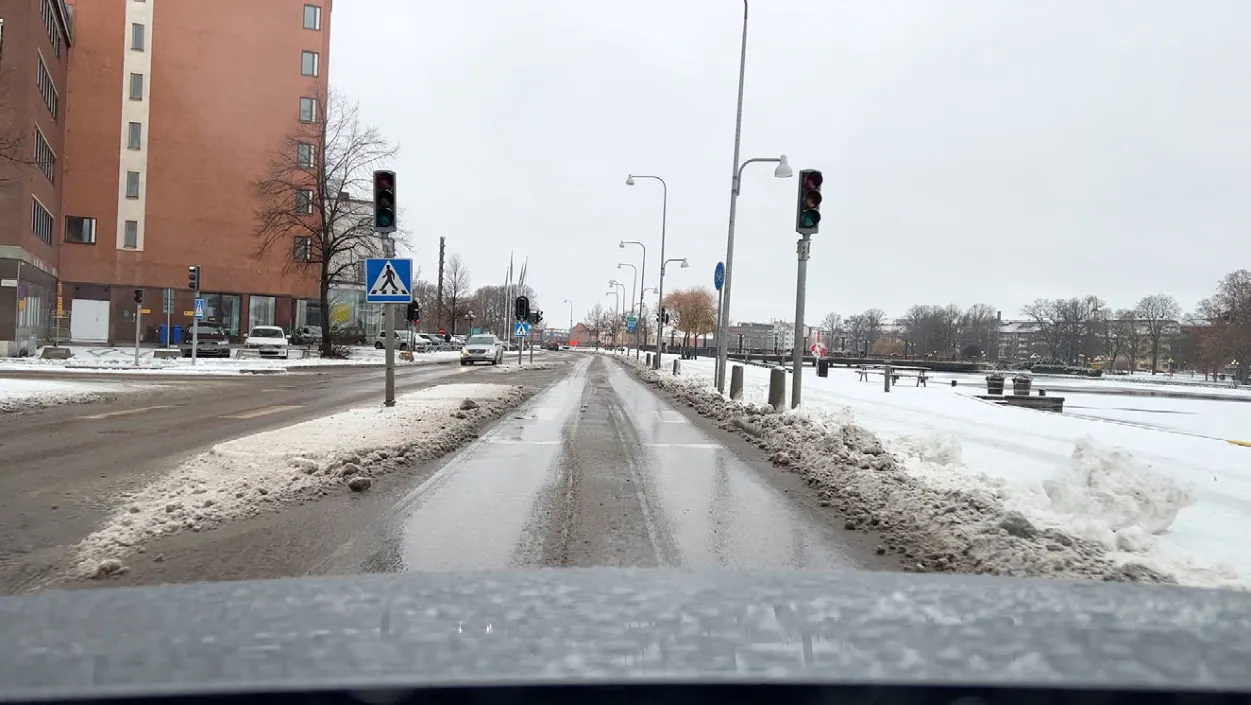
Footpath
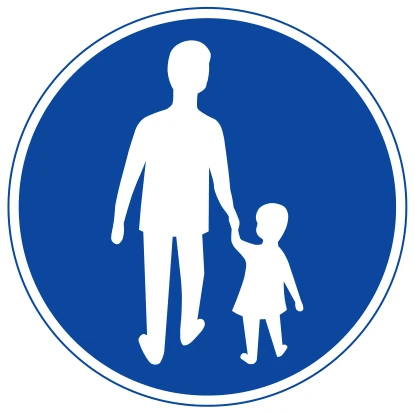
- A footpath (sidewalk/pavement) is a path for pedestrians. Drivers are only allowed to cross the footpath.
- Drivers have an obligation to give way to pedestrians on the footpath.
- Lacks a standardised design. Is sometimes (but not always) marked with the Footpath sign.
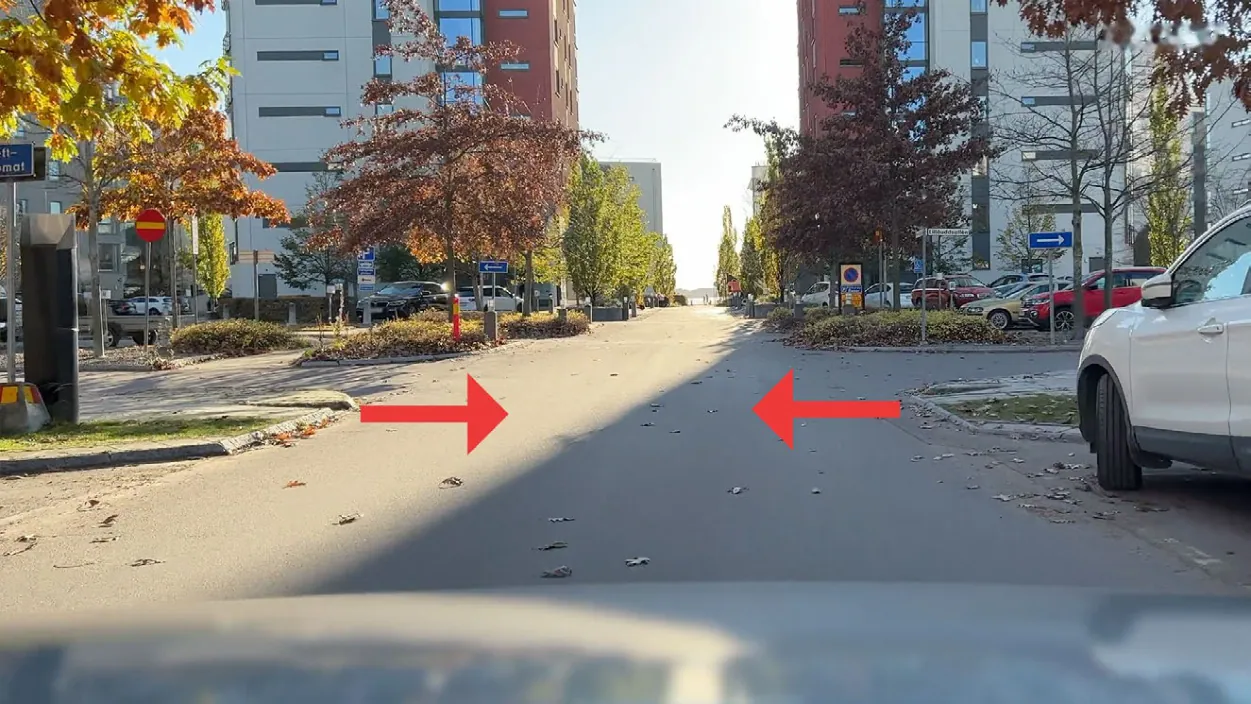
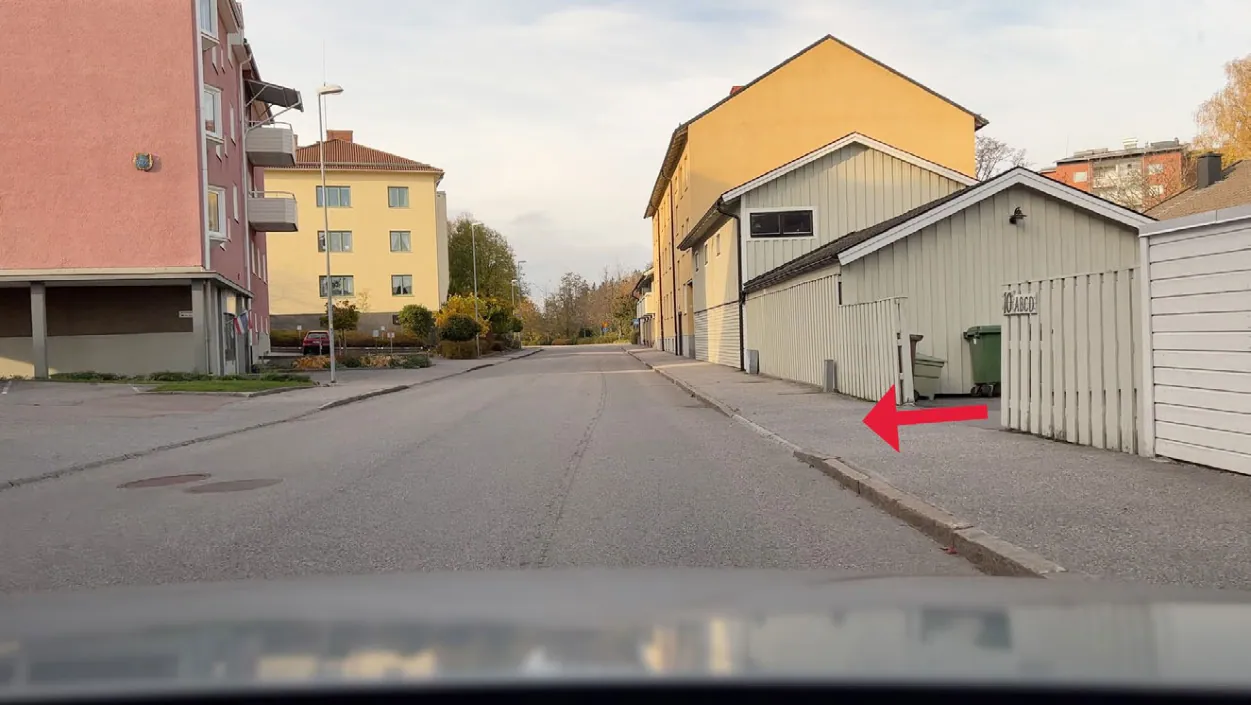
- Crossing a footpath on a normal road for car traffic is rare, as such a road design would be dangerous for pedestrians. Footpaths are often crossed when entering/exiting a property.
Bicycle passages
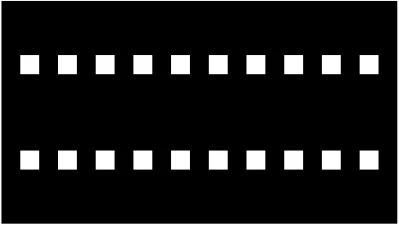
- Always indicated by the road marking for bicycle passage.
- Bicycle passages are often combined with pedestrian crossings.
Controlled bicycle passages
- Have functioning traffic signals (or a police officer).
- Both drivers and cyclists shall respect the traffic signals. Sometimes cyclists do not make it across before their light turns red. If they entered the bicycle passage when they had a green light, you must let them pass before you can drive.
Uncontrolled bicycle passages
- When you are driving and approach an uncontrolled bicycle passage, you must adapt your speed so that you do not endanger those on the bicycle passage.
- If you are crossing an uncontrolled bicycle passage while turning or exiting a roundabout, you must drive at low speed and provide any cyclists who are already on or are just about to enter the bicycle passage with the opportunity to pass.
- Cyclists have an obligation to give way to car drivers. Cyclists must reduce their speed and they may only cross the road if it can be done without danger.
Clarification about bicycle passages
Some words used in connection with uncontrolled bicycle passages may seem unclear (“adapt your speed”, “not endanger”, “opportunity to pass”). The lawmakers want to avoid saying that car drivers have an obligation to give way, as this could give the cyclists a false sense of safety. The fact that car drivers and cyclists have far-reaching obligations towards each other is intended to increase safety. As a car driver, you should keep in mind that the purpose of bicycle passages is to allow cyclists to cross the road. You should also keep in mind that cyclists are unprotected road users. Allowing cyclists to pass is a good and safe habit.
Bicycle crossings
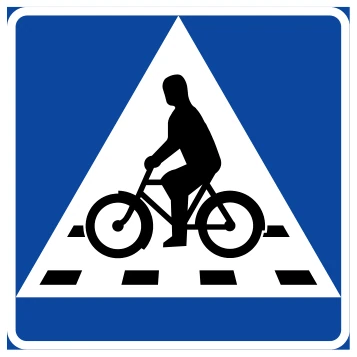
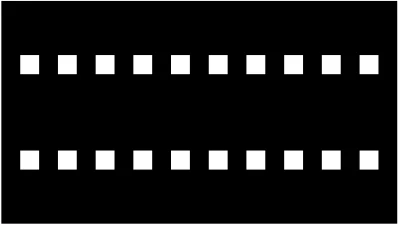

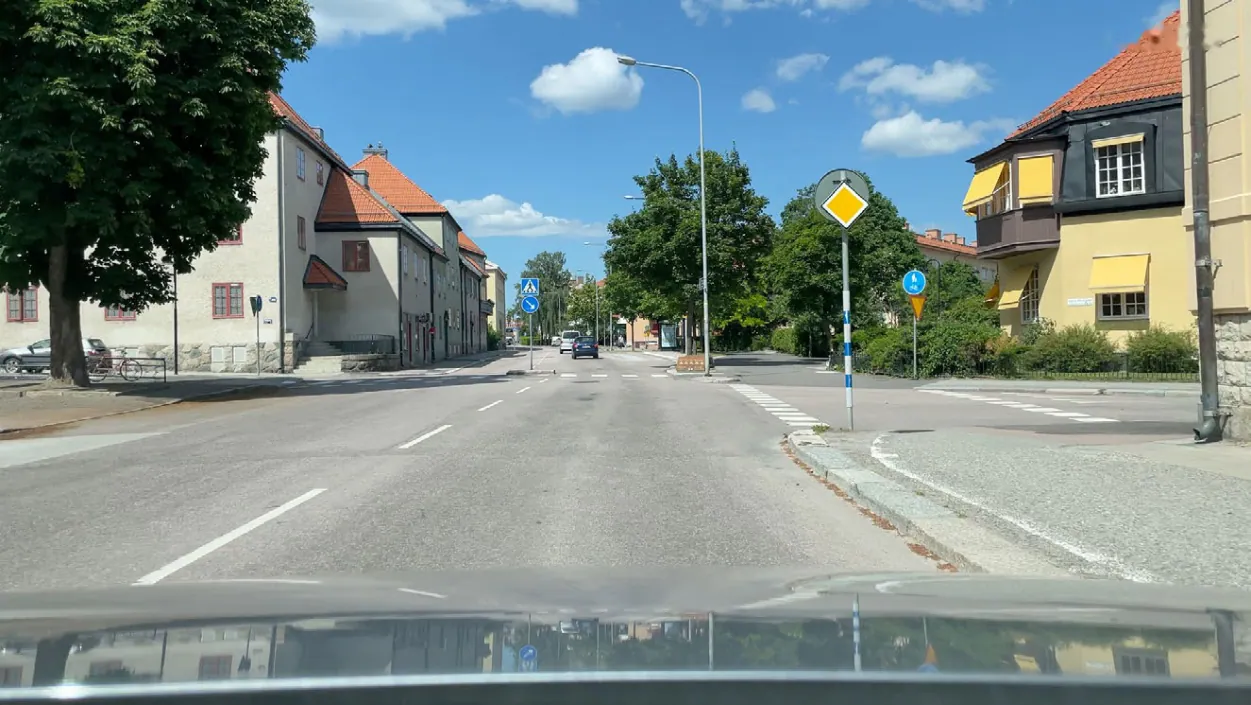
- A bicycle crossing is always indicated by the road sign for bicycle crossing, the road marking for bicycle crossing, and a give way line for the cars.
- When driving, you have an obligation to give way to cyclists who are using the bicycle crossing or are about to use it.
- The traffic environment around a bicycle crossing is supposed to be designed in a way that makes it inappropriate to drive faster than 30 km/h – for example, by locating the bicycle crossing on a raised hump.
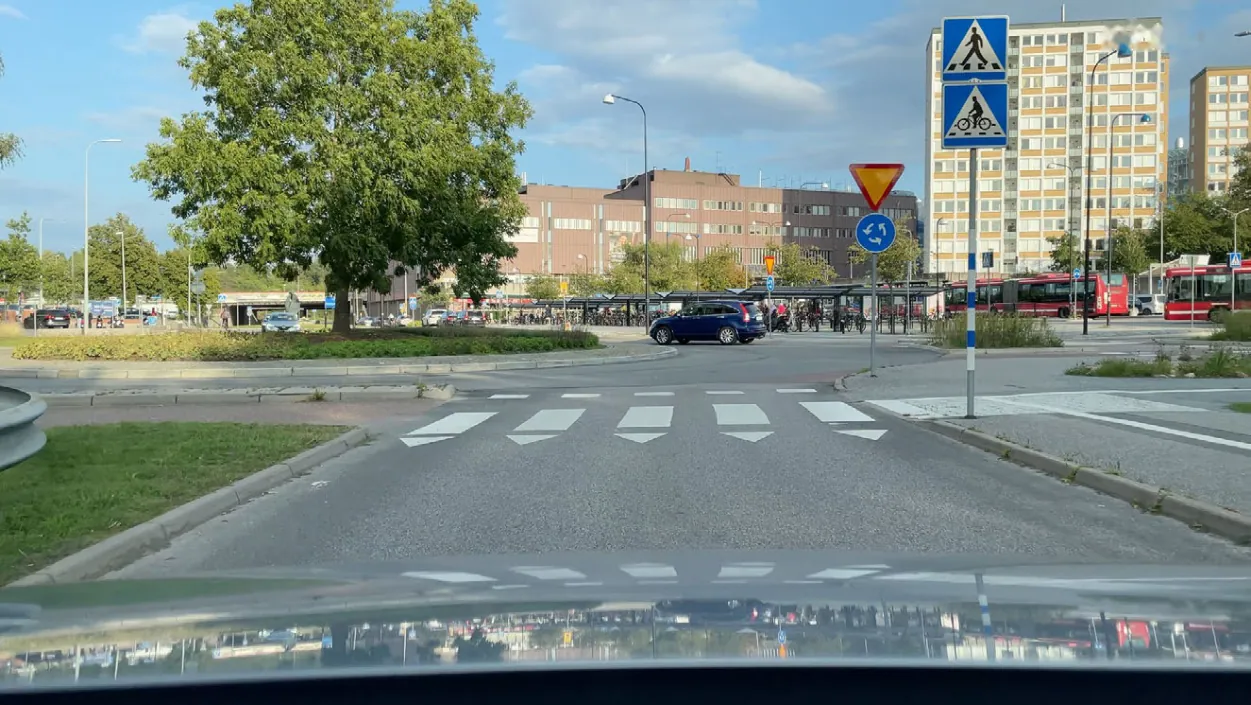
The information concerning cyclists in the sections on bicycle passages, bicycle crossings and bicycle paths also applies to riders of electric scooters and class II mopeds.
Bicycle paths
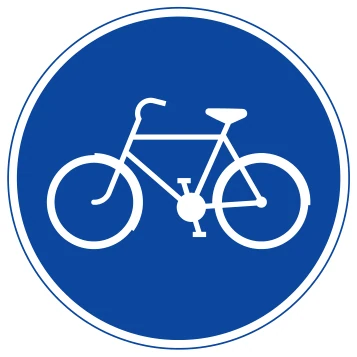
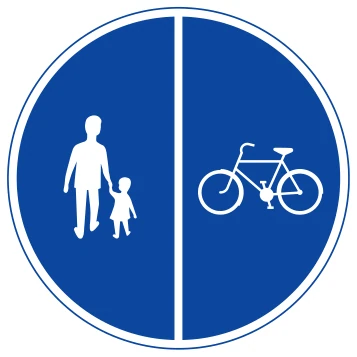
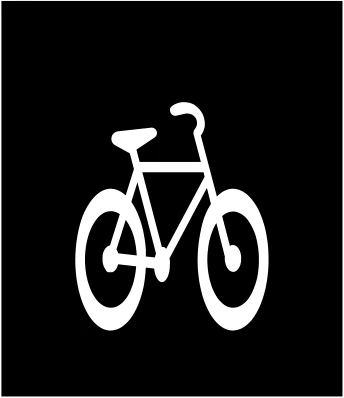
- A road or part of a road intended for bicycle traffic. Other drivers are only allowed to cross the bicycle path.
- Car drivers have an obligation to give way to cyclists on the bicycle path.
Clarification about crossing a bicycle path
One problem is that, in a legal sense, the bicycle path does not usually cross the road on which the cars are driving. The fact that mandatory signs for bicycle path displayed on each side of the road does not automatically mean that the bicycle path crosses the road. Most of the time, the bicycle path ends before the road crossing and begins again on the other side. It is unusual that an uninterrupted bicycle path crosses a road intended for cars.
Also note that a bicycle passage or a bicycle crossing always means that the bicycle path is interrupted. In other words, if you see the road marking for bicycle passage/crossing, you can be sure that the bicycle path ends before the junction.
How can I know if I am crossing an uninterrupted bicycle path?
– Unfortunately, it is very difficult to know, as an uninterrupted bicycle path lacks a standardised design. If you ask the experts at the Swedish Transport Agency, they will refer you to the municipality’s detailed plan.
Am I supposed to stop and check the municipality’s detailed plan at every junction?
– No, the best thing to do is to act in the safest manner. Reduce your speed, and allow the cyclists to cross the road.
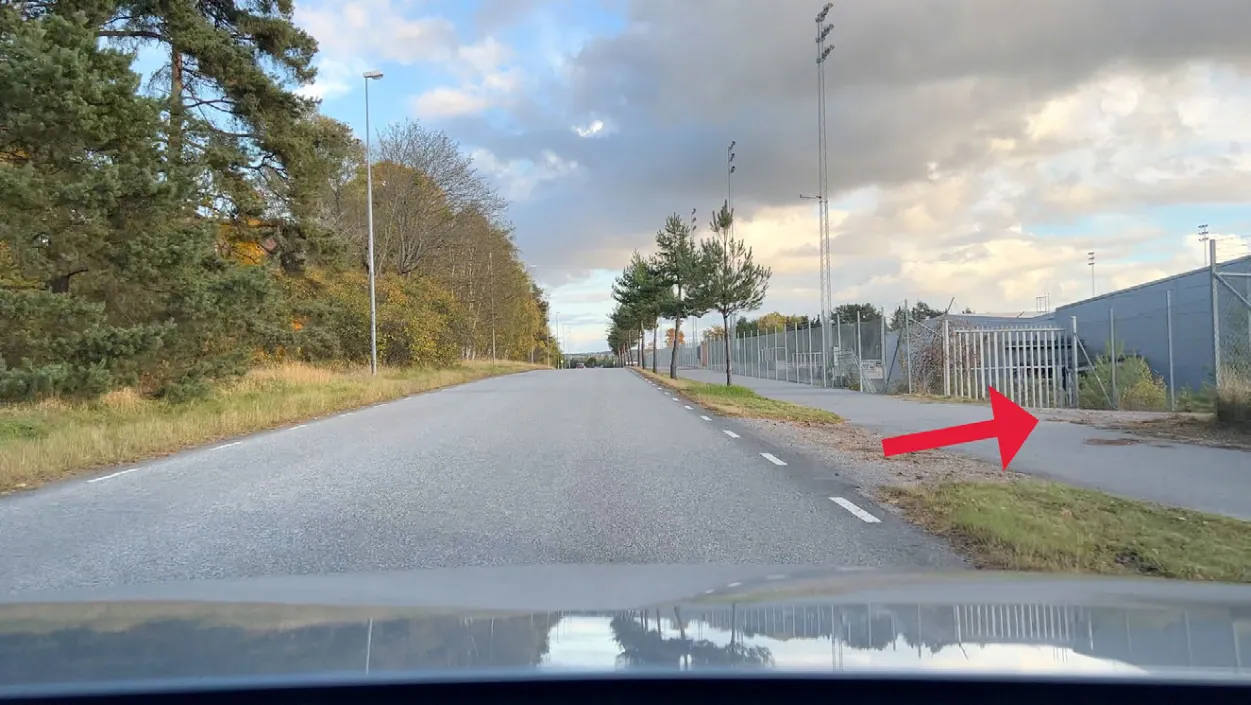
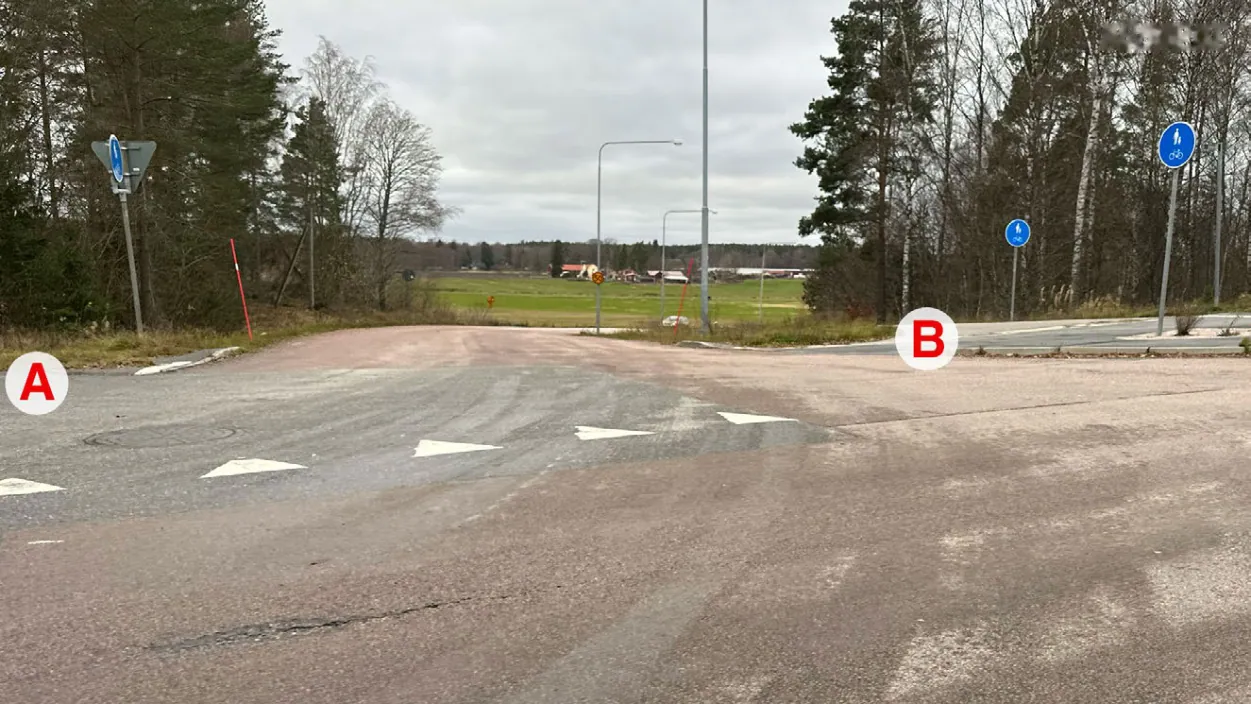
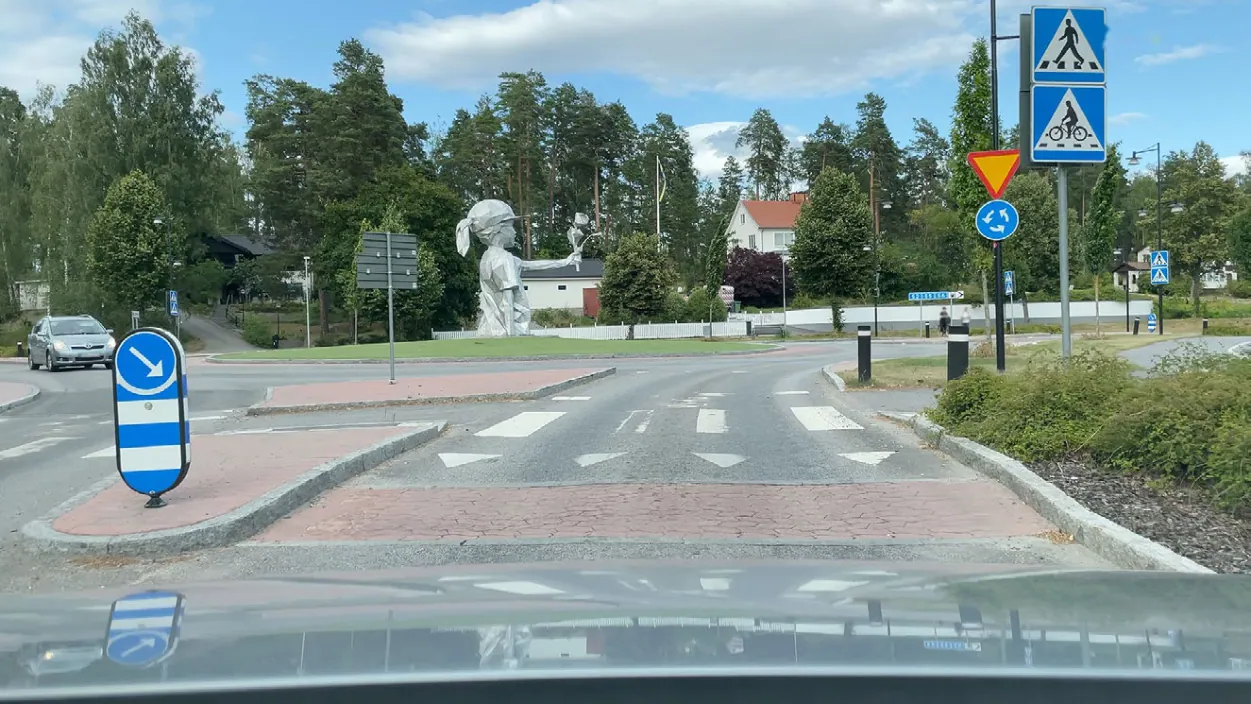
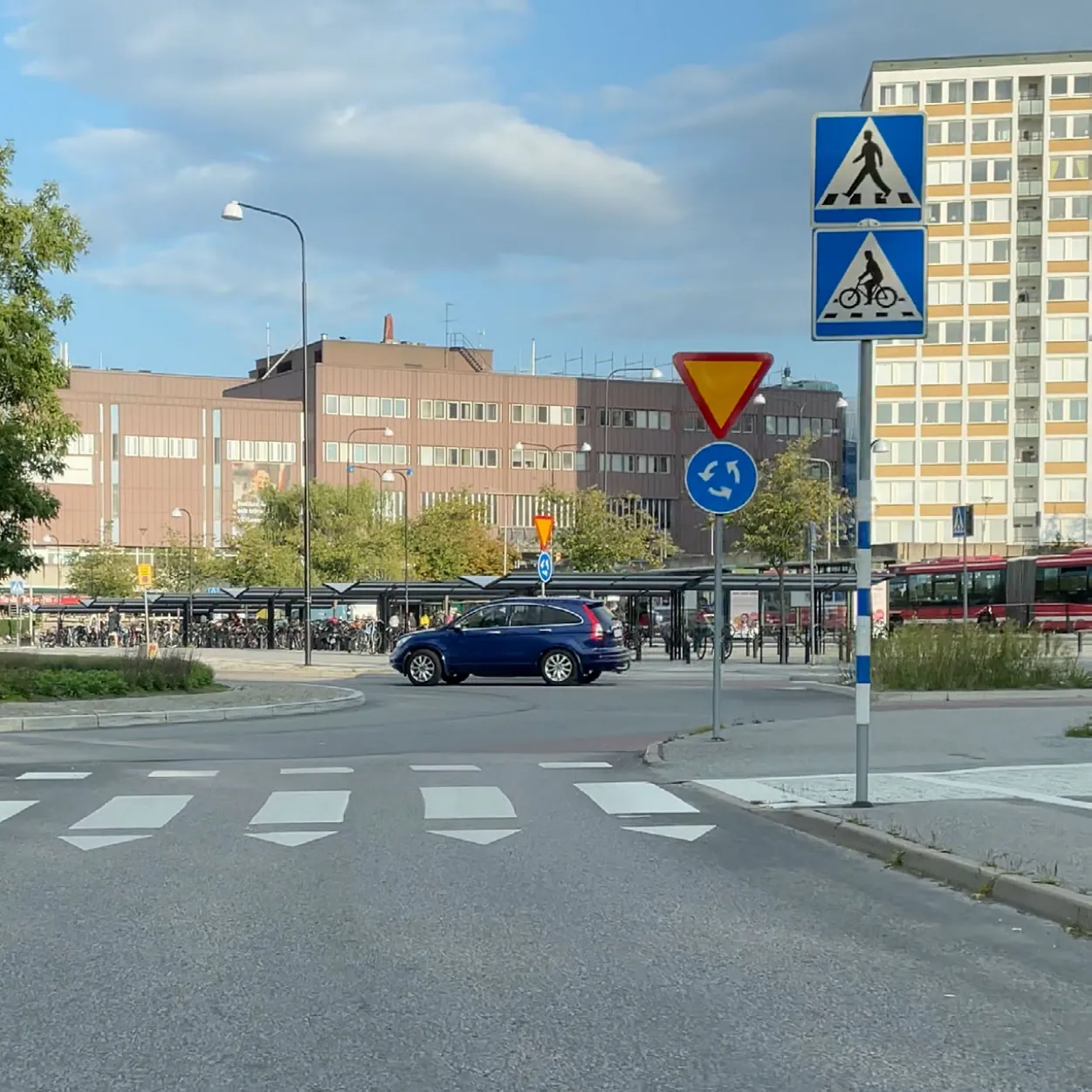
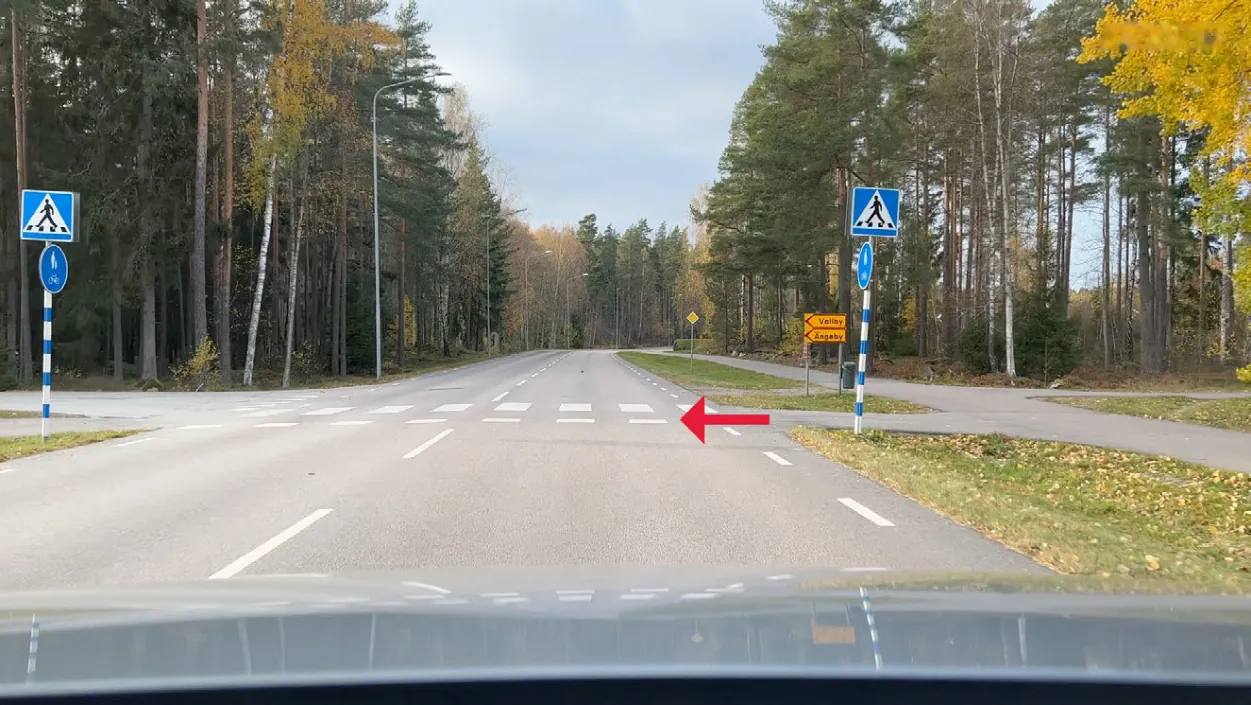
Are you obliged to give way to road-users who are already on, or are about to enter, the bicycle crossing?
Correct answer: A) Yes, I must give way to cyclists and drivers of class II mopeds.
Explanation
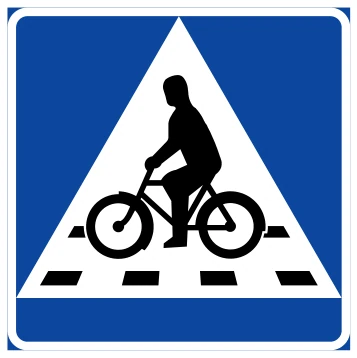
“At a bicycle crossing, a driver has an obligation to give way to cyclists and drivers of class II mopeds who are on, or are just about to enter, the bicycle crossing.” (Road Traffic Ordinance)
Isn’t the final alternative answer also correct?
– Partly, but what makes this answer wrong is the use of the word “No”. You do have an obligation to give way. This answer only extends to road-users who “are on the bicycle crossing”. The obligation to give way is a stronger concept that also includes road-users that are approaching the bicycle crossing. The Road Traffic Ordinance states that:
“Drivers who have an obligation to give way must clearly show their intent to do so by, in good time, reducing their speed or stopping. The driver may only drive on if, with consideration to the positioning of other road-users, the distance to them, and their speed, doing so does not cause any danger or obstruction.”
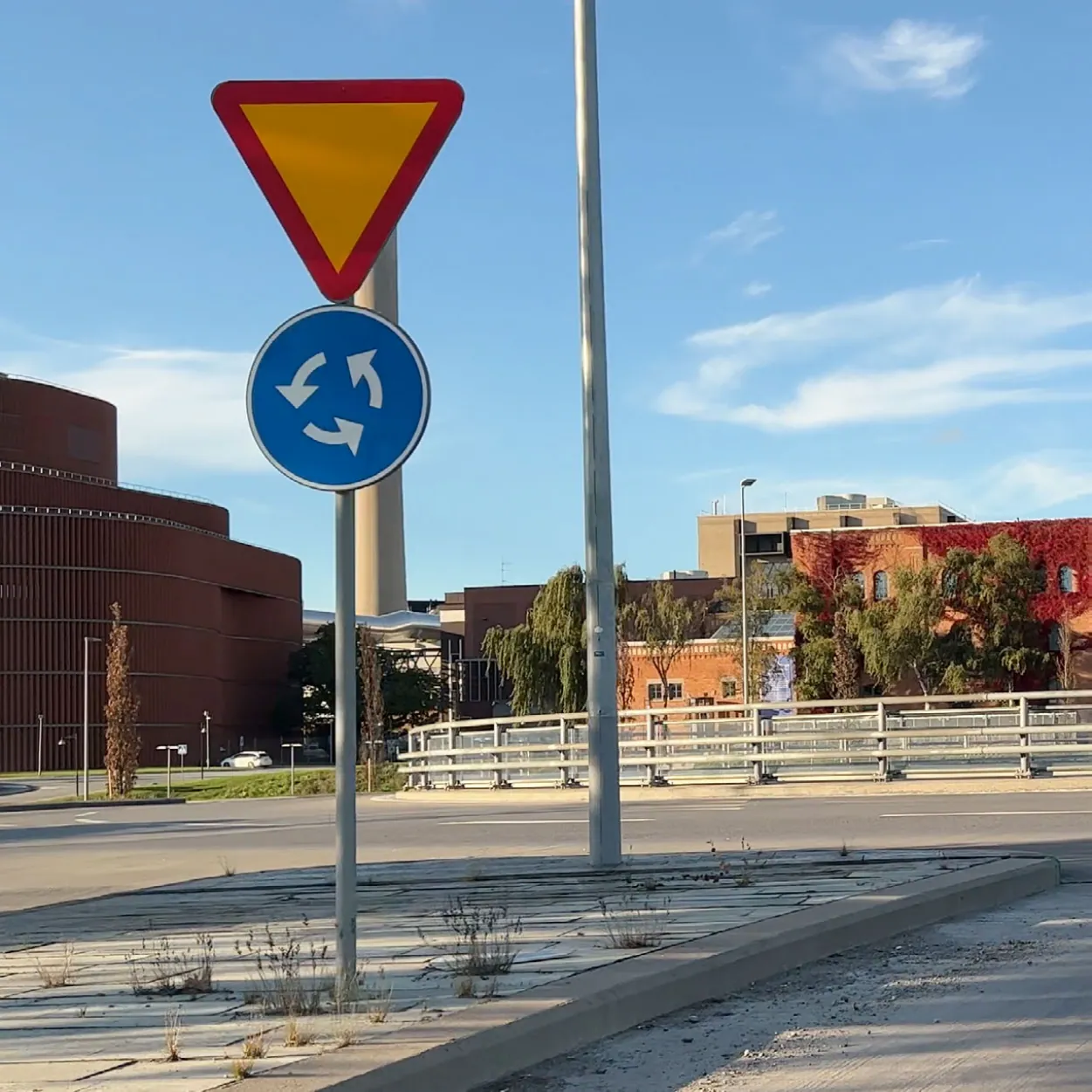
Roundabouts
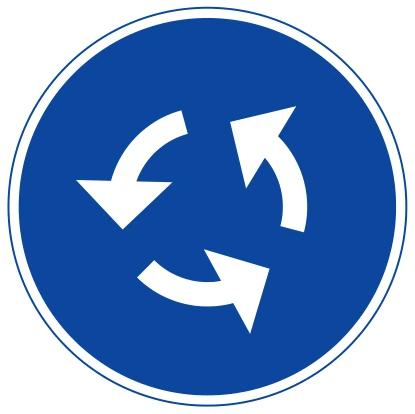
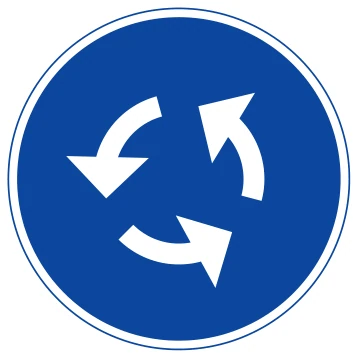
- Indicated by the Roundabout sign.
- Obligation to give way to all those already driving on the roundabout.
- Turn right to enter the roundabout, and drive in an anti-clockwise direction.
- Benefits of roundabouts:
- Safe – the low speeds rarely lead to serious traffic accidents.
- Easy to understand – it is very rare for cars to go in the wrong direction or to not give way when entering.
- More even traffic flow – traffic is spaced out, which means that the long queues that form at junctions with traffic signals are rare.
Driving on a roundabout
- Choose the most appropriate lane for your continued journey.
- Follow road signs and road markings.
- Use your indicators when changing lanes.
- You are only allowed to change lanes if you can do so without obstructing or endangering other road users.
- Facilitate other drivers’ lane changes by adapting your speed.
- Try to place yourself in the lane furthest to the right before exiting. This is not a requirement, but it increases traffic safety.
- You must indicate your intention to exit (i.e. to the right) when exiting the roundabout.
Driving straight ahead at a roundabout
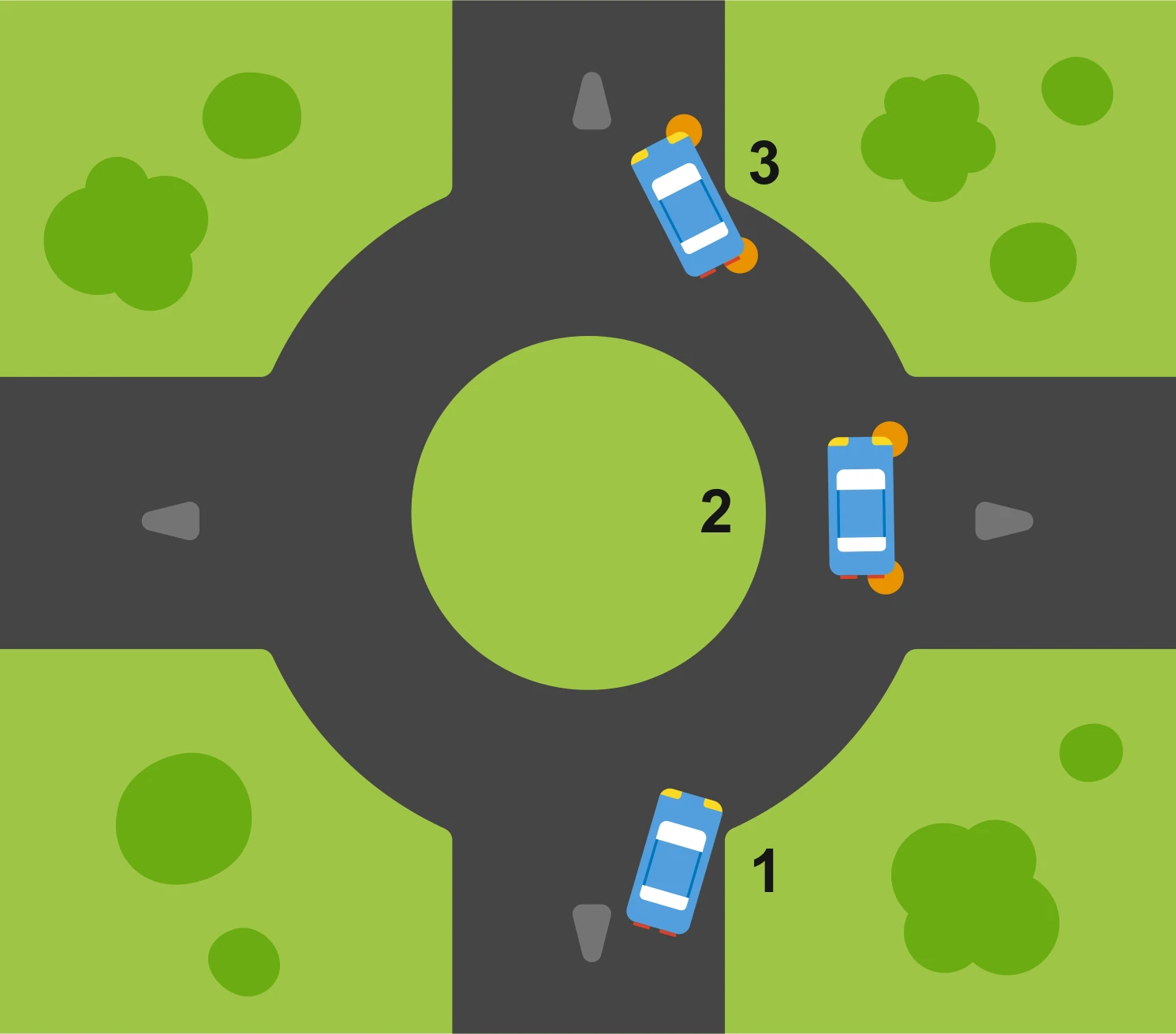
- Position your car to the right. Do not indicate.
- When you are alongside the traffic island or a similar device that marks the exit before your intended exit, start indicating right.
- Exit the roundabout.
Turning right at a roundabout
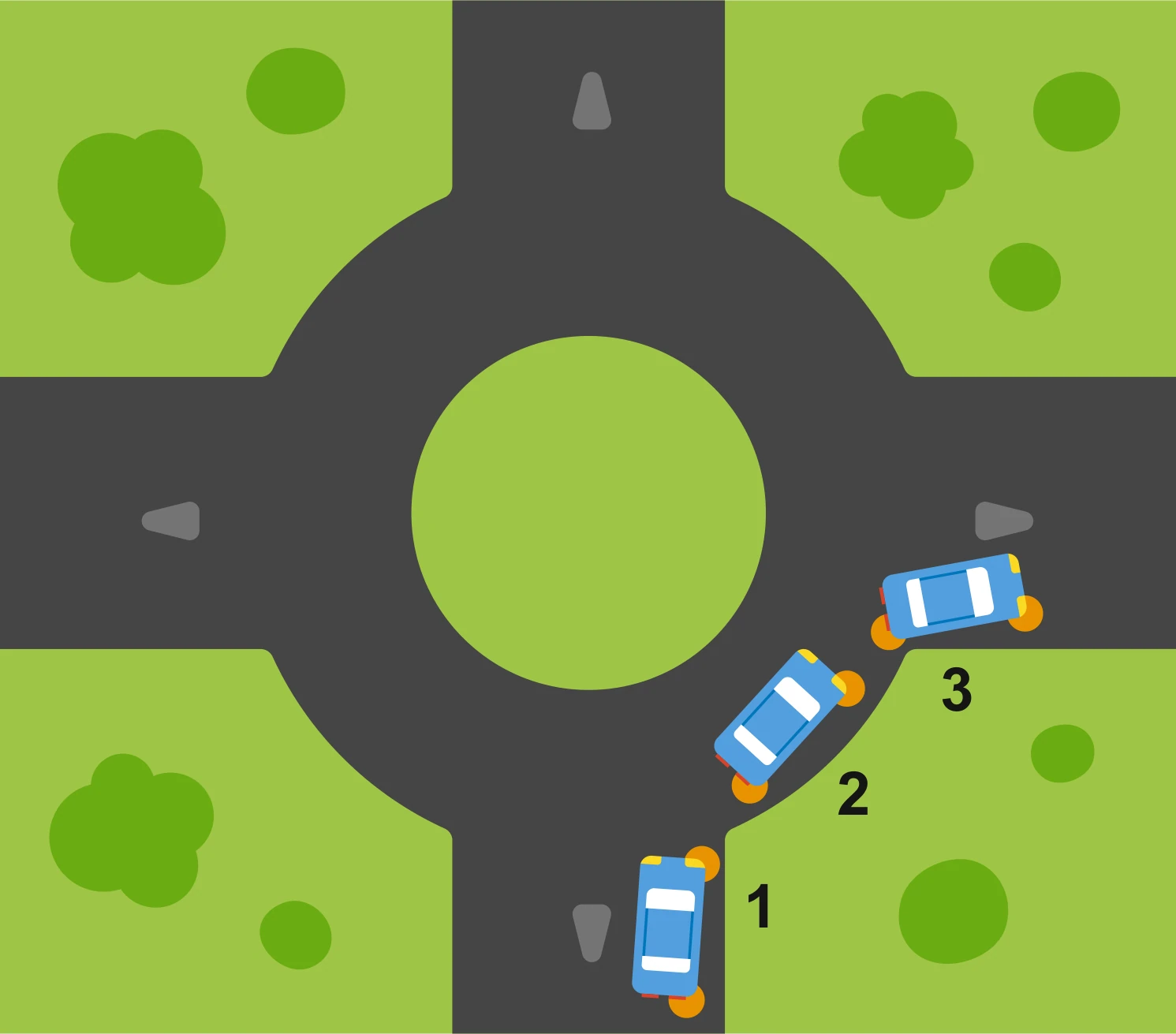
- Position your car to the right, and preferably signal your intention by indicating to the right before entering the roundabout.
- Keep to the right. Right-indicators must be turned on.
- Exit the roundabout.
Turning left at a roundabout
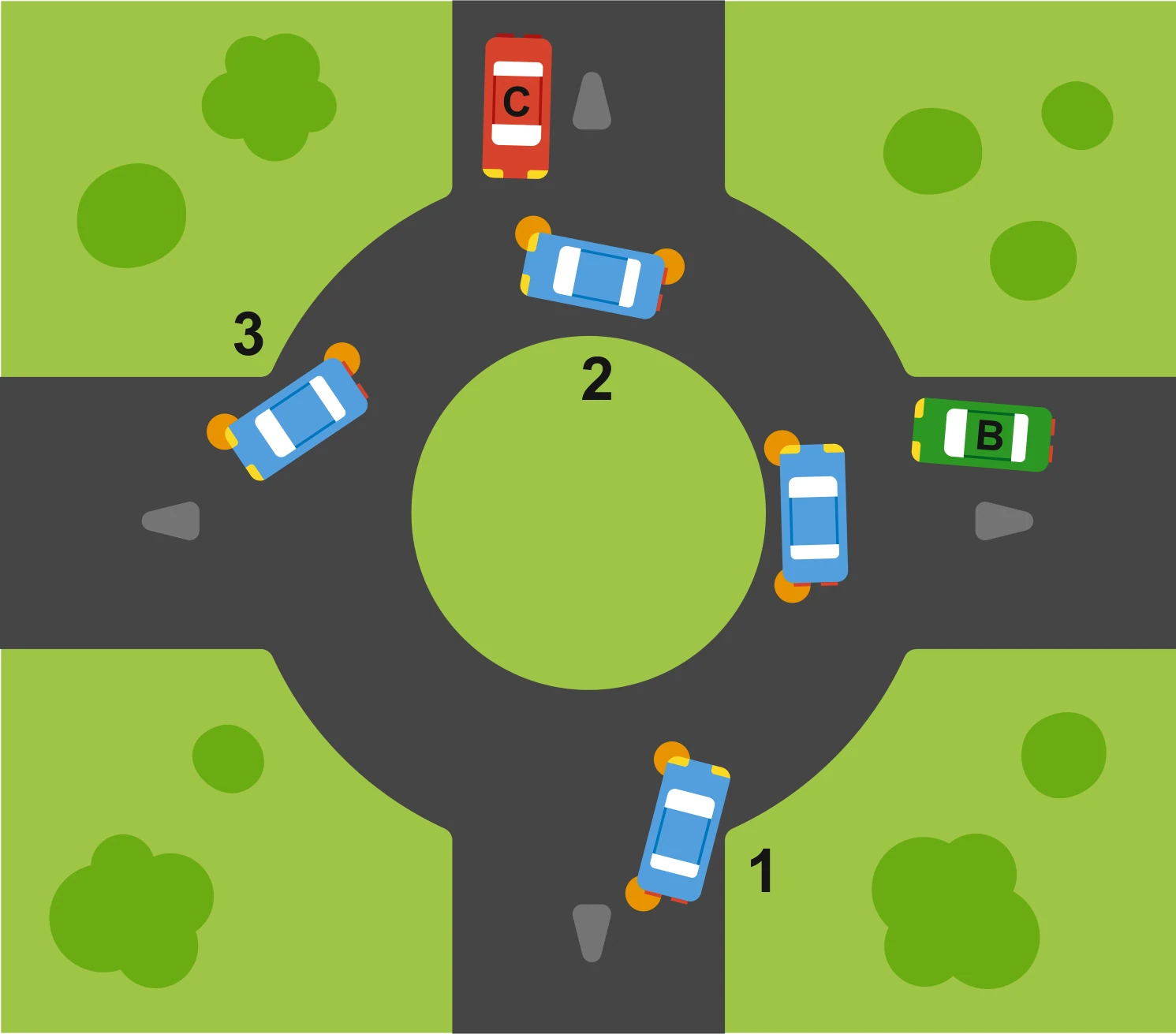
- Indicate to the left to signal to B and C that you intend to continue round to the left. It is true that only indicating to the right when exiting the roundabout should give the same information. The problem is that many drivers fail to indicate to the right when they exit the roundabout. This could lead to B and C taking a risk. Perhaps C might think: “Most people drive straight ahead without indicating. I can take a chance and drive onto the roundabout.” This would result in a collision. By indicating to the left, you are signalling to others that: “I will be driving around the roundabout, so don’t even think about pulling out in front of me.”
- Indicate to the right to show that you are exiting the roundabout.
- Exit the roundabout.
Clarification on indicating left
Are there no clear rules about indicating left on roundabouts?
– No, indicating left is a grey area. The Swedish Transport Agency and Police are very clear that you must always indicate right when exiting. Unfortunately, the same clarity does not exist when it comes to indicating left.
The Swedish Transport Agency has published a brochure on roundabouts, which states that “there are no special requirements about using direction indicators when entering a roundabout” – why is that?
– The full quote is: “There are no special requirements about using direction indicators when entering a roundabout, as there is only one direction to drive.” This quote from the Swedish Transport Agency only focuses on the entry to the roundabout, stating that you must drive in the correct direction (anti-clockwise). This is quite a strange thing to focus on. Driving schools that advocate indicating to the left do so to signal the direction of the continued driving on the roundabout, not to signal entry to it.
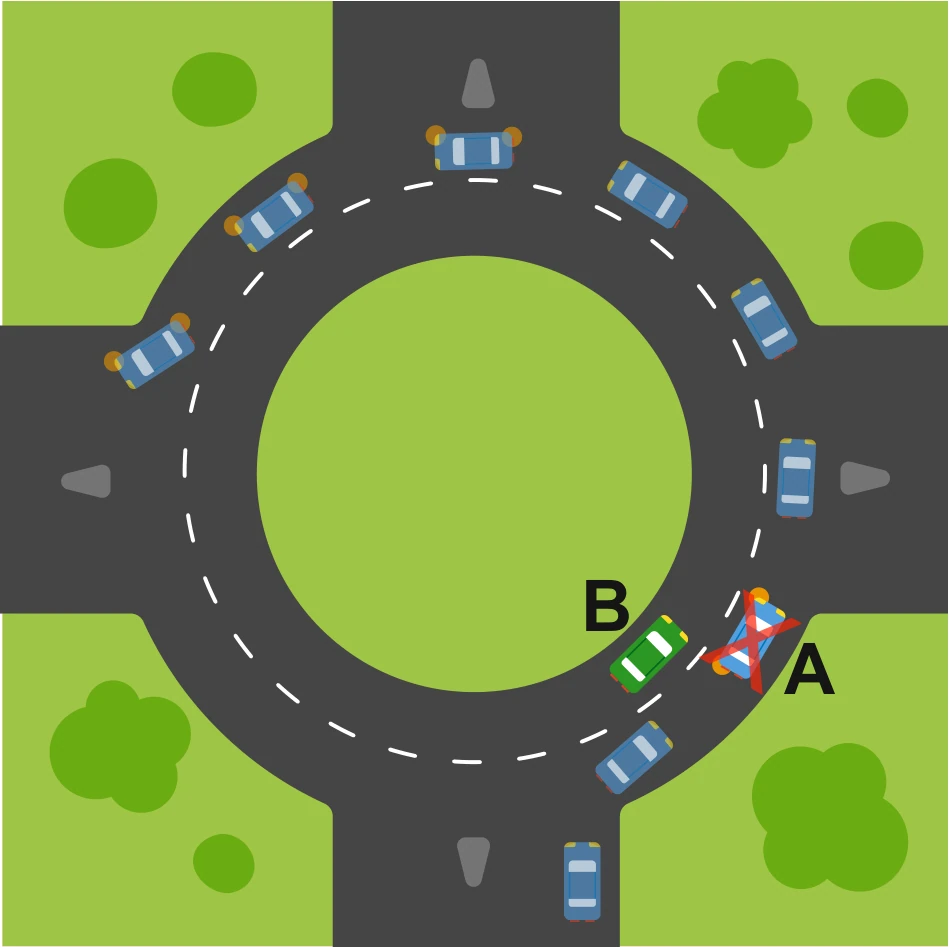
Is it always the best option to indicate to the left if I intend to turn left?
– No. There are certain cases when this would not be appropriate. In the example, A is turning left, but chooses the right-hand lane (not recommended). If A indicates to the left, B will think that A intends to change lane. The clearest option is for A to refrain from indicating to the left. Preventing confusion concerning lane-changes is more important in this situation than signalling the direction of the continued driving.
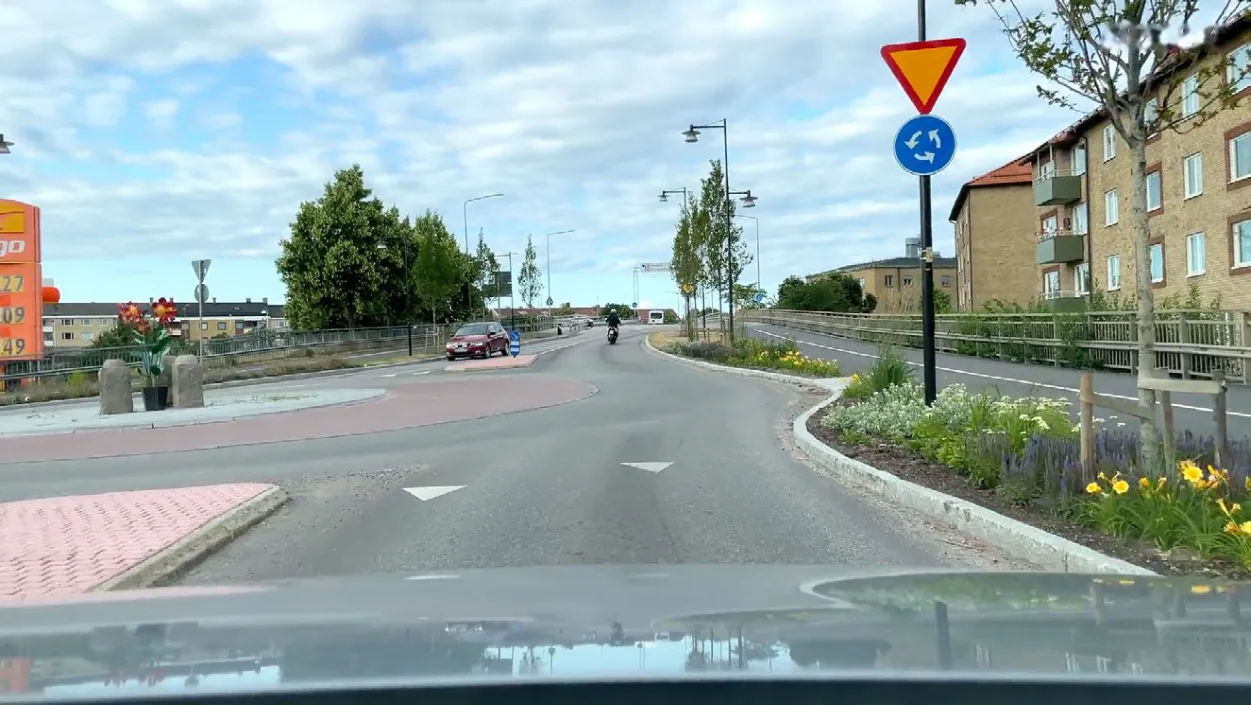
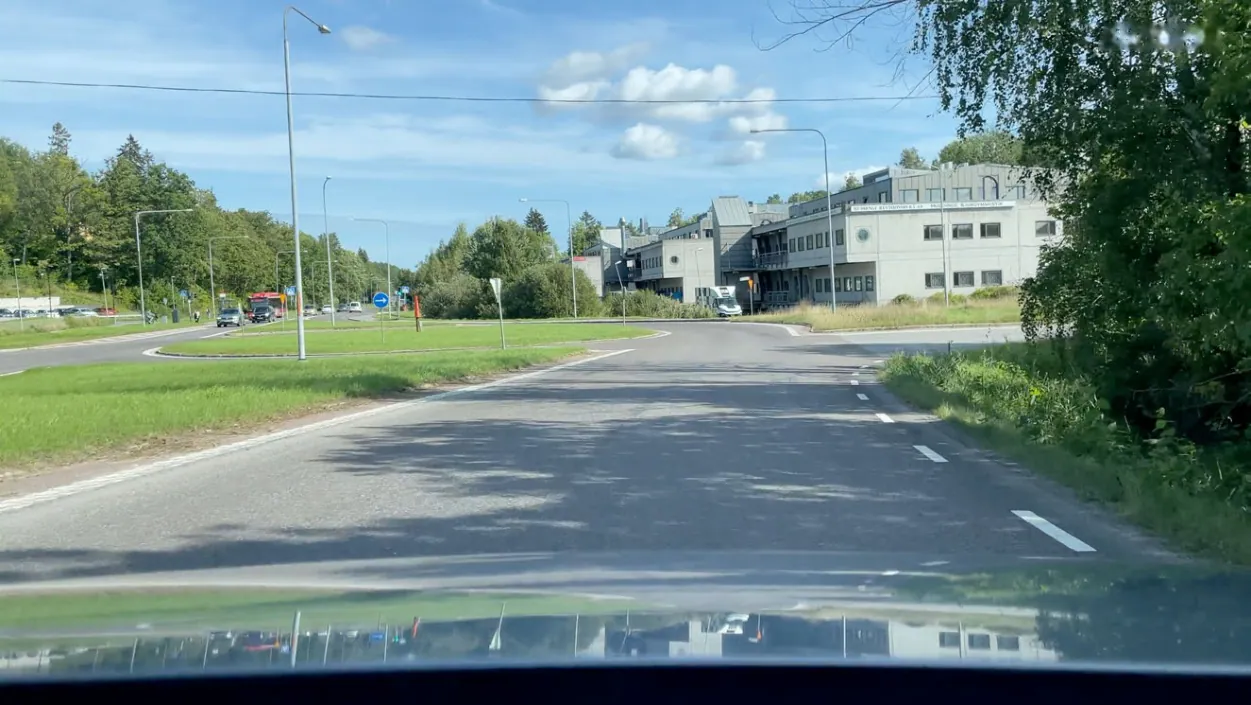
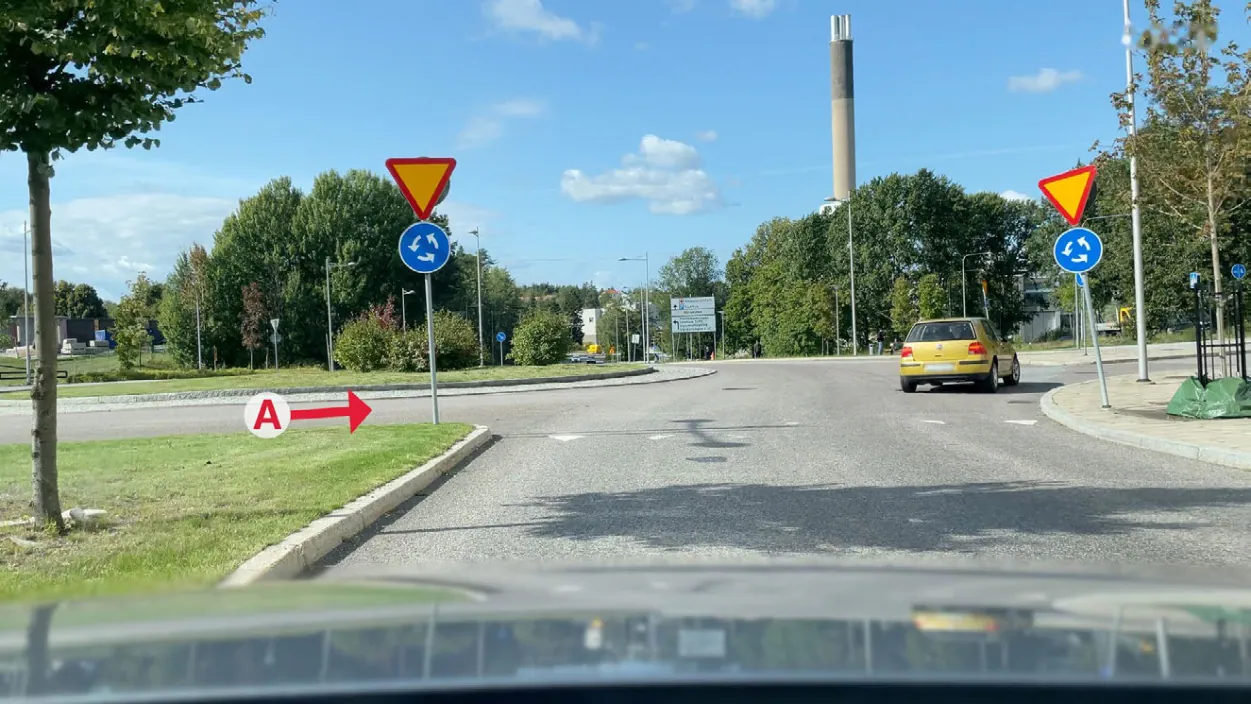
Do you have an obligation to give way to vehicles coming from A?
Correct answer: A) Yes, to all vehicles.
Explanation
“A driver who is entering a roundabout is obliged to give way to every vehicle that is already driving on the roundabout.” (Road Traffic Ordinance)
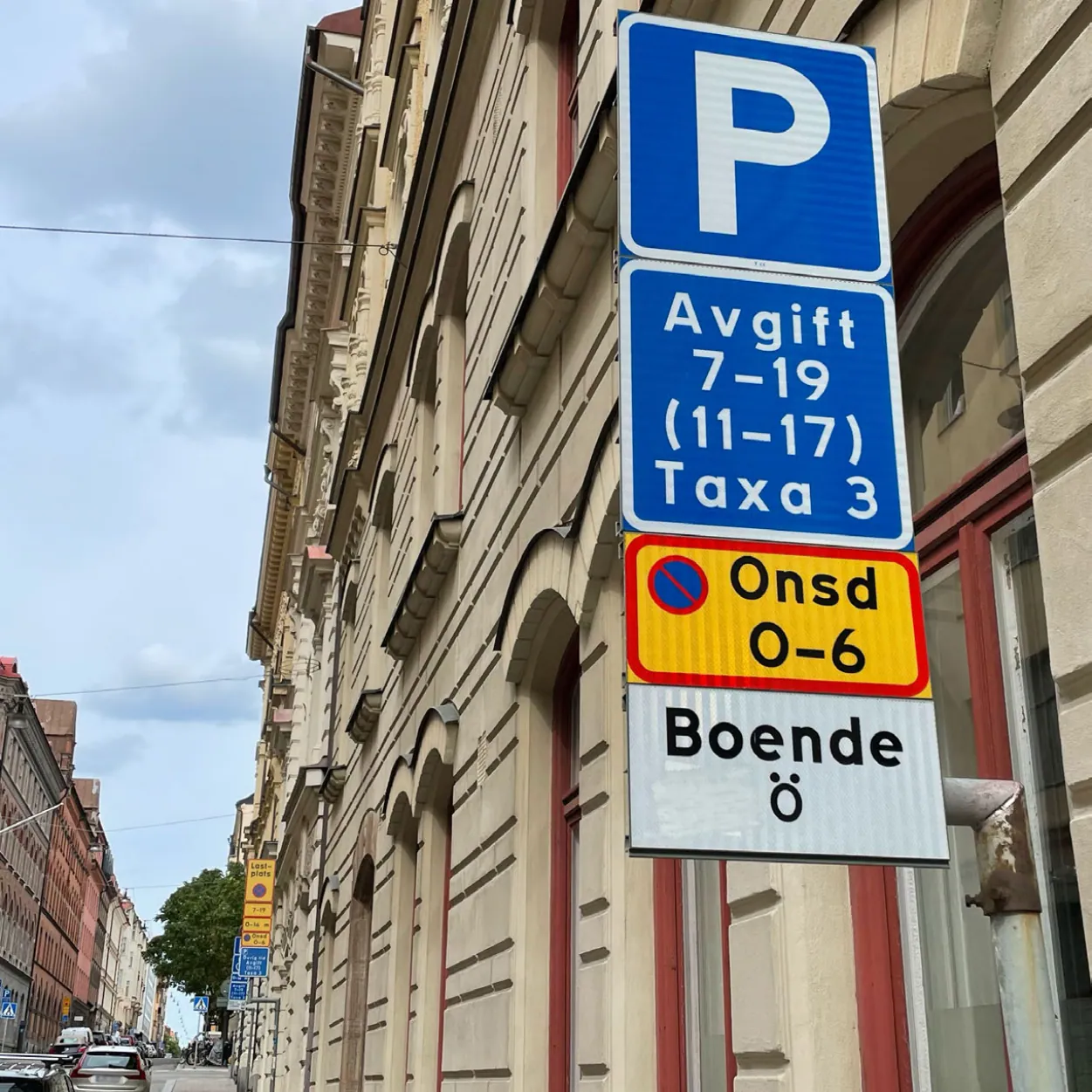
Stopping & parking
Stopping
Stopping means that the vehicle has come to a halt for a reason other than:
- Avoiding danger.
- It being required by the traffic conditions.
- Parking.
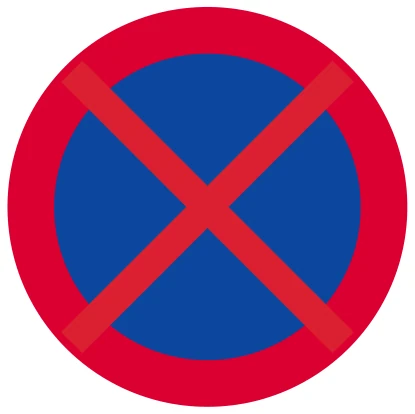
No stopping or parking
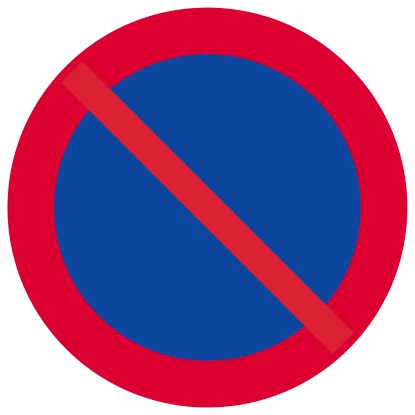
- Where the No stopping or parking sign is displayed.
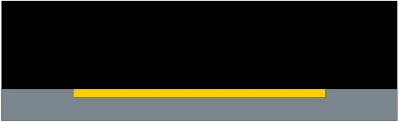
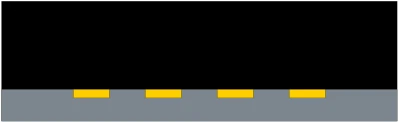
- On a solid yellow line.
- Where it creates a traffic hazard or unnecessary obstruction.
- At a junction and within 10 metres from the junction.
- Where you obscure visibility (top of a hill, a bend).
- Where you obscure road signs.
- In an underpass or a tunnel.
- On a road where there is a solid centre line on your side, if there is less than 3 metres between your car and the line.
- On a roundabout.
- In a public transport lane.
- In a bicycle lane.
- In a prohibited zone.
- At the intersection between a road and a railway or tramway.
- On a motorway or clearway.
- On public places that are off-road (e.g. grass) within built-up areas.
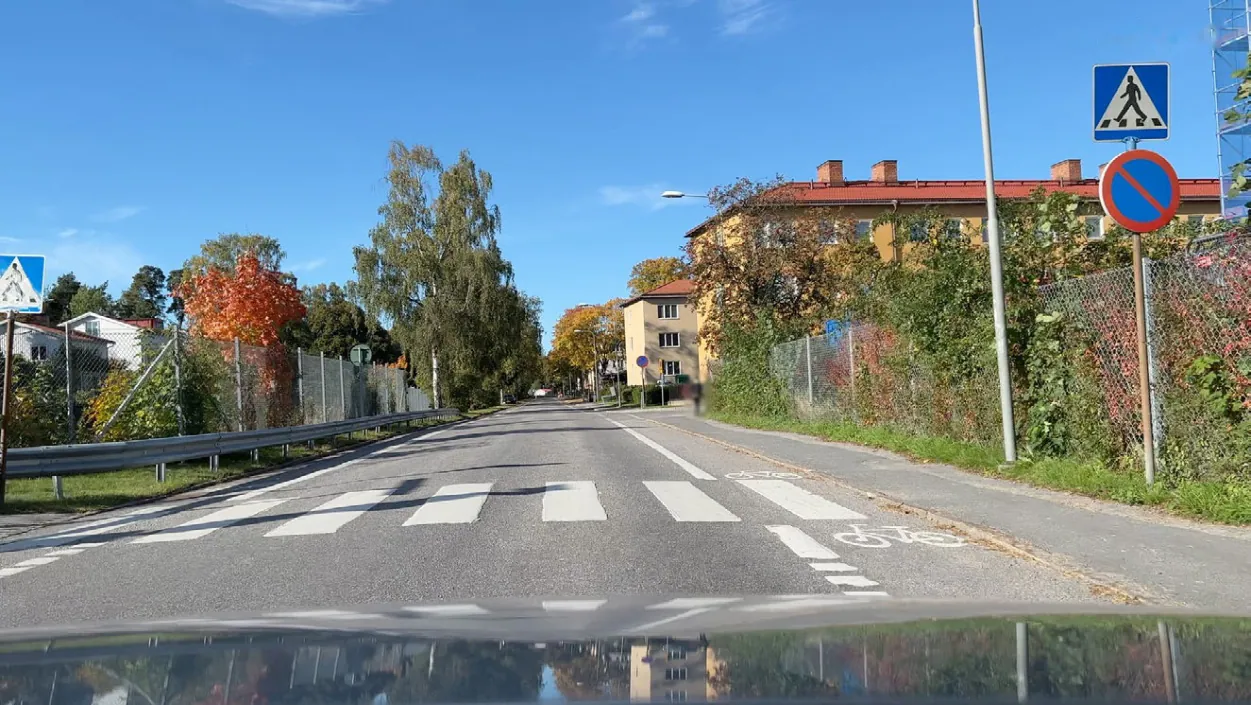
- On or within 10 metres before a pedestrian crossing, footpath, bicycle passage, bicycle crossing or bicycle path.
Clarification on before/after a pedestrian crossing
It is forbidden to stop or park within 10 metres before a pedestrian crossing, but not after.
Before a pedestrian crossing | After a pedestrian crossing |
|---|---|
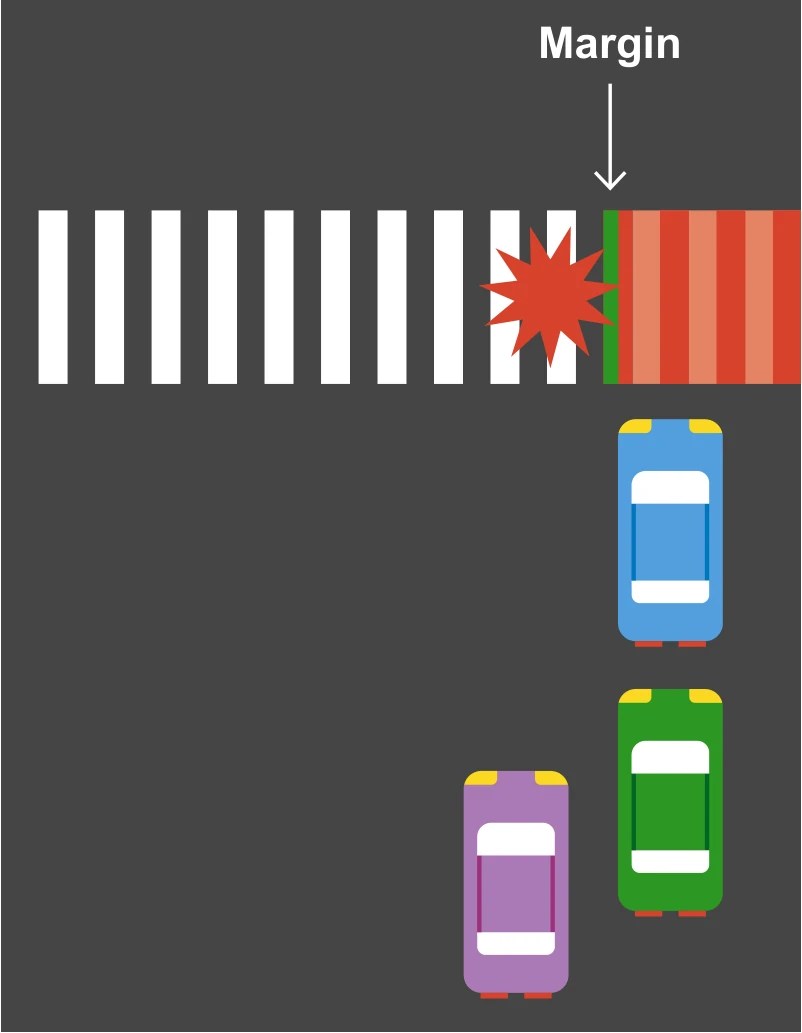 | 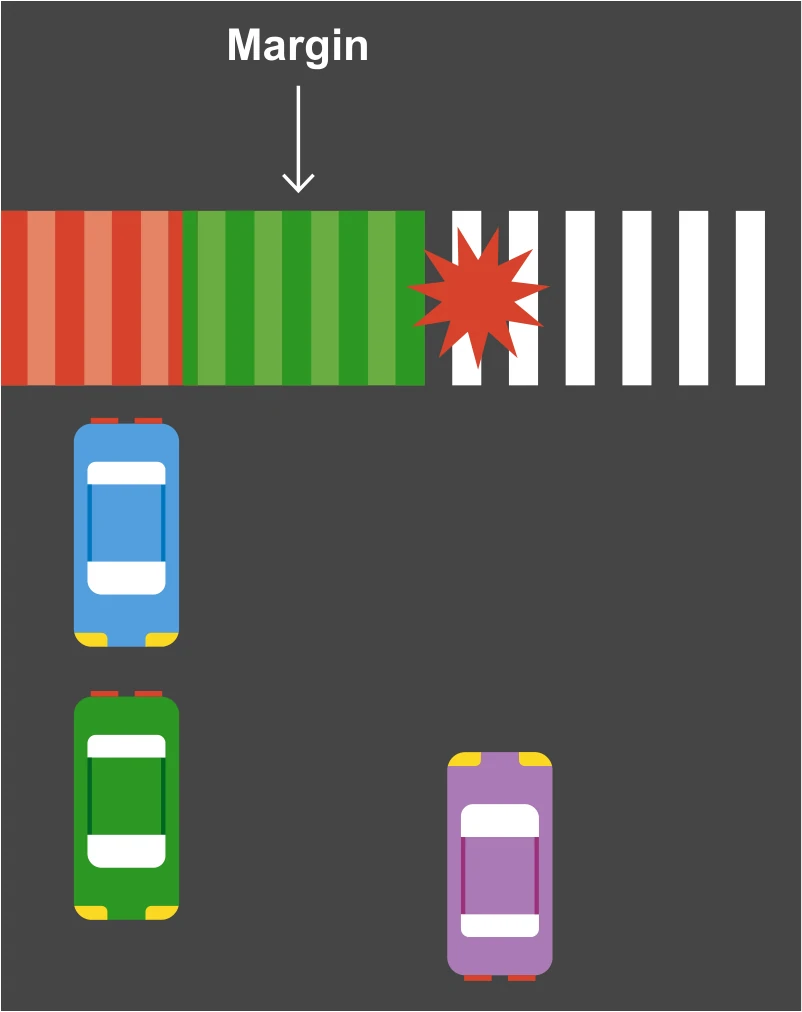 |
You cannot see the red area. When a pedestrian comes out from the red area, there is practically no margin, so if a pedestrian steps out from the red area, you will have almost no time to react in order to prevent an accident. | Your view of the red area is still obscured, but the difference is that you will have a much greater safety margin in which to detect the presence of a pedestrian. |
But would it not be safest to prohibit stopping and parking both before and after the crossing?
– Yes, but practical matters must also be taken into consideration. There is limited space in towns and cities, and a prohibition on parking after a crossing would mean the removal of many parking spaces. Compare with speed limits: country roads would be much safer if the speed limit was 30 km/h, but it would not be practical.
Parking
Parking means that a vehicle, with or without a driver, is stationary for a reason other than:
- Avoiding danger.
- It being required by the traffic conditions.
- Loading and unloading.
- Dropping off or picking up passengers.
No parking (parking prohibition)
- In places where stopping is prohibited, parking is always prohibited.
- Where the No parking sign is displayed.
- On a broken yellow line.
- Within 30 metres of a railway or tramway crossing.
- Where the vehicle is facing the direction of traffic (wrong side of the road).
- On a priority road.
- Exception: Not applicable if there is a parking sign.
- If you would be blocking someone’s exit.
- Alongside another vehicle or obstruction (double parking).
- Exception: Not applicable if you park next to a bicycle, moped or motorcycle (two-wheeled vehicles).
- If one of the wheels is outside a parking space or similar line marking.
- At a passing place (M sign, road sign E18).
More about stopping and parking
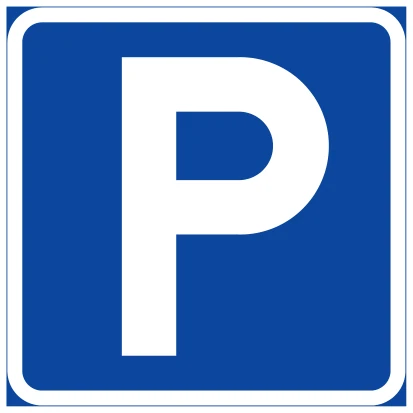
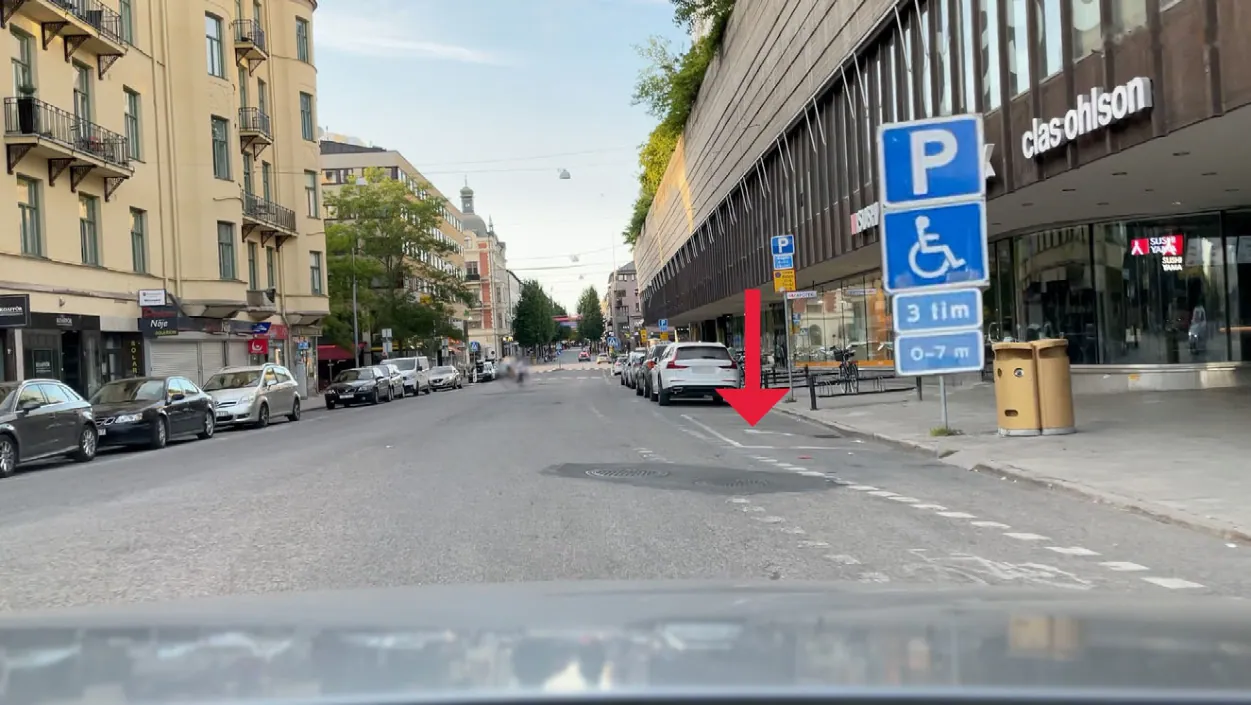
- A single blue parking sign means that parking is permitted for a maximum of 24 hours on weekdays. On Saturdays (including days before public holidays) and Sundays (including public holidays) there is no time limit. Note that there are often additional panels that stipulate a time limit.
- A parking disc is an alternative to a car park ticket. An additional panel indicates the use of a parking disc. Set the parking disc to your arrival time (nearest subsequent half-hour). The arrival time is when you arrive at the parking area and begin parking, not when you intend to come back to collect the car.
- Start parking at 13.02 – set the parking disc to 13.30.
- Start parking at 14.40 – set the parking disc to 15.00.
- It is prohibited to leave the car keys in a parked car. It should, for example, be impossible for a child to start the car and cause an accident.
- In the summer, it can get very hot in the car. Never leave children or pets alone in a parked car during the summer.
- Parking spaces for disabled drivers may only be used by those with a parking permit. Without a permit, you are only allowed to stop in order to drop off or pick up passengers.
- You are only permitted to stop or park on the right-hand side of the road.
- Exception 1: You may park on the left-hand side of a one-way street.
- Exception 2: You may park on the left if there are railway or tramway tracks on the right-hand side.
- Stopping and parking shall take place as far from the middle of the road as possible.
- If you park on the side of a road in the dark, you must turn on your parking lights so that other road users can see your car.
- Turn the wheels on an uphill or downward slope in order to prevent the car from rolling out into the street:
- Uphill slope: Away from the kerb – turn the steering wheel to the left so that the wheels are turned towards the road.
- Downhill slope: Towards the kerb – turn the steering wheel to the right so that the wheels are turned towards the kerb.
Time indications on additional panel
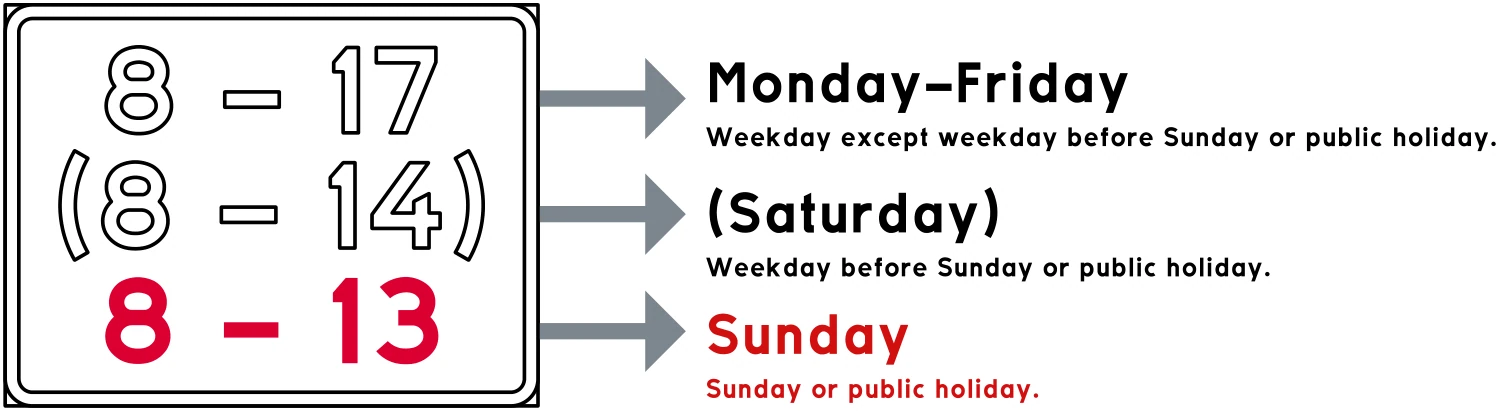
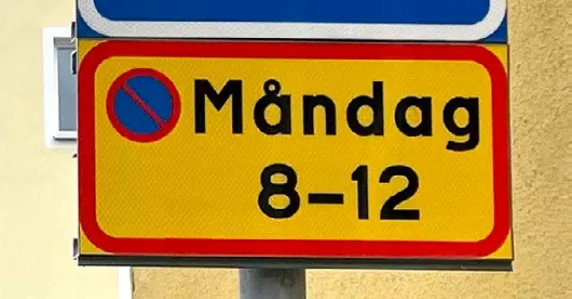
It is normally said that the times within parentheses “are applicable on Saturdays”. This is nearly always the case. However, it would be more correct to say that the times within the parentheses are applicable on the weekday before a Sunday or public holiday. If New Year’s Day (public holiday) falls on a Wednesday, the day before (i.e. Tuesday) is considered a Saturday, as it is the weekday before a Sunday or public holiday.
If a certain day is indicated, the regulation applies to this day regardless of whether the day is a weekday, Sunday or public holiday.
Please note: In Swedish traffic law, a normal week has 6 weekdays: Monday– Saturday.
Date parking
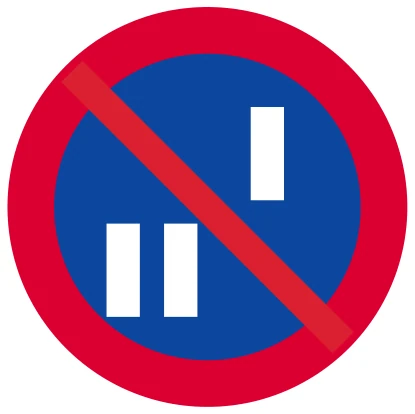
- Even-numbered dates: It is prohibited to park on the side of the road with even house numbers (e.g. 2, 16, 40).
- Odd-numbered dates: It is prohibited to park on the side of the road with odd house numbers (e.g. 3, 17, 41).
- Applicable during the times indicated on the sign.
- These areas exist to facilitate the work of snowploughs, etc.
Zone sign
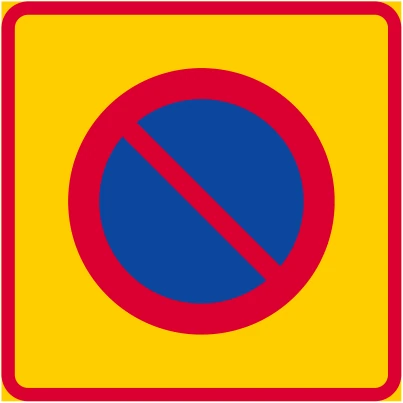
- The Zone sign means that parking within the controlled zone is prohibited.
- Exception: Parking is permitted in allocated spaces (where a parking sign is displayed).
Bus stops
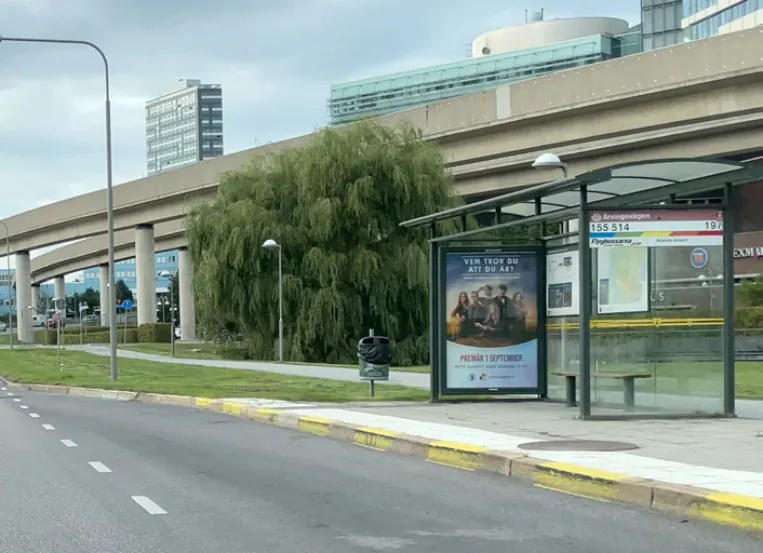
- You may stop to drop off or pick up passengers, as long as you do not obstruct a bus or tram.
- Loading and unloading is not permitted.
- If the bus stop is not marked, this is applicable 20 metres before and 5 metres after the bus stop, as the bus requires more room to pull into the stop than to exit.
The vehicle may be towed away if it
- Is parked where it is unsafe, blocks traffic or hinders road maintenance.
- Is stopped/parked where it is not allowed.
- Is not suitable for traffic (e.g. driving ban, wreck or unpaid debts).
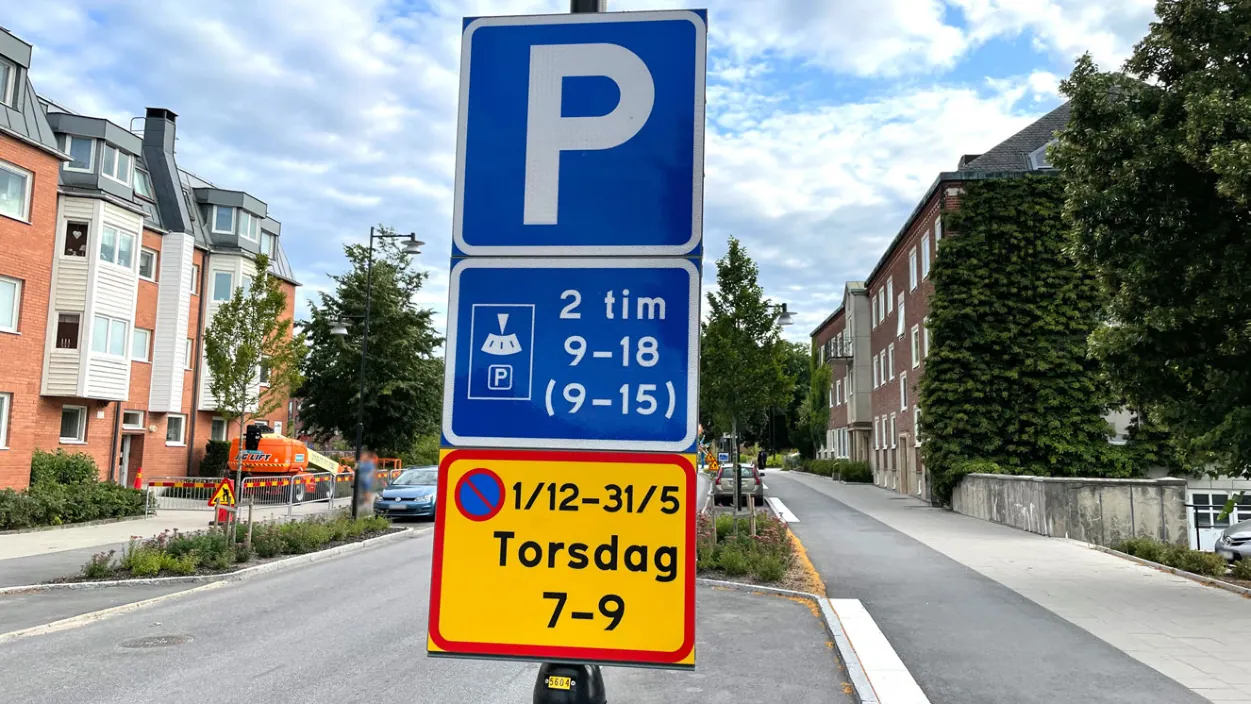
You park your car here at 16.54 on a Tuesday. What time must you state on the parking disc?
Correct answer: C) 17.00
Explanation
“If a parking disc or an equivalent device is used, the stated time shall be set to the nearest subsequent half-hour, counted from the time at which the parking was commenced.” (Road Traffic Ordinance)
If you commence the parking at 16.54, the nearest subsequent half-hour will be 17.00.
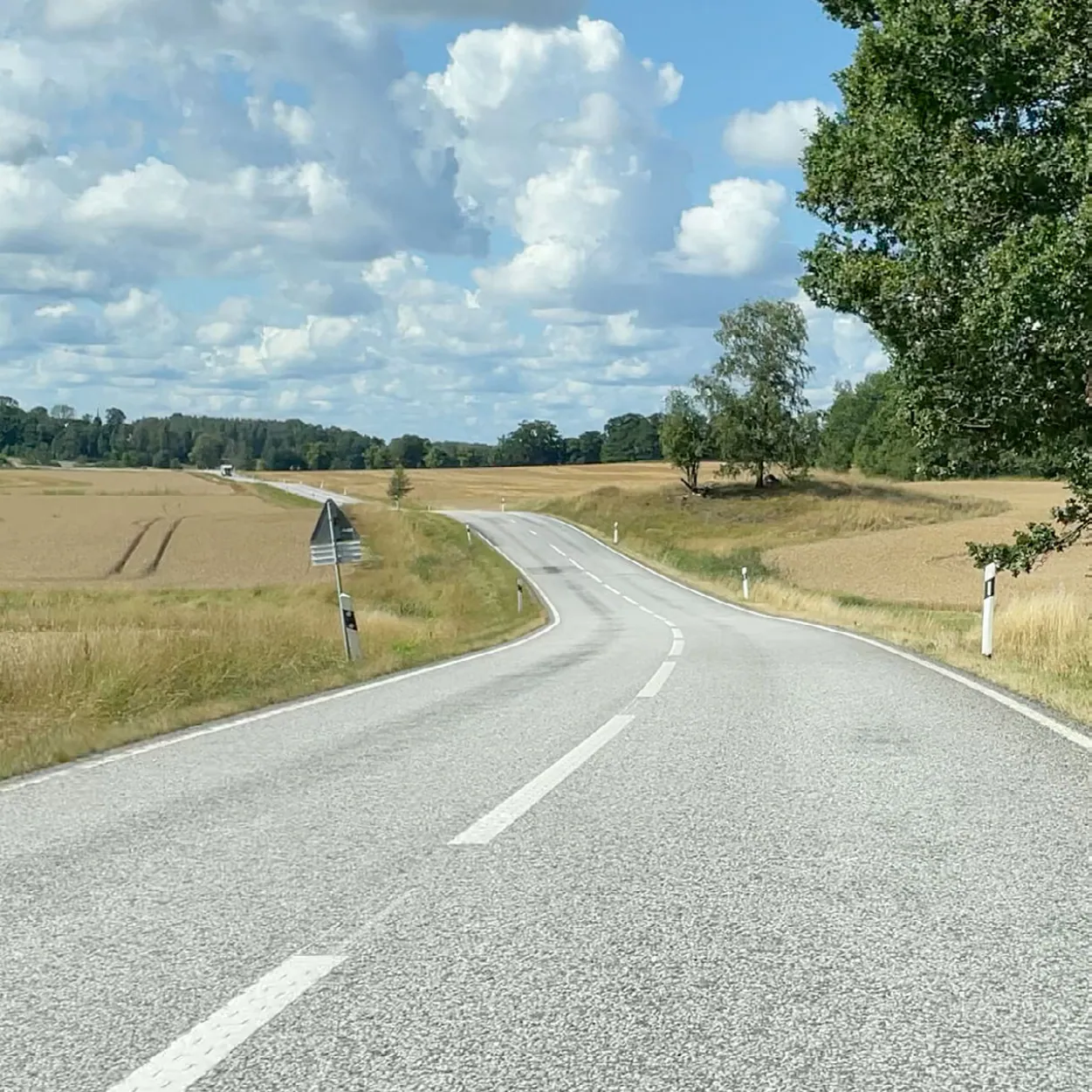
Country roads
On country roads, the speed limit is higher than in built-up areas. For this reason, it is important to have good safety margins and to pay attention to what is going on further down the road.
Turning on a country road
Right turns
Indicate in good time and slow down gradually. If visibility is good, you may drive on the hard shoulder just before the turn, as this makes it easier for the vehicles behind you to pass.
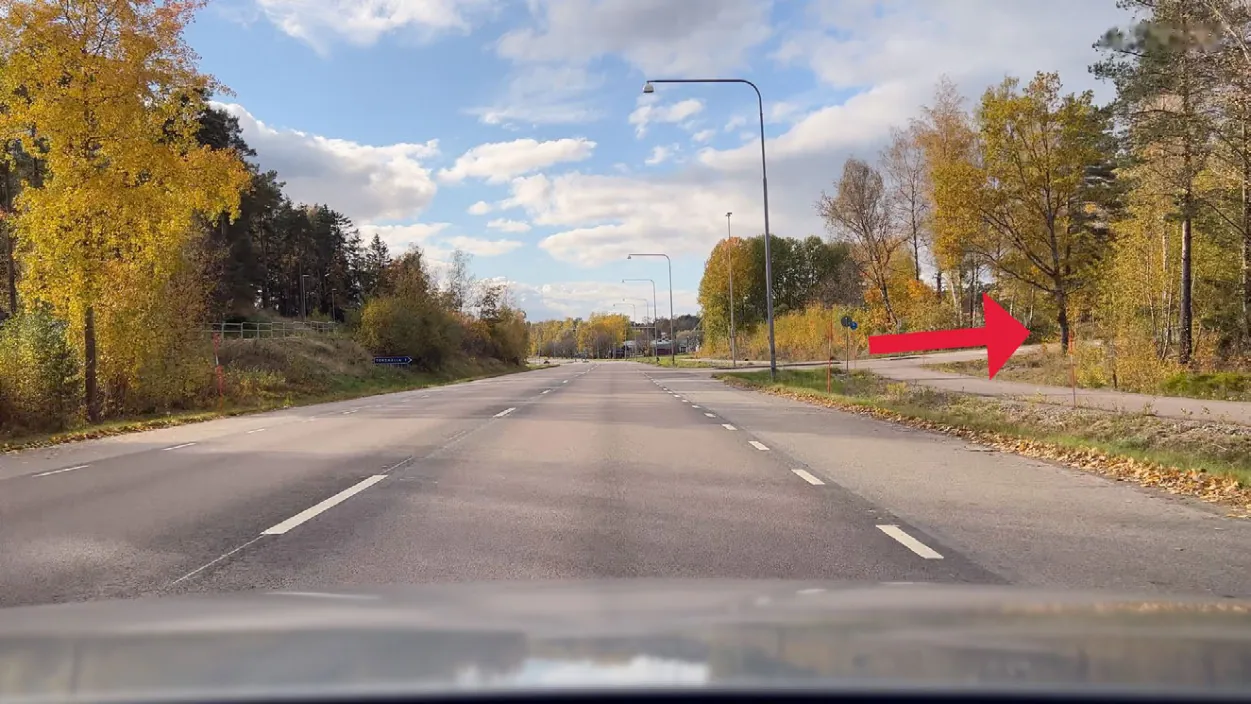
Left turns
Turning left on a country road is the most dangerous type of turn you can make. The reason for this is that you are driving at high speeds. A rear-end collision can be very serious. How to make a left turn, and possible ways to reduce the risks:
- Check the traffic flow In rush hour traffic, it can be difficult to find a gap to use for your turn. In that case, it is safer not to make the turn, but instead drive straight ahead, turn at a suitable location, and then come back and make a right turn. If there is less traffic, continue to the next step.
- Indicating and positioning Indicate in good time, and position your car as close to the centre line as possible. This makes it easier for other traffic users to see that you are turning. If you position your car in the middle of the lane, it is possible that the cars behind you will not notice you slowing down, which can result in a rear-end collision, or a side collision if the car behind you starts overtaking at the same time as you make the turn.
- Avoid stopping Adapt your deceleration before the turn so that you do not have to stop and wait for the oncoming lane to be free of traffic. If you have to stop, be sure to not turn the wheels to the left, as a collision from the rear would push your car forwards into the lane of oncoming traffic.
- Focus on making the turn Once you are ready to turn, it is important to focus on the distance to the oncoming traffic. Also remember to put the car in the right gear and accelerate fairly quickly until you are safely on the new road. Stalling in the middle of the oncoming lane is dangerous.
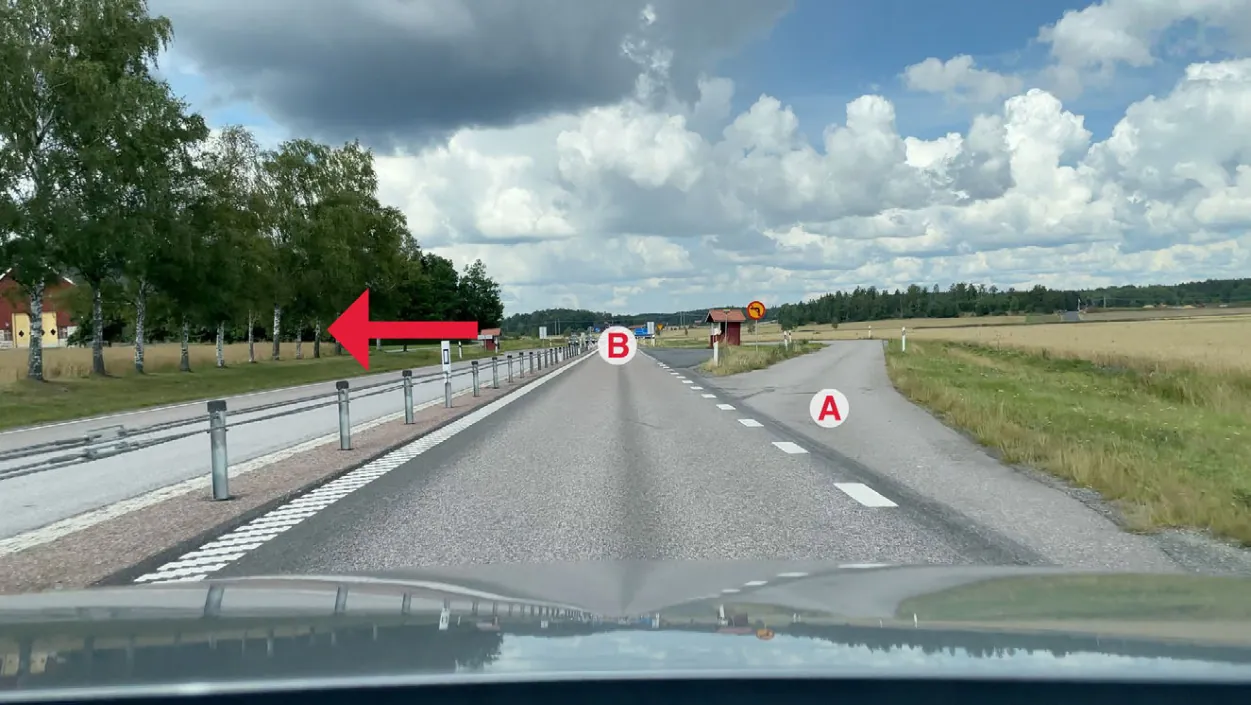
In order to reduce the number of left turns, the road is sometimes redesigned as a jughandle turn (sometimes known as a Spanish turn). This means that you turn off onto a small exit road on the right, and then cross the road.
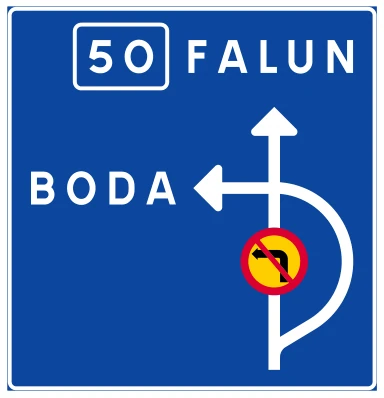
Direction sign when junction turn is prohibited (“jughandle turn”) (F2)
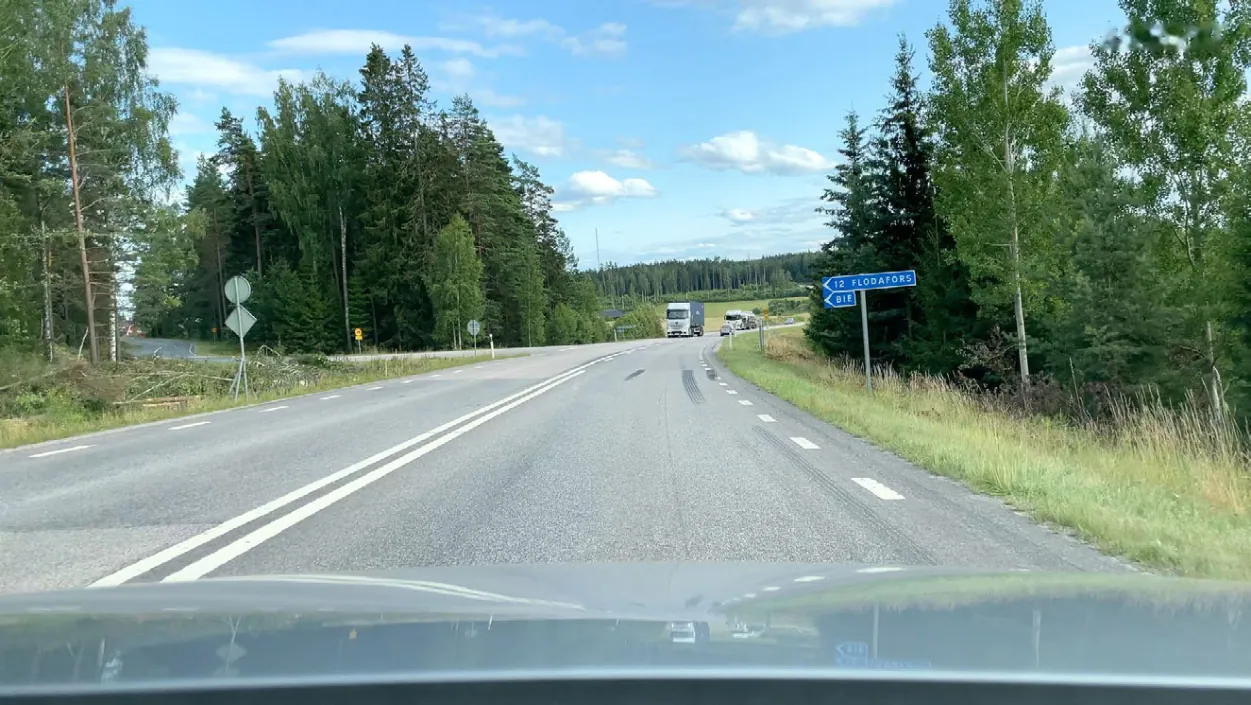
Maintain the appropriate distance
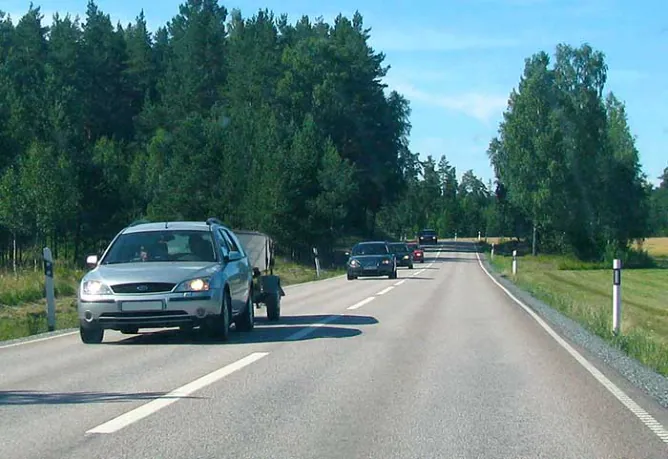
It is very common to see drivers not maintaining a sufficient distance on country roads. There are a few rules of thumb below that you can use to ensure you are keeping an appropriate distance.
- The three-second rule
Start counting when the car in front of you is at a fixed point (such as a road sign) and stop counting when you reach that point yourself. If it took less than 3 seconds, the distance between you is too short. - Verge posts
The distance between two white verge posts is 50 metres. A good distance to maintain from the car in front of you on a country road is 100 metres, which corresponds to the distance between 3 verge posts. - Km/h to metres
Change your speed in km/h to metres to give the distance that is appropriate to maintain from the car in front – e.g. a distance of 90 metres when travelling at 90 km/h.
If the car behind you is too close
Cars that drive too close to you are both annoying and dangerous. You can reduce the risks by maintaining a large distance from the car in front of you, which means that you would not have to brake as hard if the car in front of you were to slow down. This reduces the risk of you being hit from the rear.
Another option is to pull over into an appropriate lay-by or parking space, and allow the stressed driver behind you to pass.
Meeting oncoming traffic on a narrow road
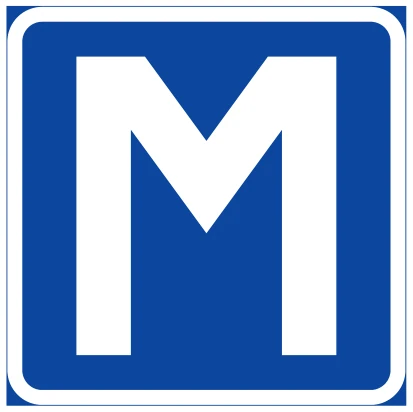
- The basic rule is that you should keep to the right in order to have as great a safety margin as possible.
- The first car to arrive at the passing place shall stop, irrespective of which side the passing place is on.
- If there is an obstacle on the road, the car whose side the obstacle is on shall stop and allow oncoming traffic to pass.
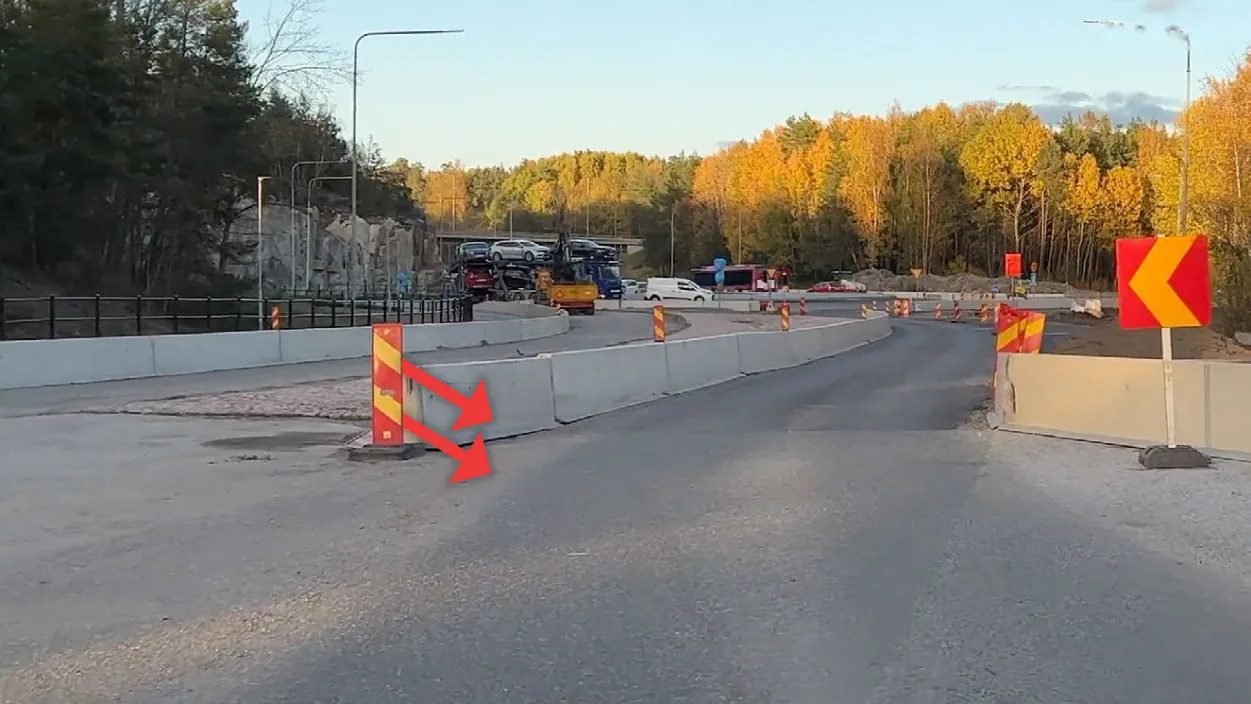
Roadworks
- Drive slowly. The road workers must do their jobs while also keeping an eye on traffic.
- Temporary orange road signs and yellow road markings take priority over the regular signs.
Horses
Horses in traffic require special consideration:
- Lower your speed.
- Ensure you leave more space to the side of the car than normal.
- Do not sound your horn or dazzle with your headlights.
- Accelerate calmly (the sound of the engine may frighten the horse).
Also remember that riders may often be young, with little experience of traffic. It is very helpful to make eye contact with the rider.
Private roads
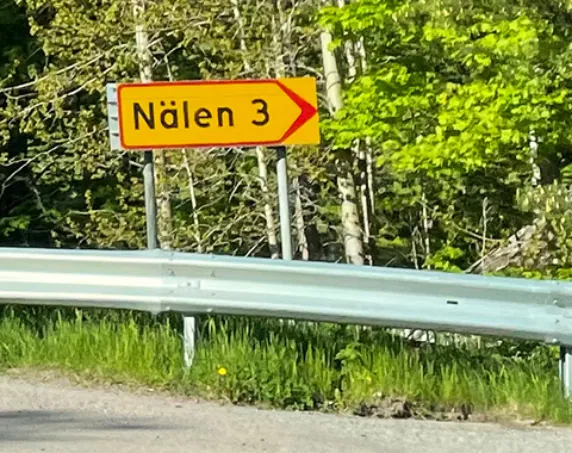
If you encounter a sign indicating a private road, you should be prepared for the following:
- Poor road standard.
- Lack of road signs.
- Narrow roads with sharp turns.
Think also about your speed. Just because the speed limit is often 70 km/h, it is not always appropriate to drive at 70 km/h. If you were to crash on a bend on a narrow road with obscured visibility, this could be classed as reckless driving if you were driving at 70 km/h.
Clarification on private roads
Does the priority-to-the-right rule apply at junctions between a private road and a regular public road?
– Yes. There are no special rules for giving way at junctions between a private and a public road. If there are no road signs denoting priority road/obligation to give way, it is the priority-to-the-right rule that applies, as long as the private road is not classed as an exit. Read more about the exit rule in the section on Priority rules.
Road numbers
Regular road number | Dashed border |
|---|---|
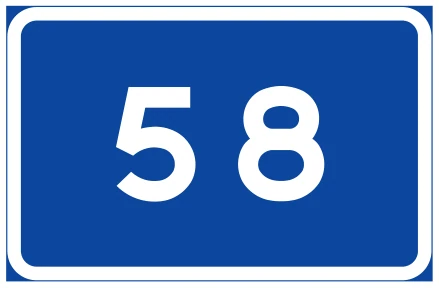 You are on road 58. | 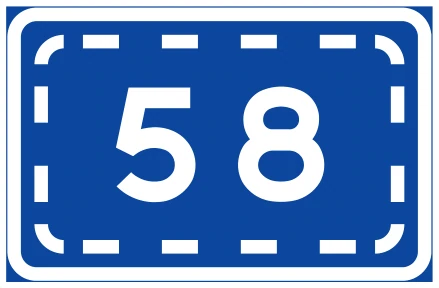 The road you are on is leading to road 58 further ahead. |
Verge posts
Left | Right | |
|---|---|---|
 | On country roads, there are often verge posts with reflectors that help you see how the road continues further ahead. On the left side of the road, the reflectors are round to warn of oncoming traffic. On the right side of the road, the reflectors are rectangular. On motorways, the reflectors are rectangular on both sides, as there is no oncoming traffic. The reflectors are white if the road continues without interruption. At junctions, bus stops and parking spaces, the reflectors are yellow. The distance between verge posts is normally 50 metres (100 metres on motorways, 25 metres in bends). |  |
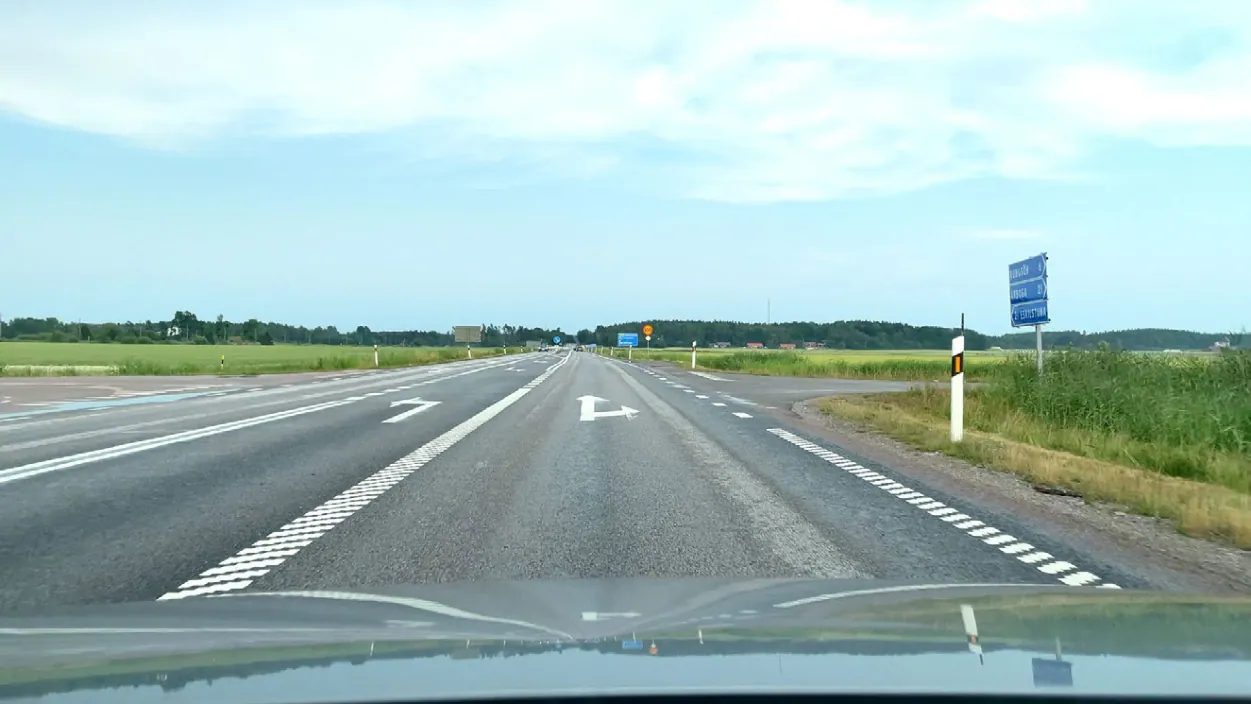
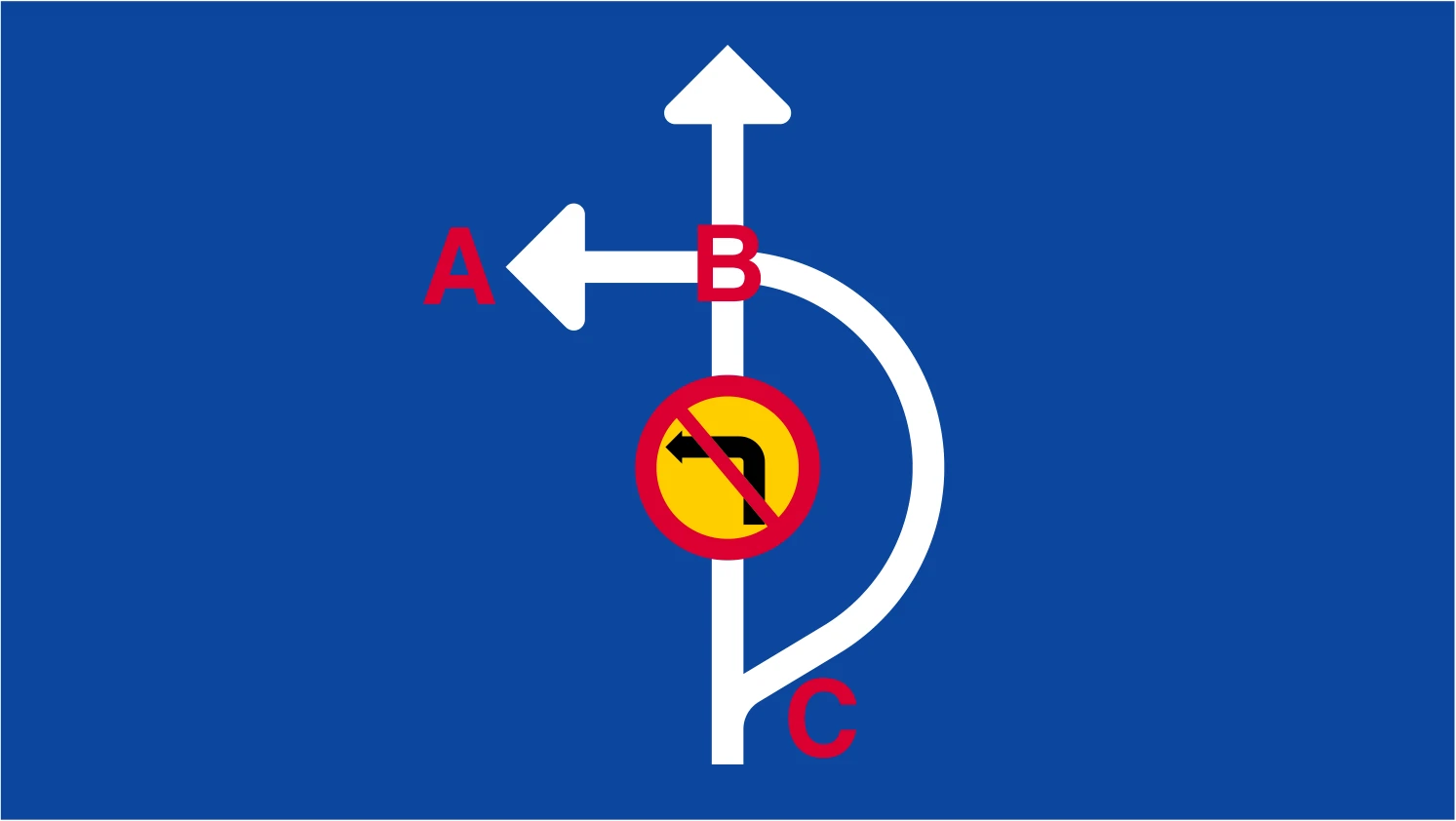
You are going to A. Which statement is true?
Correct answer: B) I am allowed to turn right at C and then cross the road.
Explanation
This is an example of a jughandle turn.
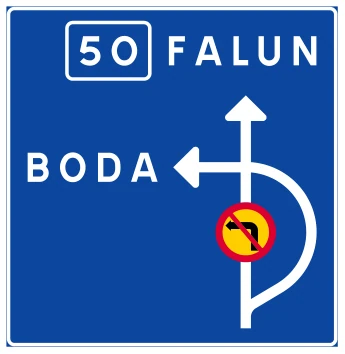
Direction sign when junction turn is prohibited (F2)
“The sign provides preparatory information indicating that it is prohibited to turn at a junction, but that another direction can be chosen.” (Road Sign Ordinance)
Motorways & clearways
Motorways
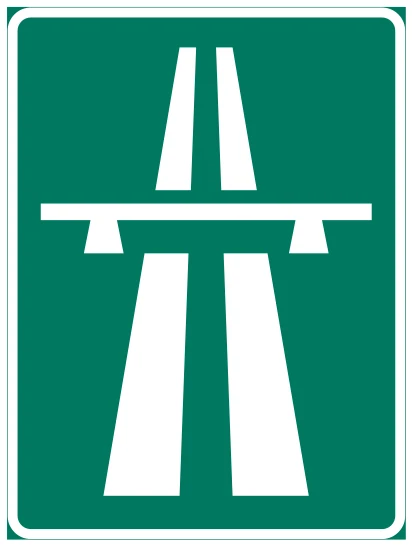
- Indicated by the Motorway sign.
- Traffic travelling in different directions is always separated. In other words, there are no oncoming cars.
- No intersecting traffic on the same level.
- Both exit and entry slip roads are part of the motorway, which means that the same rules apply to them.
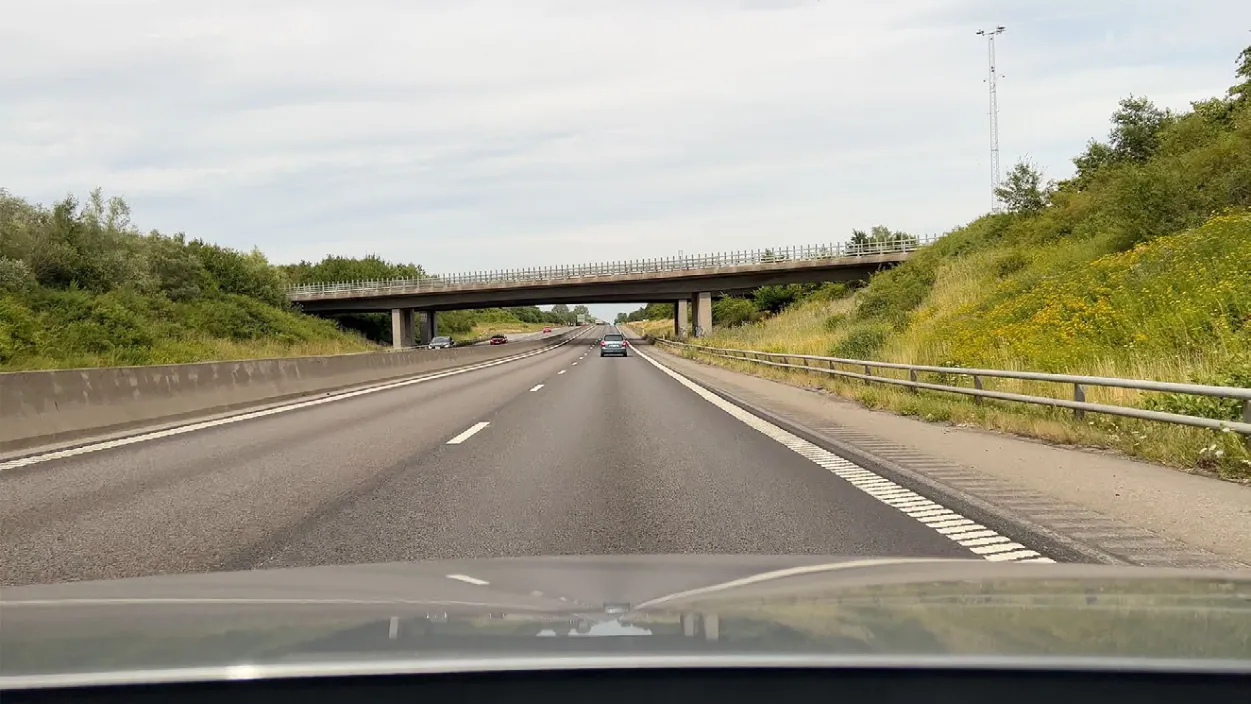
Motorway entry slip roads
- If there is an acceleration lane, neither those in the acceleration lane nor those already on the motorway have priority. Mutual consideration and adaptation apply.
- If there is no acceleration lane, those entering have an obligation to give way to traffic already on the motorway.
- Leave the entry slip road as soon as you can. Remember to check your blind spot.
On a motorway, it is forbidden to
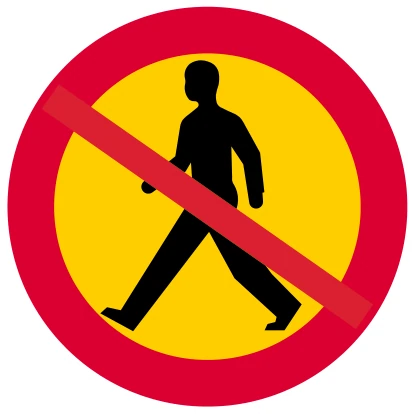
- Stop or park.
- Turn around (central barrier openings are only intended for rescue vehicles and road workers).
- Reverse.
- Walk, cycle or drive a moped.
- Tow.
- Drive a vehicle that is not designed to travel at least 40 km/h.
- Exception: Class I mopeds (45 km/h) are forbidden.
- Drive a tractor.
Risks associated with motorways
Motorways are generally safe to drive on. However, there are a few risks that you should pay particular attention to:
- Distorted perception of speed after exit (speed blindness).
- Multiple-vehicle collisions due to insufficient distance between vehicles.
- Monotonous driving can lead to single-vehicle accidents.
- In wet conditions, the risk of aquaplaning increases with speed.
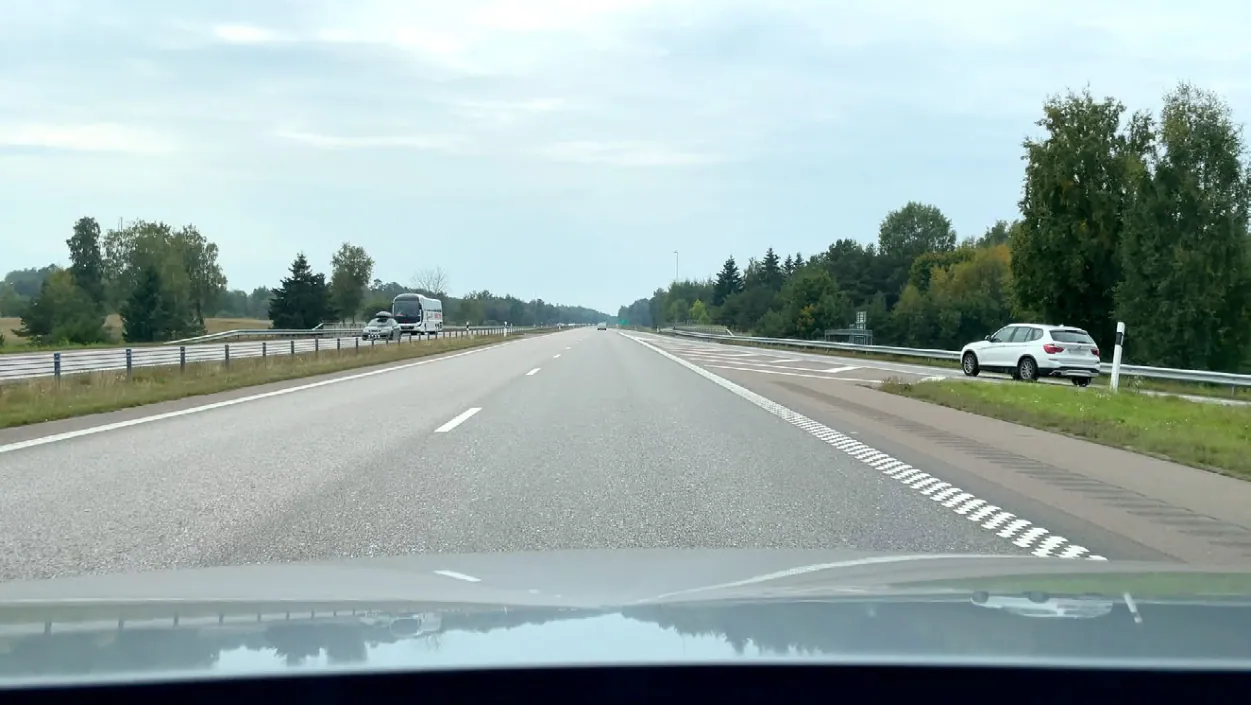
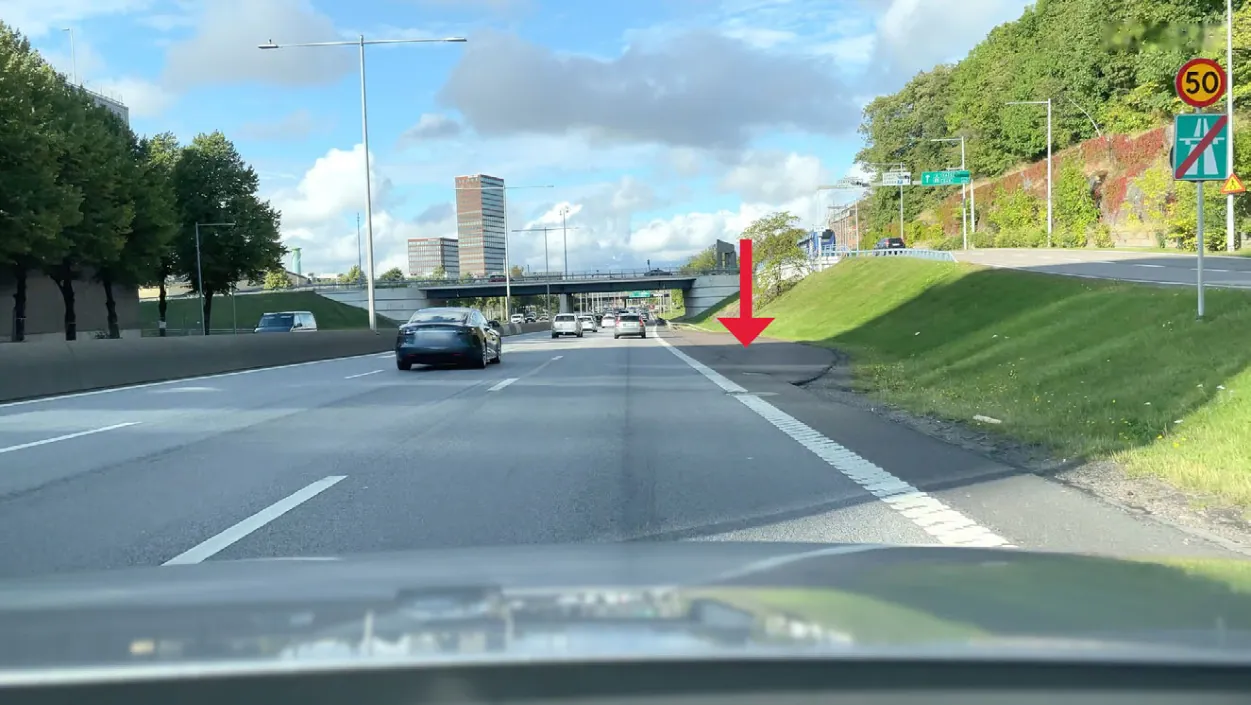
Clearways
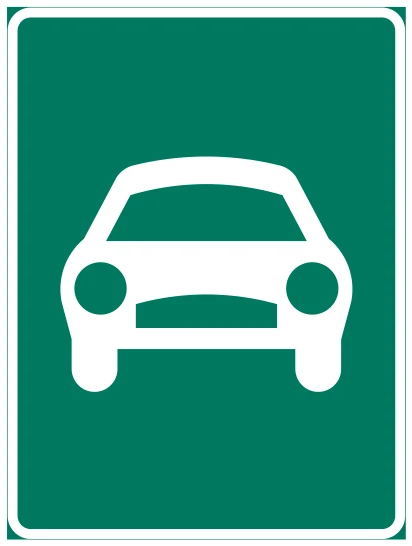
A clearway is a mix of motorway and country road. Things to keep in mind:
- No intersecting traffic, but oncoming traffic may occur (rare, cable barriers are often used).
- The same rules and prohibitions as on motorways apply.
- Accidents occur more frequently than on motorways (shorter entry slip roads, less space to the sides).
Clearways are always indicated by the Clearway sign. There are also country roads with cable barriers that are not clearways. On such roads, intersecting traffic may occur.
Speed blindness
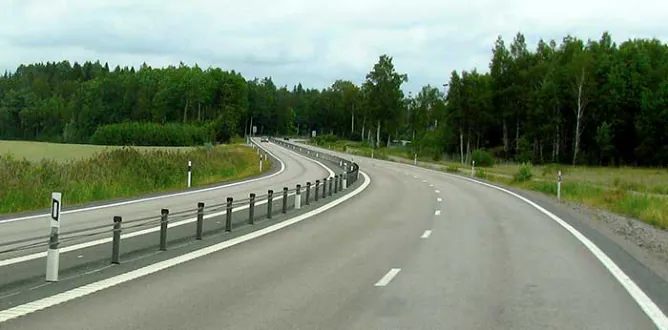
When you slow down after a prolonged period of driving at high speeds, it often feels that the speed you are driving at is lower than it actually is. This phenomenon is known as speed blindness, and can result in you misjudging distances. The risk of speed blindness increases with:
- Wide roads without any distractions.
- Quiet and comfortable cars.
- Driving at high speeds for a prolonged period.
Heavy lorries
Heavy lorries may drive at a maximum 90 km/h on motorways and clearways. On other types of road, their maximum speed is 80 km/h.
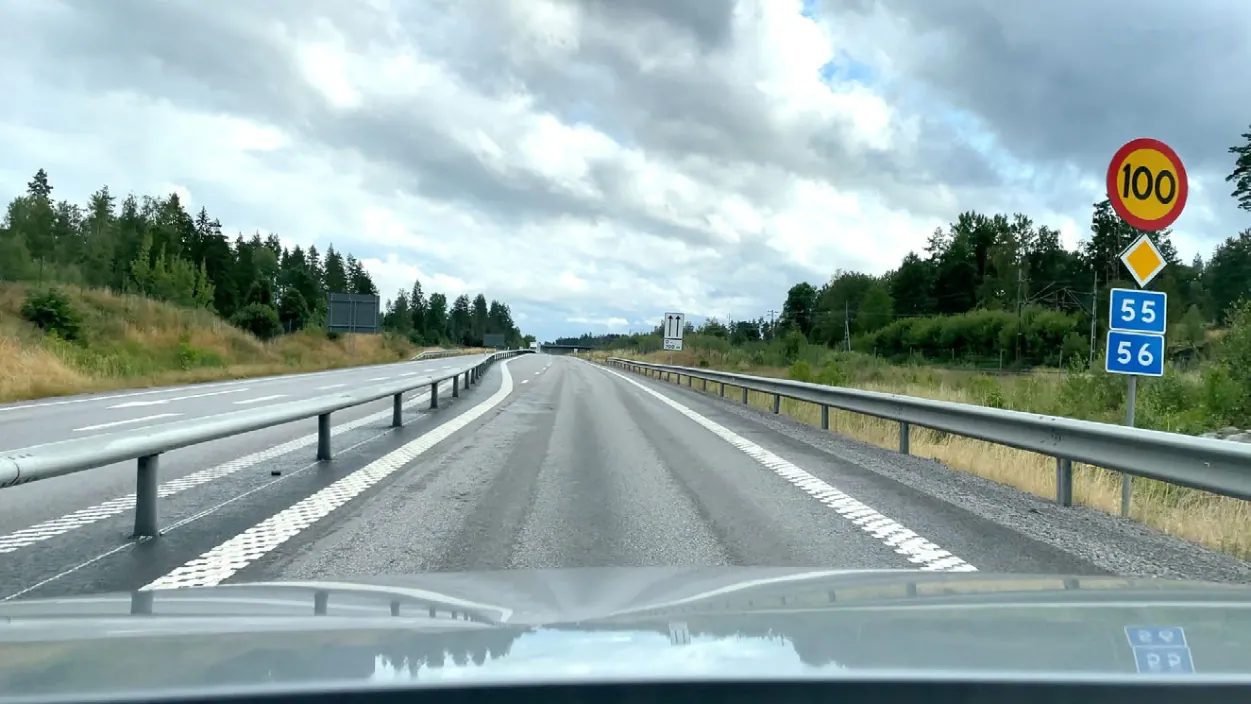
Could there be intersecting traffic on the same level further ahead on this road?
Correct answer: A) Yes, because the road is not a motorway or a clearway.
Explanation
Only motorways and clearways are guaranteed to be free from intersecting traffic on the same level. (Clearways may have oncoming traffic, but not intersecting traffic.)
‘On the same level’ here refers to a regular junction where there is a risk of colliding with intersecting traffic. Traffic that crosses the road via a bridge is not on the same level.
Neither of these signs are shown:
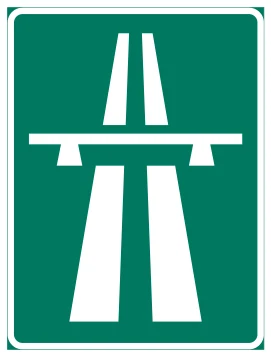
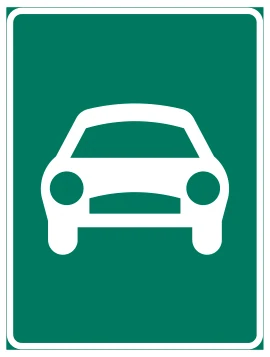
The road you are on is a priority road, and just here there is a central barrier. There may however be junctions on the same level further ahead.
Overtaking
Fundamental rules for overtaking
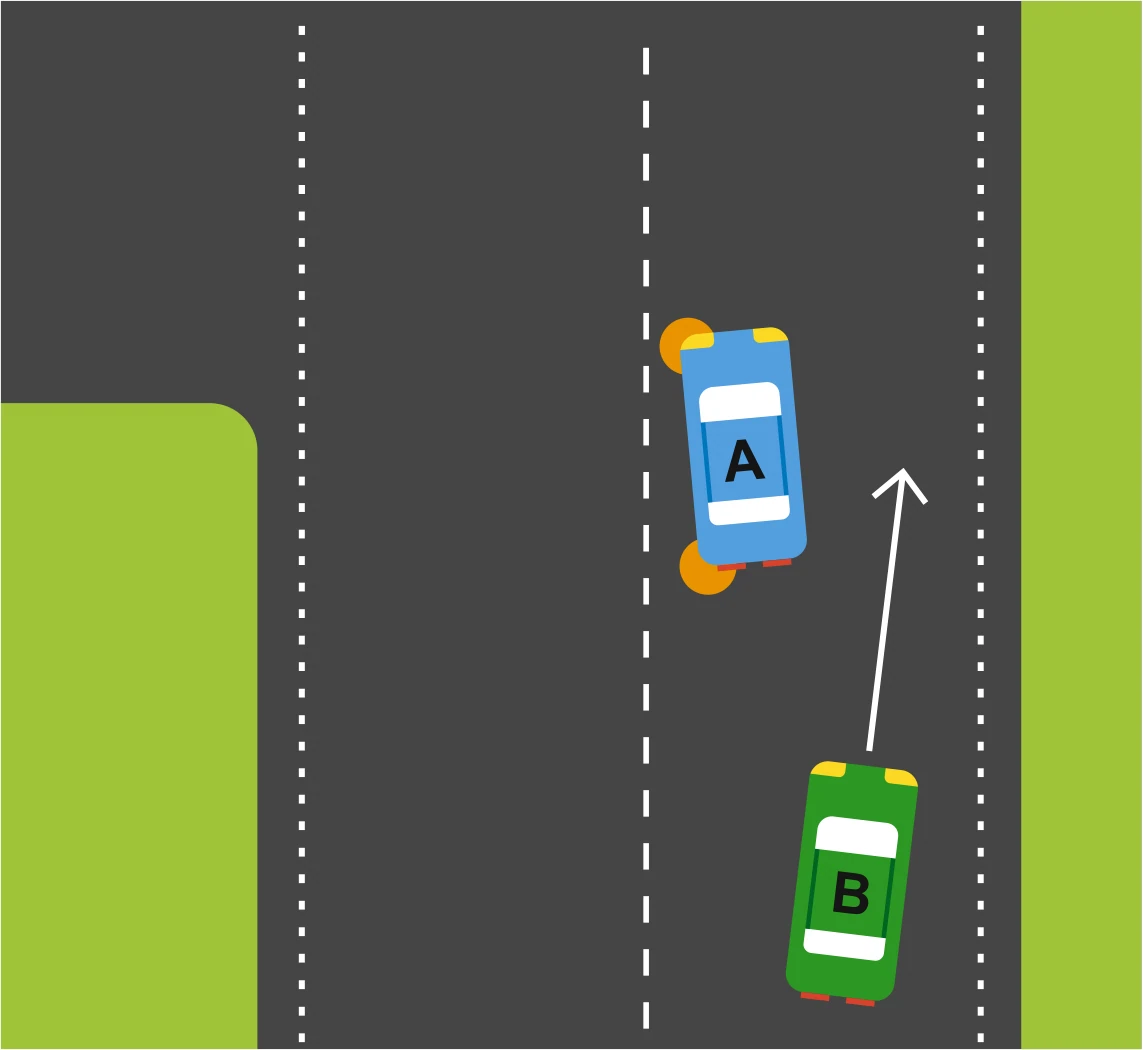
- Overtake on the left (with some exceptions).
- Make sure there is plenty of space between you and the vehicle you are passing.
- You must be able to see the entire overtaking distance, and it must be free of obstructions and oncoming traffic.
Overtaking
- Move out slightly to the left so that you can see whether the road is free from oncoming traffic.
- Check that nobody is trying to overtake you:
- Rear-view mirror.
- Left side mirror.
- Blind spot.
- Indicate left.
- Increase your speed (within the speed limit) and steer towards the left, ensuring that you leave plenty of distance between you and the vehicle you are overtaking.
- Once you have passed the other vehicle, you must indicate right and return to your original lane as soon as possible. However, do not rejoin the lane too soon, as this could lead to a collision with the other vehicle. A good rule of thumb is to only rejoin the lane once you can see the car you have overtaken in the right side mirror.
No overtaking
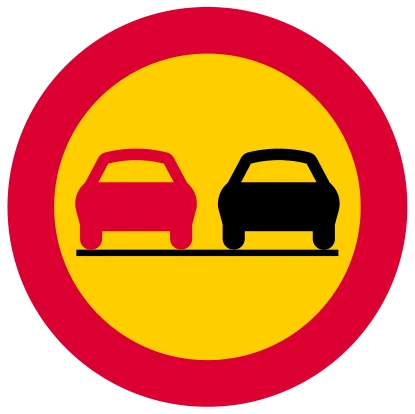
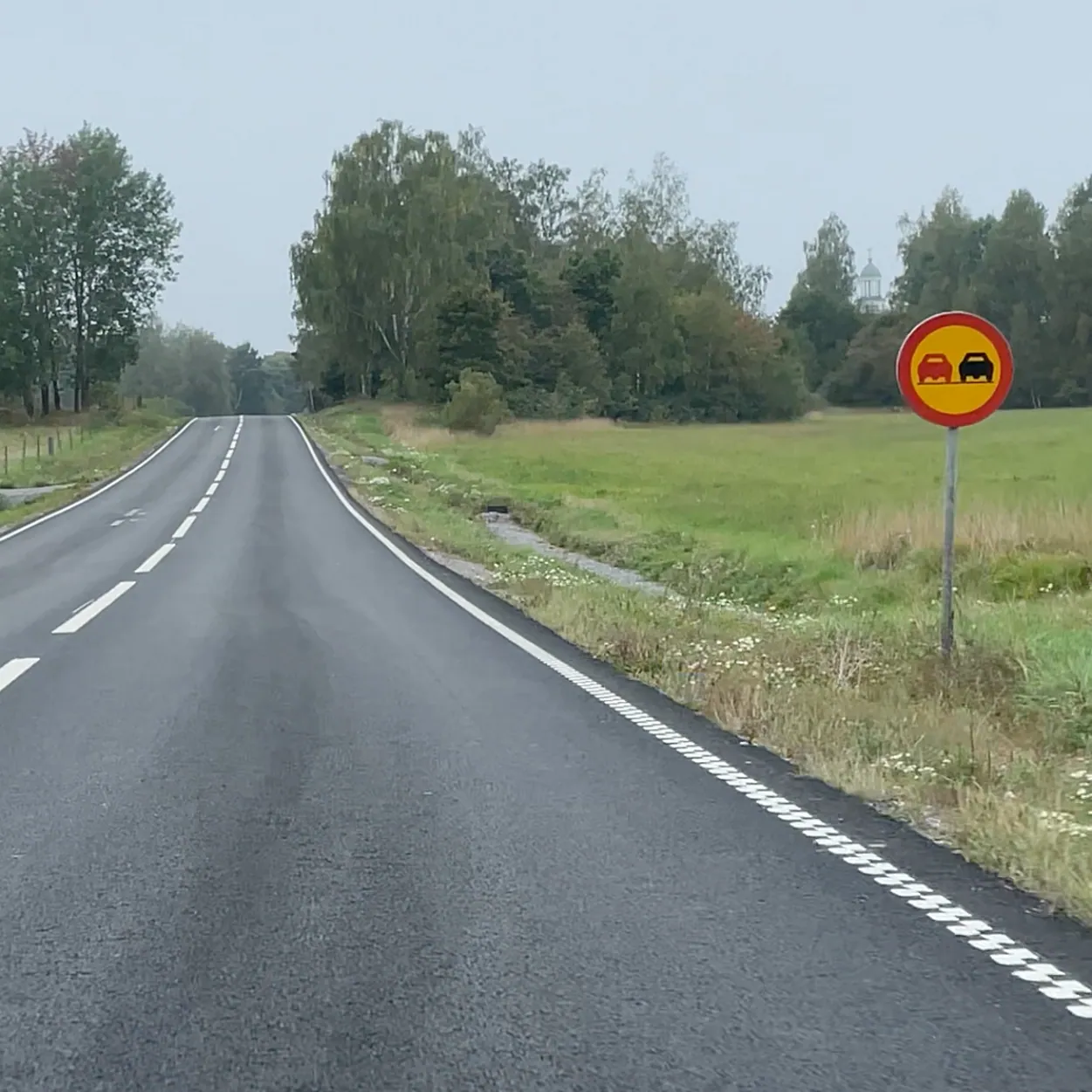
- Where the No overtaking sign is displayed.
- Where there is a risk of endangerment.
- If someone behind you is overtaking you or is about to do so.
- If you risk getting stuck in the opposite lane (e.g. because of a long que in your lane).
- If the car you intend to overtake is indicating left.
- Exception: Permitted to pass on the right.
- If you would need to cross the centre line and there is oncoming traffic.
- If you would need to cross the centre line and there is limited visibility.
- In conjunction with uncontrolled pedestrian crossings, bicycle passages and bicycle crossings.
- Exception: Passing at low speed (so that you are able to stop) is permitted if there is more than one lane in your direction and one of the following conditions is met:
- The lanes have different destinations.
- There is heavy queuing in all lanes.
- It takes place at a junction.
- Exception: Passing at low speed (so that you are able to stop) is permitted if there is more than one lane in your direction and one of the following conditions is met:
- On the right-hand side.
- Exception 1: Permitted if the lanes have different destinations.
- Exception 2: Permitted if there is heavy queuing in all lanes.
- Exception 3: Permitted if the vehicles are in separate lanes at a junction.
- Exception 4: Permitted if the speed limit is no higher than 70 km/h and there are at least two marked lanes going in the same direction.
- Exception 5: Permitted if the other vehicle is turning left.
- In conjunction with a junction where the priority-to-the-right rule applies, or other junctions where you have an obligation to give way.
- Exception 1: Permitted to overtake two-wheeled vehicles.
- Exception 2: Permitted to pass on the right if the other vehicle is turning left.
- In conjunction with railway crossings with no barriers or traffic signals (red, amber, green).
- Exception: Permitted to overtake two-wheeled vehicles.
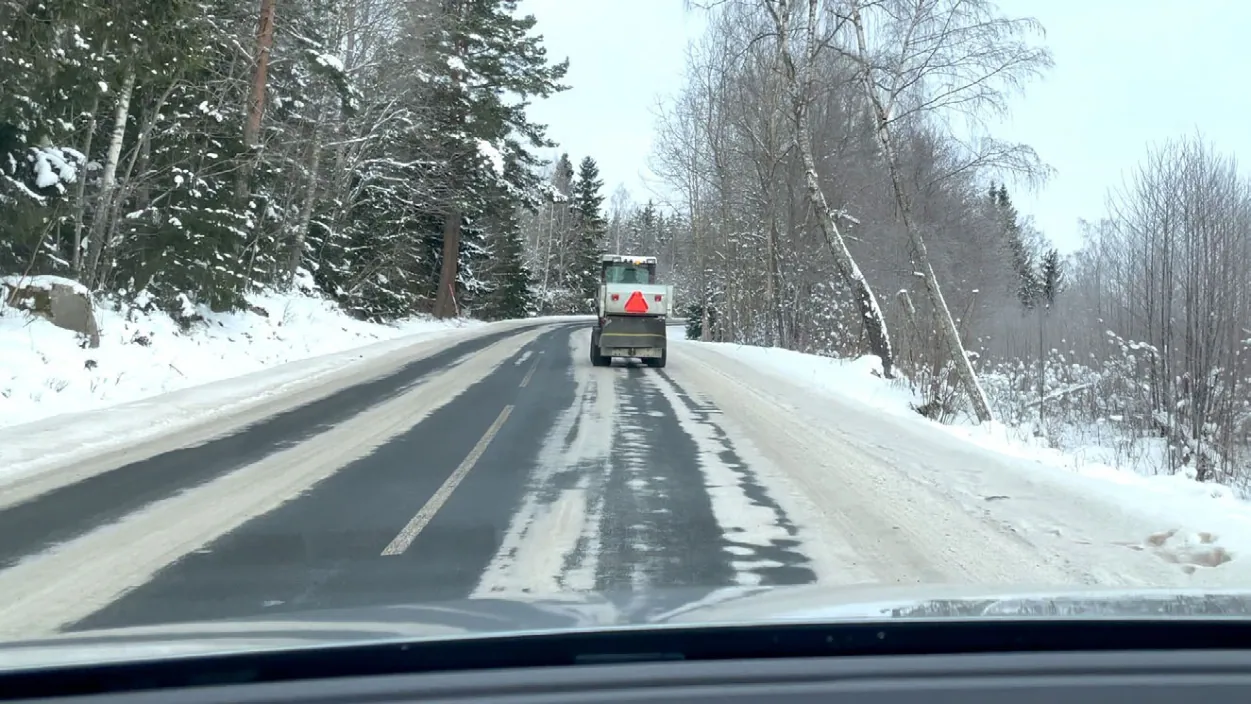
When being overtaken
- Look to the right (if the hard shoulder is empty, you can drive on it to make things easier).
- Do not accelerate (slow down if needed).
- You are obliged to assist the car overtaking you, even if the overtaking manoeuvre is prohibited or dangerous.
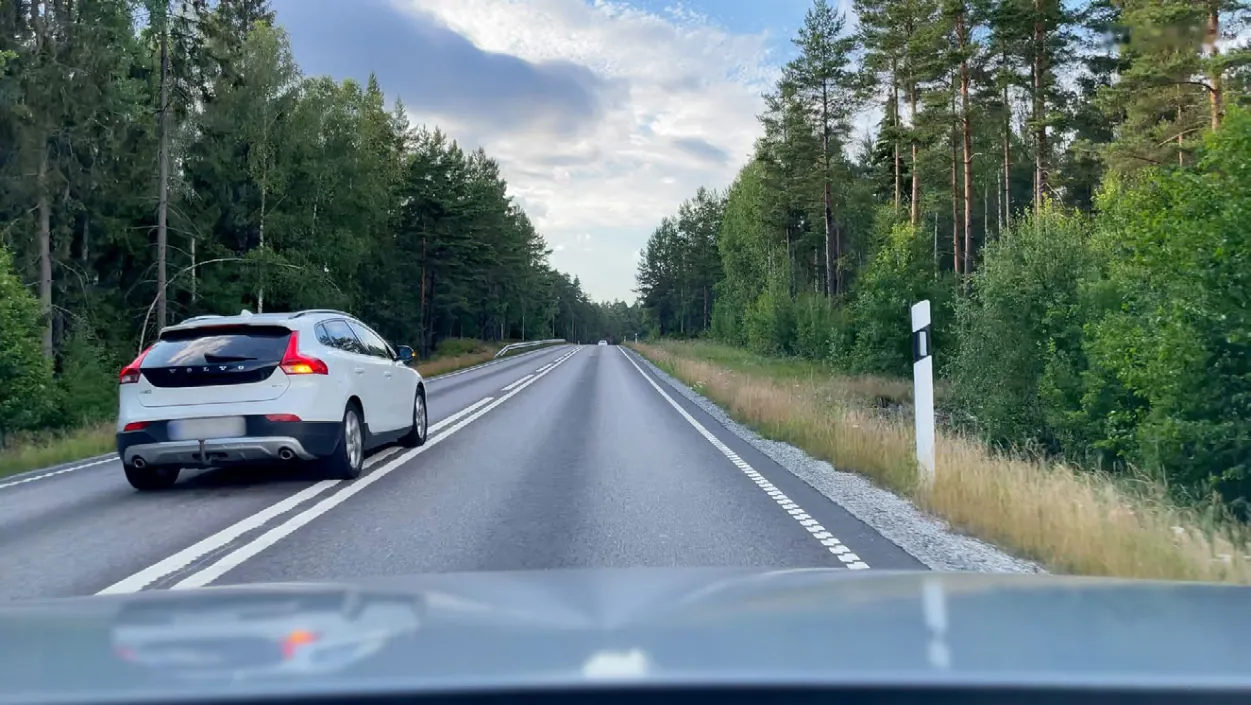
Other issues
- It is difficult to judge the distance to oncoming cars and their speed, especially on a straight road. Winding roads make it easier, as you see the cars from the side.
- Trams are normally overtaken on the right.
- Roadwork vehicles may be overtaken on the most suitable side.
- You are not allowed to break the speed limit when overtaking.
Calculate your overtaking
The time gained from overtaking is often minimal. This means that many overtaking manoeuvres are unnecessary, in relation to the risks involved. The time gained per 10 km can generally be said to be:
- Over 90 km/h: If you increase your speed by 10 km/h, you will gain 30 seconds every 10 km.
- Below 90 km/h: If you increase your speed by 10 km/h, you will gain 1 minute every 10 km.
Calculation examples for time gained
If you are driving at 100 km/h and increase your speed to 110 km/h, how much time will you gain per 10 km travelled?
Method 1
Original speed | 100 km/h |
New speed | 110 km/h |
Minutes per hour (as the speed is measured in km/h – kilometres per hour) | 60 min |
Number of kilometres | 10 km |
First calculate how many minutes it takes to travel 1 km at both speeds:
- 60 / 100 = 0.60 minutes to travel 1 km
- 60 / 110 = 0.55 minutes to travel 1 km
It therefore takes slightly less time at the higher speed. The difference is:
- 0.60 - 0.55 = 0.05 minutes faster per km when travelling at 110 km/h compared with 100 km/h.
However, the question is how much time you will gain per 10 km, not per km. Therefore, recalculate the time gained per 10 km:
- 0.05 * 10 = 0.5 minutes gained per 10 km
It is easier to understand if the answer is recalculated to seconds:
- 0.5 * 60 = 30 seconds (32.73 unless it is rounded off)
Method 2
Original speed | 100 km/h |
New speed | 110 km/h |
Distance | 10 km = 10,000 metres |
Fixed conversion rate km/h to m/s |  |
Formula for calculation of time:
- Distance / speed = time
For the formula to work, you must use metres instead of kilometres, and metres per second (m/s) instead of kilometres per hour (km/h). The speeds are therefore recalculated to m/s:
- 100 / 3.6 = 27.78 m/s
- 110 / 3.6 = 30.56 m/s
Only now can you use the formula Distance / speed = time:
- 10,000 / 27.78 = 360 s
- 10,000 / 30.56 = 327 s
You can then work out the time difference between both speeds:
- 360 - 327 = 33 seconds (32.73 unless it is rounded off)
Overtaking glossary
- Accelerating overtaking means that you drive closely behind a car at the same speed. When you begin the overtaking manoeuvre, you pull out and increase your speed quickly (within the speed limit) to pass the car.
- Flying overtaking means that you approach the car in front at high speed and change lanes in good time before driving past. A flying overtaking manoeuvre is preferable as it requires a shorter distance (as well as using less fuel). You must keep within the speed limit.
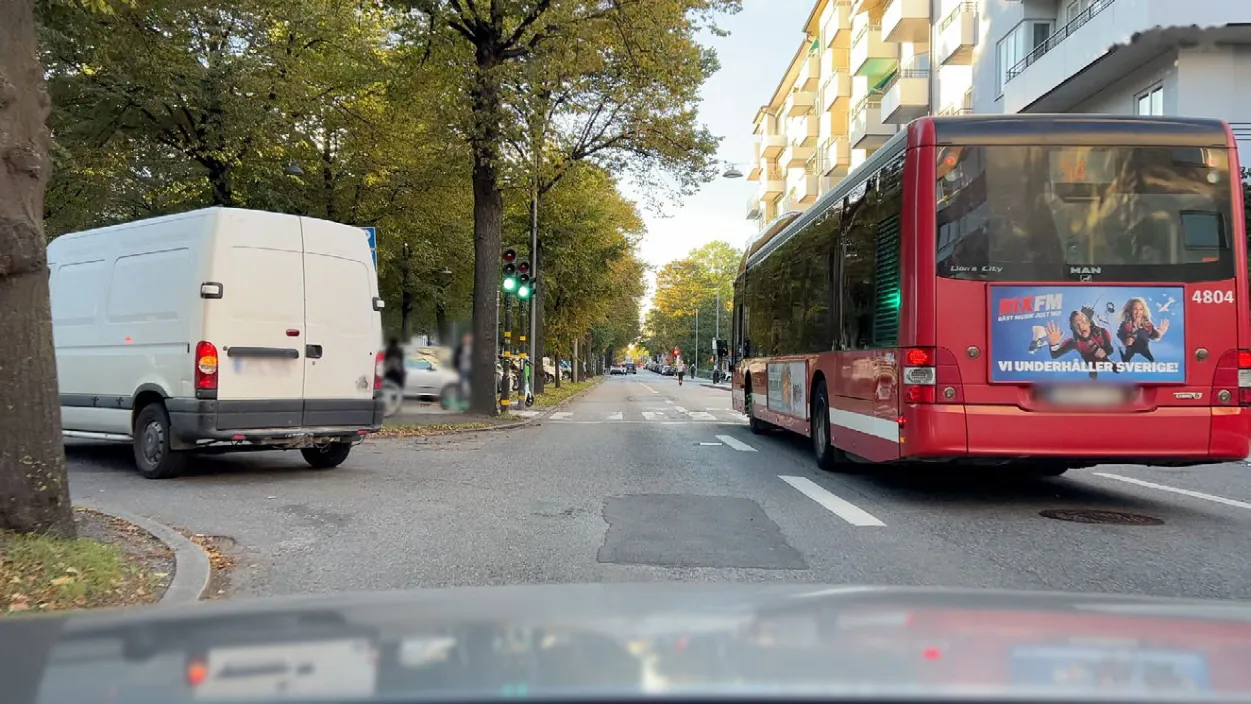
You intend to continue straight ahead. Is it prohibited to overtake the bus in conjunction with the pedestrian crossing?
Correct answer: B) No
Explanation
At an uncontrolled pedestrian crossing, you are not permitted to overtake:
“Vehicles or trams may not be overtaken immediately before or on an uncontrolled pedestrian crossing.” (Road Traffic Ordinance)
This pedestrian crossing, however, is controlled:
“A pedestrian crossing is controlled if the traffic is regulated by traffic signals.” (Ordinance on Road Traffic Definitions)
In other words, overtaking the bus here is not prohibited.
Even though an action is not prohibited, it may still be inappropriate. Pedestrians could cross against a red light, and if you deem visibility to be poor, the safest option is to wait to perform the overtaking until after the pedestrian crossing.
(In this example, however, you appear to be receiving help from the bus. When you reach the pedestrian crossing, the bus will be blocking any pedestrians from stepping onto the crossing from the right-hand side.)
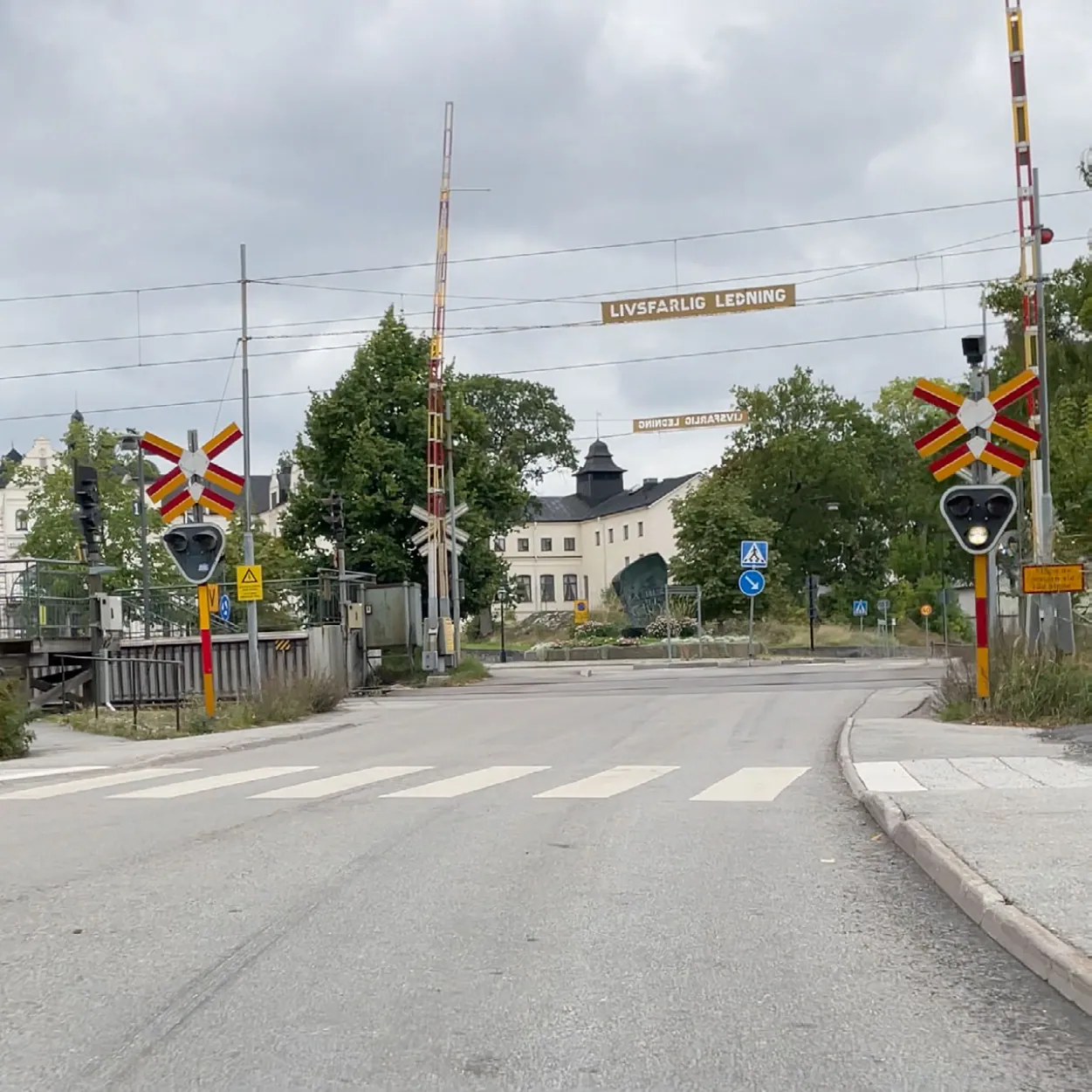
Railway crossings
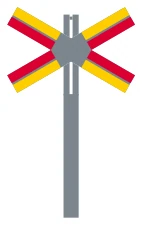
What makes a railway crossing so special is the fact that the trains are unable to swerve (they can have a braking distance of 1 km), and they are also much larger than a car and drive at a much greater speed.
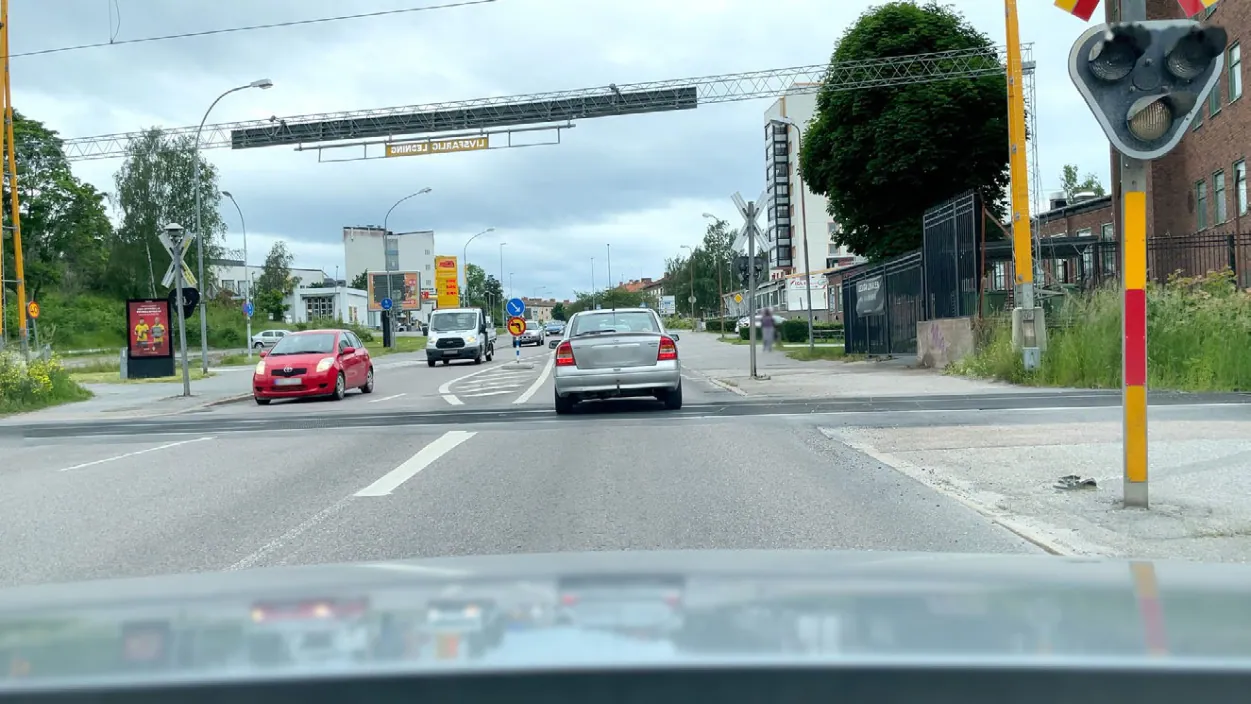
You are always obliged to give way to trains. This applies even if the lights are not flashing red.
A collision with a train is so serious that the lawmakers never want you to feel completely safe when crossing a railway. You must always be on high alert and all responsibility lies with you.
A level crossing is another word for a railway or tramway crossing.
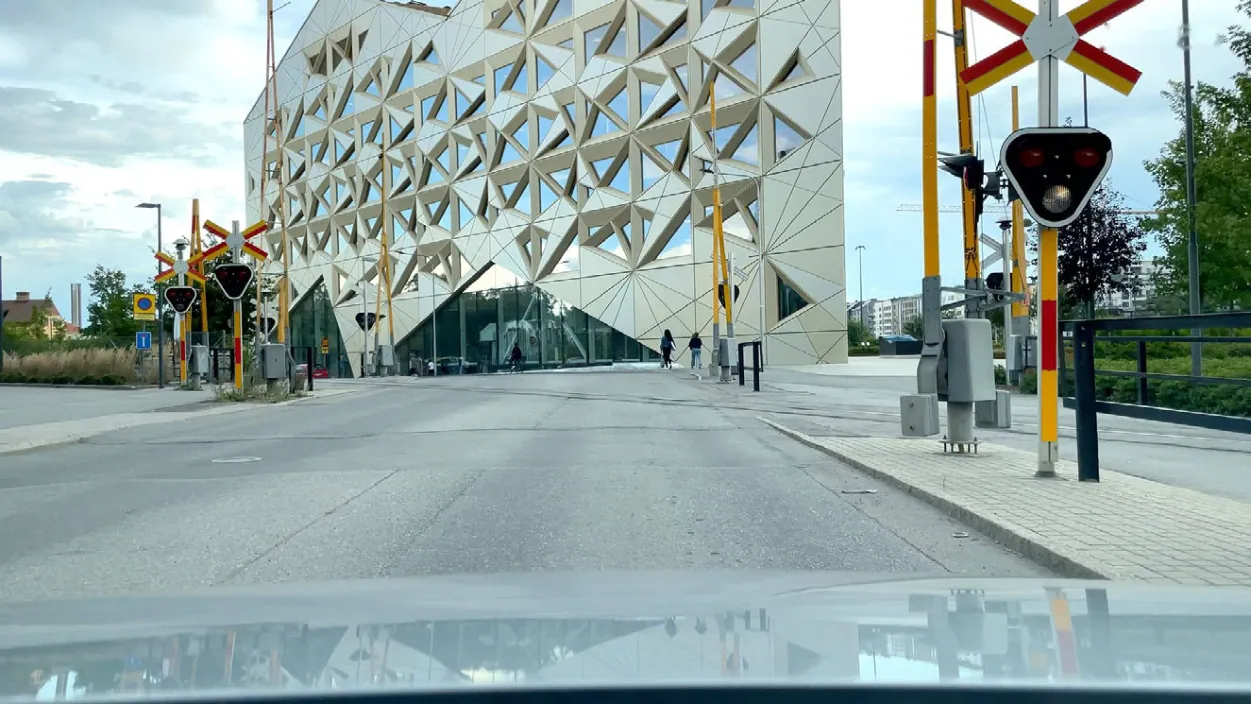
Distance to a railway crossing
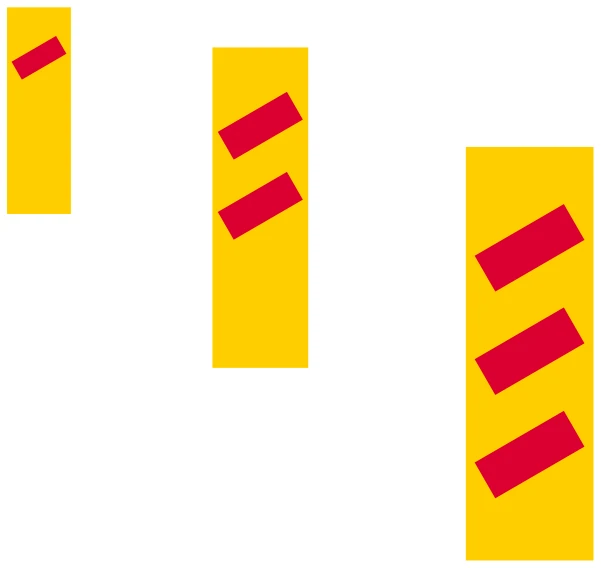
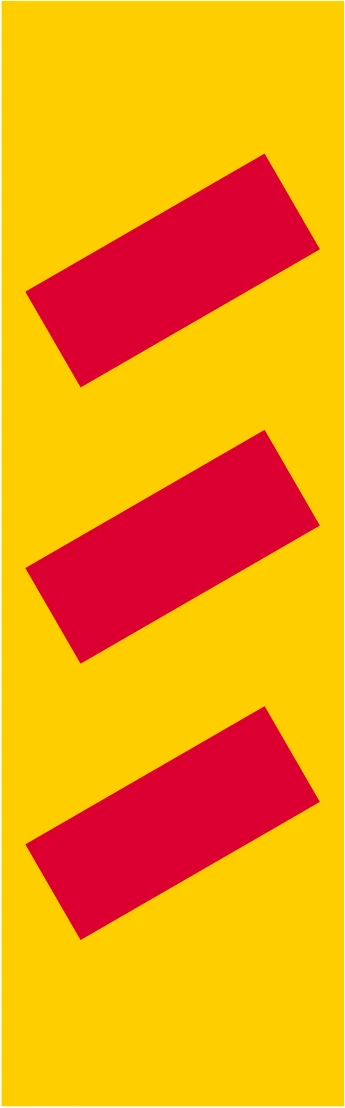
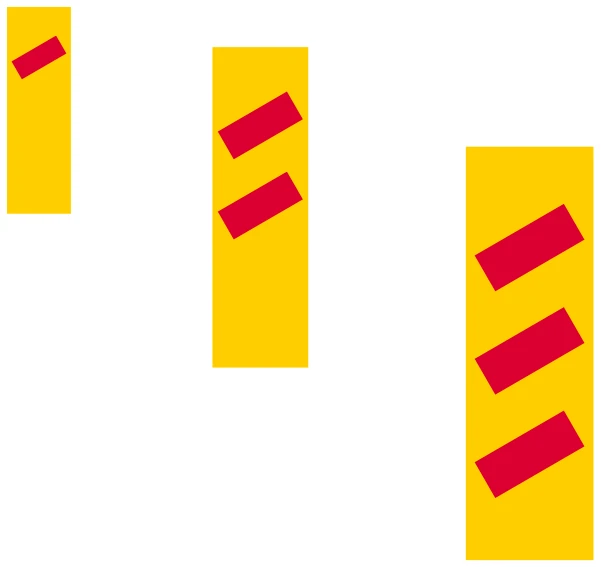
First, you will see the sign with 3 bars, then the sign with 2 bars, and finally 1 bar.
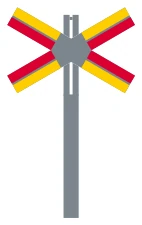
How to cross a railway safely
- Get an idea of the visibility Do you already have a free line of sight at some distance away? Or are there trees or buildings blocking your view?
- Adapt your speed to the visibility If you have good visibility, you may not need to slow down at all. If visibility is poor, you should be prepared to stop.
- Crossing
- Good visibility
Look both ways in good time before reaching the crossing and drive over at the same speed. However, remember that the tracks are uneven, so if you are driving faster than 70 km/h, you should still slow down. - Limited visibility
Slow down, shift to a lower gear (to give more power to the engine and avoid stalling), look both ways and then cross. Accelerating as you drive across is recommended. - Poor visibility
Stop before the crossing, look both ways and then drive across. Put the car in 1st gear and only change gear once the car is completely on the other side (to avoid stalling and other complications).
- Good visibility
Stalling on the track
If the engine stalls on the track, you must move the car immediately. If the engine will start, you can just keep driving. The barriers are made from a thin material that you can drive through.
If the car will not start:
- Manual transmission: Release the clutch and turn the key as far as you can in the ignition and keep it there. This will make the starter motor push the car forwards. Note that this does not work on all cars.
- Automatic transmission or unresponsive car: Get out and push the car. Remember to put the transmission in neutral.
If you are unable to move the car, call 112 to inform them of the situation.
Overtaking at a level crossing
Overtaking in conjunction with a level crossing is prohibited, except where one (or both) of the following exist:
- Barriers.
- Traffic signals (red, amber and green).
The prohibition does not apply when overtaking two-wheeled vehicles.
Overtaking table
Barriers | Signals (red, amber, green) | Allowed to overtake |
|---|---|---|
Yes | Yes | All vehicles |
Yes | No | All vehicles |
No | Yes | All vehicles |
No | No | Two-wheeled vehicles only |
Correct type of signal
Signal | Explanation |
|---|---|
 | This type of signal device is sufficient to override the overtaking prohibition, as it is a red, amber and green traffic signal. |
 | This type of signal device is not sufficient to override the overtaking prohibition. |
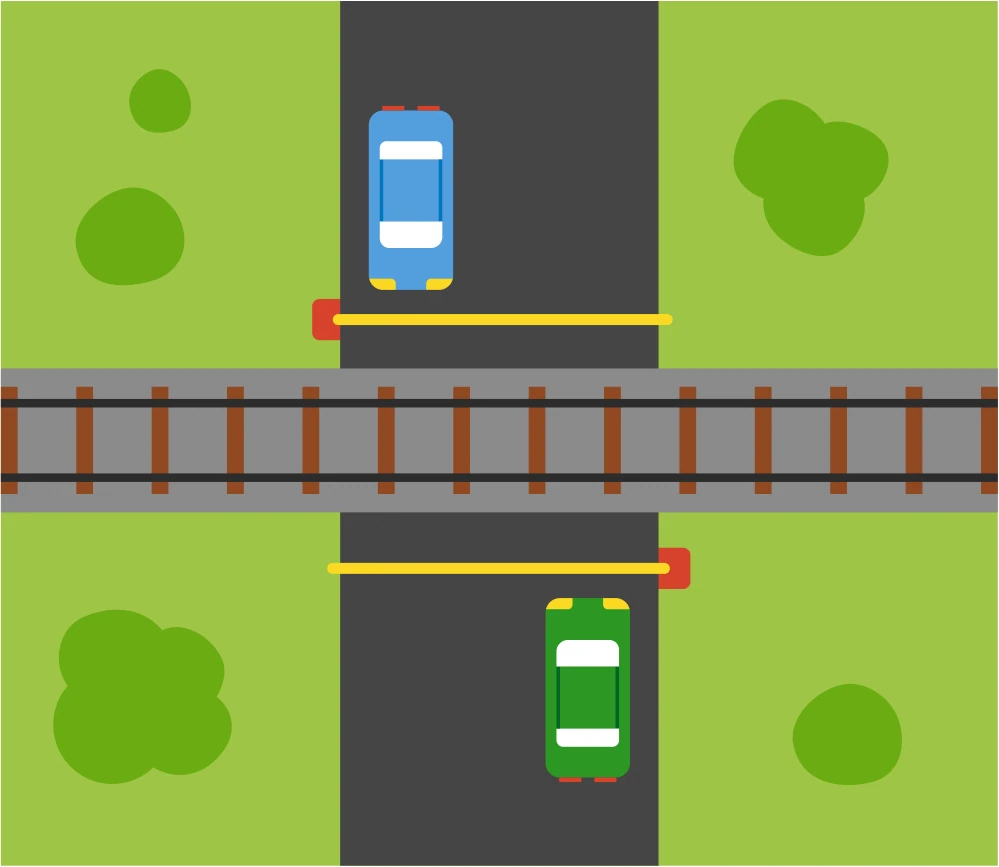
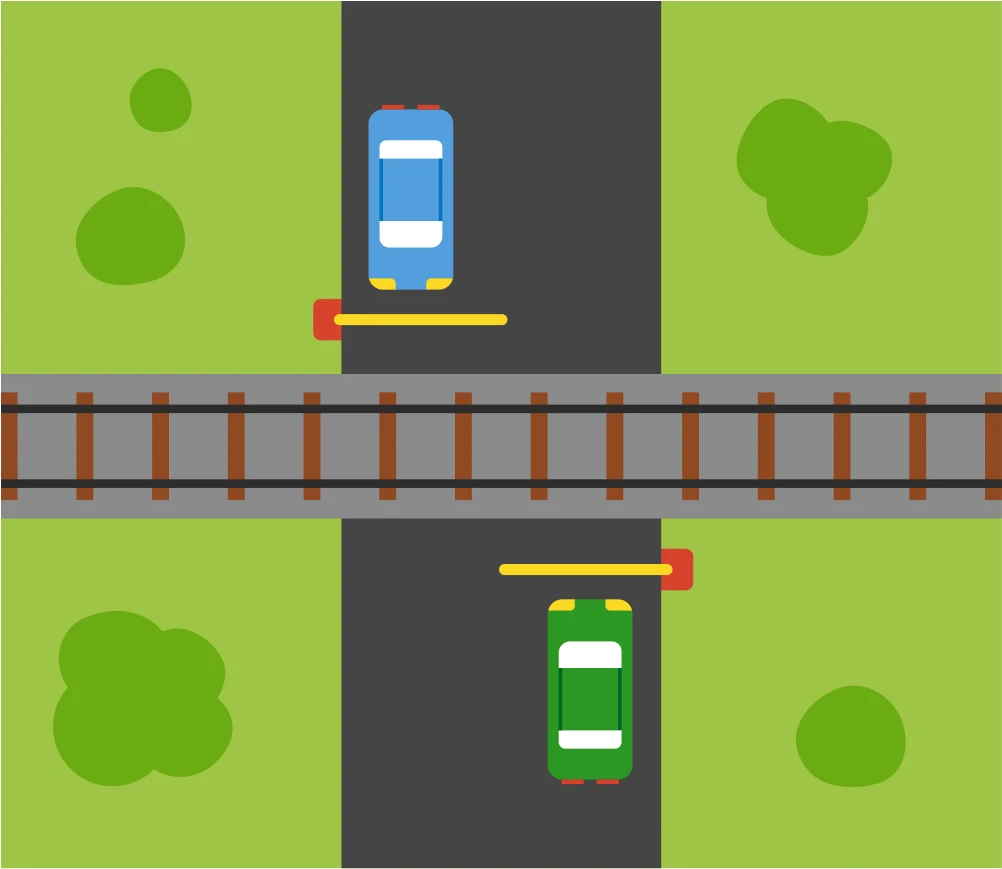
Different types of barriers
The barriers are often opened before the lights stop flashing. Note however that you may not drive on before the lights stop flashing red.
Full-length barrier | Half-length barrier |
|---|---|
 |  |
What does this road sign mean?
Correct answer: A) Furthest distance to level crossing.
Explanation
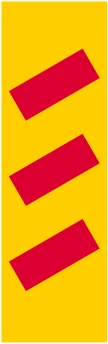
Distance to level crossing (A38)
”The signs indicate the distance to a level crossing in a three-bar system. The sign with the three bars is, except for in densely populated areas, erected under one of the following signs: A35, Level crossing with gates; A36, Level crossing without gates; or A37, Junction with tramway line. The sign with two bars indicates that it is two-thirds the distance to the level crossing and the sign with one bar indicates the last third of the distance.” (Road Sign Ordinance)
Special streets
Built-up area (E5)
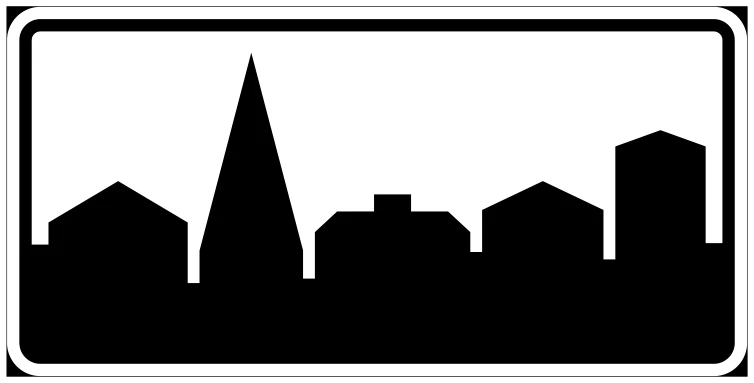
This sign should always be supplemented with a speed limit sign. If a prohibitory sign is displayed together with the sign, the prohibition will be applicable throughout the built-up area (up until the corresponding end sign, E6).
The sign is usually displayed before a town, the name of which may be incorporated into the sign.
Home zone (E9)
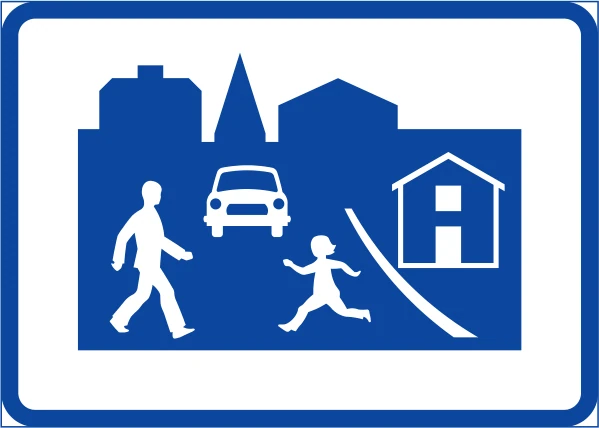
An open place, similar to a public square, with several homes and businesses in the vicinity can be made into a home zone, in which drivers must adapt to the pedestrians. The following rules apply to a home zone:
- You may drive no faster than walking speed (around 7 km/h).
- Obligation to give way to pedestrians.
- No parking (permitted in allocated spaces).
- When you exit a home zone, you have an obligation to give way.
Pedestrian street (E7)
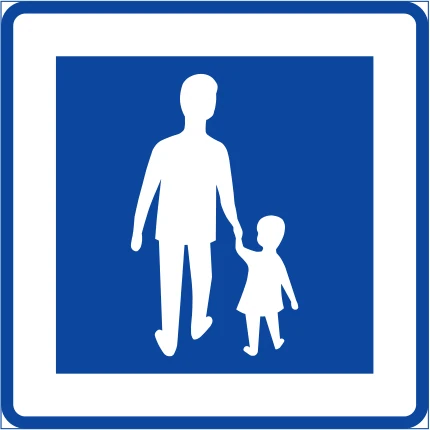
A pedestrian street has more limitations than a home zone. Only essential traffic is permitted, such as:
- Deliveries.
- Medical transports.
- To and from homes and hotels.
When you drive on a pedestrian street, the same rules apply as for a home zone. Note that, regardless of reason, you are always permitted to cross the pedestrian street, in the same way that you would, for example, cross a bicycle path.
Bicycle street (E33)
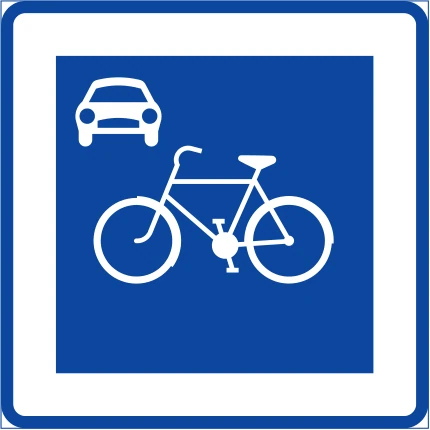
A bicycle street is designed for cyclists. You may drive a car on a bicycle street if you abide by the following rules:
- When you enter the bicycle street, you must give way to all traffic already on the bicycle street.
- Adapt your speed to the cyclists. You are never allowed to exceed 30 km/h.
- You are only allowed to park in designated parking spaces.
- When you exit the bicycle street, you have an obligation to give way.
Recommended lower speed (E11)
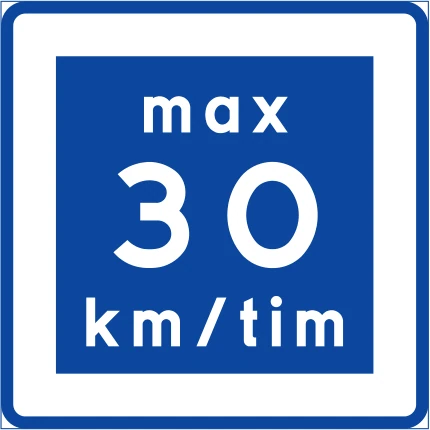
It is not appropriate to drive any faster than the speed indicated on the sign. The sign is usually displayed in conjunction with a speed bump.
Clarification on Recommended lower speed
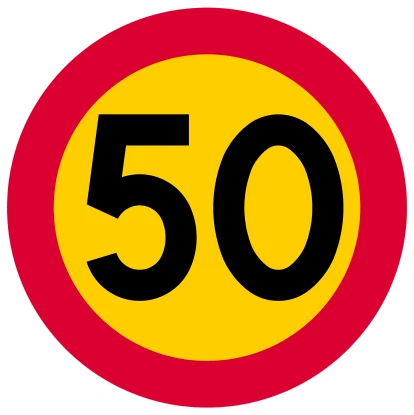
What does “not appropriate” mean? Is it not illegal to drive any faster than the speed indicated on the sign?
– No, in that case, the sign displayed would be Speed limit. If Recommended lower speed indicated a prohibition, then what would be the difference between the two signs? There would be no difference, which is unreasonable (why would there be two signs with the same significance?)
If I am driving on a road where the speed limit is 50 km/h and see Recommended lower speed 30 km/h. Does this mean I am permitted to drive at 45 km/h?
– Yes, if you deem it appropriate and safe. But you may not drive any faster than 50 km/h.
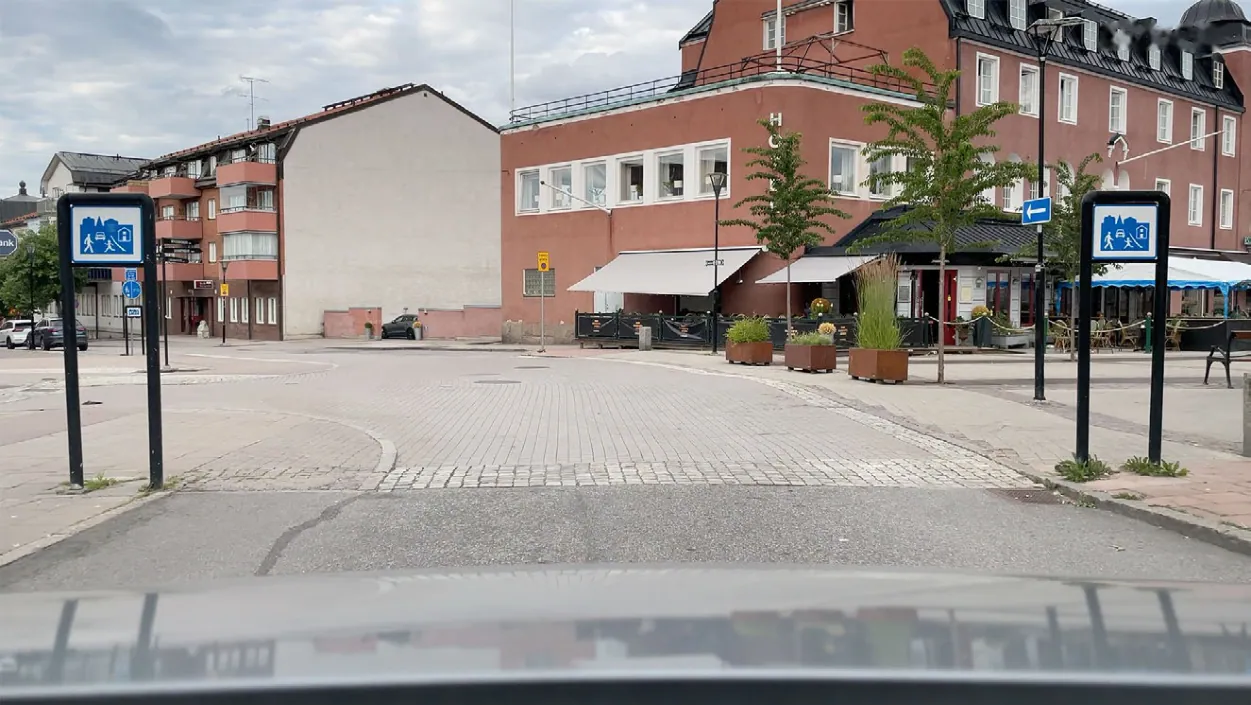
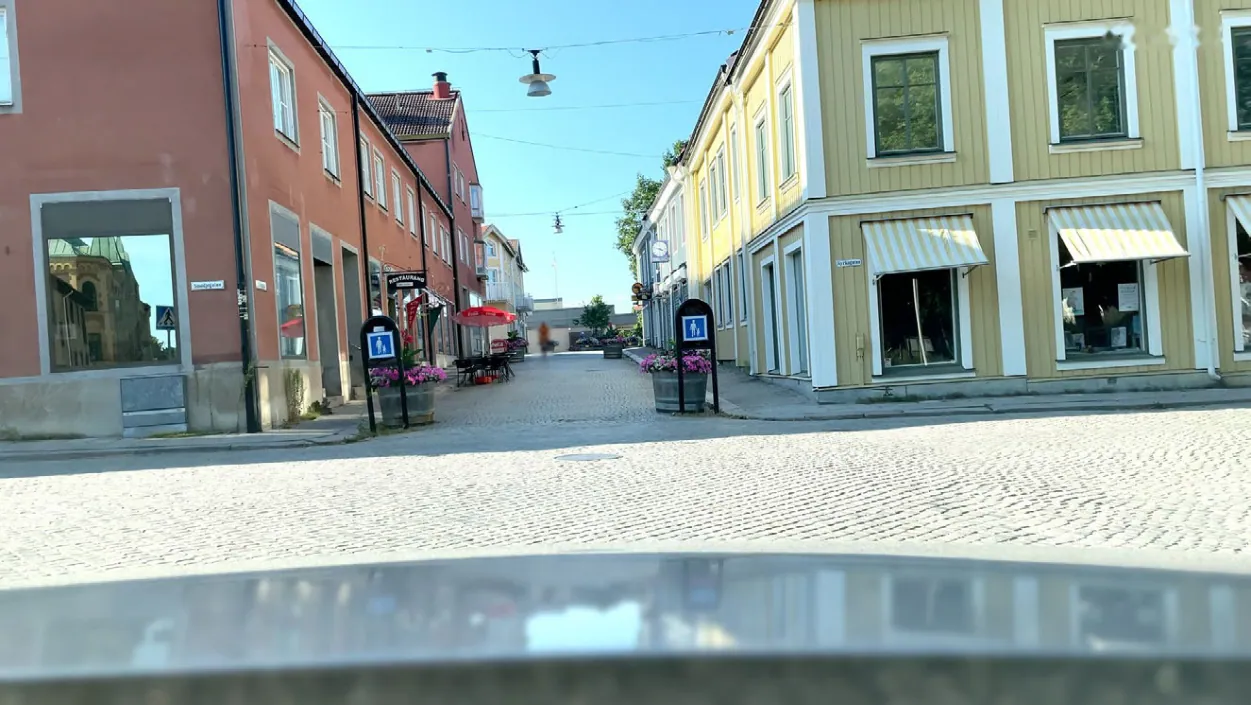
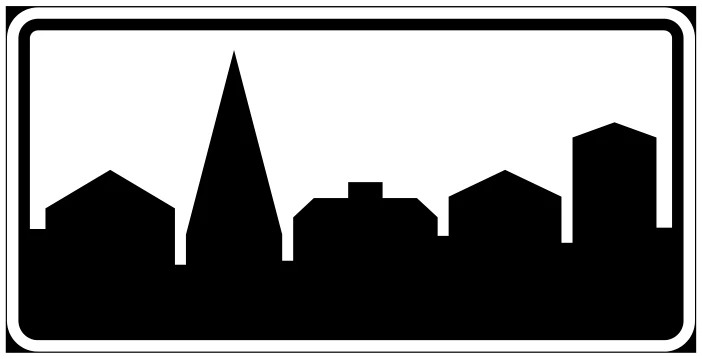
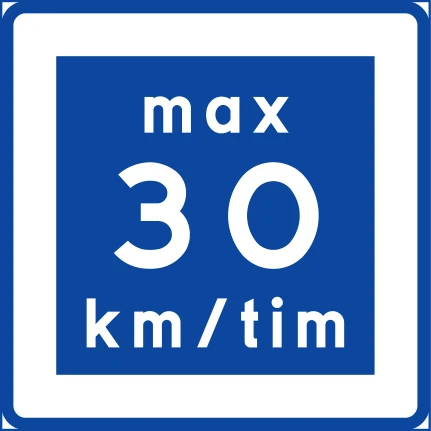


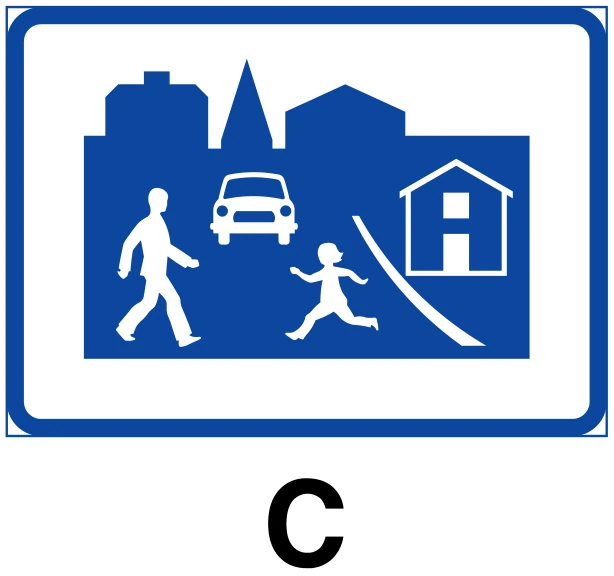
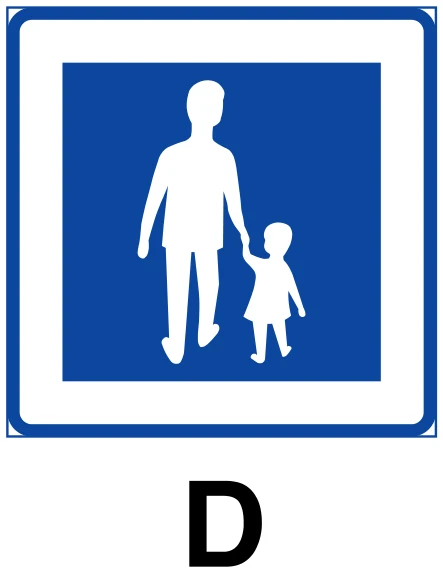
Which of these signs indicates a pedestrian street?
Correct answer: D) D
Explanation
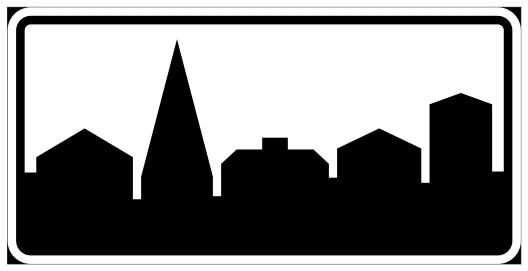
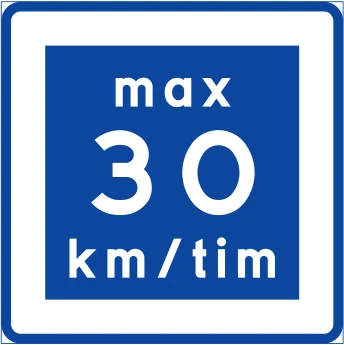
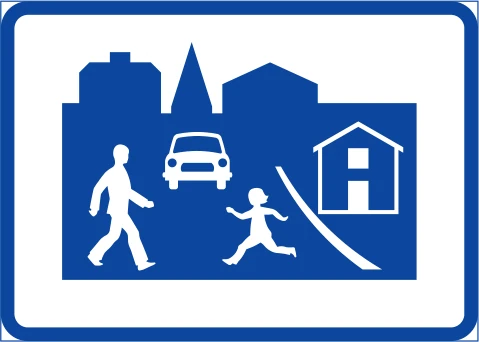
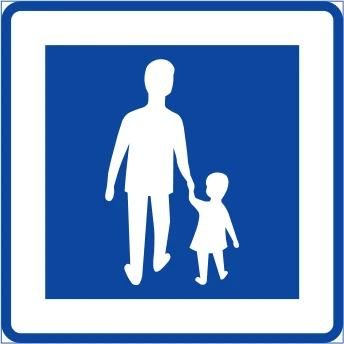
B: Recommended lower speed (E11)
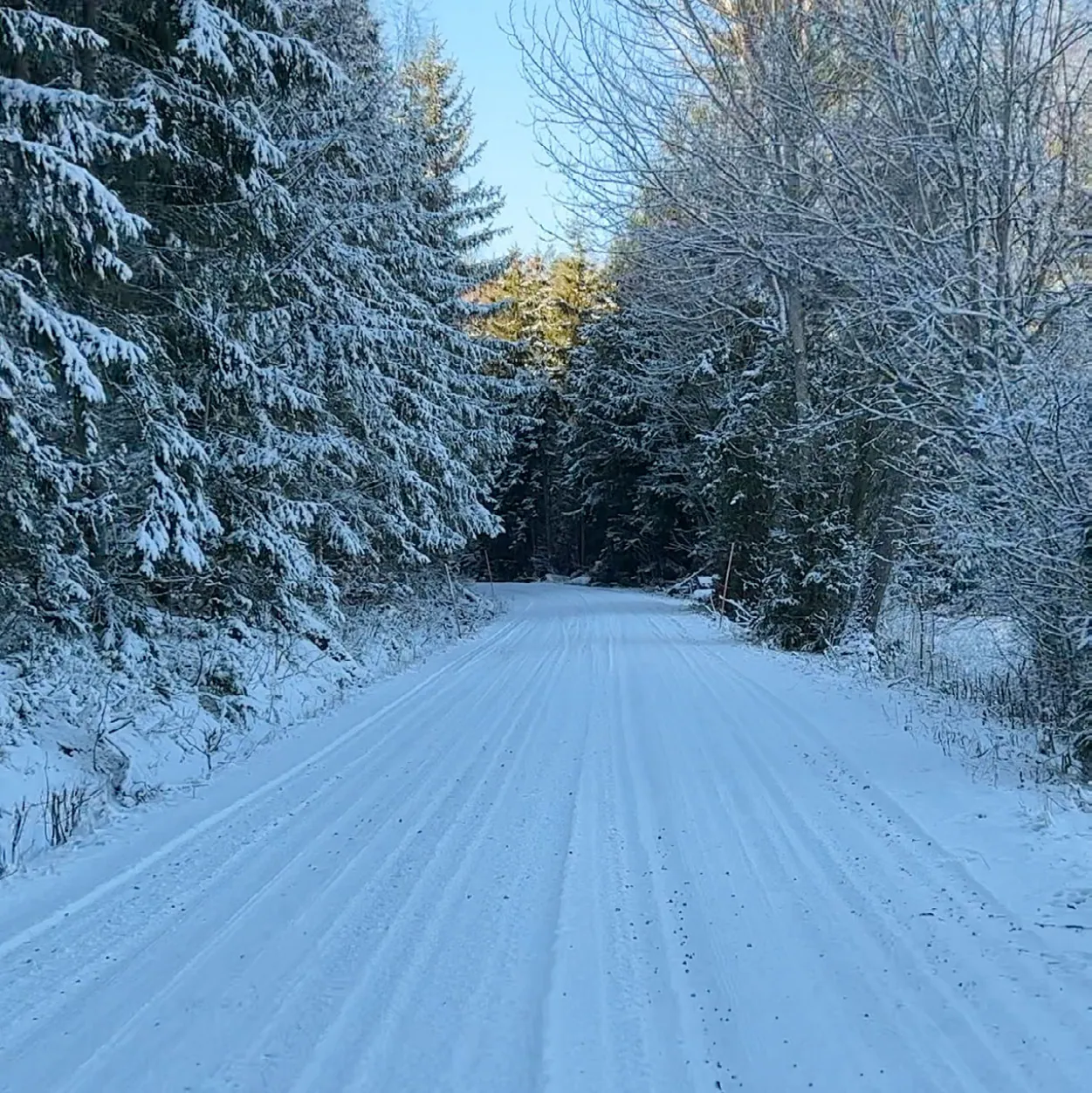
Winter
Treacherous road conditions
When there is a lot of snow, most people drive carefully and give themselves greater safety margins. But it is when the slipperiness of the road is not apparent that the most treacherous situations occur.
When the first ice arrives, many people keep driving as if the conditions were the same as on a lovely autumn day. If you are unprepared and enter a curve where there are patches of ice at 90 km/h, it can end very badly.
A treacherous situation is more complex or dangerous than it appears to be:
- A lot of snow and ice = not treacherous, as the danger is evident.
- Patches of ice = treacherous, as the danger is hidden.
Snow tracks
Tracks are formed in the lane where most people drive. You may get good traction inside the tracks, but if you go outside them you may lose the grip on the road completely. You should therefore avoid overtaking in these conditions.
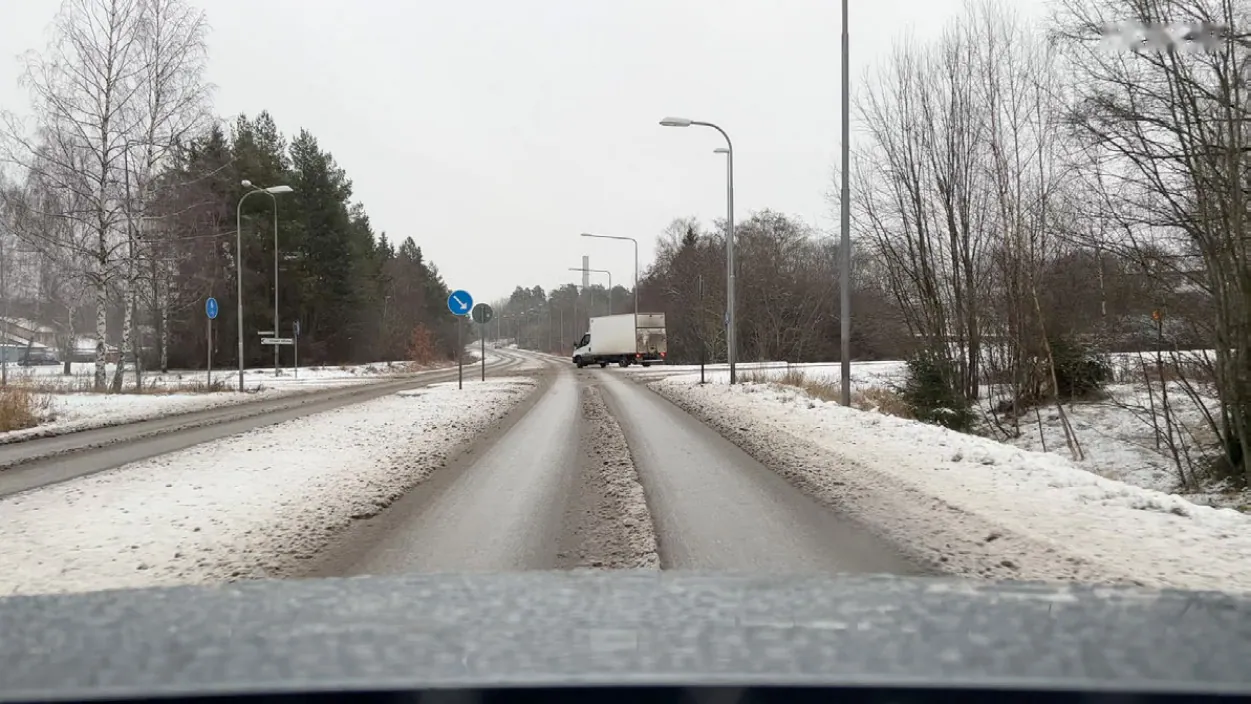
Freezing rain
When the temperature is around 0°C, rain may freeze directly upon contact with the road. This is referred to as freezing rain and it is very dangerous, as you may think it is normal rain, whilst it is actually making the road surface extremely slippery.
Snow smoke
When it gets cold and starts to snow, the car in front of you may trail snow smoke (the tyres whisk up the newly fallen snow). You must therefore maintain an extra large distance to the car in front in this situation.
Broad snowploughing
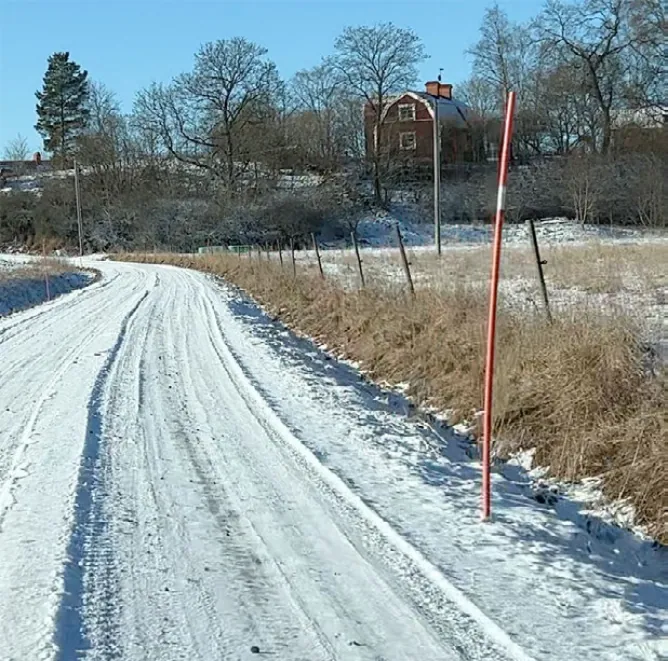
In deep snow, you will not see any road markings, which means you have to rely on the tracks of the snowplough. Remember however that the snowplough may have gone outside of the road. If you drive too far to the right, you risk sinking into the snow in the ditch. Snow markers are a good indication of the actual width of the road.
How to discover ice on the road
- Temperature lower than +4°C.
- No splashing heard from under the car, even though the road looks wet/damp. Indicates that the water is frozen.
- At a junction, snow is often densely compressed by passing cars, which increases the risk of ice (the surface of the snow is worn smooth by the tyres).
- Shaded sections of the road that have not been warmed by the sun may have patches of ice.
- Bridges and viaducts have a particularly high risk of ice, as they are cooled by the air from below and above.
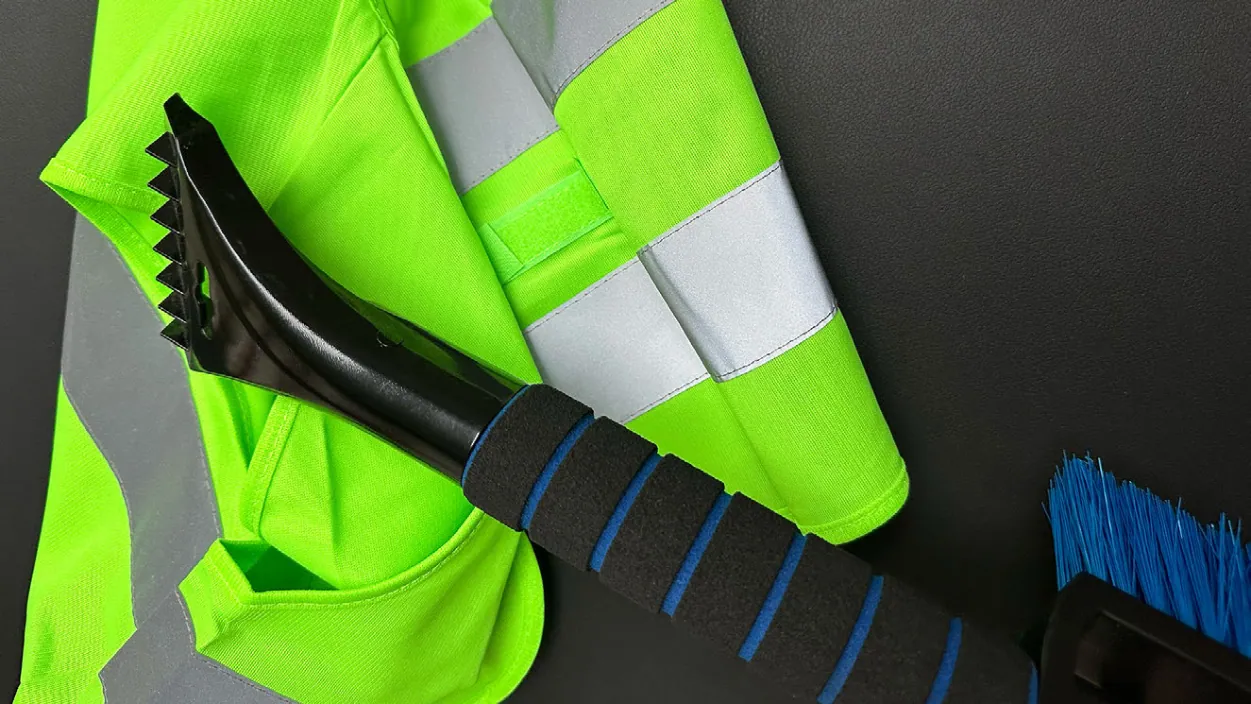
Winter equipment
Even in very cold temperatures, many people will get in their car and drive off wearing summer clothes. Should you get stuck in a ditch on a forest road, you will soon realise how poorly equipped you are. If you cannot get the car started, the heat will rapidly disappear, and it may take a while for a recovery vehicle to arrive. You should therefore be equipped with the following in winter:
- Warm clothes/shoes.
- Mobile telephone.
- Snow shovel.
- Towline.
- High visibility vest.
- Starter cables.
- Ice scraper.
Things to remember at other times of the year
Winter is the normal time for slippery road conditions. However, the roads can get slippery at other times of the year too. The following are a few examples of things to pay particular attention to in other seasons.
Spring
- In the early spring, the nights can get cold and icy.
- There is a particular risk of ice on shaded sections of the road which have not yet been warmed by the sun.
- Melting snow can also cause problems.
Summer
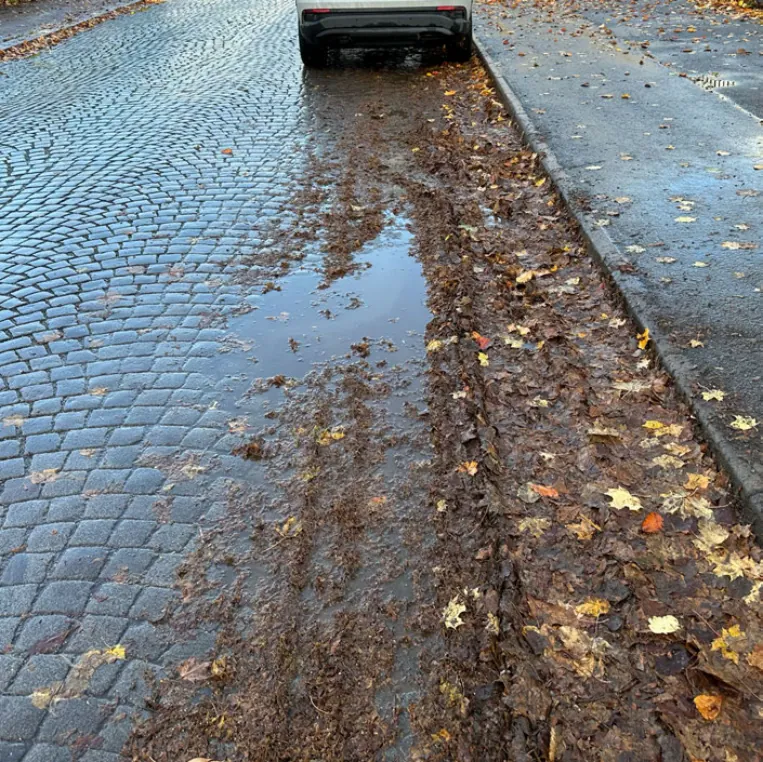
- On very hot days, the tar in the asphalt may get slippery.
- When it rains after a long period of warm weather, dirt is washed up from the surface of the road. When this happens, the oil remnants can make the road slippery.
Autumn
- Be careful of the first ice that arrives just before winter.
- Dirt dragged onto the road by tractors and combine harvesters can make the road slippery.
- Wet leaves are slippery.
Is compressed snow (snow that has been worn smooth) good or bad, in terms of grip?
Correct answer: B) Bad, as compressed snow can be very slippery.
Explanation
Snow becomes compressed or smooth-worn when it has been subjected to hard pressure. It is often found at junctions, where many vehicles come to a standstill before then accelerating.
Compressed snow has many of the same properties as ice – i.e. poor grip. Compare it to the experience of walking in deep snow – it is more difficult, but there is much less risk of slipping and losing your grip.
Learning & maturity
Different types of learning
- Deep learning means that you try to understand the full picture and the reasons behind the rules. It leads to permanent knowledge.
- Overlearning has taken place when something has become second nature. The actual driving (working the clutch, shifting gears, etc.) should be overlearned, so that you can focus on everything going on around you.
- Imitation learning is when you copy someone else’s behaviour. This can be either good or bad; it depends on who you are learning from.
- Superficial learning means that you try to learn everything by heart just to pass your theory test. You have no understanding of the big picture and will forget what you have learned.
Repetition is important in order to retain what you learn. Remember that you will never know everything so you should strive for lifelong learning.
Varying degrees of maturity
Everyone’s development is different, but it is possible to identify three main phases:
- Immature & selfish is the stage of a child. People of other age groups who still have these tendencies think mostly of themselves. They act impulsively and create confusion and insecurity.
- Rule-abiding drivers are good in most situations. However, sometimes the rules are not enough, and when that happens, these drivers may revert back to the immature stage and “insist on their right”.
- Tolerant & mature is the type of driver we want. They respect the traffic rules, but also have enough experience to handle unexpected situations calmly and safely. They will not angrily honk their horn if another car stalls at a traffic signal.
Sometimes deviate from the traffic rules
It is not desirable to have 100% adherence to the rules. According to the criteria for a category B licence, you must display “good judgement when interacting with other road users”. A reasonable interpretation of this statement is that you may depart from the rules in some cases.
The cogwheel principle (every other car drives regardless of the priority rules) is not included in any legislation, for example.
There is no simple answer to when the rules may be disobeyed; you must assess each individual situation as it arises. However, here are three general points that should be fulfilled:
- It should benefit the traffic situation as a whole (for example, reducing a queue using the cogwheel principle).
- Everyone involved should be aware of what is happening (caution, eye contact and clarity).
- Never deviate from the rules to benefit yourself – instead, be the one who puts other first.
Young drivers
Even though they have the most recent training, young drivers have proven to be the most dangerous in traffic. This can be due to a number of reasons:
- They have limited experience of real traffic.
- They are immature.
- They have the wrong role models.
- They overestimate their own abilities.
Young men tend to overestimate their driving ability more than women of the same age. When the young men have had their driving licences for a couple of years, they start to take greater risks, as they feel more confident.
Probability learning
Probability learning means that you use prior experience of a situation to assess the probability of something happening.
- Good probability learning: You are used to trains passing frequently at a railway crossing and you are therefore extra cautious.
- Bad probability learning: You are used to trains passing very rarely at a railway crossing and therefore do not look before you cross.
Stress
Moderate stress, meaning that you are just slightly stressed, normally increases your concentration and performance levels. If you are completely relaxed, you will not take your driving as seriously and will perhaps miss certain details. However, the most dangerous thing to be is highly stressed.
Excessive stress can lead to
- Panic – you do not know what to do.
- Blackout – you stop being aware of the situation.
- Resignation – you think the situation is unfixable so you do not even bother trying.
- Agitation – you become hyperactive and unpredictable.
- Sluggishness – you are unable to think clearly and logically.
Reduce the risk of stress
- Make sure you have plenty of time for your journey.
- Be rested and in good health.
- Drive calmly and defensively.
- Avoid rush hour traffic in the morning and afternoon.
- Make sure the car is in good condition and that it will not give you any trouble.
Peer pressure
Peer pressure prompts us to alter our behaviour when we are with other people. Peer pressure can be both positive and negative:
- Positive peer pressure: You are driving too fast and some people in the group tell you to slow down.
- Negative peer pressure: You are going to a concert and some people in the group are worried you will not make it on time. You feel pressured and therefore increase your speed and take more risks.
It is primarily young drivers who give in to negative peer pressure. Research has shown that a young driver with a group of young male passengers is the most dangerous combination.
As a passenger, you should never rush the driver, even if you are only joking. The driver may have low self-confidence and may not perceive it as a joke. Also remember to speak up if the driver is driving recklessly – it may even be appreciated, as it takes the pressure off the driver.
Can probability learning be good?
Correct answer: A) Yes, if it means that I am especially cautious in certain situations.
Explanation
Probability learning means that you use prior experience of a situation to assess the probability of something happening.
- Good probability learning: You are used to trains passing frequently at a railway crossing and you are therefore extra cautious.
- Bad probability learning: You are used to trains passing very rarely at a railway crossing and therefore do not look before you cross.
Alcohol
Drunk driving
- 0.2 per mille (‰) = 0.1 mg of alcohol per litre of breath.
- Punishable by fines or imprisonment for up to 6 months.
- Revoked driving licence for 1 year (2 years in some cases, e.g. repeat drunk driving).
Aggravated drunk driving
- 1.0 per mille (‰) = 0.5 mg of alcohol per litre of breath.
- Punishable by imprisonment for up to 2 years.
- Revoked driving licence for 2 years. Must retake the theory test and driving test.
Per mille
Per mille (‰) = thousandth. In relation to alcohol, “1 per mille” means that there is one part alcohol per 1,000 parts blood.
Alcohol | What happens |
|---|---|
0.1–0.4‰ | Loss of certain inhibitions and overestimation of one’s own abilities. Slower reaction time. |
0.4–1.0‰ | Impairment of vision, speech and coordination. |
1.0–2.0‰ | Difficulty controlling the body, impaired balance and double vision. |
2.0–3.5‰ | Deep sleep. |
Over 3.5‰ | Great risk of coma or death. |
Alcohol awareness
- It may be considered drunk driving even if you are under the legal limit, if you are driving recklessly.
- Serving alcohol to someone you know will be driving may be considered complicity in drunk driving, which is a punishable offence. The same is true if you lend your car to a drunk person.
- If you are taken into custody for being intoxicated in another context, your learner’s permit or driving licence may be revoked.
- The legislation on alcohol applies not only to cars, but to all motor vehicles.
- It is impossible to control your body’s breakdown of alcohol. Forget drinking strong coffee, cold showers, saunas, and similar tricks. The only thing you can do is wait it out.
- Even if there is no alcohol left in the blood, you often feel worn out the day after drinking a lot of alcohol.
- Your weight, general health, gender, drinking speed and food choices also have an impact on your blood alcohol.
- A person who consumes the exact same amount of alcohol on two different occasions may get different blood alcohol levels.
- The legislation on drunk driving is applicable everywhere, including fenced-off areas and private property.
- The mandatory use of an alcolock may be an option instead of a revoked licence.
Medication in traffic
- You are not allowed to drive if the medication makes you a traffic hazard. This prohibition is applicable even if the medication has been prescribed by a doctor.
- It is your responsibility to judge whether the medication makes you a traffic hazard (consult your doctor, pharmacy and the package leaflet).
- Narcotic substances can be legal if they have been prescribed by a doctor, providing that you can drive in a safe manner.
- Driving under the influence of medication that causes you to be a traffic hazard is subject to the same legislation as drunk driving.
Drugs in traffic
- There is a zero-tolerance approach to the use of drugs or narcotics in traffic. Not even the smallest trace is permitted.
- Exception: Permitted if the drug has been prescribed by a doctor, providing that you can drive in a safe manner.
- If you constitute a traffic hazard because you are under the influence of drugs, you are subject to the same legislation as you would be for drunk driving.
- Different types of drugs:
- Stimulants lead to hyperactivity and a driver’s overestimation of their driving abilities. The sense of tiredness is suppressed, and the driver could fall asleep at any time without warning. Cocaine and amphetamines are included in this group.
- Sedatives cause sluggishness and concentration difficulties. Heroin, opium and morphine are included in this group.
- Hallucinogens cause hallucinations and disorientation, and impair judgement. LSD is included in this group.
Mobile phones
Using a mobile phone or similar equipment in traffic can be just as dangerous as driving under the influence of alcohol or drugs. A few facts:
- It is prohibited to use a mobile phone, fiddle with a GPS device or similar if it makes you inattentive and thus creates a traffic hazard.
- Using a handheld mobile phone is always prohibited when you are driving.
- A hands-free device frees both your hands, but be aware that the conversation itself is distracting. A complicated phone call can make you lose focus, even though you have both hands free.
- Text messaging behind the wheel is very dangerous (a significantly greater hazard than making a call). The risk level is the same as that of a highly intoxicated person. It is prohibited to text from a handheld mobile phone when you are driving.
Clarification regarding the use of mobile phones
Can I hold my phone in my hand if I keep both hands on the steering wheel and use speaker phone?
– No, you are never allowed to hold your phone while driving, despite the fact that you manage to keep both hands on the steering wheel at the same time. The same is true about holding your phone against the gear stick or against your legs. Holding your phone is prohibited, no matter how you do it.
Is using the car’s built-in GPS allowed?
– Yes, if it is used in a safe manner. It is prohibited if it makes you inattentive and thus creates a traffic hazard.
Am I allowed to use the GPS on my mobile phone?
– Yes, but you cannot hold it in your hand. Type in your destination in advance. However, even if you do not touch your phone, it is always prohibited to use it if it makes you inattentive and thus creates a traffic hazard.
Am I allowed to use voice control to call and send texts while driving?
– Yes, if you can do so in a safe manner. It is prohibited if it makes you inattentive and thus creates a traffic hazard.
Who decides if I am driving inattentively and causing a traffic hazard?
– This is primarily something for you to assess yourself. However, in the end it is up to the police and the judicial system in each individual case.
Statistics
- 20% of traffic deaths are related to the use of drugs or alcohol.
- It is estimated that there are around 15,000 drunk drivers on the roads every day.
- 25,000 are caught drunk driving each year. 15,000 of these are under the influence of drugs.
- 90% of drunk drivers are men – mostly young or middle-aged.
Alcohol calculation
Volume of spirits = percentage by volume * the volume in cl * 0.025
Example: How many centilitres (cl) of spirits (40% volume) corresponds to 50 cl of low-strength beer (3.5% volume)?
Answer: 3.5 * 50 * 0.025 = 4.38 ≈ 4 cl
What is the limit for aggravated drunk driving?
Correct answer: C) 1.0 per mille of alcohol in the blood.
Explanation
Aggravated drunk driving: “The driver has a blood alcohol concentration of at least 1.0 per mille.” (Road Traffic Offences Act)
Tiredness
Tiredness is an indication that your body needs to recuperate in order for all your senses to function optimally.
It is forbidden and punishable to drive if you are incapable of driving the vehicle in a safe manner. Your reaction time after a sleepless night is comparable to that of a drunk person.
Causes of tiredness
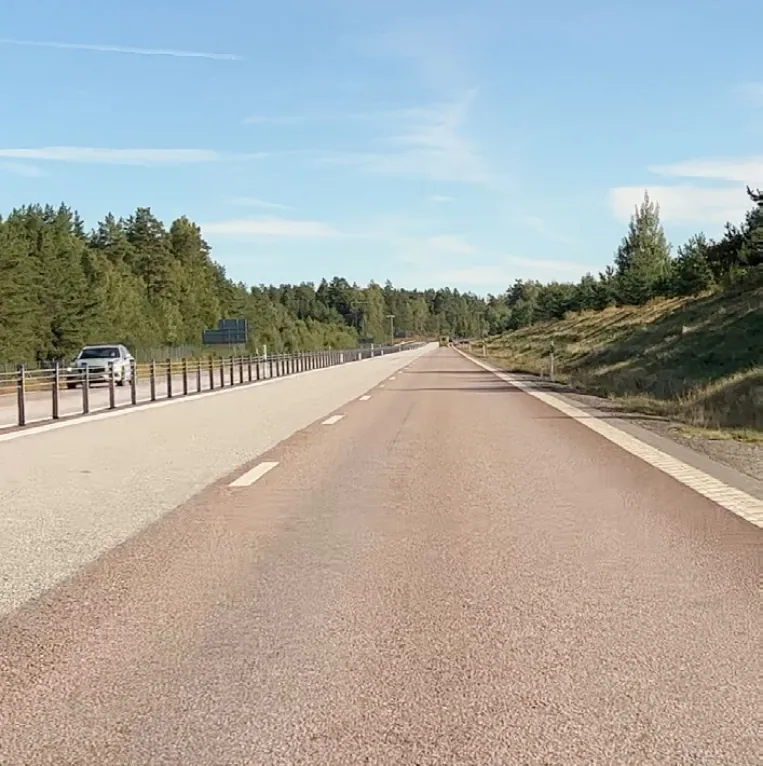
- Exhaustion.
- Sleep deprivation.
- Alcohol, drugs and certain medications.
- Monotony:
- Wide, long and straight uninterrupted roads.
- Engine noise.
- Noise from the tyres.
Dangers and risks
Nearly all senses and abilities are impaired. However, the most serious impairments in terms of traffic are the following:
- Poorer concentration and loss of coordination.
- It takes longer to perceive things (some things you fail to notice at all).
- Poor decision-making skills.
- Reaction time and reflexes become slower.
- Difficulty maintaining a steady course and speed.
Indications of tiredness
- Blurred vision.
- Problems concentrating and thinking clearly.
- Dry mouth.
- Frequent yawning.
- Feeling cold.
- Difficulty maintaining your speed.
- Head feels heavy.
- Overreacting.
- Muscle relaxation.
- Optical illusions.
- Difficulty keeping your eyes open.
Avoid tiredness
- Drive when rested.
- Make sure the car is not too warm.
- Take a break after driving for about one hour (get out of the car).
- Do not eat heavy foods (meat etc.).
Reduce tiredness
The best and only right way
- Have a long sleep.
Reducing tiredness temporarily
- Short nap (no less than 15 minutes).
- Take a break/stretch your legs and get some fresh air.
- Coffee or other forms of caffeine can have the same effect as a nap.
Tiredness glossary
- Microsleeping: When you nod off and wake up almost immediately with a jerk of the head. Microsleeping lasts for a very short period of time, often less than a second.
- Sleep apnoea: Breathing problems that disrupt your sleep at night. The lack of sleep resulting from this issue leads to a significantly higher risk of tiredness-related traffic accidents.
- Nap: Light and short sleep (15–30 minutes).
Statistics on tiredness
- Most tiredness-related accidents occur between 02.00 and 05.00.
- Single-vehicle accidents are the most common type of tiredness-related accident.
- 40% of single-vehicle accidents outside of built-up areas occur at night or dawn.
- The risk of accidents increases with proximity to your destination, as you relax thinking that you are almost there.
Could it be prohibited to drive a vehicle when you are tired?
Correct answer: A) Yes, if I am incapable of driving the vehicle in a safe manner.
Explanation
“A vehicle may not be driven by a person who, due to illness, fatigue, intoxication by alcohol, other stimulants or sedatives, or for other reasons is incapable of driving the vehicle in a safe manner.” (Road Traffic Ordinance)
You are permitted to be tired as long as you are able to drive the vehicle safely. For this reason, the question is whether it “could” be prohibited, not whether it is always prohibited (which is not the case).
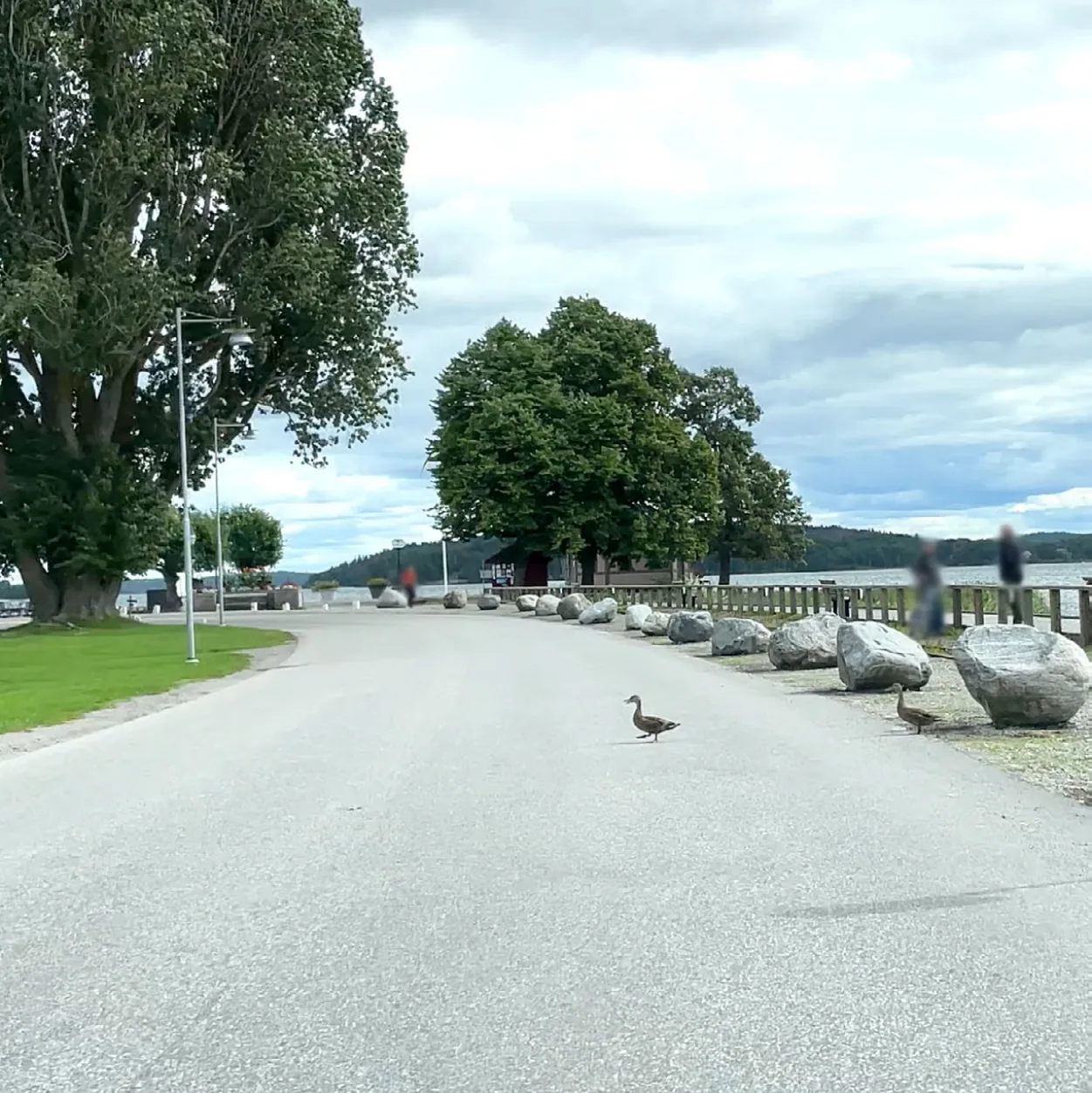
Vision
Sight is the most important sense in traffic. You receive around 90% of all traffic information through your eyes.
If you have poor eyesight, your driving licence may be issued on the condition that you must wear glasses or contact lenses to drive. Also remember that your eyesight changes with age, so it is recommended that you have regular eye tests.
Terms
Visual field
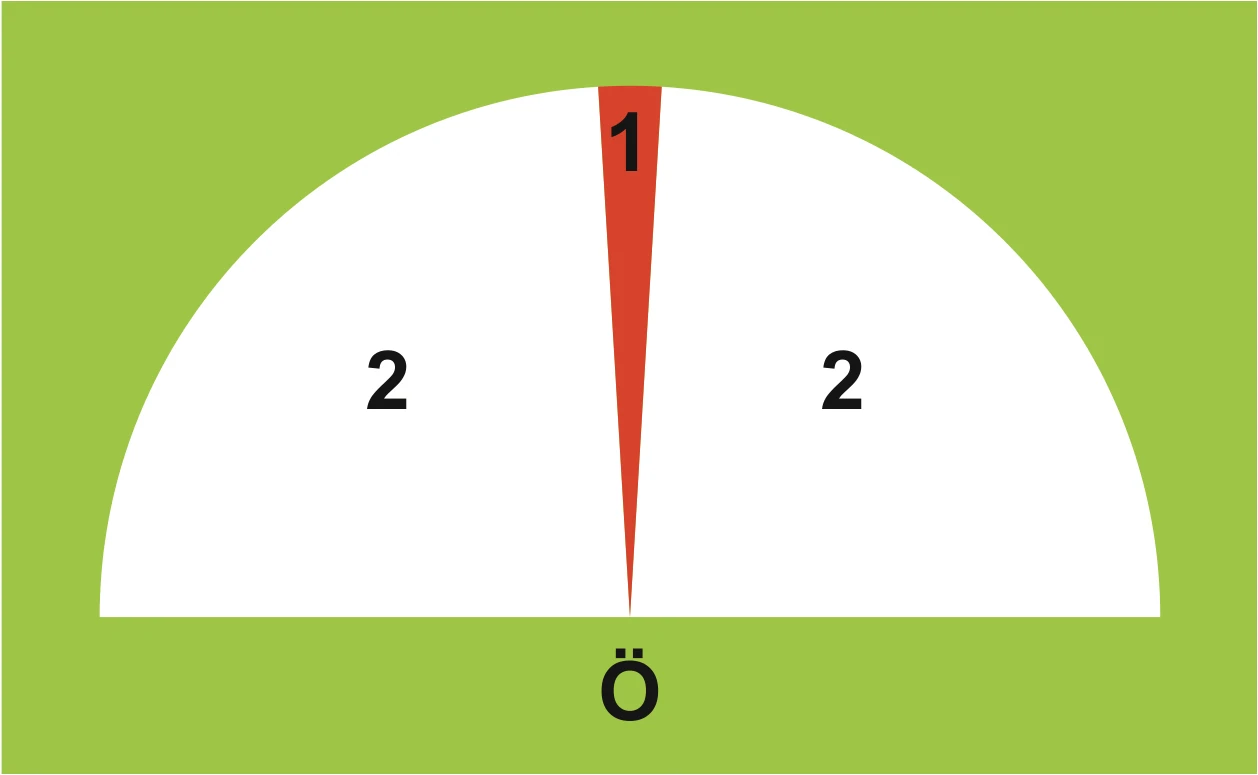
The area we see is called the visual field. The visual field has the shape of a semicircle, i.e. 180°.
Central vision
The thing you focus your eyes on is what you will see most clearly. This is your central vision, and it constitutes approximately 1–2% of your visual field. Central vision is
important in order to, for example, make out what is written on a road sign.
Ö: Location of eye
1: Central vision
2: Peripheral vision
Peripheral vision
The remaining 98–99% of your visual field is your peripheral vision. Here you can perceive that something is happening but will usually need to shift your gaze to check with your central vision exactly what it is. Peripheral vision is impaired by alcohol and tiredness.
Assessments
You constantly collect information through your eyes. This information goes to the brain to be interpreted. It is impossible to make profound assessments about everything you see in traffic, as the brain would become overloaded.
Instead of assessing everything, the brain quickly selects relevant things to focus on. This selection is made with the help of a number of factors, including your:
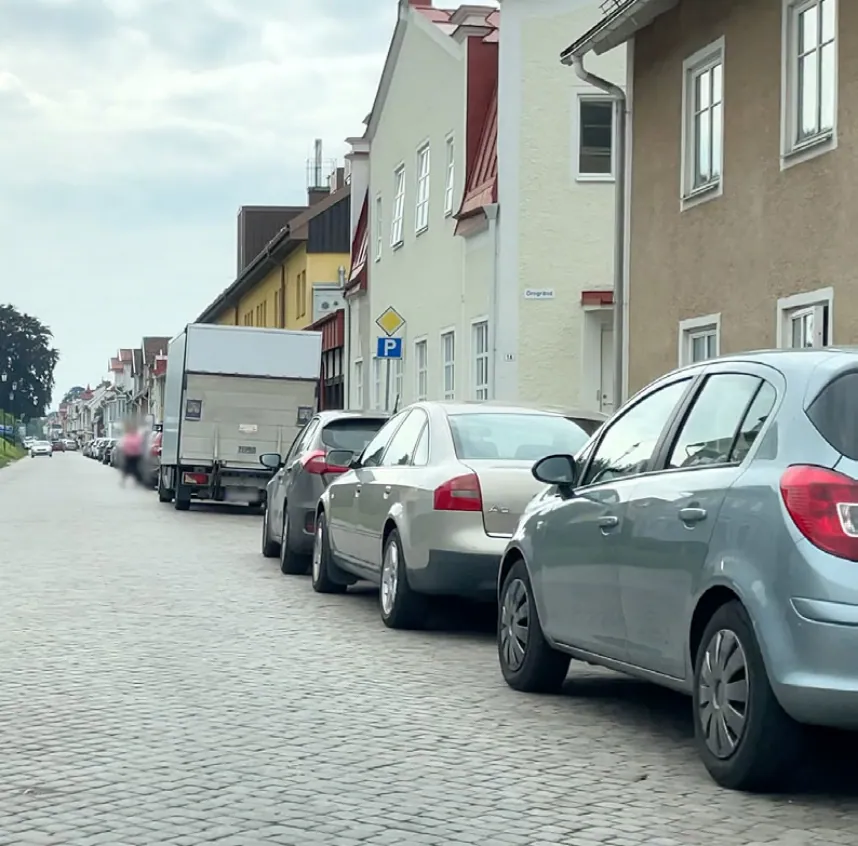
- Experience
- Knowledge
- Expectations
- Interests
- Needs
- Impressions
If your knowledge tells you that parked cars can hide pedestrians, and you have experience of children running out in that same spot, your brain will momentarily devote most attention to that aspect.
Terms that may be good to know:
- Perception: Becoming aware of what is happening around you.
- Selective perception: Selecting and focusing on what is relevant.
Experienced drivers
- Flexible gaze and smooth transitions.
- Focus on moving objects.
- Broader and longer field of observation.
Inexperienced drivers
- Fix their gaze on objects and keep it there for too long (abrupt transitions).
- Focus on stationary objects.
- Narrower and shorter field of observation.
Optical illusions
Humans are smart and have a vivid imagination. This is very helpful in traffic. We are able to imagine a probable scenario based on very little information.
However, we sometimes interpret what we see incorrectly, thus creating an optical illusion.
Examples of optical illusions
- A car with only one headlight (“one-eyed car”) is mistaken for a motorcycle/moped.
- Snow smoke causes you to become disorientated.
- A motorcycle is mistaken for a slow moped.
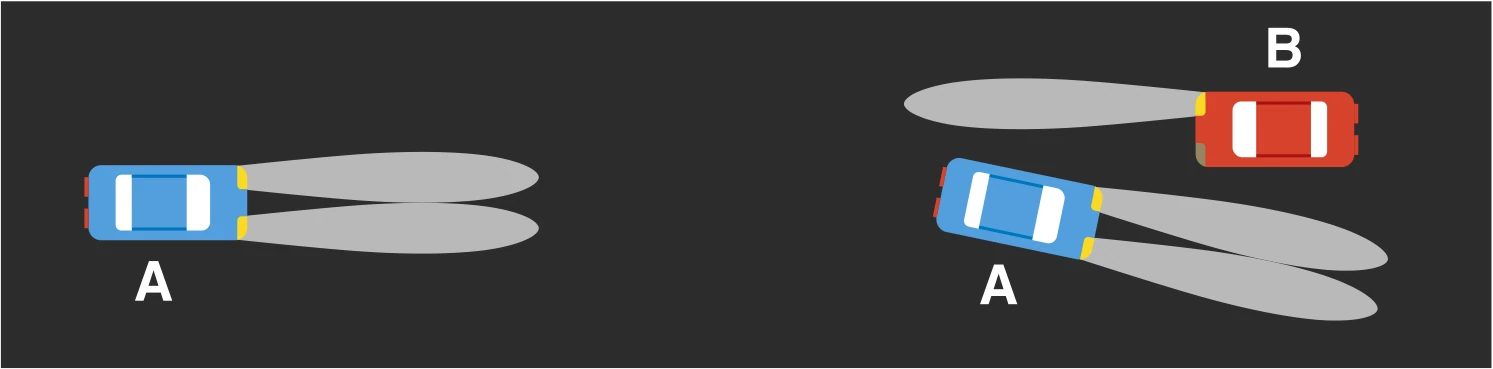
Tunnel vision
Tunnel vision means that your eyes scan a more narrow area. You miss things that happen on the side of the road (in the periphery). It is as if you are driving in a tunnel with dark walls.
The risk of tunnel vision increases with
- Tiredness
- Alcohol
- Stress
Your other senses
- Your hearing alerts you to someone honking their horn or a nearby emergency response vehicle. It also enables you to hear if the engine is not running as it should.
- Your sense of touch and balance gives you information about how the car is moving on the road and whether the road condition is good or bad.
- Your sense of smell is important for discovering any leakage of hazardous substances.
How much of the visual field is made up of central vision?
Correct answer: A) 1–2%
Explanation
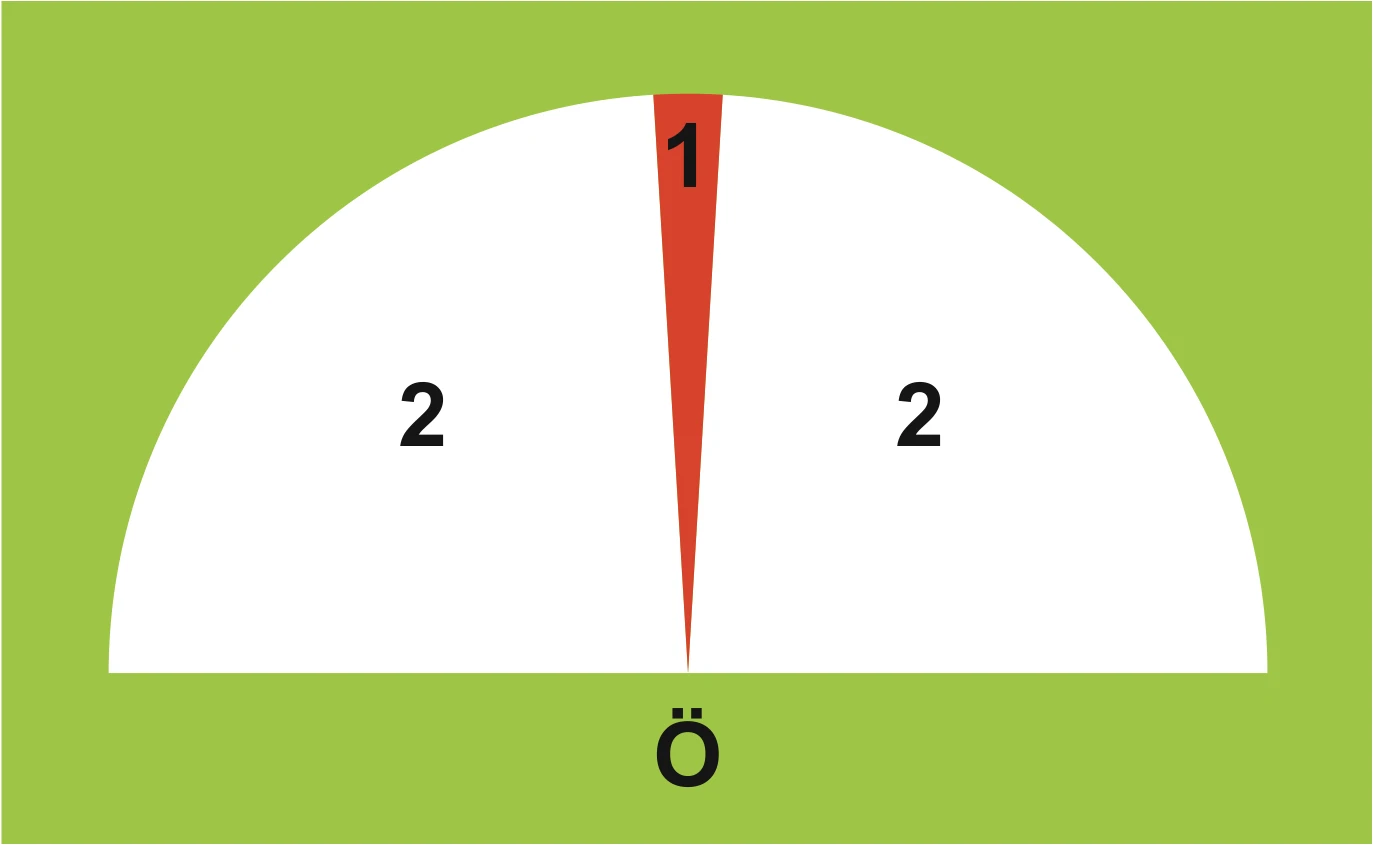
Semicircle: Visual field Ö: Location of eye
1: Central vision
2: Peripheral vision
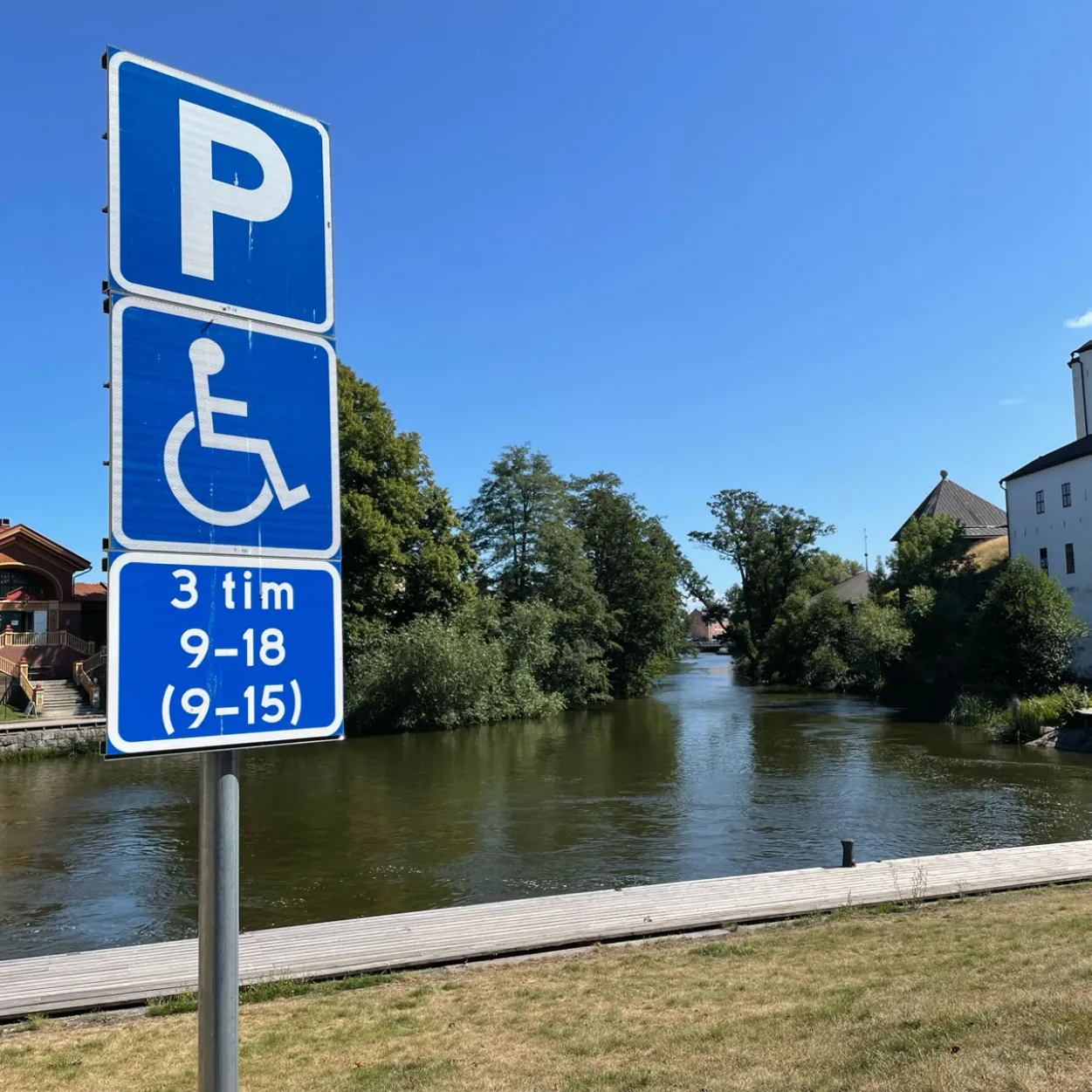
Impairments
Functional disability
- A functional disability is when a person is unable to do what is expected.
- Some disabilities may be difficult to see. You should therefore be patient with anyone who seems to be taking a long time. Example:
- Visible functional disability: Wheelchair or a white cane.
- Hidden functional disability: Hearing impairments or epilepsy.
Visual impairment and blindness
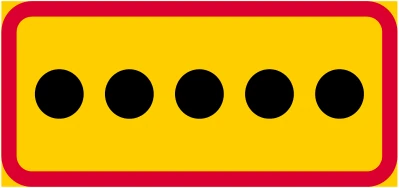
Some people with visual impairments use a white cane when moving around in traffic. They use it partly because it helps them to get around, but also because it makes other people aware of their disability. The significance of the white cane is recognised all over the world.
Signals with the white cane
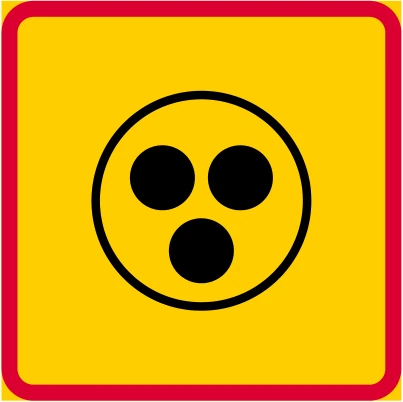
- Straight towards the ground: waiting and listening.
- Diagonal: intends to start walking.
When you stop for a visually impaired person at a pedestrian crossing
- Stop in good time before the pedestrian crossing.
- Be careful of making noise – do not rev your engine and only honk your horn if there is an emergency.
- Do not start driving again as soon as the visually impaired person has left your lane, but wait until they have finished crossing the road. This is so that you do not confuse the person with the sound of your accelerating car.
Guide dogs
- Wear a white harness.
- Help the visually impaired person to avoid obstacles but is not able to assess the traffic situation.
- Never disturb or make contact with a guide dog.
Elderly people in traffic
- 65–74 years old: This group generally has a high degree of maturity and traffic experience, which means that they drive more safely than 18-year-olds who have just received their licence.
- 75 years and older: Senses are often impaired and the brain starts to work more slowly, which means that they have a 5–6 times higher accident risk (same as 18–19-year-olds).
Things that deteriorate with age
- Sight.
- Hearing.
- Balance.
- Reaction time.
- Accuracy and speed of interpretation of impressions.
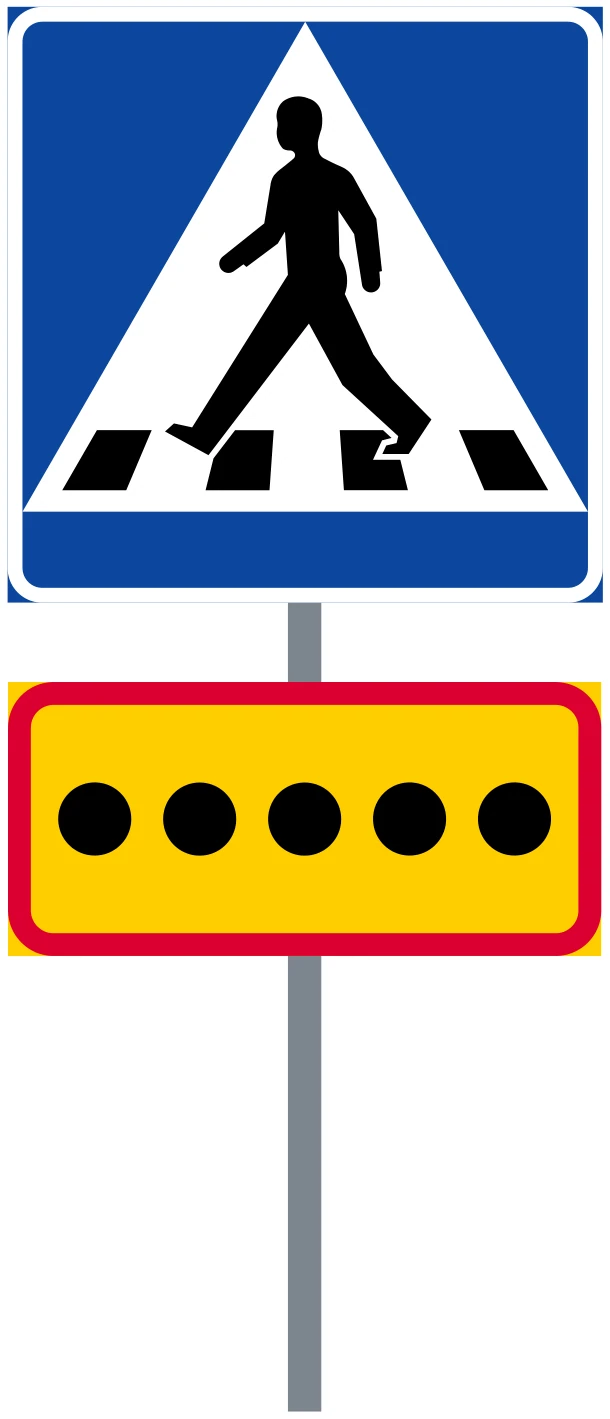
What does this sign combination mean?
Correct answer: C) Pedestrian crossing where people with visual impairments often cross.
Explanation
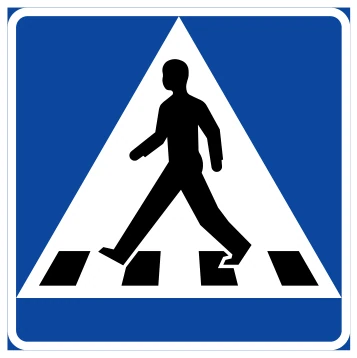
Visually impaired (T9)
“The panel indicates that people with visual impairments often use the crossing. This panel always has a yellow background.” (Road Sign Ordinance)
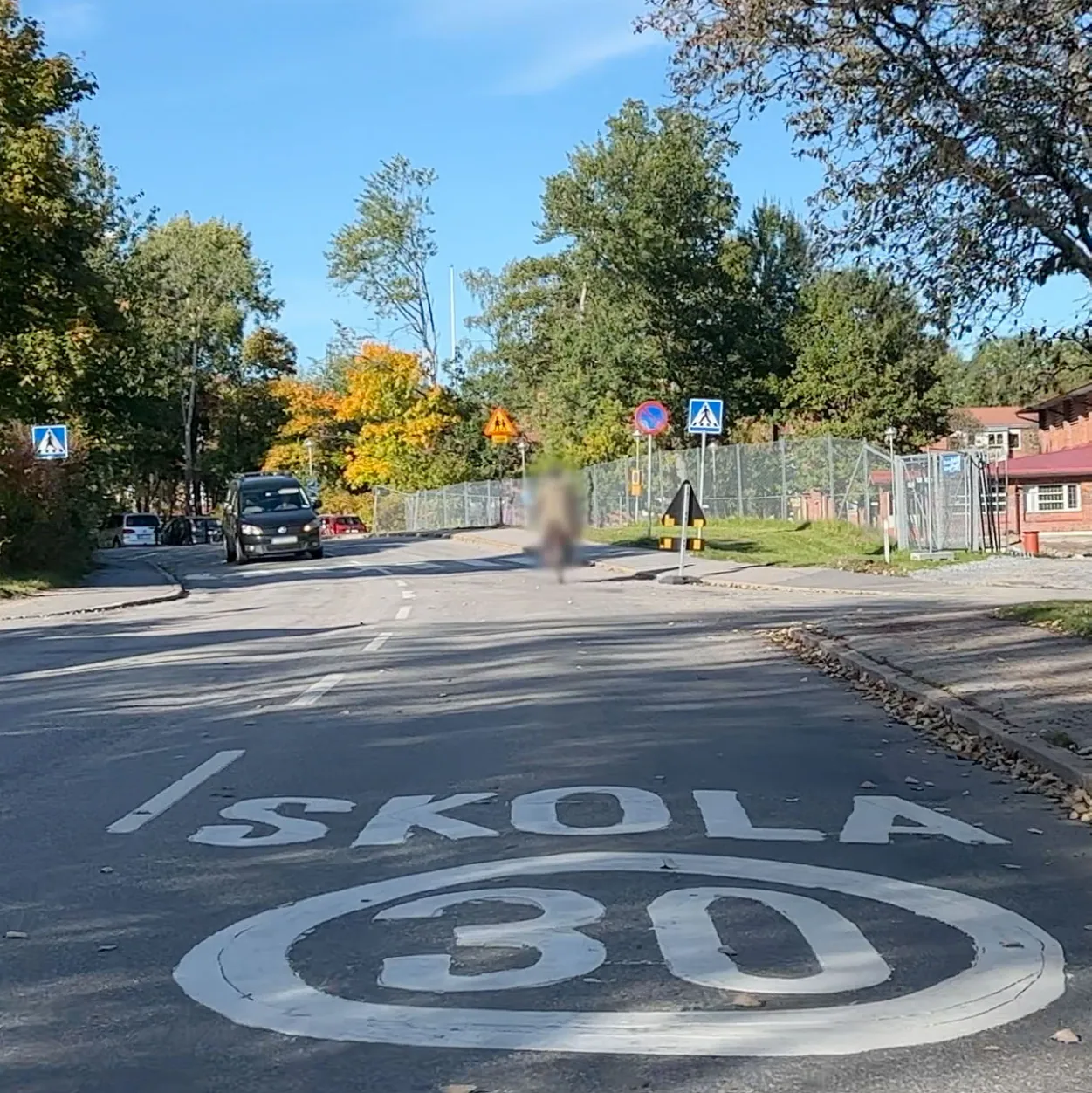
Children
Children and traffic are not a good combination. The Road Traffic Ordinance tells you to be especially considerate of children.
The problem of children in traffic
Playful and impulsive
Much of a child’s life revolves around play. The rules of the fantasy world are all that count.
Even if you see a child standing still and you have eye contact, you cannot feel completely sure of the situation. If a friend calls from the other side of the street, the child might suddenly forget about the cars and run out into the road. You must therefore be vigilant when there are children around.
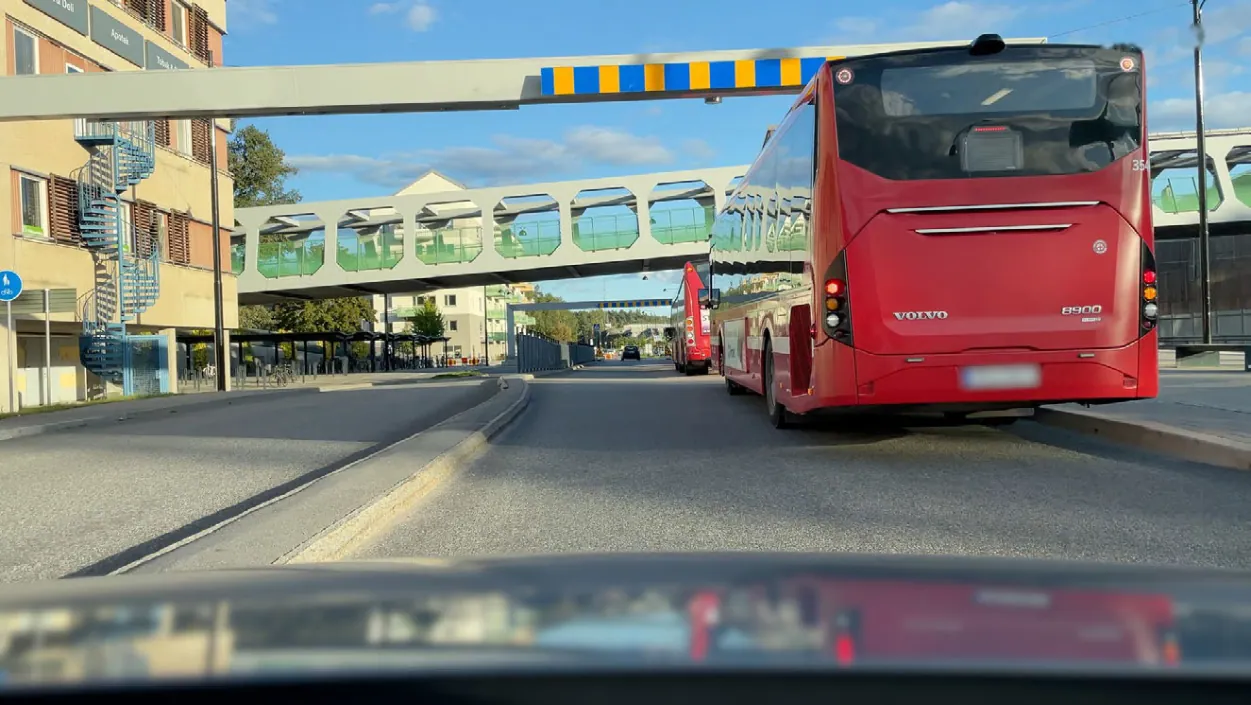
Their senses are not fully developed
It takes longer for a child to shift between near and distance vision. It is also harder for them to distinguish where a sound is coming from. This means that a child’s reaction time may be longer than you think.
Unable to predict risk
A child can be taught to stop before crossing the street. The problem is that they do not quite understand why this is important, which means that the instruction can easily be pushed aside when it is time to play.
Another problem is that children have difficulty judging the risks. They judge a car coming towards them at low speed in the same way as one swerving at high pace.
Children are small
In most cases, an adult can be spotted behind a parked car. A child, however, can be completely hidden by the car, which means that you will have no warning before they come out into the street.
Sensitive to polluted air
Children are particularly sensitive to the pollution caused by traffic. A child who is exposed to a lot of emissions has a higher risk of developing asthma, for example.
School buses
When overtaking a stationary school bus, you have to be very careful. There is a great risk that the children getting off the bus may suddenly run across the street without looking.
School buses have signs with warning lights that the driver turns on 100 metres before a stop and turns off 100 metres after the stop.
Crossing guards
In Sweden, crossing guards are themselves often children or young people. They wear orange coats with reflectors and stand next to pedestrian crossings.
Main tasks of the crossing guards
- Make sure that children coming to and from school get across the road safely.
- Act as a human warning sign to alert drivers that there are children nearby.
The crossing guards have no official powers – for example, they are not authorised to stop traffic.
Is it true that you are obliged to show consideration to certain road users?
Correct answer: B) Yes – for example, children, the elderly and people with disabilities.
Explanation
“The road user shall show particular consideration to children, the elderly, crossing guards and people with visible disabilities or illnesses that constitute an obstacle for them in traffic.” (Road Traffic Ordinance)
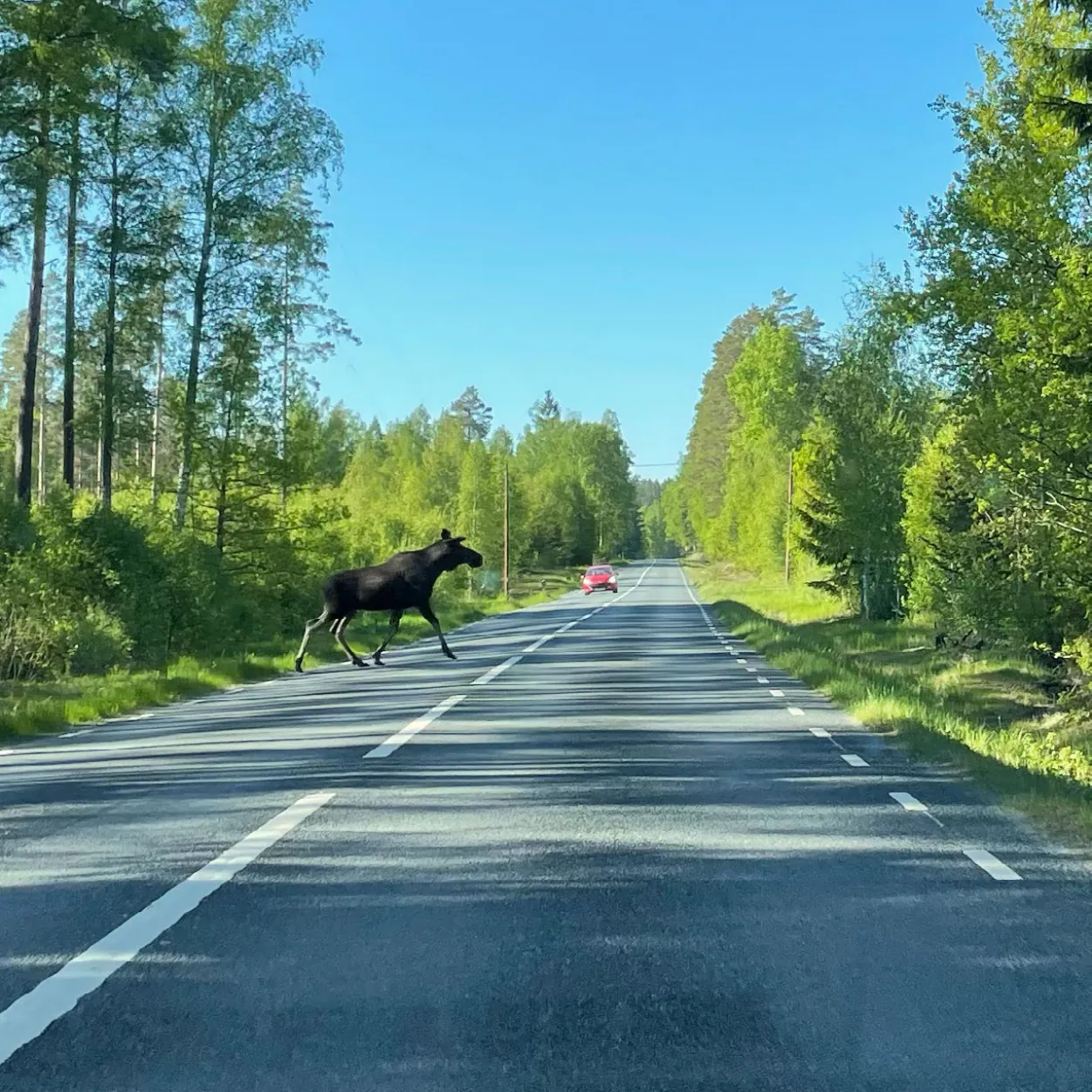
Traffic accidents
Humans are designed to walk and run. Driving a car is unnatural for us, as the speed is very high (compared to walking) and our bodies are not made to withstand the impact of a collision.
Causes of accidents

There are three main causes of traffic accidents:
- Human error.
- Unsafe roads.
- Unsafe vehicles.
Prone to accidents
The same group, around 15% of the population, are involved in 50% of all accidents. The characteristics of this group increase the risk of accidents – for example, they:
- Make excuses for their mistakes, they do not learn from them.
- Deny the dangers – for example, by ignoring that there is a preschool nearby.
- Act impulsively, which can cause dangerous situations.
- Are proud, which can lead to a negative reaction if they get overtaken.
- Have a need for self-assertion, which means that they need to show how big and strong they are.
- Are prone to reaction formation, which is a form of contradictory behaviour. Those who are careful in other contexts use traffic to vent their frustration and other feelings.
- Party a lot, which leads to late-night driving (tiredness) and drunk driving.
- Are adventurous. Some drivers view traffic as an opportunity for racing.
What to do in the event of a major accident
If you are one of the first to arrive
- Survey the scene
Number of casualties? Other risks? - Prioritise
What needs to be done first? Person in a burning car? - Warn
If visibility is limited, there is a risk of more cars colliding, thus making the situation worse. - Call 112
Location, number of casualties.
First aid
- Life-threatening situations Move any person lying in the middle of the road or sitting in a burning car.
- Breathing Find out if immobile persons are breathing. If the person is breathing, put them in the recovery position. If the person is not breathing:
- No pulse
Cardiopulmonary resuscitation (CPR) is required. - Has a pulse Mouth-to-mouth resuscitation.
- No pulse
- Bleeding Stop the bleeding by applying pressure and tying a piece of fabric around the wound.
- Shock Does not refer to people who have been scared, but to circulatory shock, which involves life-threatening internal damage (bleeding). The person will often be pale and experience cold-sweats. Make sure the person is breathing properly and do not give them anything to drink.
Remember
- Stay at the scene of the accident until the emergency responders have taken over and you have given them all the information they ask for. If you leave too soon, it may be considered absconding, which is punishable.
- Exception: If you did not witness the accident and you see that a lot of people have already stopped, you should not stop yourself, as this can lead to more accidents and also hinder the emergency response vehicles.
- You must give your name and other information requested of you, even if it is a private individual involved in the accident who is asking.
- You may not move anything at the scene of the accident.
- Exception: If the vehicle/object poses a danger to other road users, you should move it.
- The police must always be contacted if someone has been injured in the accident.
Dangerous goods
Do not approach lorries marked with signs indicating dangerous goods. Such cargo can be lethal if there is a leak. There may also be a high risk of explosion.
What to do in the event of a minor accident
You should keep an insurance claim form (provided by your insurance company) in your car. If you do not have one, write down:
- The time, date and location of the accident.
- The name and address of any witnesses, and what they have seen.
- The counterparty’s name, address, telephone number, vehicle, registration number and insurance company.
- Any damage caused.
Parking accident or similar
- In the event of a parking accident or other property damage, you must contact the owner of the car or the object that you have run into. The Swedish Transport Agency can help you find information about the owner based on the vehicle registration number.
- Also put a note with your contact information on the windscreen/location.
- If you are unable to reach the owner, you must contact the police. They will make a note of the accident, which means that you will not be accused of absconding.
If the object you have damaged is a road sign, you must immediately try to restore it. If you are unable to, contact the police and warn other road users.
Wildlife accidents
Greatest risk of wildlife on the road
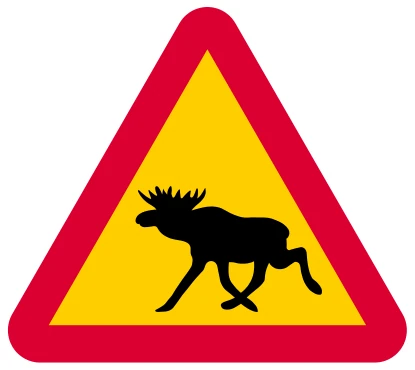
- At dusk and dawn.
- May–June and September–October.
- On salted roads.
- Close to open fields.
- Close to a watercourse.
- At the start and end of a wildlife fence.
Accidents involving elk (moose)
Accidents involving elk are the most dangerous type of wildlife accident. The reason for this is that the body of the elk, which weighs around 700 kg, is at the height of the windscreen of the car. In case of a head-on collision, there is a great risk of the elk ending up inside the car, injuring the passengers.
Once an elk has started crossing the road, it will in all likelihood continue straight ahead. It is therefore best to go behind the elk, if you have to choose which way to swerve.
What to do if you hit a large animal
- Warn other road users with your hazard warning lights and warning triangle.
- If the animal is dead, try to move it away from the road. If the animal is wounded and runs away, you must mark the location of the accident. This will make it easier for a hunter to track the wounded animal.
- If the animal is wounded, you are obliged to inform the police. You are also obliged to contact the police if the animal you hit (regardless of whether it is wounded) is one of the following:
Bear | Wolf | Wolverine | Lynx | Elk | Deer |
Roe deer | Otter | Wild boar | Mouflon sheep | Eagle |
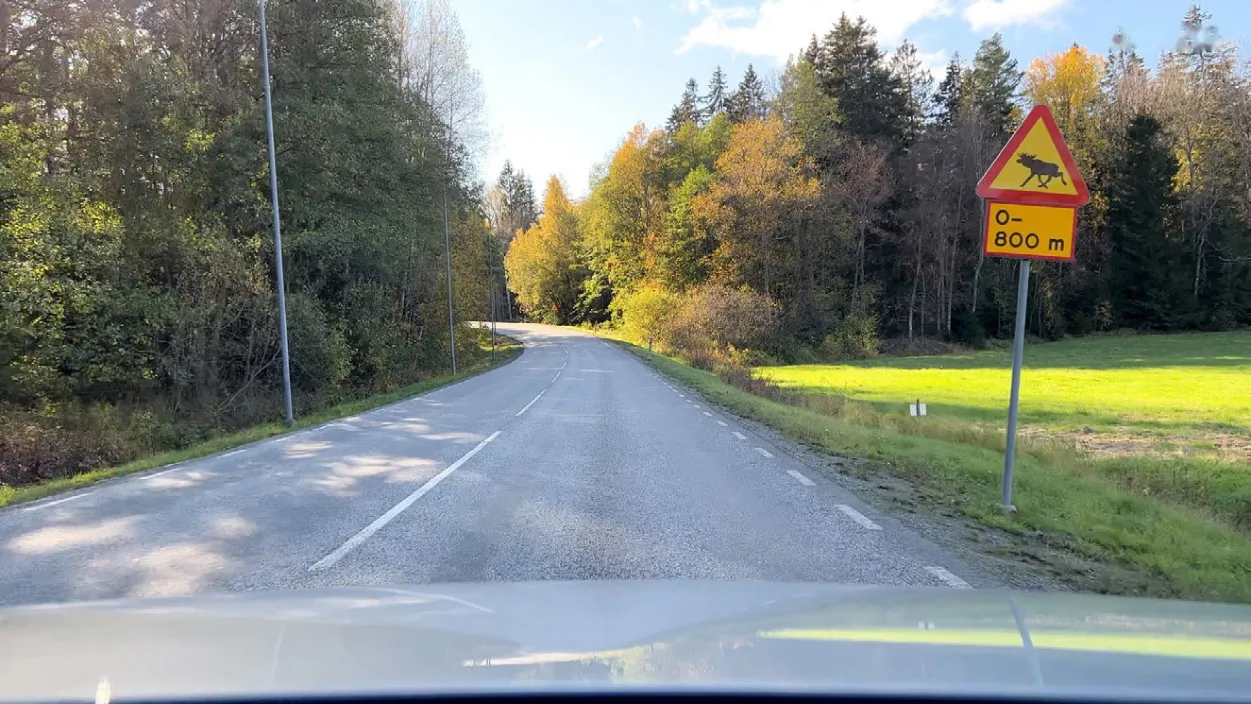
Warning triangle
All cars must be equipped with a warning triangle. If your car stalls on a road where the speed limit is over 50 km/h, you must display a warning triangle. Place the warning triangle 50–100 metres behind the car.
Clarification of “over 50 km/h”
You have to display a warning triangle if the speed limit is over 50 km/h. In practice, this means that you only have to display it once the speed limit is 60 km/h (which is the next step on the speed scale). Think of it this way: 50 km/h is not “over” 50 km/h (it is exactly 50 km/h).
Traffic accident statistics
Approximate numbers
- Number of deaths: 220 per year.
- Severe injuries: 2,000 per year.
- Mild injuries: 14,000 per year.
- 20% of all traffic deaths are related to the use of drugs or alcohol.
- 40% of all those killed in traffic were not wearing a seat belt.
- 75% of all those killed in traffic are men.
- 70,000 wildlife accidents occur each year.
- Risk of a pedestrian being killed if hit by a car:
- 10% risk of fatality at 30 km/h.
- 80% risk of fatality at 50 km/h.
- Almost 100% risk of fatality at 90 km/h.
Different age groups
- 18–19 years: Run a 5–6 times greater risk of being involved in a traffic accident compared to the average.
- 45–54 years: Have the best reaction times.
- 65–74 years: Have experience and adapt their driving to their limitations (for example, by avoiding driving at night or in heavy traffic).
- 75 years and older: Run a 5–6 times greater risk of being involved in a traffic accident compared to the average.
Be extra careful
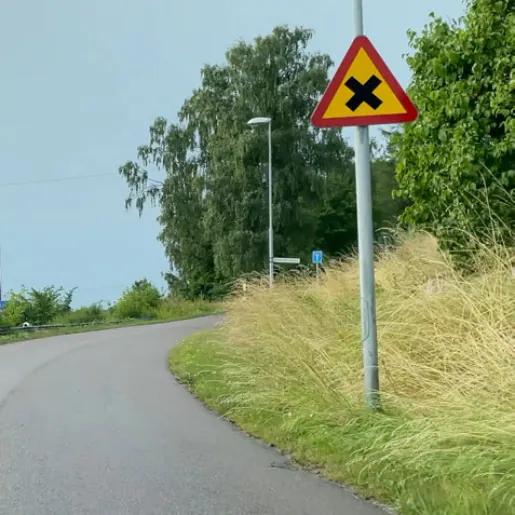
- When turning left on a country road.
- At junctions where the priority-to-the-right rule is applicable.
- While overtaking.
- In dense queues.
- At weekends (Friday, Saturday and Sunday).
- During summer months (June, July and August).
- Late at night (02.00–05.00).
Accident locations
- Most accidents occur in built-up areas. This is primarily due to the greater concentration of cars and other road users.
- The most serious accidents occur outside of built-up areas. This is primarily due to the greater speeds.
High level of safety in Sweden
Sweden ranks very highly in international comparisons of traffic safety.
In the United States there are around 40,000 traffic deaths per year. Adjusted to population, that number is almost six times higher than in Sweden.
Traffic deaths per year
Year | Number of deaths |
|---|---|
1950 | 595 |
1960 | 1,036 |
1970 | 1,307 |
1980 | 848 |
1990 | 772 |
2000 | 591 |
2010 | 266 |
… | … |
2021 | 210 |
2022 | 227 |
2023 | 229 |
- Even though traffic is increasing, the number of fatal accidents is decreasing.
- In 1950, there were around 345,000 motor vehicles in Sweden and 595 traffic deaths. Today there are more than 5,500,000 motor vehicles and the number of deaths is below 300 per year. The number of deaths per motor vehicle has declined by 97% during that time.
- In 1965, 1,313 people were killed in traffic accidents, which makes it the deadliest year in Swedish history. That number corresponds to 1 death per 22 million vehicle kilometres. Today, the number of deaths is 1 per 300 million vehicle kilometres. That is a reduction of over 90%.
Number of deaths according to accident type
Accident type | Number of deaths (2023) |
|---|---|
Turning off from a road | 7 |
Bicycle and moped | 30 |
Pedestrians | 24 |
Junction | 9 |
Head-on collision | 50 |
Overtaking | 0 |
Single-vehicle | 65 |
Catching up (rear-end collision) | 9 |
Animals | 9 |
Other | 26 |
Numbers for 2024 were not yet available when the book was published.
Vision Zero
- In 1997, the Swedish Parliament adopted a new long-term strategy for road safety. The goal is to achieve zero fatalities or injuries on Sweden’s roads.
- The focus is to strategically remove the risks (for example, by having safer cars and adding more cable barriers). Driver education is also important, although people will always make mistakes.
A few words on statistics
The statistics included in the Theory Book may feel like unnecessary knowledge, but there is a good reason for the inclusion of these statistics. For example:
Why do I need to know that 40% of those killed in traffic did not wear a seatbelt?
– The aim is to make you realise how important the seatbelt is. You can also quote that statistic if a passenger claims that the seatbelt is “unnecessary”.
Why do I need to know that there are 70,000 wildlife accidents per year?
– If you believe that there are 10 wildlife accidents per year, you might not respect the signs warning you about wild animals. If you know that the number is 70,000, you will be extra careful when you see a sign warning you about wild animals.
What should your first response be if you accidentally damage a road sign so that other road users cannot see it?
Correct answer: B) Try to restore the road sign.
Explanation
“A person who has moved or altered a road sign, road marking, traffic signal or other traffic device shall immediately restore the device to an adequate condition. If this is impossible, they shall promptly inform the police or the person who installed and maintains the device of its condition and take any necessary measures, as required by the traffic situation.” (Road Traffic Ordinance)
It is important that the sign is restored as soon as possible. If it is a give way sign at a junction, the consequences could otherwise be dire.
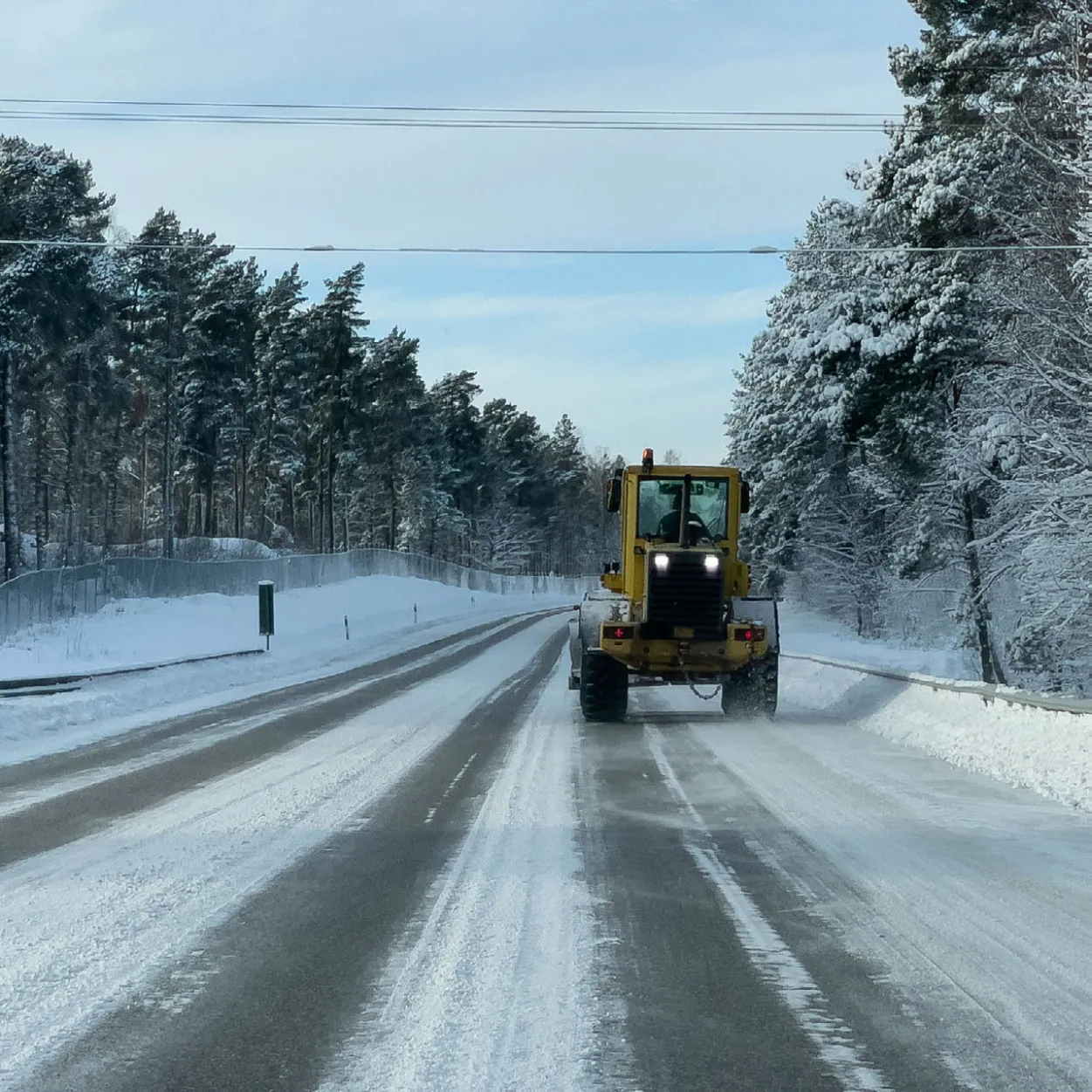
Classification of vehicles
Road user
All persons travelling in a vehicle or walking, cycling or riding along a road are classed as road users.
Vehicle
“A device on wheels, tracks, runners or similar which is designed primarily for travel on land, and which does not run on rails. Vehicles are subdivided into motorised vehicles, trailers, towed vehicles, sidecars, bicycles, horse-drawn vehicles and other vehicles.” (Ordinance on Road Traffic Definitions)
- Motorised vehicles
- Motor vehicles
- Cars
- Private cars
- Class I (normal)
- Class II (campers)
- Lorries
- Light lorries
- Heavy lorries
- Buses
- Light buses
- Heavy buses
- Private cars
- Motorcycles
- Light motorcycles
- Heavy motorcycles
- Mopeds
- Class I (EU mopeds)
- Class II
- Cars
- Tractors
- Tractor A
- Tractor B
- Heavy equipment
- Class I
- Class II
- Terrain vehicles
- Off-road vehicles
- Terrain scooters
- Motor vehicles
- Trailers
- Trailers
- Trailer sleds
- Light trailers
- Heavy trailers
- Towed vehicles
- Sidecars
- Bicycles
- Horse-drawn vehicles
- Other vehicles
Speeds for different vehicles
Below you will find the maximum speeds for a selection of vehicles. Even though you are just studying for a category B licence, it is good to know the maximum speed of other vehicles. It could be helpful in certain situations, such as when you are planning to overtake.
Vehicle | Speed |
|---|---|
Private car and light lorry. Motorcycle. Light bus. | Speed limit of the road applies |
Heavy bus with seat belts. | 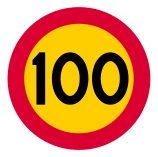 |
Heavy bus without seat belts. Heavy lorry on a motorway or clearway. | 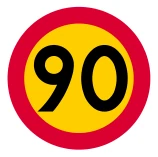 |
Heavy lorry on other roads. Motor vehicle with braked trailer/caravan. Motor vehicle with unbraked trailer/caravan whose total weight (or unladen weight when the trailer/caravan is unloaded) does not exceed half the pulling vehicle’s unladen weight, although no more than 750 kg. | 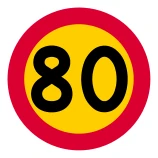 |
Moped class I (EU moped). | 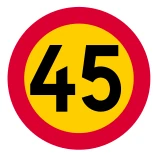 |
Motor vehicle with unbraked trailer/caravan whose total weight (or service weight when the trailer/caravan is unloaded) does exceed half the pulling vehicle’s service weight. | 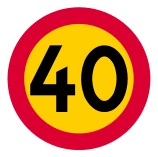 |
Car towing another car. | 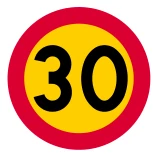 |
How fast are you allowed to drive in a light lorry?
Correct answer: D) As fast as indicated by the sign.
Explanation
Maximum speed for light lorries: “The speed limit applicable to the road.” (Swedish Transport Agency)
Distances
reaction, braking & stopping distances
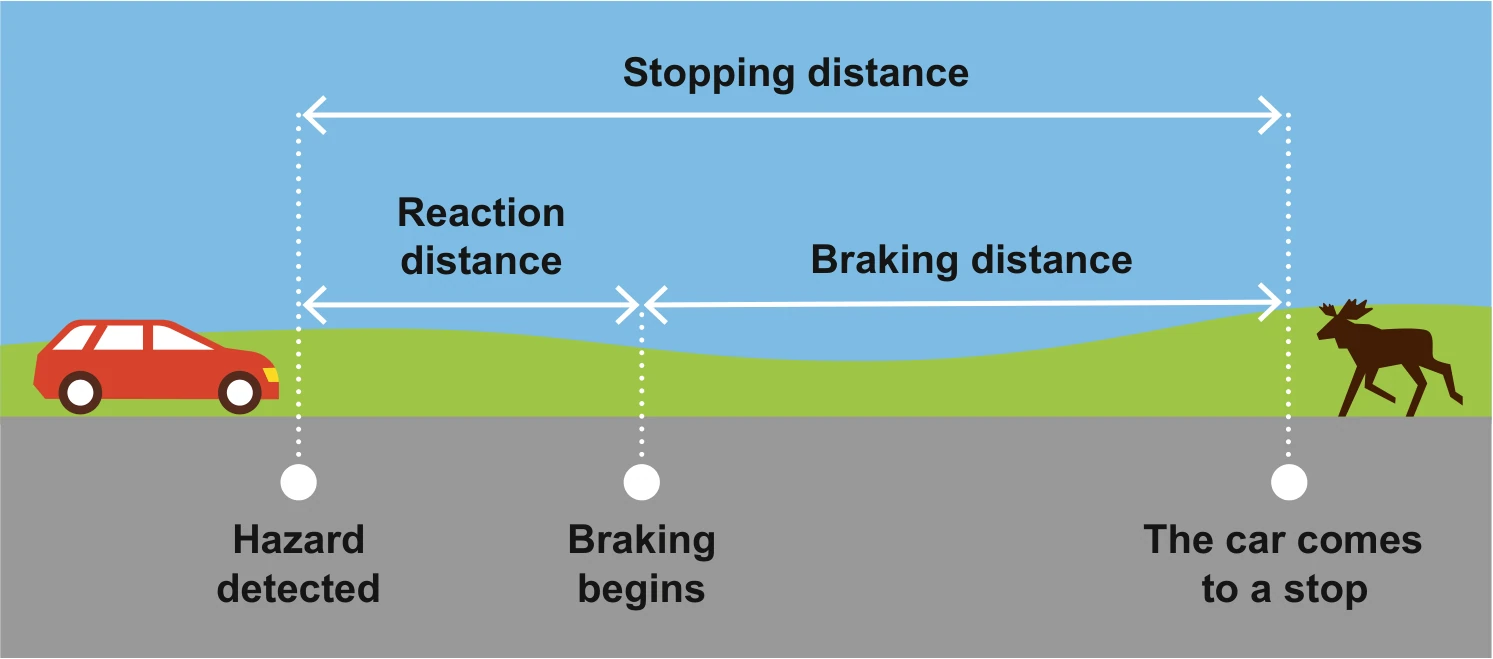
Reaction distance
The reaction distance is the distance you travel from the point at which you detect a hazard until you begin braking or swerving.
The reaction distance is affected by
- The car’s speed (proportional increase):
- 2 x higher speed = 2 x longer reaction distance.
- 5 x higher speed = 5 x longer reaction distance.
- Your reaction time.
- Normally 0.5–2 seconds.
- 45–54-year-olds have the best reaction time in traffic.
The reaction distance can be decreased by
- Anticipation of hazards.
- Preparedness.
The reaction distance can be increased by
- The necessity of decision-making (for example, deciding whether to brake or to steer away from the hazard).
- Alcohol, drugs and medication.
- Tiredness.
Calculate the reaction distance
Easy method
Formula: Remove the last digit in the speed, multiply by the reaction time and then by 3.
Example of calculation with a speed of 50 km/h and a reaction time of 1 second:
50 km/h ⇒ 5
5 * 1 * 3 = 15 metres reaction distance
More precise method
Formula: d = (s * r) / 3.6
d = reaction distance in metres (to be calculated). s = speed in km/h.
r = reaction time in seconds.
3.6 = fixed figure for converting km/h to m/s.
Example of calculation with a speed of 50 km/h and a reaction time of 1 second:
(50 * 1) / 3.6 = 13.9 metres reaction distance
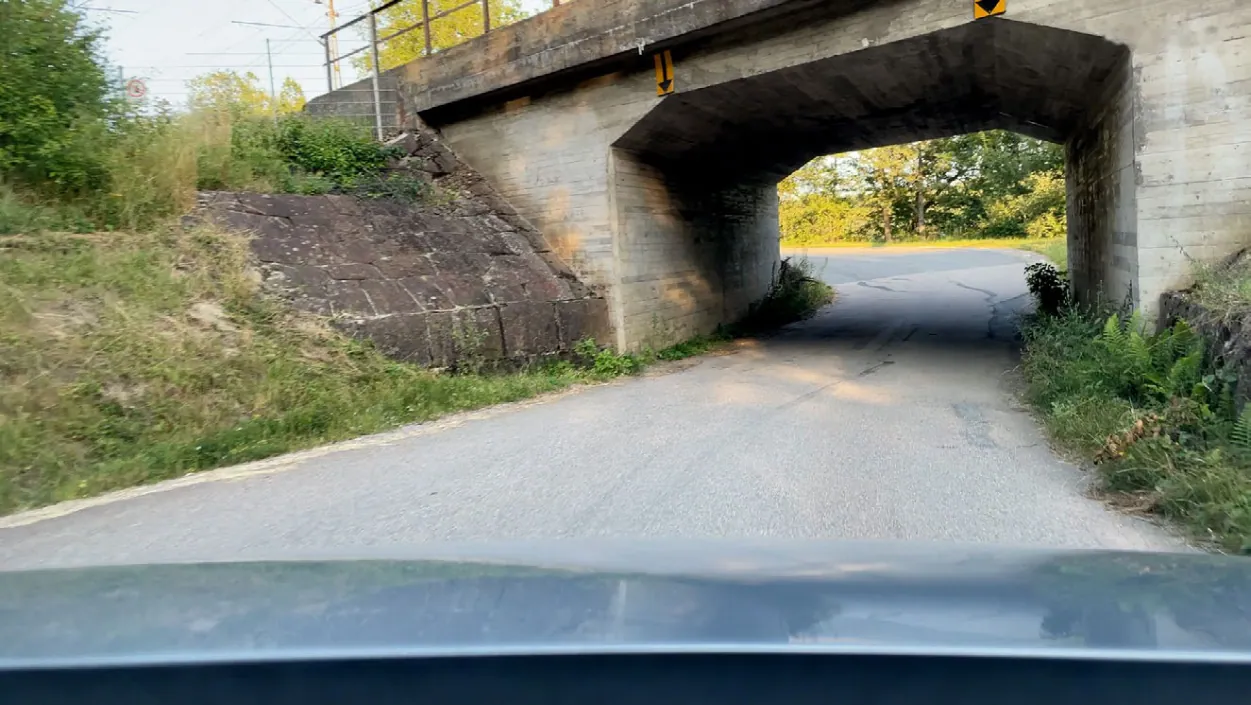
Braking distance
The braking distance is the distance the car travels from the point at which you begin braking until the car has come to a standstill.
The braking distance is affected by
- The vehicle’s speed (quadratic increase: “raised to the power of 2”):
- 2 x higher speed = 4 x longer braking distance.
- 3 x higher speed = 9 x longer braking distance.
- The road (gradient and conditions).
- The load.
- The brakes (condition, braking technique and how many wheels are braking).
Calculate the braking distance
It is very difficult to achieve reliable calculations of the braking distance as road conditions and the tyres’ grip can vary greatly. The braking distance may, for example, be 10 times longer when there is ice on the road.
Easy method
Conditions: Good and dry road conditions, good tyres and good brakes.
Formula: Remove the last digit from the speed, multiply the figure by itself and then multiply by 0.4.
The figure 0.4 is taken from the fact that the braking distance from 10 km/h in dry road conditions is approximately 0.4 metres. This has been calculated by researchers measuring the braking distance. Thus, in the simplified formula, we base our calculations on the braking distance at 10 km/h and increase it quadratically with the increase in speed.
Example of calculation with a speed of 10 km/h:
10 km/h ⇒ 1
1 * 1 = 1
1 * 0.4 = 0.4 metres braking distance
Example of calculation with a speed of 50 km/h:
50 km/h ⇒ 5
5 * 5 = 25
25 * 0.4 = 10 metres braking distance
More precise method
Conditions: Good tyres and good brakes.
Formula: d = s2 / (250 * f)
d = braking distance in metres (to be calculated). s = speed in km/h.
250 = fixed figure which is always used.
f = coefficient of friction, approx. 0.8 on dry asphalt and 0.1 on ice.
Example of calculation with a speed of 50 km/h on dry asphalt:
502 / (250 * 0.8) = 12.5 metres braking distance
Stopping distance
Stopping distance = reaction distance + braking distance
Calculate the stopping distance with the easy methods
It is summer and the road is dry. You are driving at 90 km/h in a car with good tyres and brakes. You suddenly notice a hazard on the road and brake forcefully. How long is the stopping distance if your reaction time is 1 second?
The stopping distance is the reaction distance + braking distance. First we calculate the reaction distance:
- 90 km/h ⇒ 9
- 9 * 1 * 3 = 27 metres reaction distance
Then we calculate the braking distance:
- 90 km/h ⇒ 9
- 9 * 9 = 81
- 81 * 0.4 = 32 metres braking distance
Now both distances are combined:
- 27 + 32 = 59 metres stopping distance
How is the reaction time affected by worn tyres?
Correct answer: D) It is not affected at all.
Explanation
The reaction time depends solely on the human driver and has nothing to do with the properties of the car.
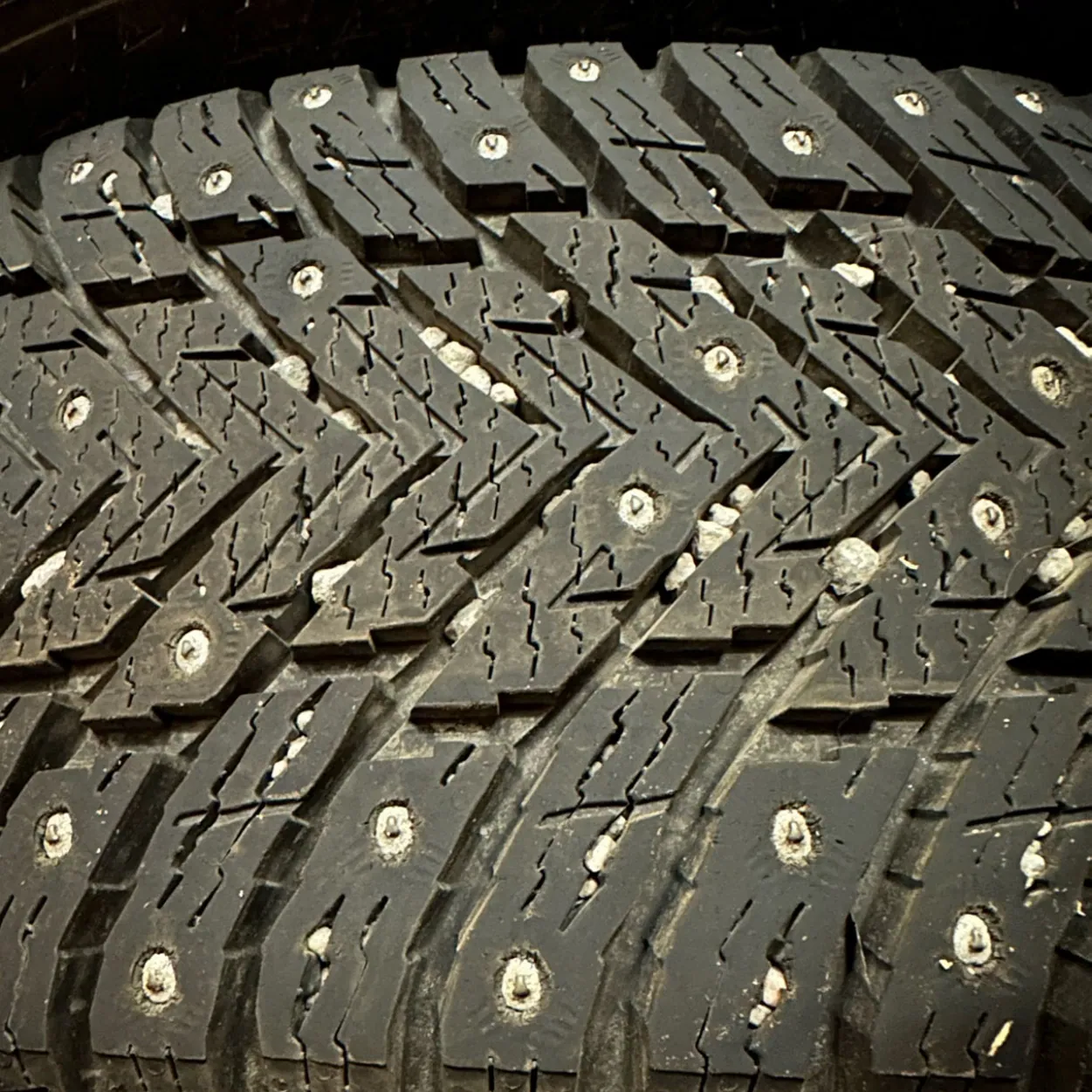
Tyres
Different types of tyres

- Summer tyres.
- Winter tyres, which are available in these variants:
- Studded tyres: Best on icy surfaces, but cause a lot of wear on the roads. Older cars without anti-skid systems should have studded tyres.
- Friction tyres: As good as studded tyres, except on ice. Friction tyres roll more quietly and wear less on the roads. Choose friction tyres if you have a car with an anti-skid system and often experience mild winters where you live.
The pattern and rubber compound differ between summer tyres and winter tyres. Driving with friction tyres in the summer can cause dangerous situations, because the rubber in the tyres becomes too soft.
There are tyres that are marketed as year-round tyres. These are not suitable for use in Sweden given the large differences between summer and winter.
Tread depth
Tyres | Tread depth |
|---|---|
New tyres | 8–9 mm |
Worse wet grip | 3–4 mm |
Minimum permitted on summer tyres | 1.6 mm |
Minimum permitted on winter tyres | 3 mm |
When it is obligatory to use winter tyres
- The legal requirement for winter tyres in winter road conditions: 1 December– 31 March.
- It is prohibited to have studded tyres 16 April–30 September unless the prevailing or expected road conditions are wintry.
Winter road conditions exist when there is snow, ice, slush or frost on some part of the road.
Clarification about winter tyres
It is 4 May, and there are winter road conditions. Am I allowed to use studded tyres?
– Yes, as there are winter road conditions.
It is 1 July and no winter road conditions can be expected. Am I allowed to use non-studded winter tyres?
– Yes, only studded tyres are forbidden. However, consider that the performance of the winter tyres will be degraded in hot weather.
It is 10 December and autumn weather (no winter road conditions). Am I allowed to use summer tyres?
– Yes, the dates forcing you to have winter tyres only apply during winter road conditions. However, consider that the performance of the summer tyres will be degraded in cold weather.
Studded tyres and human health
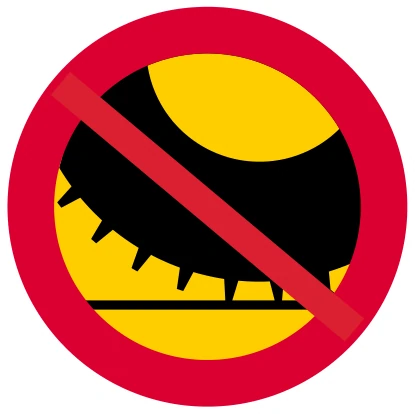
The studs rip up particles that are hazardous to human health. This is the most important reason for the ban on studded tyres between 16 April–30 September unless the prevailing or expected road conditions are wintry.
On some stretches of road in big cities, the air quality is so bad that studded tyres are banned altogether. This ban is marked with a road sign and applies even during the winter.
Tyre-related facts
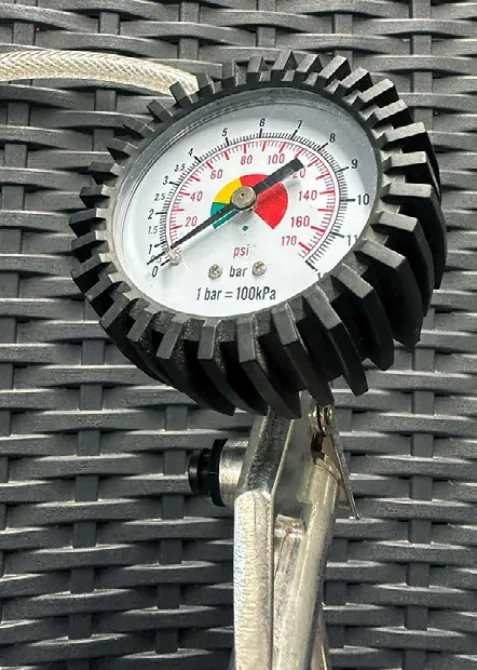
- Correct air pressure is important for safety and the lifespan of the tyres. See the car’s user manual and information from the tyre manufacturer.
- It is prohibited to combine summer tyres and winter tyres. It is also prohibited to combine studded winter tyres and non-studded winter tyres.
- Exception: If you get a puncture on a car fitted with winter tyres, you may use a summer spare tyre until the winter tyre has been fixed.
- Changing only one tyre leads to a deterioration of the car’s handling. You should therefore change both tyres on the same axle. It is best to change all tyres at the same time.
- After changing a tyre, you should re-tighten the wheel bolts after several tens of kilometres of driving in order to reduce the risk of them loosening.
- Summer tyres with snow chains may be used as an alternative to winter tyres.
- Tyres are subjected to greater wear at higher speeds.
- Smooth driving is better for the tyres.
- The tread is the patterned part of the tyre that is in contact with, and is worn by, the road surface.
- Retreaded tyres are used tyres that have been fitted with new treads. These are cheaper, but may potentially have worse properties than brand new tyres.
- Friction is the resistance between two objects sliding against one another. Ice skates on ice = low friction. Eraser on paper = high friction. The friction between the tyres and the road must be high in order to achieve the best grip.
- Tread wear indicators are small pieces of rubber which sit inside the grooves of the tyres. When the tyre tread has worn down so much that it is level with the tread wear indicators, the tyre should be changed as soon as possible.
Tyre fault
- Incorrect wheel alignment causes the car to pull to one side if you hold the steering wheel loosely on a straight road. This leads to uneven wear on the tyres. It can be caused by the tyres bumping into something.
- Incorrect balancing causes the steering wheel to vibrate occasionally. This leads to increased tyre wear.
Spare tyre in the event of a puncture
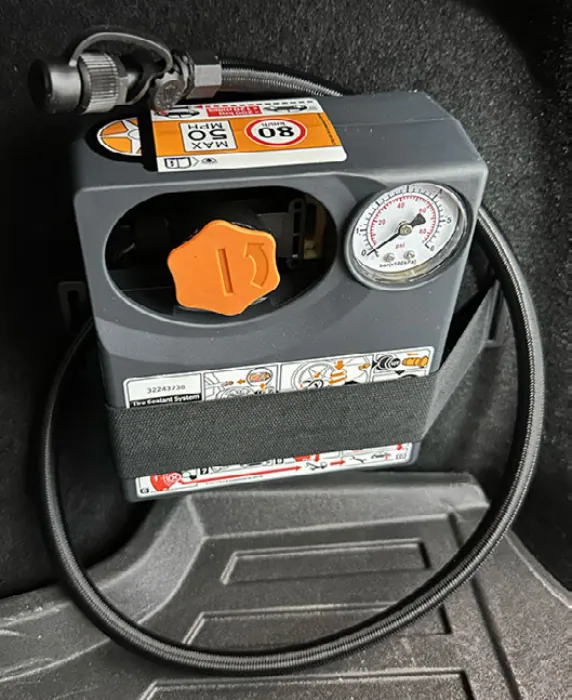
- A regular spare tyre is exactly the same type of tyre that the car normally has. You are allowed to drive with this just as with a regular tyre. However, it is often best to repair the old wheel and put it back, as having a brand new tyre on one side can impair the car’s handling.
- A temporary spare is a narrower tyre version that is only suitable for use in order to get the car to a workshop. The car’s user manual contains instructions regarding the maximum speed, maximum distance and the air pressure for the temporary spare.
Studded tyres on a trailer
If the car has studded tyres, then the trailer must also have studded tyres in winter road conditions. If the trailer has studded tyres, then the car does not need to have them.
This is to avoid the risk of jack-knifing, which occurs when the car has better grip than the trailer during braking. The result will be that the trailer skids to the side in an uncontrolled manner.
Examples
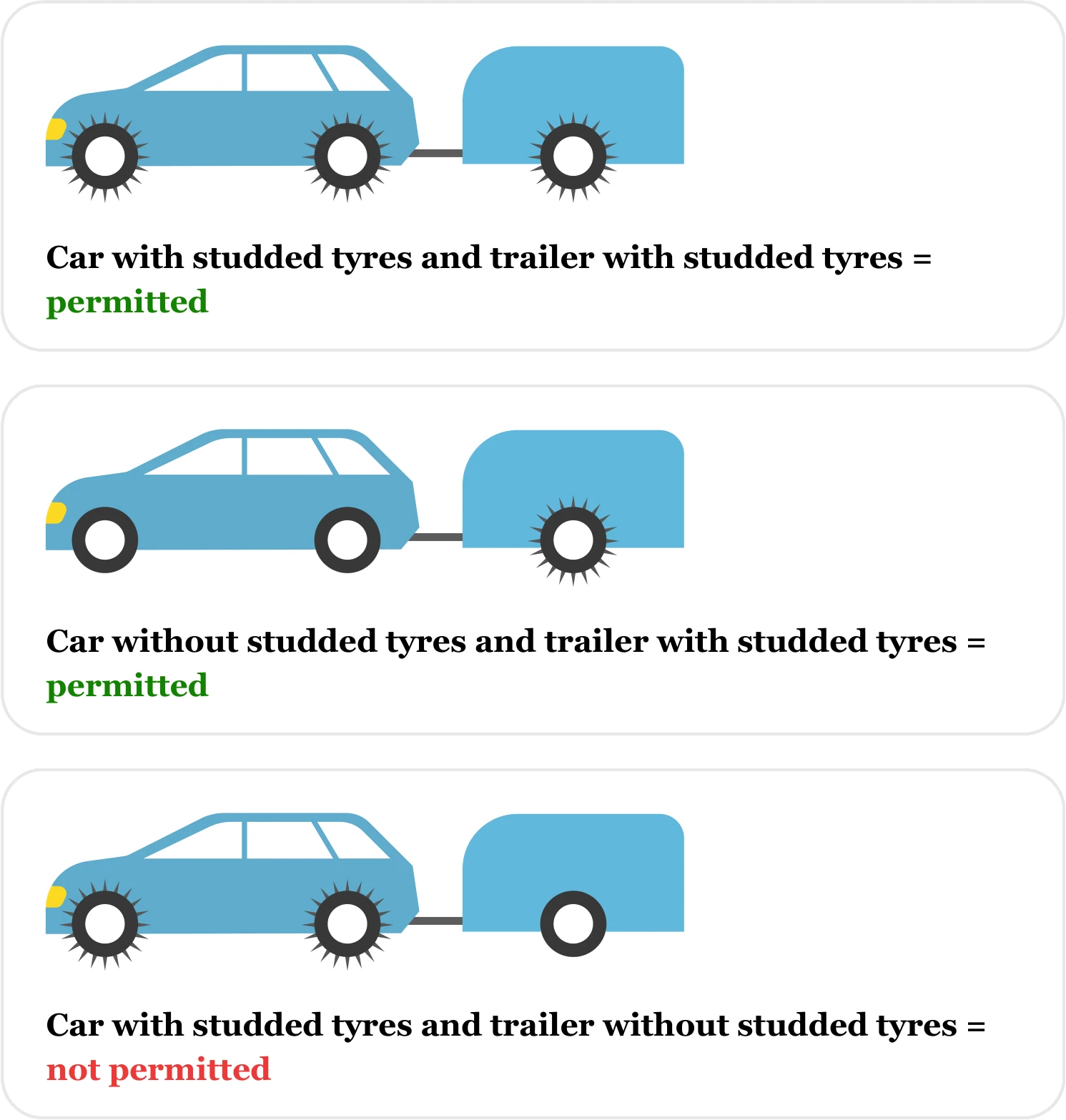
When driving in winter conditions, do you have to have studded tyres on the trailer if you have studded tyres on your car?
Correct answer: A) Yes.
Explanation
“If the car has studded tyres, a trailer connected to the car must also have studded tyres when driving in winter conditions.” (Swedish Transport Agency)
If the car has better grip than the trailer, there is a chance that the trailer will keep going when the car brakes and fold around the car like a folding pocketknife.
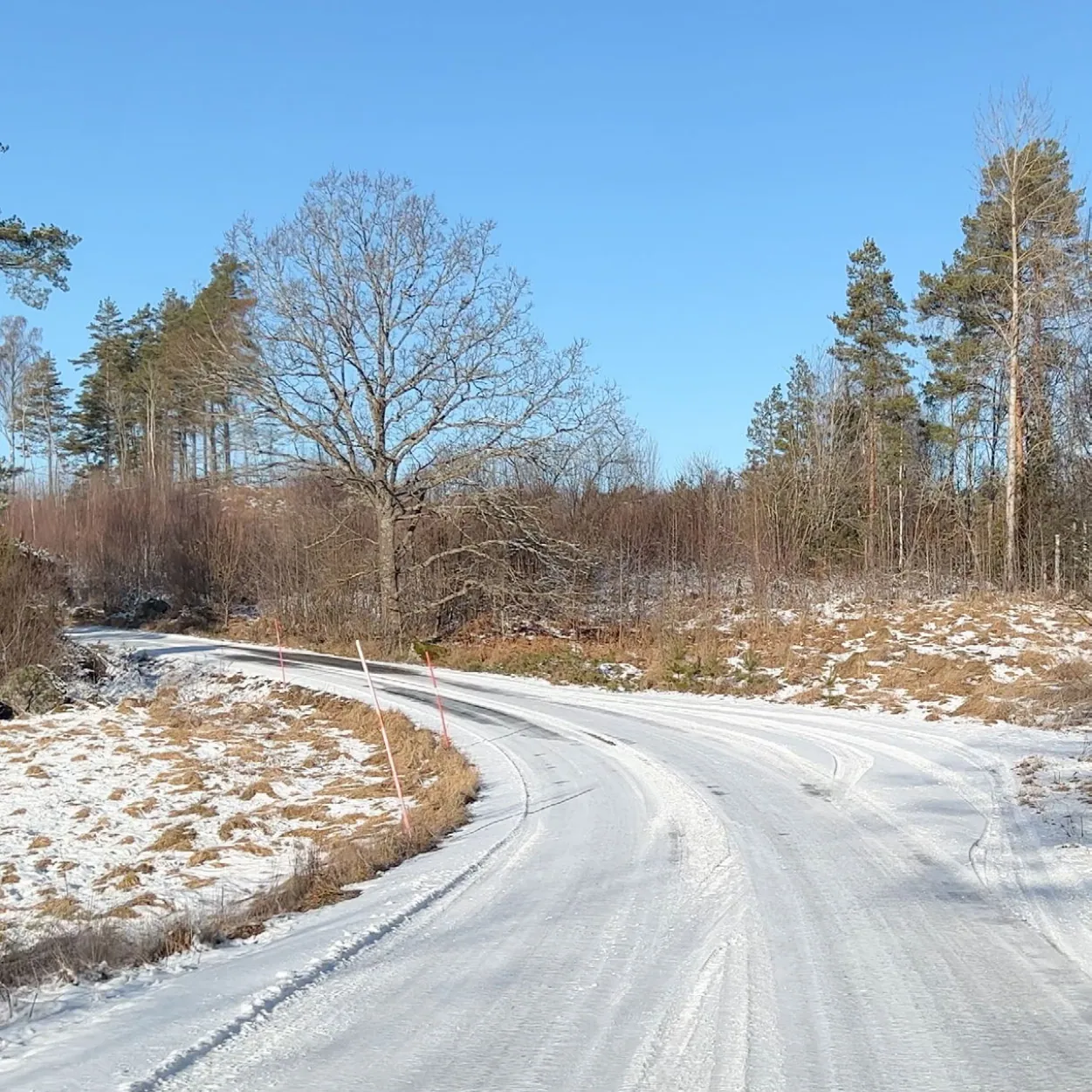
Steering
Oversteering
- The car turns too much as the back tyres lose grip.
- The result is a rear-wheel slide (fishtailing).
- This normally affects rear-wheel drive cars.
- To avoid oversteering, put the best tyres at the back.
Causes of oversteering
- Aquaplaning with the back tyres.
- Forceful braking.
- Forceful acceleration with a rear-wheel drive car.
- Tail-heavy car (too heavy a load at the rear).
- Insufficient air in the back tyres.
- Worn back tyres.
- Connected trailer or caravan.
- Crosswind.
Illustration: oversteering
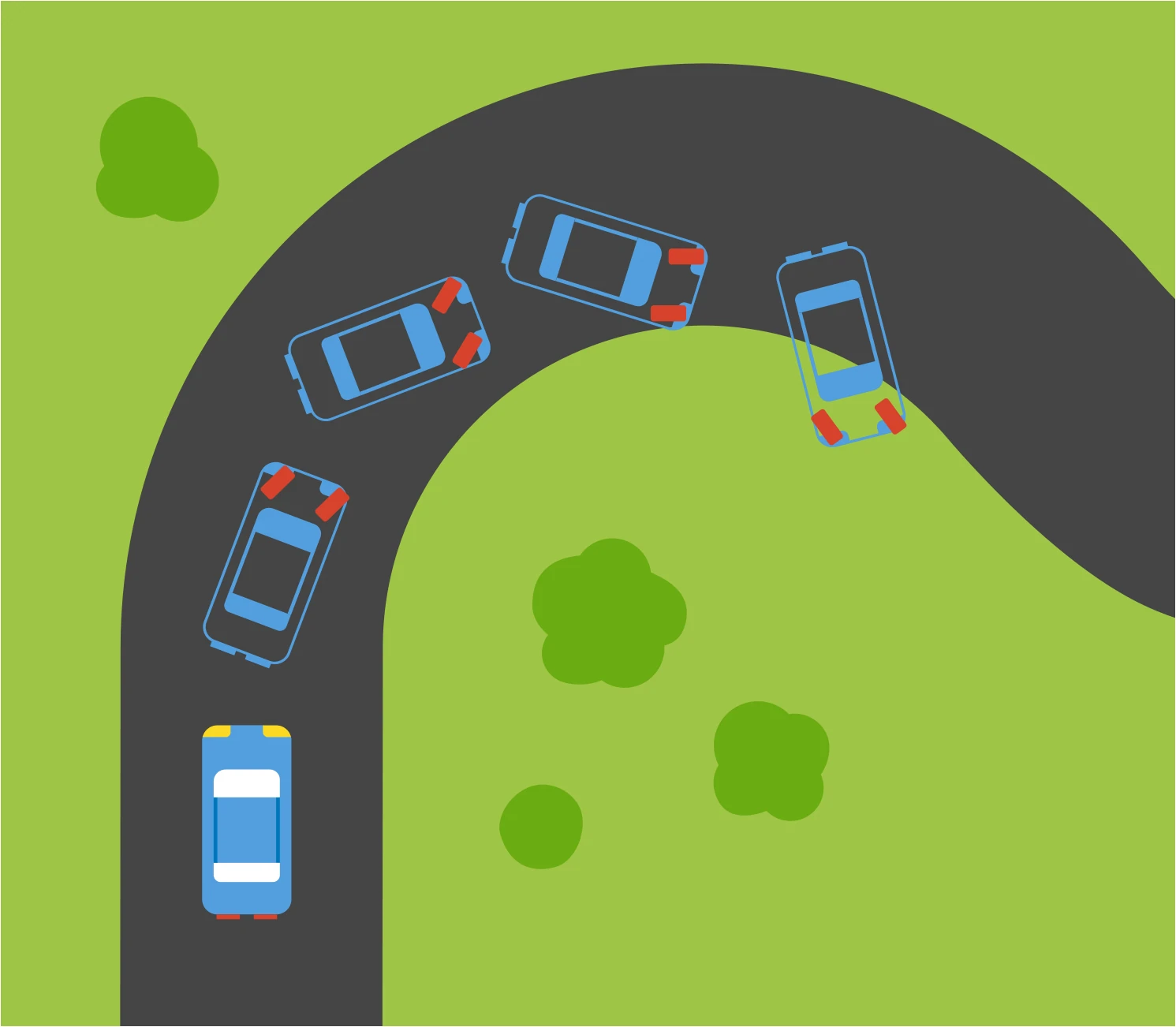
The driver first turns the wheel normally, to steer the car around the bend.
The driver then notices that the rear wheels are losing their grip and gliding to the left, which the driver tries to compensate for by turning the wheel to the left instead of the right (so that the front wheels of the car also go to the left, in the hope of straightening up the car to regain control).
However, the grip is too poor and the rear-wheel slide continues.
Note that the red wheels always point in the direction of the road, which is desirable. If the driver had kept turning the wheel to the right in the beginning, the car would have spun much faster and harder.
Understeering
- The car turns too little as the front tyres have insufficient grip.
- The car wants to continue travelling straight ahead at the bend.
- This normally affects front-wheel drive cars. (Most new cars have front-wheel drive.)
- Better than oversteering, as understeering requires less of the driver.
Causes of understeering
- Aquaplaning with the front tyres.
- Braking without ABS brakes.
- Forceful acceleration in a front-wheel drive car.
- Insufficient air in the front tyres.
- Nose-heavy car (too heavy a load at the front).
- Worn front tyres.
- Connected trailer or caravan.
- Locked differential (the wheels are forced to move at the same speed in bends).
Illustration: understeering
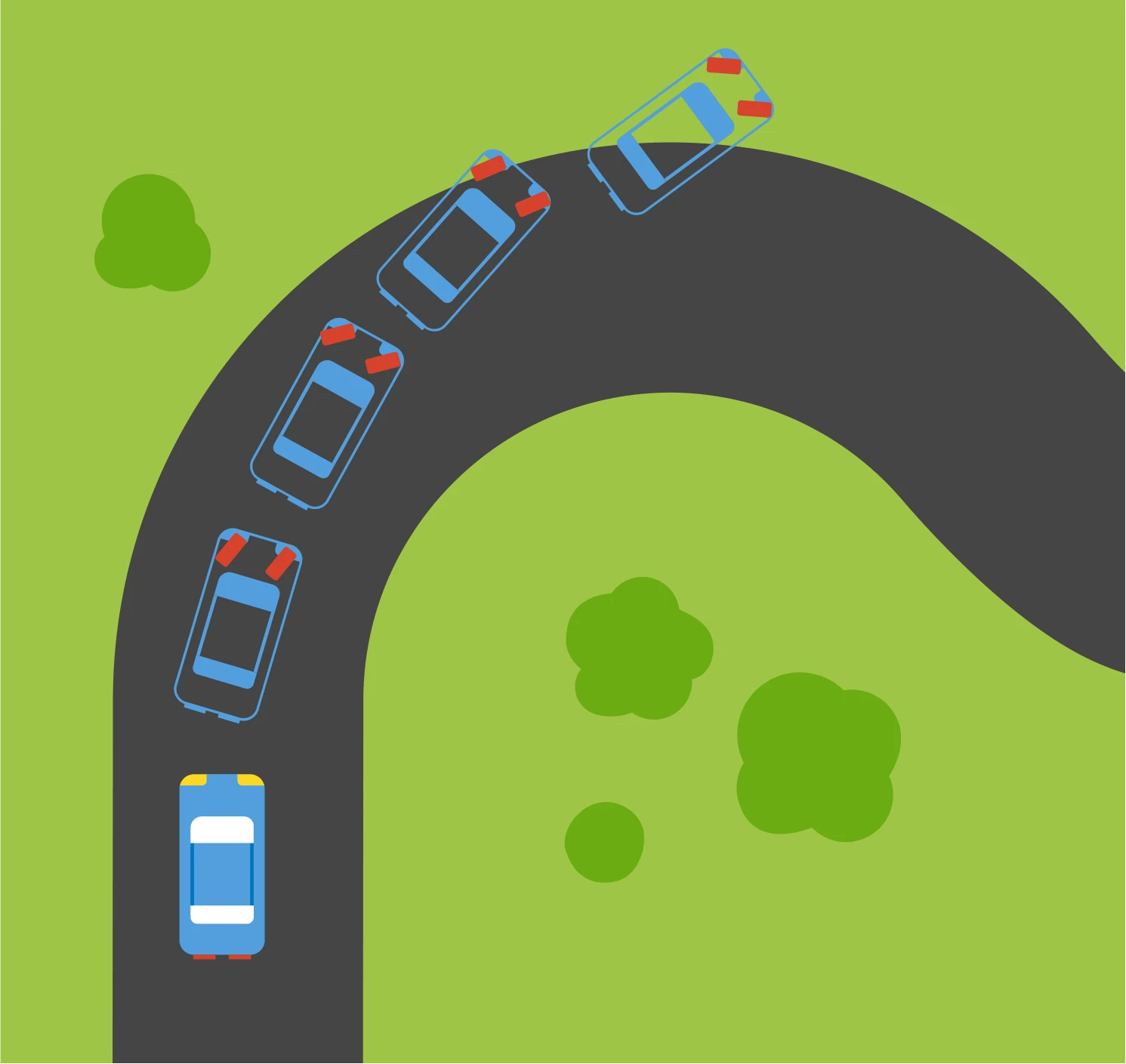
The driver first turns the wheel normally, to steer the car around the bend.
The driver then notices that the car is not reacting sufficiently, so turns the wheel more sharply.
However, there is not enough friction between the tyres and the road. Without friction, the car will remain on the same course. Here there is a certain amount of friction, which means that the car simultaneously continues straight ahead and turns to the right.
Steering system
- Power steering is a system that makes it easier to turn the wheel.
- Choppy steering probably indicates that dirt or air has entered the servo.
- A shaking steering wheel is normally caused by imbalance in the front wheels or looseness in the steering mechanism.
Electronic stability control
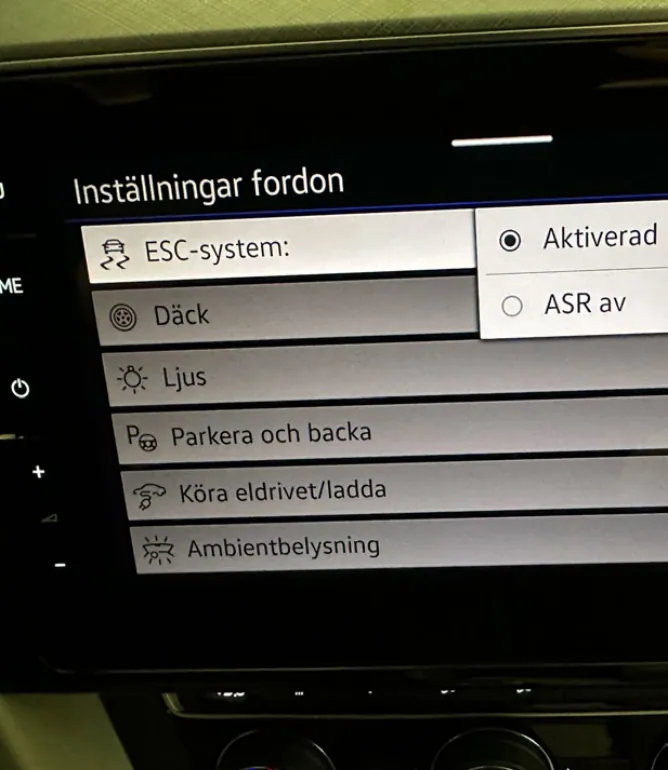
A computer with sensors detects whether a wheel is spinning or if the car is hastily turned in a certain direction. The computer uses this information to calculate the best measure for resolving the situation (e.g. applying brakes to one of the wheels).
These calculations and corrections take place so quickly that the driver will not normally notice anything. The electronic systems are very good from a road safety perspective.
Different names
Different manufacturers have different names for their electronic systems. A few examples:
- Anti-skid system.
- Anti-spin system.
- DSTC (Dynamic Stability and Traction Control).
- ESP (Electronic Stability Program).
- ESC (Electronic Stability Control).
Aquaplaning
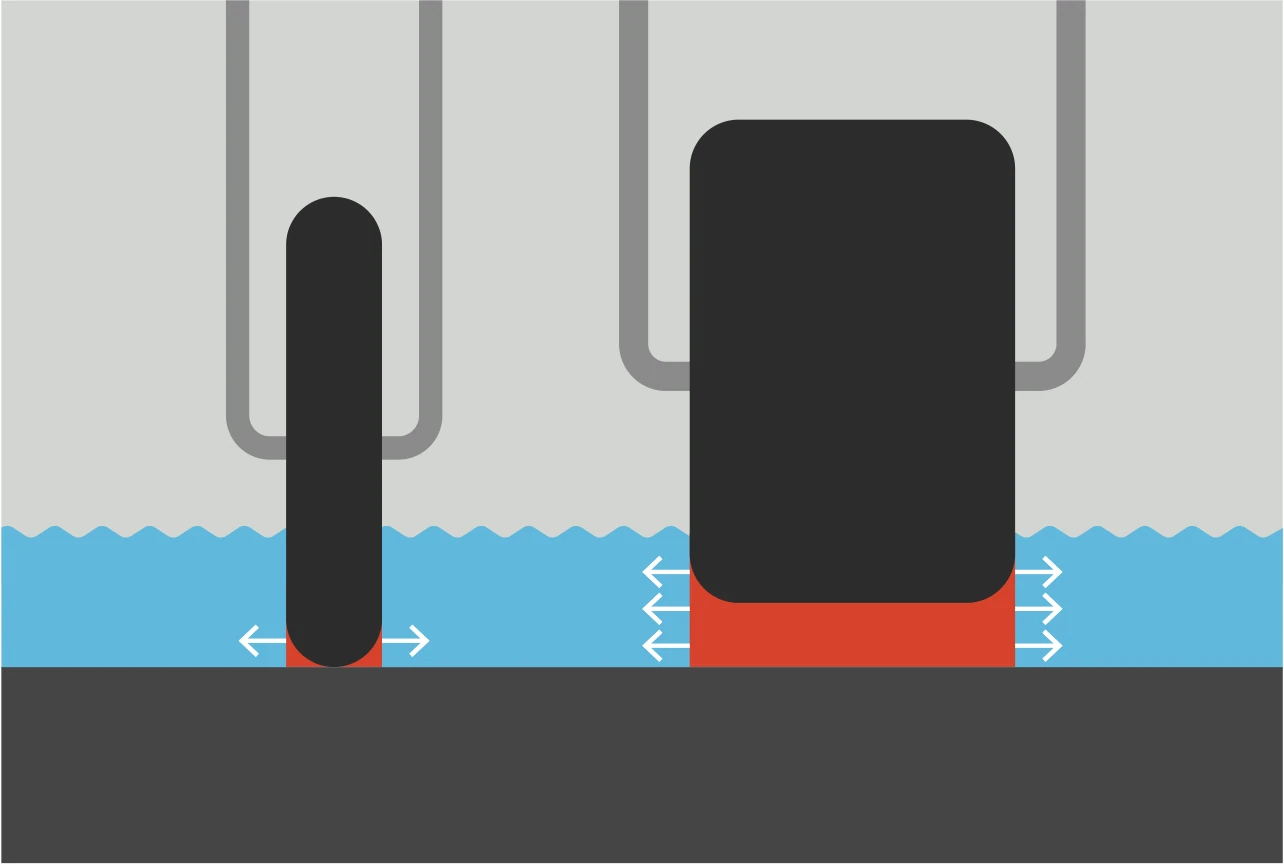
Aquaplaning essentially means that the car becomes a boat without steering. The tyres are unable to disperse all of the water from beneath it and thereby do not make contact with the road. In other words, the car floats on the water.
Wider tyres mean that more water needs to be pushed aside, which leads to a greater risk of aquaplaning.
Slushplaning is the same thing as aquaplaning, though it involves snow and slush rather than water.
Factors that increase the risk of aquaplaning or similar loss of control
- Large pools of water.
- High speed.
- Wide tyres.
- Tyres with poor tread depth.
If you begin aquaplaning
- Do not make any sudden movements with the steering wheel.
- The wheels should point in the direction of the road, so that you do not begin to skid when the grip returns.
- Depress the clutch.
- Release the accelerator.
- Do not brake.
Which type of tyre entails the greatest risk of aquaplaning?
Correct answer: C) Extra-wide tyres.
Explanation
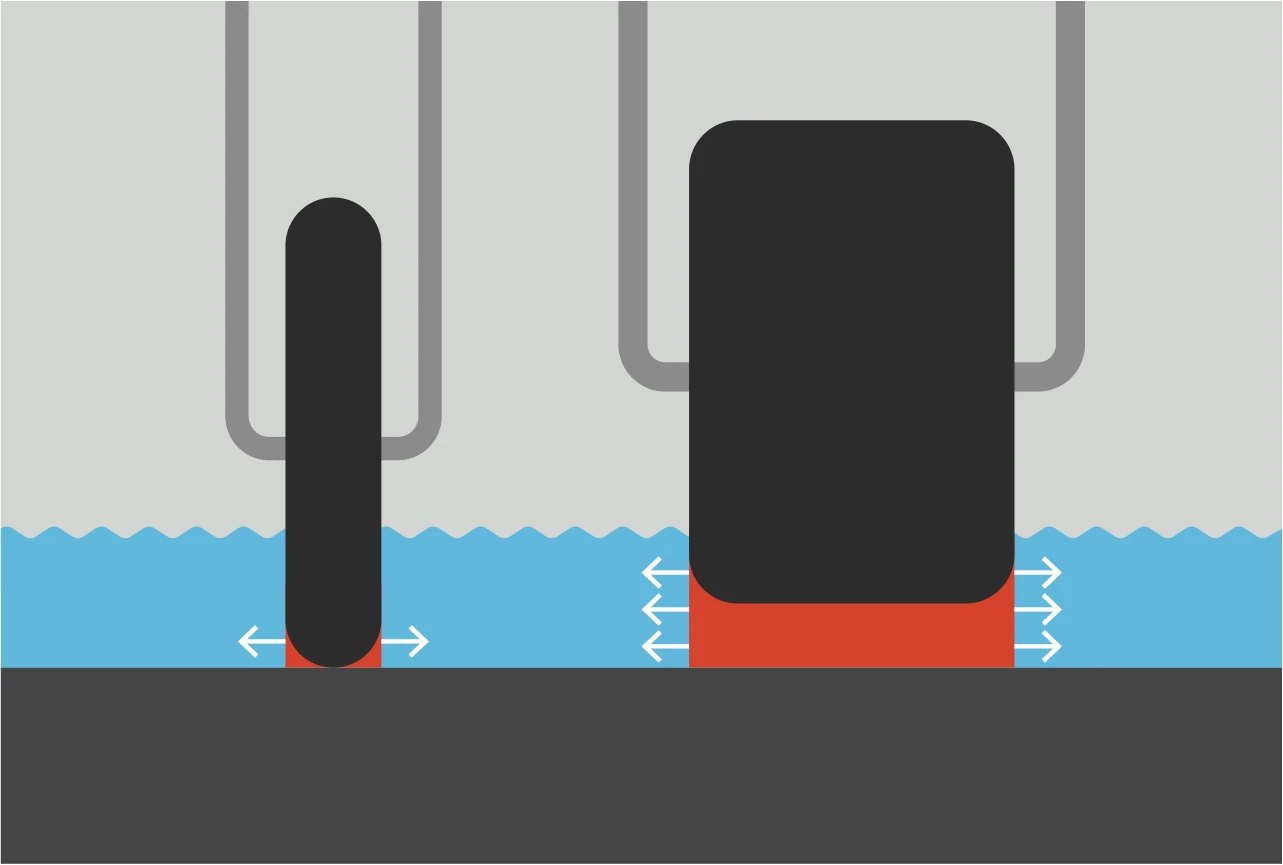
Red = the amount of water that has to be dispersed for the tyres to have contact with the road.
Wider tyres mean that more water needs to be pushed aside, which leads to a greater risk of aquaplaning.
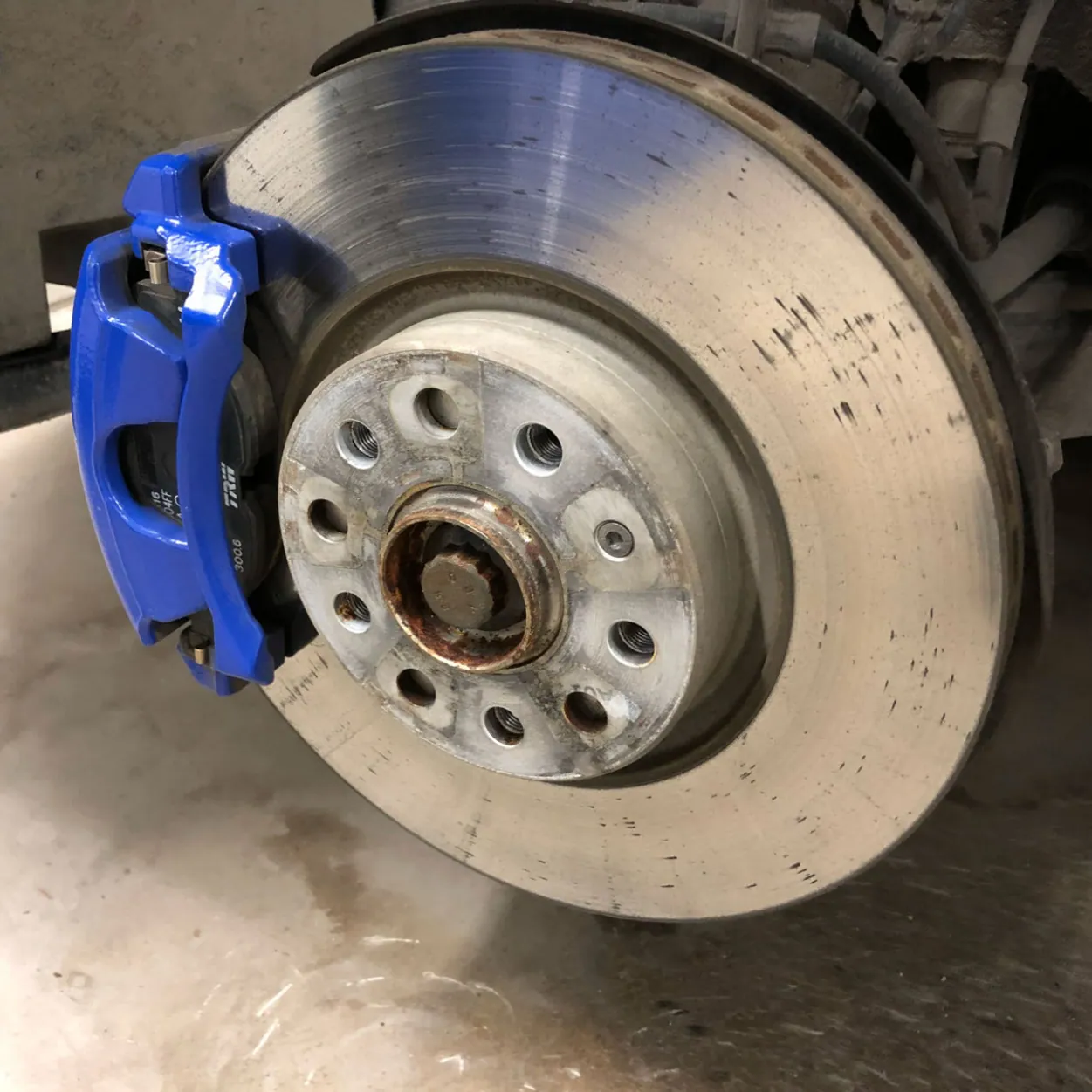
Brakes
Dual-circuit brake system
Dual-circuit brake system means that the braking system is divided into two independent parts. If one circuit (brake for two wheels) fails, the second circuit (remaining two wheels) functions as normal. This increases the level of safety and is a feature of all but the oldest of cars.
Modern cars have hydraulic brakes. This means that the braking force is transferred from the pedal to the brakes with the help of a special brake fluid.
Disc brakes
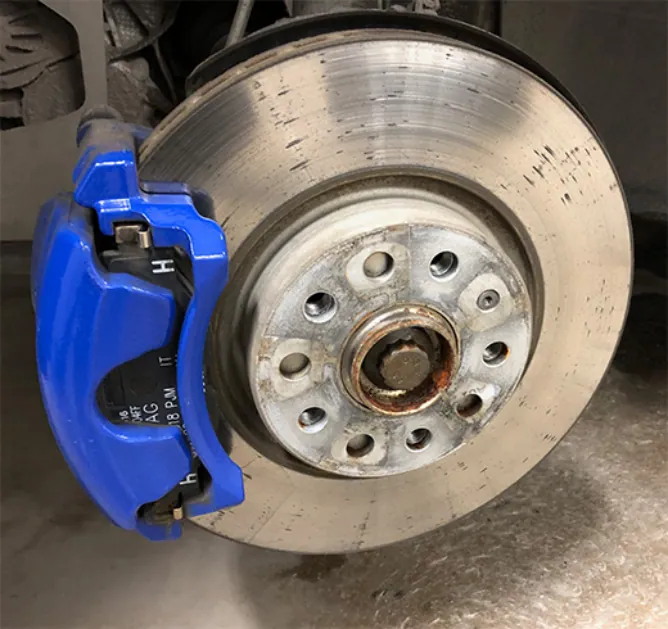
Disc brakes have an open brake disc and a caliper that is pressed against the disc when you brake. These brakes are the most common on new cars.
Drum brakes
Drum brakes have a closed construction consisting of a round drum. Inside the drum are brake shoes which are pressed against the drum when you brake.
ABS brakes
Anti-lock brakes (ABS) help you to maintain control of the car (manoeuvrability) in conjunction with forceful braking. The braking distance can be decreased, but in certain cases may be increased (e.g. on gravel).
How ABS brakes work
- You press down the brake pedal hard, which causes the wheels to lock and the car glides forward.
- The ABS system instantly senses that the wheels have locked.
- The ABS system releases some of the pressure on the brakes so that the wheels begin to turn.
- The ABS system then adapts the braking force so that it is as strong as possible without becoming excessive and locking the brakes.
As the wheels are not locked, you can steer in conjunction with braking with ABS. This is very important if you need to swerve to avoid something.
When you brake hard in a car that is fitted with ABS, the pedal may begin to stutter and pulsate (it sounds as if something is wrong). This is entirely normal, however, as this is how the ABS system works.
You should continue to hold down the pedal as hard as you can, without releasing, however strange it feels.
Faulty brakes – test
In order to test the brakes, press the pedal down hard for 20 seconds and check for the following:
- If the brake pedal sinks very low, this indicates wear.
- If the pedal continues to sink slowly, despite the fact that you have reached the bottom, this means there is probably a leak in the brake system. This poses a very serious traffic hazard and must be rectified immediately.
- If the pedal feels springy, this may be due to air in the brake system. Take the car to a workshop to have this rectified.
It is also important to test the brakes once in a while. If the car is pulling to one side, it is time to take it to a workshop.
It is especially important to test the brakes after washing the car, as water can have a negative effect on them. Forceful, controlled braking will dry up the moisture.
Brake fluid
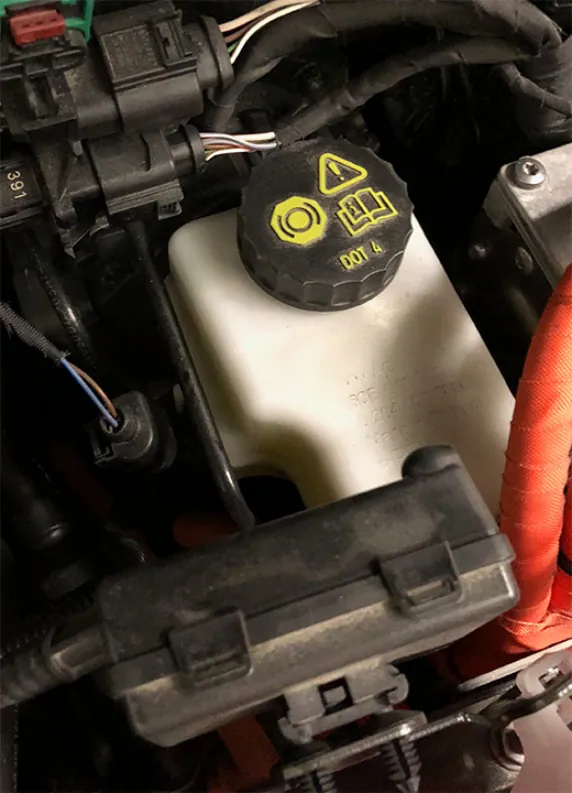
The brake lines are filled to maximum capacity and, when you press on the brake pedal, the brake fluid wants to exit via the other end. This is not possible, as the system is closed. The result is that the fluid presses on the brakes so that the car stops.
One problem with brake fluid is that it attracts moisture/water, which can lead to a deterioration of its properties. This means that it should be changed every two years.
Brake servo (vacuum servo)
Just like power steering, the brake servo helps by reducing the force required from you when depressing the brake pedal. The brake servo only works when the engine is running.
Test to see if the brake servo is working:
- Pump the brake pedal a few times with the engine switched off.
- Start the car with the brake pedal depressed.
- If the pedal sinks when the engine starts, the servo is working as it should.
Parking brake (handbrake)
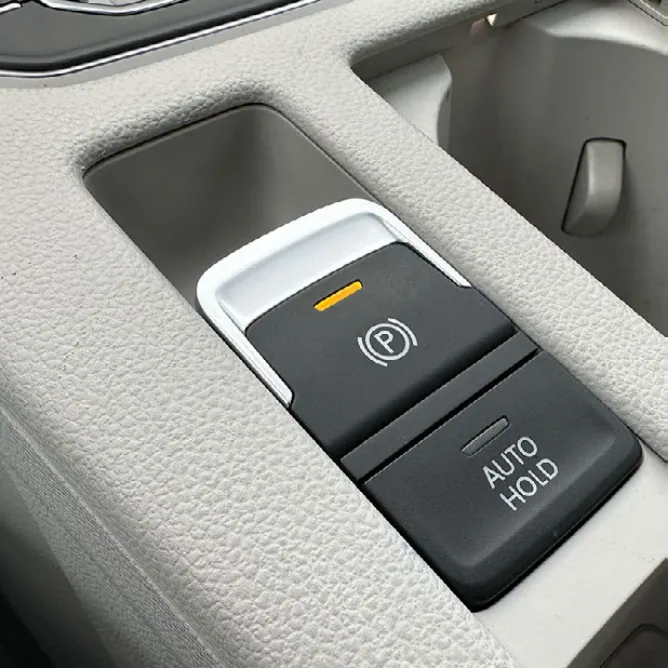
The handbrake is there to stop the car from rolling when it is parked. This normally applies to the brakes on the back wheels. Things to consider with the handbrake:
- There is a risk that it may freeze in place in cold, damp weather.
- It may seize up if you do not use it regularly.
- In addition to the parking brake, it is good to put the car in first gear, as this further reduces the risk that the car will roll.
- Check to see whether the parking brake is working (does not work with electronic parking brake):
- Set the car rolling down a hill and then pull on the brake.
- Try to drive with the brake on.
What is likely to be the problem if the brake pedal feels springy when you apply the brake?
Correct answer: C) Air in the brake system.
Explanation
If there is a leak, the pedal will go down slowly (the brake fluid is pushed out). If the brakes are worn, it will take longer than normal but the pedal will still feel rigid. Air in the brake system makes the pedal feel springy, as the air moves around the system unpredictably.
Crash safety
Crumple zones
1: Crumple zones
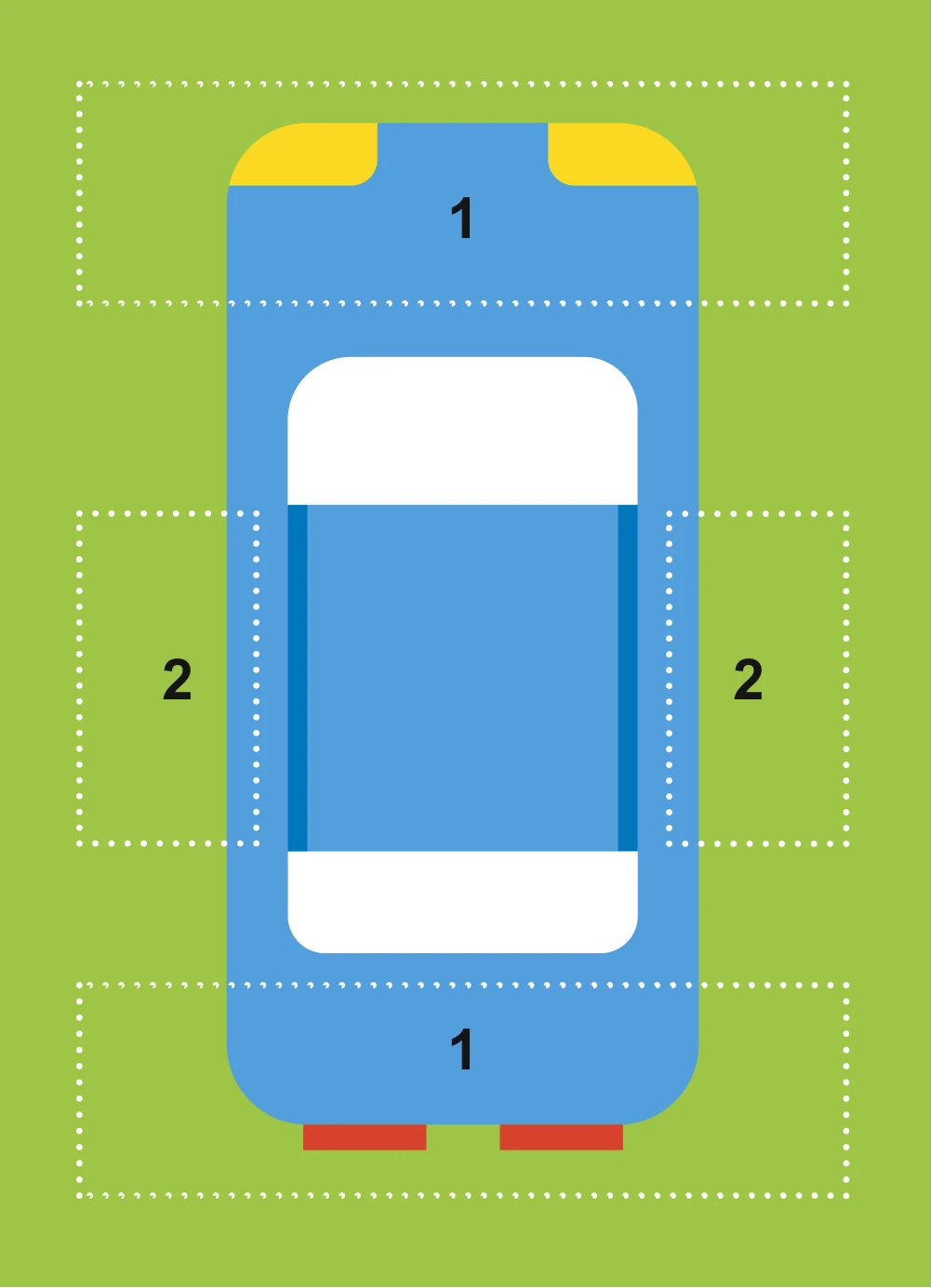
These areas are crumple zones, which means that they have been designed to crumple in the event of a crash.
Why should they crumple? Is it not better for them to be very hard?
– No, compare a collision with jumping off a roof. You would want to have something soft to land on. The same thing applies to a crash – without soft crumple zones, there will be a dead stop, which means that your body would be subjected to extreme stress.
Note, however, that the crumple zones are not too soft, as this would lead to you being crushed in the crash.
2: Particularly vulnerable areas
The sides are more vulnerable as the surface for absorbing the force of the collision is much thinner. Car manufacturers attempt to solve this problem by inserting special pillars that distribute the crash force, and by installing side airbags.
Safety belt (seat belt)
- The safety belt is an extremely good form of crash protection. It is easy to use and the chances of surviving a crash increase dramatically.
- You have to use it, as it is required by law. The driver is responsible for passengers under the age of 15 using a seat belt.
- Tighten the belt properly so that it sits close to the body (remove thick jackets).
- There are two main types of belt in private cars:
- Two-point belt (waist belt): Only fastens over the waist. This was previously the most common type, and is still sometimes used for the middle seat in the back.
- Three-point belt: The belt runs across the waist and then diagonally across the body towards the neck. This provides better protection than the two-point belt. Note that the upper part of the belt should sit as close to the neck as possible and not out on the shoulder.
- Belt tensioners are found in newer cars. This is an automatic system that pulls the belt hard in the event of a crash.
- For pregnant women, it is better that the belt sits under the belly so that the baby is not squashed. If you are far into your pregnancy, it may be best not to drive at all, as the child runs the risk of being injured by the steering wheel and airbag in the event of a collision.
Airbag
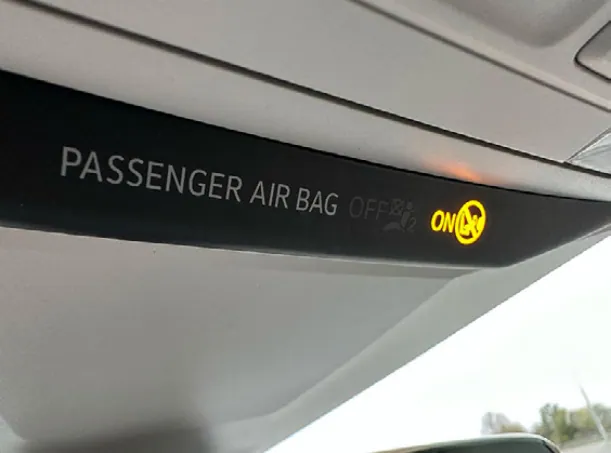
- Sit at least 25 cm from the airbag – otherwise it can injure you when it inflates.
- It takes just 0.1 seconds for the airbag to fill up.
- Can lead to serious injury if the seat belt is not used at the same time.
- Triggered at speeds over 20–30 km/h.
- There are different types of airbags:
- In the steering wheel: This is the most common type, which protects the driver in the event of a collision.
- Front passenger seat: Protects the passenger in the front. Note that it must be disconnected if a child safety seat is used.
- Side airbags: Protect you in the event of a collision from the side.
Head restraint
- The head restraint is not a comfort feature – it is an important form of protection for the neck in the event of a collision.
- Position it so that your head does not pass over the top of the head restraint when leaning back.
Whiplash
- Whiplash injuries are sustained when the neck is thrown about violently in the event of a collision, damaging the neck muscles.
- Common in the event of rear-end collisions.
- A whiplash injury often passes, but can remain for a long time and can also lead to muscle pain, headaches and difficulties sleeping.
- Car manufacturers are always striving to improve protection for the neck in order to avoid whiplash injuries.
Should the airbag on the front passenger seat be activated if a rear-facing child seat is installed there?
Correct answer: C) No, never.
Explanation
If the airbag triggers, this will push the child safety seat against the front seat with great force. The child will be exposed to a great impact, and there is also a risk that the child may become trapped against the front seat.
Please note that the question says activated (that is: on, engaged).
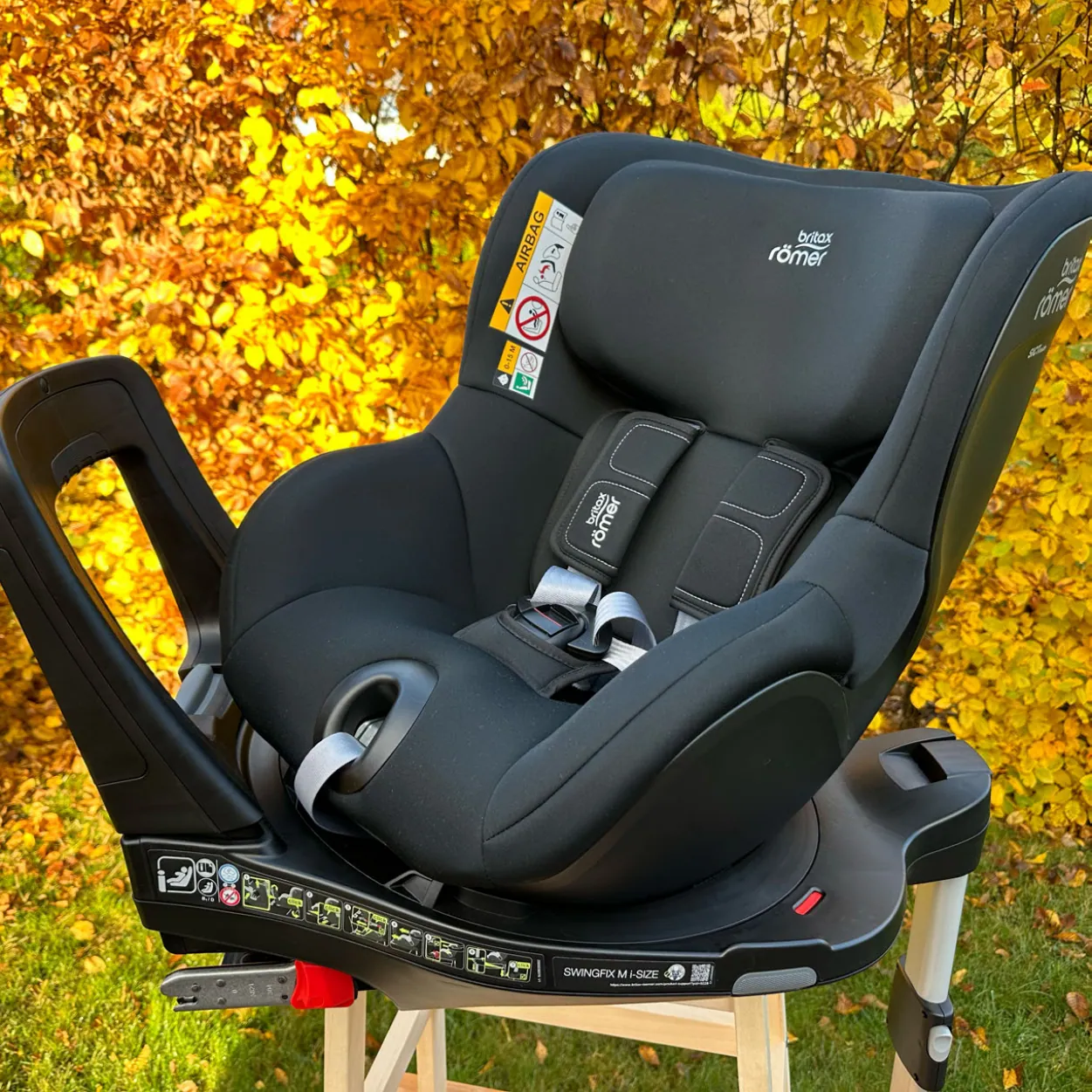
Child safety seats
- It is the driver’s responsibility to ensure that children under the age of 15 have the correct protection.
- Children shorter than 135 cm must have some form of special child protection.
- Exception 1: Occasional trips in the back seats of taxis are permitted if the child is under 3 years old.
- Exception 2: Occasional trips over short distances for children over 3 years old and under 135 cm are permitted if the child sits in the back seat with a seat belt on.
Baby car seat
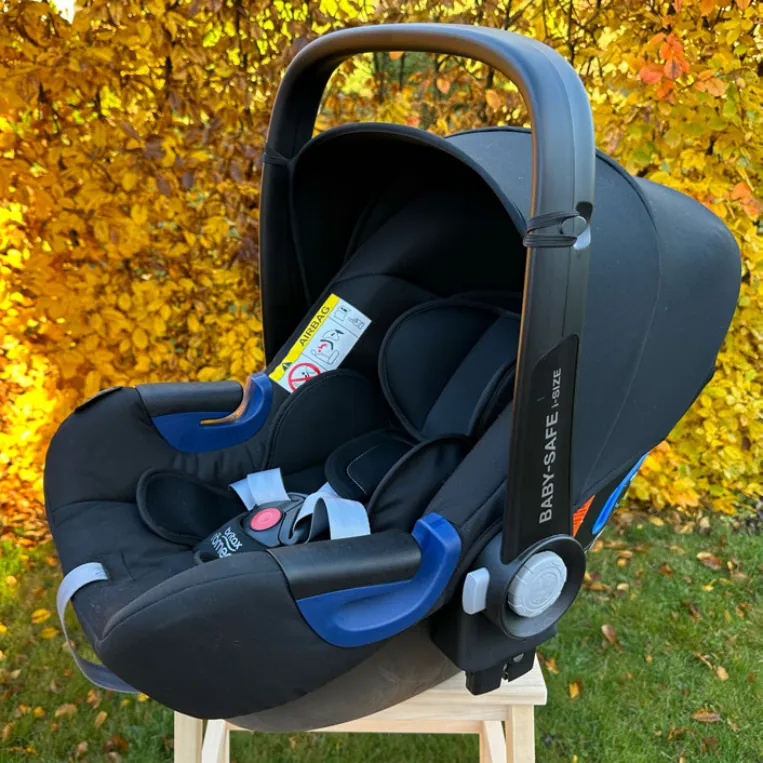
- 0–9 months old or until the child is able to sit steadily.
- The airbag must be disconnected if the baby car seat is placed in the front seat.
- A rear-facing baby car seat provides the best protection.
Rear-facing child safety seat
- 7 months to 4 years old, or until the child’s head reaches the edge of the child safety seat.
- The airbag must be disconnected if the child safety seat is placed in the front seat.
- Front-facing child safety seats exist, but the rear-facing type is preferable from a safety viewpoint.
Booster seat / booster cushion
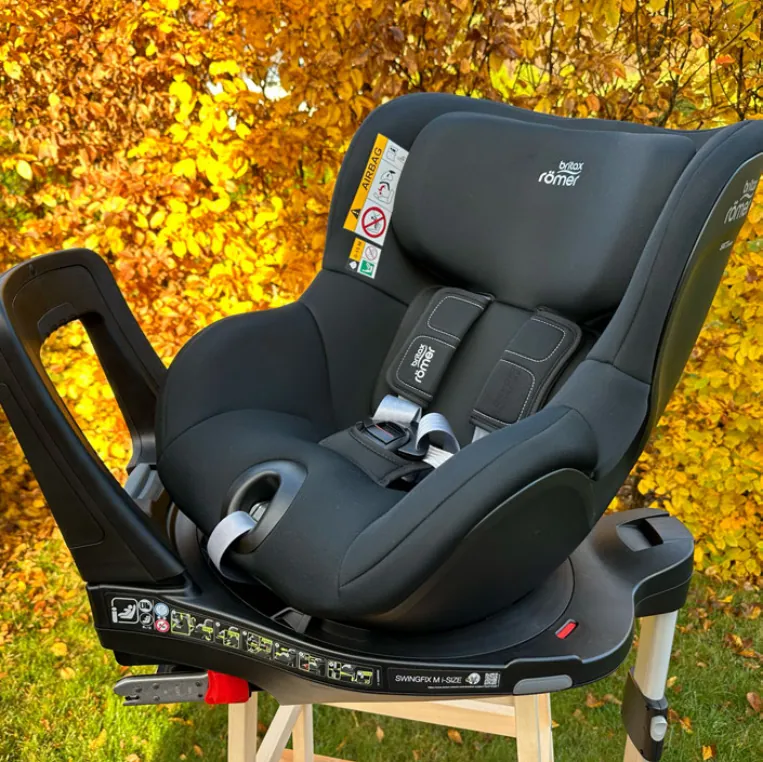
- 4 years and until the child is over 135 cm tall.
- The airbag must be disconnected if the booster cushion is placed in the front seat.
- The back seat offers the safest placement.
Taking away the child seat and sitting like an adult
- The child’s height is the primary determinant for which form of protection is suitable, but by the age of 10, most children manage with adult seats.
- At a height of 135 cm, the child can sit without a booster seat/booster cushion, but not in a seat with an airbag.
- At a height of 140 cm, the child can sit anywhere, just like an adult, i.e. even in a seat with an airbag.
At what point is it safe for a child to sit like an adult in a seat without an airbag?
Correct answer: A) When the child is at least 135 cm tall.
Explanation
“All children under 135 centimetres tall shall be put in a special protection device in the car, i.e. a baby car seat, a child safety seat, a booster seat or booster cushion.” (Swedish Transport Agency)
Please note that the questions says without an airbag. If it is a seat with an airbag, the correct answer would be 140 cm.
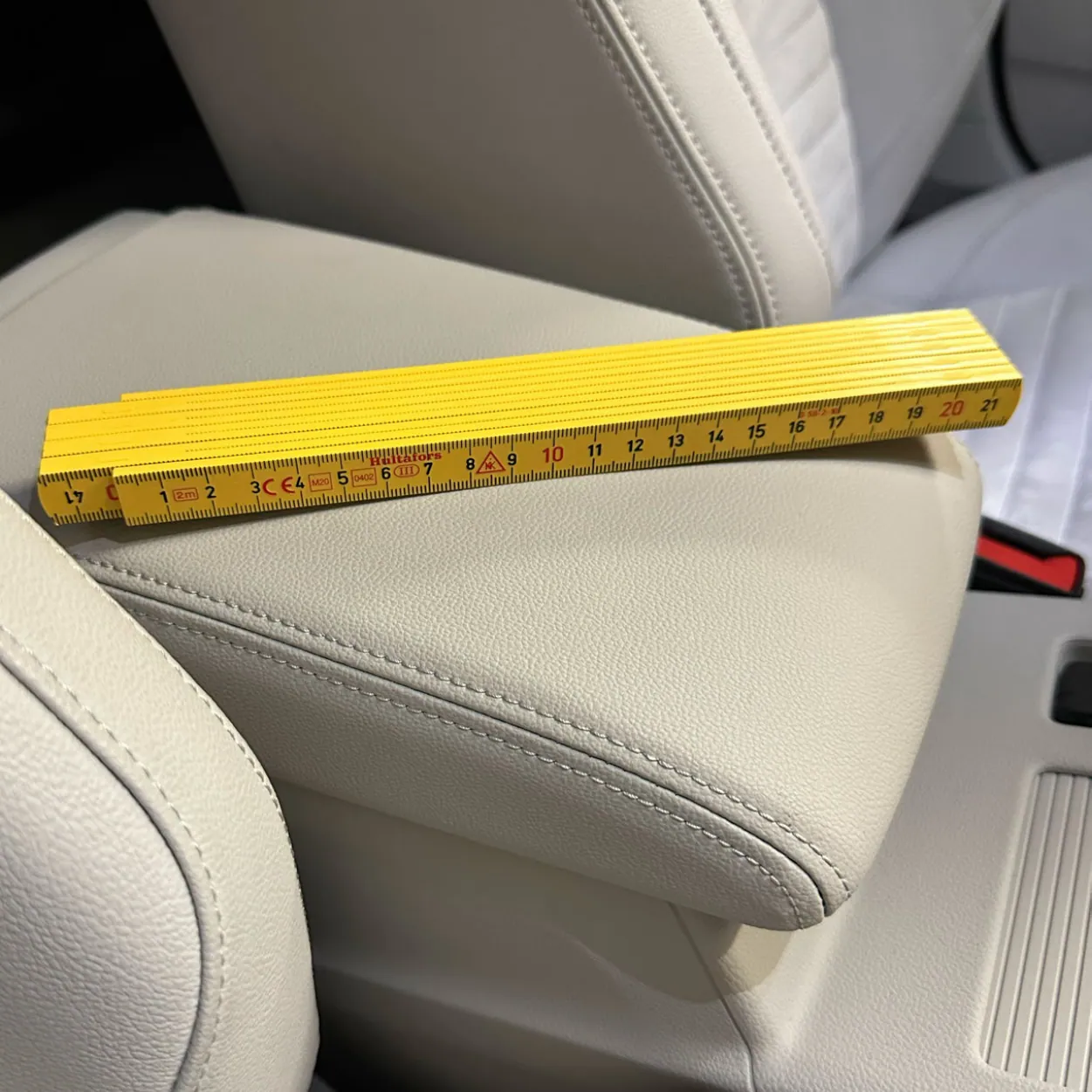
Length & width
Laterally (to the sides)
- A load may protrude by a maximum of 20 cm to the sides.
- The total width may be a maximum of 260 cm (2.6 m).
Example 1, allowed
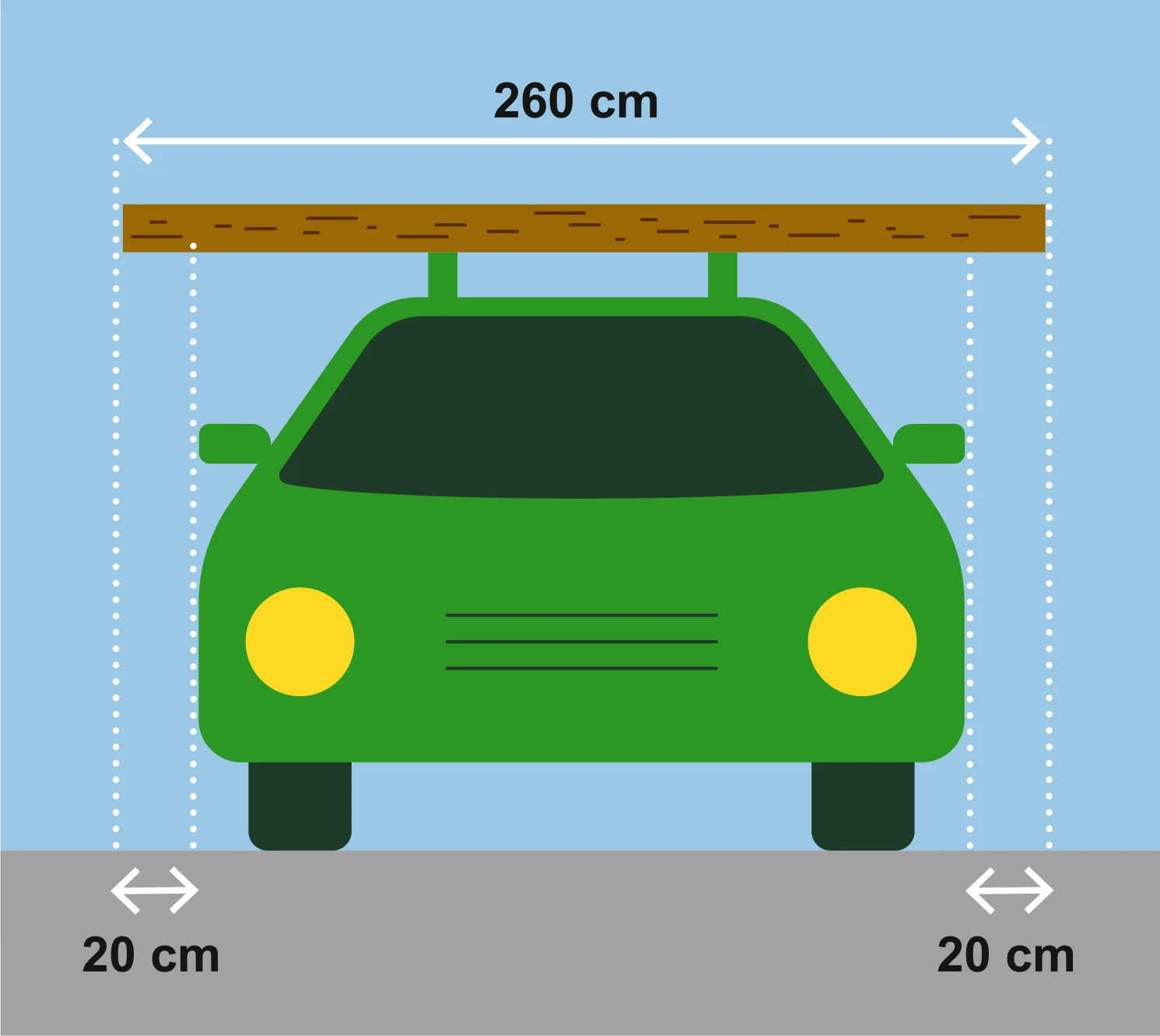
The load protrudes by a maximum of 20 cm to the sides and does not exceed the width of 260 cm.
Example 2, not allowed
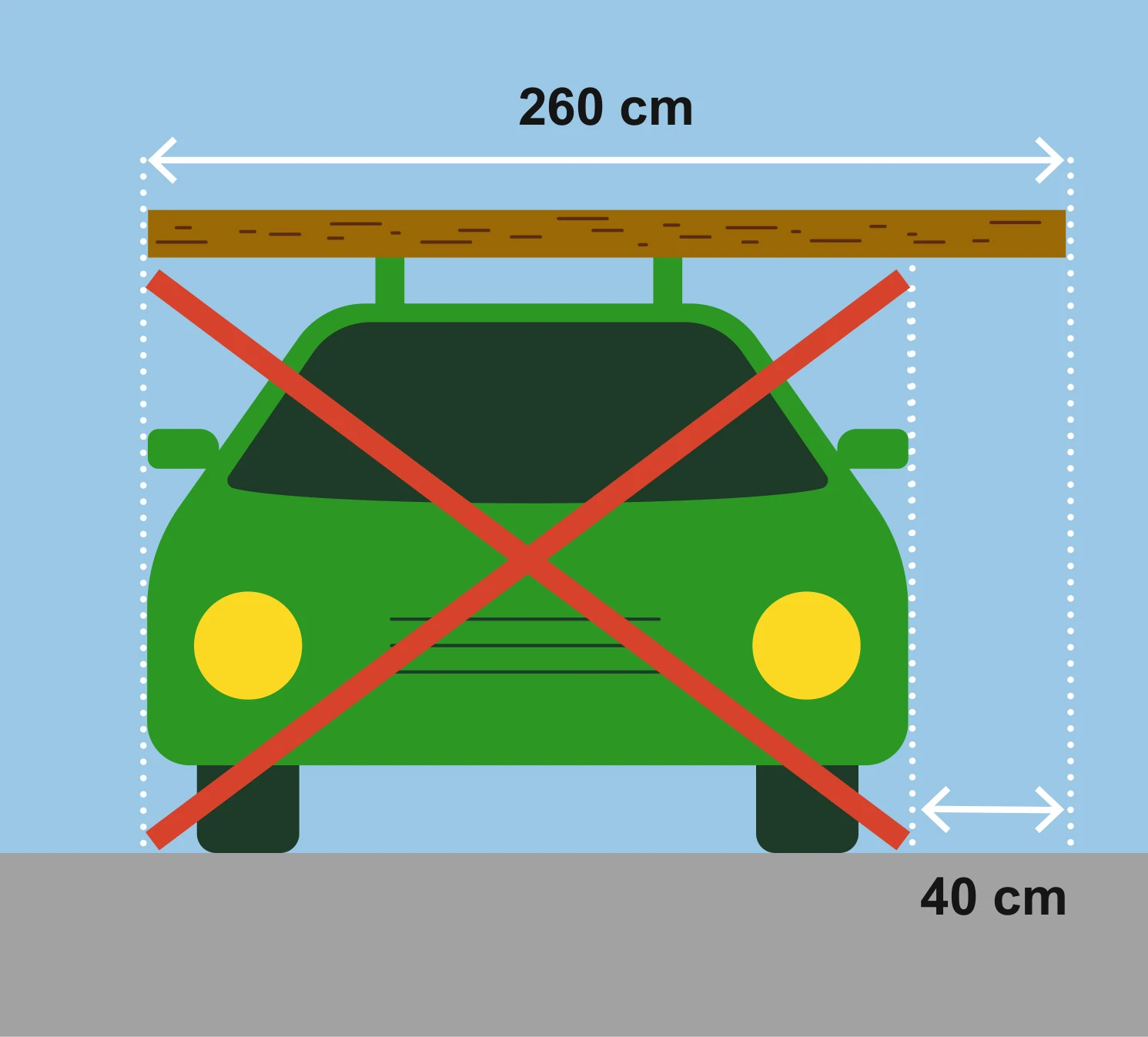
The width of 260 cm is not exceeded, but what makes this prohibited is that the load protrudes 40 cm to one side.
Example 3, not allowed
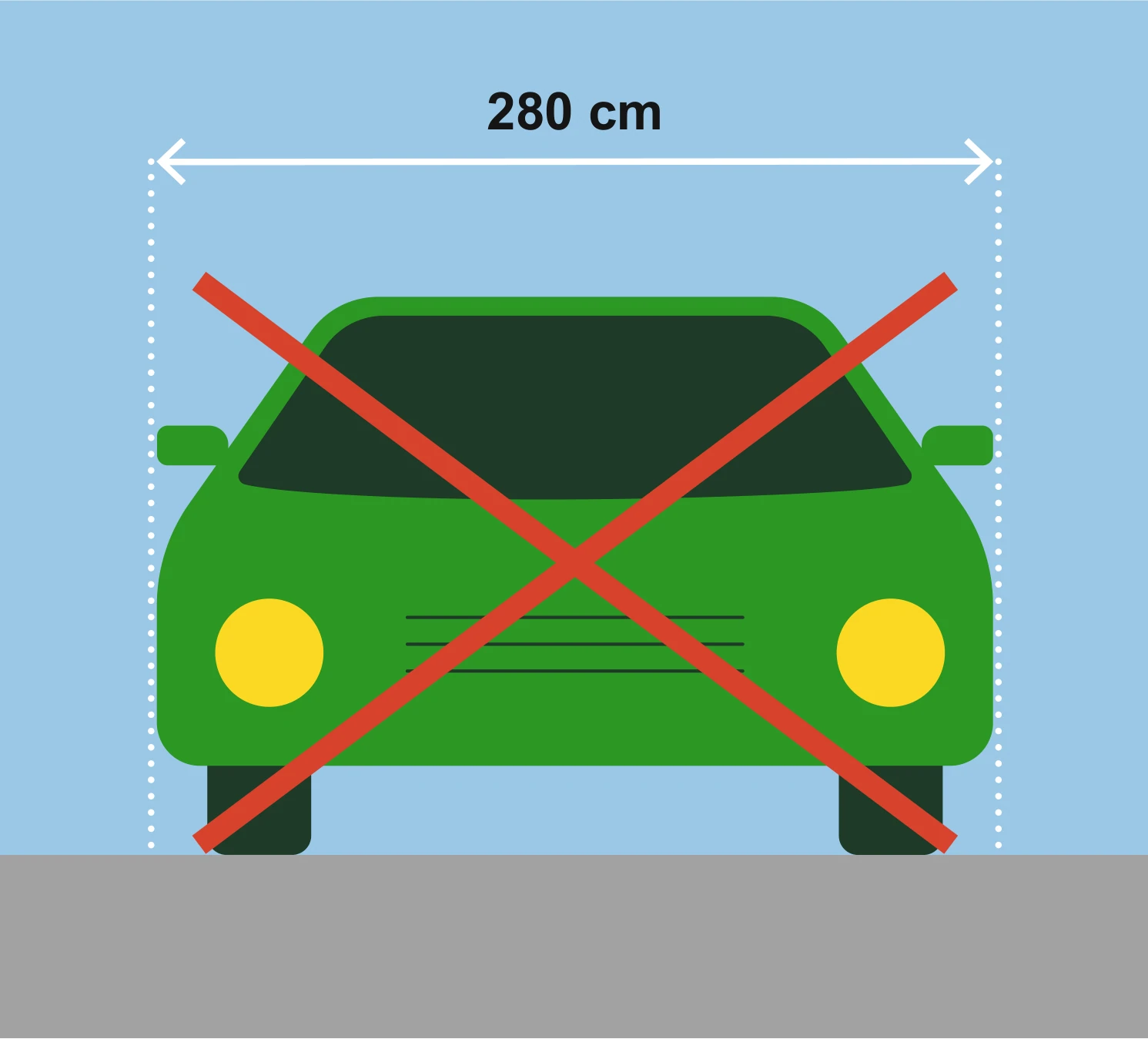
No load is sticking out, but the vehicle is wider than 260 cm. This means that it may not be driven on normal roads.
Length
The length of private cars and light lorries may be up to a maximum of 24 metres, load included. However, it is rarely suitable from a safety perspective to transport such a long load. Some municipalities have local regulations that prohibit very long loads.
- Forward protrusion: Must be marked.
- Exception: If the part protruding forward is shorter than 1 metre and it is clearly visible to other road users, it does not need to be marked.
- Rear protrusion: Must be marked if the load protrudes by more than 1 metre.
Marking in daylight
- Flags or similar in clear colours to both the front and rear.
Marking in the dark (or if required by weather conditions)
- Front: Lamp with white light and white reflectors.
- Rear: Lamp with red light and red reflectors.
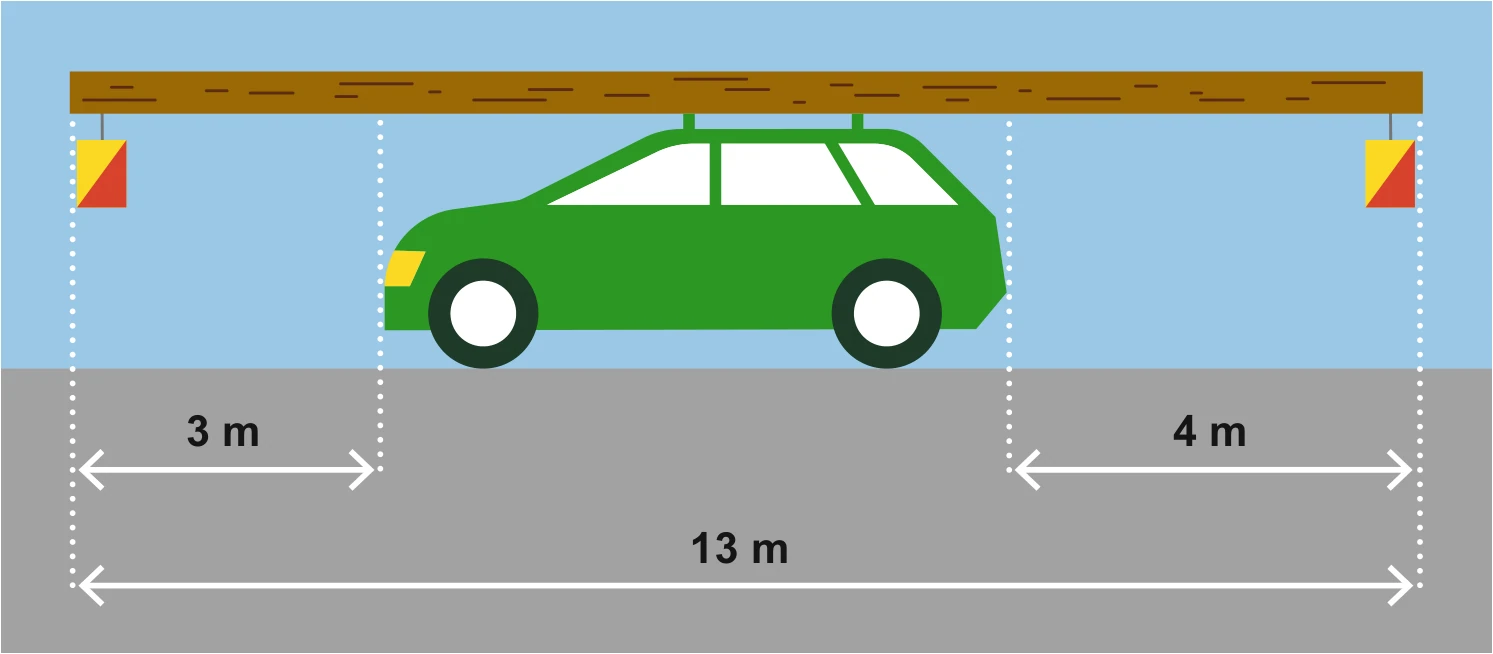
Marking when towing
When towing, the tow rope shall be marked if the distance between the vehicles is greater than 2 metres.
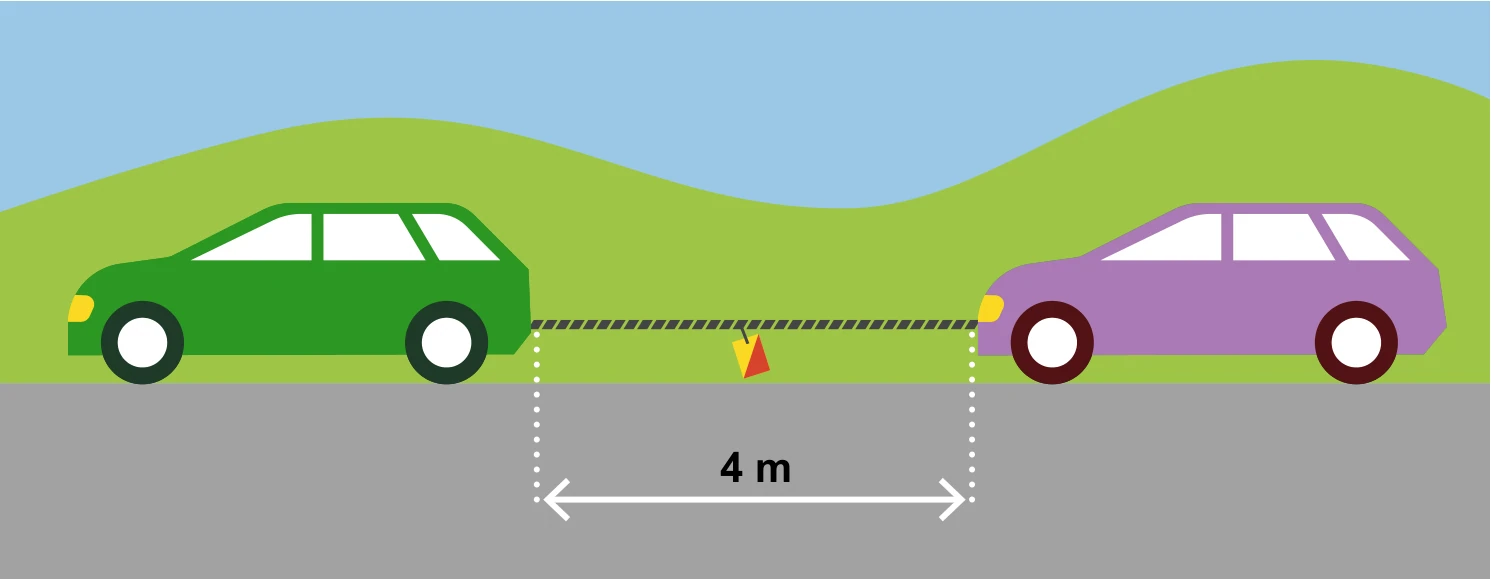
Marking trailers
Front
- White reflectors.
- White position lights on trailers wider than 160 cm.
Sides
- Orange lights.
- Orange reflectors.
Rear
- Rear lights.
- Brake lights.
- Indicators.
- Rear registration plate light.
- Red triangular reflectors.
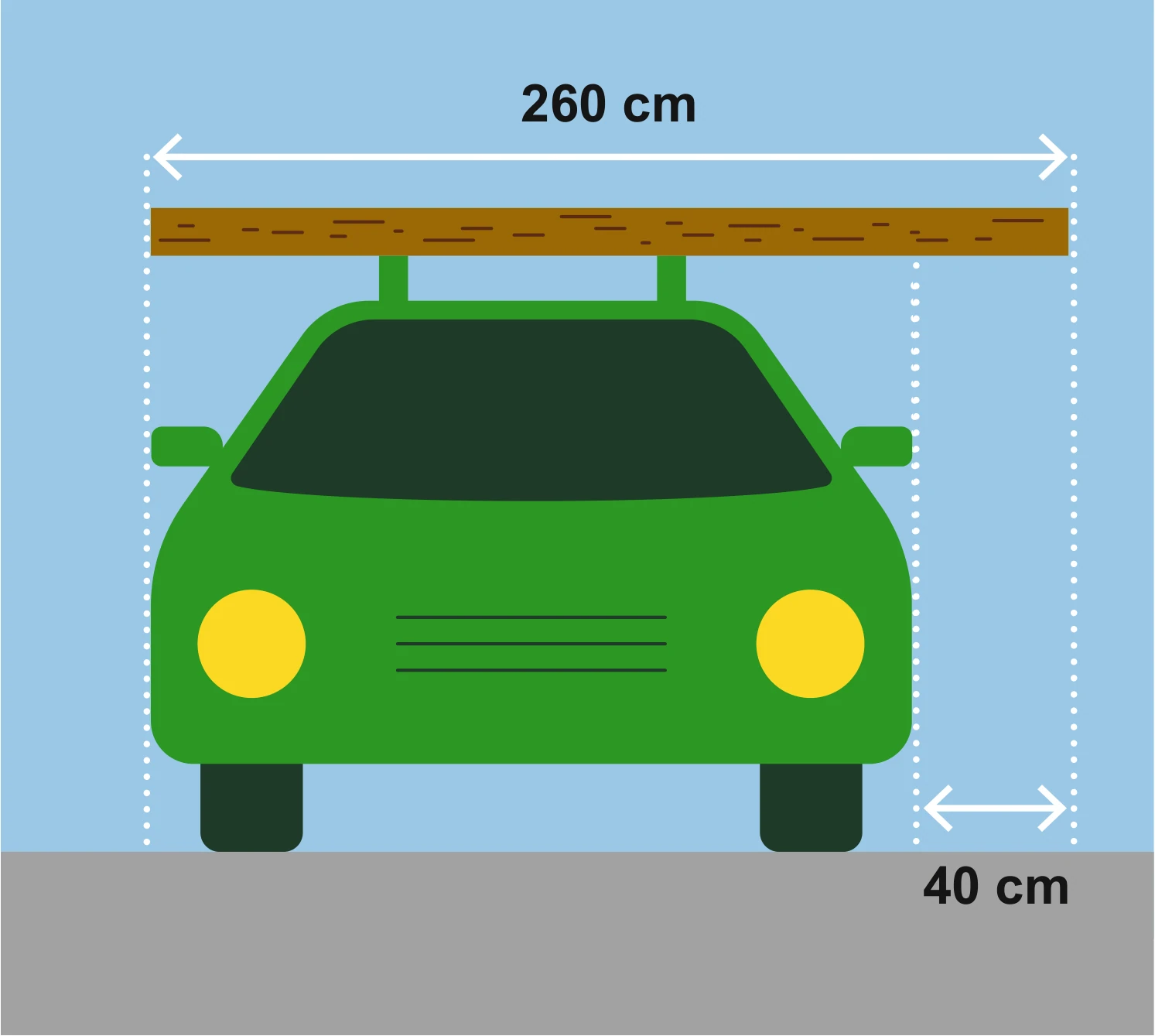
Is it permitted to drive the car on a public road?
Correct answer: B) No, as the load protrudes 40 cm on one side.
Explanation
“If a motor vehicle or a vehicle coupled to this has a load where either side protrudes more than 20 centimetres outside the vehicle, or if the vehicle’s width, including load, exceeds 260 centimetres, [...] the vehicle or a vehicle coupled to this may only be driven on a private road.” (Road Traffic Ordinance)
Review of the options:
- No, as the width is 260 cm.
– Wrong, the width may be exactly 260 cm, but not more. - No, as the load protrudes 40 cm on one side.
– Correct, according to the quote from the Road Traffic Ordinance. - Yes, as the width does not exceed 260 cm.
– Wrong, as this answer implies that it is permitted to drive the car with this load. - Yes, as the load does not protrude at all on the other side.
– Wrong, as this answer implies that it is permitted to drive the car with this load.
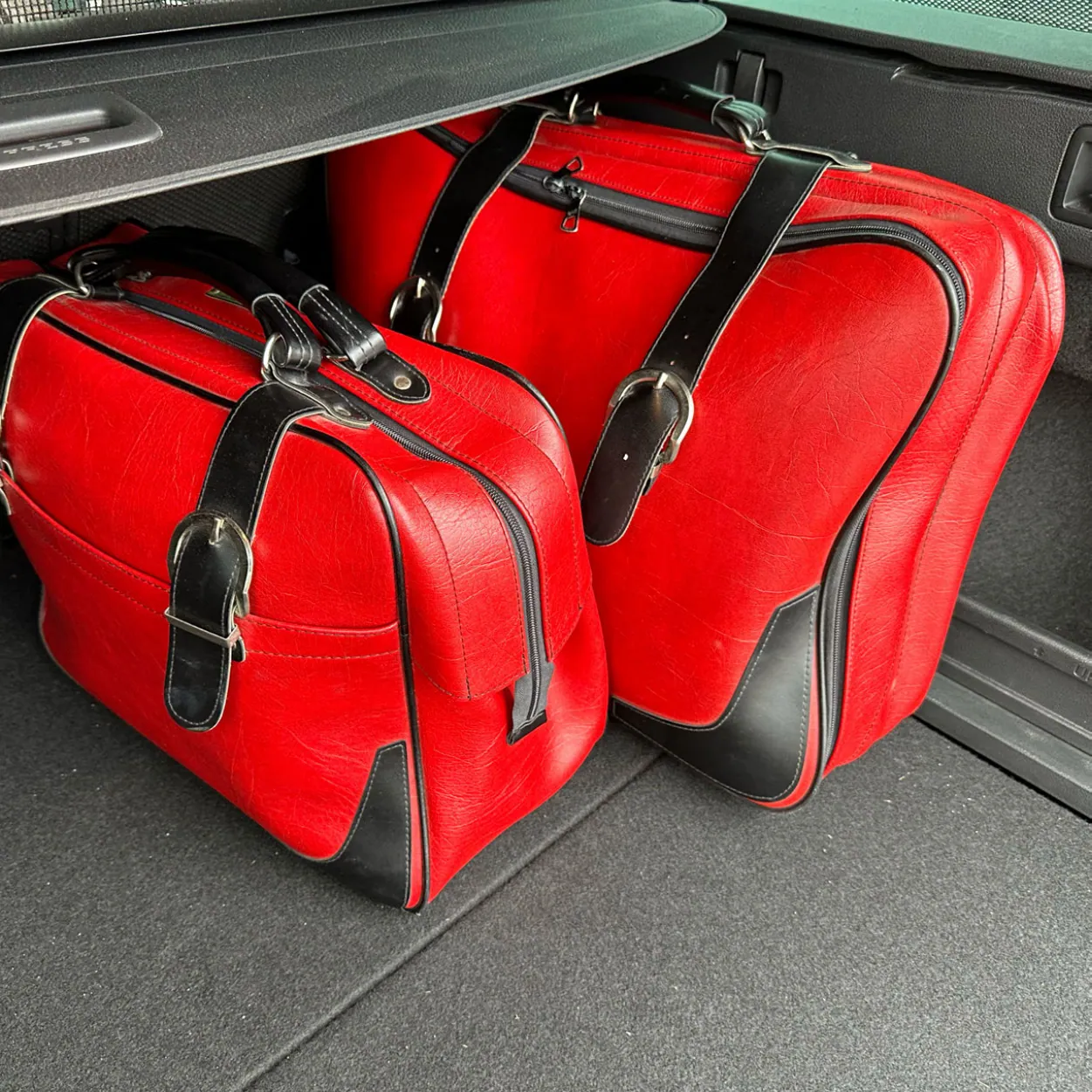
Loads
weight terminology, trailers, etc.
Correct loading
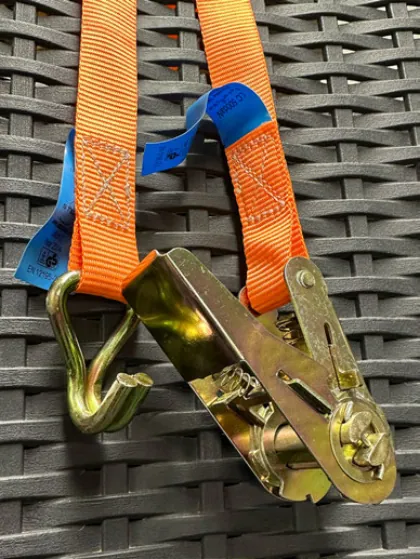
The following are the basis for correct loading:
- Secure the load with a strap or similar. Unsecured loads that slide around can cause major damage in the event of forceful braking or a collision.
- Position the load right at the front of the boot so that it will not be projected forwards. If the load is already tucked right in against the back seats in the boot, it has nowhere to go in the event of forceful braking.
- Position the heaviest part of the load at the bottom in order to reduce the risk of it being dislodged and potentially causing damage.
It is normally during braking that the load and fastenings are subjected to the greatest pressures. The fastening must at least withstand a movement of:
- 80% of the cargo weight in a forward direction.
- 50% of the cargo weight in a backwards direction and to the sides.
Weight terminology
- Unladen weight: Unladen car with standard setup including driver (75 kg).
- Maximum load: Maximum permitted load in accordance with the registration certificate.
- Total weight: Unladen weight + maximum load.
- Gross weight: The weight at a given time.
With a category B licence, you may drive private cars and light lorries with a maximum total weight of 3,500 kg (3.5 tonnes).
Light trailers
With a category B licence, you are only allowed to tow a light trailer. Note that there is a difference between what is classed as a light trailer and whether or not the car is permitted to tow the trailer.
What counts as a light trailer?
- Trailer with a maximum total weight of 750 kg.
- Trailer where the maximum total weight for car + trailer is 3,500 kg (3.5 tonnes).
If point 1 (max. 750 kg) is met, point 2 does not apply.
Example 1, light trailer
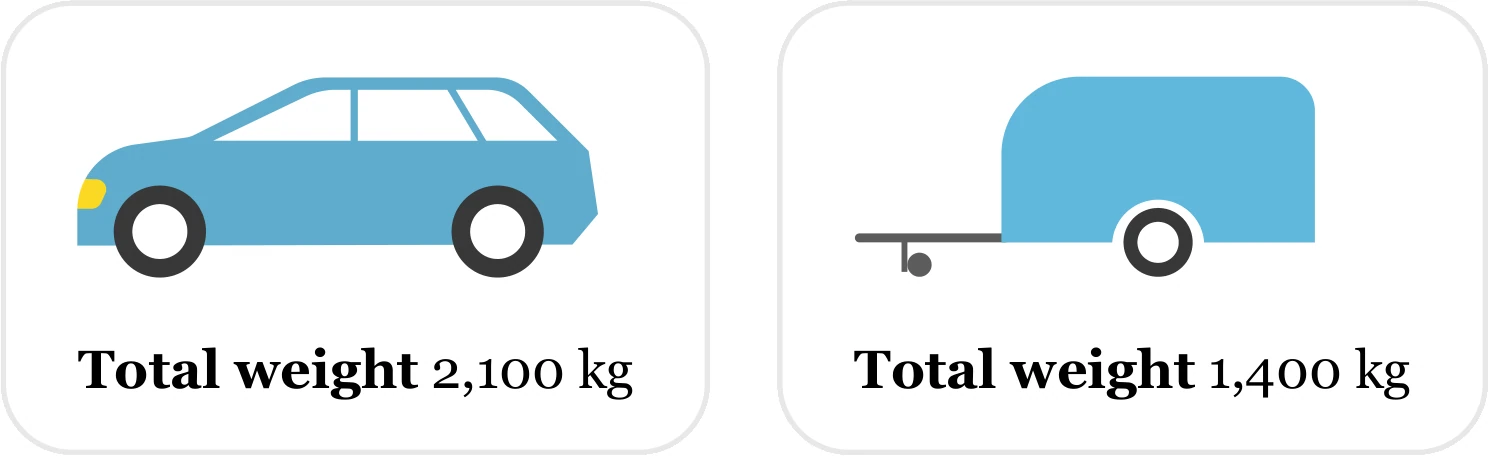
The combined total weight (2,100 kg + 1,400 kg = 3,500 kg) is 3.5 tonnes exactly, but does not exceed 3.5 tonnes. The trailer is classed as light.
Example 2, not a light trailer
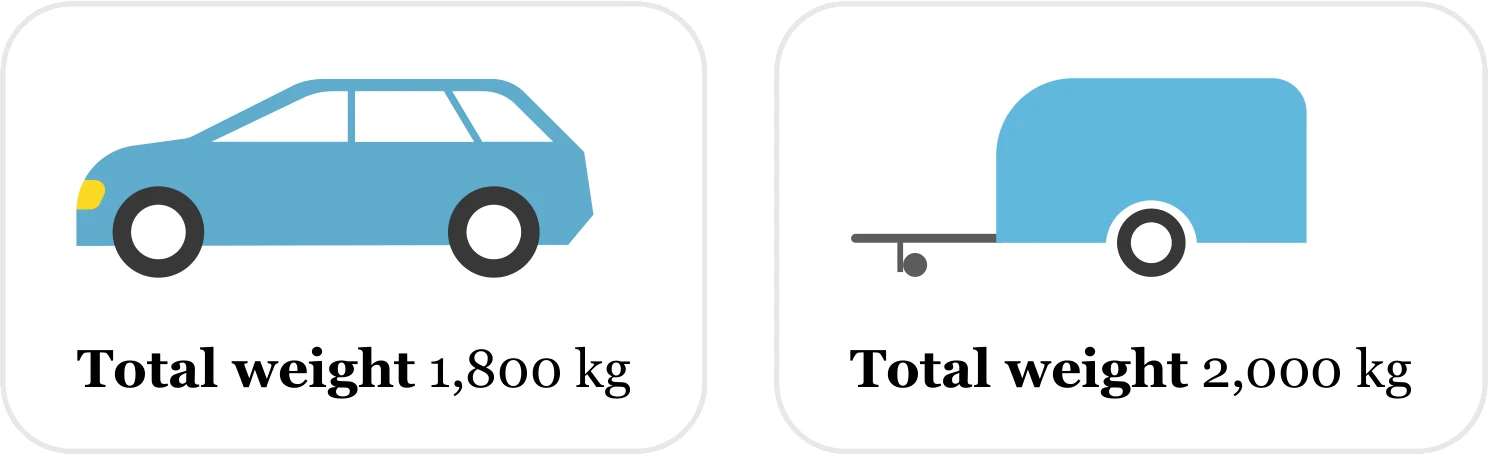
The combined total weight (1,800 kg + 2,000 kg = 3,800 kg) exceeds 3.5 tonnes, which means that the trailer is not classed as light.
Example 3, light trailer
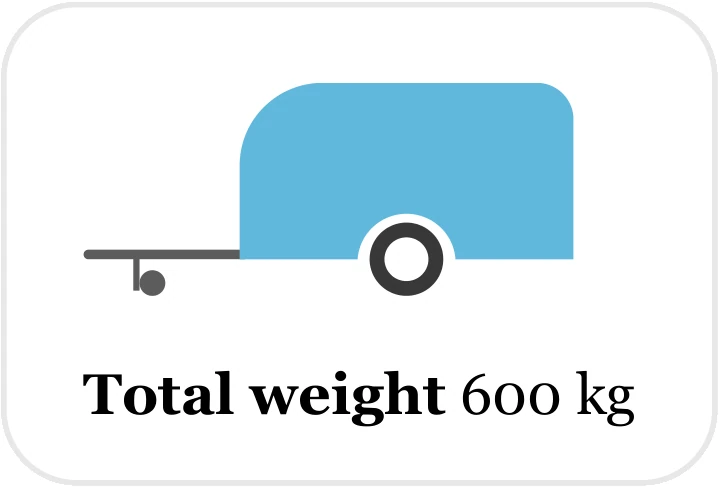
No calculations need to be done. The trailer’s total weight does not exceed 750 kg. It is therefore always classed as light.
Clarification about example 3
The trailer in example 3 is always classed as light, as it does not exceed 750 kg.
Does this mean that I can pull this trailer with any car?
– No, you must always check your car’s maximum trailer weight. A trailer can be classed as light but still be forbidden for you to pull, if the car cannot handle the weight.
My car weighs 3,500 kg and is designed to handle a 750 kg trailer. I have a regular category B licence. May I pull a 750 kg trailer and thus reach a combined total weight of 4,250 kg?
– Yes. The rule gives you the right to pull a 750 kg trailer. It is unusual for a car to weigh 3,500 kg, but if your car is that heavy, 3,500 kg + 750 kg is permitted on a regular category B licence (not extended B96, not BE).
Please note that this becomes invalid when the trailer exceeds 750 kg. Examples:
- Car 3,500 kg + trailer 750 kg = 4,250 kg = allowed on a B licence
- Car 3,499 kg + trailer 751 kg = 4,250 kg = not allowed on a B licence
- Car 3,000 kg + trailer 800 kg = 3,800 kg = not allowed on a B licence
Is the car permitted to tow the trailer?
In practice, calculations are seldom necessary. All of the information you need is found in the car registration certificate:
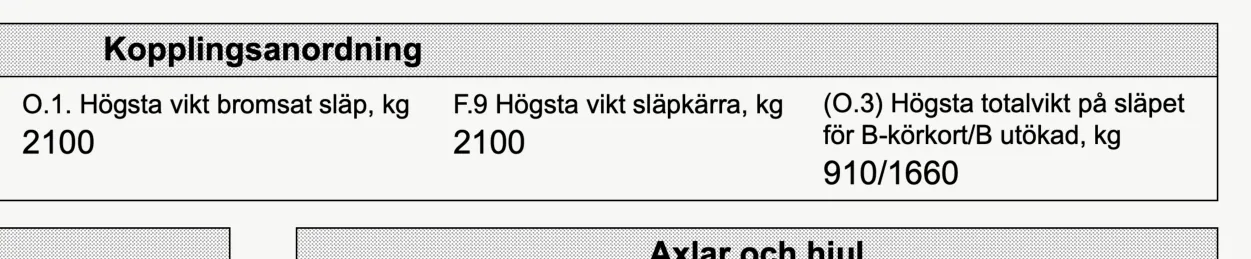
The car with this registration certificate is permitted to tow a trailer weighing a maximum 2,100 kg, though not with a regular category B driving licence, as O.3 stipulates that the maximum trailer weight for a category B driving licence is 910 kg.
Am I permitted to use this car to tow a trailer weighing 2,300 kg with the extended B category (B96) or BE licence?
– No, as the maximum weight of 2,100 kg may never be exceeded, regardless of category. The car is not built to handle heavier trailers.
Ball pressure
Ball pressure is the pressure that the trailer’s coupling device exerts on the car’s towbar. Normally, the ball pressure should lie somewhere around 30–100 kg.
High ball pressure
Excessive load at the front of the trailer. This results in poor traction with the front wheels, and may cause other road users to be dazzled by the dipped headlights.
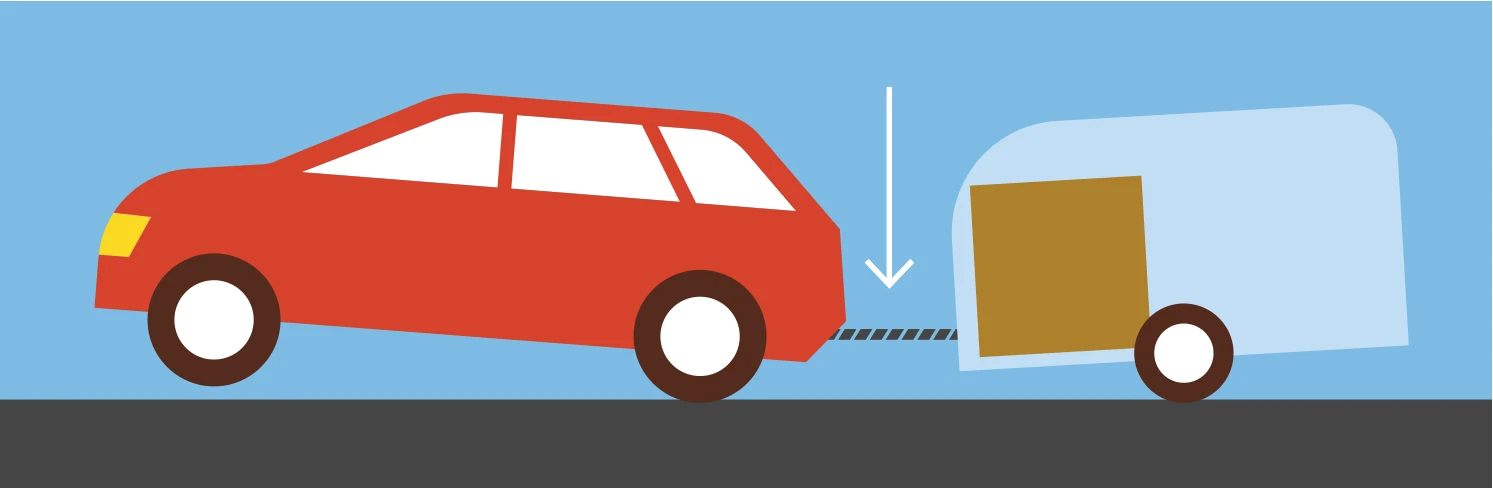
Low ball pressure
Excessive load at the back of the trailer. This results in poor traction with the rear wheels.
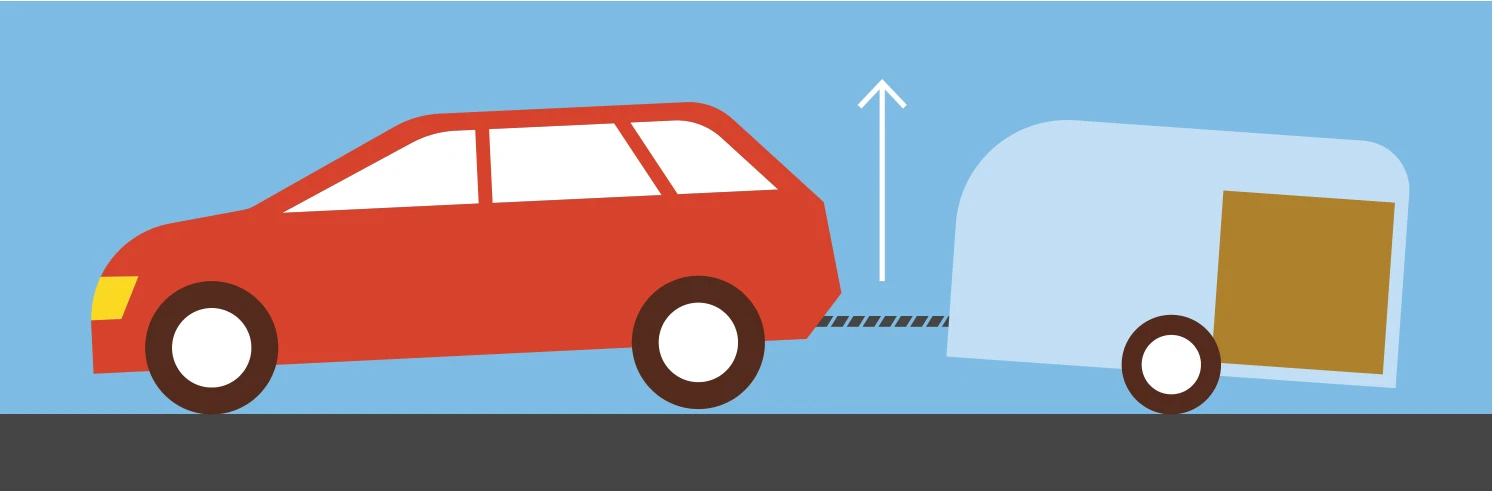
Regulations concerning trailer brakes
- A service brake must be fitted on trailers with a total weight exceeding 750 kg.
- A parking brake must be fitted on trailers with an unladen weight exceeding 400 kg.
Marking heavy lorries and heavy trailers
Reflector on a heavy lorry | Reflector on a trailer with a total weight exceeding 3.5 tonnes |
|---|---|
 |  |
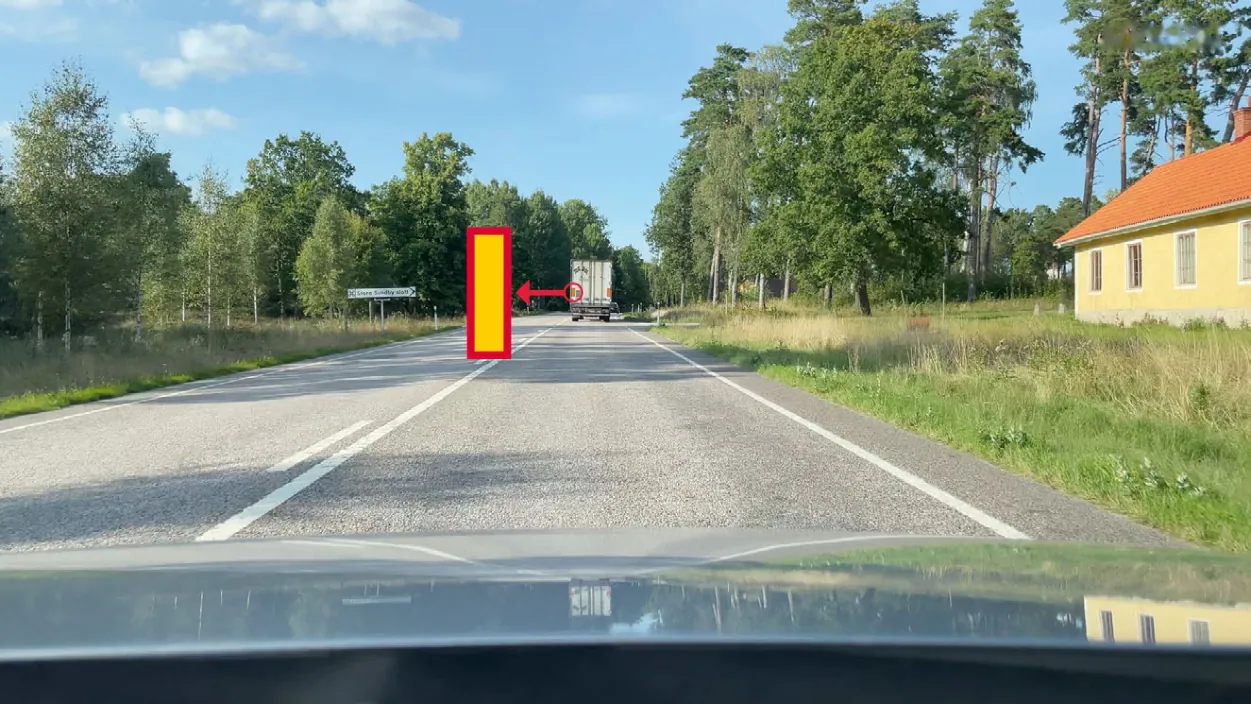


Is the trailer classed as a light trailer if it is connected to the car?
Correct answer: A) Yes
Explanation
With a regular category B licence, you are only allowed to tow a light trailer. The following count as a light trailer:
- Trailer with a maximum total weight of 750 kg.
- Trailer where the maximum total weight for car + trailer is 3,500 kg (3.5 tonnes).
Does the combined total weight exceed 3.5 tonnes? 2,100 kg + 1,100 kg = 3,200 kg = Under 3.5 tonnes
Lights
Different types of lights
Dipped headlights
The norm is to use a combination of dipped headlights and parking lights. There are however prohibited light combinations:
- Dipped headlights + fog lights = prohibited
- Dipped headlights + daytime running lights = prohibited
- Dipped headlights + auxiliary high beam lights = prohibited
- Fog lights + daytime running lights = prohibited
Full beam headlights
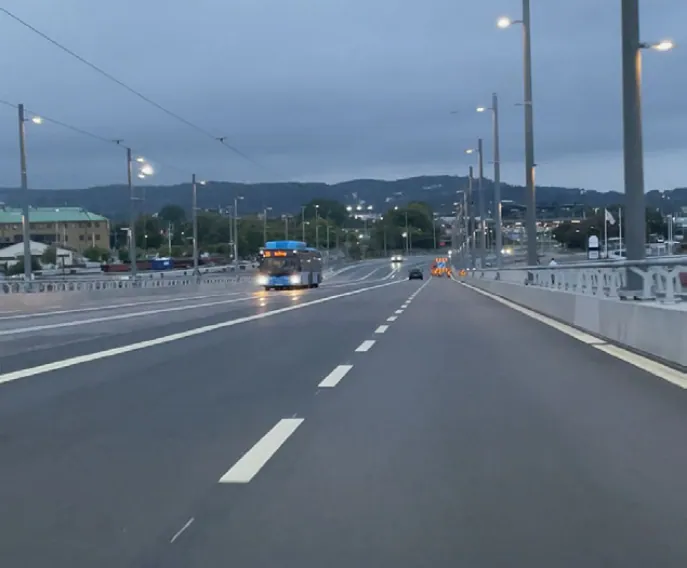
Full beam headlights are the car’s most powerful lights. Use them as often as you can when it is dark outside. As full beam headlights are so strong, they may dazzle other road users. It is prohibited to use full beam headlights:
- When oncoming vehicles are so close that the driver can be dazzled (also applies to trains, trailers and vessels).
- When you are behind another vehicle (the driver is dazzled through their mirrors).
- When the road is sufficiently lit by daylight or street lights.
You do not need to dim your full beam headlights for pedestrians. Pedestrians can easily avoid being dazzled by looking away. With full beam headlights you can see pedestrians more clearly, which is important from a safety perspective.
If you approach a junction with a lot of traffic, it may be a good idea to turn off the full beam headlights as you otherwise risk dazzling the crossing traffic.
If you approach an oncoming lorry at the crest of a hill, you must dim your full beam headlights as soon as you see the position lights on the roof, as the driver’s cab is positioned high up in relation to private cars.
Full beam headlights often enable you to see better. Sometimes, however, it can be the opposite. If you are driving in heavy fog or snow, try switching to dipped headlights to see if visibility improves.
In order to avoid being dazzled by oncoming cars at night-time, fix your gaze on the right-hand side of the road.
Indicators
As a rule, indicators are placed at the back, front and sides of the car. They are to be used when you intend to:
- Turn right or left.
- Change lane.
- Turn around.
- Pull out from the side of the road.
- Manoeuvre the car sideways in any other notable manner.
Clarification regarding the use of indicators
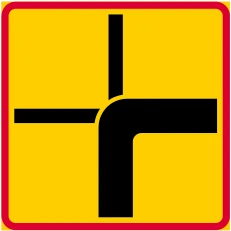
I am driving on a priority road and see this sign. Do I need to indicate if I intend to continue to the right?
– Yes, you must show the other road users what you intend to do.
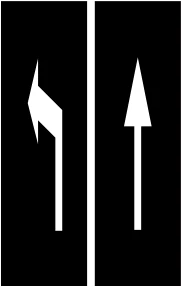
I have positioned my car in the left-hand lane. Do I need to indicate left when I turn?
– Yes, oncoming traffic cannot see the arrows on the ground.
Hazard warning lights
Hazard warning lights must be used in the event of an emergency stop or similar. The hazard warning lights normally use the same lights as the normal indicators. The difference is that all lights flash at the same time.
Fog lights
The front fog lights have a stronger beam than the dipped headlights and are therefore more effective in fog. It is permitted to use fog lights instead of dipped headlights in daylight, but these two types may never be used in combination.
In darkness, it is only permitted to use fog lights instead of dipped headlights in the event of fog or heavy rain.
Rear fog light
The rear fog light is a very powerful red light that is used to alert drivers behind you when visibility is drastically reduced. The rear fog light is dazzling, so it must be turned off as soon as you feel that the vehicle behind you has seen you.
Daytime running lights
Daytime running lights are used to increase the car’s visibility. When it is daylight and visibility is good, daytime running lights can be used instead of dipped headlights. Not all cars have daytime running lights.
Combining daytime running lights with dipped headlights or fog lights is prohibited.
Auxiliary high beam lights
Auxiliary high beam lights can be fitted to the car in order to strengthen the full beam headlights. There are two different types of auxiliary high beam lights:
- Cornering lamps illuminate the area close to the car so that you can see clearly along the edges.
- Spot lights cast a narrow beam forward so that you can see further up ahead.
Parking lights
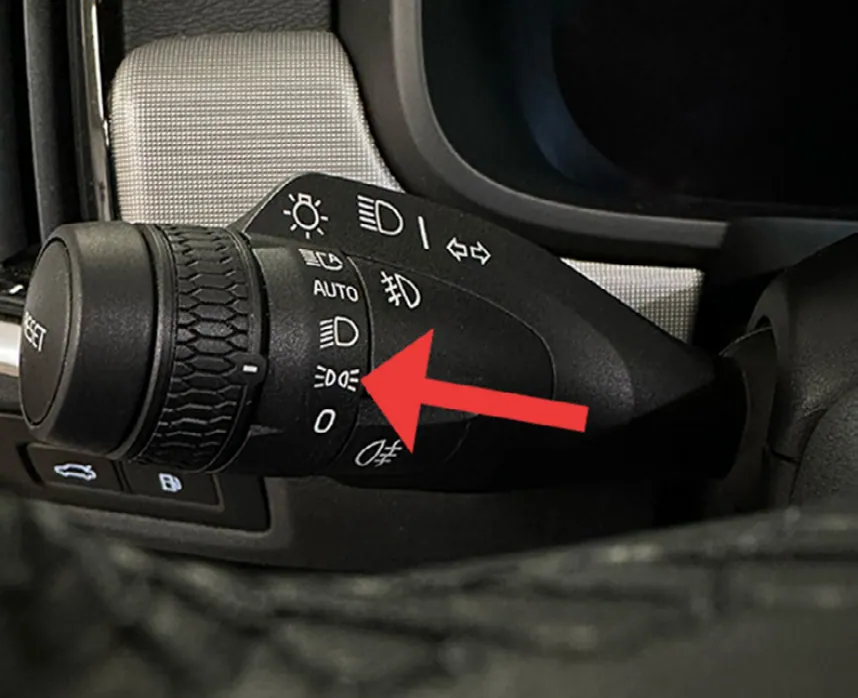
Parking lights should be used when the car is stopped or parked in poor visibility. This is in order for other road users to see the car. The parking light is low-power and can usually be left on for many hours without draining the battery.
Rear lights
At least two red lights.
Brake lights
Red lights that come on when the brake pedal is depressed. The brake lights always emit a stronger light than the rear lights.
Reversing light
White light that comes on when the car is in reverse gear.
Rear registration plate light
Lights up automatically and illuminates the registration plate.
Correct dimming of full beam headlights
Oncoming traffic
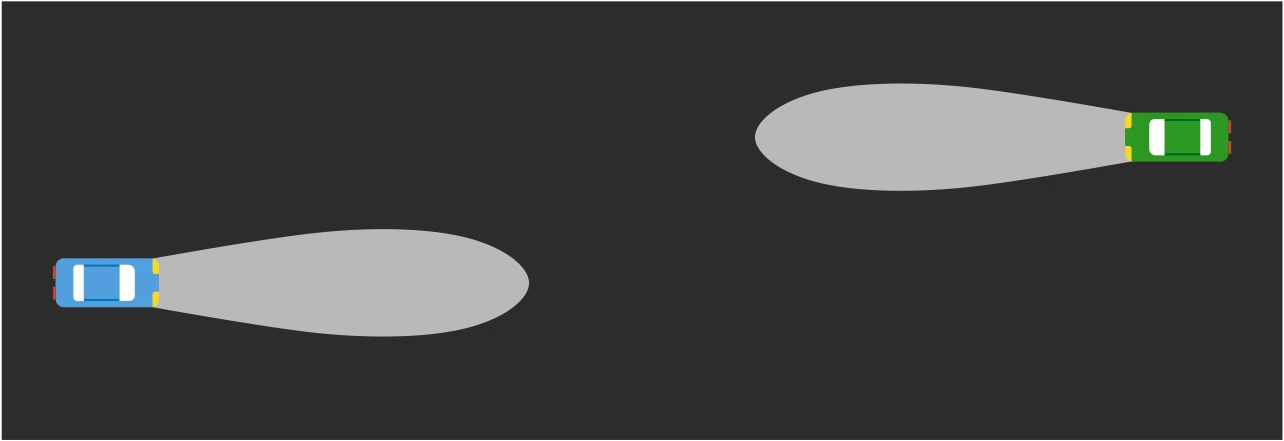
- Drive with full beam headlights for as long as you can. It is important that you can see what is happening on the road ahead.
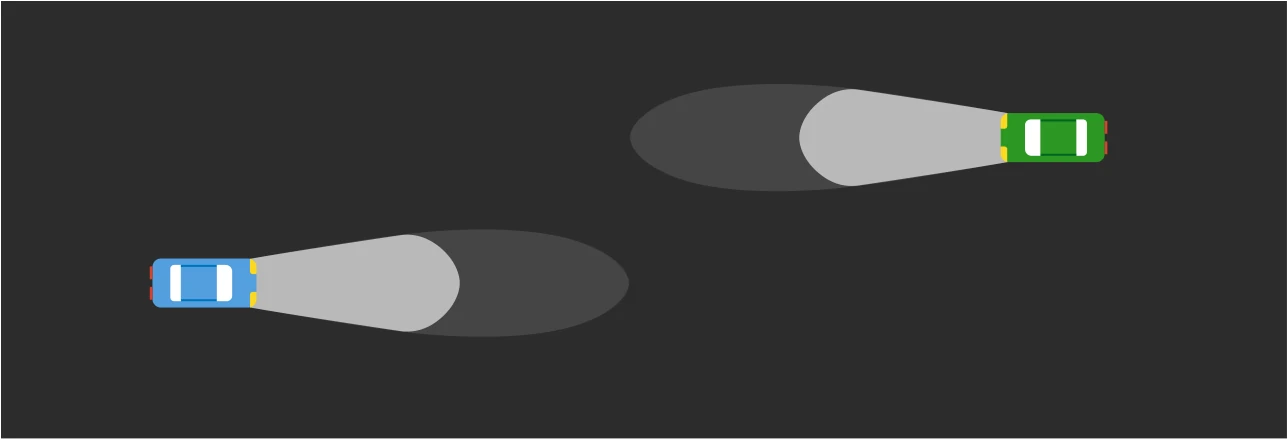
- When the full beam headlights meet on the road or when you feel that you are dazzled by the other car, it is time to switch to dipped headlights.
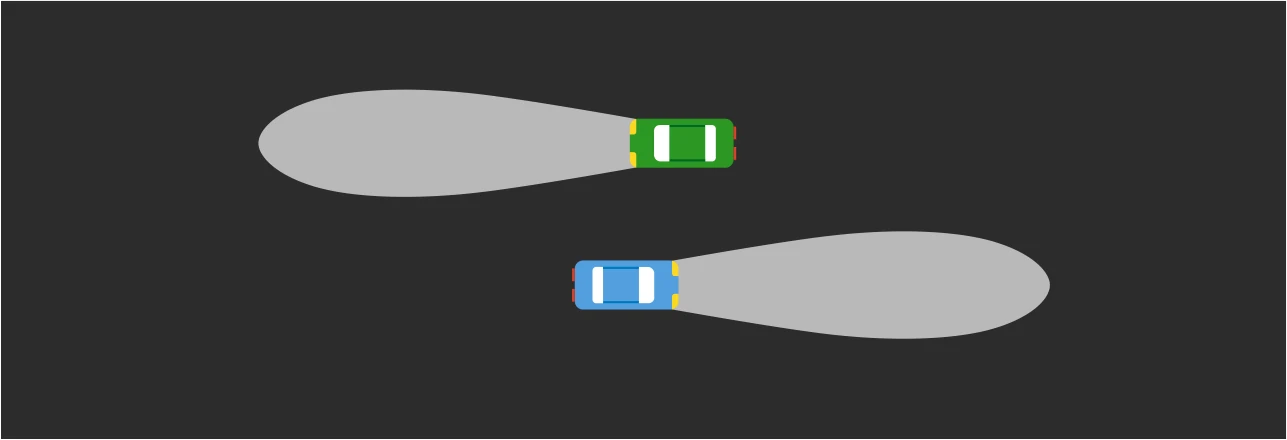
- Exactly at the point when you are level with the other car, switch back to full beams.
Overtaking
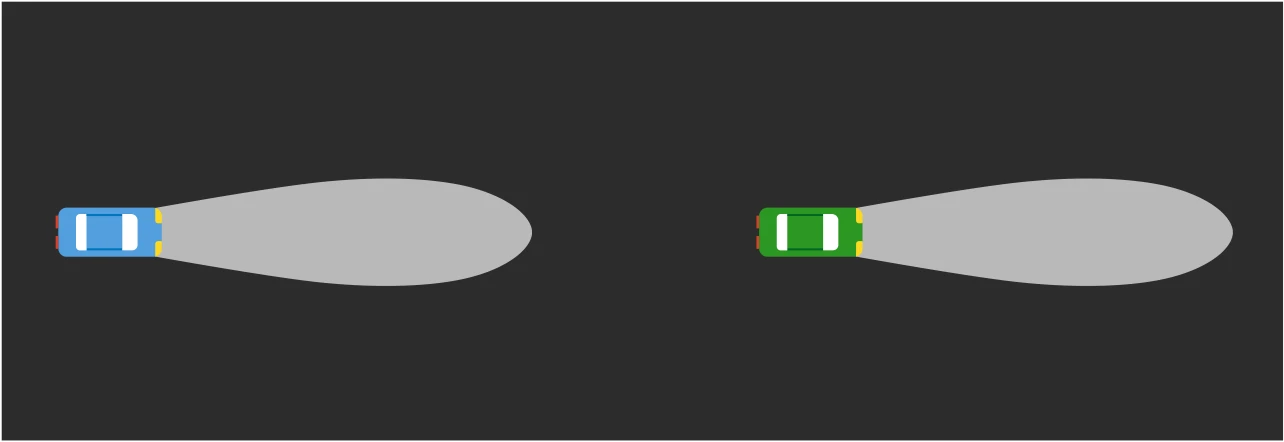
- Drive with full beam headlights for as long as you can. It is important that you can see what is happening on the road ahead.
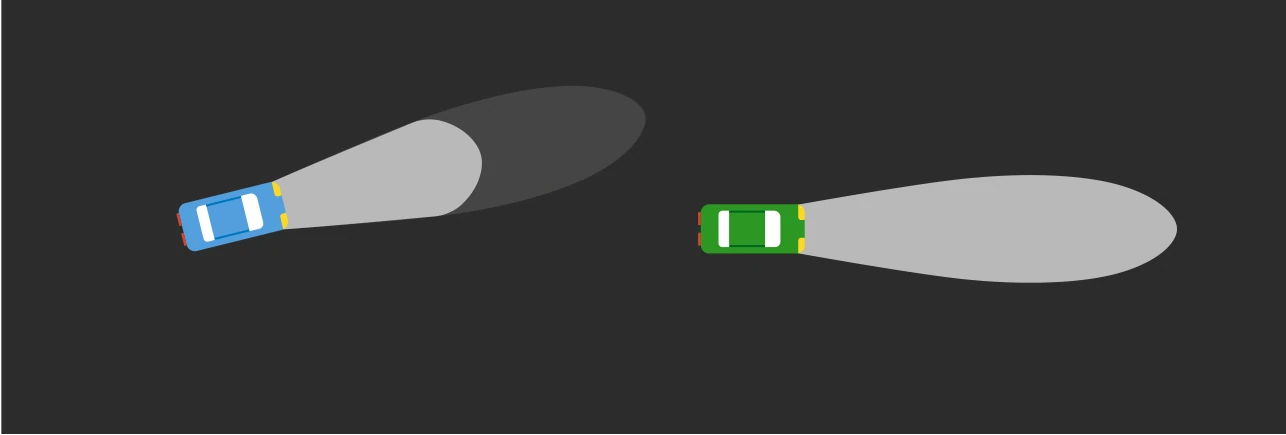
- When you are close to the car that you are to overtake, it is time to dim your full beams.

- Exactly at the point when you are level with the other car, switch back to full beams.
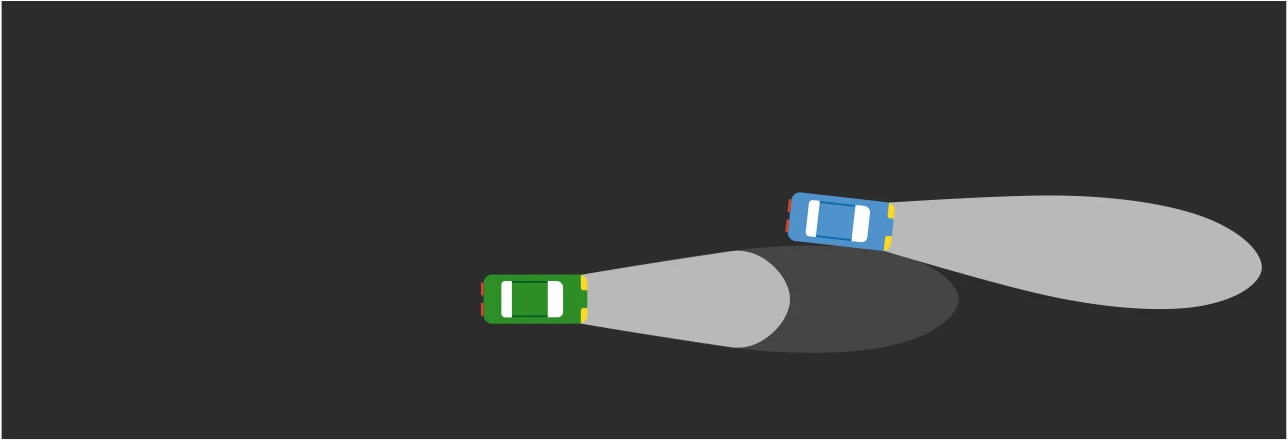
- Now it is the car that has been overtaken that must turn off their full beam headlights in order not to dazzle you.
Bends
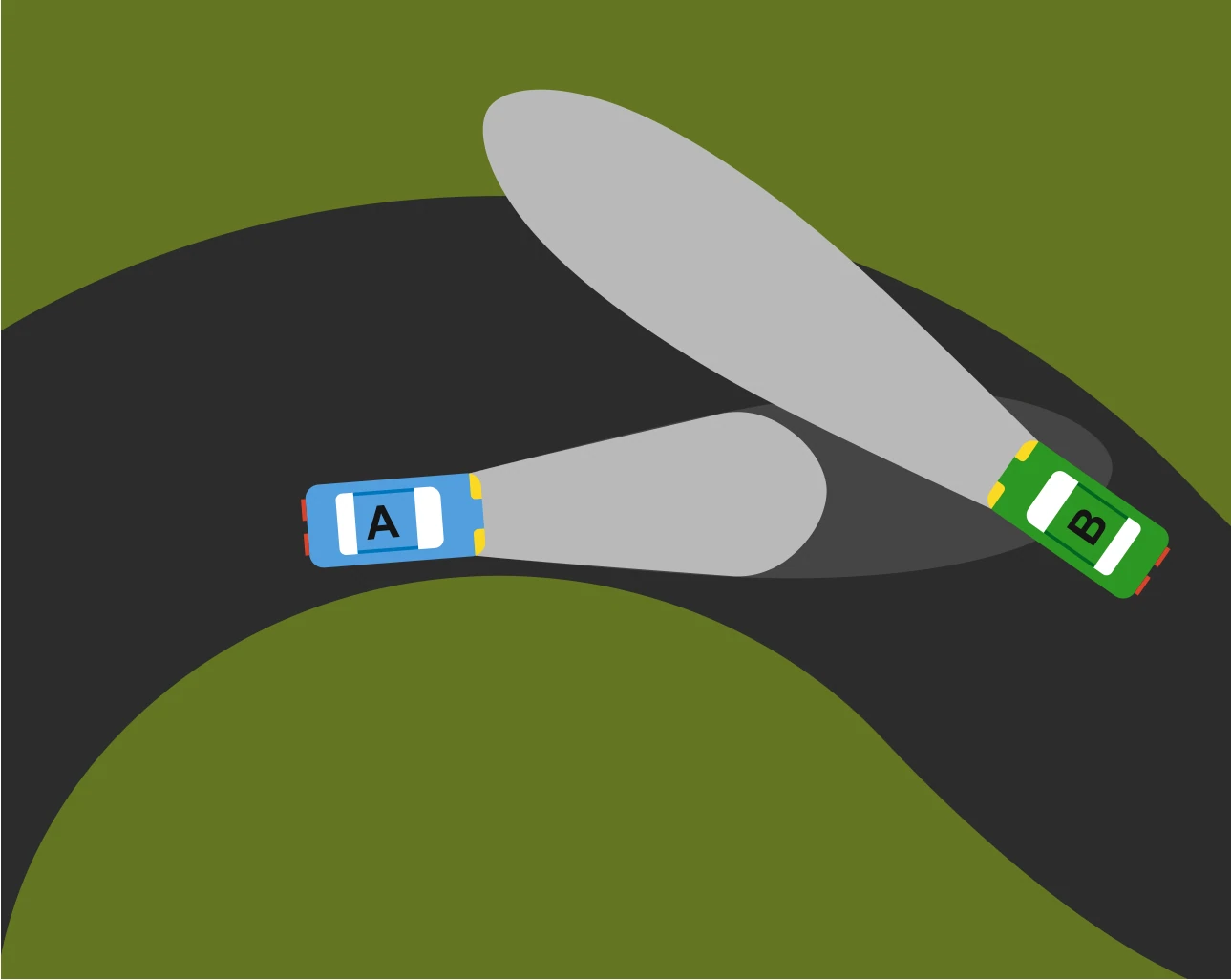
At this bend, car A must switch off their full beam headlights quickly so as not to dazzle B. Car B, however, can have their full beams on for longer, as the beams are pointing away from A.
Visibility in darkness
Dark clothing without reflectors
- Dipped headlights: 25 m
- Full beam headlights: 150 m
Light clothing without reflectors
- Dipped headlights: 60 m
- Full beam headlights: 300 m
With reflectors
- Dipped headlights: 125 m
- Full beam headlights: 450 m
Do you have to turn off your full beam headlights when approaching a train travelling in the opposite direction?
Correct answer: A) Yes, if there is a risk of dazzling the driver.
Explanation
“Full beam headlights may not be used [...] when meeting an oncoming track-bound transport [...] if there is a possible risk of dazzling the driver.” (Road Traffic Ordinance)
The train driver must be able to see the tracks. There could be an elk on the line further ahead, for example. The driver of the train must then have good visibility in order to activate the emergency brake.
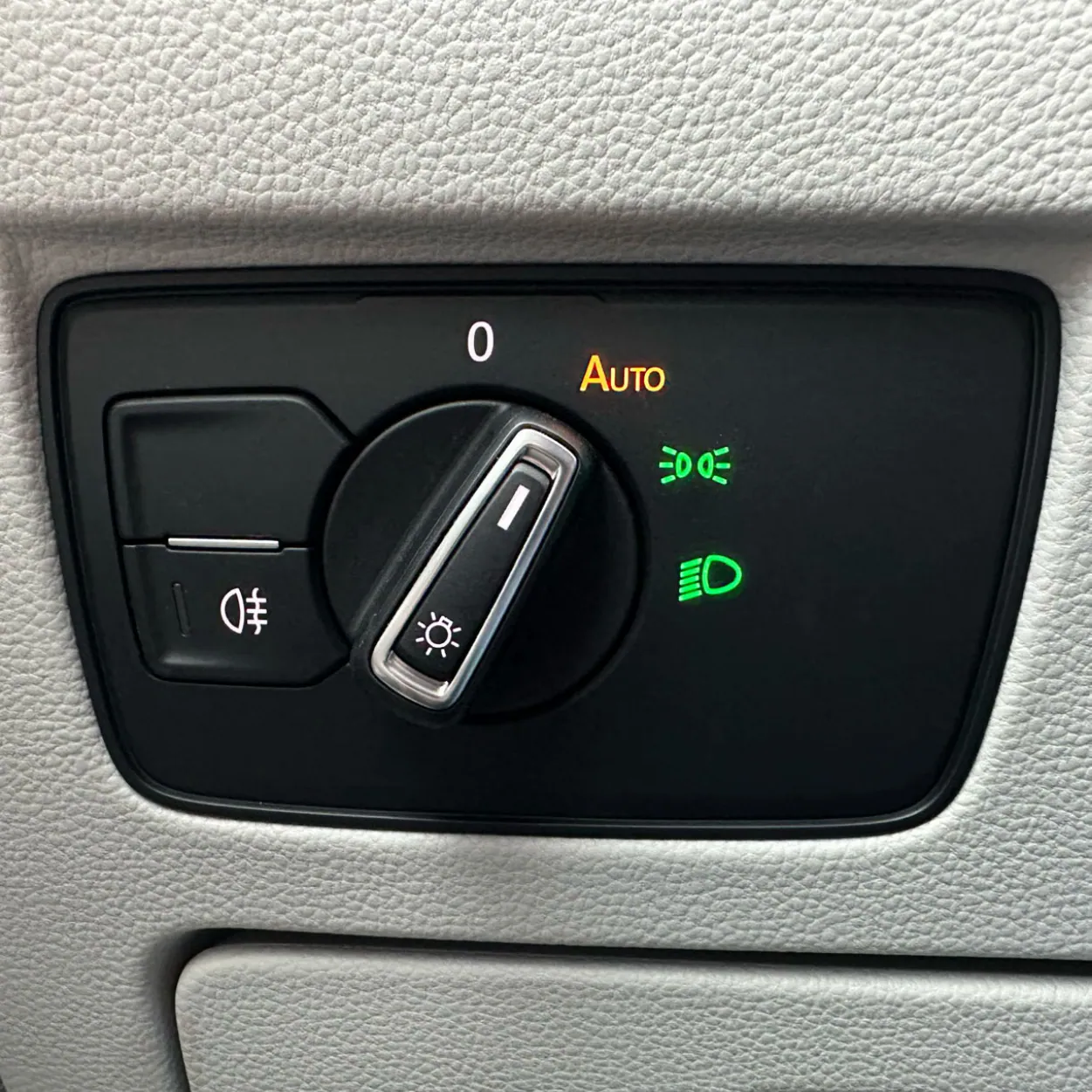
Safety checks
External safety check
- Turn on the parking lights, and check the front and rear lights, the reflectors, and the rear registration plate light. Clean as necessary.
- Turn on the ignition, dipped headlights, left indicators and rear fog light.
- On the left side: Check the front wheel. Does the tread depth look OK, and is the tyre round (rather than flattened) at the bottom, front indicator, headlights (dipped), rear wheel, rear light, rear indicator and rear fog light.
- Switch on the full beam headlights and right indicators.
- On the right side: Check the front wheel (as above), front indicator, headlights (full beam), rear wheel, rear light and rear indicator.
- Turn off the lights and indicators.
- Ask another person to press the brake pedal while you are standing behind the car, to check that the brake lights work.
Internal safety check
- Adopt the correct driving position and check the mirrors and that the doors are shut.
- Turn on the windscreen wipers (wash as necessary) and check the heating controls (especially for the windscreen, and the defroster for the rear window).
- Beep the horn once and fasten your seat belt (adjust until it is fastened tightly).
- Press down hard on the footbrake and keep it depressed; it should feel rigid.
- Turn the steering wheel slightly and start the car. You should be able to feel that the power steering is functioning correctly (the brake pedal sinks and the steering wheel becomes easy to turn).
- Check that the handbrake works by pulling it and attempting to drive away carefully, forwards or backwards (or by releasing it on a slope).
Driving position
- Adjust the seat so that you are sitting comfortably (you should be able to angle your wrists over the steering wheel).
- Adjust the head restraint so that it is positioned roughly in the centre of the back of your head.
- Adjust the rear view mirror and the side mirrors.
- Fasten your seat belt (raise or lower the upper belt clip as necessary).
- Depress the clutch.
- Start the engine.
- Turn on the necessary regulator systems (e.g. fan) and check that the correct lights are switched on.
What is the smallest permitted tread depth on winter tyres in winter conditions?
Correct answer: C) 3.0 mm
Explanation
“In winter road conditions during the period 1 December–31 March, the tread depth must be at least 3 mm.” (Swedish Transport Agency)
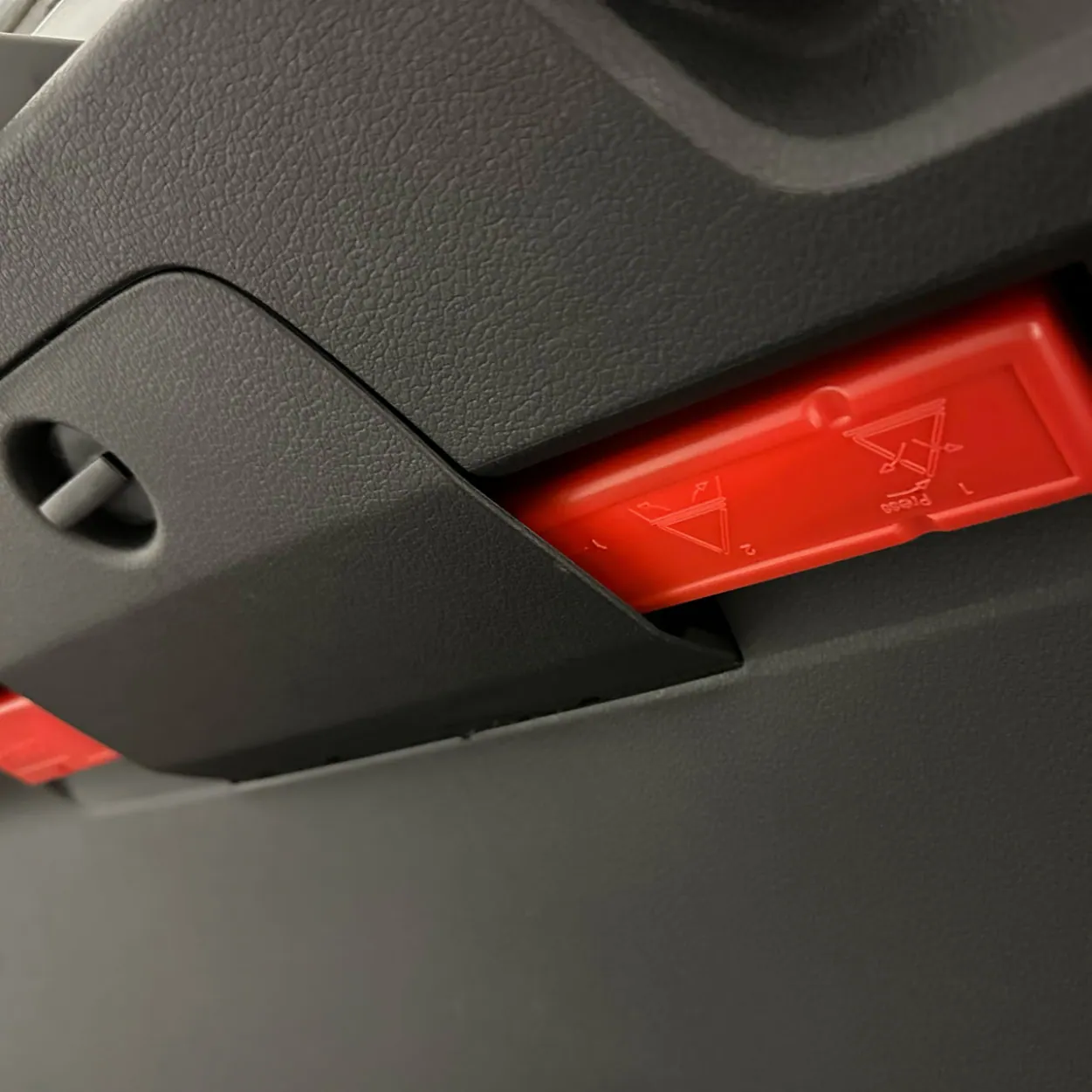
Roadworthiness tests
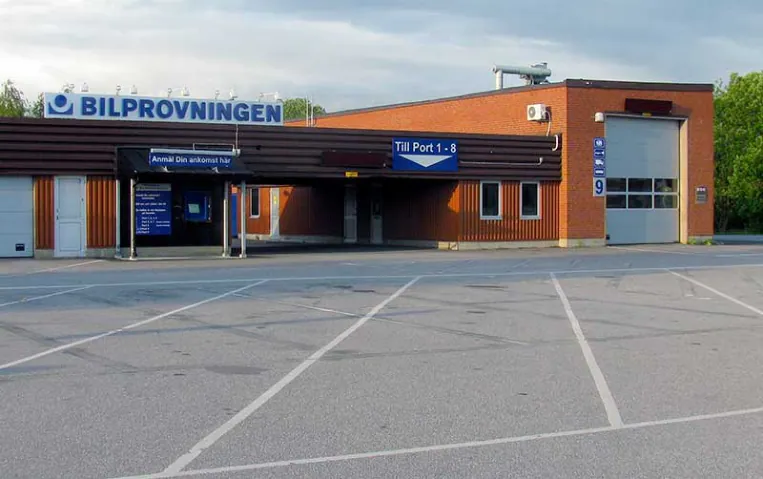
The roadworthiness test (inspection) is carried out in order to reduce the number of accidents caused by technical faults, and to prevent excessive emissions of harmful substances.
The roadworthiness test is obligatory in Sweden and is carried out by an approved testing company.
What is checked during the roadworthiness test
- Frame – that the car’s load-bearing structure has not been damaged by, for example, severe rusting.
- Wheels and control system – that there is no damage to the front or back wheels. The tyres’ condition and tread depth are also checked.
- Drive system – the engine, and the electrical, exhaust and drive systems.
- Brake system – the function, effectiveness and evenness of the brakes.
- Bodywork – seat belts, windows and doors.
- Communication – lights, indicators, horn, windscreen washer fluid and warning triangle.
- Environment – the exhaust emissions are compared with the threshold values.
- Other – towbar, instrument lights and speedometer.
How often and when the car shall be inspected
It often happens that one or more testing companies contact you when it is time for the roadworthiness test. The responsibility is however on you to ensure that the vehicle is inspected on time.
When the car shall be inspected
- A new car must be inspected for the first time no later than 3 years (36 months) after the month when it was first taken into service.
- The second inspection must be conducted no later than 2 years (24 months) after the month in which the first inspection was conducted.
- Subsequent inspections must be conducted no later than 14 months after the month in which the most recent inspection was conducted.
The last day for inspection is always the last day of the month.
Examples of inspection dates
- When is a car that was first registered on 2 April 2023 to undergo inspection?
- No later than 30 April 2026
- When is a car that was inspected for the first time on 5 October 2023 to undergo inspection again?
- No later than 31 October 2025
- Your car was made in 2016, and the last inspection was on 8 June 2024. When is the next inspection due?
- No later than 31 August 2025
More rules concerning roadworthiness tests
- If the inspection is not conducted during the prescribed period, a driving ban is automatically imposed on the vehicle until it is inspected.
- You must rectify any faults identified during the inspection. Otherwise, a driving ban will be imposed on the vehicle.
- A police officer or vehicle inspector has the right to check a vehicle at any time. This is known as a vehicle spot inspection.
- If the vehicle changes (for example, if the engine is replaced), it must be subjected to a registration inspection within 1 month. A registration inspection is thus different from a regular inspection (roadworthiness test).
How often do you have to inspect a car that is more than 5 years old?
Correct answer: C) No later than 14 months after the previous inspection.
Explanation
- A new car must be inspected for the first time no later than 3 years (36 months) after the month when it was first taken into service.
- The second inspection must be conducted no later than 2 years (24 months) after the month in which the first inspection was conducted.
- Subsequent inspections must be conducted no later than 14 months after the month in which the most recent inspection was conducted.
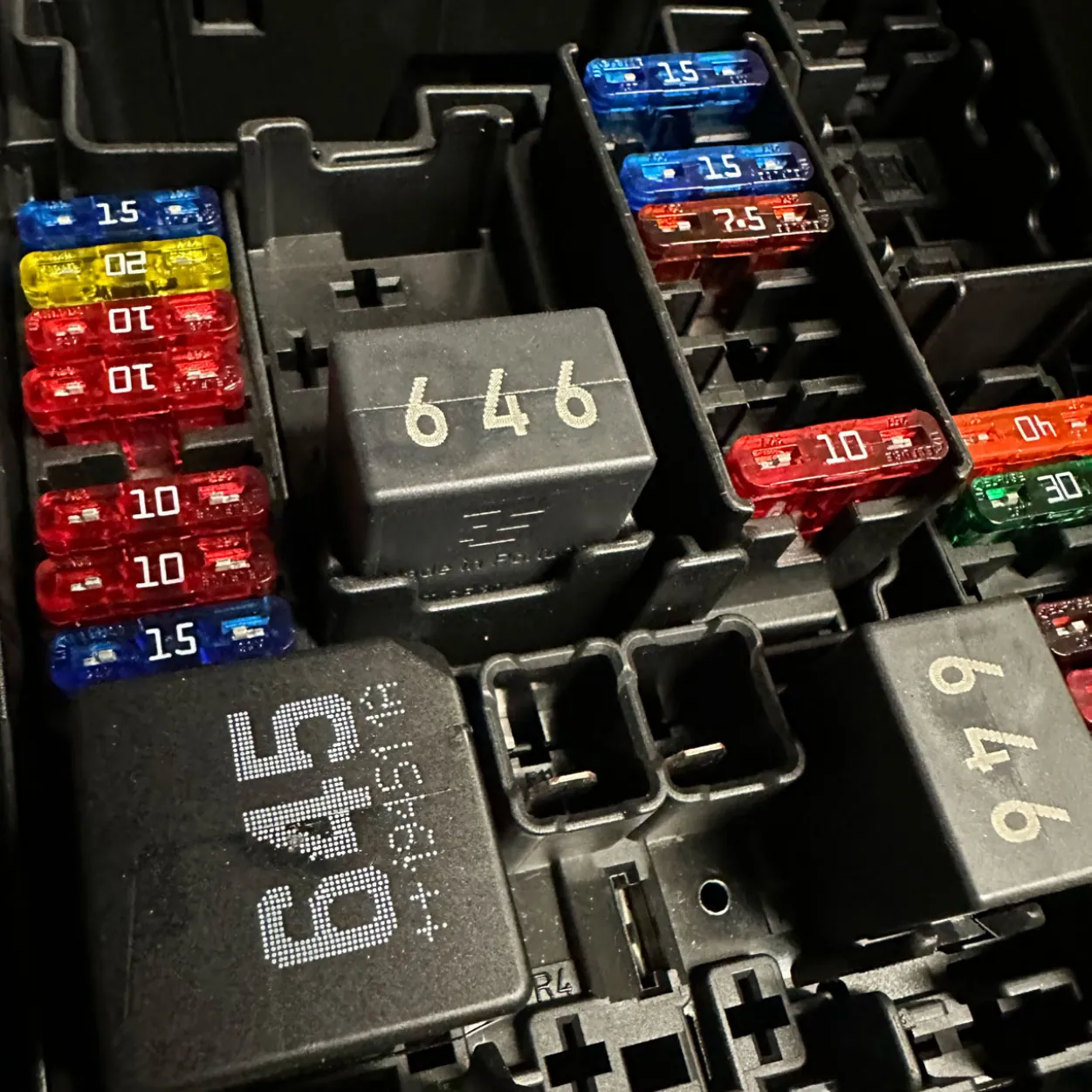
Services
Car battery
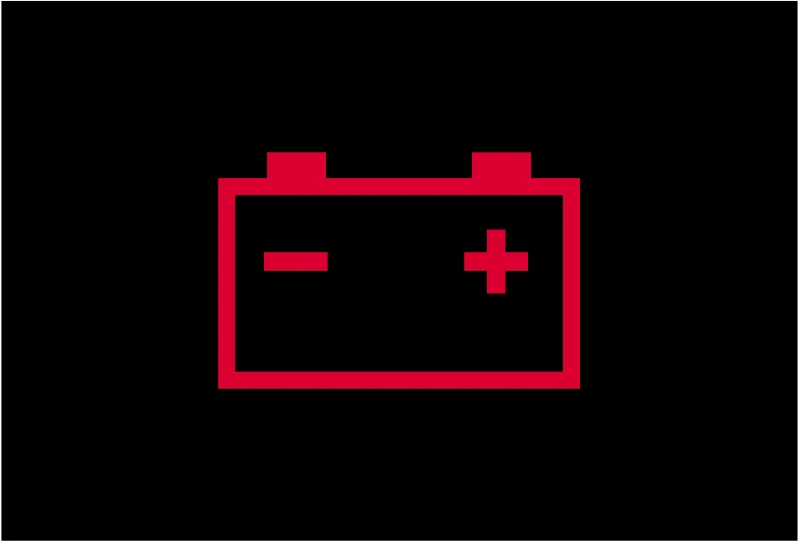
- The car battery stores electricity for the parts of the car that are powered by electricity, such as the radio and the starter motor.
- Check the battery by checking the level of fluid inside (there are often MIN./MAX. levels).
- If the level is too low, top up the battery with distilled water. Maintenance-free batteries are also available, which must be replaced when they stop working.
- When the engine is running, the battery is charged by a generator.
- The battery deteriorates over time.
- The fluid in the battery is corrosive. You must therefore handle the car battery with care.
Fuses
- Fuses protect the car’s electrical system from being damaged by an overload.
- If something powered by electricity has stopped working, it is likely that a fuse needs changing. In a used fuse, the wire fuse element between the ends/mounts has come away (burned up).
- Check the car’s user manual to see where the fuse box is located.
Radiator
- The radiator’s job is to prevent the engine from overheating.
- If the engine temperature is too high, it may be because the car has too little coolant. You should not open the radiator when the engine is warm, however, as it may release very hot steam and burn you.
- The radiator must be replenished with coolant, which consists of water and glycol.
Engine oil
- Engine oil is used to lubricate the engine so that none of its parts seize up.
- The oil level is checked using the dipstick by the engine compartment. Pull out the stick, wipe it (to remove oil splashes caused by motion), dip it in the oil tank and bring it up again to check the mark.
- The oil is normally replenished by removing a screw cap on the engine block bearing the text OIL.
Windscreen washer fluid
- Windscreen washer fluid helps the windscreen wipers to wash the windscreen.
- You check the level by looking at the windscreen washer fluid container under the bonnet.
What does it mean if this symbol lights up on the dashboard?
Correct answer: A) Incorrect oil pressure.
Explanation
The car’s user manual will tell you what the lights mean. The standard symbol for incorrect oil pressure is an oil can (slight variations in design may occur).
Registration certificates
All registered vehicles have a registration certificate issued by the Swedish Transport Agency.
Part 1 – information about the vehicle
Contains
- Technical information about the vehicle.
- Information about leasing and purchasing on credit.
- Authorisation code for internet services.
- Other general information about the vehicle.
Used for
- Notification of on-road status.
- Notification of off-road status.
- Ordering registration plates.
- Ordering Part 2.
Example
Below is an extract from Part 1, which contains technical information about the vehicle. The information found here includes, for example, the maximum permitted weight for a trailer.
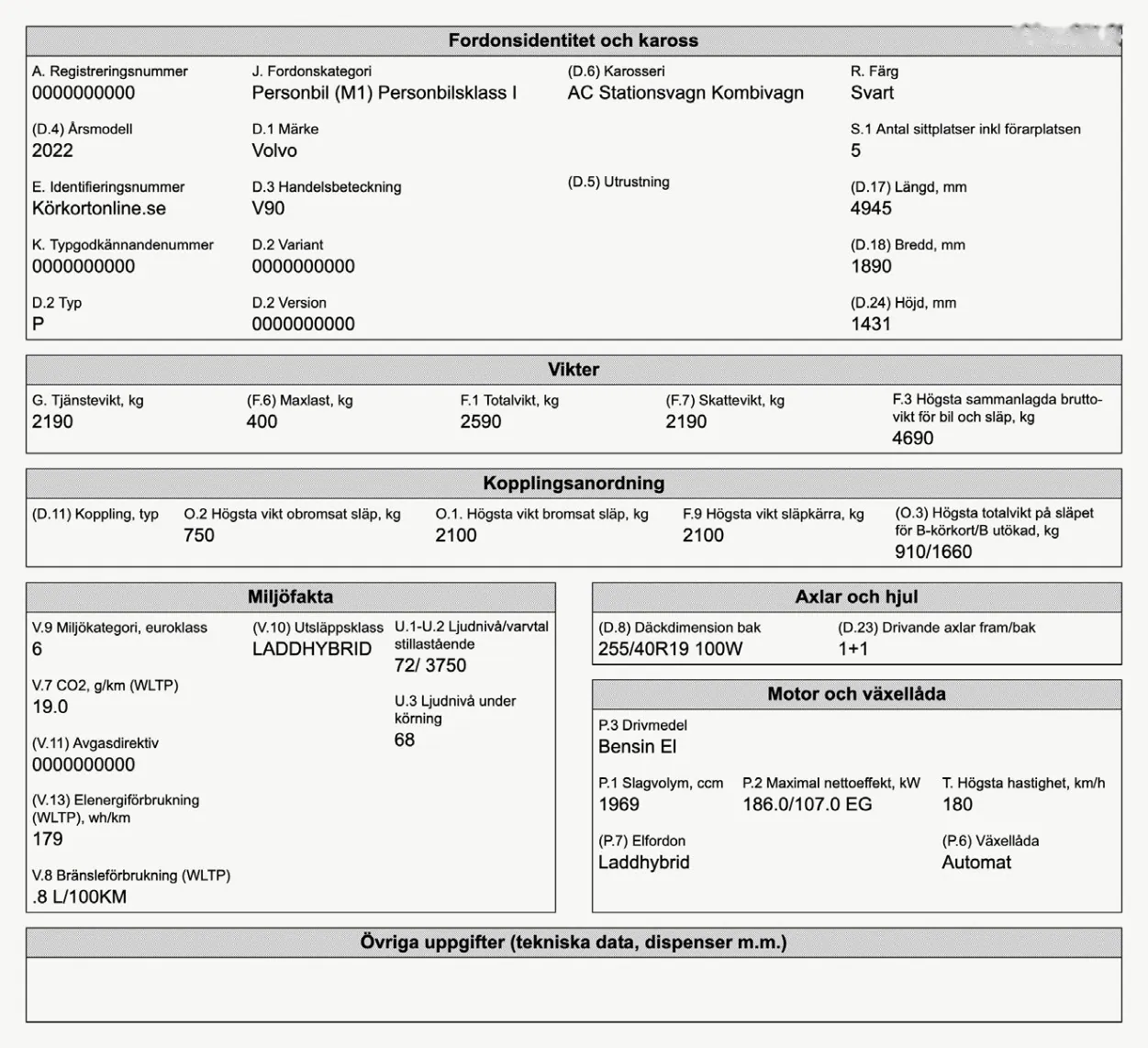
Part 2 – certificate of ownership and change of ownership
Contains
- Ownership information.
- The most recent owners of the vehicle.
- Other general information about the vehicle.
Used for
- Change of ownership.
- Deregistration.
As Part 2 is used for change of ownership, it is important that you store this part of the registration certificate somewhere safe. The glove compartment is a bad place to keep Part 2.
How to register a change of ownership of the vehicle
The easiest way to change ownership is via the Swedish Transport Agency’s website or app. You can also fill in the buyer’s personal details in Part 2 and send it by mail.
Important information about a change of ownership
- The new owner must take out third-party insurance that applies from the date specified for the change of ownership.
- Check one another’s personal details using a personal data checking service. If the information is incorrect, the Swedish Transport Agency will be unable to complete the change of ownership, which would result in complications and additional costs.
On-road and off-road status
By registering your car as being off the road, you avoid having to pay vehicle tax and third-party insurance. There are different ways to submit notifications of the on-road or off-road status of your vehicle:
- Internet and app.
- Part 2 of the registration certificate.
If a driving ban has been imposed on the vehicle, this does not mean that it will automatically have off-road status. You must always actively submit an off-road notification yourself.
A vehicle with registered off-road status may only be driven to and from the roadworthiness test, provided that third-party insurance has been paid, and there are no motor vehicle tax arrears.
It is also forbidden to tow a vehicle with off-road status.
Which statement applies to a vehicle’s off-road status?
Correct answer: D) A vehicle is never automatically given off-road status.
Explanation
“It is a common misconception that a vehicle is automatically given off-road status if it is subject to a driving ban after missing a roadworthiness test, for example. That is not the case! A vehicle is never automatically given off-road status – you are responsible for submitting an off-road notification to us.” (Swedish Transport Agency)
Insurance
Car insurance can be divided into 3 levels: third-party insurance, partial insurance and fully comprehensive insurance. What is included in the various types of car insurance differs from one insurance company to the next.
Home insurance can provide you with compensation if you have been injured in an accident, lost baggage or similar.
It is good practice to keep an insurance claim form in the car. Order one from your insurance company.
Different levels of car insurance
Third-party insurance
- Covers personal injury and damage to another party’s car or property. Therefore if your own car is damaged, you will not receive compensation.
- Obligatory, i.e. every motorised vehicle must have third-party insurance.
- If you have not submitted any claims for a number of years, you can receive a cheaper third-party insurance premium through a no-claims bonus.
- If you are penalised for reckless driving or drunk driving, the insurance company may claim money back from you (right of recourse).
Partial insurance
Covers everything included in third-party insurance plus:
- Theft – if the car is stolen or it is damaged during an attempted theft.
- Fire – if the car begins to burn.
- Glass – e.g. stone chips.
- Machine – if the engine breaks down.
- Legal protection – legal costs are covered.
Fully-comprehensive insurance (motor vehicle damage insurance)
Covers everything included in third-party insurance and partial insurance plus:
- Damage to your own car in the event of a traffic accident.
- Scratches and dents.
- Vandalism.
- Salvage and towing.
What type of damage is not covered by third-party insurance?
Correct answer: A) Damage to your own vehicle.
Explanation
“Third-party insurance [...] Note that you are not compensated for [...] damage to your own vehicle”. (Swedish Transport Agency)
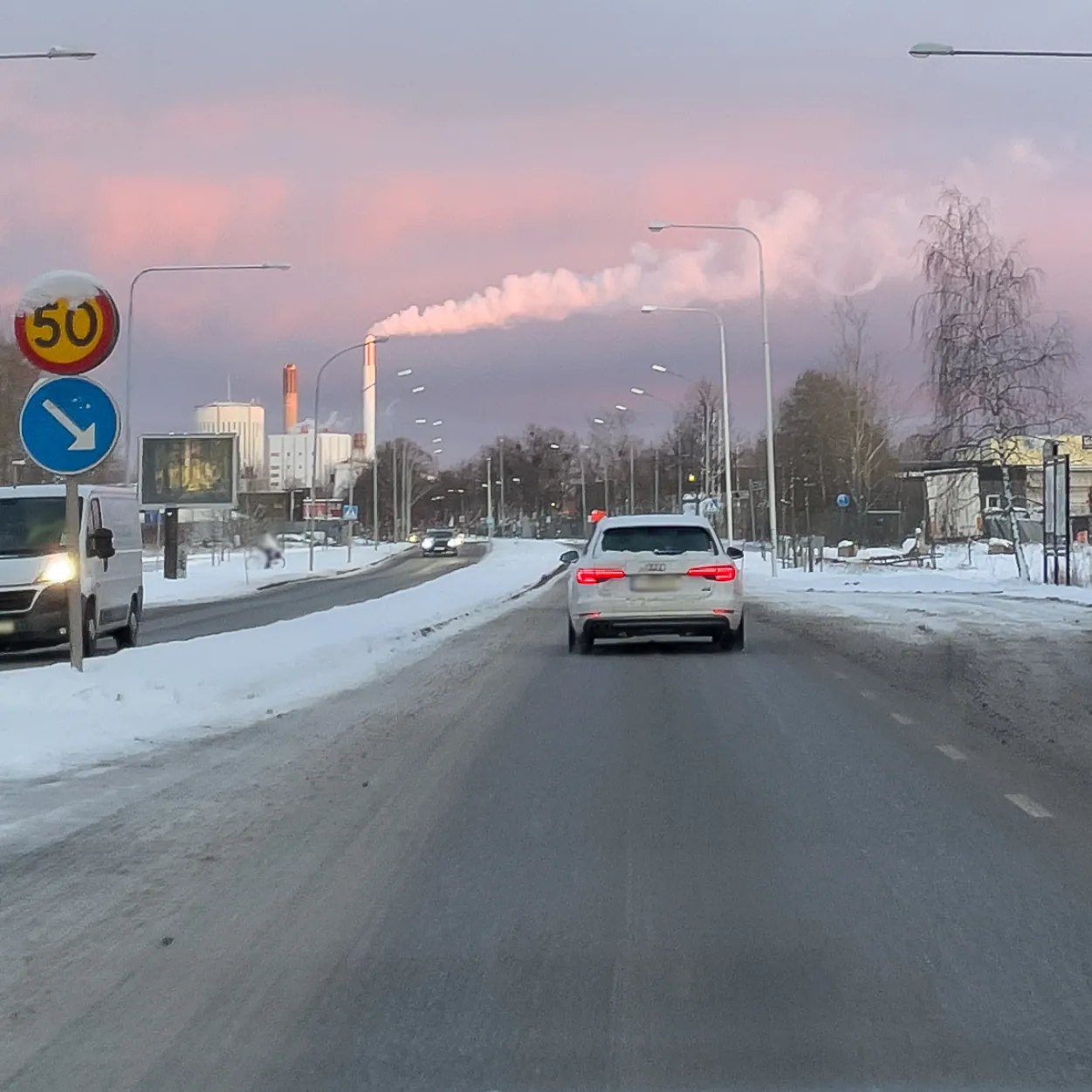
Environment
The whole world is trying to reduce its carbon dioxide emissions. A significant part of those emissions is caused by vehicle traffic. The Swedish Parliament, government and public agencies therefore have an interest in ensuring that people are as environmentally friendly as possible.
Greenhouse effect
The greenhouse effect is named after the function of a greenhouse. The rays of the sun come in through the glass roof of the greenhouse, providing heat. Most of that heat then remains in the greenhouse, creating a suitable environment for the plants. The same process also occurs naturally on a larger scale, whereby the Earth represents the plants and the Earth’s atmosphere represents the glass roof.
The problem arises when the greenhouse effect is unnaturally enhanced. This is what happens when we extract fossil fuels and burn them.
Normal greenhouse effect | Enhanced greenhouse effect |
|---|---|
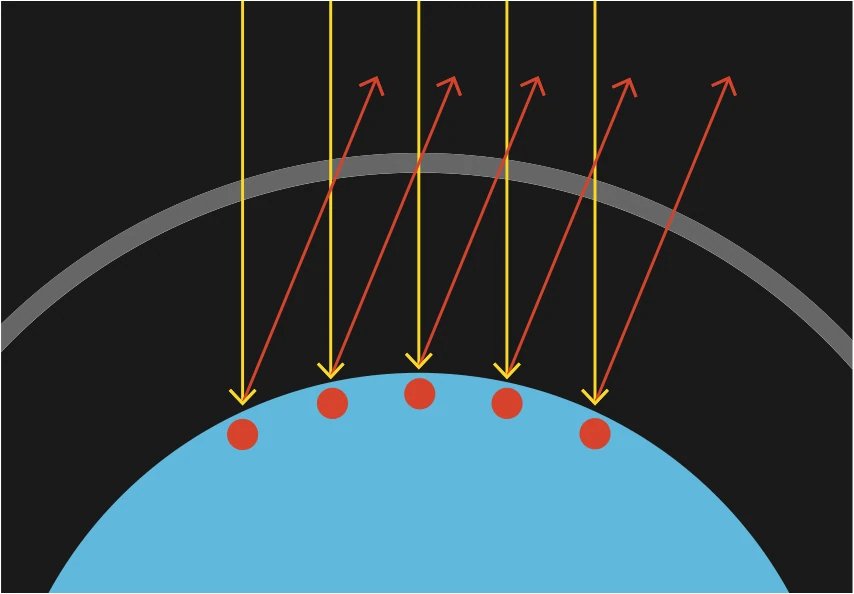 The rays of the sun (yellow arrows) pass through the atmosphere (grey line) and reach the Earth. Much of the heat is absorbed (red dots) and the excess bounces off the Earth’s surface and is reflected back out into space (red arrows). | 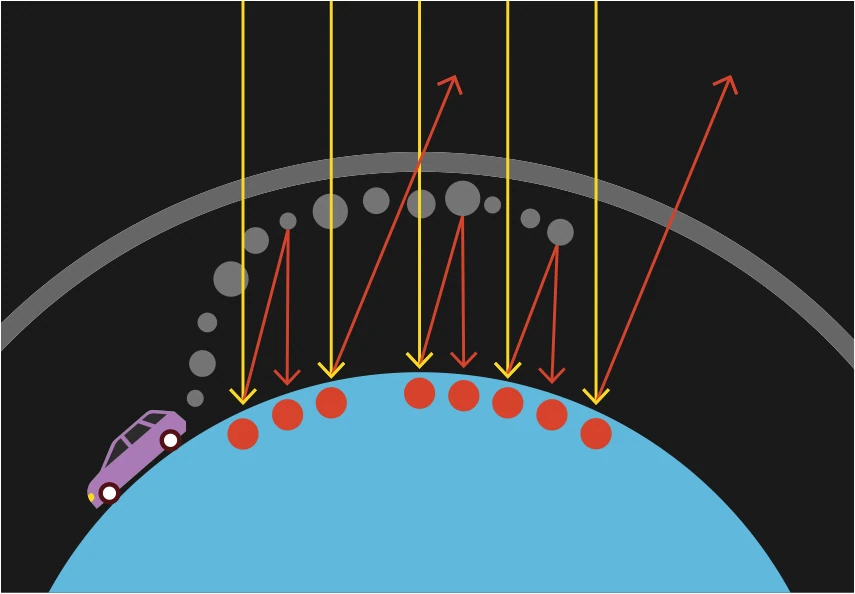 The car releases carbon dioxide into the atmosphere, which makes it thicker. When the atmosphere gets thicker, some of the heat rays reflected back from the surface cannot get through. These rays instead bounce back towards the Earth while emitting more heat. In other words, the Earth is getting warmer than it otherwise would. |
Consequences
There are many potential consequences of a warmer climate. Examples:
- Natural disasters – meltwater from giant glaciers can cause major flooding.
- Agricultural disturbances – certain food crops are highly sensitive to changes in temperature, and very small changes can make their cultivation impossible.
- Diseases – viruses and bacteria that cannot withstand our currently cold climate may spread to Sweden.
- Water shortage – a large part of the Earth’s population uses glacier meltwater as drinking water. If the glaciers melt, these people will have no water to drink.
Equipment and technology
Catalytic converters
- Catalytic converters transform the harmful substances in exhaust fumes into carbon dioxide and water.
- 80–95% of the harmful substances are eliminated.
- Catalytic converters have an operating temperature of 400–600°C, which means that it takes a while for them to function properly.
Engine heaters
The engine heater is located underneath the bonnet and is used to warm up the engine.
There are many benefits to an engine heater:
- The catalytic converter starts working sooner.
- Lower fuel consumption.
- Less wear on the engine.
How long the engine heater should be turned on:
- +10°C: 30 minutes before leaving.
- 0°C: 60 minutes (1 hour) before leaving.
- -20°C: 90 minutes (1.5 hours) before leaving.
Keeping the engine heater on for too long is both unnecessary and wasteful (as it consumes electricity without adding any benefit).
Reducing air resistance
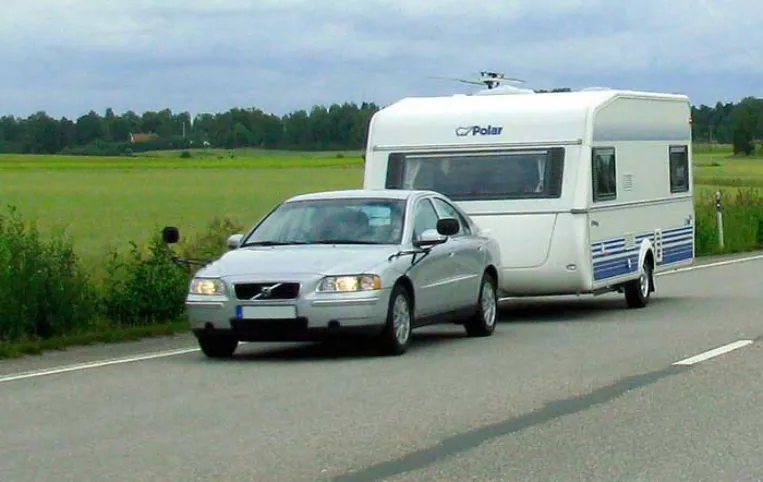
The fewer wind-catching areas there are, the less fuel is needed to propel the car. Things to consider when it comes to air resistance:
- Remove rails and roof boxes when not in use.
- Drive with the windows shut. An open side window or sunroof disrupts the airflow around the car, which leads to greater air resistance.
- Avoid tyres that are too wide.
Correct tyre pressure
Tyres with high air pressure will roll more easily than tyres with less air in them. The more easily the car rolls, the less fuel it takes to propel it. It also reduces the wear on the tyres. See the car’s user manual and information from the tyre manufacturer.
Use the air conditioning sparingly
Air conditioning (AC) systems use a lot of energy. If you turn off the AC, you can save 5–10% in fuel consumption.
Washing the car correctly
You should wash your car in a location intended for that purpose, such as a car wash at a petrol station. These places have special floor drains that collect any harmful residues from the water. Waxing your car not only makes it look good – the wax also forms a protective film which means that less dirt sticks to the car. This in turn means fewer washes are necessary, which is good for the environment.
Chemical emissions
Carbon dioxide (CO2)
- The greenhouse gas that contributes the most to the greenhouse effect and climate change.
- The combustion of fossil fuels, such as petrol and diesel, is a major cause of carbon dioxide emissions.
Carbon monoxide (CO)
- Impairs the oxygen uptake in the blood.
- Leads to tiredness, and can be life-threatening in large amounts.
- Catalytic converters reduce carbon monoxide emissions.
Hydrocarbons (HC)
- Cause cancer.
- May impact on genetic material.
- Contribute to the formation of tropospheric ozone.
Nitric oxide (NOx)
- Contributes to the acidification of soil and eutrophication of lakes.
- Impacts on human genetic material and airways.
- Contributes to the formation of tropospheric ozone.
Tropospheric ozone
- Ozone that forms too close to the ground is harmful to plants and animals.
Soot and harmful particles
- Common problem in cities with many cars.
- Affect the airways and can cause cancer.
Noise
- Disturbing car noise is a common occurrence in cities.
- Reduced speed and noise protection reduces the problems.
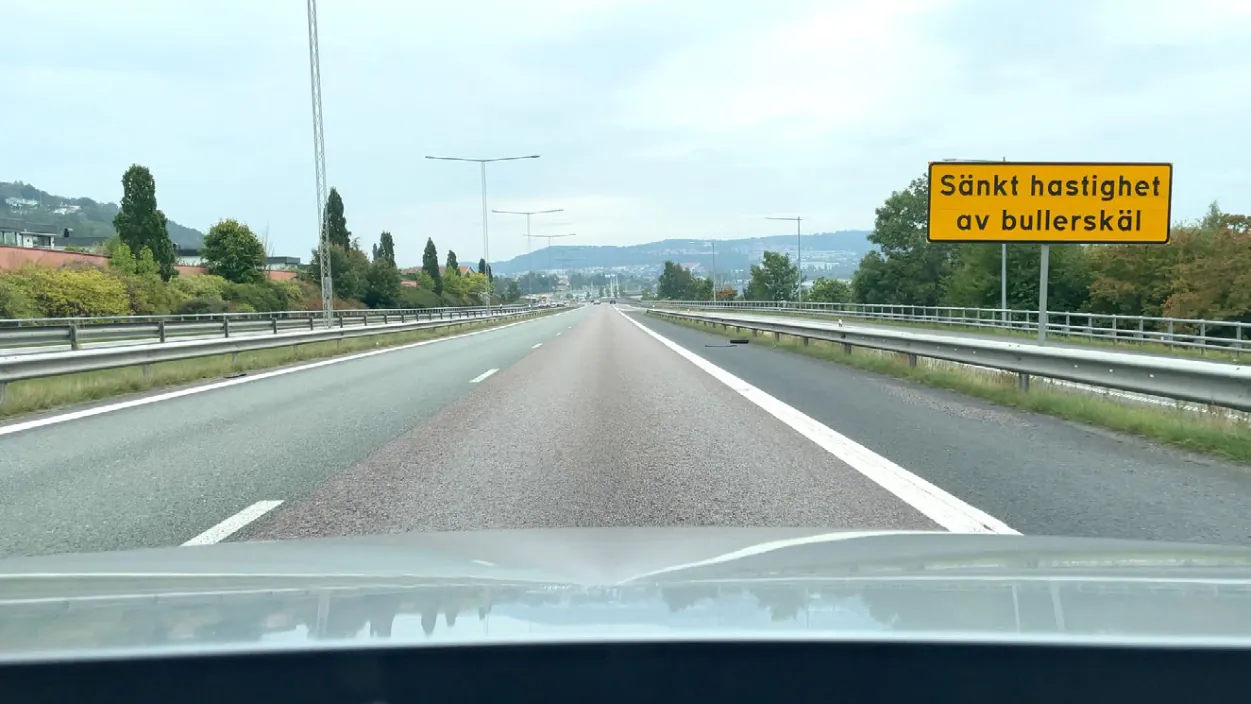
Why should you remove a roof box when not using it?
Correct answer: B) It increases air resistance and thereby fuel consumption.
Explanation
“Roof boxes and rails create unnecessary air resistance and slow the car down. A roof box can increase fuel consumption by more than 1 decilitre for every 10 kilometres travelled.” (Swedish Transport Administration)

Eco-driving
Avoid first gear
First gear is appropriate when starting. First gear gives the car a lot of power. However, the downside of this is that a lot of petrol is used.
For this reason, it is best to shift to a higher gear as soon as you can. Normally after a few metres.
Drive in as high a gear as possible
High gear means a high number (5th = high, 1st = low).
Most modern cars can handle 50 km/h in 5th gear. However, if you notice the car getting sluggish or the engine starting to cough, you should shift to a lower gear.
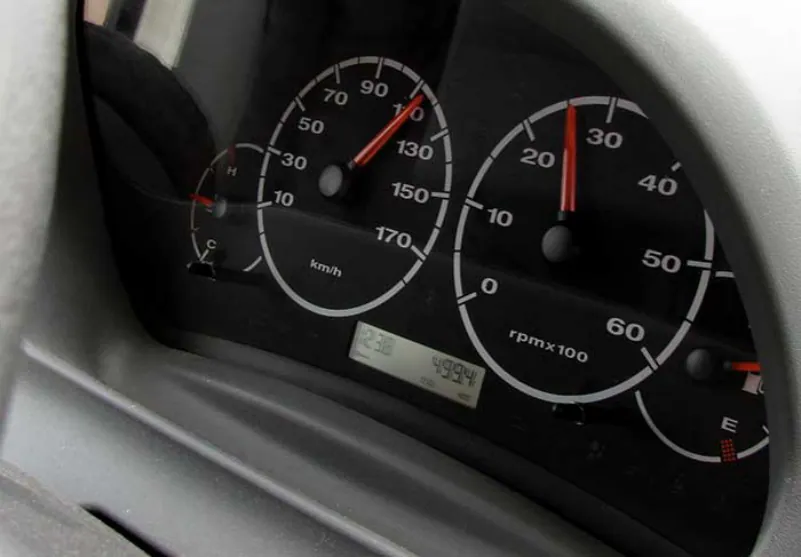
Also note that, in older cars that do not have fuel injection systems, carburettors may get clogged with soot if you drive in too high a gear.
Accelerate fairly quickly
A car driving constantly at the same speed consumes less fuel than an accelerating car. For this reason, it is best to get up to the desired speed as quickly as it is safe to do so, and not prolong the acceleration phase. But remember to keep the engine below 2,500 rpm.
Avoid the clutch
Only use the clutch when you have to, i.e. when shifting gears. The engine uses fuel when the clutch pedal is depressed.
Skip gears
You gain momentum more quickly and avoid too much clutch work. Examples of gear skips:
- 2nd ⇒ 4th
- 3rd ⇒ 5th
Utilise engine braking
A car that is using engine braking consumes no fuel. The actual brake effect is produced by the friction inside the engine.
How to brake using the engine
Engine braking involves completely releasing the accelerator pedal. Keep an eye on the tachometer and shift to a lower gear just before it reaches 1,200– 1,300 rpm. If the rpm level falls below this amount, the engine will start to consume fuel again.
Avoid braking and stopping
Minimal fuel consumption is achieved by driving along at a constant speed. Every time you brake, you waste the energy that you used in order to build up your speed.
When you see a red light ahead, you can engine brake and keep moving slowly forwards (without stopping) and hope that it will turn green. The worst thing you can do is to approach at a high speed, brake hard to come to a stop just before the red light, and then accelerate to your original speed again after having been stationary.
Clarification regarding eco-driving
Traffic safety is always a higher priority than eco-driving. If you need to brake hard in order to avoid hitting a pedestrian, you should never worry about engine braking in order to be environmentally friendly – just step on the brake.
How important is eco-driving during the driving test?
– The most important thing is that you use eco-driving when it is appropriate.
Which statement is true regarding engine braking?
Correct answer: A) It reduces your fuel consumption.
Explanation
“The point of engine braking is that you can completely turn off the fuel feed while reducing your speed. Braking less using your foot saves fuel [...] If you let up on the accelerator completely when the engine is running at above 1,500–1,600 rpm, there will be no fuel at all delivered to the engine. Once you are down to 1,200–1,300 rpm, the engine starts taking in fuel again. You should therefore shift down before reaching 1,200–1,300 rpm in order to keep the consumption to zero.” (Swedish Transport Administration)
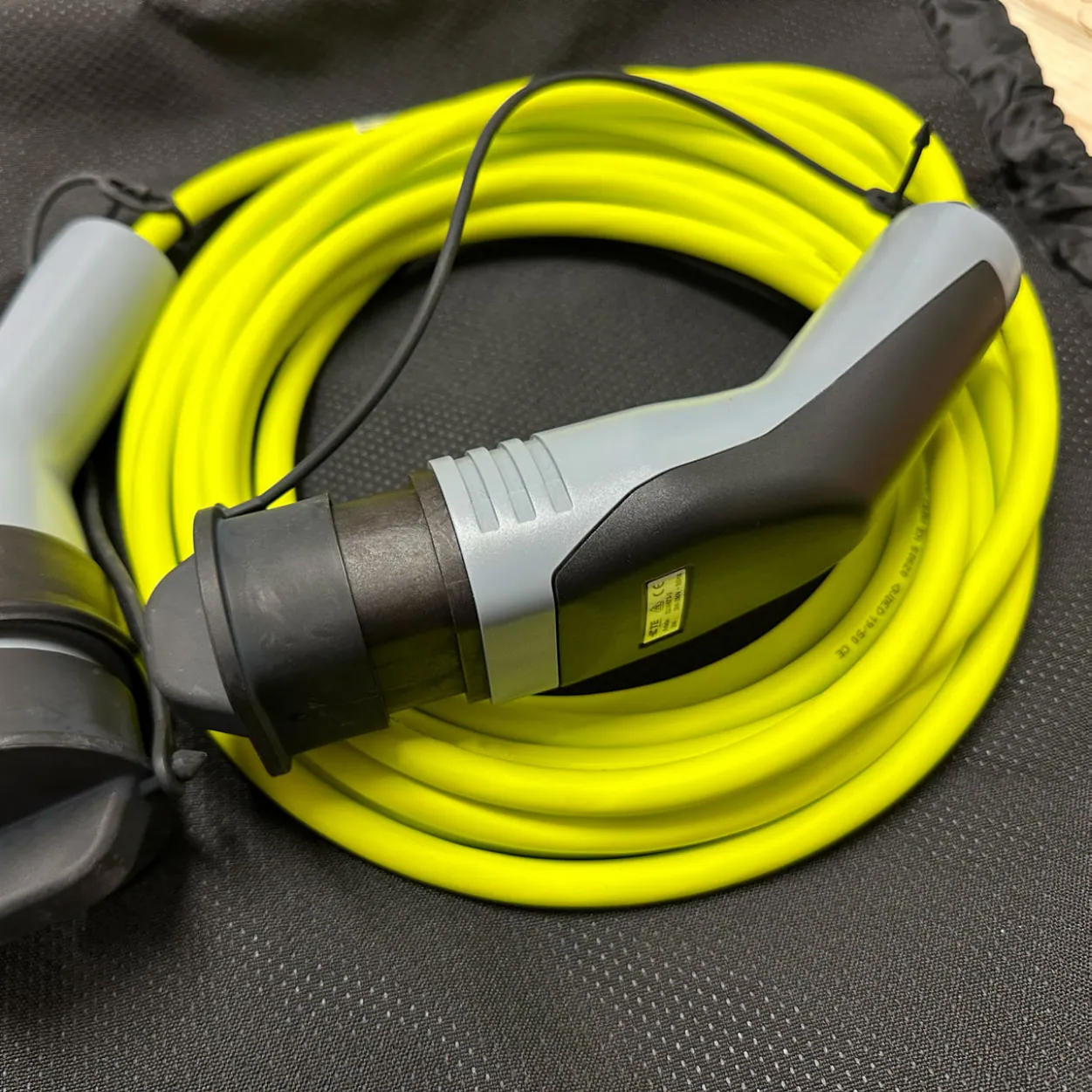
Fuels
Petrol and diesel
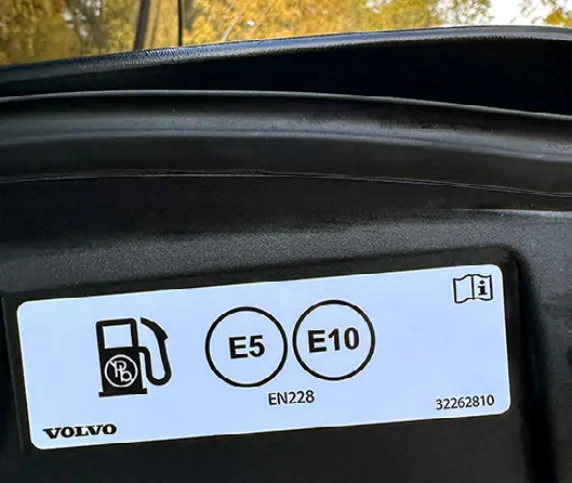
Both petrol and diesel are fossil fuels that contribute to increased greenhouse effect and climate change.
A diesel engine has lower fuel consumption compared to a petrol engine. The problem with diesel is that the exhaust gases are more dangerous to health than those from petrol.
At petrol stations in Sweden, all petrol and diesel are environmental class 1 (contains less harmful substances).
Electricity
An electric car does not emit any harmful exhaust gases when driving. In Sweden, a large part of the electricity comes from fossil-free energy sources.
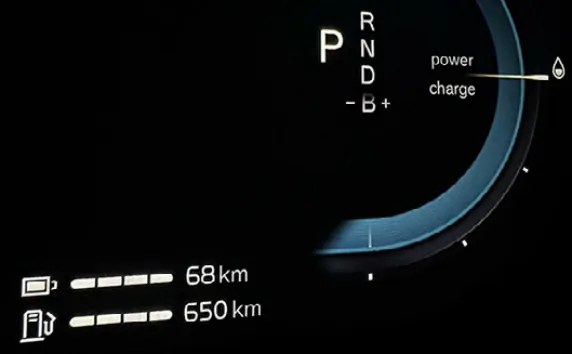
However, the electric car’s battery requires large amounts of metals that come from mines around the world. This mining causes emissions and working conditions can be poor.
Hybrid
Hybrid cars have two different engines. Most commonly, electricity is combined with petrol. The electric motor can be used for short distances in town. When longer range and more power are needed, the petrol engine is switched on automatically. A plug-in hybrid means that you can charge with a charging cable.
Emission classes
All new cars sold within the EU must meet certain emission requirements (carbon monoxide, hydrocarbons, nitrogen oxides and harmful particles). Which Euro class (e.g. Euro 5, Euro 6) the car belongs to is stated in the registration certificate. A higher number means lower emissions.
As a complement to the Euro classification, there are also the emission classes: Electric (“El”), Hybrid (“Hybrid”) and Plug-in hybrid (“Laddhybrid”).
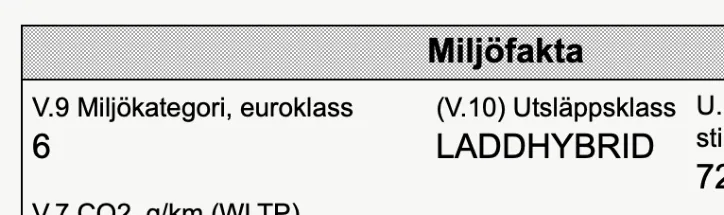
Environmental zones
Municipalities can introduce environmental zones where only certain types of vehicles are permitted. The aim is to improve air quality.
Class 1 | Class 2 | Class 3 |
|---|---|---|
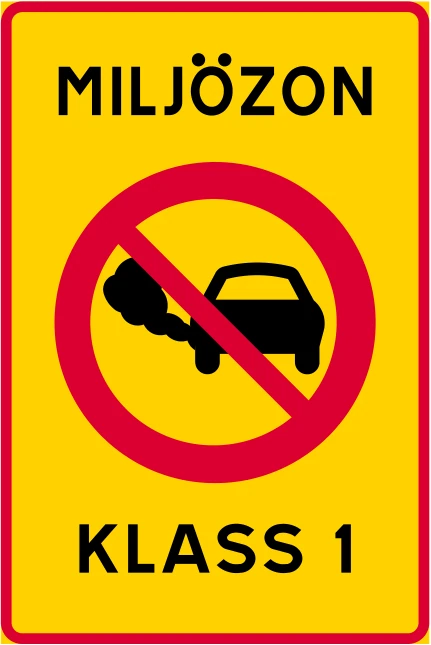 Only affects heavy vehicles. For example, newer lorries are allowed, but older models are prohibited. A regular car can drive here regardless of fuel. | 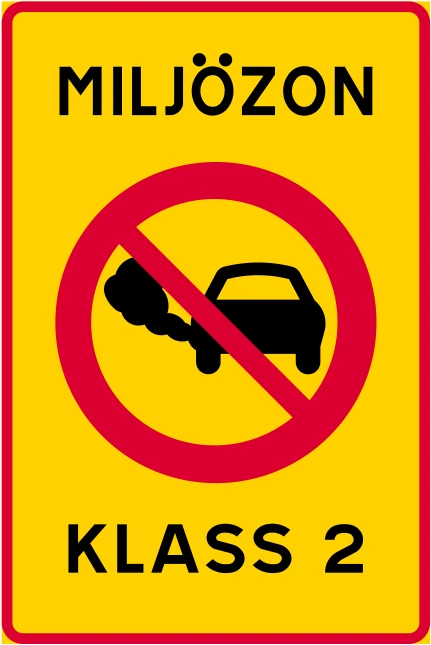 Petrol cars must comply with Euro 5 or Euro 6. Diesel cars must meet Euro 6. | 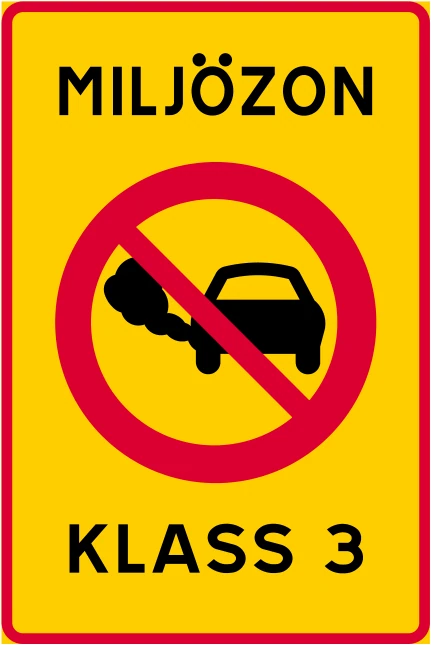 Only electric vehicles, fuel cell vehicles and gas vehicles are allowed to drive here. Petrol and diesel are prohibited. Plug-in hybrids are also prohibited. |
Which alternative best describes a hybrid car?
Correct answer: B) A car that runs on electricity and petrol.
Explanation
The most common combination is electric + petrol.
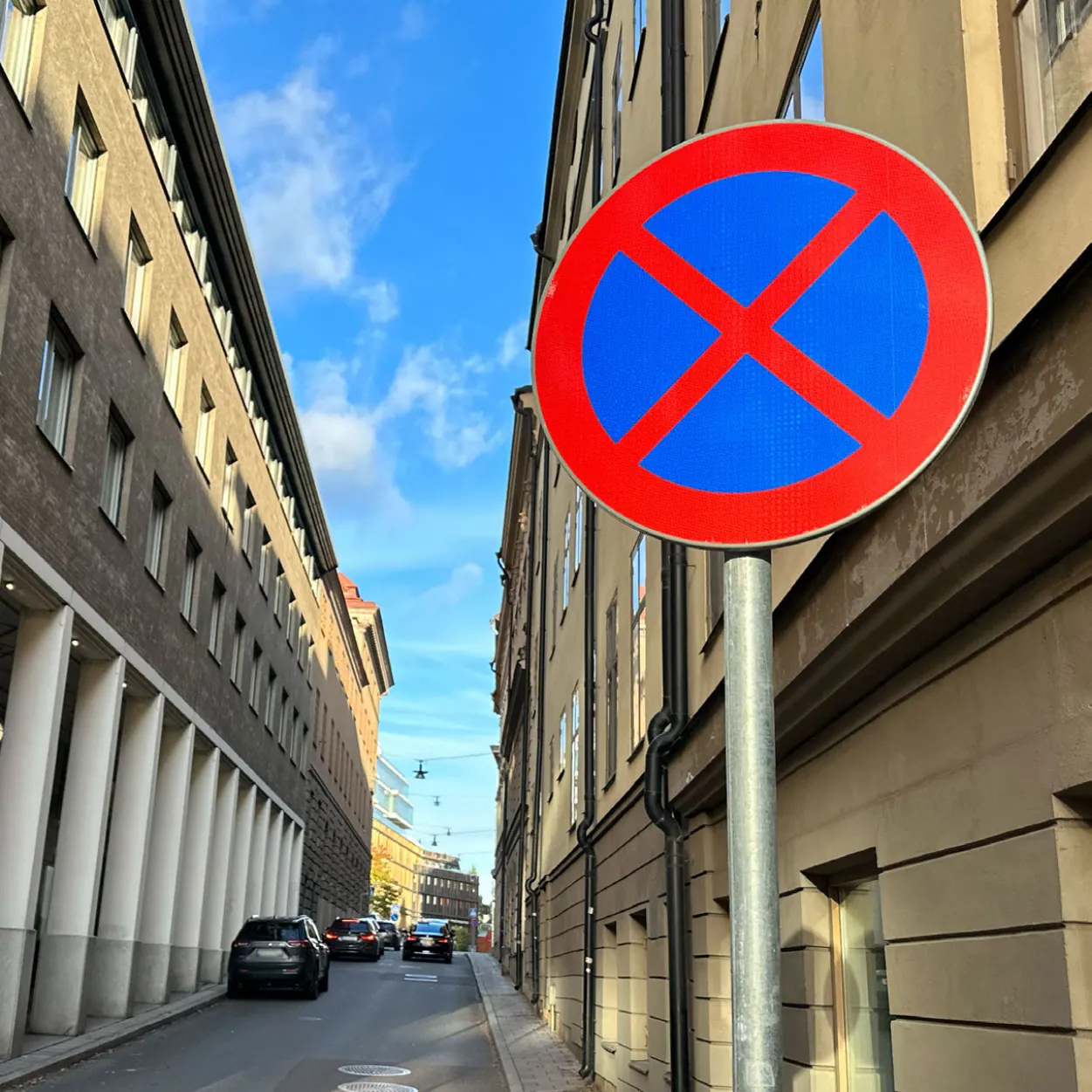
Road signs
Warning signs (A)
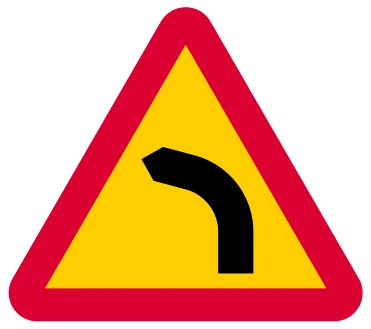
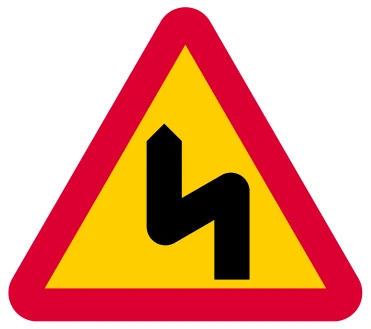
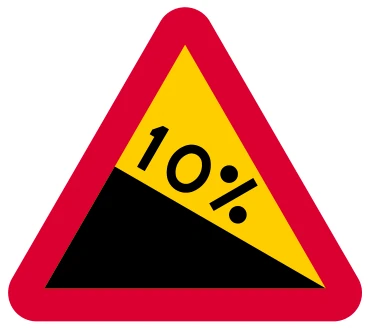
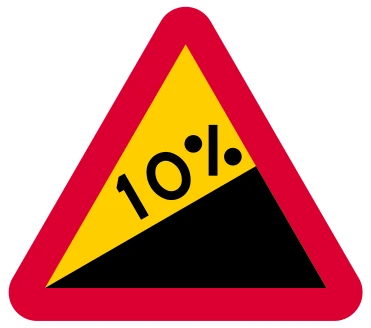
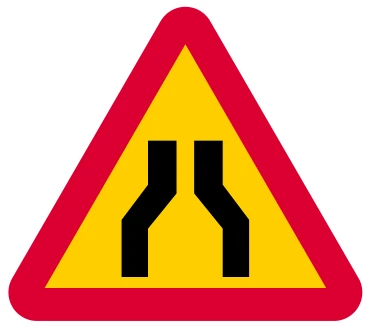
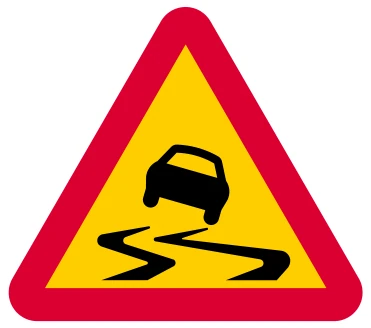
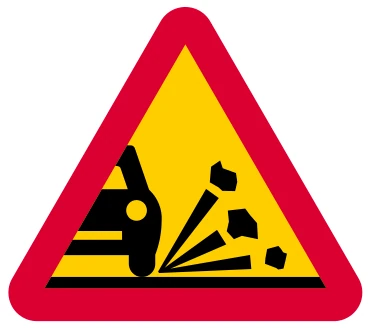
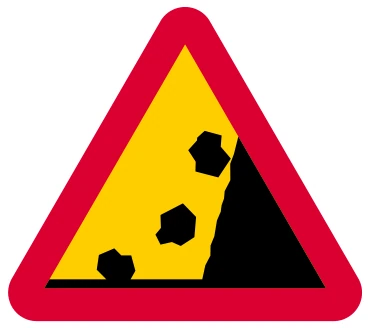
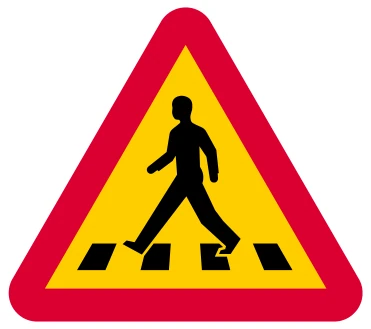
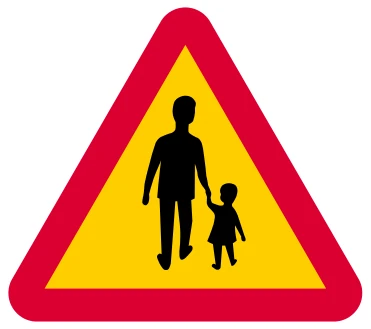
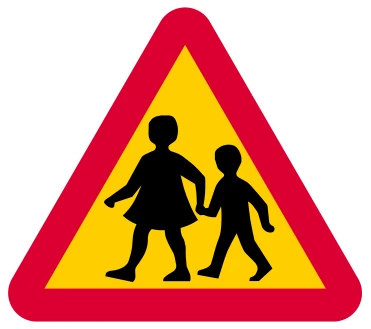
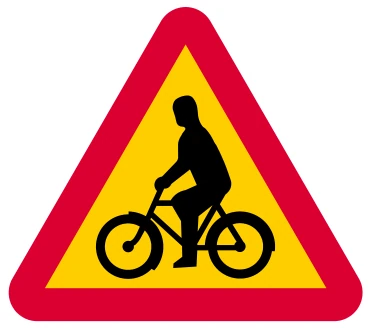
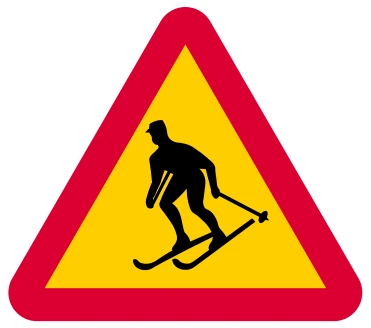
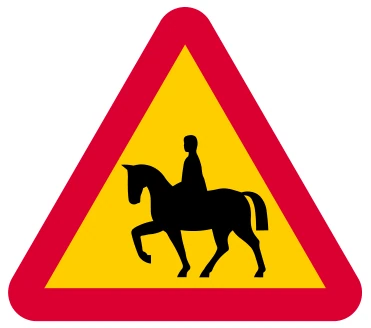
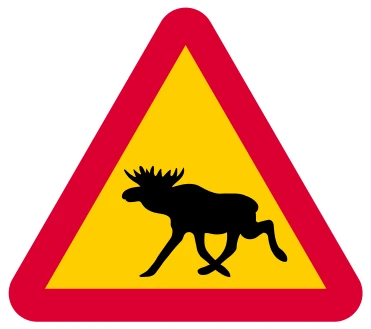
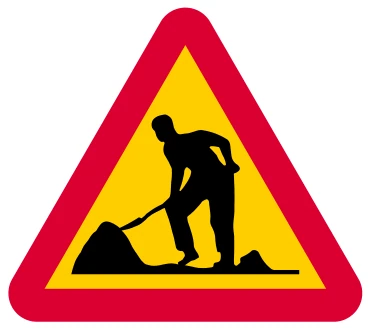
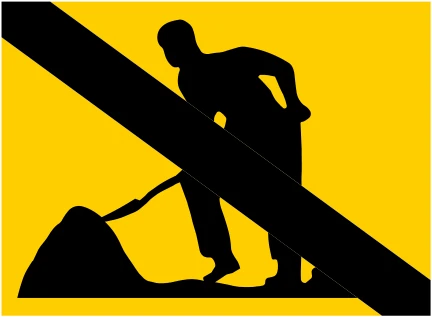
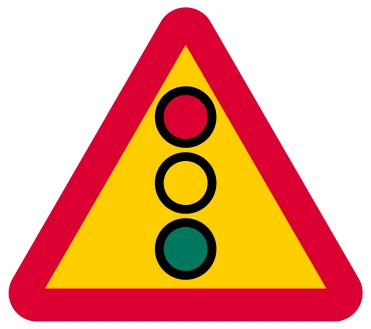
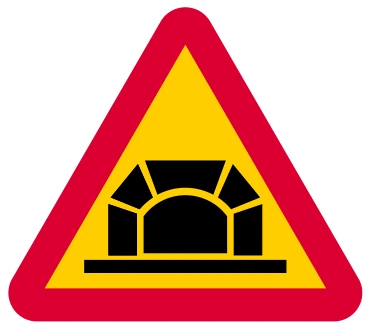
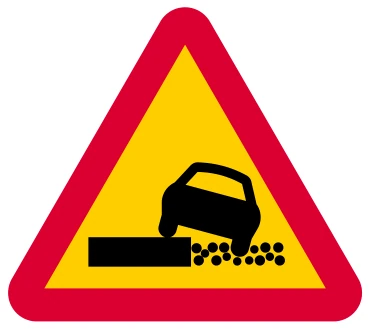
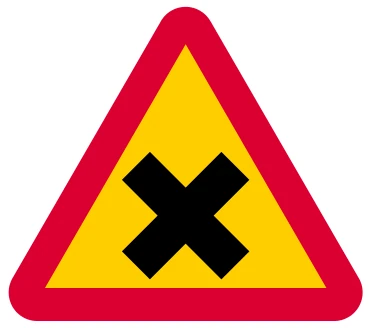
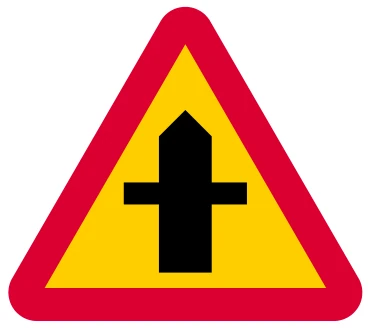
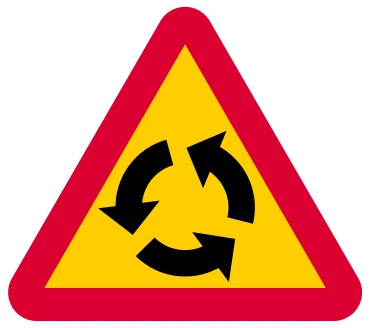
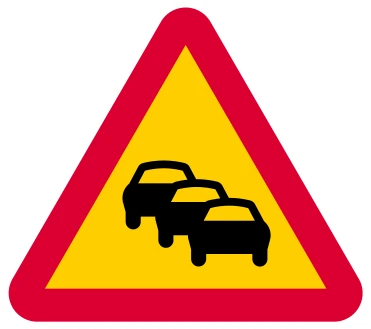
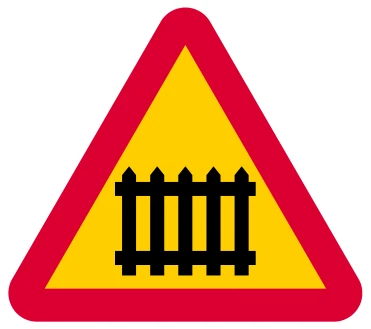
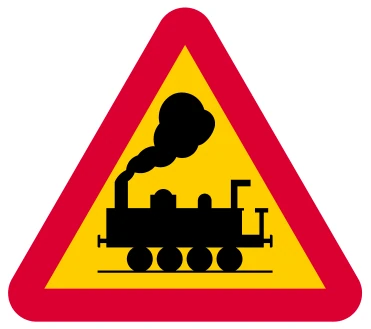
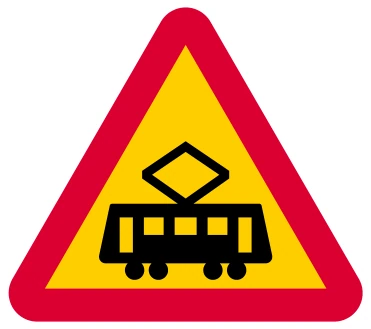
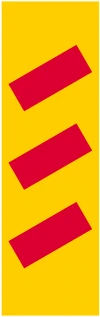
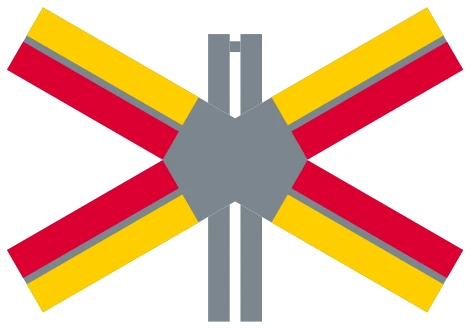
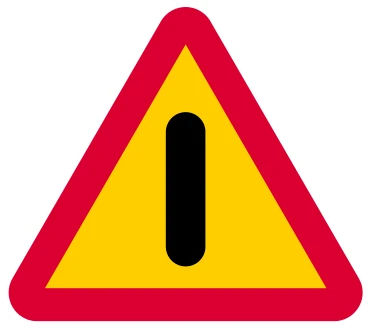
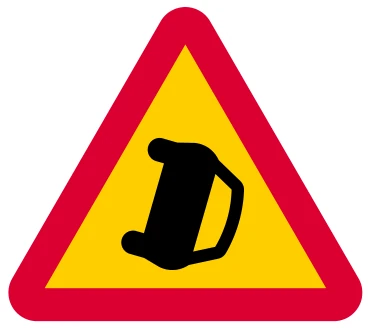
Priority signs (B)
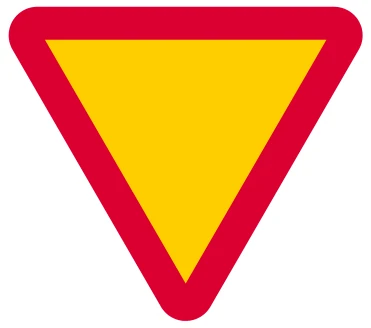
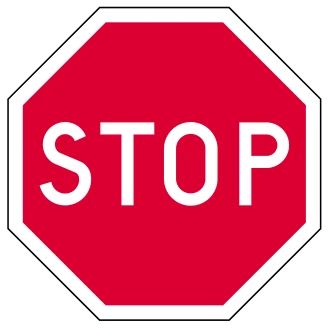
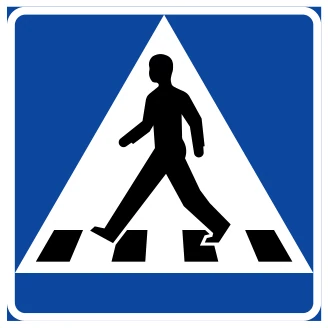

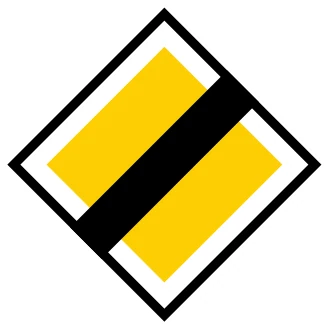
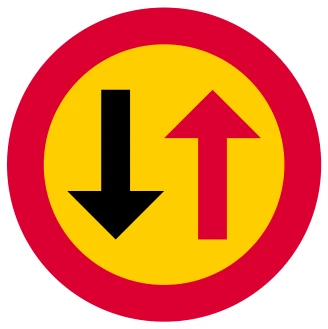
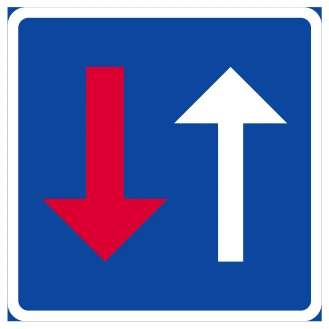
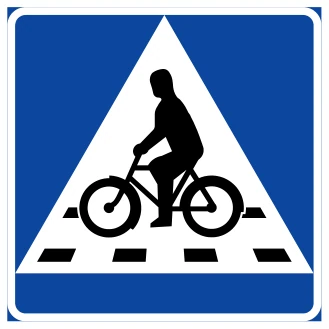
Prohibitory signs (C)
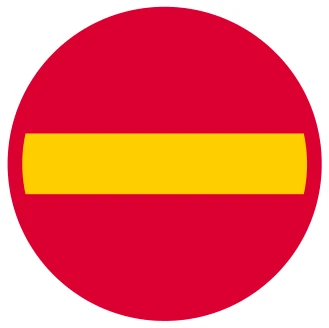

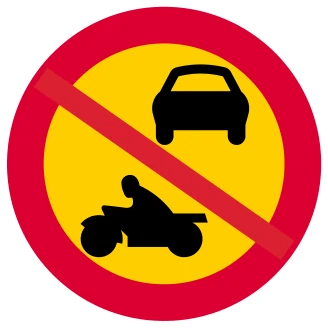
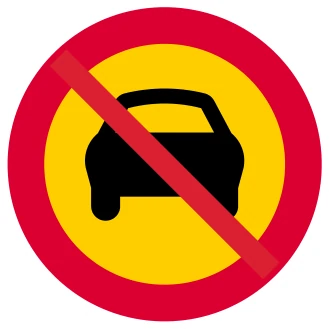
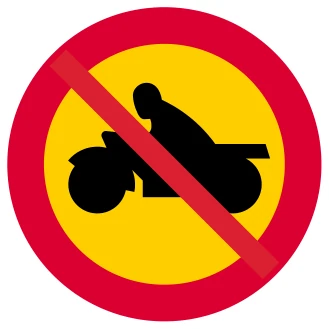
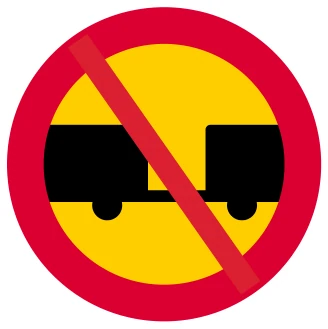
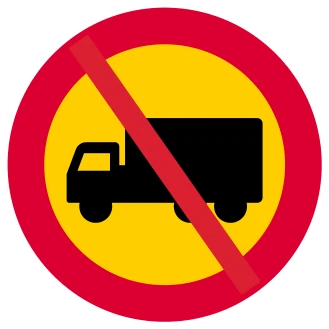
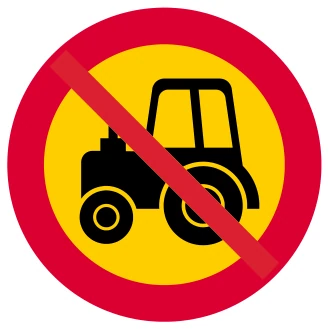
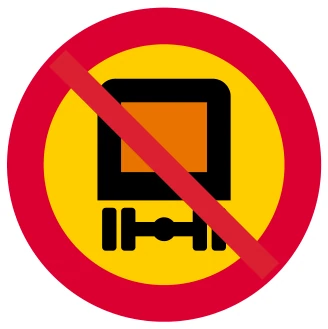
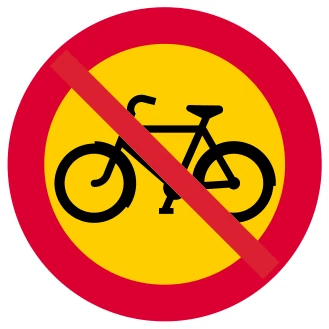
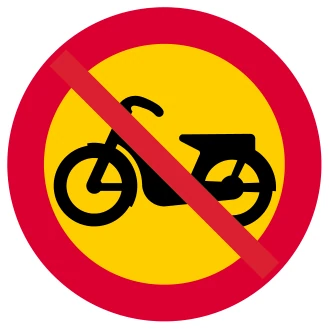
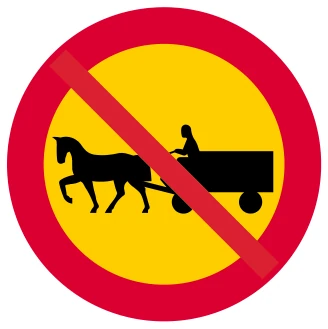
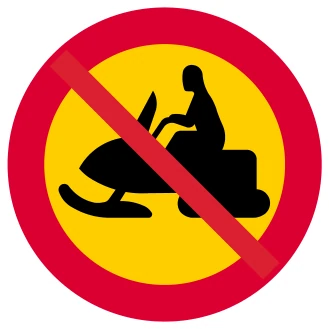
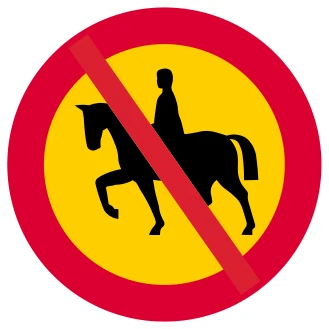
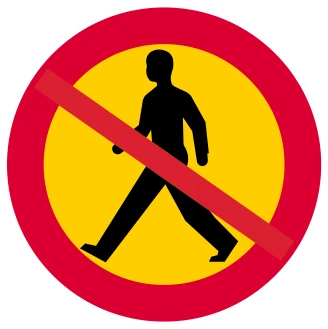
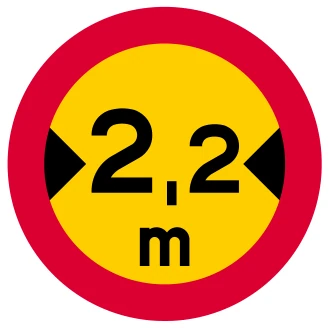
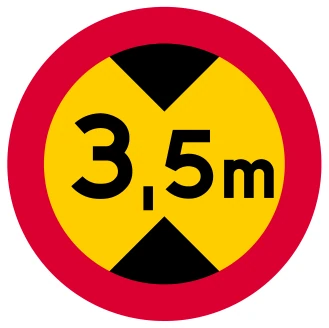
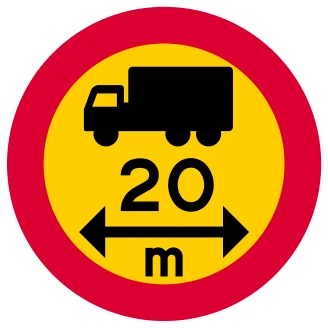
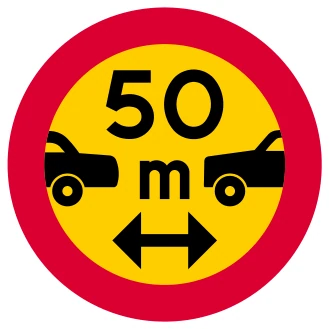
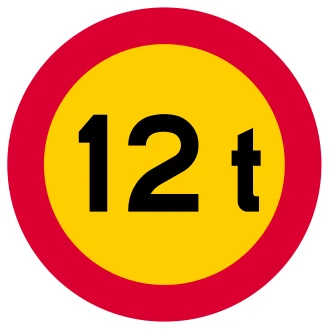
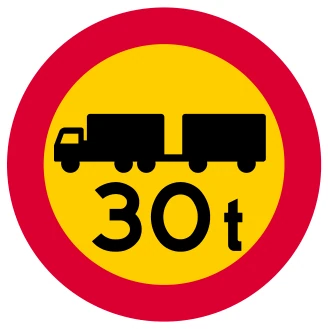
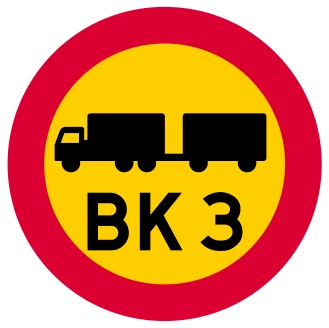
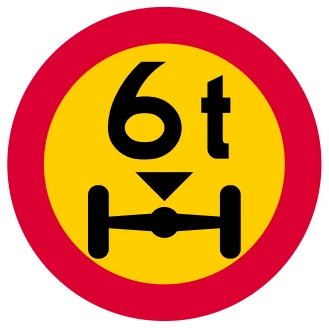
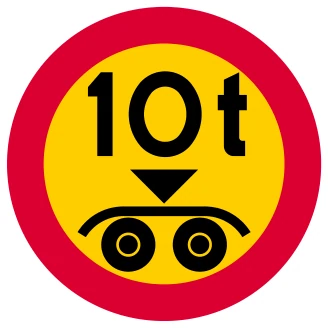
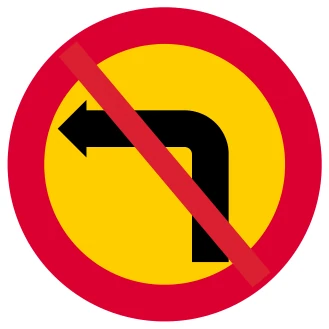
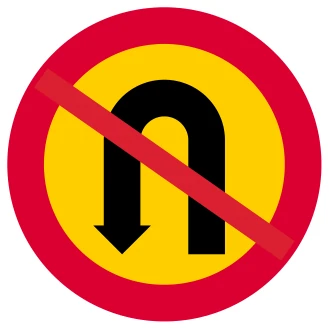
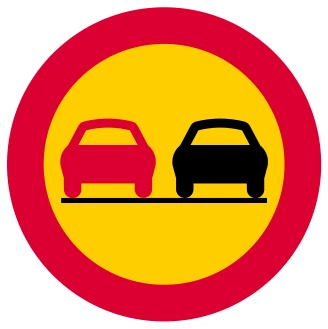
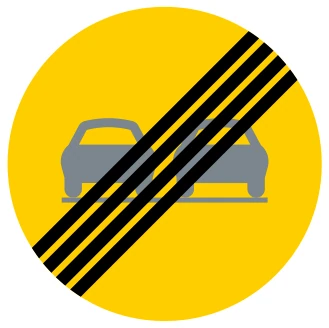
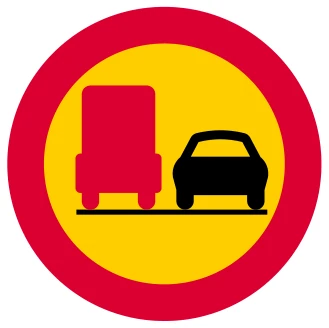
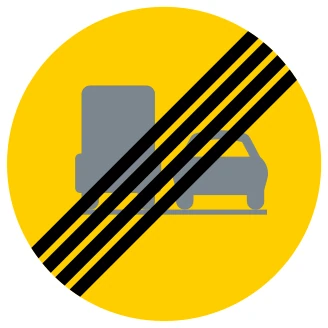
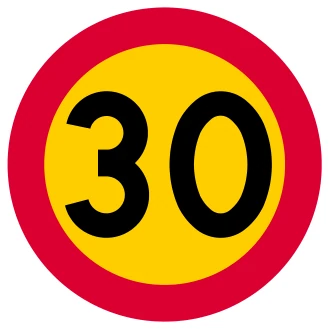
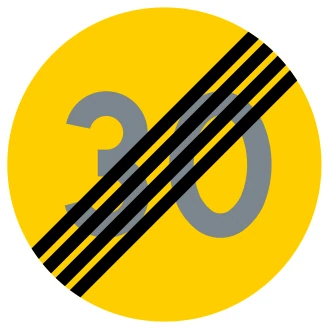
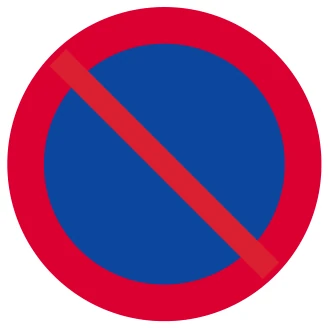
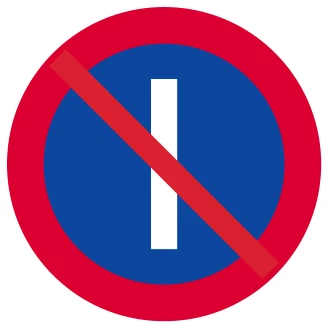
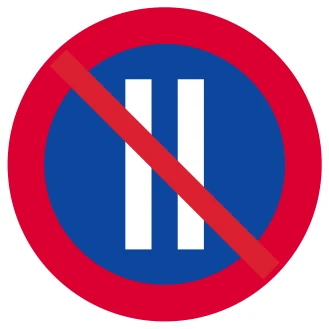
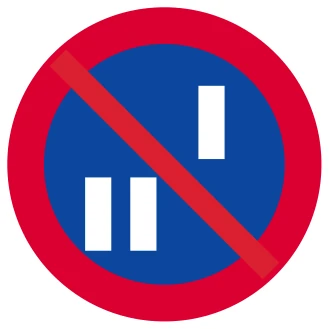
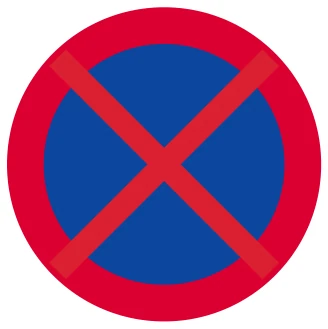
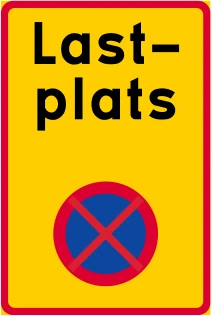
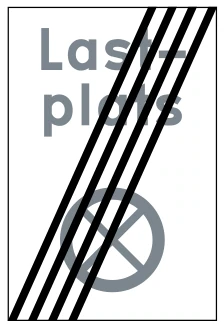
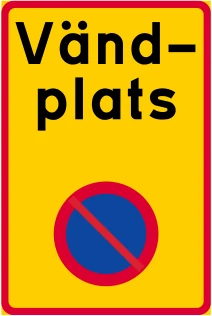
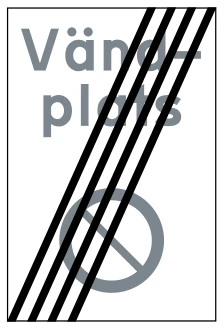
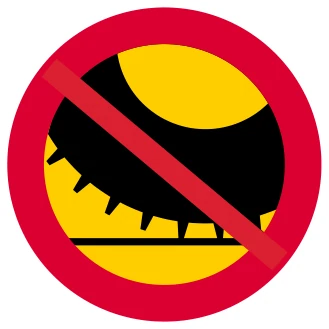
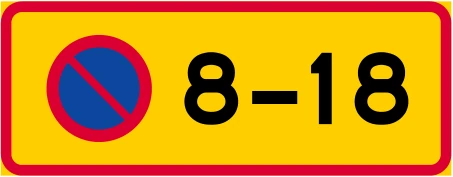
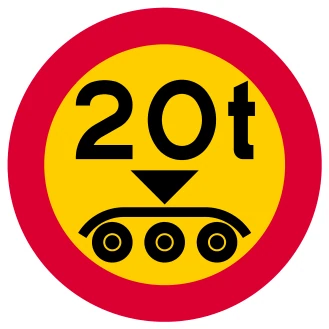
Mandatory signs (D)
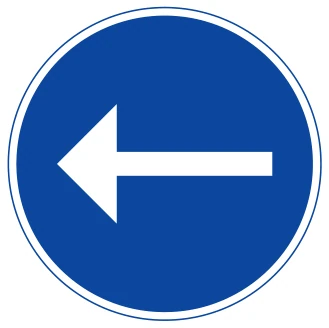
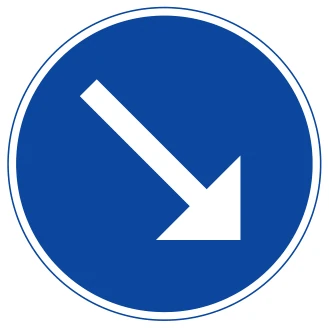
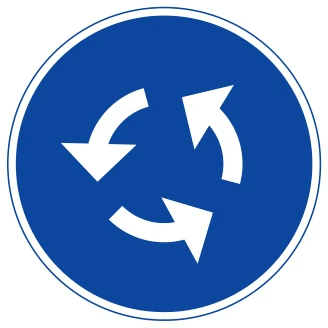
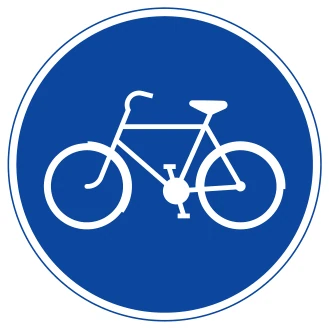
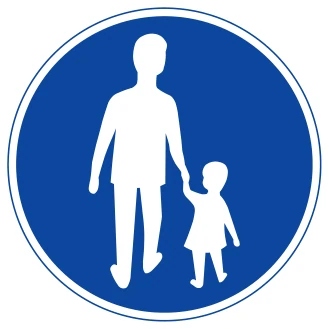
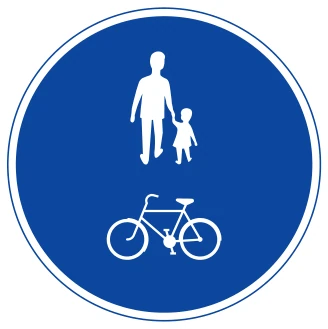
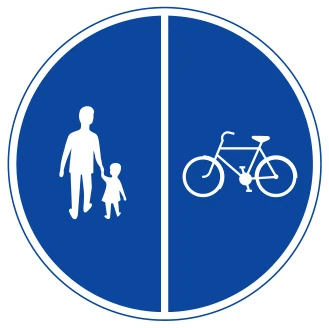
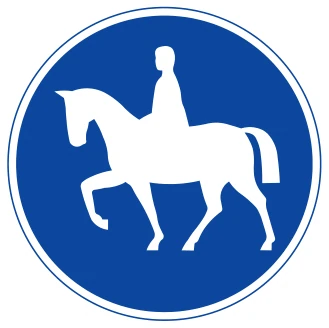
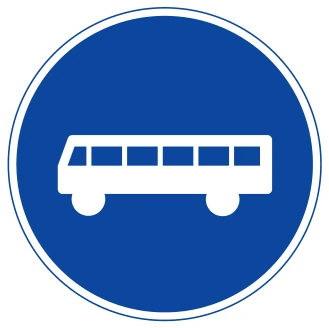
Instruction signs (E)
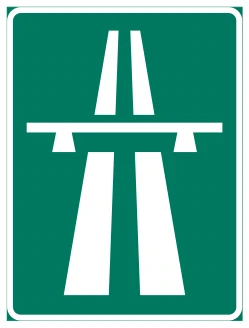
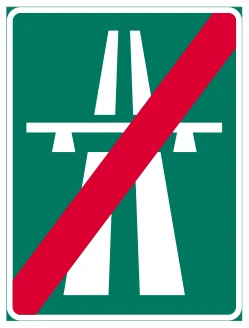
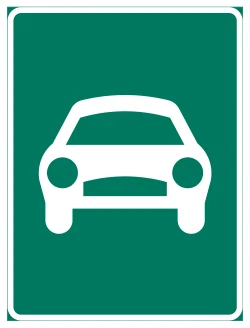
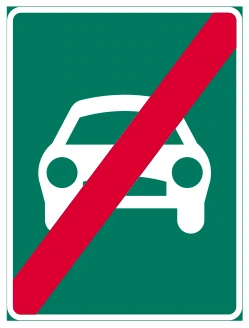
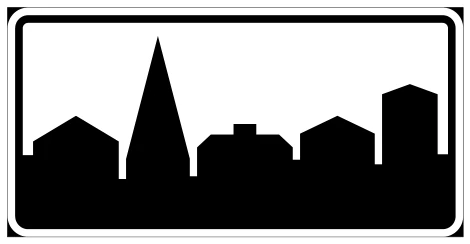
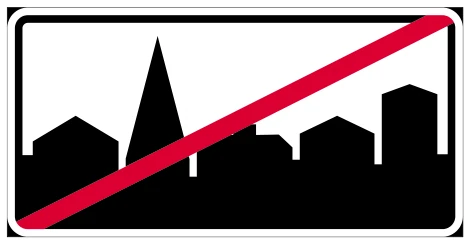
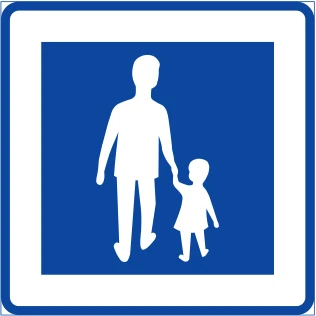
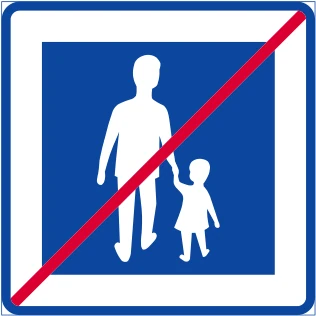
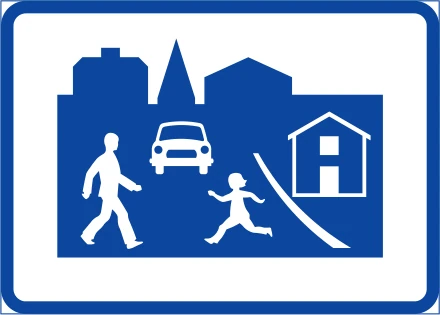
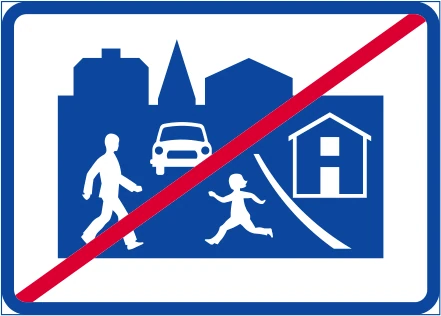
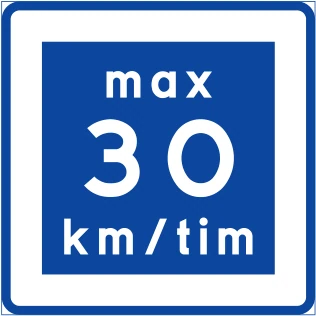
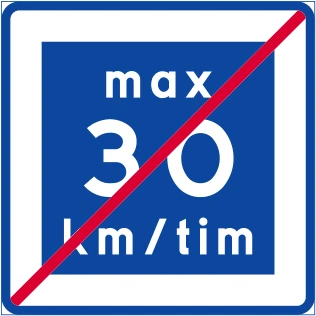
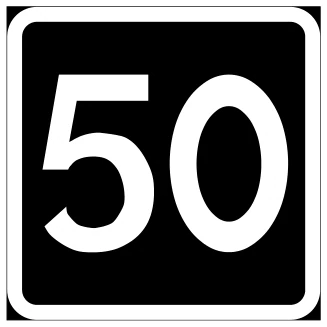
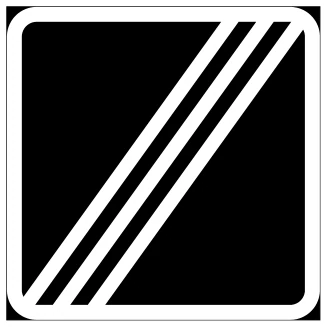
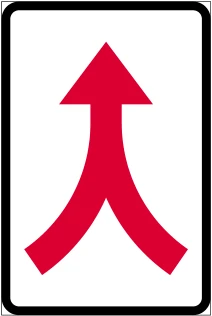
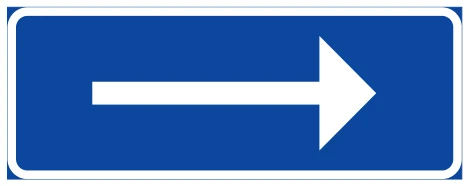
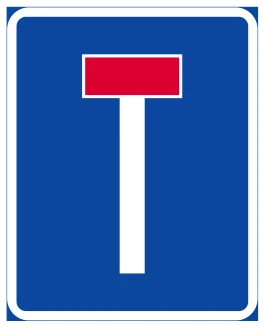
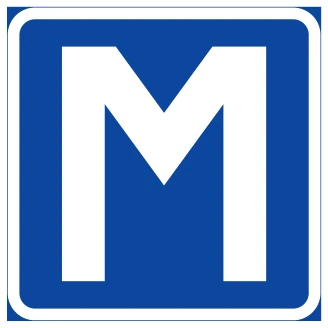
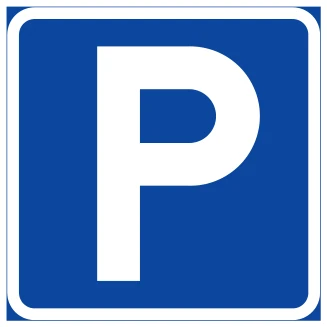
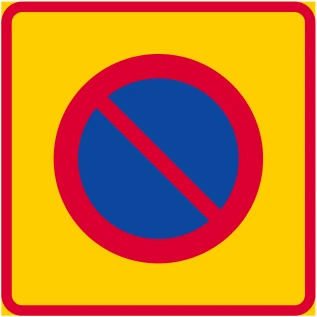
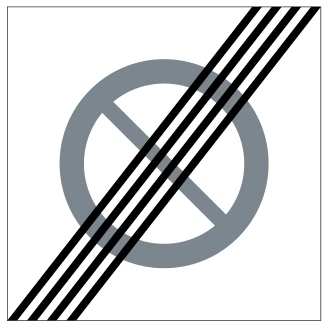
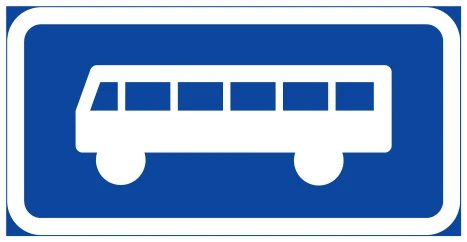
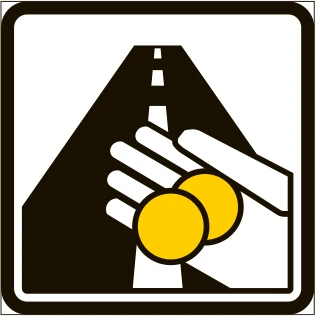
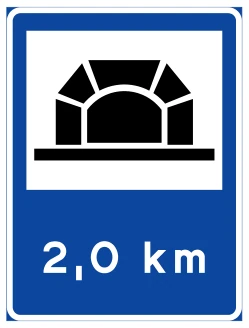
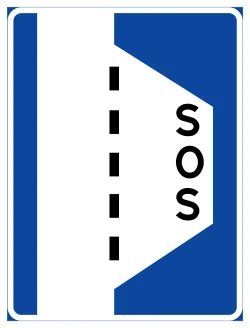
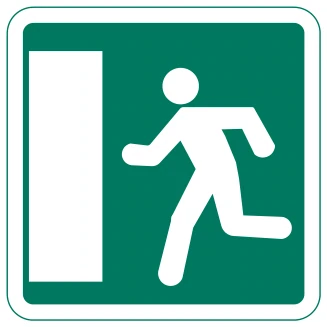
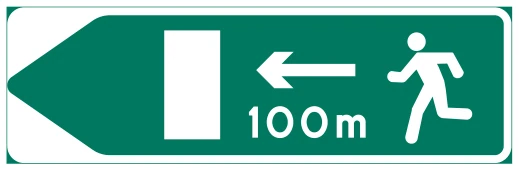
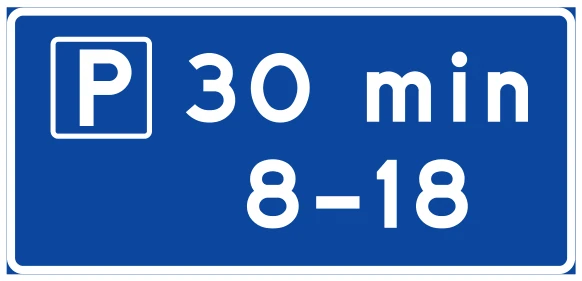
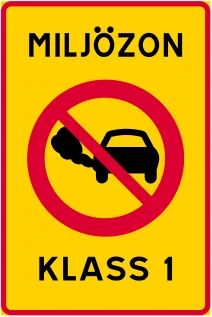

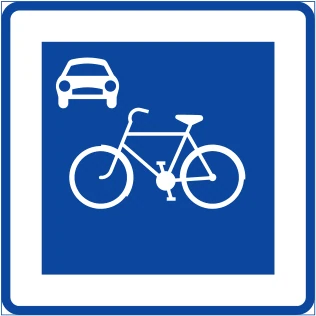
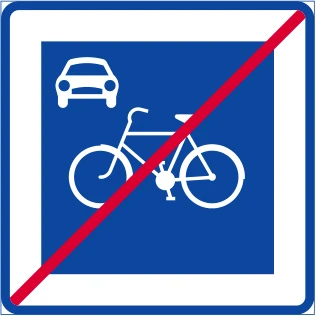
Direction signs
Direction signs for road information (F)
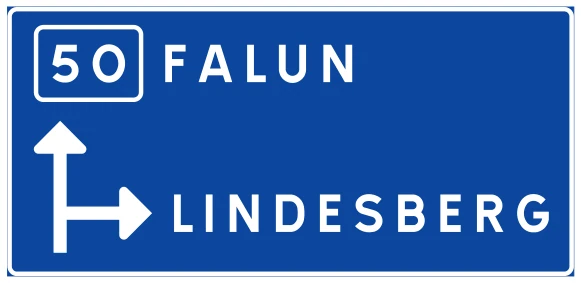
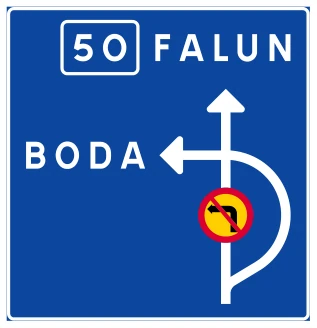
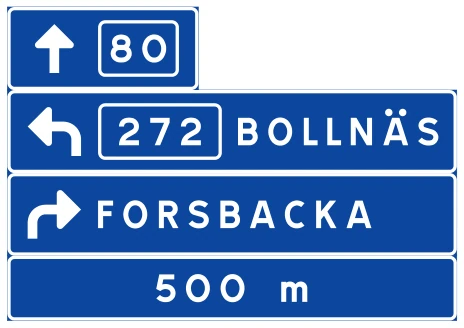
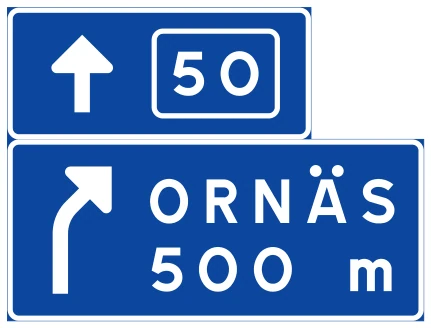
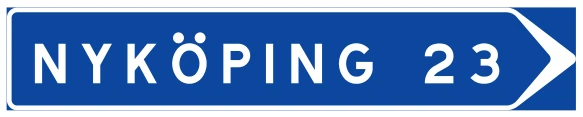
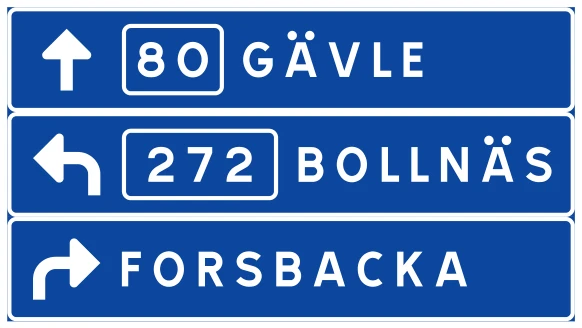
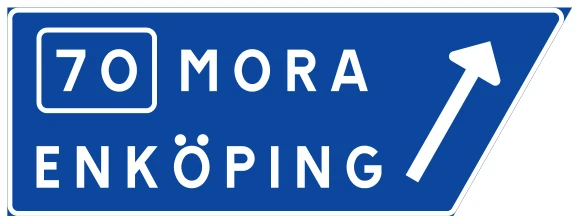
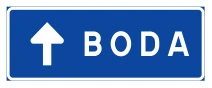
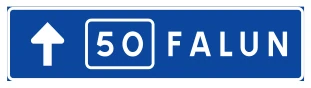
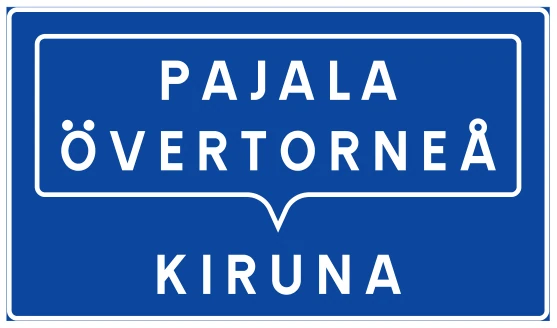
(F8)
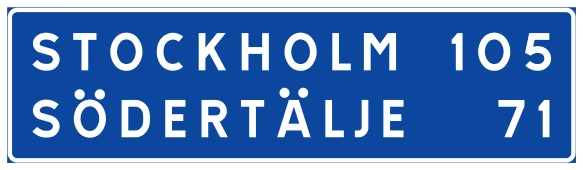
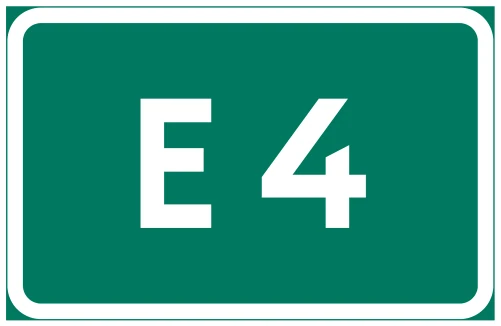
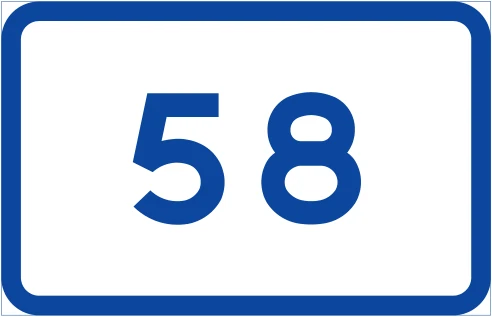
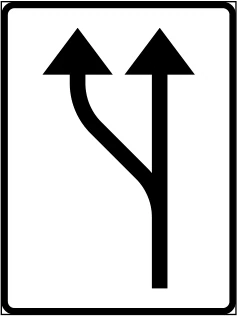
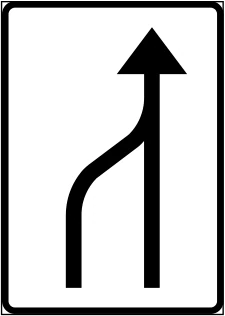
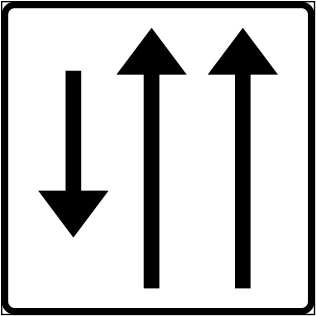
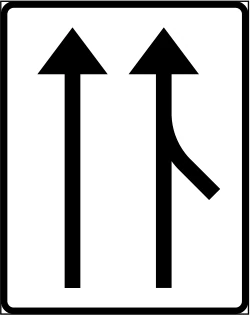
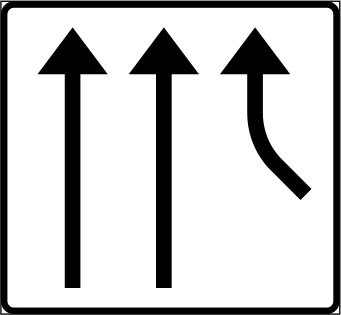
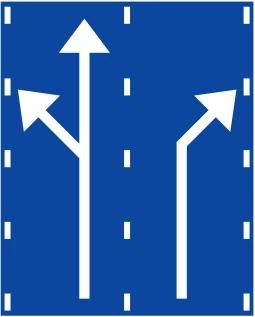

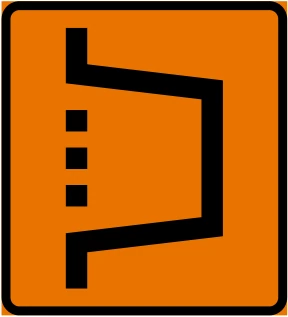
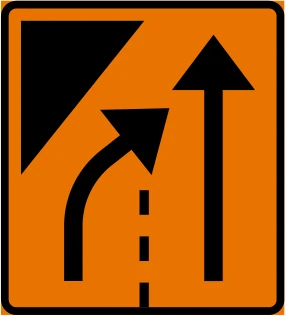
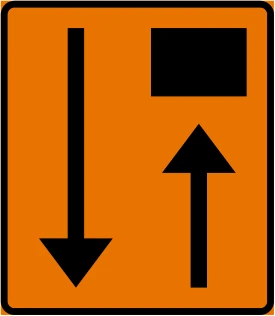
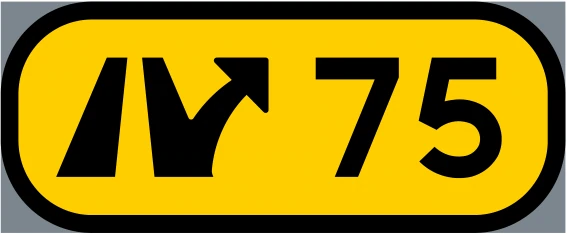
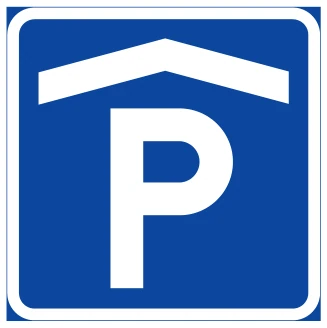
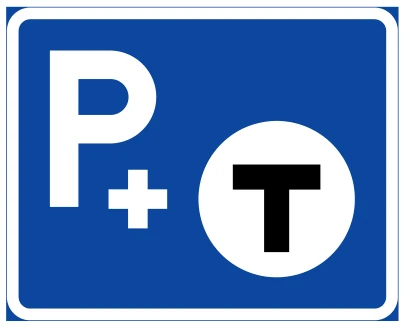

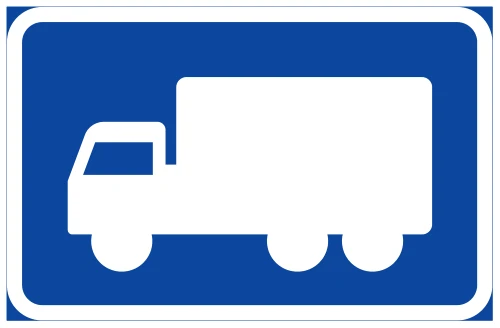
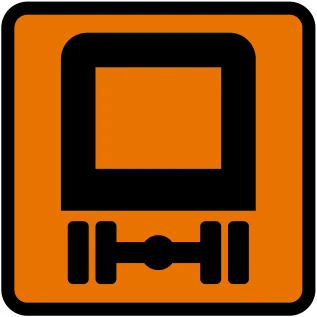
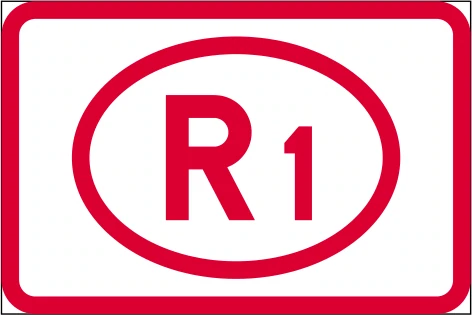
Direction signs for pedestrians and cyclists (F)
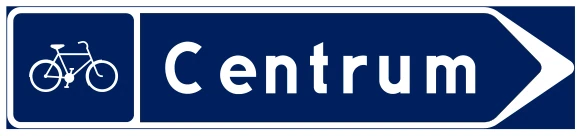
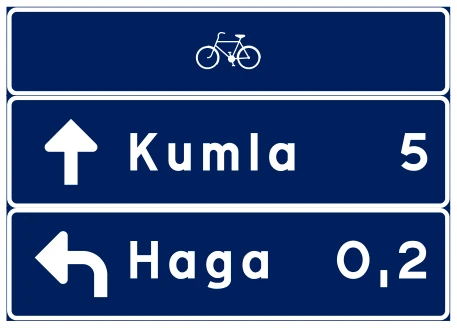
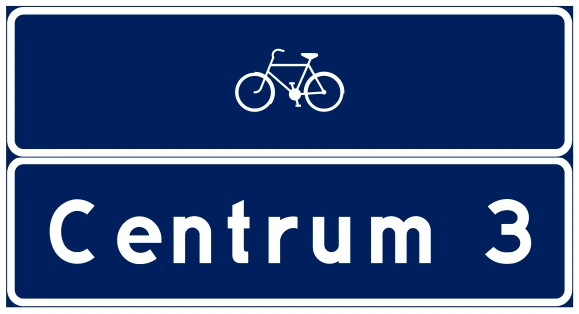
Direction signs with information about establishments, etc. (G)

Direction signs for information about services, etc. (H)
Direction signs for information about tourist attractions (I)



Information signs (J)
Symbols (S)
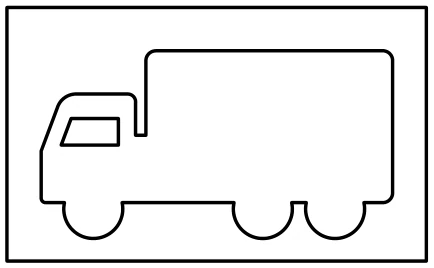
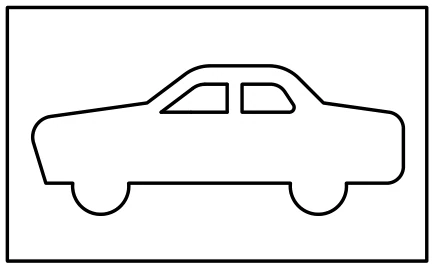
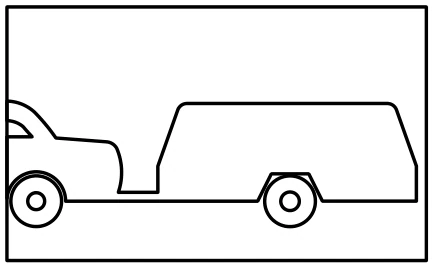
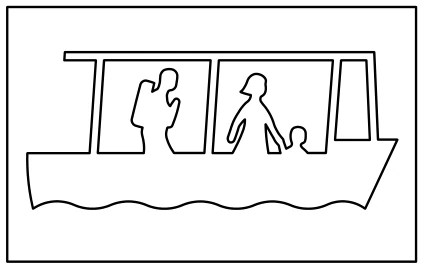
Additional panels (T)
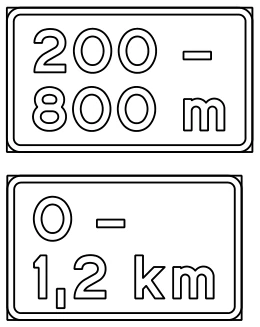
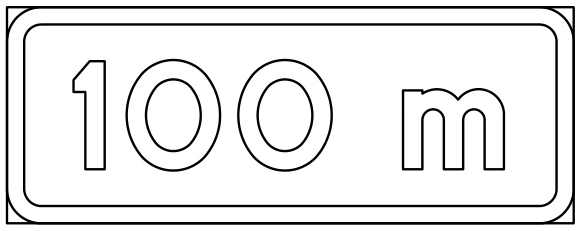
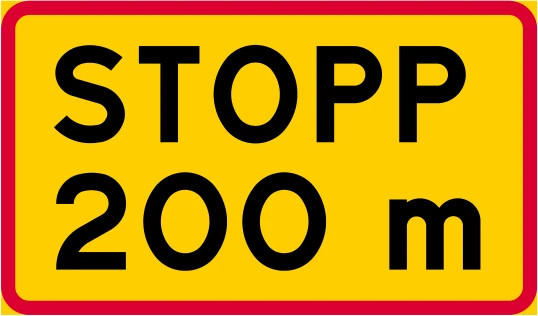
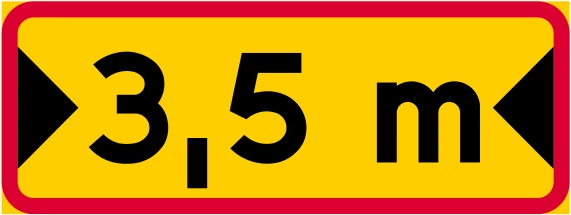
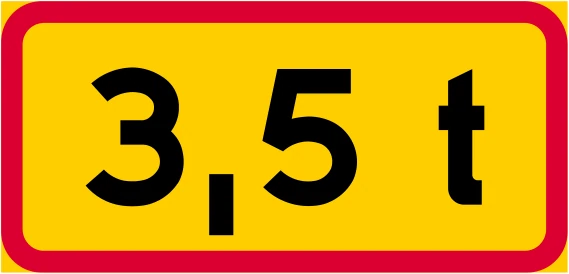
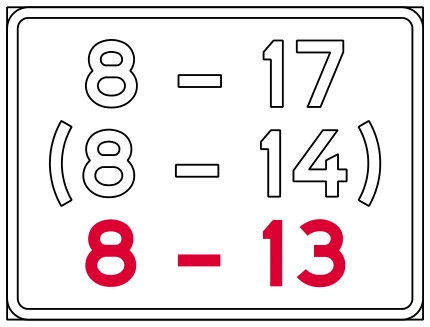
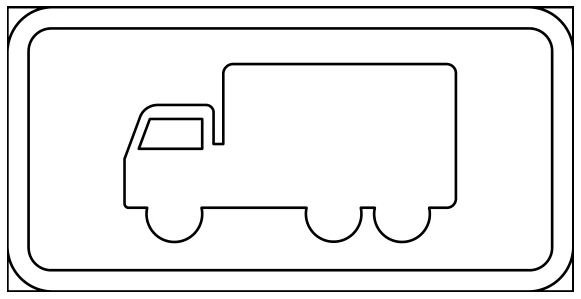
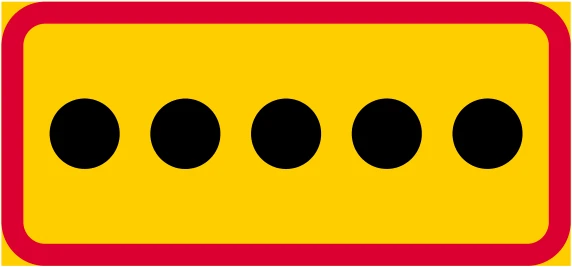
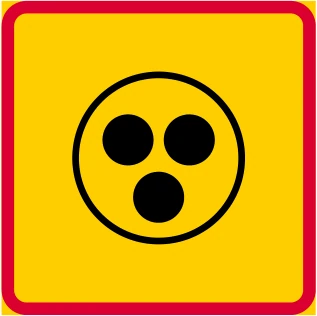
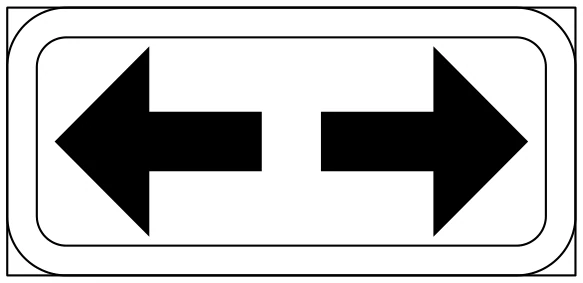
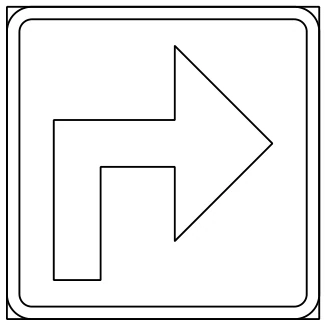
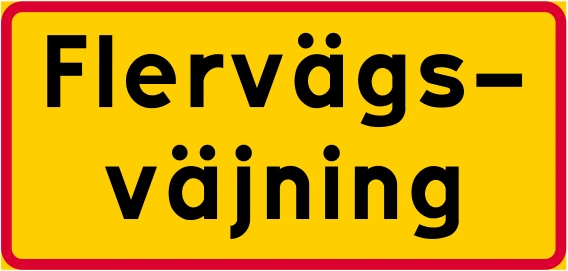
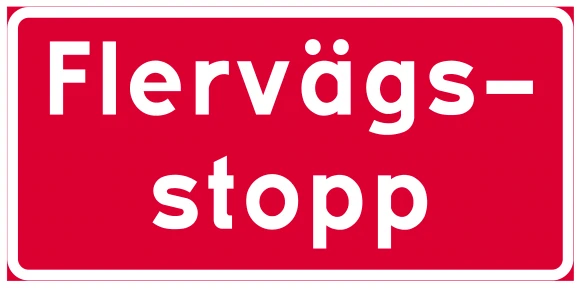
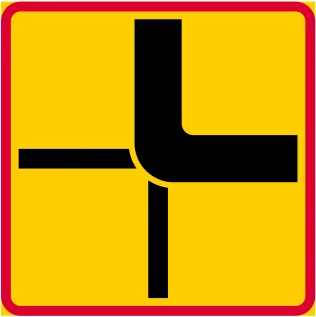
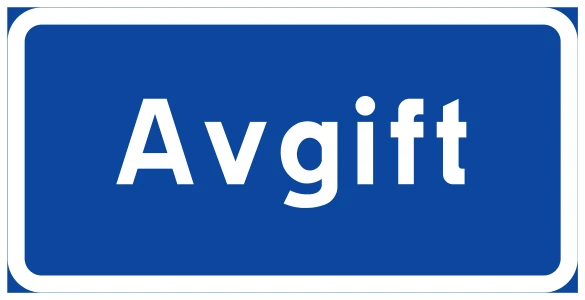
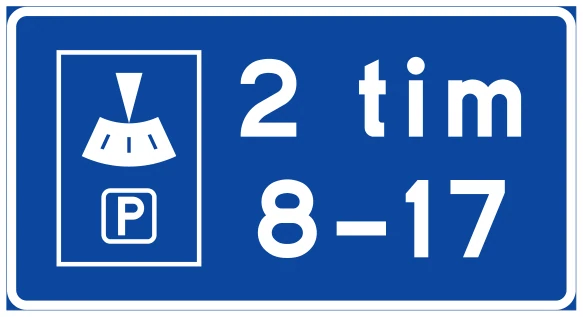
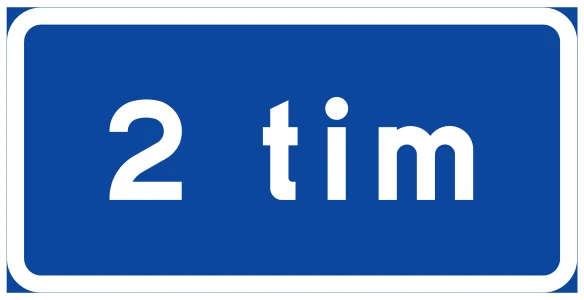
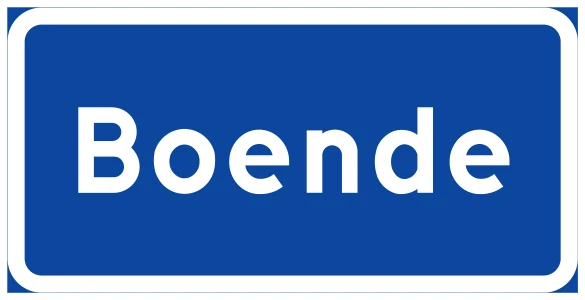
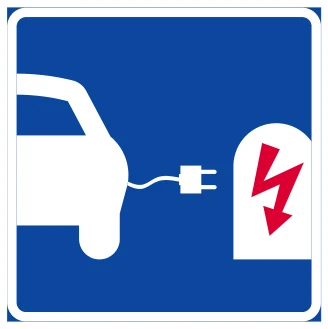
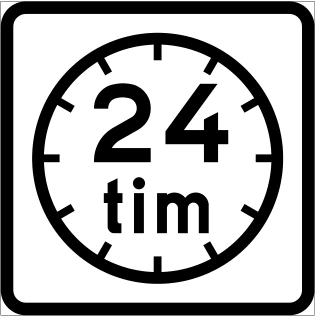
Traffic signals (SIG)
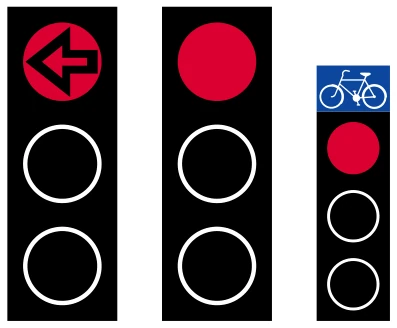
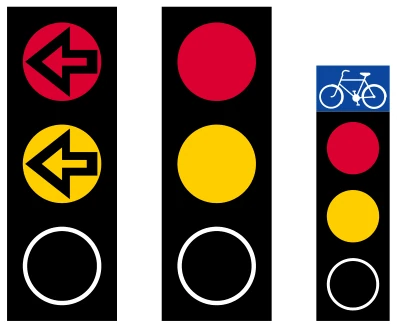
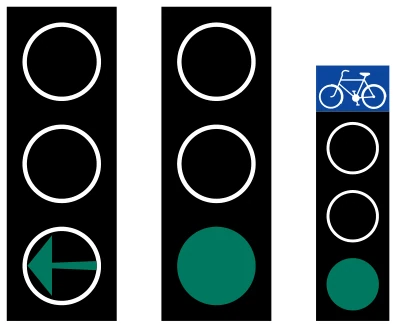
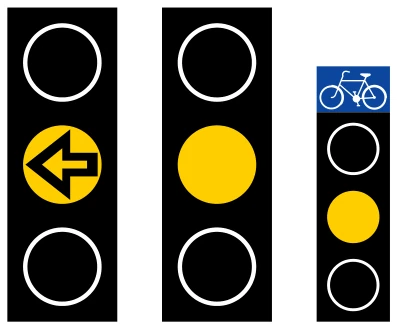

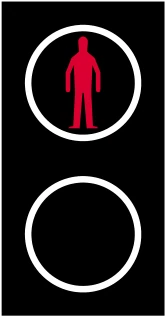
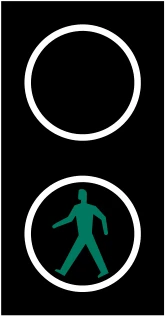










Road markings (M)
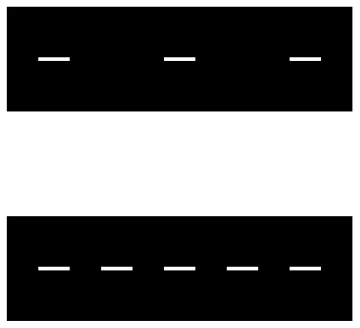
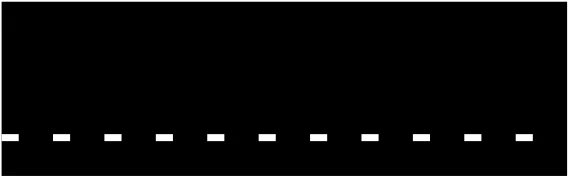

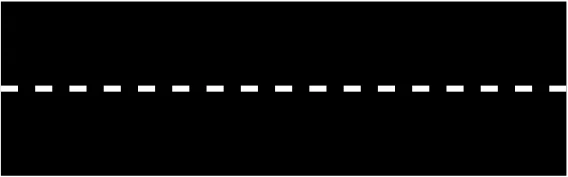

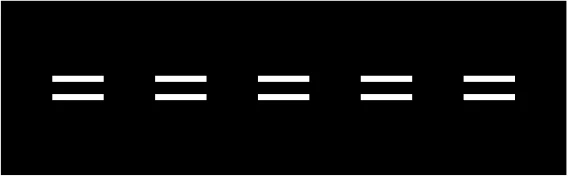

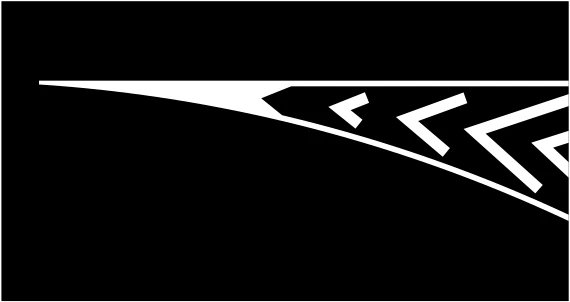
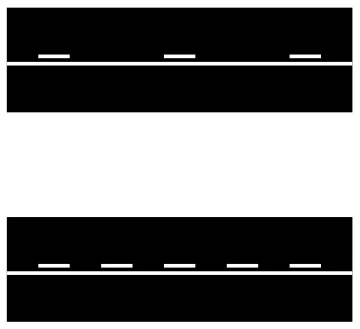
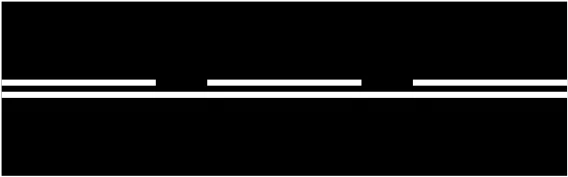
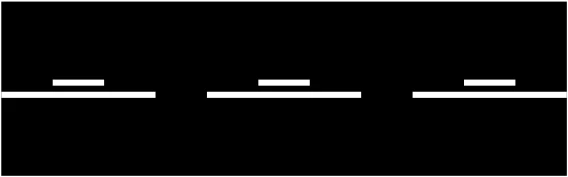


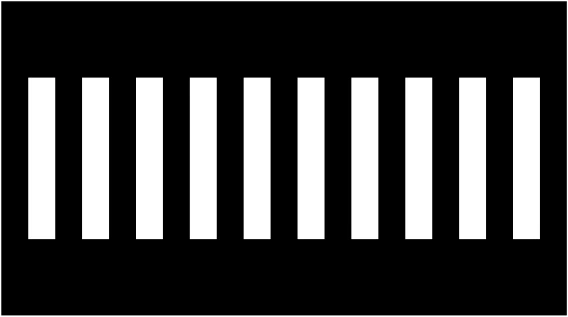

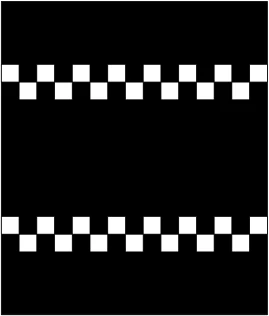
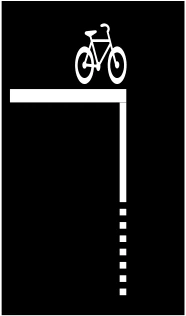

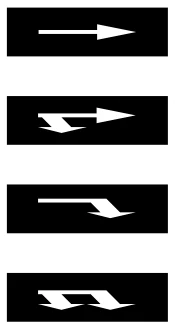
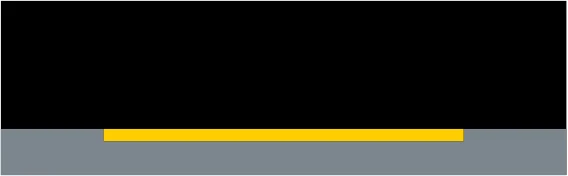
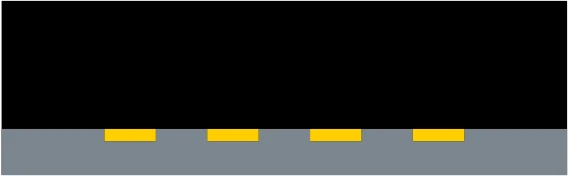


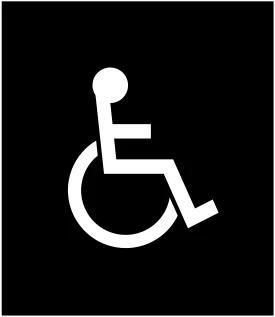

Other signs (X)




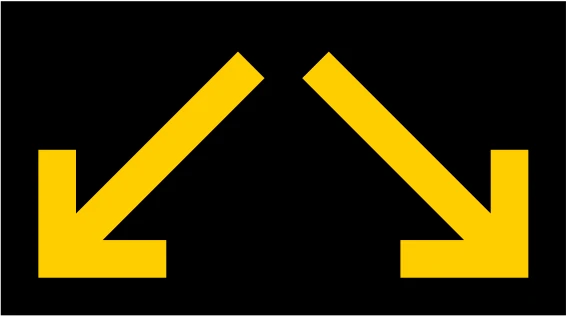

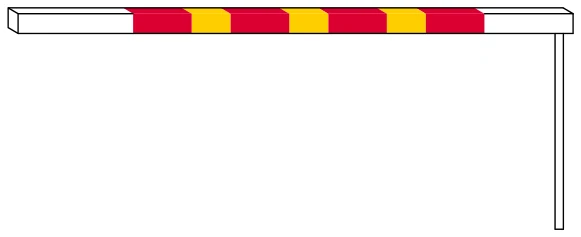
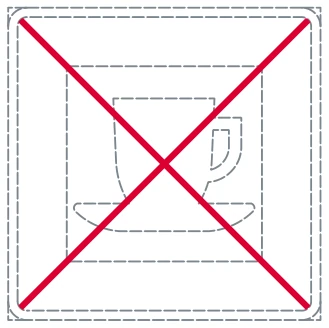
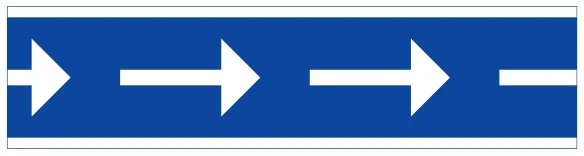
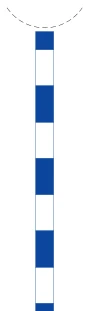
Signals at railway crossings and level crossings (Y)
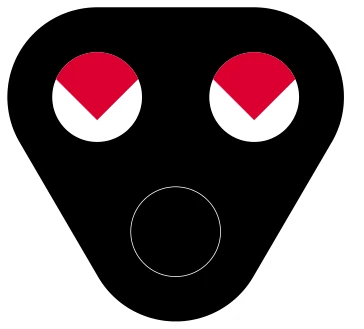




Traffic officer (V)
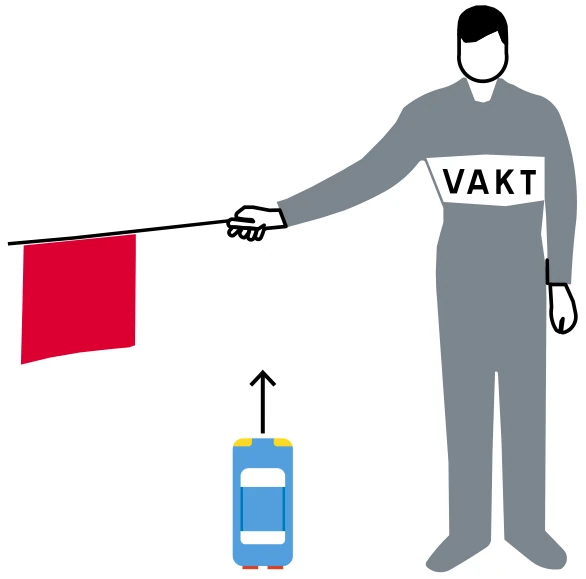
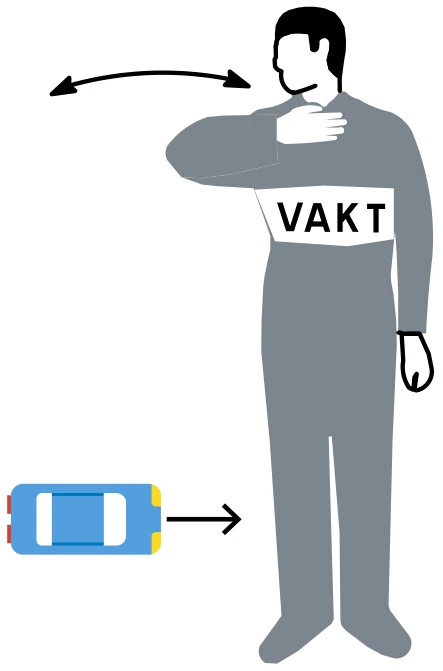
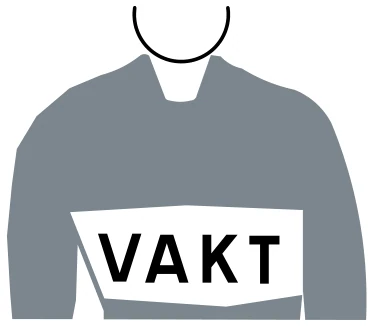
The car shows your direction of travel.
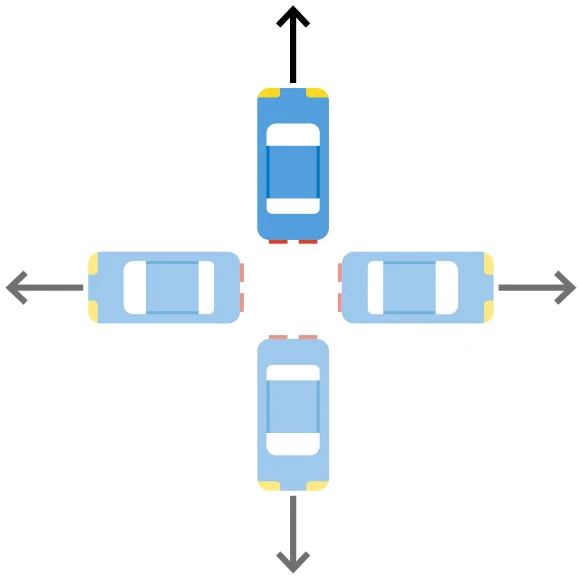
Signals by police officers (P)
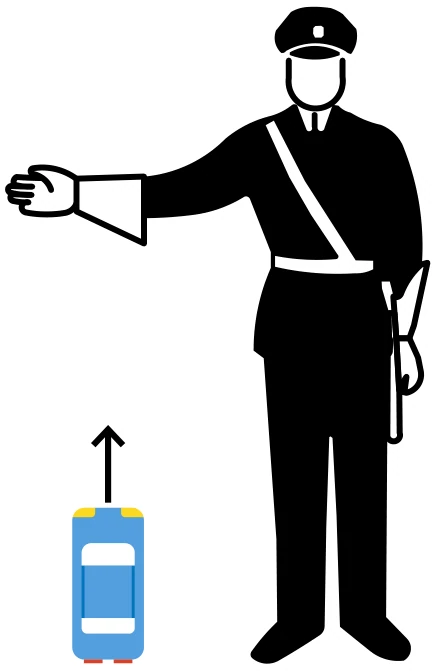
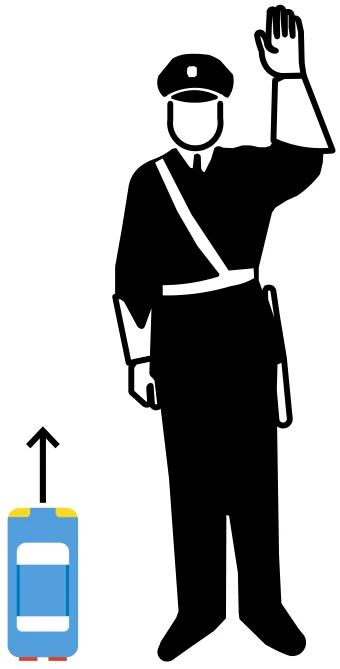
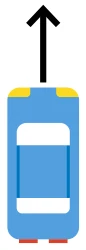
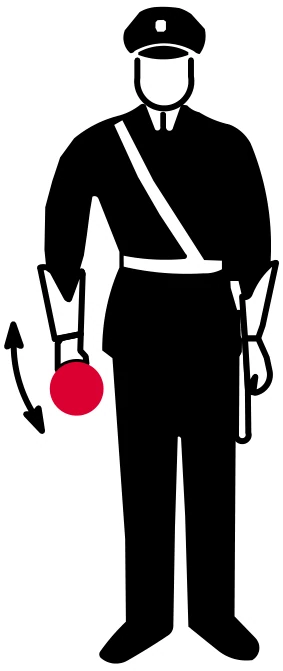
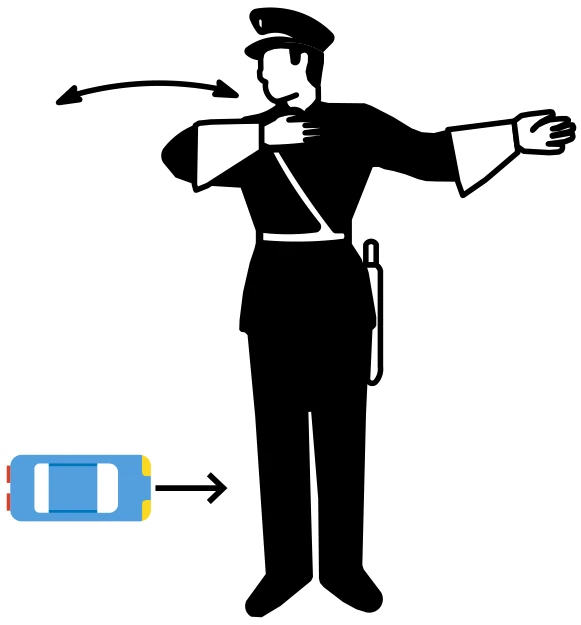
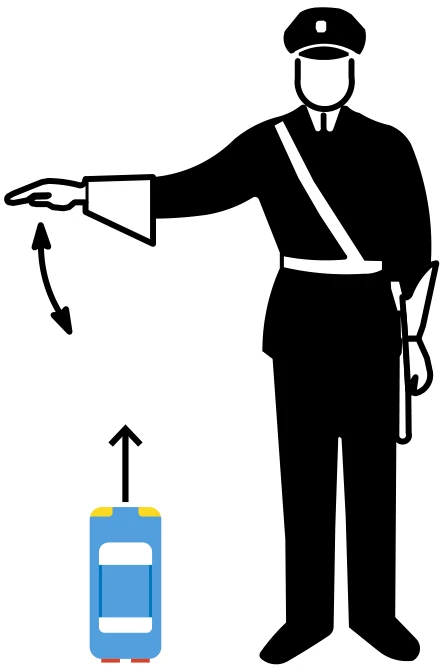
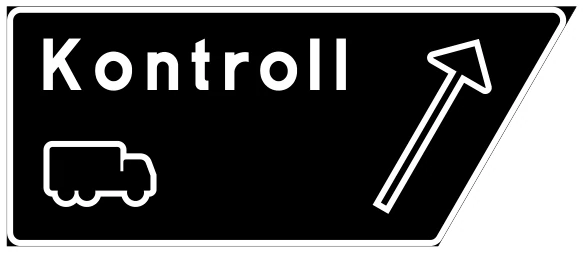
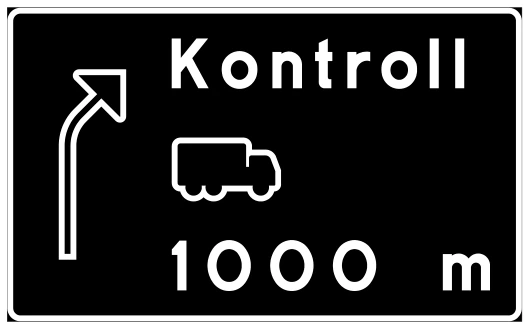
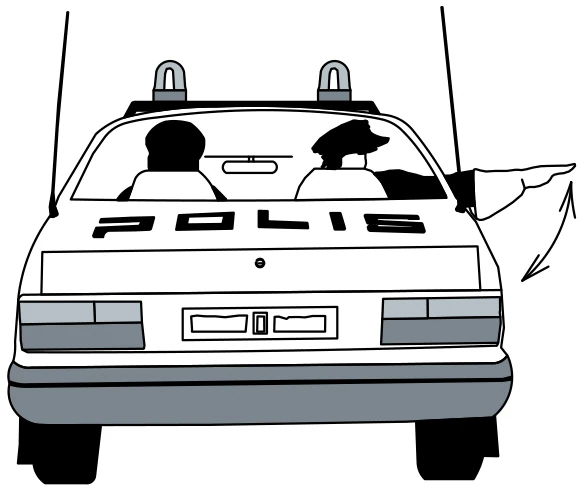
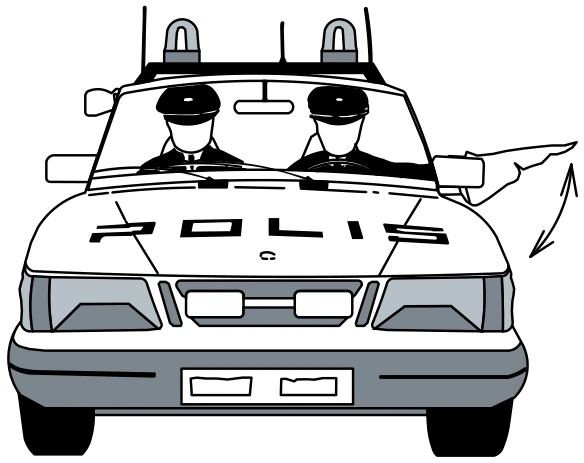
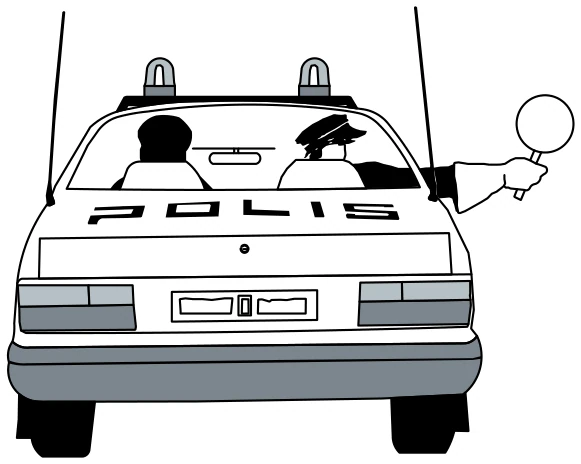
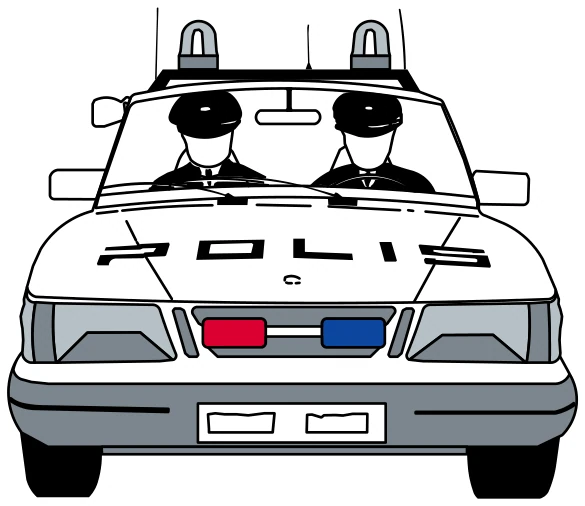
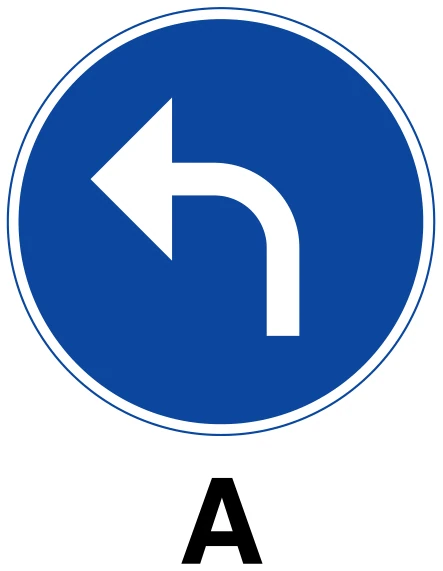
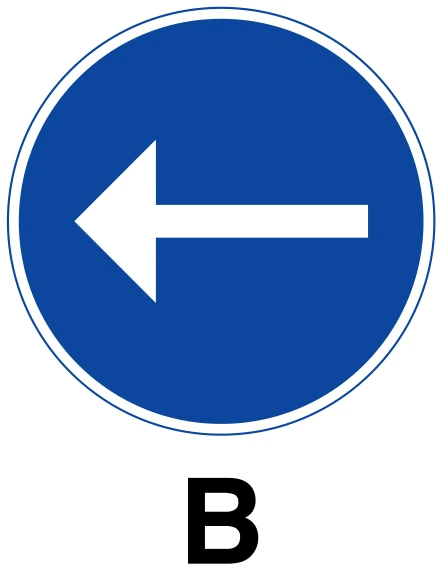
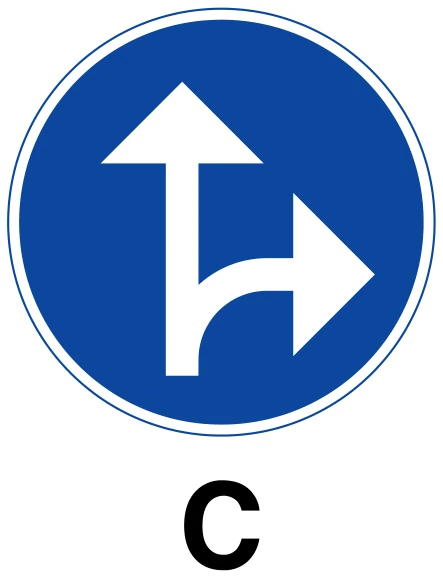
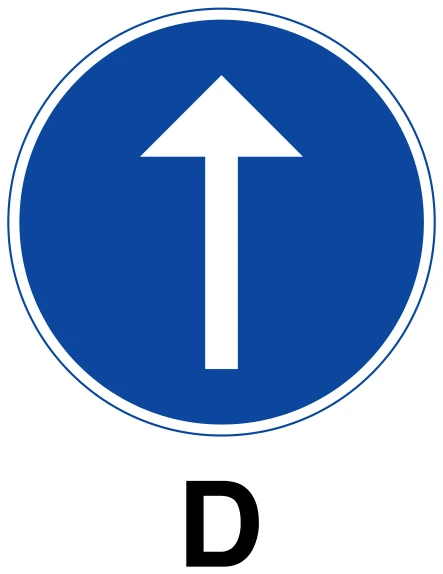
Which signs indicate the direction to be followed?
Correct answer: C) All of them.
Explanation
Mnemonic rule:
- Diagonal (twisted/slanting) arrows = pass on this side (the arrow indicates the correct lane).
- Horizontal/Vertical (straight) arrows = direction to be followed (the arrow indicates a direction).
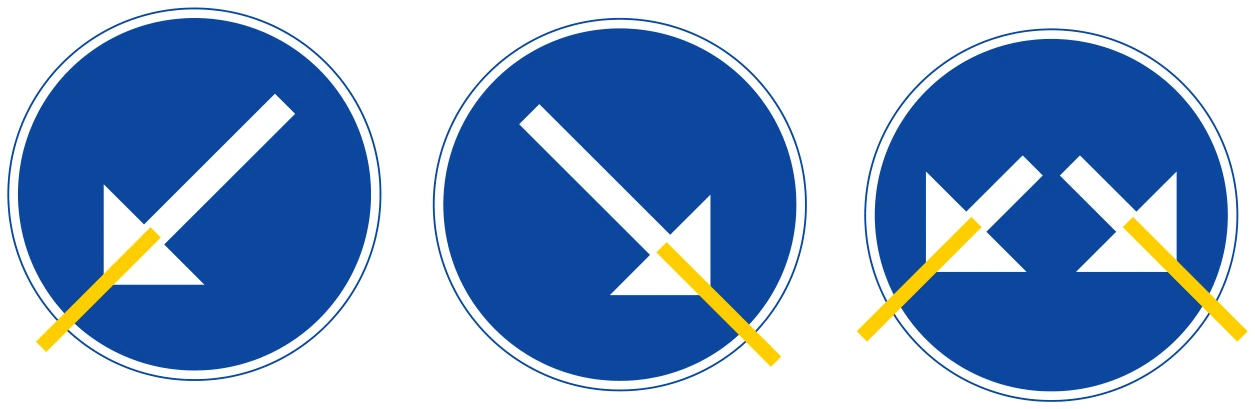
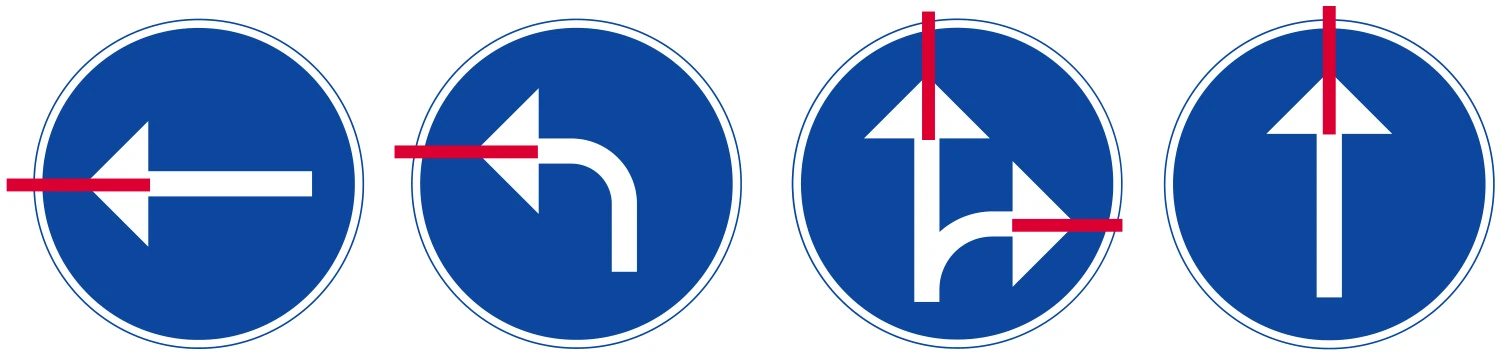

Court cases
A has turned right at a junction where the priority-to-the-right rule applies. B was temporarily on the wrong side of the road, because the driver was passing the parked car, C. The result was a collision.
The court found that both A and B had acted wrongly. A’s obligation to give way in accordance with the priority-to-the-right rule was considered to apply to all traffic on the carriageway to the right – i.e., including traffic travelling in the wrong lane. B was criticised for travelling on the wrong side of the road in a situation where it was not safe to do so.
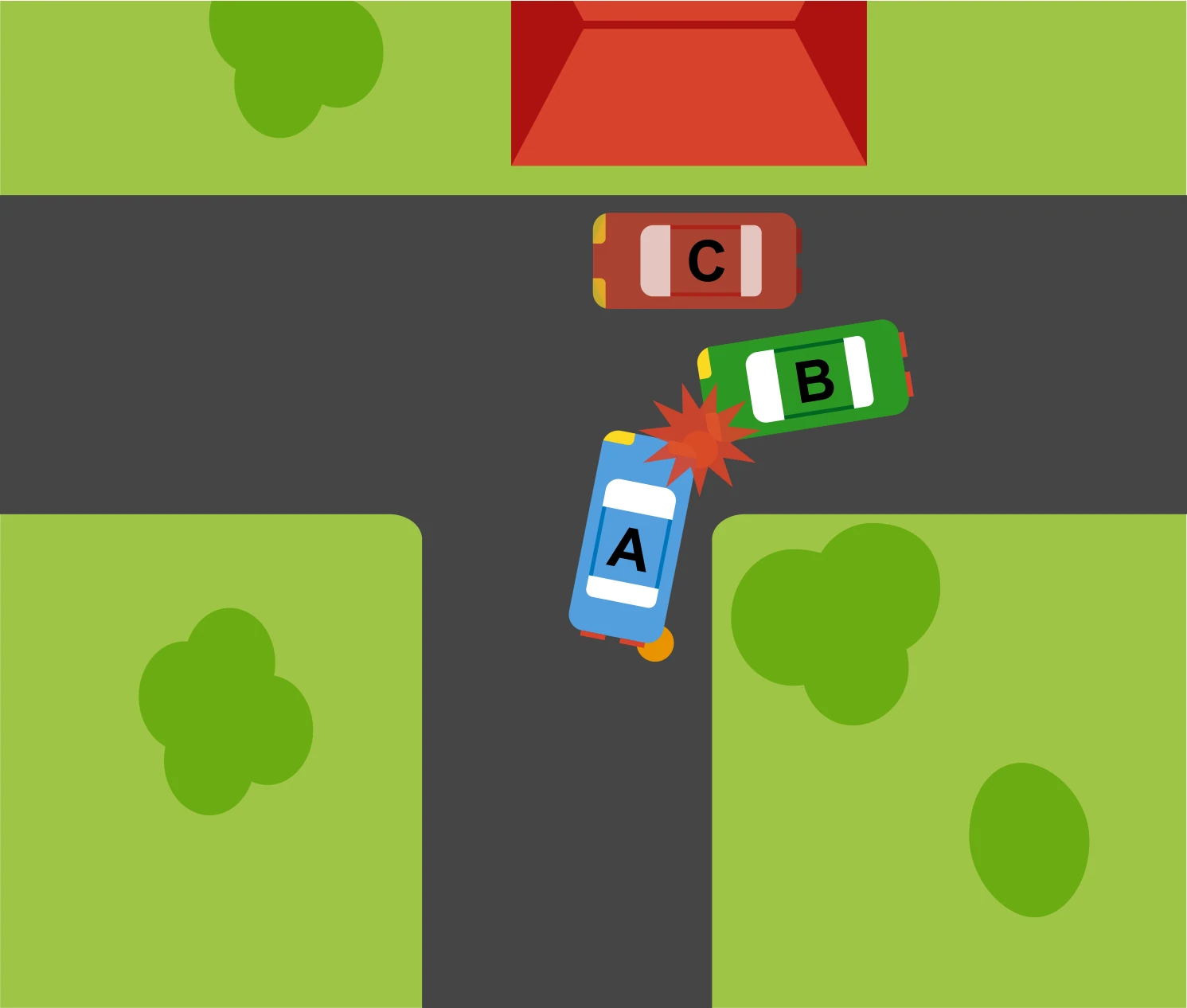
Although travelling at an actual speed of around 90 km/h, the car’s speedometer showed only 75 km/h. The supreme court considered this to be speeding, even though the driver was not aware of the problem with the speedometer.
A driver left their car to deliver goods to a property 200–300 metres away. The court of appeal considered this to be a case of parking and not stopping to unload, because the activity did not take place in close proximity to the car.
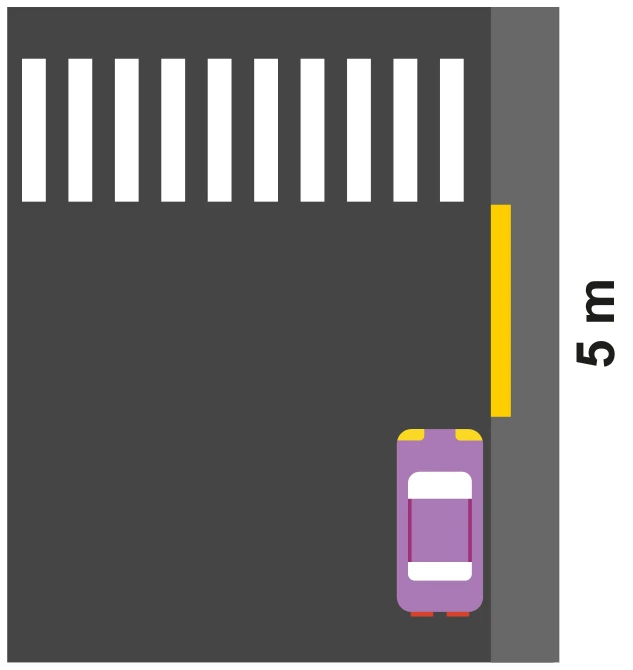
There was a continuous yellow line that extended for around 5 metres ahead of a pedestrian crossing. A driver had parked in front of the line.
The line should actually have been 10 metres long (the distance in the rule on the prohibition of parking ahead of a pedestrian crossing).
The court of appeal ruled that the driver had a responsibility to measure the distance, and that the incorrectly painted line did not mean that it was permitted to park so close to the pedestrian crossing.
A driver left their car at a place where the unloading of goods was permitted, but where parking was prohibited. The driver unloaded the goods into their shop, and continued to unpack and sort the goods while the car remained standing outside (for around 10 minutes). This was not permitted, as unpacking/sorting cannot be considered to be the same as unloading.
A drunk person sat on a moped and propelled it forwards by kicking against the ground with their feet (with the engine turned off). The supreme court ruled that the drunk person was operating a motorised vehicle, even though the engine was not running.
A residential area had a delimited area for parking. A short road led from the parking area to a road for regular traffic.
The supreme court ruled that this was an exit and that the priority-to-the-right rule therefore did not apply, even though there were two roads that intersected with each other. It was deemed that the exit rule applied, and that drivers leaving this area had an obligation to give way.
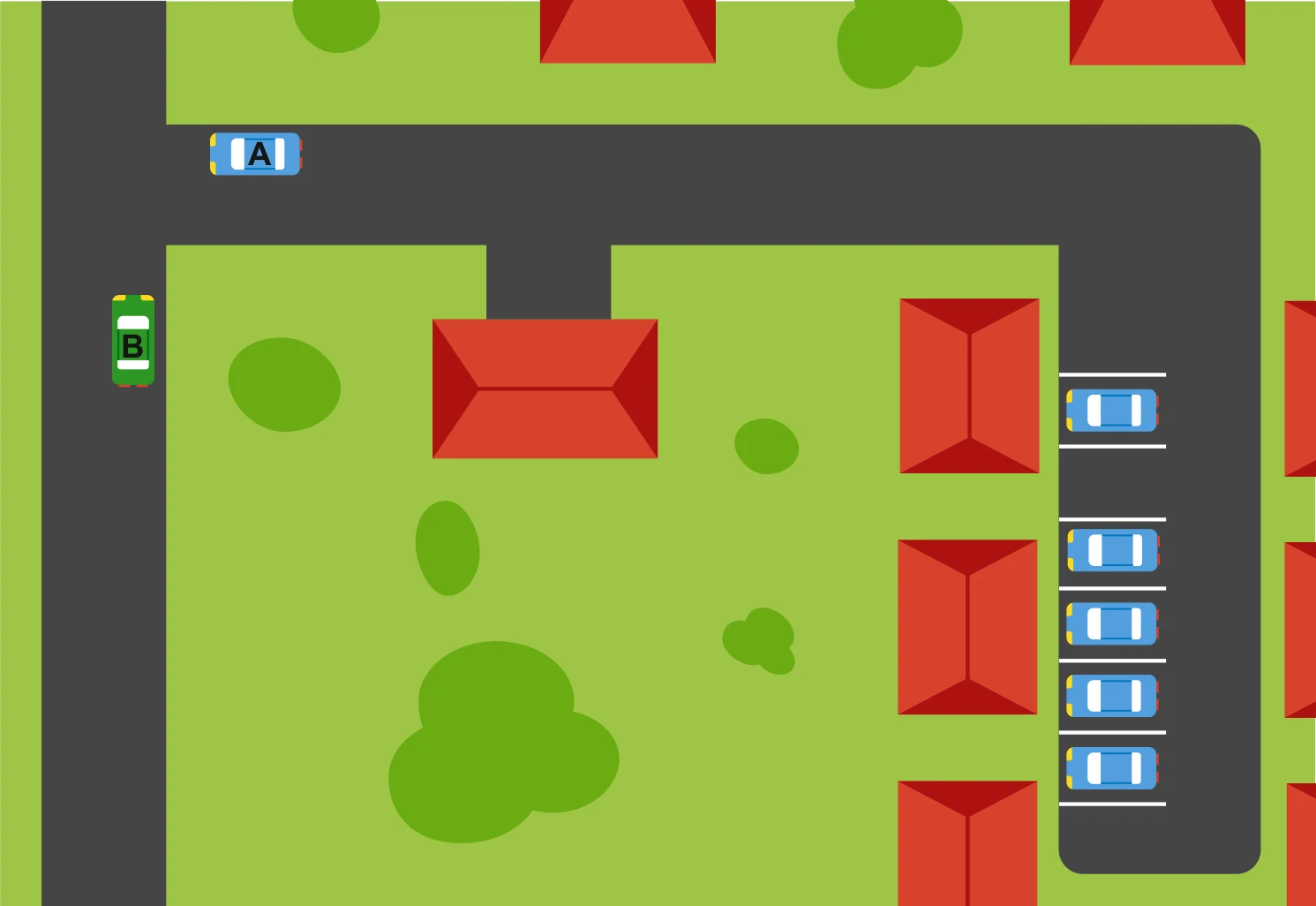
While driving, a person experienced an epileptic fit that caused them to lose consciousness. The court of appeal ruled that this constituted recklessness in traffic because the driver had been aware of the risk of such a fit occurring.
A driver splashed two pedestrians. The driver noticed what had happened but did not stop. The court of appeal considered this to be a case of leaving the scene of an incident.
A driver reversed into a parked car. The driver got out and looked but could not see any damage. The driver drove away with the intention of contacting the owner of the other car later. This was considered by the court of appeal to constitute leaving the scene of an accident.
A driver drove around a residential neighbourhood several times within a short space of time. The driving was jerky, with repeated acceleration and braking. The court of appeal ruled that residents had been unnecessarily disturbed and convicted the driver, even though the driver claimed that the purpose of driving in this way was that they were looking for a friend.
A driver entered an area close to some houses and revved the engine hard, which made a lot of noise. The court of appeal considered to this be causing unnecessary disturbance, and convicted the driver.
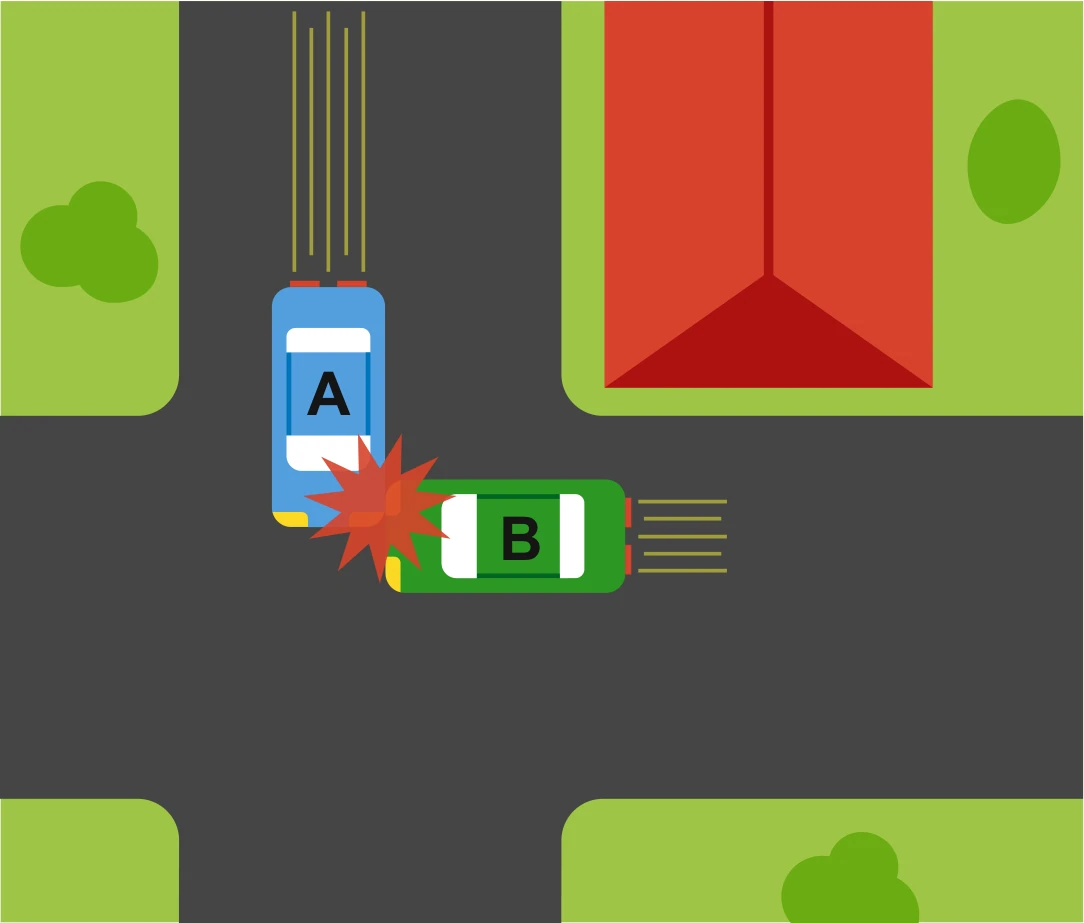
A and B collided at a junction where the priority-to-the-right rule applied. Visibility was obscured. A was driving at around 50 km/h.
The supreme court convicted both drivers for reckless driving – B for failing to observe the priority-to-the-right rule, and A for driving too fast where visibility was obscured.
The court of appeal has ruled that parking again in the same parking space is only permitted if another driver has been given a realistic opportunity to park in the space.
Example: If you have parked in a space where parking is allowed for 10 minutes, a new 10-minute period will not begin if you merely reverse out of the space and immediately drive back in and resume your parking.
A person with heart disease was at the top of a multi-storey apartment block and could not walk down the stairs to pay a renewed parking fee. Despite this, the court of appeal considered that the person was obliged to pay a renewed fee.
The driver of a parked car was convicted of reckless behaviour in traffic by suddenly opening the door so that it hit a passing cyclist.
Running out of fuel does not give a driver the right to leave their car in a place where parking is not permitted. The court of appeal has ruled that drivers must be aware and ensure that there is enough fuel in the vehicle.
The machine for parking tickets was not working. The court of appeal considered that it was not permitted to park in the area without having paid the fee.
A driver stopped in order to help move the car in front, which had broken down. Stopping was prohibited here, and the driver who had stopped to help was issued with a parking fine. The court of appeal cancelled the parking fine, as the driver had stopped in order to clear the road and make it accessible.